Biden officials privately doubt that Ukraine can win back all of its territory
Biden officials privately doubt that Ukraine can win back all of its territory https://edition.cnn.com/2022/06/28/politics/white-house-ukraine-projection/index.html
By Natasha Bertrand, CNN, June 28, 2022 White House officials are losing confidence that Ukraine will ever be able to take back all of the land it has lost to Russia over the past four months of war, US officials told CNN, even with the heavier and more sophisticated weaponry the US and its allies plan to send.
Advisers to President Joe Biden have begun debating internally how and whether Ukrainian President Volodymyr Zelensky should shift his definition of a Ukrainian “victory” — adjusting for the possibility that his country has shrunk irreversibly.
US officials emphasized to CNN that this more pessimistic assessment does not mean the US plans to pressure Ukraine into making any formal territorial concessions to Russia in order to end the war. There is also hope that Ukrainian forces will be able to take back significant chunks of territory in a likely counteroffensive later this year.
A congressional aide familiar with the deliberations told CNN that a smaller Ukrainian state is not inevitable. “Whether Ukraine can take back these territories is in large part, if not entirely, a function of how much support we give them,” the aide said. He noted that Ukraine has formally asked the US for a minimum of 48 multiple launch rocket systems, but to date has only been promised eight from the Pentagon.
And not everyone in the administration is as worried — some believe Ukrainian forces could again defy expectations, as they did in the early days of the war when they repelled a Russian advance on the Ukrainian capital of Kyiv. National security adviser Jake Sullivan has remained highly engaged with his Ukrainian counterparts and spent hours on the phone last week discussing Ukrainian efforts to recapture territory with Ukraine’s defense chief and Chairman of the Joint Chiefs of Staff Gen. Mark Milley, officials familiar with the call told CNN.
The growing pessimism comes as Biden is meeting with US allies in Europe, where he will try to convey strength and optimism about the trajectory of the war as he rallies leaders to stay committed to arming and supporting Ukraine amid the brutal fight.
“We have to stay together. Putin has been counting on from the beginning, that somehow NATO and the G7 would splinter, but we haven’t and we’re not going to,” Biden said Sunday while at the G7 summit in the Bavarian Alps.
The administration announced another $450 million in security assistance to Ukraine last week, including additional rocket launch systems, artillery ammunition and patrol boats. The US is also expected to announce as soon as this week that it has purchased an advanced surface-to-air missile defense system, called a NASAMS, for Ukrainian forces. Biden indicated in an op-ed earlier this month that he is committed to helping Ukraine gain the upper hand on the battlefield so that it has leverage in negotiations with Russia.
The mood has shifted over the last several weeks, though, as Ukraine has struggled to repel Russia’s advances in the Donbas and has suffered staggering troop losses, reaching as many as 100 soldiers per day. Ukrainian forces are also burning through their equipment and ammunition faster than the West can provide and train them on new, NATO-standard weapons systems.
A US military official and a source familiar with Western intelligence agreed it was unlikely that Ukraine would be able to mass the force necessary to reclaim all of the territory lost to Russia during the fighting — especially this year, as Zelensky said on Monday was his goal. A substantial counteroffensive might be possible with more weapons and training, the sources said, but Russia may also have an opportunity to replenish its force in that time, so there are no guarantees.
“Much hinges on whether Ukraine can retake territory at least to February 23 lines,” said Michael Kofman, a Russian military expert at the Center for Naval Analyses. “The prospect is there, but it’s contingent. If Ukraine can get that far, then it can likely take the rest. But if it can’t, then it may have to reconsider how best to attain victory.”
Russian forces gaining ground
Russian forces now control more than half of the eastern Ukrainian region of Donetsk, Pavlo Kyrylenko, the head of the Donetsk region military administration, said Thursday. Ukrainian forces retreated from the key eastern city of Severodonetsk on Friday after weeks of bloody battle.
Russian forces last week also captured ground around Lysychansk, the last city in the eastern Luhansk region still controlled by Ukraine. Ukrainian military commanders are now grappling with the reality that they may have to withdraw from the area to defend territory further west.
In the meantime, Russian oil revenues have only been going up as oil prices have skyrocketed, even amid the harsh sanctions imposed by the West. US officials said on Monday that the US and its allies are going to try capping the price of oil so Russia does not profit from it anymore, but how and when that cap will take effect remains to be seen.
Internally, there is a sense among some in the Biden administration that Zelensky will need to start moderating expectations for what Ukrainian forces can realistically achieve. Zelensky said late last month that he would “consider it a victory for our state, as of today, to advance to the February 24 line without unnecessary losses.”
He reiterated that goal last week.
“We don’t have any other choice left but to move forward — move to liberate all of our territories,” he said in a Telegram post. “We need to kick the invaders out of the Ukrainian regions. Though the width of the frontlines is as long as over 2,5000 km, we feel that we hold the strategic initiative.”
And on Monday, he put a timeline on it: He wants the war over, and for Ukraine to win, by the end of 2022, he told G7 leaders.
Russia is suffering acute combat losses as well, losing as much as a third of its ground force in four months of war, US intelligence officials estimate. Officials have also said publicly that Russia will struggle to make any serious gains further west, using the Donbas region as a staging ground, without a full mobilization of its reserve forces.
But Russia believes it can maintain the fight, wearing down Ukrainian and western resolve as the global economic effects of the war become more severe, officials have told CNN.
The hunt for Soviet-era weaponry
As CNN has previously reported, Russia is looking in particular to exploit the gap between how much Soviet-style ammunition Ukraine and its allies have in their stockpiles, and how long it will take the west to provide Ukraine with modern, NATO-standard weapons and munitions that require time-consuming training.
A senior defense official acknowledged to CNN that the Soviet-era stocks are “dwindling,” but haven’t yet reached “rock bottom.” The official said that some eastern European countries still have more they could provide — but only if they continue to be backfilled by allies with more modern equipment.
The US and its allies, meanwhile, have been scrounging the world for the kind of Soviet-era ammunition that fits the equipment Ukraine already has, including 152 mm artillery ammunition. NATO-standard weapons fire larger, 155mm rounds. But another US defense official told CNN that effort is effectively reaching its end, with almost everything available that countries are willing to provide having already gone in.
Given the prodigious rate at which the Ukrainians have gone through their older ammunition in the bruising artillery fight in the Donbas, the official said, “Soviet-era weapons are being wiped off the earth.”
CNN’s Katie Bo Lillis, Oren Liebermann and Barbara Starr contributed to this report.
While Biden Gives Ukrainian Army “The Most Lethal Weapon,” War Profiteer BAE Systems Stock Soars

During the 2020 U.S. election campaign, BAE Systems donated $569,202 to Democratic Party candidates, and $452,594 to Republicans, according to opensecrets.org.
Joe Biden received $102,591 compared to $94,966 for Donald Trump.
This amounts to chump change for the company: Shares in BAE Systems have reached an all-time high since the Russian invasion of Ukraine, rising by 28 percent over ten weeks to give BAE a stock market value of £24 billion and putting it among the largest 25 companies in the Financial Times Stock Exchange.
CovertAction Magazine. By Jeremy Kuzmarov, June 27, 2022
Sending Ukraine a $300 million shipment of powerful M-777 howitzers is a lobbying triumph for BAE Systems, one of the many war industry corporations fattening on the death and destruction of the Ukraine war
n June 15, the Biden administration announced that it was providing an additional $1 billion in military aid to Ukraine in a package that includes shipments of M-777 howitzers, ammunition and coastal defense systems.
While that announcement was being made, the Ukrainian army was shelling Donetsk, the capital of the Donetsk People’s Republic, with the U.S.-supplied howitzers along with French guns, according to The Donbass Insider, killing five civilians and wounding seven firefighters.
The attacks were being carried out from Ukrainian positions in Peski, a village not far from Donetsk airport.
According to a video produced by journalist Patrick Lancaster, a U.S. naval veteran who has reported on the war in eastern Ukraine over the last eight years, there were no military targets in the areas shelled by the Ukrainian army, only civilians.
Bringing Ukraine Closer to Victory?
Consistent with a society that used military technologies to subdue the native populations, most Americans subscribe to the belief that new superweapons can deliver salvation in wars.[1]
They ignore the dictum of German theorist Karl von Clausewitz that war is “politics by other means,” meaning that victory can only be achieved by aligning with the right side—which does not appear to be the case for Ukraine.
The New York Times characterized the M-777 howitzer—which made its debut in Afghanistan in 2005—as “the most lethal weapon the West has provided [to Ukraine] so far.”
Highly portable by land, air and sea, it can fire as far as 40 kilometers away or 25 miles—further than Russia’s primary artillery system—and is capable of striking within 10 meters of a target when coupled with the M982 Excalibur precision guided munition, which Canada has sent to Ukraine.[2]…………..
The American Legion reported that the United States had already sent 108 M-777 howitzers to Ukraine before the most recent aid package was signed by President Biden.
The Pentagon claimed that the howitzers had an immediate impact upon their arrival on May 8, enabling the Ukrainians to “go on the counter-offensive in the Donbas” and “take back some towns the Russians had taken in the past.”
Colonel Roman Kachur, commander of Ukraine’s 55th Artillery Brigade, told The New York Times that “this weapon [the howitzer] brings us closer to victory. With every modern weapon, every precise weapon, we get closer to victory.”
However, The New York Times reported on June 20 that Russian forces “appeared poised to tighten the noose around thousands of Ukrainian troops near two strategically important cities in the Donbas,” mounting an “assault on Ukrainian front lines.”[3]
So a Ukrainian victory appears far off.
The Russian Interior Ministry reported that it had destroyed U.S.-made howitzers through use of attack drones.
Former UN weapons inspector Scott Ritter wrote that Ukrainian dependence on Western artillery they were unfamiliar with resulted in a ten-fold disparity in firepower with Russia which was destroying Ukrainian defensive positions with minimal risk to its troops.
NATO Secretary-General Jens Stoltenberg warned that the Ukraine War could “last for years,” meaning we are looking at another Vietnam.
Merchants of Death
The M-777 howitzer is made by the U.S. division of BAE Systems, the largest arms manufacturer in Europe, which has supplied Ukraine with 400,000 rounds of munitions, anti-tank guided missiles and armored vehicles equipped with anti-aircraft missiles.
Former CIA Director Gina Haspel, who observed waterboarding at a CIA black site, sits on the company’s Board of Directors.
In March, BAE Systems ironically bankrolled an arms fair in Riyadh, Saudi Arabia, where sanctioned Russian weapons makers showed off some of the weapons they were using in Ukraine, including tanks, helicopters and drones.
During the 2020 U.S. election campaign, BAE Systems donated $569,202 to Democratic Party candidates, and $452,594 to Republicans, according to opensecrets.org.
Joe Biden received $102,591 compared to $94,966 for Donald Trump.
Additional recipients of BAE’s largesse included such anti-Russia hawks as House Speaker Nancy Pelosi (D-CA—$7,373); Steny Hoyer (D-MD—$10,000), Chuck Schumer (D-NY—$5,605); Liz Cheney (R-WY—$3,259 and another $5,500 in 2022); Jamie Raskin (D-MD—$4,089); Adam Schiff (D-CA—$8,036); Mitch McConnell (R-KY—$9, 289), James Inhofe (R-OK-$13,300) and Lindsey Graham (R-SC-$11,383).[4]
So far this year, BAE Systems has spent $940,000 on lobbying Congress; in 2021, it spent $3.63 million.[5]
This amounts to chump change for the company: Shares in BAE Systems have reached an all-time high since the Russian invasion of Ukraine, rising by 28 percent over ten weeks to give BAE a stock market value of £24 billion and putting it among the largest 25 companies in the Financial Times Stock Exchange.
In a blatant conflict of interest, a number of Tories in England’s Upper House of Parliament—notably Lord Glendonbrook, Viscount Eccles and Lord Sassoon, and unaffiliated peers Lord Lupton and Lord Gadhia—each own shares of at least £50,000 in BAE Systems.[6]
Samuel Perlo-Freeman, research coordinator for the campaign against the arms trade, said that BAE Systems “like other major world arms companies, are seeing their share prices soar in response to the war on Ukraine, as European countries prepare to massively rearm, doubling down on the very militarism that has created so much death and suffering in Ukraine, Yemen and elsewhere.”[7]
In May, BAE Systems’ CEO, Dr. Charles Woodburn, told investors: “We see opportunities to further enhance the medium-term outlook as our customers address the elevated threat environment.”
Which really means that, by antagonizing the Russians, great profits can be made in the Ukraine War and any compromise or diplomatic solution that might end the war should be rejected.
References: ………………………………………….. https://covertactionmagazine.com/2022/06/27/while-biden-gives-ukrainian-army-the-most-lethal-weapon-war-profiteer-bae-systems-stock-soars/1
NATO and a War Foretold

we’ll make our own prediction based on NATO’s past behavior. Instead of calling for compromises on all sides to end the bloodshed, this dangerous Alliance will instead promise an endless supply of weapons to help Ukraine “win” an unwinnable war, and will continue to seek out and seize every chance to engorge itself at the expense of human life and global security.
NATO and a War Foretold , CounterPunch, BY MEDEA BENJAMIN – NICOLAS J. S. DAVIES 29 June 2,
As NATO holds its Summit in Madrid on June 28-30, the war in Ukraine is taking center stage. During a pre-Summit June 22 talk with Politico, NATO’s Secretary General Jens Stoltenberg bragged about how well-prepared NATO was for this fight because, he said: “This was an invasion that was predicted, foreseen by our intelligence services.” Stoltenberg was talking about Western intelligence predictions in the months leading up to the February 24 invasion, when Russia insisted it was not going to attack. Stoltenberg, however, could well have been talking about predictions that went back not just months before the invasion, but decades.
Stoltenberg could have looked all the way back to when the U.S.S.R. was dissolving, and highlighted a 1990 State Department memo warning that creating an “anti-Soviet coalition” of NATO countries along the U.S.S.R’s border “would be perceived very negatively by the Soviets.”
Stoltenberg could have reflected on the consequences of all the broken promises by Western officials that NATO would not expand eastward. ……………………………………………..
…………………..We can’t go back and undo Russia’s catastrophic decision to invade Ukraine or NATO’s historic blunders. But Western leaders can make wiser strategic decisions going forward. Those should include a commitment to allow Ukraine to become a neutral, non-NATO state, something that President Zelenskyy himself agreed to in principle early on in the war.
And, instead of exploiting this crisis to expand even further, NATO should suspend all new or pending membership applications until the current crisis has been resolved. That is what a genuine mutual security organization would do, in sharp contrast to the opportunistic behavior of this aggressive military alliance.
But we’ll make our own prediction based on NATO’s past behavior. Instead of calling for compromises on all sides to end the bloodshed, this dangerous Alliance will instead promise an endless supply of weapons to help Ukraine “win” an unwinnable war, and will continue to seek out and seize every chance to engorge itself at the expense of human life and global security.
While the world determines how to hold Russia accountable for the horrors it is committing in Ukraine, the members of NATO should do some honest self-reflection. They should realize that the only permanent solution to the hostility generated by this exclusive, divisive alliance is to dismantle NATO and replace it with an inclusive framework that provides security to all of Europe’s countries and people, without threatening Russia or blindly following the United States in its insatiable and anachronistic, hegemonic ambitions.
Medea Benjamin is cofounder of CODEPINK for Peace, and author of several books, including Kingdom of the Unjust: Behind the US-Saudi Connection. Nicolas J. S. Davies is a writer for Consortium News and a researcher with CODEPINK, and the author of Blood On Our Hands: the American Invasion and Destruction of Iraq https://www.counterpunch.org/2022/06/29/nato-and-a-war-foretol..
Western Officials Admit Ukraine Is Crawling With CIA Personnel
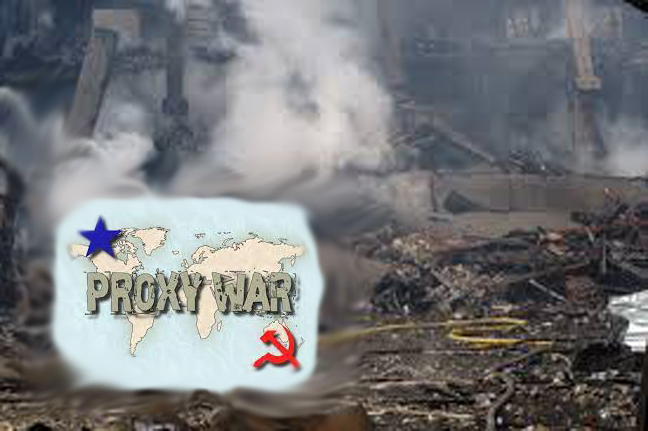
So the previously unthinkable idea that the US is at war with Russia has been gradually normalized, with the heat turned up so slowly that the frog doesn’t notice it’s being boiled alive. If that idea can be sufficiently normalized, public consent for greater escalations will likely be forthcoming, even if those escalations are extremely psychotic.
https://caitlinjohnstone.substack.com/p/western-officials-admit-ukraine-is Caitlin Johnstone 26 June 22,
The New York Times reports that Ukraine is crawling with special forces and spies from the US and its allies, which would seem to contradict earlier reports that the US intelligence cartel is having trouble getting intel about what’s happening on the ground in Ukraine.
This would also, obviously, put the final nail in the coffin of the claim that this is not a US proxy war.
In an article titled “Commando Network Coordinates Flow of Weapons in Ukraine, Officials Say,” anonymous western officials inform us of the following through their stenographers at The New York Times:
As Russian troops press ahead with a grinding campaign to seize eastern Ukraine, the nation’s ability to resist the onslaught depends more than ever on help from the United States and its allies — including a stealthy network of commandos and spies rushing to provide weapons, intelligence and training, according to U.S. and European officials.
Much of this work happens outside Ukraine, at bases in Germany, France and Britain, for example. But even as the Biden administration has declared it will not deploy American troops to Ukraine, some C.I.A. personnel have continued to operate in the country secretly, mostly in the capital, Kyiv, directing much of the massive amounts of intelligence the United States is sharing with Ukrainian forces, according to current and former officials.
At the same time, a few dozen commandos from other NATO countries, including Britain, France, Canada and Lithuania, also have been working inside Ukraine.
The revelation that the CIA and US special forces are conducting military operations in Ukraine does indeed make a lie of the Biden administration’s insistence at the start of the war that there would be no American boots on the ground in Ukraine, and the admission that NATO powers are so involved in operations against a nuclear superpower means we are closer to seeing a nuclear exchange than anyone should be comfortable with.
This news should surprise no one who knows anything about the usual behavior of the US intelligence cartel, but interestingly it contradicts something we were told by the same New York Times not three weeks ago.
“American intelligence agencies have less information than they would like about Ukraine’s operations and possess a far better picture of Russia’s military, its planned operations and its successes and failures,” NYT told us earlier this month. “U.S. officials said the Ukrainian government gave them few classified briefings or details about their operational plans, and Ukrainian officials acknowledged that they did not tell the Americans everything.”
It seems a bit unlikely that US intelligence agencies would have a hard time getting information about what’s happening in a country where they themselves are physically located. Moon of Alabama theorized at the time that this ridiculous “We don’t know what’s happening in our own proxy war” line was being pushed to give the US plausible deniability about Ukraine’s failures on the battlefield, which have only gotten worse since then.
So why are they telling us all this now? Well, it could be that we’re being paced into accepting an increasingly direct role of the US and its allies in Ukraine.
The other day Antiwar’s Daniel Larison tweeted, “Hawks in April: Don’t call it a proxy war! Hawks in May: Of course it’s a proxy war! Hawks in June: It’s not their war, it’s our war!”
This is indeed exactly how it happened. Back in April President Biden told the press the idea that this is a proxy war between the US and Russia was “not true” and Defense Secretary Lloyd Austin said “It’s not, this is clearly Ukraine’s fight” when asked if this is a proxy war. The mainstream media were still framing this claim as merely an “accusation” by the Russian government, and empire spinmeisters were regularly admonishing anyone who used that term on the grounds that it deprives Ukrainians of their “agency”.
Then May rolled around and all of a sudden we had The New Yorker unequivocally telling us that the US is in “a full proxy war with Russia” and hawks like US congressman Seth Moulton saying things like, “We’re not just at war to support the Ukrainians. We’re fundamentally at war, although somewhat through a proxy, with Russia, and it’s important that we win.”
And now here in June we’ve got war hawks like Max Boot coming right out and saying that this is actually America’s war, and it is therefore important for the US to drastically escalate the war in order to hand the Russians “devastating losses”.
So the previously unthinkable idea that the US is at war with Russia has been gradually normalized, with the heat turned up so slowly that the frog doesn’t notice it’s being boiled alive. If that idea can be sufficiently normalized, public consent for greater escalations will likely be forthcoming, even if those escalations are extremely psychotic.
Back in March when I said the only “agency” Ukraine has in this conflict is the Central Intelligence kind, empire loyalists jumped down my throat. They couldn’t believe I was saying something so evil and wrong. Now they’ve been told that the Central Intelligence Agency is indeed conducting operations and directing intelligence on the ground in Ukraine, but I somehow doubt that this will stir any self-reflection on their part.
A new era as Australia joins historic UN nuclear ban meeting
.
https://johnmenadue.com/australia-joins-historic-un-nuclear-ban-meeting/ By Tilman RuffJun 27, 2022,
This week in Vienna, Australia joined a landmark gathering of eighty-three governments to further implement and develop the treaty banning nuclear weapons.
In a stunning demonstration of resolve, goodwill and cooperation, with no shred or adversarial politics, the meeting adopted a realistic action plan that breaks new ground. It maps out collaborative programs of work led by different states in key areas of treaty obligations: promoting treaty membership and norms, complementarity with other nuclear treaties, disarmament processes including verification, and assisting victims and remediating (where possible) environments harmed by nuclear weapons use and testing. States also made a political declaration that is arguably the strongest and clearest rejection of nuclear weapons ever made by a multilateral gathering.
Five years ago, by a vote of 122 to 1 in the United Nations in New York, the first treaty to ban the worst weapons of mass destruction was born: the Treaty on the Prohibition of Nuclear Weapons (TPNW). For its role in bringing about the treaty, the Melbourne-born International Campaign to Abolish Nuclear Weapons (ICAN) became the first Australian-born entity to be awarded the Nobel Peace Prize. The treaty entered into legal force last year, and this week for the first time, governments gathered to discuss and decide how to promote and implement the treaty.
The Australian delegation to Vienna was led by NSW Labor MP Susan Templeman, federal member for Macquarie, who last year said Australia “can and should lead international efforts to rid the world of nuclear weapons”. She told the Blue Mountains Gazette this week: “It was great to be in Austria to observe the first Meeting of States Parties to the Treaty on the Prohibition of Nuclear Weapons (TPNW) on behalf of Australia. … Australia shares the ambition of TPNW states parties of a world free of nuclear weapons.”
The Vienna meeting from 21-23 June was the first intergovernmental gathering focused on addressing the threat of nuclear weapons since Russia’s invasion of Ukraine and multiple threats by President Vladimir Putin to use nuclear weapons. Other “nuclear-endorsing” states attending the meeting as observers included NATO members Germany, the Netherlands, Norway and Belgium. Sweden, Finland and Switzerland also joined.
Shamefully, the previous Australian government boycotted the negotiation of and opposed the TPNW, the first time Australia has ever boycotted multilateral disarmament negotiations. This stands in stark contrast to Australia under governments both Labor and Coalition having joined the treaties that ban biological and chemical weapons, landmines and cluster munitions.
In 2018, the ALP adopted unanimously a national policy platform commitment to sign and ratify the TPNW. It reaffirmed that policy at its national conference in 2021. Prime Minister Anthony Albanese is a long-term champion of nuclear disarmament and non-proliferation and moved the new policy in 2018. Over three-quarters of all members of the new government have personally backed the treaty. In this they have strong public support – opinion polls over recent years have consistently shown 70-80% of the public want Australia to join the TPNW – in the most recent poll 76% of those asked want Australia to join the nuclear weapon ban, with only 6% opposed (Ipsos, March 2022).
Fifty-five Australian former ambassadors and high commissioners this week released an open letter to PM Albanese urging him to sign and ratify the TPNW without delay.
The meeting in Vienna and a new more constructive era in Australia’s approach to nuclear disarmament and non-proliferation could not come at a more critical time. With Russia’s invasion of Ukraine accompanied by repeated threats to use nuclear weapons, the world faces the greatest evident danger of nuclear war since the Cuban missile crisis of 1962. Russia’s threats should shatter any misplaced sense of complacency or denial that somehow the risk of nuclear war is a faded relic of the past that no longer demands our urgent attention.
Russia’s threats have upended decades-old assumptions about security and deterrence, with Russia using nuclear weapons not to deter but to coerce and intimidate, and provide a cover for war crimes and gross violations of international law and human rights.
But as former UN secretary-general Ban Ki-moon said, “There are no right hands for the wrong weapons.” Every day that thousands of nuclear weapons remain launch-ready, two thousand of them ready to be launched within minutes, they remain the most acute existential threat to humanity and our planet. The leading scientists behind the Doomsday Clock have set it at 100 seconds to midnight, further forward than ever before. None of the nine states wielding nuclear weapons are disarming or negotiating for disarmament as they are obligated to do. To the contrary, all are engaged in upgrading and modernising their arsenals with new, more accurate, flexible and ‘usable’ weapons. Kinds of nuclear weapons the world has never seen before are being developed and deployed, including hypersonic missiles, nuclear-armed cruise missiles powered by nuclear reactors, and nuclear torpedos. And the number of usable weapons in military stockpiles is again increasing.
The International Campaign to Abolish Nuclear Weapons (ICAN) in a report released last week documented that last year the nine nuclear-armed countries spent US$82.4 billion (A$116 billion) on nuclear weapons – A$220,000 per minute – an inflation-adjusted increase of A$9.2 billion from 2020.
The day before the treaty meeting, the Australian delegation also joined a Conference on the Humanitarian Impacts of Nuclear Weapons hosted by Austria, which provided compelling updated evidence from scientists, emergency responders and other experts on the catastrophic consequences and growing risks of use of nuclear weapons.
The TPNW provides our best hope to control our worst weapons, and is currently the only bright light in an otherwise bleak and darkening nuclear landscape. Hopefully this early positive step will be promptly followed by the new government signing and working towards Australia ratifying the treaty, in line with its pre-election commitments.
TILMAN RUFF
Tilman Ruff AO is Co-President of International Physicians for the Prevention of Nuclear War (Nobel Peace Prize 1985); and co-founder and founding international and Australian Chair of the International Campaign to Abolish Nuclear Weapons (ICAN), awarded the 2017 Nobel Peace Prize, the first to an entity born in Australia.
Russia to send Belarus nuclear-capable missiles within months, as G7 leaders gather in Germany,
Vladimir Putin again raises nuclear threat during Moscow’s invasion of Ukraine, as Olaf Scholz hosts G7 leaders to discuss energy and food crisis, Guardian. 26 June 22
Russia will deliver missiles capable of carrying nuclear warheads to Belarus in the coming months, President Vladimir Putin has said as he received Belarusian leader Alexander Lukashenko.
“In the coming months, we will transfer to Belarus Iskander-M tactical missile systems, which can use ballistic or cruise missiles, in their conventional and nuclear versions,” Putin said in a broadcast on Russian television at the start of his meeting with Lukashenko in St Petersburg on Saturday.
Putin has several times referred to nuclear weapons since his country launched a military operation in Ukraine on 24 February, in what the west has seen as a warning not to intervene. Lukashenko said last month that his country had bought Iskander nuclear-capable missiles and S-400 anti-aircraft anti-missile systems from Russia.
The development came on the eve of a meeting of G7 leaders in Germany on Sunday, to be hosted by Chancellor Olaf Scholz in the Bavarian alps, which is set to be dominated by Ukraine and its far-reaching consequences, from energy shortages to a food crisis.
The G7 leaders are expected to seek to show a united front on supporting Ukraine for as long as necessary and cranking up pressure on the Kremlin – although they will want to avoid sanctions that could stoke inflation and exacerbate the global cost-of-living crisis……………………………….. https://www.theguardian.com/world/2022/jun/26/russia-to-send-belarus-nuclear-capable-missiles-within-months-as-g7-leaders-gather-in-germany
No Western ”boots on the ground” in Ukraine? Just commandoes and CIA agents
Western ‘network of commandos and spies’ helping Ukraine – NYTCIA agents have been stationed in Kiev to share US intel with Ukrainian troops, the report claims https://www.rt.com/news/557848-us-cia-agents-kiev/ NATO members have been supplying Ukraine with heavy weapons, including missile launchers, combat drones and armored vehicles, and training Ukrainian troops to use them. In recent months, the Pentagon has delivered M142 HIMARS multiple rocket launchers and M777 howitzers.
US Defense Secretary Lloyd Austin said last week that Ukraine was facing “a pivotal moment on the battlefield” and urged Washington’s allies to continue aiding Kiev.
The report about the activities of Western commandos and CIA agents in and around Ukraine comes as a three-day Group of Seven (G7) summit kicks off in Germany on Sunday. The group, which comprises of the US, Canada, Britain, France, Germany, Italy and Japan, which have imposed sweeping sanctions on Russia.
Moscow has said in the past that it will treat foreign weapons, on Ukrainian soil, as legitimate targets.
A secret network of commandos and spies from the US, and some of its allies, is working to provide weapons, intelligence and training to Ukraine, the New York Times (NYT) reported on Saturday, citing current and former American and European officials.
While much of the activity takes place at bases in Britain, Germany and France, some CIA agents have been stationed in the east European country, mostly in the capital Kiev, the paper said.
The agents are tasked with sharing satellite images and other intelligence with Ukrainian troops, according to the story.
The US announced the evacuation of military instructors from Ukraine in February. Shortly afterwards, Russia launched its military campaign and the US Army’s 10th Special Forces Group set up a planning cell in Germany to coordinate military aid to Kiev, the paper explained. The group has reportedly grown to include participants from 20 nations.
The NYT added that “a few dozen commandos” from other NATO member states, including Canada, Britain, France and Lithuania, have also been working in Ukraine.
NATO members have been supplying Ukraine with heavy weapons, including missile launchers, combat drones and armored vehicles, and training Ukrainian troops to use them. In recent months, the Pentagon has delivered M142 HIMARS multiple rocket launchers and M777 howitzers.
US Defense Secretary Lloyd Austin said last week that Ukraine was facing “a pivotal moment on the battlefield” and urged Washington’s allies to continue aiding Kiev.
The report about the activities of Western commandos and CIA agents in and around Ukraine comes as a three-day Group of Seven (G7) summit kicks off in Germany on Sunday. The group, which comprises of the US, Canada, Britain, France, Germany, Italy and Japan, which have imposed sweeping sanctions on Russia.
Moscow has said in the past that it will treat foreign weapons, on Ukrainian soil, as legitimate targets.22
The United States-the Pacific bully
https://johnmenadue.com/the-united-states-the-pacific-bully/ By Brian Toohey, Jun 24, 2022,
The US dominates the Pacific Islands to an extent China can never hope to achieve. With Australia’s support, the US is now engaged in an arms build-up in its Pacific territories and de-facto colonies in a little known boost to its containment of China.
The US has three self-governing territories in the Pacific: Guam, American Samoa and the Northern Mariana Islands. Guam hosts some of the US’s most important bases the world. After a large scale military expansion on one of the main islands in the Northern Marianas, Tinian is expected to rival Guam in importance in coming years.
The US also has Compacts of Free Association with three countries covering thousands of islands in the Pacific – the Federated States of Micronesia, Palau and the Marshall Islands. The compacts are a de-facto form of colonialism which gives the US exclusive military access to these countries’ land and maritime surrounds in return for defence guarantees and financial assistance.
The Federated States of Micronesia has a population of around 100,000. It has a land area of 702 square km on 607 islands amid 2,600,000 square km of ocean. The US will build a new base there. The residents are concerned about the impact of the base as their islands are often tiny and the landscape important to their identity. The US is also establishing a new military base on Palau, which has 340 islands and a total population of just over 18,000. The Marshall Islands landmass is 181 square km amid 466,000 square km of ocean. Although the Kwajalein atoll is only 15 square km, it is exclusively a military base with an extraordinary array of US activities; including a key role in US testing interceptors aimed ballistic missiles.
The Chinese foreign minister Wang Yi recently visited seven South Pacific countries and signed various agreements in some, including the provision of infrastructure and police training , but he failed to get support for a 10-country trade agreement. He did not seek permission to build a navy base in the Solomon Island or anywhere else. Nevertheless, some saw the visit as an act of Chinese aggression. It is an odd view of aggression compared to the damage done by US, British and French testing of thermonuclear (also called hydrogen) bombs on Pacific islands, or when Australia helped invade Iraq.
The US conducted 105 nuclear tests in the Pacific, mainly in the Marshall islands, between 1946 and 1962, as part oftits program to develop thermonuclear bombs. Operational weapons were sometimes tested, including a submarine-launched war head. One test in 1952 completely vaporised the island of Eluglab. In 1954, a thermonuclear bomb tested on Bikini atoll exploded with force of 15 megatons – over 1,000 times bigger than the bomb dropped on Hiroshima. The radioactive cloud engulfed a Japanese fishing boat about 80 miles away in a white powder that poisoned the crew. One died from the exposure seven months later and 15 more in following years.
The radioactivity affected the drinking water and food. Children played in the ash-like powder. Some ate it. Marshall Islanders over a wide area were subject to abnormal radiological doses. In 2005, the US National Cancer Institute reported that the risk of contracting cancer for those exposed to the fallout was over one in three.
Nevertheless, in 1946, a US Navy Commodore had asked 167 people living on Bikini atoll to re-locate so their home could be used use “for the good of mankind”. They were resettled in 1969, but had to be evacuated again after high radiation levels were detected.
There has been some increase in the pathetically low initial compensation. But it is hard to compensate for the environmental damage and loss of cultural heritage, traditional customs and skills. In 2014, the Marshall Islands attempted to sue the US and eight other nuclear armed nations, for failing to move towards nuclear disarmament as required by the Nuclear Non-Proliferation Treaty. A US Court dismissed the suit in 2017.
Britain tested 40 thermonuclear bombs on an islands in the Kiribati group between 1957 and 1962. Troops from Britain , Fiji (then a British colony), and New Zealand worked on the tests. Many were harmed by radiation and other causes. As usual, the locals were treated badly and their water and lands polluted.
France conducted 41 atmospheric nuclear tests between 1966 and 1974 in French Polynesia. It then conducted 140 underground, primarily of thermonuclear bombs, until 1996. One of the islands used was subject to cracking. In an act of state terrorism, French secret service frogman killed a photographer when they bombed a Green Peace protest ship in Auckland harbour on its way to the French nuclear testing area.
Labor’s defence minister, Richard Marles now refers to France as a Pacific county, despite the fact that it is a European country with a tenuous justification for holding onto its colonial possessions in the Pacific – New Caledonia and French Polynesia. Labor used to oppose colonialism. Now it seems it’s good if the colonial power opposes China.
The South Pacific Forum comprises 18 members: Australia, Cook Islands, Federated States of Micronesia, Fiji, French Polynesia, Kiribati, Nauru, New Caledonia, New Zealand, Niue, Palau, Papua New Guinea, Republic of Marshall Islands, Samoa, Solomon Islands, Tonga, Tuvalu and Vanuatu. Not all are normally considered to be in the South Pacific. The inclusion of three countries with Compacts of Free Association with the US and two French possessions basically guarantees they will vote for what the US or France wants.
However, the legacy of the contemptuous disregard for the indigenous residents during massive hydrogen bomb tests ensures that nuclear issues, including the passage of nuclear submarines, remain sensitive.
At the time of the negotiation of the South Pacific Nuclear Free Zone Treaty in 1985 Paul Malone wrote that it was for a “partial nuclear free zone”, as it did not prohibit the “passage of nuclear-armed ships or aircraft through the region”. Malone reported that some Pacific Island countries wanted to be Treaty to prohibit access to nuclear-armed warships. The then Prime Minister Bob Hawke insisted on that omission which reflected the wishes of the US. However, nuclear issues have been revived by the creation of the 2021AUKUS pact in which Australia is committed to buying nuclear powered submarines.
A journalist and researcher based in the Pacific, Nic Maclellan says, “Any hope that Australia’s island neighbours will welcome further nuclearisation of the region is folly. Within days of the UKUS announcement, statements from Pacific leaders, community elders and media organisations highlighted the persistence of the deep antinuclear sentiment.
The general secretary of the Pacific Conference of Churches, Reverend James Bhagwa tweeted
“Shame Australia, Shame.” The Solomon Islands Prime Minister Manasseh Sogavare told the UN General Assembly his nation “would like to keep our region nuclear-free . . . We do not support any form of militarisation in our region that could threaten regional and international peace and stability.”
The Kiribati President Taneti Maamau told the ABC, “Our people are victims of nuclear testing. We still have trauma. With anything to do with nuclear, we thought it would be a courtesy to discuss it with your neighbours”. He said he was especially concerned about Australia developing nuclear powered submarines which he said “puts the region at risk”
Fiji’s Prime Minister Frank Bainimarama tweeted that his father was among the Fijian soldiers the British sent to help with their nuclear bomb tests. He said, “To honour the sacrifice of all those who have suffered due to these weapons, Fiji will never stop working towards a global nuclear ban.”
The New Zealand Prime Minister Jacinda Ardern repeated that nuclear submarines “can’t come into our internal waters”. New Zealand and nine South Pacific Forum countries have ratified the new Treaty on the Prohibition of Nuclear Weapons. Australia hasn’t. The Samoa Observer wrote, “It is a relief seeing Prime Minister Ardern continuing to maintain the tradition of her predecessors by promoting a nuclear-free Pacific; probably she is the only true friend of the Pacific Islands.”
A nuclear war cannot be won and must never be fought

The Treaty on Prohibition of Nuclear Weapons is not a quick fix. But it can build international pressure and help to put the world back on track toward nuclear disarmament. Given the fundamental threat to humanity, we cannot be content with the status quo on nuclear disarmament. Austria and New Zealand will continue to spearhead these efforts. In the interests of humanity, we will continue to work with all willing state and civil-society partners to remove the nuclear sword of Damocles that is hanging over all our heads. — Project Syndicate
(ed. Microsoft made sure to obscure bits of this with advertising. If you spot them, sorry, but I can’t afford to pay the blackmail charges to avoid ads)
A nuclear war cannot be won and must never be fought https://www.khaleejtimes.com/opinion/a-nuclear-war-cannot-be-won-and-must-never-be-fought
Given the fundamental threat to humanity, we cannot be content with the status quo on nuclear disarmament, By Alexander Schallenberg/Phil Twyford, Sun 26 Jun 2022,
Austria and New Zealand may be far apart geographically, but we are connected by shared values and principles. Particularly relevant today is our longstanding opposition to nuclear weapons and our shared concern about the lack of progress on nuclear disarmament.
Nuclear weapons never went away after the end of the Cold War, steep cuts to nuclear stockpiles in the early 1990s represented progress. But the trend toward disarmament stalled. Three decades on, nine nuclear-armed states possess some 13,000 nuclear warheads, and, far from phasing out their arsenals, these states are modernizing and expanding them. The risks of nuclear escalation, miscalculation, and accident are mounting, even though we have a better understanding than ever of the catastrophic consequences that would follow from the use of nuclear weapons.
We recently received a fresh wake-up call. In early January, the five nuclear powers on the United Nations Security Council reaffirmed the 1985 statement by US President Ronald Reagan and Soviet President Mikhail Gorbachev that “a nuclear war cannot be won and must never be fought.” Yet, the following month, Russian President Vladimir Putin’s regime threatened to unleash those same vastly destructive and indiscriminate weapons in the context of Russia’s war of aggression against Ukraine.
This threat which we unequivocally condemn – has sparked a new global debate on the value of nuclear deterrence, highlighting a bleak dissonance between the avowed collective goal of achieving a world without nuclear weapons, and nuclear-armed states’ ongoing reliance on them. This dissonance is also evident in the Nuclear Non-Proliferation Treaty, which entered into force more than 50 years ago following a “grand bargain” between nuclear-armed China, France, Russia, the United Kingdom, and the United States, and non-nuclear-armed states, including Austria and New Zealand.
knowledged that nuclear disarmament is ultimately the most effective way to discourage proliferation. But while proliferation risks have increased in recent decades, concrete progress has stalled. Sixty years after the Cuban Missile Crisis brought the world to the brink of catastrophe, we find ourselves again faced with the threat of nuclear escalation.
h questions of those with nuclear decision-making authority. It is they who must consider the sustainability of an approach to national security that imposes existential risks on their populations, as well as all other states and, indeed, the rest of humanity. The treaty also gives voice to the majority of states that do not accept nuclear deterrence as a valid basis for security. We are convinced that it is a fundamental error to believe that these weapons provide security. In reality, they pose a profound threat to us all, as well as to future.
a, Austria will host the First Meeting of States Parties to the TPNW. Even as we acknowledge that there is much work to be done, we should understand that this meeting is a major achievement in itself. It shows what can be accomplished by a strong alliance between like-minded states and civil society. Similar alliances were instrumental in banning anti-personnel mines and cluster.
Moreover, several nuclear-allied states and other non-state parties have indicated that they will attend the meeting as observers. We welcome them. Even if our views differ on the validity of nuclear weapons for security, we value the perspectives they will bring to an international conversation about the consequences, risks, and challenges of nuclear weapons. This conversation is essential, especially now that nuclear risks are higher than they have been in decades.
The TPNW is not a quick fix. But it can build international pressure and help to put the world back on track toward nuclear disarmament. Given the fundamental threat to humanity, we cannot be content with the status quo on nuclear disarmament. Austria and New Zealand will continue to spearhead these efforts. In the interests of humanity, we will continue to work with all willing state and civil-society partners to remove the nuclear sword of Damocles that is hanging over all our heads. — Project Syndicate
A despicable Ukrainian PSYOP in Bucha
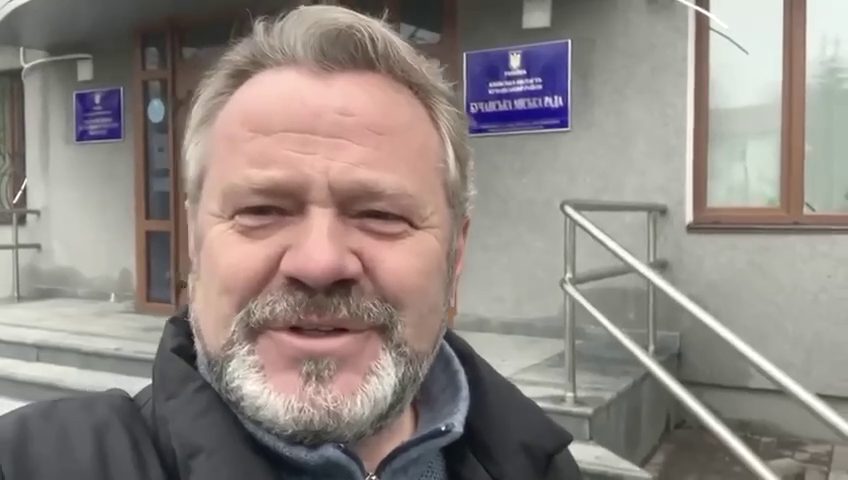
2:31 pm UT, April 1 Bucha Mayor Fedoruk does NOT mention murders of civilians – Bisher ist Alles in Ordnung ! (So far everything is fine.!)
Truth is the first casualty in war – Ethel Annakin, 1915
Nicolas Cinquini senior intelligence analyst in the field of security risk management, I am a former intelligence officer and lieutenant detective within French State agencies 24 June 22 [Excellent maps and photos on original]
On April 4, 2022, the Western media are roaring against Russia, about the slaughter of civilians in Bucha, a town in Kiev northwestern suburb, Ukraine. The dates and sites of the killings are unknown. The identities of the victims are unknown. The sources are Ukrainian, directly or indirectly officials whose assertions are widely admitted. I am a long time fan of the British media and tabloids. In the United Kingdom, the buzz is a gradient, from Civilians ‘shot in the street’ [The Times] to Putin last atrocities, GENOCIDE [Daily Mirror]. Here is the cover of The Guardian [on original – the title reads – ”Horror in Bucha: Russia Accused of Torture and Massacre of Civilians”]
On April 3, French president Emmanuel Macron has already written on Twitter
the images reaching us from Bucha, a liberated town near kyiv, are unbearable. In the streets, hundreds of cowardly murdered civilians. My compassion for the victims, my solidarity with the Ukrainians. The Russian authorities will have to answer for these crimes.
Yet, some journalists have learned how to investigate and State intelligence agencies are supposed to deliver reliable information to the politicians. I am wondering what are the shares of bad faith and hysteria.
By the way, what happened in Bucha and when ?
The military context………………………
- 11:00 pm UT, March 28
Jomini of the West is a Western military analyst, a
polemologist writer and speaker on all things related to human conflict. #Fortuna Podcast ; discussions on waging peace, surviving war, and the fate of Humankind,
who is making analytical assessments and nice maps.
On March 28, Bucha is on the front line and Ukraine forces are counterattacking [map on original]
Jomini won’t make new assessment or map in the region of Kiev before March 31.
- 9:20 pm UT, March 31
On social networks, Ukrainian channels are sharing a video recorded from drone in broad daylight : the Russian forces have left Antonov airport, which is north of Gostomel, which is north of Bucha.
the Russians are conducting a strategic retreat in good order. If they have withdrawn from Antonov airport, a fortiriori, they have left Gostomel and Bucha
- 11:00 pm UT, March 31
The Russian forces are conducting a retreat in good order on the right bank (left on the map) of the Dniepr. The front line is now north of Ivankiv, about 60 km north of Bucha, that the Ukrainian forces are controlling, far behind their new lines. Some wooden areas need to be searched north of Bucha, because Russian elements may remain there. The retreat is conducted in good order and I don’t think that Russian servicemen have been isolated [Map on original]
- 2:31 pm UT, April 1
Anatoliy Fedoruk is the mayor of Bucha. Ecstatic, he publishes on Facebook a video from the town, says […]
March 31 will go down in the history of our Bucha community as the Day of Liberation. The liberation by our Armed Forces of Ukraine from Russian orcs [sic], from Russian occupiers. So today, I state that this day is joyful. Joyful and this is a great victory in Kyiv region ! And we will definitely wait so that there is a great victory all over Ukraine […]
> according to cross-checked information from various sources, the Ukrainian forces are controlling Bucha since March 31. I have found no trace of fresh fighting in the town. On April 1, the Ukrainian administration is back, the SBU (State security) and its PSYOP department too.
Fedoruk does NOT mention murders of civilians
We know that the Ukrainian forces are controlling Bucha since March 31. On April 3, the Russian defense ministry will state that its army have left the town on March 30. There was no urban warfare, the Ukrainians came in the day after.
On April 1, nobody mentions murders of civilians.
The liberation of Bucha – Bisher ist Alles in Ordnung ! (So far everything is fine.!)
We know that the Ukrainian forces are controlling Bucha since March 31. On April 3, the Russian defense ministry will state that its army have left the town on March 30. There was no urban warfare, the Ukrainians came in the day after.
On April 1, nobody mentions murders of civilians.
The liberation of Bucha
- 5:48 pm UT, April 2
AFP (Agence France Presse) writes on Twitter
#BREAKING Almost 300 people buried in ‘mass grave’ in Bucha outside Kyiv: mayor [Anatoliy Fedoruk]
> More than 25 hours after his ecstatic video from the town, two days after its liberation, Fedoruk speaks by phone with a Western news agency, about dead civilians and a mass grave.
Actually, Ukrainian web users are sharing an amateur video, allegedly from Bucha, since 0:15 am. It has been recorded in broad daylight, probably the day before, April 1. A few corpses are scattered in the middle of a street.
300 was already, according to the Ukrainian authorities, the number of vicitms of the alleged Russian airstrike against the Drama theater in Mariupol, Donbass, on March 16.
- 5:52 pm UT, April 2
At the same time, the official website of the Ukrainian national police publishes an article and photos about its operations in Bucha, since its liberation on March 31 […]
today, April 2, in the liberated city of Bucha, Kyiv region, special units of the National Police of Ukraine began clearing the area of saboteurs and ACCOMPLICES of Russian troops […]
The involved units are special purpose [I am in Love with euphemism] formations. But their names are evocative : Safari, Kord, Thor.
> Released in the afternoon of April 2, two days after the liberation, three days after the Russian retreat, an official Ukrainian article does NOT mention murders of civilians
- 6:41 pm UT, April 2
The AFP (Agence France Presse) adds on Twitter […]
as witnessed by @AFP, he [Anatoliy Fedoruk] said the heavily destroyed town’s streets are littered with corpses […]
- 9:48 pm UT, April 2
The AFP (Agence France Presse) adds on Twitter […]
in the town of Bucha, AFP reporters saw at least 20 bodies on a single street including one with his hands tied […]
> The AFP photographer is Ronaldo Schemidt, a Venezuelan one and a reliable source. His pictures from Bucha are now famous. I won’t share here images of the corpses, which are about two dozens at all, in various sites. They seem still fresh, but a coroner could assert it. They are dressed like civilians. Some are wearing WHITE ARMBANDS, which are the usual identification mark of Russian troops, some others with hands tied in the back with identical white bands.
Some victims were clearly carrying Russian food rations. The Russian army is widely dispensing food rations in the areas under its control. But in Ukrainian nationalist opinion, to accept such ration is an act of treason.
Here is an enhanced screenshot from an amateur video which is shared on social networks the same day [on original]
> The death toll is finally 57, not 300 [Anatoliy Fedoruk] nor hundreds [Emmanuel Macron] The trench is so far the unique mass grave in Bucha, where Ukrainians are CURRENTLY burying the corpses which were previously lying in the streets.
They are NOT conducting forensic investigations. The ABCs of such criminal probe are the identification of each victim, dating and map of each corps, identification of the causes of each death. As we already know, the cops are abounding in Bucha. Why do they not conduct these elementary tasks ?
My expertise
The Russian troops have withdrawn from Bucha on March 30. The Ukrainian forces have occupied the town on March 31. The clearing of Russia accomplices has begun. Nobody claimed it or took credit. But CRASH ! on April 2 : web users have started to share an amateur video which was showing corpses scattered in a street on April 1. The Ukrainian authorities have taken the chance to accuse Russia, with the usual complaisance of Western media and politicians.
Finally, without forensic investigation, 57 people have been buried in a mass grave on April 3. They were Russia accomplices, whom Ukrainian death squads have assassinated, maybe also some fatalities of the previous fighting.
Facts are not the friends of Ukraine and its allies
Scott Ritter, former US intelligence officer on April 4, 2022
Postscript
While the European Union is emerging as no more than a free trade area within NATO, its German president, Ursula von der Leyen, on April 8, visits Bucha, which will become a PR scene for Western politicians.
The disgrace is not that Leyen is a poor actress. The climax of the staging is that one week after the alleged Russian massacre, a bundle of filled body bags, maybe victims inside, are still lying on the ground in the open. Did they wait there for her ? Have they been displaced like movie sets ? The film crew is so disrespectful of the dead, so contemptuous of the public intelligence, so inhuman. https://nicolascinquini.blog/2022/04/04/a-despicable-ukrainian-psyop-in-bucha/
Fiji adopts nuclear weapons ban treaty
Fiji adopts nuclear treaty https://www.fijitimes.com/fiji-adopts-nuclear-treaty/ WANSHIKA KUMAR 23 June, 2022,
The cost of producing nuclear weapons is keeping resources away from addressing issues that matter like climate change, the COVID-19 pandemic and global food shortage.
This was the view expressed by Prime Minister Voreqe Bainimarama during the first Meeting of States Parties to the Treaty on the Prohibition of Nuclear Weapon.
Fiji joined over 86 states to adopt a treaty on the prohibition of nuclear weapons and take the first step back from the knife edge of Armageddon.
Mr Bainimarama said they would work with all states to ensure a nuclear-free world and to heal the wounds of a dark nuclear legacy that continued to harm lives and communities throughout the region.
It is not idealism that convinced us, it is level-headed commonsense that calls on us to do away with this means of species extinction,” he said.
“Neither are we the fringe of the debate, we are a coalition, united by a shared value for human life.”
He said Fiji had contributed more of its sons and daughters to United Nations peacekeeping missions than any other country per capita.
“A global food crisis rages on a scale not seen in our lifetimes and a runaway climate crisis threatening livelihoods and the very future of our civilisation.
“Nuclear weapons will never defeat these enemies, they do not feed us, and they do not clothe us or keep out the rising seas.
“They are relics, multitrillion dollar monuments to the worst horror that war can create. They epitomise the same short-sightedness that created the climate crisis, worsen the pandemic and continues to keep food from the hungry.
“Worse, the staggering expense cripples our response to these challenges.”
Mr Bainimarama said the region had been used as a testing ground for nuclear weapons, and the perpetrators had turned a blind eye to the repercussions of their actions.
“We welcome this treaty’s consideration of the plight of those affected by the use and testing of nuclear weapons who have been silenced and denied the care and support they needed.
“I urge us to go further for these survivors by creating a policy framework that considers the existential impact on the nuclear testing of our oceans and environment, exacerbated by the climate crisis, and its long term consequences of the displacement of communities from the traditional lands due to ever encroaching nuclear waste.”
West’s Ukraine fantasy will spell doom for the Ukrainian nation

There is a price to be paid for the fanciful delusions of the West, and those in Ukraine who believe them, and that price may be the very existence of a Ukrainian state.
https://www.presstv.ir/Detail/2022/06/17/684090/West-Ukraine-War-Fantasy-Death-Ukrainian-Nation
18 June 2022 By Scott Ritter
In the words of US Secretary of State Antony Blinken, Europe is undergoing one of the greatest struggles in the name of freedom since the American Revolution.
“The Ukrainians are fighting for their country; they’re fighting for their future; they’re fighting for their freedom,” Blinken said recently.
“I am convinced and confident that, at the end of the day, Ukraine’s independence, Ukraine’s sovereignty will prevail and will be there long after Vladimir Putin has left the scene.”
What was left unsaid was the reality that Russian President Vladimir Putin has survived four US presidential administrations and is well on his way to outlasting a fifth — the Biden administration that Blinken serves.
Blinken’s comments come on the heels of continued calls from Ukraine’s embattled President, Volodymyr Zelensky, for additional deliveries of heavy weapons needed for his country’s ongoing fight against invading Russian forces.
While acknowledging that Ukrainian forces were suffering “painful losses” on the front lines, Zelensky believes that Ukrainian forces would be able to hold on to the contested Donbas region, and eventually launch a counterattack that would throw Russian troops from the totality of sovereign Ukrainian territory—including both Crimea and the Donbas.
While many military analysts have come to assess that the war in Ukraine has tilted in Russia’s favor, US defense officials believe that the opposite is in fact true — Ukraine is emerging from the current struggle with “an advantage” brought on by the provision of billions of dollars of military assistance by the US and the West to the Ukrainian armed forces.
The US stance has apparently emboldened Ukraine’s European allies, with French President Emmanuel Macron, German Chancellor Olaf Scholz, Italian Prime Minister Mario Draghi, and Romanian President Klaus Iohannis all travelling to Kiev to pledge their ongoing support for Ukraine, both in terms of continuing to provide advanced weaponry to fend off the Russians, but also to support Ukraine’s efforts to join the European Union.
Not to be outdone, British Prime Minister Boris Johnson made his own solo jaunt to Kiev on Friday, armed with a plan for Great Britain to provide training for 10,000 Ukrainian soldiers every 120 days.
The problem facing the European leaders is the harsh reality of military math. The driving force behind Ukraine’s desperate need for heavy weapons is the fact that in the 100-plus days Ukraine has been fighting Russia, the Russian military has destroyed the vast majority of Ukraine’s pre-conflict arsenal.
This fact is played out with violence daily — in a conflict that has taken on the characteristic of a massive artillery duel, the Ukrainians are able to fire some 5-6,000 rounds of artillery per day toward the Russian forces. Russia, on the other hand, replies with 60,000 rounds — per day (by way of comparison, US forces fired a total of 60,000 artillery rounds during the entirety of Operation Desert Storm, in 1991.)
The hard truth is that Russia will destroy whatever weaponry the West provides well before Ukraine would be able to assemble the mythical “offensive capability” of American imagination.
Moreover, with Ukrainian officials themselves admitting casualty rates of 200-plus killed and 500-plus wounded per day, there is no way Johnson’s offer of training could reverse the inevitable tide of Ukraine’s looming strategic military defeat — with Ukraine losing 10,000 troops every two weeks, the British offer to replace them every four months rings hollow.
The President of the Donetsk People’s Republic, Denis Pushilin, in a statement made during the St. Petersburg Economic Forum, indicated that Ukraine’s decision to receive heavy weapons from the West leaves the Russian forces no choice but to continue military operations even after the liberation of the Donbas.
All cities in Ukraine where there is a large Russian population, such as Kharkov and Odessa, will be captured, and the Ukrainian armed forces destroyed.
Pushilin believed that when the so-called special military operation was over, which he believed would be before the year ended, that Ukraine would no longer exist as a nation.
It is hard to imagine that Pushilin would make such a statement on Russian soil, at a conference organized by the Russian Presidency, without first clearing it with his Russian hosts.
There is a price to be paid for the fanciful delusions of the West, and those in Ukraine who believe them, and that price may be the very existence of a Ukrainian state.
Israel Expands Operations Against Iranian Nuclear, Military Assets
WSJ, 20 June 22, Israel is targeting a broader range of key targets in a series of covert operations, people familiar with the new strategy say, Israel is intensifying its campaign to thwart Iran’s nuclear, missile and drone programs with a series of covert operations targeting a broader range of key targets, said people familiar with the effort.
The new moves are the latest evolution of a strategy that has been dubbed the Octopus Doctrine by Israeli Prime Minister Naftali Bennett, who aims to bring Israel’s battle against Iran onto Iranian territory after years of targeting Iranian agents and Tehran’s proxies outside the country in places such as Syria……………….. (subscribers only) https://www.wsj.com/articles/israel-expands-operations-against-iranian-nuclear-military-assets-11655726066
The world’s nuclear powers need to come to the table to try and change the course of history
JOHN POLANYI, GLOBE AND MAIL, JUNE 18, 2022 John Polanyi is a Nobel laureate at the University of Toronto who has written widely on the dangers of nuclear war.
The UN Treaty to Prohibit Nuclear Weapons is law for 61 states, and it awaits ratification in 28 more, totalling almost half the countries in the world. The first meeting of these states is scheduled to take place in Vienna later this week.
Missing, however, will be every country with a nuclear weapon. Canada, a member of NATO, will also be among those not present.
This is inconsistent with our history. Was it merely by chance that Canada opposed stationing any nuclear weapons on its soil? Was it also by chance that, after a countrywide debate in 2005, we rejected the protection of U.S. national missile defence?
It seems far likelier that Canadians take a longer view of our security, believing that the better path lies in international restraint, given the devastating power of nuclear weapons. Our first priority should be to support the United Nations when it calls for the prohibition of the most destructive weapons the world has ever known.
So why, then, have we failed to support the TPNW? Is it because of conventional thinking in a transformed world?
In a single century, the nuclear age has already passed through three phases: It began with a U.S. nuclear monopoly, which was then transformed into bilateral U.S.-Soviet deterrence, and now stands at the brink of an era of multiple superpowers.
. But it all began with science……………………………..
Today, the bipolar standoff is an even more fraught multipolar one. Satellite observation shows China approaching nuclear parity with the U.S. and Russia, and so we must prepare for a world in which one superpower tries to deter two. Can three gunmen – two of them dictators, all with a strong incentive to shoot first – survive this Wild West shootout? The stakes have never been so high, since soot from nuclear war can bring nuclear winter.
The nuclear powers have responded by speaking of “modernization,” introducing a lexicon of AI, hypersonics and cyber. But the fact is, our future depends instead on the visionaries of the new treaty, blocking the path to war with clearly criminal weapons. The Vienna meeting gives us the opportunity to change course. https://www.theglobeandmail.com/opinion/article-the-worlds-nuclear-powers-need-to-come-to-the-table-to-try-and-change/
‘Revolting’: Senate Panel Adds Another $45 Billion to Biden’s Military Budget

“Time and again, Congress funnels billions in additional funds to costly weapons programs, war, and defense contractors, while claiming that human needs would ‘cost too much,'” said Weissman. “Most Americans oppose efforts to rocket-launch military spending towards a trillion dollars per year. Lawmakers should reject this and champion human-centered spending instead.”
https://www.commondreams.org/news/2022/06/17/revolting-senate-panel-adds-another-45-billion-bidens-military-budget “The Pentagon’s ever-growing budget is quite simply a theft from American people enriching some of the wealthiest corporations in this country,” said one critic. “It’s disgraceful.”
KENNY STANCIL June 17, 2022 Progressives responded with disgust after the Senate Armed Services Committee voted Thursday to tack an additional $45 billion on top of President Joe Biden’s already massive military spending request, bringing the total proposed budget for the coming fiscal year to a staggering $857.6 billion.
The Biden administration’s March request for $813 billion in military spending for Fiscal Year 2023 represented a $31 billion increase over the current level of $782 billion, which is already unprecedented.
During its closed-door markup of the National Defense Authorization Act this week, the Senate Armed Services Committee approved a bill with a topline budget of $847 billion—$817 billion of which is earmarked for the Pentagon. An additional $10.6 billion in national military spending falls outside the Senate panel’s jurisdiction. The House is expected to make its own push to further boost military spending for the next fiscal year.
William Hartung, a senior research fellow at the Quincy Institute for Responsible Statecraft, called the Senate panel’s decision “misguided.”
“The administration’s proposal is already higher than spending at the peaks of the Korean and Vietnam Wars and over $100 billion more than at the height of the Cold War,” Hartung said in a statement. “Throwing more money at the Pentagon will not make us safer—it will just divert funds from addressing other urgent challenges like pandemics and climate change that put millions of Americans at risk.”
Monica Montgomery, a research analyst at the Council for a Livable World, pointed out that the Senate committee’s proposed $45 billion increase in military spending is equivalent to Biden’s entire budget request for climate programs, demonstrating how “Congress will value militarism and defense contractors over a livable future.”
If Congress truly wants to keep people safe, they must start by rejecting this increase and investing taxpayer dollars in human wellbeing, instead,” Tori Bateman, policy advocacy coordinator at the American Friends Service Committee, said in a statement.
Earlier this week, Reps. Barbara Lee (D-Calif.) and Mark Pocan (D-Wis.)—co-chairs of the Defense Spending Reduction Caucus—introduced the People Over Pentagon Act of 2022, which proposes cutting Pentagon spending for the next fiscal year by $100 billion and reallocating those funds toward threats facing the nation that “are not military in nature,” such as the Covid-19 pandemic, the climate emergency, and worsening inequality.
Although a majority of U.S. voters are opposed to military spending in excess of $800 billion, earlier efforts to slash the Pentagon’s budget have failed to gain enough support to pass the House or Senate thanks in part to lawmakers who receive significant amounts of campaign cash from the weapons industry, which benefits from constantly ballooning expenditures.
Roughly 55% of all Pentagon spending went to private sector military contractors from FY 2002 to FY 2021, according to Stephen Semler of the Security Policy Reform Institute. “If this privatization of funds rate over the last 20 years holds,” Semler wrote in December, arms dealers will gobble up an estimated $407 billion in public money in FY 2022.
n the words of Win Without War president Stephen Miles, “The Pentagon’s ever-growing budget is quite simply a theft from American people enriching some of the wealthiest corporations in this country.”
Julia Gledhill, an analyst at the Project on Government Oversight’s Center for Defense Information, concurred.
“Increasing the Pentagon budget beyond President Biden’s request isn’t just irresponsible—it’s a slap in the face to American taxpayers,” said Gledhill. “Year after year the Department of Defense demonstrates its lack of fiscal discipline, failing financial audits and sinking money into weapon programs that do little more than enrich defense contractors.”
“This $45 billion increase isn’t about national security or the American people,” she added. “It’s about funneling money into the military-industrial complex.”
Sen. Jack Reed (D-R.I.) chair of the Senate Armed Services Committee, told reporters Thursday that inflation was “the first consideration” in increasing the topline. He also cited the need to support Ukraine, replenish weapons sent to aid the country’s fight against Russia, and fund military priorities not included in Biden’s Pentagon request, Politico reported.
The committee’s ranking Republican Sen. Jim Inhofe of Oklahoma hailed the proposed spending hike as “everything I hoped for.”
Experts, meanwhile, have documented how military spending has never moved in tandem with inflation. They have also warned that the nearly $60 billion worth of weaponry that Ukraine has already received from the U.S. is more likely to intensify the war than to advance peace, with arms manufacturers among the only beneficiaries of such prolonged suffering.
The Senate Armed Services Committee’s move to increase U.S. military spending comes despite the Biden administration’s withdrawal from Afghanistan following 20 years of war.
The more we spend on war & military, the less we have to invest in urgent human needs. This is a policy choice.
Robert Weissman, president of Public Citizen—a progressive advocacy group that is pushing the U.S. to ramp up vaccine manufacturing and inoculate the world against Covid-19 with an investment of just $25 billion, or roughly 3% of the nation’s annual military budget—said that “the Senate Armed Services Committee’s choice to defy both the president and public opinion and flood the Pentagon with more money is outrageous.”
“Time and again, Congress funnels billions in additional funds to costly weapons programs, war, and defense contractors, while claiming that human needs would ‘cost too much,'” said Weissman. “Most Americans oppose efforts to rocket-launch military spending towards a trillion dollars per year. Lawmakers should reject this and champion human-centered spending instead.”
1 This Month





PLEASE OPPOSE HR 8255 AND S.3639 – bills would accelerate satellite deployment, with no environmental review or safeguards – https://ncstd5li.quorum.us/campaign/169331/
To see nuclear-related stories in greater depth and intensity – go to https://nuclearinformation.wordpress.com
-
Archives
- October 2026 (29)
- September 2026 (339)
- August 2026 (330)
- July 2026 (355)
- June 2026 (287)
- May 2026 (306)
- April 2026 (356)
- March 2026 (251)
- February 2026 (267)
- January 2026 (308)
- December 2025 (358)
- November 2025 (359)
-
Categories
- 1
- 1 NUCLEAR ISSUES
- business and costs
- climate change
- culture and arts
- ENERGY
- environment
- health
- history
- indigenous issues
- Legal
- marketing of nuclear
- media
- opposition to nuclear
- PERSONAL STORIES
- politics
- politics international
- Religion and ethics
- safety
- secrets,lies and civil liberties
- spinbuster
- technology
- Uranium
- wastes
- weapons and war
- Women
- 2 WORLD
- ACTION
- AFRICA
- Atrocities
- AUSTRALIA
- Christina's notes
- Christina's themes
- culture and arts
- Events
- Fuk 2022
- Fuk 2023
- Fukushima 2017
- Fukushima 2018
- fukushima 2019
- Fukushima 2020
- Fukushima 2021
- general
- global warming
- Humour (God we need it)
- Nuclear
- RARE EARTHS
- Reference
- resources – print
- Resources -audiovicual
- Weekly Newsletter
- World
- World Nuclear
- YouTube
-
RSS
Entries RSS
Comments RSS

