South Korea’s Nuclear Flirtations Highlight the Growing Risks of Allied Proliferation
Carnegie Endowment, ERIC BREWER, TOBY DALTON, FEBRUARY 13, 2023
South Korean President Yoon Suk-yeol’s January comments about his country possibly acquiring nuclear weapons adds to the mounting nuclear dangers in Asia. Though he subsequently walked back his statement, the underlying motives and risks remain that South Korea could one day decide to go nuclear.
Yoon’s nuclear threat also fueled a debate among security experts in Washington about how to respond. Many nonproliferation analysts highlighted the rarity of national leaders making public allusions to acquiring nuclear weapons and argued that the United States needs to remind South Korea of its commitments not to do so. Others highlighted the dangers of a rising tide of “nuclear populism” that is driving South Korea’s nuclear discourse. Conversely, some analysts argued that there is little the United States can do to prevent an inevitable South Korean weapon and that it is better to reduce U.S. extended deterrence commitments in conflicts that exceed vital U.S. interests. A few go even further and suggest that Washington should welcome or even facilitate a nuclear-armed Seoul.
This debate indicates a very unsettled dynamic that American and other policymakers cannot wish away or ignore. Yoon’s comments may simply be the leading edge of a trend in nuclear flirtations by U.S. allies and partners.
Since the dawn of the nuclear age, the United States has sought to stem the spread of nuclear weapons to adversaries and allies alike. This policy aims partly to preserve the U.S. nuclear advantage and to reduce the potential that nuclear weapons are used, which many experts judge increases if more states acquire them. Over the past few decades, the major proliferation fear has been about rogue actors: North Korea, Iraq, Iran, Syria, or potentially terrorist groups. The United States and the international community developed a policy tool kit to address these threats, including sanctions, technology denial, and even cyber and military attacks on nuclear facilities. Today, however, an increasing proliferation risk comes from U.S. allies and partners worried about their security and the credibility of U.S. commitments to their defense…………………………………….more https://carnegieendowment.org/publications/89015?utm_source=rss&utm_medium=rss
We’ve Never Been Closer to Nuclear Catastrophe—Who Gains by Ignoring It?

Antiwar and environmental activist Dr. Helen Caldicott warns that policymakers who understate the danger of nuclear weapons don’t have the public’s best interest at heart.
By Steve Taylor. 12.02.23 – Independent Media Institute https://www.pressenza.com/2023/02/weve-never-been-closer-to-nuclear-catastrophe-who-gains-by-ignoring-it/
Editor’s note: This interview has been edited for clarity and length. A video of the description of nuclear war from the interview can be viewed on Vimeo. Listen to the entire interview, available for streaming on Breaking Green’s website or wherever you get your podcasts. Breaking Green is produced by Global Justice Ecology Project.
This interview took place on January 25, 2023, one day after the Bulletin of the Atomic Scientists advanced the hands of the Doomsday Clock to 90 seconds before midnight—in large part due to developments in Ukraine. Dr. Helen Caldicott, an Australian peace activist and environmentalist, discussed the extreme and imminent threat of a nuclear holocaust due to a proxy war between the U.S. and Russia in Ukraine. She also addressed the announcement by the U.S. Department of Energy of a controlled nuclear reaction and outlines the relationship between the nuclear power industry and nuclear weapons.
Caldicott is the author of numerous books and is a recipient of at least 12 honorary doctorates. She was nominated for the Nobel Prize by physicist Linus Pauling and named by the Smithsonian as one of the most influential women of the 20th century. Her public talks describing the horrors of nuclear war from a medical perspective raised the consciousness of a generation.
Caldicott believes that the reality of destroying all of life on the planet has receded from public consciousness, making doomsday more likely. As the title of her recent book states, we are “sleepwalking to Armageddon.”
Steve Taylor: The Bulletin of the Atomic Scientists recently set the Doomsday Clock to 90 seconds to midnight. What is the Doomsday Clock, and why is it now set to 90 seconds to midnight?
Helen Caldicott: For the last year, it’s been at 100 seconds to midnight, which is the closest it’s ever been. Each year they reset the clock according to international problems, nuclear problems. Ninety seconds to midnight—I don’t think that is close enough; it’s closer than that. I would put it at 20 seconds to midnight. I think we’re in an extremely invidious position where nuclear war could occur tonight, by accident or by design. It’s very clear to me, actually, that the United States is going to war with Russia. And that means, almost certainly, nuclear war—and that means the end of almost all life on Earth.
ST: Do you see similarities with the 1962 Cuban missile crisis?
HC: Yes. I got to know John F. Kennedy’s Secretary of Defense, Robert McNamara, later in his life. He was in the Oval Office at the time of the Cuban missile crisis. He once told me, “Helen, we came so close to nuclear war—three minutes.” Three minutes. We’re in a similar situation now.
ST: So back then, though, famously, the world held its breath during the missile crisis.
HC: Oh, we were terrified. Terrified, absolutely terrified.
ST: That doesn’t seem to be the case today.
HC: Today, the public and policymakers are not being informed adequately about what this really means—that the consequences would be so bizarre and so horrifying. It’s very funny; New York Cityput out a video as a hypothetical PSA in July 2022 showing a woman in the street, and it says the bombs are coming, and it’s going to be a nuclear war. It says that what you do is go inside, you don’t stand by the windows, you stand in the center of the room, and you’ll be alright. I mean, it’s absolutely absurd.
ST: That is what you were fighting against back in the ’70s and ’80s—this notion that a nuclear war is survivable.
HC: Yes. There was a U.S. defense official called T.K. Jones who reportedly said, don’t worry; “if there are enough shovels to go around,” we’ll make it. And his plan was if the bombs are coming and they take half an hour to come, you get out the trusty shovel. You dig a hole. You get in the hole. Someone puts two doors on top and then piles on dirt. I mean, they had plans. But the thing about it is that evolution will be destroyed. We may be the only life in the universe. And if you’ve ever looked at the structure of a single cell, or the beauty of the birds or a rose, I mean, what responsibility do we have?
ST: During the Cuban missile crisis, the U.S. did not want missiles pointed at it from Cuba, and the Soviet Union did not want missiles pointed at it from Turkey. Do you see any similarities with the conflict in Ukraine?
HC: Oh, sure. The United States has nuclear weapons in European countries, all ready to go and land on Russia. How do you think Russia feels—a little bit paranoid? Imagine if the Warsaw Pact moved into Canada, all along the northern border of the U.S., and put missiles all along the northern border. What would the U.S. do? She’d probably blow up the planet as she nearly did with the Cuban missile crisis. I mean, it’s so extraordinarily unilateral in the thinking, not putting ourselves in the minds of the Russian people.
ST: Do you feel we’re more at risk of nuclear war now than we were during the Cold War?
HC: Yes. We’re closer to nuclear war than we’ve ever been. And that’s what the Bulletin of the Atomic Scientists indicated by moving the clock to 90 seconds to midnight.
ST: Does it seem like political leaders are more cavalier about nuclear exchange now?
HC: Yes, because they haven’t taken in what nuclear war would really mean. And the Pentagon is run by these cavalier folks who are making millions out of selling weapons. Almost the whole of the U.S. budget goes to killing and murder, rather than to health care and education and the children in Yemen, who are millions of them starving. I mean, we’ve got the money to fix everything on Earth, and also to power the world with renewable energy. The money is there. It’s going into killing and murder instead of life.
ST: You mentioned energy. The Department of Energy has announced a so-called fusion breakthrough. What do you think about the claims that fusion may be our energy future?
HC: The technology wasn’t part of an energy experiment. It was part of a nuclear weapons experiment called the Stockpile Stewardship Program. It is inappropriate; it produced an enormous amount of radioactive waste and very little energy. It will never be used to fuel global energy needs for humankind.
ST: Could you tell us a little bit about the history of Lawrence Livermore National Laboratory in California, where scientists developed this fusion technology?
HC: The Lawrence Livermore Laboratory was where the first hydrogen bombs were developed. It was set up in 1952, by Edward Teller, a wicked man.
ST: There is this promotion of nuclear energy as a green alternative. Is the nuclear energy industry tied to nuclear weapons?
HC: Of course. In the ’60s, when people were scared stiff of nuclear weapons, there was a Pentagon psychologist who said, look, if we have peaceful nuclear energy, that will alleviate the people’s fear.
ST: At the end of your 1992 book If You Love This Planet, you wrote, “Hope for the Earth lies not with leaders, but in your own heart and soul. If you decide to save the Earth, it will be saved. Each person can be as powerful as the most powerful person who ever lived—and that is you, if you love this planet.” Do you stand by that?
HC: If we acknowledge the horrifying reality that there is an extreme and imminent threat of nuclear war, it’s like being told that as a planet, we have a terminal disease. If we’re scared enough, every one of us can save the planet. But we have to be very powerful and determined.
This article was produced by Earth | Food | Life, a project of the Independent Media Institute.
US defense official flags ‘no objections’ to Kiev attacking Crimea
any attack on Crimea would be interpreted as an attack on the country itself. Kiev must understand that such moves would be “met with inevitable retaliation using weapons of any kind.”
the administration of US President Joe Biden was warming to the prospect of helping Ukraine to target Crimea, “even if such a move increases the risk of escalation.”
https://www.rt.com/russia/571323-us-no-objections-crimea-attack/ 12 Feb 23,
Washington will not limit Ukrainian strikes on territory it claims as its own, Celeste Wallander said.
The US would have no objections to Ukrainian forces striking targets inside Crimea with American-supplied weapons, a senior defense official said on Friday.
Dr Celeste Wallander, Assistant Secretary of Defense for International Security Affairs, was asked whether Washington supports Kiev in seizing Crimea, or at least in striking Russian targets there. The peninsula overwhelmingly voted to become part of Russia in 2014 following a Western-backed coup in Kiev.
Speaking at the Center for a New American Security, Wallander reiterated that the US “supports Ukraine’s territorial integrity and sovereignty over its internationally recognized borders, and that includes Crimea.” With this in mind, the official argued that Kiev “has the right to defend every inch of its territory.”
As long as Ukraine “identifies operational value in targeting Russian forces on Ukrainian territory… we don’t have objections and do not seek to limit Ukrainian military operations to achieve their objectives.”
She also commented on remarks made by Chairman of the US Joint Chiefs of Staff General Mark Milley, who warned in January that it would be “very difficult” for Ukraine “to militarily eject the Russian forces” from all the territories they currently control.
“I am not going to contradict general Milley, and I think he was giving a hard-headed assessment of the scale of the challenge,” she said.
In January, The New York Times reported, citing sources, that the administration of US President Joe Biden was warming to the prospect of helping Ukraine to target Crimea, “even if such a move increases the risk of escalation.”
On February 3, the US announced a new $2.17 billion security package for Ukraine which included ground-launched, small-diameter bombs (GLSDB) with a range of up to 150 kilometers (93 miles). While the Pentagon said that this long-range capability would enable Ukrainians “to take back their sovereign territory,” it declined to speculate about Kiev’s future potential operations.
Last week, former Russian President Dmitry Medvedev, who now serves as Deputy Chair of the nation’s Security Council, warned that any attack on Crimea would be interpreted as an attack on the country itself. Kiev, he said, must understand that such moves would be “met with inevitable retaliation using weapons of any kind.”
‘Downwind’: How Did America Create Its Own Nuclear Disaster?
BY PANDORA DEWAN ON 2/9/23 https://www.newsweek.com/downwind-documentary-america-create-nuclear-disaster-1780196
new documentary called Downwind shines a spotlight on the legacy of nuclear testing in the Nevada desert in the 50s and 60s and shares the stories of those whose lives were the most severely impacted.
Between 1951 and 1962, nuclear weapons were tested above ground at the Nevada Test Site, based in the Nevada desert, 65 miles north of Las Vegas. Underground testing continued until the 1990s and, in total, over 900 nuclear weapons tests were carried out at the site, according to the documentary.
Ken Smith, professor of family studies and population science at the University of Utah and executive director of the Wasatch Front Research Data Center, told Newsweek that the people who were most affected by these detonations, known as “downwinders,” were mostly based in Utah, southern Nevada and northern Arizona. “The number of people in that area at the time—[in] the mid-50s to the early 60s—is the concern,” he said.
The testing released plumes of radioactive material into the atmosphere, which was carried hundreds of miles by the wind before falling back down to the ground. This “nuclear fallout” material takes many different forms, but one of the most concerning is iodine-131, which can increase risk of thyroid cancer.
It is impossible to accurately determine the dose of radiation and the resulting risk of this exposure, but a report in 1999 by the National Cancer Institute estimated that nuclear weapons testing at the Nevada site would have yielded between 11,300 to 212,000 excess cases of thyroid cancer over this period.
Exposure to radioactive material is mainly thought to have occurred through the consumption of contaminated milk: when iodine-131 falls down to the earth it can settle on vegetation, which is eaten by cows and goats. Over time, the iodine-131 builds up in the animal’s bodies and accumulates in their milk, which is then consumed by people. Fresh produce and meat may have also contained small amounts of this radioactive material too, but it would have been less concentrated.
Overall, these concentrations are still very small, but some people would have been more vulnerable to this radiation than others. “It’s the children who were the most affected,” Smith said. “This is because they drink more milk and have smaller bodies. Your thyroid accumulates iodine-131, and they have a smaller thyroid.”
The Centers for Disease Control and Prevention (CDC) says that iodine-131 is not the only radioactive material in fallout that affects a person’s health. For example, strontium-90 can affect the bone marrow and lead to an increased risk of leukemia.
Downwind directors Douglas Brian Miller and Mark Shapiro, spoke to people from Utah and Nevada about how this testing had impacted their communities.
One of the people they heard from was Mary Dickson, a writer, playwright and downwinder who grew up in Salt Lake City during this period. She ate locally grown vegetables and drank locally produced milk, never knowing the risks of her exposure. At age 29, she was diagnosed with thyroid cancer.
Dickson survived the disease, but others she knew were less lucky.
In a post for the anti-nuclear campaign group, #stillhere, Dickson said that two of her fellow classmates had died of cancer at 8 and 4 years old, and her own sister is now battling a rare form of stomach cancer.
“Sometimes I feel like I am forever piling up losses,” she said.
On July 10, 2000, Congress established the Radiation Exposure Compensation Act (RECA) which provides monetary compensation for the people who developed cancer in light of this exposure. It was due to expire in 2022 but has been extended for another two years.
To date, RECA has awarded nearly $2.6 billion in benefits to close to 40,000 claimants, as per statistics from the U.S. Department of Justice. However, over 13,000 claims have been rejected, and downwinders can only claim compensation if they lived in Utah, Nevada or Arizona during the period of above-ground testing.
Downwind premiered at the Slamdance Film Festival in Park City, Utah, at the end of January.
Australia safest country to survive nuclear apocalypse – except for it being a military target

However, they also said that Australia does have one major factor working against it – its relatively close military ties with the United Kingdom and the United States make it more likely to become a target in a nuclear war.
In this area, New Zealand displayed some advantages because of its longstanding nuclear-free status, the researchers wrote
Scientists Reveal Safest Countries To Survive Nuclear Apocalypse, NDTV, Bhavya Sukheja February 10, 2023
Scientists have recently revealed that Australia and New Zealand are best placed to survive a nuclear apocalypse and help reboot collapsed human civilisation.
The study, published in the journal Risk Analysis, has found that there are just a few island nations that could continue to produce enough food to feed their population after an “abrupt sunlight-reducing catastrophe” such as a nuclear war, super volcano or asteroid strike. These countries include not just Australia and New Zealand, but also Iceland, the Solomon Islands and Vanuatu.
There would “likely be pockets of survivors around the planet in even the most severe” scenario, the researchers wrote in the study. They compared 38 island countries on 13 factors which they said would predict which ones stood the best chance of surviving in a post-apocalyptic world.
The authors of the study found that Australia and New Zealand – both robust agricultural producers and tucked away from the likely sites of northern hemisphere nuclear fallout – topped the tables, with Australia performing best overall………..
However, they also said that Australia does have one major factor working against it – its relatively close military ties with the United Kingdom and the United States make it more likely to become a target in a nuclear war. In this area, New Zealand displayed some advantages because of its longstanding nuclear-free status, the researchers wrote. …………………………….
The study also predicted that in an event of a nuclear apocalypse, China, Russia and the US could see food production fall up to 97 percent under nuclear winter models and would be forced to rely on new food production technologies. https://www.ndtv.com/feature/australia-new-zealand-among-best-placed-to-survive-nuclear-apocalypse-study-finds-3771867
US role in Kiev’s artillery warfare identified – media
Rt.com Feb 10 2023
The American military is “controlling every shot” with Pentagon-supplied rockets, a Ukrainian official told the Washington Post
The Ukrainian military requests precise coordinates from the Pentagon for almost every rocket fired from US-made artillery systems, and would not fire a shot without getting them, according to a report by the Washington Post.
Three Ukrainian officials and one senior US official spoke to the newspaper, on condition of anonymity, about America’s involvement. One Ukrainian source implied that Washington has the final say on every action, making the case for the delivery of longer-range rockets to Kiev………………………. more https://www.rt.com/russia/571265-us-coordinates-ukrainian-strikes
Did Volodymyr Zelensky call for ‘preventive nuclear strikes’ against Russia? Not exactly
Social media users have been circulating a video of Ukrainian president Volodymyr Zelensky, claiming that the footage shows him calling on NATO to launch preventive nuclear strikes against Russia. It turns out, however, that this footage isn’t new – Zelensky made these statements back in October 2022. Moreover, the translation of his statement, originally in Ukrainian, leaves out some nuance.
- Far-right Twitter accounts have been sharing a video of Volodymyr Zelensky speaking in Ukrainian. According to the English subtitles on the speech, Zelensky is calling on NATO to “launch preventive strikes against Russia” and “use nuclear weapons”. These accounts said the footage was evidence of a risk of “nuclear war.”
- The video also circulated in French-language accounts and was even shared by a French senator.
- Turns out, however, this footage isn’t new. It was actually recorded on October 6, 2022 – and Zelensky’s comments did create a bit of a stir. However, the subtitles on the video that has been circulating recently are a little off, making Zelensky’s words sound even more menacing than the reality……………………….
Old footage and inexact translations
If you type “Zelenskyy preventive strikes” into Google, then one of the first things that comes up is an article published by Politico on October 7, 2022.
The article says that Zelensky participated in a discussion at the Lowy Institute, an Australian think tank. During that discussion, Zelensky said through an interpreter that NATO should take “preventive strikes”, before the interpreter corrected himself to say “preventive action”.
………….. The FRANCE 24 Observers team also consulted with the Ukrainian-language team at RFI. The team said that the subtitles on the video weren’t quite accurate.
The interviewer asks Zelensky what more he would like NATO to do to deter Russia.
Zelensky doesn’t say that “they could use nuclear arms against Russia”. What he actually says is that they should “prevent Russia from using nuclear weapons”.
Essentially, he says the opposite of what the subtitles indicate. ……………………
In the video posted by the Lowy Institute (at 25:30), you can hear the interpreter correct himself. He starts by saying “preventive strikes” before correcting himself, saying “preventive action”. However, the Ukrainian word that Zelensky uses, удари, does mean strikes.
So what did the Ukrainian president mean? At one point he mentions the period “before February 24”. That would mean the time before Russia invaded Ukraine.
While the president’s word choice is confusing, it is possible that he meant using economic or diplomatic sanctions to dissuade Russia from using its nuclear weapons.
That’s the interpretation taken by a number of Ukrainian officials, including Zelensky’s adviser Mykhailo Podolyak. Podolyak was interviewed by a Ukrainian media outlet on October 6, 2022.
“Zelensky was referring to Russia’s nuclear threats and suggesting that the world should make clear the consequences for Russia [if they do use nuclear weapons] and intensify strikes against the Russian Federation, like sanctions and providing armed assistance [to Ukraine].”
Back in October, Russian authorities did criticise Zelensky’s choice of words, believing they were a call to strike Russia. Dmitri Peskov, spokesperson for the Kremlin, said that Zelensky’s words were a call to “kick off a global war with disastrous and impossible-to-predict consequences”.
In summary, this footage doesn’t show Ukrainian President Zelensky calling on NATO to strike Russia using nuclear weapons in 2023. The footage is from 2022 and the translation isn’t accurate; it makes his statements seem more threatening. https://observers.france24.com/en/europe/20230210-zelensky-ukraine-preventive-strikes-nuclear-russia-nato-debunked
U.S. Test Launches ICBM Into Pacific as Part of Nuclear ‘Deterrence Mission’

US News By Paul D. Shinkman, Feb. 10, 2023
Military officials said the test launch of the Minuteman III intercontinental ballistic missile serves as a reminder that the U.S. can ‘deter twenty-first century threats.’
The U.S. Air Force test-launched an intercontinental ballistic missile into the Pacific Ocean neighborhood of its adversaries in China and North Korea late Thursday at a time of growing international concern that brewing tensions among nuclear powers could escalate into a new arms race………….
The missile’s payload, which for a real strike could carry thermonuclear warheads, flew more than 4,000 miles from Vandenberg Air Force Base on the California coast to the Kwajalein Atoll in the Marshall Islands…..
China has repeatedly warned of the dangers of a new arms race as it blasts U.S. political rhetoric that increasingly views Beijing as the signature threat around which America’s national security infrastructure must organize itself………………. https://www.usnews.com/news/national-news/articles/2023-02-10/u-s-test-launches-icbm-into-pacific-as-part-of-nuclear-deterrence-mission
Elon Musk’s SpaceX Cuts Support for Ukrainian Military but continues work for U.S. military.
Decrying Starlink’s ‘Weaponization,’ SpaceX Cuts Support for Ukrainian Military, Defense One, Patrick Tucker, 10 Feb 23
But Wednesday’s explanation by the Elon Musk-founded company is at odds with its continuing work for the U.S. military.
SpaceX will no longer support certain Ukrainian military operations through its Starlink satellite-communications service, the company’s president said on Wednesday, explaining that the tech was “never meant to be weaponized.” But Gwynne Shotwell’s explanation is at odds with Starlink’s role in recent U.S. Army modernization experiments that seek to fire on targets more quickly………………
On Wednesday, Shotwell said has taken steps to keep Ukraine from using Starlink to control armed drones and perform other military tasks.
“We were really pleased to be able to provide Ukraine connectivity, and help them in their…fight for freedom. It was never intended to be weaponized, however,” the SpaceX president said during an FAA Commercial Space Transportation Conference, according to Breaking Defense.
SpaceX’s work for the U.S. military suggests otherwise. In May 2020, the company signed a cooperative research and development agreement with the Army to look at battlefield applications for the Starlink broadband. Later that year, Starlink played a key role in the service’s inaugural Project Convergence experiment to test new and more interconnected weapons and systems………………………..
In November, Olha Stefanishyna, Ukraine’s deputy prime minister for European and Euro-Atlantic integration, told reporters that Starlink communications were a “signal of life” for Ukrainians, but said the country was growing increasingly concerned about the ever-erratic behavior of the company’s founder, Elon Musk—especially after Musk made attempts to charge the Pentagon for Starlink services he had donated. Ukrainian officials said they are looking for alternatives to SpaceX https://www.defenseone.com/technology/2023/02/spacex-now-says-they-dont-want-starlink-be-weaponized-ukraine/382797/
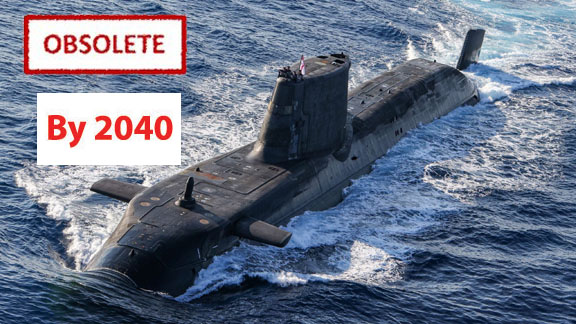
Growing signs Australia’s new nuclear submarine will be British design
Breaking Defense , (Sponsored by Northrop Grumman) By COLIN CLARK and TIM MARTIN February 10, 2023
SYDNEY and BELFAST — With the formal announcement of Australia’s path to obtain nuclear attack submarines expected to happen in Washington next month, speculation about the likely solution AUKUS is beginning to leak out.
The most intriguing hints center on a British boat — but not the Astute-class — based in part on rare public comments by Australian Defense Minister Richard Marles and his British counterpart, UK Defence Secretary Ben Wallace……………………………………
From the first announcement of the AUKUS effort, Australia has said it intends to build boats at home. However, developing the nuclear expertise from a tiny pool of a few dozen individuals to potentially thousands of people will take time, as will development of the highly skilled welders and other technical experts needed to build and maintain nuclear powered boats. Developing a new design and building a new shipyard to produce it seems unrealistic, given the lack of domestic expertise — especially if the goal is to deploy nuclear attack submarines before the conventionally powered Collins-class attack subs are retired.
That has prompted talk of America supplying Australia with refitted Los Angeles-class boats or providing Virginia-class boats that would be crewed by Australians, but both options pose many obstacles. America doesn’t seem able to build nuclear attack boats quickly enough to meet its stated requirement of 66, which prompted two top defense lawmakers in the Senate to caution President Joe Biden against committing the US to supplying Australia with nuclear boats.
Given the concerns about personnel and Marles’ comments, there is reason to think Britain’s next-generation sub, which will require a much smaller crew than do any of the American boats are in play……………….
“Among the ‘straws in the wind’ are the UK’s ambitions to rebuild its own submarine fleet. The Royal Navy would like to see a rise from the planned seven Astute-class attack submarines to perhaps 12 boats in the long term.
In a speech in December 2022, the UK chief of the defence staff, Admiral Sir Tony Radakin, said of AUKUS that ‘if we have the courage to do this properly’ it could help grow the UK’s own submarine numbers in the decades to come, clearly assisted in part by potential economies of scale under AUKUS.”

Jonathan Mead
Back in November 2021, the man who led the day-today work on the AUKUS boats in Australia, Vice Adm. Jonathan Mead, told an Australian Senate committee that his country intended to select a “mature design” for its nuclear submarine. “It is our intention,” Mead said then, “that when we start the build program, the design will be mature and there will be a production run already in existence.” That would appear to make the British offering a candidate…………………
Sidharth Kaushal, a sea power expert at the Royal United Services Institute think tank, told Breaking Defense:
“The point of friction that introduces with the UK [revolves around] the Australians operating with the US Navy primarily in the Indo-Pacific and their preference for things like prompt strike capabilities, including cruise missiles and potentially hypersonic missiles. The [US Navy] Virginia-class payload module can host those weapons but the [Royal Navy’s] Astute-class can torpedo launch cruise missiles but doesn’t necessarily offer prompt strike capabilities.”
All seven Astute-class submarines are due to be in service with the Royal Navy by 2026, each with a life cycle of 25 years. …………….
“There’s much more work to be done when you look at areas of joint production…but for the initial project of delivering a new Australian submarine there’s going to be some compromises,” Kaushal said. “For the US, this works out quite nicely but their big challenge of course remains, that their production lines are struggling to meet US Navy requirements.”
Should the Virginia-class be selected for the Australian requirement, the US would also benefit from new basing facilities for the future submarines, he added.
“It would effectively give the US an additional SSN base separate to Guam, which is of course an inherently vulnerable location and will be more so going forward,” Kaushal explained.
Operationally, how the future Australian submarines operate in the Indo-Pacific looks to be particularly difficult to assess in light of China formidable ASW capabilities, like Type 56 Corvettes and Y-8 maritime patrol aircraft, combined with the often shallow waters of the South China Sea which can make nuclear submarine missions more difficult.
“China is investing in a pretty substantial sensor network in the South China Sea that includes under sea hydrophones, large unmanned underwater vehicles all linked up to artificial islands they have built,” Kaushal said. ………………………………. https://breakingdefense.com/2023/02/growing-signs-australias-new-nuclear-sub-will-be-british-design/
Here are eight reasons why the US has no interest in pushing for peace in Ukraine

Washington’s priority is to contain Russia and how the fighting ends for Kiev is a sideshow to the main objective
By Andrey Sushentsov, Valdai Club program director, 10 Feb 23, https://www.rt.com/news/571220-eight-reasons-us-war-ukraine/
It now appears that the US is not even remotely interested in supporting a peaceful resolution to the Ukrainian conflict, preferring to see the military campaign continue. Overall, strategic planning in Washington gives little thought to the parameters for ending the crisis: Whether Ukraine will remain within its current borders, lose its territories or disappear altogether.
Despite mounting casualties and the destruction of Ukraine’s military, appetite for military action has not diminished, neither in Kiev nor in Washington. Many international experts rightly identify the US as the key player in a large coalition advocating for continued hostilities in Ukraine. In less than a year of crisis, Kiev has exhausted its own military resources and the means to replace them, and is totally dependent on external assistance.
Though the US is taking the lead in coordinating and strategizing support from the West, it would be wrong to equate Ukrainian and American interests. While continuing to pay lip service to Kiev’s political demands, Washington is carefully assessing the right moment to initiate negotiations. The need for diplomatic efforts to resolve the conflict has been increasingly emphasized by US military leaders, most notably the Chairman of the Joint Chiefs of Staff Mark Milley. The idea continues to circulate in the British press that the American tactic is to escalate the conflict in order to later de-escalate it: to pressure Russia with a wave of large-scale deliveries of military equipment and to put Kiev in a more favorable negotiating position.
However, it cannot be overlooked that the continuation of the military crisis in Ukraine is in line with US military and political interests. There are a total of eight arguments suggesting that the Americans intend to prolong this conflict.
First, there is the relative weakening of Russia, which has had to devote considerable resources to eliminating the military threat from Ukraine, as well as to achieving its political objectives of securing equal status in post-Cold War European security architecture. The Western media narrative that Russia is on the verge of defeat, while far from reality, gives the impression that all the West needs to do so is adopt a wait-and-see attitude. The lack of decisive Russian military victories leads to the perception that Ukraine is winning.
Second, the US has a vested interest in breaking up EU-Russian energy cooperation. This has developed over many decades, beginning during the Cold War. The sabotage of the Nord Stream pipelines, apparently conducted with the assistance of another NATO state, was the culmination of a long-term American strategy to dismantle the extensive links between Moscow and key West European economies. The Americans want to shift European energy consumption away from Russia and create a more difficult environment for broader European industry, so that American goods face less competition, thus strengthening their own position.
Third, the US wants to eliminate any impulse for strategic autonomy among EU states. The Ukrainian crisis provides a golden opportunity for this, as the US and its allies in Eastern Europe have managed to create a moment of moral panic in the information space, preventing any reflection on the causes and consequences of the crisis. Strategic decisions on arms transfers are being taken under pressure from the media and a radicalized section of the public, without any analysis of the consequences. Leaders and elites who might have been able to reflect with detachment and sobriety on the consequences of the slide of EU-Russia relations into a deep crisis, are now outnumbered and essentially voiceless.
Fourth, the US does not want to see the defeat of Ukraine, into which much financial, political and symbolic capital has been invested over the past year. In the eyes of the West, Ukraine is its “champion”. The old narrative of European civilization struggling against the barbaric East, going back to the days of ancient Greece and its confrontation with the Persian hordes, is being played out here. Ukraine’s defeat would be a sensitive symbolic defeat for the West and would leave an “open wound” in the minds of many intellectuals.
Fifth, the US has not retreated from the ideological imperative to defend what it interprets as “freedom”. In the situation around Ukraine, there is a Manichean presentation of the struggle for “freedom against unfreedom”. Washington also sees this ideological imperative manifest in the domestic situation in Ukraine, which of course is only possible if you look at the political processes in Kiev “through your fingers”. By playing along with this narrative, Vladimir Zelensky’s government seeks to present itself to the West in such ideological categories.
The sixth US objective is to encourage Western Europe to remilitarise. Washington is aware that prolonged military competition is not possible using American forces alone. Moreover, the US is conscious of the growing threat from China and realizes that its resources will soon be diverted to a confrontation in the Pacific. In the European theater, Washington is therefore looking for ways to strengthen the EU’s military-industrial complex so that national defense budgets can be raised to at least 2 percent of GDP.
Seventh, the US seeks to consolidate its European allies around a platform of fighting its “rising” adversaries such as Russia, China and Iran. Here, the US is trying to be resourceful in building coalitions willing to produce and sell expensive, high-tech weapons.
Eighth, the US is also pursuing its own re-industrialisation through Ukraine. The expansion of the military-industrial complex is seen as an important goal for America. After the Cold War, it was reoriented to produce a limited number of high-tech products, whereas modern conventional warfare requires the large-scale production of relatively inexpensive generic artillery, tank and aircraft systems.
All this makes the US extremely uninterested in working for a peaceful solution to the conflict in the short term. The Americans believe that time is on their side and that the eight objectives listed above will be achieved. This makes their strategy rather flexible and demonstrates that their priority is to contain Russia rather than secure the future security and prosperity of Ukraine.
Much-hyped tanks for Ukraine are in short supply– WSJ
https://www.rt.com/news/571237-nato-tanks-ukraine-shortage/ 10 Feb 23
European NATO members are “dragging their feet” on sending Leopards to Kiev, the outlet says.
NATO members have developed “sudden misgivings” about sending tanks to Ukraine because they don’t seem to have any to spare, the Wall Street Journal reported on Thursday. Finland, which pressured Germany to approve exports of Leopard 2 tanks, may only be able to send “a few” of its own – and most likely not until it formally joins the US-led military bloc.
This has left Berlin as the only major supplier of tanks to Kiev, something Chancellor Olaf Scholz had been keen to avoid, the Journal noted.
There are more than 2,000 Leopard 2 tanks in the stocks of various European NATO armies, but only Berlin and Warsaw have committed to sending any. Germany and Poland have promised about 14 apiece. Warsaw will also throw in 60 of its modified T-72s, while Berlin is buying up almost 190 decommissioned Leopard 1s for refurbishment, some of which may need to be cannibalized for parts.
In a December interview, Ukraine’s top general asked for 300 tanks right away. Canada has promised four tanks, while Portugal wants to send three.
“The fact that there are so few operational battle tanks and that they are so incompatible with each other should be taken as an alarm signal in Europe,” Nico Lange, a former German defense official who is now a senior fellow at the Munich Security Conference, told the Journal.
The Netherlands and Denmark will not send any of their tanks, but agreed to help Germany fund the purchase and refurbishment of around 100 older Leopard 1 models, which were retired 20 years ago and are currently in various states of disrepair.
Denmark only has 44 Leopards and the Dutch operate 18 that are on lease from Germany, noted Minna Alander of the Finnish Institute of International Affairs. Finland faces a different “limitation” due to its own need to protect the country’s long border with Russia, she added.
Finland will be “part of the Leopard 2 cooperation in some way,” an anonymous senior official told the Journal, but declined to give any details. Helsinki has “signaled” it would “most likely” avoid tank deliveries until it officially joins NATO, according to a senior bloc official, likewise unnamed. Even then, it may only be able to spare a few of its 240 operational tanks.
The UK has promised 14 of its Challenger 2 tanks, saying they ought to be delivered by the end of March. The US pledged 31 Abrams tanks as well, but getting them to Ukraine might take up to two years. Ukrainian President Vladimir Zelensky has already moved on, demanding fighter jets on his trip to London, Paris and Brussels.
The US and its allies have spent over $120 billion to prop up the Kiev government over the past year, while insisting they are not a party to the conflict. Moscow has warned them that supplying Ukraine with weapons only prolongs the fighting and risks direct confrontation.
North Korea shows off largest-ever number of nuclear missiles at anniversary parade
ABC News 9 Feb 23,
Nuclear-armed North Korea showcased its missile production muscle during a night-time parade, state media reported on Thursday, displaying more intercontinental ballistic missiles (ICBMs) than ever before and hinting at a new solid-fuel weapon.
Key points:
- As many as 11 Hwasong-17s, North Korea’s largest ICBM, were shown during the parade
- Analysts say that 11 ICBMs would be enough to overwhelm US missile defences
- A prototype of a new solid-fuel ICBM also appeared to be displayed
The country has forged ahead with its ballistic missile program, test-launching dozens of advanced missiles last year despite United Nations Security Council resolutions and sanctions.
“This time, Kim Jong Un let North Korea’s expanding tactical and long-range missile forces speak for themselves,” said Leif-Eric Easley, a professor at Ewha University in Seoul.
…………………………………………. more https://www.abc.net.au/news/2023-02-09/north-korea-shows-off-largest-ever-number-of-nuclear-missiles/101954372
Three years without one single on-site US nuclear weapons inspection at base for Northern Fleet ballistic missile submarines
The State Department says Russia has denied the United States its right to conduct inspections under the New START Treaty.
Barents Observer, By Thomas Nilsen 10 Feb 23
Concerns are growing as the last remaining key arms control agreement between the two, by far, largest nuclear weapons states is weakened due to a lack of on-site verifications.
“Russia has failed to comply with its obligation to facilitate U.S. inspection activities,” the State Department’s latest Report to Congress on the implementation of the New START Treaty reads.
Not since before the COVID-19 pandemic have U.S. inspectors been in Gadzhiyevo, the Russian Northern Fleet’s base for ballistic missile submarines on the Kola Peninsula.
Here, both the Delta-IV and the newer Borei-class submarines load missiles armed with nuclear weapons before sailing out on deterrence patrols in Arctic waters.
The storage bunkers for missiles in both Gadzhiyevo and Okolnaya Bay have been substantially upgraded and expanded in recent years, the Barents Observer previously reported based on studies of satellite images.
The Russia-US treaty on reduction of strategic offensive arms was signed by the two presidents Dmitri Medvedev and Barack Obama in 2010 and limits the number of deployed warheads to 1,550 in each country. The limit on deployed missiles and bombers is set to 700 on each side
………………………………………………………………. Director of the Nuclear Information Project with the Federation of American Scientists, Hans Kristensen, writes in an analysis together with Matt Korda that the lack of inspections does not mean Russia has deployed more nuclear weapons than is limited by the Treaty. The two, however, are worried about the future of the arms treaty itself.
“It is clear that the longer that these compliance issues persist, the more they will ultimately hinder US-Russia negotiations over a follow-on treaty, which is necessary in order to continue the bilateral strategic arms control regime beyond New START’s expiry in February 2026,” Kristensen and Korda noted…………………… more https://thebarentsobserver.com/en/security/2023/02/b2b
The US is preparing Australia to fight its war against China

The United States is not preparing to go to war against China. The United States is preparing Australia to go to war against China.
Defence and military weapons manufacturing industries in Australia are now largely owned by US weapons corporations – Lockheed Martin, Raytheon, Boeing, Thales, NorthropGrumman. The deep integration of Australia’s defence industries and economy into the US military-industrial complex greatly influences Australia’s foreign/defence policies.
The Threat. All these preparations are justified by the false premise that China presents a military threat. China has not invaded anywhere. It has never proposed use of force against other countries. It has enshrined in its Constitution the ‘Three No’s – No military alliances; No military bases; No use, or threat to use, military force. China has, however, reserved the right to use force to prevent secession by Taiwan.
Guardian, By John Lander, Feb 1, 2023 Edited transcript of a speech to the Committee for the Republic, Salon, 18 January 2023.
The ANZUS Treaty
A look at the ANZUS Treaty and the way it has been manipulated over time will explain why I have come to this conclusion.
Originally defensive in concept, the ANZUS Treaty was seen by Australia from its very beginning as a means to “achieve the acceptance by the USA of responsibility in SE Asia” (Percy Spender) to shield Australia from perceived antagonistic forces in its region. It has, however, developed into an instrument for the furtherance of US ability to prosecute war globally – previously in Iraq and Afghanistan, currently against Russia and potentially against China.
The ANZUS Treaty, usually referred to in reverential tones as “The Alliance”, has been elevated to an almost religious article of faith, against which any demur is treated as heresy amounting to treachery. Out of anxiety to cement the US into protection of Australia, the Alliance has been invoked as justification for Australia’s participation in almost every American military adventure – or misadventure – since WW II.
Unlike NATO or the Defence Treaty with Japan, the ANZUS treaty actually provides no guarantee of protection, merely assurances to consult on appropriated means of support in the event that Australia should come under attack.
On the other hand, the Alliance has facilitated the steady growth of American presence in Australia, to the point that it pervades every aspect of Australian political, economic, financial, social and cultural life. Australians fret about China “buying up the country”, but American investment is ten times the size.
They are unaware or uncaring that almost every major Australian company across the resources, food, retail, mass media, entertainment, banking and finance sectors has majority American ownership. Right now US corporations eclipse everyone else in their ability to influence our politics through their investment in Australian stocks.

The transfer of Australian assets to American ownership has continued unabated: In the second half of 2021 then Treasurer Josh Frydenberg approved the transfer of $130 billion of Australian assets to foreign private equity funds, benefiting Goldman Sachs who facilitated the transactions, by multimillions of dollars. Josh Frydenberg now is employed by Goldman Sachs:
- Sydney Airport – Macquarie Bank led by a NY investment banker
- AusNet (electricity infrastructure) $18 billion takeover by Brookfield – NY via Canada
- SparkInfrastructure (electricity) $5.2 billion takeover by American interests
- AfterPay financial transaction system $39 billion takeover
- Healthscope, second-biggest private hospitals group (72 Hospitals) taken over by Brookfield and now controlled in the Cayman Islands.
The USA and the UK between them represent nearly half of all foreign investment. China plus Hong Kong represents 4.2%. The 4 big “Aussie” banks are dependent on foreign capital which dictate local banks’ policies and operations.
Defence and military weapons manufacturing industries in Australia are now largely owned by US weapons corporations – Lockheed Martin, Raytheon, Boeing, Thales, NorthropGrumman. The deep integration of Australia’s defence industries and economy into the US military-industrial complex greatly influences Australia’s foreign/defence policies.
That, plus US capture of Australia’s intelligence and policy apparatus through the “Five Eyes” network and ASPI (which has lobbyists from American arms manufacturers on a Board headed by an operative trained by the CIA) means that the US is able to swing Australian policy to support America in almost all its endeavours.
Despite the fact that it contains no guarantee of US protection of Australia, the Treaty and further arrangements under its auspices, such as the 2014 Force Posture Agreement and now AUKUS, have greatly facilitated US war preparation in Australia. This has accelerated exponentially in the past few years. The US now describes Australia as the most important base for the projection of US power in the Indo-Pacific.
Indicators of war preparations
* 2,500 US marines stationed in Darwin practicing for war with the Australian Defence Forces, soon to include the Japanese Defence Forces
* Establishment of a regional HQ for the U.S. Indo-Pacific Command in Darwin
* Lengthening the RAAF aircraft runways in Northern Territory at our expense for servicing US fighters and bombers
* Proposed stationing of 6 nuclear weapons-capable B52 Bombers at RAAF Tindal in NT
* Construction of massive fuel and maintenance facilities in Darwin NT for US aircraft
* Proposed acquisition of eight nuclear-propelled submarines at the cost of $170 billion for hunter-killer operations in the Taiwan Strait
* Construction, at the cost of $10 billion, of a deep water port on Australia’s east coast for US and UK nuclear powered and nuclear missile-carrying submarines
* The long-established satellite communications station known as Pine Gap in central Australia has recently, and is still being, expanded and upgraded. It is key to the command and control of US forces in the Indo-Pacific (and even as far afield as Ukraine)
The Government and right wing anti-China analysts and commentators, whose opinions dominate main stream media, accept the Defence Minister’s contention that this militarisation enhances Australia’s sovereignty by strengthening the range and lethality of Australia’s high-end war-fighting capability to provide a credible deterrent to a potential aggressor.
Many analysts and commentators outside the governing elite, including myself, argue that these arrangements effectively cede Australian sovereignty to America. This is especially because of the provisions of the Force Posture Agreement of 2014, entered into under the auspices of ANZUS.
I understand that a paper has been circulated to the Committee, expounding the details of the FPA, so in summary, it gives unimpeded access, exclusive control and use of agreed facilities and areas to US personnel, aircraft, ships and vehicles and gives Australia absolutely no say at all in how, when where and why they are to be used.
All Australian analysts, whether sympathetic or antipathetic to China, agree on one point. That is, that if the US goes to war against China over the status of Taiwan, or any other issue of contention, Australia will inevitably be involved.
The Threat
All these preparations are justified by the false premise that China presents a military threat. China has not invaded anywhere. It has never proposed use of force against other countries. It has enshrined in its Constitution the ‘Three No’s – No military alliances; No military bases; No use, or threat to use, military force. China has, however, reserved the right to use force to prevent secession by Taiwan.
It has recently rapidly increased its defence capability in response to the fearsome US naval presence and war-fighting exercises just off its coastline. Its defence budget is one third that of the US and the bases that it has constructed in the South China Sea pale into insignificance compared to the hundreds of bases that the US has ranged all around China.
So, if China is not a military threat, why is it designated as the primary systemic threat of the collective West, led by the US? The answer lies in the word “systemic”. China has expressed a determination to revamp the global financial system to make it fairer for developing countries. Kissinger is reputed to have said: “If you control money, you control the world”. The US currently controls world finance and China (with Russia) is out to change that.
The US, which played the leading part in the establishment of the post-World War II institutions, has become a leading revisionist, abandoning the UN for “coalitions of the willing”. The US has declined to join important Conventions like those on the Law of the Sea and on Climate. It has refused to accept the jurisdiction of the International Court of Justice and the International Criminal Court, and has exempted itself from the Genocide Convention. It has played a leading part in the weakening of the World Trade Organisation by imposing trade restrictions on other countries, while not agreeing to new appointments to the WTO’s appellate tribunal, so preventing that body from functioning.
China is the second-largest (or by some calculations, the largest) economy in the world. It is the major trading partner of over 100 countries, mainly in the global south, but including Australia and a number of other Western countries. Hence China has the clout to undermine the “international rules-based order” set up by, and for the benefit of, the West.
China has already established an alternative to the Anglo-American international financial transaction system: – the Cross-border Interbank Payments System CIPS, (in which, ironically a number of Western banks are shareholders). In collaboration with Russia and within the BRICS (Brazil, Russia, India, China & South Africa) China is creating an alternative to the almighty dollar as the preferred currency for trade and for national reserve holdings.
It seems that the US has concluded that, since it can’t constrain China economically, it will have to get it bogged down in a long-drawn-out war to hinder its economic growth and hamper its infrastructure development cooperation with other countries. On 25 March 2021 President Biden vowed to prevent China from overtaking the US as the most powerful country in the world – “not on my watch” he said.
Nevertheless, the latest CSIS computer modelling, like previous modelling by the Rand Corporation, indicates that all involved in a Sino-US war would lose.
Proxy War
All of these analyses overlook one significant point. US determination to pursue the Wolfowitz doctrine of preventing the rise of any power that could challenge US global supremacy (neither Russia, nor Europe, nor China) has not diminished, but has morphed into a strategy of fighting its adversaries by proxy.
This has been clearly demonstrated by the war in Ukraine. A White House press briefing on 25 January 2022, before the Russian intervention, stated that “the US, in concert with its European partners, will weaken Russia to the point where it can exercise no influence on the international stage”.
Political leaders from Biden, through Pelosi and on to Members of Congress have told Ukraine that “your war is our war and we are in it for as long as it takes”. Congressman Adam Schiff put it bluntly that “we support Ukraine… to fight Russia over there, so that we don’t have to fight it over here”.
In the case of China, defined in the NDS as the principal threat to the US, the proxy of choice is clearly Taiwan. The strategy envisages:
• a world-wide media campaign (going on for several years already) to portray China as the aggressor;
• goading China into taking military action to prevent Taiwan’s secession;
• leaving Taiwan to conduct its own defence, with constant resupply of arms and equipment from the US, at great profit to the military/industrial complex;
• sustaining Taiwan sufficiently to keep China ‘bogged down’, thus hampering its economic development and its infrastructure cooperation with other countries;
• avoiding direct military engagement, in order to maintain the full capacity of US forces, while China’s would be significantly depleted; Although Biden has publicly re-affirmed adherence to the ‘One China’ principle, the US has been goading China by;
• stationing the bulk its naval power off the coast of China;
• ‘freedom of navigation’ and combat exercises in the South China Sea and Taiwan Straits;
• visits by senior US officials using US military aircraft;
• creation of a putative ‘Air Defence Identification Zone’ (ADIZ) extending well over mainland territory and then alleging Chinese violation of it;
• secretly providing military training personnel (whilst denying it);
• including Taiwan in the Summit for Democracy (9-10 December 2021), implying it is a separate country;
Many Australian politicians, (although not the present government), joined in goading China, by encouraging Taiwan to consider the possibility of declaring independence, which would trigger military action by China.
If Australia were to make good on its promise to ‘save Taiwan’, it would be devastated:
• The Australian navy would be obliterated, given the disparity between China’s and Australia’s forces;
* command/control centres (and possibly cities) in Australia could be wiped out by Chinese missiles. Australia has no anti-missile defence;
• To preserve its own assets, and to forestall the descent into nuclear conflict, the US would not engage directly in defence of Australia;
• US ‘support’ would be through massive arms sales to replace our losses – just as in Ukraine – at further profit to the US military/industrial complex;
• ASEAN is unlikely to support Australia. It has renewed and up-graded its Comprehensive Strategic Partnership with China. Each member country has infrastructure projects under China’s BRI, which they would not want to jeopardise in a ‘no-win war’;
Support from India is unlikely, despite its membership of the Quad – which is nothing more than a consultative dialogue. India has security commitments to China under the SCO and gets its arms from Russia, which has a “better than treaty” relationship with China.
• Australia relies heavily on China for many daily necessities. In a war, deliveries from China would be severely disrupted.
The increasing size of China’s economic (and, by extension military) strength, to which Australia contributes important resources and from which it derives so much benefit, is portrayed as a threat to Australia’s security. This has Australia trapped in the absurd policy paradox of preparing to go to war against China to protect Australia’s trade with China.
Recent developments in Taiwan, particularly the county and municipal elections, which caused the President, Tsai Ingwen, to resign her leadership of the pro-Independence Party, suggest that Taiwan prefers the status quo and is unwilling to be the proxy of the US in a war with Beijing.
Australia thus becomes the potential proxy.
In the name of the Alliance, American service personnel (active and retired) are now embedded in Australian defence policy making institutions and in command and control positions within the ADF. All of the American military assets installed in Australia under the Alliance and the AUKUS deal, are now “interchangeable” with the ADF, making it possible to use them as putative Australian forces against China, while the US stands aside and maintains the same pretence of “no engagement”, as it is doing in Ukraine.
This is why I said at the beginning that the US is preparing to send Australia to war against China.
Whilst these are the dangers that the ANZUS Alliance poses for Australia if the US instigates a war against China, there are risks for the US also.
1. There would be crippling expense that further exacerbates the US wealth divide and related domestic political breakdown. Supplying the weaponry and everything else required for a proxy war with China would be a bigger drain on the US budget than the Ukraine conflict. The expenditure would flow back to the military industrial complex, constituting a further massive transfer of wealth from the ordinary taxpayer to the plutocrat billionaires. It would blow out the already unsustainable national debt, and either take away from expenditure on essential services and infrastructure, or, if they print money, further blow out inflation. The political and social breakdown that the US is already suffering as a consequence of its real economic decline and widening wealth gap could only intensify to breaking point.
2. The slide into a direct war would probably be inevitable. Planning a proxy war is all very well as an academic exercise, but sticking with those plans when the fighting starts will be very difficult. There are already lunatic politicians and “experts” in the US who think America can win a direct war, so when China starts bombing Australia, and good old Aussie “mates” are dying in massive numbers, the voices of those in the US advocating direct engagement will be amplified. Combined with the already extreme polarisation of US politics in which ONLY war is bipartisan, the risk that extremists will take the US into direct conflict, and a nuclear showdown with China, is very serious.
3. The folding in of Japan into the AUKUS arrangements will increase the risk that Japan would be obliged to assist Australia in any military conflict with China. The US, because of its Defence Treaty with Japan, would then be obliged to join in the fighting, vitiating its plan to avoid direct military engagement.
A point of historical irony:
I’ll wind up with a bit of historical irony, in which I was personally involved:
In the early 70’s, we had been kept completely in the dark about the secret Kissinger visits to China, until the plan for Nixon to visit was announced. Feeling blindsided by a momentous change in US policy towards China, we produced Policy Planning Paper QP11/71 of 21 July 1971.
It recognised.. “political disadvantage resulting from the manner in which the United States conducts its global policies” and argued that this would mean that. “The American alliance, in a changing power balance, will mean less to us than it has in the past.”
It went on:
“If anything, this argument has been strengthened by recent United States actions and America’s failure to consult us on issues of primary importance to Australia. Accordingly, we shall need, now more than ever, to formulate independent policies, based on Australian national interests and those of our near neighbours…”
This is even more true today than it was in the 1970’s. For example, Australia was not consulted in the precipitate US withdrawal from Afghanistan, despite our role as ‘loyal’ supporter of the US in that ill-advised conflict. Our indignant protestations were met with Biden’s statement that “America acts only in its own interests”.
Our present predicament is due largely to the failure of a succession of Australian Governments to take this analysis to heart and act upon it. Prime Minister Fraser, who replaced Whitlam, ironically came to a very similar view towards the end of his life, which he set forth in detail in his book ‘Dangerous Allies’, but too late to do anything about it. He identified the paradox that Australia needs the US for its defence, but it only needs defending because of the US.
A couple of pertinent quotes, first from the late Jim Molan:
“Our forces were not designed to have any significant independent strategic impact. They were purely designed to provide niche components of larger American missions.”
We were, in his view, abdicating our own defence and cultivating complete dependence on the Americans.
And from Chris Hedges:
“Finally, the neo-cons who have led the U.S. into the serial debacles of Afghanistan, Iraq, and now Ukraine, costing the country tens of trillions of dollars and even greater amounts of destroyed reputational capital, will claim their customary immunity from any accountability for their savage failures and cheerily move on to their next calamity. We need to be on the lookout for their next gambit to pillage the treasury and advance their own private interests above those of the nation. It will surely come.”
An (incomplete) list of some of the commentators from whom I have drawn:
John Menadue – former secretary PM&C
Richard Tanter – military analyst, Nautilus Foundation
Brian Toohey – author (political and historical analysis)
Mike Scrafton was a senior Defence executive, and ministerial adviser to the minister for defence
Paul Keating was the prime minister of Australia from 1991 to 1996.
Geoff Raby AO was Australia’s ambassador to China (2007–11); He was awarded the Order of Australia for services to Australia–China relations and to international trade.
Gregory Clark began his diplomatic career with postings to Hong Kong and Moscow. He is emeritus president of Tama University in Tokyo and vice-president of the pioneering Akita International University.
Dr Mike Gilligan worked for 20 years in defence policy and evaluating military proposals for development, including time in the Pentagon on military balances in Asia.
Jocelyn Chey AM is Visiting Professor at the University of Sydney and Adjunct Professor at Western Sydney University and UTS. She formerly held diplomatic posts in China and Hong Kong. She is a Fellow of the Australian Institute of International Affairs.
Joseph Camilleri is Emeritus Professor at La Trobe University in Melbourne, a Fellow of the Australian Academy of Social Sciences, and President of Conversation at the Crossroads
David S G Goodman is the Director, China Studies Centre, University of Sydney.
Geoff Miller was Director-General, Office of National Assessments, deputy secretary, Department of Foreign Affairs, Ambassador to Japan and the Republic of Korea, and High Commissioner to New Zealand.
Cavan Hogue was Ambassador to USSR and Russia. He also worked at ANU and Macquarie universities.
1 This Month




PLEASE OPPOSE HR 8255 AND S.3639 – bills would accelerate satellite deployment, with no environmental review or safeguards – https://ncstd5li.quorum.us/campaign/169331/
To see nuclear-related stories in greater depth and intensity – go to https://nuclearinformation.wordpress.com
-
Archives
- September 2026 (330)
- August 2026 (330)
- July 2026 (355)
- June 2026 (287)
- May 2026 (306)
- April 2026 (356)
- March 2026 (251)
- February 2026 (267)
- January 2026 (308)
- December 2025 (358)
- November 2025 (359)
- October 2025 (375)
-
Categories
- 1
- 1 NUCLEAR ISSUES
- business and costs
- climate change
- culture and arts
- ENERGY
- environment
- health
- history
- indigenous issues
- Legal
- marketing of nuclear
- media
- opposition to nuclear
- PERSONAL STORIES
- politics
- politics international
- Religion and ethics
- safety
- secrets,lies and civil liberties
- spinbuster
- technology
- Uranium
- wastes
- weapons and war
- Women
- 2 WORLD
- ACTION
- AFRICA
- Atrocities
- AUSTRALIA
- Christina's notes
- Christina's themes
- culture and arts
- Events
- Fuk 2022
- Fuk 2023
- Fukushima 2017
- Fukushima 2018
- fukushima 2019
- Fukushima 2020
- Fukushima 2021
- general
- global warming
- Humour (God we need it)
- Nuclear
- RARE EARTHS
- Reference
- resources – print
- Resources -audiovicual
- Weekly Newsletter
- World
- World Nuclear
- YouTube
-
RSS
Entries RSS
Comments RSS

