Israeli Forces Have Killed 366 UN Workers and Family Members in Gaza: Leaked Report
Confidential figures shed additional light on what’s been the deadliest-ever war for United Nations staff.
Jake Johnson, Jul 24, 2024, https://www.commondreams.org/news/un-workers-killed-in-gaza
A leaked report obtained by Drop Site estimates that Israeli forces have killed at least 366 United Nations staffers and their family members in the Gaza Strip since October, an indication of the grave threat Israel’s ongoing assault poses to humanitarian relief workers and the enclave’s broader civilian population.
Drop Site‘s Ryan Grim reported Wednesday that the confidential figures, assembled by the U.N.’s Crisis Coordination Center, show that three family members of World Food Program staffers and four dependents of U.N. Children’s Fund workers were among those killed by Israeli forces. The total number of U.N. staffers killed so far is 195, according to the data.
The U.N. Relief and Works Agency for Palestine Refugees in the Near East (UNRWA), the primary aid agency operating in Gaza, has seen the largest impact on staffers and their family members. The leaked report estimates that Israeli forces have killed 158 dependents of UNRWA staffers since October.
Israel’s devastating military campaign in Gaza, aided by U.S. weaponry and diplomatic support, is by far the deadliest-ever war for U.N. personnel, who have repeatedly been targeted by the Israel Defense Forces (IDF).
Over the weekend, Israeli soldiers fired on a U.N. convoy heading toward Gaza City. UNRWA Commissioner-General Philippe Lazzarini said that “the teams were traveling in clearly marked U.N. armored cars and wearing U.N. vests.”
“While there are no casualties, our teams had to duck and take cover,” he added. “Like all other similar U.N. movements, this movement was coordinated and approved by the Israeli authorities.”
Targeting humanitarian relief personnel is a war crime.
Grim noted that the leaked report is just “the latest in a series of alarming findings regarding Israel’s actions in Gaza,” much of which is facing famine conditions due to what U.N. experts recently described as a “targeted starvation campaign” by Israel.
During a 12-hour period earlier this week, Israeli forces killed at least 70 Palestinians and wounded around 200 others—mostly women and children—in a barrage of attacks on the city of Khan Younis, according to the Euro-Mediterranean Human Rights Monitor.
The confidential U.N. data emerged hours before Israeli Prime Minister Benjamin Netanyahu’s scheduled address to a joint meeting of the U.S. Congress on Wednesday afternoon. Dozens of Democratic lawmakers are expected to boycott the prime minister’s speech.
U.S. Rep. Rashida Tlaib (D-Mich.), the lone Palestinian American in Congress, argued Tuesday that Netanyahu “should be arrested and sent to the International Criminal Court,” alluding to that body’s request for an arrest warrant for the Israeli prime minister.
On Tuesday, hundreds of demonstrators were arrested on Capitol Hill during a peaceful Jewish-led demonstration against Netanyahu’s visit and U.S. complicity in the IDF’s mass atrocities in Gaza.
Tit for tat? Putin warns Russia may resume production of intermediate-range nuclear weapons
Edited By: Vikrant Singh Jul 28, 2024 https://www.wionews.com/world/tit-for-tat-putin-declares-russia-to-resume-production-of-intermediate-range-nuclear-weapons-744964
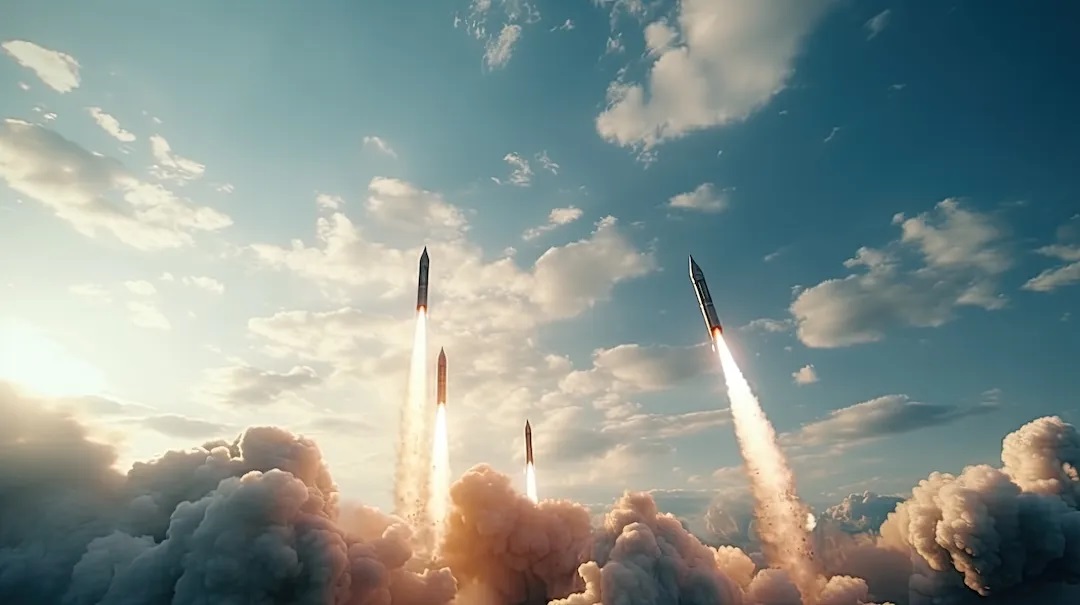
Russian President Vladimir Putin on Sunday (Jul 28) declared his nation won’t shy away from resuming production of intermediate-range nuclear weapons if the US goes ahead with plans of deploying such missiles to Germany or elsewhere in Europe. These missiles can travel between 500 and 5,500 kilometres.
“If the United States carries out such plans, we will consider ourselves liberated from the unilateral moratorium previously adopted on the deployment of medium- and short-range strike capabilities,” Putin threatened during a naval parade in Saint Petersburg.
Notably, intermediate-range nuclear weapons were subject to an arms control treaty that the US and Soviet Union signed in 1987. However, the Intermediate-Range Nuclear Forces Treaty collapsed in 2019 after both sides accused each other of violations.
Following the withdrawal from the treaty, Russia announced it wouldn’t start production of the weapons until the US started deploying these missiles abroad.
Earlier this month, the US announced it will start “episodic deployments” of long-range US missiles, including Tomahawk cruise missiles, in Germany beginning 2026.
Now, Russia sees it as a direct threat to its national security. After the deployment by the US, Putin said that “important Russian administrative and military sites” would fall within the range of such missiles that “could in the future be equipped with nuclear warheads, such that our territories would be within around 10 minutes” of a strike being launched.
“This situation reminds us of the events of the Cold War linked to the deployment of American Pershing medium-range missiles in Europe,” the Russian leader added.
Earlier in March, Putin had said Russia was “technically ready” for a nuclear war if the US sent troops to Ukraine.
“From a military-technical point of view, we are, of course, ready,” Putin had said.
“I don’t think that here everything is rushing to it (nuclear confrontation), but we are ready for this,” the Russian leader further said.
‘Atomic bomb hell must never be repeated’ say Japan’s last survivors

Atomic People will be broadcast on Wednesday 31 July on BBC Two and BBC iPlaye
Lucy Wallis, BBC News https://www.bbc.com/news/articles/crg5lyd25jno 26 July 24
It was early in the day, but already hot. As she wiped sweat from her brow, Chieko Kiriake searched for some shade. As she did so, there was a blinding light – it was like nothing the 15-year-old had ever experienced. It was 08:15 on 6 August 1945.
“It felt like the sun had fallen – and I grew dizzy,” she recalls.
The United States had just dropped an atomic bomb on Chieko’s home city of Hiroshima – the first time a nuclear weapon had ever been used in warfare. While Germany had surrendered in Europe, allied forces fighting in World War Two were still at war with Japan.
Chieko was a student, but like many older pupils, had been sent out to work in the factories during the war. She staggered to her school, carrying an injured friend on her back. Many of the students had been badly burnt. She rubbed old oil, found in the home economics classroom, onto their wounds.
“That was the only treatment we could give them. They died one after the next,” says Chieko.
“Us older students who survived were instructed by our teachers to dig a hole in the playground and I cremated [my classmates] with my own hands. I felt so awful for them.”
Chieko is now 94 years old. It is almost 80 years since the atomic bombs were dropped on Hiroshima and Nagasaki and time is running out for the surviving victims – known as hibakusha in Japan – to tell their stories.
Many have lived with health problems, lost loved ones and been discriminated against because of the atomic attack. Now, they are sharing their experiences for a BBC Two film, documenting the past so it can act as a warning for the future
After the sorrow, new life started to return to her city, says Chieko.
“People said the grass wouldn’t grow for 75 years,” she says, “but by the spring of the next year, the sparrows returned.”
In her lifetime, Chieko says she has been close to death many times but has come to believe she has been kept alive by the power of something great.
The majority of hibakusha alive today were children at the time of the bombings. As the hibakusha – which translates literally as “bomb-affected-people” – have grown older, global conflicts have intensified. To them, the risk of a nuclear escalation feels more real than ever.
“My body trembles and tears overflow,” says 86-year-old Michiko Kodama when she thinks about conflicts around the world today – such as the Russian invasion of Ukraine and the Israel-Gaza war.
“We must not allow the hell of the atomic bombing to be recreated. I feel a sense of crisis.”
Michiko is a vocal campaigner for nuclear disarmament and says she speaks out so the voices of those who have died can be heard – and the testimonies passed on to the next generations.
“I think it is important to hear first-hand accounts of hibakusha who experienced the direct bombing,” she says.
Michiko had been at school – aged seven – when the bomb was dropped on Hiroshima.
“Through the windows of my classroom, there was an intense light speeding towards us. It was yellow, orange, silver.”
She describes how the windows shattered and splintered across the classroom – the debris spraying everywhere “impaling the walls, desk, chairs”.
“The ceiling came crashing down. So I hid my body under the desk.”
After the blast, Michiko looked around the devastated room. In every direction she could see hands and legs trapped.
“I crawled from the classroom to the corridor and my friends were saying, ‘Help me’.”
When her father came to collect her, he carried her home on his back.
Black rain, “like mud”, fell from the sky, says Michiko. It was a mixture of radioactive material and residue from the explosion.
She has never been able to forget the journey home.
“It was a scene from hell,” says Michiko. “The people who were escaping towards us, most of their clothes had completely burned away and their flesh was melting.”
She recalls seeing one girl – all alone – about the same age as her. She was badly burnt.
“But her eyes were wide open,” says Michiko. “That girl’s eyes, they pierce me still. I can’t forget her. Even though 78 years have passed, she is seared into my mind and soul.”
Michiko wouldn’t be alive today if her family had remained in their old home. It was only 350m (0.21 miles) from the spot where the bomb exploded. About 20 days before, her family had moved house, just a few kilometres away – but that saved her life.
Estimates put the number of lost lives in Hiroshima, by the end of 1945, at about 140,000.
In Nagasaki, which was bombed by the US three days later, at least 74,000 were killed.
Sueichi Kido lived just 2km (1.24 miles) from the epicentre of the Nagasaki blast. Aged five at the time, he suffered burns to part of his face. His mother, who received more serious injuries, had protected him from the full impact of the blast.
“We hibakusha have never given up on our mission of preventing the creation of any more hibakusha,” says Sueichi, who is now 83 and recently travelled to New York to give a speech at the United Nations to warn of the dangers of nuclear weapons.
When he woke up after fainting from the impact of the blast, the first thing he remembers seeing was a red oil can. For years he thought it was that oil can that had caused the explosion and surrounding devastation.
His parents didn’t correct him, choosing to shield him from the fact it had been a nuclear attack – but whenever he mentioned it, they would cry.
Not all injuries were instantly visible. In the weeks and months after the blast, many people in both cities began to show symptoms of radiation poisoning – and there were increased levels of leukaemia and cancer.
For years, survivors have faced discrimination in society, particularly when it came to finding a partner.
“‘We do not want hibakusha blood to enter our family line,’ I was told,” says Michiko.
But later, she did marry and had two children.
She lost her mother, father and brothers to cancer. Her daughter died from the disease in 2011.
“I feel lonely, angry and scared, and I wonder if it may be my turn next,” she says.
Another bomb survivor, Kiyomi Iguro, was 19 when the bomb struck Nagasaki. She describes marrying into a distant relative’s family and having a miscarriage – which her mother-in-law attributed to the atomic bomb.
“‘Your future is scary.’ That’s what she told me.”
Kiyomi says she was instructed not to tell her neighbours that she had experienced the atomic bomb.
Since being interviewed for the documentary, Kiyomi has sadly died.
But, until she was 98, she would visit the Peace Park in Nagasaki and ring the bell at 11:02 – the time the bomb hit the city – to wish for peace.
Sueichi went on to teach Japanese history at university. Knowing he was a hibakusha cast a shadow on his identity, he says. But then he realised he was not a normal human being and felt a duty to speak out to save humankind.
“A sense that I was a special person was born in me,” says Sueichi.
It is something the hibakusha all feel that they share – an enduring determination to ensure the past never becomes the present.
Atomic People will be broadcast on Wednesday 31 July on BBC Two and BBC iPlaye
While Netanyahu is feted in U.S. Congress, Israeli airstrike hits a school sheltering people in Gaza, killing at least 30
The strike came a day before officials from the U.S., Egypt, Qatar and Israel were scheduled to meet in Italy to discuss the ongoing hostage and cease-fire negotiations.NBC News, By Freddie Clayton and The Associated Press, 27 July 24,
Israeli airstrikes hit a school being used by displaced people in central Gaza on Saturday, killing dozens of people, as the country’s negotiators prepared to meet international mediators to discuss a proposed cease-fire.
At least 30 people sheltering at a girls school in Deir al-Balah were taken to Al Aqsa Hospital and pronounced dead after a strike that Israel’s military said targeted a Hamas command and control center used to store weapons and plan attacks.
The devastation was caught on camera by an NBC News team. Ambulance sirens rang out as footage showed hundreds of men and women rushing toward the school, or carrying their bloodied and injured away on makeshift stretchers.
Standing in the rubble, a young boy wept amid the chaos. “We were sitting, happily playing,” he said. “Missiles hit us. Four missiles went down on us. Glass and stones fell on us. Everything became dusty.”
A volunteer at a clinic at the school was inside at the moment of the strike. She carried her young son over her shoulder as she went in search of another one of her children.
“I hid for a short while, then I went looking for my children,” she said. “I found my son hurt, and the third boy is not around. A school like this — why did they target it? What’s in it to target?”
Gaza’s Health Ministry said at least 11 people had been killed in other strikes on Saturday.
Near the hospital, Associated Press journalists saw an ambulance rushing through a dusty road as a few people ran in the opposite direction. An injured man lay on a stretcher on the ground. A body covered with a blanket and a dead toddler lay inside the ambulance.
Inside the school, classrooms were in ruins. People were seen searching for victims under the rubble and some were gathering remains of those who were killed.
Earlier, Israel’s military ordered the evacuation of part of a designated humanitarian zone in Gaza ahead of a planned strike on Khan Younis on Saturday……………………………………………….. more https://www.nbcnews.com/news/world/israeli-airstrike-hits-school-sheltering-people-gaza-rcna163917
2024 Golden Rule Voyage Begins!

The Golden Rule peace boat departed from Humboldt Bay in northern California on Sunday July 28 at 5:10 am, crossing into the ocean around 6 am!
We’re headed for the Pacific Northwest, and will stop in 16 Washington, Oregon and British Columbia ports over the next two months
To follow the Golden Rule’s voyage, click HERE or go to https://share.garmin.com/goldenrule to see the interactive map that’s updated every 10 minutes.
……..The VFP Golden Rule Project is delighted to announce that Michelle Marsonette has joined our team as Project Co-Manager!
This much-needed organizational boost is made possible by the generous donations of the Golden Rule’s loyal supporters. Thank you! The job of coordinating boat repairs, captains and crews, organizing events, producing a newsletter, fundraising and much more is way too big for one person. We now have two half-time Project Co-Managers, but we all know this is no half-time job. Helen Jaccard, who has been Project Manager for almost ten years, is VERY happy to have Michelle aboard……………………..
Jeju Island woman Kim A-Hyun Joins Golden Rule Crew
………………………..now there is another. South Korean activists resisting the expansion of a U.S. military base on Jeju island were inspired by the prospect of the Golden Rule’s planned 2020 visit to Asia. Covid stopped us from making that voyage, but it didn’t stop them. They decided to restore another boat, Jonah’s Whale, and they sailed from Jeju to Okinawa, Taiwan, and several other island nations. Last year they completed a 107-day voyage, with the mission to unite the various struggles against the militarization of their islands.
The VFP Golden Rule Project is delighted to announce that a Jonah’s Whale crew member, Ms. Kim A-Hyun (her nickname is Shik-Cho) will be on the Golden Rule crew for our Pacific Northwest voyage……………………
Dialogue Over Deterrence

The theory of nuclear deterrence is one of these root causes of tension and conflict that must be addressed……………….. the violent potential of nuclear deterrence policies means that everyone in the world is at risk all of the time.
the profits of the new nuclear arms race have superceded all sense of logic or reason in international relations and domestic budgets.
The theory of nuclear deterrence is one of these root causes of tension and conflict that must be addressed……………….. the violent potential of nuclear deterrence policies means that everyone in the world is at risk all of the time.
the profits of the new nuclear arms race have superceded all sense of logic or reason in international relations and domestic budgets.
Ray Acheson, 24 July 2024Download the full edition in PDF
People at this NPT Preparatory Committee are worried. Really worried. Delegations delivering general debate statements, activists holding meetings with each other and with diplomats, anyone paying attention, is worried about nuclear war. Words like abyss, doomsday, annihilation, and other cheery phrases were on everyone’s lips, in official statements and by the coffee bar. The fear is justified—the nuclear-armed states are building up their arsenals, modernising their weapon systems, and coming up with new deployment strategies—and they are not talking to each other. The interactions between Russia and the United States are so tense that a Dr. Strangelove moment of “You can’t fight in here. This is the war room!” seems possible at any moment.
Mozambique very astutely called out the worrying trend of “deterrence diplomacy,” which is a pretty good term for what seems to be happening. Perhaps it’s a strategy of confrontation in the conference room to deter a nuclear confrontation outside; or maybe it’s just the use of diplomatic spaces like NPT meetings to bolster one’s claims. But just like deterrence doesn’t work, as evidenced by the many conflicts fought by nuclear-armed states throughout the nuclear age, deterrence diplomacy doesn’t work either. It only leads to the collapse of international law, which most of the rest of us are relying upon to constrain massive nuclear violence.
This may sound awfully gloomy. It is. But as always, hope is found in the determination and creativity of those who do not see their strength or security coming from bombs and bombastic quarrels. Calls for dialogue, (real) diplomacy, and disarmament resounded during the general debate. Delegations highlighted the work that has been done to prohibit nuclear weapons, to study the harms of nuclear production and testing, to address nuclear injustice, and to reduce the dangerous risks of nuclear war. The vast majority of this work is being carried out by non-nuclear-armed states, activists, and international organisations. It’s time the nuclear-armed states put down their swords, picked up their pens, and got to work, too. They can start by acknowledging the reality of the situation they have created, in which they have weaponised international law and created a culture of defiance of rules and norms that are meant to protect us all.
The invisibilised genocide
Part of the dangerous situation the nuclear-armed states have created is their refusal to implement the laws to which they have previously bound themselves. It was striking that mid-way through the first week of the PrepCom, you’d barely know there was genocide going on in the world. During the general debate, many states reiterated their condemnation of Russia’s aggression against Ukraine, especially in relation to its threats to use nuclear weapons, deployment of nuclear bombs to Belarus, and its attacks against the Zaporizhzhia Nuclear Power Plant. But there were very few comments about Israel’s slaughter of Palestinians over the past ten months, even in the wake of the International Court of Justice (ICJ)’s finding of plausible genocide in January 2024 and its ruling in July 2024 that Israel is guilty of apartheid and that its occupation of Palestine is illegal, and the International Criminal Court (ICC)’s application for an arrest warrant for the Israeli Prime Minster for war crimes in May 2024. Algeria, Egypt, Finland, Lebanon, Indonesia, Kuwait, Mozambique, Oman, Peru, Slovakia, Syria, Tunisia, Türkiye, and Venezuela criticised Israel’s “war on Gaza” to various extents, or condemned Israel’s nuclear threats in that context. But most delegations said absolutely nothing.
Why this comparative silence? Some might claim Israel’s genocide of Palestinians is not an NPT issue. But for whom should hundreds of thousands of deaths, mass displacement and injury, starvation, disease, and the destruction of an entire strip of land where more than two million people live under conditions of apartheid and “open-air” incarceration not be an issue? Especially when nuclear weapons, and the aura of impunity and lawless violence these weapons perpetuate, are the heart of it all.
Beyond the moral imperative of caring about humans living and dying through such suffering, Israel’s genocide is an NPT issue. Israel is a nuclear-armed state. It is not an NPT state party, but that is only because it is allowed to remain outside the treaty by its protectorates. Israel is also only able to wage genocide because NPT states parties are providing it with weapons and other military equipment, including the United States, Germany, Canada, Italy, Australia, the United Kingdom, and others. Again, in contrast to the situation in Ukraine, it was very striking that during the PrepCom’s general debate, some delegations condemned arms transfers to Russia from China, the Democratic People’s Republic of Korea, and/or Iran in support Russia’s war effort, while saying nothing about the billions of dollars of weapons being transferred to Israel to commit atrocities and facilitate the destruction of Palestine.
Weaponisation of international law
The selective defiance of international law, lack of accountability, and granting of impunity are all NPT issues. They are features of the way the Treaty has been implemented since 1970. This is not simply a matter of double standards. This is about the inequality that the nuclear-armed states have intentionally built up and baked into international law over decades. The UK’s claim to be “a government that believes in the rule of law at home and internationally” would be laughable if it was not so offensive as it expands its nuclear arsenal and ships bombs to the Middle East to be dropped on civilians.
The nuclear-armed states weaponise international law by shirking from their own obligations and accountability while enforcing it, sometimes violently, upon others. The nuclear-armed states see themselves as being above the law and act accordingly. Their modernisation of nuclear weapons and nuclear arms racing, their refusal to comply with their legal obligation to disarm, their attempts to reinterpret NPT provisions and commitments, their trashing of arms control agreements and NPT outcome documents, are all part of their collective contempt for international law.
This contempt is shared among all nuclear-armed states. They could work together to eliminate their nuclear arsenals in compliance with international law; instead, they work together to perpetuate patriarchal myths about nuclear deterrence and strategic stability and undiminished security for all—buzzwords that mean the indefinite possession and manufacture and possible use of weapons of mass destruction. Nuclear deterrence theory is a protection racket of apocalyptic proportions, leading to vast profits for a few and terror for most. Deterrence diplomacy leads away from, not toward, nuclear disarmament.
It might be hard to identify anything the nuclear-armed states do as a collective project, of course. During the general debate (and side events), the Russian and US delegations predictably accused each of being obstructionist to reviving nuclear arms control talks or reducing the risk of use of nuclear weapons. Neither will accept their mutual responsibility for creating the profoundly dangerous environment within which everyone on this planet is forced to live. But this situation of grave peril is a joint project, manufactured by governments and war profiteers seeking power through violence in supremacy in a world that is already burning from climate change, colonialism, and conflict.
Dismantling deterrence to build back better
“Never has it been more important to commence the process of rebuilding trust, of prioritizing dialogue over deterrence and of getting the world back on to the path of the verifiable, irreversible elimination of nuclear weapons,” said the UN High-Representative for Disarmament Affairs during the general debate. Most delegates attending the PrepCom clearly share this sentiment. From working papers about reducing nuclear risk to interventions about the importance of rebuilding trust and relationships, non-nuclear-armed states emphasised again and again the unacceptability of the fraught and fragile nature of the current moment.
Brazil noted that real security “does not derive from the number or quality of weapons of mass destruction” but in “our ability to build trust, foster cooperation, and address the root causes of tension and conflict.” The theory of nuclear deterrence is one of these root causes of tension and conflict that must be addressed. As long as a handful of nuclear-armed states and heavily militarised allies claim protection from nuclear weapons, invest billions of dollars into maintaining and modernising their arsenals, and engage in nuclear war planning in preparation for using these weapons, diling back the tensions and finding avenues for dialogue will remain elusive.
As the states parties to the Treaty on the Prohibition of Nuclear Weapons (TPNW) said in a joint statement to the PrepCom, “The perpetuation and implementation of nuclear deterrence in military and security concepts, doctrines and policies not only erode and contradict non-proliferation but also obstruct progress towards nuclear disarmament.” Rather than preventing conflict or preserving “strategic stability,” the violent potential of nuclear deterrence policies means that everyone in the world is at risk all of the time. When there are people actively planning for nuclear war—building the bombs, testing the missiles, targeting the systems, and making threats of use—the possibility of dialogue becomes increasingly marginalised. We have seen this happen over the last decades, where the profits of the new nuclear arms race have superceded all sense of logic or reason in international relations and domestic budgets.
Nuclear deterrence is the opposite of dialogue. And dialogue is essential to overturning deterrence. Many nuclear-armed allies, like the NATO members, of course call for dialogue, but it’s usually only among the nuclear-armed states. The nuclear-armed states are failing miserably at that task, though, so we need much more than that. We need concrete action, not endless discussions. We need disarmament, without any more delay.
Determining disarmament
Disarmament is a strategic imperative. Our survival depends upon it. The only way out of this mess is through demilitarisation; is through the abolition of nuclear weapons and the structures of war profiteering and military supremacy that are used to justify them. But disarmament is also a moral imperative. The end of nuclear weapon programmes is owed to those who have suffered from nuclear violence for generations, without their consent and often without their knowledge. As decribed in the powerful Joint Statement on Legacy of Nuclear Weapons and reiterated throughout several civil society presentations, Indigenous Peoples and other marginalised groups have long suffered the catastrophic humanitarian and environmental impacts of nuclear weapons from uranium mining to nuclear testing and use to radioactive waste. The dismantlement of the entire nuclear fuel chain, the end of the nuclear industry, and the elimination of nuclear weapons is essential to nuclear justice, as are reparations and remediation for harms caused already.
As Austria said, the existential risk inherent in nuclear deterrence and the nuclear status quo is intergenerational injustice. The only way to change the current and future reality being imposed upon the world is to end nuclear weapons and the violent structural thinking in which genocide, perpetual war, and nuclear annihltion can ever again be considered “reasonable” responses to disagreements that manifest in the global system.
As a group of civil society organisations said in a statement from WILPF to the PrepCom, as the so-called leaders of the most heavily militarised states in the world are “thumping their chests at each other as if they’re a group of drunk men in a bar, ready to burn the place down just to prove that they are the manliest,” it should be clear now is the time for a different approach to disarmament diplomacy.
Israel nearing ‘all-out war’ – foreign minister
Rt.com 27 July 24
Hezbollah “crossed all lines” with a rocket attack that killed ten people, Israel Katz has said.
Israeli Foreign Minister Israel Katz has vowed to launch a “disproportionate” response after Hezbollah allegedly killed ten people in a rocket attack on a football field in the Golan Heights. The incident has brought Israel to the brink of “all-out war” with the group, Katz has warned.
Most of the dead were children, and more than a dozen were injured by the strike in the town of Majdal Shams on Saturday, according to Israel’s Magen David Adom ambulance service. The Israel Defense Forces (IDF) blamed the attack on “the Hezbollah terror group.”
“There is no doubt that Hezbollah crossed all red lines,” Katz told Israel’s Channel 12 News. “We are facing an all-out war” with the group, he continued, adding that Israel “will respond disproportionately.”
Katz said that he would “not go into detail” on what such a response would look like, but claimed that Israel has the “full backing” of the US and Europe to escalate against Hezbollah…………………………………………….. more https://www.rt.com/news/601747-israel-katz-war-hezbollah/
Scottish parliamentarian highlights ‘nuclear annihilation risk’ in major UN speech
AN SNP MSP has made a statement to the United Nations on reducing the risk
of nuclear weapons. Bill Kidd – in an address at a conference of the UN
Preparatory Committee of the Non Proliferation Treaty on Tuesday – called
on states to work together to reduce the risk of nuclear war.
The Glasgow Anniesland MSP also urged the USA, Russia, China, France and the UK to halt
their programs to develop and deploy new nuclear weapons. Kidd is a staunch
supporter of anti-nuclear power and weapons policies and is a co-president
of Parliamentarians for Nuclear Non-Proliferation and Disarmament (PNND) –
an international organisation comprising 70 parliaments and over 800
members from around the world.
The National 24th July 2024
Washington gives Netanyahu ‘full backing’ to expand war on Lebanon: Report
Hebrew media reports that the army is urging Tel Aviv that ‘now is the right time’ for escalation against Hezbollah and Lebanon
The Cradle, News Desk, JUL 25, 2024
Former Israeli intelligence and security official Yuval Malka told Hebrew media on 25 July that Washington has greenlit a wider war on Lebanon.
“According to the information I received from the delegation and what I know, Netanyahu has received full legitimacy in the United States to wage a war in Lebanon,” Malka told Israel’s Channel 14.
“When he arrives in the country, he is expected to head to the ‘Al-Bur’ in Al-Kiryah, and from there he will start the war in Lebanon,” he added, referring to a military complex that houses the headquarters of the Israeli army’s different corps.
Netanyahu visited Washington this week for a speech in Congress and talks with officials.
The Israeli army has reportedly signaled to the government that the time is ripe for an expanded war against Lebanon, according to a defense analyst for Hebrew media. …………………………………………….. more https://thecradle.co/articles-id/26109
Humans should teach AI how to avoid nuclear war—while they still can

By Cameron Vega, Eliana Johns | July 22, 2024, https://thebulletin.org/2024/07/humans-should-teach-ai-how-to-avoid-nuclear-war-while-they-still-can/?fbclid=IwZXh0bgNhZW0CMTEAAR2M_EOXy8gbl1C9knrlD6Qox7m3ZMlORORVIO7cUXuQjvu7rt1RoN5mWLo_aem_0VOtqNpJ2N7mxCdvmakvNw#post-heading
When considering the potentially catastrophic impacts of military applications of Artificial Intelligence (AI), a few deadly scenarios come to mind: autonomous killer robots, AI-assisted chemical or biological weapons development, and the 1983 movie WarGames.
The the 1983 movie WarGames, features a self-aware AI-enabled supercomputer that simulates a Soviet nuclear launch and convinces US nuclear forces to prepare for a retaliatory strike. The crisis is only partly averted because the main (human) characters persuade US forces to wait for the Soviet strike to hit before retaliating. It turns out that the strike was intentionally falsified by the fully autonomous AI program. The computer then attempts to launch a nuclear strike on the Soviets without human approval until it is hastily taught about the concept of mutually assured destruction, after which the program ultimately determines that nuclear war is a no-win scenario: “Winner: none.”
US officials have stated that an AI system would never be given US nuclear launch codes or the ability to take control over US nuclear forces. However, AI-enabled technology will likely become increasingly integrated into nuclear targeting and command and control systems to support decision-making in the United States and other nuclear-armed countries. Because US policymakers and nuclear planners may use AI models in conducting analyses and anticipating scenarios that may ultimately influence the president’s decision to use nuclear weapons, the assumptions under which these AI-enabled systems operate require closer scrutiny.
Pathways for AI integration. The US Defense Department and Energy Department already employ machine learning and AI models to make calculation processes more efficient, including for analyzing and sorting satellite imagery from reconnaissance satellites and improving nuclear warhead design and maintenance processes. The military is increasingly forward-leaning on AI-enabled systems. For instance, it initiated a program in 2023 called Stormbreaker that strives to create an AI-enabled system called “Joint Operational Planning Toolkit” that will incorporate “advanced data optimization capabilities, machine learning, and artificial intelligence to support planning, war gaming, mission analysis, and execution of all-domain, operational level course of action development.” While AI-enabled technology presents many benefits for security, it also brings significant risks and vulnerabilities.
One concern is that the systemic use of AI-enabled technology and an acceptance of AI-supported analysis could become a crutch for nuclear planners, eroding human skills and critical thinking over time. This is particularly relevant when considering applications for artificial intelligence in systems and processes such as wargames that influence analysis and decision-making. For example, NATO is already testing and preparing to launch an AI system designed to assist with operational military command and control and decision-making by combining an AI wargaming tool and machine learning algorithms. Even though it is still unclear how this system will impact decision-making led by the United States, the United Kingdom, and NATO’s Nuclear Planning Group concerning US nuclear weapons stationed in Europe, this type of AI-powered analytical tool would need to consider escalation factors inherent to nuclear weapons and could be used to inform targeting and force structure analysis or to justify politically motivated strategies.
The role given to AI technology in nuclear strategy, threat prediction, and force planning can reveal more about how nuclear-armed countries view nuclear weapons and nuclear use. Any AI model is programmed under certain assumptions and trained on selected data sets. This is also true of AI-enabled wargames and decision-support systems tasked with recommending courses of action for nuclear employment in any given scenario. Based on these assumptions and data sets alone, the AI system would have to assist human decision-makers and nuclear targeters in estimating whether the benefits of nuclear employment outweigh the cost and whether a nuclear war is winnable.
Do the benefits of nuclear use outweigh the costs? Baked into the law of armed conflict is a fundamental tension between any particular military action’s gains and costs. Though fiercely debated by historians, the common understanding of the US decision to drop two atomic bombs on Japan in 1945 demonstrates this tension: an expedited victory in East Asia in exchange for hundreds of thousands of Japanese casualties.
Understanding how an AI algorithm might weigh the benefits and costs of escalation depends on how it integrates the country’s nuclear policy and strategy. Several factors contribute to one’s nuclear doctrine and targeting strategy—ranging from fear of consequences of breaking the tradition of non-use of nuclear weapons to concern of radioactive contamination of a coveted territory and to sheer deterrence because of possible nuclear retaliation by an adversary. While strategy itself is derived from political priorities, military capabilities, and perceived adversarial threats, nuclear targeting incorporates these factors as well as many others, including the physical vulnerability of targets, overfly routes, and accuracy of delivery vehicles—all aspects to further consider when making decisions about force posture and nuclear use.
In the case of the United States, much remains classified about its nuclear decision-making and cost analysis. It is understood that, under guidance from the president, US nuclear war plans target the offensive nuclear capabilities of certain adversaries (both nuclear and non-nuclear armed) as well as the infrastructure, military resources, and political leadership critical to post-attack recovery. But while longstanding US policy has maintained to “not purposely threaten civilian populations or objects” and “not intentionally target civilian populations or targets in violation of [the law of armed conflict],” the United States has previously acknowledged that “substantial damage to residential structures and populations may nevertheless result from targeting that meets the above objectives.” This is in addition to the fact that the United States is the only country to have used its nuclear weapons against civilians in war.
There is limited public information with which to infer how an AI-enabled system would be trained to consider the costs of nuclear detonation. Certainly, any plans for nuclear employment are determined by a combination of mathematical targeting calculations and subjective analysis of social, economic, and military costs and benefits. An AI-enabled system could improve some of these analyses in weighing certain military costs and benefits, but it could also be used to justify existing structures and policies or further ingrain biases and risk acceptance into the system. These factors, along with the speed of operation and innate challenges in distinguishing between data sets and origins, could also increase the risks of escalation—either deliberate or inadvertent.
Is a nuclear war “winnable”? Whether a nuclear war is winnable depends on what “winning” means. Policymakers and planners may define winning as merely the benefits of nuclear use outweighing the cost when all is said and done. When balancing costs and benefits, the benefits need only be one “point” higher for an AI-enabled system to deem the scenario a “win.”
In this case, “winning” may be defined in terms of national interest without consideration of other threats. A pyrrhic victory could jeopardize national survival immediately following nuclear use and still be considered a win by the AI algorithm. Once a nuclear weapon has been used, it could either incentivize an AI system to not recommend nuclear use or, on the contrary, recommend the use of nuclear weapons on a broader scale to eliminate remaining threats or to preempt further nuclear strikes.
“Winning” a nuclear war could also be defined in much broader terms. The effects of nuclear weapons go beyond the immediate destruction within their blast radius; there would be significant societal implications from such a traumatic experience, including potential mass migration and economic catastrophe, in addition to dramatic climatic damage that could result in mass global starvation. Depending on how damage is calculated and how much weight is placed on long-term effects, an AI system may determine that a nuclear war itself is “unwinnable” or even “unbearable.
Uncovering biases and assumptions. The question of costs and benefits is relatively uncontroversial in that all decision-making involves weighing the pros and cons of any military option. However, it is still unknown how an AI system will weigh these costs and benefits, especially given the difficulty of comprehensively modeling all the effects of nuclear weapon detonations. At the same time, the question of winning a nuclear war has long been a thorn in the side of nuclear strategists and scholars. All five nuclear-weapon states confirmed in 2022 that “a nuclear war cannot be won and must never be fought.” For them, planning to win a nuclear war would be considered inane and, therefore, would not require any AI assistance. However, deterrence messaging and discussion of AI applications for nuclear planning and decision-making illuminate the belief that the United States must be prepared to fight—and win—a nuclear war.
ICAN Statement on Nuclear Sharing to the 2024 Non-Proliferation Treaty Preparatory Committee.

https://www.icanw.org/ican_statement_to_npt_prepcom_2024 23 July 24
The Second Session of the Preparatory Committee for the Eleventh Nuclear Non-Proliferation Treaty (NPT) Review Conference is taking place in Geneva from July 22 to August 2nd. On the second day of the meeting, Naomi Zoka from Pax Christi Flanders (Belgium) delivered ICAN’s statement to the states parties. Please find the full statement below.
Distinguished Delegates,
Nuclear risks are on the rise. The chance of nuclear weapons use are higher than at any other time in my- and many others in this room’s- lifetime. Nuclear-armed States are launching threats faster than they are test-launching delivery systems, resulting in a less stable, less secure and more dangerous world.
That is not the world in which we want to live. We cannot abide by policies in which one -or nine – countries are allowed to hold the rest of the world hostage through weapons of mass destruction, because the use of those weapons knows no borders. A conflict involving nuclear weapons thousands of miles from this conference room will still cause chaos and catastrophe to all of us, our families, and our future.
We do not need to see nuclear weapons used in war again to know their impact. As W.J. Hennigan wrote in the New York Times, recently:
The United States and the Soviet Union might have narrowly avoided mutual destruction, but there was a nuclear war: The blitz of testing left a wake of illness, displacement and destruction, often in remote locations where marginalized communities had no say over what happened on their own land.
The over 2000 nuclear tests – conducted primarily by the nuclear weapons states in this room- forever altered the lives of these thousands of women, men and children, and of little girls in particular, as girls exposed to nuclear weapons use and testing got cancer at twice the rate as the boys. Even before their creation, nuclear weapons have facilitated suffering amongst the oppressed. From the Shinkolobwe mines in Eastern DRC where locals were forced into Uranium mines by their colonial rulers, to the multiple generations still battling life threatening diseases. Nuclear weapons have and always will be a tool for oppression regardless of which state possesses them.
Today, many survivors are demanding justice and accountability, and that nuclear weapons be eliminated once and for all, so that what happens to them, may never happen again.
Yet the nuclear-armed countries are recklessly embarking on a new nuclear arms race.
Every year, the International Campaign to Abolish Nuclear weapons, ICAN, exposes the unacceptable nuclear weapons. Despite their commitments under NPT’s Article VI, the nuclear-armed states in the NPT spent $86 billion dollars on their arsenals in 2023.
US spending accounts for 54% of the global total, at $51.5 billion, while China and Russia also spent exorbitant amounts at $11.8 billion and $8.3 billion respectively. The UK increased spending by 17% from the previous year. Across the board, every nuclear-armed state increased the amount spent on their arsenals. Meanwhile the profit-seeking private industry hires powerful lobbyists to secure billion dollar contracts to develop these weapons of mass destruction.
Runaway nuclear spending is increasing the risks of nuclear weapons use- as are the applications of emerging technologies to nuclear weapons command, control, communications and delivery systems. We are entering an era of AI assisted information gathering to facilitate decision making.
But reducing the time needed to reach the only conclusion in the interest of humanity puts catastrophe seconds, instead of minutes away, as Annie Jacobsen’s “Nuclear War: A Scenario” recently reminded us. The decision whether or not to use nuclear weapons doesn’t need artificial intelligence – common sense says that it must always be no.
Another growing concern is the proliferation of nuclear weapons deployed on foreign territories. With Russia’s stationing of weapons in Belarus, and the continued US deployment of weapons in Belgium, Germany, Italy, the Netherlands and Türkiye, the NPT is failing to meet its first principles.
Nuclear weapons deployed in Europe are designed to be used in Europe. But the consequences will not stay on this continent- and this continued deployment is decreasing security for others.
The weapons in Europe illustrate another problem with nuclear weapons, one that is often raised in these rooms- and that is the lack of transparency. As citizens in the countries hosting nuclear weapons, we have repeatedly called for the bombs to be removed, but our governments claim they cannot discuss the issue- that it is not something they can confirm or deny.
It seems that governments who support the use of nuclear weapons on their behalf believe in just enough transparency to make nuclear threats credible, but not enough transparency to enable effective democracy.
The practice of nuclear sharing has been allowed to continue for far too long, and now it is spreading. How will the governments currently defending the practice feel when weapons start to appear in countries outside of Europe? There are proposals out there that would spread nuclear weapons around the world- the very antithesis of the treaty we’re here to discuss. Nuclear sharing is unacceptable.
That is why the Treaty on the Prohibition of Nuclear Weapons is so clear on the matter. Under the TPNW, a state cannot put the population of another state in jeopardy by deploying nuclear bombs in their country. It is clear, and clarity provides safety, security and reassurance.
The TPNW is also where progress is happening on disarmament. The robust intersessional process, the dynamic and highly engaging Meetings of States Parties, and the commitment to the same tenets that underpin the NPT and form its preamble, are sincere.
It is in the TPNW that the girls harmed by nuclear weapons use and testing are finding a pathway to justice. It is in the TPNW that the security concerns of all states, not just a few, are taken seriously and given due consideration.
The path to a world without nuclear weapons lies through the TPNW, and we invite all states to join us as we move closer to it without delay.
Thank you.
EU sets date of transfer of Russian money to Ukraine for arms purchases
https://www.rt.com/news/601527-borrell-ukraine-tranche-russia-assets/— 23 July 24
Kiev will receive €1.4 billion, the interest accrued on frozen funds, early next month, the bloc’s top diplomat has said
The EU has revealed when it will begin sending Russian money to Ukraine. The bloc’s top diplomat Josep Borrell has claimed that the first tranche of interest accruing on some €300 billion in frozen Russian assets, totaling some €1.4 billion, will be sent to Kiev in the first week of August to fund arms purchases.
The EU’s top diplomat specified that the funds will be used to meet the key needs of Kiev’s military, including air defense, artillery, “and also, and this is new, procurement for the Ukrainian defense industry.”
“So, we are not going only to provide military support to Ukraine but from Ukraine itself. Which is certainly the most logical and efficient thing we can do,” Borrell concluded.
The EU and G7 group of nations blocked some $280 billion (€260 billion) of sovereign funds belonging to the Central Bank of Russia days after the escalation of the Ukraine conflict in 2022. The bulk of the frozen funds are held in the EU, primarily in the Belgium-based depositary and clearing house Euroclear.
Earlier this year, EU authorities approved a scheme enabling the appropriation of interest accrued on the frozen funds to back Ukraine’s recovery and military defense. Under the agreement, 90% of the money is expected to go into an EU-run fund for Ukrainian military aid, with the other 10% is to be allocated for supporting Kiev in other ways.
Moscow has repeatedly said that any steps taken to transfer its assets without its consent would amount to “theft,” insisting that tapping the funds or engaging in similar moves would violate international law and lead to retaliation.
Earlier this year, Kremlin spokesman Dmitry Peskov warned that the expropriation of Russian sovereign assets could create a dangerous precedent and become a “solid nail in the coffin” of the Western economic system. He stressed that Moscow would inevitably retaliate against such a move by launching legal proceedings against entities that tap its assets.
Will US defend Japan with nukes or turn it into the line of fire?
By Global Times, Jul 22, 2024
The US, which bombed Japan with nuclear weapons, is reportedly about to protect Japan with nuclear weapons. Reports show that Japan and the US will draft their first joint document on expanded deterrence policy, which will include a clause affirming nuclear weapons will be included in US methods to defend Japan. However, it might be premature if Japan feels moved by this.
Japanese newspaper Yomiuri Shimbun, citing sources, reported that the document will specify measures that the US could take in peacetime and emergencies; as well as conditions under which the US could take retaliatory actions against third countries, and what those measures could be, under the backdrop of so-called threats from China and Russia. The foreign and defense ministers of Japan and the US will discuss the details at a meeting in Tokyo later this month, according to the report. …………………………………………..
Both the US and Japan have their own calculations behind the push for this joint document. Japan wants to boost its deterrent capabilities through military alliance with the US. Washington hopes to make Tokyo a thornier pawn in its “Indo-Pacific Strategy.” Claims of “threats” from China and Russia are merely far-fetched excuse – the US simply wishes Japan to be more proactive toward China and Russia under the nuclear umbrella, so as to alleviate US pressure in countering both countries.
The essence of today’s US nuclear umbrella in the Asia-Pacific region is not about protection. Rather, it serves as a platform for the US to disrupt regional stability among major powers through providing excuses to enhance strategic offensive capabilities of US allies.
Japan, a non-nuclear weapon state, would hardly become a primary target for nuclear strikes, if there will be one. Still, the US is now pulling Japan in its “nuclear protection circle” while mulling to deploy nuclear weapons to Japan. In that scenario, Japan could be viewed as a nuclear-weapon state. The US is pushing Japan to be the next battleground. And by promoting the joint document, Japan demonstrates its readiness to be considered a potential nuclear target due to its alliance with the US…………………………………………………………………… more https://www.globaltimes.cn/page/202407/1316500.shtml
AUKUS – Australia-United Kingdom-United States nuclear pact endangers us all.

Agreement is proliferation nightmare
By Jemila Rushton https://beyondnuclearinternational.org/2024/07/21/agreement-is-proliferation-nightmare/—
Australia arms up with UK and US help
The following is a statement to be delivered on July 23 at the 2024 Nuclear Non-Proliferation Treaty Preparatory Committee event in Geneva by Jemila Rushton, Acting Director, International Campaign to Abolish Nuclear Weapons, Australia. It was endorsed by a number of groups, including Beyond Nuclear. It has been adapted slightly for style as a written piece rather than oral delivery.
We gather in uncertain and dangerous times. All nine nuclear armed states are investing in modernizing their arsenals, none are winding back policies for their use. The number of available deployed nuclear weapons is increasing. We do not have the luxuries of time or inaction.
Against this background where the proliferation of nuclear weapons is an ongoing concern, Australia, the United Kingdom and the United States of America continue to further develop AUKUS, an expanded trilateral security partnership between these three governments.
AUKUS has two pillars. Pillar One was first announced in September 2021 and relates to information, training and technologies being shared by the US and UK to Australia to deliver eight nuclear powered submarines to Australia. Vessels which, if they eventuate, will utilize significant quantities of highly enriched uranium (HEU). It also allows Australia to purchase existing US nuclear submarines. Currently, Australia is committing billions of dollars to both US and UK submarine industry facilities as part of the AUKUS agreement, potentially enabling the further development of nuclear armed capability in these programs.
Two years ago, during the 2022 NPT Review Conference, many governments expressed concern that the AUKUS nuclear submarine deal would undermine the NPT, increase regional tensions, lead to proliferation, and threaten nuclear accidents in the ocean. There remains an urgent need to critique the nuclear proliferation risks posed by AUKUS.
The Australian decision to enter into agreements around nuclear powered submarines was made on the assumption that it would be permitted to divert nuclear material for a non-prescribed military purpose, by utilizing Paragraph 14 of the International Atomic Agency’s (IAEA) Comprehensive Safeguards Agreement (CSA). The ‘loophole’ of Paragraph 14 potentially allows non-nuclear armed states to acquire nuclear material, which would be removed from IAEA safeguards.
Australia’s proposed acquisition of large quantities of HEU outside of usual IAEA safeguards and scrutiny jeopardizes nonproliferation efforts and fissile material security. This conference has the mandate to prepare recommendations for the upcoming Review Conference to strengthen rather than weaken the global nonproliferation regime by moving to close the Paragraph 14 loophole. States represented here should negotiate the closure of the Paragraph 14 loophole in the NPT, as it permits Australia and other non-nuclear armed states to obtain nuclear-powered submarines and potentially weapons-grade HEU.
To eliminate the risk of non nuclear weapons states acquiring nuclear weapons grade HEU, all states, including AUKUS members, should refrain from sharing the technology and materials that will be transferred if Australia and others acquire nuclear-powered submarines. The paragraph 14 loophole undermines the NPT and needs to be closed.
Pillar Two of AUKUS plans to enhance the joint capabilities and interoperability between the partners, and may draw in other countries to AUKUS. This move is vastly out of step with a strong sense of Pacific regionalism and the long-standing commitment to a Nuclear Free Pacific. The South Pacific Nuclear Free Zone Treaty (Treaty of Rarotonga) is being put under strain in this agreement. It is of grave concern that currently Japan, Canada and Aotearoa/New Zealand are actively considering their engagement with AUKUS Pillar 2.
We are concerned that the AUKUS trilateral partnership, and any further expansions will exacerbate regional tensions, fuel an arms race and increase risks of war in the Asia-Pacific region, particularly involving China and the United States, and will increase the danger of nuclear escalation in any such conflict.
Within Australia, First Nations communities have expressed deep concern about the imposition of new military and radioactive waste facilities on their lands. First Nations and broader communities across Australia and throughout the Pacific have noted that AUKUS is part of a rapid militarization of the region, and raises the ever-present threat of nuclear conflict. Recognizing the disproportionate impacts of previous nuclear activities on First Nations or Indigenous Peoples, and the on-going legacies of nuclear weapons testing and activities in the region, there is deep concern for what AUKUS will mean for sovereignty of Small Island States and its impacts on Indigenous lands and Peoples.
The fuel for HEU naval propulsion reactors is weapons-grade, and the spent fuel is weapons-usable. HEU is the most suitable material for ready and rapid conversion into a nuclear bomb. While removing HEU from a submarine would not be an easy process, the possibility of diverting such material for weapons purposes cannot be ruled out. Meaningful safeguards are extremely limited when the material is on a stealth platform that can disappear for six months at a time.
With the entry into force of the UN Treaty on the Prohibition of Nuclear Weapons (TPNW), there is a mandate to strengthen existing non-proliferation mechanisms. By joining the TPNW, governments can legally confirm that they will not acquire or host nuclear weapons, nor assist with their use or threat of use. We affirm that AUKUS members should make firm their commitments to nuclear non-proliferation and disarmament by joining the TPNW as a matter of urgency.
Jemila Rushton is the Acting Director, International Campaign to Abolish Nuclear Weapons, Australia
Russia Says It May Deploy Nuclear Missiles in Response to New US Missile Deployment to Germany
by Dave DeCamp July 18, 2024, https://news.antiwar.com/2024/07/18/russia-says-it-may-deploy-nuclear-missiles-in-response-to-new-us-missile-deployment-to-germany/
The US is deploying missiles previously banned by the INF, a treaty between the US and Russia the Trump administration left in 2019
Russian Deputy Foreign Minister Sergey Ryabkov said Thursday that Moscow won’t rule out deploying nuclear missiles in response to the US planning to deploy missile systems to Germany in 2026 that were previously banned by the Intermediate-Range Nuclear Forces (INF) Treaty.
“I don’t rule anything out,” Ryabkov said when asked about the possibility of a nuclear deployment.
Ryabkov went on to reference Kaliningrad, the Russian Oblast on the Baltic Sea that’s wedged between Lithuania and Poland and separated from the rest of Russia. He said the territory “has long attracted the unhealthy attention of our opponents.”
Hinting Russia could respond to the US deployment by sending weapons to Kaliningrad, Ryabkov said, “Kaliningrad is no exception in terms of our 100 percent determination to do everything necessary to push back those who may harbor aggressive plans and who try to provoke us to take certain steps that are undesirable for anyone and are fraught with further complications.”
The INF, which the US withdrew from in 2019, prohibited land-based missile systems with a range between 310 and 3,400 miles. The planned US deployment to Germany includes a land-based version of nuclear-capable Tomahawk missiles, which have a range of about 1,000 miles and are primarily used by US Navy ships and submarines.
The US announced the deployment during last week’s NATO summit in Washington and said it would also include SM-6 missiles and “developmental hypersonic weapons.” Based on the statement, the US likely plans to deploy a Typhon launcher, a covert system concealed in a 40-foot shipping container that can fire Tomahawks and SM-6 missiles. The SM-6 can hit targets up to 290 miles away, below the levels previously banned by the INF.
When the US withdrew from the INF treaty, it claimed Russia was violating the agreement by developing the ground-launched 9M729 cruise missile. Russian officials denied the missile was a violation, saying it had a maximum range of 298 miles.
Russia also said the US was violating the INF by establishing Aegis Ashore missile defense systems in Romania and Poland. The systems use Mk-41 vertical launchers, which can fit Tomahawk missiles. During the NATO summit, the US also announced that its Aegis system in Poland is now operational.
The US refused to negotiate with Russia on the INF issues, and the Trump administration tore up the treaty in August 2019 and began testing previously banned missile systems almost immediately after. It was clear the US exited the treaty so it could deploy intermediate-range missiles near China, leading Russia to propose a moratorium on the deployment of INF missiles in Europe. But the US never accepted the offer.
1 This Month
26 September – International Day for the Total Elimination of Nuclear Weapons





PLEASE OPPOSE HR 8255 AND S.3639 – bills would accelerate satellite deployment, with no environmental review or safeguards – https://ncstd5li.quorum.us/campaign/169331/
To see nuclear-related stories in greater depth and intensity – go to https://nuclearinformation.wordpress.com
-
Archives
- September 2026 (291)
- August 2026 (330)
- July 2026 (355)
- June 2026 (287)
- May 2026 (306)
- April 2026 (356)
- March 2026 (251)
- February 2026 (267)
- January 2026 (308)
- December 2025 (358)
- November 2025 (359)
- October 2025 (375)
-
Categories
- 1
- 1 NUCLEAR ISSUES
- business and costs
- climate change
- culture and arts
- ENERGY
- environment
- health
- history
- indigenous issues
- Legal
- marketing of nuclear
- media
- opposition to nuclear
- PERSONAL STORIES
- politics
- politics international
- Religion and ethics
- safety
- secrets,lies and civil liberties
- spinbuster
- technology
- Uranium
- wastes
- weapons and war
- Women
- 2 WORLD
- ACTION
- AFRICA
- Atrocities
- AUSTRALIA
- Christina's notes
- Christina's themes
- culture and arts
- Events
- Fuk 2022
- Fuk 2023
- Fukushima 2017
- Fukushima 2018
- fukushima 2019
- Fukushima 2020
- Fukushima 2021
- general
- global warming
- Humour (God we need it)
- Nuclear
- RARE EARTHS
- Reference
- resources – print
- Resources -audiovicual
- Weekly Newsletter
- World
- World Nuclear
- YouTube
-
RSS
Entries RSS
Comments RSS

