Donald Trump and Nuclear Weapons

we’ve overlooked the most important truth about them: they’re ludicrous weapons. They’re so big you can’t use them.
Their non-use is the result of nuclear weapons being blundering, bumbling, poison-spreading, lousy weapons.
This is not about what you think
Ward Hayes Wilson, Aug 22 2024, https://wardhayeswilson.substack.com/p/donald-trump-and-nuclear-weapons
In honor of the Republican and Democratic conventions, I thought I’d try to draw parallels between how Democrats have changed their approach to Donald Trump and how we should change our approach to nuclear weapons.
Outrage
For a long time Trump held center stage. He’s speeches were carried live on cable because — oh, my God! — you never knew what he was going to say! Each speech brought a deluge of anger and outrage in response. ……………………………….
The problem with this way of reacting to Trump is that when you emphasize the danger, when you get carried away, you only play into his hands. ………………………………….If you shout that Trump is the Devil, then you make it a foregone conclusion that people believe he possesses enormous power.
Weird
Of course, Trump’s hold on us has weakened. His crowds are smaller. His coverage is scantier. His polls are down (a little). And part of this change is simple exhaustion with Trump’s endless appetite for attention.
But part of it is also a change in the way Kamala Harris and Tim Walz deal with Trump. Rather than putting Trump at the center of their message, rather than getting into a lather about Trump’s constantly stirring the pot, Harris and Walz seem to be having fun…………………………..
No longer distracted by what he says — or perhaps no longer distracted by our reaction to what he says — it’s possible to see that Trump’s shtick has always been kind of strange. Instead of fearing him, people have now started laughing at him…………………….. ather than emphasizing that we should fear Trump, they note he’s kind of weird. They belittle him, in other words.
Respect and fear
Hannah Arendt, the German philosopher who fled the Nazis in the 1930s and eventually found a home at the University of Chicago, said an interesting thing about authority. In her slim, powerfully argued volume, On Violence, in which she analyses the differences between power, violence, force, strength, and authority, she says that the best way to undermine authority is to mock it. And that is at the heart of what I want to say about nuclear weapons…………………………………………………………………………..
We decide
I still run across people who want to fight against nuclear weapons by emphasizing the horror of attacks with nuclear weapons, by working to make people more afraid, and by exaggerating the effects of nuclear war……………………………………….
The recent book by Annie Jacobson, Nuclear War: A Scenario, promotes feelings of awe and fear and ends up, it seems to me, delivering a message of powerlessness. The processes of nuclear war are, according to Jacobson, inexorable and cannot be controlled. And after running through a chilling and somewhat illogical scenario for how a nuclear war would unfold, she offers not the slightest hope that there will ever be a solution.
………………………………..But nuclear weapons are not “the Destroyer of Worlds.” They aren’t the power of God. And they don’t give us god-like power. They are just weapons. Tools. We control them. We decide.
President John F. Kennedy, in his famous peace speech at American University, helpfully reminds us that “No problem of human destiny is beyond human beings.”…………………………….
…………………………. The truth is nuclear weapons are too big to use on battlefields.
The truth is that using nuclear weapons to fight a long-range war where you target your adversary’s homeland is simply suicidal……………………………
The truth is that nuclear deterrence is fatal over the long run because it’s run by human beings — creatures who make mistakes and are prone to folly. We’ve been lucky so far, but you can’t have these large arsenals on hair trigger alert forever without eventually ending in catastrophe.
We have been so focused on the horror and fear of nuclear weapons that we’ve overlooked the most important truth about them: they’re ludicrous weapons. They’re so big you can’t use them. The 78 years of non-use hasn’t been the result of moral compunction or restraint imposed by their awesomeness. War is a brutally pragmatic business and countries generally do whatever is necessary to win. Their non-use is the result of nuclear weapons being blundering, bumbling, poison-spreading, lousy weapons.
What we should do
I think the shift from fear to mockery is exactly what we have to do with nuclear weapons. We treat nuclear weapons with so much awe, we are so fearful and respectful of them, we are so afraid of the issue we won’t even talk about it. Or when we finally do we use such hushed tones of awe that of course the weapons seem god-like and overwhelming.
What we need to do with nuclear weapons is to exhale and then look calmly, clear-eyed, and objectively at their utility. Tools are kept or tossed based on one criteria: utility. If nuclear weapons are useful, then you have to keep them. If they’re not, then they have to go. Having studied the issue of their utility for forty years, I would welcome a debate that puts “are they useful?” at its center.
Because, believe me, nuclear weapons are virtually useless and very dangerous. And no one keeps technology that is virtually useless and very dangerous.
Zelensky’s Misadventures in Kursk

This operation is likely to be working upside-down to what we are reading in corporate media.
Not long prior to the incursion, the Biden regime had given Kiev dispensation to use U.S.–made weapons against Russian targets so long as these were deployed in self-defense and against military targets.
the question remains. What is the point as the Kursk operation continues?
By Patrick Lawrence / Original to ScheerPost, 23 Aug 24
It has been three weeks since ground units of the Armed Forces of Ukraine crossed into the Kursk province in southwestern Russia, surprising — or maybe not surprising — the U.S. and its clients in the North Atlantic Treaty Organization. Two days later, the AFU began artillery and drone attacks in Belgorod, a province just south of Kursk. It has been a little more than a week since explosions at the Zaporozhye nuclear power plant, which lies in what is now Russian territory along the Dnipro River, ignited a fire in one of the plant’s two cooling towers. All six reactors are now in cold shutdown.
In the still-to-be-confirmed file, BelTA, the Belarusian news agency, reported last weekend that Ukraine has amassed significant forces along the Belarus–Ukraine border. Aleksandr Lukashenko, the Belarusian president, put the troop count at an improbable 120,000. Further out in speculative territory, RT International reported at the weekend that the AFU is “preparing a nuclear false flag—an explosion of a dirty atomic bomb,” targeting nuclear-waste storage sites at the Zaporozhye plant. RT cited “intelligence received by Russia” and a military correspondent and documentarian named Marat Khairullin.
Hmmm.
When I began my adventures in the great craft at the New York Daily News long years ago, two of the better shards of wisdom I picked up were, “Go with what you’ve got” and “When in doubt, leave it out.” Let us proceed accordingly as we consider Ukraine’s latest doings in the proxy war it wages. I will leave aside the BelTA and RT International reports pending further developments, but with this caveat: Amassing units along the Belarus border would be entirely in keeping with the AFU’s recent forays into Russian territory. As for the imminence of a dangerous false flag op at the Zaporozhye plant, I would not put it past a regime that has acted recklessly and irrationally on numerous occasions in the past.
Why, we are left to ask of what we know to be so, did the AFU send troops, tanks, artillery, drone units, and assorted matériel into Kursk on Tuesday, Aug. 6? And then the ancillary operation in Belgorod? Everyone wondered this at first—supposedly everyone, anyway. This is our question, and I will shortly get to the “supposedly.”
On the eve of the incursion, Kiev was losing ground steadily to a new Russian advance in eastern Ukraine. Critically short of troops, the Ukrainian forces are, indeed, about to lose a tactically significant town, Pokrovsk, on their side of the Russian border. The thought that the AFU would sustain and expand its Kursk operation to bring the war to Russian territory in any effective way is prima facie preposterous. What was the point? Where is the strategic gain?
In his speech Monday evening at the Democratic Party convention in Chicago, Joe Biden defended his proxy war in Ukraine as a just war waged in the name of democracy and liberty. Oh? setting aside the emptiness of this characterization, the question remains. What is the point as the Kursk operation continues? The AFU now holds one Russian town and six villages, according to the latest reports, which also indicate they have set about destroying bridges critical to Russian supply lines. But where to from here? I do not see a sensible answer.
There is no question the Russians were caught off guard when the AFU crossed into the border village of Sudzha and proceeded with evidently little initial resistance further into Russian territory. Hundreds of thousands of Russians have been evacuated; the governor of Belgorod quickly declared a state of emergency after the drone and artillery strikes of Aug. 14.
But we cannot count this as any kind of astute strategic move. I do not pretend to have an inside read as to Russia’s apparent intelligence failure or what looks like its flat-footed response. But I do not think we can correctly mark down events to date to the AFU’s superior strength or the Russians’ weakness or incompetence. Western correspondents are having a fine old time reporting that klutzy, clumsy Moscow is once again stumbling, but I buy none of it. In my view this is probably another case of Russian restraint: The AFU is using U.S. — and NATO — supplied weapons, and the Kremlin has all along been acutely sensitive to the risk of escalation against Kiev’s Western sponsors.
My conclusion: No one’s script has flipped. This operation is likely to be working upside-down to what we are reading in corporate media. The best explanation they have come up with so far is that Kiev’s plan was to draw Russian forces away from the front on the Ukrainian side of the border. That has plainly not happened, however much The Times indulges in denial on this point. “And now Moscow has begun withdrawing some troops from Ukraine in an effort to repel Kyiv’s offensive into western Russia, Constant Méthuet reported Aug. 14 — before adding “according to U.S. and Ukrainian officials.” Crapulous journalism. Simply crapulous. There is no evidence of this whatsoever—only of further Russian gains as noted above.
Inversely, the Kursk adventure required a lot of Ukrainian units to get going and more now to sustain. It is Kiev that is wasting resources on what is bound to end in retreat. The Russian military has not marshaled anything approaching its full force. This is likely to end when Moscow decides it should, and in the meantime the Russians appear to wage the same wearing war of attrition that has reduced the AFU to something close to a desperate force on the home front.
The initial press reports of the Kursk adventure had it that top officials in Washington were caught entirely by surprise and were as perplexed as the rest of us as to the “Why?” of the thing. I do not accept this at face value, either. The Times ran a lengthy report on the Ukrainians’ preparations, featuring residents in the towns bordering Kursk remarking for weeks about the buildup of AFU units and matériel before the operation began. Russian intelligence took note, The Times also reported. And the Pentagon, the intelligence agencies, and the administration were all taken by surprise? To quote an East European emigre I knew in the old days, “Gimme break.”
Not long prior to the incursion, the Biden regime had given Kiev dispensation to use U.S.–made weapons against Russian targets so long as these were deployed in self-defense and against military targets. And the only reason the U.S. is at all interested in Ukraine, we must remind ourselves—forget about freedom and democracy, for heaven’s sake—is for its use in prosecuting the West’s long, varied campaign to subvert “Putin’s Russia.” This remains the ultimate objective. In the matter of Washington’s hand in directing the Zelensky regime from one adventure to another, Biden’s national security people wear more fig leaves than you find on a tree in Tuscany. …………………………………………………………………………………………………………………
Maybe Zelensky wants some Russian real estate as a bargaining advantage in negotiations with Russia he has come to accept as inevitable. It is possible but does not fit with his adamant insistence that the full restoration of Ukrainian territory, including Crimea, is non negotiable — a precondition to any diplomacy. And as in Netanyahu’s case, a settlement would put his political future greatly in doubt.
In any case, Zelensky chose badly when the AFU crossed into Russian territory at Kursk. The Red Army’s defeat of the Wehrmacht at Kursk, in 1943, was the largest battle in the history of warfare and left roughly 1.7 million Russians dead, wounded, or missing. Along with Stalingrad, it marked a decisive moment in the Allied victory over the Reich. Russians do not forget this kind of thing, especially when German weapons are part of the AFU’s arsenal. The thought of Ukrainian troops and tanks holding Kursk is another of the miscalculations that litter the story of this war since it began with the U.S.–inspired coup 10 years ago. https://scheerpost.com/2024/08/22/patrick-lawrence-zelenskys-misadventures-in-kursk/
From the NPT to the UN Summit of the Future: Cut nuclear weapons budgets and investments

Aug 22, 2024, m https://nuclearweaponsmoney.org/news/from-the-npt-to-the-un-summit-of-the-future-cut-nuclear-weapons-budgets-and-investments/
Legislators and civil society organizations are using the opportunities of key international events in the latter part of 2024 to elevate calls for cuts in nuclear weapon budgets, an end to investments in the nuclear arms race, and a shift of these resources to better address planetary emergencies including an climate change, threats to biodiversity and an increase in the number and intensity of armed conflicts.
Actions utilizing these opportunities include parliamentary and civil society appeals to the two-week long meeting of States Parties to the nuclear Non-Proliferation Treaty at the United Nations in Geneva (2024 NPT Prep Com) from July 22-August 2, and the UN Summit of the Future from September 22-23.
On July 23, Baroness Miller of Chilthorne Domer presented a parliamentary appeal ‘Turn Back the Doomsday Clock’ to a plenary session of the NPT Prep Com with nine concrete proposals directed to both the NPT Prep Com and the UN Summit of the Future. One of the proposals calls on governments “cut nuclear weapons budgets and public investments in the nuclear weapons industry, and to re-purpose these resources to instead support public health, peace, climate stabilization and sustainable development.”
More than 80 parliamentarians from 35 legislatures endorsed the appeal, including members of foreign affairs and defence committees; parliamentary delegates to the Inter-Parliamentary Union, NATO Parliamentary Assembly and OSCE Parliamentary Assembly; former Ministers of Foreign Affairs, Defence and Disarmament; and others.
A similar appeal from faith-based organizations and leaders, entitled Pursuing Peace, Security and Nuclear Disarmament through our Common Humanity, was also presented at the NPT plenary session on July 23 by Ayleen Roy, a member of the Transnational working group on faith and values based perspectives. The appeal, which was endorsed by more than 80 faith-based organizations and an additional 180 faith and values based leaders and individuals, highlights principles common to all the world’s major religious and faith-based traditions that are relevant to peace, security and nuclear weapons.
On July 23, Baroness Miller of Chilthorne Domer presented a parliamentary appeal ‘Turn Back the Doomsday Clock’ to a plenary session of the NPT Prep Com with nine concrete proposals directed to both the NPT Prep Com and the UN Summit of the Future. One of the proposals calls on governments “cut nuclear weapons budgets and public investments in the nuclear weapons industry, and to re-purpose these resources to instead support public health, peace, climate stabilization and sustainable development.”
More than 80 parliamentarians from 35 legislatures endorsed the appeal, including members of foreign affairs and defence committees; parliamentary delegates to the Inter-Parliamentary Union, NATO Parliamentary Assembly and OSCE Parliamentary Assembly; former Ministers of Foreign Affairs, Defence and Disarmament; and others.
A similar appeal from faith-based organizations and leaders, entitled Pursuing Peace, Security and Nuclear Disarmament through our Common Humanity, was also presented at the NPT plenary session on July 23 by Ayleen Roy, a member of the Transnational working group on faith and values based perspectives. The appeal, which was endorsed by more than 80 faith-based organizations and an additional 180 faith and values based leaders and individuals, highlights principles common to all the world’s major religious and faith-based traditions that are relevant to peace, security and nuclear weapons.
Citing the faith-based principle of social responsibility, the appeal notes that “The €90 billion equivalent spent each year on nuclear weapons development, production and deployment is draining resources (human and financial) that are required to eliminate world poverty and achieve the SDGs” and encourages “States to acknowledge their social responsibility by ending investments in nuclear weapons and re-purposing these investments to address basic human needs.”
And in preparation for the UN Summit of the Future, civil society organizations from around the world, cooperating through the facilitation of the Coalition for the UN We Need, have released a Peoples Pact for the Future with a number of recommendations to the Summit of the Future, one of which calls for a commitment to be made at the Summit “to channel domestic and other funds currently utilized for weapons—including nuclear and other weapons of mass destruction—to peaceful use such as environmental protection, sustainable development, peacemaking, rehabilitation, restorative justice, reparations, and building a culture of peace.”
Member organizations of Move the Nuclear Weapons Money were amongst the leaders of these initiatives.
Parliamentarians are also taking actions in their own legislatures to cut nuclear weapons budgets, but these are mostly actions that have not yet received sufficient support to be adopted.
On June 24, for example, US Senator Ed Markey who serves as Co-President of Parliamentarians for Nuclear Non-proliferation and Disarmament (PNND) and as Co-chair of the bicameral Nuclear Weapons and Arms Control Working Group (NWAC), organized a joint letter from NWAC members to the Secretary of Defense, challenging the US Sentinel Inter-Continental Ballistic Missile (ICBM) replacement program on both financial and policy grounds. The legislators wrote to “remind the DoD that the American people have not granted them a blank check to pursue wasteful, unnecessary programs. As a varied group, our positions on the overall nuclear posture may vary, but we all share a common commitment to preventing government waste, avoiding dangerous nuclear escalation, and promoting peace.”
There are growing calls amongst security experts and civil society organizations for a retirement of all ICBMs in order to cut the bloated nuclear weapons budget and reduce the risks of nuclear war. See, for example, Slash the Pentagon Budget in Half & Abolish ICBMs: Dan Ellsberg on How to Avoid Nuclear Armageddon.
Senator Markey has given voice in the US Congress to these calls in a number of ways including in the Smarter Approach to Nuclear Expenditure (SANE) Act and the Invest in Cures Before Missiles (ICBM) Act that he has introduced, and in direct challenges to nuclear weapons budget items during the Defence Budget Authorization process. See Senator Markey: Shift funds from the military to climate action. And end the nuclear threat!
However, Markey and the Nuclear Weapons and Arms Control Working Group are opposed by a powerful nuclear arms industry lobby and the many legislators whom they support in congress, including members of the the bi-partisan Missile Defence Caucus. See Meet the Senate nuke caucus, busting the budget and making the world less safe. The efforts of Senator Markey and his colleagues are unlikely to succeed in deep cuts to the US nuclear weapons budget unless there is a stronger groundswell of Americans pushing their elected representatives to support their legislative initiatives.
Over in the UK, the possibilities for cutting the nuclear weapons budget do not appear to have improved with the election of a Labour government. Prime Minister Keir Starmer has affirmed that his government is committed to a triple lock for nuclear deterrence, which includes maintaining Britain’s continuous at-sea deterrent (CASD) “24 hours a day, 365 days a year”; building four new nuclear submarines; and delivering “all the needed upgrades” for existing and new submarines in the future. However, there could be dissention to this from some Labour MPs and from the increased number of Liberal Democrats in the House of Commons. (See Reality check: is Keir Starmer’s triple lock on nuclear weapons anything new?)
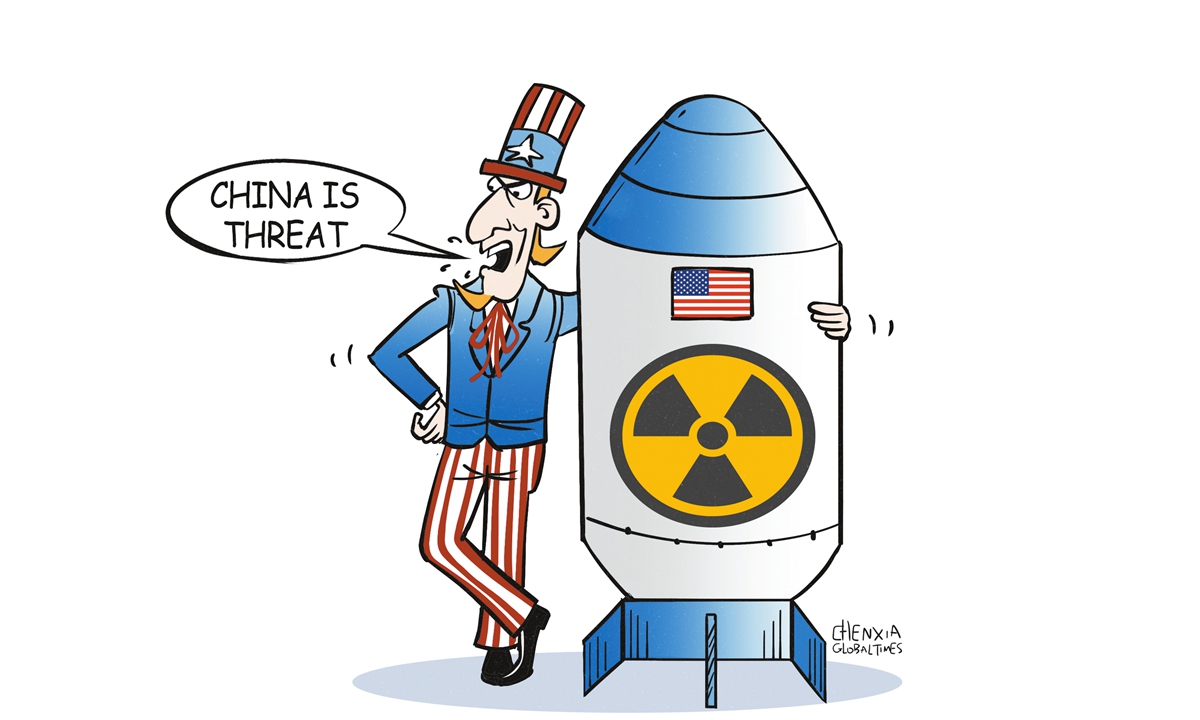
US crying wolf over China’s ‘nuclear threat’ while expanding nuclear arsenal
Aug 22, 2024 https://www.globaltimes.cn/page/202408/1318466.shtml
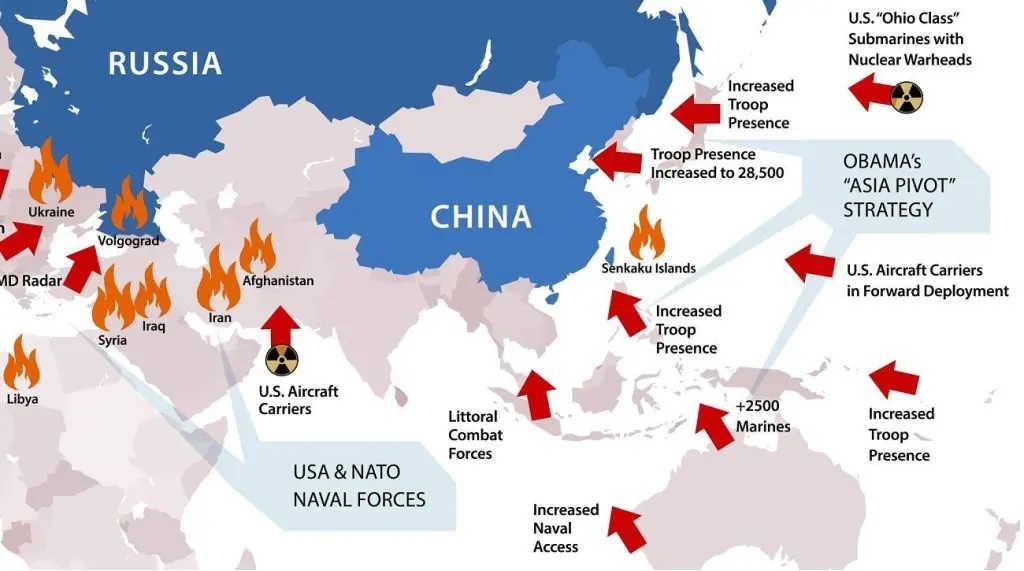
On Tuesday, a New York Times report caused quite a stir: US President Joe Biden has ordered US forces to prepare for “possible coordinated nuclear confrontations with Russia, China and North Korea.” It sounds like the US president was instructing the military to prepare for doomsday, observers pointed out.
The report revealed that in March, Biden approved a highly classified nuclear strategy plan called “Nuclear Employment Guidance,” which for the first time reorients the US’ deterrent strategy to focus on the so-called threat posed by China’s rapid expansion in its nuclear arsenal. The article states that this shift comes as the Pentagon believes China’s stockpiles will rival the size and diversity of the US’ and Russia’s over the next decade.
With over 5,000 nuclear warheads, the US possesses the world’s largest and most advanced nuclear arsenal. So why does it repeatedly target China in its nuclear threat rhetoric? This can be traced back to a dilemma faced by the US Department of Defense – how to justify maintaining such a massive nuclear arsenal in the post-Cold War world. To secure more defense budgets for the domestic military-industrial complex, the US chooses to constantly manufacture or exaggerate baseless “nuclear threats.” And China has become the best excuse.
What the US truly seeks is to ensure that its power far exceeds that of any other country in the world, allowing it to threaten and coerce other nations at will, without fear of retaliation. As a hegemonic state, US’ security is built on the insecurity of other countries. To maintain its hegemonic status, the US struggles to ensure its absolute superiority in power, with nuclear weapons being a crucial tool in maintaining its global dominance. Therefore, this new nuclear strategy plan is an excuse for expanding its nuclear arsenal and sustaining its military hegemony.
China and the US have fundamentally different perceptions of the strategic role of nuclear weapons. China has repeatedly emphasized that it pursues a nuclear strategy of self-defense, and is committed to the policy of no first use of nuclear weapons. China does not engage in any nuclear arms race with any other country, and keeps its nuclear capabilities at the minimum level required for national security. The notion of establishing an offensive nuclear hegemony or pursuing the so-called goal of rivaling the nuclear arsenal size of the US does not align with China’s strategic logic. As experts pointed out, China’s development of nuclear weapons is aimed at avoiding threats from other nuclear-armed states.
No matter how the US fabricates or exaggerates the so-called China threat narrative, China’s nuclear development follows its own set pace, including a measured increase in the quantity and quality of its nuclear arsenal, which will not be swayed by the US’ interference. This is a necessary measure for China in a complex international environment to safeguard its national security and territorial integrity – a legitimate act of self-defense, Shen Yi, a professor at Fudan University, told the Global Times.
The US repeatedly harps on the “China nuclear threat” narrative, yet it is, in fact, the one that poses the biggest nuclear threat to the world. In possession of the largest nuclear arsenal in the world, the US follows a nuclear policy that allows first-use of nuclear weapons. In recent years, the US has invested heavily to miniaturize nuclear weapons, lowering the threshold of their use in real-combat, and used nuclear weapons as a bait to hijack its allies and partners. Its irresponsible decisions and actions have resulted in the proliferation of nuclear risks, and its attempts to maintain hegemony and intimidate the world with nuclear power have been fully exposed.
There will be no winners in a nuclear war. We urge the US to abandon Cold War mentality, recognize that a nuclear war cannot be won and must never be fought, reduce the role of nuclear weapons in national and collective security policies, and take concrete actions to promote global strategic stability, instead of doing the opposite. Instead of smearing and hyping up China, the US should reflect on itself and consider how to rebuild mutual trust with China through dialogue and sincerity.
Putin says Ukrainian forces tried to strike Kursk nuclear plant
The Russian leader does not offer any evidence for his claim but says the UN nuclear watchdog has been alerted.
Russian President Vladimir Putin says Ukrainian forces have tried to attack the Kursk Nuclear Power Station in an overnight raid.
The Russian leader did not offer evidence for the claim but said on Thursday that Moscow has informed the United Nations nuclear watchdog, the International Atomic Energy Agency (IAEA), about the incident.
Ukraine has not responded to Russia’s allegations.
“The enemy tried to strike the nuclear power plant at night. The IAEA has been informed,” Putin said in a televised government meeting.
Putin made the claim as Ukrainian forces continued to fight inside Russia more than two weeks after launching an ambitious cross-border attack, which has become an embarrassing headache for Moscow.
While the strategic aims of Ukraine’s Kursk incursion remain uncertain, President Volodymyr Zelenskyy on Thursday said the attack is part of an effort to bring the war to an end on terms amenable to Ukraine…………………………. https://www.aljazeera.com/news/2024/8/22/putin-says-ukrainian-forces-tried-to-strike-kursk-nuclear-plant
Ukraine could trigger ‘another Chernobyl’ – ex-US Army officer.

A meltdown at the Kursk Nuclear Power Plant would make the region uninhabitable, Stanislav Krapivnik has warned
https://www.rt.com/russia/602744-ukraine-may-trigger-another-chernobyl/ 21 Aug 24
Ukraine’s armed forces could cause a nuclear disaster that would affect most of Europe if they strike the Kursk Nuclear Power Plant, former US Army officer Stanislav Krapivnik has warned.
In an interview with RT on Saturday, Krapivnik discussed the difference between a dirty bomb and a nuclear bomb, explaining that while a dirty bomb does not have the critical mass or enriched material, it could cause large scale contamination if it hits nuclear waste.
If the coolant system in an active plant is targeted, it would cause a “nuclear meltdown” which could lead to an incident similar to Fukushima or Chernobyl, he added. Such an event would impact most of Europe, especially at this time of the year “when the wind blows northwest.”
Krapivnik predicted that “if there is enough evidence” of the threat, it would “force a very large reaction” from the Russian government, as a meltdown at the Kursk plant would make the region uninhabitable.
“And the fallout is going to go straight to the northwest into Europe,” he said, adding: “It’s going to hit the Poles, the Germans, the Danes, the Scandinavian countries,” right into the UK. “But apparently the leadership of those nations really doesn’t give a damn.”
On Friday, Russian military journalist Marat Khairullin reported, citing sources, that Kiev is preparing to detonate a dirty atomic bomb targeting nuclear waste at either Russia’s Zaporozhye NPP or the Kursk NPP.
While the nuclear plant in Zaporozhye, the largest such facility in Europe, has been shut down, the plant in Kursk Region is operational.
The Russian Defense Ministry responded to the reports by saying that any attempts to create a “man-made disaster in the European part of the continent” would be met with “tough military and military-technical countermeasures.” Foreign Ministry spokeswoman Maria Zakharova called on the international community “to immediately condemn the provocative actions prepared by the Kiev regime.”
Kiev has denied the allegations. Neither the UN nor the International Atomic Energy Agency have addressed the threat.
Biden approved nuclear strategy focusing on China: Report
President directed US forces to prepare for ‘possible coordinated nuclear confrontations with Russia, China and North Korea,’ New York Times reports
Rabia Iclal Turan |21.08.2024 https://www.aa.com.tr/en/americas/biden-approved-nuclear-strategy-focusing-on-china-report/3308990
WASHINGTON
President Joe Biden approved a classified document in March directing US forces to get ready for potential “coordinated nuclear confrontations involving Russia, China and North Korea,” the New York Times reported Tuesday.
The document, which is revised approximately every four years, is classified to such a degree that there are no electronic versions available. Only a limited number of hard copies have been distributed to select national security officials and Pentagon leaders, the newspaper reported.
The newspaper added, however, that in recent speeches, two senior administration officials were allowed to allude to the change prior to a more comprehensive and unclassified update to Congress that is anticipated before Biden’s term concludes.
The Pentagon believes that China’s nuclear arsenal will rival the size and diversity of US and Russian stockpiles over the next decade, the Times reported.
“The president recently released updated guidance for nuclear weapons employment to address the presence of multiple nuclear-armed adversaries,” the newspaper cited Vipin Narang, a nuclear strategist from the Massachusetts Institute of Technology (MIT) who previously worked at the Pentagon, as saying earlier this month before returning to academia.
He further noted that this guidance specifically considers “the significant increase in the size and diversity” of China’s nuclear arsenal, it added.
In June, the National Security Council’s senior director for arms control and nonproliferation, Pranay Vaddi, said Biden “recently issued updated nuclear weapons employment guidance, which takes into account the realities of a new nuclear era.”
“It emphasizes the need to account for the growth and diversity of the PRC’s nuclear arsenal—and the need to deter Russia, the PRC and North Korea simultaneously,” he added, referring to the People’s Republic of China, China’s official name.
White House National Security Council spokesperson Sean Savett told Anadolu that the US nuclear policy is updated regularly as part of their efforts to “reduce nuclear risks and maintain stable deterrence.”
“This administration—like the four administrations before it—issued a Nuclear Posture Review and Nuclear Weapons Employment Planning Guidance. While the specific text of the Guidance is classified, its existence is in no way secret. The Guidance issued earlier this year is not a response to any single entity, country, or threat,” he added.
‘US the primary source of nuclear threat in world’
“The size of China’s nuclear arsenal is not on the same level with the US. China follows a policy of ‘no first use’ of nuclear weapons and always keeps its nuclear capabilities at the minimum level required by national security. We have no intention to engage in any form of arms race with others,” Mao said.
Nuclear strategy of US slammed for using China as pretext to expand nuke arsenal
By Zhao Yusha, Aug 21, 2024 , https://www.globaltimes.cn/page/202408/1318453.shtml
The US’ constant hyping of the “China nuclear threat” theory is a convenient pretext for the US to shirk its obligation of nuclear disarmament, expand its own nuclear arsenal and seek absolute strategic predominance, a spokesperson from China’s Ministry of Foreign Affairs said on Wednesday, after US media reported President Joe Biden has approved a highly classified nuclear strategic plan that, for the first time, reorients the US’ deterrent strategy to focus on China’s purported expansion of its nuclear arsenal.
The New York Times reported on Tuesday that Biden approved the document in March after the Pentagon said it believes China’s nuclear arsenal stockpiles will rival the size and diversity of the US’ and Russia’s over the next decade.
The White House never announced that Biden had approved the revised strategy, called the “Nuclear Employment Guidance,” which seeks to prepare the US for possible coordinated nuclear challenges from China, Russia and North Korea. The document, updated every four years or so, is so highly classified that there are no electronic copies, with only a small number of hard copies distributed to a few national security officials and Pentagon commanders.
The US has called China a “nuclear threat” and used it as a convenient pretext for the US to shirk its obligation of nuclear disarmament, expand its own nuclear arsenal and seek absolute strategic predominance, Mao Ning, spokesperson of China’s Ministry of Foreign Affairs said at a Wednesday briefing, while stressing China is gravely concerned over the report.
“The size of China’s nuclear arsenal is not on the same level with the US. China follows a policy of ‘no first use’ of nuclear weapons and always keeps its nuclear capabilities at the minimum level required by national security. We have no intention to engage in any form of arms race with others,” Mao said.
“In contrast, the US sits on the largest and most advanced nuclear arsenal in the world. Even so, it clings to a first-use nuclear deterrence policy, and has invested heavily to upgrade its nuclear triad and blatantly devised nuclear deterrence strategies against others. It is the US who is the primary source of nuclear threat and strategic risks in the world,” Mao stated.
The document reflects that the US has reached a level of hysteria when it comes to competition with countries like China. It has even reached a point where it is prepared for a nuclear conflict, which is extremely dangerous, said Li Haidong, a professor at the China Foreign Affairs University.
He said the US’ hype over China’s nuclear arsenal is a tactic to justify and bolster its own nuclear weapons program for political maneuvering and policy objectives.
Blinken Heads to Israel for Gaza Cease-Fire Push as IDF Slaughter Continues

“We are not facing a deal or real negotiations, but rather the imposing of American diktats,”
“to say that we are getting close to a deal is an illusion.”
“We are not facing a deal or real negotiations, but rather the imposing of American diktats,”
“to say that we are getting close to a deal is an illusion.”
Israeli airstrikes wiped out an entire family in al-Zawayda and killed 10 Syrian refugees in Lebanon as Hamas poured cold water on President Joe Biden’s claim that a cease-fire is “closer than we’ve ever been.”
Brett Wilkins, 18 Aug 24, https://www.commondreams.org/news/blinken-in-israel
U.S. Secretary of State Antony Blinken departed for Israel on Sunday in an effort to secure a cease-fire in Gaza, even as Israeli forces continued to massacre Palestinians in the embattled strip and Hamas dismissed hopeful assertions by optimists including President Joe Biden that an agreement on a cessation of hostilities is within sight.
Blinken’s trip to Israel comes days after Israeli negotiators met with senior U.S. officials, as well as Qataris and Egyptians mediating between Hamas and Israel, in Doha, Qatar. Although those talks ended without any major progress toward a cease-fire deal, Biden said Friday that “we are closer than we’ve ever been” to an agreement, “but we’re not there yet.”
In a separate statement, Biden said that a U.S. negotiating team presented a “comprehensive bridging proposal” offering “the basis for coming to a final agreement on a cease-fire and hostage release deal.”
“I am sending Secretary Blinken to Israel to reaffirm my iron-clad support for Israel’s security, continue our intensive efforts to conclude this agreement, and to underscore that with the comprehensive cease-fire and hostage release deal now in sight, no one in the region should take actions to undermine this process,” the president added.
Israeli negotiators expressed “cautious optimism” over the prospects of a deal, Agence France-Presse reported.
During the weekly meeting of his far-right Cabinet, Israeli Prime Minister Benjamin Netanyahu said that “there are areas where we can show flexibility, and there are areas where we can’t show flexibility—and we are standing firm on them.”
Concistent with what observers say is a pattern of Israeli escalations when cease-fire deals seem within reach, Israeli forces on Saturday bombed a home and adjacent warehouse in the central Gaza Strip town of al-Zawayda, killing at least 15 to 18 members of the al-Ejlah family, according to local and international media.
Victims include Sami Jawad al-Ejlah—a wholesaler who cooperated with the Israeli military to distribute food in Gaza—who was killed along with two of his wives, 11 of their children, and the children’s grandmother, according to officials at al-Aqsa Martyrs Hospital in nearby Deir al-Balah.
“A massive fire broke out, burning everything in the warehouse as children were torn to pieces,” Al Jazeera correspondent Tareq Abu Azzoum reported from the scene. “Rescue efforts are still continuing to try to recover more bodies.”
According to the Lebanese satellite news channel Al Mayadeen, the al-Ejlah family “was wiped off the civil registry,” a fate shared by at least scores—and perhaps hundreds—of Palestinian families during the 317-day assault by Israel, which is on trial for genocide at the World Court.
Al Mayadeen‘s Gaza correspondent said that “there were still individuals trapped under the rubble, with rescue teams working at the site of the massacre,” and that most of the recovered victims “arrived dismembered” at al-Aqsa Martyrs Hospital.
A spokesperson for the Israel Defense Forces (IDF) said the attack targeted unspecified “terrorist infrastructure.”
Meanwhile in southern Lebanon, where resistance to Israel’s Gaza onslaught by Hezbollah has prompted fierce retaliation, an Israeli airstrike in the Wadi al-Kafur area of Nabatieh killed 10 Syrian refugees who fled that country’s civil war, including a mother and her two children, according to the Lebanese Ministry of Public Health.
An IDF spokesperson said the strike targeted a Hezbollah weapons storage site.
In response to reports of U.S. and Israeli guarded optimism over a possible cease-fire deal, Hamas Political Bureau member Sami Abu Zuhri told Agence France-Presse that “to say that we are getting close to a deal is an illusion.”
“We are not facing a deal or real negotiations, but rather the imposing of American diktats,” Zuhri added.
Blinken’s trip to Israel comes as the Palestinian death toll of the IDF’s assault on Gaza topped 40,000 this week, with more than 92,000 people wounded and at least 11,000 others missing and presumed dead and buried beneath the rubble of hundreds of thousands of bombed-out homes and other buildings. Pale
The Biden administration has been accused of complicity in genocide for sending Israel tens of billions of dollars worth of arms and providing diplomatic cover, including by vetoing multiple United Nations cease-fire resolutions supported by the overwhelming majority of the world’s nations.stinian and international officials say most of those killed have been women and children.
Moscow Says Ukraine Destroyed Russian Bridge With Western-Provided Missiles
The Russian Foreign Ministry says the bridge was likely destroyed by US-provided HIMARS
by Dave DeCamp August 18, 2024 , https://news.antiwar.com/2024/08/18/moscow-says-ukraine-destroyed-russian-bridge-with-western-provided-missiles/
The Russian Foreign Ministry said Friday that Ukrainian forces used Western-provided missiles to destroy a bridge in the Glushkovsky district of Russia’s Kursk Oblast.
Russian Foreign Ministry spokeswoman Maria Zakharova said the missiles were likely launched using the US-provided HIMARS rocket systems, which the US has been supplying to Ukraine since 2022.
“For the first time, the Kursk region was hit by Western-made rocket launchers, probably American HIMARS,” Zakharova wrote on Telegram. “As a result of the attack on the bridge … it was completely destroyed, and volunteers who were assisting the evacuated civilian population were killed.”
Another bridge in Kursk was reported to be hit by Ukrainian forces on Sunday. According to the Russian news site Mash, both bridges were targeted with US-provided HIMARS.
The ground incursion into Kursk came a few months after the Biden administration gave Ukraine the greenlight to use US-provided missiles in strikes inside Russia in border regions. The US says it won’t support “long-range” strikes in Russia but hasn’t defined what the limit is.
The Times reported on Friday that the US is effectively blocking Ukraine from using British-provided Storm Shadow missiles inside Russia, which have a range of about 155 miles. Ukrainian forces are using other types of British weapons in Kursk, including Challenger 2 tanks.
The US and its NATO allies insist they were unaware of Ukraine’s plans to invade Kursk, but Russian officials are pinning the blame for the incursion on Kyiv’s Western backers.
“The operation in the Kursk region was also planned with the participation of NATO and Western special services,” Nikolai Patrushev, an aide to Russian President Vladimir Putin, said on Friday. “Without their participation and direct support, Kyiv would not have ventured into Russian territory.”
’Balance of terror’: South Korea’s unthinkable ‘shift’
Amid worrying times, South Korea is considering building nuclear weapons of its own in what could create a “balance of terror”.
news.com.au Jamie Seidel, August 19, 2024
North Korean dictator Kim Jong-un now has 50 nuclear warheads under his thumb.
US presidential candidate Donald Trump wants to pull out of the troubled peninsula altogether. That’s left South Korea thinking the unthinkable – building nuclear weapons of its own.
“Proponents argue that this approach would create a ‘balance of terror’ similar to that which maintained peace during the Cold War, ensuring that neither side could risk initiating a conflict without facing catastrophic consequences,” argues Seol-based Asia Institute geostrategist Dr Lakhvinder Singh.
A national campaign was launched Thursday to gather 10 million signatures in support of establishing a South Korean nuclear weapons program.
“This represents a profound shift, driven by doubts about the reliability of relying solely on the United States for extended deterrence,” says Singh……………………..
Now, many South Koreans doubt the 70-year-old “nuclear umbrella” of protection offered by the United States remains a reliable deterrent……………………………………………………………………………more https://www.news.com.au/technology/innovation/military/balance-of-terror-south-koreas-unthinkable-shift/news-story/2459122e37191a7b7e5644932ca85b62
Top US Military Officials Won’t Say Whether the US had Advance Knowledge of Ukraine’s Invasion of Russia
All the rage these days among “strategic thinkers” is how to “deter” both China and Russia by preparing to wage simultaneous nuclear war against them.
Michael Tracey, Aug 18, 2024
So… there’s a US-backed invasion of Russia currently underway. You’d think this would rise to the level of urgent national political concern, such that every American elected official with some purview in US foreign policy would be expected — and demanded — to articulate a position on what’s transpiring. After all, as everyone should be well aware, Ukraine only exists as a state right now due to the largesse of the US, and thus anything Ukraine does on the battlefield necessarily implicates the US — whatever the precise foreknowledge or involvement the US might have had in this particular operation.
Two years ago, if you had suggested that Ukraine and the US might be conducting a literal invasion of Russia, you would’ve been ferociously denounced as a bed-wetting alarmist who’s probably just trying to cynically boost Russia’s side of the propaganda wars by irrationally fretting about extreme escalatory outcomes, so as to discourage US or European “aid” for Ukraine. And yet here we are, with the escalation ladder having been steadily climbed, step by step, but generating less and less intense of a political reaction as time goes on and the acute psychological impact of the war wears off. To a degree, this is only natural; you can’t expect everyone to be on constant hair-trigger alert about something that’s been going on continuously for two and a half years. But that’s exactly how these escalatory leaps get smuggled in without much notice or debate.
Hence, we’re now in a political climate where the fact of an ongoing US-backed invasion of Russia is treated as little more than an ancillary concern, maybe something warranting semi-interested speculation and commentary, but certainly nothing that should occasion any large-scale political controversy — at least in the US. Neither major party presidential candidate has directly commented on it, as far as I know, and neither has there been any kind of appreciable clamor within the media for the candidates to do their public duty and set out some sort of articulable position on what, by any objective measure, is a massive escalation in the conduct of the war — which had initially been sold to the public as only necessitating US “support” that would be carefully circumscribed.
So while it’s just a drop in the bucket, I’ve attempted to at least provide a minor corrective. This past week was the annual symposium of STRATCOM, or the US Strategic Command, which is the branch of the military that controls the nuclear arsenal. If you weren’t aware, the word “strategic” is a euphemism for “nuclear” in military parlance — a long-running triumph of jargonistic obfuscation. You also gotta love that the slogan for the US nuclear arsenal is “Peace is Our Profession”…
All the rage these days among “strategic thinkers” is how to “deter” both China and Russia by preparing to wage simultaneous nuclear war against them. Another triumph of euphemistic jargon is the word “deterrence” itself — nominally the whole impetus for the Symposium, with “deterrence” really just being synonymous with “projection of American military, economic, and political power,” but presented as gravely necessary in order to “deter” the scary foreign adversaries who are always allegedly threatening that power.
The Symposium is a strange affair in that it’s tucked into a nondescript venue in Omaha, Nebraska, near where the STRATCOM headquarters is located. I overheard one fellow talking about how back in the Cold War days, Air Force members who had to go guard the nuclear silos in the vast expanses of the American Interior were told that if South Dakota ever seceded from the Union, it would automatically be the world’s third largest nuclear state. Today, the Cold War era is looked back on with nostalgic fondness by attendees of these Symposiums, with calls for action routinely issued that the US nuclear arsenal needs to be aggressively reinvigorated, and even the half-hearted efforts to scale it down after the collapse of the Soviet Union were a terrible mistake.
So it was fortuitous that this year’s Symposium should have fallen on a week in which an ongoing US-backed invasion of Russia would have been underway, not to mention another cataclysm being forecast to break out in the Middle East at any moment, with Iran and Hezbollah suggesting for weeks that a large-scale strike on Israel could be imminent.
I therefore asked Gen. Anthony Cotton, the STRATCOM commander, about the Russia/Ukraine developments, which are being touted as the most serious foreign attack on Russian territory since World War II, as if that’s supposed to inspire optimism for a happy outcome. You can find the audio here, which I played on an episode of “System Update” Friday — I guest-hosted again for the absent Glenn Greenwald. Here’s a transcript of the exchange:…………………………………………………………………..
German ministers told there’s no more money for Ukraine – media
https://www.rt.com/news/602719-germany-no-money-ukraine-aid/ 17 Aug 24
Berlin could halve its military assistance to Kiev in 2025, the newspaper claims
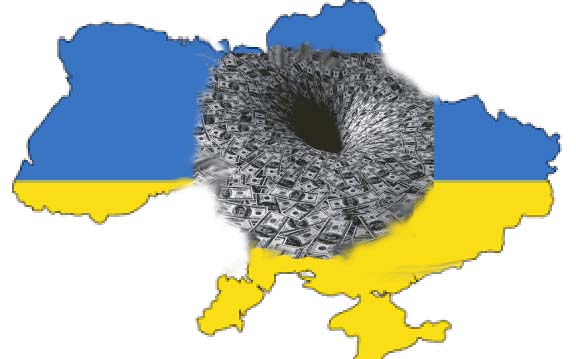
German Finance Minister Christian Lindner has issued a request to the country’s defense ministry calling for a limit to military assistance to Ukraine, Frankfurter Allgemeine Zeitung (FAZ) reported on Saturday. According to Lindner, the country’s current budget plan is not capable of allocating funds to Kiev.
The request was made in a letter addressed to German Defense Minister Boris Pistorius and Foreign Minister Annalena Baerbock, and specified that only military aid that has already been approved can be delivered to Kiev. Additional applications from the defense ministry will no longer be accepted, even if issued at the behest of Chancellor Olaf Scholz.
FAZ noted that the block on newly approvals is already in effect and that Berlin would halve its military aid to Ukraine next year. In 2027, the assistance is expected to decline to less than one tenth of its current volume.
Up to €8 billion in aid to Ukraine has been scheduled for 2024, and the planned maximum of €4 billion for 2025 already exceeds available funds, the media outlet noted, adding that only €3 billion is planned for 2026, and €500 million each for 2027 and 2028.
“End of the event. The pot is empty,” an unnamed source in the federal government told FAZ, stressing that Berlin has “reached a point where Germany can no longer make any promises to Ukraine.”
The newspaper noted that the urge comes amid Lindner’s push for harsh austerity measures; these have already been imposed on all German ministries except defense. The finance minister has been resisting intense pressure from Scholz and Economy Minister Robert Habeck to suspend the country’s constitutional limit on debt to allow for the cost of providing military aid to Kiev amid the Ukrainian conflict.
Germany is the second biggest backer of Ukraine after the US. Berlin has provided and committed military aid of at least €28 billion ($30.3 billion) to Kiev in current and future pledges. This includes advanced military equipment such as Leopard 2 tanks, Marder infantry fighting vehicles, and US-made Patriot air-defense systems.
Lindner reportedly doesn’t expect the country’s assistance to Ukraine to drop, as the minister hopes to cover the expenses not with federal budget funds, but through the use of Russian central bank assets that were frozen by Kiev’s Western allies shortly after the conflict escalated.
Nearly $300 billion belonging to Russia’s central bank has been immobilized by the EU and G7 nations as part of Ukraine-related sanctions. In May, Brussels approved a plan to use the interest earned on the frozen assets to support Ukraine’s recovery and defense. Under the agreement, 90% of the proceeds are expected to go into an EU-run fund for Ukrainian military aid, with the other 10% allocated to supporting Kiev in other ways.
NATO member gives Ukraine green light to use its weapons in Russia
Rt.com 16 Aug 24,
Kiev is free to use donated Leopard tanks and other combat vehicles during its incursion into Kursk Region, Canada has said
Ukraine has been given approval to use Canadian-donated tanks and armored vehicles on Russian soil, according to a statement by Canada’s Department of National Defense on Thursday. Kiev is currently waging a large-scale incursion into Russia’s Kursk Region.
Ottawa has donated to Kiev a total of eight German-made Leopard 2A4 tanks as well several dozen armored combat vehicles, hundreds of armored patrol vehicles, and several M-777 howitzers. Last month, the Canadian government also announced an additional $367 million military aid package for Kiev.
“Ukrainians know best how to defend their homeland, and we’re committed to supporting their capacity,” Canadian Defense Department spokesperson Andree-Anne Pulin told the media on Thursday…………………………………….
Russian officials have also repeatedly condemned the West for continuing to provide military support to Kiev, arguing that the Ukraine conflict is effectively a proxy war being waged by NATO against Russia, in which Ukrainians serve as ‘cannon fodder.’………………………….. more https://www.rt.com/russia/602685-ukraine-canada-wepons-russia/
1 This Month
26 September – International Day for the Total Elimination of Nuclear Weapons





PLEASE OPPOSE HR 8255 AND S.3639 – bills would accelerate satellite deployment, with no environmental review or safeguards – https://ncstd5li.quorum.us/campaign/169331/
To see nuclear-related stories in greater depth and intensity – go to https://nuclearinformation.wordpress.com
-
Archives
- September 2026 (281)
- August 2026 (330)
- July 2026 (355)
- June 2026 (287)
- May 2026 (306)
- April 2026 (356)
- March 2026 (251)
- February 2026 (267)
- January 2026 (308)
- December 2025 (358)
- November 2025 (359)
- October 2025 (375)
-
Categories
- 1
- 1 NUCLEAR ISSUES
- business and costs
- climate change
- culture and arts
- ENERGY
- environment
- health
- history
- indigenous issues
- Legal
- marketing of nuclear
- media
- opposition to nuclear
- PERSONAL STORIES
- politics
- politics international
- Religion and ethics
- safety
- secrets,lies and civil liberties
- spinbuster
- technology
- Uranium
- wastes
- weapons and war
- Women
- 2 WORLD
- ACTION
- AFRICA
- Atrocities
- AUSTRALIA
- Christina's notes
- Christina's themes
- culture and arts
- Events
- Fuk 2022
- Fuk 2023
- Fukushima 2017
- Fukushima 2018
- fukushima 2019
- Fukushima 2020
- Fukushima 2021
- general
- global warming
- Humour (God we need it)
- Nuclear
- RARE EARTHS
- Reference
- resources – print
- Resources -audiovicual
- Weekly Newsletter
- World
- World Nuclear
- YouTube
-
RSS
Entries RSS
Comments RSS

