Trump’s $200 billion Iran spending request reveals scale of US war plans.
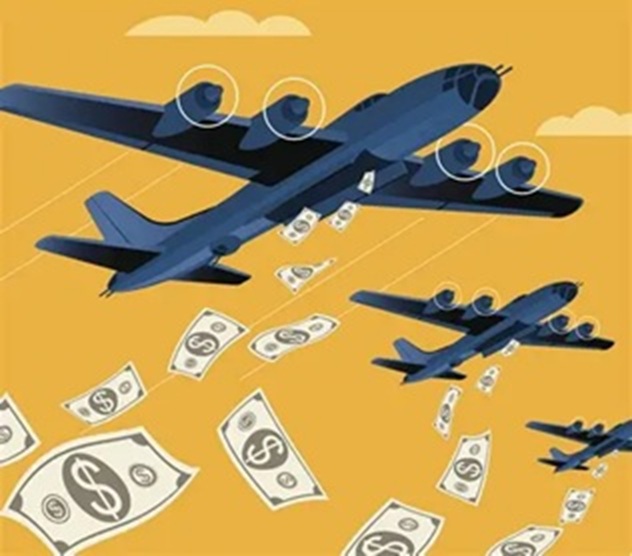
In reality, the administration is planning the most endless of all endless wars—an open-ended invasion aimed at subjugating or destroying a country of 90 million people.
The $200 billion is a supplemental—on top of the $839 billion defense bill Congress already passed for fiscal year 2026, the largest military budget in American history. If approved, direct military spending this year will exceed $1 trillion. US President Donald Trump has called for a $1.5 trillion military budget for fiscal year 2027—a 50 percent increase.
Andre Damon, 19 March 2026, https://www.wsws.org/en/articles/2026/03/20/iuck-m20.html
The Washington Post reported Wednesday that the Trump administration is seeking more than $200 billion to fund the war against Iran.
At a press briefing Thursday, a reporter asked Defense Secretary Pete Hegseth “why a package this large is necessary?” Hegseth not only confirmed the $200 billion figure but suggested it could grow. “I think that number could move,” he said. “It takes money to kill bad guys. So we’re going back to Congress to ensure that we’re properly funded for what’s been done, for what we may have to do in the future.”
And what, exactly, are these unspecified things the administration “may have to do”?
In 2003, when 150,000 American soldiers invaded and occupied Iraq, Congress appropriated $51 billion—a quarter of what the Trump administration is requesting before a single ground soldier has entered Iran. At the height of the 2007-2008 surge, when nearly 170,000 American soldiers occupied the country, the war cost roughly $144 billion a year.
In reality, the $200 billion is not about “what we may have to do in the future” but about what the White House is actively conspiring to do in the present. The budget request comes as the administration prepares a ground invasion of Iran, deploying 5,000 Marines from the Pacific to the Middle East amid demands by the Wall Street Journal and leading Republicans for the seizure of Kharg Island and the Strait of Hormuz.
Reuters reported Wednesday that the Trump administration has discussed sending ground forces to seize Kharg Island, the hub for 90 percent of Iran’s oil exports, and has separately discussed deploying US forces to secure Iran’s stocks of highly enriched uranium. They are operational plans for the invasion and occupation of Iranian territory—and they explain why the administration is demanding more money than was appropriated for any single year of the Iraq invasion.
Just as with the months and years of planning that preceded the US-Israeli attack on Iran, the ground invasion is being prepared behind the backs of the American people, who overwhelmingly oppose the war. Trump called the war an “excursion.” Vice President JD Vance promised it would not become a “quagmire.” At the same briefing where he confirmed the $200 billion request, Hegseth told reporters: “The media wants you to think, just 19 days into this conflict, that we’re somehow spinning toward an endless abyss or a Forever War or a quagmire. Nothing could be further from the truth.”
In reality, the administration is planning the most endless of all endless wars—an open-ended invasion aimed at subjugating or destroying a country of 90 million people.
The administration sees the Iran war as a prelude to an effort to subjugate China, the world’s largest economy by purchasing power parity. As former Republican Congressman Patrick McHenry put it on ABC’s This Week, the wars in Venezuela and Iran are “targets of opportunity to reshape the world.” He added: “Venezuela was in service to American energy dominance. The issue with Iran was a target of opportunity… The results here will mean that, with China, the president’s hand will be enhanced.”
The $200 billion is a supplemental—on top of the $839 billion defense bill Congress already passed for fiscal year 2026, the largest military budget in American history. If approved, direct military spending this year will exceed $1 trillion. US President Donald Trump has called for a $1.5 trillion military budget for fiscal year 2027—a 50 percent increase.
And $200 billion is only what the administration will admit to. In 2002, Bush’s chief economic adviser Lawrence Lindsey was fired for estimating the Iraq war would cost $100 to $200 billion. Defense Secretary Donald Rumsfeld put the figure at “something under $50 billion.” When told outside estimates ran to $300 billion, Rumsfeld replied: “Baloney.” Deputy Defense Secretary Paul Wolfowitz assured Congress that Iraqi oil revenues would pay for reconstruction. The actual cost, including veterans’ care, disability payments and interest on the debt, is now estimated by Brown University’s Costs of War Project at more than $8 trillion.
The waging of continuous wars, combined with the 2008 and 2020 bank bailouts, has produced an explosion of US debt. In 2000, before the Iraq war, the national debt stood at $5.7 trillion. By 2010, after the Iraq surge and the $700 billion TARP bank bailout, it had reached $12.3 trillion. By 2020, after $4.6 trillion in COVID bailouts, it hit $27 trillion. It now stands at $39 trillion—nearly seven times what it was a quarter century ago.
The United States credit rating has been downgraded three times—by Standard & Poor’s in 2011, Fitch in 2023 and Moody’s in 2025—each time because of military spending and the refusal of either party to cut the military budget. The Vietnam War destroyed Lyndon Johnson’s Great Society programs and produced the inflation of the 1970s, which the ruling class broke through the Volcker shock—mass unemployment to crush wages. The Iraq and Afghanistan wars were waged alongside tax cuts for the wealthy and the gutting of public services.
Trump’s “One Big Beautiful Bill,” signed last July, imposed $1 trillion in cuts to Medicaid over the next decade, $536 billion in cuts to Medicare and $186 billion in cuts to food assistance through the Supplemental Nutrition Assistance Program (SNAP)—the largest cut to food aid in American history. The fiscal year 2026 budget slashed domestic spending by 22.6 percent—cutting the Department of Housing and Urban Development (HUD) by 44 percent, the Centers for Disease Control and Prevention (CDC) by 44 percent and the National Institutes of Health (NIH) by $18 billion—while increasing the military budget by 13 percent.
Within 24 hours of the administration confirming it is seeking $200 billion for the war, the Postmaster General testified to Congress that the United States Postal Service (USPS) could run out of cash as soon as October—with just $8.2 billion in reserves, enough to cover 33 days of operations. The USPS employs more than 500,000 workers and holds billions in pension and retirement obligations. The manufactured insolvency is a pretext for raiding those funds—taking workers’ pension money and spending it on the war.
Medicare, Medicaid and Social Security represent trillions more. The ruling class sees these programs as money to be seized. The administration does not see pensions and healthcare as social programs. It sees them as collateral.
Trump has promised the economic pain will be a temporary “blip.” This will not pass in weeks. It will mean a permanent reduction in working-class living standards, just as the Iraq war did.
The struggle to defend Medicare, Medicaid, Social Security, pensions and public services cannot be separated from the struggle against war. They are the same struggle. The $200 billion the administration demands is money taken from the programs working people depend on to survive.
The Democrats have systematically enabled Trump’s wars. In January, as Trump declared that a massive armada was steaming toward Iran, every leading Democrat in Congress voted for the $839 billion military budget—Minority Leader Hakeem Jeffries, Minority Whip Katherine Clark, Senate Minority Leader Chuck Schumer and Minority Whip Dick Durbin all voted in favor. Their criticism of the war has centered on procedural issues, along with demands that US imperialism direct its fire at Russia and China.
Opposition must come from below—from workers in the United States, in Iran, across the Middle East and around the world—organized independently of both capitalist parties, armed with a socialist and internationalist program, and fighting to build the International Committee of the Fourth International (ICFI) as the revolutionary leadership of the working class. The fight against imperialist war is the fight against the capitalist system that produces it.
UK’s Astute nuclear submarine timeline is very unlikely to be met.

Brief Update on the SSN Programme
17.03.2026, https://www.nuclearinfo.org/article/brief-update-on-the-ssn-programme/
The Astute project has the objective of delivering conventionally armed, nuclear-powered submarines for the Royal Navy, otherwise acronymised as SSNs. Seven submarines are planned to be delivered, with five currently operational: HMS Astute, HMS Ambush, HMS Artful, HMS Audacious, and HMS Anson. During February, HMS Anson arrived in Australia at HMAS Stirling. This visit was intended to be for maintenance and a symbolic demonstration of the trilateral AUKUS partnership between the UK, US, and Australia, which aims to develop nuclear-powered submarines with advanced conventional capabilities. AUKUS submarines are planned to succeed the Astute class. The sixth Astute-class submarine, HMS Agamemnon, was commissioned into the Royal Navy and completed its first dive last year, while HMS Achilles is currently under construction. The seven Astute submarines were once hoped to be delivered by the end of this year, but this timeline is very unlikely to be met.
This reflects the persistent challenges that have long bedevilled submarine construction in the UK, including delays, technical issues, accidents, and rising costs. HMS Anson itself for instance was delayed (among other factors) due to setbacks with HMS Audacious, while the 2024 fire in Barrow, the main shipyard for manufacturing the UK’s nuclear submarines, will further delay progress on the final Astute submarine. Also, AUKUS may generate geopolitical tensions among its partners. A US Congressional report earlier from this year has raised the possibility of withholding submarines from Australia due to concerns that the sale may divert US submarine capacity from a potential conflict with China. Meanwhile, some analysts question the strategic trade-offs of deploying HMS Anson to the Indo-Pacific, given the UK’s defence commitments in Europe and the Atlantic. These issues point to dual risks facing the SSN programme: first, achieving successful and timely delivery, and second, achieving agreement among allies over its strategic objectives and operational use.
No Good Exit

21 March 2026 David Tyler, Australian Independent Media
John Mearsheimer sees war with Iran as a strategic folly, arguing it is unwinnable, will not destroy Iran’s nuclear knowledge, and could, instead, boost Iran’s interest in acquiring nuclear weapons.
No stranger to irony, or paradox, Dr Mearsheimer does not mince words. The West Point graduate and former Air Force Captain, now a distinguished scholar at Cornell, has spent two decades documenting exactly how an American Eagle could get sucked into the vortex of wars that serve its bovver-boy, or Middle-East proxy, Israel, and its bellicose aspirations at enormous cost.
When Mearsheimer speaks about a US military adventure in Iran, he is not waffling. He is quoting from the autopsy he wrote in advance. And Mearsheimer’s verdict on Operation Epic Fury, is that Trump has dug himself into a deep hole; an opinion all the more damning for its formal, almost courteous understatement:
“I think President Trump has put himself in a situation where he really doesn’t have a good exit strategy.”
Trump’s catastrophe may be complex and irretrievable, but it was not inevitable. It was predicted, in detail, by experts whose job it was to predict it, and who were systematically ignored, discredited or sacked for saying so. Trump ignored the experts. This is how he can always snatch defeat from the jaws of victory.
The pretext for the attack doesn’t bear scrutiny. Before the first double-tap Tomahawk missile crushed and burned alive 168 schoolchildren on 28 February, Oman’s Foreign Minister Badr Al-Busaidi was announcing what could have been a diplomatic coup: Iran had agreed to never stockpile enriched uranium, had accepted full IAEA verification, and was prepared to irreversibly downgrade its enriched uranium to the lowest level possible.
Peace, he said, was “within reach.” Further talks were due to resume on 2 March.
Iran now says that the US President never intended to avoid war and that the talks were a ruse to get more time to set up a military attack. It’s true. It’s also true that Trump and Netanyahu are driven by the need to stay out of court. Both are hell-bent in quest of a more enduring diversion-and both would have always pulled the trigger anyway. Even without Saudi encouragement……………………………………………………………………………………………………………………………………….
Iran now says that the US President never intended to avoid war and that the talks were a ruse to get more time to set up a military attack. It’s true. It’s also true that Trump and Netanyahu are driven by the need to stay out of court. Both are hell-bent in quest of a more enduring diversion-and both would have always pulled the trigger anyway. Even without Saudi encouragement.
……………………………………….. Many missile strikes in the war’s opening phase are seen by UN human rights experts as potential war crimes under the Rome Statute. At least a million Lebanese people have been displaced.
https://googleads.g.doubleclick.net/pagead/ads?gdpr=0&client=ca-pub-3072351457465524&output=html&h=280&adk=2235633406&adf=387799125&w=678&fwrn=4&fwrnh=100&lmt=1774125889&rafmt=1&armr=3&sem=mc&pwprc=5956714339&ad_type=text_image&format=678×280&url=https%3A%2F%2Ftheaimn.net%2Fno-good-exit%2F&host=ca-host-pub-2644536267352236&fwr=0&pra=3&rh=170&rw=678&rpe=1&resp_fmts=3&fa=27&uach=WyJXaW5kb3dzIiwiMTkuMC4wIiwieDg2IiwiIiwiMTQ2LjAuNzY4MC44MCIsbnVsbCwwLG51bGwsIjY0IixbWyJDaHJvbWl1bSIsIjE0Ni4wLjc2ODAuODAiXSxbIk5vdC1BLkJyYW5kIiwiMjQuMC4wLjAiXSxbIkdvb2dsZSBDaHJvbWUiLCIxNDYuMC43NjgwLjgwIl1dLDBd&abgtt=7&dt=1774125788538&bpp=1&bdt=3727&idt=0&shv=r20260318&mjsv=m202603170101&ptt=9&saldr=aa&abxe=1&cookie=ID%3Dd85616c6c9bd2a6c%3AT%3D1770448449%3ART%3D1774125788%3AS%3DALNI_MbtaAxRxG9MqgIcWMShV7avYd9mzg&gpic=UID%3D000011f58c2d07ec%3AT%3D1770448449%3ART%3D1774125788%3AS%3DALNI_MasvLU7CXh2jEp0EwTeqK932dwU3A&eo_id_str=ID%3D1b13a2c219278375%3AT%3D1770448449%3ART%3D1774125788%3AS%3DAA-AfjYkqjLrM9kIjGmfRgvZ6J5n&prev_fmts=0x0%2C678x280%2C678x280%2C1265x585%2C1265x122%2C678x280%2C678x280%2C678x280%2C678x280&nras=10&correlator=6552144162929&frm=20&pv=1&u_tz=660&u_his=2&u_h=720&u_w=1280&u_ah=672&u_aw=1280&u_cd=32&u_sd=1.5&dmc=8&adx=117&ady=5250&biw=1265&bih=585&scr_x=0&scr_y=2914&eid=95378429%2C95384535%2C42533294%2C95383746%2C95386039%2C95379823&oid=2&psts=AOrYGslFnD4MCobWfWWaTnZO58i7aVt7D29MIFScmcewoQBVZjRgX1f3b9NwGtVkwcGa5Z-1eoPb2VtruRZFG8PO7KJlApj9H8fZyI5zqVkCG4CmXvZmwQ3Box5rCHMTD73x%2CAOrYGslqDhuWvVFLDi_GZC5QcWZeq0_skU9KxspMCRk4eB7tugVH2yaIxi5G3F9O2Lf92rq8U8mMNGoqiazmp1b23UZ4BdLvnwQ3WxWxgRykEZSB%2CAOrYGskeRH4aNaTYW0JyG3hzeADf9iRr0p5FcMslU9tcjQOmsfMxJqNzQgBma4wHaEq5_EyPCfryTvgRCXzrdNA6zXpsYzi2aGa6YBEEsIrD4jk%2CAOrYGsnZlMGylK-NV6L01yQbFeOM_0OyuT3kK6KdRWPAa0ZJ-_fUiqW2vcAZvsE7G9PHnZ_OKbVa1uJ56Zi1H-BaO31G2fiS7gxE7wk%2CAOrYGskrNVCKFAP1enIxqXLvS3enuTJ1vSXSpDKMa_FTU_LIa3i733aUFije2OhcKHUesjN9G6616z_zZ30fUvobJwp9R63Myz8XDtyBjjQdpDmpSw%2CAOrYGsnrFCx6HaDRyuw7FJgzshe7poT_x7bpz6edsQFJsiawAUvVj1cdcmwj8C0dhnUgTtbxVbGZiUsGMRomL8AnScaaQ9jMiTGt-38YWkcIDhQ%2CAOrYGsmGx2dhmzE4w3QV-X9NmiFCpDNgjknMYKowrNLwx0eLRev6mAN_VRDxDLeClYOlXHDvSoaiEQKey8wTUJbgVV1DbfGqHw1h5d1Wiu7sDg&pvsid=5130612622751585&tmod=1337930814&uas=1&nvt=1&fc=1408&brdim=0%2C0%2C0%2C0%2C1280%2C0%2C1280%2C672%2C1280%2C585&vis=1&rsz=%7C%7Cs%7C&abl=NS&fu=128&bc=31&bz=1&pgls=CAEaBTYuOS40~CAEQBBoHMS4xNzQuMA..&num_ads=1&ifi=8&uci=a!8&btvi=8&fsb=1&dtd=M
Meanwhile, Donald Trump, on his Truth Social, calls Iran “militarily ineffective and weak.”…………………………………………………………………………………..
Trump is demanding NATO allies help secure the Strait of Hormuz. NATO is, to put it charitably, otherwise engaged.
Retreat? Mearsheimer is equally clear-eyed. Declare victory and withdraw, and it will be “perceived as a humiliating defeat for the US.” And that assumes Iran cooperates. “They have many cards to play,” he notes. “They can inflict significant losses. Therefore, even if we retreat, it’s unclear whether this will solve the problem.”
Trump promised a generation of winning. He has delivered a generation’s worth of losing, compressed into twenty days. And let’s not forget his Latin American fiasco. El Presidente, who endeared himself to millions south of the border with his talk of “shithole” countries, has rather a lot of Venezuelans on the warpath after his regime change curdled almost on contact into a neocolonial farce, with Maduro gone, sovereignty shredded and the gringos already with their fingers in the till.
Cuba could be next on Hegseth’s hit-list? Trump does need to keep the distractions going. Meanwhile disinformation is being pumped as vigorously as the Ford plumbing. And with similar effect.
Fox News cheerleaders and the Netanyahu communications office have been carefully not telling the American public: Iran is not the isolated, backward, sanction-crippled military of the pre-war briefings.
It is fighting with Russian eyes and Chinese precision. Together, those two contributions have changed the strategic calculus in ways that neither Washington nor Tel Aviv appear to have seriously gamed………………………………………………………………………………………………………………………………………………………………………………….
The Netanyahu Factor: Closing Every Window
Mearsheimer’s analysis cuts deepest on the question of diplomacy.
On Day 19, Israeli strikes killed two of Iran’s most consequential figures: security chief Ali Larijani and Basij commander Gholamreza Soleimani. Larijani’s death was not a military decapitation strike in the conventional sense. It was the targeted elimination of Iran’s most experienced nuclear negotiator; a pragmatic, sophisticated operator whom analysts had consistently identified as one of the few figures capable of opening a negotiated exit.
Israel killed the man who could have brokered the ceasefire Netanyahu claims to want.
Netanyahu told Sean Hannity that Operation Epic Fury “will usher in an era of peace that we haven’t even dreamed of” and create conditions for Iranians to form “their own democratically elected government.” He said something substantially similar about Iraq in 2003. About Libya in 2011. The script is laminated. The outcomes are identical. The lesson is never drawn.
He is currently in a bunker, hinting with characteristic coyness that perhaps the Iranian regime survives after all. Of course it does. The Islamic Republic has outlasted everything the West has thrown at it: the Iran-Iraq war, decades of sanctions, assassination campaigns, Stuxnet, and the twelve-day bombing campaign of last June………………………………………………………………………………………………………………..
The Intelligence Scandal Underneath It All
One more thread demands to be pulled. Tulsi Gabbard, Director of National Intelligence, has been accused of altering her Senate testimony on Iran; specifically, of omitting intelligence details that contradicted Trump’s claim that Tehran posed an imminent threat. The IAEA had found no evidence Iran was moving toward a nuclear weapon. Oman had just brokered what its foreign minister described as a breakthrough agreement……………………………….
What Australia Needs to Ask
An Iranian projectile struck near Australia’s military headquarters in the UAE this week. Anthony Albanese confirmed it. Then said nothing else useful.
Pine Gap is almost certainly providing targeting intelligence that has enabled strikes now characterised by UN human rights experts as potential war crimes. Under laws amended by the Howard government in 2001 and never restored, the Prime Minister can take Australia to war on Cabinet agreement alone, no parliamentary debate, no public mandate, no vote. Nobody in the national media is asking whether that authority has been invoked. Nobody is asking whether it should be.
The question Mearsheimer asks about Washington; what’s the exit, and who owns the consequences, deserves to be asked in Canberra. With the same urgency. And considerably more honesty than we are currently getting.
……………………. Trump got his war with Iran, on the urging of a foreign government, on the basis of intelligence his own Director of National Intelligence allegedly falsified, over a diplomatic resolution that was days from signature.
History won’t be interested in who did the urging. He owns this. Every schoolgirl in Minab. Every barrel at Ras Laffan. Every day the Hormuz stays closed.
It has, as Mearsheimer warned, no good exit. https://theaimn.net/no-good-exit/
Trump ready to put boots on the ground in Iran
Pentagon draws up plans to seize strategic Kharg Island after US president calls Nato allies ‘cowards’
Benedict Smith US Reporter, in Washington. Henry Bodkin Jerusalem Correspondent, 21 Mar 26
Donald Trump is considering putting American troops on the ground in Iran.
The Pentagon has drawn up plans that could involve seizing Kharg Island,
Iran’s key oil terminal in the Persian Gulf. Mr Trump’s top spokeswoman
confirmed the details to The Telegraph but cautioned that the president had
not made a final decision.
Telegraph 21st March 2026,
https://www.telegraph.co.uk/world-news/2026/03/20/us-launch-offensive-reopen-strait-of-hormuz-iran-war-drones/
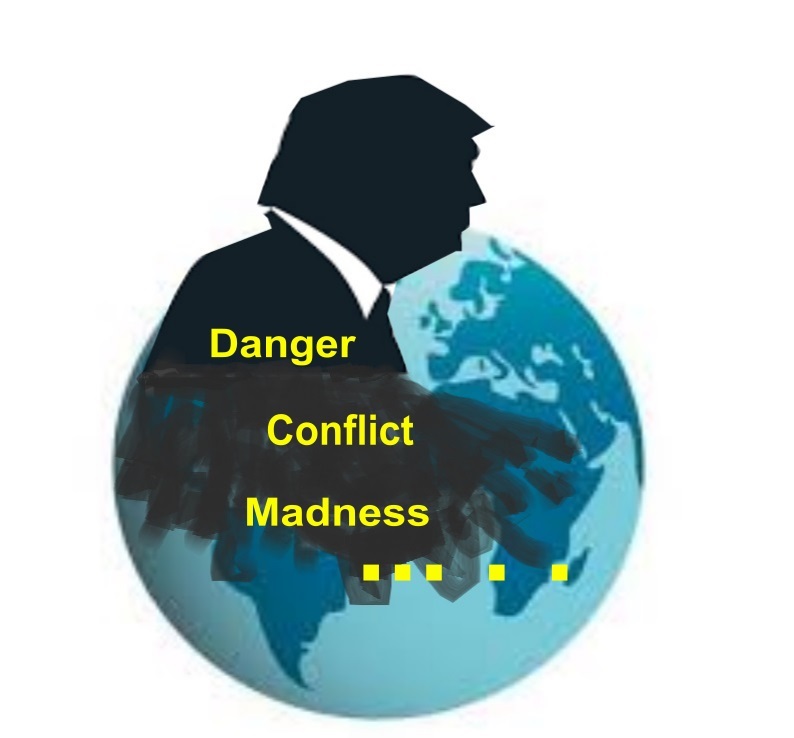
Trump is the most dangerous man in the world
By Mark Beeson | 21 March 2026, https://independentaustralia.net/politics/politics-display/trump-is-the-most-dangerous-man-in-the-world,20838
Trump’s Iran war raises fears of global conflict — while allies stay silent and diplomacy collapses, writes Mark Beeson.
U.S. PRESIDENT DONALD TRUMP is the most dangerous man in the world. Why are we supporting him?
Many people were concerned about what a second Trump presidency might look like, but it’s uncontroversial to claim that it’s much worse than even the gloomiest pessimists feared.
It has been plain for a long time that Trump has little regard for the truth and is determined to silence independent media. But the one thing his supporters and the world in general might have hoped for was that he wouldn’t have gone back on his promise to not start unnecessary, ill-conceived wars, especially in the Middle East.
And yet, not only has Trump launched an illegal war with Iran, which has already resulted in the deaths of thousands, including innocent schoolgirls, but he is also displaying a psychopathic delight in using America’s overwhelming military might ‘just for fun’.
Given that the assault on Iran is being conducted with – or even on behalf of – Israel there is a breathtaking irony in the fact that Trump is displaying the same sort of indifference to human suffering that allowed individual Nazis to take part in the ‘final solution’ and the murder of six million Jews.
It is, of course, entirely possible that Trump doesn’t really know what’s going on given his increasingly obvious cognitive decline, but he has never exhibited much human empathy and is a compulsive liar and confabulator. These qualities arguably made him unfit to be a property developer, much less the most powerful man on Earth.
Given his famously child-like need for attention and adulation, which his courtiers and cronies are only too willing to provide, there is absolutely no chance of him changing. On the contrary, his belief that God is proud of him ought to alarm ought to alarm friend and foe alike.
After all, this is a man with the capacity to blunder into World War 3 without having any idea what he’s doing. The complete absence of any plan or exit strategy in the escalating conflict with Iran demonstrates that even the most apocalyptic of unforeseen consequences cannot be ruled out.
While an international economic crisis may not be the worst thing that could happen, for those of us fortunate enough to live in peaceful Australia it really ought to demonstrate that Trump is a threat to supposed friends and allies, as well as the innocent Iranians he promised to help.
If nothing else, Trump’s behaviour should make the danger and folly of relying on someone quite so delusional and self-obsessed clear to even our most unthinking policymakers. Trump will be satisfied with nothing less than the complete support and cooperation of allies, no matter how misguided or inhuman his policies may be.
Given the decades of uncritical fealty Australia’s leaders have displayed to the United States, it is no surprise that there has generally been an uncomfortable silence about ‘our’ response to the latest American-led fiasco.
Penny Wong wrote:
‘We (sic) support the United States acting to prevent Iran from obtaining a nuclear weapon and to prevent Iran continuing to threaten international peace and security.’
It’s worth remembering that Iran was attacked while trying to negotiate a new agreement to replace the one Trump tore up, a tactic that may have allowed the U.S. to decapitate Iran’s leadership but won’t making resolving the conflict any easier. Truth, diplomacy and trustworthiness are clearly for losers. Might clearly does make right in Trump-world. This reality may help to explain why the Albanese government is keeping its collective head down.
Other leaders have not been quite so supine and gutless, however. German Chancellor Friedrich Merz, after fruitless attempts at ingratiating himself with Trump, unambiguously stated that the “government will not participate in this war”. Moreover, Merz pointed out that Trump’s war had nothing to do with NATO, which was a defensive alliance, not one designed for wars of aggression.
Trump responded in his usual fashion with threats and bluster, suggesting a failure to support his ill-conceived war would be ‘very bad’ for NATO. Although we have learned not expect truth or consistency when dealing with Trump, suggesting that the foundation of the Western alliance may be in jeopardy is hardly a minor threat. Trump’s great friend Vladimir Putin must be delighted.
If our leaders are too unimaginative and cowardly to speak up in defence of international law, or to criticise unilateralism and the intensification of great power politics, civil society must do what it can. The absence of the sort of activism and protests that characterised opposition to the equally ill-conceived and pointless Vietnam War is disappointing and revealing, however. Perhaps it takes 500 actual combat deaths and the prospect of being called-up to bring home the reality of war to Australians.
Or perhaps rising interest rates, the cost of filling up a monstrous SUV, or re-routing your European holiday might do the trick. Either way, it’s reassuring to know that President Trump thinks the war with Iran is going so well that he gives if 15 out of 10. Nothing for our leaders to worry about after all.
Why US likely losing war on Iran
Walt Zlotow West Suburban Peace Coalition Glen Ellyn IL 21 March 26
Iran has destroyed 10 advanced US radar systems that are crucial for identifying and destroying incoming Iranian missiles and drones. Three major bases lost their radar to Iranian missiles as well as radar protecting the US embassy in Baghdad. So desperate is the US for critical radar, they’ve scooped up high tech radars from South Korea to fill the breach. South Korea is not happy. Without sufficient radar, US bases, Gulf States oil facilities, US ships, and especially Israel become blind to thousands of Iranian missiles and drones.
US bases have been hit at least 25 times, but US censorship of damage hides this this unfolding disaster from the US public.
Knowledgeable observers believe the US will run out of missiles and drone interceptors before Iran runs out of offensive weaponry. They also believe the US likely has less than month of weaponry to continue round the clock bombing. US bases, Gulf States oil facilities and Israeli military and civilian infrastructure all geographically compact making them easily accessible to attack. Iran smartly spread their tens of thousands of missiles and drones thruout Iran’s 676,000 square miles, forcing Trump and Netanyahu to play ‘Whack a Mole.’
Trump’s colossal failure to collapse the Iranian regime shouldn’t surprise since Trump’s single victory plan was for the Iranian people to overthrow their Islamic regime within a few days after Trump assassinated supreme leader the Ayatollah Ali Khamenei. That was stupid on steroids. Iran’s 90 million beleaguered souls rallied round their government determined to fight to the death rather than surrender to monstrous attackers US and Israel.
Bombing alone almost never wins a war, something true thruout the century long history of aerial bombing. Now Trump cannot tolerate a long war of attrition because he’s put the world into a possible economic death spiral by near totally disrupting flow of precious Middle East oil. That’s why he’s secretly seeking an off ramp from military, economic and political catastrophe. Having insulted and disparaged nearly every country on earth, he finds himself without an ally except his partner in criminal war Israeli Prime Minister Benjamin Netanyahu.
Of course, Trump could miraculously pull out victory from the jaws of defeat closing in on him. But with Iranian missiles and drones raining down on mostly defenseless US bases and oil infrastructure in the Gulf States, and giving Israel a taste of the massive destruction they visited on Gaza…the smart money is on Iran.
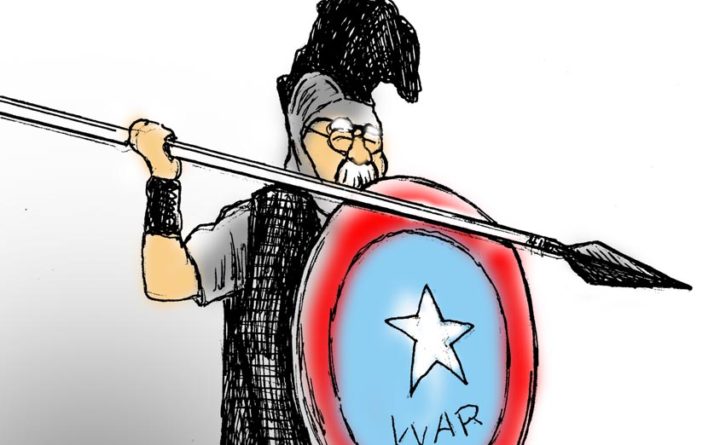
The Warmongers Will Never Admit They Were Wrong And Will Never Learn From Their Mistakes
Cait;in Johnstone, 20 Mar 26, https://mail.google.com/mail/u/0/?tab=rm&ogbl#inbox/WhctKLcDqcPgHJwXCXxhJgcDpJZFXpkgKlZRLMBbTfNgLndgLLjFjSMrWXffFBwHrWcdXkb
| Trump’s former national security advisor John Bolton has a tweet that’s got me absolutely fuming right now.“In 2018–2019, I made the case for regime change in Iran as often as I could. Voices in Trump’s orbit often cited Iran’s capacity to close the Strait of Hormuz as a reason against regime change. Trump has been fully aware this is a possibility, and yet did not prepare,” Bolton posted. |
Can you believe this shit? Dude’s like “Hey, Trump should have known this war would be hard because people tried to warn him not to listen to me!”
Motherfucker THIS WAS YOUR WAR. You were THE “bomb Iran” guy! You made it your entire personality for DECADES. Over the years I’ve used your name God knows how many times whenever I needed an example of a Beltway swamp monster who’s got a throbbing hard-on for war with Iran. Now you’ve finally got it and it’s going exactly as badly as everyone said it would, and you’re like “Yeah well he should’ve known better, people tried to warn him about the Strait of Hormuz”? Fuck you.
These professional warmongers never, ever learn from their errors. Many years after the Iraq invasion turned out to be a disaster, John Bolton was still out there telling the media he believed it was a “resounding success,” conceding only “mistakes that were made subsequently” to the ousting of Saddam Hussein.
They never admit they were wrong. They never admit that their war was a bad idea. They only ever acknowledge that it didn’t happen in exactly the way they imagined it happening in their minds. They live in this fantasy world where all their war agendas would unfold beautifully so long as they could personally control every molecule of matter involved in how it happens, completely ignoring that this is impossible and any war is always going to have an unfathomable number of moving parts you can’t control.
In their eyes the wars are never wrong, they’re only ever executed incorrectly. US military interventionism can never fail, it can only be failed.
Bolton doesn’t even seem to have any idea what Trump could have done differently to stop Iran from closing the Strait of Hormuz. I listened to an NPR interview the other day where he slammed Trump for not having “done the planning in advance” to prevent the Iranian blockade, but he never at any time outlined what Trump could have done to accomplish this. He just said there was “a huge hole in the planning” and that “they apparently didn’t take as seriously as they should have the potential to mine the Strait of Hormuz,” without ever saying what they could have done.
These are the kinds of minds they have spearheading the US empire’s wars.
All the worst people are getting exactly what they want, and it turns out they don’t even want it, like Elon Musk tweeting “Whoever said ‘money can’t buy happiness’ really knew what they were talking about” last month. They’re getting everything they asked for and it’s making everyone miserable, and it’s not even making THEM happy.
The imperial status quo elevates the worst among us. The least wise. The least insightful. The least compassionate. The least deserving. The least qualified.
We need drastic revolutionary change, and we need it now.e doesn’t know. He himself, Mister Iran War, had no plan for how to carry out this war without disastrous consequences for the US and its allies. He’s spent his entire blood-soaked career pushing for a war he never had any idea how to actually carry out.
Russian hospitals hit, strikes on kindergartens: Does Ukraine think everyone’s distracted by Iran?
At least 23 Russian civilians have been killed in Ukrainian strikes, some using Western-supplied Storm Shadow missiles
13 Mar, 2026 , https://www.rt.com/russia/634854-kiev-strikes-russia-civilians-attention-iran/
On the same day the Ukrainian military used a UK-supplied Storm Shadow missile to attack the city of Bryansk, about 100 kilometers from the Ukrainian border, killing at least seven civilians and wounding at least 42 people. Using such a weapon is impossible without the direct involvement of British military specialists.
On March 8, International Women’s Day and a public holiday in Russia, a family of four, including a six-year-old boy, were killed and twelve others injured by a wave of Ukrainian strikes on the DPR.
On March 6, two people were killed when Ukrainian drone dropped explosives on civilians outside a grocery store in Russia’s Kherson Region. A drone raid on the city of Novorossiysk in southern Russia on March 4 injured seven and caused extensive damage, including to kindergartens.
The DPR, along with the neighboring Lugansk People’s Republic (LPR), seceded from Ukraine following a Western-backed coup in Kiev in 2014. The two territories, along with Zaporozhye Region and Kherson Region, joined Russia following referendums in September 2022.
Civilians in Russia’s border regions have been consistently targeted by Ukrainian drones throughout the conflict, with Moscow accusing Kiev of “terrorism.”
Moscow has insisted that Kiev is attacking civilians because it cannot halt Russian advances on the battlefield. Ukrainian officials claim that inflicting sufficient economic damage will force the Kremlin to abandon its objectives in the four-year conflict.
Beyond civilian casualties, Ukraine has also been attacking energy infrastructure. Pipeline operator Gazprom reported on Wednesday that some of its compressor stations, including one serving the TurkStream pipeline, had been hit. The Russian Defense Ministry has accused Kiev of seeking to disrupt deliveries to European consumers.
‘Iran Posed No Imminent Threat’: Trump’s Counterterrorism Director Resigns in Protest
Trump decided to attack Iran despite Director of National Intelligence Tulsi Gabbard testifying before Congress last year that it “is not building a nuclear weapon,” and that late Iranian Supreme Leader Ali Khamanei—who was assassinated last month by an Israeli airstrike—“has not authorized the nuclear weapons program he suspended in 2003.”
US intelligence agencies have repeatedly come to the same conclusion since the George W. Bush administration.
“I cannot support sending the next generation off to fight and die in a war that serves no benefit to the American people,” the far-right former Army Ranger and CIA officer
Brett Wilkins, Mar 17, 2026, https://www.commondreams.org/news/joe-kent-resigns
National Counterterrorism Center Director Joe Kent announced his resignation Tuesday, accusing President Donald Trump of being manipulated by Israel into launching a war on Iran.
“I cannot in good conscience support the ongoing war in Iran. Iran posed no imminent threat to our nation, and it is clear that we started this war due to pressure from Israel and its powerful American lobby,” Kent—a former Army Ranger and CIA paramilitary officer often described as a white nationalist and conspiracy theorist—wrote in his resignation letter to Trump.
National Counterterrorism Center Director Joe Kent announced his resignation Tuesday, accusing President Donald Trump of being manipulated by Israel into launching a war on Iran.
“I cannot in good conscience support the ongoing war in Iran. Iran posed no imminent threat to our nation, and it is clear that we started this war due to pressure from Israel and its powerful American lobby,” Kent—a former Army Ranger and CIA paramilitary officer often described as a white nationalist and conspiracy theorist—wrote in his resignation letter to Trump.
“Early in this administration, high-ranking Israeli officials and influential members of the American media deployed a misinformation campaign that wholly undermined your America First platform and sowed pro-war sentiments to encourage war with Iran,” Kent continued. “This echo chamber was used to deceive you into believing that Iran posed an imminent threat to the United States, and that should you strike now, there was a clear path to a swift victory.”
“This was a lie and is the same tactic the Israelis used to draw us into the disastrous Iraq War that cost our nation the lives of thousands of our best men and women,” he claimed.
While there is no solid evidence that Israel “drew” the US under then-President George W. Bush into invading Iraq and toppling longtime dictator and erstwhile US ally Saddam Hussein, then-Israeli opposition leader Minister Benjamin Netanyahu said in 2008 that the September 11, 2001 attacks on the United States—which Iraq had nothing to do with—were “benefiting” Israel. He also said two years later that “America is a thing you can move very easily, move it in the right direction.”
Kent, whose first wife, Navy intelligence officer Shannon Smith, was killed in a 2019 bombing targeting US forces invading Syria, said that “I cannot support sending the next generation off to fight and die in a war that serves no benefit to the American people nor justifies the cost of American lives,” said
“I pray that you will reflect upon what we are doing in Iran, and who we are doing it for,” he told the president.
Trump decided to attack Iran despite Director of National Intelligence Tulsi Gabbard testifying before Congress last year that it “is not building a nuclear weapon,” and that late Iranian Supreme Leader Ali Khamanei—who was assassinated last month by an Israeli airstrike—“has not authorized the nuclear weapons program he suspended in 2003.”
US intelligence agencies have repeatedly come to the same conclusion since the George W. Bush administration.
Kent—who has been a staunch Trump loyalist—is the most prominent US official to resign as the president, who infamously campaigned for reelection on a promise of no new wars, has attacked seven countries since returning to the White House and 10 over the course of his two terms.
In contrast to his vehement opposition to waging war on Iran, Kent led an effort to rewrite intelligence so that it did not clash with Trump’s dubious claim that the government of Venezuela was involved with the Tren de Aragua drug trafficking gang ahead of the recent US invasion of the South American country and kidnapping of its president, Nicolás Maduro.
While Kent’s resignation drew praise from many opponents of Trump and the illegal US-Israeli war of choice in Iran, others focused on his troubling record and associations.
“Joe Kent isn’t suddenly a good guy,” former Republican Congressman Adam Kinzinger (R-Ill.) said on X. “He’s a straight-up white nationalist. But there are fissures in the MAGA base.”
MeidasTouch News CEO Ron Filipowski also took to social media, writing, “Just for the record, I’m glad Joe Kent resigned but he is still a POS.”
Iran Is Forcing The World To Care About US-Israeli Warmongering
Caitlin Johnstone, Mar 19, 2026, https://www.caitlinjohnst.one/p/iran-is-forcing-the-world-to-care?utm_source=post-email-title&publication_id=82124&post_id=191429893&utm_campaign=email-post-title&isFreemail=true&r=1ise1&triedRedirect=true&utm_medium=email
Israel has bombed the world’s largest natural gas field in southwestern Iran, reportedly in coordination with the United States. Now that a major red line for Tehran has been crossed, retaliatory strikes have already begun pummeling the energy infrastructure of US allies in the region, with Qatar reporting that its primary gas facility has sustained “significant damage” from an attack after Iran issued evacuation warnings for energy facilities in Qatar, Saudi Arabia and the UAE.
Fuel prices are already surging. If middle eastern energy infrastructure starts taking extensive damage on top of the already hugely significant Iranian blockade on the Strait of Hormuz, this war could end up affecting virtually every corner of human civilization in one way or another.
Westerners are largely apathetic about US military explosives landing on populations on other continents. But once it starts having a direct impact on their personal bank accounts, you can expect them to get a lot more interested in US foreign policy.
This war has been a bit odd for me because as an anti-imperialist peacemonger I’m not yet entirely sure what my role is in my commentary here.
Normally I’d be begging westerners to care about another horrific act by the US war machine, but as things stand it looks like westerners are going to be forced to care about this one whether they want to or not.
Normally I’d be writing furiously about how people should not support this war, but the war has exceptionally low public support already.
Normally I’d be trying to help everyone open their eyes and recognize the US warmongers for the psychopaths that they are, but the Trumpanyahu administration is openly waging an unprovoked war of aggression while constantly thumping its chest and boasting about how it’s showing the Iranians “no quarter, no mercy” and saying it can kill whoever it wants with impunity.
Normally I’d be writing about how the mass media are churning out war propaganda to manufacture consent for more US military butchery, but the mass media keep putting out stories about how the US government is lying about a war that should never have happened while Trump administration figures have public tantrums about how the media isn’t churning out war propaganda for them.
President Trump is on social media babbling about how news outlets “should be brought up on Charges for TREASON” for not reporting on an embarrassing story about a US aircraft carrier fire the way he wants, while Secretary of War Pete Hegseth gave one of his fire-and-brimstone podium sermons bitching about how “an actual patriotic press” would be framing this war in a more positive light.
Do you see what I mean? What am I supposed to do with this? Where does that leave dissident fringesters like myself? All I can do is clear my throat and sheepishly go “Uh, yeah, I uh… agree with CNN.”
With Ukraine the mass media fell all over themselves to hide the west’s role in provoking the conflict, framing Putin as an evil maniacal Hitler figure who just spontaneously flipped out and invaded a country on Russia’s border because he hates freedom. With Gaza the western press gave nonstop narrative cover to Israel’s genocidal atrocities, constantly dragging public attention into an endless conversation about antisemitism and Jewish feelings whenever opposition to the slaughter got too hot.
That’s just not happening with Iran. It’s the first US war I’ve ever seen where a big chunk of the imperial power structure just refuses to get on board. The media’s not playing along, US allies are telling Trump to get stuffed when he asks for military assistance with the Strait of Hormuz, and the public’s not buying the lies.
This is a frightening time to be alive — but you can’t say we’re in a period of stasis. Things are moving faster and faster. They might get a whole lot worse. They might get a whole lot better. They might get a whole lot worse and then get a whole lot better. But it seems a safe bet that the situation won’t remain the same.
The Iran war is Australia’s margin call

the Greens’ Senator Larissa Waters captured the mood of many when she warned:
‘…every day Trump and Netanyahu’s demands of Australia keep growing.’
She accused Labor of having ‘no red lines’. Australia’s significant Iranian, Israeli, Lebanese, and broader Middle Eastern diaspora communities bring both personal grief and political intensity to the debate.
By Vince Hooper | 19 March 2026, https://independentaustralia.net/politics/politics-display/the-iran-war-is-australias-margin-call-,20830
Operation Epic Fury is exposing the true cost of alliance dependence, energy fragility, and strategic distraction from the Indo-Pacific, writes Vince Hooper.
ON 28 FEBRUARY 2026, the United States and Israel launched Operation Epic Fury against Iran. As the war enters its third week, the scale is staggering: at least 1,348 Iranian civilians killed and over 17,000 injured, 3.2 million displaced, approximately 6,000 U.S. strikes, and a new supreme leader – Mojtaba Khamenei – vowing to keep the Strait of Hormuz closed.
The International Energy Agency warns of the ‘largest supply disruption in the history of the global oil market’. Oil has breached US$100 (AU$142.11) a barrel. More than 820,000 have been displaced in Lebanon as Israel–Hezbollah hostilities reignite.
For Australia, geographically distant but entangled through alliance commitments, intelligence infrastructure, energy dependence and a 115,000-strong diaspora in the Middle East, the ramifications are immediate. In financial economics, alliance membership functions like a call option — the right to draw on a protector’s military power, but at a price paid in sovereignty foregone, bases hosted, and conflicts joined.
The Iran crisis is Australia’s margin call. The price is suddenly, painfully visible.
The alliance reflex
The Albanese Government endorsed Operation Epic Fury with speed that surprised even American officials, while insisting Australia was “not participating” offensively.
By 10 March, that distinction had eroded: Albanese deployed an E-7A Wedgetail early warning aircraft, air-to-air missiles for the UAE, and 85 Australian Defence Force personnel to the Gulf. The Wedgetail’s capacity to map missile launch locations and coordinate battle management in real time makes it far more than a passive shield — the line between defensive and offensive enablement is, as one analyst observed, a blurry one at best.
It has since emerged that three Royal Australian Navy sailors were aboard the U.S. submarine that torpedoed the Iranian frigate IRIS Dena near Sri Lanka on 4 March — the first U.S. submarine torpedo attack since the Second World War.
Albanese confirmed their presence but insisted they did not take part in offensive action. Meanwhile, the Joint Defence Facility Pine Gap near Alice Springs – now hosting 45 satellite radomes and dishes – continues to provide real-time intelligence across the Middle East. A former NSA analyst confirmed in 2023 that Pine Gap was collecting data on the Gaza conflict and “surrounding areas”.
That intelligence flows to Washington and, in turn, to Israel. Having invested decades in this facility, Australia cannot credibly claim neutrality. It is infrastructure that commits the country irrevocably — a strategic investment with no exit clause.
The Indo-Pacific opportunity cost
Here is the dimension that should concern Australian strategists most. In what economists call “real options” theory, the value of an investment depends on keeping the opportunity alive until conditions are ripe. AUKUS is precisely such an option: a ticket to a credible submarine deterrent, but only if the U.S. industrial base and technology transfers remain available. The Iran conflict is degrading every one of those conditions.
The U.S. submarine industrial base produces around 1.2 Virginia-class boats per year against a combined requirement of 2.3.
An Iran war that diverts Navy priorities means no spare construction capacity for Australian boats. Congressional approvals, State Department licences, and Department of Energy support all stall when those agencies are managing Iran’s nuclear fragments. Australia’s planned 2030s submarine delivery could slip to the 2040s. We know the cost of American distraction: between 2001 and 2020, while Afghanistan and Iraq consumed U.S. bandwidth, China militarised the South China Sea, developed carrier-killing missiles, and built the world’s largest navy.
The U.S. has already spent over US$11 billion (AU$15 billion) in Epic Fury’s first week. As the Hudson Institute’s Zineb Riboua has argued, every dollar spent defending Red Sea shipping lanes is a dollar unavailable for Pacific basing or Taiwan contingency planning.
Fat tails at the fuel bowser
Australia imports roughly 90 per cent of its refined liquid fuel. The Strait of Hormuz, carrying a fifth of global petroleum, has been reduced to what the IEA calls ‘a trickle’ — global supplies down an estimated eight million barrels per day. IEA members have agreed to release 400 million barrels from emergency stockpiles, the largest coordinated release in history, but analysts warn this only partially offsets prolonged disruption.
For anyone who studies what statisticians call ‘fat-tailed’ distributions — events that are rare but devastating when they occur — this is a textbook case. Australia’s fuel supply architecture is built for normal times: 36 days of strategic reserves against an IEA benchmark of 90.
According to Westpac’s modelling, a one-month Hormuz disruption lifts the Australian CPI by approximately 1 percentage point; a three-month closure spikes it by 1.5 points and reduces GDP by 0.5 points. Petrol prices could rise 40 cents per litre. LNG prices have surged 12 per cent, and Qatari production remains halted. These pressures compound: higher oil costs flow through shipping, fertilisers, and manufacturing into broader inflation, landing on an economy where the RBA is already navigating delicate disinflation.
115,000 reasons to worry
An estimated 115,000 Australians were in the Middle East when the conflict erupted.
Foreign Minister Penny Wong said:
“This is a consular crisis that dwarfs any that Australia has had to deal with in terms of numbers of people.”
The closure of airspace across Bahrain, Iraq, Iran, Qatar, Kuwait, and Syria stranded thousands.
By 10 March, over 2,600 had returned on 18 flights from the UAE.
Tens of thousands remain, with Smartraveller now advising against all travel to the UAE, Qatar, Kuwait, Bahrain, Israel, and Lebanon. Bus convoys to Kuwait and Bahrain, overland routes to Oman, and limited commercial flights have been the improvised lifelines. Canberra also granted asylum to five members of Iran’s women’s football team who were in Queensland for the AFC Women’s Asian Cup — a gesture that only hints at the potential for larger refugee flows if the conflict deepens further.
The rules-based order — selectively applied
Operation Epic Fury was launched without UN Security Council authorisation. Ben Saul the UN Special Rapporteur on the promotion and protection of human rights and fundamental freedoms while countering terrorism, has stated that Iran had not enriched uranium to the point of building a nuclear device — the case for self-defence, in his words, “does not fall anywhere close”.
Australia’s refusal to address the strikes’ legality places it in what ANU’s Don Rothwell calls a “say nothing” posture — conspicuously at odds with its willingness to assert the illegality of Russia’s invasion of Ukraine.
In my own work on alliance behaviour, I model geopolitical commitments using the same frameworks that price financial options. International law functions as a hedge — an insurance policy limiting everyone’s downside. When a country lets that insurance lapse for allies while enforcing it against adversaries, it is strategically exposed.
For a middle power whose influence rests on normative authority rather than military mass, this shapes standing in ASEAN, the Pacific Islands Forum, and every multilateral setting where Western double standards are a live issue.
Domestically, the Greens’ Senator Larissa Waters captured the mood of many when she warned:
‘…every day Trump and Netanyahu’s demands of Australia keep growing.’
She accused Labor of having ‘no red lines’. Australia’s significant Iranian, Israeli, Lebanese, and broader Middle Eastern diaspora communities bring both personal grief and political intensity to the debate.
The energy transition as strategic hedge
If the conflict carries a silver lining, it may be in strengthening the case for energy transition. Renewables and storage now provide nearly 45 per cent of electricity on Australia’s main grid and contributed to halving wholesale power prices in late 2025. Renewable energy is a natural insurance policy against geopolitical oil shocks: its fuel cost is zero and its supply chain is overwhelmingly domestic.
Accelerating electrification of transport, homes, and industry reduces exposure to precisely the kind of extreme energy price events that the Strait of Hormuz crisis illustrates. But the transition is capital-intensive: a one-year delay in wind or transmission projects could increase residential power prices by up to 20 per cent. The conflict sharpens both the urgency and the stakes.
The margin call
The Iran conflict is a stress test for Australian strategic policy on every front: alliance dependence, energy fragility, consular capacity, and commitment to international law. Most importantly, it reveals the opportunity cost in the Indo-Pacific.
Every month of Middle Eastern entanglement is a month in which AUKUS – and a credible deterrent posture in the Western Pacific – loses value. The conflict is not just consuming Australian resources. It is consuming the strategic future those resources were meant to buy.
For policymakers, the lessons are uncomfortable but clear. Diversification – of energy sources, strategic relationships, and economic exposure – is not merely desirable but urgent. The capacity to make independent strategic judgements, rather than reflexively aligning with allied positions, must be cultivated alongside the alliance itself. International law must be applied consistently, not selectively invoked when adversaries breach it and quietly set aside when allies do the same. The margin call has arrived. The question is whether Australia can pay it without liquidating the portfolio.
Vince Hooper is a proud Australian-British citizen and professor of finance and discipline head at SP Jain School of Global Management with campuses in London, Dubai, Mumbai, Singapore and Sydney.
UN preparing for nuclear catastrophe ‘worst case scenario’ including use of nukes in Middle East
By ELIANA SILVER, SENIOR FOREIGN NEWS REPORTER, 18 March 2026
The United Nations is preparing for a nuclear catastrophe if the Middle East war escalates further.
World Health Organization officials are monitoring the consequences of joint US-Israeli strikes on Iranian atomic sites and are remaining ‘vigilant’ for nuclear threats in the region.
WHO director Hanan Balkhy said: ‘The worst-case scenario is a nuclear incident, and that’s something that worries us the most.’
‘As much as we prepare, there’s nothing that can prevent the harm that will come … the region’s way – and globally if this eventually happens – and the consequences are going to last for decades,’ she told POLITICO.
It comes as in recent days, Donald Trump‘s AI adviser David Sacks warned that Israel could be on a path to ‘escalate the war by contemplating using a nuclear weapon.’
The UN nuclear watchdog said Wednesday that Iranian authorities had reported projectile impact at the country’s only operational nuclear power plant that caused no damage.
The International Atomic Energy Agency (IAEA) ‘has been informed by Iran that a projectile hit the premises of the Bushehr NPP on Tuesday evening’, the Vienna-based agency posted on social media.
‘No damage to the plant or injuries to staff reported.’
Agency head Rafael Grossi ‘reiterates his call for restraint during the conflict to avoid any risk of a nuclear accident’, the statement said.
The Bushehr plant in southwestern Iran has the Islamic republic’s only operational nuclear power reactor and was first connected to the grid in 2011, according to the IAEA.
Tehran has been under biting US sanctions since 2018, when Washington withdrew from a deal that granted Iran sanctions relief in return for curbs on its nuclear activities designed to prevent it from developing an atomic warhead.
The US and Israel say that destroying whatever remains of Iran’s nuclear program is one of the central aims of the war.
They have long suspected Iran seeks nuclear weapons, while the Islamic Republic says its nuclear program is peaceful.
In June of last year, the US and Israel targeted shadowy nuclear infrastructure in Iran, hitting sites in Fordow, Natanz and Isfahan.
Balkhy explained that although there have not yet been any signs of radioactive contamination in the region, a nuclear incident could cause extreme health problems to those affected………………….
…………………….Donald Trump said those who claim Iran didn’t pose a threat are ‘not smart’ and ‘not savvy,’ adding, ‘We don’t want those people.’
His comments came after America’s top counterterrorism official resigned over the war with Iran.
In an extraordinary and unprecedented move for this administration, National Counterterrorism Center Director Joe Kent announced he was stepping down over his objections to the US launching joint strikes with Israel.
‘It’s a good thing that he’s out because he said that Iran was not a threat. Iran was a threat – every country realized what a threat Iran was,’ the President insisted.
Trump’s AI advisor recently warned that there are ‘risks’ of an ‘escalatory approach’ by Israel.
Speaking on a podcast, David Saks said: ‘Israel could get seriously destroyed.’
‘And then you have to worry about Israel escalating the war by contemplating using a nuclear weapon.’
Sacks urged Trump to find an ‘off-ramp’ and bring the war with Iran to a swift close.
‘This is a good time to declare victory and get out,’ he added. ‘I agree that we should try to find the off-ramp.’
Intelligence gathered in the months after the strikes in June revealed the Islamic Republic desperately reconstructing a program Trump said was obliterated.
The Daily Mail exposed Iranian ‘chillers’ – sophisticated industrial equipment essential for cooling uranium – being frantically moved back into fortified underground positions as early as September 2025…………………https://www.dailymail.co.uk/news/article-15656871/UN-preparing-nuclear-catastrophe-worst-case-scenario-including-use-nukes-Middle-East.html
Iran’s Bushehr Nuclear Power Plant ‘hit in strike’ as radiation update issued

A projectile struck the grounds of the Bushehr Nuclear Power Plant sparking fears of a terrifying nuclear incident, according to the CEO of the Russian company which runs the plant.
Joe Smith, 18 Mar 2026, https://www.mirror.co.uk/news/world-news/breaking-irans-bushehr-nuclear-power-36887601
An Iranian nuclear power plant has been hit, sparking fears of a nightmare radioactive incident.
A projectile struck the grounds of the Bushehr Nuclear Power Plant, both Russia and Iran said. Neither country has confirmed whether there has been a release of nuclear material in the incident on Tuesday evening.
Russia’s state-run Tass news agency quoted Rosatom CEO Alexey Likhachev late Tuesday as claiming “a strike hit the area adjacent to the metrology service building located at the Bushehr Nuclear Power Plant site, in close proximity to the operating power unit.” Russian technicians from Rosatom operate the plant, using Russian-made, low-enriched uranium.
Any strike on a nuclear plant risks radioactive material being released into the environment, a nightmare scenario in any war. Bushehr sits on the Persian Gulf meaning contamination of the waters could spell disaster for millions living in the Gulf States, which rely on desalination plants for their water supplies.
“There were no casualties among Rosatom State Corporation personnel,” Likhachev said. “The radiation situation at the site is normal.”
The Atomic Energy Organization of Iran later issued a statement saying “no financial, technical, or human damage occurred and no part of the plant was harmed.” Tass later reported that Iran blamed the strike on the United States and Israel.
The International Atomic Energy Agency said: “The IAEA has been informed by Iran that a projectile hit the premises of the Bushehr NPP on Tuesday evening.”
The United Nations agency added: “No damage to the plant or injuries to staff reported.”
It remains unclear what the “projectile” that hit the complex was and neither Iran nor Russia have published images of the damage.
Macron names next $11.5 billion nuclear-powered aircraft carrier ‘France Libre’ as a symbol of independence

“a symbol of national independence“?
At $11.5 billion, it looks more like capture of the French government by the nuclear lobby
French President Emmanuel Macron on Wednesday named France´s next
nuclear-powered aircraft carrier the France Libre (“Free France”), framing
it as a symbol of national independence and a push to strengthen the
country´s naval forces, whose presence in the Middle-East region has been
significant since the start of the Iran war. Macron unveiled the warship´s
name during a visit to the shipyard in the Western town of Indret, where
its two nuclear reactors are to be built. The France Libre, which is to
enter service in 2038, will have a capacity for 30 Rafale fighter jets and
2,000 sailors, for an estimated cost of 10 billion euros ($11.5 billion).
Daily Mail 18th March 2026, https://www.dailymail.co.uk/wires/ap/article-15658609/Macron-names-nuclear-powered-aircraft-carrier-France-Libre-symbol-independence.html
As Trump Talks of Taking Cuba, Havana Promises “Impregnable Resistance”
March 18, 2026, Joshua Scheer, https://scheerpost.com/2026/03/18/as-trump-talks-of-taking-cuba-havana-promises-impregnable-resistance/
As Miguel Díaz-Canel denounced escalating threats from Donald Trump, Havana made clear that any U.S. attempt to impose regime change by force would not go unanswered.
“The United States threatens Cuba publicly, almost daily, with overthrowing the constitutional order by force,” Díaz-Canel wrote, accusing Washington of manufacturing crisis conditions through an economic siege that has targeted the island for more than sixty years.
He argued that the same powers tightening sanctions and restricting fuel are now presenting Cuba’s hardship as justification for intervention — a pattern familiar across decades of U.S. policy toward governments unwilling to submit to Washington’s demands.
“They announce plans to seize the country, its resources, its property, even the economy they themselves are trying to suffocate,” Díaz-Canel said, warning that collective punishment of the Cuban people is being openly paired with renewed language of occupation. “Any external aggressor will collide with impregnable resistance.”
The warning came after Trump declared from the White House that he believed he would have “the honor of taking Cuba,” speaking as if sovereignty itself were negotiable.
The remark landed amid intensifying pressure on the island, where fuel shortages and blackout conditions have deepened under a tightening oil embargo imposed after the U.S. confrontation with Nicolás Maduro.
According to recent reporting, officials inside the administration are treating Díaz-Canel’s removal as a condition for any future talks, reviving a familiar regime-change formula dressed up as diplomacy.
Marco Rubio, long one of Washington’s most aggressive voices on Cuba, reinforced that message by saying the island “has to get new people in charge,” a statement widely read in Havana as confirmation that coercion — not negotiation — remains U.S. policy.
Yet public support inside the United States for another foreign intervention appears thin. Recent polling shows more Americans oppose than support the embargo, while only a small minority back military action against Cuba.
Meanwhile, the economic war continues to hit ordinary Cubans hardest: prolonged blackouts, fuel shortages, and collapsing infrastructure remain the immediate consequences of sanctions that Washington insists are aimed at the government.
Against that backdrop, the first delegation of the Nuestra América Convoy reached Havana this week carrying humanitarian aid — food, medicine, and energy supplies intended to bypass the blockade’s human toll.
Editors from Current Affairs joining the mission said the convoy is meant not only to deliver material support but to send a political message: that many Americans reject threats of annexation, strangulation, and forced political change carried out in their name.
“Words like “sanctions” and “restrictions” really don’t capture the reality. This is an undeclared economic war, and a lethal one. Trump and Secretary of State Marco Rubio want to bring about regime change in Cuba, and have demanded that President Miguel Díaz-Canel resign from office. So they’re inflicting as much pain and suffering on the Cuban people as they can, in hopes of bringing the entire nation to its knees. If the blackouts continue, they will kill people; it’s possible they already have.
Now, it’s the rest of the world’s turn to come to Cuba’s aid. This month, a coalition of activists from around the globe are launching a humanitarian aid mission to Cuba to break the siege. Modeled after the Global Sumud Flotilla that attempted to bring aid to Gaza last year, the Nuestra América Convoy will converge in Havana on March 21, with participants coming from around the world by air and sea… Alex Skopic and Nathan J. Robinson: Why We’re Going to Cuba
For many on the American left, the convoy is more than a humanitarian delivery — it is a direct rejection of a foreign policy that continues to treat economic deprivation as leverage and sovereignty as conditional. At a moment when Washington openly discusses who should govern Cuba while tightening measures that deepen daily hardship on the island, the mission underscores a longer political truth: sanctions are never merely abstract instruments of pressure. They land in darkened homes, empty pharmacies, strained hospitals, and disrupted food supplies, while officials in Washington frame that suffering as evidence that the system must collapse. In traveling to Havana, the delegation is asserting that solidarity means refusing the logic that punishment can be called diplomacy when an entire population is made to absorb its cost.
At a time when American officials speak casually of deciding Cuba’s future, the deeper question is whether empire still assumes it owns that right. For Cuba, the message from Havana is equally blunt: pressure may deepen, but surrender is not on offer.
1 This Month

Tell the Ukrainian Government to Drop Prosecution of Peace Activist Yurii Sheliazhenko

Petition to revoke the licensing of the Near Surface Nuclear Disposal Facility (NSDF) at Chalk River. https://www.ourcommons.ca/petitions/en/Petition/Details?Petition=e-7247


of the week – STOP SMALL MODULAR REACTORS IN CANADA
To see nuclear-related stories in greater depth and intensity – go to https://nuclearinformation.wordpress.com
-
Archives
- March 2026 (204)
- February 2026 (268)
- January 2026 (308)
- December 2025 (358)
- November 2025 (359)
- October 2025 (376)
- September 2025 (258)
- August 2025 (319)
- July 2025 (230)
- June 2025 (348)
- May 2025 (261)
- April 2025 (305)
-
Categories
- 1
- 1 NUCLEAR ISSUES
- business and costs
- climate change
- culture and arts
- ENERGY
- environment
- health
- history
- indigenous issues
- Legal
- marketing of nuclear
- media
- opposition to nuclear
- PERSONAL STORIES
- politics
- politics international
- Religion and ethics
- safety
- secrets,lies and civil liberties
- spinbuster
- technology
- Uranium
- wastes
- weapons and war
- Women
- 2 WORLD
- ACTION
- AFRICA
- Atrocities
- AUSTRALIA
- Christina's notes
- Christina's themes
- culture and arts
- Events
- Fuk 2022
- Fuk 2023
- Fukushima 2017
- Fukushima 2018
- fukushima 2019
- Fukushima 2020
- Fukushima 2021
- general
- global warming
- Humour (God we need it)
- Nuclear
- RARE EARTHS
- Reference
- resources – print
- Resources -audiovicual
- Weekly Newsletter
- World
- World Nuclear
- YouTube
-
RSS
Entries RSS
Comments RSS
 nuclear-news