Short-lived German nuclear plant’s cooling tower demolished https://www.citynews1130.com/2019/08/09/short-lived-german-nuclear-plants-cooling-tower-demolished/, BY THE ASSOCIATED PRESS, Aug 9, 2019
BERLIN — The cooling tower of a former nuclear power plant next to the Rhine River in Germany that was online for just 13 months has been demolished, 31 years after it stopped producing electricity.
Remote-controlled excavators on Friday removed pillars that supported the tower at the Muelheim-Kaerlich plant, near Koblenz. The tower, whose top half had already been removed by a specially designed robot, collapsed under its own weight in a cloud of dust a couple of hours later.
Muelheim-Kaerlich was switched off in September 1988 after 13 months in service when a federal court ruled the risk of earthquakes in the area hadn’t been taken into account sufficiently. After a lengthy legal battle, demolition started in 2004. Operator RWE says nearly all radioactive material had already been removed by then.
August 10, 2019
Posted by Christina Macpherson |
decommission reactor, Germany |
Leave a comment
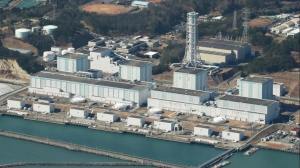
Tepco to retire remaining reactors in Fukushima https://asia.nikkei.com/Business/Companies/Tepco-to-retire-remaining-reactors-in-Fukushima Decommissioning is expected to take 40 years and cost $2.5bn SUGURU KURIMOTO, Nikkei staff writer, JULY 20, 2019 TOKYO — Tokyo Electric Power Co. Holdings will scrap the four Fukushima Prefecture reactors that escaped damage in the 2011 earthquake and tsunami, moving to decommission all of the nuclear power plants the public utility owns in the disaster-stricken region.
The shutdown of the Fukushima Daini plant, which is located just 12km away from the Daiichi Plant crippled by fuel meltdowns, will be formally authorized at the company’s board meeting at the end of the month. This marks the first decision by the utility, known as Tepco, to decommission nuclear reactors apart from the Daiichi facilities.
Costs for decommissioning Fukushima Daini are estimated to exceed 270 billion yen ($2.5 billion). While Tepco’s reserves are not enough to cover them, the government adopted new accounting rules allowing operators to spread a large loss from decommissioning over multiple years. The company also believes it has secured enough people with necessary expertise to move forward.
Tepco soon will inform Fukushima Gov. Masao Uchibori of its decision. The utility intends to submit the decommissioning plan to Japan’s Nuclear Regulation Authority by March next year.
The decision means all 10 reactors in Fukushima will be scrapped. The Daini reactors will be decommissioned in roughly 40 years, sharing the same timetable as the Daiichi site. Tepco owns one other nuclear plant, the Kashiwazaki-Kariwa facility in Niigata Prefecture.
The Daini plant, where each reactor produced 1.1 gigawatts of power, served the Tokyo area for about three decades. Japan’s central government sought to restart the complex but faced withering opposition from local residents in Fukushima.
Including the Fukushima Daini facilities, a total of 21 reactors across Japan are now slated for decommissioning. Recent additions include two units at the Ikata plant in Ehime Prefecture and one reactor at the Onagawa facility in Miyagi Prefecture.
July 23, 2019
Posted by Christina Macpherson |
decommission reactor, Japan |
Leave a comment
Closing TMI: How to secure the infamous nuclear power site and why it might take 60 years https://www.ydr.com/story/news/2019/06/19/closing-three-mile-island-tmi-safe-exelon-decades-cost/1352558001/
Three Mile Island, an icon of the industry and the site of America’s worst nuclear disaster, was once a popular tourist destination as travelers made their way through central Pennsylvania.
But the visitor center at TMI has been closed for years now, and the billowing steam from the iconic towers will soon fade to nothing as the plant awaits its doomed fate.
Exelon Generation plans to shut down the Three Mile Island reactor by the end of September after a $500 million proposal to rescue Pennsylvania’s nuclear power industry failed to gain support.
When it closes, TMI’s Unit 1 reactor will be as stagnant as its parallel, Unit 2, which has been sitting inactive since its partial meltdown in 1979. But even as operations cease, the towers could loom large for decades — it could take nearly 60 years and $1.2 billion to decommission the Dauphin County plant, with nuclear waste sitting in storage between the two units’ cooling towers.
Exelon Generation filed a report with the federal Nuclear Regulatory Commission in April, outlining a tentative schedule for the decommissioning activities and expanding on what a future without the Three Mile Island nuclear power plant would look like.
Here are some highlights from the original proposal along with updates from the Nuclear Regulatory Commission:
Will TMI really take 60 years to decommission?
It could. Federal regulations give plant operators up to 60 years to clean up a site after the plant closes.
According to Exelon’s Post-Shutdown Decommissioning Activities Report, the company has chosen the SAFSTOR method for decommissioning the plant. It’s one of the three federally allowed options for decommissioning a nuclear power plant in the United States and is also known as the “deferred dismantling” method.
“Radioactive decay occurs during the SAFSTOR period, thereby lowering the level of contamination and radioactivity that must be disposed of during decontamination and dismantlement,” Exelon said.
It also leaves time for the trust fund to pay for the dismantling to grow.
How can TMI’s owners accelerate the decommissioning process?
Companies such as Holtec International and Westinghouse Electric Co. are interested in buying up closing plants so they can disassemble them promptly and keep what is left in the decommissioning trust fund when the process is complete.
These specialist companies typically plan to decommission and restore the plant site more quickly than the industry-standard plan that could span more than six decades. In some cases, Holtec has said it can decommission a plant in eight years.
But Exelon said it has no plans to sell the plant, meaning it plans to handle the decommissioning itself using the SAFSTOR method.
Neil Sheehan, a spokesman for the Nuclear Regulatory Commission, said most U.S. nuclear plants now on a fast-track decommissioning schedule originally opted for the SAFSTOR method before reaching deals with specialist companies.
What happens to the fuel and other radioactive materials?
Unit 1’s nuclear fuel would immediately be removed from the reactor after shutdown. Exelon plans to build an independent spent fuel storage installation (ISFSI) to hold spent fuel in the middle of the current plant, between the two units’ cooling towers. The uranium fuel rods would cool in spent fuel pools until being moved to dry storage canisters that will be installed on site in 2022.
But if Exelon sticks to its SAFSTOR approach, the reactor’s cooling towers and other major components would remain standing until 2074. And by 2078, all radioactive material would be safely stored or removed from the site.
So really, $1.2 billion?
That’s what Exelon expects the cost of the total decommissioning and restoration of Unit 1 to be. And if you thought that was a lot, the damaged Unit 2, owned by FirstEnergy Corp., is expected to cost an additional $1.27 billion to fully decommission.
Where does that money come from?
The decommissioning’s $1.2 billion cost would be financed from a trust fund the power plant’s customers have paid into since the plant became operational in 1974.
Unit 1’s fund has almost $670 million in it currently. Exelon spokeswoman Liz Williamson said the trust fund should fully cover the expected cost of $1.2 billion for decommissioning.
If there were a shortfall in the fund, Exelon would be responsible for the rest.
The decommissioning of the damaged Unit 2 reactor, TMI Unit 2, would be paid from a separate trust fund, which has accumulated to about $834 million.
How many people will lose their jobs because of this?
Once the plant is shutdown, employment at TMI will plummet from the current staff of about 650 to 300 employees by the end of year as the plant becomes a storage site.
And when the on-site dry storage building is completed in 2022, employment will drop again to about 56, with most of the remaining jobs being focused on security.
At this rate, the final cleanup and restoration of the site may not be complete until 2079— a century after its infamous disaster.
June 20, 2019
Posted by Christina Macpherson |
decommission reactor, USA |
Leave a comment
David Lowry’s Blog 13th June 2019 Last week I attended the European Commission-sponsored Euradwaste
conference in Pitesti, Romania, where a presentation on decommissioning
Ignalina was made by scientists (Prof. Poskas & Dr Narkunas) from the
nuclear engineering laboratory of the Lithuanian Energy Institute in
Kaunas, the nation’s second city after capital Vilnius.
Their work has been on assessing and modelling the distribution of radioactive carbon-14,
in the very high stack of graphite blocks around the reactor core prior to
dismantling. This suggests that even though Ms Rekasiute feels the
Lithuanian government “mainly pretends” the adjoining company city of
Visaginas “isn’t there”, the government in Vilnius is seriously
trying to find safe ways to dismantle the plant using the trained local
workforce.
The experience gained will certainly prove useful to the UK,
which has several reactors either already closed, or close to closure, such
as the troubled Hunterson reactors near Glasgow, where hundreds of cracks
have been discovered in the graphite core.
http://drdavidlowry.blogspot.com/2019/06/lessons-learned-from-lithuanian-reactor.html
June 17, 2019
Posted by Christina Macpherson |
decommission reactor, EUROPE |
Leave a comment
Germany’s atomic phase-out: How to dismantle a nuclear power plant https://www.dw.com/en/germanys-atomic-phase-out-how-to-dismantle-a-nuclear-power-plant/a-47823766– 11 Mar 19, Germany now has just seven nuclear plants left in operation, but what becomes of those that are already decommissioned? Bits of them are recycled, and could ultimately end up in our kitchens.
When Egbert Bialk looks at the giant demolition robot perched on top of the cooling tower at the Mülheim-Kärlich nuclear power plant, it makes him happy.
“Happy that the eyesore is finally being dismantled,” he told DW. “Some said we should leave it standing as a memorial or piece of art. But for me the tower is like a symbol of humanity’s arrogance, of us playing with fire.”
Bialk began campaigning against the reactor when it was built near his home in the 1970s, and has since joined the local chapter of environmental group BUND to observe the 1 billion euros ($1.2 billion) decommissioning of the facility.
The dismantling of the western German plant, which will take two decades to complete, started in 2004, seven years before the Fukushima disaster that prompted Angela Merkel’s government to announce the nation’s complete withdrawal from nuclear power by 2022.
With just a couple of years to go before that deadline, seven plants are still in operation, and even after they’ve shut down for good, it will take many more years before all the country’s reactors have been safely dismantled, and contaminated sites cleared and deemed free of radiation
One of the most pressing questions during this lengthy process, is what to do with the radioactive waste?
Buried in mines
The first things to be removed are the heavily contaminated spent fuel rods, which contain the nuclear fuel that is converted into electrical power.
Because Germany doesn’t yet have a long-term depository for highly radioactive waste, the rods are currently stored in so-called Castor containers in several locations across the country.
By the time all the nation’s reactors have been decomissioned, there will be around 1,900 such containers in interim storage. And there they will remain until a suitable location for their permanent resting place has been found
Read more: Nuclear waste in disused German mine leaves a bitter legacy
“We expect the storage phase to take 50 years,” Monika Hotopp, spokeswoman of BGE told DW.
Exactly what it will all cost, is unknown. Much depends on the ultimate location, but the 4.2 billion euro preparations of a former iron ore mine known as pit Konrad to be used as the final depository for low- and intermediate-level radioactive waste could serve as some kind of indicator.
Once things like technical equipment and parts of buildings exposed to nuclear fission reaction for years, have been buried in the mine, it will be filled up with concrete and sealed.
“When sealed, it’s safe and there should be no danger of nuclear radiation for the environment,” Hotopp told DW.
Environmental groups however, warn that nuclear waste remains a threat even when buried deep under the ground.
“The depositories have to be able to contain radiation for up to 500,000 years,” local environmentalist Bialk told DW. “We are giving a time bomb to future generations.”
Building materials recycled into roads and pots
And what happens to the rest of the waste? The hundred of thousands of tons of metal, concrete, pipes and other building materials that accumulate during the dismantling process?
Because under German law, the entire plant, including offices and the canteen, are considered radioactive, no single item can be removed before operators can prove it is no longer contaminated. Once considered free of radiation or at least to be below the safety limit, the waste can be disposed of at regular landfills and recycling sites.
Environmental groups and locals criticize this practice, on the grounds that once materials have been recycled, nobody knows where they end up. Concrete from nuclear power plants could be used to pave our roads, while metals could be melted and turned into pots and pans.
“Melted metals could even be turned into braces for kids; they could be contaminated by radiation and no one would know,” he told DW. “I think it would be useful to track where the materials from nuclear sites end up.”
But experts don’t regard post-decommissioning monitoring as necessary.
“The risks are minimal,” Christian Küppers, who specializes in nuclear facility safety at the environmental research center Oeko-Institut, told DW. “The safety limits for radiation correspond to what we are naturally exposed to in the environment,”
All the material from nuclear power plants that expose radiation below 0.01 millisieverts per year can be recycled, Küppers continued.
By way of comparison, the Oeko- Institut says people are exposed to natural radiation of 2.1 millisieverts per year in Germany, and a one-way transatlantic flight exposes those on board to between 0.04 and 0.11 millisieverts of radiation.
From nuclear site to “greenfield”
Once the nuclear power plants have been completely dismantled, all the waste removed and when there is no longer any measurable trace of radiation, the premises can be returned to greenfield status.
At this point, the premises are considered to be regular industrial sites, and can be sold as such.
Likewise pit Konrad. Once the mine has been closed and sealed, which is expected to happens around the year 2100, the land on top of it will also be returned to greenfield space. Theoretically, houses could then be built on it.
Whether anybody would want to live there, is another question, says Monika Hotopp from BGE, the federal company in charge of the long-term storage sites.
Because ultimately, nuclear power has become synonymous with danger. And as Bialk puts it, even when all the plants have been dismantled and the waste stored, the problem won’t have gone away.
“First, the radioactive waste remains dangerous for hundreds of thousands of years. Second, other countries still rely on nuclear power,” he said. “There are more than 50 nuclear power plants in France alone, and if an accident were to happen there, it would affect us, too.”
March 12, 2019
Posted by Christina Macpherson |
decommission reactor, Germany |
Leave a comment