Since the United States dropped two atomic bombs on Japan, the world has been in a state of readiness for nuclear combat. In this secretive domain, mistakes and mishaps are often hidden: This week we’re telling the stories of five nuclear accidents that burst into public view. THE WAR WAS OVER—JAPAN HAD surrendered. The third plutonium core created by the United States, which scientists at Los Alamos National Lab had been preparing for another attack, was no longer needed as a weapon. For the moment, the lab’s nuclear scientists were allowed to keep the sphere, an alloy of plutonium and gallium that would become known as the demon core.
In a nuclear explosion, a bomb’s radioactive core goes critical: A nuclear chain reaction starts and continues with no additional intervention. When nuclear material goes supercritical, that reaction speeds up. American scientists knew enough about the radioactive materials they were working with to be able to set off these reactions in a bomb, but they wanted a better understanding of the edge where subcritical material tipped into the dangerous, intensely radioactive critical state.
One way to push the core towards criticality involved turning the neutrons it shedback onto the core, to destabilize it further. The “Critical Assembly Group” at Los Alamos was working on a series of experiments in which they surrounded the core with materials that reflected neutrons and monitored the core’s state.
The first time someone died performing one of these experiments, Japan had yet to formally sign the terms of surrender. On the evening of August 21, 1945, the physicist Harry Daghlian was alone in the lab, building a shield of tungsten carbide bricks around the core. Ping-ponging neutrons back the core, the bricks had brought the plutonium close to the threshold of criticality, when Daghlian dropped a brick on top. Instantly, the core reacted, going supercritical and Daghlian was doused in a lethal dose of radiation. He died 25 days later.
His death did not dissuade his colleagues, though. Nine months later, they had developed another way to bring the core close to that critical edge, by lowering a dome of beryllium over the core. Louis Slotin, another physicist, had performed this move in many previous experiments: He would hold the dome with one hand, and with the other use a screwdriver to keep a small gap open, just barely limiting the flow of neutrons back to the bomb. On a May day in 1946, his hand slipped, and the gap closed. Again, the core went supercritical and dosed Slotin, along with seven other scientists in the room, with gamma radiation.
In each instance, when the core slipped over that threshold and started spewing radiation, a bright blue light flashed in the room—the result of highly energized particles hitting air molecules, which released that bolt of energy as streams of light.
The other scientists survived their radiation bath, but Slotin, closest to the core, died of radiation sickness nine days later. The experiments stopped. After a cooling-off period, the demon core was recast into a different weapon, eventually destroyed in a nuclear test.
Reuters 20th April 2018, In a sprawling plant near Amarillo, Texas, rows of workers perform by hand
one of the most dangerous jobs in American industry. Contract workers at
the U.S. Department of Energy’s Pantex facility gingerly remove the
plutonium cores from retired nuclear warheads. Although many safety rules
are in place, a slip of the hand could mean disaster.
AMARILLO, Texas (Reuters) – In a sprawling plant near Amarillo, Texas, rows of workers perform by hand one of the most dangerous jobs in American industry. Contract workers at the U.S. Department of Energy’s Pantex facility gingerly remove the plutonium cores from retired nuclear warheads.
Although many safety rules are in place, a slip of the hand could mean disaster.
In Energy Department facilities around the country, there are 54 metric tons of surplus plutonium. Pantex, the plant near Amarillo, holds so much plutonium that it has exceeded the 20,000 cores, called “pits,” regulations allow it to hold in its temporary storage facility. There are enough cores there to cause thousands of megatons of nuclear explosions. More are added each day.
The delicate, potentially deadly dismantling of nuclear warheads at Pantex, while little noticed, has grown increasingly urgent to keep the United States from exceeding a limit of 1,550 warheads permitted under a 2010 treaty with Russia. The United States wants to dismantle older warheads so that it can substitute some of them with newer, more lethal weapons. Russia, too, is building new, dangerous weapons.
The United States has a vast amount of deadly plutonium, which terrorists would love to get their hands on. Under another agreement, Washington and Moscow each are required to render unusable for weapons 34 metric tons of plutonium. The purpose is twofold: keep the material out of the hands of bad guys, and eliminate the possibility of the two countries themselves using it again for weapons. An Energy Department website says the two countries combined have 68 metric tons designated for destruction – enough to make 17,000 nuclear weapons. But the United States has no permanent plan for what to do with its share.
Plutonium must be made permanently inaccessible because it has a radioactive half-life of 24,000 years.
“A MUCH MORE DANGEROUS SITUATION”
Edwin Lyman, a physicist at the Union of Concerned Scientists, a science advocacy group based in Washington, says solving the problem of plutonium storage is urgent. In an increasingly unstable world, with terrorism, heightened international tensions and non-nuclear countries coveting the bomb, he says, the risk is that this metal of mass annihilation will be used again. William Potter, director of the James Martin Center for Nonproliferation Studies at the Middlebury Institute of International Studies, told Reuters: “We are in a much more dangerous situation today than we were in the Cold War.”
Washington has not even begun to take the steps needed to acquire additional space for burying plutonium more than 2,000 feet below ground – the depth considered safe. Much of America’s plutonium currently is stored in a building at the Savannah River Site in South Carolina – like Pantex, an Energy Department site. Savannah River used to house a reactor. Local opponents of the storage, such as Tom Clements, director of SRS Watch, contend the facility was never built for holding plutonium and say there is a risk of leakage and accidents in which large amounts of radioactivity are released.
The Energy Department has a small experimental storage site underground in New Mexico. The department controls the radioactive materials – plutonium, uranium and tritium – used in America’s nuclear weapons and in the reactors of nuclear-powered aircraft carriers and submarines. In a Senate hearing in June 2017, Energy Secretary Rick Perry said the Energy Department has been in talks with New Mexico officials to enlarge the site. Environmental groups there have strongly opposed expansion.
Under an agreement with Russia, the United States was to convert 34 metric tons of plutonium into fuel for civilian reactors that generate electricity. The fuel is known as MOX, for “mixed oxide fuel.” Plutonium and uranium are converted into chemical compounds called oxides, and mixed together in fuel rods for civilian nuclear power plants. The two metals are converted into oxides because these can’t cause nuclear explosions. But the U.S. effort has run into severe delays and cost overruns.
The alternative method is known as dilute-and-dispose. It involves blending plutonium with an inert material and storing it in casks. The casks, however, are projected to last only 50 years before beginning to leak, and so would need to be buried permanently deep underground.
The Department of Energy (DOE) has called for 42 actions to correct safety deficits that led to a series of radioactive releases during demolition of the now-closed plutonium processing facility at the former Hanford nuclear weapons production site in Washington state.
The actions include better application of coatings and use of other technologies to control spread of radioactive contamination, broader radiation boundaries, improve air dispersion measurement and modeling, greater involvement of employees as demolition moves ahead, and better training of and communication with site workers to solicit their input.
Following the releases, site remediation halted last December. Several hundred workers were tested for radiation exposure. Test results showed that several dozen workers had inhaled or ingested detectable radiation but at levels acceptable to the department.
The shutdown only affects demolition of the plutonium facility, but that is a significant part of the $2 billion a year Hanford cleanup. Hanford, in turn, is the largest component in what is the world’s more expensive remediation program. During World War II and the Cold War, the Hanford site was one of more than 100 U.S. plants that made nuclear weapons components. All the plant sites are undergoing some level of remediation.
The radiation exposure incidents at Hanford occurred last year and DOE’s analysis of what happened was released publicly in March. Additionally, DOE recently announced an additional internal but independent review of the plutonium demolition project. That analysis will be “ongoing,” according to DOE’s Office of Enterprise Assessments, which will conduct the review. An official with the office would not predict when oversight will end.
The demolition and remediation will not restart until the Washington State Department of Ecology and the U.S. Environmental Protection Agency, which regulate Hanford cleanup activities, are satisfied the operation is safe, according to DOE and Washington state officials.
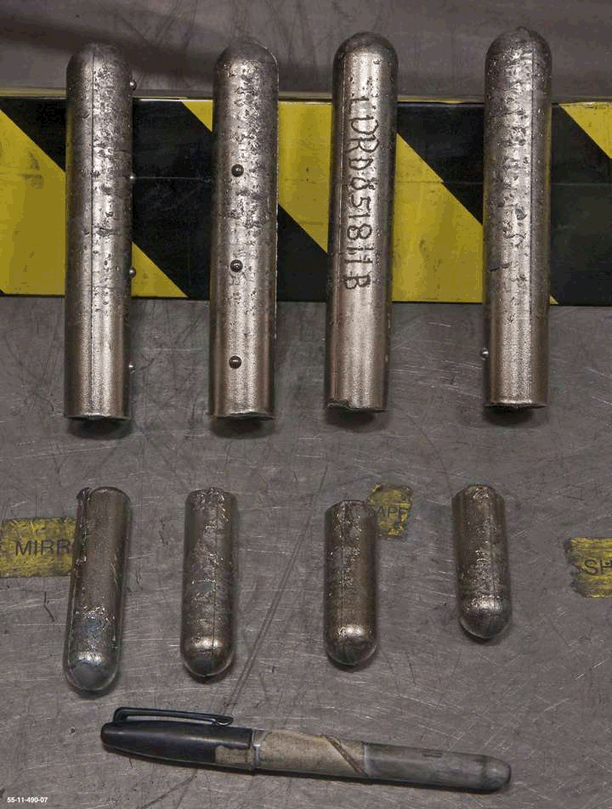
The plutonium finishing facility turned plutonium nitrate solutions into solid, hockey-puck-sized plutonium “buttons” that could be shipped to other facilities. It once was a complex of some 90 building and was shut down in the 1980s. Cleanup began in 1989; demolition began in 2016.
Last June and again in December, demolition activities contaminated workers and vehicles at the site. Small levels of radiation were found away from the plutonium facility but still within the Hanford site. No detectable amounts were found in workers’ homes, DOE says.
In the March report, DOE says 281 workers requested bioassays and were tested following the December release. The results found two doses less than 1 millirem, eight doses between 1 to 10 mrem, and one dose between 10 to 20 mrem. DOE sets the acceptable level at 100 mrem/year for nonradiological workers and members of the public and 500 mrem/year for radiological workers.
Following the June release, some 300 workers requested testing and bioassays found elevated radiation exposure for 31 workers, DOE says.
Danger from radiation shuts down nuclear plant demolition in Washington state, WLWT5, NICHOLAS K. GERANIOS, 8 Apr 18, SPOKANE, Wash. — Seven decades after making key portions of the atomic bomb dropped on Nagasaki, Japan, workers at the Hanford Nuclear Reservation are being exposed to radiation as they tear down buildings that helped create the nation’s nuclear arsenal.
Dozens of workers demolishing a plutonium processing plant from the 1940s have inhaled or ingested radioactive particles in the past year, and even carried some of that radiation into their vehicles, according to the U.S. Department of Energy.
The incidents have prompted the federal government, along with state regulators, to halt the demolition of the sprawling Plutonium Finishing Plant until a safe plan can be developed.
The contamination has also shaken confidence in a massive cleanup of Hanford, the nation’s most polluted nuclear weapons production site. The work costs the federal Treasury around $2 billion a year. Hanford is near the city of Richland, about 200 miles southeast of Seattle.
“This is a very disturbing set of incidents,” said Tom Carpenter, head of the Seattle-based watchdog group Hanford Challenge.
The Energy Department, which owns Hanford, has launched an independent investigation into the spread of radiation at the plant. The investigation will be conducted by an agency office that is not connected to work at Hanford.
Radioactive particles are known to have contaminated 42 workers, which led to the shutdown of demolition, the agency has said.
Carpenter said widespread worker contamination has been rare at Hanford in recent decades. Plutonium production ended in the 1980s and the site in 1989 switched its focus to cleanup of nuclear wastes.
“It’s one of the more serious events to happen in the age of cleanup at Hanford,” Carpenter said. “There have been other incidents, but none rose to the level of plutonium contamination of this many people and private vehicles and being found miles and miles away.”
Here is a 1997 article by a nuclear fission expert on the health effects of the deadly substance.
Plutonium pellet
By Dr Arjun Makhijani
Institute for Energy and Environmental Research
December 1997
Plutonium-239 is a very hazardous carcinogen which can also be used to make nuclear weapons. This combination of properties makes it one of the most dangerous substances. Plutonium-239, while present in only trace quantities in nature, has been made in large quantities in both military and commercial programs in the last 50 years. Other more radioactive carcinogens do exist, like radium-226, but unlike plutonium-239 cannot be used to make nuclear weapons, or are not available in quantity. Highly enriched uranium (HEU) can also be used to make nuclear weapons, but it is roughly one thousand times less radioactive than plutonium-239. The danger is aggravated by the fact that plutonium-239 is relatively difficult to detect once it is outside of secure, well-instrumented facilities, or once it has been incorporated into the body. This is because its gamma ray emissions, which provide the easiest method of detection of radionuclides, are relatively weak.
The main carcinogenic property of plutonium-239 arises from the energetic alpha radiation it emits. Alpha particles, being heavy, transfer their energy to other atoms and molecules within fewer collisions than the far lighter electrons which are the primary means of radiation damage for both gamma and beta radiation.1 Alpha particles travel only a short distance within living tissue, repeatedly bombarding the cells and tissue nearby. This results in far more biological damage for the same amount of energy deposited in living tissue. The relative effectiveness of various kinds of radiation in causing biological damage is known as “relative biological effectiveness” (RBE). This varies according to the type of radiation, its energy, and the organ of the body being irradiated. A simple factor, called quality factor, is used to indicate the relative danger of alpha, beta, gamma and neutron radiation for regulatory purposes. The International Commission on Radiation Protection currently recommends the use of a quality factor of 20 for alpha radiation relative to gamma radiation.2
Once in the body, plutonium-239 is preferentially deposited in soft tissues, notably the liver, on bone surfaces, in bone marrow and other non-calcified areas of the bone, as well as those areas of the bone that do not contain cartilage. Deposition in bone marrow can have an especially harmful effect on the blood formation which takes place there. By contrast, radium-226, another alpha emitter, is chemically akin to calcium and so becomes deposited in the calcified areas of bones.
When it is outside the body, plutonium-239 is less dangerous than gamma-radiation sources. Since alpha particles transfer their energy within a short distance, plutonium-239 near the body deposits essentially all of its energy in the outer dead layer of the skin, where it does not cause biological damage.
The gamma rays emitted due to plutonium-239 decay penetrate into the body, but as these are relatively few and weak, a considerable quantity of plutonium-239 would be necessary to yield substantial doses from gamma radiation. Thus, plutonium-239 can be transported with minimal shielding, with no danger of immediate serious radiological effects. The greatest health danger from plutonium-239 is from inhalation, especially when it is in the common form of insoluble plutonium-239 oxide. Another danger is absorption of plutonium into the blood stream through cuts and abrasions. The risk from absorption into the body via ingestion is generally much lower than that from inhalation, because plutonium is not easily absorbed by the intestinal walls, and so most of it will be excreted.
The kind of damage that plutonium-239 inflicts and the likelihood with which it produces that damage depend on the mode of incorporation of plutonium into the body, the chemical form of the plutonium and the particle size. The usual modes of incorporation for members of the public are inhalation or ingestion. Plutonium may be ingested by accidental ingestion of plutonium-containing soil, or through eating and drinking contaminated food and water. Incorporation via cuts is a hazard mainly for workers and (in former times) for personnel participating in the atmospheric nuclear testing program.
In general, plutonium in the form of large particles produces a smaller amount of biological damage, and therefore poses a smaller risk of disease, than the same amount of plutonium divided up into smaller particles. When large particles are inhaled, they tend to be trapped in the nasal hair; this prevents their passage into the lungs. Smaller particles get into the bronchial tubes and into the lungs, where they can become lodged, irradiating the surrounding tissue.
Other plutonium isotopes that emit alpha radiation, like plutonium-238, have similar health effects as plutonium-239, when considered per unit of radioactivity. But the radioactivity per unit weight varies according to the isotope. For instance, plutonium-238 is about 270 times more radioactive than plutonium-239 per unit of weight.
Experimental data
The health effects of plutonium have been studied primarily by experiments done on laboratory animals. Some analyses have also been done on workers and non-worker populations exposed to plutonium contamination. Measurements of burdens of plutonium using lung counters or whole-body counters, together with follow-up of exposed individuals, have provided information which is complementary to experimental data and analysis. Experiments injecting human beings with plutonium were also done in the United States. Between 1945 and 1947, 18 people were injected with plutonium in experiments used to get data on plutonium metabolism. They were done without informed consent and have been the object of considerable criticism since information about them became widely known in 1993.
Experiments on beagles have shown that a very small amount of plutonium in insoluble form will produce lung cancer with near-one-hundred-percent probability. When this data is extrapolated to humans, the figure for lethal lung burden of plutonium comes out to about 27 micrograms. Such an extrapolation from animals, of course, has some uncertainties. However, it is safe to assume that several tens of micrograms of plutonium-239 in the lung would greatly increase the risk of lung cancer. Larger quantities of plutonium will produce health problems in the short-term as well.
The precise quantitative effects of considerably lower quantities of plutonium are as yet not well known. This is due to several factors such as: the difficulty of measuring plutonium in the body; uncertainties regarding excretion rates and functions due to the large variation in such rates from one human being to the next (so that the same body burden of plutonium would produce considerably different doses); complicating factors such as smoking; uncertainties in the data (as, for instance, about the time of ingestion or inhalation); differing and largely unknown exposure to other sources of carcinogens (both radioactive and non-radioactive) over the long periods over which studies are conducted; failure to study and follow-up on the health of workers who worked with plutonium in the nuclear weapons industry to the extent possible.
One of the few attempts to analyze the effects of microgram quantities of plutonium on exposed human subjects was a long-term study of 26 “white male subjects” from the Manhattan Project exposed to plutonium at Los Alamos in 1944 and 1945, where the first nuclear weapons were made. These subjects have been followed for a long period of time, with the health status of the subjects periodically published. The most recent results were published in a study in 1991.3
The amounts of plutonium deposited in the bodies of the subjects were estimated to range from “a low of 110 Bq (3 nCi) …up to 6960 Bq (188 nCi),”4 corresponding to a weight range of 0.043 micrograms to 3 micrograms. However, weaknesses in the study resulted in considerable uncertainties about the amount and solubility of plutonium actually incorporated at the time of exposure.5
Of the seven deaths by 1990, one was due to a bone cance (bone sarcoma).6 Bone cancer is rare in humans. The chances of it normally being observed in a group of 26 men over a 40-year timeframe is on the order one in 100. Thus, its existence in a plutonium-exposed man (who received a plutonium dose below that of current radiation protection guidelines) is significant. 7 There are data for plutonium exposure in other countries, notably in Russia. These are still in the process of being evaluated. Collaborative US-Russian studies are now beginning under the Joint Coordinating Committee on Radiation Effects Research (JCCRER) to assess the health effects of the Mayak plant to both workers and neighbors of the facility.
Endnotes
1. Gamma rays consist of high energy photons, which are “packets” or quanta of electromagnetic energy.
2. The energy deposited in a medium (per unit of mass) is measured in units of grays or rads (1 gray = 100 rads), while the biological damage is measured in sieverts or rems (1 sievert = 100 rems).
3. G.L.Voelz and J.N.P. Lawrence, “A 42-year medical follow-up of Manhattan project plutonium workers.” Health Physics, Vol. 37, 1991, pp. 445-485.
4. Ibid., p. 186.
5. These aspects of the study are discussed in some detail in Gofman 1981, pp. 510-520 (based on the status of the Manhattan Project workers study as published in Voelz 1979). See J.W. Gofman, Radiation and Human Health, (San Francisco: Sierra Club Books, 1991), p. 516.
6. Three of these deaths were due to lung cancer. It is difficult to assess the significance of this large percentage, since all three were smokers.
7. Voelz, p. 189.
Arjun Makhijani, President of IEER, holds a Ph.D. in engineering (specialization: nuclear fusion) from the University of California at Berkeley. He has produced many studies and articles on nuclear fuel cycle related issues, including weapons production, testing, and nuclear waste, over the past twenty years. He is the principal author of the first study ever done (completed in 1971) on energy conservation potential in the U.S. economy. Most recently, Dr. Makhijani has authored Carbon-Free and Nuclear-Free: A Roadmap for U.S. Energy Policy (RDR Books and IEER Press, 2007), the first analysis of a transition to a U.S. economy based completely on renewable energy, without any use of fossil fuels or nuclear power. He is the principal editor of Nuclear Wastelands and the principal author of Mending the Ozone Hole, both published by MIT Press.
Also see: Radioactive iodine releases from Japan’s Fukushima Daiichi reactors may exceed those of Three Mile Island by over 100,000 times, March 25, 2011.
Nikkei Asian review 14th Feb 2018, American
concerns about potential diversion of idle fuel leave the agreement at
risk.
The decision Jan. 16 to automatically extend a nuclear agreement with
the U.S. came as a relief to a Japanese government worried about the
prospect of renegotiating the basis for a cornerstone of its energy policy.
But friction remains over a massive store of plutonium that highlights the
problems with the nation’s ambitious nuclear energy plans. The nuclear fuel
cycle pursued by Japan’s government and power companies centers on
recovering uranium and plutonium from spent fuel for reuse in reactors.
This is made possible by the unique agreement with the U.S. that lets Japan
make plutonium. The radioactive element can be used in nuclear weapons, so
its production is generally tightly restricted. Japan has amassed roughly
47 tons of plutonium stored inside and outside the country — enough for
some 6,000 nuclear warheads. With the nation’s nuclear power plants
gradually taken offline after the March 2011 Fukushima Daiichi disaster,
and progress on restarting them sluggish, Japan has been left with no real
way to whittle down a pile drawing international scrutiny. https://asia.nikkei.com/Politics-Economy/International-Relations/Japan-s-plutonium-glut-casts-a-shadow-on-renewed-nuclear-deal
Sante Fe New Mexican 10th Feb 2018, New Mexico’s senators and congressmen are making a bad choice for their
constituents by lobbying to retain the production of nuclear bomb triggers,
or “pits,” at Los Alamos National Laboratory. The production of
plutonium pits is one of the most toxic industrial processes on Earth.
Times 28th Jan 2018, Britons could be taking showers and warming homes with hot water piped
directly from a nuclear reactor, under proposals to build small atomic power stations in cities. Urban nuclear reactors, similar in size to those
in nuclear submarines, could generate not only electricity but also hot water, suggests a report by Policy Exchange, a think tank.
The paper reflects government thinking, as the National Nuclear Laboratory hasalready drawn up plans for a first “small modular reactor” at Trawsfynydd in north Wales. The Department for Business, Energy andIndustrial Strategy has also supported the idea. Such reactors could befuelled by plutonium, a waste product of Britain’s existing nuclearindustry. Stockpiles exceed 100 tons. https://www.thetimes.co.uk/edition/news/mini-nuclear-reactors-could-heat-homes-pxk3h8nkl
CBO Cost Estimation of Nuclear Modernization Omits Hazardous Cleanuphttps://washingtonspectator.org/alvarez-nuclear-cleanup/ High-level radioactive waste pose threats to environment around nuclear management facilities , By Robert Alvarez, ith its $1.2 trillion price tag for the modernization of the U.S. nuclear weapons arsenal and production complex, the U.S. Congressional Budget Office has induced “sticker shock” on Capitol Hill. Yet despite this enormous projected cost for rebuilding the U.S. triad of land, submarine, and bomber nuclear forces, the CBO has in fact lowballed its estimate by excluding the costs for environmental restoration and waste management of the Energy Department’s nuclear weapons complex.
Even though the cleanup of nuclear weapons sites comes from the same congressional spending account as DOE nuclear weapons modernization, the CBO chose to exclude an additional $541 billion in legacy costs. If these costs are included, the total price tag goes to $1.74 trillion over three decades.
The largest of these cleanup costs, at $179.5 billion, is attributed to the stabilization and disposal of high-level radioactive wastes generated from the production of plutonium. The U.S. Government Accountability Office (GAO) informed Congress in 2013 that these wastes are “considered one of the most hazardous substances on earth.”
About 100 million gallons are stored in 227 underground tanks, many larger than state capitol domes and ranging in age from 43 to 73 years. Over 1 million gallons of these contaminants have leaked at the DOE’s Hanford site in Washington state, threatening the Columbia River.
The removal and stabilization of these wastes at Hanford by mixing them with molten glass, at an estimated cost of as much as $72.3 billion, represents the single largest, most expensive, and potentially riskiest nuclear cleanup project ever undertaken by the United States. It’s roughly comparable to the Apollo moon program in cost and risk, except there’s no moon.
Even without factoring in cleanup, an analysis of the DOE costs for the nuclear warheads program shows that while the U.S. nuclear weapons stockpile has shrunk by 56 percent since 2003, the annual per-warhead cost has increased by about 422 percent. This huge cost growth in the nuclear stockpile budget is largely due to ever-growing overhead expenses for abandoned and antiquated structures not formally part of the DOE cleanup program. Many of these facilities contain hazardous materials and have been ignored for several decades.
To keep the lights on, the DOE weapons complex must pay for things like collapses, flooding, fires, and preventing roofs from falling in. In 2015, the DOE Inspector General warned that, “delays in the cleanup and disposition of contaminated excess facilities expose the Department, its employees, and the public to ever-increasing levels of risk [and] lead to escalating disposition costs.”
The Y-12 National Security Complex in Oak Ridge, Tennessee, for instance, has a high-risk “footprint” of abandoned contaminated structures, mostly built in the 1940s, that is 2.5 times larger than the Pentagon building. Although Y-12 has not produced weapons for more than 25 years, its annual budgets have increased by nearly 50 percent since 1997, to more than $1 billion a year.
Over the past 20 years, there have been dozens of fires and explosions at Y-12 involving electrical equipment, glove boxes, pumps, waste containers, and nuclear and hazardous chemicals. Several of these incidents resulted in worker injuries and destruction of property.
As late as September of this year, unstable amounts of highly enriched uranium, called “material at risk” have spontaneously combusted. For more than 20 years, Y-12 has not been able to stabilize its backlog of “materials at risk.”
In a December 2016 DOE report to Congress, the unaccounted-for liability of getting rid of 2,349 of the DOE’s abandoned facilities over the next 10 years was roughly estimated at $32 billion. The DOE finds that among those are 203 unattended “high-risk” facilities and estimates a cost of $11.6 billion to close them down safely.
The most recent high-profile examples of aging-infrastructure risks include the collapse, last May, of a section of tunnel at the Plutonium and Uranium Extraction Facility, known as PUREX, a long-idle component of the sprawling Hanford nuclear site, 200 miles east of Seattle. The tunnel holds an enormous amount of radioactive wastes, and hundreds of workers were forced to seek cover.
And in June of this year, during the process of tearing down a building that was known to contain countless respirable plutonium particles, 31 workers inhaled or ingested plutonium during a work shift, after failing to take necessary precautions. It took four months for the DOE’s contractor to inform the public about the mishap and to tell the workers about their doses.
he costs for the disposition of excess plutonium from the nuclear weapons programs is pegged by GAO at $56 billion. In 2012, the U.S. Government determined that it no longer needed 43.4 metric tons of plutonium for military needs.
The majority of that plutonium is stored in facilities at the DOE’s Pantex Plant near Amarillo, Texas, that were built in the 1940s. The plutonium is densely packed in special containers that are only meant for “interim” storage.
In 2010 and 2017, unexpected 2,000-year rains flooded a major plutonium storage area with several inches of water, which shut down the plant and impacted about 1,000 containers at a cost of hundreds of millions of dollars in recovery funds.
Because plutonium weapon components can become dangerous if mishandled or improperly stored, a Pantex worker told me, while I was working for the DOE’s Secretary, that it was like “having a zoo full of wild animals.”
Because the plutonium disposition program is way over budget and is stalled without a credible path forward, tens of tons of plutonium are likely to remain in these 70-plus-year-old structures awaiting further floods and additional threats to their safety and integrity.
While an ever-growing amount of plutonium will be stored in antiquated structures at the Pantex plant, another 1,000 abandoned facilities will be added to the list of sites requiring specialized disposition over the coming decade. Costs for the disposal of large amounts of hazardous wastes in the abandoned structures are not included in the DOE’s 2016 estimate and are likely to add several billions of dollars more.
When the DOE cleanup program was created in 1990, Congress made sure that it would be paid for from the same pot of money designated for the U.S. arsenal of nuclear warheads. These legacy costs should not be isolated from estimates of the nation’s nuclear weapons budget.
The need to protect the safety and health of workers and the American public from the mess produced by the current and previous nuclear weapons stockpiles should not be ignored as we proceed to deal with the future of nuclear weapons in the 21st century. As former Senator John Glenn of Ohio, a staunch supporter of the Cold War, would often say, “What good is it to protect our nation with nuclear weapons if we poison our people in the process?”
A senior scholar at the Institute for Policy Studies, Robert Alvarez served as senior policy adviser to the Energy Department’s secretary and deputy assistant secretary for national security and the environment from 1993 to 1999. During this tenure, he coordinated the Energy Department’s nuclear material strategic planning and established the department’s first asset management program.
Radioactive Waste And The Hidden Costs Of The Cold War, Forbes, David Rainbow, Assistant Professor, Honors College, University of Houston, 4 Dec 17, Hanford,a dusty decommissioned plutonium production site in eastern Washington state, is one of the most polluted places in the country. The disaster is part of the inheritance of the Cold War.
A few months ago, a 110-meter-long tunnel collapsed at the site, exposing an old rail line and eight rail cars filled with contaminated radioactive equipment. This open wound in the landscape, which was quickly covered over again, is a tiny part of an environmental and human health catastrophe that steadily unfolded there over four decades of plutonium production. Big Cold War fears justified big risks. Big, secretive, nuclear-sized risks.
Hanford and other toxic reminders of the Cold War should serve as a cautionary tale to those who have a say in mitigating geopolitical tensions today, as well as to those who promote nuclear energy as an environmentally sustainable source of electricity. The energy debate must balance the downside – not just the risk of a nuclear meltdown but also the lack of a permanent repository for the still-dangerous spent fuel rods – with the environmental benefits of a source of electricity that produces no greenhouse gases. People on both sides of the issue have a vested interest in how the current geopolitical tussling over nuclear weapons plays out……
Nuclear refinement at Hanford began as a part of the Manhattan Project during World War II, the highly secretive plan to develop a nuclear bomb.
Initially, the drive to mobilize for war justified substantial costs, among them significant damage to human and environmental health in the U.S. resulting from the nuclear program. Hanford was integral to the program: its plutonium fell on Nagasaki. But after the end of the war, the scale of production at the site increased to a fevered pitch thanks to the ensuing competition for global influence between the U.S. and the Soviet Union that became the Cold War.
Our gargantuan stockpiles of nuclear arms demanded gargantuan quantities of plutonium. Forty-five years of work at Hanford – from 1943 to 1987 – yielded 20 million uranium metal plugs used to generate 110,000 tons of fuel. The process also generated 53 million gallons of radioactive waste, now stored in 177 underground tanks at the facility, and created 450 billion gallons of irradiated waste water that was discharged onto “soil disposal sites,” meaning it went into the ground. Some of the irradiated discharge simply ran back to where it had originally been taken from, the nearby Columbia River. The Office of Environmental Management at the Department of Energy is currently overseeing a cleanup project involving 11,000 people. It is expected to take several decades and cost around $100 billion.
Kate Brown’s award-winning book, “Plutopia: Nuclear Families, Atomic Cities, and the Great Soviet and American Plutonium Disasters,” is a history of the Hanford plant and its Soviet doppelgänger, a plant in the Ural Mountains called Maiak. Brown points out that over the course of a few decades, the two nuclear sites spewed two times the radiation emitted in the Chernobyl explosion. Yet few Americans at the time, even those involved in plutonium production, realized this was going on or how dangerous it was.
Naturally, the hidden nature of the project meant that information was hard to come by. As Brown shows, even the experts, managers and scientists involved directly in overseeing the production process knew little about the seriousness of the risk. Doctors studying the effects of radiation on people didn’t have access to the research related to environmental pollution. Scientists studying fish die-offs had no way of connecting their findings to the deteriorating immune systems of humans in the same areas. Most poignantly, researchers measuring the effectiveness of nuclear bombs on the enemy did not communicate with researchers measuring the threat of nuclear bombs on the workers making them.
Consequences for the workers were grave. Hanford and Maiak’s hidden mega-pollution was collateral damage in the fight to win the Cold War. Russia, like the U.S., is still living with the damage, and trying to bury it, too.
Within two days of the tunnel collapse at the Hanford site this past May, workers filled the breach with 53 truckloads of dirt and narrowly avoided a radiological event. However, these eight railcars are hardly the only waste left behind in the U.S. from our cold conflict with the Soviet Union, in which our willingness to risk human and environmental health was proportionate to our fears. It’s going to be a while before it’s all cleaned up. In the meantime, hopefully our leaders will work to keep the new Cold War from getting any worse. https://www.forbes.com/sites/uhenergy/2017/12/04/the-hidden-costs-of-cold-war/#a3593c1136ff
With a projected need for five years of $4 billion annual budgets for the Hanford nuclear reservation, the Hanford Advisory Board is urging the Department of Energy to propose a ramp up in funding to Congress and the White House.
It called the current funding trend “dangerous and destructive” in a letter of advice sent to DOE at the conclusion of a two-day meeting Thursday in Richland. The board is composed of a broad representation of Tri-City and Northwest interests.
Last month, Stacy Charboneau, the DOE headquarters official who oversees Hanford and other environmental cleanup field operations across the nation, warned that Hanford cannot expect significant increases in its budget, which now ranges annually from $2.2 billion to $2.5 billion.
But under current plans, once the vitrification plant starts treating low activity radioactive waste, more money will be needed for waste treatment operations while construction continues on other parts of the plant needed to treat high level radioactive waste. Low activity waste treatment could begin as soon as 2022.
In addition, there will be increased work needed to retrieve radioactive waste from underground storage tanks and feed it to the facilities that will process low activity radioactive waste into glass logs for disposal.
The cost of the vitrification plant and tank farm work, plus $1.2 billion needed to meet legal deadlines for the rest of the nuclear reservation’s cleanup and for general operations, has been estimated at $4 billion for approximately 2022-27.
The advisory board called for a steady ramp up to that amount.
“It is the only way to help avert a major catastrophe, reduce overall costs and risks to workers, the public and the environment,” the board told DOE.
It also asked for more money to establish new storage capacity for the 56 million gallons of radioactive waste held in underground tanks above groundwater that flows toward the Columbia River.
Hanford now has just 27 double shell tanks in service to hold waste emptied from leak-prone single shell tanks until the waste can be treated for disposal.. The oldest double shell tank was taken out of service after it sprang multiple leaks between its shells, and other double shell tanks are at risk, according to the board.
DOE has resisted calls to build more double shell tanks, saying the money could better be spent on advancing environmental cleanup needed after the past production of plutonium at Hanford for the nation’s nuclear weapons program from World War II through the Cold War.
The board said it has become increasingly concerned about inadequate funding for a wide range of Hanford work, leading to the delay of cleanup projects, sometimes for decades.
“Many of Hanford’s hazardous buildings and storage facilities are 50 to 70 years old,” the board said.
Delaying work increases the cost of Hanford cleanup, both because of the large amount of money spent on maintenance and because degrading facilities increase the risk of significant accidents, the board said.
An earthquake could cause underground tanks to fail, resulting in widespread contamination to the groundwater, the board said.
The leak within Hanford’s oldest double shell tank, AY-102, resulted in $100 million being spent to empty the tank, including 500,000 hours of labor over three years and 30,000 worker entries into the tank farms.
The roof of the defunct, 470-foot-long, highly contaminated REDOX processing plant recently had to be replaced to keep the plant from deteriorating until it can be cleaned up.
“These and many other hazards at Hanford will only increase with time as the facilities continue to age and degrade,” the board said.
Important cleanup work is being done, including demolition of the Plutonium Finishing Plant and preparations to move radioactive cesium and strontium capsules out of an underwater pool to safer dry storage, the board said.
“Even as important as these projects are, each took longer than necessary because of serious constraints on funding,” the board said.
It called on DOE to develop an emergency plan with funding in case of a major tank failure. It also should have money available at a national level for incidents like the leaking double shell tank or the PUREX tunnel breach so that future incidents do not reduce money already budgeted for planned cleanup work, the board said.
ENTHUSIASM for space travel has been mounting since Australia hosted the recent International Astronautical Congress (IAC), held in Adelaide in September.
“ … more than 3000 of the world’s top space experts wildly cheered [and] all aspects of Australian society were united on the need for a national agency.”
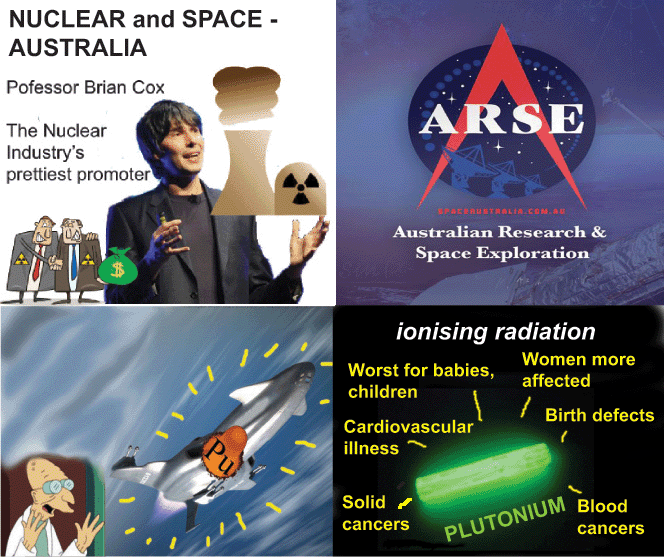
In November, the very brilliant and appealing space travel and nuclear power enthusiast, Professor Brian Cox is to tour Australia! Champion astronaut Scott Kelly has just published his exciting book, Endurance: a Year in Space, A Lifetime of Discovery.
Dare anyone throw cold water on all this joy?
Intriguingly, the Australian Government, while proudly hyping up this initiative, has not yet come up with a title for the new agency. However, someone else has and they have set up an elegant and professional-looking website for it: Australian Research and Space Exploration (ARSE).
Let’s start with that most important consideration — money
Although everyone says that space exploration is going to be an economic bonanza, I can’t see how it’s actually going to bring in money. There are some vague suggestions about finding mineral resources on other planets. Even NASA seems hard-put to find any real commercial benefits.
They discuss a few useful scientific and medical technologies — for example, water purification techniques and advanced eye surgery. These are side benefits of space research but surely could have been developed more cheaply with research on Earth directly intended for the purpose. I am reminded of the “benefits” of man walking on the moon in 1966 – we got Teflon – and even that didn’t turn out so well.
What about the costs of space exploration, space travel and sending a man to Mars? It is very hard to locate actual figures. Even three years ago, NASA’s space travel research cost taxpayers US$17.6 billion (AU$22.9 billion) — and costs have surely risen by now. A huge part of the cost is in fitting and fuelling the space rockets’ thermoelectric generators with the production of the plutonium fuel being the most costly part of the expense.
Plutonium fuel
Plutonium 238 fuelled Voyager 1, which is expected to keep going until 2025, the New Horizons trip to Pluto and Cassini, which recently crashed into Saturn. NASA is sanguine about risks of a space exploration accident, claiming that it’s a low probability.
Karl Grossman has described a previous accident, dispersing plutonium widely and the risks involved in the Cassini project thus:
‘ … the Plutonium-238 used in space devices is 280 times more radioactive than the Plutonium-239 used in nuclear weapons.’
A very small amount of Plutonium-238, that cannot be seen, felt, or measured with a Geiger counter is enough to kill you. One nanoparticle inhaled and lodged in the lungs is enough to give anyone lung cancer. In experiments with dogs, there was no dose low enough to NOT cause the death of these animals. Just one nanoparticle the size of dust (1 microgram) that could not even be seen, was enough to kill every dog tested.
There is a long list of space travel accidents, including 19 rocket explosions causing fatalities, as well as nine other crashes/accidents causing fatalities. There seems to be no published research on rockets and space debris that have ended up in the oceans. We can assume that such ocean debris does exist, including the long-lasting radioactive particles of plutonium, to be carried thousands of miles by ocean currents.
Ocean crashes are sometimes reported, but the public is generally unaware of the space junk and the plutonium that goes into the oceans. NASA is very coy about publicly stating that the rocket’s rockets’ thermoelectric generators are, in fact, fuelled by plutonium.
NASA continues research on solar-powered space flights, but that idea seems out of fashion at the moment.
The human toll of space travel
The human toll of space travel is not emphasised. However, Scott Kelly, who holds the U.S. record for time spent in space, has been quite frank about this in his new book. As an identical twin, Scott is an especially useful person for studying the effects of space on the body.
He became, in fact, a laboratory research animal — a sacrificial lamb, perhaps, in the cause of space research:
‘I lost bone mass, my muscles atrophied and my blood redistributed itself in my body, which strained and shrank the walls of my heart. More troubling, I experienced problems with my vision, as many other astronauts had. I had been exposed to more than 30 times the radiation of a person on Earth, equivalent to about ten chest X-rays every day. This exposure would increase my risk of a fatal cancer for the rest of my life.’
Despite Scott’s extraordinary health problems, which linger to this day, he is optimistic and keen about human travel to Mars.
Which brings us to the biggest consideration: the ethics of all this.
I am fascinated that it is stated in Wikipedia, in assessing the cost of sending humans to Mars (over US$500 billion or AU$651 billion), that:
‘The largest limiting factor for sending humans to Mars is funding.’
I think that the human cost should be a bigger “limiting factor”. There’s still the problem of lethal radiation on the trip and on Mars. Plus it’s a one-way trip. Scott Kelly has detailed, especially, the mental distress of being stuck in a spacecraft for months, isolated from human society and from loved ones, as well as the physical problems. Despite all this, Scott is keen on space travel and humans going to Mars. He is carried along, it seems, by a love of adventure, of risk, of achievement and fame.
Comfortable old white men in suits are planning the Mars trip; Younger, enthusiastic young men and women, like Scott Kelly, are mesmerised by the adventure and perceived “glory”. Should we be encouraging them on this suicide mission?
We are constantly being told of the benefits to come, in space travel. What benefits? Are they greater than the huge environmental and personal risks? And the financial costs – the US$500 billion (AU $651 billion), paid for by the tax-payer? That money could go to meet real human needs. There’s something wrong with our priorities when we mindlessly accept enthusiasm for technology, innovation, and so on, as better than healing the health of this planet and its populations.
Nuclear power
And there is one other issue — nuclear power. The space hype coincides with the current drastic downturn in the fortunes of the nuclear industry. To continue with space research/travel, plutonium is needed. And the only way to get it is from nuclear reactors. Space science could be a lifeline for the failing nuclear industry.
It’s no coincidence that the International Astronautical Congress was held in Adelaide — Australia’s hub of nuclear ambition. It’s no coincidence that Professor Brian Cox is visiting, hot from his recent pep talks to the nuclear industry in Wales.
Why is it that the citizens of teh United States put up with their tax money going to produce toxic plutonium for useless dangerous space travel and even more useless dangerous and illegal nuclear weapons.?
What happens when a spacecraft powered by plutonium crashes into a city?
Report: It’s space travel power versus pits at Los Alamos By Mark Oswald / Journal Staff Writer, Thursday, October 5th, 2017 SANTA FE – At Los Alamos National Laboratory, a mandate to produce more of the plutonium triggers for nuclear weapons is bumping up against goals to produce power systems for NASA’s “long duration space missions.”
The U.S. Government Accountability Office reports that lab officials say that plutonium work for NASA systems “must compete with other priorities for facility space” at the LANL’s plutonium facility, specifically production of nuclear weapons “pits.”
The problem could significantly effect a key step in production of “radioisotope power systems” (RPS) and delay delivery of the systems for NASA’s missions, says the GAO report.
RPS produce power by converting heat from decay of plutonium-238 into electricity and can operate where solar panels or batteries would be ineffective and can operate for more than a decade, according to the report.
An RPS is currently used to power the roving Mars Science Laboratory, known as Curiosity, that has been exploring the Red Planet since 2012. Other missions in the coming years are slated to use the power systems, including another rover, Mars 2020.
The GAO was asked to review the situation in part because the National Academy of Sciences has expressed concern about future NASA missions because of a diminishing supply of plutonium-238. Until 2015, it hadn’t been made in the U.S. for more than 25 years. Various laboratories within the Department of Energy are involved. The GAO report says LANL maintains capability for producing Pu-238 and its work involves Pu-238 storage, chemical processing, analysis, fuel processing and encapsulation of Pu-238…..
LANL is also under orders to produce as many as 80 plutonium pits by 2030, as part of an expansive update of the nation’s nuclear arsenal. None have been made for several years.
The GAO report says the National Nuclear Security Administration, a semi-autonomous agency within DOE that includes LANL and the rest of the U.S. nuclear weapons complex, is currently “focused primarily” on making pits and has not coordinated with the Pu-238 program in connection with potential modifications of the Los Alamos plutonium facility…….https://www.abqjournal.com/1074021/report-its-space-travel-power-versus-pits-at-los-alamos.html




 nuclear-news