Coalition pursues extra $7.25B for DOE nuclear cleanup, job creation
|
Coalition pursues extra $7.25B for DOE nuclear cleanup, job creation, Aiken Standard, By Colin Demarest cdemarest@aikenstandard.com, May 18, 2020
A bloc of local governments and nuclear industry, labor and community groups are pressing Congress to provide a one-time multibillion-dollar boost to the U.S. Department of Energy Office of Environmental Management, the remediation-focused Savannah River Site landlord. The organizations and officials – including Citizens For Nuclear Technology Awareness Executive Director Jim Marra and Savannah River Site Community Reuse Organization President and CEO Rick McLeod – sent a letter Friday to U.S. House and Senate leadership “strongly” supporting a $7.25 billion funding injection, arguing it “will help reignite the national economy,” help revive small businesses and create thousands of new jobs despite the novel coronavirus crisis…….. https://www.aikenstandard.com/coronavirus/coalition-pursues-extra-7-25b-for-doe-nuclear-cleanup-job-creation/article_9261d03c-991a-11ea-a5c2-87c9bf5d9ecf.html The requested money could, too, speed Environmental Management’s nuclear waste cleanup missions and be used to fix ailing infrastructure – some of which dates back to the Cold War – at sites across the country. That’s a “rare” opportunity, reads the letter, which prominently features the Energy Communities Alliance logo and its chairman’s signature. |
|
Removal of Fort Belvoir’s SM-1 nuclear reactor to proceed after Army finalizes environmental assessment
That is according to USACE Project Manager Brenda Barber, who provided an update by email to SM-1 stakeholders on May 18, 2020.
Following a public comment period, Barber announced that the SM-1 project’s Environmental Assessment (EA) and Finding of No Significant Impact (FNSI) have been finalized and published online:……..
“The team is now focused on completing the Decommissioning Planning in preparation for awarding a decommissioning contract,” Barber stated.
“The project team still anticipates awarding a decommissioning contract by September 2020 with mobilization work on site beginning in early 2021.”……….
Barber noted that the coronavirus (COVID-19) pandemic has not had any immediate significant impact on the project schedule, since most of the work at this administrative phase is being done virtually. The site remains secure and environmental and radiological monitoring and inspections continue.
For information about the project, visit: nab.usace.army.mil/Missions/Environmental/SM-1
Questions and comments can continue to be sent to the project’s corporate communications team by emailing Brenda.M.Barber@usace.army.mil or calling (410) 375-4565 https://forthuntherald.com/removal-of-fort-belvoirs-sm-1-nuclear-reactor-to-proceed-after-finalizing-environmental-assessment/
South Africa’s nuclear waste problem- why plan to increase it?
 The nuclear option https://www.businesslive.co.za/bd/opinion/letters/2020-05-17-letter-the-nuclear-option/ 17 MAY 2020, Keith Gottschalk, It is bizarre that a government department is advocating the building of more nuclear power stations with the slogan “a no-regret option”! (“ANC government is determined to pursue nuclear at any cost”, May 12).
Try selling that slogan to the people of Fukushima and Chernobyl.
Raising dangerously radioactive Russian submarines from the bottom of Arctic oceans

Russia plans to raise radioactive wrecks in the Arctic https://bellona.org/news/nuclear-issues/2020-05-russia-plans-to-raise-radioactive-wrecks-in-the-arctic
By 2030, the Russian government will raise seven pieces of radioactive debris – including two nuclear submarines – from the bottom of Arctic oceans, where they were intentionally scuttled during the Soviet era, documents received by Bellona confirm. May 12, 2020 by Charles Digges
By 2030, the Russian government will raise seven pieces of radioactive debris – including two nuclear submarines – from the bottom of Arctic oceans, where they were intentionally scuttled during the Soviet era, documents received by Bellona confirm.
The documents identify this debris as the most dangerous of the items the Soviet Union discarded in polar waters, and say that six of them contain more than 90 percent of the radioactivity to be found on the Arctic seabed.
Of particular importance, the documents say, are the K-159 and K-27 nuclear submarines, the nuclear reactors of which were still full of nuclear fuel when they went down.
Both submarines, say experts, are in a precarious state. In the case of the K-27, which was scuttled intentionally in 1982, the sub’s reactor was sealed with furfural, before it was sunk. But experts say this seal is eroding. The K-159, which sank while it was being towed to decommissioning in 2003, poses similar threats. Some 800 kilograms of spent nuclear fuel remained in its reactor when it went down in some of the most fertile fishing grounds in the Kara Sea.
In both cases, experts fear that a nuclear chain reaction could occur should water leak into the submarines’ reactor compartments.
Russian scientists have kept a close eye on the K-159, launching regular expeditions to monitor for potential radiation leaks. According to their data, should the submarine depressurize, radionuclides could spread over hundreds of kilometers, heavily impacting the local fishing industry.
Anatoly Grigoriev, who heads up the international programs department of Rosatom, Russia’s state nuclear corporation, says that raising the wrecks will cost some €123 million.
“Should the K-159 depressurize, it could cause €120 million of damage per month,” Grigoriev told Bellona at an earlier meeting.
Both submarines, say experts, are in a precarious state. In the case of the K-27, which was scuttled intentionally in 1982, the sub’s reactor was sealed with furfural, before it was sunk. But experts say this seal is eroding. The K-159, which sank while it was being towed to decommissioning in 2003, poses similar threats. Some 800 kilograms of spent nuclear fuel remained in its reactor when it went down in some of the most fertile fishing grounds in the Kara Sea.
In both cases, experts fear that a nuclear chain reaction could occur should water leak into the submarines’ reactor compartments.
Russian scientists have kept a close eye on the K-159, launching regular expeditions to monitor for potential radiation leaks. According to their data, should the submarine depressurize, radionuclides could spread over hundreds of kilometers, heavily impacting the local fishing industry.
Anatoly Grigoriev, who heads up the international programs department of Rosatom, Russia’s state nuclear corporation, says that raising the wrecks will cost some €123 million.
“Should the K-159 depressurize, it could cause €120 million of damage per month,” Grigoriev told Bellona at an earlier meeting.
The majority of this debris was left in the eastern bays of the Kara Sea near the Novaya Zemlya Archipelago. Still, the exact location of some of these sunken objects is still unknown. The whereabouts of the reactor compartment from the K-140 nuclear submarine remains unaccounted for.
And there are other radiation hazards that are farther afield. The K-278, or Komsomolets, nuclear submarine lies at the bottom of the Norwegian Sea.
“A quarter of all the radioactive waste that has been sunk in the oceans belongs to us,” says Sergei Antipov, director of strategic planning and project management at the Nuclear Safety Institute of the Russian Academy of Sciences.
Since the early 2000s, massive projects to decommission Soviet-era nuclear submarines have been ongoing with the assistance of numerous western partners. Moscow has shared information about these radioactive hazards with nations of the G-7 and has worked with the European Bank of Reconstruction and Development and other donors.
This international cooperation has brought significant results. Military bases have been cleared of most radioactive contamination and nearly 200 rusted-out nuclear submarines have been safely dismantled, as a review of the last 25 years of Bellona’s work clearly shows.
Russia, moreover, has the necessary infrastructure to deal with whatever discarded radiation hazards are brought to the surface of Arctic waters. And while Russia lacks the necessary vessels for such undersea rescues, the international partners it has developed while cleaning up other pieces of the Soviet nuclear legacy certainly do.
Next year, Russia assumes the rotating chairmanship of the Arctic Council, and we hope that Moscow will be able to announce upon the first meeting that these projects are underway. Bellona, which is already involved in discussing this important work, has high hopes.
How much radioactive waste is stored on our planet?
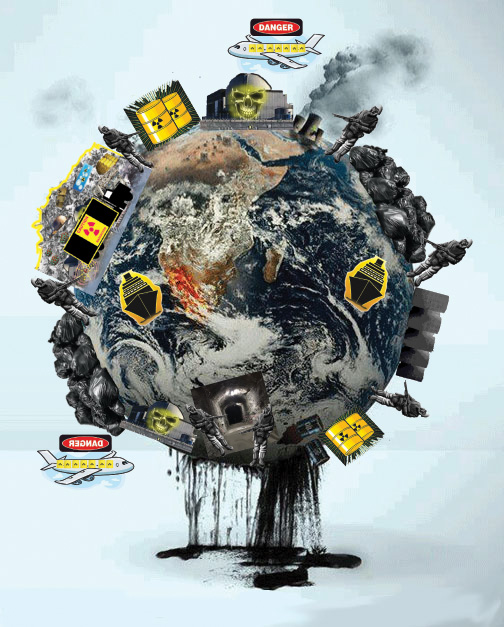 The black boxes of nuclear waste strategy https://wiseinternational.org/nuclear-monitor/882/black-boxes-nuclear-waste-strategy
How much radioactive waste is stored on our planet? According to the world’s first nuclear waste report, we don’t really know. We do know that nearly seven decades of civil and military reactor programmes have led to large stockpiles of waste, and that its volume is growing; we also know that our ignorance is vast, and there appears to be no responsible solution to the problem.
The systems delivering management strategies vary tremendously from one country to another, as do the range of authorities responsible for their management; so establishing volumes, risks and costs is no small task. When we add to this complexity national variations in both terminology and conceptual frameworks, a cross-country comparison becomes a Gordian knot. States don’t just differ in their classification systems ‒ they also follow different regulatory and safety procedures; the same applies to funding schemes, accounting measures, inventory reports and liability strategies. The European Commission is reportedly not able to make sense of the member state reports it receives, due to the extent of the anomalies. The commission has stated that it would consider taking measures to harmonize inventory reporting; it also expressed interest in finding ways to encourage states to secure appropriate financing options to pay for waste management.1 Nuclear Waste Directive implementation failures have led to the launch of infringement procedures against 25 out of 28 member states.2
While Russia offers practially no useful information about its nuclear waste inventory, the data from Belgium and the Netherlands are out of date, and the quality of Slovakia’s reports are so bad that they couldn’t be used for the WNWR report. Together with Euratom and national supervisory bodies, the Commission may wish to look into the codification of reporting methodologies in order to loosen the Gordian knot somewhat. The question of safety is ultimately a matter of implementation, and one of the functions of EU bodies is to indicate where implementation problems lie.
Criteria: the basis for informed decision-making
The World Nuclear Waste Report 2019 – Focus Europe (WNWR) offers criteria by which some of the evident lapses in reporting and departures from minimum obligations can be identified and remedied.3 Continue reading
‘Small Modular Nuclear Reactor’ entrepreneurs trying to revive dangerous ‘plutonium economy’ dream.

It seems that these two SMNR entrepreneurs in New Brunswick, along with other nuclear “players” worldwide, are trying to revitalize the “plutonium economy” — a nuclear industry dream from the distant past that many believed had been laid to rest because of the failure of plutonium-fuelled breeder reactors almost everywhere, including the US, France, Britain and Japan.
The phrase “plutonium economy” refers to a world in which plutonium is the primary nuclear fuel in the future rather than natural or slightly enriched uranium. Plutonium, a derivative of uranium that does not exist in nature but is created inside every nuclear reactor fuelled with uranium, would thereby become an article of commerce.
The proposed SMNR prototype from ARC Nuclear in Saint John is the ARC-100 reactor (100 megawatts of electricity). It is a liquid sodium-cooled SMNR, based on the 1964 EBR-2 reactor – the Experimental Breeder Reactor #2 in Idaho. Its predecessor, the EBR-1 breeder reactor, had a partial meltdown in 1955, and the Fermi-1 breeder reactor near Detroit, also modelled on the EBR-2, had a partial meltdown in 1966.
Admiral Hyman Rickover, who created the US fleet of nuclear-powered submarines, tried a liquid-sodium-cooled reactor only once, in a submarine called the Sea Wolf. He vowed that he would never do it again. In 1956 he told the US Atomic Energy Commission that liquid sodium-cooled reactors are “expensive to build, complex to operate, susceptible to prolonged shutdown as a result of even minor malfunctions, and difficult and time-consuming to repair.”
The ARC-100 is designed with the capability and explicit intention of reusing or recycling irradiated CANDU fuel. In the prototype phase, the proposal is to use irradiated fuel from NB Power’s Point Lepreau Nuclear Generating Station. Lepreau is a CANDU-6 nuclear reactor.
The other newly proposed NB SMNR prototype is the Moltex “Stable Salt Reactor” (SSR) — also a “fast reactor”, cooled by molten salt, that is likewise intended to re-use or recycle irradiated CANDU fuel, again from the Lepreau reactor in the prototype phase.
The “re-use” (or “recycling”) of “spent nuclear fuel”, also called “used nuclear fuel” or “irradiated nuclear fuel,” is industry code for plutonium extraction. The idea is to transition from uranium to plutonium as a nuclear fuel, because uranium supplies will not outlast dwindling oil supplies. Breeder reactors are designed to use plutonium as a fuel and create (“breed”) even more plutonium while doing so.
It is only possible to re-use or recycle existing used nuclear fuel by somehow accessing the unused “fissile material” in the used fuel. This material is mainly plutonium. Accessing this material involves a chemical procedure called “reprocessing” which was banned in the late 1970s by the Carter administration in the US and the first Pierre Elliot Trudeau administration in Canada. South Korea and Taiwan were likewise forbidden (with pressure from the US) to use this chemical extraction process.
Why did both the US and Canada ban this recycling scheme? Two reasons: 1) it is highly dangerous and polluting to “open up” the used nuclear fuel in order to extract the desired plutonium or U-233; and 2) extracting plutonium creates a civilian traffic in highly dangerous materials (plutonium and U-233) that can be used by governments or criminals or terrorists to make powerful nuclear weapons without the need for terribly sophisticated or readily detectable infrastructure.
Argonne Laboratories in the US, and the South Korean government, have been developing (for more than 10 years now) a new wrinkle on the reprocessing operation which they call “pyroprocessing.” This effort is an attempt to overcome the existing prohibitions on reprocessing and to restart the “plutonium economy.”
Both New Brunswick projects are claiming that their proposed nuclear reactor prototypes would be successful economically. To succeed, they must build and export the reactors by the hundreds in future.
On the contrary, however, the use of plutonium fuel is, and always has been, much more expensive than the use of uranium fuel. This is especially true now, when the price of uranium is exceedingly low and showing very little sign of recovering. In Saskatchewan, Cameco has shut down some of its richest uranium mines and has laid off more than a thousand workers, while reducing the pay of those still working by 25 percent. Under these conditions, it is impossible for plutonium-fuelled reactors to compete with uranium-fuelled reactors.
And to make matters worse for the industry, it is well known that even uranium-fuelled reactors cannot compete with the alternatives such as wind and solar or even natural-gas-fired generators. It is an open question why governments are using public funds to subsidize such uneconomical, dangerous and unsustainable nuclear technologies. It’s not their money after all – it’s ours!
Dr. Gordon Edwards, a scientist and nuclear consultant, is the President of the Canadian Coalition for Nuclear Responsibility. He can be reached at: ccnr@web.ca Note from the NB Media Co-op editors: Dr. Edwards visited New Brunswick in March for a series of public talks on the development of so-called Small Modular Nuclear Reactors. The story of his talk in Saint John can be accessed here. The video of the webinar presentation scheduled for Fredericton can be accessed here.
$41 billion for Hanford high level nuclear waste clean-up. Fiasco of Pretreatment Facility

Hanford strategy for worst nuclear waste criticized. Plant estimates skyrocket to $41 billion, Tri City Herald BY ANNETTE CARY, MAY 13, 2020 The Department of Energy’s strategy for pretreating high-level waste at Hanford is “unclear” 20 years after construction of a massive glassification plant began, while costs continue to soar, says a new federal report.
The Government Accountability Office released a report to Congress this week focusing on the plant’s Pretreatment Facility, where construction stopped seven years ago because of technical issues.
The issues involved safety concerns to prevent a possible explosion or radioactive waste leak.
U.S. taxpayers have spent $11 billion on the Hanford glassification plant, but the Pretreatment Facility is unlikely to be finished on schedule or as designed, the report said.
Under one scenario being studied, some of the worst waste at Hanford could be shipped across the nation to South Carolina to be stabilized for disposal.
Since construction stopped in late 2012 on the pretreatment plant, $752 million has been spent, with construction not ready to restart anytime soon, the GAO report indicated.
DOE also has spent $428 million developing alternatives for some of the work expected to be done at the pretreatment plant.
There is no cost estimate for completing the Pretreatment Facility, the largest facility at the plant, the GAO report said.
Completing the entire vitrification plant could cost $19 billion to $30 billion more than the $11 billion already spent, the GAO said.
That would put the total cost at $30 billion to $41 billion.
The plant, named the Hanford Waste Treatment Plant, is being built to to glassify much of the 56 million gallons of radioactive waste in underground tanks, turning it into a stable form for disposal.
The waste is left from the past production of plutonium at Hanford in Eastern Washington for the nation’s nuclear weapons program from World War II through the Cold War.
2023 WASTE TREATMENT FOCUS
When Bechtel National was awarded a contract to build and start the plant in 2000, plans called for waste from the tanks to be sent first to the largest facility at the plant, the Pretreatment Facility
It stands about 12 stories high and covers an area larger than a football field.
There waste retrieved from underground tanks was to be separated into low activity radioactive waste and high level radioactive waste for glassification at separate facilities at the vitrification plant.
But after technical issues were raised in 2012 related to how well the pretreatment plant could handle the high level portion of the tank waste, DOE proposed a new plan.
It would first start vitrifying the low activity radioactive waste by developing other methods to separate that waste from tank waste.
A federal court judge agreed to the plan in 2016 but set a deadline for DOE to start vitrifying that waste by the end of 2023. The plant must be fully operational in 2036, the judge ordered.
DOE has since been focused on meeting the 2023 court-enforced deadline, including spending about $428 million developing those alternative pretreatment approaches, rather than on facilities that will handle high level waste, the GAO report said.
When construction stopped on the pretreatment plant it was about 40 percent complete.
WASTE ISSUES RESOLVED?
DOE has spent about $323 million to resolve technical issues at the facility since late 2012, with the rest of the $752 million spent on the plant during those years paying for overhead, project management, facility maintenance and DOE oversight………
Local DOE officials said they will not develop a cost for completing the Pretreatment Facility until there is a decision about the future of the facility and any updated design changes for it, according to the GAO report……
ECOLOGY’S PRETREATMENT CONCERNS
The issue is further complicated by concerns of the Washington state Department of Ecology, a Hanford regulator………. https://www.tri-cityherald.com/news/local/hanford/article242680951.html
Nuclear waste plan divides South Bruce community
 residents still have concerns about a high-level nuclear waste DGR in their community.
“The folks in South Bruce, who I would consider the key and primary stakeholders in all of this, are concerned about … health and safety, and the stigma that will be attached to” nuclear waste, Grant explawelined. These stakeholders are also worried about “the value of land and businesses in the immediate vicinity as l as along the transportations route from where the high-level nuclear waste is currently stored into the community.”
The siting process has disrupted families’ property values and farm planning and decision making.
We’ve invested 25 years into this property,” Stein said. And “people aren’t interested in moving into an area that might have all of Canada’s high-level nuclear waste.”
A Change.org petition against the DGR has accumulated over 1,300 signatures as of early May, and community members have formed a group called Nuclear Tanks No Thanks to counter the NWMO’s plans
South Bruce divided over nuclear waste, Farms.com Community members clash over the site selection for a high-level nuclear waste deep geologic repository By Jackie Clark, Staff Writer Farms.com Bryon Mckee |May 12 2020
South Bruce is an Ontario municipality that boasts “rolling hills, scenic highways and warm-hearted people,” on its website. However, over the last several months, a debate over a plan to build an underground nuclear waste facility has divided the community.
Proposals in Bruce County…….
……….The DGR would require about 250 acres or the surface facilities and 1,500 acres for the underground repository. ……..some residents have not found the community engagement to be satisfactory. Continue reading
Nuclear Regulatory Commission plans a dangerous deregulation of radioactive waste
 Critics alarmed by US nuclear agency’s bid to relax rules on radioactive waste https://www.theguardian.com/environment/2020/may/07/nuclear-regulatory-commission-radioactive-waste
Nuclear Regulatory Commission keen to allow material to be disposed of by ‘land burial’ – with potentially damaging effects Daniel Ross 8 May 2020 The federal agency providing oversight of the commercial nuclear sector is attempting to push through a rule change critics say could allow dangerous amounts of radioactive material to be disposed of in places like municipal landfills, with potentially serious consequences to human health and the environment.
Currently, low-level radioactive waste is primarily disposed of in highly regulated sites in Texas, Washington, South Carolina and Utah. The Nuclear Regulatory Commission (NRC) also provides exemptions allowing “low-level waste” to be dumped in unlicensed disposal sites, but these exemptions are given only rarely, and are conducted with strict case-by-case protocols in place.
The proposed “interpretive” rule change relaxes the rules surrounding how radioactive materials would be disposed of in unlicensed disposal sites “significantly”, said Hirsch.
“If you dump radioactive waste in places that aren’t designed to deal with it, it comes back to haunt you. It’s in the air you breathe, the food that you eat, the water you drink,” he added.
In an email, David McIntyre, an NRC spokesperson, explained that the rule would apply only to a “small subset” of very low-level waste, and that the agency would not allow such disposals “if we felt public health and safety and the environment would not be protected”.
But major sticking point, say experts, concerns how the term “very low-level waste” is not defined by statute or in the NRC’s own regulations.
The NRC describes low-level wastes as contaminated materials like clothing, tools, and medical equipment. According to McIntyre, the radioactivity of “very low-level waste” is just above background. “The radioactivity level of very low-level waste is so low that it may be safely disposed of in hazardous or municipal solid waste landfills,” he wrote.
Nevertheless, “background doesn’t mean it’s safe,” said Diane D’Arrigo, radioactive waste project director for the Nuclear Information and Resource Service, who added that the interpretive rule’s loose language “opens the floodgates” for nuclear waste to be disposed of “as if not radioactive”.
The proposal caps the maximum annual “cumulative dose” to a person from the radioactive wastes dumped into unlicensed sites to 25 millirems – the same limit the NRC uses for highly regulated waste disposal sites. That measurement, said D’Arrigo, is a “projected” amount that can be manipulated through modeling.
Experts point out that the nuclear industry has long sought cheaper ways to dispose of its wastes. As the nation’s fleet of nuclear power plants continues to age, and as more of them approach retirement, some of the decommissioning funds set up to safely dismantle the reactors are proving inadequate.
“The NRC regulations are in effect a cost-benefit analysis,” explained Rodney Ewing, a professor of nuclear security at Stanford University. “It’s been a common trend to look for waste streams that, if separated out, they could be disposed of in less expensive ways.”
Some environmentalists fear the rule change will also disproportionately impact low-income, marginalized communities who are more likely than their wealthier neighbors to be situated near solid waste landfills.
According to Caroline Reiser, nuclear energy legal fellow with the Natural Resources Defense Council, if the proposal is successfully passed, then the issue could end up in court.
“Once it starts getting implemented, that’s when the real fights end up happening,” she said.
Bosnia aims to stop Croatia’splan for radioactive waste dump close to the border
|
Croatia and Bosnia at loggerheads over nuclear waste plan, Emerging Europe, May 7, 2020, Nikola Đorđević
Tensions are flaring between Bosnia and Herzegovina and Croatia over the latter’s controversial plan to store nuclear waste at Čerkezovac, a former military installation on the border between the two countries.
The location has been selected by the Croatian government as its designated site for the storage of its share of waste produced by the Krško nuclear power plant in Slovenia. Environmentalists have warned that the site could have serious consequences for the health of both the people in the area and the ecosystem. Last summer a number of protests against the plans to dump waste at Čerkezovac were held just over the border, in the town of Novi Grad, in Bosnia and Herzegovina’s Republika Srpska. Since then, the Croatian parliament has reconfirmed that the military installation in the Trgovska Gora mountains remains its preferred choice as the site of the nuclear waste disposal programme. Čerkezovac will be given over to Fond NEK, the entity responsible for decommissioning the Krško plant and the disposal of radioactive waste and spent nuclear fuel. Krško, opened in 1983, was set to be decommissioned in 2023, although Slovenia and Croatia have agreed to extend operation at the plant to 2043. Before the waste site can be built, an environmental study must be carried out: this has yet to happen. “We are talking about storing nuclear waste in a complex that is located 800 metres from the river Una,” says Mario Crnković, a member of the Green Team NGO which was involved in last year’s protests. “In Novi Grad alone, 15,000 people consume water from the river. It is also a national park, home to 325 species of animal, of which 92 are protected.” Green Team is not the only organisation that has raised concerns. Others have claimed that if the waste disposal plan proceeds, some 250,000 people could be in danger. Bosnian officials have also raised concerns publicly. Some have pointed out that Croatia intends to build the site in an area with a predominately ethnic Serb population. “The eventual building of the nuclear waste disposal site on Trgovska Gora is completely unacceptable because it would endanger the health of 250,000 people in 13 municipalities near the river Una, and have a negative effect on the environment,” says Staša Košarac, Bosnia and Herzegovina’s minister of foreign trade and economic relations……. Despite all the opposition, Croatia remains steadfast in its determination to go ahead with the plan. NGOs like Green Team have called on the Bosnian government to raise the issue at international level. “We expect Bosnia and Herzegovina as a state to act responsibly to stop this. We also expect experts from the non-governmental sector to be included in the process,” Mr Crnković concludes. https://emerging-europe.com/news/croatia-and-bosnia-at-loggerheads-over-nuclear-waste-plan/ |
|
Concern growing over plan for high level nuclear waste storage in West Texas
High Level Nuclear Waste Storage Facility in West Texas One Step Closer, Live, By Sonia Ramirez-Muñoz | May. 8, 2020 ANDREWS, TX – West Texas is becoming a hotbed for nuclear waste storage after the Nuclear Regulatory Commission released a report that recommended the approval of radioactive waste to be stored in Andrews County.
According to CBS7, Waste Control Specialists, which currently has a facility near the Texas-New Mexico border, and a joint venture called Storage Partners want to bring the country’s high-level nuclear waste to the Permian Basin…….
ANDREWS, TX – West Texas is becoming a hotbed for nuclear waste storage after the Nuclear Regulatory Commission released a report that recommended the approval of radioactive waste to be stored in Andrews County.
According to CBS7, Waste Control Specialists, which currently has a facility near the Texas-New Mexico border, and a joint venture called Storage Partners want to bring the country’s high-level nuclear waste to the Permian Basin.
Andrews County residents are concerned about becoming the new home for nuclear waste.
“Very dangerous,” said Elizabeth Padilla with the group ‘Save Andrews County’. “We’re talking about the nation’s spent fuel from nuclear reactors across the country. The waste that nobody wants. The high radioactive waste.”
Cities like Midland could also be impacted as the transport of the waste could go through the downtown area as well as Texas cities through which the nuclear waste will be transported through.
“Midland, in particular, it would definitely come right through the downtown area,” said Karen Hadden with SEED Coalition. “This material has to be isolated from living things for a million years, and there is no way that a facility in Texas, the one that’s being looked at, could do that.”
The Nuclear Regulatory Commission is now hosting public meetings where community members can provide public comment on the draft. The final environmental impact statement is scheduled to be released in May of next year. https://sanangelolive.com/news/texas/2020-05-08/high-level-nuclear-waste-storage-facility-west-texas-one-step-closer
Time extended by 60 days for comment on planned New Mexico nuclear waste dump
US Regulators Grant More Time to Consider Nuclear Fuel Plan https://www.usnews.com/news/best-states/new-mexico/articles/2020-05-05/us-regulators-grant-more-time-to-consider-nuclear-fuel-plan
The public will have more time to comment on an environmental review related to a proposed multibillion-dollar complex in New Mexico that would store spent nuclear fuel from commercial power plants around the U.S. The Nuclear Regulatory Commission has granted a request by members of New Mexico’s congressional delegation, providing another 60 days for the process. By Associated Press, Wire Service Content May 5, 2020,
ALBUQUERQUE, N.M. (AP) — The public will have more time to comment on an environmental review related to a proposed multibillion-dollar complex in New Mexico that would store spent nuclear fuel from commercial power plants around the U.S
The Nuclear Regulatory Commission recently granted a request by members of New Mexico’s congressional delegation, providing another 60 days for the process. The delegation had argued for more time and a delay of any public meetings given the health emergency that has resulted from the coronavirus outbreak.
The delegation said in a statement that full public participation is particularly important for projects involving nuclear waste.
Any proposal to store commercial spent nuclear fuel raises a number of health, safety and environmental issues, including potential impacts on local agriculture and industry, issues related to the transportation of nuclear waste, and disproportionate impacts on Native American communities,” they said.
The commission plans to hold a nationwide webinar and five public meetings in New Mexico during the revised public comment period.
Commission Chairwoman Kristine Svinicki said in a recent letter to the delegation that as the health emergency evolves, staff will continue to re-evaluate plans for public participation and will consider whether additional extensions are warranted.
In a preliminary recommendation, the commission favors approval of a license for Holtec International to build the facility in southeastern New Mexico.
The New Jersey-based company is seeking a 40-year license to build what it has described as a state-of-the-art complex near Carlsbad. The first phase calls for storing up to 8,680 metric tons of uranium, which would be packed into 500 canisters. Future expansion could make room for as many as 10,000 canisters of spent nuclear fuel.
Holtec has said the U.S. currently has more than 80,000 metric tons of used nuclear fuel in storage at dozens of sites around the country and the inventory is growing at a rate of about 2,000 metric tons a year.
Gov. Michelle Lujan Grisham and other elected officials are among those with concerns about the potential environmental effects and the prospects of New Mexico becoming a permanent dumping ground for spent nuclear fuel. They point to the lack of a permanent plan by the federal government phase calls for storing up to 8,680 metric tons of uranium, which would be packed into 500 canisters. Future expansion could make room for as many as 10,000 canisters of spent nuclear fuel.
Holtec has said the U.S. currently has more than 80,000 metric tons of used nuclear fuel in storage at dozens of sites around the country and the inventory is growing at a rate of about 2,000 metric tons a year.
Gov. Michelle Lujan Grisham and other elected officials are among those with concerns about the potential environmental effects and the prospects of New Mexico becoming a permanent dumping ground for spent nuclear fuel. They point to the lack of a permanent plan by the federal government for dealing with the waste piling up at power plants around the country.
The governor and others also have questions about whether the facility would compromise oil and gas development in the Permian Basin, one of the world’s most prolific energy production regions.
The NRC staff’s preliminary recommendation states there are no environmental impacts that would preclude the commission from issuing a license for environmental reasons.
Indian Point nuclear power station – Unit 2 permanently closed
|
Indian Point 2 permanently closes, Nuclear Engineering International 4 May 2020 Unit 2 at the US Indian Point nuclear power plant closed on 30 April as part of a deal reached in January 2017 between Entergy, the state of New York and the environmental group Riverkeeper. The plant’s two pressurised water reactor (PWRs) generated a quarter of the electricity used in New York City and Westchester County in 2017.Indian Point 2, with a net generating capacity of 998MWe, began commercial operation in 1974. Indian Point 3, a 1030MWe unit began operating in 1976 and is due to retire in April 2021. New natural gas power plants and efficiency measures are expected to up the slack.
Entergy has agreed to sell the plant to Holtec International, a New Jersey-based decommissioning firm. But the licence transfer, which is pending Nuclear Regulatory Commission approval, will take place only after the plant closes in 2021…… Entergy said in a statement that it is committed to continued operation of the nuclear fleet in Louisiana, Arkansas and Mississippi. It shut down Pilgrim in Massachusetts last year and plans to close the Palisades nuclear plant in Michigan in 2022. Both these facilities will be decommissioned by Holtec, through its affiliate Comprehensive Decommissioning International…..https://www.neimagazine.com/news/newsindian-point-2-permanently-closes-7904262
|
|
Bahrain’s new environmental bill – strict laws against nuclear waste dumping
New environmental bill referred to Parliament
Beyond Nuclear and other groups challenge Holtec’s nuclear waste plan for New Mexico
Carlsbad Current Argus 2nd May 2020, A proposed nuclear waste repository near Carlsbad and Hobbs proceeded through the federal licensing process despite protests from environmental
groups who questioned the legality of the project. Holtec International applied to the Nuclear Regulatory Commission (NRC) for a license to build and operate a facility that would temporarily store spent nuclear fuel rods in a remote location of southeast New Mexico while a permanent repository is developed.
The consolidated interim storage facility was challenged by Beyond Nuclear and other organizations who questioned Holtec’s application for suggesting the U.S. Department of Energy could take ownership of the waste.
1 This Month
23-25 October – on Zoom – World BEYOND War’s annual global conferenc


Shut down the radiation-damaged Heysham nuclear reactors now
To see nuclear-related stories in greater depth and intensity – go to https://nuclearinformation.wordpress.com

Say No to NASA’s Reckless Nuclear Reactor on the Moon
Say No to NASA’s Reckless Nuclear Reactor on the Moon
-
Archives
- October 2026 (160)
- September 2026 (339)
- August 2026 (330)
- July 2026 (355)
- June 2026 (287)
- May 2026 (306)
- April 2026 (356)
- March 2026 (251)
- February 2026 (267)
- January 2026 (308)
- December 2025 (358)
- November 2025 (359)
-
Categories
- 1
- 1 NUCLEAR ISSUES
- business and costs
- climate change
- culture and arts
- ENERGY
- environment
- health
- history
- indigenous issues
- Legal
- marketing of nuclear
- media
- opposition to nuclear
- PERSONAL STORIES
- politics
- politics international
- Religion and ethics
- safety
- secrets,lies and civil liberties
- spinbuster
- technology
- Uranium
- wastes
- weapons and war
- Women
- 2 WORLD
- ACTION
- AFRICA
- Atrocities
- AUSTRALIA
- Christina's notes
- Christina's themes
- culture and arts
- Events
- Fuk 2022
- Fuk 2023
- Fukushima 2017
- Fukushima 2018
- fukushima 2019
- Fukushima 2020
- Fukushima 2021
- general
- global warming
- Humour (God we need it)
- Nuclear
- RARE EARTHS
- Reference
- resources – print
- Resources -audiovicual
- Weekly Newsletter
- World
- World Nuclear
- YouTube
-
RSS
Entries RSS
Comments RSS

