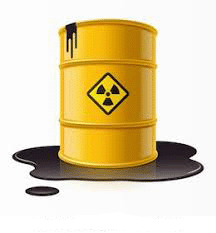
Kazakhstan local residents may be stuck with costs of decommissioning nuclear reactor
Local residents pay for decommissioning of Kazakhstan’s BN-350 reactor https://www.neimagazine.com/news/newslocal-residents-pay-for-decommissioning-of-kazakhstans-bn-350-reactor-7796914 27 February 2020 During a public hearing of the feasibility study on the environmental impact of decommissioning of the BN-350 fast reactor in Kazakhstan, Bulat Zhumakanov, representative of regional utility MAEK-Kazatomprom, said residents Aktau in Mangystau province, where the reactor is sited, will continue to pay for its maintenance.The BN-350, a sodium-cooled industrial fast neutron reactor, was physically launched in 1972, and was connected to the Mangystau power system in 1973. In 1998, it was closed down and formally began decommissioning the following year.
MAEK-Kazatomprom has supplied Mangystau region of Kazakhstan with electricity, heat and water since 1967. It is responsible for three gas and oil power plants with total installed capacity 1330MWe, a desalination plant and for decommissioning the BN-350 reactor. According to representatives of the development company, METR, preliminary information, puts the total cost of decommissioning the BN-350 at KZT125 billion ($330m) excluding inflation. Zhumakanov said this year Kazakhstani Wealth Fund Samruk-Kazyna has allocated KZT1.2 billion for the maintenance of the reactor. However, funds will still be taken from local residents through the electricity tariff for repair work. An application has been made to the federal budget, but whether money will be allocated from the republican budget in future “remains open”, he said. The tariff has been in place for 20 years and residents have been pressing the government to provide the necessary funding. Decommissioning of the BN-350 reactor is planned in three stages:
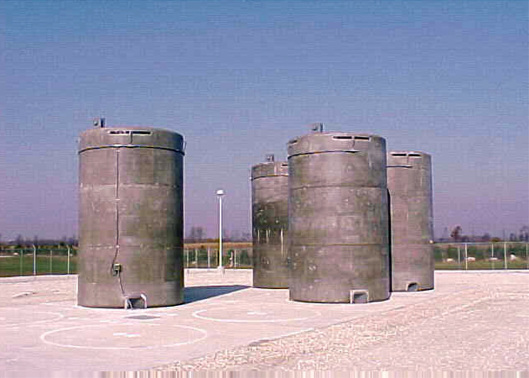
From 1999 to 2016, with the financial support of the US government, nuclear fuel was removed, primary circuit sodium was treated to remove from caesium radionuclides, a project was implemented to process the used fuel, to passivate sodium residues in the first circuit, and other work. The decommissioning process must be continued and cannot be delayed, said representatives of MAEK-Kazatomprom. The tanks in which radioactive waste is stored have been in operation since 1972, and need upgrading. Some 3000 cubic metres of liquid radioactive waste, mainly sodium and caesium-137, which has a half-life of 30 years, are stored at MAEK-Kazatomprom. |
|
Sweden now faces years of nuclear reactor shutdowns and waste disposal problems
Sweden prepares for a decade of nuclear decommissioning, NS Energy, By Kristina Gillin 27 Feb 2020 ,
Sweden is preparing to dismantle and demolish six large power reactors on three sites over the coming years.
By the end of 2020, half of Sweden’s nuclear reactors will have been permanently shut down for decommissioning. The six large reactors are expected to undergo nuclear decommissioning in Sweden over the next decade.
Besides these, the Ågesta prototype reactor, a combined heat and power plant is about to commence dismantling.
Nuclear decommissioning at Sweden’s Barsebäck nuclear power plant
The twin units at Barsebäck, a few miles across the straight from Denmark, ceased to generate power in 1999 and 2005, respectively.
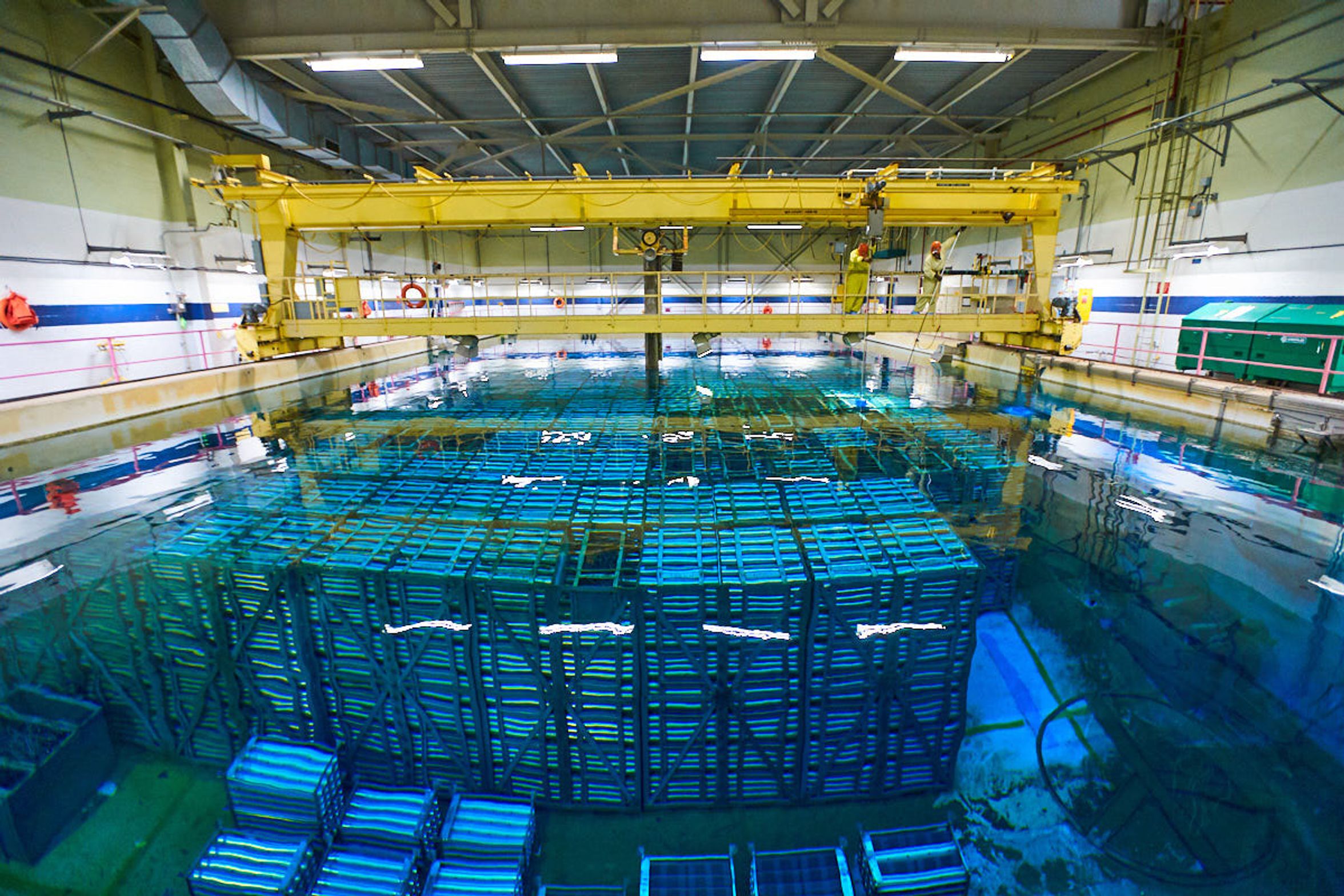
After shutdown, all spent fuel was removed and shipped to Sweden’s central interim storage facility (Clab) in Oskarshamn. Major decontamination of systems was also done early. However, dismantling had to wait, due to a lack of facilities for storage or disposal of decommissioning waste………
Funding and nuclear waste disposal in Sweden
Owners of nuclear power plants in Sweden have a statutory duty to dispose of their wastes. They are also required to set aside funding for waste management and nuclear decommissioning in Sweden. The funding is held in the Nuclear Waste Fund, a segregated Swedish government fund.
To fulfil the obligations, they jointly own the Swedish Nuclear Fuel and Waste Management Co (SKB). SKB’s scope covers disposal of most radioactive waste streams, interim storage of spent fuel and transportation between the various sites.
SKB is also responsible for compiling cost estimates for decommissioning and waste management every three years.
This to ensure that payments into the Nuclear Waste Fund are sufficient to cover future costs.
According to the 2019 estimates, the total cost of waste disposal, spent fuel storage and decommissioning is approximately SEK 147 billion (around €14 billion). Of this, about SEK 53 billion (around €5 billion) has been spent to date.
These figures include most of SKB’s scope but exclude the costs of near-surface disposal facilities for very low-level waste at Oskarshamn, Ringhals and Forsmark.
The majority of low- and intermediate-level waste from all Swedish reactors will be disposed of in SFR, a shallow geological repository for short-lived waste on the Forsmark nuclear site.
SFR has been in operation since 1988 but is currently licensed for operational waste only. To accommodate decommissioning waste, SKB plans to expand SFR’s capacity from 63,000 to 180,000 m3. An application for the expansion was submitted in 2014.
Pending regulatory approvals, construction of the new rock vaults will take place from 2023 to 2029. https://www.nsenergybusiness.com/news/nuclear-decommissioning-sweden/?fbclid=IwAR1me9D6hKLIPYP8Hp9tRS7Fgt6ksTbZ9t0Gvpo8IHCHgjIkeBqRnDgO79
Radioactive wastes into River Clyde could have devastating effects on community and wildlife
|
By Herald Scotland Online 1 Mar 20, Scotland’s national environment watchdog has denied claims the Ministry of Defence (MoD) is planning to increase discharges of radioactive waste into the River Clyde.Under the plans, liquid waste from reactors which power Royal Navy submarines at the Faslane and Coulport nuclear bases would be drained into the Gare Loch via a new pipeline.
Campaigners warned the rising discharges could have a devastating effect on surrounding wildlife and communities after a report by investigative journalism platform The Ferret stated emissions of one byproduct, cobalt-60, could rise by more than 50 times. …….. The Ferret reported the discharge of cobalt-60 would rise to 23.4 million units of radioactivity annually – around 52 times the current level. It added emissions of a second substance, known as tritium, would increase by 30 times to around 175,000 units, or ‘megabecquerels’, every year…….. SEPA’s public consultation is open until 13th Match and we welcome all responses. All responses will be reviewed in detail to ensure we continue to safeguard the environment and human health.” The bases are due to receive at least five more submarines in the coming years, including an ageing Trafalgar vessel and three new Astute submersible. The Ferret said a 50-strong group of Nuclear-Free Local Authorities (NFLA) had objected to the discharges. NFLA Scotland convener, Glasgow SNP councillor Feargal Dalton told The Ferret: “NFLA is particularly concerned about the considerable uncertainties in modelling doses and an under-appreciation of the effects of tritium”. “There are effective alternatives to nuclear powered submarines, as pioneered by the likes of Japan, and the Ministry of Defence should make a serious attempt to look at them.” https://www.heraldscotland.com/news/18272691.mod-planning-dump-50-times-nuclear-waste-river-clyde/ |
|
New Mexico’s elected leaders waver on Holtec’s nuclear waste plan
|
Congresswoman: Science Should Guide Nuclear Storage Decision, By The Associated Press, Feb. 25, 2020, ALBUQUERQUE, N.M. — A member of New Mexico’s congressional delegation wants to ensure a “sound and robust” scientific review is done before federal regulators decide whether to sign off on plans for a multibillion-dollar temporary storage facility for spent nuclear fuel. U.S. Rep. Xochitl Torres Small in an interview with The Associated Press acknowledged that the growing stockpile of used fuel at commercial reactors around the U.S. is a national problem and that elected leaders need to ensure New Mexico does not pay an unfair price as part of the solution. “My concern is making sure that we’re looking at the science and that we are doing our best to evaluate based on that, not based on economic considerations or based on fear or bias, but based on how do we solve a challenge that is a national challenge,” the Democrat said. While elected leaders in Eddy and Lea counties support the project, it has garnered fierce opposition from nuclear watchdog groups, New Mexico Gov. Michelle Lujan Grisham and other members of the state’s congressional delegation. They are concerned about the state becoming a permanent dump since the federal government is far from having any long-term plan for dealing with the tons of spent fuel building up at nuclear power plants around the nation……. New Jersey-based Holtec International is seeking a 40-year license from federal regulators to build what it has described as a state-of-the-art complex near Carlsbad. The site in southeastern New Mexico is remote and geologically stable, the company has said. Holtec executives also have said the four-layer casks that would hold the spent fuel would be made of thick steel and lead and transported on a designated train with guards and guns. The Nuclear Regulatory Commission is in the process of considering Holtec’s application. It could be next year before a decision is made. Torres Small said the clock is ticking for elected leaders to find a permanent solution as spent fuel is now stored at a variety of dangerous locations scattered across the U.S., including near important waterways. New Mexico already is home to the U.S. government’s only underground repository for Cold War-era waste generated over decades by nuclear research and bomb-making. Some watchdogs are concerned the Waste Isolation Pilot Plant could become the final destination for other types of waste as the government prepares to ramp up production of the plutonium cores that serve as triggers for weapons in the nation’s nuclear arsenal. Torres Small couched her support for production of the plutonium coresby saying New Mexico has a long history of bearing a burden when it comes to nuclear development and waste. She said the focus should be on making sure the state and its residents are kept “whole and strong” as national security obligations are met. https://www.nytimes.com/aponline/2020/02/25/business/ap-us-nuclear-waste-new-mexico.html |
|
Is Cumbria about to become the world’s plutonium dump?
Poor quality nuclear spent fuel casks at Pilgrim Nuclear Power Station
Citizen activists in Barnstable County communities will ask voters at spring town meetings, or via local election ballots, to support an advisory question that would direct Gov. Charlie Baker and state legislators to require that the radioactive waste is stored in “better quality” dry casks than those planned for use, and that the casks are protected by earthen berms or within enclosures with heightened security.,
The Cape Downwinders wrote the advisory question.
“Fifty percent of Americans live within 50 miles of a nuclear power plant,” Turco said. “Safety is a right. Our petition is to raise consciousness: educate the public about ongoing issues at Pilgrim.”
The selectmen in Orleans and Brewster voted to put the advisory question on their respective spring election ballots, Turco said. In Bourne, the question will go on the town meeting warrant.
Other Barnstable County communities will be presented with the advisory in the coming weeks.
Entergy Corp., Pilgrim’s longtime owner, sold the plant to Holtec International, a New Jersey-based company that will handle decommissioning, spent fuel management and site cleanup.
Turco and other Pilgrim critics have complained that Holtec has a conflict of interest since the company uses dry casks that it manufactures. The Holtec Hi-Storm 100s the company uses are concrete-encased stainless steel canisters that are a little over a half-inch thick.
“That’s just three-eighths of an inch thicker than a Yeti cup,” Turco said.
There is no way to monitor the steel canisters once they are sealed, critics say, and there is no aging management plan.
Concern also has been expressed over Holtec’s plan to store spent fuel on a concrete pad just a short distance from a well-traveled road. A vanity fence, rather than earth berms or enclosures, will block the view from the street.
“In this day and age, Pilgrim is an open door for any bad actors who want to cause serious damage to our country,” Turco said. “Nuclear waste is a predeployed nuclear weapon. Its safe storage is being ignored.”………
tate Attorney General Maura Healey filed a motion to intervene in the license transfer several months ago, but the motion remains under review by the Nuclear Regulatory Commission.
Frustrated by the lack of action, Healey sued the NRC last fall in U.S. District Court for approving the transfer of Pilgrim’s license from Entergy Corp. to Holtec International without first listening to what state officials and the public had to say about it. The case is pending.
Healey contends that Holtec is inexperienced in decommissioning and will likely run out of money before the job is done. Holtec will use the plant’s decommissioning trust fund, which contains $1.1 billion in ratepayer money.
The Nuclear Decommissioning Citizens Advisory Panel, which is made up of local officials, representatives from state agencies and members of the public, has been frustrated by Holtec’s lack of response during monthly meetings regarding decommissioning and spent fuel.
Holtec’s continuing refusal to answer the advisory panel and the public’s questions about the safety and expected longevity of the company’s dry cask storage technology is not only disturbing, it’s outrageous,” Sean Mullin, chairman of the advisory panel, wrote in an email. “The citizens of the Commonwealth have a right to know how, for example, Holtec can accurately monitor the sealed casks for problems and, if detected, how these can be repaired.”
The NRC director of the Division of Nuclear Materials Safety, a senior health physicist, senior materials engineer and chief of the NRC’s Storage and Transportation Licensing Branch will attend an advisory panel meeting set for 6:30 p.m. Monday in Plymouth Town Hall to discuss the region’s concerns.
Follow Christine Legere on Twitter: @ChrisLegereCCT. https://www.capecodtimes.com/news/20200223/push-for-better-storage-of-spent-pilgrim-nuclear-power-station-fuel
President Trump, eyeing the election campaign contradicts his administration on Nevada nuclear waste dump
One Side of a Nuclear Waste Fight: Trump. The Other: His Administration.
The president, eyeing the battleground state of Nevada, has made clear he opposes a nuclear waste site at Yucca Mountain, reversing a policy that was made in his name.
-
Mr. Trump, who in recent weeks seemed to end his administration’s support for moving nuclear waste to Yucca Mountain, a proposal that had been embraced by his appointees for three years despite his own lack of interest
- “Why should you have nuclear waste in your backyard?” Mr. Trump asked the crowd at a rally in Las Vegas on Friday, to applause, noting that his recently released budget proposal did not include funding to license the site, as previous ones had. applause, noting that his recently released budget proposal did not include funding to license the site, as previous ones had.
|
The story of the muddled and shifting position on Yucca Mountain is partly one of an administration focused on Mr. Trump’s re-election chances in a battleground state that he lost to Hillary Clinton by two percentage points in 2016. But it is also emblematic of a White House where the president has strong impulses on only a narrow set of issues, and policy is sometimes made in his name regardless of whether he approves of it. ………..
The president made his latest move after a monthslong policy debate inside the White House over finally breaking with support for Yucca, officials said…….
Nationally, Republicans have long favored the proposal, which was developed in the late 1980s and signed into law by President George W. Bush in 2002. But Nevada politicians of both parties have remained steadfastly opposed to the policy, which is deeply unpopular in the state…….
most Republican leaders outside of the state remained supportive. While the plans for Yucca remain law as set under Mr. Bush, Congress has never moved to fund it since…..
previous energy secretary, Rick Perry, supported the measure, and as the Office of Management and Budget listed $120 million in the president’s budget to restart the licensing process of the site. It was listed as one of the administration’s priorities. ……..
At a House energy subcommittee hearing two weeks ago, Mark W. Menezes, the president’s nominee for deputy energy secretary, prompted alarm at the White House when he said, “What we’re trying to do is to put together a process that will give us a path to permanent storage at Yucca.” After White House officials expressed concern, Mr. Menezes put out a statement saying that he fully supported Mr. Trump’s decision.
Whether that will be enough to reassure Nevadans about Mr. Trump’s intentions remains to be seen. “Nevadans aren’t going to just forget that Trump spent the first three years of his administration trying to treat the state as a dumping site,” said Rebecca Kirszner Katz, a former adviser to Mr. Reid. “Donald Trump had an opportunity to be on the right side of a major issue in a huge battleground state, and he bungled it.” https://www.nytimes.com/2020/02/23/us/politics/trump-yucca-mountain-nevada.html
AT THE BEGINNING Before the 2018 midterm elections, Senator Dean Heller stood with President Trump in the glittering Trump International Hotel near the Las Vegas Strip, looking out from the top floor, and pointed.
“I said, ‘See those railroad tracks?’” Mr. Heller, a Nevada Republican who lost his seat later that year, recalled in an interview. Nuclear waste to be carted to Yucca Mountain for permanent storage would have to travel along the tracks, within a half-mile of the hotel, Mr. Heller said.
I think he calculated pretty quickly what that meant,” Mr. Heller said. “I think it all made sense. There was a moment of reflection, of, ‘Oh, OK.’” Whether the waste would have traveled along those particular tracks is a subject of debate. But the conversation appears to have helped focus Mr. Trump, who in recent weeks seemed to end his administration’s support for moving nuclear waste to Yucca Mountain, a proposal that had been embraced by his appointees for three years despite his own lack of interest. bungled it.” https://www.nytimes.com/2020/02/23/us/politics/trump-yucca-mountain-nevada.html
|
|
No vote on high level nuclear waste storage in New Mexico, despite Memorial opposing the dump
New Mexico lawmakers unopposed to high-level nuclear waste storage as House kills memorial. Adrian Hedden, Carlsbad Current-Argus Feb. 24, 2020 A measure that would have called on the New Mexico Legislature to formally oppose the transportation and storage of high-level nuclear waste, as a project was ongoing to do so the southeast corner of the state, died while in committee as the 2020 session closed without a vote.
House Memorial 21 did pass the House Energy and Natural Resources Committee on a 8-5 vote during a Feb. 1 hearing, but was never brought to a vote on the House floor and thus did not proceed to be signed into law.
HM 21, sponsored by Matthew McQueen (D-50) cited an “unacceptable risk” created by the storage of high-level waste from the eastern United States, which the memorial cited as holding “90 percent” of nuclear reactors.
The memorial also said the risk would be spread to “40 other state” through the transportation of spent nuclear fuel by rail.
The facility that the memorial blamed for creating such as risk was proposed by Holtec International, which applied for a license to build a consolidated interim storage facility (CISF) for spent nuclear fuel rods in a remote location between Carlsbad and Hobbs.
New Mexico Gov. Michelle Lujan Grisham and State Land Commissioner Stephanie Garcia Richard both voiced opposition to the project last year, with the Lujan Grisham calling it “economic malpractice” as it could disrupt nearby oil and gas agriculture industries.
“The creation of a high-level radioactive waste storage facility in New Mexico jeopardizes the state’s existing industrial, agricultural and ranching businesses, runs counter to the promotion of tourism and the diversification of New Mexico’s economy and threatens the health and safety of New Mexico residents,” read the memorial….
McQueen worried the facility, although it was proposed as a temporary or “interim” facility could become permanent as a permanent repository was unlikely to be opened during the 40-year term of Holtec’s license application.
“I also believe this is a temporary benefit for really long-term or permanent liability for Mew Mexico. The facility threatens our existing economic activity, not only in the area but statewide,” he said during the Committee hearing.
“It’s amazing how something that temporary pretty much becomes permanent. I believe New Mexico should not be the nation’s nuclear waste dumping ground.”
A New Mexico Senate bill aimed at expanding the State’s oversight to include privately-owned storage for high-level waste also died after it was voted down last week on the Senate floor…… . https://www.currentargus.com/story/news/local/2020/02/24/new-mexico-lawmakers-unopposed-high-level-nuclear-waste-storage/4856468002/
Plans to remove Lewiston nuclear waste
Corps of Engineers seeks design planners for removal of Lewiston nuclear waste, https://buffalonews.com/2020/02/24/corps-of-engineers-seeks-design-planners-for-removal-of-lewiston-nuclear-waste/By Thomas J. ProhaskaFebruary 25, 2020 The Army Corps of Engineers announced Friday that it will compile a list of companies qualified to design the removal of 278,000 cubic yards of nuclear and chemical waste stored in Lewiston. The actual bidding for the design plan is anticipated later this year.
The Niagara Falls Storage Site at 1397 Pletcher Road features a 10-acre containment structure that holds waste from the World War II atomic bomb project and postwar nuclear work by Niagara Falls-area industries. The structure is 990 feet long, 450 feet wide and a maximum of 34 feet high.
The Corps of Engineers decided in 2018 that everything in it will be removed, treated and shipped elsewhere for disposal. The Corps’ notice to potential bidders said a decision is expected in 2023 on what remediation the rest of the 191-acre storage site may need after the waste is removed.
Engineering firms have until March 18 to submit their qualifications to join the bidding list.
USA’s Energy Dept’s failure to monitor Hanford nuclear site, parts not inspected for 50 years
Parts of Hanford nuclear waste site have not been inspected in 50 years, government auditors say, The former defense site in Washington state has a troubled past. The latest lapse involves the Energy Department’s failure to analyze the cause of a tunnel collapse.WP, By Aaron Gregg Feb. 22, 2020
Companies responsible for cleaning up a decommissioned plutonium plant in rural Washington state failed to conduct comprehensive safety checks at facilities containing nuclear waste, even after a 2017 tunnel collapse put surrounding communities on lockdown, government auditors reported Thursday.
The report about the Hanford nuclear waste site raises new concerns about environmental and safety risks posed by one of the United States’ worst toxic waste sites.
The Government Accountability Office found that the Energy Department waived a “root cause analysis” of the tunnel collapse because it was asked to do so by the contractor handling inspections, a subsidiary of Dallas-based Jacobs Engineering. The department did conduct a separate review to determine weaknesses and risks related to contaminated facilities, but that evaluation “was based largely on old data” and “did not include any physical or non-physical inspection” to flag facilities for cleanup, the office reported.
Sitting in a rural area of southwestern Washington, the Hanford site was once the U.S. military’s primary source of enriched plutonium used in nuclear warheads, including one of the weapons dropped on Japan at the end of World War II. Hanford’s workforce once numbered more than 50,000 people. Plutonium production ended in 1987.
Parts of the site have not been entered or inspected in more than 50 years, the Government Accountability Office reported, suggesting there could be additional safety risks of which the Energy Department is not aware. And the inspections that were carried out found structural problems severe enough that they “could lead to the potential release of hazardous or nuclear materials” at five of 18 facilities there, the office reported……..
The project has been fraught with waste, with milestones continually pushed back as contractors experienced difficulties. Earlier reports found that the department spent more than $19 billion over 25 years on “treatment and disposition of 56 million gallons of hazardous waste” without actually treating any hazardous waste. The project was originally scheduled to be completed in 2011 at a cost of $4.3 billion.
Besides the cost overruns, the haphazard way in which some waste was stored has made cleanup a hazardous task for the thousands of workers…….
U.S. Sen. Ron Wyden (D-Ore.) scolded the Energy Department for its handling of the nuclear waste cleanup effort in a letter to Energy Secretary Dan Brouillette. The letter notes that the department has accepted all of the office’s recommendations but says those changes are not sufficient to protect the lives of workers and citizens throughout the region.
Wyden blamed the 2017 tunnel collapse on the Energy Department’s failure to conduct comprehensive inspections.
The tunnel collapse “seems largely due to a failure of [the Energy Department] and its contractors to independently verify the tunnel’s physical condition ― a state of affairs replicated over many years across the site’s facilities,” Wyden wrote. https://www.washingtonpost.com/business/2020/02/21/parts-hanford-nuclear-waste-site-have-not-been-inspected-50-years-government-auditors-say/
Confusion and contradiction in Trump’s policy on nuclear waste and Yucca Mountain
The Yucca Mountain nuclear waste site has always been a political football. Trump is the latest president to fumble, Bulletin of the Atomic Scientists, By Allison Macfarlane, February 21, 2020 As with much policy-setting in the Trump administration, a single tweet from the president on February 6 appeared to reverse a previous stance. The message about Yucca Mountain, the nation’s proposed geologic repository for spent nuclear fuel and other high-level radioactive waste, set the media alight with speculation about new actions in US nuclear waste policy. But has anything changed, really?The new policy, if it is such a thing, is a little wobbly. It’s unclear whether the administration is or is not supporting Yucca Mountain as a waste repository. The Energy Department’s Undersecretary for Nuclear Energy and nominee for Deputy Secretary, Mark Menezes, stated six days later in a House Energy and Commerce subcommittee hearing that “what we’re trying to do is to put together a process that will give us a path to permanent storage at Yucca.” A White House official tried to square the circle of conflicting messages, stating: “There is zero daylight between the President and Undersecretary Menezes on the issue.”
At the same time, Trump’s fiscal year 2021 budget did not include funds for Yucca Mountain, unlike in previous years. In point of fact, though, Congress has not appropriated funding for Yucca Mountain in the past decade. The proposed repository site made it about halfway through the licensing process at the Nuclear Regulatory Commission and halted when the Obama administration’s Energy Department tried to pull the license application. The state of Nevada still strongly opposes Yucca Mountain and hasn’t changed its tune since passage of the Nuclear Waste Policy Act Amendments in 1987 (colloquially known in Nevada as the Screw Nevada Bill), which designated Yucca Mountain as the proposed repository site.
Trump’s tweet acknowledges the fierce and long-standing opposition to Yucca Mountain in a swing state he lost by a slim margin in 2016. The Democratic presidential candidates are unanimously opposed to storing nuclear waste at Yucca Mountain.
A permanent impasse. Yucca Mountain has spent much of its existence as a political football. The original Nuclear Waste Policy Act of 1982 required detailed characterization of three potential repository sites for the disposal of the nation’s spent commercial nuclear fuel and high-level radioactive waste from the nuclear weapons complex. By 1986 it was clear that work on three sites would be very costly, and Congress balked at the price tag. Political wrangling ensued, and it was no accident that among the three states under consideration—Nevada, Texas, and Washington—the one with the most-junior congressional delegation, including a newly elected Senator Harry Reid, was selected as the only site to be characterized by the Energy Department for suitability as a repository. ………
At the moment, no one involved in the process has an incentive to make progress. An extremely partisan House and Senate are at a permanent impasse on an issue that bears little on re-election chances (except in Nevada). The nuclear industry has found they can build new reactors—the two Westinghouse AP1000 units under construction in Georgia—without a solution to their spent fuel problem. The Energy Department, originally tasked with solving the problem, has no legal authority (or appropriations) to move forward. The Nuclear Regulatory Commission, which passed a Continued Storage Rule in 2014, vacated its ability to force a solution. And many anti-nuclear interest groups that oppose waste transport and repositories have called for “hardened on-site storage.”…….. https://thebulletin.org/2020/02/the-yucca-mountain-nuclear-waste-site-has-always-been-a-political-football-trump-is-the-latest-president-to-fumble/#
Bruce County, Ontario, protest against nuclear waste dump plan
MillerVideographer@ScottMillerCTV Contacthttps://london.ctvnews.ca/nuclear-tanks-no-thanks-say-bruce-county-protesters-1.4820155 Thursday, February 20, 2020 LONDON, ONT. — About 40 Bruce County residents protested outside Bruce County council chambers in Walkerton this morning.They’re protesting plans to bury Canada’s used nuclear fuel under 1300 acres of farmland north of Teeswater. South Bruce is one of two communities in Canada left in the running to host the country’s high level nuclear waste.
A 1300 acre site just north of Teeswater has been identified as a potential underground site for the multi-billion dollar project, that would house approximately 5.2 million used fuel bundles, that remain dangerously radioactive for hundreds of thousands of years.
The Nuclear Waste Management Organization says they’ll pick one site between South Bruce and Ignace, in Northern Ontario, by 2023.
Michelle Stein lives near the proposed site in South Bruce. She organized today’s protest. “Burying your problems to get them out of site is never the answer. I don’t want this underground mess to be the heritage that I leave for my children and grandchildren.”
Saugeen Shores Mayor Luke Charbonneau is the one bringing forward today’s motion to support DGR’s to store nuclear waste. “There’s an international scientific consensus that the best way to store waste materials from nuclear power production is through passive isolation in a Deep Geological Repository.”
The protest comes as Bruce County council debates a motion to reinforce its support for a permanent solution to the country’s nuclear waste, specifically the Deep Geological Repository model that encases the waste in copper containers, encased in clay “buffer boxes”.
Indonesian authorities investigate suspected nuclear waste dumping at housing estate
|
Indonesia probes suspected nuclear waste dumping at housing estate, MONGABAY, by Barita News Lumbanbatu, Basten Gokkon on 19 February 2020
Indonesian authorities have launched an investigation into radioactive contamination at a housing estate near a nuclear research reactor outside Jakarta. Officials first discovered elevated radiation levels at the site in late January during a routine check, and suspect the caesium-137 was dumped there from the nearby reactor. Authorities say a cleanup of soil and vegetation from the site has brought radiation levels down; they are also carrying out medical exams of residents living in the area. Environmental activists have renewed their calls for the Indonesian government to refrain from developing nuclear power in the country, given the inability of regulators to police even a research facility.JAKARTA — Authorities in Indonesia have launched an investigation following the discovery of radioactive contamination in an empty lot in a housing complex near a nuclear research facility. The Nuclear Energy Regulatory Agency, or Bapeten, recorded elevated levels of the radioactive isotope caesium-137 from a routine test at the estate in South Tangerang, a satellite city of Jakarta. The agency has since 2013 conducted regular checks in the estate, which is part of a complex that includes a research reactor run by the National Nuclear Energy Agency, or Batan. Radiation levels in the empty lot showed 680 millisieverts (mSv) per hour when experts checked at the end of January. That’s about the same as the maximum level of radiation that workers responding to the Fukushima nuclear plant meltdown in Japan in 2011 were exposed to. The normal level determined by Indonesian regulators is 0.03 mSv per hour. “We found it in the form of shards, so we need to examine it in our laboratory to identify the source of the radioactivity,” said Heru Umbara, a Batan spokesman……. Bapeten said it suspected that radioactive material had been deliberately dumped in the lot, likely from the research reactor some 3 kilometers (1.9 miles) away. Indonesia’s nuclear program is limited to research at three reactors. ….https://news.mongabay.com/2020/02/indonesia-probes-suspected-nuclear-waste-dumping-at-housing-estate/ |
|
New Energy Deputy Secretary nominee (?unwisely) contradicts Trump on Yucca Mountain and nuclear wastes.
Energy deputy secretary nominee faces heat after contradicting Trump https://www.axios.com/energy-deputy-secretary-nominee-contradicts-trump-yucca-mountain-1395063d-bd50-4c20-8494-4150483b0773.html
Alayna Treene, Jonathan Swan, 18 Feb 20, Trump administration officials are internally raising concerns about President Trump’s nominee for Energy deputy secretary, who appeared to openly contradict the president on nuclear waste storage at Nevada’s Yucca Mountain last week.
Driving the news: While speaking at a House Energy and Commerce subcommittee hearing last Wednesday, Mark Menezes told members of the panel that the Trump administration is still interested in storing nuclear waste at Yucca Mountain and that “what we’re trying to do is to put together a process that will give us a path to permanent storage at Yucca.”
- His statement came just weeks after Trump tweeted that he hears and respects Nevadans’ concerns about the nuclear waste repository — part of a long-standing “not in my backyard” battle. “[M]y Administration is committed to exploring innovative approaches – I’m confident we can get it done!”
- Menezes’ remarks also came just days after the White House unveiled its fiscal year 2021 budget, which does not include funding for Yucca Mountain. The administration’s previous budget requests included $120 million and $116 million, respectively, to maintain licensing for the site.
What we’re hearing: Menezes’ comments were flagged internally to White House officials who have been working on Yucca Mountain, an administration official told Axios.
- “It’s a big deal that the possible No. 2 at the Department of Energy came out in defiance [of] the president’s very strong position on a huge issue,” the official said, calling it “shocking” that Menezes would “basically give a middle finger to the president.”
-
- A second administration official told Axios that Menezes knew for weeks that funding for Yucca Mountain was going to be seized, adding to internal frustration over his comments last week: “When the budget comes out, and it has made a change from previous years, everyone’s notified of that. Department of Energy is clearly in the know about that because it’s a core change.”
The other side: “I have spoken to the White House and the Administration will not be pursuing Yucca Mountain as a solution for nuclear waste, and there are no funds in the budget to do so. I am fully supportive of the President’s decision and applaud him for taking action when so many others have failed to do so,” Menezes told Axios.
- A White House official said, “There is zero daylight between the President and Under Secretary Menezes on the issue.”
- Why it matters: Trump’s comments about Yucca Mountain, as well as his decision to cease funding for the repository, come as his re-election campaign seeks to turn Nevada red again after narrowly losing the state to Hillary Clinton in 2016.
- As the New York Times first reported, two of Trump’s top political advisers, Bill Stepien and Justin Clark, have opposed storing nuclear waste at Yucca Mountain for years, and they see the president’s decision to side with Nevada residents as positive for his re-election campaign.
- Trump heads to Nevada this week, where he’ll host a rally in Las Vegas on the eve of the Nevada Democratic caucus and speak at a Hope for Prisoners graduation ceremony at police department headquarters. He’ll stay overnight at his hotel on the Strip.
The backstory: Menezes, currently the Energy undersecretary, was officially nominated as deputy secretary on Thursday, a day after his remarks before members of Congress.
- However, administration officials say these nominations are normally planned weeks before being announced.
Taiwan searches for a solution to its nuclear waste problem
The U.S. government has de-funded its deep geological repository at Yucca Mountain, and most nations have yet to begin development of similar facilities. Finland is the closest to successfully completing deep geological repository. Its Onkalo site is now in the final approval stage, and should begin accepting nuclear waste early in this decade.
Executives from U.S. startup Deep Isolation visited Taiwan last fall with an innovative solution that could serve as either interim or permanent storage. Deploying technologies developed in the oil and gas industry, it would use directional drilling approximately 1 kilometer deep and then another kilometer horizontally. The spent fuel would then be lowered down the borehole inside nickel-chromium-molybdenum alloy canisters.
Developed by University of California at Berkeley physicist Richard Muller, the solution is based on proven technologies. The canisters can even be retrieved. The company has yet to utilize the technology in an actual case, though, and Taipower may be wary of being first in the world to implement it.
In the meantime, Taiwan is continuing a search for its own site for a deep geological depository. The Atomic Energy Council hopes to have a site ready by 2055.
For now, however, the focus is on developing interim solutions for the spent fuel in the cooling pools. Both New Taipei City and Taipower are optimistic that solutions can be found.
“The election is over and the noise is quieting down, so maybe now will be a better time to solve the issue,” says Edward H.C. Chang (張學植), director of Tai-power’s Department of Nuclear Backend Management.
-
Archives
- January 2026 (172)
- December 2025 (358)
- November 2025 (359)
- October 2025 (377)
- September 2025 (258)
- August 2025 (319)
- July 2025 (230)
- June 2025 (348)
- May 2025 (261)
- April 2025 (305)
- March 2025 (319)
- February 2025 (234)
-
Categories
- 1
- 1 NUCLEAR ISSUES
- business and costs
- climate change
- culture and arts
- ENERGY
- environment
- health
- history
- indigenous issues
- Legal
- marketing of nuclear
- media
- opposition to nuclear
- PERSONAL STORIES
- politics
- politics international
- Religion and ethics
- safety
- secrets,lies and civil liberties
- spinbuster
- technology
- Uranium
- wastes
- weapons and war
- Women
- 2 WORLD
- ACTION
- AFRICA
- Atrocities
- AUSTRALIA
- Christina's notes
- Christina's themes
- culture and arts
- Events
- Fuk 2022
- Fuk 2023
- Fukushima 2017
- Fukushima 2018
- fukushima 2019
- Fukushima 2020
- Fukushima 2021
- general
- global warming
- Humour (God we need it)
- Nuclear
- RARE EARTHS
- Reference
- resources – print
- Resources -audiovicual
- Weekly Newsletter
- World
- World Nuclear
- YouTube
-
RSS
Entries RSS
Comments RSS