Nuclear waste disposal problem National Nuclear Security Administration’s elephant in the desert
|
Post-WIPP Disposal ‘Far and Away’ Biggest TRU Waste Challenge for NNSA Pit Mission, Official Says https://www.exchangemonitor.com/pit-waste-far-away-biggest-challenge-nnsa-pit-mission-official-says/
BY EXCHANGEMONITOR 11 Sept 29, Addressing the elephant in the desert, an official with the National Nuclear Security Administration (NNSA) on Wednesday warned that ongoing nuclear-weapon maintenance will require a transuranic waste disposal site that is open beyond 2050: the current,BEST-CASE AVAILABILITY FOR THE WASTE ISOLATION PILOT PLANT IN NEW MEXICO.
“From an NNSA perspective, with an enduring mission, we are going to continue to have a need to dispose of transuranic waste past 2050,” James McConnell, the Department of Energy agency’s associate administrator for safety, infrastructure, and operations, said Wednesday at the ExchangeMonitor’s virtual RadWaste Summit. “Far and away the biggest challenge for NNSA is to make sure that the disposal system for transuranic waste is robust enough to not become a choke point for our mission,” McConnell said. The Waste Isolation Pilot Plant is DOE’s only deep-underground disposal facility for transuranic waste. In order to operate the facility into the 2050s, the agency needs New Mexico to modify the site’s operating permit. As written, the permit requires the federal government to stop burying waste at the site in 2024, then spend a decade safely closing down the facility. The NNSA plans in 2024 to start casting new war-ready plutonium cores for nuclear warheads at the Los Alamos National Laboratory in New Mexico. It expects to expand production to a combined 80 pits annually at Los Alamos and the Savannah River Site in South Carolina by around 2030. The associated waste stream from the mission will one day make the nuclear weapons agency the largest generator of transuranic waste in the Department of Energy complex. That will not happen until 2038 or so, “so there’s time to figure out what this means, both in terms of management and availability of continued disposal,” McConnell said. Transuranic waste, or TRU waste, is equipment and material contaminated with elements heavier than uranium, typically plutonium. Pits are the fissile cores of nuclear weapons, and the first to be cast later this decade will be for warheads to tip the planned fleet of Ground-Based Strategic Deterrent intercontinental ballistic missiles. After starting production four years from now, the NNSA plans to produce 30 pits a year at Los Alamos starting in 2026, then 80 a year by 2030 by adding another 50 pits annually at the Savannah River Site. Either site could, at least temporarily, handle all 80 pits on its own. In that 80-pit solo configuration, Los Alamos would annually generate a mixture of roughly 400 cubic yards (about 305 cubic meters) of transuranic and mixed transuranic waste. The NNSA projects Savannah River to generate more waste than that to produce just its nominal 50 pits a year: 1,365 cubic yards (or almost 1,045 cubic meters) of transuranic waste annually. Casting 80 pits a year by using both factories would produce about 19,200 cubic yards, or some 14,680 cubic meters, of transuranic waste from 2030 to 2050, according to slides McConnell briefed at the conference. He said the NNSA, together with DOE’s Office of Environmental Management, will begin a collaborative review “in the very short coming weeks” about the future NNSA TRU waste generator sites. |
|
Campaign against nuclear fuel waste storage in South Bruce, Canada
People in communities near the Municipality of South Bruce may receive a leaflet from the group Protect Our Waterways-No Nuclear Waste with information on the proposal to store used nuclear fuel deep underground near Teeswater.
Spokesman Michelle Stein said 50,000 leaflets were sent out this week to let people know some of the group’s concerns about the plan to store Canada’s nuclear waste in a Deep Geologic Repository or DGR.
Stein said the Nuclear Waste Management Organization is assembling land in the municipality of South Bruce to store irradiated nuclear fuel from 4.6 million spent fuel bundles.
“The proposed site includes the Teeswater River flowing through it, and that leads to Lake Huron. And 40 million people get their drinking water from Lake Huron,” she said.
“It’s a decision that is going to affect so many people, and change our community in such a large way, I think each individual deserves to have a vote,” she added.
Stein says 1,600 residents of South Bruce signed a petition opposing the proposed DGR. Stein wants to see a referendum on the issue, as both the Nuclear Waste Management Organization and the municipality have stated that the project needs broad community support to go ahead.
If the proposed nuclear waste dump is approved there will be two loads of spent nuclear fuel travelling by truck every day for forty years from Canada’s nuclear reactors. And if there is a radioactive leak underground it could affect 40 million people in Canada and the US,” said Stein.“People need to know the risks. Nowhere in the world is there an operating DGR for high-level nuclear waste as is being proposed here. Underground storage sites for low-medium level nuclear waste in the US and Germany have leaked radioactive material and required multi-billion-dollar clean-ups”, says Stein. “I encourage everyone who lives in a community near South Bruce to contact their own Mayor and tell them you oppose NWMO’s proposal for a nuclear waste dump.”
POW-NNW believes that the “rolling stewardship” method of managing nuclear waste is better because it maintains it in a monitored and retrievable state at all times, with continual improvements to packaging and environmental protection.
Stein added that ongoing scientific studies examine how spent nuclear fuel can be reused, reduced, and even neutralized. In its initial report to Parliament, the NWMO did not say that on-site storage at the reactor sites was unsafe or not feasible.
Bruce County divided over becoming permanent site to store Canada’s nuclear waste,
 Bruce County divided over becoming permanent site to store Canada’s nuclear waste,
Canada has 57K tonnes of highly radioactive spent nuclear fuel and nowhere to put it, Colin Butler · CBC News · Feb 21 2020, Bruce County calls itself a place “where the smiles are bigger and a little more frequent,” but those smiles belie a deepening divide among neighbours over what to do with Canada’s growing stockpile of nuclear waste.
The town of South Bruce, on the rim of the sparkling waters of Lake Huron, is one of two sites selected by a federal agency tasked with finding permanent locations to store Canada’s nearly three million bundles of highly radioactive spent nuclear fuel.
On Thursday, politicians in Bruce County debated whether their community should be home to a place to put that waste, what’s called a deep geologic repository, or DGR; a multi-billion dollar high tech nuclear waste dump that would see the material stored in perpetuity hundreds of metres below the Earth.
At issue in the debate are the ethics of leaving the burden of some of Canada’s most dangerous nuclear material to future generations, the possible development and devaluation of prime Ontario farmland and concerns over the potential safety of the drinking water for 40 million people in two countries.
‘I am strongly opposed’
On Thursday, that politically-fraught debate took centre stage in Walkerton, Ont. before a packed council chamber where politicians debated whether DGRs were “settled science” in an argument that has already played out at dinner tables, arenas and coffee shops in the area for years, dividing neighbours and leaving communities deeply polarized.
“I am strongly opposed,” said Brockton Mayor Chris Peabody, whose township includes Walkerton, a place that two decades ago grappled with a tainted water crisis where e. coli killed six people and sickened thousands.
“The proposal is to bury the waste under the Teeswater River,” he told council. “I can’t support that. I’ve got several communities down river that get their drinking water from aquifers along that river.”
Peabody said if a deep geologic repository were to be located west of Teeswater, it would potentially devalue prime farmland and the resulting stigma of burying nuclear waste near his community might affect the ability of local farmers to sell their wares.
“It would make it very difficult for them to market their produce and survive,” he said. “I don’t think the scientific consensus supports burying nuclear waste in class one farmland in Southern Ontario.”
Utilizing a deep geologic repository isn’t simply a matter of “burying nuclear waste in class one farmland” as Peabody suggests. The proposed underground project is a highly sophisticated $23 billion nuclear waste disposal site designed to contain and isolate some of the most dangerous materials on Earth for thousands of years.
The sprawling complex of tunnels and chambers would occupy a footprint of about 600 hectares underground, where nuclear waste would be stored at a depth as low as the CN Tower is tall (500 to 600 metres). The idea is the material would be encased in containers below natural bedrock to keep the harmful effects of radiation at bay for millennia.
While proponents of the system claim a DGR is a safe way to store nuclear waste, those opposed argue it has a spotty record at best, pointing out that similar facilities in New Mexico and Germany have leaked – and by that token, opponents say a DGR near Lake Huron would potentially put the drinking water of 40 million people at risk.
It’s not the first time the debate has come to the area. Ontario Power Generation recently abandoned a 15-year campaign for a similar proposed facility to store low to intermediary waste at a site not far from the Bruce Nuclear Generating Station.
The failure to move ahead with the project is part of a larger problem of Canada’s struggle to find a permanent home for its growing stockpile of nuclear waste.
As of 2018, it’s estimated Canada had some 57,000 tonnes of highly radioactive spent nuclear fuel and nowhere to put it.
So far, the federal agency tasked with disposing it, the Nuclear Waste Management Organization, or NWMO, has identified two potential communities with the right geological makeup; Ignace in Ontario’s north and South Bruce, in Ontario’s Great Lakes Basin. ……. https://www.cbc.ca/news/canada/london/canada-nuclear-waste-1.5469727
Opposition in Kamoenai to hosting nuclear waste dump
|
Second site in Hokkaido considers hosting nuclear waste dump, Japan Times, SAPPORO/SUTTSU, HOKKAIDO – The village of Kamoenai in Hokkaido is considering hosting a final disposal facility for high-level radioactive waste, it was learned Friday.The village is looking at applying for a literature survey, the first of three stages in the research process to select the location of a final disposal facility for high-level radioactive waste from nuclear power plants.
Kamoenai is the second municipality in the nation to be contemplating the process since the government published details of areas it considered suitable for nuclear waste disposal in its Nationwide Map of Scientific Features for Geological Disposal in 2017. The town of Suttsu, also in Hokkaido, was the first municipality to do so……. The village, which is located in western Hokkaido and had a population of 823 as of the end of August, faces the Sea of Japan and neighbors the village of Tomari, which hosts a nuclear power plant run by Hokkaido Electric Power Co. The plant is currently offline. According to the government map, almost all of Kamoenai except for some southern areas is unsuitable for waste disposal. Procedures to select a host for a final disposal site are conducted in three stages, comprising the “literary” survey, a “preliminary” investigation and a “detailed” investigation. A municipality undergoing a literature survey can receive subsidies of up to ¥2 billion from the central government. Meanwhile, many residents of Suttsu, Hokkaido, another municipality that is considering applying for a literature survey, voiced opposition to the plan Thursday at a briefing session organized by the municipal government. The meeting was the fourth of its kind for Suttsu residents. The first such session was held on Monday. At Thursday’s meeting, which was opened to the press, Suttsu Mayor Haruo Kataoka explained the reasons for considering applying for a literature survey. Some 260 residents attended the session, which lasted for over three hours from 6:30 p.m. Participating residents voiced concerns that the move would lead to harmful rumors about the town, and that if the town received subsidies from the government as a result of applying for the literature survey, it would have no choice but to become a final disposal site. Some said that detailed discussions should be held after the mayoral election in the town next year……. In talks with reporters after the meeting, Kataoka rejected the idea of holding a local referendum on the matter, saying, “It will divide the town residents.” According to the town, the first briefing session on Monday was cut short due to technical issues, such as not having reserved enough time for questions from residents. Therefore, the town government plans to hold an additional session within this month for participants that attended the Monday meeting. https://www.japantimes.co.jp/news/2020/09/11/national/hokkaido-village-nuclear-waste/ |
|
Britain’s National Audit Office warns on costs of cleaning up old nuclear plants
|
Estimates of the cost to clear up 12 of the UK’s earliest nuclear power sites have increased by nearly £3bn since 2017 and there remains “inherent uncertainty” over the final bill, the country’s public spending watchdog has warned. The National Audit Office on Friday published its latest report into the long-running saga around the decommissioning of two research sites and 10 early nuclear power stations in Britain, which came to be known as the “Magnox” plants due to the magnesium alloy that was used to cover the fuel rods inside their reactors. The spending watchdog also found that the costs to the taxpayer of a botched 2014 tender process to outsource the decommissioning to the private sector was £20m higher than when it last investigated three years ago.
Cleaning up the Magnox sites, which were built before privatisation and include Hunterston A in Scotland and Hinkley Point A in Somerset, has turned into a costly and torturous affair. In 2016 the High Court ruled the 2014 competition for a 14-year contract to decommission the sites — which had been awarded to Cavendish Fluor Partnership, or CFP, a joint venture between UK-based Babcock International and Fluor of the US — had been “fudged” by the Nuclear Decommissioning Authority, a body attached to the Department for Business, Energy and Industrial Strategy.
A year later ministers, acting on legal advice, terminated the arrangement with CFP nine years early and renegotiated a shorter contract that ran until the end of August 2019. Decommissioning of the sites was then brought in-house by the NDA. ………. https://www.ft.com/content/6f313c84-d314-4160-b124-a68c4e85be09
|
|
|
Chernobyl nuclear power plant gets special permission to run ‘hot’ tests with nuclear waste

 Chornobyl nuclear power plant gets special permission to run ‘hot’ tests with nuclear waste https://112.international/society/chornobyl-nuclear-power-plant-gets-special-permission-to-run-hot-tests-with-nuclear-waste-54539.html Source : 112 Ukraine, 9 Sept 20,
 The spent fuel will be soon transferred to new storage, as the old one’s operational life is expiring Chornobyl nuclear power plant (NPP) received special permission to run hot tests with the spent nuclear fuel. Press office of the NPP reported that on September 8.
According to the message, over 23 years of service, the storage amounted up to 21,000 elements of nuclear waste. Due to the fact that the operational life of the current storage is expiring, the staff is now making arrangements to transport the waste to a new repository site. At first, only part of the waste will be transferred, and the rest is to be moved after successful “hot” tests.
“The new storage boasts of special technology, allowing to keep the building in the inert atmosphere. It’ll have helium pumped up in there, and the bilateral leak-tight bottles, which are supposed to keep the spent fuel for 100 years,” said Volodymyr Peskov, the Acting Director of Chornobyl NPP enterprise.
The NPP staff managed to get permission for hot tests after cold tests with nuclear waste were performed successfully.
UK. For thehighly radioactive Dounreay nuclear site, a mobile robot will be used to identify the toxic structures
 Press & Journal 8th Sept 2020 A mobile robot will be used for the first time in one of the most contaminated and inaccessible parts of the Dounreay nuclear plant to provide vital information on the next steps in its decommissioning. The technology will provide the first images in decades from inside the Caithness site’s Fuel Cycle Area (FCA).
The FCA consists of two reprocessing plants, waste stores and laboratory facilities where spent nuclear fuel was examined and reprocessed. As part of the site clean up, Dounreay Site Restoration Ltd (DSRL) is working with the Robotics and Artificial Intelligence in Nuclear (Rain) Hub, a consortium of universities led by the University of Manchester, to explore ways to overcome some of
the challenges.
In South Australia, Farmers, Traditional Owners fight radioactive waste dump

As Woolford pointed out, of 2789 submissions received in a public consultation 94.5% oppose the facility.
Farmers, Traditional Owners fight radioactive waste dump https://www.greenleft.org.au/content/farmers-traditional-owners-fight-radioactive-waste-dump, Renfrey Clarke, Adelaide, September 8, 2020
A 160-hectare tract of farmland has been purchased near the small town of Kimba and, as inducement to deliver support for the plan, local residents have been promised a $31 million “community development package.” A non-binding ballot conducted last November among residents of the Kimba District Council area recorded 62% in favour of the scheme.
But opponents of the dump remain active and vocal. As well as farmers and townsfolk concerned for their safety and for the “clean and green” reputation of the district’s produce, those against the plan include the Barngarla First Nations people, who hold native title over the area. Continue reading
Hinkley Point B nuclear station could close down early – EDF
 EDF Energy says UK’s Hinkley Point B nuclear plant could close earlier than planned
The 1 gigawatt (GW) plant in Somerset was due to be shut down permanently in early 2023. It began operation in 1976.
“It is possible we may need to move into defuelling within the next two years. We will review this decision in the same detailed way as we have with Hunterston B and expect to be able to confirm the outcome by the end of this year,” said a spokesman for EDF Energy, part of France’s EDF.
Last month, EDF Energy said it would start decommissioning its Hunterston B nuclear power plant in Scotland by January 2022 at the latest.
Both Hunterston B and Hinkley Point B have had issues with ageing, as cracks were found in graphite bricks which form reactor cores, prompting some industry experts to foresee their permanent closure soon.
Nearly all of Britain’s 9 GW nuclear fleet is composed of advanced gas-cooled reactors. A factor of ageing in that type of reactor is cracks in the graphite bricks.
Half of Britain’s eight operating nuclear power stations are due to move into decommissioning by March 2024, removing around 4 GW of power capacity…….. www.reuters.com/article/britain-nuclearpower/update-1-edf-energy-says-uks-hinkley-point-b-nuclear-plant-could-close-earlier-than-planned-idUSL8N2G65F8
Huge challenge to decontaminate Dounreay: ‘World’s deepest nuclear clean-up’.
|
Dounreay: ‘World’s deepest nuclear clean-up’ to begin, The first work in a clean-up of a 1950s-built shaft at a nuclear power research complex is to begin this year. BBC News, 9 Sep 20,
The shaft plunges 65.4m (214.5ft) below ground and poses one of the biggest challenges in the demolition of Dounreay in Caithness.
Radioactive waste was disposed there from 1959 until 1977 when an explosion ended the practice.
Tackling the shaft has been described as the “world’s deepest nuclear clean-up”…….
A £7.5m contract has been awarded for the first steps in this work, due to begin in late autumn, and also to carry out similar engineering work at another site at Dounreay called the silo.
It is described as being like a swimming pool with a concrete roof and was also used for the disposing of radioactive waste.
Engineering firms Nuvia and Graham Construction have been awarded the contract for work that would eventually lead to the waste being removed.
David Hubbard, of Dounreay Site Restoration Ltd, said: “The shaft and silo contain solid waste and sludge which must be retrieved and repackaged for safe above-ground storage…..
Dounreay, near Thurso, was the UK site for the development of fast reactor research from 1955 to 1994.
The facility on the north Caithness coast is in the process of being closed down, demolished and cleaned up. https://www.bbc.com/news/uk-scotland-highlands-islands-54085592
|
|
Bob Halstead has done a great job defending Nevada from nuclear waste dumping at Yucca Mountain
|
Nevada grateful for Halstead’s many years fighting nuclear waste, Las Vegas Sun , Monday, Sept. 7, 2020 On this Labor Day, t
 he Sun salutes a recently retired Nevada leader whose three decades of tireless public service unquestionably made a difference in our state. he Sun salutes a recently retired Nevada leader whose three decades of tireless public service unquestionably made a difference in our state.
Bob Halstead, who stepped down last month as the executive director for the Nevada Agency for Nuclear Projects, will be long remembered for his staunch defense of the state against the Yucca Mountain nuclear waste repository project. It’s scary to think where Nevada might be today if not for Halstead and his guard-dogging against the federal government’s attempts to shove the nation’s high-level nuclear waste down our throats.
Halstead was the state’s foremost expert on the project, a walking encyclopedia of its many flaws. His credibility, geniality and commitment allowed him to work with Republican and Democratic governors, Nevada congressional delegates, state legislators and local officials alike. That helped forge a unified front on the project that continues to this day. Outside of a few misguided officials, it’s difficult to find a Nevada leader who wants anything to do with Yucca Mountain. Halstead also spearheaded the state’s response to the feds’ 2018 secret shipments of weapons-grade plutonium to the Nevada National Security Site, among other efforts. Along the way, he became a nemesis of the Department of Energy, beating them back with legal and scientific challenges and poking their arguments full of holes…………. It’s certainly been an impressive fight, and a long one. It dates to 1987, when Congress passed the so-called “Screw Nevada” bill that designated our state as the national waste repository site — without our consent. Since then, the project has been killed and resurrected repeatedly, most recently when the Trump administration pushed for funding to restart the licensing process. When President Donald Trump finally capitulated, it was a high point for Halstead after a career of bedeviling pro-Yucca presidents, bureaucrats and Congress members who were intent on shipping waste out of their own districts and dumping it on Nevada. But as Halstead has noted, the fight isn’t over. It won’t be until there’s legislation that permanently shuts down the site. With Halstead’s departure, that means the current and next generations of Nevada leaders will have to take up the cause just as fervently as he did. We simply can’t let down our guard on this monstrosity, which would result in more than 110,000 metric tons of highly radioactive waste being shipped into the backyard of Las Vegas and stored there. Transporting the material is dangerous, especially for Las Vegas, given that one of the main routes takes shipments directly through the heart of the city. Think about the effects of an accident or a terrorist attack on a shipment going through the middle of Las Vegas. As for storage, seismic activity in the region makes Yucca Mountain a terrible place to put this waste. A leak could contaminate groundwater for thousands of years — and keep in mind that we’re talking about enough material to cover a football field about seven yards deep. There’s nothing close to scientific proof that the waste could be safely stored in the repository for the tens of thousands of years it will remain radioactive. Halstead knew this, and for 30 years he refused to yield on it……..https://lasvegassun.com/news/2020/sep/07/nevada-grateful-for-halsteads-many-years-fighting/ |
|
Renewed concerns about safety as dig starts for new shaft at New Mexico’s nuclear Waste Isolatio Pilot Plant
 Groups Raise Concerns About New Shaft at US NuclearDump, By Associated Press, Wire Service Content Sept. 4, 2020
Crews at the U.S. government’s underground nuclear waste repository in New Mexico are starting a new phase of a contentious project to dig a utility shaft. https://www.usnews.com/news/best-states/new-mexico/articles/2020-09-04/groups-raise-concerns-about-new-shaft-at-us-nuclear-dump
ALBUQUERQUE, N.M. (AP) — Crews working at the U.S. government’s underground nuclear waste repository in New Mexico are starting a new phase of a contentious project to dig a utility shaft that officials say will increase ventilation at the site where workers entomb the radioactive remnants of decades of bomb-making.
Officials at the Waste Isolation Pilot Plant said this week that the $75 million project is a top priority and that work will be done round the clock five days a week, with an additional shift on Saturdays. The shaft will eventually span more than four-tenths of a mile and connect to an underground system of passageways.
After reaching a depth of about 60 feet (18 meters), workers now will be drilling small holes and using explosive charges to clear more rock.
Adequate ventilation at the repository has been a big issue since 2014, when a radiation release forced a temporary closure and contamination limited air flow underground where workers dispose of nuclear waste. That prompted the need for a new ventilation system so full-scale operations could someday resume.
The repository is at the center of a multibillion-dollar effort to clean up waste from decades of U.S. nuclear research and bomb-making. Over more than 20 years, tons of waste have been stashed deep in the salt caverns at the southern New Mexico site.
Watchdog groups are raising red flags, saying the work is being done before state environmental officials finish a process allowing the public weigh in and before they have issued a final permit. The New Mexico Environment Department in April granted federal officials temporary approval to start the work as part of a larger request to dig the shaft and passageways.
The Southwest Research and Information Center is among those opposing the project. The group filed legal challenges, saying environmental officials ignored existing regulations, past agency practices and case law when giving temporary approval for contractors to begin working.
The Environment Department has defended its decision, saying the temporary approval was limited to digging the shaft, not using it.
Don Hancock with the Southwest Research and Information Center said state officials essentially foreordained the permit request by allowing work to begin. He also said the state has not provided any technical basis for its decisions and that it reduced the amount of time the public had to comment on the project by delaying the release of a draft permit.
The group has suggested that the shaft, given its size and location, could be used to expand the repository. It says that creates potential for the government to send high-level and commercial waste to the site, along with new radioactive waste that will be generated by manufacturing plutonium cores for the nation’s nuclear arsenal.
Despite congressional limits on the amount and type of waste that can be shipped to the repository, Hancock and other critics said the state’s actions have favored the federal government while limiting the public’s ability to give their input.
The repository’s hazardous waste permit also is up for renewal this year, and more legal wrangling is expected.
The threatening presence of highly radioactive material in Russia’s sunken nuclear submarines
 Do Russia’s Sunken Nuclear Submarines Pose Environmental Danger? There’s radioactive fuel hanging at the bottom of the sea. https://www.popularmechanics.com/military/navy-ships/a33902569/russia-sunken-nuclear-submarines/ BY KYLE MIZOKAMI, SEP 4, 2020
- Two ex-Soviet nuclear submarines, K-27 and K-159, lie at the bottom of the Barents Sea.
- The wrecked ships still have their radioactive fuel sources aboard, which experts worry could leak into the environment.
- The Russian government has vowed to clean up the wrecks, but the work is not a priority.
Governments and environmental groups are worried a rupture of nuclear fuel supplies could cause a nuclear catastrophe, impacting local fishing areas. The Russian government is working to solve the problem, which some experts are calling a potential “Chernobyl in slow motion on the seabed.
A legacy of the Cold War threatens Russia’s people and environment, potentially irradiating a large portion of the Barents Sea and closing it to commercial fishing. Two Soviet nuclear-powered submarines are sitting on the bottom of the ocean and could unleash their radioactive fuels into the surrounding waters.
The Soviet Union built four hundred nuclear-powered submarines during the Cold War. The vast majority were either scrapped, or still serve with the Russian Navy today. A few subs, however, are trapped in precarious circumstances, lying on the seabed floor with their uranium fuel supplies still intact. The BBC reports on efforts to render two such ships, K-27 and K-159, safe.
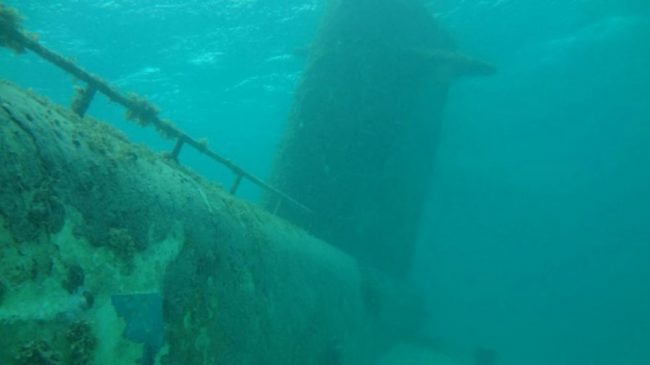 The first ship, K-27, was a Soviet Navy submarine prototype equipped with a new liquid metal reactor. In 1968, the six-year-old sub suffered a reactor accident so serious, nine Soviet sailors received fatal doses of radiation. The submarine was scuttled off the Russian island of Novaya Zemlya in 1982 with its reactor still on board.
The second ship, K-159 (shown above before sinking, on original), was a November-class submarine that served a fairly typical career with the Soviet Northern Fleet before retirement in 1989. In 2003, however, the K-159 sank while in the process of being dismantled, killing nine sailors. The ship still resides where it was lost, again with its reactor on board.
Environmentalists in Norway and Russia are concerned that eventually the reactors on both submarines will break down, releasing huge amounts of radiation.
The effects of these leaks could range from increasing local background radiation to declaring local fish and animals off limits, particularly Barents Sea fishing stocks of cod and haddock, costing local fishermen an estimated $1.5 billion a year.
While Russia’s state nuclear agency, Rosatom, has been tasked with cleaning up the ships, the effort is underfunded, resulting in a race against time (and saltwater corrosion).
Despite the undoubted danger of USA’s gigantic new plutoniu pit production, USA safety officials won’t bother with a new environment study
 Officials Dismiss New Environmental Study for Nuclear Lab https://www.mbtmag.com/home/news/21173922/officials-dismiss-new-environmental-study-for-nuclear-lab
Watchdog groups say the plutonium pit production work will amount to a vast expansion of the lab’s mission. Manufacturing Business Technology , Sep 3rd, 2020 ALBUQUERQUE, N.M. (AP) — The National Nuclear Security Administration says it doesn’t need to do an additional environmental review for Los Alamos National Laboratory before it begins producing key components for the nation’s nuclear arsenal because it has enough information.
Watchdog groups are concerned about Tuesday’s announcement, saying the plutonium pit production work will amount to a vast expansion of the lab’s nuclear mission and that more analysis should be done.
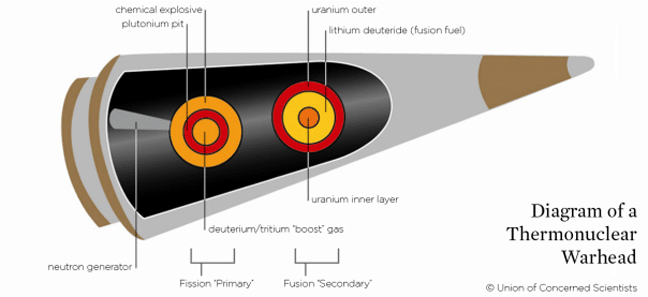
Los Alamos is preparing to resume and ramp up production of the plutonium cores used to trigger nuclear weapons. It’s facing a 2026 deadline to begin producing at least 30 cores a year — a mission that has support from the most senior Democratic members of New Mexico’s congressional delegation. The work is expected to bring jobs and billions of federal dollars to update buildings or construct new factories.
The work will be shared by the Savannah River Site in South Carolina, which has been tasked with producing at least 50 plutonium cores a year.
The National Nuclear Security Administration on Tuesday released its final supplemental analysis of a site-wide environmental impact statement done for the lab more than a decade ago. The agency concluded that no further analysis is required.
Critics have pushed for a new environmental impact statement, saying the previous 2008 analysis didn’t consider a number of effects related to increased production, such as the pressure it puts on infrastructure, roads and the housing market.
“The notion that comprehensive environmental analysis is not needed for this gigantic program is a staggering insult to New Mexicans and an affront to any notion of environmental law and science,” Greg Mello of the Los Alamos Study Group said in a statement.
Lab officials last year detailed plans for $13 billion worth of construction projects over the next decade at the northern New Mexico complex as it prepares for plutonium pit production. About $3 billion of that would be spent on improvements to existing plutonium facilities for the pit work, the Albuquerque Journal reported. AT TOP Lab officials last year detailed plans for $13 billion worth of construction projects over the next decade at the northern New Mexico complex as it prepares for plutonium pit production. About $3 billion of that would be spent on improvements to existing plutonium facilities for the pit work, the Albuquerque Journal reported.
THe Arctic’s slow-moving underwater nuclear disaster – Russia’s radioactive trash

 Russia’s ‘slow-motion Chernobyl’ at sea, BBC By Alec Luhn2nd September 2020, ”…………………………. Beneath some of the world’s busiest fisheries, radioactive submarines from the Soviet era lie disintegrating on the seafloor. Decades later, Russia is preparing to retrieve them………. Russia’s ‘slow-motion Chernobyl’ at sea, BBC By Alec Luhn2nd September 2020, ”…………………………. Beneath some of the world’s busiest fisheries, radioactive submarines from the Soviet era lie disintegrating on the seafloor. Decades later, Russia is preparing to retrieve them……….With a draft decree published in March, President Vladimir Putin set in motion an initiative to lift two Soviet nuclear submarines and four reactor compartments from the silty bottom, reducing the amount of radioactive material in the Arctic Ocean by 90%. First on the list is Lappa’s K-159.
|
|

1 This Month
23-25 October – on Zoom – World BEYOND War’s annual global conferenc

To see nuclear-related stories in greater depth and intensity – go to https://nuclearinformation.wordpress.com

Say No to NASA’s Reckless Nuclear Reactor on the Moon
Say No to NASA’s Reckless Nuclear Reactor on the Moon
-
Archives
- October 2026 (160)
- September 2026 (339)
- August 2026 (330)
- July 2026 (355)
- June 2026 (287)
- May 2026 (306)
- April 2026 (356)
- March 2026 (251)
- February 2026 (267)
- January 2026 (308)
- December 2025 (358)
- November 2025 (359)
-
Categories
- 1
- 1 NUCLEAR ISSUES
- business and costs
- climate change
- culture and arts
- ENERGY
- environment
- health
- history
- indigenous issues
- Legal
- marketing of nuclear
- media
- opposition to nuclear
- PERSONAL STORIES
- politics
- politics international
- Religion and ethics
- safety
- secrets,lies and civil liberties
- spinbuster
- technology
- Uranium
- wastes
- weapons and war
- Women
- 2 WORLD
- ACTION
- AFRICA
- Atrocities
- AUSTRALIA
- Christina's notes
- Christina's themes
- culture and arts
- Events
- Fuk 2022
- Fuk 2023
- Fukushima 2017
- Fukushima 2018
- fukushima 2019
- Fukushima 2020
- Fukushima 2021
- general
- global warming
- Humour (God we need it)
- Nuclear
- RARE EARTHS
- Reference
- resources – print
- Resources -audiovicual
- Weekly Newsletter
- World
- World Nuclear
- YouTube
-
RSS
Entries RSS
Comments RSS

