Fukushima nuclear clean-up hugely affected by discovery of lethal radiation levels

|
Lethal Levels of Radiation Found in Damaged Fukushima Reactor Will Have ‘Huge Impact’ on Shutdown, Regulators Warn https://www.commondreams.org/news/2020/12/30/lethal-levels-radiation-found-damaged-fukushima-reactor-will-have-huge-impact The radiation levels reported around shield plugs at two reactors are high enough to kill a worker exposed for even an hour. Brett Wilkins, staff writer
In what Japanese regulators on Wednesday called an “extremely serious” development, lethal levels of radiation have been recorded inside the damaged reactor building at the Fukushima No. 1 nuclear power plant, threatening the shutdown and decommissioning of the site of the second-worst peacetime nuclear disaster in history.”This will have a huge impact on the whole process of decommissioning work.” —Toyoshi Fuketa, Nuclear Regulation Authority According to The Asahi Shimbun, Japan’s Nuclear Regulation Authority (NRA) reported that massive amounts of radioactive materials have been found around shield plugs of the containment vessels in the No. 2 and No. 3 reactors. NRA officials estimated radiation levels at 10 sieverts per hour—enough to kill a worker who spends just one hour there. Decommission of the reactor requires workers to remove the shield plugs, which block radiation from the reactor core during normal plant operation. This discovery has forced officials to reconsider their shutdown plans. NRA chair Toyoshi Fuketa said that removing the highly irradiated shield plugs made safe retrieval of nuclear fuel debris—an already dangerously daunting task—all the more difficult.. “It appears that nuclear debris lies at an elevated place,” Fuketa said at a news conference earlier this month. “This will have a huge impact on the whole process of decommissioning work.” The latest alarming find is the result of an investigation that resumed in September after a five-year pause in which the NRA took new measurements of radiation levels around the shield plugs at the No. 2 and No. 3 reactors. Tokyo Electric Power Co., the operator of the plant, announced December 24 that nuclear fuel debris removal would be postponed until 2022 or later due to the coronavirus pandemic. As Common Dreams reported in October, Greenpeace and other environmental and anti-nuclear advocates expressed shock and outrage after the Japanese government announced a plan to release stored water from the ill-fated plant into the Pacific Ocean. Greenpeace subsequently released a report claiming that radioactive carbon-14 released into the ocean “has the potential to damage human DNA.” The Fukushima Daiichi disaster—the result of a 2011 earthquake and tsunami that killed more than 15,000 people in northeastern Japan—was the worst nuclear incident since the 1986 Chernobyl meltdown in the former Soviet Union, and the worst in Japan since the United States waged a nuclear war against the country in 1945 that killed hundreds of thousands of people. |
USA is not facing up to the climate threats to its nuclear wastes
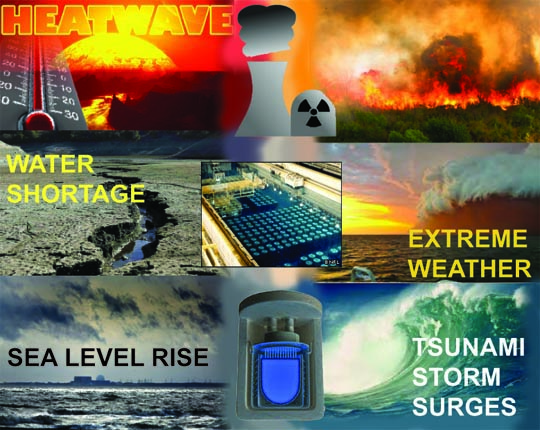 US is Ill-Prepared to Safely Manage its Nuclear Waste from Climate Threats. More than 150 sites across the country have to be managed for radioactive waste for centuries or millennia. But there’s no plan in place for how this will be done, says GAO report. Earth Island Journal , CHARLES PEKOW, December 29, 2020 The Cold War never erupted into the nuclear nightmare that the world feared for decades. But the legacy of the never-used nuclear weapons remains a ticking time bomb that could endanger countless people and lead to environmental catastrophe any time.
The GAO report, “Environmental Liabilities: DoE Needs to Better Plan for Post-Cleanup Challenges Facing Sites” (pdf), issued earlier this year, found, among other things, that the DoE doesn’t have a plan for how to address challenges at some sites that may require new cleanup work that is not in the scope of LM’s expertise.
some of these sites have already been creating serious problems.
Among the many other problem sites, the Legacy Management office is struggling to figure out what to do with contaminated groundwater at the Shiprock nuclear waste dump on the Navajo Nation Indian Reservation in northwest New Mexico. Contaminated water, the legacy of uranium mining for nuclear power plants and weapons, is being pumped to an evaporation pond there.
nuclear watchdog groups aren’t satisfied with the slow progress on this front. The nation needs “a reverse Manhattan project,” to figure out how to safely diffuse the radioactive waste, says Schaeffer of the Alliance for Nuclear Accountability. https://www.earthisland.org/journal/index.php/articles/entry/us-is-ill-prepared-to-safely-manage-its-nuclear-waste-from-climate-threats
Hanford’s dangerous collection of nuclear waste sites, including 177 underground leaky tanks
Washington’s new nuclear waste lead takes on Hanford’s aging tanks, OPB, By Anna King (Northwest News Network), Dec. 30, 2020.
David Bowen is charged with holding the U.S. Department of Energy accountable for its cleanup of a site that once produced plutonium for nuclear weapons.
At the Hanford site in southeastern Washington, along the Columbia River, millions of gallons of radioactive sludge are cradled in aging underground tanks.
Nearly 2,000 capsules filled with cesium and strontium rest unquietly in an old, glowing-blue pool of water. Two reactors along the Columbia still need to be sealed up and cocooned.
And those are just some of the bigger waste sites out of hundreds at the 580-square-mile cleanup site.
177 underground tanks filled with radioactive waste It’s a lot to ponder and a steep learning curve for freshly hired David Bowen. …..He started his new job Dec. 16 as the Nuclear Waste Program lead for Washington’s Department of Ecology in Richland.
he’ll hold the U.S. Department of Energy accountable for its cleanup at the site using the Tri-Party Agreement. That’s a 1989 document struck between Ecology, the federal Department of Energy and the U.S. Environmental Protection Agency.
Hanford houses leftovers from World War II and the Cold War, when it was the nation’s factory for plutonium. Trenches, pits and buildings are all contaminated with loads of chemicals and radioactive waste generated at breakneck speed.
The stickiest problem: 177 tanks — some of them leakers — filled with radioactive waste.
“Some of [the underground tanks] are 50-plus years old,” Bowen said. “And they weren’t designed to last this long. There are still fluids in them, millions of gallons, in sludge, et cetera. So, there’s the opportunity for that to escape and get into the Columbia River — or the groundwater is high.”
A massive waste treatment plant is being built in the desert at Hanford to treat that tank waste. But the cleanup timeline has been pushed back several times since the 1980s. It could be pushed back more because of the pandemic.
……. Aging infrastructure, aging expertsHanford is much like a complex small city: thousands of commuting workers, miles of highways and intertwining roads.
Then there are all the stakeholders: multiple tribes, Seattle-based Hanford watchdog groups, salmon and Columbia River advocates and multiple government agencies. Losing Hanford experts to retirement or attrition to other agencies is a big problem — and a growing one. Some key Ecology experts have recently been lured away to federal posts or to work as Hanford contractors. And many have already retired. Bowen said he’s well aware he needs to work fast……… https://www.opb.org/article/2020/12/29/washington-nuclear-waste-program-manager-hanford/
Storage of Chernobyl nuclear waste – in reality unsafe for 1000s of years

Tsunami-crippled Tokyo Electric Power Co. (TEPCO)’s Fukushima Daiichi nuclear power plant No.4 (R) and No.3 reactor buildings are seen in Fukushima prefecture February 28, 2012. Members of the foreign media were allowed into the plant on Tuesday ahead of the first anniversary of the March 11, 2011 tsunami and earthquake which triggered the world’s worst nuclear crisis since Chernobyl. REUTERS/Kimimasa Mayama/Pool (JAPAN – Tags: DISASTER ENVIRONMENT ENERGY) – RTR2YKOE
Paul Waldon Fight to Stop a Nuclear Waste Dump in South Australia, 28 Dec 20,
USS Calhoun County sailors dumped thousands of tons of radioactive waste into ocean

|
They asked the dying Pasco County man about his Navy service a half-century before. He kept talking about the steel barrels. They haunted him, sea monsters plaguing an old sailor.”We turned off all the lights,” George Albernaz testified at a 2005 Department of Veterans Affairs hearing, “and … pretend that we were broken down and … we would take these barrels and having only steel-toed shoes … no protection gear, and proceed to roll these barrels into the ocean, 300 barrels at a trip.”
Not all of them sank. A few pushed back against the frothing ocean, bobbing in the waves like a drowning man. Then shots would ring out from a sailor with a rifle at the fantail. And the sea would claim the bullet-riddled drum.
Back inside the ship, Albernaz marked in his diary what the sailors dumped into the Atlantic Ocean. He knew he wasn’t supposed to keep such a record, but it was important to Albernaz that people know he had spoken the truth, even when the truth sounded crazy. For up to 15 years after World War II, the crew of Albernaz’s ship, the USS Calhoun County, dumped thousands of tons of radioactive waste into the Atlantic Ocean, often without heeding the simplest health precautions, according to Navy documents and Tampa Bay Times interviews with more than 50 former crewmen. Albernaz began a battle for his life in 1988 when part of his brain began to die, mystifying doctors who eventually concluded the rare ailment might be linked to radiation. He filed a VA claim for benefits in 2001 that was repeatedly rejected, often with tortured government reasoning.
The VA and Navy told Albernaz he was not exposed to radiation on the Calhoun County, a vessel the Navy ordered sunk in 1963 because it was radioactive. The VA ignored Navy documents discovered by a former congressional aide proving the ship’s radioactivity, telling Albernaz they were “unsubstantiated.” And the Navy today points to Cold War records that are incomplete and unreliable as proof crewmen were not exposed to dangerous radiation. The Navy and VA’s insistence that atomic waste on the Calhoun County was not dangerous comes 15 years after the VA linked the death of a crewman who served with Albernaz to radiation…….
Up to 1,000 men served on the Calhoun County in the years it dumped radioactive waste, a practice that continued until about 1960 — two years before the ship’s decommissioning. It’s impossible to know how many suffered unusual health problems after they left the ship. The VA and Navy never followed up on their health. Some got sick and never filed VA claims. And after more than a half-century, much of the crew has died………
The opening of the Atomic Age brought a vexing problem — how to dispose of radioactive waste. The Atomic Energy Commission, which then managed most aspects of U.S. atomic energy policy, settled on a cheap, convenient fix: ocean dumping. The Calhoun County soon became the only Navy ship on the East Coast dumping radioactive waste. The containers looked like ordinary 55-gallon steel drums. Nobody on the ship was quite sure what was in them.
They arrived by the hundreds by train and truck at the ship’s home port at Sandy Hook Bay, N.J. or the ship picked them up at Floyd Bennett Field on Long Island. Less often, waste was picked up at other ports, including Boston. The hottest waste came from Floyd Bennett. At times, the barrels were marked with color-coded dots or a painted X. The “red dot” barrels were said to be the most dangerous.
Not that it mattered. Few if any of the crewmen, according to interviews, received any special training on handling the waste. They said they handled the “red dot” barrels the same as all the rest. Much of the waste, which was packed in concrete, came from Brookhaven National Laboratory, a government research facility on Long Island that had a reactor and generated radioactive material. Several shipments emitted 17 rems per hour of radioactivity even after the waste was encased in concrete, Calhoun County‘s deck logs show. That is the equivalent of about 1,700 typical chest X-rays. Two sailors would place each barrel on its side and roll it to the edge of the ship. The Calhoun County, with its flat, shallow bottom, always shifted crazily in the waves, back and forth, a metronome marking time for a dangerous waltz.
As the ship tilted in their direction, the men released their barrel with a push and let gravity help take it overboard. The ship carried the waste out off the continental shelf several times a year to waters of varying depths, usually 6,000 to 12,000 feet. The designated dumping areas were a full day’s trip up to 200 miles out to sea, though several men said in interviews that the ship would dump much closer to the coast when the weather was bad. After they handled the barrels, the men went below deck to drink coffee or eat.
No documents appear to exist showing what exactly the Navy dumped. Deck logs list dumping coordinates, tonnage handled and drum radiation levels — but often, even that information is missing. And from 1946 to 1953, the Calhoun County‘s officers were not recording any dumps in deck logs at all………
On the Calhoun County, according to documents and interviews, radiation was neither feared nor respected. “We had no supervision,” said Bob Berwick, 82, of Laguna Niguel, Calif., an officer on the ship in 1952 and 1953. “We were on our own.”…….
None of the crew interviewed for this story recall getting special clothing or gear during dumping operations. An exception were the cotton gloves provided to the crew in the early to mid-1950s. “We threw the gloves overboard into the ocean when we were done with them,” said Richard Tkaczyk, 85, of Buffalo, N.Y., who served on the ship from 1949 to 1951. Several men said they were told to shower and take off clothing for washing after dumps. But for much of the ship’s history, this was not done, according to crewmen.
Albernaz told the VA in 2007 he recalled a trip when an AEC worker came through the crew quarters with a Geiger counter. “It would go off like a machine-gun and he would say to us, ‘Okay. Get your pillow, blanket and mattress. We’re moving you to the tank deck,’ ” Albernaz said. But the tank deck was under barrels, too. “So actually, there was really no place on that ship that was safe,” Albernaz said……….
the ship was radioactive. On June 5, 1956, according to Navy memos, Naval Research Laboratory technicians took radiation readings on the Calhoun County before barrels were loaded on its deck. Parts of the ship were radioactive, a memo to the Third Naval District commandant said. The ship’s captain, Herbert Hern, was ordered to “decontaminate affected areas” as soon as possible. The discovery prompted a more thorough examination of dumping operations. Navy brass did not like what they found. The ship’s handling of this dangerous waste was sloppy, haphazard………..
George Albernaz, then 22, was excited to be on the Calhoun County as its newest quartermaster. He was born in Fall River, Mass., and had hardly been away from home. He thought he was going to be part of the Navy’s storied amphibious force. He took a diary with him and recounted his adventure in the words of a wide-eyed sailor. “This is the story of the most fascinating experience of my life … doing a job I never dreamed existed, serving on a ship whose days as a man of war are but a story in the past but today she is engaged in a service equally important as any fighting ship in the Navy,” he wrote. It wasn’t long before Albernaz began keeping a different kind of diary. He titled this new log “Nuclear Waste Dumping Diary.”
Jan. 20 1957: “371 tons atomic waste.” Feb. 7, 1957: “368 tons atom waste.” Nov. 13, 1957: “299 (tons) poison gas (and) A.W.” One of Albernaz’s last entries was on June 12, 1958: “200 tons. Spec. weapons,” or special weapons. That was the day, Albernaz later told his wife, that he helped dispose of an atomic bomb. The Calhoun County sailed out of Norfolk, Va. with two giant crates. The ship’s log noted it dumped “confidential material” at 2:31 a.m.
Albernaz’s wife said he told her about that trip. He said the crew was told the crates contained two atomic bombs. Other sailors interviewed said the occasional dumping of disassembled atomic bombs occurred several times in its history. • • •…….. On March 10, 1958, one of the Calhoun County‘s crew, Harvey Lucas, was ordered to a Navy hospital. He was in pain and vomiting a brownish liquid, hospital records show. Two months later, the ship’s muster rolls show, Albernaz was hospitalized for two weeks. His wife said he later told her he had severe nausea. The two men were among a handful that year with long hospitalizations, records show. Albernaz later said doctor’s diagnosed them with stomach ulcers………..
A Dec. 13 memo by the chief of the Navy’s Bureau of Ships doubted radiation on the Calhoun County could ever be reduced to levels then considered safe. The memo noted the Navy had never been able to decontaminate a radioactive ship. “Complete paint stripping and sandblasting have failed to accomplish this (on the Calhoun County) and in the cases of ships contaminated in nuclear weapons tests,” the memo said. So the Navy ordered the Calhoun County sunk……….
Navy officer George Self, 83, of Pahrump, Nev., got the job to ready the Calhoun County for sinking. …………
Self did not go out on the second trip, so he is unsunsure how the ship met its end. The Navy said demolition charges sent the old LST to the bottom.
The years after his 1960 Navy discharge were cruel to Calhoun County crewman Harvey Lucas.
Lucas, a Denver man who spent more than three years on the ship, had always been suspicious of the Calhoun County‘s mission even while still a deckhand. Like Albernaz, Lucas tried to document the ship’s work. He stole a radiation badge and took pictures of the barrels. “He documented everything,” said daughter Jeanine Lucas. His family said he wondered if the work had been far more dangerous than the Navy let on. Those concerns could only have been stoked when his uncle, George Dutcher, who served on the ship with Lucas, died of cancer in the late 1960s still in his 40s. Lucas left the Navy and developed osteoporosis. It was so severe that a doctor said he had the bones of a 95-year-old, his family told the VA. He and his wife had five children born with birth defects or health problems. Cancer took Lucas, too. He died on June 17, 1985, at age 47 of leiomyosarcoma, an aggressive soft-tissue cancer. It has been documented in women who in the 1950s and 1960s received radiation treatment for excessive menstrual bleeding. Damage from the disease was so bad a funeral home couldn’t embalm him. Lucas was buried in a body bag. Lucas, and then his wife after his death, battled the VA for benefits, arguing the radiation caused his cancer and brittle bones. The VA repeatedly denied a link, at first saying the ship hadn’t carried radioactive waste………….. William Kemper, a retired Naval physicist, estimated Lucas had been exposed to radiation five times greater than the legal limit when he served. Kemper told the VA, “it seems most likely that he had ingested some cobalt 90 or other (radioactive) waste in . . . his duties.” In 1998, the VA finally ruled Lucas’s death was caused by radiation he was exposed to on the Calhoun County and approved benefits for his widow………… Civilian workers at Brookhaven, the lab that packaged much of the waste dumped by the Calhoun County, found it difficult to prove their on-the-job exposure to radiation in the Cold War led to cancers some of them suffered. Records were too incomplete. Some workers were never monitored. o in 2010, the federal government decided they would no longer have to prove their specific radiation exposure to get financial compensation and medical care. If they worked at the lab at least 250 days from 1947 to 1979 and were diagnosed with one of 22 radiation-related cancers, they qualified. Congress protects military personnel in much the same way. But none of the men who served on the Calhoun County are eligible for automatic VA benefits for radiation illnesses because they did not participate in underwater or atmospheric atomic tests and related activities, the government says. Thus, the crewmen do not meet their country’s definition of “Atomic Veteran.” https://www.tampabay.com/news/military/veterans/the-atomic-sailors/2157927/?fbclid=IwAR2LJbkpgGf3wFer8x96o_60n2EMtJ8hS-JREmkbBp_EkER9sl_iAxJuDkA |
|

Nuclear waste plan spells doom for a Hokkaido fishing community
Hokkaido fishing villages face tough decision over nuclear disposal sites, Japan Times, HOKKAIDO SHIMBUN, Dec 18, 2020
A frosty wind was blowing in from the Sea of Japan at the Suttsu fishing port in Hokkaido in late November. There, catching anglerfish with a grim look on his face was 77-year-old fisherman Kyozo Kimura.
“The haul of fish has been decreasing to the point where we can’t even make ends meet. It has been tough,” said Kimura.
In 1977, Kimura, a native of the town of Matsumae, married into a family whose fishing business had been around for five generations since the Meiji Era (1868-1912). Longline fishing of trout prospered at the time, and he reminisced about the time when he got a new 29-ton ship, funded by his father-in-law, and was filled with hope that he could go out fishing anywhere with it.
But that dream did not last long.
An international regulation took effect later that year restricting fishermen to operating within 200 nautical miles of a nation’s shores.
Despite various efforts including changing to smaller ships aiming to catch Alaskan pink shrimp in coastal waters, hauls continued to drop. To make ends meet, Kimura ventured into scallop farming, learning the ropes from acquaintances.
Though the stable revenue from scallop farming has supported the family for years, the increase in sea temperatures in the past few years and other factors have led to the recurrent deaths of scallops, cutting hauls to a third of their heyday. The impact of coronavirus this year has also kept the price low amid declining demand.
Then, in August, local residents saw shocking headlines that Suttsu was considering applying for preliminary research into being a final disposal site for high-level radioactive waste produced from nuclear power plants.
Hearing the news, Kimura was upset, worrying that harmful rumors about radiation could potentially bring down the price of scallops. Local fishermen were split, and Kimura has heard about families arguing over the topic. Soon, people started avoiding it altogether.
In the 60 years or so since he graduated from high school, Kimura has worked as a fisherman, taking pride in his profession. But he is also aware of the importance of the town’s subsidies. For him to run a steady scallop farming business, any help, including municipal subsidies for fishing materials, makes a difference.
“I can’t go on by myself. If the lives of people won’t improve, we won’t have any more younger generations in the town,” said Kimura.
While showing some understanding of the need for a preliminary survey — for which Suttsu will receive government subsidies — he does not see the need for building a nuclear waste disposal site in the town.
On Nov. 17, the government launched preliminary surveys for the towns and villages of Suttsu and Kamoenai in Hokkaido, where herring fishing used to flourish.
According to the histories of the municipalities, wajin, or Japanese migrants to Hokkaido, made a hamlet and started fishing there in the Meiji Era. The industry became so lucrative at the time that there even remains a “herring palace” in Suttsu, which symbolizes the successful fishing business back then.
Although once a thriving industry, herring fishing began its steep decline around the late Meiji Era, and it was a shadow of its former self by the onset of the Showa Era (1926-1989).
After the end of World War II, fishermen began to seek ways to increase their catch, such as switching to pelagic fishing, but they were soon hit by the 200-nautical-mile fishing regulation. Though they have shifted to catching atka mackerel inshore and scallop farming as alternatives for survival, the hauls have been on the decline.
According to a fishery cooperative in Suttsu, there was about ¥2 billion worth of transactions in fiscal 1978, the oldest figures available on record. But transactions are now about ¥1 billion to ¥1.5 billion annually.
The Furuu fishery co-op also reports that there were 270 members in total in fiscal 2009 when three co-ops, Furuu, Kamoenai and Tomari, were merged together, but the number had shrunk to 126 in fiscal 2019.
Nobushige Miura, a 57 year-old fisherman in Kamoenai village, saw the industry dwindling first hand.
“In the offshore area, there aren’t many fish in the sea and prospects for fish farming are bleak. In the past decade, fishermen have been quitting one after the other saying they cannot hand down the business to their kids,” said Miura.
Miura is neither for nor against the village accepting the government’s preliminary survey. But he knows that the village’s future is bleak.
“If we don’t do anything, the village will disappear in the future,” he said.
Miura has been farming scallops for the past 30 years but recently he has seen the number of dead scallops on the rise, a trend also seen in Suttsu.
Miura’s family business started in the Edo Period (1603 to 1868), and is now in its fifth generation. Despite its long history, though, he realizes that the business will come to a halt in his generation due to the absence of successors. That is why Miura hopes all the more for the village to thrive, even for a short time.
Nihonkai Shokudo, a restaurant that sits along the national highway in Suttsu, serves local seafood throughout spring and summer. Owner Sumio Kawachi, 58, is a fourth-generation fisherman.
After graduating from Suttsu high school, he ran a construction business in Sapporo before becoming a fisherman when he was 37 years old due to an injury at his former workplace.
Amid the difficulties in the fishing business, he has been offering fishing classes to tourists in a bid to survive.
“Combining fishing with tourism is creating new business opportunities,” said Kawachi.
Kawachi’s mother was born into a family of fishermen in Rokkasho, Aomori Prefecture, where a nuclear reprocessing plant is located. His mother used to tell him about the divide among fishermen over the construction of the facility.
Having visited Rokkasho multiple times since his childhood, he has seen the fishing industry decline despite the help of government subsidies.
Reflecting on his experience, his hope is for everyone to think twice about the potential consequences of constructing a nuclear disposal site.
“I am fishing in a sea that I have succeeded from my ancestors. Will we be able to hand down the sea to future generations given the preliminary research for the nuclear disposal site?”
Mutsu Mayor Soichiro Miyashita made it clear that spent nuclear fuel facility will not go ahead.
|
Mayor again stands in way of plan for spent nuclear fuel, THE ASAHI SHIMBUN, December 18, 2020, Utilities have revived plans to expand the use of an intermediate storage facility for spent nuclear fuel, but immediately objections were voiced by the same mayor who quashed a similar proposal two years ago.The Federation of Electric Power Companies of Japan (FEPC) on Dec. 17 formally announced that it would push forward with the plan to allow all utilities that operate nuclear power plants to use the intermediate storage facility in Mutsu, Aomori Prefecture.
Kazuhiro Ikebe, head of FEPC, met the same day with economy minister Hiroshi Kajiyama, who oversees the nuclear power industry, and presented the proposal. Kajiyama pledged his cooperation to realize the plan. However, also on Dec. 17, Mutsu Mayor Soichiro Miyashita made clear that he would never allow all utilities to use the facility, which will be operated by Recyclable-Fuel Storage Co. (RFS) starting in fiscal 2021. RFS was jointly established by Tokyo Electric Power Co. and Japan Atomic Power Co. Under the original plan, spent nuclear fuel from only those two companies will be stored at the Mutsu facility in the northern prefecture. But in 2018, Kansai Electric Power Co. indicated that it also wanted to store its spent nuclear fuel at the Mutsu facility. Kansai Electric operates nuclear power plants in Fukui, a central Japan prefecture that faces the Sea of Japan. Fukui prefectural government officials asked the utility to find a storage facility for spent nuclear fuel outside of the prefecture. When word reached Miyashita about the Kansai Electric plan, he immediately opposed, and the utility was forced to retract the proposal. Under the latest FEPC proposal, other utilities besides TEPCO and Japan Atomic Power would be able to use the Mutsu facility as long as they paid storage fees. But the real, near-term beneficiary would still be Kansai Electric……. http://www.asahi.com/ajw/articles/14031110 |
|
The cover-up of workers’ illnesss in radioactively polluted clean-up of Kingston coal ash spill
A Legacy of Contamination, How the Kingston coal ash spill unearthed a nuclear nightmare, Grist By Austyn Gaffney on Dec 15, 2020 This story was published in partnership with the Daily Yonder.
………………………………….The apparent mixing of fossil fuel and nuclear waste streams underscores the long relationship between the  Kingston and Oak Ridge facilities………… .
 ……….In 2017, a former chemist named Dan Nichols stumbled upon a news story that revealed the existence of the additional health problems TVA feared. High levels of uranium had been measured in the urine of a former cleanup worker named Craig Wilkinson. Like Thacker, Wilkinson had worked the night shift. After dredges piped the coal ash back onshore, Wilkinson used heavy equipment to scoop, flip, and dry the wet ash along the Ball Field.
Although Wilkinson worked at the Kingston site for less than a year, he quickly developed health issues, including chronic sinus infections and breathing problems that eventually led to a double-lung transplant. Frustrated by his sudden decline in health, Wilkinson shelled out over $1,000 for a toxicology test because he wanted to know what occupational hazards might be lingering in his body.
After reading Wilkinson’s story, Nichols sat stunned. Though he was not associated with the spill, he’d been unable to shake his obsession with the Kingston disaster. Nichols had worked as a Memphis-based field chemist for a wastewater technology company, and he was used to studying lab reports on industrial water supplies and samples. For years he’d been trying to solve a mystery that no one else seemed to be aware of: why Kingston regulators deleted and then altered a state-sanctioned report showing extremely high levels of radiation at the cleanup site.
Roughly a month after the spill, Nichols read a Duke University press release stating that ash samples collected at Kingston by a team led by Vengosh, the geochemist, showed radium levels well above those typically found in coal ash. Nichols knew that the state environmental regulator, the Tennessee Department for Environment and Conservation, or TDEC, was also testing soil and ash samples at the site. After seeing Vengosh’s high radium readings, he wondered if TDEC’s report would also show high levels of either radium or uranium. (Radium is a decay element of uranium.) Later that spring, Nichols visited TDEC’s website and discovered the test results.
“I opened it up and went to uranium, and it was just off the charts,” Nichols recalled. In a 2020 affidavit, Nichols reported that these levels were “extremely high so as to be alarming.” At least 27 soil and ash samples were collected from at least 20 different sites surrounding Kingston beginning January 6, 2009. The levels ranged from 84 parts per million (ppm) to 2,000 ppm. The average level was over 500 ppm, as much as 50 times the typical uranium content found in coal ash.
The next morning, when Nichols slumped back into his computer chair and refreshed TDEC’s website, he saw that the report had been changed. The high uranium readings had plummeted. Now the average uranium levels in the ash were 2.88 ppm, a tenth of the typical uranium content found in coal ash and illogically, below levels naturally occurring in soil. Luckily, Nichols had downloaded the unaltered report the night before.
A month later, Nichols sent the two lab reports to one of the attorneys representing Tennessee residents affected by the spill in a lawsuit they’d brought against TVA. According to Nichols, the lawyers weren’t interested. Nevertheless, Nichols was determined to find more proof of the unusually high levels of on-site radiation. In between cutting hay and spraying weeds on his family farm, he spent years poring over information online about TVA, coal ash, and uranium before he stumbled across Wilkinson’s story.
Back in 2014, Wilkinson’s urine tested for unusually high levels of both mercury and uranium. The mercury is more easily explained: The most common cause of mercury contamination, according to the EPA, is coal-fired power plant emissions, which account for 44 percent of all man-made mercury pollution. The 2008 spill released 29 times the mercury reported at the Kingston site for the entire decade before it, and TVA documents show high levels of additional legacy mercury were present in the Clinch River and could have migrated into the Emory. Today, Wilkinson has symptoms attributable to methylmercury poisoning including blurry vision, fatigue, a hearing impairment, memory loss, and loss of coordination that caused him to fall out of the machines he operated until retiring on disability in 2015.
But most shocking to Nichols was the high level of uranium in Wilkinson’s body — it was 10 times the U.S. average, and identical to the median levels that one study found in workers exposed to the substance. Prolonged occupational exposure to uranium is strongly linked to chronic kidney disease, which Wilkinson suffers from. Because Wilkinson’s toxicology results were taken four years after he left Kingston, they likely show lower uranium levels than what he and other cleanup workers initially had.
Wilkinson’s results left no doubt in Nichols’ mind that the original uranium readings he’d saved were significant. A reporter for the Knoxville News-Sentinel, Jamie Satterfield, contacted him after the report he saved showed up in court proceedings. Satterfield published a story about the altered uranium readings in May of this year.
In response to her story, TDEC told the News-Sentinel that its updated uranium readings, which plummeted by 98 percent, were due to a change in the sampling method used for the tests. (Satterfield also reported that radium levels had been lowered between the initial TDEC report Nichols downloaded and the updated one; the department attributed this to a “data entry error.”) In an email response to Grist and the Daily Yonder, a TDEC spokesperson elaborated that the sampling lab, which was neither staffed nor supervised by TDEC, “discovered there were interferences in the analysis of soil and ash samples for uranium” and subsequently changed the method of analysis from one EPA-approved protocol to another. The new results were then published without public notice of the alteration.
“Changing lab reports is a very serious thing,” Nichols said. “But I can assure you data entry errors don’t cause a man to test for unusually high levels of uranium. That’s [TDEC’s] big problem.”
Unbeknownst to Nichols, Russell Johnson, the district attorney with jurisdiction over Roane County, where Kingston is located, had informed TDEC’s commissioner in 2017 that he was beginning a criminal probe into the Kingston cleanup. “I am deeply concerned with the apparent intentional conduct of the cleanup contractors and their supervisors, actions that took place in Roane County, conduct that may indeed have caused serious bodily injury or possibly even death to a number of people,” Johnson wrote in a letter to TDEC.
In concert with the Tennessee Bureau of Investigation, Johnson began investigating whether TVA or its contractors “suppressed information” as part of the coverup alleged in the 2013 worker lawsuit against Jacobs. They now have Nichols’ evidence as well. But despite this ongoing investigation, it’s unclear if workers will ever learn for certain whether or not they were exposed to dangerous substances besides the coal ash itself. (Bob Edwards, an assistant district attorney working under Johnson, told Grist and the Daily Yonder that the district attorney’s office could not comment on a pending investigation.)………………….https://grist.org/justice/tva-kingston-coal-ash-spill-nuclear/
British government’s “perpetual” lack of knowledge about £130bn clean-up of 17 old nuclear sites.

Public accounts committee calls for ‘clearer discipline’ in managing sites, Nathalie Thomas in Edinburgh Ft.com NOVEMBER 27 2020 MPs have warned there is a “perpetual” lack of knowledge in government about the state of Britain’s 17 earliest nuclear power sites, which are expected to cost taxpayers about £130bn to clean up over the next 120 years.
Trying to test for cracks in nuclear waste containers that have to last for over a million years

Waste from nuclear fuel must be stored for more than a million years/
“Salt can be present in the ambient air and environment anywhere, not just near the ocean. We need to be able to plan for extended long-term storage of spent nuclear fuel at nuclear power plants for the foreseeable future — it’s a national reality,”
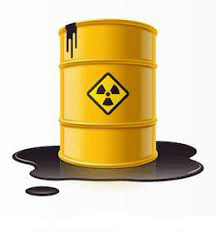 Sandia to put nuclear waste storage canisters to the test, https://www.newswise.com/articles/sandia-to-put-nuclear-waste-storage-canisters-to-the-test, Scientists will explore science of cracks caused by corrosion, 10-Dec-2020 , by Sandia National Laboratories Newswise — ALBUQUERQUE, N.M. — Sandia National Laboratories is outfitting three 22.5-ton, 16.5-feet-long stainless-steel storage canisters with heaters and instrumentation to simulate nuclear waste so researchers can study their durability.
The three canisters, which arrived in mid-November and have never contained any nuclear materials, will be used to study how much salt gathers on canisters over time. Sandia will also study the potential for cracks caused by salt- and stress-induced corrosion with additional canisters that will be delivered during the next stage of the project.
Currently there is not an operating geologic repository in the U.S. for the permanent disposal of spent nuclear fuel. As a result, spent fuel is being stored at commercial nuclear power plants in both storage pools and dry storage canisters. The storage canisters currently holding the spent nuclear fuel were designed to have a useful life of a few decades but will now likely need to be used longer than planned, said Tito Bonano, Sandia’s nuclear energy fuel cycle senior manager.
Data is urgently needed to validate and guide how industry should manage storage canisters for longer than originally anticipated, Bonano said.
“Salt can be present in the ambient air and environment anywhere, not just near the ocean. We need to be able to plan for extended long-term storage of spent nuclear fuel at nuclear power plants for the foreseeable future — it’s a national reality,” he said.
The researchers expect the project could have long-reaching implications for public health and safety, industry practices, regulatory framework and defining future research paths, said Bonano.
The three-year project is funded by the Department of Energy’s Nuclear Energy office. Overall, fifteen never-used, never-irradiated DOE-owned canisters are being distributed for large scale testing to Sandia and two other national laboratories, an industry research institute and an independent storage facility at an existing nuclear power plant.
Waste from nuclear fuel must be stored for more than a million years
Nuclear power plants use uranium pellets inside a metal-cladded tube, called a fuel rod, to power reactors to create the heat needed to make electricity. After the fuel rods can no longer be used in the reactor, they need to be stored onsite until they are taken offsite to another facility and eventually permanently disposed because they will be radioactive for a long time, said Samuel Durbin, a mechanical engineer and Sandia’s canister project lead.
“When fuel is removed from a reactor, it’s very hot, both in temperature and radioactivity” Durbin said. “The utility loads it into a pool for about five years to cool down. After that, the spent fuel can be offloaded into a dry storage canister.”
A storage canister starts as a flat piece of stainless steel that is rolled into a cylinder and then welded where the seams come together. The heat from the welding creates heat-affected zones in the seams of the canister that experience tensile, or pulling, stress. This stress makes these areas around the welds more susceptible to corrosion from salt over time, said Durbin.
Research will test how much salt deposits on canisters over time
Sandia received three canisters Nov. 13. The research team will outfit each of them with 32 electrical heaters to simulate the decay heat, which is heat released as a result of radioactive decay, from the 32 spent fuel assemblies that would typically be stored in this type of canister. No radioactive materials will be used in the testing, Durbin said.
Instruments called thermocouples, which measure temperature, and other sensors for diagnostic testing and surface sampling also will be added, he said.
Once the outfitted canisters have been tested and repacked for transport at Sandia, the team plans to move them to a storage pad at an independent spent fuel storage installation on the West Coast where they will experience the same real-life conditions of in-use canisters. The Sandia team, led by managers Sylvia Saltzstein and Geoff Freeze, Durbin, and chemists/corrosion scientists Charles Bryan and Rebecca Schaller, along with partners from other national laboratories will monitor the test canisters and record surface deposits, especially chloride-bearing salts, for three to more than 10 years, depending on how much the data varies over time.
“Sodium-chloride, or salt, that settles on the surface of spent nuclear-fuel canisters can lead to chloride-induced stress corrosion cracking, and right now there is inadequate data on these surface deposits,” said Durbin.
In real-life storage of nuclear waste, Durbin said the decay heat from the spent fuel creates natural convection around the storage canisters, causing outside air to be drawn over the canister surface. This process helps cool the spent fuel over time. As ambient air is drawn in, salt and other particulates in the air are drawn in as well and can settle on the canister surface. During the test, the electrical heaters installed inside the canisters at Sandia will replicate this decay heat-driven convection without using nuclear materials.
In hot, dry conditions, Durbin said salt deposits alone don’t cause any issues, but over time, as the decay heat decreases and the canister cools, water can condense on the canister surface and a brine can form.
“These conditions can occur nationwide and are seen as precursors to chloride-induced, stress-corrosion cracking. Back when these canisters were being designed, people weren’t thinking about this as an issue because we had a plan for permanent disposal. The current national nuclear waste situation forces canisters to be stored onsite for the foreseeable future, which could be 100 years or longer, so stress corrosion cracking becomes more of a concern,” Durbin said.
In addition to the long-term heating and surface deposition test, Sandia will use up to another three canisters for laboratory-based tests to conduct fundamental research on cracking caused by salt and stress, especially on the welded seams and intersections of the canisters. Researchers will measure the effectiveness of commercially available crack repair and mitigation coatings.
To test these seams, the team will cut the canisters into small segments and test pieces with and without welded seams to study the pre-cursor conditions for salt and stress to cause the corrosion that leads to cracks, he said.
Japan’s power companies consider opening up Aomari nuclear waste site to other utilities
Aomori spent nuclear fuel site may be opened up to other utilities, https://www.japantimes.co.jp/news/2020/12/11/national/shared-nuclear-fuel-facility-a Dec 11, 2020
The Mutsu facility is held by Recyclable-Fuel Storage Co., which is jointly owned by Tokyo Electric Power Company Holdings Inc. and Japan Atomic Power Co. Recyclable-Fuel Storage aims to start facility operations in fiscal 2021, which starts next April.
The federation is in talks with parties including Tepco on allowing power firms other than Tepco and Japan Atomic Power to use the temporary spent fuel storage facility if they pay fees, informed sources said.
The joint use initiative is partly aimed at supporting Kansai Electric Power Co., according to the sources. The Fukui Prefectural Government is urging Kansai Electric, which has nuclear plants in the prefecture, to show by the end of this year a candidate site outside of the prefecture for temporary storage of spent nuclear fuel.
Selecting a candidate location early is a key challenge for Kansai Electric, which heavily relies on nuclear power generation, because it is a condition for local authorities to decide whether to approve the restart of the No. 1 and No. 2 reactors at the firm’s Takahama nuclear plant and the No. 3 reactor at its Mihama plant, all of which have seen more than 40 years pass since the launch of their operations.
“There’s been no contact” from the power industry group about the shared use plan for the temporary storage facility, Mutsu Mayor Soichiro Miyashita told reporters Thursday. “If they are proceeding with the plan within themselves, that shouldn’t be the case.”
A media report said in 2018 that Tepco was considering a joint use of the facility with Kansai Electric and others. The reported plan went nowhere after the mayor opposed it.
Shared use of the facility requires approval by the Aomori Prefectural Government and the city of Mutsu. But it remains to be seen at the moment if such local permission can be obtained.
As of the end of September this year, the amount of spent fuel from nuclear power stations in Japan stood at about 19,000 tons.
Of the total, about 16,000 tons have been kept at locations including storage pools at nuclear power plants. The amount is about 75% of storage capacity as work to reprocess spent nuclear fuel has stalled, a situation stoking concerns among nuclear plant host municipalities.
Three Mile Island – radiation is forever – will nuclear waste storage withstand flooding?
 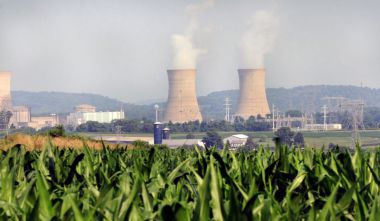 Radiation is forever’: How long will it take to clean up Three Mile Island? [Lancaster Watchdog] lancaster Online, Radiation is forever’: How long will it take to clean up Three Mile Island? [Lancaster Watchdog] lancaster Online, SEAN SAURO | Staff Writer , 6 Dec 20, Traveling Route 441 across Lancaster County’s northwestern border, motorists, for decades, have been able to look out toward the Susquehanna River to see a pair of cooling towers stretching skyward from the now-defunct Three Mile Island nuclear power plant.For almost as long, Eric Epstein said he’s kept a watchful eye, worrying about safety on the island, where a 1979 partial reactor meltdown remains the worst commercial nuclear accident in U.S. history. And Epstein, a Harrisburg-based nuclear watchdog, said those concerns persist even as plant owners move forward to dismantle its reactors — a process likely to take nearly 60 years. Even after that, he said, some nuclear waste is expected to remain onsite, just north of Conoy Township in the river. Plans exist for both, separately owned reactors on the island. Unit 2, the site of the partial meltdown, has remained inactive since 1979. And Unit 1 was taken offline last year. Epstein shared his concerns last week in the days after it was announced that officials at the U.S. Nuclear Regulatory Commission approved a Unit 2 license transfer that would move ownership of the reactor and related assets from FirstEnergy to TMI-2 Solutions. The subsidiary of Utah-based EnergySolutions would lead the decommissioning. That transfer is likely to wrap up by the end of 2020, FirstEnergy spokeswoman Jennifer Young said………………. “Decommissioning work can begin after the license transfer is completed, but TMI-2 Solutions would have to provide a more specific timeline for its projected start date,” NRC spokesman Neil Sheehan said. While most of the highly radioactive fuel was removed from Unit 2 by the mid-1990s, the upcoming decommissioning work is expected to cost at least $1 billion, paid for with ratepayer funds set aside for that purpose. According to an EnergySolutions timeline, the two-phased Unit 2 decommissioning is scheduled for completion in 2037, with “a potential area set aside for waste storage facilities” on the island. All along, Epstein has remained skeptical of the plan for Unit 2, where interior conditions largely remain a mystery due to high radiation levels, which have precluded close inspection. Those fears have only been exacerbated by the idea that waste could be stored on the island, where Epstein believes natural disasters like flooding could lead to released radiation, he said. “The plant was not designed to be a high-level radioactive waste site. Everybody agrees the radioactive waste shouldn’t be on an island,” Epstein said. “This is like putting waste on an airplane with no place to land. At some point, that plane is going to crash.” EnergySolutions officials did not return messages left with them about the decommissioning by Friday afternoon. However, Unit 1 owners at Exelon provide some insight into their separate decommissioning plan, which also will require some on-site storage — likely to begin in 2022, when spent fuel is moved into casks. “Dry cask storage will require robust metal canisters placed in a massive concrete housing,” according to Exelon spokesman David Marcheski. It is storage that officials claim will be able to withstand a 100-year flood. The Unit 1 decommissioning process is expected to wrap up in 2078, costing about $1.2 billion, covered by a related trust fund. https://lancasteronline.com/news/local/radiation-is-forever-how-long-will-it-take-to-clean-up-three-mile-island-lancaster/article_643a5aea-3676-11eb-a87d-1ffabfe61953.html |
|
Texas and New Mexico reject interim nuclear waste storage
 Texas, New Mexico resisting interim nuclear waste storage By Gary Martin Las Vegas Review-Journal, 6 Dec 20, WASHINGTON — President Donald Trump and Congress moved this year to develop interim nuclear waste storage sites, a temporary fix until the 30-year stalemate over Yucca Mountain is settled.But locations in New Mexico and Texas that were once embraced for their potential for jobs and economic development now face local opposition similar to that in Nevada that has resulted in the decadeslong delay in building a permanent repository. Texas, New Mexico resisting interim nuclear waste storage By Gary Martin Las Vegas Review-Journal, 6 Dec 20, WASHINGTON — President Donald Trump and Congress moved this year to develop interim nuclear waste storage sites, a temporary fix until the 30-year stalemate over Yucca Mountain is settled.But locations in New Mexico and Texas that were once embraced for their potential for jobs and economic development now face local opposition similar to that in Nevada that has resulted in the decadeslong delay in building a permanent repository.
Governors in New Mexico and Texas have pleaded with the federal government to stop or delay the process that could place tons of spent nuclear fuel rods in their states. Private groups have proposed to take the spent nuclear fuel and temporarily store the waste at locations near Carlsbad, New Mexico, and west of Odessa in Andrews County, Texas. But the welcome has turned to concern by residents who fear the interim storage of nuclear waste will become permanent if the federal government fails to develop the Yucca Mountain nuclear repository north of Las Vegas, as required by law, or find and develop another suitable location. The New Mexico congressional delegation wrote a letter to the Nuclear Regulatory Commission urging the agency to delay the decision-making process and allow more time for public comment on a license sought by Holtec International to build an interim storage facility. “Any proposal to store commercial spent nuclear fuel raises a number of health, safety and environmental issues,” the delegation wrote. Those issues include “potential impacts on local agriculture and industry, issues related to the transportation of nuclear waste, and disproportionate impacts on Native American communities,” the lawmakers warned. New Mexico Gov. Michelle Lujan Grisham, a Democrat, in a letter to President Donald Trump, said she was opposed to interim storage of nuclear waste, citing the safety of residents. Target for terrorists? In Texas, the facility proposed by Interim Storage Partners has drawn opposition from oil and gas producers, the agriculture industry and Gov. Greg Abbott, a Republican, who said placing the waste near oil fields would make an inviting target for terrorists. Shipping nuclear waste also would present a hazard to public health, Abbott said in letters to Trump and the NRC earlier this year. Meanwhile, environmental groups in both states have lodged their opposition to the proposed plants and urged Lujan Grisham to create a state agency to prevent an interim site from becoming a permanent storage facility for nuclear waste…………. https://www.reviewjournal.com/news/politics-and-government/texas-new-mexico-resisting-interim-nuclear-waste-storage-2206303/
|
|
Hokkaido’s ski areas could lose popularity, due to plans to house nuclear wastes
|
The towns of Suttsu and Kamoenai have both applied for preliminary feasibility surveys to be considered for a site that will store waste from the nation’s nuclear power plants. The cash-starved towns struggling with declining populations are poised to each pocket 2 billion yen ($19 million) promised by the government for taking part in the studies alone. Although whole selection process takes 20 years, the applications have touched off an outpouring of opposition from locals as well as from across the country, including from Hokkaido Gov. Naomichi Suzuki, who assailed the central government for “slapping the face with money.” The concern is especially palpable in the resort towns of Niseko and Kutchan, which are part of the Niseko resort area. “To outsiders, it might as well be Niseko that is undergoing a survey,” said Shinichi Maeda, an owner of a restaurant in Kutchan. “It’s possible that foreign investors who had previously valued Niseko will pull out one by one.” Suttsu is located about 40 km west of the town of Niseko, which will see no economic benefit from the study but will surely be hit by the anxiety the plan will generate………… the possibility of hosting a nuclear waste site, however remote, is enough to rail up opposition. The owner of a tourism business in Kutchan believes in local production and consumption, and uses seafood from Shiribeshi. But that may have to change. “Foreign customers are sensitive,” said the owner. “If the nuclear waste issue gains prominence, it’ll become hard to use” locally made seafood. In Japan, there is still no final repository for nuclear waste — it is stored in interim locations. After the 2011 Fukushima nuclear disaster raised public awareness, countries across the globe have struggled to find permanent places to store the waste. When Kamoenai announced it would apply for an initial survey in October, The Associated Press reported the story with the headline “2 remote Japan towns seek to host nuclear waste storage site.” The article was carried by news outlets all over the world. Last month, five citizens groups presented the Hokkaido governor with a petition signed by 450,000 people opposing the feasibility survey for the two towns. The signatures were collected nationwide. The preliminary studies underway in the two towns are becoming an issue that could undermine tourism throughout Hokkaido……….. |
|
Shortfalls in planning mean that the USA Waste Isolation Pilot Plant could become full
Weather Channel 2nd Dec 2020, The only underground nuclear waste dump in the United States is suffering from shortfalls in planning and staffing that could lead to disruptions at the facility, according to a new report from the Government Accountability Office. The report published last month indicated that the Waste Isolation Pilot Plant near Carlsbad, New Mexico, could become full if the amount of waste shipped to the facility keeps expanding or if a new way of measuring waste is rejected in a pending court challenge, according to the Associated
Press.
The plant, known as the WIPP, was built in the 1980s for the disposal of defense-related nuclear waste, including clothing, tools, rags,
debris, soil and other items contaminated with radioactive elements, according to a fact sheet from the facility. The WIPP’s disposal rooms were carved out of ancient salt beds 2,150 feet below ground.
https://weather.com/news/news/2020-12-02-underground-nuclear-waste-dump-carlsbad-new-mexico
1 This Month
23-25 October – on Zoom – World BEYOND War’s annual global conferenc

To see nuclear-related stories in greater depth and intensity – go to https://nuclearinformation.wordpress.com

Say No to NASA’s Reckless Nuclear Reactor on the Moon
Say No to NASA’s Reckless Nuclear Reactor on the Moon
-
Archives
- October 2026 (160)
- September 2026 (339)
- August 2026 (330)
- July 2026 (355)
- June 2026 (287)
- May 2026 (306)
- April 2026 (356)
- March 2026 (251)
- February 2026 (267)
- January 2026 (308)
- December 2025 (358)
- November 2025 (359)
-
Categories
- 1
- 1 NUCLEAR ISSUES
- business and costs
- climate change
- culture and arts
- ENERGY
- environment
- health
- history
- indigenous issues
- Legal
- marketing of nuclear
- media
- opposition to nuclear
- PERSONAL STORIES
- politics
- politics international
- Religion and ethics
- safety
- secrets,lies and civil liberties
- spinbuster
- technology
- Uranium
- wastes
- weapons and war
- Women
- 2 WORLD
- ACTION
- AFRICA
- Atrocities
- AUSTRALIA
- Christina's notes
- Christina's themes
- culture and arts
- Events
- Fuk 2022
- Fuk 2023
- Fukushima 2017
- Fukushima 2018
- fukushima 2019
- Fukushima 2020
- Fukushima 2021
- general
- global warming
- Humour (God we need it)
- Nuclear
- RARE EARTHS
- Reference
- resources – print
- Resources -audiovicual
- Weekly Newsletter
- World
- World Nuclear
- YouTube
-
RSS
Entries RSS
Comments RSS

