Radiation illnesses and COVID-19 in the Navajo Nation
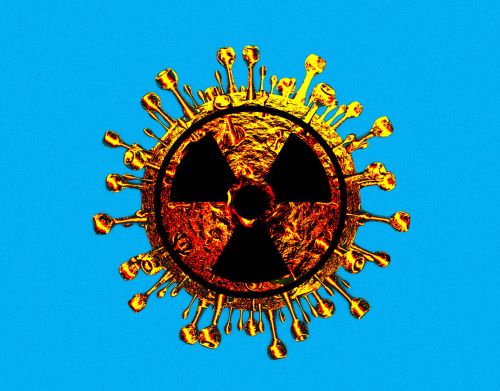 Radiation illnesses and COVID-19 in the Navajo Nation, Bulletin of the Atomic Scientists, By Jayita Sarkar, Caitlin Meyer, February 3, 2021 The COVID-19 pandemic is wiping out Indigenous elders and with them the cultural identity of Indigenous communities in the United States. But on lands that sprawl across a vast area of the American West, the Navajo (or Diné) are dealing not just with the pandemic, but also with another, related public health crisis. The US Centers for Disease Control and Prevention says COVID-19 is killing Native Americans at nearly three times the rate of whites, and on the Navajo Nation itself, about 30,000 people have tested positive for the coronavirus and roughly 1,000 have died. But among the Diné, the coronavirus is also spreading through a population that decades of unsafe uranium mining and contaminated groundwater has left sick and vulnerable.
In Indigenous lands where nuclear weapons testing took place during the Cold War and the legacy of uranium mining persists, Indigenous people are suffering from a double whammy of long-term illnesses from radiation exposure and the COVID-19 pandemic. Yet, we have not witnessed in the mainstream media and policy outlets a frank discussion of how the two public health crises have created an intractable situation for Indigenous communities. The Diné are drinking poisoned water, putting them at risk for more severe coronavirus infections.
From 1944 until 1986, 30 million tons of uranium ore was extracted on Navajo lands. At present, there are more than 520 abandoned uranium mines, which for the Diné represents both their nuclear past as well as their radioactive present in the form of elevated levels of radiation in nearby homes and water sources. Due to over four decades of uranium mining that supplied the US government and industry for nuclear weapons and energy, radiation illnesses characterize everyday Diné life.
The water crisis Continue reading
Kepco seeks prefectural government approval to restart aging nuclear reactors
|
Mayor gives Japan’s first approval for restart of reactors over 40 years old, Japan Times, BY ERIC JOHNSTON, STAFF WRITER, Feb 1, 2021
OSAKA – The mayor of the town of Takahama in Fukui Prefecture granted permission Monday for the restart of the Nos. 1 and 2 reactors at Kansai Electric Power Co.’s Takahama Nuclear Power Plant, becoming the first local leader in the nation to approve use of nuclear reactors more than 40 years old. The Takahama No. 1 reactor is 46 years old and the No. 2 reactor is 45. Kepco will now seek restart approval from the prefectural government. But with questions still unanswered about where spent fuel generated by the reactors will be stored, it is unclear whether the utility’s plans to have both reactors online this spring can be realized. Monday’s formal approval came after Takahama Mayor Yutaka Nose called on the central government, in an online meeting Friday with industry minister Hiroshi Kajiyama, to provide assistance to the town and received assurance that it would. Kajiyama said the government wanted to provide the maximum amount of support possible, and was aligned with what Takahama was seeking in terms of a local revitalization policy. In exchange for granting restart permission, Nose asked the central government to raise the amount of funding it provides the town for hosting the Takahama plant, which has four reactors in total, as well as for various local projects. While not legally required, local approval for reactor restarts by utilities is established policy, and local government heads often negotiate on financial assistance measures before giving their decision. The Takahama Municipal Assembly approved the restart of the reactors in November. Kepco wants to restart the No. 1 reactor in March and the No. 2 reactor in May at the earliest. With Nose giving the green light, the utility will next seek approval from the Fukui Prefectural Assembly and Fukui Gov. Tatsuji Sugimoto — but that could prove more problematic. Sugimoto has said that in order for him to give his approval, Kepco will need to indicate where, outside Fukui Prefecture, it plans to build a midterm storage facility for spent nuclear fuel. But with no other localities willing to host such a facility, Kepco has yet to do that. In December, the Federation of Electric Power Companies, which consists of 10 major utilities including Kepco, proposed that a storage facility in the city of Mutsu, Aomori Prefecture, scheduled to go into operation during fiscal 2021 be used jointly for midterm spent fuel storage. However, Mutsu Mayor Soichiro Miyashita said he would never allow Kepco’s spent fuel to be stored there. The interim facility, Recyclable-Fuel Storage Co., was established by Tokyo Electric Power Co. and Japan Atomic Power Co. to store spent fuel from their reactors only. The fuel is scheduled to remain there for up to 50 years before it must be transferred to a final disposal facility. In addition to the Takahama reactors, Kepco hopes to restart its Mihama No. 3 reactor in the town of Mihama, Fukui Prefecture, which is 44 years old. But the Fukui governor also wants to know where spent fuel from that reactor will be contained — again, outside the prefecture. Kepco apologized to Sugimoto in December for not being able to offer a report on where such spent fuel would be sent https://www.japantimes.co.jp/news/2021/02/01/national/takahama-nuclear-reactor-restart-approval/ |
|
Fears that a USA ”interim” nuclear waste dump may become permanent
|
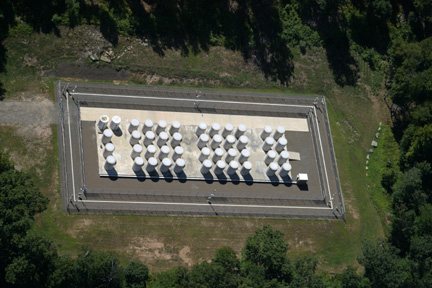
Is Waterford’s nuclear waste dump status permanent? January 31. 2021 The Day , The highly radioactive nuclear waste being stored at Millstone Power Station in Waterford, as well as the nuclear material left behind in Haddam after the Connecticut Yankee plant was dismantled, isn’t going anywhere anytime soon. Maybe never. And that’s not acceptable. The lack of concern about the nuclear waste storage problem was one of my takeaways from the editorial board’s meeting last week with leaders from Millstone-owner Dominion Energy, held virtually of course. Chief Nuclear Officer Dan Stoddard seemed too comfortable with the status quo, which has altered Millstone from a nuclear station to a nuclear station and nuclear waste storage facility. I would have felt more comfortable if Stoddard expressed some level of anger over the failure of the federal government to meet its obligation to remove the material and place it in safe storage for the thousands of years it will continue to emit dangerous levels of radiation. But instead of voicing any urgency to get the stuff out of there, Stoddard offered assurances that the metal canisters, encased in concrete, that secure the spent nuclear fuel rods and block the radiation “will be secure for decades and certainly longer.” Only when I reminded him that leaving the material there for decades was not the deal Waterford and Connecticut agreed to when the plants were licensed, did he say he was “sure” that “eventually” the federal government would meet its obligation and remove the nuclear waste. I don’t know why he is so sure. The deal when nuclear reactors were built across the country was that the fuel rods, when their energy was spent, would be temporarily stored in storage pools within the plants. In time they would be placed in canisters and transferred to Yucca Mountain in Nevada, on which the Department of Energy has spent $7.5 billion, collected from electric ratepayers, to build a safe depository deep within the mountain. …….. An alternative idea has surfaced of moving waste to a couple of other sites, rural locations in Texas and New Mexico have been discussed, before a consensus can be reached on what do with it. But I see no urgency, anywhere, to tackle the challenge. No one wants to deal with the outcry that would result as this stuff is moved across the country from nearly a hundred locations, even if the science shows it can be done safely. And as Stoddard told us, the situation is causing no fiscal pain for Dominion and other nuclear energy companies. The U.S. Department of Energy was required by a law passed by Congress to begin removing and permanently disposing of the spent fuel in 1998. When that didn’t happen, energy companies sued, and won. As a result, DOE is obligated to cover all the costs of storing the nuclear waste on site. There are 31 storage containers at Millstone, each with 32 spent nuclear fuel assemblies. Dominion has built a concrete pad large enough for 135 canisters. On a pad in Haddam, along the Connecticut River, 43 steel-reinforced concrete casks hold all the fuel from the 28 years Connecticut Yankee operated. These containers are monitored and secured and extremely robust in their design. They are safe, for now. But their contents will continue to emit dangerous levels of radiation for hundreds and thousands of years. Who knows what dystopian future might await humankind. Who could possibly assure, over that expanse of time, that tons of nuclear waste located along Long Island Sound and a major river that flows through all of New England will remain safely contained. No one can. Which is why the stuff should be entombed deep in a geologically stable depository as planned. Follow the science. https://www.theday.com/article/20210131/OP04/210139981 |
|
In its failed search for a national dump site, UK govt rebrands its nuclear waste agency, promises honesty this time.
 Cumbria Trust 30th Jan 2021, Today marks the 8th anniversary of the last attempt to bury the UK’s nuclear waste in Cumbria. On 30th January 2013, Eddie Martin, then Leader of Cumbria County Council, made an impassioned speech to his Cabinet and urged them to call a halt to the search in Cumbria.
The Cabinet agreed and by 7 votes to 3 the process known as Managing Radioactive Waste Safely (MRWS) was stopped. Since West Cumbria was the only area in the country to volunteer, that decision also marked the end of the national search process.
During the 8 years since that decision, the government have been working on a new search process and have been busily rebranding in an attempt to distance themselves from some of the less honest practices which were used during the failed MRWS process.
This time the developer is called Radioactive Waste Management (RWM), a subsidiary of the Nuclear Decommissioning Authority. RWM frequently talk about transparency and openness of the new process, and to be fair we have seen some improvements in our discussions with them, but our suspicion remains that old habits die hard.
Biden’s nominee as Energy Secretary opposes Yucca Mountain as nuclear waste site
World Nuclear News 29th Jan 2021, The Biden Administration opposes the use of Yucca Mountain for the storage of used nuclear fuel and is committed to developing “safe and workable” alternatives, US President Joe Biden’s nominee for the position of energy
secretary has said. Jennifer Granholm made her remarks at a Senate Committee on Energy and Natural Resources hearing to consider her nomination, which was held on 27 January.
https://www.world-nuclear-news.org/Articles/Biden-nominee-confirms-opposition-to-Yucca-Mountai
Isle of Man Wakes Up to What is Planned – SUB SEA NUCLEAR DUMP — Keep Cumbrian Coal in the Hole

At last there is some Grrrrr over the plan to dump heat generating nuclear waste under the Irish Sea – so far the plan appears to be to looking in all seriousness at having above surface nuclear sprawl at Ghyll Scuar quarry ( on the edge of Millom Deer Park ) with the drift tunnels shunting planetary destroying nuclear wastes under the Marine Conservation Zone outwards towards the Isle of Man. Whats not to like? EVERYTHING!
Good on the Isle of Man Examiner for this headline and write up. To read the article in full (for £1) go to the Isle of Man Examiner
Isle of Man Wakes Up to What is Planned – SUB SEA NUCLEAR DUMP — Keep Cumbrian Coal in the Hole
From both UK and Ireland – calls for independent review into dumping Hinkley nuclear mud into the sea
Nation Cymru 29th Jan 2021, Campaigners on both sides of the Bristol Channel have called for a full independent review into proposals to dump mud from the construction of a
nuclear power plant in the sea off the coast of Cardiff, following the
announcement that a new dumping site off the Somerset coast is also being
considered.
Despite public opposition, in 2018 the Welsh Government
permitted EDF to dump large quantities of mud dredged from construction of
the new Hinkley C nuclear power plant at the Cardiff Deep Grounds inshore
disposal site. EDF insisted the site- only two miles from Cardiff Bay –
was the only suitable site available in the Bristol Channel.
Earlier this month EDF announced its intention to apply to the Marine Management
Organisation (MMO) for a license to dump at Portishead, while also making a
further application to dump at the Cardiff site. No reason has been given
by EDF for the Portishead proposal.
In a joint statement issued with Stop Hinkley and the Geiger Bay campaign, UK & Ireland Nuclear Free LocalAuthorities Steering Committee Chair, Councillor David Blackburn said:
“NFLA was surprised to hear that EDF are now seeking to look at dumping
mud from the Hinkley Point site off the Somerset coast in addition to
continuing to look to dump off the south Wales coast.
Huge legacy of radioactive trash in UK, much of it already in Cumbria
Whitehaven News 30th January 2021, CHRIS WHITESIDE County councillor for Egremont North & St Bees (Conservative) Any consideration of the issue of nuclear waste in Cumbria
must start by recognising one basic fact. No matter how much some people
might wish it were otherwise, Britain already has thousands of tons of
low-level waste material, and a substantial amount of high-level nuclear
material, as a legacy of our existing and historical nuclear programmes.
And much of it is already in Cumbria.
Imagining that the tens of thousands
of cubic metres of nuclear material which is already here at sites like
Sellafield and the LLWR will somehow magically go away if you put up
posters demanding that there should be no nuclear waste in Cumbria or,
worse, try to sabotage any attempt to get a rational discussion going about
how we can most safely manage the nuclear waste which we already have by
vilifying anyone who takes part in a conversation about it, is not just
incredibly stupid but utterly irresponsible.
https://www.whitehavennews.co.uk/news/19051819.whitehaven-news-letters-nuclear-waste-years/
Options for USA nuclear radioactive trash policy


Forging a Path Forward on U.S. Nuclear Waste Management: Options for Policy Makers, Columbia University, BY MATT BOWEN |JANUARY 28, 2021
“……..A new report, part of wider work on nuclear energy at Columbia University’s Center on Global Energy Policy, explains how the United States reached its current stalemate over nuclear waste disposal. It then examines productive approaches in other countries and a few domestic ones that could guide U.S. policy makers through options for improving the prospects of spent nuclear fuel and high-level radioactive waste disposal going forward, including the following:
-
Create a new organization whose sole mission is nuclear waste management (and whose approach is consent-based). Since the 1970s, reports have noted that a single-purpose organization would have a number of advantages over a program residing within Department of Energy, which has multiple missions and competing priorities. Accordingly, Congress could pass legislation to create a separate nuclear waste management organization that has full access to needed funding and employs a consent-based approach to achieve greater support from state and local communities for the siting of facilities.
-
-
Improve the funding structure of the U.S. nuclear waste program. The program was supposed to be self-financing, with owners of nuclear power plants paying into a Nuclear Waste Fund that would cover the costs of management and disposal. However, due in part to budget laws enacted in the 1980s and 1990s, a lack of access to needed funding has arisen. If the first option of creating a new organization is not achievable in the near-term, Congress could at least improve the waste program’s funding structure. -
Pursue disposal of U.S. defense waste first. There could be greater public acceptance for the disposal of defense-related waste over commercial waste due to the national security missions involved and patriotic sensibilities. Momentum in one area of waste management could lead to the overall program’s advancement, as a successful endeavor for defense waste disposal would inform and encourage commercial waste efforts. Nuclear waste from the defense sector also has some technical characteristics — the inventory being bounded, smaller, cooler, and with less potential for reuse — that may argue for its disposal ahead of power plant spent nuclear fuel.
-
-
Prepare for a large-scale transportation program. To date, the transportation of nuclear waste has been very safe. However, there are additional steps the federal government could take to prepare for the eventual larger-scale transportation campaign of spent nuclear fuel to either a consolidated interim storage site or a geologic repository. Such options include amending the Nuclear Waste Policy Act to allow states to recover the full costs of planning and operations for transportation across their borders and ensuring an independent regulator has authority over the transportation regime to strengthen public confidence in the program.
-
Update generic regulatory standards for future geologic repositories. There are two sets of U.S. regulatory standards for spent nuclear fuel and high-level radioactive waste disposal: one for Yucca Mountain and one for all other sites. The Environmental Protection Agency, Nuclear Regulatory Commission, and Department of Energy could resolve inconsistencies between regulations and ensure that new generic regulations for future disposal facilities are flexible enough to cover novel approaches (e.g., deep boreholes).
-
-
Negotiate an agreement with Nevada on Yucca Mountain. The U.S. government could pursue, concurrent with new siting efforts, negotiating an agreement with Nevada to investigate, for example, the disposal of a more limited waste inventory at Yucca Mountain. Nye County, which is where the site is located, sees a disposal facility there as potentially safe and is interested in the associated economic development. Nevada’s long-standing concerns regarding the project would have to be addressed to gain broader public support within the state.
Read the full report here. https://blogs.ei.columbia.edu/2021/01/28/nuclear-waste-management-report/
-
-
-
Italian government lists 61 potential sites for nuclear waste dumping
 Italy begins search for national radwaste storage site, WNN, 29 January 2021A list of 67 potential sites for a radioactive waste storage facility has been published by Societa Gestione Impianti Nucleari SpA (Sogin), the Italian state-owned company responsible for dismantling the country’s nuclear power plants. The publication of the list on 5 January, announced in five national newspapers, started a period of public consultation……
The 67 potential sites are located in seven regions: Piedmont, Tuscany, Lazio, Puglia, Basilicata, Sardinia and Sicily. ……..
The planned surface-level waste store and technology park will be built in an area of about 150 hectares, of which 110 are dedicated to the repository and 40 to the park. The store will have the capacity to hold about 78,000 cubic meters of very low and low-level radioactive waste, as well as about 17,000 cubic meters of intermediate and high-level waste, pending the availability of a deep geological repository suitable for its disposal. ……..
Italy’s radioactive waste is currently stored in about 20 temporary sites, which are not suitable for final disposal. In addition to waste generated through the operation and decommissioning of its fuel cycle facilities and nuclear power plants, it includes radioactive wastes from medical, industrial and research activities………https://www.world-nuclear-news.org/Articles/Italy-begins-search-for-national-radwaste-storage
EDF plans 2 new sites for dumping radioactive mud dredged from Hinkley Point
 NFLA 27th Jan 2021, The UK & Ireland Nuclear Free Local Authorities (NFLA), the ‘Stop
Hinkley’ campaign and the ‘Geiger Bay’ campaign have been involved in
raising concerns over the dumping of large amounts of dredged materials
from the EDF site at Hinkley Point into sites between the south Wales and
the Somerset coast.
building a new nuclear reactor at Hinkley Point, has announced that the
Portishead marine disposal site LU070 is now a possible dumping ground for
the seabed sediment it is seeking to dredge from Bridgwater Bay in order to
sink cooling water intake and outfall tunnels for the new reactors at
Hinkley Point.
Government permitted EDF to dump large quantities of Hinkley C dredged mud
at the Cardiff Deep Grounds inshore disposal site, only 2 miles off the
Cardiff Bay sea front.
suitable site available in the Bristol Channel. However, EDF has recently
announced its intention to apply to the Marine Management Organisation
(MMO) for a license to dump at Portishead, while also making a further
application to dump at the existing Welsh site. No reason has been given by
EDF for the Portishead proposal.
So called “Improved” process for Cumbrian nuclear waste dump removes local right of veto

 Keep Cumbrian Coal in the Hole 21st Jan 2021 Copeland “Working Group” along with Allerdale “Working Group” are ostensibly the “local support” for a Geological Disposal Facility in Cumbria. They are enthusiastically going along with the ‘new and improved’ process of steps towards Geological Disposal of Heat Generating
Nuclear wastes.
Nuclear waste: corruption in a small Australian town

Kimba’s Maree Barford new nuclear community liaison officer, Eyre Peninsula Tribune, Kathrine Catanzariti. AUGUST 24 2017
A Kimba local has been given the job of liaising between the community and government on all things nuclear.
National Radioactive Waste Management Facility Taskforce general manager Bruce McCleary announced on Thursday Maree Barford had been employed as community liaison officer – the first job created as a result of the community consulation on a potential National Radioactive Waste Management Facility at Kimba.
The announcement was made at the opening of a new project office in Kimba.
Mrs Barford moved to Kimba in December 2014 with her husband Shaun after they bought the lease for the Kimba Gateway Hotel.
Her role will be to liaise between the community and the government.
“I’ll be engaging with the community and then letting the government know what is happening in the community and their views,” Mrs Barford said.
She will start her role on Monday, working full-time from the project office.
“I think I can be the voice for the community, being the link between the town and the government.” ……
Barford would provide a permanent, local presence to help keep the community informed and involved in all activities, alongside the project team and other experts who would continue to visit Kimba……..
UK govt and Japan’s TEPCO to work together on robots to clean up Sellafield an Fukushima’s nuclear pollution
Professional Engineering, Dangerous radioactive material from Fukushima and Sellafield will be retrieved by robots thanks to a new collaboration between the UK and Japan.
The £12m LongOps project is also aimed at automating aspects of nuclear fusion energy production, alongside decommissioning goals.
The four-year research collaboration will use long-reach robotic arms to make decommissioning faster and safer at Tepco’s Fukushima Daiichi reactors in Japan and at Sellafield in the UK.
The Fukushima Daiichi nuclear disaster saw a triple meltdown, three hydrogen explosions and the release of radioactive material after the loss of reactor core cooling following the 2011 earthquake and tsunami.
The Sellafield site in Cumbria is used for nuclear fuel reprocessing and storage, as well as ongoing decommissioning of previous reactors and facilities. There were 21 serious incidents of off-site radiological releases at Sellafield between 1950 and 2000, according to a paper in the Journal of Radiological Protection.
The new project will be led by the UK Atomic Energy Authority’s Remote Applications in Challenging Environments (Race) facility. It will be funded equally by UK Research and Innovation (UKRI), the UK Nuclear Decommissioning Authority (NDA) and Japan’s Tokyo Electric Power Company (Tepco). ….
The decommissioning of legacy nuclear facilities and fusion facilities are complex large-scale projects that are time-intensive to accomplish safely. Using robotics allows teams to keep human workers out of danger. …… https://www.imeche.org/news/news-article/uk-and-japan-tackle-legacy-of-fukushima-and-sellafield-with-robotic-collaboration
Radioactive releases from the Golfech nuclear power plant accumulate downstream
 20minutes 19th Jan 2021, A study by Criirad, an independent laboratory, shows that radioactive releases from the Golfech nuclear power plant accumulate downstream in the
Garonne. The presence of tritium or carbon 14 in aquatic plants remains
below regulatory standards. For environmental protection associations, the
accumulation of this radioactive waste, whose longevity is important, poses
a problem.
1 This Month
23-25 October – on Zoom – World BEYOND War’s annual global conferenc

To see nuclear-related stories in greater depth and intensity – go to https://nuclearinformation.wordpress.com

Say No to NASA’s Reckless Nuclear Reactor on the Moon
Say No to NASA’s Reckless Nuclear Reactor on the Moon
-
Archives
- October 2026 (160)
- September 2026 (339)
- August 2026 (330)
- July 2026 (355)
- June 2026 (287)
- May 2026 (306)
- April 2026 (356)
- March 2026 (251)
- February 2026 (267)
- January 2026 (308)
- December 2025 (358)
- November 2025 (359)
-
Categories
- 1
- 1 NUCLEAR ISSUES
- business and costs
- climate change
- culture and arts
- ENERGY
- environment
- health
- history
- indigenous issues
- Legal
- marketing of nuclear
- media
- opposition to nuclear
- PERSONAL STORIES
- politics
- politics international
- Religion and ethics
- safety
- secrets,lies and civil liberties
- spinbuster
- technology
- Uranium
- wastes
- weapons and war
- Women
- 2 WORLD
- ACTION
- AFRICA
- Atrocities
- AUSTRALIA
- Christina's notes
- Christina's themes
- culture and arts
- Events
- Fuk 2022
- Fuk 2023
- Fukushima 2017
- Fukushima 2018
- fukushima 2019
- Fukushima 2020
- Fukushima 2021
- general
- global warming
- Humour (God we need it)
- Nuclear
- RARE EARTHS
- Reference
- resources – print
- Resources -audiovicual
- Weekly Newsletter
- World
- World Nuclear
- YouTube
-
RSS
Entries RSS
Comments RSS

