nuclear-news

The News That Matters about the Nuclear Industry Fukushima Chernobyl Mayak Three Mile Island Atomic Testing Radiation Isotope

Is nuclear waste safely managed and disposed of so that it no longer poses any danger?

Fukushima Nuclear Disaster Nearly ‘Ended The Japanese State’, Radioactive Waste Specialist Explains, Sputnik News,   by Mohamed Elmaazi  12 Mar 21,……….How is it that nuclear waste safely managed and disposed of so that it no longer poses any danger?

Kevin Kamps: Well, it’s not. We don’t know what to do with it. High-level radioactive waste is stored in indoor wet storage pools. That’s where the majority of American high-level radioactive waste is stored. What almost happened at Fukushima Daiichi, another lucky break, was that the wet indoor storage pool at unit four nearly caught fire, and it was sheer luck that it did not. And just to give you an idea of what that could have meant for Japan, there have been 160,000 nuclear evacuees due to the meltdowns, the failures of the containments.

If that pool had caught fire, and pools are not even inside containment, the Japanese prime minister serving at the time, Naoto Kan, a year after the disaster began, admitted that he had a secret contingency plan, if that pool had caught fire, to evacuate 35 million to 50 million people from North-eastern Japan and metro Tokyo. He said it would have been the end of the Japanese state.

Here in the United States where the majority of our high-level radioactive waste is still in this vulnerable indoor wet pool storage, our pools are much more densely packed than Fukushima Daiichi Unit four was on March 11th, 2011. So, we don’t have an answer. We do not have deep geologic disposal repositories. Yucca mountain, Nevada, has proven to be a failure. Besides the Western Shoshone Indians [Native Americans] did not consent, it violated their treaty rights to that site, but it’s also scientifically unsuitable. So, we’re right where we began in 1942, when Enrico Fermi first split the atom, created the first high-level radioactive waste during the Manhattan Project race for the atomic bomb. We don’t know what to do with the first cup full of high-level radioactive waste in this country.  https://sputniknews.com/interviews/202103111082310108-fukushima-nuclear-disaster-nearly-ended-the-japanese-state-radioactive-waste-specialist-explains/

March 13, 2021 Posted by | 2 WORLD, wastes | Leave a comment

The long-term problem of “peaceful” plutonium 

March 11, 2021 Posted by | - plutonium, 2 WORLD | Leave a comment

Problem in accepting higher level radioactive wastes in Texas

March 11, 2021 Posted by | USA, wastes | Leave a comment

How to dispose of 50 tons of weapons-grade plutonium for 10,000 years?

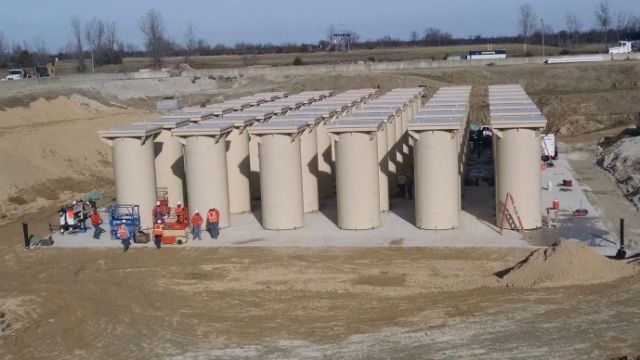
The need for a long-term commitment to plutonium disposal. The Energy Department faces the daunting and unprecedented task of geologically disposing of tens of tons of weapons-grade plutonium, so it can never be used again, while ensuring its toxic dangers do not threaten the environment over a time period longer than the existence of human civilization.

March 9, 2021 Posted by | - plutonium, thorium, USA | Leave a comment

Sorry saga of America’s plutonium waste problems


Can the Energy Department store 50 tons of weapons-grade plutonium for 10,000 years?  
Robert Alvarez Bulletin of the Atomic Scientists, 8 Mar 21,

”…………The US-Russia plutonium disposal disagreement.

The end of the Cold War led to deep cuts in the US and Russian nuclear arsenals, and in 1993 President Clinton issued a directive declaring that the United States is “committed to eliminating, where possible, the accumulation of stockpiles of highly enriched uranium and plutonium.” In September 2000, the United States and Russia signed the Plutonium Management Disposition Agreement, under which 34 metric tons of plutonium from weapons would be blended with uranium and serve as mixed-oxide or MOX reactor fuel to produce electricity.

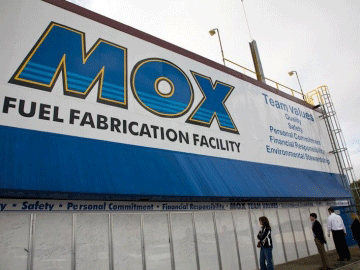
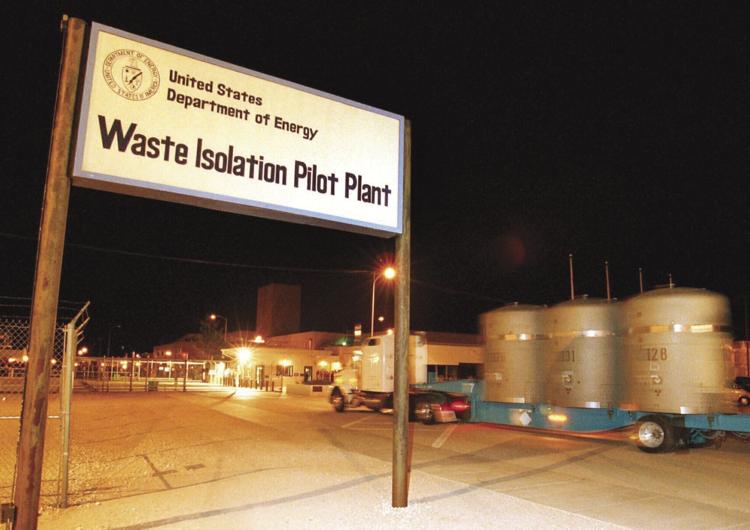
Construction on the Mixed Oxide Fuel Fabrication Plant at the Savannah River Site began in 2007, but  the United States abandoned the project because of delays and estimated cost overruns of $30 billion to $50 billion. After a “Red Team” expert review in 2015, the Energy Department decided to pursue a “dilute and dispose” option for storing plutonium, which, the team reported, would cost about half as much as the MOX project. Plutonium from weapons and other forms would be converted from metal to oxide, diluted with a secret adulterant, and then placed  a special container for shipment and disposal at WIPP.
In April of that year, Russian President Vladimir Putin took issue with the US decision, saying it “is not what we agreed on.” The dilute-and-dispose option for excess plutonium does not meet the same level of proliferation resistance as the 300-year radiation barrier provided by the “spent fuel standard”; within a few decades after emplacement, radiations levels could fall low enough to allow the plutonium to be recovered, in theory. But the salt formation at WIPP is expected to slowly collapse and seal off the drums of waste. Just the same, in October 2016 Putin suspended implementation of the plutonium disposition agreement “due to Washington’s unfriendly actions toward Russia.”

The dilute and dispose project.

The Energy Department optimistically estimates that its dilution and disposal project will start up in 2027 and store 34 metric tons of weapons-grade plutonium by 2049, at a cost of $18 billion. That time estimate seems likely to be unrealistic; according to the Institute for Defense Analysis, “we could find no successful historical major project that both costs more than $700 million and achieved [Energy Department project startup] … in less than 16 years.”

The dilute and dispose project i

  • The Pantex weapons assembly and disassembly plant near Amarillo, Texas, where thousands of pits and other forms of plutonium have to be prepared for safe and secure shipment to Los Alamos National Laboratory (LANL) in New Mexico. The majority of the plutonium at Pantex is stored in facilities at that were built in the 1940s. In 2010 and 2017, unexpected 2,000-year rains flooded a major plutonium storage area with several inches of water, which shut down the plant. It cost of hundreds of millions of dollars to deal with about 1,000 containers affected by the flooding.
  • At the Los Alamos National Laboratory, pits will be converted from metal to an oxide that resembles a yellow-to-olive-green talcum-like powder, which is highly dispersible if it escapes from leaking glove boxes. The conversion process takes place at the PF-4 facility, a 69-year-old complex where the Energy Department has a major multibillion-dollar project underway to upgrade aged processes to produce new plutonium bomb triggers. In 2020, a panel of the National Academies of Science warned that “LANL may be a major bottleneck” impacting the plutonium disposal mission. The disposal and production projects could be on a collision course by the middle of this decade, when both are planned to scale up by 10 times.
    • Once Los Alamos produces plutonium oxides, they will be sent to the Savannah River Site in South Carolina, where the plutonium will be diluted and mixed with a secret adulterant, sometimes via the use of mortars and pestles. About 166,000 specially designed drums will be filled with the dilute fissile material. This task is a tall order for the Savannah site, where the round-the-clock work is expected to scale up by 10 times in a facility that officially exceeded its design life years ago. The facility will be almost 100 years old by 2049 when the dilute and disposal project is expected to be completed.
    • Once the drums are filled, commercial trucks are expected to transport them across the country, from South Carolina to New Mexico and WIPP, in more than 3,888 shipments.
    • As it plans to dispose of its excess plutonium, the Energy Department has, notably, paid little attention to inspections and verification by the International Atomic Energy Agency, a key element of the Nuclear Non-Proliferation Treaty. As noted by the report of an expert panel of the National Research Council, “IAEA monitoring and inspections are an important component of the [Plutonium Management and Disposition Agreement with Russia]  requirements, and they could also provide enhanced public and international confidence that the material is properly accounted for and emplaced in WIPP.”

      Plutonium disposal beyond dilute and dispose.

    •  Over the past three years, WIPP and the nearby area have become ground zero for several storage and disposal plans for the bulk of civilian and military radioactive wastes. In addition to trans-uranic wastes set for WIPP and plutonium related to weapons production, the Energy Department seeks to dispose of six tons of fuel-grade plutonium from its research and development program, sludge from 15 of Hanford’s high-level radioactive waste tanks, trans-uranic waste generated from the production of new plutonium pits, and other radioactive waste.
    • Even after the Energy Department recently recalculated its excess plutonium and other radioactive wastes, resulting in a 30 percent reduction in the total volume to be sent to WIPP, the federal statutory limit set in the Land Withdrawal Act, which authorized the opening of WIPP, will be exceeded by these planned disposal efforts. Congress would have to amend the law to expand the volume, set for WIPP at 175,564 cubic feet, by as much as than 50 percent to accommodate all the waste. Moreover, it appears that new plutonium pit production is projected to generate huge amounts more waste.Lurking in the shadows, 71 miles from the WIPP, sits an Energy Department effort to dispose of as much as 500,000 gallons of grouted wastes from Hanford’s high-level radioactive waste tanks at the Waste Control Specialists landfill in Andrews County Texas.
    • That firm is also seeking a license from the Nuclear Regulatory Commission to establish centralized interim storage of spent nuclear fuel from the nation’s power reactor fleet. So, too, is the Holtec Corporation with a proposed spent nuclear fuel storage site 16 miles from WIPP in Lea County, New Mexico.If these interim storage efforts succeed, by mid-century up to 10,000 spent fuel cannisters containing nearly the entire US commercial spent nuclear fuel inventory will be transported across the country for storage near WIPP. They may sit there for more than 100 years. (See sidebar: “The long-term problem of “peaceful” plutonium.) If these plans are realized, WIPP and the nearby area will have become the recipients of an enormous, decades-long, radioactive-waste-transport funnel directing the bulk of the nation’s commercial and military radioactive detritus to New Mexico and far West Texas……… https://thebulletin.org/2021/03/can-the-energy-department-store-50-tons-of-plutonium-for-10000-years/#.YEa37PTkUIk.twitter

March 9, 2021 Posted by | - plutonium, Reference, USA | Leave a comment

Fukushima wrecked nuclear plant: area remains a health and environmental disaster

Decade After Fukushima Disaster, Greenpeace Sees Cleanup Failure, Bloomberg Green,  By

  •  Land identified for cleanup remains contaminated: Study
  •  Long-term threat to human and environmental health remains

Ten years after the worst nuclear accident since Chernobyl, land Japan identified for cleanup from the triple reactor meltdown of the Fukushima Dai-Ichi atomic power plant remains contaminated, according to a report from Greenpeace.

In addition, Greenpeace said its own radiation surveys conducted over the last decade have consistently found readings above government target levels, including in areas that have been reopened to the public. The lifting of evacuation orders in places where radiation remains above safe levels potentially exposes people to an increased risk of cancer, the report said.

On average, just 15% of land in the “Special Decontamination Area,” which is home to several municipalities, has been cleaned up, according to the environmental advocacy group’s analysis of government data. That’s despite the government’s claims that the area has largely been decontaminated, the group said.

……..While the government has been steadily lifting evacuation orders on towns since 2014, roughly 36,000 people are still displaced.

Greenpeace recommended that Japan suspend the current return policy, which “ignore science-based analysis, including potential lifetime exposure risks to the population” and abandon plans to lift evacuation orders in six municipalities. https://www.bloomberg.com/news/articles/2021-03-04/decade-after-fukushima-disaster-greenpeace-sees-cleanup-failure?s=09

March 6, 2021 Posted by | decommission reactor, Fukushima continuing | Leave a comment

Hinkley Point B nuclear station to close ‘early’ due to aging graphite blocks

Nuclear Engineering International 3rd March 2021, REPORTS IN THE UK THAT EDF Energy’s Hinkley Point B station would close ‘early’, in 2022, sounded a strange note for nuclear industry veterans. They knew that the venerable advanced gas-cooled reactor (AGR) on the west coast, on its startup in 1979, was originally expected to have a lifetime of around 25 years.
But in fact, it has been in operation for 40 years and could have more than one more year remaining, if owner EDF Energy takes it to its final end date in mid 2022. But those newspapers had noted that EDF  had hoped to delay final shutdown until 2023. For longstanding opponents of the plant, however, closure comes not a moment too soon — and they believe equally that operation should end at the UK’s remaining AGRs.
At issue is the interlocking graphite blocks that in the AGR design form the reactor core. Opponents argue that years of irradiation have caused so much damage to the blocks that the plants should be out of operation. This is indeed one of the ageing issues that affects AGRs, but the situation, and the decision on whether to close the plant, is more complicated.

https://www.neimagazine.com/features/featurewhy-close-hinkley-point-b-early-8565897/

March 6, 2021 Posted by | decommission reactor, safety, UK | Leave a comment

Japan’s daunting task – to decommission Fukushima nuclear plant, over many decades

March 6, 2021 Posted by | decommission reactor, Fukushima continuing | Leave a comment

Concern about the marketing of radioactively contaminated scrap metal

NFLA 4th March 2021, The UK & Ireland Nuclear Free Local Authorities (NFLA) has submitted a
number of concerns to the Environment Agency with an application by Cyclife Ltd to store 40 shipping containers, which includes within them low levels of radioactively contaminated scrap metal, at the Port of Workington in Cumbria.
The NFLA have been concerned for many years over the large international market that remains with the recycling of scrap metal from the nuclear sector, and the potential for such material, containing low levels of radiation, returning to be used in steel for consumables or buildings.
It is concerned to find out in this case that this market is growing exponentially from the EDF / Cyclife (formerly Studsvik) recycling plant at Lillyhall in Cumbria.

https://www.nuclearpolicy.info/news/nfla-raises-concerns-environment-agency-workington-port-storage-contaminated-containers/

March 6, 2021 Posted by | business and costs, safety, wastes | Leave a comment

Washington State and others want to overturn Trump rule that weakens Hanford nuclear waste rule

March 2, 2021 Posted by | radiation, USA, wastes | 2 Comments

USA’s continuing nuclear waste debacle blamed on government contractors

February 28, 2021 Posted by | USA, wastes | Leave a comment

Lawsuit to prevent dangerous dismantling of San Onofre nuclear power station

Lawsuit looks to block dismantlement of Southern California’s San Onofre nuclear plant, Herald Mail Media Rob Nikolewski The San Diego Union-Tribune (TNS)  26 Feb 21, SAN DIEGO — An advocacy group based in Del Mar is taking the California Coastal Commission to court, looking to stop the dismantlement work underway at the now-shuttered San Onofre Nuclear Generating Station.

Officials with the Samuel Lawrence Foundation say the commission should not have granted a permit to Southern California Edison, the majority owner of the plant, to take down buildings and infrastructure at the plant.

“We felt compelled to file this lawsuit because the Coastal Commission really didn’t do what they are supposed to do as an agency to protect the public interest, to protect the environment and the coast,” said Chelsi Sparti, Samuel Lawrence Foundation associate director.

The nine-page suit has been filed in Los Angeles County Superior Court and assigned to Judge Mitchell L. Beckloff. An opposition brief from the Coastal Commission is expected to be filed in May and a trial is anticipated to begin in late June………

Among the issues Edison critics had with the permit centered on the planned demolition of two spent storage pools. Highly radioactive fuel rods were placed into the 40-feet-deep pools to be cooled before they being put into stainless steel canisters and then slowly moved to a “dry storage” facility at the north end of the plant.

Edison says the pools are not necessary now that all the canisters have been transferred to the dry storage facility but the Samuel Lawrence Foundation says the pools should remain in case something goes wrong.

“We need the ability to replace storage canisters as they degrade from age or damage,” foundation President Bart Ziegler said in a statement. “The only available facility is the spent fuel pool and the Coastal Commission is permitting the utility to destroy it.”

Edison told the commission that keeping the pools would “pose significant challenges” to decontaminate and dismantle the plant. Plus, the Nuclear Regulatory Commission has approved amendments to the plant’s operating license requiring that no used-up fuel goes into the pools once the waste has been transferred to the dry storage facility.

The storage pools have not yet been demolished.

The Coastal Commission approved the permit on the condition that Edison establish an enhanced inspection and maintenance program for the canisters, which cumulatively hold 3.55 million pounds of used-up nuclear fuel, or waste, that helped power the facility.

The utility complied and last July, the commission approved the program on a 10-0 vote.

Starting in 2024, Edison agrees to inspect two spent fuel storage canisters every five years and inspect a test canister every 2 1/2 years. The program also calls for Edison to apply a metallic overlay on canisters, using robotic devices, in case canisters get scratched.

The permit, which lasts 20 years, includes a special condition that allows the commission by 2035 to revisit whether the storage site should be moved to another location in case of rising sea levels, earthquake risks, potential canister damage or other scenarios.

Despite the added measures, Coastal Commission members reluctantly approved the permit, saying their options were limited because the federal government has never opened a site where waste from commercial nuclear plants can be sent. About 80,000 metric tons of spent fuel has piled up at 121 sites in 35 states…….

The lawsuit says the commission’s decision violates the Coastal Act and “maximizes risk to life and property and threatens geologic stability along the bluffs” along the beach at San Onofre. The plant sits on an 85-acre chunk of Marine Corps Base Camp Pendleton owned by the Department of the Navy, overlooking the Pacific to its west and Interstate 5 to its east.  https://www.heraldmailmedia.com/news/nation/lawsuit-looks-to-block-dismantlement-of-southern-californias-san-onofre-nuclear-plant/article_e7b541ce-cfc4-5cb9-a923-cbb8263e728e.html

February 27, 2021 Posted by | decommission reactor, USA | Leave a comment

Yakama Nation, state of Washington and environmental groups call on Jennifer Granholm to reconsider nuclear waste rule

February 27, 2021 Posted by | USA, wastes | Leave a comment

The media revels in rockets to Mars, ignores the horrible risk of plutonium pollution

Plutonium, Perseverance and the Spellbound Press https://www.dailykos.com/stories/2021/2/24/2017916/-Plutonium-Perseverance-and-the-Spellbound-Press, Karl Grossman 

            With all the media hoopla last week about the Perseverance rover, frequently unreported was that its energy source is plutonium—considered the most lethal of all radioactive substances—and nowhere in media that NASA projected 1-in-960 odds of the plutonium being released in an accident on the mission.

“A ‘1-in-960 chance’ of a deadly plutonium release is a real concern—gamblers in Las Vegas would be happy with those odds,” says Bruce Gagnon, coordinator of the Global Network Against Weapons and Nuclear Power in Space.

Indeed, big-money lotteries have odds far higher than 1-in-960 and routinely people win those lotteries.

Further, NASA’s Supplementary Environmental Impact Statement (SEIS) for the $3.7 billion mission acknowledges that an “alternative” power source for Perseverance could have been solar energy. Solar energy using photovoltaic panels has been the power source for a succession of Mars rovers.

For an accident releasing plutonium on the Perseverance launch—and 1 in 100 rockets undergo major malfunctions on launch mostly by blowing up—NASA in its SEIS described these impacts for the area around the Cape Kennedy under a heading “Impacts of Radiological Releases on the Environment.” Continue reading →

February 25, 2021 Posted by | - plutonium, 2 WORLD, space travel | Leave a comment

What would go into the Chalk River Mound? — Concerned Citizens of Renfrew County and Area

December 2020 Canadian taxpayers are paying a consortium (Canadian National Energy Alliance) contracted by the federal government in 2015, billions of dollars to reduce Canada’s $16 billion nuclear liabilities quickly and cheaply. The consortium is proposing to construct a giant mound for one million tons of radioactive waste beside the Ottawa River upstream of Ottawa-Gatineau. […]

What would go into the Chalk River Mound? — Concerned Citizens of Renfrew County and Area
There is considerable secrecy about what would go into the mound; the information that follows has been  derived from the proponent’s final environmental impact statement (EIS) (December 2020) which lists a partial inventory of radionuclides that would go into the gigantic five-to-seven story radioactive mound (aka the “NSDF”). The EIS and supporting documents also contain inventories of non-radioactive hazardous materials that would go into the dump.

Here is what the consortium says it is planning to put into the Chalk River mound (according to the final EIS and supporting documents)

1)  Long-lived radioactive materials

Twenty-five out of the 30 radionuclides listed in Table 3.3.1-2: NSDF Reference Inventory and Licensed Inventory are long-lived, with half-lives ranging from four centuries to more than four billion years.

To take just one example, the man-made radionuclide, Neptunium-237, has a half-life of 2 million years such that, after 2 million years have elapsed, half of the material will still be radioactive. At the time of emplacement in the mound, the neptunium-237 will be giving off 17 million ( check, 1.74 x 10 to the 7th) radioactive disintegrations each second, second after second.

The mound would contain 80 tonnes of Uranium and 6.6 tonnes of thorium-232.

2) Four isotopes of plutonium, one of the most deadly radioactive materials known, if inhaled or ingested.

John Gofman MD, PhD, a Manhattan Project scientist and former director of biomedical research at the DOE’s Lawrence Livermore Laboratory, stated that even one-millionth of a gram of plutonium inhaled into the lung, will cause lung cancer within 20 years. Sir Brian Flowers, author of the UK Royal Commission Report on Nuclear Energy and the Environment, wrote that a few thousands of a gram, inhaled into the lungs, will cause death within a few years because of massive fibrosis of the lungs, and that a few millionths of a gram will cause lung cancer with almost 100% certainty.

The four isotopes of plutonium listed in the NSDF reference inventory are Plutonium-239, Plutonium-240, Plutonium-2441 and Plutonium-242. According to Table 3.3.1-2 (NSDF Reference Inventory and Licensed Inventory) from the EIS, The two isotopes 239 and 240 combined will have an activity of 87 billion Bq when they are emplaced in the dump. This means that they will be giving off 87 billion radioactive disintegrations each second, second after second.

3) Fissionable materials 

Fissionable materials can be used to make nuclear weapons.

The mound would contain “special fissionable materials” listed in this table (avove) extracted from an EIS supporting document, Waste Acceptance Criteria, Version 4, (November 2020)

4) Large quantities of Cobalt-60 

The CNL inventory also includes a very large quantity of cobalt-60 (990 quintillion becquerels), a material that gives off so much strong gamma radiation that lead shielding must be used by workers who handle it in order to avoid dangerous radiation exposures. The International Atomic Energy Agency considers high-activity cobalt-60 sources to be “intermediate-level waste” and specifies that they must be stored underground. Addition of high-activity cobalt-60 sources means that hundreds of tons of lead shielding would be disposed of in the mound.

5) Very Large quantities of tritium

The mound would contain 890 billion becquerels of tritium, a radioactive form of hydrogen. Tritium readily combines with oxygen to form radioactive water. It moves readily through the environment and easily enters all cells of the human body where it can cause damage to cell structures including genetic material such as DNA and RNA.

Because it is part of the water molecule, removal of tritium from water is very difficult and expensive. There are no plans to remove tritium from the mound leachate. Instead the consortium plans to pipe the contaminated water directly into Perch Lake which drains into the Ottawa River.


6) Carbon-14

The mound would contain close to two billion becquerels of Carbon-14, an internal emitter that is hazardous in similar ways to tritium. Carbon is a key element in all organic molecules. When it is inhaled or ingested it can become incorporated into all manner of organic molecules and cellular components including genetic material.

7) Many other man-made radionuclides 

Radionuclides such as caesium-137, strontium-90, radium, technetium, nickel-59, americium-243 are listed in the partial inventory of materials that would go into the dump. See the partial inventory here: https://concernedcitizens.net/2020/12/17/cnls-partial-inventory-of-radionuclides-that-would-go-into-the-chalk-river-mound/

8) Non-radioactive hazardous materials

Hazardous materials destined for the dump according to the final EIS and Waste Acceptance Criteria include asbestos, PCBs, dioxins, mercury, up to 13 tonnes of arsenic and hundreds of tonnes of lead. (Reference)

 (Reference)

9) Large quantities of valuable metals that could attract scavengers

According the the final EIS, the mound would contain 33 tonnes of aluminum, 3,520 tonnes of copper, and 10,000 tonnes of iron. It is well known that scavenging of materials  occurs after closure of facilities. Scavengers who would be exposed to high radiation doses as they sought to extract these valuable materials from the dump.

10) Organic Materials

80,339 tonnes of wood and other organic material are destined for the mound. These materials would decompose and cause slumping in the mound, therefore potentially compromising the integrity of the cap.

Most of the radioactive and hazardous material would get into the air and water, some sooner, some later. Some would get into ground and surface water during creation of the mound, such as tritium which is very mobile and cannot be removed by the proposed water treatment plant. Others would get into the air, during construction and could be breathed by workers. Some materials would leach slowly into groundwater. Still others would be released when the mounds deteriorates over time and eventually disintegrates several hundreds of years into the future. For details on the expected disintegration of the mound in a process described as “normal evolution” see this po

The mound would actually get more radioactive over time

See the submission entitled “A Heap of Trouble” by Dr. Gordon Edwards, president of the Canadian Coalition for Nuclear Responsibility for a chilling description of this process. http://www.ccnr.org/Heap_of_Trouble.pdf. Here is a quote from the submission:


The Near Surface Disposal Facility (NSDF) project is presented not as a temporary, interim
storage facility but as a permanent repository that will ultimately be abandoned. We are
dealing with a potentially infinite time horizon. The proponent seeks approval not just for a
few decades, but forever. Such permission has never before been granted for post-fission
radioactive wastes in Canada, nor should it be granted. Long-lived radioactive waste
should not be abandoned, especially not on the surface beside a major body of water.

“The facility will remain a significant hazard for in excess of 100,000 years.“

This point was raised by Dr. J.R. Walker, a retired AECL radioactive waste expert in his submission on the draft environmental impact statement. You can read his full submission here: https://www.ceaa.gc.ca/050/documents/p80122/119034E.pdf

This dump would not not meet international safety standards for radioactive waste management.


The dump would not meet provincial standards for hazardous waste disposal.

“There is no safe level of exposure to any man-made radioactive material.“

“There is no safe level of exposure to any man-made radioactive material. All discharges, no matter how small,  into our air and water can cause cancer and many other diseases as well as genetic damage and birth defects.”

~ Dr. Eric Notebaert, Canadian Association of Physicians for the Environment.


February 23, 2021 Posted by | Canada, radiation, wastes | Leave a comment