Uncertain future for EDF’s Dungeness nuclear power station. It may have to shut down early.
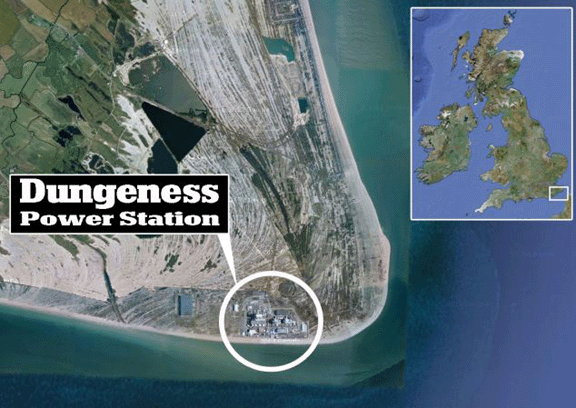
Reuters 8th April 2021, DF Energy, owned by French utility EDF, is exploring a range of scenarios for its Dungeness B nuclear plant in Britain, including bringing forward its decommissioning date of 2028, it said on Thursday. The 1.1 gigawatt Dungeness B plant, in Kent on the south coast of England, has been offline since 2018 as the company has been carrying out inspections and maintenance of pipes carrying steam to the turbine. EDF Energy has also been trying to complete repair work on corrosion identified during inspections of safety back-up systems.
The plant is currently forecast to return to service in August. It was designed in the 1960s and first started generating
electricity in 1983. EDF Energy said it has spent more than 100 million pounds ($138 million) on the plant during its current outage and it has a number of ongoing technical challenges that make its future uncertain.
Like the other nuclear powers, China wants to put a dirty great radioactive waste dump on indigenous land.
China’s $422m underground lab will probe massive national nuclear waste dump in remote Gansu, Global Construction Review,
9 April 2021 | By GCR Staff
China will spend $422m building an underground laboratory to find a way of storing high-level radioactive waste from the country’s growing fleet of nuclear power plants deep underground.
If successful, a repository that could store a hundred years worth of strontium-90, cesium-137 and plutonium-239 istopes will be built.
Building just the lab itself will be a feat. Wang Ju, vice-president of the Beijing Research Institute of Uranium Geology, told the China Daily newspaper that it would be sited in granite 560m below ground in the Beishan region of Gansu province, in China’s remote northwest . …………..
The offices and laboratories on the surface will have a floor area of 2.4ha within a 247ha site, however the underground complex will require the excavation of 514,200 cubic metres, along with 13.4km of tunnels. At present work is under way on supporting infrastructure, such as paved roads.
The lab, which was listed as a major scientific project in the 13th Five-Year Plan (2016-20), will take seven years to build. If its research proves successful, a long-term underground repository for high-level waste will be added nearby by 2050…….. https://www.globalconstructionreview.com/news/chinas-422m-underground-lab-will-probe-massive-nat/
Texas lawmakers want to ban dangerous radioactive waste.
Texas lawmakers want to ban dangerous radioactive waste.
Texas lawmakers want to ban dangerous radioactive waste. The proposal would give a nuclear waste company a big financial break.
A bill advancing in the House seeks to ban spent nuclear fuel, one of the most dangerous types of radioactive waste, from coming to Texas.
TEXAS TRIBUNE, BY ERIN DOUGLAS APRIL 8, 2021 As a nuclear waste company’s plan to store the most dangerous type of radioactive waste in West Texas moves forward at the federal level, state lawmakers are aiming to ban the materials from entering the state.
Environmental and consumer advocates for years have decried a proposal to build a 332-acre site in West Texas near the New Mexico border to store the riskiest type of nuclear waste: spent fuel rods from nuclear power plants, which can remain dangerously radioactive for hundreds of thousands of years.
A bill advancing in the House, filed by Rep. Brooks Landgraf, R-Odessa, whose district includes Andrews County — where the proposed facility would be located — seeks to stop the plan by banning that type of radioactive waste from being disposed of or stored in Texas.
But House Bill 2692 would also give that same company a big break on state fees it pays for its existing disposal facility for lower-risk radioactive waste.
“This bill bans high-level waste altogether,” Landgraf said during a committee hearing in March, “and focuses on making low-level waste the safest and best, most competitive and most efficient facility it can be.”
Waste Control Specialists has been disposing of the nation’s low-level nuclear waste, including tools, building materials and protective clothing exposed to radioactivity, for a decade in Andrews County. The company is currently pursuing, with a partner, a federal Nuclear Regulatory Commission license to store spent nuclear fuel on a site adjacent to its existing facility.
Waste Control Specialists and Interim Storage Partners — a joint venture between WCS and Orano USA, a subsidiary of one of the world’s biggest nuclear power companies — declined to comment on the proposed bill through a spokesperson.
Interim Storage Partners applied for the license in 2016. Scientists agree that spent nuclear fuel, which is currently stored at nuclear power plants, should be stored deep underground, but the U.S. still hasn’t located a suitable site. The Interim Storage Partners plan proposes storing it in above-ground casks until a permanent location is found. It expects federal regulators to make a decision sometime this year.
The plan faces stiff opposition from Gov. Greg Abbott, some oil companies that operate in the region and environmentalists over concerns about the risk of groundwater contamination and transportation accidents. Abbott wrote to federal regulators last year asking them to deny the license application, stating that the proposal presents a “greater radiological risk than Texas is prepared to allow.”………
The facility currently accepts Class A, B and C radioactive waste, which typically includes a wide range of contaminated items such as radioactive gloves, shoe covers and medical tubes. Some environmental and consumer advocates asked Landgraf to also include a ban on “greater than Class C” waste in his bill as well — it falls into what nuclear waste experts call a gray area between the lower-level categories and spent nuclear fuel. That type of waste is currently banned by the Texas Commission on Environmental Quality, but the Nuclear Regulatory Commission may soon consider regulations that would allow WCS to accept that waste.
Landgraf said he chose not to include a ban on that type of waste in the bill because it is technically not considered “high level” by the federal government, although it is currently treated that way for disposal purposes. Nuclear waste experts have told the Tribune that this category can be wide ranging, both in terms of danger and the time it will remain radioactive………….https://www.texastribune.org/2021/04/08/nuclear-waste-texas-ban/
Nuclear waste director: Proposed New Mexico nuclear waste storage facility is illegal,
Nuclear waste director: Proposed New Mexico nuclear waste storage facility is illegal, https://www.thecentersquare.com/new_mexico/nuclear-waste-director-proposed-new-mexico-nuclear-waste-storage-facility-is-illegal/article_5c2497f2-9716-11eb-a1c7-f34c8873c0ba.html (The Center Square) 7 Apr 21, – Safety and economic concerns over a proposed nuclear waste storage facility near Carlsbad have prompted the state of New Mexico to sue the U.S. Nuclear Regulatory Commission (NRC).
To be built by Holtec in southeast New Mexico, the facility would be an above-ground complex for storing spent fuel from commercial nuclear power plants.
The state’s lawsuit is built on legal concerns.
Holtec has stated the federal government is going to fund the facility, but according to federal law, utilities are responsible for storage, said Don Hancock, director of the Southwest Research and Information Center’s Nuclear Waste Program.
The state argues consistently throughout the complaint that this whole facility is illegal because the federal law doesn’t authorize the Nuclear Regulatory Commission to authorize this kind of consolidated facility,” he told The Center Square.
Hancock added that the state’s entire list of complaints is 47 pages long.
“The federal government has said in law that this spent fuel, this irradiated fuel from nuclear power plants, is highly toxic and highly dangerous, and its permanent disposal requires it to be disposed deep underground in stable geologic formations, so that’s the law,” he said. “This facility is none of that.”
Holtec and NRC attempted to circumvent that issue by terming the storage facility as temporary, however, the state pointed out that Holtec and NRC can’t provide a timeframe for when it would be moved and have admitted they don’t have any plans for where it would go, said Hancock.
These legal concerns only compound the economic issues raised.
The facility would be built in the middle of the biggest oil and gas production areas in the state and poses a significant threat to operations.
“In the best of all circumstances it would be disruptive and, the worst of all circumstances, it would close down a multi-million dollar industry,” Hancock said.
Disruption would be caused by global perceptions that New Mexico oil producers are OK with having an illegal nuclear storage facility nearby that could leak into the supply of oil, Hancock said. The worst-case scenario is a leak that leaves New Mexico’s oil supply radioactively contaminated and causes billions of dollars in economic damage.
“If there was a leak or an accident and the nation and the world heard there was a major nuclear accident in the middle of the oil and gas production field of New Mexico or Texas, what do you think people are going to think about that?” he asked.
After failed attempts to get the NRC to consider their concerns, the state turned to the courts to make their voice heard, said Hancock.
“The state feels ignored,” he said.
Environmental Ruin in Modern Iraq – largely due to depleted uranium.


In particular, she points to depleted uranium, or DU, used by the U.S. and U.K. in the manufacture of tank armor, ammunition, and other military purposes during the Gulf War and the 2003 invasion of Iraq.
The United Nations Environment Program estimates that some 2,000 tons of depleted uranium may have been used in Iraq, and much of it has yet to be cleaned up.
‘Everything Living Is Dying’: Environmental Ruin in Modern Iraq, Decades of war, poverty, and fossil fuel extraction have devastated the country’s environment and its people. Undark, BY LYNZY BILLING, 12.22.2021 All photos by LYNZY BILLING for UNDARK ”’,,,,,,,,,,,,,,,,,,,,,,,,,,,,,,,,,,,,,,,,,,, Miscarriages, of course, are common everywhere, and while pollution writ large is known to be deadly in the aggregate, linking specific health outcomes to local ambient pollution is a notoriously difficult task. Even so, few places on earth beg such questions as desperately as modern Iraq, a country devastated from the northern refineries of Kurdistan to the Mesopotamian marshes of the south — and nearly everywhere in between — by decades of war, poverty, and fossil fuel extraction.
As far back as 2005, the United Nations had estimated that Iraq was already littered with several thousand contaminated sites. Five years later, an investigation by The Times, a London-based newspaper, suggested that the U.S. military had generated some 11 million pounds of toxic waste and abandoned it in Iraq. Today, it is easy to find soil and water polluted by depleted uranium, dioxin and other hazardous materials, and extractive industries like the KAR oil refinery often operate with minimal transparency. On top of all of this, Iraq is among the countries most vulnerable to climate change, which has already contributed to grinding water shortages and prolonged drought. In short, Iraq presents a uniquely dystopian tableau — one where human activity contaminates virtually every ecosystem, and where terms like “ecocide” have special currency.
According to Iraqi physicians, the many overlapping environmental insults could account for the country’s high rates of cancer, birth defects, and other diseases. Preliminary research by local scientists supports these claims, but the country lacks the money and technology needed to investigate on its own. To get a better handle on the scale and severity of the contamination, as well as any health impacts, they say, international teams will need to assist in comprehensive investigations. With the recent close of the ISIS caliphate, experts say, a window has opened.
While the Iraqi government has publicly recognized widespread pollution stemming from conflict and other sources, and implemented some remediation programs, few critics believe these measures will be adequate to address a variegated environmental and public health problem that is both geographically expansive and attributable to generations of decision-makers — both foreign and domestic — who have never truly been held to account. The Iraqi Ministry of Health and the Kurdistan Ministry of Health did not respond to repeated requests for comment on these issues……………………….
experts who study Iraq’s complex mosaic of pollution and health challenges say. Despite overwhelming evidence of pollution and contamination from a variety of sources, it remains exceedingly difficult for Iraqi doctors and scientists to pinpoint the precise cause of any given person’s — or even any community’s — illness; depleted uranium, gas flaring, contaminated crops all might play a role in triggering disease……………………………
This is Eman’s sixth year at the hospital, and her 25th as a physician. Over that time span, she says, she has seen an array of congenital anomalies, most commonly cleft palates, but also spinal deformities, hydrocephaly, and tumors. At the same time, miscarriages and premature births have spiked among Iraqi women, she says, particularly in areas where heavy U.S. military operations occurred as part of the 1991 Gulf War and the 2003 to 2011 Iraq War.
Research supports many of these clinical observations. According to a 2010 paper published in the American Journal of Public Health, leukemia cases in children under 15 doubled from 1993 to 1999 at one hospital in southern Iraq, a region of the country that was particularly hard hit by war. According to other research, birth defects also surged there, from 37 in 1990 to 254 in 2001.
But few studies have been conducted lately, and now, more than 20 years on, it’s difficult to know precisely which factors are contributing to Iraq’s ongoing medical problems. Eman says she suspects contaminated water, lack of proper nutrition, and poverty are all factors, but war also has a role. In particular, she points to depleted uranium, or DU, used by the U.S. and U.K. in the manufacture of tank armor, ammunition, and other military purposes during the Gulf War and the 2003 invasion of Iraq.
The United Nations Environment Program estimates that some 2,000 tons of depleted uranium may have been used in Iraq, and much of it has yet to be cleaned up. The remnants of DU ammunition are spread across 1,100 locations — “and that’s just from the 2003 invasion,” says Zwijnenburg, the Dutch war-and-environment analyst. “We are still missing all the information from the 1991 Gulf War that the U.S. said was not recorded and could not be shared.”
Souad Naji Al-Azzawi, an environmental engineer and a retired University of Baghdad professor, knows this problem well. In 1991, she was asked to review plans to reconstruct some of Baghdad’s water treatment plants, which had been destroyed at the start of the Gulf War, she says. A few years later, she led a team to measure the impact of radiation on soldiers and Iraqi civilians in the south of the country.
Around that same time, epidemiological studies found that from 1990 to 1997, cases of childhood leukemia increased 60 percent in the southern Iraqi town of Basra, which had been a focal point of the fighting. Over the same time span, the number of children born with severe birth defects tripled. Al-Azzawi’s work suggests that the illnesses are linked to depleted uranium. Other work supports this finding and suggests that depleted uranium is contributing to elevated rates of cancer and other health problems in adults, too.
Today, remnants of tanks and weapons line the main highway from Baghdad to Basra, where contaminated debris remains a part of residents’ everyday lives. In one family in Basra, Zwijnenburg noted, all members had some form of cancer, from leukemia to bone cancers.
To Al-Azzawi, the reasons for such anomalies seem plain. Much of the land in this area is contaminated with depleted uranium oxides and particles, she said. It is in the water, in the soil, in the vegetation. “The population of west Basra showed between 100 and 200 times the natural background radiation levels,” Al-Azzawi says.
Some remediation efforts have taken place. For example, says Al-Azzawi, two so-called tank graveyards in Basra were partially remediated in 2013 and 2014. But while hundreds of vehicles and pieces of artillery were removed, these graveyards remain a source of contamination. The depleted uranium has leached into the water and surrounding soils. And with each sandstorm — a common event — the radioactive particles are swept into neighborhoods and cities.
Cancers in Iraq catapulted from 40 cases among 100,000 people in 1991 to at least 1,600 by 2005.

In Fallujah, a central Iraqi city that has experienced heavy warfare, doctors have also reported a sharp rise in birth defects among the city’s children. According to a 2012 article in Al Jazeera, Samira Alani, a pediatrician at Fallujah General Hospital, estimated that 14 percent of babies born in the city had birth defects — more than twice the global average.
Alani says that while her research clearly shows a connection between contamination and congenital anomalies, she still faces challenges to painting a full picture of the affected areas, in part because data was lacking from Iraq’s birth registry. It’s a common refrain among doctors and researchers in Iraq, many of whom say they simply don’t have the resources and capacity to properly quantify the compounding impacts of war and unchecked industry on Iraq’s environment and its people. “So far, there are no studies. Not on a national scale,” says Eman, who has also struggled to conduct studies because there is no nationwide record of birth defects or cancers. “There are only personal and individual efforts.”…………………..

After the Gulf War, many veterans suffered from a condition now known as Gulf War syndrome. Though the causes of the illness are to this day still subject to widespread speculation, possible causes include exposure to depleted uranium, chemical weapons, and smoke from burning oil wells. More than 200,000 veterans who served in Iraq, Afghanistan, and elsewhere in the Middle East have reported major health issues to the Department of Veterans Affairs, which they believe are connected to burn pit exposure. Last month, the White House announced new actions to make it easier for such veterans to access care.
Numerous studies have shown that the pollution stemming from these burn pits has caused severe health complications for American veterans. Active duty personnel have reported respiratory difficulties, headaches, and rare cancers allegedly derived from the burn pits in Iraq and locals living nearby also claim similar health ailments, which they believe stem from pollutants emitted by the burn pits.
Keith Baverstock, head of the Radiation Protection Program at the World Health Organization’s Regional Office for Europe from 1991 to 2003, says the health of Iraqi residents is likely also at risk from proximity to the burn pits. “If surplus DU has been burned in open pits, there is a clear health risk” to people living within a couple of miles, he says.
Abdul Wahab Hamed lives near the former U.S. Falcon base in Baghdad. His nephew, he says, was born with severe birth defects. The boy cannot walk or talk, and he is smaller than other children his age. Hamed says his family took the boy to two separate hospitals and after extensive work-ups, both facilities blamed the same culprit: the burn pits. Residents living near Camp Taji, just north of Baghdad also report children born with spinal disfigurements and other congenital anomalies, but they say that their requests for investigation have yielded no results. ……………………………………… https://undark.org/2021/12/22/ecocide-iraq/
Bill Gates backs costly nuclear reactor design fueled by nuclear-weapon-usable plutonium
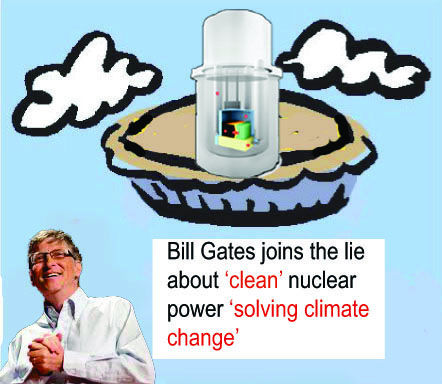
Bill Gates’ bad bet on plutonium-fueled reactors https://thebulletin.org/2021/03/bill-gates-bad-bet-on-plutonium-fueled-reactors/?utm_source=Newsletter&utm_medium=Email&utm_campaign=MondayNewsletter03222021&utm_content=NuclearRisk_Gates_03222021 By Frank N. von Hippel | March 22, 2021
One of Bill Gates’ causes is to replace power plants fueled by coal and natural gas with climate-friendly alternatives. That has led the billionaire philanthropist and Microsoft co-founder to embrace nuclear power, and building nuclear power plants to combat climate change is a prospect worth discussing. But Gates has been persuaded to back a costly reactor design fueled by nuclear-weapon-usable plutonium and shown, through decades of experience, to be expensive, quick to break down, and difficult to repair.
In fact, Gates and his company, Terrapower, are promoting a reactor type that the US and most other countries abandoned four decades ago because of concerns about both nuclear weapons proliferation and cost.
The approximately 400 power reactors that provide about 10 percent of the world’s electric power today are almost all water-cooled and fueled by low-enriched uranium, which is not weapon usable. Half a century ago, however, nuclear engineers were convinced—wrongly, it turned out—that the global resource of low-cost uranium would not be sufficient to support such reactors beyond the year 2000.
Work therefore began on liquid-sodium-cooled “breeder” reactors that would be fueled by plutonium, which, when it undergoes a fission chain reaction, produces neutrons that can transmute the abundant but non-chain-reacting isotope of natural uranium, u-238, into more plutonium than the reactor consumes.
But mining companies and governments found a lot more low-cost uranium than originally projected. The Nuclear Energy Agency recently concluded that the world has uranium reserves more than adequate to support water-cooled reactors for another century.
And while technologically elegant, sodium-cooled reactors proved unable to compete economically with water-cooled reactors, on several levels. Admiral Rickover, who developed the US Navy’s water-cooled propulsion reactors from which today’s power reactors descend, tried sodium-cooled reactors in the 1950s. His conclusion was that they are “expensive to build, complex to operate, susceptible to prolonged shutdown as a result of even minor malfunctions, and difficult and time-consuming to repair.” That captures the experience of all efforts to commercialize breeder reactors. The United States, Germany, the United Kingdom, France, and Japan all abandoned their breeder-reactor efforts after spending the equivalent of $10 billion or more each on the effort.
Today, despite about $100 billion spent on efforts to commercialize them, only two sodium-cooled breeder reactor prototypes are operating—both in Russia. India is building one, and China is building two with Russian help. But it is not clear India and China are looking only to generate electricity with their breeders; they may also be motivated in part by the fact that breeder reactors produce copious amounts of the weapon-grade plutonium desired by their militaries to expand their nuclear-weapon stockpiles.
The proliferation risks of breeder-reactor programs were dramatically demonstrated in 1974, when India carried out its first explosive test of a nuclear-weapon design with plutonium that had been produced with US Atoms for Peace Program assistance for India’s ostensibly peaceful breeder reactor program. The United States, thus alerted, was able to stop four more countries, governed at the time by military juntas (Brazil, Pakistan, South Korea, and Taiwan), from going down the same track—although Pakistan found another route to the bomb via uranium enrichment.
It was India’s 1974 nuclear test that got me involved with this issue as an advisor to the Carter administration. I have been involved ever since, contributing to the plutonium policy debates in the United States, Japan, South Korea and other countries.
In 1977, after a policy review, the Carter administration concluded that plutonium breeder reactors would not be economic for the foreseeable future and called for termination of the US development program. After the estimated cost of the Energy Department’s proposed demonstration breeder reactor increased five-fold, Congress finally agreed in 1983
Gates is obviously not in it for the money. But his reputation for seriousness may have helped recruit Democratic Senators Cory Booker, Dick Durbin, and Sheldon Whitehouse to join the two Republican senators from Idaho in a bipartisan coalition to co-sponsor the Nuclear Energy Innovations Capabilities Act of 2017, which called for the VTR.
I wonder if any of those five Senators knows that the VTR is to be fueled annually by enough plutonium for more than 50 Nagasaki bombs. Or that it is a failed technology. Or that the Idaho National Laboratory is collaborating on plutonium separation technology with the Korea Atomic Energy Research Institute at a time when about half of South Korea’s population wants nuclear weapons to deter North Korea.
Fortunately, it is not too late for the Biden administration and Congress to avoid repeating the mistakes of the past and to zero out the Versatile Test Reactor in the Department of Energy’s next budget appropriations cycle. The money could be spent more effectively on upgrading the safety of our existing reactor fleet and on other climate-friendly energy technologies.
Frank N. von Hippel
Frank N. von Hippel is a co-founder of the Program on Science and Global Security at Princeton University’s School of Public and International…
Fukushima disaster 10 years on: How long will it take to clean up the nuclear waste?
Decontamination and living with ‘black bags’
Piles of black bags were generated by the vast, painstaking clean-up and then transported from other storage places. Those black bags have occupied more than 90 blocks ranging from 180 sq m to 6,500 sq m in the northern part of Tomioka since 2015.
According to a 2018 report from Japan’s Ministry of the Environment, the estimated total quantity of decontaminated soil will be somewhere between 16 and 22 million cubic metres after volume reduction. This is 13 to 18 times larger than the volume of the Tokyo Dome.
The Ministry says the total will likely be at the lower end of the provided range, in a latest reply to The Straits Times’ query.
Limits of decontamination
The “decontamination” only involves soil removal in flatland areas – the government has said that it is impossible to clear the soil in mountainous areas, but more than 70 per cent of the hardest-hit areas are mountainous.
Mr Nobuyoshi Ito is one of those who live in the mountainous areas where vast decontamination is hard to carry out.
Mr Ito first moved to Iitate village in Fukushima prefecture in 2010 after he retired as an IT engineer, to work as an “apprentice farmer”.
He had no ties with the village before that, but the self-professed “guinea pig” ended up staying on there, in open defiance of government orders to evacuate, and against his children’s wishes for him to live with them in Niigata prefecture on the west coast.
“When the government asked us to evacuate… I asked if there would be criminal charges if I continued to live here,” he told The Straits Times in 2016. “They said no.”
He carries a dosimeter around with him all the time, measuring anything he can lay his hands on from soil, plants to animal carcasses. He also owns a laboratory-grade radiation measuring machine at his cabin, deep in the mountains in the village.
He thinks the government’s decision to not decontaminate forested mountainous areas will backfire due to factors such as rain that may spread radioactive material, and in a study last year found that 43 out of 69 locations along the Olympic torch relay route had radiation levels above the government limits.
He told The Straits Times that he fears that Tokyo is overly eager to portray that everything was “under control”, given that this could give the impression that it is “case closed”.
Non-profit Greenpeace notes that such standards in towns neighbouring the nuclear plant would not pass in other parts of the world.
The indefinite future: Where to permanently store 16 million bags of nuclear waste
The law requires that the final disposal site of high-level nuclear waste should be outside of Fukushima by March 2045.
Two fishing villages in Hokkaido are vying to host the final storage facility of Japanese nuclear waste for half a century, splitting communities between those seeking investment to stop the towns from dying, and those haunted by the 2011 Fukushima disaster who are determined to stop the project.
I cannot give a deadline at this moment. We will consider the entire schedule based on the progress at the two new potential sites, along with nationwide public relations activities.
MS MASARU KASHIMA
With ”regulatory capture” of USA’s Nuclear Regulatory Commission, California’s got nuclear fuel buried 108 feet from the sea

Nuclear Fuel Buried 108 Feet From the Sea https://www.counterpunch.org/2021/03/19/nuclear-fuel-buried-108-feet-from-the-sea/, BY ROBERT HUNZIKER “The most toxic substance on Earth is separated from exposure to society by ½” of steel encased in a canister.” (Blanch)
That eye-opener comes from renowned nuclear expert Paul Blanch in reference to spent fuel rods removed from San Onofre Nuclear Generation Plant buried near the sea on California’s southern coastline 50 miles north of San Diego.
Seventy-three 20-foot tall canisters of highly toxic nuclear spent fuel rods are nestled underground within 108 feet of the Pacific Ocean and not far from Interstate 5 from which passersby catch a glimpse of 73 large rectangular lids poking above ground, thus sealing the most toxic substances on Earth ensconced in ½” dry casks. (Footnote: In contrast, German CASTOR V/19 ductile cast iron casks, with permanent integrated monitoring, are nearly two-feet thick)
What could possibly go wrong on the seashore?
At the outset of San Onofre’s plans for its 73 buried canisters, the Nuclear Regulatory Commission itself admitted: (1) the thin ½” stainless steel canisters could crack within 30 years (2) there’s no current technology to inspect, repair or replace cracked canisters (3) limited monitoring means leaks may not be detected soon enough. (Source: Sanonofresafety.org) It is not believed the foregoing has changed one iota.
Unfortunately, when it comes to nuclear risks, what can go wrong isn’t known until it actually goes wrong. Then, it’s too late. Which explains the contention of a professional group associated with publicwatchdogs.org that discussed issues of credibility and truthfulness of the US Nuclear Regulatory Commission at a public hearing on March 9th, 2021. More on that follows later.
The 73 San Onofre rectangular lids symbolize the final act of decommissioning San Onofre Nuclear Generating Station, remnants of 50 years of nuclear power. Nobody knows with any degree of certainty the consequences of highly toxic spent fuel rods buried within 108 feet of the ocean. Is it risky or not risky? Is it even possible to define the risk?
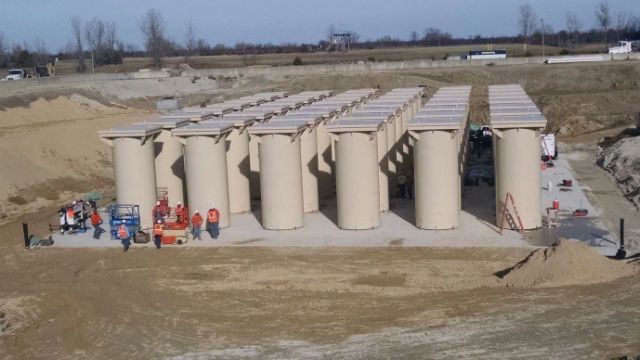
In truth, the risks of nuclear power cannot be adequately defined. Experience shows that the risk factors have no ceiling, no comparisons, no analogies, nothing similar, only disastrous results when things go wrong. More to the point, it’s a grand experiment of juggling the most potent substance on the planet. Like a hot potato, nobody knows what to do with it, other than bury it somewhere somehow that hopefully keeps it secure. Is a beachfront 108 feet off the ocean a good, secure location?
Still, given enough time, nuclear risks are defined via incidents, e.g., Fukushima, which exposed the consequences of failure of identifying nuclear risks. If it were otherwise, Fukushima would’ve been better prepared. They weren’t!
According to Prime Minister Naoto Kan /Japan, 2011: “We did not anticipate such a huge natural disaster could happen.” At the tensest moments, PM Kan was briefed on plans for complete evacuation of Tokyo, a horrific beyond belief event that came far too close for comfort! Nowadays, the former PM is an antinuke protestor.
It’s worth noting that Fukushima houses 10 nuclear reactors and 11 open pools of water containing spent fuel rods. If exposed to open air, spent fuel rods erupt into a sizzling zirconium fire followed by massive radiation bursts of the most toxic material known to humanity. It can upend an entire countryside and force evacuation of major cities, literally begging the impossible question of whether San Onofre’s remnants threaten all of Southern California?
Throughout America nuclear facilities contain open pools of spent fuel rods. According to the widely recognized nuclear expert Paul Blanch: “Continual storage in spent fuel pools is the most unsafe thing you could do.” Some spent fuel rods have been removed and stored in dry casks, but what if the dry casks are buried 108 feet from the Pacific Ocean? And, what of dry casks only ½” thick filled with radioactive spent fuel rods running a 500°F temp inside and 400°F on the canister’s exterior? By all appearances, it is an extremely lively affair!
That goes to the heart of questions posed at a recent Nuclear Regulatory Commission public hearing on March 9th. Thereupon, on behalf of the general public, three professionals drilled down into the procedures of the NRC whilst questioning its credibility. The bios of those three professionals:
Paul Blanch, registered professional engineer, US Navy Reactor Operator & Instructor with 55 years of experience with nuclear engineering and regulatory agencies, widely recognized as one of America’s leading experts on nuclear power.
Stuart H. Scott, founder and Executive Director of Facing Future, best known for bringing Greta Thunberg to the 2018 UN climate negotiations in Poland (COP-24) and for convincing Dr. James Hansen, the 32-year veteran Director of NASA’s Goddard Institute for Space Studies to COP-21, to attend Paris ’15.
Charles Langley, Executive Director of PublicWatchdogs.org, a public advocate with more than 25 years of experience in the field of energy law, energy policy, and utility rate setting.
 According to publicwatchdogs.org, the NRC is a “captive regulator” that accedes to nearly every request for regulatory relief for the nuclear power industry, as well as relaxation of safety rules and enforcement for the industry, in fact, following the command of industry insiders. But, when it comes to the general public, the NRC summarily rejects nearly every public petition aimed at strengthening the rules or following enforcement of existing rules. The petition process at the NRC is a one-sided affair that leaves the public out in the cold. From 1975- 2012 there were 387 petitions filed under provisions of the code, only two granted substantive relief, and one of those was from the nuclear industry. So, over 37 years there were, in actuality, more like a thousand petitions submitted by the public, and only one made it. It should be noted that rejections of petitions cannot be appealed.
On the other hand, when an industry player makes requests, according to Paul Blanch, working for a public utility, asking NRC for “a deviation from the rules” on a phone call got approved within one hour.
As it happens, the field of play with the NRC is lopsided. Industry players can ask any questions of NRC, but the public can only ask “process questions,” which does not lead to adequate answers, if any answers at all. Moreover, according to publicwatchdogs.org: “The NRC is providing inaccurate and false information to the public… At issue is the fact that the NRC is claiming that a flooding event at the SONGS (San Onofre Nuclear Generating Station) Independent Spent Fuel Storage Installation or ISFSI is ‘non-credible’.”
Really? Non-credible? What does that mean?
According to publicwatchdogs.org: “ISFSI is an Orwellian word used by the NRC to describe a toxic beachfront nuclear waste dump containing a spent nuclear fuel depot that is deadly radioactive for 250,000 years. The SONGS “ISFSI” is located 108 feet from the beach, in a tsunami inundation zone next to an earthquake fault line. It contains 73 thin-walled stainless steel cans weighing upwards of 100,000 pounds each. Each 20-foot high canister contains the same amount of Cesium-137 that was released into the atmosphere during the entire Chernobyl event. The cans themselves are only guaranteed to last for 25 years.”
What happens if a king tide, during full moon, or tsunami strikes and triggers a loss of cooling for the containers? Therefore, publicwatchdogs.org demanded the NRC provide a realistic flood analysis, with consequences spelled out. But, according to the petitioners, the NRC has never analyzed a loss of cooling of the 73 buried canisters. That fact alone is beyond comprehension. How could they not? Will they now?
Furthermore, nobody can explain what happens with ruptured casks. The San Onofre casks are filled with helium gas with natural conduction airflow surrounding each individual container, which are thin casks ½” thick.
In all, Public Watchdog’s research found that NRC misrepresented information. At the hearing, petitioners exposed inept Nuclear Regulatory Commission processes, responses, and a lack of credibility, claiming the NRC is merely a rubber stamp for the nuclear industry and not at all responsive to public queries.
The following is a condensed version of the issues brought forth on the virtual meeting with the Nuclear Regulatory Commission:
It should be noted that NRC rejected the group’s Oct 13th petition on the dubious grounds of the term “not credible.” Failure or leakage of the canisters, according to NRC, is “not credible.” But “not credible” is not defined anywhere in NRC documents. Of course, no answers came at the scheduled meeting.
An important pursuit at the hearing was exposure of deficiencies of the Holtec Umax spent fuel storage system at San Onofre, as well as exposing its use at other locations in the US. Not only that but a king tide could wash over the canisters, no tsunami needed. A few feet of water would be disastrous. Meanwhile, there are no contingency plans to remove flooded water from the canisters in an emergency. Which is insidiously irresponsible: “Each canister contains more radioactive cesium than released at Chernobyl, each of 73 canisters, plus there are over 3,000 in this country.” (Blanch)
The Holtec canisters provide a 1/2” to 5/8” barrier between the most toxic material in the world and a Chernobyl-size release of radiation. The canisters must be kept full of helium gas, welded shut, thus they can never be examined on the inside for cracks or leaks, and scandalously, not monitored for temperature, pressure, or radiation. But yet, the NRC says failure is “not credible.”
Was Chernobyl not credible?
Was Fukushima not credible?
Making matters worse, there’s no provision for drainage of water in the underground canisters. A king tidal wave could flood, and as water boils off, nobody would know what to do to save Southern California from some level of mass evacuation. Additionally, there are no provisions to refill the canisters with pressurized helium should pressure drop. These are obvious risks factors, plus: San Onofre is located within an inundation zone for tsunamis. It’s also close to Camp Pendleton, a legitimate enemy target.
“We regard the NRC’s preliminary decision to reject our petition as irresponsible and wrong and it places millions of people in Southern California at risk that is unquantifiable.” (Petitioners)
When NRC receives petitions, they can be rejected by an unspecified number of PRB members and the petitioner does not know if it’s only one member a minority a majority or whatever. No logical reasons are given for rejections of petitions and no supporting documentation.
The San Onofre canisters need to be removed and placed into thick-wall casks and transported to a new repository in New Mexico. “The biggest problem is the NRC failure to admit there is a problem.” (Blanch)
In the final analysis, the NRC abrogates its own mission statement, which is to license and regulate civilian use of radioactive materials to protect public health and safety to promote the common defense and security and protect the environment. Yet, by all appearances, the NRC is more akin to an emotionless Frankenstein monster that belittles detractors via evasion and disdain without any answers for credible questions. What a trip!
Robert Hunziker lives in Los Angeles and can be reached at rlhunziker@gmail.com
Russia planning to dispose of highly dangerous nuclear reactor cores of submarine at bottom of Kara Sea
|
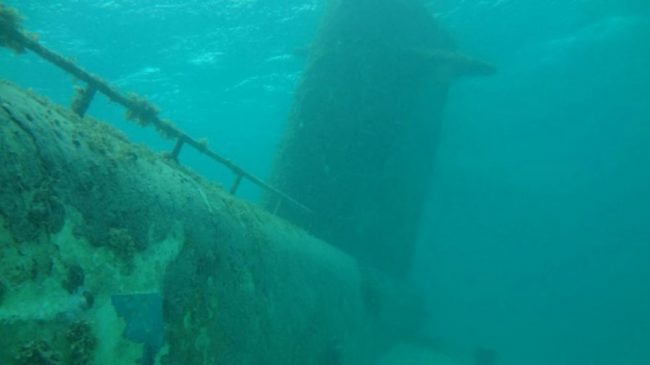
Rosatom seeks contractor to dispose of sunken subs reactor cores https://bellona.org/news/nuclear-issues/2021-03-rosatom-seeks-contractor-to-dispose-of-sunken-subs-reactor-cores Rosatom, Russia’s state nuclear corporation, has announced a tender for disposing of reactor cores from the K-27 submarine, which was itself scuttled by the Soviet Navy in the Kara Sea four decades ago. March 21, 2021 by Anna Kireeva, translated by Charles Digges The tender speaks specifically of preparing for dismantlement and disassembly the spent removable cores from the reactor of the project 645 (item 64) nuclear submarine. These removable parts, which were removed in 1967, are currently located at the Gremikha storage base in Russia’s Murmansk region.
The tender also demands the preparation of cassettes of these irradiated parts in order to transport them to a federal nuclear fleet storage point, from where they will be sent for processing. The price tag for the task is 500 million rubles, about $6.7 million. Anatoly Grigoriev, head of international technical assistance projects at Rosatom, confirmed that the tender refers to the removable reactor cores from the K-27, which were extracted in 1967. After unloading, the cores were deposited at the Gremikha base. “It is worth noting that the publication of the tender has attracted a lot of attention and caused contradictory interpretations,” said Andrei Zolotkov, who heads Bellona’s offices in Murmansk. “First, it is not clear why a submerged nuclear submarine is called ‘scrapped.’ Secondly, it was not clear how it was possible to prepare for the disposal of spent removable parts of a nuclear submarine that lies at the bottom of the Kara Sea, when the decision to lift it has not yet been made. ” The K-27 was sunken intentionally in the Kara Sea’s Stepovoy Bay in 1981. It is considered by experts to be especially dangerous thanks to its liquid metal cooled reactors. At the time, the submarine was prepared for flooding by filling it with bitumen, concrete and furfural. But it’s likely that these substances left pockets of air, which would allow for the formation of condensation within the sunken hull. The submarine has been included as a priority on a federal list of sunken objects to be lifted from the seabed. The urgency owes to the high enrichment of the K-27’s nuclear fuel and the shallow 33-meter depth at which it lies. The furfural-combination filler used to seal the sub before its sinking also has a limited shelf-life, and is only guaranteed to last another few years. Some experts also fear that the nuclear fuel onboard the sub could undergo a spontaneous chain reaction should they be breached by water. Discussion among Russian officials on lifting various pieces of nuclear debris from the Arctic has heated up in recent years. In 2019, a group of Russian scientists collected, systematized and analyzed data on each of these sunken nuclear and radiation hazards and identified the most dangerous among them. The K-27 is listed as one of six such hazards requiring lifting within a federal effort called the “Strategy for the Development of the Arctic Zone of the Russian Federation until 2035.” The problem is that lifting the flooded objects is an extremely difficult task, as shown by the years-long effort to raise the Kursk nuclear submarine, which sank during a naval exercise in 2000, killing all 118 crew members. Russian scientists have weighed the options for lifting the hazards and calculated possible damages should the operations fail. The consequences could be serious, involving releases of radiation into the sea and air, with contamination possibly surpassing Russia’s borders. At the moment, engineers are designing a vessel capable of lifting these sunken radiation hazards from the sea floor, with construction of a recovery ship projected by the end of 2026. Lifting and dismantling the K-27 thereafter is expected to take from 2028 to 2013. According to Rosatom, the total activity of the sunken radiation hazards in the Kara and Barents Seas is 1 million Curie. According to preliminary estimates of Russian specialists, they can all be extracted within 12 years. |
|
New research to determine plutonium pollution and its sources
 EurekAlert 19th March 2021, Researchers looking at miniscule levels of plutonium pollution in our soils have made a breakthrough which could help inform future ‘clean up’ operations on land around nuclear power plants, saving time and money.
those responsible for environmental assessment and clean up.
https://www.eurekalert.org/pub_releases/2021-03/lu-npr031721.php
Plutonium used at Japanese reactor will be glassed, stored at Savannah River Site
Plutonium used at Japanese reactor will be glassed, stored at Savannah River Site, Aiken Standard, By Colin Demarest cdemarest@aikenstandard.com, Mar 17, 2021
The National Nuclear Security Administration has decided a cache of plutonium sent from Japan years ago will be processed and disposed of for the foreseeable future at the Savannah River Site, a change of plans with local ramifications.
Up to 350 kilograms of stainless steel-clad plutonium from a Japanese reactor will be rid of using a slew of Savannah River Site facilities, tech and staff, recent federal documents show.
The Fast Critical Assembly fuel – already at the Savannah River Site – will be processed and dissolved at H-Canyon, a one-of-a-kind separations facility built in the 1950s. The material will then go to the tank farms, where millions of gallons of waste is stored.
After that, it will move to the Defense Waste Processing Facility, a mammoth plant that encases nuclear sludge in glass, making it safer to handle and stow long-term. The glass cylinders will ultimately go to an on-site storage building, where they will stay pending the availability of a dedicated depot, like Yucca Mountain in Nevada.
The entire endeavor will take years. And Japan is helping defray the cost.
The plutonium was previously slated to be handled and treated at the Savannah River Site and entombed at the Waste Isolation Pilot Plant in New Mexico, a repository resembling a salt mine. “Direct disposal of the FCA materials” at the Savannah River Site is a “sound option,” said SRS Watch Director Tom Clements, but it drums up some other questions……….. https://www.postandcourier.com/aikenstandard/news/savannah-river-site/plutonium-used-at-japanese-reactor-will-be-glassed-stored-at-savannah-river-site/article_b7b08e4c-8667-11eb-b8cd-8f0fb9c35316.html?fbclid=IwAR1s_w6jcU21h64HZ6z-tzb7uaWt4x-51ECsKd8E3bw6tvGacJn9_9gGmA8
Production of plutonium must cease, for the Nuclear Non Proliferation Treaty to work
For the NPT to work, plutonium has to go https://thebulletin.org/2021/03/for-the-npt-to-work-plutonium-has-to-go/?utm_source=Newsletter&utm_medium=Email&utm_campaign=MondayNewsletter03152021&utm_content=NuclearRisk_NPTwork_03152021
By Victor Gilinsky, Henry Sokolski | March 15, 2021 The Nuclear Nonproliferation Treaty (NPT), whose tenth review conference is coming up in August, is in trouble, and not only because of the crescendo of complaints about the failure of the nuclear-armed states to implement nuclear disarmament. The treaty is threatened with irrelevancy because its controls have not kept up with the times. It was drafted over 50 years ago, when it was widely believed that nuclear energy represented the future and would soon take over the generation of electricity. Not surprisingly, countries put few treaty restrictions on access to technology or materials other than to impose international inspection, and even that was circumscribed. We now have a more realistic view of the dangers of access to fuels that are also nuclear explosives (plutonium and highly enriched uranium) and also of the limited economic utility of these fuels for powering reactors. If we want an effective NPT, we have to eliminate these dangerous materials from civilian nuclear power programs. Dealing with uranium enrichment is complicated because nuclear power plants use enriched uranium fuel, but that should not hold us back from eliminating the danger we can eliminate—plutonium.
As soon as one mentions reinterpreting what the NPT allows, the treaty’s “originalism” crowd immediately pronounces the notion a non-starter. But we already have essentially eliminated an entire article (Article V) of the NPT that covered a technology—“peaceful” nuclear explosives—subsequently deemed both too dangerous and with negligible economic promise. That is exactly the situation with plutonium-fueled nuclear power reactors.
Separated plutonium in national hands leaves too little safety margin against possible use in warheads. At the same time, there is no economic penalty for doing without it. It should not be permitted in commercial use in all member countries. Existing civil stocks, like Japan’s nine tons, should be put under International Atomic Energy Agency (IAEA) supervision until their owners can safely dispose of the material.
This may sound radical, especially given the drumbeat of the US Energy Department and nuclear industry propaganda about a new generation of “advanced reactors” under development, most of them plutonium-fueled. But it is nothing more than President Gerry Ford’s common sense proposal in his 1976 Nuclear Policy Statement. He said we should forego using plutonium until “the world community can effectively overcome the associated risks of proliferation.” We are nowhere within reach of such a condition.
The NPT’s laxity on plutonium stems from the widespread beliefs at the time it was negotiated in the 1960s. Nuclear power plants were then considered destined to take over electricity generation and were thus vital for powering national economies. The US Atomic Energy Commission estimated that “essentially all [US] generating capacity built in the 21st century would be nuclear.” Moreover, and this is key, the Atomic Energy Commission believed uranium was scarce. To stretch nuclear fuel supply, they believed it would be necessary to develop reactors that turned the 99 percent of non-fissionable uranium into plutonium and then use that as fuel—plutonium-fueled fast breeder reactors.
That became doctrine in nuclear bureaucracies throughout the world and the NPT was drawn up to facilitate that result. (Ironically, had the projections been fulfilled, and the world commercial channels been flooded with plutonium, the possibility of effective control would have vanished.) Given nuclear power’s then-imagined critical importance, it’s not surprising that the less advanced NPT signatories insisted on full access to nuclear technology, hence on Article IV of the NPT that famously states all members have “the inalienable right” to it.
It has since turned out that all of the “expert” thinking about plutonium-fueled fast breeder reactors taking over electricity production was wrong. Contrary to the projections of the 1960s, nuclear energy’s prospects are limited, uranium is not scarce, extracting plutonium from irradiated uranium fuel is hugely expensive, and the plutonium-fueled reactors are expensive to build, which eliminated the economic arguments for the so-called plutonium economy. This is now clear to all but messianic believers in nuclear energy.
But the vestiges of this technological archaism continue to animate national bureaucracies that deal with the NPT, including that of the US, and the IAEA, as well. Perhaps the most glaring examples of the residual attachment to plutonium is Japan, which accumulated an enormous stockpile of plutonium and China, which, like Japan, plans to open a large reprocessing plant to separate more for two large fast breeder reactors. The US Energy Department is planning an expensive fast reactor to test fuel (the Versatile Test Reactor) for a mythical future commercial generation of such reactors. These steps legitimate similar actions elsewhere and undermine effective nonproliferation controls.
With the diminished prospects of nuclear power, the amount of this plutonium-related activity is not going to be anything like what the nuclear community once projected. The essential point remains: Amounts of plutonium that are very small in commercial terms can be very large in military terms.
At a more fundamental level, the United States needs to speak clearly to dispel the myth—one that still grips some NPT member countries—that nuclear power is an essential technology without which a country cannot consider itself as advanced. To get into the details would take us too far afield. But, as an indication of current nuclear prospects, consider the collapse of the highly vaunted “nuclear renaissance” at the beginning of this century that was to lead to construction of dozens of plants in the United States. US nuclear operators filed license applications for 31 large units. They ultimately canceled all but two, and those two are years behind schedule and already double the original cost, which led the original contractor, once proud Westinghouse, to file for bankruptcy.
America’s utility sector has been consistent on this score: It is not going to build any additional large nuclear reactors and doesn’t extract plutonium from used nuclear fuel. This message presented at the 2021 NPT Review Conference would help clear the decks for an honest assessment of what is needed for protection against access to nuclear weapons. If plutonium and reprocessing (its separation technology) are generally permissible, and only barred when worries arise in special cases like Iran, the NPT will ultimately undo itself.
None of this is to suggest that the NPT members will be easily persuaded, or perhaps even persuaded at all, of the need to limit what is permissible under the treaty. The entrenched plutonium-fuel firms and laboratories, and their government backers, including those in the United States, will not easily let go of their subsidies. But we need to start.
Dilemma over plan to dump Himkley nuclear mud off Cardiff coast

Nation Cymru 15th March 2021, Proposals to dump hundreds of thousands of tonnes more mud from theconstruction of a new nuclear power plant two miles off the Cardiff coast
will be discussed in the Senedd tomorrow. Last year a petition opposing EDF
Energy’s application demanded a full Environmental Impact Assessment
(EIA) before the dump could be licensed. The petition gained almost 10,700
signatures and forced a Senedd debate. In 2018 EDF were granted permission
to dump at the Cardiff Deep Grounds inshore disposal site despite fierce
opposition and an earlier debate in the Senedd.
https://nation.cymru/news/battle-to-block-hinkley-c-mud-dump-returns-to-the-senedd/
Tokyo’s ”Recovery Olympics”? But Japan has not recovered from the Fukushima meltdown
Japan Hasn’t Recovered 10 Years After Fukushima Meltdown, https://truthout.org/articles/japan-hasnt-recovered-10-years-after-fukushima-meltdown/, Arnie Gundersen, -March 11, 2021
On March 11, 2011, a devastating offshore earthquake and ensuing tsunami rocked Japan and resulted in nuclear meltdowns in three nuclear reactors at the Fukushima Daiichi nuclear site. Until the 2020 Tokyo Olympics were placed on a one-year hiatus because of concerns over  COVID-19, the Japanese government had portrayed these events as the “Recovery Olympics.” It had hoped to use the Olympics to showcase a claimed restoration of Japan since it was devastated in 2011. But has Japan really “recovered?”
1. Existing radiation maps ignore significant sources of radiological exposure.
Most of the radiation maps of northern Japan are based on external radiation detected in handheld instrument measurements by citizens and scientists, who then link the measurements to GPS coordinates while downloading that data into a massive database. This information about direct, external radiation is certainly important, but it has become the de facto criteria for decision makers in Japan to decide which cities and towns should be repopulated.
We found that this approach only provides limited policy alternatives and serves to minimize potential population exposure for two reasons. First, the Geiger counter data is for external radiation that was deposited on the ground external to human bodies and ignores radiation imbibed or inhaled as “hot particles” into the human body.
Secondly, the external radiation data frequently displayed for northern Japan is based on radiation emitted from only a single radioactive isotope, Cesium-137 (Cs-137), as measured externally. On the other hand, our papers show a wide variety of isotopes that are not detected by handheld Geiger counters or absorbed externally. We show that there is an extensive brew of various isotopes present in radioactive dust that is inhaled or imbibed. Our papers indicate that the radioactive concentration in these dust particles varies widely, by a factor of 1 million, with 5 percent (3 sigma) of these “hot particles” 10,000 times more radioactive than the mean. Our most radioactive dust particle was collected 300 miles from the site of the meltdown.
Furthermore, the data show that alpha, beta and gamma-emitting contaminants in radioactive fallout from the Daiichi meltdowns have not traveled together in lockstep. This means that measuring only beta-emitters like Cesium-137 or only total gamma (as you would with a Geiger counter) is not enough to map the full impact of the fallout. Alpha-emitters must also be measured to protect the public health. This is especially important because of the serious health impacts that can come from exposure to alpha radiation.
2. Northern Japan remains radiologically contaminated.
When a nuclear chain reaction stops, the hazardous remnants of the previously split uranium atoms, euphemistically called “fission products,” are left behind and remain radioactive for centuries. The triple meltdowns and explosions at Fukushima Daiichi Units 1, 2 and 3 in March 2011 released an enormous amount of these fission products into the environment. Wind currents pushed as much as 80 percent of this radiation over the Pacific Ocean, while 20 percent fell on northern Japan, forcing the evacuation of approximately 160,000 Japanese citizens from ancestral lands.
Absent any human intervention, short-lived fission products that originally accounted for more than half of this contamination have already decayed away during the last nine years, while even more has washed into the Pacific from storms and typhoons. Limited cleanup efforts by the Japanese government have further reduced the contamination in a fraction of the populated portion of the devastated Fukushima prefecture. Greater than 10 million tons of radioactive material have been collected and stored in 10 million individual large black bags at hundreds of locations. However, due to mountainous terrain, more than 70 percent of Fukushima prefecture will never be decontaminated.
Absent any human intervention, short-lived fission products that originally accounted for more than half of this contamination have already decayed away during the last nine years, while even more has washed into the Pacific from storms and typhoons. Limited cleanup efforts by the Japanese government have further reduced the contamination in a fraction of the populated portion of the devastated Fukushima prefecture. Greater than 10 million tons of radioactive material have been collected and stored in 10 million individual large black bags at hundreds of locations. However, due to mountainous terrain, more than 70 percent of Fukushima prefecture will never be decontaminated.
As the cost and effort to completely decontaminate the entire land mass of Fukushima prefecture would be prohibitive, the Japanese government has focused on cleaning only populated areas. It also increased the “allowable” radiation limit 20-fold, after an initial partial decontamination, from 1 milli-Sievert to 20 milli-Sieverts per year (100 millirem to 2 rem) to facilitate repopulation of abandoned villages. A 20-fold increase in radiation will create a 20-fold increase in radiation-induced cancers. A significant fraction of residents chose not to return, recognizing the increased risk that these higher approved limits present.
3. Previously “cleaned” areas are becoming radiologically contaminated yet again.
The city of Minamisoma was contaminated and evacuated at the height of the Fukushima disaster. After a period of several years, radiation in the city was remediated and citizens were allowed to return. Minamisoma City Hall was decontaminated, with a new epoxy roof applied after the meltdowns in 2011. The authors collected samples from this previously “clean” fourth-story roof in 2016 and again in 2017, finding high levels of alpha radiation in the relative absence of the normally ubiquitous Cesium isotopes. This can only imply that wind-borne contamination from uncleaned areas is recontaminating those areas determined habitable.
4. Olympic venues in Fukushima prefecture are more contaminated than in Tokyo Olympic venues.
Suburbs of Tokyo are approximately 120 miles from the reactors at Fukushima Daiichi. We found particulate radiation at Olympic venues in Tokyo to be normal compared to other cities worldwide. We found that areas in Japan beyond the Olympic venues were seven times more contaminated than the venues themselves. Contamination at the Olympic venues in Fukushima prefecture, planned to showcase the region’s recovery, were also more contaminated than the Tokyo venues. We found that on average, these northern Olympic venues were two to three times more contaminated with “hot particles” than venues in Tokyo.
We also detected small but statistically significant levels of plutonium at the J-Village national soccer camp in Fukushima prefecture. Even though the Japanese government claims to have thoroughly decontaminated these Fukushima locations, it is not surprising that these Olympic venues remain contaminated. As discussed previously, since the entirety of the prefecture’s area will never be decontaminated, these areas will continue to have wind-borne contamination for centuries.
Science on a Shoestring
As Fukushima was melting down, nuclear advocates in the U.S. were testifying to the Washington State legislature, saying that Japan’s nuclear plants would not be a problem, and that working in a nuclear plant is “safer than working in Toys R Us.” Not surprisingly, those same zealots are now claiming that there will be no increase in cancer fatalities as a result of the three Fukushima meltdowns. However, not including the hot particle contamination my colleagues and I have identified, the UN estimates that thousands of fatalities will occur. Others, including myself, believe the actual cancer increase could result in upwards of 100,000 increased deaths as a result of the radioactive microparticles strewn into the environment.
There is no doubt that radiological conditions in Japan have improved in the decade since the triple meltdowns at Fukushima Daiichi. However, our data show that Japan has not “recovered,” nor can it ever return to pre-meltdown norms. Public relations campaigns by interested parties cannot obscure the recontamination of populated areas in northern Japan that will continue to occur.
Hasegawa, the former head of Maeda Ward in Fukushima prefecture at the time of the Fukushima disaster, sums up the sentiment of most of Japanese citizens in northern Japan: “The nuclear plant took everything.… We are just in the way of the Olympics. In the end, the radiation-affected places like us are just in the way. They are going ahead just wanting to get rid of these places from Japan, to forget.”
There is an old laboratory adage that says, “The best way to clean up a spill is not to have a spill,” and this applies on a much larger scale to the entirety of northern Japan, where cleanup will remain economically unfeasible. Our future plans to further support our hypothesis that Japan remains contaminated will involve testing the shoestrings of Olympic athletes and visitors to northern Japan. Shoestrings are useful, as their woven fabric traps dust which may assist in determining the extent of contamination into populated areas in northern Japan compared to that in Tokyo.
Japan’s Nuclear Clean-Up Has No End in Sight
Climbing Without a Map: Japan’s Nuclear Clean-Up Has No End in Sight, U.S. News, By Reuters, Wire Service Content March 12, 2021, BY SAKURA MURAKAMI AND Aaron Sheldrick TOKYO (Reuters) – For one minute this week, workers at the Fukushima nuclear station fell silent to mark the 10-year anniversary of a natural disaster that triggered the worst nuclear accident since Chernobyl.
Then they went back to work tearing down the reactors melted down in the days after a tsunami on March 11, 2011.
The job ranks as the most expensive and dangerous nuclear clean-up ever attempted. A decade in, an army of engineers, scientists and 5,000 workers are still mapping out a project many expect will not be completed in their lifetime.
Naoaki Okuzumi, the head of research at Japan’s lead research institute on decommissioning, compares the work ahead to climbing a mountain range – without a map.
“The feeling we have is, you think the summit’s right there, but then you reach it and can see another summit, further beyond,” Okuzumi told Reuters.
Okuzumi and others need to find a way to remove and safely store 880 tonnes of highly radioactive uranium fuel along with a larger mass of concrete and metal into which fuel melted a decade ago during the accident.
The robotic tools to do the job don’t yet exist. There is no plan for where to put the radioactive material when it is removed.
Japan’s government says the job could run 40 years. Outside experts say it could take twice as long, pushing completion near the close of the century……..
It wasn’t until 2017 that engineers understood how complicated the clean-up would become. By that point, five specially designed robots had been dispatched through the dark, contaminated waters pumped in to cool the uranium. But radiation zapped their electronics.
One robot developed by Toshiba Corp, nicknamed the “little sunfish”, a device about the size of a loaf of bread, provided an early glimpse of the chaotic damage around the cores.
Kenji Matsuzaki, a robot technician at Toshiba who led development of the “sunfish”, had assumed that they would find melted fuel at the bottom of the reactors.
But the sunfish’s first video images showed a tumult of destruction, with overturned structures inside the reactor, clumps of unrecognizable brown debris and dangerously radioactive metal.
“I expected it to be broken, but I didn’t expect it would be this bad,” Matsuzaki said.
The delivery of a robotic arm to start removing fuel, developed in a $16 million programme with the UK’s Nuclear Decommissioning Authority, has been delayed until 2022. Tepco plans to use it to grab some debris from inside reactor 2 for testing and to help plan the main operation………….
But the cleanup has been delayed by the buildup of contaminated water in tanks that crowd the site. The melted cores are kept cool by pumping water into damaged reactor vessels.
But the cleanup has been delayed by the buildup of contaminated water in tanks that crowd the site. The melted cores are kept cool by pumping water into damaged reactor vessels. https://www.usnews.com/news/world/articles/2021-03-12/climbing-without-a-map-japans-nuclear-clean-up-has-no-end-in-sight
1 This Month
26 September – International Day for the Total Elimination of Nuclear Weapons





PLEASE OPPOSE HR 8255 AND S.3639 – bills would accelerate satellite deployment, with no environmental review or safeguards – https://ncstd5li.quorum.us/campaign/169331/
To see nuclear-related stories in greater depth and intensity – go to https://nuclearinformation.wordpress.com
-
Archives
- September 2026 (291)
- August 2026 (330)
- July 2026 (355)
- June 2026 (287)
- May 2026 (306)
- April 2026 (356)
- March 2026 (251)
- February 2026 (267)
- January 2026 (308)
- December 2025 (358)
- November 2025 (359)
- October 2025 (375)
-
Categories
- 1
- 1 NUCLEAR ISSUES
- business and costs
- climate change
- culture and arts
- ENERGY
- environment
- health
- history
- indigenous issues
- Legal
- marketing of nuclear
- media
- opposition to nuclear
- PERSONAL STORIES
- politics
- politics international
- Religion and ethics
- safety
- secrets,lies and civil liberties
- spinbuster
- technology
- Uranium
- wastes
- weapons and war
- Women
- 2 WORLD
- ACTION
- AFRICA
- Atrocities
- AUSTRALIA
- Christina's notes
- Christina's themes
- culture and arts
- Events
- Fuk 2022
- Fuk 2023
- Fukushima 2017
- Fukushima 2018
- fukushima 2019
- Fukushima 2020
- Fukushima 2021
- general
- global warming
- Humour (God we need it)
- Nuclear
- RARE EARTHS
- Reference
- resources – print
- Resources -audiovicual
- Weekly Newsletter
- World
- World Nuclear
- YouTube
-
RSS
Entries RSS
Comments RSS

