Mutsu Mayor Soichiro Miyashita made it clear that spent nuclear fuel facility will not go ahead.
|
Mayor again stands in way of plan for spent nuclear fuel, THE ASAHI SHIMBUN, December 18, 2020, Utilities have revived plans to expand the use of an intermediate storage facility for spent nuclear fuel, but immediately objections were voiced by the same mayor who quashed a similar proposal two years ago.The Federation of Electric Power Companies of Japan (FEPC) on Dec. 17 formally announced that it would push forward with the plan to allow all utilities that operate nuclear power plants to use the intermediate storage facility in Mutsu, Aomori Prefecture.
Kazuhiro Ikebe, head of FEPC, met the same day with economy minister Hiroshi Kajiyama, who oversees the nuclear power industry, and presented the proposal. Kajiyama pledged his cooperation to realize the plan. However, also on Dec. 17, Mutsu Mayor Soichiro Miyashita made clear that he would never allow all utilities to use the facility, which will be operated by Recyclable-Fuel Storage Co. (RFS) starting in fiscal 2021. RFS was jointly established by Tokyo Electric Power Co. and Japan Atomic Power Co. Under the original plan, spent nuclear fuel from only those two companies will be stored at the Mutsu facility in the northern prefecture. But in 2018, Kansai Electric Power Co. indicated that it also wanted to store its spent nuclear fuel at the Mutsu facility. Kansai Electric operates nuclear power plants in Fukui, a central Japan prefecture that faces the Sea of Japan. Fukui prefectural government officials asked the utility to find a storage facility for spent nuclear fuel outside of the prefecture. When word reached Miyashita about the Kansai Electric plan, he immediately opposed, and the utility was forced to retract the proposal. Under the latest FEPC proposal, other utilities besides TEPCO and Japan Atomic Power would be able to use the Mutsu facility as long as they paid storage fees. But the real, near-term beneficiary would still be Kansai Electric……. http://www.asahi.com/ajw/articles/14031110 |
|
The cover-up of workers’ illnesss in radioactively polluted clean-up of Kingston coal ash spill
A Legacy of Contamination, How the Kingston coal ash spill unearthed a nuclear nightmare, Grist By Austyn Gaffney on Dec 15, 2020 This story was published in partnership with the Daily Yonder.
………………………………….The apparent mixing of fossil fuel and nuclear waste streams underscores the long relationship between the  Kingston and Oak Ridge facilities………… .
 ……….In 2017, a former chemist named Dan Nichols stumbled upon a news story that revealed the existence of the additional health problems TVA feared. High levels of uranium had been measured in the urine of a former cleanup worker named Craig Wilkinson. Like Thacker, Wilkinson had worked the night shift. After dredges piped the coal ash back onshore, Wilkinson used heavy equipment to scoop, flip, and dry the wet ash along the Ball Field.
Although Wilkinson worked at the Kingston site for less than a year, he quickly developed health issues, including chronic sinus infections and breathing problems that eventually led to a double-lung transplant. Frustrated by his sudden decline in health, Wilkinson shelled out over $1,000 for a toxicology test because he wanted to know what occupational hazards might be lingering in his body.
After reading Wilkinson’s story, Nichols sat stunned. Though he was not associated with the spill, he’d been unable to shake his obsession with the Kingston disaster. Nichols had worked as a Memphis-based field chemist for a wastewater technology company, and he was used to studying lab reports on industrial water supplies and samples. For years he’d been trying to solve a mystery that no one else seemed to be aware of: why Kingston regulators deleted and then altered a state-sanctioned report showing extremely high levels of radiation at the cleanup site.
Roughly a month after the spill, Nichols read a Duke University press release stating that ash samples collected at Kingston by a team led by Vengosh, the geochemist, showed radium levels well above those typically found in coal ash. Nichols knew that the state environmental regulator, the Tennessee Department for Environment and Conservation, or TDEC, was also testing soil and ash samples at the site. After seeing Vengosh’s high radium readings, he wondered if TDEC’s report would also show high levels of either radium or uranium. (Radium is a decay element of uranium.) Later that spring, Nichols visited TDEC’s website and discovered the test results.
“I opened it up and went to uranium, and it was just off the charts,” Nichols recalled. In a 2020 affidavit, Nichols reported that these levels were “extremely high so as to be alarming.” At least 27 soil and ash samples were collected from at least 20 different sites surrounding Kingston beginning January 6, 2009. The levels ranged from 84 parts per million (ppm) to 2,000 ppm. The average level was over 500 ppm, as much as 50 times the typical uranium content found in coal ash.
The next morning, when Nichols slumped back into his computer chair and refreshed TDEC’s website, he saw that the report had been changed. The high uranium readings had plummeted. Now the average uranium levels in the ash were 2.88 ppm, a tenth of the typical uranium content found in coal ash and illogically, below levels naturally occurring in soil. Luckily, Nichols had downloaded the unaltered report the night before.
A month later, Nichols sent the two lab reports to one of the attorneys representing Tennessee residents affected by the spill in a lawsuit they’d brought against TVA. According to Nichols, the lawyers weren’t interested. Nevertheless, Nichols was determined to find more proof of the unusually high levels of on-site radiation. In between cutting hay and spraying weeds on his family farm, he spent years poring over information online about TVA, coal ash, and uranium before he stumbled across Wilkinson’s story.
Back in 2014, Wilkinson’s urine tested for unusually high levels of both mercury and uranium. The mercury is more easily explained: The most common cause of mercury contamination, according to the EPA, is coal-fired power plant emissions, which account for 44 percent of all man-made mercury pollution. The 2008 spill released 29 times the mercury reported at the Kingston site for the entire decade before it, and TVA documents show high levels of additional legacy mercury were present in the Clinch River and could have migrated into the Emory. Today, Wilkinson has symptoms attributable to methylmercury poisoning including blurry vision, fatigue, a hearing impairment, memory loss, and loss of coordination that caused him to fall out of the machines he operated until retiring on disability in 2015.
But most shocking to Nichols was the high level of uranium in Wilkinson’s body — it was 10 times the U.S. average, and identical to the median levels that one study found in workers exposed to the substance. Prolonged occupational exposure to uranium is strongly linked to chronic kidney disease, which Wilkinson suffers from. Because Wilkinson’s toxicology results were taken four years after he left Kingston, they likely show lower uranium levels than what he and other cleanup workers initially had.
Wilkinson’s results left no doubt in Nichols’ mind that the original uranium readings he’d saved were significant. A reporter for the Knoxville News-Sentinel, Jamie Satterfield, contacted him after the report he saved showed up in court proceedings. Satterfield published a story about the altered uranium readings in May of this year.
In response to her story, TDEC told the News-Sentinel that its updated uranium readings, which plummeted by 98 percent, were due to a change in the sampling method used for the tests. (Satterfield also reported that radium levels had been lowered between the initial TDEC report Nichols downloaded and the updated one; the department attributed this to a “data entry error.”) In an email response to Grist and the Daily Yonder, a TDEC spokesperson elaborated that the sampling lab, which was neither staffed nor supervised by TDEC, “discovered there were interferences in the analysis of soil and ash samples for uranium” and subsequently changed the method of analysis from one EPA-approved protocol to another. The new results were then published without public notice of the alteration.
“Changing lab reports is a very serious thing,” Nichols said. “But I can assure you data entry errors don’t cause a man to test for unusually high levels of uranium. That’s [TDEC’s] big problem.”
Unbeknownst to Nichols, Russell Johnson, the district attorney with jurisdiction over Roane County, where Kingston is located, had informed TDEC’s commissioner in 2017 that he was beginning a criminal probe into the Kingston cleanup. “I am deeply concerned with the apparent intentional conduct of the cleanup contractors and their supervisors, actions that took place in Roane County, conduct that may indeed have caused serious bodily injury or possibly even death to a number of people,” Johnson wrote in a letter to TDEC.
In concert with the Tennessee Bureau of Investigation, Johnson began investigating whether TVA or its contractors “suppressed information” as part of the coverup alleged in the 2013 worker lawsuit against Jacobs. They now have Nichols’ evidence as well. But despite this ongoing investigation, it’s unclear if workers will ever learn for certain whether or not they were exposed to dangerous substances besides the coal ash itself. (Bob Edwards, an assistant district attorney working under Johnson, told Grist and the Daily Yonder that the district attorney’s office could not comment on a pending investigation.)………………….https://grist.org/justice/tva-kingston-coal-ash-spill-nuclear/
British government’s “perpetual” lack of knowledge about £130bn clean-up of 17 old nuclear sites.

Public accounts committee calls for ‘clearer discipline’ in managing sites, Nathalie Thomas in Edinburgh Ft.com NOVEMBER 27 2020 MPs have warned there is a “perpetual” lack of knowledge in government about the state of Britain’s 17 earliest nuclear power sites, which are expected to cost taxpayers about £130bn to clean up over the next 120 years.
Trying to test for cracks in nuclear waste containers that have to last for over a million years

Waste from nuclear fuel must be stored for more than a million years/
“Salt can be present in the ambient air and environment anywhere, not just near the ocean. We need to be able to plan for extended long-term storage of spent nuclear fuel at nuclear power plants for the foreseeable future — it’s a national reality,”
 Sandia to put nuclear waste storage canisters to the test, https://www.newswise.com/articles/sandia-to-put-nuclear-waste-storage-canisters-to-the-test, Scientists will explore science of cracks caused by corrosion, 10-Dec-2020 , by Sandia National Laboratories Newswise — ALBUQUERQUE, N.M. — Sandia National Laboratories is outfitting three 22.5-ton, 16.5-feet-long stainless-steel storage canisters with heaters and instrumentation to simulate nuclear waste so researchers can study their durability.
The three canisters, which arrived in mid-November and have never contained any nuclear materials, will be used to study how much salt gathers on canisters over time. Sandia will also study the potential for cracks caused by salt- and stress-induced corrosion with additional canisters that will be delivered during the next stage of the project.
Currently there is not an operating geologic repository in the U.S. for the permanent disposal of spent nuclear fuel. As a result, spent fuel is being stored at commercial nuclear power plants in both storage pools and dry storage canisters. The storage canisters currently holding the spent nuclear fuel were designed to have a useful life of a few decades but will now likely need to be used longer than planned, said Tito Bonano, Sandia’s nuclear energy fuel cycle senior manager.
Data is urgently needed to validate and guide how industry should manage storage canisters for longer than originally anticipated, Bonano said.
“Salt can be present in the ambient air and environment anywhere, not just near the ocean. We need to be able to plan for extended long-term storage of spent nuclear fuel at nuclear power plants for the foreseeable future — it’s a national reality,” he said.
The researchers expect the project could have long-reaching implications for public health and safety, industry practices, regulatory framework and defining future research paths, said Bonano.
The three-year project is funded by the Department of Energy’s Nuclear Energy office. Overall, fifteen never-used, never-irradiated DOE-owned canisters are being distributed for large scale testing to Sandia and two other national laboratories, an industry research institute and an independent storage facility at an existing nuclear power plant.
Waste from nuclear fuel must be stored for more than a million years
Nuclear power plants use uranium pellets inside a metal-cladded tube, called a fuel rod, to power reactors to create the heat needed to make electricity. After the fuel rods can no longer be used in the reactor, they need to be stored onsite until they are taken offsite to another facility and eventually permanently disposed because they will be radioactive for a long time, said Samuel Durbin, a mechanical engineer and Sandia’s canister project lead.
“When fuel is removed from a reactor, it’s very hot, both in temperature and radioactivity” Durbin said. “The utility loads it into a pool for about five years to cool down. After that, the spent fuel can be offloaded into a dry storage canister.”
A storage canister starts as a flat piece of stainless steel that is rolled into a cylinder and then welded where the seams come together. The heat from the welding creates heat-affected zones in the seams of the canister that experience tensile, or pulling, stress. This stress makes these areas around the welds more susceptible to corrosion from salt over time, said Durbin.
Research will test how much salt deposits on canisters over time
Sandia received three canisters Nov. 13. The research team will outfit each of them with 32 electrical heaters to simulate the decay heat, which is heat released as a result of radioactive decay, from the 32 spent fuel assemblies that would typically be stored in this type of canister. No radioactive materials will be used in the testing, Durbin said.
Instruments called thermocouples, which measure temperature, and other sensors for diagnostic testing and surface sampling also will be added, he said.
Once the outfitted canisters have been tested and repacked for transport at Sandia, the team plans to move them to a storage pad at an independent spent fuel storage installation on the West Coast where they will experience the same real-life conditions of in-use canisters. The Sandia team, led by managers Sylvia Saltzstein and Geoff Freeze, Durbin, and chemists/corrosion scientists Charles Bryan and Rebecca Schaller, along with partners from other national laboratories will monitor the test canisters and record surface deposits, especially chloride-bearing salts, for three to more than 10 years, depending on how much the data varies over time.
“Sodium-chloride, or salt, that settles on the surface of spent nuclear-fuel canisters can lead to chloride-induced stress corrosion cracking, and right now there is inadequate data on these surface deposits,” said Durbin.
In real-life storage of nuclear waste, Durbin said the decay heat from the spent fuel creates natural convection around the storage canisters, causing outside air to be drawn over the canister surface. This process helps cool the spent fuel over time. As ambient air is drawn in, salt and other particulates in the air are drawn in as well and can settle on the canister surface. During the test, the electrical heaters installed inside the canisters at Sandia will replicate this decay heat-driven convection without using nuclear materials.
In hot, dry conditions, Durbin said salt deposits alone don’t cause any issues, but over time, as the decay heat decreases and the canister cools, water can condense on the canister surface and a brine can form.
“These conditions can occur nationwide and are seen as precursors to chloride-induced, stress-corrosion cracking. Back when these canisters were being designed, people weren’t thinking about this as an issue because we had a plan for permanent disposal. The current national nuclear waste situation forces canisters to be stored onsite for the foreseeable future, which could be 100 years or longer, so stress corrosion cracking becomes more of a concern,” Durbin said.
In addition to the long-term heating and surface deposition test, Sandia will use up to another three canisters for laboratory-based tests to conduct fundamental research on cracking caused by salt and stress, especially on the welded seams and intersections of the canisters. Researchers will measure the effectiveness of commercially available crack repair and mitigation coatings.
To test these seams, the team will cut the canisters into small segments and test pieces with and without welded seams to study the pre-cursor conditions for salt and stress to cause the corrosion that leads to cracks, he said.
Japan’s power companies consider opening up Aomari nuclear waste site to other utilities
Aomori spent nuclear fuel site may be opened up to other utilities, https://www.japantimes.co.jp/news/2020/12/11/national/shared-nuclear-fuel-facility-a Dec 11, 2020
The Mutsu facility is held by Recyclable-Fuel Storage Co., which is jointly owned by Tokyo Electric Power Company Holdings Inc. and Japan Atomic Power Co. Recyclable-Fuel Storage aims to start facility operations in fiscal 2021, which starts next April.
The federation is in talks with parties including Tepco on allowing power firms other than Tepco and Japan Atomic Power to use the temporary spent fuel storage facility if they pay fees, informed sources said.
The joint use initiative is partly aimed at supporting Kansai Electric Power Co., according to the sources. The Fukui Prefectural Government is urging Kansai Electric, which has nuclear plants in the prefecture, to show by the end of this year a candidate site outside of the prefecture for temporary storage of spent nuclear fuel.
Selecting a candidate location early is a key challenge for Kansai Electric, which heavily relies on nuclear power generation, because it is a condition for local authorities to decide whether to approve the restart of the No. 1 and No. 2 reactors at the firm’s Takahama nuclear plant and the No. 3 reactor at its Mihama plant, all of which have seen more than 40 years pass since the launch of their operations.
“There’s been no contact” from the power industry group about the shared use plan for the temporary storage facility, Mutsu Mayor Soichiro Miyashita told reporters Thursday. “If they are proceeding with the plan within themselves, that shouldn’t be the case.”
A media report said in 2018 that Tepco was considering a joint use of the facility with Kansai Electric and others. The reported plan went nowhere after the mayor opposed it.
Shared use of the facility requires approval by the Aomori Prefectural Government and the city of Mutsu. But it remains to be seen at the moment if such local permission can be obtained.
As of the end of September this year, the amount of spent fuel from nuclear power stations in Japan stood at about 19,000 tons.
Of the total, about 16,000 tons have been kept at locations including storage pools at nuclear power plants. The amount is about 75% of storage capacity as work to reprocess spent nuclear fuel has stalled, a situation stoking concerns among nuclear plant host municipalities.
Three Mile Island – radiation is forever – will nuclear waste storage withstand flooding?
 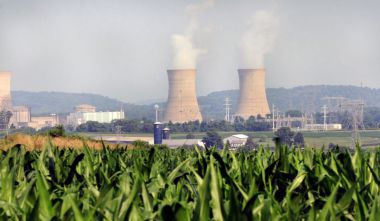 Radiation is forever’: How long will it take to clean up Three Mile Island? [Lancaster Watchdog] lancaster Online, Radiation is forever’: How long will it take to clean up Three Mile Island? [Lancaster Watchdog] lancaster Online, SEAN SAURO | Staff Writer , 6 Dec 20, Traveling Route 441 across Lancaster County’s northwestern border, motorists, for decades, have been able to look out toward the Susquehanna River to see a pair of cooling towers stretching skyward from the now-defunct Three Mile Island nuclear power plant.For almost as long, Eric Epstein said he’s kept a watchful eye, worrying about safety on the island, where a 1979 partial reactor meltdown remains the worst commercial nuclear accident in U.S. history. And Epstein, a Harrisburg-based nuclear watchdog, said those concerns persist even as plant owners move forward to dismantle its reactors — a process likely to take nearly 60 years. Even after that, he said, some nuclear waste is expected to remain onsite, just north of Conoy Township in the river. Plans exist for both, separately owned reactors on the island. Unit 2, the site of the partial meltdown, has remained inactive since 1979. And Unit 1 was taken offline last year. Epstein shared his concerns last week in the days after it was announced that officials at the U.S. Nuclear Regulatory Commission approved a Unit 2 license transfer that would move ownership of the reactor and related assets from FirstEnergy to TMI-2 Solutions. The subsidiary of Utah-based EnergySolutions would lead the decommissioning. That transfer is likely to wrap up by the end of 2020, FirstEnergy spokeswoman Jennifer Young said………………. “Decommissioning work can begin after the license transfer is completed, but TMI-2 Solutions would have to provide a more specific timeline for its projected start date,” NRC spokesman Neil Sheehan said. While most of the highly radioactive fuel was removed from Unit 2 by the mid-1990s, the upcoming decommissioning work is expected to cost at least $1 billion, paid for with ratepayer funds set aside for that purpose. According to an EnergySolutions timeline, the two-phased Unit 2 decommissioning is scheduled for completion in 2037, with “a potential area set aside for waste storage facilities” on the island. All along, Epstein has remained skeptical of the plan for Unit 2, where interior conditions largely remain a mystery due to high radiation levels, which have precluded close inspection. Those fears have only been exacerbated by the idea that waste could be stored on the island, where Epstein believes natural disasters like flooding could lead to released radiation, he said. “The plant was not designed to be a high-level radioactive waste site. Everybody agrees the radioactive waste shouldn’t be on an island,” Epstein said. “This is like putting waste on an airplane with no place to land. At some point, that plane is going to crash.” EnergySolutions officials did not return messages left with them about the decommissioning by Friday afternoon. However, Unit 1 owners at Exelon provide some insight into their separate decommissioning plan, which also will require some on-site storage — likely to begin in 2022, when spent fuel is moved into casks. “Dry cask storage will require robust metal canisters placed in a massive concrete housing,” according to Exelon spokesman David Marcheski. It is storage that officials claim will be able to withstand a 100-year flood. The Unit 1 decommissioning process is expected to wrap up in 2078, costing about $1.2 billion, covered by a related trust fund. https://lancasteronline.com/news/local/radiation-is-forever-how-long-will-it-take-to-clean-up-three-mile-island-lancaster/article_643a5aea-3676-11eb-a87d-1ffabfe61953.html |
|
Texas and New Mexico reject interim nuclear waste storage
 Texas, New Mexico resisting interim nuclear waste storage By Gary Martin Las Vegas Review-Journal, 6 Dec 20, WASHINGTON — President Donald Trump and Congress moved this year to develop interim nuclear waste storage sites, a temporary fix until the 30-year stalemate over Yucca Mountain is settled.But locations in New Mexico and Texas that were once embraced for their potential for jobs and economic development now face local opposition similar to that in Nevada that has resulted in the decadeslong delay in building a permanent repository. Texas, New Mexico resisting interim nuclear waste storage By Gary Martin Las Vegas Review-Journal, 6 Dec 20, WASHINGTON — President Donald Trump and Congress moved this year to develop interim nuclear waste storage sites, a temporary fix until the 30-year stalemate over Yucca Mountain is settled.But locations in New Mexico and Texas that were once embraced for their potential for jobs and economic development now face local opposition similar to that in Nevada that has resulted in the decadeslong delay in building a permanent repository.
Governors in New Mexico and Texas have pleaded with the federal government to stop or delay the process that could place tons of spent nuclear fuel rods in their states. Private groups have proposed to take the spent nuclear fuel and temporarily store the waste at locations near Carlsbad, New Mexico, and west of Odessa in Andrews County, Texas. But the welcome has turned to concern by residents who fear the interim storage of nuclear waste will become permanent if the federal government fails to develop the Yucca Mountain nuclear repository north of Las Vegas, as required by law, or find and develop another suitable location. The New Mexico congressional delegation wrote a letter to the Nuclear Regulatory Commission urging the agency to delay the decision-making process and allow more time for public comment on a license sought by Holtec International to build an interim storage facility. “Any proposal to store commercial spent nuclear fuel raises a number of health, safety and environmental issues,” the delegation wrote. Those issues include “potential impacts on local agriculture and industry, issues related to the transportation of nuclear waste, and disproportionate impacts on Native American communities,” the lawmakers warned. New Mexico Gov. Michelle Lujan Grisham, a Democrat, in a letter to President Donald Trump, said she was opposed to interim storage of nuclear waste, citing the safety of residents. Target for terrorists? In Texas, the facility proposed by Interim Storage Partners has drawn opposition from oil and gas producers, the agriculture industry and Gov. Greg Abbott, a Republican, who said placing the waste near oil fields would make an inviting target for terrorists. Shipping nuclear waste also would present a hazard to public health, Abbott said in letters to Trump and the NRC earlier this year. Meanwhile, environmental groups in both states have lodged their opposition to the proposed plants and urged Lujan Grisham to create a state agency to prevent an interim site from becoming a permanent storage facility for nuclear waste…………. https://www.reviewjournal.com/news/politics-and-government/texas-new-mexico-resisting-interim-nuclear-waste-storage-2206303/
|
|
Hokkaido’s ski areas could lose popularity, due to plans to house nuclear wastes
|
The towns of Suttsu and Kamoenai have both applied for preliminary feasibility surveys to be considered for a site that will store waste from the nation’s nuclear power plants. The cash-starved towns struggling with declining populations are poised to each pocket 2 billion yen ($19 million) promised by the government for taking part in the studies alone. Although whole selection process takes 20 years, the applications have touched off an outpouring of opposition from locals as well as from across the country, including from Hokkaido Gov. Naomichi Suzuki, who assailed the central government for “slapping the face with money.” The concern is especially palpable in the resort towns of Niseko and Kutchan, which are part of the Niseko resort area. “To outsiders, it might as well be Niseko that is undergoing a survey,” said Shinichi Maeda, an owner of a restaurant in Kutchan. “It’s possible that foreign investors who had previously valued Niseko will pull out one by one.” Suttsu is located about 40 km west of the town of Niseko, which will see no economic benefit from the study but will surely be hit by the anxiety the plan will generate………… the possibility of hosting a nuclear waste site, however remote, is enough to rail up opposition. The owner of a tourism business in Kutchan believes in local production and consumption, and uses seafood from Shiribeshi. But that may have to change. “Foreign customers are sensitive,” said the owner. “If the nuclear waste issue gains prominence, it’ll become hard to use” locally made seafood. In Japan, there is still no final repository for nuclear waste — it is stored in interim locations. After the 2011 Fukushima nuclear disaster raised public awareness, countries across the globe have struggled to find permanent places to store the waste. When Kamoenai announced it would apply for an initial survey in October, The Associated Press reported the story with the headline “2 remote Japan towns seek to host nuclear waste storage site.” The article was carried by news outlets all over the world. Last month, five citizens groups presented the Hokkaido governor with a petition signed by 450,000 people opposing the feasibility survey for the two towns. The signatures were collected nationwide. The preliminary studies underway in the two towns are becoming an issue that could undermine tourism throughout Hokkaido……….. |
|
Shortfalls in planning mean that the USA Waste Isolation Pilot Plant could become full
Weather Channel 2nd Dec 2020, The only underground nuclear waste dump in the United States is suffering from shortfalls in planning and staffing that could lead to disruptions at the facility, according to a new report from the Government Accountability Office. The report published last month indicated that the Waste Isolation Pilot Plant near Carlsbad, New Mexico, could become full if the amount of waste shipped to the facility keeps expanding or if a new way of measuring waste is rejected in a pending court challenge, according to the Associated
Press.
The plant, known as the WIPP, was built in the 1980s for the disposal of defense-related nuclear waste, including clothing, tools, rags,
debris, soil and other items contaminated with radioactive elements, according to a fact sheet from the facility. The WIPP’s disposal rooms were carved out of ancient salt beds 2,150 feet below ground.
https://weather.com/news/news/2020-12-02-underground-nuclear-waste-dump-carlsbad-new-mexico
UK and USA nuclear waste clean-up – a $billion here, a $billion there – pretty soon you’re talking real money
 US Nuclear Site Cleanup Underfunded By Up To $70 Billion, Clean Technica, December 1st, 2020 by Michael Barnard
Headlines out of the UK are pointing out the horrible state of affairs for nuclear generation decommissioning after a committee of Members of Parliament that the UK’s Nuclear Decommissioning Authority really doesn’t have a handle on the 17 sites, their costs, or the vendors they selected for cleanup. They are currently projecting $177 billion and 120 years for the full decommissioning, over $1 billion per site. Some of this is due to botched procurement, with two different cleanup vendors stripped of their contracts.
Certainly the UK cleanup is a fustercluck of epic proportions, equivalent in fiscal sense to building Hinkley. That new reactor, billions and years over budget and schedule, required a commitment for 35 years to pay $150/MWh for every MWh they generated, at a time when onshore wind and solar in the UK are at or under $50/MWh and offshore wind is under $100/MWh.
Some US commenters were feeling chuffed, although that’s not a term they would use, that the US was handling things so much better. But the USA isn’t far behind the UK in problems, it just isn’t as public.
Per the World Nuclear Association:
In the USA, utilities are collecting 0.1 to 0.2 cents/kWh to fund decommissioning. They must then report regularly to the NRC on the status of their decommissioning funds. About two-thirds of the total estimated cost of decommissioning all US nuclear power reactors has already been collected, leaving a liability of about $9 billion to be covered over the remaining operating lives of about 100 reactors (on the basis of an average of $320 million per unit). NRC data for the end of 2018 indicated that there was a combined total of $64.7 billion held in the decommissioning trust funds covering the 119 operational and retired US nuclear power reactors.
An OECD Nuclear Energy Agency survey published in 2016 reported US dollar (2013) costs in response to a wide survey. For US reactors the expected total decommissioning costs range from $544 to $821 million; for units over 1100 MWe the costs ranged from $0.46 to $0.73 million per MWe, for units half that size, costs ranged from $1.07 to $1.22 million per MWe. For Finland’s Loviisa (2 x 502 MWe) the estimate was €326 million. For a Swiss 1000 MWe PWR the detailed estimate amounts to CHF 663 million (€617 million). In Slovakia, a detailed case study showed a total cost of €1.14 billion to decommission Bohunice V1 (2 x 440 MWe) and dismantle it by 2025.
[Brief aside: I love the World Nuclear Association, because they are actually honest and report details that contradict their mission. I cite them on Germany’s wholesale electricity prices, which they freely admit are among the lowest in Europe as that country ramps up renewables rapidly and dumps nuclear. They aren’t just a lobbying organization, although they are an industry-funded lobbying association. Unlike the equivalent oil and gas organizations, they seem compelled to be honest and complete, perhaps because being honest and complete usually isn’t so disgustingly horrific for them, just simply bad.]
Back to the thread. The US has collected a bunch of money from operating reactors into a cleanup fund that they acknowledge is underfunded to the tune of billions already. But the industry estimates show that they are collecting under half of what it will actually take to decommission the sites.
There are about 100 reactors in the United States. Assuming they collect the $320 million per reactor (they won’t, as reactors are closing prematurely), they would have a fund of $32 billion. But they need a fund of closer to $70 billion, and they are short regardless. So the US fleet cleanup is going to cost the taxpayer probably closer to an additional $40 billion, if it all goes according to the estimates.
Note that the UK and Slovakia examples show that it usually doesn’t, just as building new nuclear never seems to come in on time or budget. The reality is going to be closer to the European and Slovakian costs, so let’s assume a billion per reactor as a reasonable number.
The US will have maybe $30 billion. They’ll need $100 billion. Yeah, $70 billion is the more reasonable number.
“A billion here, a billion there, pretty soon you’re talking real money.”
– US Senator Everett McKinley Dirksen
Of course, this is on top of the $1.6 billion annual tax breaks nuclear plants in the US get, the $10 billion liability insurance cap with the taxpayer holding the bill should a Fukushima-scale disaster occur and the state-level boondoggles like the $1.1 billion Ohio subsidy that came with a side helping of $60 million in bribes…………….https://cleantechnica.com/2020/12/01/us-nuclear-site-cleanup-underfunded-by-up-to-70-billion/
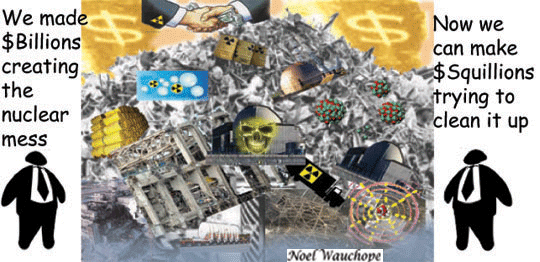
Nuclear power is dead. Here’s why it’s pretending that it’s not
|
US Nuclear Site Cleanup Underfunded By Up To $70 Billion, Clean Technica, December 1st, 2020 by Michael Barnard …………………..Nuclear power is going to be the gift that keeps on returning fiscal dividends for a century.
That’s why Brookfield bought the bankrupt Toshiba Westinghouse division, for the long-term, guaranteed decommissioning revenue. SNC Lavalin bought Canada’s CANDU for the same reason, although I’m sure they are at the trough on the Canadian SMR idiocy too. This isn’t exactly a secret. Nuclear projects always go over budget and over schedule, and there is exactly zero reason to believe decommissioning estimates provided by the industry. So why have jurisdictions been building more nuclear plants, whether at the egregious but at least honest costs of Hinkley, or the massively underestimated but increasingly obvious costs of the Virgil C. Summer and Vogtle sites? Three reasons. The first is the magic of net present value. That calculates the value of future dollars today given inflation. Just as a thousand bucks bought a lot more in 1990 than it does today, in 2050 it will buy a lot less than it does today. That means that liabilities that will be incurred decades in the future approach zero cost in today’s cost benefit analysis. Can you say generational inequity? The second is ideology. When really blatantly obvious economic sense gets thrown out the window, you start looking around for irrationality or graft. A lot of conservatives really hate onshore wind because it spoils the views from their manses (UK) or ranches (US) or country estates (Oz). They also think of wind and solar as inadequate hippy shit. They think nuclear is the answer. These are opinions that they formed in the 1970s or perhaps the 1980s, but conservatives have a stronger tendency to not let empirical reality change their mind. So Hinkley, Vogtle, and Summer are a triumph of ideology over reality. The third is graft. When we start talking about $10 billion or more to build a plant, billions in subsidies, and another billion to take the thing apart, a lot of people start rubbing their hands together and figuring out who they have to bribe now to get a big payoff later. The entire regulatory structure in the two states that had nuclear plants in construction until recently when one was finally put out of the state’s fiscal misery were both structured so that no matter how much the utility spent, it was guaranteed a set profit. If they built a $15 billion nuclear plant, they made a lot of profit off of the rate payers. If they built $2 billion worth of wind and solar instead, they made a lot less money off of the rate payers. It’s dumb as a box of hammers, but it’s part of the reason a lot of utilities love nuclear, and coal-generation carbon capture schemes to boot. They are licenses to print money. Outside of China, where they have trained resources who can build nuclear plants who would be mediocre at building wind and solar (which they are building a lot more of) and nuclear plants will displace coal plants, it doesn’t make a lot of sense to build new nuclear. The looming decommissioning debacle is just the icing on the cake. Wind and solar have proven themselves to be vastly cheaper, completely reliable on grids, and easy to integrate in very large amounts. Their decommissioning costs are trivial. That’s yet another reason why nuclear is dead, but pretending it’s not. https://cleantechnica.com/2020/12/01/us-nuclear-site-cleanup-underfunded-by-up-to-70-billion/ |
“……….
|
America’s underground radioactive dump – Waste Isolation Pilot Plant facing disruption
 Nation’s Only Underground Nuclear Waste Dump Could Face Disruptions, GAO Report Says, https://weather.com/news/news/2020-12-02-underground-nuclear-waste-dump-carlsbad-new-mexico By Jan Wesner Childs Nation’s Only Underground Nuclear Waste Dump Could Face Disruptions, GAO Report Says, https://weather.com/news/news/2020-12-02-underground-nuclear-waste-dump-carlsbad-new-mexico By Jan Wesner ChildsAt a Glance
The only underground nuclear waste dump in the United States is suffering from shortfalls in planning and staffing that could lead to disruptions at the facility, according to a new report from the Government Accountability Office.
The report published last month indicated that the Waste Isolation Pilot Plant near Carlsbad, New Mexico, could become full if the amount of waste shipped to the facility keeps expanding or if a new way of measuring waste is rejected in a pending court challenge, according to the Associated Press. The plant, known as the WIPP, was built in the 1980s for the disposal of defense-related nuclear waste, including clothing, tools, rags, debris, soil and other items contaminated with radioactive elements, according to a fact sheet from the facility. The WIPP’s disposal rooms were carved out of ancient salt beds 2,150 feet below ground. The U.S. Energy Department (DOE) estimates the facility could be full as soon as 2025, and work to expand storage capacity has been delayed. “DOE does not have assurance that WIPP’s planned additional physical space will be constructed before existing space is full, which would result in a potential interruption to disposal operations,” the GAO said in a summary of its report. The facility was shut down after two accidents in 2014 and has been operating at limited capacity since it reopened in 2017. Two ventilation projects need to be completed to return the WIPP to full operations, the GAO said, but those have been met by challenges in oversight and regulatory approval. Construction on a giant utility shaft, which is part of the project, is in danger of being suspended due to missed planning deadlines and the continued spread of COVID-19 at the facility, the Carlsbad Current-Argus reported. The WIPP had recorded 150 cases of COVID-19 as of Nov. 23, according to a news release. The GAO report cited staffing issues dating back to January, when about one-third of positions were vacant in the DOE’s Carlsbad Field Office, responsible for overseeing the project. The DOE has estimated that the WIPP would need to operate for at least 30 years to meet disposal needs, according to the AP. |
|
America’s Waste Isolation Pilot Plant needs more space as increasing as nuclear trash amounts increase
Daily Mail 1st Dec 2020, The federal government’s only underground nuclear waste dump could run out of room if the number of drums shipped to the New Mexico site keeps expanding or if a new method for measuring the waste is unraveled as part of a pending legal challenge, according to a nonpartisan congressional watchdog.
The Government Accountability Office in a recent report said better planning is needed at the Waste Isolation Pilot Plant to avoid
potential disruptions. The report specifically points to the need for adding more physical space at the repository before it becomes full, which the U.S. Energy Department estimates could happen as soon as 2025. The agency faces statutory limitations on how much waste can be disposed of at the site.
Britain’s Nuclear Decommissioning Authority doesn’t know how much the waste clean up wiill cost or when it will finish

David Lowry’s Blog 27th Nov 2020, The nuclear industry has perpetrated a lot of untruths in six decades of dissembling. But the brazen atomic assertion repeated endlessly in the1950s that atomic energy would produce power “too cheap to meter” ( originally said by the then chairman of the US Atomic Energy Commission, Lewis Stauss, on 16 September 1954, speech to the US National Association of Science Writers when he opined: “It is not too much to expect that our children will enjoy in their homes electrical energy too cheap to meter..”)
progress.”
http://drdavidlowry.blogspot.com/2020/11/nuclear-dissembling-from-too-cheap-to.html
Why we shouldn’t be talking about nuclear waste “disposal”
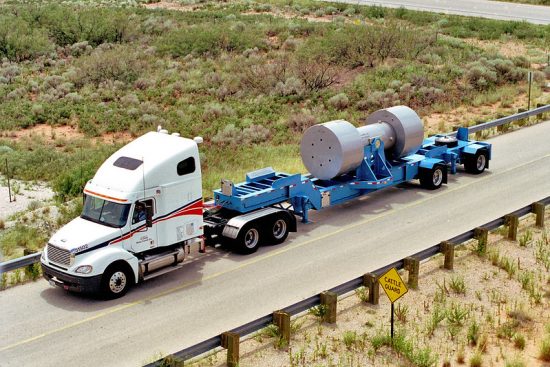
All casked up with nowhere to go https://beyondnuclearinternational.org/2020/11/29/all-casked-up-with-nowhere-to-go/ November 29, 2020 by beyondnuclearinternational
Why we shouldn’t be talking about nuclear waste “disposal” By Linda Pentz Gunter, 29 Nov 20
Let’s get one thing clear right off the bat. You don’t “dispose” of nuclear waste.
The ill-suited, now canceled, but never quite dead radioactive waste repository at Yucca Mountain was not a “disposal” site.
The radioactive mud being dredged from the sea bed at the Hinkley C nuclear site in the UK, is not going to get “disposed of” in Cardiff Grounds (a mile off the Welsh coast).
When Germany dumped radioactive waste in drums into the salt mines of Asse, it wasn’t “disposed” of.
Taking nuclear waste to Texas and New Mexico border towns and parking it there indefinitely is not “disposal”.
To talk about radioactive waste “disposal” is simply dishonest. It’s disingenuous at best and deliberately misleading at worst.
In Cardiff Bay, that radioactive waste will get “dispersed.” At Asse, the waste leaked out of the barrels and “dispersed” into water that has flooded the site.
At Yucca Mountain, were it to get a renewed green light, water will eventually carry off those radioactive particles, sending them into groundwater and drinking water downstream of the dump.
“Once you have made radioactive waste, then you are looking at long-term isolation, not disposal,” says Paul Gunter of Beyond Nuclear. “And its cost. And if you are looking to manage the liability of cost, then don’t make it.”
That’s the easiest kind of radioactive waste to “dispose” of. The kind you haven’t made. Because, as Gunter says, “there is no alchemy for radioactive detritus.” Once we’ve made it, it’s with us pretty much forever.
Federal agencies and nuclear corporations continue to wrestle over what to do with the already tens of thousands of tons of high-level radioactive waste (at least 90,000 at last count) generated by America’s commercial nuclear power plants — all casked up with nowhere to go (and a lot of it still in the fuel pools). Because, absent alchemy, that waste is always going to be somewhere, even if we can’t see it.
Once upon a time, the general public understood this. In 1986, when the US Department of Energy was looking for a geological burial site for commercial nuclear waste, it began giving serious consideration to the “granite state” of New Hampshire.
New Hampshire towns — some of which would have been seized and razed by eminent domain to make way for the repository — rose up in opposition. A stunning 100 of them signed a resolution that not only opposed the burial, storage, and transportation of high-level nuclear waste in New Hampshire, but also its production.
A law was eventually passed in New Hampshire that forbade siting a nuclear waste repository in the state, but not banning its generation. The construction of the Seabrook nuclear power plant on the New Hampshire coast progressed, and today the single unit of the two originally planned is duly generating radioactive waste for the state of New Hampshire, with still no place to go.
In fact, the law banning a repository in New Hampshire was quietly, almost covertly, overturned in the New Hampshire state legislature in 2011, a fact uncovered by State Rep. Renny Cushing while writing legislation in 2016. (Cushing is a founder of this country’s first anti-nuclear power group, the Clamshell Alliance, which vigorously opposed the construction of Seabrook.)
https://www.youtube.com/watch?v=BLeYKkA2V7EA German four-part animation piece, humorously demonstrated the impossibility of disposing of radioactive waste. This is the second segment.
In a characteristically stealthy way, the Nuclear Regulatory Commission has ensured there will be no repeat of that New Hampshire defiance. Today, under what was once called the Nuclear Waste Confidence Decision, but is now termed the “Continued Storage of High-Level Waste”, (presumably because no one dare claim any “confidence” about finding a waste solution), an intervention against a reactor license renewal can be disallowed if it is based on contentions challenging the absence of a long-term radioactive waste solution.
This means that our aging fleet of nuclear reactors are free to generate yet more radioactive waste, some of them for another 20 or even 40 years, even though there is still no sign of land when it comes to finding a safe, long-term management plan for what to do with it.
That’s remarkable hubris this far into the nuclear game. Even if one could (very reluctantly) forgive the initial optimistic procrastination — when Fermi achieved the first chain reaction in 1942, but everyone decided the waste problem would be solved later — there is no forgiving it now, 78 years on. That’s more than ample time to have realized that continuing to make more of a lethal substance that you can never dispose of is scientifically and morally reprehensible.
We cannot dispose of radioactive waste. But we can dispose of nuclear power. We should hesitate no longer and do just that.
Linda Pentz Gunter is the international specialist at Beyond Nuclear and writes for and edits Beyond Nuclear International.
1 This Month



Website of the Week
Now until to February 10, 2026 Radioactive waste storage in France: the debate is finally open! How to participate?
-
Archives
- January 2026 (162)
- December 2025 (358)
- November 2025 (359)
- October 2025 (377)
- September 2025 (258)
- August 2025 (319)
- July 2025 (230)
- June 2025 (348)
- May 2025 (261)
- April 2025 (305)
- March 2025 (319)
- February 2025 (234)
-
Categories
- 1
- 1 NUCLEAR ISSUES
- business and costs
- climate change
- culture and arts
- ENERGY
- environment
- health
- history
- indigenous issues
- Legal
- marketing of nuclear
- media
- opposition to nuclear
- PERSONAL STORIES
- politics
- politics international
- Religion and ethics
- safety
- secrets,lies and civil liberties
- spinbuster
- technology
- Uranium
- wastes
- weapons and war
- Women
- 2 WORLD
- ACTION
- AFRICA
- Atrocities
- AUSTRALIA
- Christina's notes
- Christina's themes
- culture and arts
- Events
- Fuk 2022
- Fuk 2023
- Fukushima 2017
- Fukushima 2018
- fukushima 2019
- Fukushima 2020
- Fukushima 2021
- general
- global warming
- Humour (God we need it)
- Nuclear
- RARE EARTHS
- Reference
- resources – print
- Resources -audiovicual
- Weekly Newsletter
- World
- World Nuclear
- YouTube
-
RSS
Entries RSS
Comments RSS
 nuclear-news