Saugeen First Nation do not want Canada’s nuclear waste. Nuclear Waste Management Organization says the project will not be built without their consent.

Saugeen First Nation debates fate of Canada’s nuclear waste CTV News , Scott Miller CTV News London Videographer @ScottMillerCTV Contact Sunday, May 16, 2021 ”…… Last January, the Saugeen Ojibway Nation voted 85 per cent against plans to bury Ontario’s low and intermediate level nuclear waste along the shores of Lake Huron.
Saugeen members will have a similar decision to make on plans to bury Canada’s high-level nuclear waste under 1,500 acres of farmland, north of Teeswater, because the planned project also falls within their traditional territory.
The Nuclear Waste Management Organization says the project will not be built without SON’s consent.
“Well it’s important now because that’s what was agreed to as part of the treaties. So there’s constitutional rights that are at play,” says NWMO’s Indigenous Knowledge and Reconciliation Section Manager, Jessica Perritt.
SON leadership have said they didn’t ask for nuclear waste to be created and temporarily stored in their territory, but now, they must be part of deciding its fate.
“We’ve got to treat our people, not like the olden days where the Indian Agent didn’t even allow us to think or make decisions. We can make decisions for ourselves,” says Roote………..
Members of the Saugeen Ojibway Nation and residents of South Bruce have until 2023 to decide if they want to permanently house Canada’s first and only underground nuclear waste storage facility. https://london.ctvnews.ca/saugeen-first-nation-debates-fate-of-canada-s-nuclear-waste-1.5430208
USA govt to delay removing plutonium nuclear waste from the decommissioned Hanford nuclear reservation
Washington State Nuclear Site to Delay Moving Waste Off-Site https://www.usnews.com/news/best-states/washington/articles/2021-05-13/washington-state-nuclear-site-to-delay-moving-waste-off-site
The U.S. Department of Energy and its regulators have proposed extending the deadline to ship waste contaminated with plutonium off the decommissioned Hanford nuclear reservation in Washington state.
By Associated Press|May 13, 2021, RICHLAND, Wash. (AP) — The U.S. Department of Energy and its regulators have proposed extending the deadline to ship waste contaminated with plutonium off the decommissioned Hanford nuclear reservation in Washington state.
The proposal moves the deadline back 20 years — from 2030 to 2050 — to ship the waste to a national repository in New Mexico for permanent disposal, the Tri-City Herald reported Wednesday.
“We realized that the existing milestone dates were unachievable,” said John Price, a manager with the state Department of Ecology, which is a regulator for the nuclear site.
The Hanford nuclear reservation produced plutonium for nuclear weapons during the Cold War and World War II, leaving 56 million gallons (212 million litres) of radioactive waste in underground tanks. The 580-square-mile (1,500-square-kilometer) site is located in Richland, Washington about 200 miles (322 kilometers) southeast of Seattle.
Price also said there were some newly proposed deadlines that the Department of Ecology “enthusiastically” supports, including a commitment by the Department of Energy’s to start shipping some waste as early as 2028.
The federal agency and its regulators — the Department of Ecology and the Environmental Protection Agency — set waste cleanup plans and deadlines for the nuclear site.
The latest proposed deadlines cover suspected transuranic waste, or debris contaminated with plutonium, including about 11,000 containers stored at a Hanford complex.
Waste with artificially-made elements above uranium on the periodic table is also classified as transuranic.
A public meeting to discuss the latest proposed changes and answer questions was scheduled for Thursday.
Biden administration promises progress on nuclear waste
Escape From Yucca Mountain: Biden Administration Promises Progress on Nuclear Waste
Energy Department expects to announce next steps in coming months, WSJ, By Gabriel T. Rubin, May 14, 2021
THE ENERGY DEPARTMENT TAKES ON the politically radioactive issue of nuclear-waste disposal, which the past several administrations have tried and failed to resolve. The only federally designated long-term disposal site for waste from the nuclear power industry is at Yucca Mountain in Nevada (there is also a site near Carlsbad, N.M., for waste generated by the government’s nuclear weapons program). But sustained political pushback from Nevada officials has prevented the Yucca Mountain site from becoming operational. It’s a top issue for Nevada Sen. Catherine Cortez Masto, who Mr. Biden considered picking as his running mate and who is up for re-election next year.
Ms. Cortez Masto has extracted promises from Energy Secretary Jennifer Granholm that Yucca Mountain won’t be part of the administration’s planning for nuclear-waste disposal. But Ms. Granholm seems eager to still make progress on the issue, telling a House Appropriations panel last week that she anticipated announcing the department’s next steps “in the coming months.” Former President Donald Trumptried to restart the process, but after an outcry from Nevadans he reversed himself—tweeting, “Nevada, I hear you on Yucca Mountain”—and promised “innovative solutions” that didn’t come to fruition.
In a letter this month to Ms. Granholm, the American Nuclear Society and other industry groups urged her to establish an office to be the “focal point” of engagement on the waste issue with Congress and outside stakeholders. Congress appropriated money for such an office in its year-end funding deal in December. The office also would coordinate with the private sector on interim storage facilities.
n hopes of preventing presidents present and future from unilaterally establishing a Yucca Mountain-type plan, all the Democratic members of the Nevada congressional delegation co-sponsored legislation in March that would require the federal government to first receive permission from the governor and local officials before moving nuclear waste into a state
It’s anyone’s guess how concrete the Energy Department’s next steps might be ….(subscribers only) https://www.wsj.com/articles/escape-from-yucca-mountain-biden-administration-promises-progress-on-nuclear-waste-11620984602
UK’s Magnox nuclear reprocessing plant to close, leaving world’s largest stockpile of separated civil plutonium

Plutonium Policy, No2NuclearPower, No 132 May 2021, Update Introduction ..The Nuclear Decommissioning Authority (NDA) now expects the Magnox Reprocessing Plant at Sellafield to close this year (2021) – one year later than previously planned. The newer Thermal Oxide Reprocessing Plant (THORP) was shut in November 2018. Reprocessing, which has always been unnecessary, is the chemical separation of plutonium and unused uranium from spent nuclear waste fuel.
When reprocessing ends there will be around 140 tonnes of separated civil plutonium stored at Sellafield – the world’s largest stockpile of separated civil plutonium. (1) In 2008 the NDA launched a consultation on options (2) for dealing with this embarrassing stockpile – it is highly toxic, poses a permanent risk of proliferation, and will cost taxpayers around £73 million a year to store for the next century. (3) Today, after almost a decade and a half of dithering, the UK Government has failed to make any decisions, but still appears to favour the re-use option, which would probably involve transporting weapons useable plutonium or MoX fuel to reactor sites, such as Hinkley Point C and Sizewell B (and C if it is ever built) with an armed escort.
The NDA itself said in 2008 that deciding soon could save money by removing the need to build further plutonium stores. And the Government’s refusal to admit that using the plutonium as fuel for new reactors is not only extremely technically challenging but also probably unaffordable, means funds are being spent developing both re-use and immobilisation options thus maximising the cost of plutonium disposition at the same time maximising the cost of plutonium storage.
The story so far When reprocessing ends in 2021 there will be around 140 tonnes of separated civil plutonium stored at Sellafield. About 23 tonnes of this is foreign-owned, largely but not exclusively by Japanese utilities, and is managed under long-term contracts. (4) The UK’s stockpile of plutonium has been consolidated at Sellafield by transporting material at the former fast reactor site at Dounreay in Caithness down to Cumbria. The NDA says it has been working with the UK government to determine the right approach for putting this nuclear material beyond reach. (5) The options it is considering are all predicated on the development of a Geological Disposal Facility (GDF). Radioactive Waste Management Ltd (RWM) – a subsidiary of the NDA – is assuming that a GDF will be available to receive its first waste in the late 2040s. Then it will take around 90 years to emplace all existing waste before it can begin emplacing other materials such as immobilised plutonium or spent plutonium fuel. And there are no guarantees this timetable will be achieved. In Sweden, for example, which is perhaps one of the countries most advanced in its development of an underground repository, nuclear utilities have warned reactors may have to close early because of delays in the approval of the repository. (6)
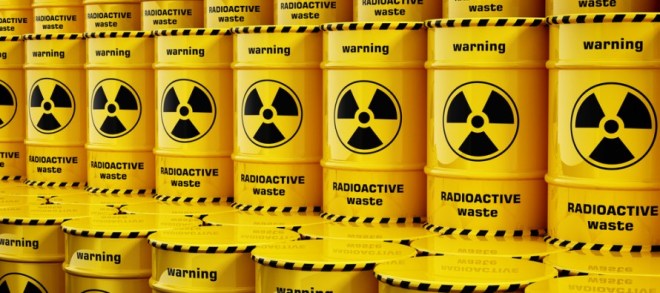
The Options Options considered for dealing with plutonium include using it as a fuel called Mixed Oxide Fuel (MoX) in nuclear reactors (followed by storage as spent fuel pending disposal in a Geological Disposal Facility (GDF)).
Storage Problems Meanwhile plutonium will have to continue to be stored at Sellafield. The NDA’s 2008 report said “If a decision were taken today on a solution for the inventory, there could still be a requirement to provide storage for around 40 years.” (17) Continued long-term storage of civil plutonium is not as easy as it sounds nor is it cheap, and there are many technical challenges. ……………..
The NDA considers some of the older plutonium packages and facilities used in early production to be amongst the highest hazards on the Sellafield site. Therefore, it is aiming to gradually transfer all plutonium to a new store, the Sellafield Product and Residue Store (SPRS) which opened in 2010……..
A proportion of the plutonium canisters at Sellafield are decaying faster than the NDA anticipated. A leak from any package would lead to an ‘intolerable’ risk as defined by the Office for Nuclear Regulation (ONR). The NDA has therefore decided to place the canisters more at risk in extra layers of packaging until SRP is operational. ………..
In 2014, the House of Commons Public Accounts Committee reported that the Government did not have a strategy in place for the plutonium stored at Sellafield. 7 years later, it has still not decided between the two options available to it: readying the plutonium stockpile for long-term storage in a geological disposal facility (that has yet to be constructed); or reusing it as fuel in new nuclear power stations. (25)
Conclusion The Government’s preferred option for the disposition of plutonium still appears to be to use the majority of the stockpile to fabricate Mixed Oxide Fuel for use in Light Water Reactors. This could mean transporting weapons-useable plutonium on our roads or rail network to Sizewell and Hinkley Point. These transports would need to be accompanied by armed police.
This is despite the fact that a plutonium immobilisation plant would be required in any case to immobilise that portion of the plutonium stockpile which is not suitable for use in MoX fuel.
Meanwhile, the Nuclear Decommissioning Authority needs to continue its programme of modernising Sellafield’s plutonium storage facilities, which will involve the construction extensions to the Sellafield Product and Residue Store (SPRS) and retreating and repacking some of the existing canisters which are considered unsuitable for storage in a modern store. This will also involve construction the Sellafield (Product and Residue store) Retreatment Plant (SRP).
Had the Government decided soon after the publication of the NDA’s options report to immobilise the UK plutonium stockpile, as advised by environmentalists and proliferation specialists, it is likely that savings could have been made by removing the requirement for one or both of the plutonium store extensions. Indeed, if a decision is taken soon, it may still be possible to avoid the cost of building the second store extension. of two
In short, Government policy appears to be maximising the cost of plutonium disposition by requiring both a MoX fuel fabrication plant AND a plutonium immobilisation plant, and at the same time maximising the cost of plutonium storage. Under this policy MoX fuel containing weapons useable plutonium would have to be transported under armed guard around the country. https://www.no2nuclearpower.org.uk/wp/wp-content/uploads/2021/05/nuClearNewsNo132.pdf
Sellafield’s plutonium waste has continued to circulate in the Irish Sea
Plutonium Remobilisation in the Irish Sea, No2Nuclear Power No 132 May 2021, Low-level aqueous radioactive waste has been discharged from the Sellafield site into the Irish Sea for more than 50 years. Originally it was thought that soluble radionuclides discharged from Sellafield (such as caesium and tritium) would be diluted and dispersed whereas long lived, transuranic nuclides such as Plutonium, and Americium would leach out of the liquid phase and become preferentially adsorbed to the surface of sedimentary particles in the water column, sink to the seabed and remain permanently bound and immobilised in seabed deposits and therefore isolated from human populations and the environment.
Unfortunately, it has since emerged that a proportion of such sediment associated radioactivity has, and is being actively transported around the Irish Sea while the remainder is temporarily “sequestered” in the seabed but subject to any future disturbance mechanisms such as storm, wave and seismic activity. In addition, a proportion of dissolved nuclides did not necessarily remain dissolved in liquid form in the water column, but could become incorporated into organic particles and deposited into sedimentary environments where they could be temporarily sequestered, but subsequently recycled back into the environment by dredging, trawling storm and seismic activity.
Plans by West Cumbria Mining (WCM) for an under-seabed coal mine off the coast of Cumbria near Whitehaven and the possibility of a Geological Disposal Facility, also under the seabed off the coast of Cumbria have raised concerns that transuranic radionuclides currently sequestered in Irish Sea sediments could be further remobilised as a result of these activities,
A large proportion of the Sellafield-derived radionuclides disposed to sea have become associated with the sediment at two sites close to the waste disposal pipeline: the Irish Sea Mudpatch and the Esk Estuary. The Mudpatch is a belt of fine-grained sediments located about10 km from the waste pipeline.
In 1999 Kershaw et al showed evidence that sediment-bound radionuclides over the previous decade were being redistributed. There was a decrease in the coastal zone around Sellafield and increases in Liverpool Bay and the western Irish Sea. Levels of dissolved 239/240Pu in the water column decreased only slowly since the peak discharge rates in the 1970s and much more slowly than the drop in Sellafield discharges. This suggests that material is moving from contaminated sediments and becoming dissolved in seawater where it is available for transport. Indeed, in the western Irish Sea, evidence has been found that 239/240Pu is being transported from the eastern Irish Sea. There is also evidence of the direct transport of contaminated sediment. (1)
Daisy Ray et al. highlight the fact that “once mobilised, the radionuclides can be transported elsewhere in the Irish Sea … Although waste discharges are continuing to decrease from the Sellafield site, the Mudpatch may continue to supply “historic” Sellafield-derived radionuclides to other locations. Indeed, recent data from Welsh and Scottish coastal areas suggest that the Mudpatch still acts as a source of radionuclides to UK coastal areas.” (2)
The model developed by Aldridge et al. at the Centre for Environment Fisheries and Aquaculture Science (CEFAS) in 2003 strongly suggest that the principal source of 239/240Pu in the Irish Sea was sediments in the eastern Irish Sea contaminated from past discharges, rather than new inputs from Sellafield. (3) Radionuclide re-distribution can occur by two principal mechanisms. Directly, by the transport of contaminated sediment, or indirectly via exchange and transport in dissolved form (dissolution). The latter process operates when tidal, wind or trawling activity re-suspends bed material allowing transfer of radionuclides to the water column. (4)
Ray el al. also suggest that bioturbation – the reworking of soils and sediments by animals or plants – at the Cumbrian Mudpatch will continue to act as a source of “historic” Sellafieldderived radioactivity to the UK Coastal Environment. If this redistribution of historical discharges of radionuclides is happening by natural processes, it can be assumed that the problem could become much more serious as a result of human mining activities under the seabed,
A recent report by Marine Consultant, Tim Deere-Jones concludes that:
It is evident that any subsidence within the WCM designated seabed mining zone will generate some form and degree of seabed morphological distortion. It is equally evident that any such seabed distortion will remobilise previously sequestered seabed sediments, and their associated pollutants, which will subsequently be transported and re-distributed through the regional marine and coastal environments. It is inevitable that such re-mobilisation and re-distribution will expose marine wildlife and human coastal populations and stakeholders to some degree of exposure doses to those pollutants via a number of mechanisms and pathways.” (5) https://www.no2nuclearpower.org.uk/wp/wp-content/uploads/2021/05/nuClearNewsNo132.pdf
Dungeness nuclear power station could be shut down earlier than planned
Kent Online 10th May 2021, A power station in Kent could start its defuelling phase seven years early
unless a number of “significant and ongoing technical challenges” are
overcome. Dungeness B power station on Romney Marsh has been off-line since
September 2018 while a multi-million pound maintenance programme was
carried out.
This work was due to be completed last year but that timeline
changed to August 2021 following a series of delays. But now EDF say the
ongoing challenges and risks “make the future both difficult and
uncertain”.
As a result, the energy company is now exploring a range of
options – including starting the procedure to shut the station down later
this year, seven years ahead of its planned defuelling phase. A statement
from EDF reads: “Dungeness B power station last generated electricity in
September 2018 and is currently forecast to return to service in August
2021.
“The station has a number of unique, significant and ongoing
technical challenges that continue to make the future both difficult and
uncertain. “Many of these issues can be explained by the fact that
Dungeness was designed in the 1960s as a prototype and suffered from very
challenging construction and commissioning delays. “We expect to have the
technical information required to make a decision in the next few months,
as it is important we bring clarity to the more than 800 people that work
at the station, and who support it from other locations, as well as to
government and all those with a stake in the station’s future.”
Cyberattacks grind Hanford nuclear energy workers’ benefit program to a halt

Cyberattacks grind Hanford nuclear energy workers’ benefit program to a halt, Seattle Times May 10, 2021 By Patrick Malone
Cyber attacks on the U.S. government have abruptly paused processing of benefit applications for workers who were sickened while working on nuclear weapons programs at Hanford and other Department of Energy sites, delaying aid to some dying workers, according to advocates.
Without warning, advocates from the Alliance of Nuclear Workers Advocacy Group received notice late last Friday that effective Monday, a vital component of the Energy Employees Occupational Illness Compensation Program would be offline for two to four months.
The Radiation Dose Reconstruction Program databases’ sudden hiatus could delay approval of new benefits for groups of workers who believe they’ve been exposed to workplace hazards.
Among them are more than 550 workers from Hanford, a mothballed plutonium processing site in Richland, who were potentially exposed to radiation and toxins when they were provided leaky respirators, according to a Seattle Times investigation last year.
Those workers are seeking inclusion in the federal benefits program administered by the Department of Labor. The National Institute of Occupational Safety and Health plays an instrumental role in determining eligibility.
Hanford, born in secrecy during World War II in a rush to develop the first atomic bomb, processed the plutonium fuel for nuclear weapons for four decades, a process that fouled the 580-square-mile site with radioactive waste and toxic vapors that sickened and killed many workers.
Washington’s U.S. Sen. Patty Murray and Rep. Adam Smith, both Democrats, sponsored legislation in response to The Times investigation that would expand benefits to include the Hanford cleanup crew who were given faulty respirators and other nuclear workers across the country who aren’t yet eligible.
Others who could be affected are some 1,378 individual workers across the country currently applying for assistance, and those with recent terminal diagnoses, who normally would be eligible for benefits awarded as quickly as a day after application. Those benefits can be worth hundreds of thousands of dollars.
“Terminally ill workers often do not have 2 to 4 months to live,” Terrie Barrie, ANWAG founder, wrote in a Monday, May 3, letter to NIOSH director to Dr. John Howard. “Will they no longer have the option to have their claim expedited so that they can receive the medical and financial benefits before they die?”
The source and nature of the cyberattacks are unclear, but in a May 4 letter to ANWAG, Howard said that an ongoing review of the energy workers’ compensation databases “identified very significant concerns about the cybersecurity integrity of the Program’s claimant database,” forcing an immediate and secret shutdown of the claims process……………………. https://www.seattletimes.com/seattle-news/times-watchdog/cyberattacks-grind-hanford-nuclear-energy-workers-benefit-program-to-a-halt/
Hanford challenge demands action on leaking nuclear waste tank

Ongoing threat.’ Groups demand action on leaking Hanford nuclear waste tank, Tri City Herald,
BY ANNETTE CARY, MAY 01, 2021 RICHLAND, WA
The newly discovered leak in another of Hanford’s aging tanks storing radioactive waste does not appear to threaten the health of Washington people in the near term, said Gov. Jay Inslee.
The Washington state Department of Ecology has the legal authority under the Tri-Party Agreement to take immediate action in response to the leaking tank only if it is “necessary to abate an imminent and substantial endangerment” to people or the environment.
Instead, the agency is starting talks with federal energy officials on what to do next.
If the two agencies can’t agree, then the state could take action, such as fines, and require specific steps to deal with the underground leak.
But groups from Seattle to the Tri-Cities that follow Hanford closely spoke out after the public was told Thursday about the leak.
Demands ranged from immediately emptying the tank to building better storage tanks for waste to a pilot project that could get more waste treated soon.
DOE notified the state Thursday that the tank was leaking, after investigating that possibility since March 2019.
Estimates of the amount of waste that have leaked vary, but the Department of Ecology puts it at a rate of nearly 1,300 gallons per year with an estimated 1,700 gallons leaked into the soil since March 2019…………..
The governor believes Congress should find opportunities to pay for construction needed to prepare waste now held in underground tanks for treatment and to glassify the tank for permanent disposal, his staff said.
Transferring waste from leak-prone single shell tanks to hold them in newer double-shell tanks is only a stop-gap measure and permanent solutions are needed, he said.
Tank B-109 is the second of Hanford’s 149 single-shell tanks identified as having active leaks in recent years. In 2013 Tank T-111 was discovered to be leaking about a half gallon to a gallon a day of waste.
Hanford is left with 56 million gallons of mixed radioactive and other hazardous chemical waste from the past production of two-thirds of the nation’s plutonium for its nuclear weapons program during World War II and the Cold War.
Work is underway to empty waste from leak-prone single-shell tanks into 27 newer double-shell tanks until it can be treated for permanent disposal.
As DOE works to start turning some of the tank waste into a stable glass form for disposal at the Hanford site’s $17 billion vitrification plant by the end of 2023, space is running short in the double-shell tanks.
NEW TANKS VS CLEANUP
Hanford Challenge, based in Seattle, said Tank B-109 needs to be emptied into another tank, putting pressure on DOE to build more tanks.
It quoted a Government Accountability Office report saying that DOE said that insufficient space in double-shell tanks was the top risk to its work to empty and close its aging tanks.
Work is underway to empty waste from leak-prone single-shell tanks into 27 newer double-shell tanks until it can be treated for permanent disposal.
As DOE works to start turning some of the tank waste into a stable glass form for disposal at the Hanford site’s $17 billion vitrification plant by the end of 2023, space is running short in the double-shell tanks.
Tank B-109 has been in use since World War II and currently holds about 123,000 gallons of waste, including about 15,000 gallons of liquid waste………………. https://www.tri-cityherald.com/news/local/hanford/article251052504.html
Bribing a declining rural community – into taking in nuclear waste

Goodwill’ money from proposed nuclear waste site pours into declining Ontario farm town. What if it stops?
Colin Butler · CBC News ·May 07, 2021 A citizens’ group is accusing Canada’s nuclear industry of using its financial might to groom a declining Ontario farm community into becoming a willing host for the country’s most dangerous radioactive waste.
In a pamphlet about the proposed disposal site that was published last year, the Ontario municipality of South Bruce —which encompasses the farming communities of Teeswater, Mildmay, Formosa and Salem — says it’s “on the decline.”
The pamphlet tells of a shrinking population, where rural towns and village “downtowns are fading from what they used to be,” with vacant store windows, big infrastructure bills and few prospects for new economic growth.
Protecting Our Waterways – No Nuclear Waste, a grassroots citizens’ group, accuses the Nuclear Waste Management Organization (NWMO) of taking advantage of the decline by spending millions of dollars on “goodwill” projects the community couldn’t afford on its own.
Bill Noll, a resident of Teeswater and the vice-president of Protecting Our Waterways, said the money has done a lot of good — it’s helped find small-town doctors, boosted senior care, upgraded wells, and even bought local firefighters lifesaving new safety equipment.
Money ‘divorced’ from project, group says
“Its strictly a goodwill gesture,” said Noll. “That money is not tied to anything to do with the project. It is completely divorced. Why would you spend one and a half million dollars on a community if you didn’t expect something back in return?”
The project Noll is referring to is a $23-billion nuclear disposal site where the NWMO wants to inter some three million spent nuclear fuel bundles in a sprawling network of tunnels and holes 500 metres below the ground.
South Bruce is one of two Ontario communities — the other is Ignace, about 2½ hours northwest of Thunder Bay — under consideration for what the NWMO is calling the “deep geological repository.” The NWMO says it’s working with local communities in selecting the site in 2023.
In the case of South Bruce, test drilling recently began north of the dairy town of Teeswater to see if the ancient bedrock is viable enough. But funds from the NWMO have been flowing in since 2012, when the local council volunteered to be considered as a host.
According to a March 2021 report from South Bruce Treasurer Kendra Reinhart, the community has received more than $3.2 million from the NWMO since 2012. It’s been used to pay for everything from St John Ambulance training, to offsetting extra costs of the pandemic, to the salaries of municipal employees.
The report didn’t include all the money, and noted several sources of NWMO funding were omitted. For instance, left out were requests for additional support, such as the $1.5 million the municipality is seeking from a $4-million NWMO-sponsored investment fund to help offset the cost of expanding a local sewage treatment plant.
Michelle Stein, another Teeswater resident and president of Protect Our Waterways, said the money has become so ubiquitous that on March 23, the same day the treasury report was presented to South Bruce council, NWMO appeared on the council agenda 121 times.
Mayor says community ‘foolish not to’ take money……
“Our community has really started to rely on the money from the NWMO,” said Stein.Stein and Noll said the more the municipality of South Bruce becomes intertwined financially with the NWMO, the harder it will be for the community to disentangle itself by saying no to the nuclear disposal site, lest it cut off the community’s newfound source of wealth……..
Sweden’s nuclear waste problem may mean closure of 5 reactors by 2028
| Five Swedish reactors risk closure by 2028 due to tardy nuclear waste decision, Reuters, 6 May 21Five Swedish nuclear reactors may need to close between 2024 and 2028 because a temporary site for storing spent fuel will soon be full and the government has yet to approve a final waste repository, their operating companies said on Wednesday. The Forsmark 4 reactor risks closure in 2024, followed in 2025 by Forsmark 3, Ringhals 3 and 4 and finally Forsmark 1 in 2028, the operators said in urgent market messages posted via power exchange Nord Pool.Ringhals is owned by a consortium comprising Vattenfall (VATN.UL) and Uniper (UN01.DE), while Forsmark is owned by the same two companies in addition to Fortum (FORTUM.HE) and Skelleftea Kraft.A Swedish government decision on used nuclear fuel storage must be made no later than Aug. 31 this year to avoid exceeding the permit for the interim storage site a Oskarshamn, the firms added…….. https://www.reuters.com/world/europe/five-swedish-reactors-risk-closure-by-2028-due-tardy-nuclear-waste-decision-2021-05-05/ |
How Chernobyl’s radioactive dust blanketed Europe in 1986

Radiation high over Europe after Chernobyl disaster – archive, 1986
3 May 1986: Mainland Europe experiences higher than normal radiation, with Poland, East Germany and Sweden bearing the brunt of contamination Michael SimmonsFrom the Guardian archive Mon 3 May 2021 By dusk last night, every country in mainland Europe had experienced higher than normal radiation as a result of the Chernobyl disaster. Only the Iberian peninsula was still clear, as governments in East and West, having recovered from the initial panic, started to count the medium-term costs.
Changes in wind direction from the epicentre at Kiev created fresh uncertainties throughout the day. The consensus among meteorologists was that the south-east wind which had done its worst earlier in the week in parts of Poland and Scandinavia was now veering towards due east, affecting Greece, Yugoslavia, and south-west Germany.
France reported “a minor increase” in atmospheric radioactivity, while Holland reported yesterday that, for the first time since the disaster, radiation levels were markedly higher than normal. In that country, government plans to air details of a proposed shift to nuclear power in the 1990s were shelved indefinitely.
The brunt of the contamination continued to be borne by the countries closest to the disaster area – notably Poland and East Germany – as well as Sweden, which has been seeking to take remedial measures since the beginning of the week.
The Swedish authorities ordered farmers to keep their cattle indoors – possibly for some weeks – and said people should not drink rainwater or eat wild vegetables or mushrooms. One fear in Stockholm is that the wind could veer back towards Sweden early next week……..
The brunt of the contamination continued to be borne by the countries closest to the disaster area – notably Poland and East Germany – as well as Sweden, which has been seeking to take remedial measures since the beginning of the week.
The Swedish authorities ordered farmers to keep their cattle indoors – possibly for some weeks – and said people should not drink rainwater or eat wild vegetables or mushrooms. One fear in Stockholm is that the wind could veer back towards Sweden early next week…….
Italy yesterday prohibited the sale of salad greens and barred a variety of imports from northern Europe. The Health Minister, Mr Costante Degan signed an order that forbade vendors from selling fresh leafy vegetables. https://www.theguardian.com/environment/2021/may/03/radiation-high-over-europe-after-chernobyl-disaster-1986
Steady growth of USA’s nuclear radioactive trash ( they prefer to call it ”spent fuel inventory”)

U.S. spent nuclear fuel inventory steadily increased from 2013 through 2017 https://www.eia.gov/todayinenergy/detail.php?id=47796 Principal contributor: Katherine Antonio, 3 May 21, The volume of spent nuclear fuel produced by nuclear power plants in the United States has steadily increased during the past few decades. The volume of spent nuclear fuel at the end of 2017 was 13.5% metric tons more than at the end of June 2013, according to newly released data from EIA’s Nuclear Fuel Data Survey. The survey data contain information on the quantity and characteristics of spent nuclear fuel at the time when a reactor discharges it.
The Nuclear Fuel Data Survey shows that between 1968 and 2017, more than 276,000 bundles of spent fuel rods (fuel rod assemblies), which contained a little less than 80,000 metric tons of uranium, were stored in the United States. The inventory of spent fuel assemblies has grown by about 13.2% from mid-2013 to the end of 2017.
The nuclear fuel used in nuclear reactors requires concentrated uranium (known as enriched uranium), which is further processed to create nuclear fuel. The enriched uranium is encased in fuel rods that go in a reactor’s fuel assembly to generate electric power. Each fuel assembly is typically used for a cycle of 18 to 24 months.
The discharged spent nuclear fuel rods are stored in one of two ways. The first approach stores spent fuel rods in pools of water that cool them and provide additional shielding from radiation. The pools of water resemble swimming pools. The second approach stores pre-cooled spent fuel rods in a container filled with inert gas. Each container is surrounded by steel, concrete, or other material to provide a stronger shield from radiation. In the United States, nearly all spent nuclear fuel is currently stored onsite at commercial nuclear power plants. A very small amount of spent nuclear fuel, less than 1%, is stored at offsite facilities.
We collect data on spent nuclear fuel from 119 commercial reactors in 33 U.S. states. The oldest reactor, now permanently shut down, is the Dresden 1, which started operating in Illinois in 1959. The newest reactor started operating in Tennessee in 2016. More than 17,500 metric tons of the cumulative spent nuclear fuel by uranium mass in the United States is stored in two states, Illinois and Pennsylvania. New York, North Carolina, and South Carolina have the next highest volumes of spent nuclear fuel in storage at more than 4,000 metric tons of uranium in each state.
We administer the Nuclear Fuel Data Survey for the U.S. Department of Energy’s Office of Standard Contract Management. You can learn more about nuclear energy in the United States on our website.
Malaysia needs to speak out on releasing nuclear waste into the sea
Malaysia needs to speak out on releasing nuclear waste into the sea https://www.theedgemarkets.com/article/malaysia-needs-speak-out-releasing-nuclear-waste-seaBernama/Bernama
May 02, 2021 KUALA LUMPUR : Malaysia needs to play its role as a member of the United Nations Environment Programme (UNEP) by speaking out on the long-term effect of releasing treated water from nuclear power plants into the ocean.
Co-founder of Project Ocean Hope, Mogesh Sababathy said actions need to be taken to ensure environmental sustainability, especially for marine life, is not threatened.
“Even though the nuclear waste will be diluted in water, its radioactive concentration should also be considered. And even when diluted, toxic is still toxic and it can still affect everyone.
“Hence, Malaysia needs to play its role and speak out on this issue at an international level, as this involves people’s security and health, as well as marine life in the region,” he told Bernama.
The Japanese government has recently approved a plan to release more than one million tonnes of treated water from the ruined Fukushima nuclear plant into the sea.
The plan also has the support of the International Atomic Energy Agency (IAEA), which says the release is comparable to the disposal of waste water from other nuclear plants globally.
Mogesh argued that this method will affect the world’s food chain security. “Nuclear radioactive is capable of affecting marine life and killing organisms, thus threatening the economic source of those who rely on it.
“It’s undeniable that Malaysia is far removed from Fukushima but we still share the same ocean. It is not impossible for the waste to drift to our country,” he said.
He hopes the relevant international bodies will study and develop safer alternative to dispose radioactive nuclear waste without harming the environment.
Texas legislators must reject proposal to lower human health and safety measures at nuclear waste dump
Texas legislators must reject proposal to lower human health and safety measures at nuclear waste dump , Record Star, 2 May 21, Texas legislators should reject proposed legislation that aims to remove environmental safeguards currently in place governing the disposal of nuclear waste in the state.
A bill that strips away the human health and safety precautions around the disposal of nuclear waste which have been in place since the state authorized nuclear waste dump sites nearly 20 years ago is headed to a vote in the Texas House of Representatives later this month or next. HB 2692, authored by Odessa Rep. Brooks Landgraf, would remove the provision mandating that all nuclear waste be containerized in steel- reinforced structures prior to being placed in a below-surface waste dump.
“Every environmental organization in the state of Texas has come out against this drastic rollback on protecting the citizens of this state, yet it sailed right out of committee and is headed to the full House and Senate” said Eric Holguin, executive director of Texas Environment First. “Texas is one of only a handful of states that even allows nuclear waste dumps to operate. There is absolutely no rational explanation for why the state should lower its regulatory standards in 2021.”
The Texas facility disposes of Class A, B, and C low level radioactive waste in Andrews, County, which is also home to the Ogallala Aquifer – a vital source of drinking water for much of the state. From the outset of operations, the state has mandated containerized disposal. ,,…… While the proposal purports to seek a ban on high level nuclear waste disposal in Texas, no federal license for high level waste storage or disposal has been issued in Texas.
“All of us are prepared to fight any federal efforts to bring high level nuclear waste to Texas,” Holguin said. “But right now, low level nuclear waste is being disposed of every day at the Andrews facility. De-regulating nuclear waste dumps is a colossally bad idea. The Texas Legislature must reject it.” https://www.recordstar.com/story/news/2021/04/29/texas-legislators-must-reject-proposal-lower-human-health-and-safety-measures-nuclear-waste-dump/7398882002/
South Korean fishermen protest against the dumping of Fukushima wastewater into the Pacific Ocean
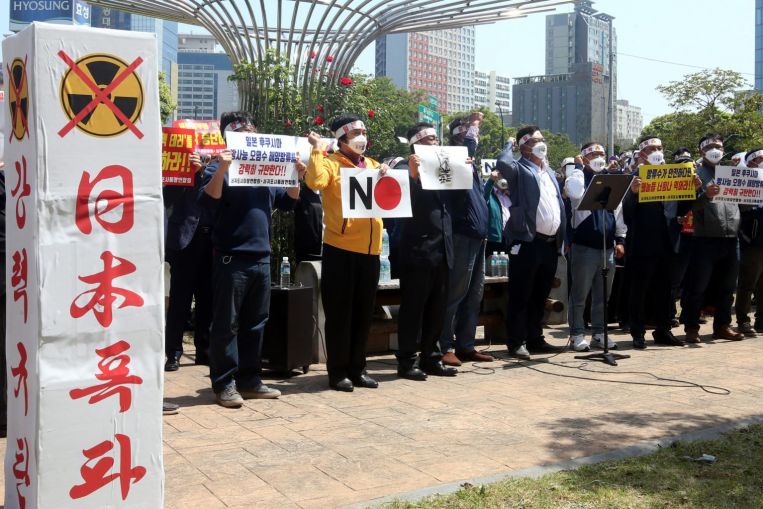
S.Korean fishermen hold boat protests against Japan nuclear plans, Reuters 30 Apr 21, Hundreds of South Korean fishermen across the country held protests on Friday calling on Japan to reverse its decision to release contaminated water from its crippled Fukushima nuclear plant into the sea.
About 800 fishermen participated in rallies at ports in nine cities, according to South Korea’s National Federation of Fisheries Cooperatives.
At one port, at Gungpyeong on the west coast, fishermen held anti-Japan banners and chanted slogans such as “Withdraw Japan’s decision” and “Condemn irresponsible nuclear attack”. Twenty fishing boats with banners denouncing Japan’s decision sailed near the port.
“My father bequeathed this sea to me and I’m going to pass it on to my son, who is also fishing,” said Park Re-seung, chief of Yongdu-ri fishing village, who has worked in the fishing industry for 38 years. “Why is Japan doing this? How could they do such a bad thing against the sea? Don’t they eat fish?”…….
“For us, this issue is about making our living,” Park added. “If the customers continue to see the news of the water release, they wouldn’t be even buying fishes that we caught here.” https://www.reuters.com/business/environment/skorean-fishermen-hold-boat-protests-against-japan-nuclear-plans-2021-04-30/
1 This Month
23-25 October – on Zoom – World BEYOND War’s annual global conferenc

To see nuclear-related stories in greater depth and intensity – go to https://nuclearinformation.wordpress.com

Say No to NASA’s Reckless Nuclear Reactor on the Moon
Say No to NASA’s Reckless Nuclear Reactor on the Moon
-
Archives
- October 2026 (149)
- September 2026 (339)
- August 2026 (330)
- July 2026 (355)
- June 2026 (287)
- May 2026 (306)
- April 2026 (356)
- March 2026 (251)
- February 2026 (267)
- January 2026 (308)
- December 2025 (358)
- November 2025 (359)
-
Categories
- 1
- 1 NUCLEAR ISSUES
- business and costs
- climate change
- culture and arts
- ENERGY
- environment
- health
- history
- indigenous issues
- Legal
- marketing of nuclear
- media
- opposition to nuclear
- PERSONAL STORIES
- politics
- politics international
- Religion and ethics
- safety
- secrets,lies and civil liberties
- spinbuster
- technology
- Uranium
- wastes
- weapons and war
- Women
- 2 WORLD
- ACTION
- AFRICA
- Atrocities
- AUSTRALIA
- Christina's notes
- Christina's themes
- culture and arts
- Events
- Fuk 2022
- Fuk 2023
- Fukushima 2017
- Fukushima 2018
- fukushima 2019
- Fukushima 2020
- Fukushima 2021
- general
- global warming
- Humour (God we need it)
- Nuclear
- RARE EARTHS
- Reference
- resources – print
- Resources -audiovicual
- Weekly Newsletter
- World
- World Nuclear
- YouTube
-
RSS
Entries RSS
Comments RSS

