Crimea to demolish dangerous, (and never operational), nuclear power station
Decommissioned Crimea nuclear plant to be demolished: government , S and P Global, Vladislav Vorotnikov , EditorSteven Dolley 8 Feb 21, Moscow — The government of Crimea has decided to fully demolish the Crimean Atomic Energy station near Shcholkine, construction of which was halted after the Chernobyl accident in 1986, the government said in a statement on its website Feb. 5.
Construction of the plant and its one 1,000-MW VVER-1000 started in 1976, and by 1986 was nearly complete. However, a Soviet government inspection after the Chernobyl accident found the plant to be located on a geologically volatile site and construction was canceled in 1989.
By the end of 2021, the authorities plan to demolish two diesel generator stations, the turbine hall, machine block foundation, pumping station, and the nuclear power plant’s reactor compartment, the government said Feb. 5.
“These objects are unsuitable for operation,” Daniil Pidaev, spokesperson for the Crimean Architecture and Building Ministry, told to the Russia Gazette, the Russian government’s in-house publication. “They have lost their properties, are in a dilapidated state, and there is a threat of collapse,” posing a threat to those who visit the facilities, Pidaev said………… https://www.spglobal.com/platts/en/market-insights/latest-news/electric-power/020821-decommissioned-crimea-nuclear-plant-to-be-demolished-government
The dangers and uncertainties in Andra’s radioactive waste disposal project in Bure (Meuse)
 Le Monde 5th Jan 2021, Environmentalists and unionists combine against the radioactive waste landfill project in Bure (Meuse). In a forum at the ”World”, they stated their concern at the dangers and uncertainties of the project. Their opinion is bolstered by a recent statement issued on January 13 by the Environmental Austhority, which stressed the uncertainties surrouding the waste disposal plan.
Vigorous opposition has never ceased to alert the public, since 1987, to the immense risks of the geological disposal of radioactive waste. The opinion of the Environmental Authority corroborates what thousands of citizens, elected officials and independent scientists have been denouncing for years, without being truly heard.
Nuclear power unaffordable in USA, Russia, India, France, even China, but NO SOLUTION TO WASTES
|
Germany: Nuclear phaseout or renaissance? https://www.dw.com/en/germany-looking-for-final-repository-for-nuclear-waste-global-outlook/a-56449115– 5 Feb 21,
Germany’s nuclear phaseout will be completed by the end of 2022. Safe final repositories for nuclear waste still haven’t been found, but some countries are still building new reactors. Does nuclear have a future? There are currently 413 nuclear reactors in operation in 32 countries around the globe. According to the annual World Nuclear Industry Status Report (WNISR), nuclear power accounted for about 10% of global electricity demand in 2019, the highest share being 17.5% in 1996. Most reactors were built between 1968 and 1986, mainly in Europe, the United States, the former Soviet Union and Japan. The global average age of these reactors is 31 years.
|
|
|



Canadian local community group opposes nuclear waste dump on farming land

South Bruce nuclear dump opponents address Minto council . Group: site near Teeswater would mean transporting waste through neighbouring communities, https://www.wellingtonadvertiser.com/south-bruce-nuclear-dump-opponents-address-minto-council/ , Wellington Advertiser, Patrick Raftis, February 4, 2021 MINTO – A group fighting a proposal to locate an underground dumpsite for radioactive nuclear waste in neighbouring South Bruce brought its concerns to council here on Feb. 2.
“Over 50 years ago the nuclear industry told the government to let them start producing nuclear power and they would have a solution for the waste within five years,” said Michelle Stein of Protect Our Waterways – No Nuclear Waste (POWNNW), during a council video-conference meeting.
“But they didn’t. Now they have a problem.”
Stein explained POWNNW was formed last February after an announcement that 1,300 acres of prime farmland had been purchased and optioned by the Nuclear Waste Management Organization (NWMO).
NWMO is proposing to locate a deep geologic repository (DGR) in South Bruce to contain high-level radioactive nuclear waste from all of Canada’s nuclear reactors.
Stein said the radioactive waste from Canada’s reactors is “safe where it is right now.
“But politically, it’s no longer acceptable and the government and the public are demanding a solution before they grant the nuclear industry permission to expand.”
Stein continued, “There’s a lot of money on the line. So the industry has set up [NWMO], which is funded and directed by the nuclear industry and the best idea they’ve come up with is to take this highly radioactive nuclear waste that is dangerous for over 100,000 years and bury it under prime farmland in the municipality of South Bruce.”
The proposed site near Teeswater was selected, said Stein, because “that’s where they found owners willing to sell them land” and “South Bruce was one of the municipalities who offered to learn more in exchange for money – lots of money.
“A lot of the money is spent on promoting the project, but there’s also donations to local organizations and community projects,” she noted.
Stein told council l the proposed site “has the Teeswater river running through it, wetlands at the edge of the Greenock Swamp, springtime floodplain and the town of Teeswater is close enough to see, with its elementary schools and the Teeswater Gay Lea plant.”
Stein called the proposed South Bruce repository “an experiment,” noting there are currently no operating DGRs for high level nuclear waste on the planet.
She noted an almost complete, but not yet licensed, DGR in Finland is presently the closest to coming on line.
According to the Canadian Nuclear Safety Commission, said Stein, the Waste Isolation Plant Pilot (WIPP) in New Mexico is the only operational DGR in the world.
It accepts only low/intermediate nuclear waste, not high level, and is located in a desert, 35 kilometres from the nearest town and surrounded by a controlled safety zone encompassing more than 10,000 acres.
“The only thing we can really learn from this project is that accident happens and you can’t predict human error,” said Stein.
She added that in 2014 the WIPP “became radio actively contaminated by explosion of an underground drum of nuclear waste due to human error.”
Stein said the 2014 incident was “a mistake that took three years and $500 million to clean up.”
She pointed out establishing a DGR in South Bruce would massively increase the amount of nuclear waste being transported through a wide region.
“Currently they are around five loads of high level waste being moved per year, but an operating DGR would increase that to one or two shipments per day. These loads would be transported through surrounding communities,” she stated.
“And what does this mean for agriculture? Will consumers want to purchase products produced next to a nuclear dump? Will people want to buy freezer beef or chicken raised on or beside a nuclear dump?”
With the NWMO publicly stating it is looking for a “willing host,” Stein said POPNNW wants to see a clear benchmark that defines the term.
The group is lobbying for a standard that would require a two-thirds vote in favour of the proposed DGR, using a community referendum with a clear yes or no question, supervised by an independent third party.
Councillor Ron Elliott asked Stein what her group believes would be a better solution to burying the waste.
“You’re recommending we can’t get rid of the nuclear waste underground. What do you recommend we do with it? Because it’s there, we’ve got nuclear waste to get rid of,” said Elliott.
Stein replied, “At this time we’re recommending they go with rolling stewardship, which is keeping it above ground in a monitored state until they come up with a real solution.”
“So wouldn’t that be more dangerous?” asked Elliott
“Building a DGR doesn’t remove it from above ground. It still needs to be above ground (in containment pools) for 30 years before it can even be moved,” said Stein.
“What is a safe recommendation?” Elliott persisted.
“At the end of the day the nuclear industry has had over 50 years to come up with an idea and they haven’t,” Stein responded.
“To be honest, most of us have only been thinking about it for a year. But to accept the wrong solution is in fact no solution at all.”
Bill Noll, another member of the POPNNW delegation, said Ontario Power Generation has stated nuclear waste has been stored safely above ground for 60 years “and it can be stored longer.”
Noll said the group would like to see Canada wait for the results from the planned Finnish DGR in 2024 before going ahead with one here.
“Let them experiment for a couple of decades while we keep it above ground safely and then maybe we can consider whether or not the DGR is safe,” said Noll.
Deputy mayor Dave Turton asked Stein if local officials in South Bruce responded to the group’s concerns.
“Are they listening to you?” he asked.
Noll replied, “We are up against the wall to some degree. Our council is very much interested to see some economic development in the area, and we certainly understand and appreciate that, and so they’re very much in tune with the agenda being put forward by the NWMO.”
Mayor George Bridge thanked the group for sharing information with council.
In desperate economic plight, two Japanese towns willing to host nuclear waste dump

It’s sad that small Japanese towns are being forced to these lengths to protect their economic stability.
Two Japanese Towns Want to Host an Underground Nuclear Waste Dump 5 Feb 21, https://earther.gizmodo.com/two-japanese-towns-want-to-host-an-underground-nuclear-1846200890 Dharna Noor
No matter how you feel about nuclear energy, nuclear waste is generally something you want to stay as far away from as possible—unless you’re two villages on the Hokkaido, Japan’s second-largest island. The two small fishing towns, Suttsu and Kamoenai, are competing to become the site for a high-level radioactive waste storage site as a means to stay afloat economically. But not everyone is so thrilled about the prospect.
According to national data, Japan has generated more than 19,000 tons of highly toxic atomic waste since it began using nuclear power in 1966. To keep it away from people, back in 2000, the country passed the Designated Radioactive Waste Final Disposal Act to open a call for an underground waste repository for some of it.
At the time, unsurprisingly, no municipalities to sign up to host the toxic stuff. The trepidation only grew when in 2011, an earthquake and tsunami triggered an explosion at Japan’s Fukushima Daiichi Nuclear Power Plant, releasing an unprecedented amount of radioactive contamination into the ocean. It was the most severe nuclear accident since Chernobyl.
But now, times are desperate in Japan’s small villages. Fishing, once a booming industry, is in decline. Many young people are moving into cities where economic prospects are better. As a result, populations are shrinking. Suttsu currently has a population of 2,885, down from nearly 5,000 in 1980, and Kamoenai is home to just more than 800. As Bloomberg noted, both towns were also hit hard by the economic downturn of the covid-19 pandemic last year.
Agreeing to host the nuclear storage facility would be a major boost for either town. By agreeing to preliminary research into hosting the nuclear storage facility, municipalities can rake in up to $19 million in government subsidies over two years. If that first stage goes well, another $66 million becomes available in exchange for a four-year field survey and preliminary drilling. If that goes smoothly, the town would go through a 14-year evaluation period, unlocking even more funding. In total, the potential prize for agreeing to host the facility could be up to $37 billion in investments. So in October, both towns’ officials came forward as potential candidates.
But of course, the prospect of living near an atomic waste dump has sparked opposition from concerned residents of both towns. Nuclear waste can contain toxic elements like uranium and plutonium. Anti-nuclear advocates in Suttsu even pushed for a referendum on the village’s application, but the municipal assembly voted it down. Japanese government officials said their review process is airtight and would protect locals, but in an interview with the magazine Aera, Yugo Ono, a geology professor at Hokkaido University, said the earthquake risk is high and could lead to the stored waste leaking.
It’s sad that small Japanese towns are being forced to these lengths to protect their economic stability. But at some point, Japan will need to put its nuclear waste somewhere. Let’s just hope when it does, it does so safely.
Japan’s huge radioactive waste problem
 Japan Times 3rd Feb 2021, Two fishing villages in Hokkaido are vying to host the final storage
facility for half a century of Japanese nuclear waste, splitting
communities between those seeking investment to stop the towns from dying,
and those haunted by the 2011 Fukushima disaster, who are determined to
stop the project.
In the middle is a government that bet heavily on nuclear
energy to power its industrial ascent and now faces a massive and growing
pile of radioactive waste with nowhere to dispose of it. Since it first
began generating atomic energy in 1966, Japan has produced more than 19,000
tons of high-level nuclear waste that is sitting in temporary storage
around the country.
After searching fruitlessly for two decades for a
permanent site, the approaches from Suttsu, population 2,885, and Kamoenai,
population 810, may be signs of progress. The towns have focused a debate
that has bedeviled an industry some regard as a vital emissions-free energy
source and others revile as a dangerous liability. The accidents at
Chernobyl in 1986 and Fukushima in 2011 reinforced public skepticism about
both the safety of reactors and our ability to safely store their residue
for centuries. While new generations of fail-safe reactor designs may
eventually help assuage the first concern, the problem of the waste
remains.
https://www.japantimes.co.jp/news/2021/02/03/national/hokkaido-nuclear-villages/
Unsafe plan for abandoning nuclear reactors onsite, and developing Small Nuclear Reactors
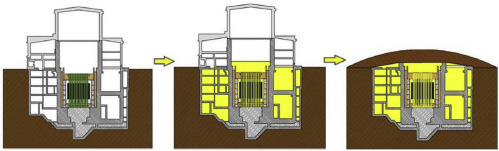
“IAEA guidance that entombment is not considered an acceptable strategy for planned decommissioning of existing [nuclear power plants] and future nuclear facilities.”
|
Groups oppose plans to abandon defunct nuclear reactors and radioactive waste, https://rabble.ca/columnists/2021/02/groups-oppose-plans-abandon-defunct-nuclear-reactors-and-radioactive-wasteThe Canadian Nuclear Safety Commission (CNSC) has just given a green light to the preferred industry solution for disposal of nuclear reactors — entomb and abandon them in place, also known as “in-situ decommissioning.” This paves the way for the introduction of a new generation of “small modular” nuclear reactors or SMRs. Over 100 Indigenous and civil society groups have signed a public statement opposing SMR funding, noting that the federal government currently has no detailed policy or strategy for what to do with radioactive waste. Many of these groups are also participating in a federal radioactive waste policy review launched in November 2020. The Assembly of First Nations passed resolution 62/2018 demanding that the nuclear industry abandon plans for SMRs and that the federal government cease funding them. It calls for free, prior and informed consent “to ensure that no storage or disposal of hazardous materials shall take place in First Nations lands and territories.”
An SMR emits no radiation before start-up (other than from uranium fuel) and could easily be transported at that stage. But during reactor operation, metal and concrete components absorb neutrons from the splitting of uranium atoms — and in the process, transform into radioactive waste. Removing an SMR after shut-down would be difficult and costly, and comes with the need to shield workers and the public from its radioactivity. Abandoning nuclear reactors on site has been in the works for some time. CNSC helped draft a 2014 nuclear industry standard with in-situ decommissioning as an option and then included it in a July 2019 draft regulatory document. However, when the International Atomic Energy Agency (IAEA) released a peer-reviewed report on Canada’s nuclear safety framework last February, it said in-situ decommissioning is “not consistent” with IAEA safety standards. The IAEA suggested that CNSC “consider revising its current and planned requirements in the area of decommissioning to align with the IAEA guidance that entombment is not considered an acceptable strategy for planned decommissioning of existing [nuclear power plants] and future nuclear facilities.” It also noted that CNSC is reviewing license applications for in-situ decommissioning of shut-down federal reactors in Ontario and Manitoba, and encouraged Canada “to request an international peer review of the proposed strategy” for legacy reactors. But CNSC continued to pursue this strategy. Clever language in a June 2020 document appeared to rule out on-site reactor disposal, but left the door open where removal is not “practicable”:
At public meeting last June, CNSC Commissioner Sandor Demeter asked: “why are future facilities in this sentence when in fact we should be designing them so that in-situ decommissioning is not the option?” Former CNSC staff member Karine Glenn replied that “leaving some small parts of a structure behind…especially if you are in a very, very remote area, may be something that could be considered.” Glenn is now with the industry-run Nuclear Waste Management Organization, tasked with leading the development of a radioactive waste management strategy for Canada. Commissioners decided to approve the regulatory document, but with added text to clarify where in-situ decommissioning would be acceptable. They asked for additional text on “legacy sites” and “research reactors,” stating that “[t]he Commission need not see this added text if it aligns with the oral submissions staff made in the public meeting.” But no new clarifying text was added to the final version of the document published on January 29, 2021. It enables abandonment of SMRs — by retaining the reference to future nuclear facilities — and of “research and demonstration facilities, locations or sites dating back to the birth of nuclear technologies in Canada for which decommissioning was not planned as part of the design.” The CNSC seems willing to ignore international safety standards — and a decision of its own commission — to accommodate nuclear industry proponents of SMRs and allow radioactive waste to be abandoned in place. Meanwhile, the federal government has assigned the nuclear industry itself — via the Nuclear Waste Management Organization — the task of developing a radioactive waste strategy for Canada. Barring public outcry, that strategy will be abandonment. Ole Hendrickson is a retired forest ecologist and a founding member of the Ottawa River Institute, a non-profit charitable organization based in the Ottawa Valley. |
|
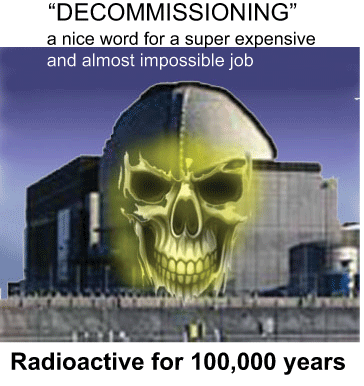
Nuclear Rubberstamping Commission rushes to approve Holtec’s New Mexico nuclear waste plan

Republican Texas Gov. Greg Abbott has categorically denounced the Holtec project and all other proposals to store nuclear waste in the area.
there are “no plans of ever removing” the waste. “We see no reason,” they said, “to rush a decision that affects generations of New Mexicans during a pandemic on behalf of an international, for-profit corporation.”
New Mexico’s nuclear rush, A massive nuclear waste site near Carlsbad is seemingly on a fast track. Can the company behind it be trusted? Searchlight New Mexico, By Sammy Feldblum and Tovah Strong|February 3, 2021
For most New Mexico businesses, the arrival of COVID-19 wreaked havoc, caused shutdowns or threatened doom. But for one enterprise — potentially one of the world’s largest nuclear waste sites — the pandemic offered an unusual opportunity.
A long-planned nuclear waste storage facility in the southeastern New Mexico desert was rushed through the approval process during the pandemic, according to New Mexico’s congressional delegation, environmentalists and other opponents.
Typically, project foes would have been able to voice their disapproval at Nuclear Regulatory Commission hearings around the state. The coronavirus brought an end to such public gatherings, however, so New Mexico lawmakers asked the NRC to pause the hearings.
Instead, the agency switched to online meetings — and shut out dissenters in the process.
“There is a large population of individuals living in New Mexico without internet or phone access” — and the virtual hearings required both, said environmental activist Leona Morgan of the Nuclear Issues Study Group. A Diné woman who protests what she calls nuclear colonialism, Morgan said that many people couldn’t join the meetings because they didn’t have robust broadband connections, a common problem in tribal areas and remote parts of New Mexico. Continue reading
Increasing business and jobs in closing down Europe’s nuclear reactors, as renewable energy grows
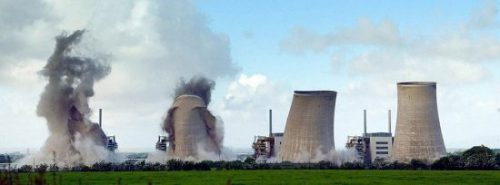
Europe Nuclear Decommissioning Service Market Forecast to 2027: COVID-19 Impact and Analysis by Reactor Type; Strategy; Application; Capacity and Country – ResearchAndMarkets.com Yahoo Finance, 3 Feb 21, The “Europe Nuclear Decommissioning Service Market Forecast to 2027- COVID-19 Impact and Analysis by Reactor Type; Strategy; Application; Capacity and Country” report has been added to ResearchAndMarkets.com’s offering.The nuclear decommissioning service market in Europe was valued US$ 2.68 billion in 2019 and is projected to reach US$ 4.29 billion by 2027; it is expected to grow at a CAGR of 6.2% from 2020 to 2027.
The growing health concerns due to radioactive emissions from aging infrastructures have compelled the European countries to decommission nuclear power plants that are nearing the end of their operational lives. France and Germany are among the leading countries in the nuclear decommissioning services market in this region.
In Germany, the nuclear energy generation sector contributes 12% to the total electricity generation. The country has no plans to construct newer nuclear power plants in the coming years. Germany decommissioned 11 nuclear power plants in the past decade, including Philippsburg nuclear facility that retired in 2019.
The German government has laid down its plans to decommission the remaining 6 nuclear power plants by 2022; these plants are Gundremmingen nuclear plant (2021), Grohnde nuclear power plant (2021), Brokdorf nuclear power plant (2021), Neckarwestheim nuclear power plant (2022), Isar nuclear plant (2022), and Emsland nuclear power plant (2022). The decommissioning strategies laid down by the government have been creating business growth opportunities for decommissioning service providers.
With the growth in the demand for electricity generated via renewable sources, rise in thermal power plants, and aging of long-established nuclear power plants, the governments are undertaking significant steps to decommission several power plants that are nearing the end of operational life. This is boosting the demand for services offered by the nuclear decommission services market players. The average lifespan of a commercial power reactor is 35-40 years.
A large number of commercial reactors operating today are soon likely to reach the end of operational life, and the governments of respective countries have approved the plans for their decommissioning. The cost of dismantling and decommissioning a commercial nuclear power plant is high and requires huge workforce.
The Italian nuclear power generation and transmission sector contributes to only 8% of the country’s overall electricity generation and transmission. The country had 4 reactors in the past, but it has been decommissioning the reactors following the Chernobyl disaster in 1986. Italy relies heavily on import of electric power and is the world’s second-largest net importer of electricity. Sogin S.p.A., a government-owned nuclear decommissioning service provider, has been engaged in dismantling and decommissioning several nuclear power plants in the country. ……….https://finance.yahoo.com/news/europe-nuclear-decommissioning-market-forecast-124000767.html
Radiation illnesses and COVID-19 in the Navajo Nation
 Radiation illnesses and COVID-19 in the Navajo Nation, Bulletin of the Atomic Scientists, By Jayita Sarkar, Caitlin Meyer, February 3, 2021 The COVID-19 pandemic is wiping out Indigenous elders and with them the cultural identity of Indigenous communities in the United States. But on lands that sprawl across a vast area of the American West, the Navajo (or Diné) are dealing not just with the pandemic, but also with another, related public health crisis. The US Centers for Disease Control and Prevention says COVID-19 is killing Native Americans at nearly three times the rate of whites, and on the Navajo Nation itself, about 30,000 people have tested positive for the coronavirus and roughly 1,000 have died. But among the Diné, the coronavirus is also spreading through a population that decades of unsafe uranium mining and contaminated groundwater has left sick and vulnerable.
In Indigenous lands where nuclear weapons testing took place during the Cold War and the legacy of uranium mining persists, Indigenous people are suffering from a double whammy of long-term illnesses from radiation exposure and the COVID-19 pandemic. Yet, we have not witnessed in the mainstream media and policy outlets a frank discussion of how the two public health crises have created an intractable situation for Indigenous communities. The Diné are drinking poisoned water, putting them at risk for more severe coronavirus infections.
From 1944 until 1986, 30 million tons of uranium ore was extracted on Navajo lands. At present, there are more than 520 abandoned uranium mines, which for the Diné represents both their nuclear past as well as their radioactive present in the form of elevated levels of radiation in nearby homes and water sources. Due to over four decades of uranium mining that supplied the US government and industry for nuclear weapons and energy, radiation illnesses characterize everyday Diné life.
The water crisis Continue reading
Kepco seeks prefectural government approval to restart aging nuclear reactors
|
Mayor gives Japan’s first approval for restart of reactors over 40 years old, Japan Times, BY ERIC JOHNSTON, STAFF WRITER, Feb 1, 2021
OSAKA – The mayor of the town of Takahama in Fukui Prefecture granted permission Monday for the restart of the Nos. 1 and 2 reactors at Kansai Electric Power Co.’s Takahama Nuclear Power Plant, becoming the first local leader in the nation to approve use of nuclear reactors more than 40 years old. The Takahama No. 1 reactor is 46 years old and the No. 2 reactor is 45. Kepco will now seek restart approval from the prefectural government. But with questions still unanswered about where spent fuel generated by the reactors will be stored, it is unclear whether the utility’s plans to have both reactors online this spring can be realized. Monday’s formal approval came after Takahama Mayor Yutaka Nose called on the central government, in an online meeting Friday with industry minister Hiroshi Kajiyama, to provide assistance to the town and received assurance that it would. Kajiyama said the government wanted to provide the maximum amount of support possible, and was aligned with what Takahama was seeking in terms of a local revitalization policy. In exchange for granting restart permission, Nose asked the central government to raise the amount of funding it provides the town for hosting the Takahama plant, which has four reactors in total, as well as for various local projects. While not legally required, local approval for reactor restarts by utilities is established policy, and local government heads often negotiate on financial assistance measures before giving their decision. The Takahama Municipal Assembly approved the restart of the reactors in November. Kepco wants to restart the No. 1 reactor in March and the No. 2 reactor in May at the earliest. With Nose giving the green light, the utility will next seek approval from the Fukui Prefectural Assembly and Fukui Gov. Tatsuji Sugimoto — but that could prove more problematic. Sugimoto has said that in order for him to give his approval, Kepco will need to indicate where, outside Fukui Prefecture, it plans to build a midterm storage facility for spent nuclear fuel. But with no other localities willing to host such a facility, Kepco has yet to do that. In December, the Federation of Electric Power Companies, which consists of 10 major utilities including Kepco, proposed that a storage facility in the city of Mutsu, Aomori Prefecture, scheduled to go into operation during fiscal 2021 be used jointly for midterm spent fuel storage. However, Mutsu Mayor Soichiro Miyashita said he would never allow Kepco’s spent fuel to be stored there. The interim facility, Recyclable-Fuel Storage Co., was established by Tokyo Electric Power Co. and Japan Atomic Power Co. to store spent fuel from their reactors only. The fuel is scheduled to remain there for up to 50 years before it must be transferred to a final disposal facility. In addition to the Takahama reactors, Kepco hopes to restart its Mihama No. 3 reactor in the town of Mihama, Fukui Prefecture, which is 44 years old. But the Fukui governor also wants to know where spent fuel from that reactor will be contained — again, outside the prefecture. Kepco apologized to Sugimoto in December for not being able to offer a report on where such spent fuel would be sent https://www.japantimes.co.jp/news/2021/02/01/national/takahama-nuclear-reactor-restart-approval/ |
|
Fears that a USA ”interim” nuclear waste dump may become permanent
|
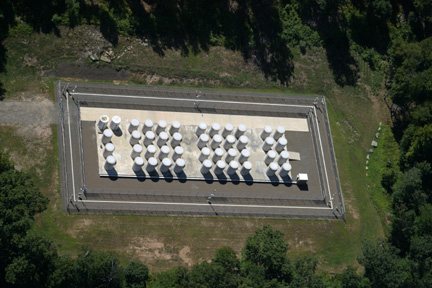
Is Waterford’s nuclear waste dump status permanent? January 31. 2021 The Day , The highly radioactive nuclear waste being stored at Millstone Power Station in Waterford, as well as the nuclear material left behind in Haddam after the Connecticut Yankee plant was dismantled, isn’t going anywhere anytime soon. Maybe never. And that’s not acceptable. The lack of concern about the nuclear waste storage problem was one of my takeaways from the editorial board’s meeting last week with leaders from Millstone-owner Dominion Energy, held virtually of course. Chief Nuclear Officer Dan Stoddard seemed too comfortable with the status quo, which has altered Millstone from a nuclear station to a nuclear station and nuclear waste storage facility. I would have felt more comfortable if Stoddard expressed some level of anger over the failure of the federal government to meet its obligation to remove the material and place it in safe storage for the thousands of years it will continue to emit dangerous levels of radiation. But instead of voicing any urgency to get the stuff out of there, Stoddard offered assurances that the metal canisters, encased in concrete, that secure the spent nuclear fuel rods and block the radiation “will be secure for decades and certainly longer.” Only when I reminded him that leaving the material there for decades was not the deal Waterford and Connecticut agreed to when the plants were licensed, did he say he was “sure” that “eventually” the federal government would meet its obligation and remove the nuclear waste. I don’t know why he is so sure. The deal when nuclear reactors were built across the country was that the fuel rods, when their energy was spent, would be temporarily stored in storage pools within the plants. In time they would be placed in canisters and transferred to Yucca Mountain in Nevada, on which the Department of Energy has spent $7.5 billion, collected from electric ratepayers, to build a safe depository deep within the mountain. …….. An alternative idea has surfaced of moving waste to a couple of other sites, rural locations in Texas and New Mexico have been discussed, before a consensus can be reached on what do with it. But I see no urgency, anywhere, to tackle the challenge. No one wants to deal with the outcry that would result as this stuff is moved across the country from nearly a hundred locations, even if the science shows it can be done safely. And as Stoddard told us, the situation is causing no fiscal pain for Dominion and other nuclear energy companies. The U.S. Department of Energy was required by a law passed by Congress to begin removing and permanently disposing of the spent fuel in 1998. When that didn’t happen, energy companies sued, and won. As a result, DOE is obligated to cover all the costs of storing the nuclear waste on site. There are 31 storage containers at Millstone, each with 32 spent nuclear fuel assemblies. Dominion has built a concrete pad large enough for 135 canisters. On a pad in Haddam, along the Connecticut River, 43 steel-reinforced concrete casks hold all the fuel from the 28 years Connecticut Yankee operated. These containers are monitored and secured and extremely robust in their design. They are safe, for now. But their contents will continue to emit dangerous levels of radiation for hundreds and thousands of years. Who knows what dystopian future might await humankind. Who could possibly assure, over that expanse of time, that tons of nuclear waste located along Long Island Sound and a major river that flows through all of New England will remain safely contained. No one can. Which is why the stuff should be entombed deep in a geologically stable depository as planned. Follow the science. https://www.theday.com/article/20210131/OP04/210139981 |
|
In its failed search for a national dump site, UK govt rebrands its nuclear waste agency, promises honesty this time.
Cumbria Trust 30th Jan 2021, Today marks the 8th anniversary of the last attempt to bury the UK’s nuclear waste in Cumbria. On 30th January 2013, Eddie Martin, then Leader of Cumbria County Council, made an impassioned speech to his Cabinet and urged them to call a halt to the search in Cumbria.
The Cabinet agreed and by 7 votes to 3 the process known as Managing Radioactive Waste Safely (MRWS) was stopped. Since West Cumbria was the only area in the country to volunteer, that decision also marked the end of the national search process.
During the 8 years since that decision, the government have been working on a new search process and have been busily rebranding in an attempt to distance themselves from some of the less honest practices which were used during the failed MRWS process.
This time the developer is called Radioactive Waste Management (RWM), a subsidiary of the Nuclear Decommissioning Authority. RWM frequently talk about transparency and openness of the new process, and to be fair we have seen some improvements in our discussions with them, but our suspicion remains that old habits die hard.
Biden’s nominee as Energy Secretary opposes Yucca Mountain as nuclear waste site
World Nuclear News 29th Jan 2021, The Biden Administration opposes the use of Yucca Mountain for the storage of used nuclear fuel and is committed to developing “safe and workable” alternatives, US President Joe Biden’s nominee for the position of energy
secretary has said. Jennifer Granholm made her remarks at a Senate Committee on Energy and Natural Resources hearing to consider her nomination, which was held on 27 January.
https://www.world-nuclear-news.org/Articles/Biden-nominee-confirms-opposition-to-Yucca-Mountai
Isle of Man Wakes Up to What is Planned – SUB SEA NUCLEAR DUMP — Keep Cumbrian Coal in the Hole

At last there is some Grrrrr over the plan to dump heat generating nuclear waste under the Irish Sea – so far the plan appears to be to looking in all seriousness at having above surface nuclear sprawl at Ghyll Scuar quarry ( on the edge of Millom Deer Park ) with the drift tunnels shunting planetary destroying nuclear wastes under the Marine Conservation Zone outwards towards the Isle of Man. Whats not to like? EVERYTHING!
Good on the Isle of Man Examiner for this headline and write up. To read the article in full (for £1) go to the Isle of Man Examiner
Isle of Man Wakes Up to What is Planned – SUB SEA NUCLEAR DUMP — Keep Cumbrian Coal in the Hole
1 This Month



Website of the Week
Now until to February 10, 2026 Radioactive waste storage in France: the debate is finally open! How to participate?
-
Archives
- January 2026 (162)
- December 2025 (358)
- November 2025 (359)
- October 2025 (377)
- September 2025 (258)
- August 2025 (319)
- July 2025 (230)
- June 2025 (348)
- May 2025 (261)
- April 2025 (305)
- March 2025 (319)
- February 2025 (234)
-
Categories
- 1
- 1 NUCLEAR ISSUES
- business and costs
- climate change
- culture and arts
- ENERGY
- environment
- health
- history
- indigenous issues
- Legal
- marketing of nuclear
- media
- opposition to nuclear
- PERSONAL STORIES
- politics
- politics international
- Religion and ethics
- safety
- secrets,lies and civil liberties
- spinbuster
- technology
- Uranium
- wastes
- weapons and war
- Women
- 2 WORLD
- ACTION
- AFRICA
- Atrocities
- AUSTRALIA
- Christina's notes
- Christina's themes
- culture and arts
- Events
- Fuk 2022
- Fuk 2023
- Fukushima 2017
- Fukushima 2018
- fukushima 2019
- Fukushima 2020
- Fukushima 2021
- general
- global warming
- Humour (God we need it)
- Nuclear
- RARE EARTHS
- Reference
- resources – print
- Resources -audiovicual
- Weekly Newsletter
- World
- World Nuclear
- YouTube
-
RSS
Entries RSS
Comments RSS
 nuclear-news