We mustn’t kick the radioactive nuclear waste can down the road any longer. It’s time to tackle the problem head-on.
The current reality, as stated by the Nuclear Regulatory Commission, is that a repository might never materialize, saddling nuclear plants with storing spent fuel onsite indefinitely.
Creating more U.S. nuclear plants and deadly waste is insane when we can’t guarantee the safety of either existing aging plants or the 80,000-pluss metric tons of spent fuel already generated. The argument that nuclear is needed to address global warming reflects the same foolhardy mindset — ignoring adverse long-term impacts for short-term gains — that created the climate crisis in the first place.
We mustn’t kick the radioactive nuclear waste can down the road any longer. It’s time to tackle the problem head-on.
Opinion: Investing in More Nuclear Power Can’t Be Our Solution to Climate Change https://timesofsandiego.com/opinion/2021/09/03/investing-in-more-nuclear-power-cant-be-a-solution-to-the-climate-crisis/ by Sarah Mosko, Two days agoIf you live in Orange or San Diego County, hopefully you’re aware that San Onofre Nuclear Generating Station has been turned into a nuclear waste dump for the foreseeable future. If you live on planet earth, you’re wise to be tracking domestic and foreign moves to increase reliance on nuclear energy.
The United States ushered in the atomic age in 1945 by dropping a uranium bomb on Hiroshima and a plutonium bomb on Nagasaki. We now have 3.6 million pounds of these and other lethal radioactive elements sitting on the beach at San Onofre in temporary canisters, scheduled to remain there indefinitely.

No one has figured out how to safely dispose of deadly nuclear waste. Yet, to combat the climate crisis, the United States and the world propose to create more of it by extending the life of existing nuclear power plants and building new ones. Has the world learned nothing from the catastrophes of Three Mile Island, Chernobyl, and Fukushima?
Since San Onofre closed down in 2013, controversy has swirled around the dry waste storage systems selected by the plant’s operator, Southern California Edison.

As is true of all U.S.’s nuclear plants, San Onofre wasn’t designed for nuclear waste storage after decommissioning. The Nuclear Waste Act of 1982 mandated construction of a deep geological repository to store the nation’s spent fuel for the hundreds of thousands of years it remains deadly. However, as hopes for a repository at Nevada’s Yucca Mountain collapsed out of concern about groundwater contamination, talk turned to creating “interim” storage sites in Texas and New Mexico, though those states are balking at the prospect too.
The current reality, as stated by the Nuclear Regulatory Commission, is that a repository might never materialize, saddling nuclear plants with storing spent fuel onsite indefinitely.
As of last August, all of San Onofre’s spent fuel was transferred into 123 dry storage canisters, each with the potential to release as much highly radioactive Cesium-137 as was released during the 1986 Chernobyl disaster.
San Onofre’s canisters are thin-walled (5/8 inch) stainless steel and susceptible to “stress corrosion cracking” in a marine environment. They weren’t designed for safe maintenance, inspection, storage or transport.
The potential consequences of cracks are far worse than small radiation releases into the atmosphere: Canisters are filled with helium expressly to limit corrosion and prevent explosions triggered by air or water getting inside.
Contrast this with thick-walled (10-19 inches) casks used in most countries which aren’t susceptible to stress corrosion cracking and are designed for maintenance, inspection, storage and transport.
Continue readingHighway safety concerns as DOE plans expanding nuclear waste transports to the Waste Isolation Pilot Plant (WIPP)
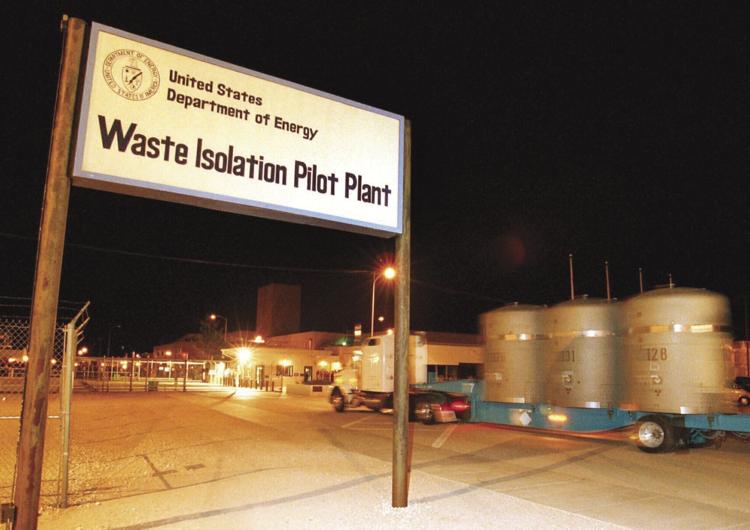
More nuclear waste may be heading to WIPP on US 285 Albuquerque Journal , BY ISABELLA ALVES / JOURNAL NORTH, SATURDAY, SEPTEMBER 4TH, 2021
Spanning the length of the state, U.S. Highway 285 is a major thoroughfare for truck transports and other traffic. This busy highway, nicknamed “Death Highway” due to the number of fatal accidents on it, may get busier.
Concerned citizens in Santa Fe County recently called out the U.S. Department of Energy’s Waste Isolation Pilot Plant for expanding its mission in a permit renewal application to include more nuclear waste being shipped along the 285 corridor.
Part of Highway 285 goes along the southern edge of the city of Santa Fe, and local activists are calling on local and federal leaders to halt this increase in nuclear waste transportation.
The permit application is requesting to add two nuclear waste storage panels to WIPP that would increase the waste volume in these areas. The permit renewal was filed July 30 and, if granted, wouldn’t increase the volume capacity of nuclear waste set by Congress in the Land Withdrawal Act for the plant.
“NMED is in litigation with the DOE for its failure to clean up legacy waste at Los Alamos National Laboratory. A successful resolution of the lawsuit is increased shipments of legacy waste from Los Alamos to WIPP,” James Kennedy, state Environment Department Cabinet secretary, said via email.
“The DOE and Nuclear Waste Partnership continuing to accept out-of-state waste streams or any new waste streams in lieu of cleaning up and shipping legacy waste from Los Alamos to WIPP is completely unacceptable,” he added.
At a recent Santa Fe County Town Hall, activist Cindy Weehler of 285 ALL said the U.S. Department of Energy made it clear that it’s going to expand its nuclear waste program, she said. She said she’s concerned about the new type of radioactive waste that would be traveling through the county, which would be diluted plutonium, instead of contaminated items.
This is consistent with a notice of intent published by the department in December 2020.
The Department of Energy’s (DOE) goal is to complete its missions safely and efficiently, including the continued reduction in the amount of transuranic waste at LANL and creating a safer environment for the surrounding communities,” a U.S. Department of Energy spokesperson said via email. “DOE notifies state authorities weeks in advance of all shipments to WIPP, which are done in strict accordance with federal rules and regulations and state law.”
On average, there are about seven waste shipments a week that travel to WIPP through Santa Fe County from the Los Alamos National Laboratory and the Idaho National Laboratory. In the coming months, pending any pandemic impacts, this number is expected to increase to 10 to 12 shipments per week.
“They have chosen a very unsafe way to deal with the surplus plutonium problem,” Weehler said. “It’s unsafe to our neighborhoods and I think, if people are going to be put at risk, like we are with this new mission, they deserve to know about it.”
Don Hancock, nuclear waste program director at the Southwest Research and Information Center, said the original type of waste being disposed of at WIPP were plutonium-contaminated items, such as gloves and other equipment that came into contact with the radioactive material.
Now, the plant is expected to dispose of the diluted plutonium, which is much more potent than contaminated material — and poses a greater safety risk. Hancock said they expect “a lot” of shipments to the plant and it’s hard to drill down an exact number.
This expansion is going to affect more than just Santa Fe County, it will impact people statewide, Weehler said. She said safety issues, such as preparing emergency responses for a nuclear waste spill if there’s an accident along the highway, will be left up to the local municipalities.
For Santa Fe County, this emergency response falls to its emergency management director who, Communications Coordinator Carmelina Hart said, has a background in these types of responses.
In the event of an emergency, the County’s role would be the initial evaluation, perimeter control and activation of all our state and federal partners who specialize in these responses,” Hart said in an email. “The County maintains relationships with the other agencies in the realm of emergency management. We have participated in full-scale exercises with the Department of Energy and local public safety teams.”
She said the county is reimbursed $15,000 annually by the Department of Energy’s WIPP program for emergency response preparations the county must maintain. The county also is working to identify additional training and equipment needs should nuclear waste transportation changes occur.
Santa Fe County Commissioner Hank Hughes said he has lived in Santa Fe before there was a WIPP project and has shared citizens’ concerns about nuclear waste transportation for many years. He said expanding WIPP’s mission might mean more nuclear waste traveling through Santa Fe County.
He said the county is as equipped as it can be to handle an accident. Since the transportation is considered classified information, local governments aren’t notified when nuclear waste is headed their way.
I think the concern is, while it’s very unlikely that there would be any leak of radioactive material — even if there was an accident — just increasing the number of trucks going through Santa Fe County raises that possibility,” Hughes said.
Since nuclear waste is handled on a federal level, it’s mostly out of the commission’s hands, he said. All the county can really do is make sure it’s prepared for an accident, and help its constituents express their concerns to the federal delegation.
And these worries haven’t gone unnoticed.
Maria Hurtado, spokeswoman for U.S. Rep. Teresa Leger Fernández, D-N.M., said the office has received a handful of constituent calls regarding the nuclear waste transportation…………. https://www.abqjournal.com/2426206/more-nuclear-waste-may-be-heading-to-wipp-on-us-285.htmladvertisement
Daunting costs of nuclear clean-ups
Daunting nuclear cleanup costs, Partial reactor meltdown at Three Mile Island in the US cost about $1bn https://www.businesslive.co.za/bd/opinion/letters/2021-09-02-letter-daunting-nuclear-cleanup-costs/ Peter Smulik 02 SEPTEMBER 2021- What every young South African needs to know now is how much it will cost their generation when it comes to cleaning up after nuclear power plants (“Nuclear build plan alarms energy analysts”, August 30). Three Mile Island in the US is a case in point: after the partial reactor meltdown of March 28 1979 the cleanup started in August 1979 and only officially ended in December 1993, at a total cost of about $1bn. That was just unit 2, which developed the incident. A preliminary assessment estimated that the Three Mile Island accident caused a total of $2.4bn in property damages.
As for unit 1: in 2017 it was announced that operations would cease by 2019 due to financial pressure from cheap natural gas, unless legislators stepped in to keep it open. When it became clear that subsidy legislation would not pass any time soon Exelon decided to retire the plant, and Three Mile Island-1 was shut down by September 30 2019. Exelon says it will take nearly 60 years and a further $1.2bn to completely decommission the Dauphin County site.
Meanwhile, more than 240 organisations have demanded that these bailouts be omitted from the state budget and funds be directed to investing in carbon-free, nuclear-free clean energy. Sixteen of the organisations are from Illinois, the most nuclear-reliant state in the US, which is considering a $700m Exelon nuclear bailout in upcoming state energy legislation.
These are facts, not pipedreams or pies in the sky. Enough said.
Nuclear waste – a heavy burden on the public of New Mexico
WIPP: New panels to dispose of nuclear waste, Adrian Hedden Carlsbad Current-Argus . 3 Sept 21, Two new spaces to hold nuclear waste were planned to be built at the Waste Isolation Pilot Plant, and they could be slightly bigger to allow for equipment needed to handle higher radioactive waste.
The proposal for the new panels came as officials worked to replace disposal capacity they said was lost during an accidental radiological release in 2014.
In 2014, a mispackaged drum of waste in WIPP’s underground repository ruptured, releasing radiation into the air of the underground and contaminating multiple areas of the facility.
Storage space was lost in three panels where transuranic (TRU) waste – comprised of clothing materials and equipment irradiated during nuclear activities – is permanently disposed of, and officials believed the site would need two additional panels to replace the lost space……………………….
The new panels will also be separated by 300 feet of rock, compared with 200 feet for the additional panels, and abutment pillars to support the rock above and assist with ground control will be 400 feet wide compared to 200 feet in the past.
…………….. Joni Arends for Concerned Citizens for Nuclear Safety argued the DOE was holding multiple PMR processes at once, efforts that appeared rushed and creating a challenge for the public to keep track and provide adequate analysis.
………….. Along with the replacement panels, WIPP was also conducting a PMR for a new utility shaft which was hoped to be approved later this year after a temporary authorization (TA) to build the shaft was not renewed last year by NMED which cited rising COVID-19 infections at the site.
Meanwhile, a 10-year renewal of WIPP’s operations permit was ongoing with a decision from NMED expected to be issue next year.
“The burden on the public is becoming heavier and heavier,” Arends said. “I do need to make a comment that the burden the DOE is putting on the people of New Mexico is a heavy burden.” https://www.currentargus.com/story/news/local/2021/09/03/new-panels-wipp-bigger-hold-more-radioactive-nuclear-waste/5689186001/
Chaotic discussion on nuclear waste proposal for UK’s Allerdale region
A fortnight is a long time in politics, to slightly misquote former Prime
Minister Harold Wilson. Allerdale Working Group came out of the shadows to
meet a Stakeholder group on 17 August. That was the beginning of a chaotic
fortnight. At that meeting, Andy Ross, the individual who volunteered the
whole of Allerdale excluding the Lake District (where he lives) as a site
to bury the nation’s nuclear waste, was questioned.
He was asked why he
had chosen to exclude the Lake District National Park (LDNP), but not to
exclude the Solway Coast AONB. He said that he had chosen to exclude the
LDNP as Copeland had done the same, but that it may become part of the
search area again in the next stage of the process, known as the Community
Partnership.
This was a hugely controversial statement. It went against
everything said previously, but the rest of Allerdale Working Group did not
seek to correct it, they all listened and accepted the statement without
comment.
The next week, members of Cumbria Trust questioned the Chair of
Allerdale Working Group, Jocelyn Manners-Armstrong about the possible
re-inclusion of the LDNP. Rather than seek to correct this, she complained
that Cumbria Trust were not respecting the privacy of that earlier meeting,
which in itself was an absurd comment.
You cannot announce a major change
in policy – the re-inclusion of the LDNP as a potential site to bury
nuclear waste, and expect that to remain a secret.
RWM set about
fabricating an excuse for what was said. RWM’s response was entirely
disingenuous and intentionally misleading. Eddie Martin, former Leader of
Cumbria County Council has written to RWM to challenge their behaviour.
Here is the text of that letter:
“We were frequently promised an ’open
and transparent’ process by RWM and I’m afraid your email to me on 27
August falls a long way short of that goal, as do the responses from others
in your organisation to Colin Wales and your emails to the Allerdale
Stakeholder Group … This may be a 20 year search process. For it to
succeed, the public has to develop and maintain a high level of trust and
yet RWM have fallen at the first hurdle.”
Cumbria Trust 31st Aug 2021
Cover-up? Unreported event of Hanford nuclear workers’sickness
Unreported event at Hanford nuclear site that sickened workers ‘smells like a cover-up,’ advocates say, Workers reported smelling odors, resulting in symptoms such as dizziness and shortness of breath. The contractor denied a chronic problem, toxic vapors, is to blame. https://www.king5.com/article/news/investigations/hanford-nuclear-site-washington-state-tank-farms-workers-sickened-investigation/281-48a540ea-1fa5-4de9-8ab7-b1dc9db6e5c8 Susannah Frame August 27, 2021
RICHLAND, Wash. — On June 18 of this year, 10 workers at the Hanford nuclear site in eastern Washington digging in what are known as the “tank farms,” were overcome by strange odors. Nine of the workers sought medical treatment, including three who were transported to the hospital for an overnight stay and were given oxygen.
The KING 5 Investigators have found the event went unreported by the contractor involved – Washington River Protection Solutions (WRPS).
According to WRPS documents obtained by KING 5, symptoms reported by workers included dizziness, shortness of breath, chest pain, headache, nausea, a metallic taste in the mouth, stomach issues, light headedness and cough.
Smelling unusual odors, followed by adverse medical conditions are hallmark signs of a chronic problem at the nuclear reservation: exposure to toxic vapors that vent from underground nuclear waste holding tanks.
WRPS is under a legal obligation to report vapor events on a publicly available website.
“I’m still amazed that not one piece of paper has been put out about this exposure, there’s been no announcement,” said Tom Carpenter, executive director of the advocacy group Hanford Challenge. “It’s getting to the point where this silence is very suspicious. It’s like: ‘What are you hiding?’”
The contractor said they did not post the event on their website because they’ve determined the worker’s symptoms were not caused by vapors, but “most likely” by a malfunctioning gas-powered wheelbarrow.
“WRPS collected air samples from the small pieces of fuel-powered equipment used in the soil work. One piece of equipment, a small gasoline-powered wheelbarrow that was difficult to start and used during the June 18 event, was smoking when it started and high levels of volatile organic compound emissions were noted,” a WRPS spokesperson said.
Toxic vapor exposures have been a significant problem at Hanford since the 1980s when the operational mission went from producing plutonium, to clean up only.
Several government reports have identified that poisonous vapors, without warning, will vent from underground tanks. Hanford has 177 underground holding tanks that store the deadliest waste at the site.
Tanks in the tank farm near where the workers got ill in June contain contents including plutonium, the radioactive isotopes of americium and strontium 90, mercury, nickel, lead and cyanide.
In 2014 the KING 5 Investigators revealed a record number of vapor exposures in the tank farms. Approximately 56 workers fell ill with symptoms in the rash of exposures. After each incident, WRPS said their testing didn’t show chemicals of concern over regulatory limits. WRPS officials denied chemical vapors were to blame for the events.
That pattern wasn’t new. Expert reports detailed the same cycle happened at Hanford in the 80s and in the 90s: a slew of exposures, followed by denials by the tank farm contractor, and workers left sick and unable to work.
Many workers said they felt betrayed by the contractors over the years for not being honest about the dangers of vapors.
“Until they are in the field and until they smell what we smell and until they feel like we feel and until they get injured like we get injured, they don’t care,” said Mike Cain, a 47-year current Hanford employee who spent 25 of those years in the tank farms. “Everything that we described 30 years ago, 40 years ago, is still there. Yet they keep doing the same thing over and over and over again.”
After the string of exposures in 2014, Washington State Attorney General Bob Ferguson, Hanford Challenge and Local 598 all filed lawsuits against WRPS and Hanford’s owner, the U.S. Department of Energy. The complaint accused the contractor and federal government of failing to protect workers from vapor exposures, that can cause adverse health effects including lung disease, nervous system damage and cancers of the liver, lung, blood and other organs. The lawsuit also alleged the Department of Energy had been well aware of the dangers for 25 years, yet “Energy did not fix the problem.”
A settlement agreement was reached in September 2018. Hanford officials agreed to improve health and safety conditions, install engineering to keep vapors out of the breathing space of workers. They also agreed to provide respiratory protections including supplied (fresh) air that is worn in tanks on the backs of workers, if needed.
In the June event, workers were not using supplied air. According to workers, the contractor had downgraded respiratory protection to respirators with cartridges. Respirators are lighter and more cost effective than supplied air.
“(That) never should have happened if they were wearing fresh air. Never should have happened,” Cain said.
“They’re not protecting workers. They have a long history of not doing so, of putting money and profits before workers health and safety which is ironic because they’re all about saying they want to protect health and safety. They’re not doing it,” Carpenter said.
A WRPS spokesperson said the company did not skimp on safety protocols in the June event.
“Respiratory controls at the TX Farm during the June 18, 2021 event complied with the tank farms vapors settlement agreement requirements… workers were wearing air-purifying respirators consistent with interim mandatory respiratory protections consistent with cartridge testing results,” the spokesperson said.
What is Hanford?
Hanford is the most contaminated worksite in America. Located near Richland in eastern, Wash., workers at the site produced plutonium for the country’s nuclear weapons program for approximately four decades. Plutonium produced at Hanford fueled the bomb dropped on Nagasaki, Japan, that led to the end of WWII. Since the late 80s, Hanford has been a clean up site only.
The settlement agreement also makes it mandatory for WRPS to report events on its website that fall into the category of an “AOP-15.” On the WRPS website, an AOP 15 is described as an unidentified odor event: “When a worker reports an unexpected and unidentified odor in the tank farms, and reports medical symptoms potentially related to that smell.”
In the June event, WRPS did not characterize it as an AOP-15, therefore, company executives said they had no obligation to report it.
“Smells like a cover-up”
“This lack of information sharing and reporting smells like a cover-up. We do not want to see a return to downgraded worker protections that result in routine vapor exposures. The cycle of exposures must end at Hanford, and meaningful and long-lasting regulations should be enacted to assure that Hanford tank farm workers can conduct a cleanup without risking their own health and safety,” said Carpenter of Hanford Challenge in a press statement sent on Friday.
On Thursday, a WRPS executive told KING 5 that the company’s definition of an AOP-15 had changed in 2020. In an email to employees on Dec. 1, 2020, WRPS Executive Jeremy Hartley said that moving forward, an AOP-15 will occur when personal ammonia monitors worn by workers set off an alarm.
“Ammonia has been verified as a sentinel indicator of changing levels of other chemicals of potential concern. The procedure changes clarify and reinforce a disciplined conduct of operations by recognizing the administrative and engineering controls in place, relying on the ammonia monitors and verifying the conditions when an alarm set point is reached,” Hartley wrote.
Given this change, the WRPS spokesperson said they followed protocol by not reporting the event on the website.
As this event did not involve an ammonia alarm, it is not classified as an AOP-15,” the spokesperson said.
Government scientists have concluded that ammonia does not have to be present for other chemicals of concern to release in concentrations that could harm human health. In 2004 the Department of Energy released a Hanford report concluding the potentially harmful gas, nitrous oxide, can be present without the presence of ammonia.
“Based on…characterization data (the contractor) CH2M HILL has incorrectly assumed that nitrous oxides are present only when ammonia is present,” report authors wrote. “…nitrous oxide vapors in tank headspaces can be present in (dangerous) concentrations, even in the absence of ammonia.”
Stakeholders such as Hanford Challenge and union safety representatives said they were unaware that WRPS had changed its AOP-15 definition.
A WRPS communications specialist said they are committed to the safety of workers.
“The health and safety of the workforce is always paramount,” the company official said.8
Media avoid the truth about nuclear wastes

the hidden message:
scientists and engineers are still bewildered by a mountain of nuclear waste 80-years high. Nobody wants it in their neighborhood. There’s no place to put it
Limp logic of safe nuclear waste storage, https://www.miragenews.com/limp-logic-of-safe-nuclear-waste-storage-621868/ 30 Aug 21, Enriching uranium requires fossil fuels that leave coal ash and/or fracking waste, both of which degrade the quality of soil, water and air. There are tons of containers, gloves, booties, and hazmat suits, etc. that must be discarded as radioactive waste in order to fabricate, use, transport and store the spent fuel generated in service to tens of thousands of electricty-users.
Author, Jan Boudart, Nuclear Energy Information Service1.
The August 19, 2021 Mirage News article “ORNL receives spent fuel canister to support long-term storage studies” has prompted us2 to question the superficiality of ORNL’s analogy to the volume of spent nuclear fuel.
Characterizing spent fuel on less than half of 1000th part of its yearly volume is to ignore, not only the whole story of mining, transporting, milling, transporting, processing, transporting, refueling reactor vessels, storing spent fuel, then more transporting. Spent fuel volume is but a trivial part of how the nuclear fuel cycle impacts humans, animals, plants and the geological earth.
And acres of concrete, whose manufacture is a strong producer of greenhouse gasses, are required for temporary entombment. Fossil fuels are used in trucks and trains to haul radioactive fuel, both new and spent, on water and land. And there are hospital gowns, syringes, and multiple wastes, along with the energy to light, heat and build sophisticated diagnostic and treatment systems to deal with the cancer-stricken victims of the whole fuel cycle of which spent fuel is a small, but important, part.
Relevant metrics easily expose the disconnect between reality and the unsubstantiated and spurious analogy in the article. For example, (i) the hundreds of thousands of tons which will further degrade our fragile roads, rail and bridges in a nuclear-waste transport scheme3, (ii) the hundreds of billions which have been spent worldwide over 70 years trying to find the ever-vanishing ‘solution’ to nuclear waste, and (iii) the hundreds of thousands of years (a million according to the US National Academies) in which spent fuel will remain hazardous and toxic.
Also, a perennial chortle among anti-nuclear activists is the fact that no insurance company in its right mind would consider taking on the risk posed by a nuclear power plant or its waste. In case of an accident, taxpayers will foot most of the bill, per The Price-Anderson Act of 19574. If spent fuel is such a no-big-deal to manage, let the nuclear industry assume full responsibility for paying for and insuring it.
Another egregious statement from the ORNL spokesperson: “The used fuel… can be retrieved at any time for reprocessing and reuse.” BUT, “Incredibly, not a single dry storage cask, once loaded, has ever been unloaded in the U.S.”5 And no one has volunteered to risk their life taking spent nuclear fuel out of a canister. To do so in relative safety would require a “hot cell”6, where workers could be protected from “spent” fuel’s deadly radiation — much more fearsome than when it was “new”.
At present, in the U.S. 95 nuclear reactors are functioning, each producing about 2000 Tons of spent nuclear fuel per year. The inventory of High-Level Nuclear Waste, “Spent” fuel, has exceeded 90,000 tons7. Transporting this monstrous load would be dangerous and very expensive8.
Further, the ORNL speaker implied that spent fuel can be “inertly stored”, saying, “The nuclear energy industry is unique among power generation options in that its used fuel is inertly stored in sealed canisters…”. But it is well-known that the spent fuel, itself, is not inert. It is, in fact, thousands of times more radioactive than the new fuel whose fission produced the heat to run the reactor. It costs about 4 million USD for each cask9 and another half million USD to load each one with fuel. “The concrete pad for casks to sit on costs another 1 million USD. A rough estimated cost to move all of the fuel in the United States that has cooled in pools for at least five years could cost 7 billion USD.”10 You tell me why private power companies are required to spend $4,500,000+ per cask to “inertly store” this dangerous material.
Later the article discusses the foils against criticality that are being tried at ORNL. No concern for “critically” would be necessary if the SNF were “inertly stored” as previously claimed.
The fact of the article in question appearing at this stage— when we are 8 decades (counting from 1942) into the Atomic Age — this immediate and present fact — emphasizes the hidden message: scientists and engineers are still bewildered by a mountain of nuclear waste 80-years high. Nobody wants it in their neighborhood. There’s no place to put it…………..
Continue readingSwedish government decides to increase interim storage capacity for nuclear waste
The Government has decided to allow a capacity increase of the interim
storage facility for spent nuclear fuel, pending a repository for final
disposal being constructed and put into operation. An intermediate decision
on interim storage is necessary to safeguard the energy supply in the
coming years.
The Government is prioritising and working as swiftly as
possible to prepare the decision on the repository. In the Government’s
assessment, it will be a matter of months before such a decision can be
made. However, the permit process following a government decision will take
additional time.
Without a valid permit for increased interim storage in
place before the end of 2023, Sweden’s electricity generation could be
adversely affected. This is why an intermediate decision on interim storage
is necessary.
The Government is examining how spent nuclear fuel and other
nuclear waste will be disposed of. In the next step, the Government will
refer the evaluation of new research on the protective capability of the
copper canister in relation to both copper corrosion and the planned cast
iron insert to the Swedish Radiation Safety Authority and the Swedish
National Council for Nuclear Waste.
In the consultation process, the
Government wants these authorities to determine whether the article on
copper corrosion and the research to which the article refers provide new
information that may be of significance to the Government’s decision on
the case.
Swedish Government 27th Aug 2021
Secret nuclear waste proposals initiated by private landowners and companies
Dr Ruth Balogh, West Cumbria & North Lakes Friends of the Earth.
The NDA is touring West Cumbria with yet another set of proposals for a
deep geological disposal facility for high & intermediate level radwaste in
West Cumbria. The idea of siting this dump in the nuclear industry’s
traditional dumping ground, the Irish Sea, is enjoying favour.
Interest in such proposals has been expressed elsewhere, in Lincolnshire and
Hartlepool, to – unlike in West Cumbria – some political acrimony. In the
NDA press release about the Hartlepool initiative, Steve Reece, Head of
Siting said: ‘This is a process that is driven by communities.’
Yet all of these proposals were initiated in secrecy by private landowners and
companies. In Allerdale’s case the company isn’t even situated in the
Borough. It was followed by the establishment of a small Working Group with
a Borough Council representative on it.
Overtures from at least one community group to take part have been rebuffed. Which community is in the
driving seat here? Not ours. If the NDA want to dig an almighty hole, and
fill it with waste which has been waiting decades for a rational plan- and
which is going to be compounded by far more from Hinkley Point than we have
here already at Sellafield, it’s time they called a spade a spade. We
deserve truthful engagement, not high-minded aspirations.
Times and Star 26th Aug 2021
https://www.timesandstar.co.uk/opinion/
Communities react with shock to news they are being considered as locations for nuclear waste facility

Nuclear storage plans for north of England stir up local opposition
Communities react with shock to news they are being considered as locations for underground facility, Guardian, Tommy GreeneTue 24 Aug 2021 The long-running battle to build an underground nuclear waste facility in the north of England has run into fresh problems, as communities reacted with shock to the news that they were being considered as locations.
The north-east port town of Hartlepool is one of the sites in the frame as a potential site for a geological disposal facility (GDF), while a former gas terminal point at Theddlethorpe, near the Lincolnshire coast, is another. Cumbria, where much of the waste is stored above ground, is also being considered.
Victoria Atkins, a government minister and the MP for Louth and Horncastle, said she was “stunned” by the prospect that her constituency could host a GDF, claiming that the Conservative-controlled Lincolnshire county council’s engagement with the government’s radioactive waste management group had been kept hidden from her.
The facility is intended to deal with the long-running problem of nuclear waste storage by providing a safe deposit for approximately 750,000 cubic metres of high-activity waste hundreds of metres underground in areas thought to have suitable geology to securely isolate the radioactive material. The waste would be solidified, packaged and placed into deep subterranean vaults. The vaults would then be backfilled and the surrounding network of tunnels and chambers sealed……….
Between 70% and 75% of the UK’s high-activity radioactive waste, which would be designated for the GDF, is stored at the Sellafield facility in west Cumbria. The sources of the waste include power generation, military, medical and civil uses.
Existing international treaties prohibit countries from exporting the waste overseas, leading some scientists to argue for underground burial that, they say, would require no further human intervention once storage is complete……………
the proposals have stirred up strong local feeling among both community leaders and residents, and accusations of secrecy have been levelled at councils and the RWM in recent weeks.
In north-east England, the political fallout generated by news of the GDF “early stage” discussions triggered the resignation of Hartlepool council’s deputy leader, Mike Young, on Tuesday evening.
“We are making huge strides in Hartlepool and across Teesside and Darlington,” the Tees Valley mayor, Ben Houchen, said following the decision. “And the last thing we need as we sell our region to the world is to be known as the dumping ground for the UK’s nuclear waste.”
Cumbria county council, which resisted the last efforts to site a GDF locally in 2013, has declined to take part in either of the two existing working groups, saying its involvement would give the process “a credibility it doesn’t deserve”.
There is already considerable opposition from local groups. “The vast majority of people here are horrified by the GDF,” said Jane Bright, a Mablethorpe resident and spokesperson for the Guardians of the East Coast campaign. “I should think it’s no more welcome elsewhere. But there’s a lot of pride in this area and we’ll fight this for as long as it takes.”
Marianne Birkby, a Cumbrian resident and founder of the Radiation-Free Lakeland group, said: “We’re seen as the line of least resistance here. In Cumbria, we’ve been there before with this. Now people are now trying to get their heads around it again, in the middle of a pandemic. This dump would essentially make us a sacrifice zone to the nuclear industry.” https://www.theguardian.com/environment/2021/aug/23/nuclear-storage-plans-for-north-of-england-stir-up-local-opposition
Texas lawmakers oppose high level nuclear waste coming into their State

State lawmakers again try to ban most dangerous nuclear waste as feds consider allowing it at West Texas site, https://www.texastribune.org/2021/08/23/texas-nuclear-waste-storage-site-legislature/A failed regular session bill sought to give a financial break to a West Texas nuclear waste disposal company. Now, lawmakers have removed what opponents called a giveaway and are again trying to pass a bill to stop highly radioactive materials from coming to Texas.
BY ERIN DOUGLAS AUG. 23, 2021 After failing this spring, Texas lawmakers are again trying to ban the most dangerous type of radioactive waste from entering the state — at the same time as a nuclear waste disposal company in West Texas pursues a federal application to store the highly radioactive materials.
Environmental and consumer advocates for years have decried a proposal to build a 332-acre site in West Texas near the New Mexico border to store the riskiest type of nuclear waste: spent fuel rods from nuclear power plants, which can remain radioactive for hundreds of thousands of years. Strong political interests in Texas, from Gov. Greg Abbott to some oil and gas companies operating in the Permian Basin, have opposed the company’s application.
But a bill that sought to ban the highly radioactive material failed during the regular legislative session that ended in May. That bill, filed by State Rep. Brooks Landgraf, R-Odessa, whose district includes Andrews County where the existing nuclear waste company Waste Control Specialists operates, included a big break on fees for the company. Some lawmakers also thought the previous bill’s language wasn’t strong enough to actually ban the materials.
Now, Landgraf has again filed a bill during this year’s second special session that seeks to ban the highly radioactive materials from coming to the company’s facility in his district. The House Environmental Regulation Committee on Monday passed House Bill 7, which does not include any changes to fees for the existing company, one of the key criticisms that killed the proposed legislation earlier this year.
“So in other words, this is designed to be clean and easy so that we can go on record as a state [opposing high-level nuclear waste storage],” Landgraf said.
Waste Control Specialists has been disposing of the nation’s low-level nuclear waste — including tools, building materials and protective clothing exposed to radioactivity — for a decade in Andrews County. The company, with a partner, is pursuing a federal Nuclear Regulatory Commission license to store spent nuclear fuel on a site adjacent to its existing facility.
The Nuclear Regulatory Commission is advancing the company’s license. In July, NRC staff recommended in an environmental review that the site be approved to take the highest level of nuclear waste. The license still needs review by the federal commissioners.
Scientists agree that spent nuclear fuel, which is currently stored at nuclear power plants, should be stored deep underground, but the U.S. still hasn’t located a suitable site. The plan by the WCS joint venture, Interim Storage Partners, proposes storing it in above-ground casks until a permanent location is found.
Landgraf’s HB 7 includes a ban on disposing of high-level radioactive waste in Texas other than former nuclear power reactors and former nuclear research and test reactors on university campuses (nuclear power plants must keep the waste generated from operations on site until a long-term disposal site is created). The bill would also bar state agencies from issuing construction, stormwater or pollution permits for facilities that are licensed to store high-level radioactive waste.
Some opponents of nuclear waste, however, say the bill doesn’t go far enough. Karen Hadden, the executive director of the Sustainable Energy and Economic Development Coalition, an alliance of businesses and organizations that oppose the nuclear waste facility, is opposed to the bill because she said the ban leaves out another type of highly radioactive waste, much of it generated by the decommissioning of nuclear power plants. The material — known as “greater than Class C waste” falls into what experts call a gray area between lower-level categories of radioactive materials and spent nuclear fuel.
“We would support a single, well-written ban on spent nuclear fuel and Greater than Class C reactor waste,” Hadden said in an interview with the Tribune. “We question why the bill isn’t better written.”
Secretive process of Allerdale Working Group studying potential dump sites for UK’s vast stockpile of nuclear waste
Allerdale Working Group met behind closed doors in July and decided which
parts of Allerdale may become the burial site for the UK’s vast stockpile
of nuclear waste.
Cumbria Trust was refused permission to be involved in
the site selection, and Allerdale Working Group is still refusing to reveal
its choice to us as that’s how the rules of the process have been
arbitrarily defined.
The similarities with the previous failed process,
MRWS, are clear. When the geological screening report didn’t produce the
outcome they would have preferred, they supressed it, only to release an
amended version 3 months later in which the Solway Plain had switched from
excluded to included. As with the current process, these meetings and
deliberations were hidden from the public gaze.
Cumbria Trust 21st Aug 2021
GDF – LDNP Back in the mix?
NRC respond’s to New Mexico’s legal bid to stop Holtec’s planned nuclear waste dump
NRC: Court lacks authority in New Mexico lawsuit against nuclear waste site, Adrian Hedden, Carlsbad Current-Argus 20 Aug 21. A proposal to build a temporary nuclear waste storage site near Carlsbad and Hobbs drew a lawsuit against the Nuclear Regulatory Commission (NRC), the agency tasked with permitting the facility, from the State of New Mexico which sought to block the project.
In a Monday filing, the NRC asked the U.S. District Court for the District of New Mexico to dismiss the State’s lawsuit due to lack of jurisdiction.
The State alleged in the suit that the NRC acted illegally in issuing an environmental impact statement (EIS) for the Holtec project that found the site would have minimal environmental impact and recommended a permit be granted.
Citing the Nuclear Waste Policy Act (NWPA), New Mexico Attorney General Hector Balderas argued federal law stipulated a permanent repository be available before an interim storage site, like Holtec’s, could be permitted.
But the NRC argued that in the State’s suit, Balderas ignored the NRC’s authority to issue licenses for nuclear facilities as designated in the Atomic Energy Act (AEA), that allows challenges to licenses applications be raised in the U.S Court of Appeals which New Mexico failed to do.
The NRC argued U.S. District Court was the wrong venue for New Mexico to appeal the decision under the AEA and that the case should be before the U.S. Court of Appeals………..
State leaders cited the alleged risk the project, proposed by Holtec International, would pose to the environment and public safety should it be allowed to operate, along with concerns that it could become permanent as no such repository existed and potential incidents when transporting the waste into New Mexico.
Holtec first applied for a license from the NRC in 2017 to build the facility that would ultimately store up to 100,000 spent nuclear fuel rods on the surface at a location near the Eddy-Lea county line while a permanent repository was developed.
Such a repository does not yet exist, so the Holtec site would see the high-level nuclear waste brought into the remote area in southeast New Mexico via rail from nuclear power plants and facilities across the country to be held temporarily at the site known as consolidated interim storage facility (CISF).
A similar project was also amidst an NRC licensing process in Andrews, Texas, near the New Mexico-Texas state line for another company Interim Storage partners which so far received favorable reviews from the agency with a final decision expected later this year.
Upon announcing the lawsuit against the NRC to block Holtec’s project Balderas sought an injunction to block the licensing process.
He said the project would bring an unnecessary risk to the local communities near the site and along its transportation routes, along with economic drivers like oil and gas extraction and agriculture in the region.
“I am taking legal action because I want to mitigate dangers to our environment and to other energy sectors,” Balderas said. “It is fundamentally unfair for our residents to bear the risks of open ended uncertainty https://www.currentargus.com/story/news/local/2021/08/20/nrc-court-lacks-authority-new-mexico-lawsuit-against-nuclear-waste-site/8185804002/
France returns high level nuclear waste to Germany (What happens to it then?)
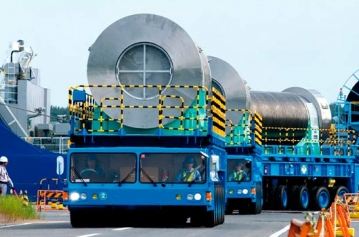
France signs billion-euro deal to return nuclear waste to Germany, https://www.rfi.fr/en/france/20210820-france-signs-billion-euro-deal-to-return-nuclear-waste-to-germanyThe French nuclear group Orano has signed a contract worth more than 1 billion euros to return high-level nuclear waste processed in France to Germany by the end of 2024.
Orano announced on Thursday that a “package of deals” between electricity companies PreussenElektra, RWE, ENBW and Vattenfall had formalised an in-principle agreement made in June by the French and German governments.
For 44 years German electricity companies have sent spent nuclear fuel to Normandy for recycling.
Train convoys carrying the waste were regularly blocked by environmental activists, some of whom chained themselves to the tracks.
Thorny issue
Under the agreement, which followed years of difficult negotiations, it is not medium-level German waste that will be returned, but high-level French waste from EDF power plants.
Orano said this meant it would take less volume and less time to send the same level of radioactive waste back to Germany.
“In terms of mass and radioactivity, this does not change anything,” Orano said in a statement, describing the deal as a “fairly common practice of equivalence”.
A single train of 100 containers carrying the spent nuclear fuel is to be transported from Orano’s plant in La Hague, Normandy, to Germany within the next three years.
Under French law, nuclear waste that enters France for processing cannot remain in the country.
However Germany does not have a solution for the long-term management and storage of radioactive material.
The final costly burden of Ontaria’s nuclear decommissioning will fall to the great-grandchildren of babies born in 2021
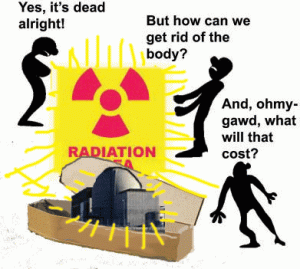
So yes, Ontario’s nuclear program will be a fiscal burden on Ontarians to the tune of around $40 billion CAD which will be spent through roughly 2135, finally being paid off by the great-grandchildren of babies born in 2021.
Ontario’s Unfunded Nuclear Decommissioning Liability Is In The $18-$27 Billion CAD Range eTransport News, 12 Aug 21, Late last year I worked up the likely amount of public money that would have to be thrown at the nuclear industry in order to successfully and safely decommission the 100 operational reactors and the now shut down ones. Unsurprisingly, the nuclear industry had been very optimistic in its estimates of decommissioning costs and timeframes, when the global empirical averages were trending to a billion USD and 100 years per reactor.
Recently I was asked by an Ontario journalist what I thought the likely situation in Ontario would be, and whether the decommissioning trusts were equally underfunded. I was unsurprised to find that Canada is in the same boat as the US, with highly optimistic schedule and cost projections which belie Canadian empirical experience with the CANDU reactor, and that the fund had nowhere near the money necessary for the job. Let’s run the numbers.
Ontario Power Generation (OPG) is the chunk of the provincial utility that was carved apart in the late 1990s by the Mike Harris Conservatives to handle generation alone. It operates 18 aging CANDU reactors across three sites: Bruce, Pickering, and Darlington.
OPG has a nuclear decommissioning fund of about $5 billion CAD or US$4 billion right now. If the experience of other countries on the actual cost of a billion USD per reactor and an actual timeline of decommissioning of a century holds true, and I see no reason why it doesn’t, that means that there is currently a $17.5 billion CAD gap in Ontario, in addition to the existing $19.3 billion CAD in debt still being serviced from their construction. When the government of the era split up the utility, it moved all of the debt off of the components and into general debt. One of the many appropriate and sensible things that the McGuinty Administration did in the 2000s, in addition to shutting down coal generation entirely, was to move the debt back into the utility and set about servicing it from utility bills.
Most of the reactors at Bruce Nuclear are aging out, with several over 40 years old and the remainder approaching 40. Darlington’s are around 30, so they have a bit of runway. Pickering’s reactors are going to be shut down in 2024 and 2025 and start decommissioning in 2028. While refurbishment could bridge Ontario’s for another 20 years in many cases, that’s expensive and typically won’t pass any economic viability assessment compared to alternatives.
The likelihood is that all reactors in Ontario will reach end of life by 2035, and be replaced by some combination of renewable energy and HVDC transmission from neighboring jurisdictions, with both Manitoba and Quebec having excellent, low-carbon hydroelectric to spare……………….
Nuclear decommissioning funding comes from reactors operating revenue. In the US, it’s 0.01 to 0.02 cents per kWh as a set aside. I wasn’t able to find the required set aside for Ontario’s fleet, but obviously they aren’t setting aside sufficient funds now, or have absurdly optimistic fund growth expectations. They only have a decade to set aside more money from operating reactors, and have only set aside $5 billion CAD after 50 years, so the most generous assumption is that they will set aside perhaps $7 billion CAD in the OPG fund by end of life of the reactors, and have a liability for decommissioning of $15.5 to $27 billion CAD. For the next step, let’s assume $20 billion CAD for the sake of round numbers.
Given the likelihood of all of Ontario’s reactors being off of the grid by 2035, with major decommissioning occurring every few years until then, the kWh generated by Ontario’s nuclear fleet from now through 2060 will be in the range of about 1000 TWh assuming there are no lengthy outages at any of the plants, which to be clear is an awful lot of low carbon electricity.
However, $20 billion is a big number too. It turns into about 19 cents per kWh if you only count electricity generated from today through end of life for the reactors. It’s obviously a lot lower if you calculated from beginning of the lifetime of the reactors. However you count it though, that’s only the unfunded Ontario liability, and it’s on top of subsidized security costs Canada and Ontario and municipalities bear, and it’s on top of the outstanding $19.3 billion in debt that has only been receiving servicing on the interest since the McGuinty government brought it back into the utility. It’s likely that the majority of that debt will be outstanding in 2035 still, as it has gone from $20 billion to $19.3 billion in the last 11 years, so expecting it to be gone by 2035 is not realistic.
So yes, Ontario’s nuclear program will be a fiscal burden on Ontarians to the tune of around $40 billion CAD which will be spent through roughly 2135, finally being paid off by the great-grandchildren of babies born in 2021.
Nuclear, the gift that keeps on giving. https://etransportnews.com/2021/08/06/ontarios-unfunded-nuclear-decommissioning-liability-is-in-the-18-27-billion-cad-range/
1 This Month

of the week – Shut Down Drone Warfare!


Tell the Ukrainian Government to Drop Prosecution of Peace Activist Yurii Sheliazhenko

Petition to revoke the licensing of the Near Surface Nuclear Disposal Facility (NSDF) at Chalk River. https://www.ourcommons.ca/petitions/en/Petition/Details?Petition=e-7247
To see nuclear-related stories in greater depth and intensity – go to https://nuclearinformation.wordpress.com
-
Archives
- April 2026 (57)
- March 2026 (251)
- February 2026 (268)
- January 2026 (308)
- December 2025 (358)
- November 2025 (359)
- October 2025 (376)
- September 2025 (257)
- August 2025 (319)
- July 2025 (230)
- June 2025 (348)
- May 2025 (261)
-
Categories
- 1
- 1 NUCLEAR ISSUES
- business and costs
- climate change
- culture and arts
- ENERGY
- environment
- health
- history
- indigenous issues
- Legal
- marketing of nuclear
- media
- opposition to nuclear
- PERSONAL STORIES
- politics
- politics international
- Religion and ethics
- safety
- secrets,lies and civil liberties
- spinbuster
- technology
- Uranium
- wastes
- weapons and war
- Women
- 2 WORLD
- ACTION
- AFRICA
- Atrocities
- AUSTRALIA
- Christina's notes
- Christina's themes
- culture and arts
- Events
- Fuk 2022
- Fuk 2023
- Fukushima 2017
- Fukushima 2018
- fukushima 2019
- Fukushima 2020
- Fukushima 2021
- general
- global warming
- Humour (God we need it)
- Nuclear
- RARE EARTHS
- Reference
- resources – print
- Resources -audiovicual
- Weekly Newsletter
- World
- World Nuclear
- YouTube
-
RSS
Entries RSS
Comments RSS
 nuclear-news