Jacobs joint venture wins $8bn nuclear clean-up contract in US.
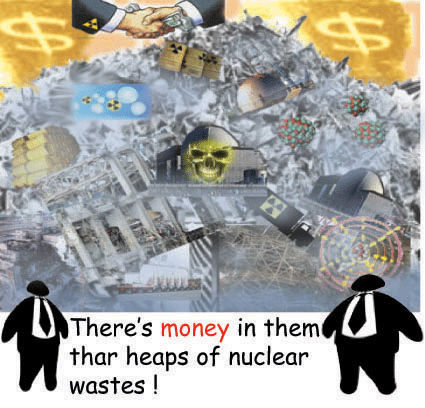
Jacobs joint venture wins $8bn nuclear clean-up contract in US, GCR, Joe Quirke, 29.10.21
The United Cleanup Oak Ridge (UCOR) consortium has landed a 10-year contract worth $8.3bn to remediate the Oak Ridge Reservation site in Tennessee.
Nuclear Waste Cleanup:DOE Needs to Better Coordinate and Prioritize Its Research and Development Efforts
Nuclear Waste Cleanup:DOE Needs to Better Coordinate and Prioritize Its Research and Development Efforts
GAO-22-104490 Oct 28, 2021. Research and development has been essential in the Department of Energy’s efforts to clean up significant contamination from decades of nuclear weapons production, but over time DOE has reduced funding designated for cleanup R&D.
We could not determine how much DOE actually spends on cleanup R&D because the agency does not track such spending (or the associated research), nor evaluate the outcomes of the research.
In addition, because DOE does not have a comprehensive approach to prioritizing cleanup R&D, individual cleanup sites have had to develop their own approaches, which may not address the needs of all cleanup sites or long-term needs.
Highlights
What GAO Found……
Why GAO Did This Study
R&D has played an essential role in EM’s efforts to clean up massive amounts of contamination from decades of nuclear weapons production and energy research. Such R&D has led to safer, more efficient, and more effective cleanup approaches. Prior studies have found that investments in R&D could reduce the future costs of EM’s cleanup efforts, which have increased by nearly $250 billion in the last 10 years. However, funding designated for nuclear cleanup R&D has declined since 2000……….
Recommendations
GAO is making four recommendations, including that DOE (1) develop a system to collect R&D information across the complex to enable monitoring and evaluation of outcomes and (2) develop a comprehensive approach to prioritizing R&D across the EM complex that follows a risk-informed decision-making framework. DOE concurred with the recommendations made in this report.
Recommendations for Executive Action………..https://www.gao.gov/products/gao-22-104490
South Bruce citizens want a referendum on plan to permanently house Canada’s nuclear waste.

South Bruce, Ont. citizens push for referendum to decide location of nuclear waste, Scott Miller, CTV News London Videographer, 25 Oct 21, TEESWATER, ONT. – Michelle Stein is putting up signs around her community she hopes will lead to referendum on whether South Bruce should permanently house Canada’s most radioactive nuclear waste.“That’s the fair way to do it. People that see benefits from the project can vote yes, those of us that feel the risks are too great we get to vote no,” says the chair of Protect our Waterways, a citizens’ group opposing plans to bury high-level nuclear waste in the Municipality of South Bruce.
- Stein believes a binding referendum during next October’s municipal election would be the best way for the 5,600 citizens of the Municipality of South Bruce to determine their willingness to host Canada’s first permanent nuclear waste facility, under 1,500 acres of farmers fields north of Teeswater…………
The Nuclear Waste Management Organization say they’ll decide whether Ignace, QC or South Bruce will house Canada’s first permanent nuclear waste facility in 2023.
How communities decide their willingness to do so, is up to each community. South Bruce’s Willingness Study final report will be before council in November.
Protect our Waterways will be going door to door in South Bruce this month and next, to try and get residents to sign a petition urging South Bruce council to commit to a binding referendum on the nuclear waste topic in time for the 2022 municipal election.
“This is a decision that will forever change our community, and every single person deserves a voice, and deserves to have their vote counted,” says Stein. https://london.ctvnews.ca/south-bruce-ont-citizens-push-for-referendum-to-decide-location-of-nuclear-waste-1.5637381
Problems and public opposition to the plan to store high level nuclear wastes under the Great Lakes
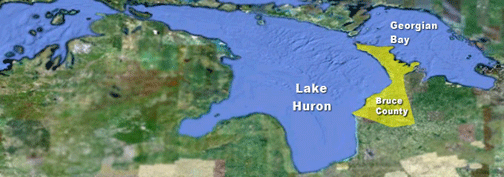
Nuclear Question: Debate continues over long-term storage of nuclear waste in the Great Lakes. Great Lakes Now, By Andrew Reeves, 25 Oct 21,
Canada’s plan to store spent nuclear fuel 1,600 feet below ground in the Great Lakes basin, some 30 miles from Lake Huron, is continuing to ruffle feathers throughout the Great Lake states.
Earlier this month, U.S. lawmakers called out the Canadian plan for failing to prioritize the health of the Great Lakes and the 40 million residents who depend on it for clean drinking water ahead of its own energy needs.
Michigan Democratic Rep. Dan Kildee is leading a 20-member bipartisan group calling on President Joe Biden to pressure Canadian Prime Minister Justin Trudeau to halt the plans for storing an anticipated 57,000 tons of high-level radioactive material within the basin.
Michigan Gov. Gretchen Whitmer, in a statement on the ongoing legal battle over the future of Enbridge’s Line 5 pipeline, accused the Canadian federal government of “adding even more risk to our waters” by allowing plans to store radioactive nuclear waste in a 1,400-acre underground warehouse to proceed.
Yet despite concerns within the basin from politicians and environmental groups, and unrest among local farmers worried about water contamination and potentially tanking property values, the project is moving ahead as planned. Geologic testing at one location in southern Ontario began this spring.
Even so, determining the long-term fate of Canada’s spent nuclear fuel remains far from settled as rifts develop within the host community, and between Canada and frustrated U.S. lawmakers.
“There’s a divide taking place,” Canadian Member of Parliament Brian Masse noted on a recent tour of the proposed South Bruce site with concerned residents. “I do believe there needs to be some responsibility taken on a federal level to make sure our communities aren’t broken in this process.”………
When spent nuclear fuel bundles are removed from a reactor they are currently interred in a water-filled pool for up to seven years until radioactivity decreases. From there the rods are relocated to dry storage containers made of 20-inch-thick, high-density concrete lined with steel half an inch thick. These storage facilities have a lifespan of roughly 50 years, and Canada has been generating nuclear power since the early 1960s. While the dry storage silos can be refurbished to extend their use, it does nothing to address the long-term need for safe storage solutions.
Experts at NWMO settled on a deep geological repository as the preferred storage option in 2007 after three years of discussion with European nuclear engineers.
The basic premise of the DGR is deceptively simple: bury the spent fuel. If NWMO could identify a willing host community that is situated in an area with suitable geology, the stage would be set to spend $23 billion over 40 years to construct a massive underground labyrinth of tunnels bored into rock that, in total, would be capable of storing the 57,000 tons of spent fuel that Canada currently has in cement-encased copper canisters. The aboveground footprint of buildings would be little more than a mile across.
But the question remains: Where should three million bundles of spent nuclear fuel be stored for what is, essentially, the rest of time?
Identifying a willing host community
The process for identifying a willing host community began in 2008.
From an initial pool of 22 potential locations across Canada, on-site investigations quickly whittled that list down to two, both of which are in Ontario: South Bruce, at a location some 30 miles from Lake Huron, and Ignace in northwestern Ontario. (The Ignace location, northwest of Lake Superior, is not within the Great Lakes basin; rather, it sits within the Winnipeg River basin. Borehole drilling to determine the suitability of the bedrock beneath the proposed site began in Ignace in 2017.)…………
U.S. lawmakers aren’t the only ones concerned about the proposed DGR. Public opposition to the proposal among South Bruce residents has been mounting steadily. …………. https://www.greatlakesnow.org/2021/10/storage-nuclear-waste-great-lakes/
Swedish authorities delay permission for nuclear waste dump operation, due to concerns over corrosion of copper in containers

The Environmental Organizations’ Nuclear Waste Review (MKG), which has the
Friends of the Earth and the Swedish Society for Nature Conservation as
members, welcomes the fact that the Nuclear Waste Council has concluded
that there is a need for more copper corrosion research before a nuclear
fuel repository can be put into operation.
In a statement to the Government
on 21 October, the Council proposes that more research on copper corrosion
in a repository environment be conducted after the Government has given
permission to build the repository, and that a separate government decision
be made before the repository is taken into use. MKG believes that it is
already prepared for research within the LOT trial that can yield important
results before the government makes an admissibility decision on the
nuclear fuel repository. Waiting with research until after construction
starts means problems.
MKG 22nd Oct 2021
Close security on village where France’s nuclear waste inquiry commission works
The nuclear product burial project at Bure (Meuse) has been under study
for twenty years. Highly sensitive, this site is subject to several
controversies. The material will remain radioactive for several hundred
years.
The village of Soudron (Haute-Marne) is placed under close
surveillance. The small town of 40 inhabitants has almost as many
gendarmes, who came to ensure the safety of the public inquiry commission,
which collects the opinion of the inhabitants on the project of burying
radioactive waste 500 meters underground. A laboratory was built for the
occasion in a layer of clay, at great depth.
France TV 21st Oct 2021
France: public inquiry into disposal of nuclear waste
Cigeo project: the public inquiry into the burial of radioactive waste
ends. More than 3,000 contributions were collected, mainly on the digital
register, for this stage prior to a possible declaration of public utility.
The commission of inquiry is expected to report in December 2021.
Ouest France 23rd Oct 2021
Members of US congressional oversight committee press the Biden administration on the Marshall Islands’ legacy of nuclear waste contamination
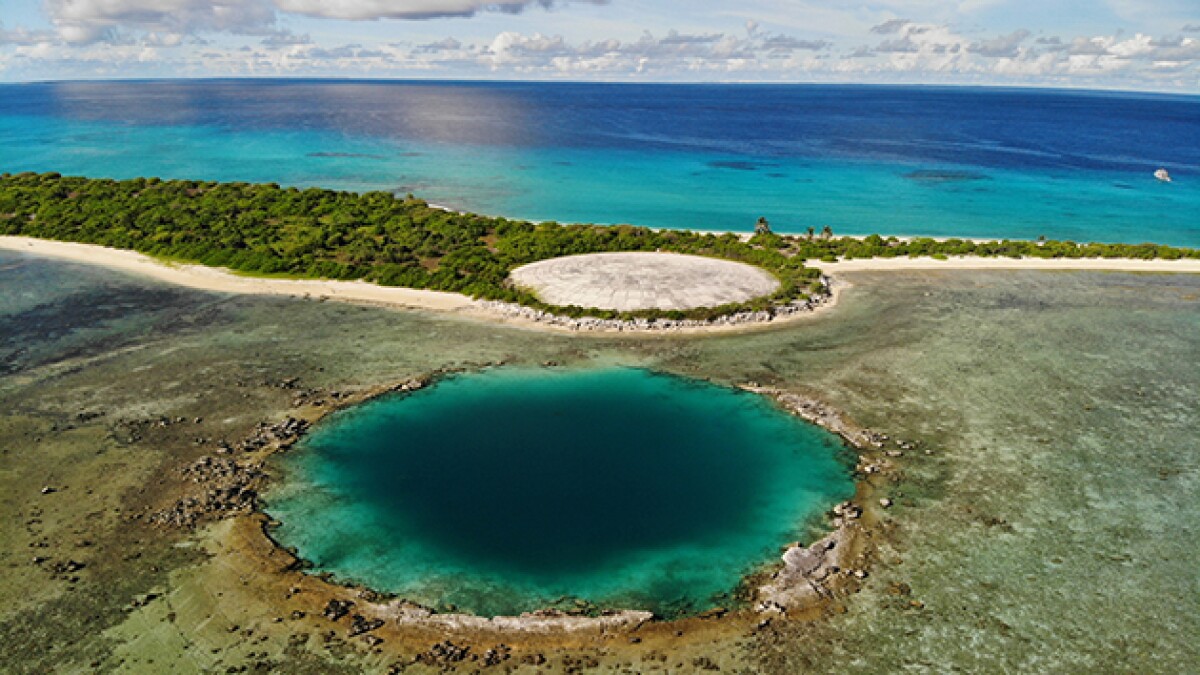
It’s a thorny point for the Marshallese, who are worried about the lingering effects of the nuclear waste left in their nation, decades of persistent health concerns, and a fear that United States officials have not been forthright or transparent about the risks the nuclear waste poses to their health and environmental well-being.
According to a U.S. government presentation delivered in 2019, Runit Dome is vulnerable to leakage caused by storm surge and sea level rise, and its groundwater, which is leaking into the lagoon and ocean, is severely contaminated with radioactive isotopes. Testing of sea creatures in the surrounding lagoon, including giant clams, shows high levels of radioactivity.
Rep. Katie Porter presses Biden team on Marshall Islands nuclear waste, gets few answers, https://www.latimes.com/environment/story/2021-10-22/marshall-islands-nuclear-waste-congressional-hearing-compact, SUSANNE RUST OCT. 22, 2021
For months, U.S. refusal to accept responsibility for a leaking dome of radioactive waste in the Marshall Islands has complicated negotiations with the Marshallese government on an international compact viewed as crucial for blunting Chinese influence in the central Pacific.
On Thursday, members of a congressional oversight committee scolded representatives of the Biden administration for not making more progress on negotiations and taking the Marshallese position more seriously. During the hearing, administration officials offered conflicting statements on U.S. obligations to the Marshall Islands, making it unclear where the White House stands on America’s history in the region. In addition, the U.S. State Department declined to participate.
“The point of the hearing today was to examine why the United States is not willing to discuss the nuclear legacy with the Marshallese,” said Rep. Katie Porter (D-Irvine), who along with a bipartisan panel of lawmakers stressed the critical role the Republic of the Marshall Islands plays in U.S. national security and safety.
Porter, who heads the Natural Resources Subcommittee on Oversight and Investigations, said negotiations will be difficult “unless we act on the moral and national security imperative that we have to address the nuclear legacy.”
The hearing was timed for the 35th anniversary of the signing of the agreement between the two nations, which is set to expire in 2023. It also comes as China develops friendly relations with nations of the central and South Pacific, part of a broader strategy to stem U.S. influence off its shores and worldwide.
The Marshall Islands’ Kwajalein Atoll is home to the Ronald Reagan Ballistic Missile Defense Test Site — where the U.S. tests its long- and mid-range missile defense system. Its location halfway across the Pacific allows the U.S. military to monitor hostile foreign forces, and it is also an important hub for the American space program.
Realizing its leverage, the Marshallese government is increasingly pressing U.S. officials to take ownership for cleaning up Runit Dome. The leaking nuclear repository holds 3.1 million cubic feet of radioactive waste, a byproduct of U.S. weapons testing during the Cold War, and a focus of a Times investigation in 2019.
For decades, the U.S. government has deflected. Instead, it insists the Marshall Islands is solely responsible for the waste site, even though Congress has required the Department of Energy, with funding from the Department of the Interior, to monitor it indefinitely.
Continue readingOSPAR Convention for the Protection of the North-East Atlantic discreetly postpones its commitment to reduce radioactive discharges at sea

The OSPAR Convention for the Protection of the North-East Atlanticdiscreetly postpones its commitment to reduce radioactive discharges at sea from 2020 to 2050. Following the Cascais meeting of the OSPAR Convention for the Protection of the North-East Atlantic, which took place on October 1, the participating ministers discreetly postponed until 2050 the commitment made in 1998 in Sintra to reduce radioactive discharges into the sea to levels close to zero by 2020.
Once again, international commitments to the environment are being disregarded. This does not bode well for the
upcoming COP26 in Glasgow.
France is the first beneficiary of this 30-year postponement because, with its reprocessing plant at La Hague, it has the
highest radioactive discharges to the sea in Europe. And these discharges are not decreasing, as shown by the results of the citizen monitoring of radioactivity in the environment carried out by ACRO for over 25 years.
ACRO 19th Oct 2021
The OSPAR Convention for the Protection of the North-East Atlantic discreetly postpones its commitment to reduce radioactive discharges at sea from 2020 to 2050
Backlash against Japanese Prime Minister’s haste to dump Fukushima nuclear water into the ocean

Kishida triggers backlash by saying dumping Fukushima nuclear water can’t be delayed, Global Times, By Xu Keyue: Oct 19, 2021 Only two weeks after taking office, Japan’s new prime minister Fumio Kishida pressed two hot buttons on the same day on Sunday – sending a ritual offering to the war-linked Yasukuni Shrine, and claiming the Fukushima wastewater release cannot be delayed, despite opposition from home and abroad.
Instead of taking full advantage of its own science and technology to process the Fukushima wastewater and deliver a qualified answer to the world over the water treatment, Japan has opted for its irresponsible plan to dump the wastewater as soon as possible and provided self-contradictory explanations for the decision, said Chinese experts.Speaking at his first visit to the tsunami-wrecked Fukushima nuclear plant since taking office, Kishida said the planned mass disposal of wastewater stored at the facility cannot be delayed, claiming his government would work to reassure residents nearby the plant about the technical safety of the wastewater disposal project, Asahi Shimbun reported Monday.
South Korea has expressed concern over Kishida’s plan to release the radioactive wastewater, according to South Korean media on Monday.
“Japan’s decision [to discharge the wastewater] was made without enough consultations with neighboring nations,” a senior South Korean foreign ministry official said. “We have expressed serious concerns and opposition to its plan, which could affect our people’s health and security as well as the ocean environment.”
The Tokyo Electric Power Company Holdings Inc. (TEPCO) has planned to build a one-kilometer undersea tunnel to release contaminated radioactive water out to sea, amid condemnation from fishermen, media reported in late August.
The plan again showed that Japan’s “explanation” over the safety of the water is “self-contradicting,” Liu Jiangyong, vice dean of the Institute of Modern International Relations at Tsinghua University, told the Global Times on Monday.
Assuming the wastewater has been processed without any side effects or pollution as the Japanese government claimed, and that people can even drink it, why does the Japanese government not simply discharge the water into the sea but plan to dump the water 1 kilometer away from the local residents? asked Liu. He also questioned the claim that it will have no impact on the marine environment and life chain, and asked why the water could not be recycled on land if the wastewater can be processed so cleanly and safely.
Japan can’t answer any of these questions, said Liu, noting that dumping the nuclear water shows that the water is “unusual.”…………. https://mail.google.com/mail/u/0/?tab=rm&ogbl#inbox?compose=DmwnWsTJtkLTcgrqMkBKSqBpmgbKhMHpzMMgttqhvJHgDJrfsKrtFCCwkflZJkjjhwgvJbPrQhFV
America’s paralysis on nuclear waste, as radioactive trash continues to accumulate.

GAO urges Congress to tackle nuclear waste storage impasse
‘The ghost of Yucca still stalks the policy debate and … there hasn’t been enough sustained pressure to find solutions’ By TERI SFORZA | tsforza@scng.com | Orange County Register, October 17, 2021 Who’s to blame for the paralysis that strands millions of pounds of radioactive waste at reactor sites all over the nation, and will cost taxpayers some $40 billion — and perhaps a lot more?
Congress, the U.S. Government Accountability Office says. And Congress must fix it.
In a dispassionate but merciless examination of the string of follies that has put the federal government nearly a quarter-century behind accepting waste from commercial reactors like the San Onofre Nuclear Generating Station — where 3.6 million pounds of waste must sit for years or possibly decades — the GAO chronicled the weeds that have choked the effort, then hacked through them to clear a path forward.
“Commercial spent nuclear fuel is extremely dangerous if not managed properly,” the report said. “About 86,000 metric tons of this fuel is stored on-site at 75 operating or shutdown nuclear power plants in 33 states, an amount that grows by about 2,000 metric tons each year.”
The radioisotopes produced in a reactor can remain hazardous from a few days to many thousands of years, the GAO said.
“The longer it takes the federal government to resolve the current impasse and develop a solution for the permanent disposal of commercial spent nuclear fuel, the greater the potential risk to the environment and public health, or of security incidents associated with temporary on-site storage,” the report said. “(T)he safety of long-term dry cask storage is unknown, and the risks, such as environmental and health risks, of on-site storage increase the longer the fuel is stored there.”
Attempted sabotage and theft of radioactive material are also potential security risks, the report said…………….
How to fix
Obama assembled a Blue Ribbon Commission that laid out a path forward in 2012, and it’s largely the path that the GAO urges lawmakers to embrace now. It recommends that Congress:
- Amend the Nuclear Waste Policy Act to allow the DOE to implement a new, consent-based process for siting temporary storage and permanent geologic disposal facilities.
- Restructure the Nuclear Waste Fund, which has about $43 billion in it to ensure reliable and sufficient funding.
- Create an independent board or similar mechanism to provide political insulation for a nuclear waste disposal program, as well as continuity of leadership.
- Direct DOE to develop a temporary waste management strategy that includes plans for the transportation, interim storage and permanent disposal of spent nuclear fuel.
- It’s not as if officials don’t know what to do with nuclear waste. In 1957, the National Academy of Sciences concluded that disposal in a geologic formation was the safest way to isolate nuclear waste. Myriad studies in the decades since have reached the same conclusion………………………….. https://www.ocregister.com/2021/10/17/gao-urges-congress-to-tackle-nuclear-waste-storage-impasse/
Exposed: French nuclear companies dumping radioactive waste in Siberia. Activists call on EU not to count nuclear energy as sustainable .

“For the French nuclear industry to resume this kind of irresponsible overseas dumping is proof that there is no sustainable solution to the ever-growing problem of radioactive waste. Giving dangerous nuclear energy a green label in the EU taxonomy will make the waste problem worse, and actively divert investments away from real solutions like energy savings, energy storage and renewables.”
A key principle of the taxonomy is that any activity must “do no significant harm” to the environment in order to be included as “sustainable”. The European Commission will open a public consultation in the coming weeks on the issue of whether nuclear energy should be included in the taxonomy.
 |
|

Exposed: French nuclear companies dumping radioactive waste in Siberia https://www.greenpeace.org/eu-unit/issues/climate-energy/45879/french-nuclear-companies-exposed-dumping-radioactive-waste-siberia/?fbclid=IwAR0FmZuQKuuQgWaAPthDXShxwc1s7_3Q4zwARV0xR2yfZL2EnvGj0nU5xX4Greenpeace European Unit 12/10/2021 Activists call on EU not to count nuclear energy as sustainable
Paris / Brussels, 12 October 2021 – Greenpeace activists today laid fifteen metal drums featuring a radioactive symbol in front of the headquarters of Orano, a French nuclear fuel company, in protest against the dumping of French nuclear waste at an unsafe site in Seversk, Siberia. The protest comes as a new investigation by Greenpeace France has revealed that exports of nuclear waste to Russia have restarted after an eleven-year hiatus. [1]
New satellite images from Seversk show thousands of barrels lying outdoors exposed to the elements. The practice of exporting radioactive waste from the EU to a third country is subject to strict conditions, including the safety and proper management of the destination facility. [2]
The revelations that exports of French nuclear waste to Russia have restarted come shortly after ministers from ten EU countries, including France, wrote an op-ed in several European newspapers calling for the inclusion of nuclear energy in the EU’s guidelines for green investments, the “EU taxonomy”. [3]
Roger Spautz, nuclear campaigner at Greenpeace France and Luxembourg , said: “For the French nuclear industry to resume this kind of irresponsible overseas dumping is proof that there is no sustainable solution to the ever-growing problem of radioactive waste. Giving dangerous nuclear energy a green label in the EU taxonomy will make the waste problem worse, and actively divert investments away from real solutions like energy savings, energy storage and renewables.”
A key principle of the taxonomy is that any activity must “do no significant harm” to the environment in order to be included as “sustainable”. The European Commission will open a public consultation in the coming weeks on the issue of whether nuclear energy should be included in the taxonomy.
President Emmanuel Macron is also expected to announce funding today for so-called “small modular nuclear reactors” as part of his “France 2030” investment package.
Investigation
The investigation by Greenpeace France reveals that, in January and February 2021, the nuclear fuel company Orano shipped hundreds of tonnes of spent uranium to Rosatom, Russia’s state-owned nuclear energy firm.
Activists in the port of Le Havre, Normandy, witnessed the loading of radioactive material onto a ship bound for St. Petersburg. From there, the waste continued by train to a dumping facility in the city of Seversk, Siberia, formerly known as Tomsk-7. Greenpeace has seen no evidence that the management of the Seversk site has improved since 2010, when Orano (then named Areva) admitted that environmental concerns were a factor in its decision to cease exporting uranium there. [4]
Orano confirmed the new shipments in an email to Greenpeace France. EDF, France’s largest nuclear energy provider, also signed a similar deal with Rosatom in 2018, but does not appear to have carried out any such shipments yet. Both companies are largely owned by the French state.
The scale of global e-waste

The scale of global e-waste — The Earthbound Report
The scale of global e-waste https://earthbound.report/2021/10/14/the-scale-of-global-e-waste/byJEREMY WILLIAMSOctober 14, 2021
Today is International e-waste day, which aims to raise awareness of waste electronics. It’s a growing problem, as more people buy phones, laptops and other gadgets, and as they are replaced at a faster rate.
If you average the problem across the global population, 7.6kg of e-waste is created every year for every person on the planet – though of course there are inequalities within that. The UK is among the worst in the world, creating 23kg of e-waste per person per year – second only to Norway. That’s something we need to take some responsibility for, not least because e-waste so often becomes an environmental justice issue.
There are system-wide things we should be doing here to encourage a circular economy. Repair standards are one of those, as I wrote about last week with the ten year smartphone initiative. Rules to prevent planned obsolescence, as France has pioneered. At the personal level, we should try to make things last, repair where we can, and ensure that our gadgets are recycled properly.
MusicMagpie, which re-sells secondhand electronics, has created a series of visuals to help explore the scale of e-waste
Greenpeace France denounces shipments of uranium from Orano to Russia

Greenpeace denounces shipments of uranium from Orano to Russia. An Orano spokesperson confirms that the group signed a contract with Rosatom at the end of 2020 for the sale of just over 1,000 tonnes of reprocessed uranium for the manufacture of “nuclear fuel for Russian power plants.
Ouest France 12th Oct 2021
At each stage of its production, nuclear electricity generates tons of waste and material that is difficult to reuse and as a result accumulates throughout France. These ever-increasing quantities of useless radioactive substances are a problem for the French nuclear industry and tarnish its message regarding the alleged environmental virtues of nuclear power.
To rid themselves of some of this cumbersome waste, French companies EDF and Orano have chosen to resume the sale of spent uranium to Russia – a business interrupted over 10 years ago. While nvestigating in the port of Le Havre, Greenpeace France discovered that several dozen tons of uranium
obtained by reprocessing spent fuel were loaded on board the ship Kapitan Lomonosov bound for St. Petersburg on 20 January and 12 February 2021.
Greenpeace France 13th Oct 2021
Waste Isolation Pilot Plant adds space for nuclear waste disposal near Carlsbad
Waste Isolation Pilot Plant adds space for nuclear waste disposal near Carlsbad Adrian Hedden, Carlsbad Current-Argus, 12 Oct 21, An eighth panel to store nuclear waste at the Waste Isolation Pilot Plant’s underground repository near Carlsbad was completed with waste expected to go in next year . At WIPP, low-level transuranic (TRU) nuclear waste made up of clothing materials and equipment irradiated during nuclear activities, is stored in an underground salt deposit about 2,000 feet underground.The facility stores the waste in panels, with each panel containing seven rooms where workers emplace drums of it and allow the salt to gradually collapse in for permanent disposal.WIPP has emplaced waste in seven panels so far but lost some capacity due to contamination from an accidental radiological release in 2014 that also disrupted mining and emplacement activities during a three-year shutdown of the WIPP’s core operations. But seven years since mining Panel 8 began, WIPP officials reported the work was complete in Tuesday announcement.Panel 7 was expected to be full by April 2022, per the announcement, and Panel 8 will be ready to accept waste immediately……………… The utility shaft project was paused last year when the New Mexico Environment Department denied extending a temporary authorization for construction ahead of a modification to WIPP’s permit to allow its use, citing concerns with COVID-19 infections at the site.The permit modification is under review by NMED.Also under review by NMED was a proposal by WIPP to construct two additional panels needed to restore the facility’s capacity from losses associated with the 2014 incident………. https://www.currentargus.com/story/news/local/2021/10/13/wipp-adds-space-nuclear-waste-disposal-near-carlsbad/6092842001/ |
1 This Month

of the week – Shut Down Drone Warfare!


Tell the Ukrainian Government to Drop Prosecution of Peace Activist Yurii Sheliazhenko

Petition to revoke the licensing of the Near Surface Nuclear Disposal Facility (NSDF) at Chalk River. https://www.ourcommons.ca/petitions/en/Petition/Details?Petition=e-7247
To see nuclear-related stories in greater depth and intensity – go to https://nuclearinformation.wordpress.com
-
Archives
- April 2026 (57)
- March 2026 (251)
- February 2026 (268)
- January 2026 (308)
- December 2025 (358)
- November 2025 (359)
- October 2025 (376)
- September 2025 (257)
- August 2025 (319)
- July 2025 (230)
- June 2025 (348)
- May 2025 (261)
-
Categories
- 1
- 1 NUCLEAR ISSUES
- business and costs
- climate change
- culture and arts
- ENERGY
- environment
- health
- history
- indigenous issues
- Legal
- marketing of nuclear
- media
- opposition to nuclear
- PERSONAL STORIES
- politics
- politics international
- Religion and ethics
- safety
- secrets,lies and civil liberties
- spinbuster
- technology
- Uranium
- wastes
- weapons and war
- Women
- 2 WORLD
- ACTION
- AFRICA
- Atrocities
- AUSTRALIA
- Christina's notes
- Christina's themes
- culture and arts
- Events
- Fuk 2022
- Fuk 2023
- Fukushima 2017
- Fukushima 2018
- fukushima 2019
- Fukushima 2020
- Fukushima 2021
- general
- global warming
- Humour (God we need it)
- Nuclear
- RARE EARTHS
- Reference
- resources – print
- Resources -audiovicual
- Weekly Newsletter
- World
- World Nuclear
- YouTube
-
RSS
Entries RSS
Comments RSS
 nuclear-news