COVID-19 an obstacle for nuclear waste disposal at Waste Isolation Pilot Plant, officials say
COVID-19 an obstacle for nuclear waste disposal at Waste Isolation Pilot Plant, officials say,
Officials plan to ramp up operations as pandemic hoped to subside, Adrian Hedden, Carlsbad Current-Argus, 31 Jan 22,
COVID-19 continued to strain operations to dispose of nuclear waste at the Waste Isolation Pilot Plant near Carlsbad, officials said, slowing shipments accepted at the repository near Carlsbad last year.Officials from WIPP detailed the progress made in 2021 before state lawmakers Monday during the annual WIPP Legislative Breakfast held each year at the start of the Legislative Session.
This year’s presentation was held virtually via Zoom due to health concerns from the COVID-19 pandemic.
In the Fiscal Year 2021, about 199 shipments of waste were emplaced at WIPP, where they are permanently disposed of as an underground salt formation slowly collapses to bury the waste about 2,000 underground.
Shipments averaged about five weekly last year and were occasionally reported at seven or eight per week, said Reinhard Knerr, manager of the U.S. Department of Energy’s Carlsbad Field Office.
The facility’s target was about 240 shipments of waste for FY 2021, he said, and officials hoped to aim for up to 400 shipments in FY 2022.
“Unfortunately, COVID-19 has continued to be a significant challenge on that front,” he said of last year’s shipments. “We’ll be looking to increase here in the next few months.”
In early 2022, Knerr said WIPP hoped to increase shipments of waste to 10 to 12 per week from DOE nuclear facilities around the country including Los Alamos National Laboratory (LANL) in northern New Mexico.
Shipments from LANL recently drew concerns from state officials as the New Mexico Environment Department (NMED) called for federal oversight into how the DOE prioritizes shipments from around the country.
Meanwhile, the DOE announced plans to increase LANL’s production of plutonium pits, which are used to trigger nuclear bombs, to about 30 pits a year by 2026 – a move critics argued would increase waste generation at the site……………………… https://www.currentargus.com/story/news/local/2022/01/31/covid-19-obstacle-nuclear-waste-disposal-wipp/9239299002/
Doubts grow on water-release schedule at Fukushima plant

Doubts grow on water-release schedule at Fukushima plant cTHE ASAHI SHIMBUN, January 31, 2022 Shovel loaders digging pits at the Fukushima No. 1 nuclear power plant on Jan. 17 were a rare sign of progress in the government’s contentious water-discharge plan at the stricken site.
Under the plan, millions of tons of treated but still contaminated water stored at the plant will be released into the sea over decades starting in spring 2023.
However, opposition to the plan remains fierce among local residents, the fishing industry and even overseas governments.
The pits being dug will temporarily hold radioactive water right before the release. But other preparatory work has already been stalled.
The government plans to create an undersea tunnel through which the treated and diluted radioactive water will be released into the sea about 1 kilometer from the plant.
Drilling work for the tunnel was initially scheduled to start early this year, but it was delayed to June.
Some government officials now doubt that the tunnel can be completed in time for the planned water release.
“It would be impossible to construct the underwater tunnel in less than a year,” one official said.
The government in April last year decided to discharge the contaminated water stored at the plant to move forward the decades-long process of decommissioning of the plant.
The accumulation of highly contaminated water has been a serious problem for the government and plant operator Tokyo Electric Power Co. since the Great East Japan Earthquake and tsunami in March 2011 caused the triple meltdown there.
An average of 150 tons of such water was produced each day last year as rainwater and groundwater keeps flowing into the damaged reactor buildings and mixing with water used to cool the melted nuclear fuel.
The contaminated water is treated by a multi-nuclide removal facility, known as ALPS, and stored in tanks. ALPS, however, cannot remove tritium, a beta-emitting radioactive isotope of hydrogen, and others.
The pits are being built to ensure that tritium levels in the treated water after dilution with a large amount of seawater are low enough to be sent to the planned tunnel for discharge into the sea.
Disposal of the contaminated water has become an urgent matter.
TEPCO said the existing 1,061 tanks at the plant are capable of holding a total of 1.37 million tons of water and would be full by around spring next year.
As of Jan. 20, the plant had reached 94 percent of capacity.
The government fears that continuing to add more storage tanks at the plant could jeopardize the overall decommissioning work.
EFFORTS TO EASE CONCERNS DELAYED
The government asked the International Atomic Energy Agency to send an inspection team to examine the safety of the treated radioactive water.
A seal of approval from a credible international body could go a long way in easing domestic and international opposition about the water release plan.
The IAEA team of researchers from 11 countries, including China and South Korea, which are opposed to the water release, was expected to visit Japan in December to begin its on-site inspection.
But that trip was scrapped after a new wave of novel coronavirus infections hit the global community.
Government officials are negotiating with the IAEA for a visit in spring by the team. But it remains unclear when the trip will finally materialize.
The government and TEPCO have also made little progress in gaining support from fishermen and the public, despite holding numerous briefings about the water release plan.
Distrust of the government and the utility remain high in Fukushima Prefecture over their series of mishandling of the nuclear disaster.
Fishermen, in particular, are adamantly opposed to the release of the water into areas where they make their living.
“If you insist on the safety of treated water, why don’t you spray it in your garden or dump it in a river flowing into Tokyo Bay?” Toru Takahashi, a fisherman in Soma, asked government officials at a recent briefing session.
The officials brought with them a huge stack of documents to emphasize the safety of the treated water.
But they lowered their eyes and clammed up when Takahashi and other opponents challenged their view.
“I will never ever drop my opposition,” Takahashi said.
Such opposition has created a headache for leaders of the towns hosting the plant.
They are eager to see progress in the decommissioning work, and getting rid of the huge amount of contaminated water at the plant would be a big step toward rebuilding their affected communities.
After the government’s decision to release the water, Shiro Izawa, mayor of Futaba, a town that co-hosts the plant along with Okuma, called on then industry minister Hiroshi Kajiyama to gain support for the water discharge plan from the public and fisheries to advance the decommissioning process.
Futaba, a town with a population of nearly 7,000 before the nuclear disaster, is the only municipality in Fukushima Prefecture that remains entirely under an evacuation order.
In 2015, Futaba grudgingly became the storage site of contaminated soil and debris gathered in the cleanup of municipalities in the prefecture on the pretext of “moving forward rebuilding.”
If the planned water release is further delayed because of opposition from other municipalities, the future of rebuilding Futaba will remain in doubt.
(This story was compiled from reports by Takuro Yamano, Keitaro Fukuchi, Tsuyoshi Kawamura and Mamoru Nagaya.)
“Community Partnership” alerted to surveillance and “intimidation” by Radioactive Waste Management —

LETTER to All Council Members of the Community Partnership with RWM
Dear Council Member of the Community Partnership with RWM This information has been sent to local and national press but in case it is not flagged up by media you should be aware that South Lakes MP Tim Farron has described surveillance and “intimidation” by Radioactive Waste Management as “severely concerning.” Opponents of the plan for a Geological Disposal Facility in Cumbria have been placed under surveillance with social media/online conversations/letters monitored and analysed by companies specialising in behavioural science. This has extended to false information being passed to the police about a leading campaigner by Radioactive Waste Management. The police have been informed that the information passed to them by RWM is false.
Following our own investigation, campaigners at Radiation Free Lakeland discovered that Oxfordshire based Radioactive Waste Management, tasked with “Delivery” of a UK Geological Disposal Facility (GDF) have employed three companies, Brandwatch, MHP and Press Data to carry out surveillance. Councillors may be aware that Cumbrian group Radiation Free Lakeland have set up a dedicated volunteer campaign called Lakes Against Nuclear Dump to counter RWM’s remit to Deliver a Geological Disposal Facility for High Level Nuclear Wastes and Near Surface Disposal (at Drigg?) for Intermediate Level Nuclear Wastes.
Information on surveillance from Radioactive Waste Management was asked for by wildlife artist and opponent of nuclear dump plans Marianne Birkby through a Data Subject Access Request. The information is, say campaigners astonishing in its breadth of surveillance, analysis of what has been said in opposition to the deep nuclear dump plans and in discussing RWM actions aimed at discrediting voices opposed to GDF as “scaremongering.”
The extent of surveillance includes correspondence with Cumbria Police and the Civil Nuclear Constabulary. An email was sent by Radioactive Waste Management on 7/27/21 to Cumbria Police saying “The RWM lead [name redacted] has expressed concerns that there could be some local protestors at the event as a well-known local activist Marianne Birkby (Radiation Free Lakelands) has a holiday home nearby.” This says the campaigner is “news to me, I haven’t got a holiday home anywhere! Also I wasn’t even at the event referred to, surely passing false information onto the police is illegal and it feels pretty intimidating.”
Campaigners say that it is frightening that Local Authorities Copeland and Allerdale have now entered into a “Community Partnership” with Radioactive Waste Management which so patently advocates against local communities expressing any dissent to RWM’s remit to Deliver a Geological Disposal Facility.
In a letter to Radiation Free Lakeland, Tim Farron MP states: “I am severely concerned …The police should not be used as a method to harass or intimidate peaceful law-abiding protestors. This surveillance seems wholly unnecessary and is another example of the Government’s growing hostility towards those who would exercise their political freedoms.I am pleased to confirm that I have written to the Minister of State for Energy, Clean Growth and Climate Change and Radioactive Waste Management to ask them to confirm that such surveillance has been authorised and what cause they have to harass my constituents in this manner.”
Yours sincerely
Marianne Birkby, Lakes Against Nuclear Dump a Radiation Free Lakeland campaign
Nuclear weapons plutonium pits development planned for Los Alamos National Laboratory, but there’s strong opposition on safety grounds.
 | |||
Nuclear weapons development coming soon to Los Alamos National Laboratory amid safety concerns https://www.currentargus.com/story/news/local/2022/01/29/los-alamos-national-lab-prepares-nuclear-weapons-development/6562490001/, Adrian Hedden, Carlsbad Current-Argus
A main component of nuclear weapons was poised to be built in New Mexico after federal regulators granted approval for a plan to prepare Los Alamos National Laboratory (LANL) for the work.
The National Nuclear Security Administration (NNSA), an arm of the U.S. Department of Energy, announced earlier this month it approved LANL’s project to prepare areas of the lab to be used in plutonium pit production – a project known as LAP4.
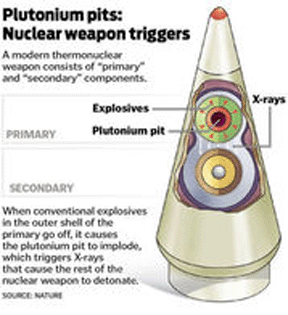
Plutonium pits are hollow spheres of plutonium that when compressed using explosives cause a nuclear detonation, per a DOE report.
The pits were first used in the 1940s during the Manhattan Project, the report read, used to detonate atomic bombs tested at the Trinity Site in south-central New Mexico and then in the bomb dropped on Nagasaki in Japan – largely credited with ending World War II.
Since the war ended, Los Alamos’ pit production was limited to research purposes, and from 2007 to 2011 the lab produced pits to replace those in 31 warheads carried on U.S. military submarines.
Between 1952 and 1989, most of the plutonium pits in the U.S. were generated at the Rocky Flats Plant near Denver amid the Cold War with a peak nuclear stockpile of 31,225 weapons outfitted with the pits reported in 1967, read the report.
Rocky Flats was shut down in 1989, and after concerns that the pits produced since the 1980s or earlier would begin to deteriorate over time, Los Alamos was called to make new ones.
The DOE called on Los Alamos to increase efforts at the lab to produce 30 pits a year by 2026, and the Savannah River Site in South Carolina was tasked with producing 50 pits annually by 2030.
That means that by that year, the U.S. would be producing 80 pits per year.
But to prepare LANL for the work, a project to remove existing equipment and glove boxes was needed to make way for pit manufacturing equipment.
That work was intended to begin this spring via a project known as the Decontamination and Decommissioning Subproject, the first of five operations to get the site ready.
equipment and infrastructure needed to safely manufacture pits for the nuclear stockpile,” said Summer Jones, NNSA assistant deputy administrator for production modernization at LANL.
“LAP4 is a complex, challenging endeavor, and getting the approval to begin the D&D subproject is a big step toward restoring this important capability.”
Opponents call for environmental review of plutonium operations
The effort to resume producing plutonium pits and thus nuclear weapons at the New Mexico lab and in South Carolina as met with controversy from government officials and watchdog groups in both states opposing the projects.
Santa Fe City Councilors passed a resolution last year calling for a “site-wide” environmental impact statement to be conducted and any safety issued be resolved and certified by the federal government before pit production was increased.
“The Governing Body (Santa Fe City Council) requests that the National Nuclear Security Administration suspend any planned expanded plutonium pit production until all nuclear safety issues are resolved, as certified by the independent Defense Nuclear Facilities Safety Board,” read the resolution.
Nuclear Watch New Mexico and Savannah River Site Watch subsequently in June 2021 filed a lawsuit in U.S. District Court for the District of South Carolina’s Aiken Division against the DOE and NNSA, arguing pit production should not be increased until site-wide environmental analysis were conducted at both facilities.
“The drastic expansion of plutonium pit production and the utilization of more than one facility to undertake this production are substantial changes from the Defendants’ long-standing approach of producing a limited number of pits at only one facility,” the suit read.
The suit argued the increased pit production was not only intended for replacing existing warheads but to develop a new warhead known as the W87-1.
This project was developed with proper environmental analysis, the suit read, or proper planning for where associated nuclear waste would be disposed of.
“The drastic expansion of plutonium pit production and the utilization of more than one facility to undertake this production are substantial changes from the Defendants’ long-standing approach of producing a limited number of pits at only one facility,” read the suit.
In southeastern New Mexico is the Waste Isolation Pilot Plant (WIPP), a repository for low-level transuranic (TRU) nuclear waste – clothing materials and equipment irradiated during nuclear activities.
But the litigants argued WIPP was already at limited capacity and its current permit with the New Mexico Environment Department (NMED) specified the repository would have to cease waste disposal by 2024 and begin the decommissioning process.
The DOE last year submitted a permit renewal application to NMED that removed the 2024 closure date, leaving WIPP’s lifetime largely open ended.
Still, the suit alleged the DOE failed to address the need for waste disposal.
“As a National Academy of Sciences has concluded, the WIPP is already oversubscribed for future waste from multiple sites and will overextend its capacity from this increase in TRU production from the pit project and other DOE projects set to generate large amounts of TRU waste,” read the suit.
“The Defendants have failed to meaningfully address this critical waste disposal question.”
The Swedish government allows the nuclear industry to build an unsafe repository for spent nuclear fuel
The method of disposal with copper canisters has received extensive criticism from eminent independent corrosion expertise.
https://www.mkg.se/en/the-swedish-government-allows-the-nuclear-industry-to-build-an-unsafe-repository-for-spent-nuclear 28 Jan 22, The Swedish government’s decision to say yes to repository for spent nuclear fuel in Forsmark is both regrettable and irresponsible. This is the opinion of the Swedish Society for Nature Conservation and the Swedish NGO Office for Nuclear Waste Review (MKG). The government has made its decision without the nuclear industry having shown that the copper canisters that are to guarantee safety for at least 100,000 years will work as intended.
– The government has today made a historic decision and I am afraid that they have made a historic mistake. It is directly irresponsible of the government to say yes to the repository for spent nuclear fuel. The method of disposal with copper canisters has received extensive criticism from eminent independent corrosion expertise. The nuclear waste can cause significant environmental damage in the Forsmark area ¬ perhaps already after a few hundred years, says Johanna Sandahl, chair of the Swedish Society for Nature Conservation.
The government has chosen to say yes to the spent fuel repository, despite the fact that during the government review additional knowledge has emerged that copper does not function as canister material. The copper canisters are to guarantee safety for humans and the environment for over 100 000 years. Independent corrosion researchers at the Royal Institute of Technology (KTH) have repeatedly warned that there is a risk that the canisters will break down – already after a few hundred years.
If the canisters break down and the extremely hazardous nuclear waste leaks out, it will contaminate the groundwater and the entire ecosystem. The marine environment is also affected. If this happens, a large area must be cordoned off as a zone with no access for a very long time and no one may eat or drink anything from the area.
The Government considers that it is sufficient that the Swedish Radiation Safety Authority (SSM) has said that the final repository can be sufficiently safe even if the copper canisters do not function as they should, thanks to the other barriers of rock and bentonite clay. The government has thus disregarded the fact that the Land and Environment Court clearly distanced itself from that view. The court held that the government must ensure that the copper canisters can really last for the long timespans involved.
Both the Swedish Council for Nuclear Waste, the government’s scientific advisory board on nuclear waste issues, and the researchers from KTH have stated that more research is needed in the repository environment to ensure that the canisters will work as intended.
The Swedish Society for Nature Conservation and MKG believe that the government’s decision both ignored the strong scientific warning signals and the need for more copper research. As science continues to work independently of political decisions, the associations believe that it is likely that the project will still be stopped in the future. The risk that the money needed to build a repository will be wasted on the wrong technology is evident.
– The government has decided to approve a repository that will not work, says Johan Swahn, director of MKG. Thus, money and time risks being wasted in the construction of a repository that must then be discarded.
Contact:
Johan Swahn, Director, MKG Swedish NGO Office for Nuclear Waste Review,
+4670-4673731
Nuclear waste storage in New Mexico would be blocked if Senate, House bill pass Legislature
Nuclear waste storage in New Mexico would be blocked if Senate, House bill pass Legislature, Adrian Hedden, Carlsbad Current-Argus 27 Jan 22, High-level spent nuclear fuel would be prohibited from being stored in New Mexico if lawmakers pass a pair of bills introduced during this year’s legislative session.
The bicameral effort comes as Holtec International proposed to build and operate a facility in southeast New Mexico to temporarily hold spent nuclear fuel rods from generator sites across the U.S.
Sponsored by New Mexico Sen. Jeff Steinborn (D-36), a frequent critic of the Holtec project, Senate Bill 54 would prohibit the kind of waste Holtec planned to store in New Mexico. It’s twin bill, House Bill 127, was sponsored by Rep. Matthew McQueen (D-50).
The state does have a facility for low-level waste. The Waste Isolation Pilot Plant is operated by the U.S. Department of Energy in the same region and permitted by the State of New Mexico
The Holtec site recently received approval from the federal Nuclear Regulatory Commission, which recommended Holtec be issued a license to build the facility and a final decision was expected this year.
Holtec would hold up to 100,000 metric tons of the waste in total on an interim basis until a permanent repository was available.
The U.S. does not presently have a permanent repository for the waste after such a project at Yucca Mountain, Nevada stalled amid opposition from leaders in that state.
In New Mexico, high-ranking state officials voiced their own opposition to the proposal with Gov. Michelle Lujan Grisham calling the project “economic malpractice” as she worried it could risk nearby oil and gas and agriculture industries in the region.
Last year, New Mexico Attorney General Hector Balderas filed a lawsuit against the NRC arguing its license recommendation ignored the environmental and safety impacts the site could have if built and operated.
SB 54 was awaiting a hearing in the Senate Conservation Committee, while HB 127 was to be considered in the House Energy, Environment and Natural Resources Committee.
Both bills added language to New Mexico’s Radioactive and Hazardous Materials Act that “no one” will store high-level waste or spent nuclear fuel in New Mexico, adding to a clause that already required state consent before such a facility could be built.
The bill would also amend requirements of the state’s Radioactive Waste Consultation Task Force to include private nuclear facilities like Holtec’s in its purview for analysis and require the committee meet at least annually.
“No person shall store or dispose of radioactive materials or radioactive waste (or spent fuel) in a disposal facility until the state has concurred in the creation of the disposal facility, except as specifically preempted by federal law; provided that spent fuel and high-level waste shall not be stored or disposed of in the state; and provided further that the state or a political subdivision of the state shall not issue or certify a permit for the construction or operation of a disposal facility for spent fuel or high-level waste,” read the language of the bills.
Local leaders in southeast New Mexico opposed the bill, believing the Holtec project was a safe way to diversify the region’s economy and insulate it from future up and downswings in the oil and gas markets.
Carlsbad Mayor Dale Janway, Eddy County Commission Chairman Steven McCutcheon, along with Hobbs Mayor Sam Cobb and Lea County Commissioner Jonathan Sena signed letters to Lujan Grisham opposing each bill and asking that she not sign them into law if passed.
The cities of Carlsbad and Hobbs and Eddy and Lea counties formed the Eddy Lea Energy Alliance which sited the project and recruited Holtec………………. https://www.currentargus.com/story/news/local/2022/01/27/nuclear-waste-storage-new-mexico-would-blocked-if-bills-pass/6578755001/
370,000 tonnes of highly radioactive, spent nuclear fuel in temporarystorage around the globe.
Sweden’s government gave the go-ahead on Thursday for the building of a storage facility to keep the country’s spent nuclear fuel safe for the next 100,000 years. What to do with nuclear waste has been a major headache since the world’s first nuclear plants came on line in the 1950s and 1960s. The International Atomic Energy Agency estimates that there is around 370,000 tonnes of highly radioactive, spent nuclear fuel in temporary storage around the globe. Nasdaq 27th Jan 2022 https://www.nasdaq.com/articles/sweden-approves-plan-to-bury-spent-nuclear-fuel-for-100000-years |
Can reactor fuel debris be safely removed from Fukushima Daiichi?
Can reactor fuel debris be safely removed from Fukushima Daiichi?, Science Daily, :January 25, 2022Source:University of Helsinki
Summary:Decommissioning and clean-up are ongoing at the Fukushima Daiichi Nuclear Power Plant (FDNPP); however, many difficult problems remain unaddressed. Chief amongst these problems is the retrieval and management of fuel debris.
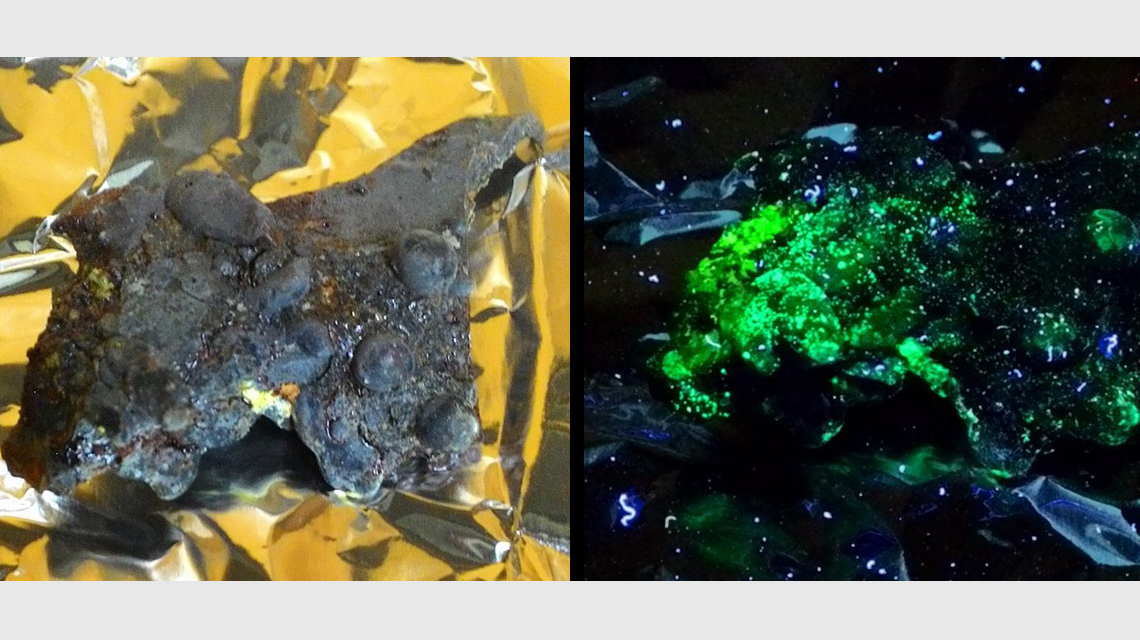
Decommissioning and clean-up are ongoing at the Fukushima Daiichi Nuclear Power Plant (FDNPP); however, many difficult problems remain unaddressed. Chief amongst these problems is the retrieval and management of fuel debris. Fuel debris is the name given to the solidified mixture of melted nuclear fuel and other materials that now lie at the base of each of the damaged reactors (reactor Units 1 — 3). This material is highly radioactive and it has potential to generate enough neutrons to trigger successive nuclear fission reactions (uranium-235 breaks into two elements after capturing neutrons, emitting enormous amounts of energy, radiation, and more neutrons). Successive fission reactions would present a serious safety and material management risk.
One of the materials in nuclear reactors that can lower the number of neutrons interacting with uranium-235 is boron carbide (B4C). This was used as the control rod material in the FDNPP reactors, and it may now remain within the fuel debris. If so, it may limit fission events within the fuel debris.
Can the fuel debris be safely removed?
On March 11th 2011, the control rods were inserted into the FDNPP reactors to stop the fission reactions immediately after the earthquake, but the later tsunami destroyed the reactor cooling systems. Fuel temperatures soon became high enough (>2000 °C) to cause reactor meltdowns. Currently, the fuel debris material from each reactor is cooled and stable; however, careful assessment of these materials, including not only their inventories of radioactive elements but as well their boron content, a neutron absorber, is needed to ascertain if successive fission reactions and associated neutron flux could occur in the fuel debris during its removal. Many important questions remain: was boron from the control rods lost at high temperature during the meltdown? If so, does enough boron remain in the fuel debris to limit successive fission reactions within this material? These questions must be answered to support safe decommissioning.
Study shows direct evidence of volatilization of control rods during the accident.
Despite the importance of this topic, the state and stability of the FDNPP control rod material has remained unknown until now. However, work just published in the Journal of Hazardous Materials now provides vital evidence that indicates that most of the control rod boron remains in at least two of the damaged FDNPP reactors (Units 2 and/or 3).
The study was an international effort involving scientists from Japan, Finland, France, and the USA………………….. https://www.sciencedaily.com/releases/2022/01/220125093041.htm
Unease in Ontario about planned nuclear waste dump (nobody suggests that they stop making this trash?)

The Plan to Bury All of Canada’s Nuclear Waste in One Northwest Ontario Town
This kind of dump for high-level nuclear waste has not yet been built anywhere in the world.
JANUARY 24, 2022 ON THE MONDAY SHOW BY CANADALAND Since Canada began using nuclear energy in the 1960s, the only solutions for the waste produced have been temporary. It’s now being stored onsite at nuclear plants, in containers that last a century at most.But nuclear waste takes thousands — or tens of thousands — of years to decay.
So in 2002, the federal government created the Nuclear Waste Management Organization (NWMO) and tasked it with finding a location to dispose of all of Canada’s high-grade nuclear waste.
Ignace, in Northwestern Ontario, was among the communities that volunteered to host a deep geological repository (DGR), and is now one of two sites under consideration. (The other is South Bruce, in the southern part of the province.) To create the DGR, used-up nuclear reactor cores would be placed inside canisters that would then be encased in a special clay that’s been shown to protect from water and cushion from seismic activity. The canisters would then be buried inside a rock 500 metres below ground.The NWMO is confident that the project — valued at $26 billion over the next 150 years — would pose virtually no risk to the local water supply, environment, or people. But a DGR for high-level nuclear waste has not yet been built anywhere in the world.
On this week’s CANADALAND, senior producer Sarah Lawrynuik travels to the area where she grew up, to learn about the divided reaction to the nuclear-waste project and whether the anxieties are justified:The following are edited excerpts from Sarah’s conversations with some of the residents and experts she spoke to…Our water is the most precious thing, I believe, in this country right now. Because so much in the world is polluted. Just so much. And we can’t afford to take that risk. Because no matter what they do to try to make it safe, nuclear waste is not safe and will never be safe.”
— Sylvia Green-Guenette, who lives on the shore of Wabigoon Lake in Dryden. Despite being roughly as close to the proposed site as Ignace, Dryden won’t get a say in whether the project goes ahead………………..
“I think the people who are totally for it are just looking at it through one lens. They’re looking at it through the business lens.…They’re promising a certain amount of jobs — not only for the community, but specifically for Indigenous folk as well. And I think a lot of people can see through that.”
— Maya Oversby, a Métis university student who started attending community meetings about the repository in 2015, when she was 14…………………… https://www.canadaland.com/nuclear-waste-ignace-ontario/
Swedish government to decide on construction of nuclear waste dump.
|

Why does nobody ever suggest stopping making radioactive trash?
Swedish government to decide construction of spent nuclear fuel repository https://www.euractiv.com/section/politics/short_news/swedish-government-to-decide-construction-of-spent-nuclear-fuel-repository/
By Charles Szumski | EURACTIV.com 24 Jan 22, The government this week will announce its decision regarding the construction in the northern Uppland region of a repository for nuclear fuel that has been removed after being used in a nuclear reactor.
Environment Minister Annika Strandhäl promised on 20 January that the government would announce its decision this week. Spent nuclear fuel has been a hot topic discussed by Swedish scientists and politicians for the last 35 years.
Europe’s nuclear waste remains an unsolved and highly dangerous problem – EU Assessment Report

Nuclear waste from nuclear power plants remains an unsolved and highly dangerous problem, as spent fuel must remain isolated from the environment for a million years. In an attempt to solve the nuclear waste problem, an EU-wide regulation was introduced in 2011, the “Council Directive 2011/70/Euratom establishing a Community framework for the responsible and safe management of spent fuel and radioactive waste”.
This Directive tried to force EU member states to address the issue seriously, after this had been neglected for decades – thus immediately proving that nuclear waste has never been effectively dealt with.
The national waste management policies of the EU member states are still inadequate in many respects. The European Commission concluded in its latest report in 2019 that more needs to be done; this is also reflected in the high number of infringement proceedings.
In the Assessment Report, we not only address shortcomings in transparency and participation, but also problems in the inventory data, unsolved issues in the multinational repository search, incomprehensible
cost estimates and lack of financing. The Onkalo repository under construction in Finland is often presented as a game changer by the nuclear lobby, although the safety of the technology used is questionable due to new findings.
Don’t Nuke the Taxonomy 21st Jan 2022
13 wards in Cumbria recommended against their will, for UK’s nuclear waste dump
| This week our readers got talking about Allerdale potentially being the host to an underground disposal of nuclear waste. Having a Geological Disposal Facility (GDF) that would store higher level radioactive waste underground is hailed to be the safest and most secure method of disposal. The Allerdale GDF Working Group recommended a Search Area for consideration in 2021 comprised of 13 electoral wards: Aspatria; Broughton St Bridgets; Dalton; Ellen & Gilcrux; Flimby; Harrington & Salterbeck; Maryport North; Maryport South; Moorclose & Moss Bay; Seaton & Northside; St John’s; St Michael’s and Stainburn & Clifton. Cumbrian Lad added: “It is a very strange process which allows one individual, Andy Ross of GenR8 North, to volunteer the part of Allerdale in which he doesn’t live to be the burial site for the UK’s nuclear waste. The 13 wards who have been volunteered against their will, have no say in the matter until 15-20 years of investigations have taken place.” Carlisle News and Star 23rd Jan 2022 https://www.newsandstar.co.uk/news/19865839.nuclear-waste-disposal-allerdale-readers-talking/ |
France’s nuclear waste problem, and the lack of transparency on military wastes

“The lack of transparency on military nuclear waste poses a serious democratic problem” To guarantee access to the information that is lacking on the subject of the dismantling of the installations, “parliamentary involvement” is essential, believe the director of the Armaments Observatory, Patrice Bouveret, and the spokesperson for ICAN France, Jean -Marie Collin, in a forum in Le Monde.
Le Monde 20th Jan 2022
Holding in the deep: what Canada wants to do with its decades-long pile-up of nuclear waste
|

no country in the world has solved the conundrum of how to permanently dispose of waste that will stay toxic for 400,000 years. And after decades of trying hard to figure it out, Canada doesn’t seem especially close to a solution.
This is the legacy that we are leaving for our children, our grandchildren, great grandchildren, or great, great grandchildren,”
“ it would be irresponsible and morally wrong to commit future generations to a technology that produces such dangerous material, unless there is at least one proven safe method of dealing with it,”
Canada plans to store spent nuclear fuel deep, deep underground near the Great Lakes. That is, if an industry group can find a community willing to play host, The Narwahl, By Emma McIntosh Jan. 19, 2022, The final resting place of Canada’s most radioactive nuclear waste could be a cave about as deep below the surface as the CN Tower is tall.
If it happens, the chamber and its network of tunnels will be drilled into bedrock in the Great Lakes basin. Pellets of spent nuclear fuel — coated in ceramic material, loaded into bundles of metal tubes the size of fireplace logs, then placed into a metal container encased in clay made from volcanic ash — will be stacked in the underground chamber sealed with concrete 10 to 12 metres thick. Though the radioactive pellets will have spent several years cooling down in pools and concrete canisters, they will still emit so much energy that their presence will heat up the space where they sit for 30 to 60 years. The warmth will linger for anywhere from a few centuries to a few millennia.
But none of this will become reality unless the industry-backed Nuclear Waste Management Organization can find a willing host. Two Ontario towns are in the running: South Bruce, located about two hours’ drive northwest of Toronto near Lake Huron, and Ignace, roughly 200 kilometres north of Lake Superior, not far from the Manitoba border. The municipalities, along with 10 First Nations and two Métis councils, are awaiting the completion of dozens of studies as they mull whether the economic benefits of such a project outweigh the risks.
“We have to make sure that there isn’t an environmental risk for us, or it’s a relatively remote risk,” said Dave Rushton, a project manager for the Municipality of South Bruce.
If anyone thinks they’re informed today, I kind of question it. We’re not fully informed because we haven’t got this information yet.”
………. no country in the world has solved the conundrum of how to permanently dispose of waste that will stay toxic for 400,000 years. And after decades of trying hard to figure it out, Canada doesn’t seem especially close to a solution.
“This is the legacy that we are leaving for our children, our grandchildren, great grandchildren, or great, great grandchildren,” said Bzauniibiikwe, whose English name is Joanne Keeshig. She’s Wolf Clan from Neyaashiinigmiing, also known as Chippewas of Nawash Unceded First Nation, which is located near the South Bruce proposal.
“Seven generations from now, this will not be resolved unless we start seriously taking a look at what can be done.” Modelling suggests underground nuclear waste disposal is safe. But no country has tried it yet…………….
High-level waste, meanwhile, is the responsibility of the Nuclear Waste Management Organization, a non-profit established by Ontario Power Generation, New Brunswick Power Corporation, and Hydro-Québec. In the 60 or so years that Canada has produced nuclear power, it has never had a place to dispose of spent fuel. As of 2020, the country’s nuclear power utilities had produced about three million fire log-sized bundles of it — enough to fill eight hockey arenas from the ice to the top of the boards — and that number grows by about 90,000 each year. In the absence of a place to leave it permanently, producers are currently keeping high-level waste in temporary storage near the reactors. By 2100, when the federal government says it expects all of the country’s existing nuclear plants to be decommissioned, industry projects it will be holding onto nearly 5.6 million bundles.
Accumulating nuclear waste has raised red flags for a long time. In 1978, the Ontario government commissioned a report titled “A Race Against Time,” which concluded the waste was proving trickier to handle than experts initially thought and suggested a potential moratorium on new nuclear plants if the industry didn’t progress within eight years.
Another report from the United Kingdom the same year came to a similar but stronger conclusion, said Gordon Edwards, a mathematician who has long critiqued the nuclear industry as the president of the not-for-profit Canadian Coalition for Nuclear Responsibility.
“One of their main conclusions was that we are agreed that it would be irresponsible and morally wrong to commit future generations to a technology that produces such dangerous material, unless there is at least one proven safe method of dealing with it,” Edwards said.
“The problem with radioactivity is you can’t shut it off … You have to somehow keep it out of the environment.”
Federal and provincial governments never issued a moratorium: construction on the Darlington plant in Bowmanville, Ont., which had been approved in 1977, began in the ‘80s. The Bruce and Pickering plants, meanwhile, continued to get new reactors.
These days, the federal government is pushing to advance new nuclear technology, called small modular nuclear reactors (commonly known as SMRs), which some argue could be a climate mitigation tool. The technology is less efficient than larger reactors and produces more waste. Two of these new reactors might be built in the near future — the Canadian Nuclear Safety Commission, which oversees the industry, is considering an application for one at the Chalk River Laboratories research site in Deep River, Ont., and Ontario Power Generation has announced its intent to build another at Darlington.
In 2002, Parliament did pass legislation requiring the industry to band together and deal with its waste and later that year, the Nuclear Waste Management Organization was formed. Twenty years on, it still hasn’t figured out what to do with high-level radioactive waste. Keeping it above ground, as is done now, leaves it vulnerable to natural disasters, or human ones like terrorism and war.
“It’s a question of ethics,” said Brian Ikeda, an associate professor at Ontario Tech University who studies the management of radioactive waste and has a contract to do upcoming work for the Nuclear Waste Management Organization.
“Do you want to leave this stuff — which you don’t like and you think is really dangerous — and have your grandchildren figure out what to do with it? Because that’s what’s actually going to happen … we could be putting those people at huge risk by having this material out.”
As such, a consensus has emerged among global experts that the best way forward is to dispose of spent fuel far underground, a concept called a deep geological repository. But putting nuclear waste underground isn’t simple.
The waste — which in worst-case scenarios could poison groundwater or soil — must be packaged securely enough to withstand a future ice age, which could bring massive glaciers three kilometres thick, heavy enough to affect underground geology. It must be placed in rock that is stable and won’t shift for 400,000 years, the length of time the Nuclear Waste Management Organization believes the waste would remain radioactive enough to be harmful if leaked. It must be climate change proof.
It must also account for the many unknowns of future generations, who might not know how to actively maintain the storage site, but on the other hand will hopefully be able to monitor it. It must be buried so deep that, if our languages disappear or the information about what’s sealed within is somehow lost, our descendants would be unlikely to disturb the buried chamber and expose themselves to the unimaginable risk inside.
Another challenge is the simple fact of entropy: everything breaks down over time. No matter what type of container holds the nuclear waste, its material will corrode over the course of many thousands of years, Ikeda said. The trick is to buy as much time as possible. …………………………………………….
Finding a nuclear waste disposal site in Ontario will require First Nations consent and buy-in from local towns………………………………………………………… https://thenarwhal.ca/nuclear-waste-ignace-bruce/
New radioactive waste plan poses ‘Milennia of Risk” for Ottawa River communities
| |||
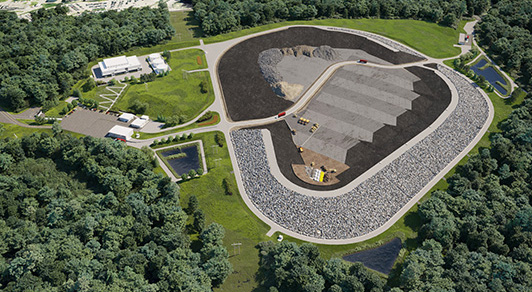
New Radioactive Waste Plan Poses ‘Millennia of Risk’ for Ottawa River Communities https://www.theenergymix.com/2022/01/16/new-radioactive-waste-plan-poses-millennia-of-risk-for-ottawa-river-communities/January 16, 2022 : Ole Hendricksen Canada’s first-ever radioactive waste disposal facility may be headed for disaster.
Canada’s nuclear regulator is about to hold wholly-inadequate hearings on building a controversial 60-foot-high mound for one million cubic metres of radioactive and hazardous wastes, with the potential to leak for millennia into the Ottawa River—a drinking water source for millions of Canadians in Ottawa, Gatineau, Montreal, and other downstream communities
Euphemistically called a “Near Surface Disposal Facility”, or NSDF, the mound would be on unceded Algonquin territory, on a hillside adjacent to a lake and wetlands that drain into the Ottawa River a kilometre away. An environmental impact statement (EIS) ordered by the Canadian Nuclear Safety Commission (CNSC) says that without mitigation practices, “leakage of leachate or other releases of substances may affect surface water quality at downstream locations,” but then goes on to say that these changes are not expected to have significant impact on human health or aquatic biodiversity.
The EIS lists a number of possible threats to the mound’s integrity, including earthquakes, floods, fires, tornadoes, malfunctions, and accidents. At each count, the (EIS) concludes that the risks are “not significant” thanks to the facility’s proposed design features, monitoring plans, and mitigation strategies like treating effluents.
A CAPTURED REGULATOR
The CNSC has never refused to grant a licence, according to a memo obtained by the Canadian Coalition for Nuclear Responsibility. The Expert Panel on Reform of Environmental Assessment noted in its final report that CNSC is widely seen as a captured regulator that promotes the projects it is supposed to regulate.
The surface-level nuclear mound idea was put forward by Canadian Nuclear Laboratories (CNL). In 2015, ownership of CNL was transferred from Atomic Energy of Canada Limited (AECL) to SNC-Lavalin and Texas-based Fluor and Jacobs through a 10-year, multi-billion-dollar AECL contract issued by the Harper government.
The mound is central to CNL’s strategy to reduce AECL’s C$16-billion nuclear waste clean-up liability as quickly and cheaply as possible. This federal nuclear liability has grown despite billion-dollar annual appropriations to AECL, which AECL hands over to CNL’s multinational owners.
The CNSC has signalled its approval of the NSDF by scheduling a two-part licencing hearing for February 22 and May 31,2022. A licencing document and an Environmental Assessment report will be released on January 24. CNSC’s licencing document will likely say the NSDF project is consistent with requirements of the Nuclear Safety and Control Act. CNSC’s EA report will likely repeat the assertion that the NSDF project “is not likely to cause significant adverse environmental effects”, or that the significant adverse environmental effects it is likely to cause are justified in the circumstances.
The CNSC initially also promised a public hearing and a public comment period on its EA report, but later eliminated them. Public participation in CNSC licencing hearings is a mere formality.
MISREPRESENTING THE RISK
There are many problems with the proposed project.
The NSDF location was chosen without a proper siting process, even though the International Atomic Energy Agency (IAEA) says siting is a “fundamentally important activity in the disposal of radioactive waste.” Proximity to contaminated structures awaiting demolition at AECL’s Chalk River Laboratories—not environmental protection—seems to have been the priority.
Use of the term “NSDF” misrepresents the proposed facility. The EIS says it would be an above-ground mound “similar to a municipal landfill.” The IAEA says landfills are suitable only for very low level waste that has “very limited concentrations of long-lived radionuclides,” and that a “disposal facility at or near the surface makes it susceptible to processes and events that will degrade its containment and isolation capacity over much shorter periods of time.”
The waste inventory in the EISshows 23 of 31 radionuclides with half-lives exceeding 1,600 years, including man-made reactor products such as americium, neptunium, plutonium, and technetium. Much of this waste dates back to the Cold War era when Chalk River Laboratories produced materials for U.S. nuclear weapons. AECL’s NRX reactor experienced a partial meltdown in 1952. An above-ground mound is simply not capable of containing and isolating wastes like these for the duration of their radiological hazard.
The EIS says the mound would experience degradation as a result of “normal evolution”. That means mixed radioactive and hazardous industrial wastes (arsenic, beryllium, mercury, benzene, dioxins, PCBs, etc.) would leak into the Ottawa River, essentially forever. Future generations might be tempted to scavenge for scrap metal in the mound—an estimated 33 tonnes of aluminum, 178 tonnes of lead, 3,520 tonnes of copper, and 10,442 tonnes of iron.
SURFACE STORAGE FOR DANGEROUS RADIATION
Cobalt-60 would emit the highest amounts of radiation by far during the first 50 years of operation (99% of the total). CNL proposes to allow unlimited quantities of this powerful “short-lived” gamma-emitter in certain “packaged” wastes. Cobalt-60 is used in high-activity gamma irradiation sources for food sterilization and cancer treatment. Owing to cobalt-60’s 5.3-year half-life, these devices are no longer useful after 20 years but remain highly radioactive. They are sent back to Canada and stored at Chalk River.
CNL wants to put these “disused sources” in the mound, even though the IAEA requires their disposal at depths “of at least tens of metres”. And more are coming from around the world: a 2021 federal report says Canada supplies “approximately 95% of the global demand”.
The EIS does not mention that such commercial industry wastes would go in the NSDF. Nor does it discuss the worker safety and environmental risks created by cobalt-60 and the hundreds of tonnes of lead required to shield it.
Overall, the EIS contains minimal information on the wastes that would go into the mound. It refers to waste “packages” that could range in size up to intermodal shipping containers. Some packages supposedly would be “leachate controlled”, but no evidence or details are provided that they would withstand the heavy equipment (bulldozers, rollers) used to compact the mound.
Because the mound’s contents would be exposed to wind, rain, and snow during a 50-year operating phase, the project includes a water treatment plant to remove leachate contaminants. Tritium, the radioactive form of hydrogen, would not be removed. Partly treated leachate would be discharged into wetlands or into nearby Perch Lake through a pipeline. Both are already contaminated by groundwater plumes from existing leaking waste areas.
Despite assertions that the NSDF project would remediate “historically contaminated lands”, remediation plans are not included. Available data indicate that the leaking waste areas already contain far more radionuclides than a “licenced inventory” would allow in the NSDF.
A former AECL staff member says CNL does not rigorously track its wastes and has inadequate waste characterization and waste segregation procedures. This raises concerns about CNL’s capacity (and willingness) to adhere to the licenced inventory.
A FINANCIAL AND ENVIRONMENTAL DISASTER
The CNSC’s mandate does not include cost-effectiveness. The $750-million cost estimate in the EIS lacks credibility. Canada has no experience with permanent radioactive waste disposal. Why build such an expensive facility that would do little to reduce the federal nuclear liability, would not conform to international safety standards, and would pollute the Ottawa River?
| In 2018, six First Nations and dozens of civil society groups wrote the IAEA about the flawed NSDF proposal and Canada’s radioactive waste policy void. A 2019 IAEA mission to Canada found virtually “no evidence… of a governmental policy or strategy related to radioactive waste management.” In response, Natural Resources Canada (NRCan) launched an “engagement process to modernize Canada’s Radioactive Waste Policy” in November 2020.Seven environmental petitions related to the NSDF have been filed with Canada’s Auditor General, who anticipates publication of a nuclear waste management audit this year. As Canada’s first-ever facility for permanent disposal and eventual abandonment of nuclear reactor waste products, the NSDF would set a very poor precedent for future facilities to come. The Auditor General’s nuclear waste management audit and NRCan’s policy modernization process should conclude before the CNSC holds licencing hearings for the NSDF. Their results may help prevent the NSDF from becoming a financial and environmental disaster that would permanently contaminate one of Canada’s most treasured heritage rivers.Retired forest ecologist Ole Hendrickson is a researcher with Concerned Citizens of Renfrew County and Area. |
1 This Month
26 September – International Day for the Total Elimination of Nuclear Weapons





PLEASE OPPOSE HR 8255 AND S.3639 – bills would accelerate satellite deployment, with no environmental review or safeguards – https://ncstd5li.quorum.us/campaign/169331/
To see nuclear-related stories in greater depth and intensity – go to https://nuclearinformation.wordpress.com
-
Archives
- September 2026 (281)
- August 2026 (330)
- July 2026 (355)
- June 2026 (287)
- May 2026 (306)
- April 2026 (356)
- March 2026 (251)
- February 2026 (267)
- January 2026 (308)
- December 2025 (358)
- November 2025 (359)
- October 2025 (375)
-
Categories
- 1
- 1 NUCLEAR ISSUES
- business and costs
- climate change
- culture and arts
- ENERGY
- environment
- health
- history
- indigenous issues
- Legal
- marketing of nuclear
- media
- opposition to nuclear
- PERSONAL STORIES
- politics
- politics international
- Religion and ethics
- safety
- secrets,lies and civil liberties
- spinbuster
- technology
- Uranium
- wastes
- weapons and war
- Women
- 2 WORLD
- ACTION
- AFRICA
- Atrocities
- AUSTRALIA
- Christina's notes
- Christina's themes
- culture and arts
- Events
- Fuk 2022
- Fuk 2023
- Fukushima 2017
- Fukushima 2018
- fukushima 2019
- Fukushima 2020
- Fukushima 2021
- general
- global warming
- Humour (God we need it)
- Nuclear
- RARE EARTHS
- Reference
- resources – print
- Resources -audiovicual
- Weekly Newsletter
- World
- World Nuclear
- YouTube
-
RSS
Entries RSS
Comments RSS

