Western states join New Mexico in resisting nuclear waste storage without state consent
Adrian Hedden, Carlsbad Current-Argus, 29 July 22
A group of governors from across the American West signaled their disapproval of storing spent nuclear fuel in their states without their consent, as two companies plan to do so in New Mexico and Texas despite opposition voiced by both states.
In southeast New Mexico, Holtec International proposed building a temporary storage site near Carlsbad and Hobbs known as a consolidated interim storage facility (CISF) to hold up to 100,000 metric tons of high-level nuclear waste transported from reactors around the country………………………………………………………………………………………………….
the governors of Texas and New Mexico – one Republican and one Democrat – stood staunchly opposed to the projects, arguing they could imperil nearby fossil fuel and agriculture operations.
A bipartisan group of congresspeople from Texas and New Mexico also questioned the projects, introducing legislative bills that would bar such activities by the federal government without the state consent.
The Western Governor’s Association recently passed a resolution demanding the federal government require host states to support CISF projects before they can be built.
The resolution, passed June 30, argued no CISFs should be sited, built or operated within a state without written consent from that state’s governor………………………………
Republican Texas Gov. Greg Abbott made similar statements regarding the project in his state, and Texas lawmakers passed a bill last year against the proposals.
“No consolidated facility for nuclear waste, whether interim or permanent, or privately or federally owned and operated, shall be located within the geographic boundaries of a western state or U.S. territory without the written consent of the current Governor in whose state or territory the facility is to be located,” read the resolution from the Western Governors Association.
It also called on the federal government to devise regulations that include state consent when siting and licensing facilities to store nuclear waste.
https://www.currentargus.com/story/news/2022/07/29/western-states-new-mexico-resisting-nuclear-waste-storage-texas-radiation-federal-fuel-energy-holtec/65382940007/
Undersea nuclear waste dump off Cumbria would imperil marine life, experts warn
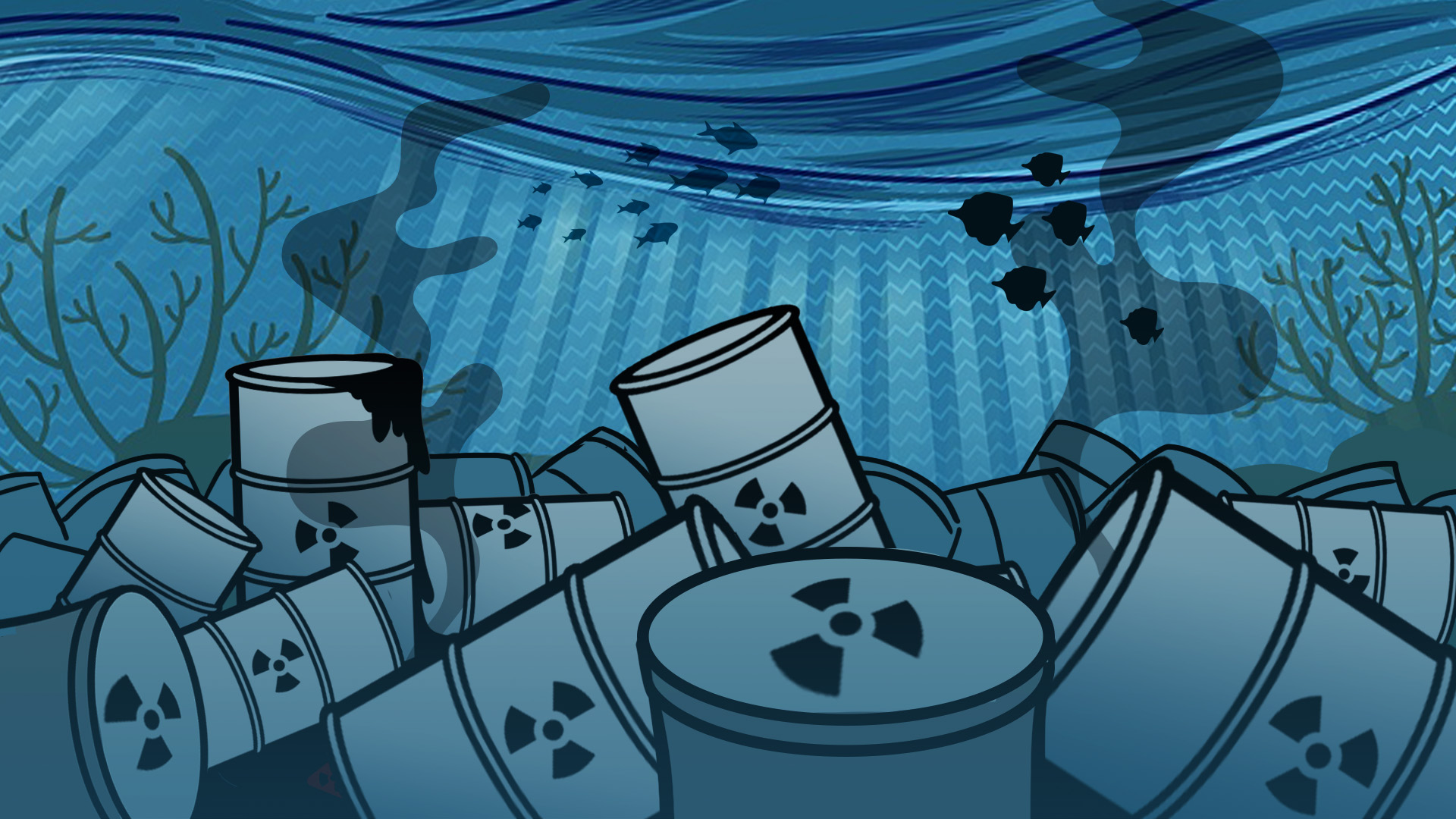
UK looking for storage site for world’s biggest stockpile of untreated waste, including 100 tonnes of plutonium
Guardian, Mattha Busby, Fri 29 Jul 2022
Plans to dispose of radioactive nuclear waste beneath the seabed off the north-west coast of England risk seriously harming marine life including mammals such as dolphins and whales, experts have warned.
Seismic surveys in the Irish Sea near Cumbria get under way on Saturday to explore whether the area is suitable for a proposed facility. The UK government is seeking a location for a deep underground repository to store the world’s largest stockpile of untreated nuclear waste.
Officials have said that a decades-long accumulation of materials including more than 100 tonnes of plutonium – which could create thousands of nuclear bombs – cannot sustainably be stored above ground for ever and they are therefore searching for a site to “keep it safe and secure over the hundreds of thousands of years it will take for the radioactivity to naturally decay”.
In 2019, radioactivity leaked into the soil beneath Sellafield, in Cumbria, which saw a serious leakage in the 1970s and was not built with decommissioning in mind. There are 20 surface facilities that store highly radioactive waste across the UK. About 750,000 cubic metres, equivalent to 70% of the volume of Wembley stadium, is earmarked for “geological disposal”.
But impacts related to noise exposure from seismic gun blasts have been linked to vastly reduced sightings of whales, whose primary sense is acoustic. There is also concern over storing nuclear waste underwater, with just a handful of such sites globally.
The Zoological Society of London’s cetacean strandings investigation programme manager, Rob Deaville, said that seismic blasts can cause habitat avoidance, risk excluding mammals from an area, and raise the risk of decompression sickness. “Potential impacts can also include direct physical effects ranging from temporary or permanent threshold shifts in hearing to direct blast trauma,” he told the Guardian.
There are also concerns that the blasts may drown out mating calls and even cause deaths, after more than 800 dolphins washed ashore in Peru in 2012 after seismic tests. On the Cumbria survey, Deaville added that the area is a known habitat for porpoises, dolphins and other species. “Our teams are very much on standby, in the event we receive increased reports of live/dead strandings over this period.”
In a letter to campaigners shared with the Guardian, an official from the Marine Management Organisation, a public body, acknowledged “the potential disturbance to certain cetacean species” but noted that the plans were largely exempt from regulations.
Critics also suggest it may be impossible to predict the consequences of storing heat-generating nuclear waste beneath the sea in perpetuity.
The chair of Nuclear Free Local Authorities (NFLA), David Blackburn, also leader of the Green party group at Leeds city council, told the Guardian: “The waste would be left in situ for millennia and, no matter how effective the barriers, some of the radioactivity will eventually reach the surface. The rate at which radioactivity would leak from a [geological disposal facility (GDF)] can be poorly predicted and is likely to remain so for an indefinite period.
“Rather than solving a problem for future generations, it could be leaving them a legacy of a nuclear waste dump gradually releasing radioactivity into the environment and cutting off their options for deciding how to deal with this waste.”
The NFLA prefers the idea of a “near surface, near site storage of waste” to allow for monitoring and management, and action in the event of a leakage. “Further scientific research may yield advancements that could mean that radioactive waste can be treated such as to make it less toxic in a shorter time period,” Blackburn added. “Chucking it in a hole in the ground or under the seabed precludes this possibility…………………………….. https://www.theguardian.com/environment/2022/jul/29/undersea-nuclear-waste-dump-off-cumbria-risks-harm-to-marine-life-experts-warn
Nuclear Waste Cleanup: Hanford Site Cleanup Costs Continue to Rise, but Opportunities Exist to Save Tens of Billions of Dollars
https://www.gao.gov/products/gao-22-105809 GAO-22-105809Published: Jul 29, 2022.
Fast Facts
One of the largest, most expensive cleanup projects in the world is at the Department of Energy’s Hanford Site in Washington State. This report describes the status of DOE’s efforts to clean up 54 million gallons of hazardous and radioactive waste stored at the site.
We found that DOE’s plans for addressing the waste assume significant funding increases in the next 10 years.
This report notes that our prior recommendations could save tens of billions of dollars and reduce certain risks if implemented. For example, Congress could consider clarifying DOE’s authority to manage and dispose of some of this waste in a less costly way.
Highlights
What GAO Found
We found that the Department of Energy (DOE) continues to face cost increases and delays in its efforts to address 54 million gallons of radioactive waste stored in tanks at the Hanford Site in Washington State. We also found that Congress and DOE could take steps now that could potentially save tens of billions of dollars in cleanup costs for this waste.
Why GAO Did This Study
The Hanford Site is home to one of the largest and most expensive environmental cleanup projects in the world. After decades of research and production of weapons-grade nuclear materials at the 586-square-mile campus ceased in the late 1980s, DOE began cleanup of hazardous and radioactive waste created as a byproduct of producing nuclear weapons. This waste must be retrieved and treated—or immobilized—before disposal, according to legal requirements and agreements made with federal and state environmental regulators. The Waste Treatment and Immobilization Plant is DOE’s current planned approach to treating Hanford’s tank waste.
Senate Report 117-39 includes a provision for us to continue periodic briefings on the treatment of waste at the Hanford Site. This report describes the status of DOE’s cleanup efforts at the Hanford Site, focusing particularly on the approaches, costs, and alternatives for the tank waste cleanup mission.
For more information, contact Nathan Anderson at (202) 512-3841 or andersonn@gao.gov.
Stiff resistance by fishing unions to Japan’s move to dump Fukushima nuclear wastewater into the ocean.
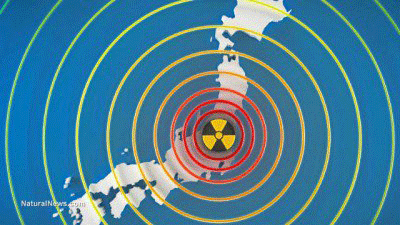
The impact of Japan’s 2011 earthquake and tsunami still ripples through
the country as the nation continues the decommissioning process of the
wrecked Fukushima Daiichi nuclear power plant. In addition to mass
evacuations of the surrounding area, the plant’s meltdown also uncovered
failings by its operator to take proper precautions, resulting in hefty
fines for four former executives.
The latest move involving the failed
plant has brought fresh criticism as Japan’s nuclear regulators approved
a plan to release water from the plant into the ocean, the government said
on Friday. The water, used to cool reactors in the aftermath of the 2011
nuclear disaster, is being stored in huge tanks in the plant, and amounted
to more than 1.3 million tonnes by July. The regulators deemed it safe to
release the water, which will still contain traces of tritium after
treatment, the foreign ministry said in a statement.
Plant operator Tokyo
Electric Power Company (Tepco) would face additional inspections by
regulators, it added. Tepco plans to filter the contaminated water to
remove harmful isotopes apart from tritium, which is hard to remove. Then
it will be diluted and released to free up plant space and allow
decommissioning to continue. The plan has encountered stiff resistance from
fishing unions in the region, which fear its impact on their livelihoods.
Neighbours China, South Korea and Taiwan have also voiced concern.
Irish Independent 24th July 2022
Nuclear industry veteran to lead nuclear waste group’s board – ( the revolving industry-govt door)
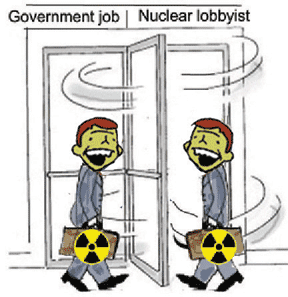
Nuclear expert to lead nuke waste group’s board,
The new chair of the Nuclear Waste Management Organization’s board of directors is a familiar face with an extensive background in the nuclear industry.
Glenn Jager, who was previously a vice-chair on the group’s board, is a retired chief nuclear officer with Ontario Power Generation and has worked in the nuclear sector for more than 30 years, the agency said this week in news release.
The Nuclear Waste Management Organization is to select a site next year for a proposed underground facility to store spent fuel rods from nuclear reactors.
One of the sites under consideration is a remote area 35 kilometres west of Ignace. The other is in South Bruce in southwestern Ontario in the vicinity of an existing nuclear-power station.
Japan approves nuclear-contaminated water discharge plan, may turn Japanese people into ‘sick men of Asia,’ seafood consumption and export nosedive
By Zhang Hui and Xing Xiaojing Jul 22, 2022 , Japan’s nuclear regulator on Friday approved the discharge plan of Fukushima nuclear-contaminated water, with Chinese observers voicing concerns that the release of the contaminated water into the ocean may start earlier than the previous schedule of next spring and warning that Japan will bear the brunt of damage, with people’s lives under serious threat and seafood consumption and export nosediving.
………………… Although the Foreign Ministry statement said this does not mean that TEPCO can immediately start the discharge of the contaminated water into the sea as there are remaining processes, such as the Japanese regulator’s inspections to check and confirm the installation status of the discharge facilities, Chinese observers believed that Japan may accelerate its scheduled plan, making the release start earlier than April 2023.
Chang Yen-chiang, director of the Yellow Sea and Bohai Sea Research Institute of Dalian Maritime University, who has been closely following the Japanese government’s decision on discharging Fukushima wastewater, told the Global Times on Friday that the administrative process for releasing the contaminated water was done in a really fast manner, as it only took Japan five days from announcing completion of construction for undersea tunnel outlet to approving the plan.
The TEPCO has basically completed the construction of an undersea tunnel outlet to dump the nuclear-contaminated water, the Kyodo News agency reported on Sunday.
Japan’s latest move apparently aroused lots of concern and opposition from neighboring countries.
Chinese Foreign Ministry spokesperson Wang Wenbin said at Friday’s media briefing that it is extremely irresponsible for Japan to attempt to create a fait accompli, regardless of various parties’ concerns and China firmly opposes it.
China once again urges Japan to earnestly fulfill its due international obligations, dispose of the nuclear-contaminated water in a scientific, open, transparent and safe manner, and stop pushing through the ocean discharge plan, Wang said.
……………. Meanwhile, Japan’s seafood exports will be greatly hindered, which would hurt the economy and local fishery groups, observers said.
Many countries, including the US and UK, banned imports of food products manufactured in and around Fukushima Prefecture following the 2011 nuclear disaster, and some countries and regions have not lifted the ban even now.
Fishery groups in Japan have repeatedly said they were firmly opposed to the plan due to concerns over a negative impact on the industry. ……………..
China and other stakeholders could through the UN request an advisory opinion from the International Court of Justice, to prove the release is illegal, Chang said.
Yu also advised countries to conduct maritime environment investigation, which could be evidence in seeking compensation from Japan in cases of biological resources damages and other damage.
https://www.globaltimes.cn/page/202207/1271183.shtml
All at Sea: Energy Security Bill reveals UK government preference to dump waste offshore

https://www.nuclearpolicy.info/news/all-at-sea-energy-security-bill-reveals-government-preference-to-dump-waste-offshore/ 20 July 22, The Government has published a factsheet in support of the new Energy Security Bill which has confirmed the long-held suspicion of Britain’s Nuclear Free Local Authorities that the nuclear industry intends to dump its deadly legacy of radioactive waste out at sea.
Tucked away in this page-turner is a reference that could be missed on page seven revealing that with refence to the government stated ambition to Prepare for our nuclear future and clean up the past’, that ‘The Bill will also facilitate the safe, and cost-effective clean-up of the UK’s nuclear sites, ensuring the UK is a responsible nuclear state by clarifying that a geological disposal facility located deep below the seabed will be licensed.’[1]
That the intention is to dump the waste at a location out at sea has helpfully been made plain in the latest infomercial published by the Theddlethorpe GDF Community Partnership
20th July 2022
All at Sea: Energy Security Bill reveals government preference to dump waste offshore
The Government has published a factsheet in support of the new Energy Security Bill which has confirmed the long-held suspicion of Britain’s Nuclear Free Local Authorities that the nuclear industry intends to dump its deadly legacy of radioactive waste out at sea.
Tucked away in this page-turner is a reference that could be missed on page seven revealing that with refence to the government stated ambition to Prepare for our nuclear future and clean up the past’, that ‘The Bill will also facilitate the safe, and cost-effective clean-up of the UK’s nuclear sites, ensuring the UK is a responsible nuclear state by clarifying that a geological disposal facility located deep below the seabed will be licensed.’[1]
That the intention is to dump the waste at a location out at sea has helpfully been made plain in the latest infomercial published by the Theddlethorpe GDF Community Partnership

This latest plan to jeopardise the marine environment is par for the course for successive British Governments which, without a care for the ecology of British waters, have previously chosen to recklessly dump deadly munitions and poison gas into our oceans.
In November 2020, the NFLA published a horrifying report commissioned from marine pollution expert, Tim Deere-Jones, which revealed that evidence was mounting that around two million tons of unused wartime munitions were dumped in, or around, the Beaufort’s Dyke in the Irish Sea in the interwar and post-war years, up until at least the mid-1970’s.[2]
Alongside conventional explosives, this deadly legacy included at least 14,000 tons of phosgene gas and a cocktail of other nasties such as ‘canisters of chemical warfare agents including sarin, tabun, mustard gas, cyanide, … and the biological warfare agent anthrax’.
The New Scientist has reported instances of munitions washing up on Scottish beaches and the British Geological Survey confirmed that explosions generated by degrading munitions are a relatively frequent occurrence and that at least one of those explosions was observed to have generated an explosive force equivalent to approximately 5.5 tonnes of TNT.
The report also revealed that radioactive waste has previously been dumped into the Irish Sea, in the Beaufort’s Dyke, in the Firth of Tay and off the island of Arran, including radium-coated aircraft dials, laboratory waste, luminous paint and waste encased in concrete within metal drums.
Responding to the latest revelation, Councillor David Blackburn, Chair of the NFLA Steering Committee, said:
“Clearly then the Energy Security Bill demonstrates that once again the British Government’s plan is to dump its deadly legacy of high-level radioactive waste offshore whatever the long-term detriment to the marine environment and regardless of local and international opposition, and the Theddlethorpe Community Partnership diagram makes this intention writ large.
“The NFLA has far from convinced that however well engineered a nuclear waste dump, or Geological Disposal Facility as the nuclear industry likes to call it, is that the structure of such a facility will not become compromised over the 100,000 years it is required to hold waste whilst it remains radioactive. We fear that in future centuries we shall see radioactive waste poisoning our oceans and beaches.
“This is an especial issue of concern in West Cumbria, where three of the possible four current sites for the dump are under consideration; for here for generations Sellafield has been leaking its toxics into the Irish Sea.
“The NFLA will continue to oppose a GDF, especially one at sea. Our policy is to see radioactive waste properly monitored and managed in a near surface facility, rather than dumped out of sight, out of mind and forgotten about!”
For more information, please contact NFLA Secretary Richard Outram by email on richard.outram@manchester.gov.uk or mobile 07583097793
Consultation on proposed changes to storage of radioactive wastes at Hinkley Point C NPP
The Environment Agency has launched a consultation on a proposed change to
the way radioactive waste will be stored at Hinkley Point C nuclear power
station near Bridgwater. Currently the Office for Nuclear Regulation
states: The waste will be stored on the Hinkley Point C site pending
availability of the GDF and the waste meeting the waste acceptance criteria
for the site (e.g. some heat generating radioactive waste may require
on-site storage until the thermal output has reduced).
Pressurised water reactors at Hinkley Point C will use uranium fuel to create heat and
generate electricity when operating. Once used within the reactor, nuclear
fuel will be stored on-site before being sent off-site to a Geological
Disposal Facility (GDF).
NNB Generation Company (HPC) Limited was
originally issued a radioactive substances environmental permit in 2013. In
the original design radioactive waste was to be stored on-site in ‘wet
storage’ – a method of submerging and storing in water. The operator has
now decided to change the technology by which it will store spent nuclear
fuel, from wet storage to ‘dry storage’.
Dry storage will see used nuclear fuel stored in sealed containers within a facility, before it is
sent to the GDF. This means the operator now seeks to change its
radioactive substances environmental permit to remove or amend specific
conditions related to the previous wet storage technology that are no
longer relevant. The operator has said altering the storage method will not
change the expected radiation dose to the general public from discharges or
the wider environment, which remains incredibly small. Separately, NNB
Generation Company (HPC) Limited will be seeking the necessary changes to
its Development Consent Order for Hinkley Point C in the autumn.
Somerset Live 20th July 2022
https://www.somersetlive.co.uk/news/somerset-news/locals-urged-say-proposed-change-7351721
We need a safer interim storage solution for Ontario’s nuclear wastes.

– Angela Bischoff, Ontario Clean Air Allance. 15 Jul 22. The International Joint Commission’s Great Lakes Water Quality Board is calling for Ontario Power Generation’s (OPG) nuclear waste storage facilities to be “hardened” and located away from shorelines to prevent them from becoming compromised by flooding and erosion.
According to a report prepared for OPG, the total capital cost of building above-ground, attack-resistant, reinforced concrete vaults at the Pickering, Darlington and Bruce Nuclear Stations would be approximately $1 billion. This safer interim storage solution can be fully paid for by OPG’s nuclear waste storage fund, which has a market value of $11.3 billion.

We need a safer interim storage solution for Ontario’s nuclear wastes
The International Joint Commission’s Great Lakes Water Quality Board is calling for Ontario Power Generation’s (OPG) nuclear waste storage facilities to be “hardened” and located away from shorelines to prevent them from becoming compromised by flooding and erosion.
According to a report prepared for OPG, the total capital cost of building above-ground, attack-resistant, reinforced concrete vaults at the Pickering, Darlington and Bruce Nuclear Stations would be approximately $1 billion. This safer interim storage solution can be fully paid for by OPG’s nuclear waste storage fund, which has a market value of $11.3 billion.

As our new report, A Safer Interim Storage Solution for Ontario’s Nuclear Wastes, reveals this is urgent for multiple reasons:
– The total radioactivity of the nuclear wastes stored at the Pickering, Darlington and Bruce Nuclear Stations is 700 times greater than the total radiation released to the atmosphere by the Fukushima accident in 2011.
– OPG is currently storing these wastes in conventional commercial storage buildings.
– According to OPG, a new off-site facility for the storage of these wastes will not be in service until 2043 at the earliest.
Above-ground, attack-resistant, reinforced concrete vaults will provide much greater protection against deliberate attacks and greater radioactivity containment in the event of leaks, ruptures or other incidents than conventional commercial storage buildings.
– Building safer interim storage facilities will also create good jobs.
In Germany, six nuclear stations have hardened storage facilities. The concrete walls and roofs on these facilities are 1.2 to 1.3 metres thick. This is the kind of much safer design that Ontario should be copying as we wait for the Nuclear Waste Management Organization to find a “willing host” community to take these dangerous wastes.
What you can do
Please contact Premier Ford and Energy Minister Todd Smith and tell them that we need a safer interim storage option for OPG’s nuclear wastes. Ask them to order OPG to store its high-level radioactive wastes in above-ground, attack-resistant, reinforced concrete vaults at its nuclear stations.
The Agency Responsible for Securing the U.S.’s Toxic Nuclear Waste Has Its Work Cut Out For It
Gizmodo Mack DeGeurin, July 14, 2022 Scattershot budgets, lack of coordination, stalling research and development, and rapid worker turnover are threatening the Department of Energy’s ability to sufficiently store and secure the nation’s ever-growing trash bin of toxic nuclear waste.
Those were some of the top concerns outlined today by experts and lawmakers during a congressional hearing probing the country’s nuclear waste cleanup response. The hearing, carried out by the House Committee on Science, Space, and Technology, specifically interrogated a series of Government Accountability Office reports highlighting potential deficiencies within the DOE’s Office of Environmental Management (EM).
The DOE’s EM office is responsible for the Herculean task of securing and cleaning up the country’s still-growing excesses of radioactive nuclear waste produced as a byproduct of nuclear weapons research and production dating back to World War II. Those diverse cleanup efforts can vary from addressing contaminated ground soil and groundwater, to decommissioning contaminated facilities, and building facilities to treat radioactive waste. That’s a challenging task under the best circumstance, and the office certainly isn’t operating at its best, according to the GAO.
One of the 2021 GAO reports found growth in DOE’s environmental waste liabilities and overall costs related to addressing cleanup have outpaced how much the agency spends on cleanup. A separate GAO report released that same year found the DOE had reduced research and development funding crucial for discovering new, undiscovered ways to reduce all that nuclear waste. While throwing more funding at the agency might sound like the most obvious answer to that second problem, GAO Natural Resources, and Environment Director Nathan Anderson wasn’t so sure when probed by lawmakers. Large chunks of DOE R&D money, he said, simply aren’t trackable.
“We asked the sites, we asked the labs what [money] was spent and there was a breakdown of internal controls at that point,” Anderson said……..
Anderson was directly involved in the GAO report, which determined the DOE as a whole simply lacks a “comprehensive approach to prioritising cleanup R&D.”……………..
In some cases, waste cleanup teams handling extremely hazardous materials appeared woefully under-equipped. ………………..
Issues around nuclear waste safety don’t simply cease to exist once the dangerous materials are secured underground either. Several of the speakers Wednesday expressed concerns that escalating environmental disturbances arising from climate change could potentially force the EM to reconsider some of its models around proper waste storage. What happens, for example, when an area selected to store hazardous materials is actually unearthed and made unviable due to climate change effects? Anderson said models made accounting for weather patterns 20 years ago may not accurately reflect the realities of climate impacts today…………………………………… https://www.gizmodo.com.au/2022/07/the-agency-responsible-for-securing-the-u-s-s-toxic-nuclear-waste-has-its-work-cut-out-for-it/
The dilemma of disposal of radioactive trash

I don’t disagree with the opinion here, but why does no-one ever suggest STOPPING MAKING RADIOACTIVE TRASH ?
Roy Payne: FINLAND and Sweden are building their GDFs under the Baltic
sea. In the UK, the deepest potash mine in Europe stretches out for 20km
under the North Sea, and is as bone dry as any desert when you are 1km
beneath the surface. The European Parliament has conducted its own
independent analysis, ‘The World Nuclear Waste Report 2020’, which
concluded geological disposal is the ‘least worst option’ for the long-term
management of radioactive waste.
This is also the position of the German
Green Party, one of whose MEPs led the report. Those concerned about
burying radioactive waste deep underground argue the waste should be kept
on the surface – presumably on the assumption that over the next 100,000
years the planet’s surface will remain as constant, benign and unchanging
as deep rock formations, AND that humans will never ever make a mistake.
There are only two options available to us with regards radioactive waste
— keep it overground on the surface or bury it deep underground.
Because IF something goes wrong, it will either go wrong deep underground, or it
will go wrong overground on the surface. You don’t need to have a PhD to
work out which is the lesser of two evils — radioactivity leaking
underground harmlessly far away from the surface and people (which has
happened once), or radioactivity on the surface leaking instantly into the
air we breathe, the soil we grow our food in, and the water we drink.
But those are our only two choices — hence why the European Parliament,
German Green Party, and the international scientific community conclude
that geological disposal is the ‘least worst option’. I have no axe to
grind for NWS, and I certainly do not advocate for more nuclear. Nor do I
advocate for a GDF in Cumbria. But I do believe that if we are to build a
greener future, we have an ethical and environmental responsibility to
start the process of cleaning up the mess we’ve inherited.
Carlisle News & Star 10th July 2022
USA: Transportation of nuclear wastes
State oversight activities at a nuclear waste repository near Carlsbad
received about $12 million in federal funds provided to two agencies by the
U.S. Department of Energy. The money will pay for the State of New
Mexico’s work to ensure safe operations at the Waste Isolation Pilot
Plant, a repository about 26 miles east of Carlsbad where nuclear waste is
permanently disposed of via burial in a salt deposit 2,000 feet
underground.
Transuranic (TRU) waste, made up of clothing materials and
equipment irradiated during nuclear activities, is trucked to WIPP from
sites across the U.S. To assist with transportation of waste to WIPP, the
State’s Energy, Minerals and Natural Resources Department (ENMNRD) was
granted about $6.2 million by the DOE through its New Mexico Waste
Isolation Pilot Plant (WIPP) Transportation Safety Program.
Since the facility began accepting waste in 1999, WIPP drivers covered about 15.7
million loaded miles as of July 2, per the latest records. Shipments from
Idaho National Laboratory traveled the furthest at about 9.3 million miles,
while that facility also sent the most shipments at 6,683. Idaho was
followed by the Savannah River Site in South Carolina, which had about 2.5
million miles traveled for its 1,683 shipments – the third-most among
WIPP’s 13 generator sites. Los Alamos National Laboratory in northern New
Mexico sent the fourth-most shipments at 1,525, but drivers from that site
only covered 521,550 miles, records show. The now-closed Rocky Flats
Environment Technology Site near Denver had the third-most distance
traveled at about 1.4 miles, and the second-most shipments at 2,045.
Carlsbad Current Argus 8th July 2022
So, what should be done about nuclear waste?
Where will the nuclear waste go?” https://www.nationofchange.org/2022/06/30/where-will-the-nuclear-waste-go/
By Karl Grossman. June 30, 2022“Where will the state’s nuclear waste go?” was the headline of a story bannered last month across the front page of Connecticut’s largest newspaper, the Hartford Courant.
What, indeed, is to be done about the nuclear waste that has been produced at the two Millstone nuclear power plants which have been operating in Connecticut? (They are now the only nuclear power plants running in New England.)
And what is to be done about the nuclear waste at other nuclear power plants?
Decades ago, one scheme was to put it on rockets to be sent to the sun. But the very big problem, it was realized, is that one-in-100 rockets undergo major malfunctions on launch, mostly by blowing up.
As Forbes magazine has pointed out, because of the “possibility of launch failure” if “your payload is radioactive or hazardous and you have an explosion on launch…all of that waste will be uncontrollably distributed across Earth.”
So, scratch that idea.
Then there has been the plan to construct a “repository” for nuclear waste at Yucca Mountain, Nevada, 100 miles northwest of Las Vegas. It was designated the nation’s “permanent nuclear repository” in 1987 and $15 billion was spent preparing it.
The very big problem concerning Yucca Mountain as a nuclear waste dump: it’sin “an active earthquake zone, with 33 faults on site.”
So, that idea was scratched.
Now, Finland has built a nuclear waste site for its four nuclear power plants. “Finland wants to bury nuclear waste for 100,000 years,” was the title of an CNBC’s piece about it and how it uses “a labyrinth of underground tunnels.”
The very big problem: nuclear waste needs to be isolated from life for way more than 100,000 years. The U.S. Court of Appeals for the District of Columbia Circuit in 2004 ordered the EPA to rewrite its Yucca Mountain regulations to acknowledge a million years of hazard, notes Kevin Kamps, radioactive waste specialist for the organization Beyond Nuclear.
Some nuclear waste stays radioactive for millions of years, Kamps points out: “Iodine-129 that is produced in reactors has a 15.7 million-year half-life.”
After a half-life, a radioactive material is half as radioactive as when it was produced. For determining a “hazardous lifetime,” a half-life is multiplied by 20.
Thus Iodine-129 remains radioactive for 314 million years.
“The design of the storage facility” for nuclear waste in Finland “has taken into account the potential impact of earthquakes and even future ice ages,” related CNBC. But not for anything close to millions of years.
So, what should be done about nuclear waste?
First, says Kamps, “we should stop making it.” He calls for the closure of every one of the 92 nuclear power plants now in the United States, the building of no more and a push for safe, clean, green energy sources led by solar and wind energy. Nuclear power plants in the U.S. have since 1957 generated nearly 100,000 tons of deadly nuclear waste, he says. Second, the “best option is hardened onsite storage.”
Currently, most nuclear waste, he says, is at reactor sites in pools of water which must be kept circulating. If there is a “loss of water” accident, the nuclear waste in the pools can go “up in flames.”
Kamps and Beyond Nuclear, with other environmental and safe-energy groups, is now challenging—along with the state governments of Texas and New Mexico—the present U.S. government plan involving “so-called interim” nuclear waste sites in Texas and New Mexico.
They would be amid largely Latino communities, and on top of the Ogallala Aquifer, the largest aquifer in the U.S. It extends north to South Dakota, encompassing eight states, and is a main source of water for drinking and irrigation.
Also, the U.S. Department of Energy has, he says, “restarted its federal consolidated interim storage facility scheme, last attempted in the late 1980s and early 1990s. A whole new crop of nuclear waste dump fights can be expected, especially ones targeting Native American reservations to agree to host the most deadly poison our society has ever generated.”
Meanwhile, in New Jersey, Oyster Creek, among the oldest nuclear power plants in the U.S.—it began operation in 1969—is in the midst of being demolished after its closure in 2018. There’s been a “a series of worrisome accidents” in the tearing down process reported The Washington Post last month. And then there is the decommissioned Oyster Creek plant’s nuclear waste.
Oyster Creek was manufactured by General Electric and was a Mark I nuclear power plant—the same model of those that blew up at the Fukushima nuclear plant site in Japan.
‘Lacking in scientific rigour’: Damning verdict of marine expert on UK’s Nuclear Waste Services seismic testing plan
Radiation Free Lakeland (RFL) and the Nuclear Free Local Authorities
(NFLA) have announced the publication of a report by a renowned marine
expert which is highly critical of Nuclear Waste Services’ (NWS) proposal
to carry out a seismic survey in the Irish Sea to further a plan for an
offshore nuclear waste dump.
The report, ‘The West of Copeland Acoustic
Airgun Survey Proposal: A critical analysis Review Briefing’, was
commissioned by Radiation Free Lakeland and supported wholly through
financial contributions made by members of the public concerned about the
harm that could be caused to marine life by seismic testing.
The report was written by Tim Deere-Jones, a highly-regarded marine radioactivity and
pollution researcher and consultant who has been working independently in
this field since 1983. The NWS, an operating division of the Nuclear
Decommissioning Authority, is responsible for finding a site for a
so-called Geological Disposal Facility, either below ground or beneath the
seabed.
This nuclear waste dump will be filled with the toxic radioactive
waste that is the legacy of Britain’s seven decades of the civil nuclear
power production; much of it will remain radioactive for many tens of
thousands of years.
Three search areas in Cumbria, falling within the local
authority areas of Allerdale and Copeland and offshore up to 22kms, are
under consideration. Seismic testing will enable NWS to determine if the
geology beneath the bed of the Irish Sea is suitable to host a repository
for the nuclear waste.
This involves firing blasts of sound from air guns
below the waves every 10 seconds for four weeks or longer. This sound
penetrates under the ocean floor to help scientists discover more about the
suitability of the geology to store nuclear waste. Seismic testing can
seriously impair the health of marine life, which in the Irish Sea includes
whales, dolphins, porpoises, and seals, but some scientific reports also
suggest that even tiny shellfish and plankton can be adversely impacted,
hazarding the whole marine ecosystem.
NWS have claimed an exemption from
the requirement to seek a Marine Licence from the MMO citing their survey
as furthering ‘scientific research’ and in so doing have prevented
public analysis of their proposals or commentary from academics and marine
welfare organisations.
NFLA 27th June 2022
The whole idea of a GDF (geological disposal facility) is flawed thinking and needs to be revisited.

John Laband https://www.facebook.com/groups/radiationfreelakeland 27 June 22, The whole idea of a GDF (geological disposal facility) is flawed thinking and needs to be revisited. CoRWM (committee on radioactive waste management) must face up to the harsh reality that there is no informed expert opinion that doesn’t acknowledge that the physical barrier between the environment and the high level waste material (spent nuclear fuel rods) will likely break down long before the radioactivity has decayed to safe levels.
What went wrong was the way the committee, 10 yrs ago, dealt with all the alternative suggestions for dealing with the waste material and there were about 10 of them. It literally drew a red line through each of the alternative suggestions and there was no discussion about their merits.
The excuse given was that at the time there was no worldwide precedent or experience of each of them. The exception was the GDF plan which already existed in the USA at Yucca mountain in Nevada and the WIPP pilot project in New Mexico. So the UK approach was to jump on that bandwagon and CoRWM has spent the intervening time trying to induce local communities into accepting their plan for an underground nuclear dump. Including attaching the idea to a plan for an undersea coal mine.
Unfortunately for CoRWM the Yucca mountain site has been abandoned. There is nothing there now except a boarded up exploratory tunnel and an accident has happened at the WIPP site leading to radioactive contamination on the surface.
In addition the US is no longer adding to its fund to provide a national disposal site. It has gone back to dry storage of waste on site in concrete casks.
In my opinion CoRWM needs to abandon it’s one track policy and go back to the drawing board and look at all suggested schemes in detail. In the meantime safe modern storage facilities need to be constructed on the surface and a moratorium adopted on the production of anymore waste from fission reactors.
Cancel any further expansion of nuclear electricity generation and scale down existing facilities to zero. We cannot at the moment handle the mounting pile of high level radioactive waste.
1 This Month

of the week – Shut Down Drone Warfare!


Tell the Ukrainian Government to Drop Prosecution of Peace Activist Yurii Sheliazhenko

Petition to revoke the licensing of the Near Surface Nuclear Disposal Facility (NSDF) at Chalk River. https://www.ourcommons.ca/petitions/en/Petition/Details?Petition=e-7247
To see nuclear-related stories in greater depth and intensity – go to https://nuclearinformation.wordpress.com
-
Archives
- April 2026 (44)
- March 2026 (251)
- February 2026 (268)
- January 2026 (308)
- December 2025 (358)
- November 2025 (359)
- October 2025 (376)
- September 2025 (257)
- August 2025 (319)
- July 2025 (230)
- June 2025 (348)
- May 2025 (261)
-
Categories
- 1
- 1 NUCLEAR ISSUES
- business and costs
- climate change
- culture and arts
- ENERGY
- environment
- health
- history
- indigenous issues
- Legal
- marketing of nuclear
- media
- opposition to nuclear
- PERSONAL STORIES
- politics
- politics international
- Religion and ethics
- safety
- secrets,lies and civil liberties
- spinbuster
- technology
- Uranium
- wastes
- weapons and war
- Women
- 2 WORLD
- ACTION
- AFRICA
- Atrocities
- AUSTRALIA
- Christina's notes
- Christina's themes
- culture and arts
- Events
- Fuk 2022
- Fuk 2023
- Fukushima 2017
- Fukushima 2018
- fukushima 2019
- Fukushima 2020
- Fukushima 2021
- general
- global warming
- Humour (God we need it)
- Nuclear
- RARE EARTHS
- Reference
- resources – print
- Resources -audiovicual
- Weekly Newsletter
- World
- World Nuclear
- YouTube
-
RSS
Entries RSS
Comments RSS
 nuclear-news