The forgotten towns of the Chernobyl exclusion zone
Sam Farley, Tue 16 June 2026, https://faroutmagazine.co.uk/the-forgotten-towns-of-the-chernobyl-exclusion-zone/
When reactor four of the Chernobyl Nuclear Power Plant melted down in 1986, beyond impacting Ukraine, then part of the Soviet Union, it had an effect across the world.
In the years that have followed, it’s become a niche tourist attraction, with dark tourists fascinated by this apocalyptic environment, with pictures abound on the internet of that famous, rusting Ferris wheel, the tall tower blocks being eaten up by nature and the school gymnasium littered with gas masks. Everyone remembers Pripyat, and it’s undergone a second life in popular culture, decades after the final resident left, but there lie some other towns and villages, forgotten from the Chernobyl exclusion zone.
Pripyat was the zone’s largest settlement, but it’s estimated that around 40,000 people from outside that city were forced to flee the area after the reactor went ablaze. The village of Zalissya was once the largest in what became the exclusion zone, with a population of around 3,000 people, and unlike Pripyat, which was built with the power plant, it had been a settlement for 400 years before the accident, surviving conflict, famine, occupations and even revolution.
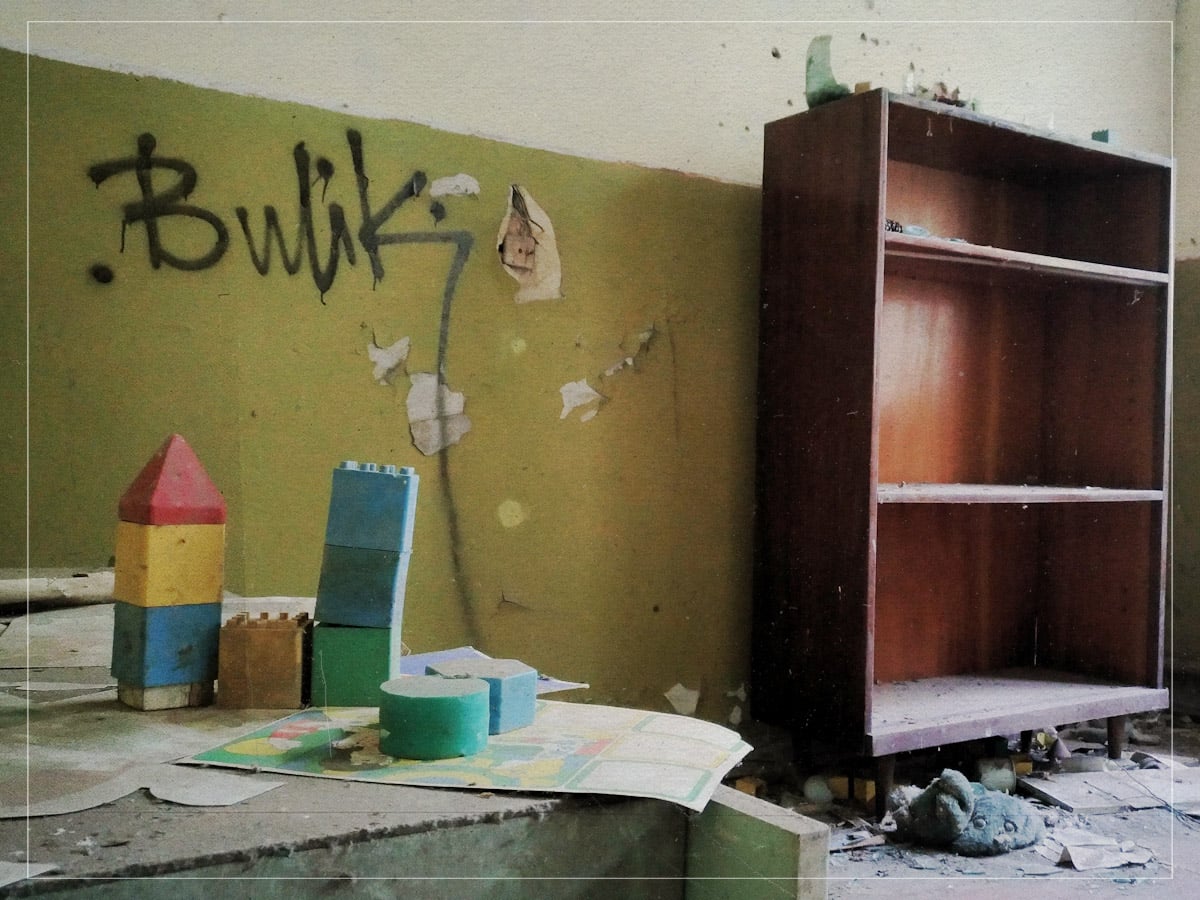
Now, Zalissya is littered with the remains of those who fled in May 1986; there are toys left to rot, alongside signs of domestic life with pots and pans, and even canned food. Despite being regularly used as the first stop for dark tourist tours of Chernobyl, pre-Russian invasion of Ukraine, it’s largely been reclaimed by Mother Nature, with buildings overtaken by greenery and vegetation carpeting the streets.
Not far away is Kopachi, or more technically, was Kopachi, a village, once home to 1,100 people, situated by the plant’s cooling pond, roughly equidistant between the towns of Chernobyl and Pripyat. While the place was evacuated like everywhere else, the radiation levels were so high that the authorities decided that abandonment wasn’t enough, and they needed to bury the village entirely.
Besides two brick buildings, one of which was the village’s nursery school, everything else was buried. From a distance, Kopachi looks like a bumpy meadow, but under those mounds remain houses and a reminder of the panic that defined those early weeks following the accident. Then, just over a mile from reactor four sits Yaniv, which housed only 100 people but was significant thanks to the train station there serving the plant. As of April 2003, it’s no longer a village, having been deregistered, but it still has an incredible story.
Some of the machinery used pre-accident and even after in the clean-up still sits there and sets Geiger counters off with their high levels of radiation; hence, the decision to not bury some of the equipment, such as the engineering vehicle built on the chassis of a tank, was a strange choice. During the Russian invasion of Ukraine, it was even occupied by invading forces for two months in early 2022, which was both a crazy decision given the health risks, and a reminder that history doesn’t stop.
It’s easy to think that all the abandoned settlements in the zone were tiny villages, but that wasn’t always true, like Poliske, which was a thriving town founded in 1415, and had led many lives, both as a textile production hub and a home for Jews, who made up 80% of the population around a century before the accident. Due to its location right on the western edge of the exclusion zone, it wasn’t abandoned with the haste of many other towns and villages closer to the power plant.
There was a decline following the accident, but it wasn’t until 1999, some 13 years after, that most of the population was evacuated. In fact, there were still around 1,000 people living there as recently as 2005, with a number of the elderly refusing to leave and happy to see out their days there. Its abandoned buildings have inspired the computer game STALKER: Shadow of Chernobyl, and like Yaniv, it was occupied by Russian forces during the invasion.
The village of Krasne has long been silent; just four miles from Pripyat, it was on the northern contamination track, which was one of the first directions that saw nuclear fallout following the explosion. While its residents have long gone, it’s notable because the over 200-year-old wooden church of St Michael still stands tall, its decay almost noble and rebellious, as it greys and is slowly devoured by weeds and undergrowth from below, serving to remember the power of faith.
The disaster at Chernobyl has had a lasting impact on Ukraine and the Soviet Union (the eventual collapse of which can be attributed to the incident), but while we think of Pripyat and its huge abandoned tower blocks, it’s worth remembering that there was life all over what is now the exclusion zone, where generations of families grew up, got old, married, and died, in the villages and towns that all got caught up in this epic disaster.
What does France’s nuclear waste plan in Bure mean for Luxembourg?
burying radioactive waste underground risks making the problem invisible rather than fully addressing its implications, particularly since some of the materials involved will remain hazardous for up to 100,000 years.
Christophe Wantz, adapted for RTL Today, 11.06.2026
The Cigéo project in Bure, in the Meuse region of France, is one of the country’s most controversial projects. If approved, underground facilities for the long-term storage of radioactive waste from France’s nuclear power plants will be built.
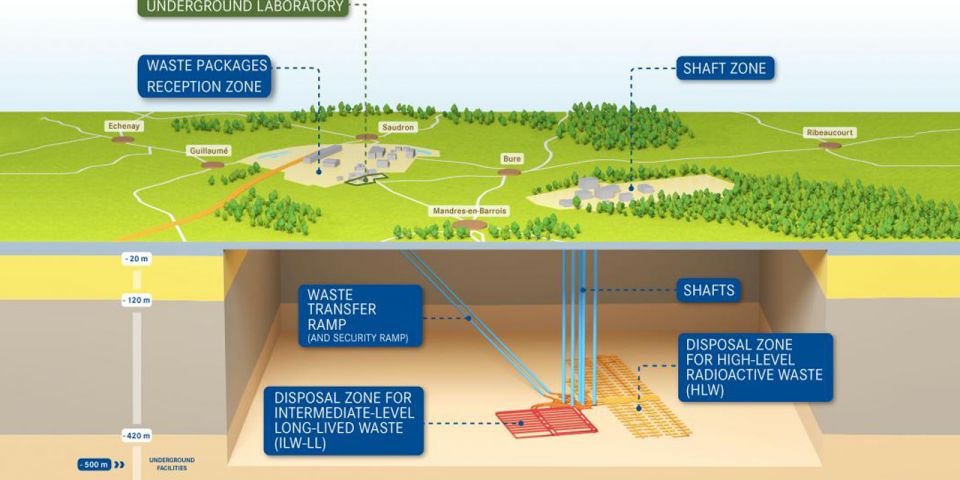
The facility is located in the rural Meuse region, far from populated areas and close to the Haute-Marne border. Its remote location was not the main reason for its selection, but rather its geology.
Around 500 metres beneath the surface lies a thick layer of clay that formed around 160 million years ago. This rock formation has remained remarkably stable for millions of years and is highly impermeable, making it particularly well suited to long-term underground storage.
The underground laboratory, a unique scientific facility designed to support the development of the Cigéo project, was built here.
Despite its 2.5 kilometres of tunnels, the laboratory itself will never house radioactive waste. Instead, it serves as a research centre where scientists can study and measure the properties of the Callovo-Oxfordian clay formation in its natural environment.
The underground laboratory is used to develop and test the engineering techniques required for excavating and supporting the future repository. In preparation for the first construction phase, France’s National Radioactive Waste Management Agency (Andra) is constructing and testing structures in the laboratory that closely resemble those planned for the Cigéo facility.
However, it is not expected that any radioactive waste will be stored at Bure before 2050.
Once all the necessary approvals have been received, the Cigéo project will begin the permanent disposal of France’s most hazardous radioactive waste at a depth of around 500 metres.
The repository is intended to house waste generated by reprocessing spent fuel from the country’s nuclear power plants.
In total, the site is designed to hold 83,000 cubic metres of radioactive waste, which is roughly equivalent to the volume of 33 Olympic-sized swimming pools.
This includes 10,000 cubic metres of high-level waste and 73,000 cubic metres of long-lived intermediate-level waste that can remain radioactive for up to 100,000 years.
A one of a kind underground facility
………………………………………………………………. The planned facility will comprise around 250 kilometres of underground tunnels and galleries. The project is expected to cost more than €33 billion, which will be financed by France’s nuclear waste producers, including EDF, Orano, and the French Alternative Energies and Atomic Energy Commission (CEA).
A highly contested project
Beyond its technical and scientific aspects, the Cigéo project has become a focal point in the debate about nuclear energy in France.
Since the early 2000s, the town of Bure has faced sustained opposition from local residents, activist groups, and environmental organisations, who see the project as an irreversible commitment with consequences that will affect future generations.
One such critic is the Collective Against the Burial of Radioactive Waste (Cedra), which questions whether safety models can reliably predict the behaviour of a geological repository over such immense timescales.
Opposition to the project extends well beyond the local level. During a demonstration in Bure last September, Green Party lawmaker Sandrine Rousseau criticised the overly optimistic faith placed in humanity’s ability to control and manage the long-term consequences of nuclear technology.
She argued that burying radioactive waste underground risks making the problem invisible rather than fully addressing its implications, particularly since some of the materials involved will remain hazardous for up to 100,000 years.
Roger Spautz, Greenpeace Luxembourg’s nuclear policy specialist, has also raised concerns about the project’s long-term reliability and irreversible nature.
While he does not consider the repository itself to pose a direct threat to Luxembourg, he highlights the scale of the transportation operation required to supply the site.
According to Spautz, between 70,000 and 80,000 shipments would be needed to transport highly radioactive waste from France’s La Hague reprocessing facilities to Bure.
In his view, the possibility of an accident during transportation that could release radioactive material can never be entirely eliminated.
Critics are questioning whether local communities have genuinely consented to the project. While some local officials support Cigéo for its potential economic benefits, opponents argue that the region is being asked to bear an unfair share of the burden for the rest of the country.
Meanwhile, supporters point to the project’s economic benefits. Cigéo is expected to create over 3,000 direct and indirect jobs in an area that has experienced decades of industrial decline.
However, for many residents, the development remains controversial, with some describing the region as a ‘sacrificial territory’ chosen to bear the long-term consequences of France’s nuclear waste.
Cigéo is part of France’s wider nuclear strategy. The government is promoting a revival of nuclear energy to meet climate objectives, but the long-term management of radioactive waste remains politically and socially sensitive.
Although the project has already passed several administrative milestones, it still depends on key approvals, including a declaration of public utility and a construction permit. Environmental groups have challenged it multiple times, contributing to delays in the overall timetable.
In May, Cigéo entered a major new phase with the launch of a public inquiry. Thousands of pages of documents prepared by France’s National Radioactive Waste Management Agency have been made available in town halls in affected municipalities, and residents there have until 2 July to submit comments or questions.
Neighbouring countries have also been notified. So far, only Luxembourg has formally requested to be kept informed about the process.
A national debate
At the centre of the controversy is a basic question: what should be done with high-level nuclear waste in the long term? According to France’s National Radioactive Waste Management Agency, more than half of the waste destined for storage in the Meuse region has already been produced, and current surface storage solutions are considered to be no safer than burying the waste 500 metres underground.
Some in the scientific community currently believe that deep geological disposal is the most reliable way to keep radioactive waste away from human activity and environmental hazards.
The clay formation at Bure is believed to significantly limit the spread of radionuclides over long periods, and Andra’s studies suggest that the site has remained stable for over one million years.
However, other experts argue that further research is needed into alternative approaches, such as reducing the radiotoxicity of waste or developing controlled near-surface storage solutions.
Ultimately, the Cigéo project reflects the broader dilemma of the energy transition: how to meet present-day energy needs while taking responsibility for consequences that extend far into the future.
In Bure, beneath layers of clay, decisions are being made that will have consequences lasting well beyond human timescales.
Watch the report here: – (on original ) https://today.rtl.lu/news/world/what-does-frances-nuclear-waste-plan-in-bure-mean-for-luxembourg-1621893378
Reactor reboot at world’s largest nuclear plant highlights flaws in Japan’s radioactive waste plans

With a lot of spent fuel accumulating at nuclear power plants across the country, a final disposal of radioactive waste is a crucial challenge that must be resolved,”
Finding a community willing to host a highly radioactive dump site has been difficult, even with a raft of financial enticements.
By ASSOCIATED PRESS, 11 June 2026,
https://www.dailymail.com/wires/ap/article-15890689/Reactor-reboot-worlds-largest-nuclear-plant-highlights-flaws-Japans-radioactive-waste-plans.html
KASHIWAZAKI, Japan (AP) – Japan has resumed operations at the world´s largest nuclear power plant to help the country meet huge electricity demands during a global oil crisis, but the reboot highlights a big problem: Japan is running out of space for spent nuclear fuel and has no viable plans for permanent disposal of the radioactive waste.
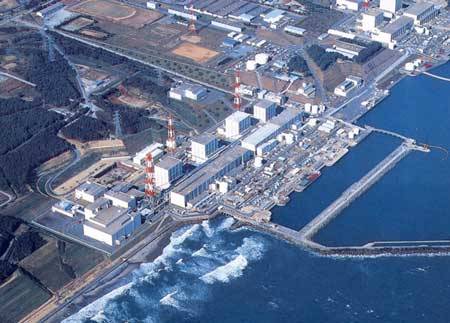
The restart of No. 6 reactor at Kashiwazaki-Kariwa Nuclear Power Station earlier this year was meant to spur a movement to bring more nuclear reactors online. Kashiwazaki-Kariwa is one of three plants whose cooling pools will be full in five years, according to the Federation of Electric Power Companies of Japan.
“Without solid (fuel management) plans, our power generation will stall sooner or later,” Kashiwazaki-Kariwa General Manager Takeyuki Inagaki said.
After decades of seeking permanent storage for highly radioactive spent fuel, the government is considering Minamitorishima, a remote Pacific island south of Tokyo. But the selection has faced skepticism and criticism stemming from Japan’s arbitrary actions on spent fuel and radioactive waste management.
Only 15 of Japan´s 54 reactors have restarted since the March 2011 Fukushima disaster, when a 9.0 earthquake off Japan´s northeastern coast and a subsequent tsunami caused meltdowns at three reactors operated by Tokyo Electric Power Company Holdings, or TEPCO. About 160,000 people fled from Fukushima and some areas remain unlivable.
Kashiazaki-Kariwa, also run by TEPCO, was shut down after the Fukushima disaster as part of a nationwide nuclear power stoppage.
The spent fuel in a cooling pool at Kashiwazaki-Kariwa No. 6 reactor, which is 88% filled, can be seen from a top-floor observation area. TEPCO has installed filtered venting systems and devices to prevent hydrogen explosions among additional safety measures based on lessons from Fukushima.
Prime Minister Sanae Takaichi is pushing to bring more nuclear plants online, resulting in more spent fuel. Without a viable permanent storage plan, there are worries that reactors will have to close when storage space runs out.
There are two options for dealing with spent nuclear fuel: direct disposal as waste or recycling to extract plutonium and uranium for reuse.
Japan insists on recycling, saying it will help the resource-poor nation’s energy needs while reducing the toxicity and volume of radioactive waste. But a reactor designed for plutonium reuse, a key part of the recycling, has failed. Reprocessing also won´t be able to handle all the spent fuel, adding to a plutonium stockpile that already is large enough to arm thousands of atomic bombs.
Experts say Japan should also consider the direct disposal option.
As of December 2025, cooling pools at 17 Japanese nuclear power plants held more than 17,000 tons (15,422 metric tons) of spent fuel, using nearly 80% of total storage capacity, according to the Ministry of Economy, Trade and Industry.
Beyond the large amount of radioactive waste from normal reactors, Japan also “has to deal with massive and largely unknown high-level nuclear waste from the Fukushima disaster,” said Lila Okamura, a Senshu University professor and expert on environmental politics and nuclear waste management.
Choosing a final disposal site for spent fuel and building a facility would require 100 years and tens of thousands of years to monitor the storage deep underground. For a generations-long project, Japan should plan carefully and not rush the current plan that is full of uncertainties, Okamura said.
Weeks after Kashiwazaki-Kariwa’s No. 6 reactor came back online for the first time in 14 years since the Fukushima disaster, Industry Minister Ryosei Akazawa approached Ogasawara village to request a feasibility study for a high-level radioactive waste site on Minamitorishima, an island administered by Ogasawara, which is part of Tokyo.
“With a lot of spent fuel accumulating at nuclear power plants across the country, a final disposal of radioactive waste is a crucial challenge that must be resolved,” Akazawa said in a letter to Ogasawara Mayor Masaaki Shibuya.
The government-owned Minamitorishima, about 2,000 kilometers (1,242 miles) south of Tokyo, has no permanent residents. The Japanese army is constructing a firing range for long-range, surface-to-ship missiles as a deterrent to China. The island also has deep sea deposits rich with rare earth minerals.
“The move seems political,” said Satoshi Takano, a member of a government panel looking at final disposal of spent fuel. “There will be little opposition from a government-owned remote island.”
Some experts say the island, which sits on a geologically stable tectonic plate, could be suitable. Many residents on Ogasawara and two nearby islands raised concerns about safety and tourism.
“I was baffled when I heard about the plan,” Ogasawara assembly member Yusuke Hirano told an assembly meeting. “I think nuclear waste is incompatible with islands that are a UNESCO Natural World Heritage site.”
Finding a community willing to host a highly radioactive dump site has been difficult, even with a raft of financial enticements. Minamitorishima is the fourth location to have a feasibility study since the government started looking in the early 2000s.
The whole review process will take about two decades. Municipalities participating in the first stage can receive up to 2 billion yen ($12.8 million) in government subsidies. The next stage would bring up to 7 billion yen ($44.7 million). Funding details for a final study haven’t been disclosed.
The world´s first final disposal site for spent nuclear fuel is set to open in Finland later this year. Britain, Germany and the United States have abandoned reprocessing largely because of high costs and technical challenges, while several other countries are discussing plans for direct disposal sites.
Inagaki, the Kashiwazaki-Kariwa general manager, said TEPCO is transferring spent fuel from No. 6 reactor to other reactors at the plant with more space, but the utility hopes to resume shipments to a dry cask storage in northern Japan as a near-term solution. Other utilities with nearly full pools have announced plans to build dry-cask storage at their plants.
Many residents worry about Japan’s growing stockpile because high-density storage of spent fuel could also increase overheating risks.
Mie Kuwabara, a civil activist in Niigata, wondered “where will it go next?”
“It’s irresponsible to accelerate restarts and produce more spent fuel without deciding its final destination,” said Kuwabara, who also is skeptical about using Minamitorishima.
“It’s like saying that it’s OK to put a facility there because nobody is around to complain if there is a problem,” Kuwabara said. “It’s scary.”
Spiralling costs, fish discos and vast radioactive waste. Is nuclear really the solution to Britain’s energy problem?

an “unsolved environmental problem for future generations… a heavy burden to lay on our children and their children’s, children.” Porritt is aghast: “This is a truly extraordinary development – confirming that the UK still has NO idea what to do about its legacy nuclear waste.” And there is, of course, a huge cost involved, firstly with decommissioning a nuclear reactor and then storing the waste.
an “unsolved environmental problem for future generations… a heavy burden to lay on our children and their children’s, children.” Porritt is aghast: “This is a truly extraordinary development – confirming that the UK still has NO idea what to do about its legacy n
In an increasingly energy-hungry Britain, is nuclear the best way to meet soaring demand without burning fossil fuels? Fergus Collins investigates the benefits and risks
Fergus Collins, BBC CountryFile, June 8, 2026
“…………………………………….. The UK currently has nine operational nuclear reactors at five plants, with four more due to come online in the 2030s – two at Hinkley Point C in Somerset and two planned at Sizewell C in Suffolk – demonstrating Government commitment to this energy source (devolved Scotland has no nuclear plans).
“Nuclear will play a central role in meeting the UK’s future energy needs as we deliver our net zero target,” says the current minister for nuclear Lord Patrick Vallance. “As set out in our clean power mission, while our future electricity system will be dominated by renewables, we still need firm, low-carbon power to ensure the system is stable, secure and affordable. Nuclear provides that essential backbone – delivering clean power for millions of homes while underpinning a safe, resilient and cheaper system for the decades ahead.”
Not everyone is convinced, especially those concerned about safety issues; the shadows of the Chernobyl and Fukushima nuclear disasters, in 1986 and 2011 respectively, still dog the industry. Nuclear power creates vast amounts of potentially lethal radioactive waste, which must be contained and stored securely for thousands of years. Then there are questions of cost. Nuclear reactors are massive infrastructure projects and hugely expensive, not least because of the requirements of mitigating safety risks. Is it worth the investment – or could we power the UK through other means?
………………………………………………………………..The two new nuclear power stations at Hinkley Point and Sizewell are being built by EDF, France’s state-owned energy company. EDF manages eight nuclear sites in the UK – seven Advanced Gas-cooled Reactor (AGR) sites and one Pressurised Water Reactor (PWR). It says it’s driving the transition towards “an Electric Britain
………………………………….Who opposes nuclear power?
Some of the strongest voices against nuclear power in the UK come from groups protesting against the new reactors at Hinkley and Sizewell. Former science teacher Allan Jeffrey has been voicing concerns for over 40 years as part of campaign group Stop Hinkley, which works closely with TASC (Together Against Sizewell C). He doesn’t mince words: “Nuclear power stations are toxic radioactive waste factories” and argues that nuclear is “neither clean nor green” saying “large amounts of greenhouse gasses are produced in the nuclear fuel cycle from uranium mining and fuel processing to the building of power stations and waste storage sites and decommissioning old reactors.”
Jeffrey dismisses the idea that nuclear is more ethical than the gas or coal supplies the UK buys from unstable or openly hostile foreign states. “Uranium is not a renewable fuel,” he says, “and is mined in countries such as Australia, Canada, Niger and Kazakhstan. The miners frequently get lung cancer from the Radon gas, and much environmental pollution is left locally by the mining tailings and river water pollution.”
Jeffrey also points at the cost of nuclear: “Nuclear reactors take too long to build and pay back their greenhouse gas emissions.” He has a point with Hinkley Point C, which has been a building site since being approved by the Conservative Government in 2016.
Stop Hinkley and TASC are supported by statistics from CND (Campaign for Nuclear Disarmament) and many prominent anti-nuclear voices, including the environmentalist and friend of King Charles, Jonathan Porritt. In a recent blog post he claimed: “The Treasury’s financial modelling for the new power station at Sizewell C (seen by the Financial Times) gives a range of roughly £80 billion to £100 billion, far higher than the official estimate of £47 billion from the DESNZ – which in itself was already nearly double the original cost of £20 billion!”
DESNZ argues that there will be a big saving with Sizewell C because it is a replica of Hinkley and will be “built at a cost of £38bn in 2024 real terms. This would represent around 20% saving on the capital cost of the project compared with Hinkley C”.
What are the wildlife costs of nuclear power?
One very public reason for rising costs – and one the press have leapt on – is mitigation measures to prevent deaths of wildlife, especially fish. Nuclear power stations are located on the coast so they can draw seawater to cool the reactors. But they also suck in large numbers of fish; the Environment Agency has estimated 4.6 million per year at Hinkley, a figure EDF strongly contests.
EDF says it has spent £700 million in mitigation measures, including sonic fish deterrents developed with Swansea University. These use ultrasound to drive fish from the water intakes and have been dubbed ‘fish discos’ in the press.
That said, the Government’s own review, led by Sir John Fingleton, found that Britain was the most expensive place in the world to build nuclear facilities due largely to a “fragmented” regulatory system that had led to “conservative and costly decisions not proportionate to the actual risk being managed”.
However, Matt Browne, head of public affairs at The Wildlife Trusts, disputes EDF’s claims. “The developers of Hinkley C continue to misrepresent the impact that the nuclear plant will have on nature… This is highly misleading and allows EDF to pretend that £700 million is being spent to protect nature, when the real figure is closer to £50 million. It also misrepresents the number of fish affected by the proposed plant.”
Browne goes on to say: “On the basis of these false claims, the Government is now considering progressing recommendations which will lead to nature protections being severely compromised.”……………………………….
What happens to nuclear waste?
One area where there is a gap in the Government and EDF’s positive messaging – and one that tallies with Stop Hinkley and Porritt’s deeper fears – is just how and where to store nuclear waste.
Even after it’s no longer useful for generating heat, it continues to emit radiation, which breaks molecular bonds and causes severe damage to cell tissues in all organisms, leading to cancers and other severe health issues. And, as it breaks down very slowly, the waste emits this harmful radiation for tens of thousands of years.
The ONR says “Nuclear waste is primarily transferred to specialised, secure and regulated facilities for storage pending long-term disposal. Current Government policy is that UK higher activity radioactive waste will be managed in the long-term through geological disposal facilities (GDF)”.
GDF means burying the waste in deep subterranean vaults and leaving it alone till its radiation cools.
For Allan Jeffrey, this is simply an “unsolved environmental problem for future generations… a heavy burden to lay on our children and their children’s, children.” Porritt is aghast: “This is a truly extraordinary development – confirming that the UK still has NO idea what to do about its legacy nuclear waste.” And there is, of course, a huge cost involved, firstly with decommissioning a nuclear reactor and then storing the waste.
Currently, most high-level nuclear waste is being stored at Sellafield. Once at the forefront of the UK’s nuclear programme, Sellafield stopped generating electricity in 2003 and is now in the process of being decommissioned. As well as dealing with Sellafield’s own waste – spent fuel rods and other debris stored in silos and artificial ponds – it holds waste from other plants.
High level waste usually occurs in liquid form, a byproduct of processing spent fuel. This is mixed with crushed glass in a furnace and the molten product is poured into steel cannisters where it cools and solidifies, making it stable and safe for storage. But it is temporary storage only and Sellafield is almost full. Communities in Cumbria and Lincolnshire have been identified as potential nuclear waste sites.
…………The decommissioning of Sellafield is a massive project that may take over 100 years, with spiralling costs – but that’s a blink of an eye in terms of nuclear radiation.
………………………..Such gigantic periods of time, when all current decision makers and hundreds of generations of their descendants will be long dead, are hard to comprehend. Opponents of nuclear, such as Stop Hinkley and TASC, urge policymakers not to take the risk and to invest instead in renewables such as wind, solar and hydro power. In 2025, wind provided approximately 30% of the UK’s electricity needs compared to just 11–17% provided by nuclear. The UN’s International Energy Agency predicts renewables will generate 90% of all new power in the coming years. And yet you’ll find protest groups opposing almost every new wind or solar farm with the same vigour as those who are anti-nuclear……………..https://www.countryfile.com/environment/spiralling-costs-fish-discos-and-vast-radioactive-waste-is-nuclear-really-the-solution-to-britain-s-energy-problem
Nuclear Startups Are in “Advanced Negotiations” to Buy Cold War Plutonium
While it seems like a win-win for nuclear waste cleanup and clean energy development in the United States, some critics are concerned about safety and security implications of the deal. Currently, this highly dangerous, weapons-grade material is kept in a highly regulated and secure environment. Selling it to energy companies would significantly compromise oversight. “The plan has generated debate and some unease among nonproliferation experts,” the New York Times reports. “If finalized, it would mark the first time the U.S. government has made weapons-grade plutonium available to private companies.”
By Haley Zaremba – Jun 03, 2026, https://oilprice.com/Alternative-Energy/Nuclear-Power/Nuclear-Startups-Are-in-Advanced-Negotiations-to-Buy-Cold-War-Plutonium.html
- The Trump administration is in “advanced negotiations” with nuclear startups, including Oklo, to convert more than 50 tons of weapons-grade plutonium into commercial reactor fuel — the first time the U.S. government would make such material available to private companies.
- The move is framed as a fix for a critical nuclear fuel supply chain bottleneck, with Russia controlling roughly half of global uranium conversion capacity and squeezing Western reactor development.
- Nonproliferation experts are raising safety and security concerns, warning that moving weapons-grade material out of tightly controlled government facilities significantly reduces oversight.
As nuclear energy regains favor around the globe, competition for nuclear fuel is heating up. In an era of multiple and compounding energy crises driven by conflict, climate, and the power-hungry artificial intelligence boom, nuclear has resurfaced as a highly strategic option for building up energy security and independence for many nations around the world. But nuclear fuels supply chains are highly concentrated, and many of them are controlled by Russia, presenting critical geopolitical tradeoffs.
Today, there are only five plants in the world that operate large-scale uranium conversion, and half of that capacity is in the hands of the Kremlin, resulting in a critical resource bottleneck and geopolitical pain points. Accordingly, “U.S. nuclear energy faces fuel supply chain vulnerabilities, with tight uranium supplies, geopolitical risks, and rising costs threatening both existing reactors costs and advanced reactor development,” according to a January report from Stanford Energy.
It is therefore in the United States’ strategic interest to build up alternative nuclear fuel supply chains, preferably home- and friend-shored ones. But it’s a little late for the United States to get a foothold in alternative uranium markets, as Russia and China, which never saw a decline in their respective nuclear sectors, have already been cornering them for years.
“Russian and Chinese players have been very keen to secure access to resources in central Asia and Africa, creating a very aggressive competitive environment,” Benjamin Godwin at Prism Strategic Intelligence told the Financial Times last year.
The United States is taking steps to build up its own uranium supply chains, as the country is home to plentiful natural reserves of the 92nd element. But the country is also home to another vast reserve of nuclear fuel that is far more readily accessible — decades of stockpiled nuclear waste. Research into recycling spent nuclear fuel indicates that resource utilization could be boosted by a jaw-dropping 95 percent.
“Used nuclear fuel is an incredible untapped resource in the United States,” Assistant Secretary for Nuclear Energy Ted Garrish told World Nuclear News back in February. “The Trump Administration is taking a common-sense approach to making sure we’re using our resources in the most efficient ways possible to secure American energy independence and fuel our economic growth.”
And now the Trump administration is looking to a new, and significantly more controversial, source of recycled nuclear fuel — cold-war era nuclear warheads. The government wants to convert weapons-grade plutonium into viable nuclear fuel as part of the Trump administration’s aim to “reestablish the United States as the global leader in nuclear energy.
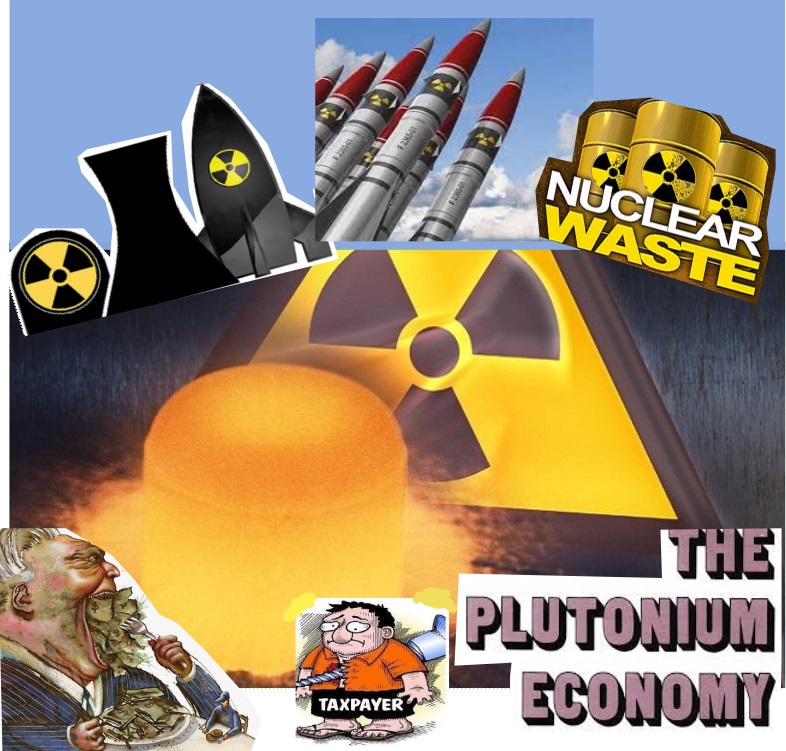
The United States is sitting on more than 50 tons of plutonium left behind by nuclear weapons programs. The Department of Energy had previously planned to dilute and bury the hazardous material, but the Trump administration wants to give it new life in nuclear reactors and has entered into “advanced negotiations” with a handful of nuclear startups to begin the process of selling the plutonium for use as nuclear fuel.
“A lack of fuel is one of the biggest choke points in expanding nuclear power right now,” said Jacob DeWitte, the chief executive of Oklo, one of the companies in conversation with the Trump administration about acquiring plutonium to power its next-gen small nuclear reactors. “This will help us get more nuclear power online faster.”
While it seems like a win-win for nuclear waste cleanup and clean energy development in the United States, some critics are concerned about safety and security implications of the deal. Currently, this highly dangerous, weapons-grade material is kept in a highly regulated and secure environment. Selling it to energy companies would significantly compromise oversight. “The plan has generated debate and some unease among nonproliferation experts,” the New York Times reports. “If finalized, it would mark the first time the U.S. government has made weapons-grade plutonium available to private companies.”
Step forward in £4.6 billion Sellafield nuclear decommissioning programme
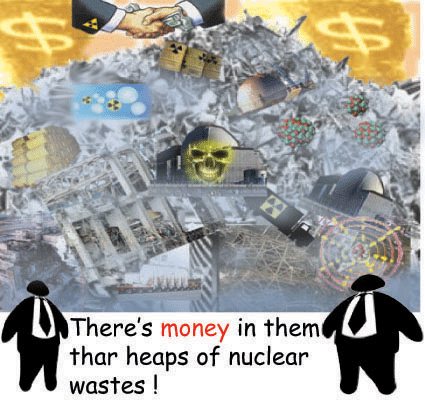
Hundreds of delegates gathered for an event which saw SMEs meet with
industry leaders to discuss how a £4.6 billion programme of work will be
delivered over the next 15 years. The Decommissioning Nuclear Waste
Partnership Supply Chain Engagement event saw dozens of SMEs meet with DNWP
partners, Sellafield leaders, and the wider supply chain. The full-day
event at Energus, at Lillyhall, near Workington, gave suppliers early
visibility of upcoming opportunities in the decommissioning process. They
had direct access to buyers, project teams and decision-makers, and were
given a clear understanding of how work will flow. The event was organised
by Industrial Solutions Hub (iSH) in collaboration with the BECBC Nuclear
Sector Group.
Business Crack 3rd June 2026, https://businesscrack.co.uk/2026/06/03/step-forward-in-4-6-billion-sellafield-nuclear-decommissioning-programme/
The costs of nuclear wastes from “in service” nuclear submarines.

Richard Marles weasels his way out of this problem
3 June 2026 Noel Wauchope AIM Extra , https://theaimn.net/the-costs-of-nuclear-wastes-from-in-service-nuclear-submarines/
It is a rather nauseating entertainment, watching Australia’s Defence Minister Richard Marles wriggling around to con the public into believing that it will be cheaper for Australia to buy used nuclear submarines, than to buy new ones. I’m not quite sure who invented the new term to replace “used” – but “in service:” is a lovely euphemism, worthy of Marles. Australia’s not buying “used” nuclear submarines – oh no – we’re getting “in service” nuclear submarines.
You gotta admire Richard Marles – he is indeed the master of the weasel word:
“The Deputy Prime Minister and Secretaries welcomed the proposed approach to streamline Australia’s acquisition of Virginia-class submarines (VCS), simplifying supply chain management, operational and maintenance requirements, and maximising cost efficiencies. This approach would enable Australia to acquire three in-service VCS in lieu of a mixture of new and in-service VCS variants.”
“Chasing simplicity is at the heart of why we have pursued this.”
“So firstly, we are paying an amount to the US in terms of its industrial base. That is to create the space for the Virginia-class submarines to be transferred to Australia. But then there is the purchase price in respect of each of the submarines and this will be more cost effective in relation to that and it’ll be significant.”
Work all that out, if you can be bothered.
Anyway, all that doesn’t matter. We know now that (a) these nuclear submarines will be unsuitable for monitoring Australia’s coastline, and really intended for attacking China on behalf of the USA, and (b) will be obsolete by the time we get them, anyway.
But here’s the bit that nobody’s talking about – the “elephant in the ocean.”
Australia is to cop the management of the nuclear wastes in these second hand submarines. Do we know how old they are? Do we know how long before that toxic forever radioactive trash has to buried, or stored in concrete canisters, or what?
And – dare I be so rude as to mention this? What about the costs of disposing of theUSA’s nuclear submarine wastes?
The entire global nuclear establishment is very coy about assessing the real long term or short term costs of nuclear wastes.
France has been working on this since 1991 with its Cigéo project in Bure (Meuse). This project was launched in 1991. Its regulatory process spans decades, with partial commissioning expected by 2050 and a public inquiry in 2026.
On the costs of this project – Wikipedia states:
“Evaluation of the total cost of Cigéo must take into account all the costs of storage over more than 100 years: studies, construction of the first structures (surface buildings, shafts, declines (sloped tunnels)), operation (staff, maintenance, energy…), the gradual construction of underground structures, then their closure, their monitoring etc. Part of these costs/investments will be the salaries of the workforce employed in the digging, construction and storage work, who, according to Andra, will number 1500 to 2000 persons for at least a hundred years.”
The French government has had a bash at estimating these costs:
“A ministerial decree published in France has confirmed the latest cost estimate of the planned Cigéo deep geologic spent nuclear fuel repository at €33.4bn ($39bn) – €37bn including taxes – of which €9.7bn is for initial construction.”
Apart from all the other well-known considerations – safety, danger, terrorism risks, risks of nuclear proliferation, and public opposition, there has been a great reluctance in the nuclear establishment to address the problem of the costs of nuclear wastes.
So Richard Marles can go on, comfortingly bleating about the financial benefits of these second hand nuclear submarines and their second-hand radioactive trash, because as we say in upper class parlance – it’s “just not done” to talk about the financial costs of nuclear wastes.
And now that both Liberal and Labor governments have committed us to taking over American nuclear submarine wastes, will that be the last of it? Are these useless nuclear submarines just the foot in the door for Australia to become the USA’s nuclear waste dump?

Cigéo: years of authorizations for burying 83,000 m³ of nuclear waste.

The Cigéo project in Bure (Meuse) aims to bury 83,000 m³ of radioactive waste. Its regulatory process spans decades, with partial commissioning expected by 2050 and a public inquiry in 2026.
The Cigéo geological storage project in Bure (Meuse) is entering a regulatory process that will extend over several decades before burying 83,000 cubic meters of highly radioactive nuclear waste at a depth of 500 meters. This long administrative path unfolds amid heightened surveillance of nuclear facilities, as evidenced by the fire after a drone strike near the Barakah nuclear plant and IAEA warnings about drone risks near Ukrainian nuclear sites.
Origins and legislative milestones
Launched by the Bataille law in 1991, the project was sited in 1998 in Bure, on the border of Meuse and Haute-Marne. An underground laboratory of the French National Agency for Radioactive Waste Management (Andra) was established in 1999 to study the rock. In 2006, Parliament opted for deep geological storage with a reversibility period of 100 years, and the 2016 law defined the modalities for the creation of Cigéo, standing for Centre industriel de stockage géologique.
Approvals and upcoming steps
After a disrupted public debate in 2013, the project was declared of public utility by decree of the Council of State in July 2022. Andra filed its application for creation authorization (DAC) in January 2023. The Nuclear Safety and Radiation Protection Authority (ASNR) deemed the safety conditions “satisfactory” in December 2025, ahead of a public inquiry scheduled from May 18 to July 2, 2026, without in-person meetings. The project cost was revised to €33.4 billion by the state in April 2026, up from the initial €25 billion.
Industrial phasing and opposition
The decree authorizing the creation of Cigéo is expected in late 2027 or early 2028, a prerequisite for construction. A pilot industrial phase with dummy packages will require further approvals. Limited commissioning for this pilot phase is targeted for 2050, followed after 2050 by a law setting conditions for continuation. Full storage of all high-activity waste would only begin in the 2080s, pending authorizations, with final closure expected around 2170 after a monitoring period. The project faces strong opposition from environmental and local groups contesting deep storage.
Europe could source half its critical materials from waste by 2050, study finds

Europe could source half its critical materials from waste by 2050, study
finds. Recovery systems could help the region reclaim up to 5.7 million
tonnes of critical raw materials (CRMs) that are currently thrown away,
reducing European reliance on imported materials and strengthen supply
chain resilience.
The findings were published as part of the Future
Availability of Secondary Raw Materials (FutuRaM) project, which seeks to
map Europe’s ‘urban mine’ of unused or wasted metals and minerals lost in
discarded products, industrial residues and demolished infrastructure
across the EU27+4 (EU, UK, Switzerland, Iceland and Norway).
CRMs –
including rare earth metals, lithium and cobalt – underpin a host of modern
technologies, from smartphones and electric vehicles (EVs) to solar panels
and wind turbines. But currently, when these technologies reach the end of
their usable lives, many of these important materials are discarded, too.
Edie 27th May 2026,
https://www.edie.net/europe-could-source-half-its-critical-materials-from-waste-by-2050-study-finds/
U.S. Turns Cold War Plutonium Into Nuclear Fuel
Oil Price, By Charles Kennedy – May 28, 2026,
- The U.S. is exploring the use of Cold War-era plutonium from dismantled nuclear warheads as alternative fuel for advanced nuclear reactors due to uranium supply shortages and reliance on foreign enriched uranium.
- The Department of Energy has shortlisted five nuclear companies, including SMR developers.
- Critics warn the plan raises nuclear proliferation risks and could prove technically and economically difficult, as converting weapons-grade plutonium into reactor fuel remains highly expensive.
……………………………………………………………. The plutonium considered for distribution to nuclear companies is from dismantled warheads from the Cold War. The radioactive material—50 tons of surplus supply, according to the New York Times—was originally to be diluted and buried, but President Trump last year suspended that plan, per Reuters, which also recalled reports about Washington planning to make 20 tons of plutonium available to private companies.
……………………………There are, of course, opponents to the idea of using weapons-grade nuclear material for nuclear power generation by private companies. Indeed, some Democratic members of Congress have publicly protested the plan.
“The transfer of weapons-usable plutonium to private industry would increase the risk of nuclear weapons proliferation, including to rogue states or terrorists,” Massachusetts senator Ed Markey and representatives Don Beyer and John Garamendi said in a letter from last September. “The United States cannot effectively discourage other countries from using plutonium for civil purposes if we use it ourselves.”
The idea behind the move is to encourage the development of small modular nuclear reactors that could be built much more quickly than conventional ones—at least theoretically. The practical application of SMR technology, however, has stumbled after pioneer NuScale had to scrap its plans to build the first small modular reactor in the U.S. amid much higher than hoped-for costs, leading to insufficient numbers of future buyers willing to sign up for the facility’s output.
Despite these challenges in the MR segment, nuclear is back in a big way, not least thanks to Big Tech’s AI rush, which requires these companies to secure massive amounts of electricity for their facilities—and make it reliable. This is boosting the popularity of nuclear electricity outside the Big Tech community as well—higher electricity bills are making the construction costs of new nuclear power plants more palatable than they would have been a couple of years ago.
Whether plutonium would make an equivalent substitute for uranium in this nuclear renaissance remains questionable, it seems. The fact that the element could be used for the production of nuclear weapons is one problem with the idea. Another problem appears to be of a more technical nature, per the New York Times, which also cited critics as saying the cost of turning plutonium into nuclear fuel was prohibitively high. https://oilprice.com/Alternative-Energy/Nuclear-Power/US-Turns-Cold-War-Plutonium-Into-Nuclear-Fuel.html
Trump plan to give start-ups plutonium harvested from Cold War–era nuclear weapons is risky, experts say

Weapons-grade plutonium can fuel nuclear reactors known as mixed oxide reactors, but none of these exist in the U.S.
By Adam Kovac edited by Claire Cameron, May 28, 2026 https://www.scientificamerican.com/article/experts-warn-against-trump-plan-to-give-cold-war-plutonium-to-nuclear-power-companies/
The Trump administration’s plan to offer plutonium from dismantled Cold War–era nuclear weapons to private energy companies is drawing criticism from experts who say it makes little economic sense and presents a national security threat.
There are currently no operational nuclear reactors in the country that are built to use plutonium-derived fuel. Instead nuclear power plants in the U.S. are powered by a mixture of two uranium isotopes. A small portion, usually around 5 percent, of that fuel is uranium 235, which can also be used to make nuclear weapons. The majority is uranium 238, which cannot sustain a nuclear fission reaction on its own. Because of that balance, if some of this fuel were to fall into the wrong hands, it would be enormously difficult to weaponize, says Scott Roecker, vice president of nuclear materials security at the Nuclear Threat Initiative, a nonprofit dedicated to preventing nuclear catastrophe.
“The most difficult step in getting a nuclear weapon is having enough of that material,” he explains. “The U.S. government has spent probably billions of dollars over the last several decades to remove highly-enriched uranium and separated plutonium from countries that don’t need it.”
Plutonium, meanwhile, is considered a human-made element and is a by-product of the reactions that take place inside nuclear reactors. As uranium 238 is bombarded with neutrons inside the reactor, the molecules absorb some of these particles and become the heavier uranium 239, which rapidly decays and eventually becomes extremely radioactive plutonium.
That plutonium can be mixed back with uranium to be used as fuel in specific nuclear reactors called mixed oxide reactors. The U.S. abandoned mixed oxide reactors in the 1970s because they were both difficult and expensive to run. These kinds of reactors do exist elsewhere, though—in Japan, Russia and France—but those countries have encountered their own problems with the reactors, Roecker says.
“In France, the government’s subsidizing that process,” he says. “Only I think 1 percent of the uranium that’s actually reprocessed is being reused. And in Japan, it’s cost the country billions of dollars and has still not started operation, and who knows if it actually ever will.”
The U.S. Department of Energy has defended the plan, saying the private sector could play a vital role in advancing U.S. nuclear power infrastructure. Ted Garrish, assistant secretary for the Office of Nuclear Energy, said in April that decommissioned nuclear fuel “represents an immense, untapped energy resource for the United States.”
“The Surplus Plutonium Utilization Program is anticipated to help companies unlock the next level of private funding to broaden domestic nuclear fuel supplies, spur innovation on American recycling technologies, and unlock private sector funding to fuel the nation’s nuclear renaissance,” said a DOE spokesperson in a statement, adding that five companies have been selected to take part in the program.
Aside from the concern over cost and feasibility, other experts point out that keeping plutonium secure is much more difficult than doing so with typical uranium-based nuclear fuel. Daniel Speyer, a professor of nuclear power plant systems at New York University, says he isn’t convinced that energy start-ups could properly store plutonium. Even if the material is mixed back with uranium, separating the two to isolate the highly fissile material isn’t so difficult as to be impossible—which introduces a clear security threat, he says.
“It’s not something that a small organization really probably could do, but if you give them plutonium in purer form, I think it’s almost a trivial act to make a bomb,” he says. “A simple atomic bomb is not difficult to make.”
The DOE says that any company selected to receive the Cold War–era plutonium will have to show a deep understanding of the technology involved, as well as robust security plans and regulatory compliance. The plan has also met some pushback on Capitol Hill, however. Last September Democratic senator Edward Markey of Massachusetts and two Democratic congressional representatives sent a letter to President Donald Trump raising concerns over the risk to national security.
“The transfer of weapons-usable plutonium to private industry would increase the risk of nuclear weapons proliferation, including to rogue states or terrorists,” they wrote.
Survey begins to determine remote island’s suitability for nuclear disposal site
But while the local leaders of the municipalities in Hokkaido and Genkai approved the literature reviews, the Hokkaido and Saga governors, whose permission NUMO will seek to go on to the next stage — a preliminary on-site survey — are opposed
By Eric Johnston, STAFF WRITER, May 21, 2026, https://www.japantimes.co.jp/tag/nuclear-energy/
A survey to determine the suitability of a remote island in the Ogasawara Islands chain as a final disposal site for radioactive nuclear waste began Wednesday.
The National Waste Management Organization of Japan (NUMO) will carry out a review of the scientific literature on the geology of Minamitorishima, Japan’s easternmost island, located nearly 2,000 kilometers from Tokyo.
The literature review is the first stage of an investigation into whether the site would be suitable for constructing an underground nuclear storage facility. The radioactive waste would need to be buried at least 300 meters underground for up to 100,000 years.
Minamitorishima has no civilian residents and is part of Ogasawara Village. The mayor, Masaki Shibuya, gave his approval for the survey last month.
Over the next two years or so, experts will scrutinize geological maps and academic papers regarding earthquake fault lines and volcanic activity on and around the island.
Local governments that agree to participate in the literature review can receive up to ¥2 billion in grants, and the central government has been encouraging as many of them as possible to raise their hands.
“The final disposal of radioactive waste is a critical issue that Japan as a whole must resolve, and we intend to conduct literature surveys in as many parts of the country as possible,” NUMO President Akira Yamaguchi said in a statement Wednesday.
Minamitorishima is only the fourth site to agree to the survey. Suttsu town and Kamoenai village in Hokkaido Prefecture have been surveyed, and NUMO is compiling feedback on the report. Genkai, in Saga Prefecture, is currently undergoing a survey as well.
But while the local leaders of the municipalities in Hokkaido and Genkai approved the literature reviews, the Hokkaido and Saga governors, whose permission NUMO will seek to go on to the next stage — a preliminary on-site survey — are opposed.
“If Suttsu and Kamenaichi intend to proceed with a preliminary survey, I’ll express opposition at this time,” Hokkaido Gov. Naomichi Suzuki said in March, citing an October 2000 prefectural assembly ordinance opposing the introduction of nuclear waste into the prefecture.
Saga Prefecture Gov. Yoshinori Yamaguchi has also indicated his opposition to his prefecture hosting a final disposal facility.
“I have no intention of accepting any new burdens,” Yamaguchi said in April when asked about his position on whether he’d provide consent for Genkai to conduct a preliminary on-site survey after the literature survey.
Unlike the other three candidate sites, Minamitorishima has no permanent residents and is off-limits to the public. It houses facilities operated by the Maritime Self-Defense Force, the Japan Meteorological Agency, and the Land, Infrastructure, Transport and Tourism Ministry.
The Japanese government is moving to restart as many nuclear power plants as possible. But on-site storage facilities for spent nuclear fuel at many power plants are approaching full capacity, while plans to have the spent fuel recycled at the Rokkasho Reprocessing Plant in Aomori Prefecture remain stalled.
In February, the Federation of Electric Power Companies of Japan released figures showing that storage pools at 17 nuclear plants where spent fuel is cooled were 78% full as of the end of last year.
Death will kill with its poisonous wings.
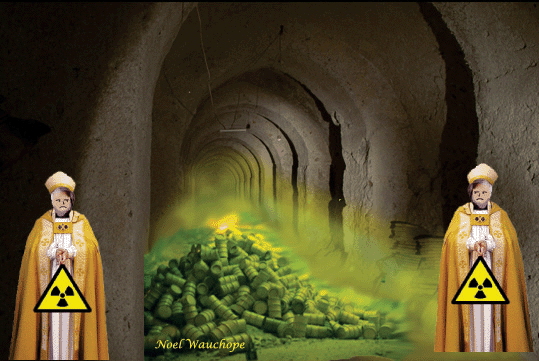
“This place is not a place of honor … no highly esteemed dead is commemorated here … nothing valued is here. What is here was dangerous and repulsive to us. This message is a warning about danger
by Martin McKenzie-Murray, https://www.themonthly.com.au/martin-mckenzie-murray/2026-05-08/death-will-kill-its-poisonous-wings
Very soon, likely within a few weeks, one of the world’s most interesting pieces of infrastructure will open after 22 years of construction and almost half a century of contemplation. Called Onkalo – Finnish for “cavity” – the site will be the world’s first permanent repository for nuclear waste.
By law, Finland obliges that nuclear waste produced domestically must be stored domestically. That will now occur on the island of Olkiluoto at a depth of more than 400 metres within bedrock that’s almost two billion years old. Currently, the repository area is about two square kilometres and comprised of 10 kilometres of tunnels – this number will likely quadruple before the site’s decommissioning in around 2100, when this cavern will be backfilled and sealed, creating a self-maintained nuclear sarcophagus for the approximately 100,000 years it will take for the waste’s radioactivity to have decayed to safe levels.
Perhaps by now you’re beginning to intuit a little about a) the complexity of its design, b) the richness of its semiotic implications, and c) the sobering absence of anything approaching a precedent for this. Consider: after its decommissioning, Onkalo must remain perfectly passive, requiring no active management or monitoring for 100,000 years. Second, its profound danger must be communicated so far into the future that current languages, customs – even genetic dispositions – can no longer be assumed to exist. It’s a strange and disquieting fact that the radioactivity of our nuclear waste might outlive our languages for communicating its danger. Third, no man-made structure has ever lasted anything close to the length of time that Onkalo is hoped to be preserved for.
Let’s start with the simpler facts of the site. Olkiluoto Island was chosen for its geological stability – the low-permeability of its bedrock and its low-risk of seismic tremors. In Michael Madsen’s fascinating 2010 documentary about the site’s design, Into Eternity, one project adviser explains how time down there goes slowly, while up here, on the surface, it passes very, very quickly.
In other words, the crystalline rock 450 metres below ground here looks much the same as it did 500,000 years ago. The surface of our planet, however, would look unrecognisable if we travelled back just 200 years. Our natural, political and material world changes often and quickly – the latter to the whims and passions of its human inhabitants, our creative and destructive ingenuities, and the gravity of civilisational entropy. The natural world, meanwhile, forever remains subject to the whims and passions of storms and droughts and a climate that’s being altered by us.
Currently, the world’s approximately half-a-million tonnes of nuclear waste is kept in temporary storage on the surface of our planet, and is thus subject to war, sabotage or natural calamity. Much safer to secure it deep down where time moves slowly.
There is something lusciously strange and dreamlike about the projections and assumptions Onkalo’s designers were asked to make. They did nothing less than imaginatively commune with a form of humanity far into the future.
The weirdness of this can be emphasised by offering some modest timescale. The birth of Jesus Christ was 2000 years ago. The pyramids of Giza were completed about 4500 years ago. The previous Ice Age ended almost 12,000 years ago and found the peak of its severity about 10,000 years before that. That is still nowhere near 100,000 years, the length of time into the future for which Onkalo must remain independently stable and for which the warnings we write today must travel and remain intelligible.
And so, the niche field of nuclear semiotics: how do we communicate today’s intentions to a civilisation so distant that we presume it to be almost alien and to not share our language? Preceding this question though, is another: should we even try? Can we assume that humanity will, in 80,000 years, say, possess the same curiosity we do today? That is, will they perform the same enthusiastic archaeological excavations as we do now? And, if so, will they treat the nuclear tomb as we might an Incan crypt?
Might it be that by signposting the danger, we simply encourage their curiosity? Would warnings, even if we could guarantee their future intelligibility, serve to appropriately quell curiosity or dangerously arouse it?
The questions only birth more questions. Given that Onkalo is so deeply buried, and its decommissioning would involve erasing all surface infrastructure, can it not be assumed that it would never be accidentally found? Or might some evidence of its existence survive? Physical evidence, or digital? Is it preposterous to think that any digital evidence of our civilisation today could survive so far into the future – when, between now and the safe decay of the waste, there is assumed to fall several new ice ages?
The designers answered at least one big question: they would, via ceramic tablets, leave warnings to our future selves about the site. Detailed warnings, in several languages unlikely to survive several epochs, have been suggested: “This place is not a place of honor … no highly esteemed dead is commemorated here … nothing valued is here. What is here was dangerous and repulsive to us. This message is a warning about danger.”
Also proposed are simple pictographs that are assumed to have a universally intelligible quality: a triangle that includes the radioactive symbol, a skull and crossbones, an arrow pointing away from the danger, and a human stick-figure running in the direction it suggests.
Given the spookiness of radioactivity – and the oddity of communicating its dangers across a chasm of time to unknowable descendants – the project invited some strange proposals. One was rendering the surface above the tomb conspicuously forbidding: lightning bolt sculptures amongst forests of barbed wire. (But optimistically assuming their material survival, how can we assume that their symbolic charge would survive, and not simply invite curiosity as cryptic anachronisms?) Another proposal was made for genetically engineering cats who change colour in the proximity of radiation – a kind of bizarre Geiger counter.
In 2020, the American electronic music producer (and roboticist) Skytree, aka Evan Snyder, released a track called “Atomic Priest” written with rapper Jackson Whalan. Its lyrics were about precisely the problem of communicating danger forward through “deep time”:
This is for the humans living ten thousand years from now
With radioactive capsules, thousands of feet underground
Grabbin’ the mic to warn you of these hazardous sites
For those who lack in the sight in the black of the night
The least good that we could do is form an Atomic Priesthood
To keep the future species from going where no one should
We’ve buried the mistakes of past nuclear waste
Hidden underground for future races to face
It’s our task to leave signs for civilization to trace
But who’s to say what language these generations will embrace?
The American-Hungarian linguist Thomas Sebeok minted the term “atomic priesthood” in the early 1980s. Sebeok thought that, given that radioactivity of our waste would outlive current languages (and God knows what else), the trick to communicating our warnings about it lay in folklore. Sebeok had been commissioned by the US Department of Energy to this end. In 1980, the department had established the “Human Interference Task Force”, which was asked to “investigate the problems connected with the post-closure, final marking of a filled nuclear waste repository. The task of the HITF is to devise a method of warning future generations not to mine or drill at that site unless they are aware of the consequences of their actions.”
In 1984, Sebeok submitted his report. It was called “Communication Measures to Bridge Ten Millenia”. Semiotics were everything here, Sebeok wrote, given its relevance to “the problems of human interference and message exchanges involving long periods of time, over which spoken and written languages are sure to decay to the point of incomprehensibility, making it necessary to utilize a perspective that goes well beyond linguistics”.
Here, then, is the luscious strangeness of nuclear semiotics – a field that overlaps with our formal considerations of communicating with extraterrestrial intelligence, but which seems even stranger to me given that the aliens in this case are our future selves.
Sebeok suggested that the best way to ensure the survival of our warnings deep into the future was through mythology – the enactment of annual rituals and the ratification of legends that were upheld by an “atomic priesthood”. The stories would alter over time, but perhaps the core desire of the transmission – to effectively warn off future excavators – would survive. It wouldn’t matter if the sense of hazard had degraded into superstition, long untethered to science or the danger at hand. Only that a sense of fear and repulsion was maintained.
“A ritual annually renewed can be foreseen, with the legend retold year-by-year (with, presumably, slight variations),” Sebeok wrote in his government report. “The actual ‘truth’ would be entrusted exclusively to what we might call for dramatic emphasis an ‘atomic priesthood’, that is, a commission of knowledgeable physicists, experts in radiation sickness, anthropologists, linguists, psychologists, semioticians, and whatever additional expertise may be called for now and in the future. Membership in this ‘priesthood’ would be self-selective over time.
“The best mechanism for embarking upon a novel tradition … is at present unclear. Folklore specialists consulted have advised that they know of no precedent, nor could they think of a parallel situation, except the well-known, but ineffectual, curses associated with the burial sites (viz., pyramids) of some Egyptian Pharaohs … which did not deter greedy grave-robbers from digging for ‘hidden treasure’.”
Here, then, is the weird world of considering future ones. In a few weeks, Onkalo will become operational, accepting the copper-encased tubes of nuclear waste into its deep tombs of crystalline rock, where things remain more stable than the conditions half a kilometre above.
Scotland the Dump
A long-term project we have had here at Bella, that is charting the toxic
legacy of the British State. Our map, Scotland the Dump, produced by the
wonderful Magnificent Octopus Illustration is being prepared for shipping
right now. The map details the weapons ranges, munitions dumps, biological
and chemical weapons dumps and nuclear waste scattered around Scotland.
Bella Caledonia 18th May 2026 https://bellacaledonia.org.uk/2026/05/18/scotland-the-dump-4/
Ed Milliband urged to give certainty on nuclear waste plan
by Gareth Cavanagh, Data Reporter, 13 May 26
WHITEHALL ministers have been urged not to ‘kick the can down the road’ and give Cumbria clarity on its future regarding the storage of the UK’s radioactive waste, as the nuclear sector awaits a Government decision on how to move forward with the plans.
https://www.whitehavennews.co.uk/news/26097757.ed-milliband-urged-give-certainty-nuclear-waste-plan/
-
Archives
- October 2026 (120)
- September 2026 (339)
- August 2026 (330)
- July 2026 (355)
- June 2026 (287)
- May 2026 (306)
- April 2026 (356)
- March 2026 (251)
- February 2026 (267)
- January 2026 (308)
- December 2025 (358)
- November 2025 (359)
-
Categories
- 1
- 1 NUCLEAR ISSUES
- business and costs
- climate change
- culture and arts
- ENERGY
- environment
- health
- history
- indigenous issues
- Legal
- marketing of nuclear
- media
- opposition to nuclear
- PERSONAL STORIES
- politics
- politics international
- Religion and ethics
- safety
- secrets,lies and civil liberties
- spinbuster
- technology
- Uranium
- wastes
- weapons and war
- Women
- 2 WORLD
- ACTION
- AFRICA
- Atrocities
- AUSTRALIA
- Christina's notes
- Christina's themes
- culture and arts
- Events
- Fuk 2022
- Fuk 2023
- Fukushima 2017
- Fukushima 2018
- fukushima 2019
- Fukushima 2020
- Fukushima 2021
- general
- global warming
- Humour (God we need it)
- Nuclear
- RARE EARTHS
- Reference
- resources – print
- Resources -audiovicual
- Weekly Newsletter
- World
- World Nuclear
- YouTube
-
RSS
Entries RSS
Comments RSS