Canadians have been told repeatedly by spokespersons from Atomic Energy of Canada Limited, the Canadian Nuclear Association and the Government of Canada
that the Canadian nuclear program has nothing to do with atomic bombs,
that plutonium produced in Canadian reactors is unfit for military use, and
that Canada has a strict policy that all nuclear materials supplied to other countries must be used for peaceful, non-explosive purposes.
What they don’t say is
that the Canadian nuclear program was born as part of the Manhattan Project — the secret project which produced the world’s first atomic bombs;
that the Canadian role in the atomic bomb project was focussed on basic research into the production and separation of plutonium for use in atomic bombs;
that the Chalk River Nuclear Establishment was built following a military decision in 1944 in Washington D.C. to utilize Canada’s plutonium research;
that for thirty years after the bombing of Hiroshima and Nagasaki, Canada sold plutonium to the Americans for use in their nuclear weapons program.
Recently, the U.S. Department of Energy published its stockpiles of plutonium, and revealed exactly how much plutonium was sent to or received from other countries. For the first time, through this letter dated March 4 1996, Canadians learned how much plutonium Canada contributed to the U.S. nuclear weapons program.
Please tell me if you will honour the current SNP commitment against any new nuclear energy production in Scotland.
I am asking you about this because Scotland is already paying a terrible price for being chosen as the UK’s remote and expendable area for experiments with nuclear technology and nuclear waste dumping.
In 1986, during the EDRP Public Inquiry in Caithness, the UK Atomic Energy Authority was forced to release documents which showed that highly radioactive, potentially lethal fragments of nuclear-spent fuel had been dumped on beaches and on the seabed at Dounreay.
These fragments were first discussed with shop stewards at Dounreay in 1983. At that first discussion, the shop stewards were warned not to share the information “to avoid public panic”. Most of the workforce at Dounreay were in any case bound by the Official Secrets Act. The public inquiry nevertheless encouraged some of these workers to share more information about appalling incidents within their community – caused directly by the nuclear industry.
Forty years later, those lethal fragments of nuclear-spent fuel are still there – the Scottish Environment Protection Agency has confirmed that they are irretrievable. The awful legacies of nuclear mistakes at Dounreay also include large tracts of land which will not be safe to use – in any way – for at least 300 years. Nuclear mistakes continue throughout the world, including to this day at Dounreay and at Windscale/ Sellafield.
It is important that your generation of political leaders is made aware of this awful history: it is now your responsibility to avoid such mistakes and to protect the wellbeing of Scotland’s land, sea and people.
With its new policy of “Great British Nuclear”, the Westminster Tory government is defying the findings of the 1976 report on “Nuclear Power and the Environment” by the Royal Commission on Environmental Pollution. It advised that no further development of nuclear power should be made until a safe method of nuclear waste was confirmed. No such method has been found.
More worryingly, that same Westminster government is currently attempting to evade international treaties which ban the dumping of nuclear waste in international waters – by working towards a nuclear dump in the Irish Sea off Dumfries, Galloway and Cumbrian coasts.
KSL, By Susan Montoya Bryan, Associated Press – March 22, 2023
ALBUQUERQUE, N.M. — U.S. regulators say they need more time to wrap up a final safety report and make a decision on whether to license a multibillion-dollar complex meant to temporarily store tons of spent fuel from commercial nuclear power plants around the nation.
The Nuclear Regulatory Commission issued a new schedule Monday, citing unforeseen staffing constraints. The agency was initially expected to issue a decision by the end of March. It will now be the end of May.
The announcement comes just days after New Mexico approved legislation aimed at stopping the project. It’s expected that supporters of the storage facility will take the fight to court, but New Mexico Gov. Michelle Lujan Grisham on Tuesday asked the NRC to suspend its consideration of the license application……………………………………………………
Since the federal government has failed to build a permanent repository, it reimburses utilities to house the fuel in either steel-lined concrete pools of water or in steel and concrete containers known as casks at sites in nearly three dozen states. That cost is expected to stretch into the tens of billions of dollars over the next decade.
The legislation signed by Lujan Grisham last week requires that the state provide consent for bringing in such radioactive material. Consent from the Democratic governor would be unlikely, as she has argued that without a permanent repository, New Mexico stands to be the nation’s de facto dumping ground.
She reiterated her opposition in the letter to NRC Chairman Christopher Hanson.
“Thank you for respecting the state of New Mexico’s laws and the voices of our citizens, tribes and pueblos who overwhelming(ly) supported this legislation,” she wrote.
Similar battles have been waged in Nevada, Utah and Texas over the decades as the U.S. has struggled to find a home for spent fuel and other radioactive waste. The proposed Yucca Mountain project in Nevada was mothballed and a temporary storage site planned on a Native American reservation in Utah was sidelined despite being licensed by the NRC in 2006.
That project would have been located on land belonging to the Skull Valley Band of Goshute. Utah’s governor at the time — Republican Mike Leavitt — was among those fighting the effort. He and others were successful in getting Congress to amend a defense spending bill, essentially landlocking the site by creating the Cedar Mountain Wilderness and blocking a rail spur that would have delivered casks.
But it was only six weeks later that the NRC issued a license for the project.
Don Hancock with the nuclear watchdog group Southwest Research and Information Center pointed to the Utah case.
Hanford represents “the costliest environmental remediation project the world has ever seen and, arguably, the most contaminated place on the entire planet.”
as Washington residents learned long ago, it is difficult to draw federal attention to a remote site in our state.
For too long, the federal government has kept cleanup at the Hanford nuclear reservation toward the bottom of its to-do list. “It’s a nice idea,” a long string of presidential administrations have seemed to say. “We’ll get to it eventually.”
With such nonchalance being the prevailing attitude for decades, the fact that President Joe Biden’s proposed 2024 federal budget includes record funding for Hanford is encouraging. But it is far from cause for celebration.
Congress must join the administration in recognizing the importance of the site and approving the president’s request for some $3 billion for Hanford. The issue is not only a matter of cleaning up hazardous, radioactive waste in Washington; it is about the federal government fulfilling its moral and court-ordered duty.
“There’s more work to do, but this is a big step in the right direction to getting this cleanup done efficiently, effectively and safely,” Gov. Jay Inslee wrote on Twitter this week.
Beggars, as they say, can’t be choosers, which puts Washington leaders in a difficult spot. While the proposal for increased funding is a step in the right direction, it does not mitigate years of inattention by the federal government. Nor does it fully fund cleanup at what is considered the nation’s most contaminated radioactive site.
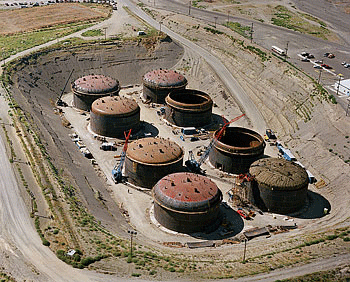
Hanford, once the hub of plutonium production for the United States’ arsenal of nuclear weapons, now is home to underground tanks holding 56 million gallons of radioactive waste. Many of those tanks are known to be leaking, and with the site’s proximity to the Columbia River — 200 miles upstream from Vancouver — federal officials should have brought urgency to the project long ago.
“The citizens living along banks of the Columbia River deserve to know the full story of what is happening with the Hanford tanks,” U.S. Sen. Ron Wyden, D-Ore., once wrote to Department of Energy officials, who oversee Hanford cleanup.
That was in 2014. Citizens still are waiting for significant progress.
According to the Tri-City Herald, Biden’s proposed budget would increase spending on a vitrification plant at Hanford from its current $875 million to $1 billion; that plant is being prepared to treat radioactive waste for disposal. The budget also would add an extra $34 million for work at the tank farms.
Rep. Dan Newhouse, R-Sunnyside, whose district includes the Hanford site, long has worked to draw attention to the cleanup. So have Washington Sens. Patty Murray and Maria Cantwell. As Congress considers the details of Biden’s budget proposal, Washington lawmakers — including Rep. Marie Gluesenkamp Perez, D-Skamania — should impress upon their colleagues the importance of Hanford.
Every state and every congressional district has its own needs, but a site largely unknown to the rest of the country warrants special attention. As journalist Joshua Frank wrote last year in the book “Atomic Days: The Untold Story of the Most Toxic Place in America,” Hanford represents “the costliest environmental remediation project the world has ever seen and, arguably, the most contaminated place on the entire planet.”
With Murray serving as chair of the Senate Appropriations Committee — and with Newhouse sitting on the House Appropriations Committee — there is hope that Hanford funding will remain unscathed when Congress takes a scalpel to Biden’s proposed budget. But as Washington residents learned long ago, it is difficult to draw federal attention to a remote site in our state.
ALL of the laid-up nuclear submarines will be gone as part of a UK Government pledge to “de-nuclearise Rosyth” by 2035.
Councillors were given an update on the programme to remove radioactive waste and turn the seven boats that have been parked at the dockyard for decades into “tin cans and razor blades”.
The Ministry of Defence have faced heavy criticism for the delays in dealing with the nuclear legacy, with 27 Royal Navy subs to be scrapped in total.
Christine Bruce, from the Rosyth Submarine Dismantling Project, said most of the Low-Level Radioactive Waste (LLW) should be gone by the end of 2024.
She added: “The subs will take a bit longer but we’ve got a forward programme which definitely does remove them all by about 2035.
“It absolutely is our aim to do what we said all those years ago, to de-nuclearise Rosyth.”
One of the decommissioned subs, Dreadnought, has been in the Rosyth basin since 1980 and she admitted that it had been out of service for so long that a lot of the low-level radiation had “disappeared naturally”.
The MoD has also been slated for the cost of maintaining the subs, £30 million a year.
At the South and West Fife area committee yesterday (Wednesday), Ms Bruce acknowledged: “It’s taken a long time to get to where we are.
We started in 1998, I was part of it from the beginning, it’s taken quite a long time to come up with the policy and for good reasons.
“There were no easy answers. If it had been easy we would have done it a long time before now.
“The aim is to get rid of 27 submarines, of which seven are at Rosyth and the rest are, or will be, at Devonport.”
A facility to deal with the boats at Rosyth had to be brought up to date, to make sure it was safe to remove the radioactive material, with funding from the MoD.
Work started on Swiftsure in 2015-16 and around 52 tonnes of LLW was removed, with most of the metals recycled.
With lessons learned from the first sub, they progressed and removed 77 tonnes from Resolution and then 120 tonnes from Revenge.
The next step was a world first, the removal of the reactor from Revenge, the most radioactive part left in the sub, as well as the steam generators.
Next will be removing the rest of the LLW from Swiftsure so all that’s left is the reactor, which should be taken out around 2025.
The sub was to be recycled elsewhere but it’s cheaper, safer and more secure “to do the first one at Rosyth” and then sell it off to scrap merchants.
Gordon McAughey, head of internal assurance at Babcock Rosyth, added: “Hopefully, by 2026, the skyline change at Rosyth will occur where the first boat will be gone, it will be tin cans and razor blades.
“It’s a very challenging programme to build a facility to do all this work and to get all the permissions from regulators, but what I will say is we never compromise on safety for the sake of progress. We can’t compromise on safety.”
LLW is to be taken to a facility in Dorset, which should be completed next year, by 2024.
The reactors are to be taken to Capenhurst in Cheshire and it hasn’t yet been decided if they’ll be transported by road or sea.
Ms Bruce said safety and security would be paramount.
12 dead nuclear submarines in UK, and don’t they have pretty names?
Legacy. It is unacceptable to leave waste for future generations to deal with……
End game
To some extent, the Ministry of Defence is stuck in a vicious circle whereby the cost of storing submarines eats into the budget for their disposal. ………but the glacial pace of work …. is more concerning. There are always more pressing priorities for defence expenditure and the dismantling project has been continually delayed. In the meantime the nuclear and health and safety regulatory requirements that must be met are getting stricter, adding further costs. There is almost complete reliance on Babcock for UK submarine support activity and there is a very finite number of SQEP with nuclear expertise available to recruit in the UK.
Project to dismantle ex-Royal Navy nuclear submarines inches forward, Navy Lookout, 7 Feb 22.
There are currently 21 former Royal Navy nuclear submarines awaiting disposal, 7 in Rosyth and 14 in Devonport. Here we look at the process and the modest progress in efforts to dismantle them.
Kicking the can down the road ………. Unfortunately, successive governments failed to make arrangements for the timely disposal of these boats. In a less environmentally conscious era, filling the boats with concrete and sinking them in the deep ocean was the original plan but the disposal of nuclear waste at sea was banned by the London Dumping Convention in 1983. Planning for the dismantling of these submarines should have been started at that time, but only in the last 10 years has there been a serious effort to grip the issue.
Over time the nuclear regulatory frameworks have become ever-more demanding than when the submarines were conceived. Stricter rules have added more complexity and cost to the dismantling process, ironically adding delays and increasing the amount of nuclear waste awaiting appropriate disposal. HMS Dreadnought decommissioned in 1980, has now been tied up in Rosyth far longer than she was in active service. In the civil nuclear industry, operators are required by law to put aside funds and make plans during the life of the plant to pay for decommissioning. It would be prudent if a similar principle was applied by the MoD to all new nuclear submarine construction.
Besides the attraction of deferring costs in the short-term, a major cause of delays has been the selection of a land storage site for radioactive waste. Low-Level Waste (LLW) is stored at Sellafield in concrete-lined vaults and in 2017 URENCO Nuclear Stewardship Ltd at Capenhurst in Cheshire was selected as the interim site for storing the more dangerous Intermediate Level Waste (ILW). The Reactor Pressure Vessels (RPV) removed from the submarines are classed as ILW and will temporarily be stored in purpose-built buildings above ground. They will eventually be moved to a permanent underground Geological Disposal Facility (GDF)
Afloat storage
While awaiting dismantling, decommissioned submarines are stored afloat in a non-tidal basin in the dockyard. The 7 submarines in Rosyth have all had their nuclear fuel rods removed but of the 14 in Devonport, 10 are still fuelled. This is because in 2003 the facilities for de-fuelling were deemed no longer safe enough to meet modern regulation standards and the process was halted. Submarines that have not had fuel removed have the reactor primary circuit chemically treated to guarantee it remains inert and additional radiation monitoring equipment is fitted.
Apart from regular monitoring, once every 15 years each boat has to be dry-docked for a Survey and Docking Period (SADP) which involves hull inspection and preservation work.
Reasons to accelerate disposal
Cost. The expense of afloat storage and maintenance of decommissioned boats is rising – currently costing approximately £30M per year. Every further delay adds to this and will have to be funded from a defence budget that is much smaller in real terms than when the boats were ordered and built during the Cold War. The total disposal cost will be at least £3bn over 25 years and continue into the 2040s. (This is for the 27 boats listed above – Astute-class dismantling is not yet being considered.) All this effort and expense is a drain on precious MoD resources for zero operational gain with each delay adding to the cost.
Legacy. It is unacceptable to leave waste for future generations to deal with and it is simply common sense to dispose of old equipment at around the same time their replacements come online. Responsible care of the hulks afloat means they pose minimal risk to the environment or local population, but a tiny risk does remain. This makes some people living nearby uneasy and provides another grievance for those ideologically opposed to nuclear submarines and Trident. The minimal environmental hazard they pose is sometimes exaggerated by media, politicians and campaigners to suit their own agenda. The old boats are also a rather uncomfortable reminder of the time when the RN had an SSN force approximately double the strength it is today.
Space. When HMS Trenchant is moved to 3 Basin at Devonport for storage, the basin will be at its licensed capacity. Currently, the MoD only has permission from the nuclear regulator to store 14 boats. Approval to hold 16 will be needed in order to accommodate HMS Talent and Triumph when they decommission. Storing more boats in Rosyth is not an option because of limited space in the basin which is also used for civilian vessels as well as by the aircraft carriers to access the dry dock. Once the purpose-built disposal facility at Devonport is up and running in the early 2030s, it will be more efficient (and likely deemed politically less sensitive than anything in Scotland).
Progress at Rosyth
The Submarine Dismantling Project (SDP) finally started at Rosyth in December 2016, around 15 years behind schedule. A team of around 150 people are working on the site pioneering the two-stage process to remove radioactive waste. Swiftsure was the ‘pilot’ submarine for the project and stage 1 – the removal of LLW. This work was completed and the boat was sealed up and returned to afloat storage in the basin during August 2018. So far, 129 tonnes of mainly metallic LLW have been removed from Swiftsure and Resolution. Many of the older boats have asbestos lagging around pipes, which also has to be removed with exceptional care and disposed of in sealed containers. Stage 1 work on Resolution was completed on time in March 2020 and on budget.
Stage 1 work on Revenge started in March 2020 but was suspended on the 24th due to COVID lockdown and (almost) normal working was not resumed until June 2020……………..
Disposal at Devonport
Progress at Devonport is considerably behind that of Rosyth. The unplanned refuelling of HMS Vanguard added a six-month delay as Babcock engineers were diverted from the SDP to work on the more urgent SSBN refit. ………………..
End game
To some extent, the MoD is stuck in a vicious circle whereby the cost of storing submarines eats into the budget for their disposal. The modest progress at Rosyth in the last 5 years is encouraging but the glacial pace of work in Devonport is more concerning. There are always more pressing priorities for defence expenditure and the dismantling project has been continually delayed. In the meantime the nuclear and health and safety regulatory requirements that must be met are getting stricter, adding further costs. There is almost complete reliance on Babcock for UK submarine support activity and there is a very finite number of SQEP with nuclear expertise available to recruit in the UK.
Like so many problems in defence, the failure to dispose of the boats cannot be blamed on one person, government or company, rather a series of decisions made by many individuals that seemed justifiable at the time. There must be some sympathy for those working to deal with this legacy today, although the thrust of 2019 HoC Public Accounts Committee report on submarine disposal efforts can be summarised as saying “this is simply not good enough”. https://www.navylookout.com/project-to-dismantle-ex-royal-navy-nuclear-submarines-inches-forward/
In light of Boris’s new enthusiasm for lots of Rolls-Royce’s so-called “mini-nukes” to generate electricity, it should be better known that the Ministry of Defence has not scrapped any of its 21 similarly Rolls-Royce-powered old nuclear submarines, berthed for up to 40 years.
It has made a start dismantling the hull of one, but there are still no plans for dealing with the reactors beyond burying them. Indeed, no country in the world has properly made safe a worn out mini-nuke-powered ship or submarine.
In January, the Japanese government announced that it would begin to release into the Pacific Ocean more than 1.37 million tons of water from the wrecked Fukushima Daiichi nuclear plant sometime this spring or summer. A shadow of nuclear contamination is looming larger.
Although the Tokyo Electric Power Company (TEPCO) insists that the contaminated water has been filtered and diluted and meets the criterion for a safe discharge, a report has shown that 73 percent of the treated water still exceeds the discharge standard.
Unlike normal wastewater from nuclear power plants, Fukushima nuclear-contaminated water contains over 60 kinds of radioactive substances. Besides tritium, which is difficult to remove, the treated water also contains strontium-90 and carbon-14, whose half-lives are 29 years and 5,730 years, respectively.
For those who can’t grasp its meaning, tritium can replace stable hydrogen atoms in the human body and cause chronic radiation syndrome and cancer. Strontium-90 is highly toxic and may induce bone tumors.
Experts have pointed out that once released into the ocean, the contaminated water would rapidly spread to most parts of the Pacific. Radiation would be absorbed by marine life and enters the human body.
In 2022, it was detected that radiation in black rockfish caught off Fukushima prefecture was 14 times higher than the safe level for humans, even after 11 years have passed since the Fukushima nuclear disaster. The South China Morning Post reported that caesium, one of the most dangerous radionuclides that “can build up in muscle, fat and bone and cause malignant tumors,” was detected in “fish caught at a depth of 24 meters about 9 km off Fukushima prefecture’s town of Shinchi.”
After more than 10 years, the local fishery industry has not fully recovered. In 2012, Japan banned the sale of 36 species of fish caught off Fukushima, and Tokyo’s decision crushed their hopes. Voices of opposition have been ongoing. In Japan, fishery organizations have expressed their concerns. Citizens in Tokyo, Osaka and Shizuoka protested on the streets to demand the government rescind its decision.
On the world stage, Japan’s neighbors including China, Russia and South Korea have asked Tokyo to provide useful information, engage in full consultation, and take responsible measures. The Pacific Island countries urged Japan not to release the contaminated water before there is enough scientific evidence proving that it’s safe. And independent UN human rights experts issued a joint statement calling Japan’s decision “very concerning” and “deeply disappointing.”
To make a clear evaluation of the safety of Japan’s plan, an International Atomic Energy Agency task force was set up to conduct a safety review. Days ago, it completed its second regulatory review and “will release a report on its findings in about three months, as well as a comprehensive report before the discharge.” Nonetheless, even before the task force set out, Tokyo unilaterally announced the planned discharge. The Japanese government has set its mind on the discharge regardless of the review outcome.
When Tokyo decides to discharge the contaminated water without ensuring safety, does it even consider people’s right to life and health? As a party to the UN Convention on the Law of the Sea, the Convention on Early Notification of a Nuclear Accident, and the Convention on Nuclear Safety, does the Japanese government recognize its international obligations? When it puts the whole Pacific and Pacific Rim countries at the risk of environmental disaster, how does it uphold the principle of “environment first”?
When it comes to nuclear contamination, it’s better to err on the side of caution. There could be better alternatives than dumping the contaminated water into the sea. Evaporating, storing underground the tritium-laced water from the plant, or storing and processing the water over the long term, these are all technically reasonable options that are safer than a direct discharge. Unfortunately, Tokyo has chosen to go for the cheapest “quick fix.”
When the earthquake and tsunami struck Fukushima, neighboring countries reached out their helping hands to Japan. Today, the nation is repaying them with tons of nuclear contaminated water.
The Pacific Ocean is home to billions of people, but Japan takes it as its own sewer. Along with contaminated water, Japan’s reputation, conscience and international obligations will be dumped as well.
Marles: Aukus program includes commitment to dispose of spent nuclear reactors
Marles: the sealed nuclear reactor is our friend, because by virtue of having a sealed reactor, we can provide assurance in respect of every piece of nuclear material through the life cycle of the nuclear material.
We are making a commitment that we will dispose of the nuclear reactor. That is a significant commitment to make. This is going to require a facility to be built in order to do a disposal that will be remote from populations. We are announcing that will be on defence land, current or future.
Now, to be clear, the first of the [nuclear material] we will dispose of will not happen until the 2050s, but within the year, we will announce a process by with this facility will be identified.
We are also a proud signatory to the treaty of Rarotonga. That commits us to not operate nuclear weapons from our territory.
Richard Marles says he is confident that the agreement will hold, even if America has a change in political direction……….
Q: Is it possible that we’ll be maintaining and operating three classes of submarines? That is the Virginia, the Collins and the Aukus submarines? And if so, is there any concern? And can I ask the admiral as well, is there any concern in defence about the prospect of operating three different submarines?
Marles:We obviously will be operating two as a result of this announcement. You know, the preference is to operate as few classes as possible.
Vice Admiral Mead: And once we work with the submarines coming to Western Australia and develop our own capabilities on the Virginias, then the move to SNN-AUKUS, which will have incredible commonality with propulsion systems, platforms, weapons, combat systems and sensors…………………. It remains the position of the Albanese government, that there won’t be foreign bases in Australia and this will not be a foreign base. It’s a forward rotation.…………..
Marles: ‘This is as good a value-for-money spend in defence as you will get’..……
Q: Is a high-level nuclear waste dump the price that South Australia will have to pay for the jobs that go to the state?
Marles:
Well, as I indicated earlier there will be a process that we will determine in the next 12 months … how the site will be identified. You’ve made a leap that we won’t make for some time. It will be a while before a site is identified but we will establish a process.
Q: The $9bn the government is spending over the forwards has a neutral impact on the budget, $6bn because of what was allocated to the attack class but $3bn is coming from the integrated investment program. Can you give more detail about … where that money is coming from? And if not today, when?
Marles: I won’t give you the detail today except you’re right to identify the integrated investment program and obviously the strategic review has had a good look at all of that. It will be plain in time of the budget.
Q: Why not now, though? You must have an idea where those cuts are going to be? In the interests of transparency, people want to judge what the opportunity cost of the nuclear submarines are. Unless you’re suggesting it’s cuts first and work it out later? Where are the cuts coming from?
Japan may soon start dumping radioactively contaminated waste water from the Fukushima Daichi nuclear plant into the Pacific Ocean, despite warnings from neighboring countries, marine scientists, and health experts. As soon as within a month or two, Japan could begin dumping into the Pacific Ocean 1.3 million tons of treated but still radioactively contaminated wastewater […]
As soon as within a month or two, Japan could begin dumping into the Pacific Ocean 1.3 million tons of treated but still radioactively contaminated wastewater from the stricken Fukushima Daichi nuclear plant. Construction of the kilometer long undersea discharge tunnel and a complex of pipes feeding it commenced last August.
This cheap and dirty approach of “out of sight out of mind” and “dilution is the solution to pollution” belongs in a past century. It ignores the significant transboundary, transgenerational and human rights issues involved in this planned radioactive dumping, projected to continue over the next 40 years.
Concerns about Japan’s ocean dumping plans have been strongly voiced by China and South Korea, and by numerous Pacific island nations. Multiple UN Special Rapporteurs have severely criticised the plan, which has also been opposed by the United States National Association of Marine Laboratories and many regional and international health and environmental civil society organisations.
Australia bears a particular responsibility in relation to the aftermath of the ongoing Fukushima nuclear disaster, since fuel fabricated with uranium from Australia was in each of the Fukushima reactors which exploded. Yet my letters to the relevant Australian federal ministers on this matter have gone unanswered for seven weeks, and no evidence is publicly available that the Australian government has supported our Pacific neighbours in raising concerns about the planned discharge with its Japanese counterparts.
We are in the UN Decade of Ocean Science for Sustainable Development (2021-30). As Pacific Islands Forum (PIF) Secretary-General Henry Puna reminded us in his piece in The Guardian on 4 January, in 1985 the Forum welcomed the then Japanese prime minister’s statement that “Japan had no intention of dumping radioactive waste in the Pacific Ocean in disregard of the concern expressed by the communities of the region.” The current plan is inconsistent with this commitment.
In a public event organised by the PIF in Suva on 18 January, Puna noted Prime Minister Kishida’s reassurance during Japan’s regular meeting with the Forum in July 2022 of the need to progress this matter consistent with international law and verifiable science. The Secretary-General reiterated his request on behalf of Forum members for postponement of the planned discharge in order to allow adequate consideration of alternative options and to engage in respectful and full evidence-based consultation with Pacific nations in planning the best course of action. His calls have been ignored.
The most authoritative independent scientific assessment of the planned discharge has been conducted by a five-member independent international scientific panel appointed by the PIF. The experts were unanimous in their conclusions and recommendations. Their main conclusions:
TEPCO’s knowledge of the specific radionuclide contents of all the tanks is seriously deficient. Only roughly one quarter of the more than 1,000 tanks at the site have been sampled at all, and in almost all cases only nine or fewer of 64 total radionuclides are measured in the data shared with PIF. TEPCO’s assumptions of consistent ratios of various radionuclides across different tanks are contradicted by the data, with show many thousand-fold variation.
Sampling and measurements have been unrepresentative, statistically deficient and biased, and have not included the debris and sludges, which Japan has acknowledged are present in at least some of the tanks. Sludges and debris are likely to be most radioactive, particularly in relation to harmful isotopes like plutonium and americium.
More than 70% of the tanks which had gone through ALPS (Advanced Liquid Processing System), designed to remove most of the radioactive contaminants, will require re-treatment. For some isotopes, the levels after treatment are up to 19,900 times higher than the regulatory limits for discharge. There is no evidence confirming that even repeated processing through ALPS can provide consistently effective purification.
There has been no adequate consideration of the behavior of radioactive elements in the ocean, with transport by ocean currents and organisms, accumulation in biota and sea floor sediments, or the behavior of organically bound tritium in an ocean environment. The seafloor off Japan’s east coast still contains up to 10,000 times the cesium concentration as before the disaster, before any planned discharge.
Neither TEPCO nor the IAEA acknowledged or addressed the many serious scientific questions raised by the panel. For example, TEPCO reported that tanks sampled in 2019 contained tellurium-127, an isotope with a half-life of only 9 hours. This signifies either that accidental criticality with fission reactions are occurring on an ongoing basis in the molten reactor cores, which would be very significant, or that the measurements are wrong. However no satisfactory answers were provided. Indeed the IAEA cut off contact with the panel.
Neither TEPCO, the International Atomic Energy Agency (IAEA) nor the Japanese Nuclear Regulatory Authority have properly considered several viable alternative approaches, including storage in purpose-built seismically safe tanks, possibly after initial purification, subsequent use in concrete for structural applications with little or no potential for contact with humans and other organisms, and bioremediation for some important isotopes such as strontium-90. All the proposed alternatives would have orders of magnitude less impact and avoid transboundary impacts.
The argument that the site is running out of room to store water is spurious. Contaminated water will continue to be generated for many decades hence, and there is plenty of nearby space available that will be unfit for other uses for a very long time and is already being used to store large amounts of contaminated soil from around the prefecture. There is in fact no urgency to begin ocean discharge.
The independent expert panel recommended unanimously that the planned ocean dumping should not proceed. Their overwhelming case, based on scientific evidence and the need to minimise transboundary and transgenerational impacts, is that new approaches and alternatives to ocean dumping are needed and are the responsible way forward.
This matter requires urgent attention. Construction of the pipeline through which the ocean discharge is planned to occur is well underway, and the discharge may commence as soon as this month. Given that the discharge is planned to continue over 30-40 years, reconsideration could still be undertaken even after ocean discharge commenced. However it would be far better if the planned discharge were postponed until better alternatives were properly considered and implemented.
Now is the time for the Australian government, scientists and citizens to join with our Pacific neighbours in calling on Japan to stop its irresponsible plan to use the Pacific Ocean as a radioactive waste dump.
In a win for public participation and environmental protection, the United States District Court of South Carolina denied the Department of Energy’s motion to dismiss a 2021 legal action filed by multiple citizen groups.
The suit was prompted by the agency’s failure to take the “hard look” required by the National Environmental Policy Act at its plans to more than quadruple the production of plutonium pits for new nuclear weapons and split their production between the Los Alamos National Laboratory and the Savannah River Site.
In her ruling, Judge Mary Geiger Lewis thoroughly rejected the defendants’ arguments that the plaintiffs lacked standing, saying it was “not a close call”.
“We were able to defeat yet another attempt to use standing as a weapon to keep members of the public out of the government’s decision-making process,” said Leslie Lenhardt, Senior Managing Attorney at the South Carolina Environmental Law Project (SCELP).
To date, the Department of Energy (DOE) has refused to fully examine the environmental and safety impacts of their cross-country plan, which would create massive quantities of dangerous radioactive materials, put hundreds of billions of taxpayer dollars on the line, risk a new nuclear arms race, and violate the nation’s foundational environmental law.
The Savannah River Site has never produced plutonium pits, the explosive cores of all U.S.nuclear weapons, and currently stores 11.5 metric tons of plutonium, which poses a daunting management and disposal challenge. Pit production will only increase its plutonium burden, along with more waste that needs to be treated, stored and disposed of.
“The ruling is a significant loss for the DOE in its efforts to dodge its legal obligations under NEPA,” said Tom Clements, Director of SRS Watch. “We will push forward in court to make sure that the DOE conducts the mandated environmental analysis of impacts of plutonium pit production at all involved DOE sites, including sites at which plutonium waste would be disposed.”
Despite outdated analyses failing to account for significant changes in circumstances, the U.S. government has ignored the repeated calls from the public, including the plaintiffs specifically, to conduct the legally required “hard look” at this major shift in policy that will only exacerbate the already documented waste of taxpayers’ money.
“It’s critical that the public understands that no future pit production is to maintain the safety and reliability of the existing nuclear weapons stockpile,” said Jay Coghlan, Executive Director of Nuclear Watch New Mexico. “Instead, it is for speculative new designs that can’t be tested because of the international testing moratorium. Or worse yet, it could prompt the U.S. to resume testing, which would have severe proliferation consequences. This is the kind of needed public discussion that the Department of Energy seeks to shut down while spending enormous sums of taxpayers’ money on expanding nuclear weapons production.”
SCELP filed the lawsuit on behalf of Savannah River Site Watch, Nuclear Watch New Mexico, Tri-Valley CAREs and the Gullah/Geechee Sea Island Coalition in June of 2021 after the DOE’s semi-autonomous National Nuclear Security Administration (NNSA) concluded it was unnecessary to conduct a broad, nationwide review of this two-site strategy. Instead, the agency is relying on a supplemental analysis of an outdated Programmatic Environmental Impact Statement (PEIS) completed more than a decade ago, along with a separate review done for SRS alone.
“We are thrilled that the Court ruled in our favor and that this landmark environmental case can now proceed toward a final decision,” said Marylia Kelley, Executive Director of the Livermore-based Tri-Valley CAREs. “What’s at stake in our litigation is nothing less than the question of whether the federal government will be allowed to run roughshod over affected communities like mine all across the country.
“We believe the Court will ultimately agree with Plaintiff groups that the National Nuclear Security Administration must produce a nationwide Programmatic Environmental Impact Statement and hold public hearings at all of the locations that will be actively involved in these dangerous plutonium bomb core activities, including Livermore, CA. The analysis of risks must precede implementation of the project in order to forestall serious environmental degradation and potential loss of life, “Kelley concluded.
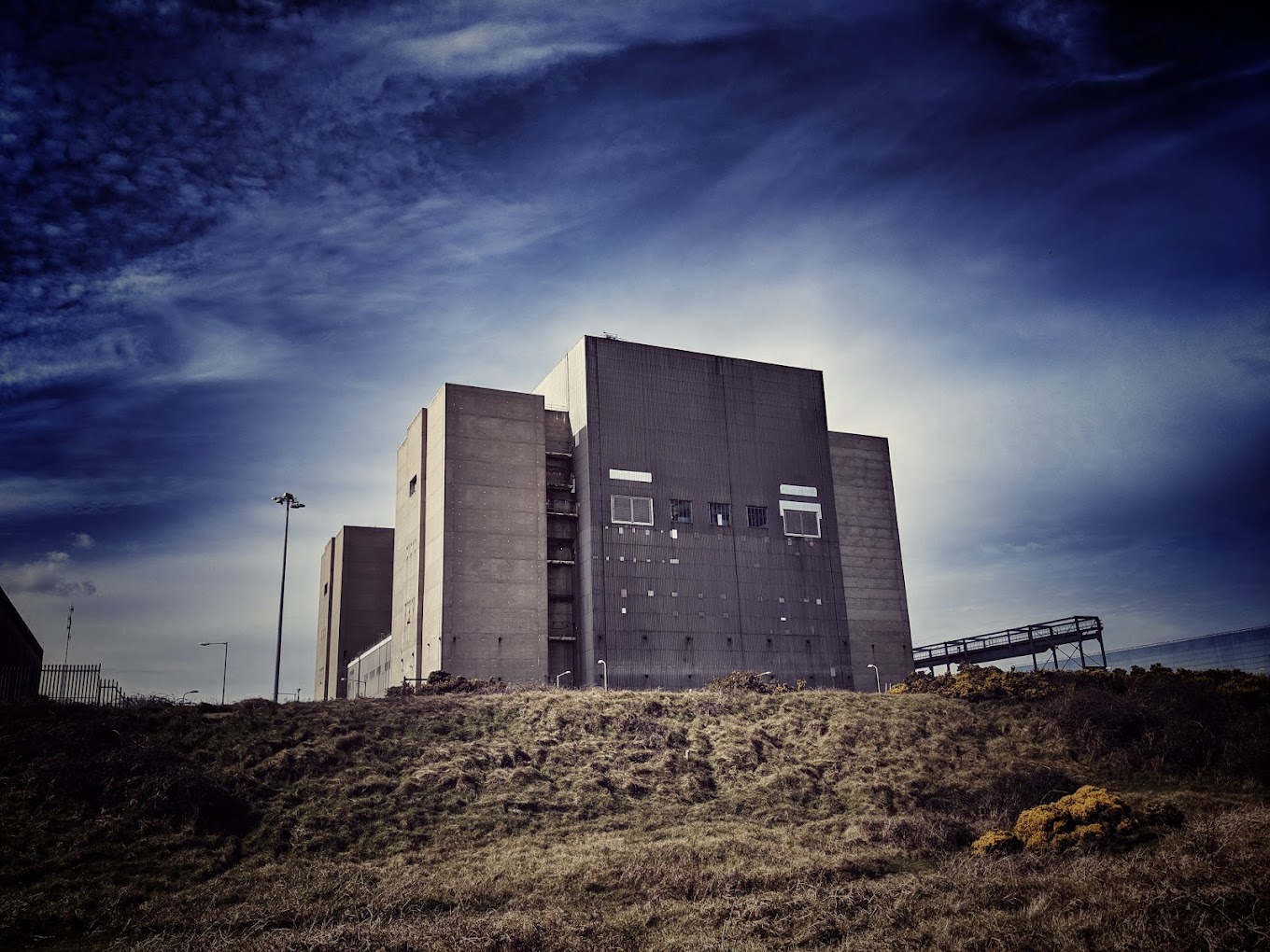
On the Southern shore of the Blackwater Estuary the shiny, grey/blue reactor buildings of the former Bradwell nuclear power station are now a landmark visible for many miles. The power station ceased operating in 2002 and now, in a state of ‘care and maintenance’, remains a visible monument to the early nuclear age.
Contained within the Bradwell buildings (and within all but one of the UK’s civil nuclear power stations) are blocks of graphite forming the very heart of the reactors, called the ‘core’. Once the reactor goes critical the graphite becomes impregnated (technically ‘irradiated’) with a range of radioactive isotopes such that it will remain dangerously contaminated for decades.
Back in the 1960s when Bradwell was commissioned, little forethought was given to the future when these behemoth plants would be taken out of service and decommissioned. The irradiated graphite was far too dangerous for humans to remove as stations were being demolished. Furthermore, the blocks were highly inaccessible as they were at the core of the sealed reactor vessel.
And the reactor chamber metalwork itself had also been irradiated. Recently the process of dismantling was given the new, self-explanatory name of ‘deferred decommissioning’ by the Nuclear Decommissioning Agency (NDA). Whilst this is totally understandable from a health and safety perspective, it does mean that the promises made when Bradwell closed in 2002 that the site would soon be cleared and returned to unrestricted land use were ridiculous.
And diamonds? If the graphite had also been subjected to great pressure as well as heat it would have converted to, amazingly, diamonds! But never think of the contents as precious diamonds, they are actually nasty radioactive wastes – a deadly dirt indeed.
Regardless, irradiated graphite and diamonds both need to be robustly protected. Therefore, expect to see the shiny reactor buildings of Bradwell for at least another 60 years. And, with nowhere else to go, they could remain on our shores into the unknown future.
OKUMA, FUKUSHIMA PREF. – On the surface, everything seems to be under control at the expansive site storing radioactive soil collected from across Fukushima Prefecture in the aftermath of the 2011 core meltdowns at the Fukushima No. 1 nuclear power plant.
Since 2015, the Interim Storage Facility, which straddles the towns of Okuma and Futaba and overlooks the crippled plant, has safely processed massive amounts of radioactive soil — enough to fill 11 Tokyo Domes — in an area nearly five times the size of New York’s Central Park. The soil was collected during decontamination procedures in Fukushima’s cities, towns and villages that were polluted by the disaster.
Here, black plastic bags full of contaminated soil are put on conveyor belts and unpacked. The contents are sifted through to remove plastic, leaves, twigs and other nonsoil waste. Then the soil is taken to dump zones, where it’s buried in 15-meter-deep pits with protective sheeting and a drainage pipe at the bottom so that radioactive cesium won’t leak into the ground. Finally, the soil is covered with noncontaminated soil and topped with a lawn. Areas where the work has been completed look like soccer fields.
The level of radiation here is about 0.2 microsieverts per hour (uSv/h), explained Hiroshi Hattori, an official at the Environment Ministry’s local office, during a recent tour of the areas where the polluted soil is buried. The radiation level there is harmless to humans, though higher than an average of 0.04 uSv/h elsewhere in Japan.
“It’s higher not because of the soil, but because of surrounding forests (which have not been decontaminated).”
The problem is that, as smooth and orderly as its operations are, the site is only a temporary home for the radioactive soil. Nobody knows where this massive pile of dirt will eventually end up. All that is certain is that the central government has pledged to — and is legally obliged to — move all of the soil out of Fukushima Prefecture by 2045.
The soil is a product of years of state-funded measures to bring radiation levels down in communities affected by the disaster. The government drew up a “decontamination road map” soon after the accident, in the hopes of a speedy return of residents to their hometowns.
The desire to avoid moving the massive amount of soil again — and to make it easier to find a final destination for it — has also led the Environment Ministry to try to reduce its volume first by reusing some of the less contaminated mud for public works projects across the nation. That way, only a quarter of the total amount that contains over 8,000 becquerel per kilogram of cesium will be subject to final disposal, the ministry says.
But it’s a tough sell. In December, the ministry held its first round of meetings with residents in areas of greater Tokyo where pilot projects to utilize the soil under the 8,000 Bq/kg threshold are planned: the Shinjuku Gyoen National Garden in Tokyo, the National Environmental Research and Training Institute in Tokorozawa, Saitama Prefecture, and the National Institute for Environmental studies in Tsukuba, Ibaraki Prefecture.
Nearby residents vehemently opposed the plan. Last month, they formally demanded that the ministry cancel the pilot projects, under which the ministry plans to bury radioactive soil underneath a 50 cm layer of cover soil, for flower beds and parking lots.
Roads, tidal walls and dams
Though little known until recently, the ministry released a policy document in 2016 that outlined the “safe use” of radioactive soil with radiation levels of 8,000 Bq/kg or less. According to the document, the government will divert such soil to embankments in public works projects “whose management entities and responsibilities are clearly defined.”
Roads, tidal walls, seaside protection forest and earthfill dams are some of the projects where use of the soil is envisioned, the document says.
The plan has raised the eyebrows of not just residents but also experts.
“Japan is very seismic and we have (harsh) weather and typhoons,” said Azby Brown, architect and lead researcher for Safecast, a citizen science group that has independently measured and publicized radiation levels in Fukushima and elsewhere.
“The half-life of cesium-137 is 30 years. It’s going to stay radioactive for a long time. What happens when these embankments get old?… It is not a very rational or sound decision, from the sense of certainly the perception of safety.”
Kenichi Oshima, professor of energy policy at Ryukoku University in Kyoto, questions the rationale of treating the soil of 8,000 Bq/kg or less as safe, pointing to a “double standard” between the ministry’s policy and the rigorous control of waste required for other nuclear power plants under the Nuclear Reactor Regulation Law. That law states only waste with radiation levels under 100 Bq/kg is considered safe enough to be reused.
All of the radioactive waste produced by the Fukushima disaster is covered by a separate “special law” that went into force in 2012. This says that Tokyo Electric Power Co. Holdings (Tepco), the operator of Fukushima No. 1, is responsible for the handling of the radioactive waste and soil within its property, while the Environment Ministry is responsible for the disposal of the 3/11-borne radioactive waste outside the plant, though the law itself does not mention the reuse of soil that has been decontaminated.
The ministry has explained that the 8,000 Bq/kg threshold keeps it consistent with the level of “designated waste materials” stipulated in that special legislation. When people are exposed to waste below 8,000 Bq/kg, the additional radiation exposure is limited to less than 1 millisievert per year, not a level that causes health concerns, according to the ministry.
“Granted, soil with 8,000 Bq/kg of radioactive materials is not one that immediately kills people who touch it,” Oshima said. “But it is low-level radioactive waste nonetheless, and so should be managed properly as such, just like low-level radioactive waste from other nuclear power plants is. It’s just inconceivable that it would be utilized as materials for infrastructure that people will be using often.”
Public support elusive
On Feb. 24, Environment Minister Akihiro Nishimura reiterated the ministry’s stance, telling a news conference that utilization of soil outside the prefecture is “important to realize its final disposal outside the prefecture (of Fukushima).”
“We would like to continue explaining our stance in detail so as to nurture public understanding,” he said.
But to nurture this understanding about an issue as serious as radioactive waste, everyone who has a stake should be involved in the decision-making process, Brown says.
“The strong consensus internationally regarding where to put things like radioactive waste requires full agreement and participation by all of the stakeholders, all of the citizens, everyone who’s involved,” Brown said. “What we usually see often in Japan in general, and certainly regarding the Fukushima issues, is that a decision is made at the top. It’s decided, it’s announced and then they try to persuade people to go along with it. This is the case with the water release issue (as well as) the soil issue.”
Around this spring or summer, the government and Tepco hope to begin discharging water that has all the radioactive nuclides except tritium removed. Construction work is already under way at the seaside plant to install an undersea tunnel, through which the water will be released 1 kilometer offshore.
The so-called JESCO law, which went into effect in 2014, gives legal grounds for the creation of the government-funded entity that runs the interim storage site, as well as the obligation for the central government to move the soil out of Fukushima by 2045. The obligation was written into law following a political compromise with the Fukushima Prefectural Government, with officials from the national government saying they “considered the excessive burden” being shouldered by the people of Fukushima.
Both Oshima and Brown, however, say they find the government’s plan to recycle the dirt out of line.
In fact, Oshima says the best solution would be to set aside an area and make it a controlled zone for all the polluted soil for 50 years until the radioactive cesium decays, which is how waste from other nuclear plants is handled, and is what the final disposal site is going to look like.
He cites a 2017 report by the Japan Atomic Energy Agency that estimated the size of the area needed for final disposal, which should be ready by 2045. If the volume of the soil is estimated at 20 million cubic meters, a subsurface ground facility for its final disposal will need to measure about 1.3 km by 1.3 km, the report concluded.
“It may sound like a huge space, but both the national government and Tepco have vacant land plots of that size,” Oshima said. Once the soil’s use as construction materials is greenlighted, however, it would be transported nationwide, and it would be impossible to track and measure its radiation doses, he argued.
“If the soil is properly stored in a controlled area, it would make the public feel so much more at ease.”
https://global.chinadaily.com.cn/a/202303/08/WS64082341a31057c47ebb314e.html SYDNEY – Leaders from multiple Pacific island countries are calling upon the Japanese government to immediately stop its plans for dumping nuclear waste into the Pacific Ocean, a news agency of the International Press Syndicate Group has reported.
Papua New Guinea’s Minister for Fisheries and Marine Resources Jelta Wong said that there is little doubt that the nuclear wastewater will find its way into ecosystems and food chains to contaminate people and harm Pacific fisheries industries, according to a report published by InDepthNews on Monday.
Fiji’s Acting Prime Minister Manoa Kamikamica said that Fiji has been on a very high alert after Japan said it planned to discharge the Fukushima nuclear-contaminated wastewater into the Pacific Ocean.
If the water treated by the Advanced Liquid Processing System is so safe, “why not reuse it in Japan for alternative purposes, in manufacturing and agriculture for instance?” he asked.
As small modular nuclear reactors come closer to reality in the U.S., managing and disposing of their highly radioactive waste should be a national priority. Forty years after the passage of the Nuclear Waste Policy Act, there is, “no clear path forward for the siting, licensing, and construction of a geologic repository” for nuclear waste, according to a recent U.S. National Academies of Science, Engineering and Medicine report.
The good news is that there is already a clear strategy for managing and disposing of this highly radioactive material. The bad news is that the U.S. government has yet to seriously follow that plan.
The National Academies report tells us that new or advanced reactor designs—the hoped-for saviors of the nuclear industry—will not save us from the need to build geologic repositories, deep-mined facilities for permanent nuclear waste disposal. In some cases, these new reactors may make it worse by creating more waste that’s more costly to manage, new kinds of complex waste, or just more waste, period. Before we face that onrush, we first need to deal with the large volume of waste we’ve already produced.
The U.S., which led the way on managing nuclear waste in the 1980s and 1990s, has now fallen to the back of the pack. About 88,000 metric tons of spent nuclear fuel from commercial reactors remain stranded at reactor sites, and this number is increasing by some 2,000 metric tons each year. These 77 sites are in 35 states and threaten to become de facto permanent disposal facilities. Without a geologic repository, there is no way forward for the final disposal of this highly radioactive material. Storing it in pools and dry casks at reactor sites is a temporary solution; it is safe for decades, but not the millennia needed to isolate this radioactive material from the environment. The present U.S. policy of indefinite storage at a centralized site is not a viable solution, as it shifts the cost and risk to future generations.
Beginning now, the nation needs to follow a pathway already set out for a national nuclear waste repository. Both a 2012 presidential Blue Ribbon Commission and an international expert panel organized by Stanford and George Washington Universities in 2018 recommended a new, independent, waste management and disposal organization with funding outside of the annual Congressional appropriations and restrictive budgetary rules. The Blue Ribbon Commission called for creation of a new federal corporation, like the Tennessee Valley Authority, for this organization, while the Stanford/GWU panel looked to replicate not-for-profit, utility-owned, but independent, organizations modeled on successful programs in other countries, such as Sweden and Finland.
Charges to nuclear-power-produced electricity fund these organizations, and they remain regulated by independent nuclear regulators. Both panels agreed on the need for an independent organization and finances………………………………………………………………
Assured finances are also key. In the U.S., Congress hasn’t appropriated funds for its Yucca Mountain nuclear waste program since 2010. In fact, Congress has so badly mangled the process of collecting and appropriating the ratepayers fund, now over $40 billion, that it has rendered these funds essentially inaccessible. Outrageously, this money, actually collected from electricity ratepayers, not taxpayers, is being used to offset the national debt.
Even if the U.S. starts today, it will take decades to site, design and build a facility for disposal of its nuclear waste stockpile. That process must accelerate now, before the reactors we need for their electricity run out of room for their growing inventories of highly radioactive waste. https://www.scientificamerican.com/article/nuclear-waste-is-piling-up-does-the-u-s-have-a-plan/