Dealing with a debacle: A better plan for US plutonium pit production

Bulletin, By Curtis T. Asplund, Frank von Hippel | April 27, 2023
For two decades, the Pentagon and Congress have been increasingly concerned that the United States does not have a reliable capability to produce plutonium “pits,” the cores of US thermonuclear warheads. In 2018, the agency responsible for the production and maintenance of US nuclear warheads, the National Nuclear Security Administration (NNSA), responded with a plan to build, on a crash basis, pit production lines in New Mexico and South Carolina at the same time, with a combined production capacity of 80 pits per year.
One of the production lines is in an advanced state of installation at the Los Alamos National Laboratory in New Mexico, the home of US pit-production expertise. The other is to be installed at the Department of Energy’s Savannah River Site (SRS) in South Carolina, where there is no pit-production expertise, in a massive building that the Department of Energy built for another purpose and was then forced to abandon because of huge cost overruns. South Carolina’s congressional delegation, led by Sen. Lindsey Graham, successfully prevailed on the Trump administration to repurpose this $6 billion building—once known as Mixed Oxide Fuel Fabrication Facility and intended to downblend surplus military plutonium for use as commercial reactor fuel—to plutonium pit production. History is repeating itself, however. The NNSA’s cost estimate for using the Savannah River facility to manufacture warhead pits has already risen from $3.6 billion in 2017 for an 80 pit-per-year production capacity to $11.1 billion for a 50 pit-per-year capacity in 2023.
The NNSA’s rationale for its ambitious pit production program is, to say the least, questionable. The agency proposes to first build 800 pits for new US intercontinental ballistic missile (ICBM) warheads, which would be needed only if the US decides to increase the number of warheads on each missile from one to three. Previous US administrations have considered such uploading destabilizing; silo-based ICBMs are targetable and increasing the number of warheads they each carry would make them more attractive targets. Loading the ICBMs with more warheads would also make compliance with the New START arms control agreement with Russia extremely difficult, should that agreement be extended in 2026.
After producing the ICBM warheads, the NNSA plans to replace all 1,900 US submarine-launched ballistic missile warheads with new warheads, equipped with what is known as insensitive high explosive, which is shock resistant and therefore less susceptible to accidental explosions that could disperse a warhead’s plutonium. No such accident has ever happened with ballistic missile warheads, and it is unclear how much this program would actually improve safety. The warheads in the Trident II missile used by US submarines are located near the missile’s third stage, which carries propellant that is as detonable as conventional explosive.
There is also another concern about the NNSA’s plans: The designs of new warheads in which new plutonium pits would be used may depart from designs that have been previously tested. This could result in demands to resume explosive testing, which would undermine the moratorium on nuclear testing that has been observed by all nuclear-weapon states (other than North Korea) since 1998.
Given these questionable production plans and the already out-of-control cost and schedule of the Savannah River pit production facility, and because the remaining life expectancy of the pits in current US warheads is at least 60 years and perhaps much longer, we propose that the Savannah River facility be put on hold and that the Los Alamos program be focused on demonstrating reliable production of 10 to 20 pits per year. Such a demonstration production line would establish that the United States has the capacity to produce pits and would reduce the time required to build additional production lines, if they are needed.
The NNSA should also renew research programs at the Livermore and Los Alamos Laboratories to study the aging of the already existing plutonium pits in the US arsenal and also the older pits from retired warheads. ……………………………………………………………………………….. more https://thebulletin.org/2023/04/dealing-with-a-debacle-a-better-plan-for-us-plutonium-pit-production/
A means to dispose of nuclear waste remains elusive and Canada continues to store the most per capita.
Maybe we could store nuclear waste at Saskatchewan legislature, Murray Marien, Saskatoon https://thestarphoenix.com/opinion/letters/letter-maybe-we-could-store-nuclear-waste-at-saskatchewan-legislature 29 Apr 23
With all the talk about small nuclear reactors (SMR), I thought I would do some research on how the nuclear waste is being disposed of. Apparently it’s not being disposed of at all! There are no plans to dispose of the waste.
It’s “managed” at the facilities that produce it. So 75 years of discussion about nuclear waste disposal hasn’t produced a solution.
There also are some other interesting facts that you can search online. Canada has the largest amount of nuclear waste per person in the world, according to the Nuclear Waste Management Organization website. We have 3.2 million used nuclear bundles as of 2022.
As quoted from the organization’s website: “While the hazard continues to diminish over time, for practical purposes, used nuclear fuel remains hazardous, essentially indefinitely.”
Since it’s highly toxic and the current solution is to store it in a safe place where it can be monitored, I might suggest that we store it in the legislature building in Regina. That building has been known to contain some toxic stuff.
So while we’re already monitoring that toxic waste, adding the nuclear waste would be at no extra cost. Another solution would be for those that support SMRs to take some nuclear waste home with them to dispose of it as they see fit. You just can’t beat hands-on experience when looking for a solution.
Nuclear waste from small modular reactors – Simon Daigle comments on recent article

Simon J Daigle, B.Sc., M.Sc., M.Sc.(A) Concerned Canadian Citizen. Occupational / Industrial Hygienist, Epidemiologist. Climatologist / Air quality expert (Topospheric Ozone). 27 Apr 23
A recent article on SMRs in 2022 on potential nuclear waste risks and other proximate information on industrial and hazardous waste streams globally [References 2 to 5] below.
Nuclear waste from small modular reactors. PNAS Publication. Lindsay M. Kralla, Allison M. Macfarlaneb, and Rodney C. Ewinga. Edited by Eric J. Schelter, University of Pennsylvania, Philadelphia, PA; received June 26, 2021; accepted March 17, 2022 by Editorial Board Member Peter J. Rossky.
Simon Daigle comments:
- Development of SMRs have security issues and threats globally according to many experts including Dr Gordon Edwards (CCNR).
- SMR will produce more toxic radionuclides and waste stream analysis for potential SMR wastes streams are unknown in Canada and currently the Canadian government have no plans to complete this analysis yet or confirmed by an environmental impact assessment.
- SMR development and potential nuclear wastes generated will be extremely dangerous and toxic comparatively with current NPP SNF and other LILW [Ref. 1].
- SMR nuclear waste challenges of DGR disposal risks are unknown and are technically difficult to achieve even with safety assurances by governments globally, even more so for current nuclear wastes from NPP and other nuclear waste streams such as medical radiological waste streams.
- On a global scale, industrial and hazardous wastes are mismanaged to a point where poor countries are the favored territories to dump industry’s hazardous and industrial wastes because of poor regulatory or no regulatory legal framework to be followed by industries and corporations [Ref. 5].
- Global governments want to take on industrial and hazardous wastes for a financial benefit with no real ROI (Return on Investment) for any government or taxpayer when industrial waste companies know they can make a profit and unfortunately, the environment and population health in that country are impacted considerably without their own government helping out [Ref. 5]. This is also the case for nuclear wastes independent of point of origin and all coming from the nuclear industry’s operators, and similar industrial and hazardous waste operators on global scale.
- SMR development (and use) will have the same problems in disadvantaged poor or rich country that will accept SMR as a technology, and the result of a “free for all” dumping ground for nuclear waste that the nuclear industry chooses to dump on will inevitably happen in time. Poor countries are not equipped to deal with hazardous and industrial wastes generally to begin with and especially true for nuclear waste or any potential SMR waste streams.
- Hazardous wastes are already a problem in the province of Alberta. Alberta’s Oil Patch lands are contaminated and polluted to a point where taxpayers are on the hook for 260 billion dollars for the clean-up estimated in 2018 by one Alberta accountability office (Alberta Energy Regulator) [Ref. 2]. This figure is likely even higher in 2023. You could put a “financial” and hazardous caution tape all around Alberta for all the taxpayers in that province.
- If Alberta cannot clean the oil sands and patches, with its hazardous waste legacy coming from the oil industry because of failed financial securities, including the federal government oversight, we will also have a difficult time resolving any SMR nuclear waste issues and existing NPP nuclear waste streams and/or contaminated oil patch lands over decades or millennia as we are already having a difficult time resolving nuclear waste issues in Canada. The short-term benefit has always been profits for corporations and the Alberta taxpayer inherits the legacy waste [Ref. 2]
- International law is clearly inadequate for oil tanker spill accidents, oil platforms, oil exploration, under water gas pipelines, etc. Governments rely on corporate “citizenship” and due-diligence but we have already learned these failures over time with so much damages to the environment and to the population including maritime nuclear waste transport in international waters by nuclear merchants and inadequate insurance and financial securities. [Ref. 4].
- The impact of any nuclear waste accident or incident in open international waters by a nuclear waste operator independent of origin will be the same in the biosphere, financially and ecologically. It is highly likely to occur in time because there is no adequate emergency and contingency plan that exists with international agencies, corporations or governments including adequate financial insurance and securities [Ref. 4] to cover the damages. Very few international ocean cargo shippers accept to transport nuclear waste to any destinations because of the risks (including threats to security) with inadequate insurance and financial liabilities from any point of origin during an accident in international waters. So, who will pay the damages? No one.
- We have yet not cleared the lost nuclear bombs from WWII from the ocean floor so this makes you wonder who will take care of these nuclear wastes and other hazardous materials in time? Will it be IAEA or other international agency such as the IMO (International Maritime Organization). These hazardous and nuclear wastes, including lost nuclear warheads from WWII, in international waters are left to live on the ocean floor for archeologist to discover the “why they were lost” or “left there” to begin with in time [Ref. 3]. They are all plainly left out of sight for anyone to see. These lost nuclear warheads and similar weapons lost at sea remain a serious explosion hazard and ocean contamination is happening to this very day.
- If we can’t resolve current nuclear waste issues in Canada, and globally, we won’t be able to resolve (ever) new development of SMR technology accompanied with even more toxic nuclear wastes, as history showed us, we simply can’t.
- Similarly, we can’t even resolve our current issues for any hazardous and industrial wastes in Canada or globally, because somehow, somewhere, someone will inherit these wastes indefinitely in their backyard including all of its impacts on the biosphere and the general population. One example is clearly worrisome for Alberta with a 260 billion CDN clean up cost in 2018 in which will remain indefinitely [Ref. 2].
- Industries and governments are spreading hazardous wastes and pollution through a thin layer across the globe (air, water and soil), some thicker in concentration and toxicity in different geographic zones and all for a profit by corporations and industries. The population is always disadvantaged.
- In Feb 2023, one article proposed nuclear energy for maritime shipping and we are now looking at it to decarbonize international maritime transport, such as nuclear merchant ships, while further complicating nuclear risks and harm in international waters with nuclear pollution, risks and harm where insurance and financial securities are inadequate to this very day. [Ref. 4]. This is ridiculous to even consider given the risks and legacy waste generated but this article’s authors are from China where the government is planning to expand the nuclear industry.
- While NPP plants are decommissioning in some countries, we will se more advanced countries looking to take on nuclear waste processing and waste management and all will require land and ocean transportation.
- Air transport of nuclear materials or wastes are possible with air transport according to IATA (International Air Transport Association in Montreal) but are limited to Low Specific Activity (LSA) and Shipping Low-Level Radioactive Waste but we won’t see that happening on a large scale because of the obvious threats. IATA also provides information to irradiated individuals (from a source other than medical diagnosis or treatment) that needs to travel in order to reach a suitable treatment facility and new guidance was provided in 2011 by IATA.
- Usually, airlines do not know about radiation from within the body resulting from diagnostic procedures or may not know about contamination of an individual by radioactive material on the skin or clothes and the aviation industry monitoring these activities are inadequate. Just to add my personal experience, in 2006, I had a flight to New Baltimore (US) (within the US) to conduct an EHS audit for a company, and by curiosity, I noticed one traveller was equipped with medical equipment and I asked the flight attendant if there are any radionuclides in the equipment (with a radioactive symbol) or if the passenger had received oncology radiation treatment recently, and the answer was “I don’t know”! So I picked another seat in a different row but the other passengers were oblivious so I kept to myself the question that I even asked until the plane touchdown. Yes, people undergoing radiation treatment can be hazardous to family members at home and on flights. I won’t explain today, I will let an oncologist explain if one is brave and keen to explain.
- Self-governance by corporations is not acceptable for nuclear, hazardous and industrial wastes, and that includes the nuclear industry.
- The Canadian Government must adopt and practice better foresight, insight, hindsight, and oversight with SMRs and nuclear wastes with clear Authority, Accountability and Responsibility for Canadians and indigenous peoples, by Canadians and by indigenous peoples.
- Governments are not playing by their own rules as well for preventing the production of nuclear waste, nuclear risks or reducing harm and not even following IAEA’s ALARA principle “As Low as Reasonably Achievable”. It’s ironic and all for profit in which is a clear negative financially from the get go, even decades, for any taxpayer or any government.
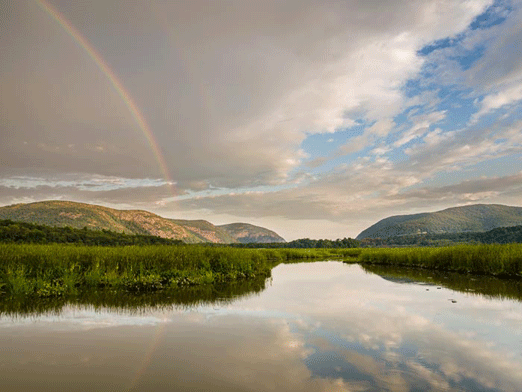
Plans to release nuclear wastewater into Hudson River delayed following outcry
Spectrum News, By John Camera Hudson Valley, Apr. 28, 2023
Manna Jo Greene, an Ulster County legislator and environmental director for Hudson River Sloop Clearwater, does not want to see the proposed release of nuclear wastewater from Indian Point into the Hudson River to go forward.
She says standards that deem the proposed discharge safe are outdated.
“And we’re also looking into whether or not this could impact communities that take their drinking water from the Hudson,” Greene said.
……………………………… For now, the release of about 300,000 gallons of nuclear wastewater has been slated for September, giving more time to determine the best path forward.
The next meeting from the Indian Point Decommissioning Oversight Board will take place June 15. https://spectrumlocalnews.com/nys/hudson-valley/news/2023/04/28/release-of-nuclear-wastewater-into-hudson-pushed-to-fall
What now for Germany’s remaining nuclear waste?
Jens Thurau, 24 Apr 23 https://www.dw.com/en/what-now-for-germanys-remaining-nuclear-waste/a-65420338
Germany has shut down its last nuclear power stations. But the issue isn’t going anywhere, as the country faces the question of what to do with its remaining nuclear waste.
Nuclear energy in Germany has been history since mid-April. At one time, up to 20 nuclear power plants fed electricity into the German grid. But all that is over now. The last three nuclear power plants ended their operations on April 15.
To Germany’s environment minister Steffi Lemke of the Green Party, the date marks a new dawn: “I think we should now put all our energy into pushing forward photovoltaics, wind power storage, energy saving, and energy efficiency, and stop these backward-looking debates,” she said in a recent radio interview.
April 15 also effectively ended a decades-long political dispute in Germany. In light of the tense situation on the energy market due to Russia’s war in Ukraine, there are still voices demanding that nuclear power be extended
The waste issue
And yet, the issue of nuclear energy will linger for Germany for some time yet, as the reactors still have to be dismantled, and the final disposal of the radioactive nuclear waste has not yet been clarified.
Like almost all other countries that have operated, or continue to operate nuclear power plants, Germany has yet to find a place to safely store the spent fuel. Currently, Germany’s nuclear waste is in interim storage at the sites of abandoned power plants, but the law requires that nuclear waste be safely stored in underground repositories for several millennia.
“The interim storage facilities are designed to last for quite some time,” Wolfram König, president of the Federal Office for the Safety of Nuclear Waste Disposal (BASE), told DW. “They are supposed to bridge the time until a final repository is available. … What we are looking for is geological depth, a suitable layer of salt, in granite or in clay rock, which will ensure that no radioactive substances reach the surface again for an indefinitely long period of time.”
Location, location, location
That’s a principle that Germany shares with all of the 30 or so countries that still operate, or have operated nuclear power plants in the past: Radioactive waste is to be disposed of underground. But where exactly? For a long time, Gorleben, located in the Wendland region of Lower Saxony, northeastern Germany, was the site most favored by politicians looking for an underground repository for nuclear waste.
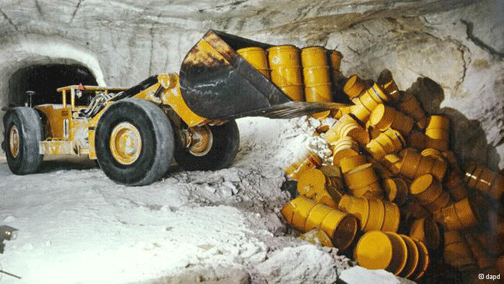
But Gorleben became the location of fierce protests against nuclear energy, so politicians decided a few years ago to abandon the site. Now, the search is on throughout Germany, with more than 90 possible sites under consideration. “We can and must assume that the search process in Germany, with the construction of a final repository, will take approximately as long as we have used nuclear energy, namely 60 years,” König said.
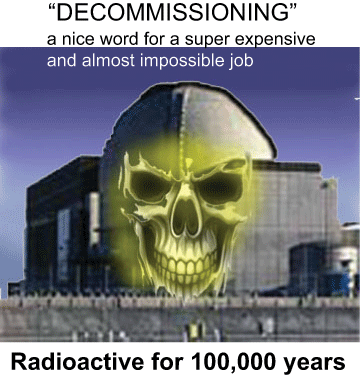
Meanwhile, the dismantling of Germany’s 20 or so nuclear power plants that have been built will also take time. That, according to König, is the responsibility of their operators, who estimate it could take between 10 and 15 years.
A worldwide headache
So far, reactors have been shut down in Italy, Kazakhstan, and Lithuania, while other countries, including the United Arab Emirates and Belarus, are building new nuclear plants.
But the permanent, safe storage of radioactive waste is an unresolved issue everywhere.
Finland is furthest along in its planning. In a report by German public broadcaster ARD, Vesa Lakaniemi, administrative head in the municipality of Eurajoki, southern Finland, talked about the construction of the final storage facility for nuclear waste in his town: “Whoever profits from electricity must also take responsibility for the waste. And that’s how it is in Finland.” The estimated construction costs for the Eurajoki repository is €3.5 billion ($3.8 billion).
According to the International Atomic Energy Agency (IAEA), there are currently 422 nuclear reactors in operation worldwide, with an average age of about 31 years. The recent “World Nuclear Industry Status Report” said that, despite a few countries building new nuclear power stations, there was no evidence of a “nuclear renaissance.” In 1996, some 17.5% of the world’s energy was produced in nuclear reactors — in 2021 it was below 10%. Nevertheless, the radioactive legacy will keep Germany preoccupied for many years to come.
The Human Dimension to Kazakhstan’s Plutonium Mountain

April 24, 2023, Sig Hecker https://nonproliferation.org/the-human-dimension-to-kazakhstans-plutonium-mountain/
The following is an excerpt from the Stanley Center for Peace and Security.
As we drove deeper into the Semipalatinsk Nuclear Test Site, we found kilometer-long trenches that were clearly the work of professional thieves using industrial earth-moving equipment, rather than hand-dug trenches made by nomad copper-cable-searching amateurs on camelback. Our Kazakh hosts said they could do nothing to stop these operations. In fact, they weren’t sure they had a legal right to stop them from “prospecting” on the site.
It was the sight of these trenches that urged me to convince the three governments that they must cooperate to prevent the theft of nuclear materials and equipment left behind when the Soviets exited the test site in a hurry as their country collapsed.
When the Soviet Union collapsed in December 1991, the most urgent threat to the rest of the world was no longer the immense nuclear arsenal in the hands of the Russian government but rather the possibility of its nuclear assets—weapons, materials, facilities, and experts—getting out of the hands of the government. As director of the Los Alamos National Laboratory, I helped to initiate the US–Russia lab-to-lab nuclear cooperative program in 1992 to mitigate these nuclear threats.
The trilateral US–Russia–Kazakhstan cooperation began in 1999 to secure fissile materials that were left behind by the Soviets at the Semipalatinsk Nuclear Test Site, which was now in the newly independent country of Kazakhstan. The project was kept in confidence until the presidents of the three countries announced it at the Seoul Nuclear Security Summit in 2012
In Doomed to Cooperate, individuals from the three countries recount their cooperative efforts at Semipalatinsk. Unlike the US–Kazakhstan projects initiated earlier on nuclear test tunnel closures, identifying experiments that left weapons-usable fissile materials (plutonium and highly enriched uranium) at the huge test site—whether in the field, in tunnels, or in containment vessels—required trilateral cooperation. The Russian scientists who conducted these experiments were the only ones who knew what was done and where. It required American nuclear scientists who conducted similar tests in the United States to assess how great a proliferation danger the fissile materials in their current state may constitute. And it required Kazakh scientists and engineers to take measures to remediate the dangers. The project also required the political support of all three countries and the financial support of the American government because it was the only one at the time with the financial means. That support came from the US Cooperative Threat Reduction (or Nunn-Lugar) program.
Continue reading at the Stanley Center for Peace and Security.
Maori workers exposed to radiation in cleaning up USA’s failed nuclear reactor in Antarctica
Detour: Antarctica – Kiwis ‘exposed to radiation’ at Antarctic power plant, https://www.nzherald.co.nz/travel/detour-antarctica-kiwis-exposed-to-radiation-at-antarctic-power-plant/NY5WTQ72JF4OFUW4F35ZSUCB6U/ 8 Jan, 2022 By Thomas Bywater, Thomas Bywater is a writer and digital producer for Herald Travel
In a major new Herald podcast series, Detour: Antarctica, Thomas Bywater goes in search of the white continent’s hidden stories. In this accompanying text series, he reveals a few of his discoveries to whet your appetite for the podcast. You can read them all, and experience a very special visual presentation, by clicking here. To follow Detour: Antarctica, visit iHeartRadio, or wherever you get your podcasts.
The Waitangi Tribunal will consider whether NZ Defence Force personnel were appropriately warned of potential exposure to radiation while working at a decommissioned nuclear reactor in Antarctica.
It’s among a raft of historic claims dating from 1860 to the present day before the Military Veterans Inquiry.
After an initial hearing in 2016, the Waitangi Tribunal last year admitted the Antarctic kaupapa to be considered alongside the other claims.
“It’s been a bloody long journey,” said solicitors Bennion Law, the Wellington firm representing the Antarctic claimants.
Between 1972 and the early 1980s, more than 300 tonnes of radioactive rubble was shipped off the continent via the seasonal resupply link.
Handled by US and New Zealand personnel without properly measuring potential exposure, the submission argues the Crown failed in its duty of care for the largely Māori contingent, including NZ Army Cargo Team One.
“This failure of active protection was and continues to be in breach of Te Tiriti o Waitangi,” reads the submission.
The rubble came from PM3A, a portable nuclear power unit on Ross Island, belonging to the US Navy. Decommissioned in 1972, its checkered 10-year operating history led it to be known as ‘Nukey Poo’ among base inhabitants. After recording 438 operating errors it was shut off for good.
Due to US obligations to the Antarctic Treaty, nuclear waste had to be removed.
Peter Breen, Assistant Base Mechanic at New Zealand’s Scott Base for 1981-82, led the effort to get similar New Zealand stories heard.
He hopes that NZDF personnel involved in the cleanup of Ross Island might get medallic recognition “similar to those who were exposed at Mururoa Atoll”. Sailors were awarded the Special Service Medal Nuclear Testing for observing French bomb sites in the Pacific in 1973, roughly the same time their colleagues were helping clear radioactive material from Antarctica.
A public advisory regarding potential historic radiation exposure at McMurdo Station was published in 2018.
Since 1975 the Waitangi Tribunal has been a permanent commission by the Ministry of Justice to raise Māori claims relating to the Crown’s obligations in the Treaty of Waitangi.
The current Military Veterans’ Kaupapa includes hearings as diverse as the injury of George Nepata while training in Singapore, to the exposure of soldiers to DBP insecticides during the Malayan Emergency.
Commenced in 2014 in the “centenary year of the onset of the First World War” the Māori military veterans inquiry has dragged on to twice the duration of the Great War.
Of the three claimants in the Antarctic veterans’ claim, Edwin (Chaddy) Chadwick, Apiha Papuni and Kelly Tako, only Tako survives.
“We’re obviously concerned with time because we’re losing veterans,” said Bennion Law.
Detour: Antarctica is a New Zealand Herald podcast. You can follow the series on iHeartRadio, Apple Podcasts, Spotify or wherever you get your podcasts.
France’s radioactive waste management agency Andra wants to increase storage capacity at Cires waste dump
French radioactive waste management agency Andra has applied to the
department of Aube in north-eastern France for environmental permission to
increase the current authorised storage capacity of Cires, the country’s
dedicated disposal facility for very-low-level radioactive waste (VLLW).
World Nuclear News 12th April 2023
https://www.world-nuclear-news.org/Articles/Application-to-raise-capacity-of-French-very-low-l
Shining a light on St Louis’ radioactive waste landfill scandal

ST. LOUIS PREPS FOR “CATASTROPHIC” NUCLEAR EVENT http://armydotmil.com/st-louis-preps-for-catastrophic-nuclear-event/
To offer your help, email: westllakemoms@gmail.com http://armydotmil.com/epa-does-nothing-as-nuclear-waste-calamity-inches-closer/
Nuclear waste abandonment risks the dangers of amnesia
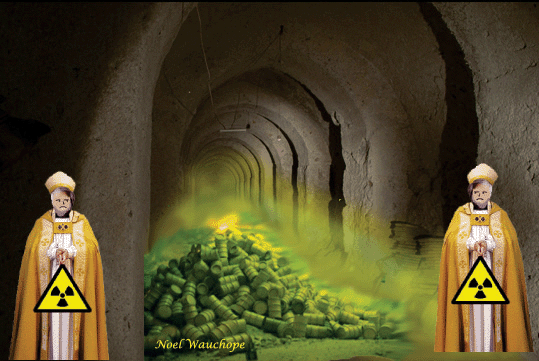
Broad-stroke reassurances from supporters of a proposed deep geological repository for Canada’s nuclear waste have failed to allay important environmental and security concerns.
The Hill Times, BY ERIKA SIMPSON | April 13, 2023
A plan to store Canada’s nuclear waste deep underground in northern Ontario raises serious safety concerns for current and future generations.
In light of this, the Nuclear Waste Management Organization (NWMO)—which is responsible for developing and implementing the plan—should reconsider other options, such as a rolling stewardship model, which actively plans for retrieval and periodic repackaging of nuclear waste.
From April 4-5, the South Bruce Nuclear Exploration Forum considered the NWMO plan to store all of Canada’s high-level nuclear waste in one deep geological repository (DGR). An earlier plan had proposed burying intermediate- and low-level nuclear waste in limestone caverns constructed under the Bruce reactor, but was met with a “no” vote from members of the Saugeen-Ojibway Nation. That led to Bruce Power withdrawing its own proposal in June 2020.
The current proposal for a $23-billion DGR project at Teeswater, Ont., may be constructed 50 km away from the Bruce Nuclear Generating Station, the world’s largest operating nuclear site that supplies 30 per cent of Ontario’s power. Whether the proposal goes ahead in partnership with a willing host community will be decided by the Governor in Council. Once one of the two remaining possible host communities—either Teeswater or Ignace, Ont.—is selected, the Canadian Nuclear Safety Commission (CNSC) and the Impact Assessment Agency of Canada will continue to lead decades-long consultation processes…………………………..
the broad-stroke reassurances of the DGR proponents have failed to allay concerns.
There are questions about how 700 engineers and construction workers could possibly be housed. I have written about SNC-Lavalin—an engineering company that was prosecuted internationally for corruption—yet remains the leading contractor and possible steward of Canada’s nuclear wastes. Heavily subsidized by Canadian tax dollars, the company is driven by the quest for money, not the quest for nuclear security. Although no questions were publicly asked about SNC-Lavalin, a project officer from the Wastes and Decommissioning Division at CNSC explained each engineering and closure stage could be halted, if deemed necessary.
There are also questions about impacts on future generations. Would the underground nuclear waste containers be monitored, in perpetuity, and what might be safety concerns about situating any such site in the Great Lakes’ water basin, the world’s largest body of fresh water and the drinking water for up to 40 million people? The hydrogeologists and geologists were confident that the DGR concept—possibly the first or fourth underground nuclear waste site in the world—would not be beyond Canada’s engineering and scientific capabilities.
I asked DGR proponents about four U.S. Senators who asked President Joe Biden to raise the issue with Prime Minister Justin Trudeau last month. I was told this would be a local decision—made by area residents in next year’s referendum—combined somehow with a municipal town council majority decision, and a possible veto by First Nations—and therefore the United States would have nothing to do with it, even though Canada’s federal cabinet would have the final say.
I asked Tiina Jalonen, the senior vice president of development at Posiva Oy about Finland’s proposed used-fuel disposal facility and her government’s plans for “signage.” It could be important to warn our great-great-great-grandchildren to refrain from curiously digging out whatever leaks into rock formations below.
What about the legacy of strikes on nuclear sites, like the Russian assault on Ukraine’s Zaporizhzhia nuclear plant, that has made evident that nuclear power plants and waste disposal sites could become targets in conflict zones? Nobody publicly asked about terrorist threats, and whether the site could become hostage to nefarious bargaining.
What else might go wrong? I asked two fire chiefs, but they had not heard about the fire at the Waste Isolation Pilot Plant in New Mexico that shut down the site in 2014 due to a major radiation release that contaminated workers at the surface. I asked a geologist about Germany’s Asse Salt Mine that still leaks water into radioactive containers.
Perhaps continual monitoring and the ‘rolling stewardship’ concept—that actively plans for retrieval and periodic repackaging—would be most effective, because wholesale abandonment could lead to amnesia.
Erika Simpson is an associate professor of international politics at Western University, the author of Nuclear Waste Burial in Canada? The Political Controversy over the Proposal to Construct a Deep Geologic Repository and Nuclear waste: Solution or problem? and the president of the Canadian Peace Research Association.
https://www.hilltimes.com/story/2023/04/13/nuclear-waste-abandonment-risks-the-dangers-of-amnesia/384800/
Ignoring science, environmental protection and international law – G7 endorses Japan’s Fukushima water discharge plans

Greenpeace International, 16 April 2023 https://www.greenpeace.org/international/press-release/59193/science-environmental-protection-international-law-g7-japans-fukushima-water-discharge/
Legacy of Fukushima disaster shows nuclear energy is no solution to energy and climate crisis.
Sapporo, Japan – The nations of the G7 have chosen politics over science and the protection of the marine environment with their decision today to support the Japanese government’s plans to discharge Fukushima radioactive waste water into the Pacific Ocean.
The 1.3 million cubic meters/tons of radioactive waste water at the Fukushima Daiichi plant, currently in tanks, is scheduled to be discharged into the Pacific Ocean this year. Nations in the Asia Pacific region, led by the Pacific Island Forum, have strongly voiced their opposition to the plans.[1] Some of the world’s leading oceanographic institutes and marine scientists have criticised the weakness of the scientific justification applied by TEPCO, the owner of the nuclear plant, warned against using the Pacific Ocean as a dumping ground for radioactive contaminated water, and called for alternatives to discharge to be applied.[2]
“The Japanese government is desperate for international endorsement for its Pacific Ocean radioactive water dump plans. It has failed to protect its own citizens, including the vulnerable fishing communities of Fukushima, as well as nations across the wider Asia Pacific region. The aftermath of the nuclear disaster at Fukushima is still strongly felt, and the Japanese government has failed to fully investigate the effects of discharging multiple radionuclides on marine life. The government is obligated under international law to conduct a comprehensive environmental impact assessment, including the impact of transboundary marine pollution, but has failed to do so. Its plans are a violation of the UN Convention Law of the Sea.
The marine environment is under extreme pressure from climate change, overfishing and resource extraction. Yet, the G7 thinks it’s acceptable to endorse plans to deliberately dump nuclear waste into the ocean. Politics inside the G7 at Sapporo just trumped science, environmental protection, and international law,” said Shaun Burnie, Senior Nuclear Specialist at Greenpeace East Asia.
Greenpeace East Asia analysis has detailed the failures of liquid waste processing technology at the Fukushima Daiichi plant and the environmental threats posed by the releases.[3] There is no prospect of an end to the nuclear crisis at the plant as current decommissioning plans are not feasible. Furthermore, the report finds the nuclear fuel debris in the reactors cannot be completely removed and will continue to contaminate the ground water over many decades.[4] Claims that the discharges will take 30 years is inaccurate as in reality, it will continue into the next century. Viable alternatives to discharge, specifically long term storage and processing, have been ignored by the Japanese government.[3]
The Japanese government’s attempt to normalise the Fukushima nuclear disaster is directly linked to its overall energy policy objective of increasing the operation of nuclear reactors again after the 2011 disaster. 54 reactors were available in 2011 compared to only ten reactors in 2022, generating 7.9% of the nation’s electricity in FY21 compared to 29% in 2010.[5] Meanwhile, five of the other six G7 governments led by France, the US and the UK are also aggressively promoting nuclear power development.
The idea that the nuclear industry is capable of delivering a safe and sustainable energy future is delusional and a dangerous distraction from the only viable energy solution to the climate emergency which is 100% renewable energy. The global growth of low cost renewable energy has been phenomenal – but it has to be much faster and at an even greater scale if carbon emissions are to be reduced by 2030. Approval for nuclear waste dumping and nuclear energy expansion sound like the 1970’s but we have no time for such distractions. We are in a race to save the climate in the 21st century, and only renewables can deliver this,” said Shaun Burnie.
Nuclear storage dump opponents sweep into Theddlethorpe parish council
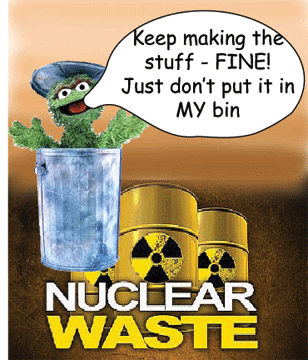
Residents have organised against storage plans
The Lincolnite, By Daniel Jaines Local Democracy Reporter 13 Apr 23
Candidates opposing a nuclear storage dump have surged to power in Theddlethorpe in a demonstration of local opposition.
Eight of the ten seats on two Theddlethorpe Parish Councils – St Helen’s and All Saints – have been filled uncontested by people against to Nuclear Waste Service’s plans for a Geological Disposal Facility in the village.
Nearby residents were in uproar after it was announced last year that the Theddlethorpe Gas Terminal could become the entry point for a nuclear storage facility to dispose of around 10% of the UK’s nuclear waste.
The new councillors, who will automatically become councillors after the May 4 local elections, are all part of Theddlethorpe Residents Association.
Members Brian Swift and Andrew Spink formed it after their application to join the parish councils were rejected in 2021.
Mr Swift said: “We were both turned down, but shortly after this we got together with a few neighbours and formed the Theddlethorpe Residents Association with the aim to give the parish a collective voice and to counter the PC’s negative stance.”
Since its inception, the residents association has garnered more than 120 members and holds regular events.
However, Mr Swift said the anti-GDF sentiment of the members would not mean other views would be unwelcome.
“Despite the fact that the majority of the councillors are now anti-GDF ,we are keen to stress that all points of view are welcome. Our priorities are to carry out the parish council’s functions to the best of our ability and to do our utmost to see that the village thrives and continues to be the friendly, united place we all call home,” he said………………………. more https://thelincolnite.co.uk/2023/04/nuclear-storage-dump-opponents-sweep-into-theddlethorpe-parish-council/—
34,200 tons of radioactive sewage sludge kept in Kanto area 12 yrs after Fukushima disaster.
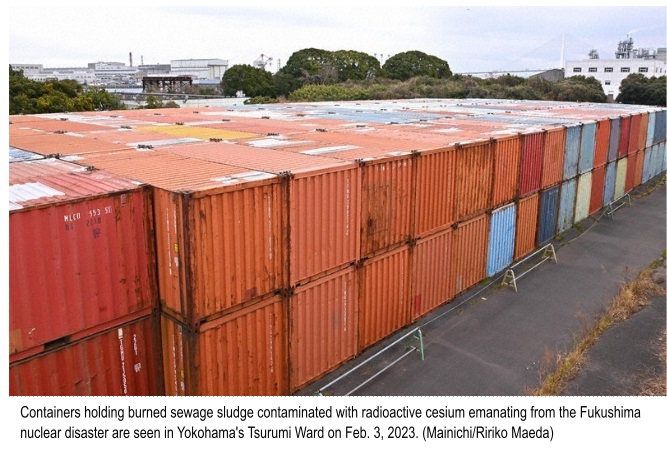
April 10, 2023 (Mainichi Japan)
TOKYO — A total of some 34,200 metric tons of sewage sludge contaminated with radioactive substances emanating from the Fukushima nuclear disaster is still kept in temporary storage by major local bodies in the Kanto region, the Mainichi Shimbun has learned.
The massive tainted waste — a year’s worth of ordinary burned sludge ash generated in Tokyo’s 23 wards — has partially been kept as incinerated ash. Due to difficulties in obtaining local understanding for landfill disposal of radioactive waste in harbors, forests and mountains, some of the waste has nowhere to go even 12 years on since the onset of the disaster.
The finding came after the Mainichi queried major local governments in five prefectures in the Kanto region and other sources about radioactively contaminated sewage sludge accumulated in the wake of the March 2011 Fukushima Daiichi Nuclear Power Station meltdown.
In May 2011, two months after the disaster, radioactive cesium was detected in the sewage sludge in Fukushima Prefecture. This prompted inspections of sewage in other local bodies in the Kanto region, and authorities took measures, such as keeping highly contaminated sludge within their local sewage facilities.
Of these, the Mainichi Shimbun interviewed 15 local bodies — Tokyo and six other Kanto region prefectures, their capital cities, and government-designated major cities in the region — between December 2022 and March 2023, regarding the status of their treatment of sewage sludge in which radioactive substances were detected.
It emerged that the Yokohama Municipal Government, south of Tokyo, had kept approximately 26,600 tons of radioactively contaminated waste within its sewage facilities as incinerated sludge ash as of the end of February 2023, while the Kawasaki Municipal Government, also in Kanagawa Prefecture, had kept 3,435 tons of such waste inside its port areas in the same form…………………………………………..
In the Kanto region alone, a total of some 4,180 tons of radioactive sewage requiring the central government’s treatment remains in Ibaraki, Tochigi, Gunma and Chiba prefectures, according to the Ministry of the Environment and other sources. The national government plans to place this waste under long-term management by setting up treatment facilities in state-owned forests and other sites in accordance with the special measures law on radioactive contamination response. However, the plan remains up in the air as the candidate sites have not been finalized due to protests from local residents and other factors.
Meanwhile, Tokyo, Saitama and Kanagawa prefectures responded to the survey that they have finished disposing of all radioactive sewage sludge under their control. The cities of Mito, Saitama and Chiba also answered the same. Based on the peak amount of radioactive sludge kept by these local bodies, it is estimated that they had disposed of at least some 120,000 tons of such waste.
(Japanese original by Kazuhiro Igarashi and Kaoru Watanabe, Tokyo Regional News Department)https://mainichi.jp/english/articles/20230408/p2a/00m/0na/013000c
Concern over funding ‘stigma’ from Theddlethorpe nuclear storage
Only a ‘handful’ of applications made
By Daniel Jaines Local Democracy Reporter , The Lincolnite, 12 April 23
There are concerns that community groups in Theddlethorpe are not applying for a share of nearly £1million due to of the money’s links with a potential nuclear storage dump.
Only a handful of applications from Theddlethorpe community groups have been received for the grants.
The money is being made available due to Nuclear Waste Services exploring a potential for the area to host a Geological Disposal Facility.
The money is set to be handed out over the next 15-20 years — with £1million a year allocated while local studies are carried out, and £2.5million a year while drilling boreholes and further exploring the geology of the area.
Lincolnshire County Council’s Environment and Economy Scrutiny Committee were told on Tuesday that few groups had come forward to claim it.
Councillor Matthew Boles said: “It would strike me that the reason there’s a very small uptake in applying for these grants is that the local residents have attached stigma to it.
“They might feel that if they apply for this money they’re somehow supporting and are in favour of it.”
However, council officers said they didn’t believe this was the case.
Councillor Martin Griggs and some others also worried that the £1m budget would be difficult to match after the first year.
Councillors also raised concerns about any strings being attached to the bids and a lack of detailed information around infrastructure needs and the 4,000 jobs NWS has said the GDF works could create over its lifetime………………………….
Councillors were told that Lincolnshire County Council had challenged the jobs figures and called for a more localised report……………… https://thelincolnite.co.uk/2023/04/concern-over-funding-stigma-from-theddlethorpe-nuclear-storage/
Nuclear disasters could leave a lasting legacy of contaminants in glaciers
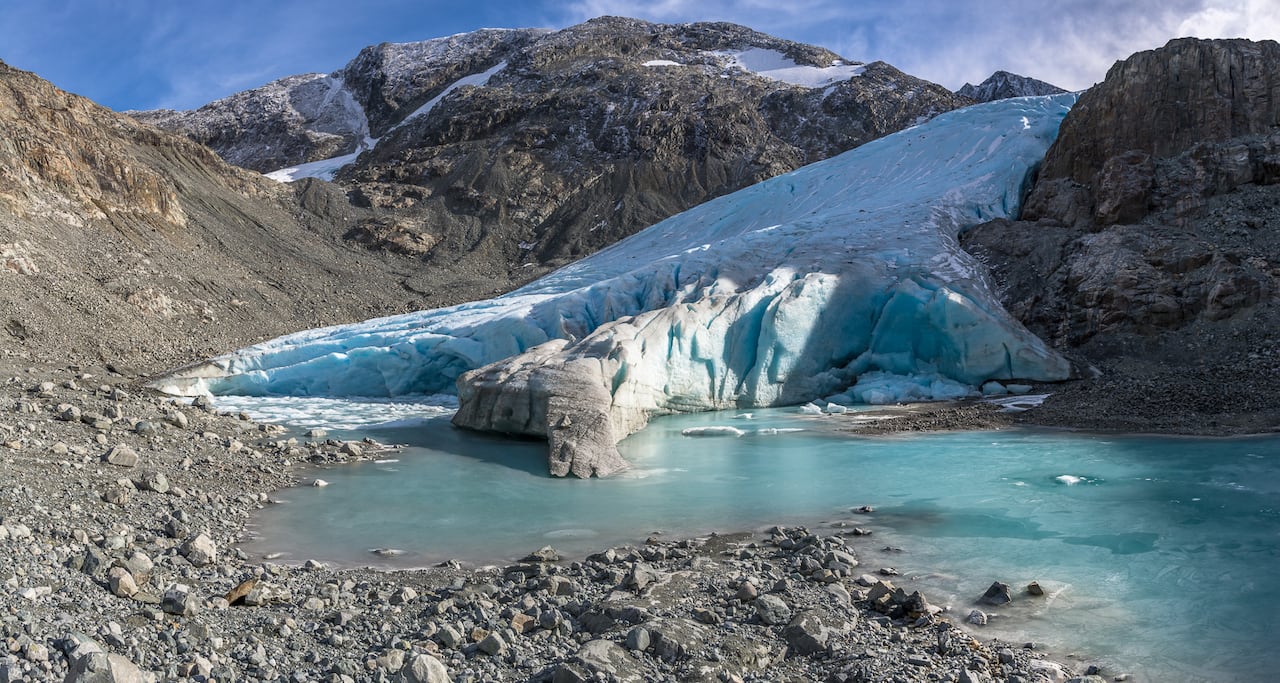
Emerging research is suggesting that radioactive particles are being stored within glaciers
University of Plymouth Alan Williams, April 2019
Nuclear disasters such as Chernobyl and Fukushima are known to have had an immediate impact on their surrounding environments and the people living within them.
But emerging research is suggesting the legacy of these events and international weapons testing could be felt for much longer as radioactive particles are being stored within glaciers.
The first results from this collaborative international research project were presented at the 2019 General Assembly of the European Geosciences Union (EGU), taking place in Vienna from April 7-12, 2019………………………………………
The EGU presentation combined studies into the presence of fallout radionuclides (FRNs), a product of nuclear accidents and weapons testing, within ice surface sediments – or cryoconite – across multiple sites in the Arctic (Sweden, Greenland and Svalbard), Iceland, the European Alps, the Caucasus, British Columbia, and Antarctica.
The levels of some FRNs found in these sites are orders of magnitude higher than those detected in many other (non-glaciated) environments, raising important questions around the role of glaciers, and specifically cryoconite and its interaction with meltwater, in the accumulation of anthropogenic atmospheric contaminants.
The research also demonstrates that the presence of FRNs in cryoconite is not restricted to sites closest to large source areas such as Chernobyl, highlighting the global reach of nuclear events and other sources of atmospherically-transported contaminants.
The widespread occurrence of concentrated FRNs in glacier catchments, and the impacts on downstream water and environmental quality, including uptake of FRNs into flora and fauna, are the focus of current and future research efforts.
Dr Clason said:
“Research into the impact of nuclear accidents has previously focussed on their effects on human and ecosystem health in non-glaciated areas. But evidence is mounting that cryoconite on glaciers can efficiently accumulate radionuclides to potentially hazardous levels. Very high concentrations of radionuclides have been found in several recent field studies, but their precise impact is yet to be established. Our collaborative work is beginning to address this because it is clearly important for the pro-glacial environment and downstream communities to understand any unseen threats they might face in the future.”
-
Archives
- October 2026 (129)
- September 2026 (339)
- August 2026 (330)
- July 2026 (355)
- June 2026 (287)
- May 2026 (306)
- April 2026 (356)
- March 2026 (251)
- February 2026 (267)
- January 2026 (308)
- December 2025 (358)
- November 2025 (359)
-
Categories
- 1
- 1 NUCLEAR ISSUES
- business and costs
- climate change
- culture and arts
- ENERGY
- environment
- health
- history
- indigenous issues
- Legal
- marketing of nuclear
- media
- opposition to nuclear
- PERSONAL STORIES
- politics
- politics international
- Religion and ethics
- safety
- secrets,lies and civil liberties
- spinbuster
- technology
- Uranium
- wastes
- weapons and war
- Women
- 2 WORLD
- ACTION
- AFRICA
- Atrocities
- AUSTRALIA
- Christina's notes
- Christina's themes
- culture and arts
- Events
- Fuk 2022
- Fuk 2023
- Fukushima 2017
- Fukushima 2018
- fukushima 2019
- Fukushima 2020
- Fukushima 2021
- general
- global warming
- Humour (God we need it)
- Nuclear
- RARE EARTHS
- Reference
- resources – print
- Resources -audiovicual
- Weekly Newsletter
- World
- World Nuclear
- YouTube
-
RSS
Entries RSS
Comments RSS

