US sweetens pot to study siting for spent nuclear fuel
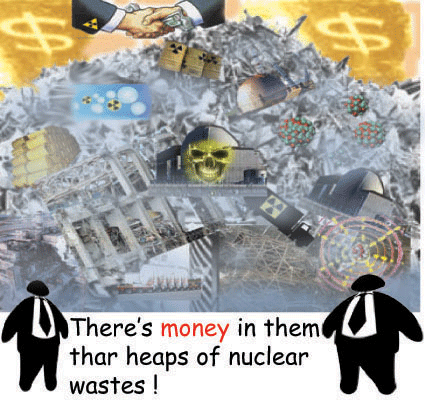
https://journalrecord.com/2023/01/27/us-sweetens-pot-to-study-siting-for-spent-nuclear-fuel/ By: Associated Press January 27, 2023
ALBUQUERQUE, N.M. (AP) — The U.S. government has long struggled to find a permanent solution for storing or disposing of spent nuclear fuel from commercial nuclear power plants, and opposition to such a site is flaring up again as New Mexico lawmakers debate banning a facility without state consent.
The state’s prospective ban cleared its first legislative hurdle Tuesday with approval from a key committee. Supporters acknowledge that the bill has a long road ahead, but it does have the backing of Democratic Gov. Michelle Lujan Grisham.
State Sen. Jeff Steinborn, the bill’s sponsor, said momentum against New Mexico becoming a permanent dumping ground for the nation’s nuclear waste – including spent fuel from commercial power plants – is growing and he’s cautiously optimistic this is the year that the state takes a legislative stand.
Stenborn said consent should be mandatory and that the federal government should provide states with a significant financial incentive reflecting the risks associated with managing radioactive materials.
New Mexico and neighboring Texas have sued in federal court over two proposed multibillion-dollar interim storage facilities – one in southeastern New Mexico and the other in Andrews County, Texas.
“New Mexico has not been offered anything with this deal,” Steinborn said. “And even if we had, I don’t think any amount of money would convince me that it’s the right thing.”
The U.S. Nuclear Regulatory Commission approved a license for a facility in West Texas in 2021, and the agency plans to make a final decision as early as March on whether to grant a license for the planned storage complex in New Mexico. The two sites would be about 40 miles apart.
Environmental and nuclear watchdog groups have filed their own lawsuits, but a three-judge panel of the U.S. Court of Appeals for the District of Columbia dismissed all objections opposing the Texas project.
Federal appellate courts elsewhere have yet to rule on the state of Texas’ claims, which focus on whether federal nuclear regulators have authority to license such a facility, or on New Mexico’s claims that regulators did not do enough to vet plans by Holtec International.
The New Jersey-based company is seeking a 40-year license to build what it has described as a state-of-the-art complex near Carlsbad, which already is home to the federal government’s only underground repository for Cold War-era waste generated by decades of nuclear research and bomb-making.
From the decommissioned nuclear plant near the San Onofre Beach in Southern California to plants that have powered communities on the East Coast, spent fuel has been piling up for decades and elected officials in those communities want it shipped elsewhere.
The Biden administration sweetened the pot this month, putting up $26 million for communities interested in studying potential interim storage sites. Biden and his top energy officials have pointed to nuclear power as essential to achieving their goals of producing carbon-free electricity over the next decade.
According to the DOE, nuclear reactors across the country produce more than 2,000 metric tons of radioactive waste a year, with most of it remaining on-site because there’s nowhere else to put it. The federal government is paying to house the fuel, and the cost is expected to stretch into the tens of billions over the next decade, according to a review by independent government auditors.
Nuclear-powered rockets to Mars – there are serious safety risks.

No one wants to see nuclear debris raining down on the Florida coast or Disneyland, and that’s not the only possible scenario.
An accident in orbit could potentially drop radioactive material into the atmosphere.
Nuclear powered rockets could take us to Mars, but will the public accept them?
Bob McDonald’s blog: NASA and DARPA are beginning development of a new fission rocket, Bob McDonald · CBC Radio · Jan 27, 2023
NASA has signed an agreement with the U.S. Defense Advanced Research Projects Agency (DARPA) to develop a nuclear rocket that could shorten travel time to Mars by about one quarter compared to traditional chemical rockets. But before nuclear technology is launched into space, there are risks that need to be addressed to ensure public safety…………………….
While the technology of nuclear propulsion is certainly feasible, it may not be readily embraced by the public. The accidents at Chernobyl, Three Mile Island and Fukushima have left many people skeptical about nuclear safety. And there will be risk.
A nuclear rocket wouldn’t be used to launch a spacecraft from the Earth’s surface — it would be designed to run in space only. It would have to launch into orbit on a large chemical rocket — so the public would have to accept the risk of launching a nuclear reactor on a standard rocket filled with explosive fuel.
And rockets have and will malfunction catastrophically, in what with black humour rocket scientists sometimes call RUD — “rapid unscheduled disassembly.”
No one wants to see nuclear debris raining down on the Florida coast or Disneyland, and that’s not the only possible scenario. An accident in orbit could potentially drop radioactive material into the atmosphere.
Nuclear technology in another form has been used since the very beginning of the space program, just not for propulsion. Radioisotope Thermoelectric Generators (RTGs) have provided power to deep space probes for instruments, radios and cameras on a range of missions…………………….
The U.S. has seen several accidents, including one in 1968 when a launch failure of a Nimbus-1 weather satellite threw its RTG into the ocean. It was recovered intact and the fuel was reused on a later mission.
But there have been more serious accidents. Canadians may remember an incident from 1978, when a Soviet reconnaissance satellite scattered 50 kg of uranium from its nuclear thermal generator over 124,000 square kilometres of Canada’s North.
But a fission reactor is a much more complicated device involving higher temperatures, coolants and more nuclear fuel.
……………………. the engineers face a challenge to ensure that all checks and balances have been made to reassure the astronauts who will fly these machines — and people on the ground — that they can be operated safely before the technology is adopted. https://www.cbc.ca/radio/quirks/nuclear-powered-rockets-could-take-us-to-mars-but-will-the-public-accept-them-1.6727217
Don’t dump on us
Japan has also benefited from the (inevitable) support of the (nuclear power-promoting) International Atomic Energy Agency, an organization that never met a nuclear danger it couldn’t downplay. The agency has described the proposed discharges as “far below the Japanese regulatory limits,” in a statement last April.
Pacific Islanders, marine scientists, urge Japan not to dump Fukushima radioactive water into ocean
By Linda Pentz Gunter, Beyond Nuclear International, 24 Jan 23,
The nuclear power industry has a long history of disproportionately impacting people of color, Indigenous communities and those living in the Global South. As Japan prepares to dump more than 1 million tonnes of radioactive water from its stricken Fukushima-Daiichi nuclear power plant site into the Pacific Ocean some time this year, history is about to repeat itself.
To remind us of that — and to warn against this reckless and entirely unnecessary action (Japan could and should expand the cask storage pad on site and keep storing the radioactive water there) — the leader of the Pacific Islands Forum (PIF) has spoken out.
In a recent column in the UK daily newspaper, The Guardian, Henry Puna wrote that “continuing with ocean discharge plans at this time is simply inconceivable”, given how directly it once again discriminates against — and will likely seriously harm the health of — the peoples of the Pacific. Puna took care to remind readers “that the majority of our Pacific peoples are coastal peoples, and that the ocean continues to be an integral part of their subsistence living.”
Going forward with the dump without further study and serious consideration of viable alternatives, would, Puna said, mean that “the region will once again be headed towards a major nuclear contamination disaster at the hands of others.” Victims of years of atomic testing, Pacific Islanders are rightly not ready to be dumped on yet again.
Tepco and the lapdog Japanese government announced last May that they would release around 1.3 million tonnes of radioactive waste water from the Fukushima site next spring. Recently, authorities suggested the dump could be delayed until the summer but seem undeterred by the loud chorus of opposition from multiple quarters.
The plant produces 100 cubic metres of contaminated water daily, a combination of groundwater, seawater and water used to keep the reactors cool. The water is theoretically filtered to remove most harmful isotopes, other than tritium, which is radioactive hydrogen and cannot be separated from water. It is then stored in casks on site where authorities claim they are running out of space. However, independent watchdogs are not convinced that the filter system has successfully removed other dangerous radioactive isotopes from the waste water.
Most recently, the 100-member American group, the National Association of Marine Laboratories (NAML), expressed its fervent opposition in a strongly worded position paper released last month. Their opposition, they wrote, “is based on the fact that there is a lack of adequate and accurate scientific data supporting Japan’s assertion of safety. Furthermore, there is an abundance of data demonstrating serious concerns about releasing radioactively contaminated water.”
The report went on: “The proposed release of this contaminated water is a transboundary and transgenerational issue of concern for the health of marine ecosystems and those whose lives and livelihoods depend on them. We are concerned about the absence of critical data on the radionuclide content of each tank, the Advanced Liquid Processing System (ALPS), which is used to remove radionuclides, and the assumption that upon the release of the contaminated wastewater, ‘dilution is the solution to pollution.’”
The scientists accused Japan of ignoring the inevitable processes of bioaccumulation and bioconcentration, which contradict the dilution contention. The Association also called out what it saw as shoddy or incorrect science conducted by Tepco and the Japanese government, including “flaws in sampling protocols, statistical design, sample analyses, and assumptions, which in turn lead to flaws in the conclusion of safety and prevent a more thorough evaluation of better alternative approaches to disposal.”
Japan has consistently rejected on-going onsite storage — presumably due to the expense, given the land space is there and more casks could be provided. In the view of some, the eagerness to dump the water— largely contaminated with tritium (a form of radioactive hydrogen that cannot be separated from water) and likely other undeclared radionuclides — is a public relations exercise to make the problem “go away” and restore normal optics to the site. The site cannot also be fully decommissioned so long as the tanks are there.
Japan has also benefited from the (inevitable) support of the (nuclear power-promoting) International Atomic Energy Agency, an organization that never met a nuclear danger it couldn’t downplay. The agency has described the proposed discharges as “far below the Japanese regulatory limits,” in a statement last April.
After sending in a task force and several earlier reports, the IAEA released a new report in December in which it said “the IAEA will conduct its own independent checks of the radiological contents of the water stored in the tanks and how it will analyse environmental samples (for example seawater and fish) from the surrounding environment.” However, the IAEA has not expressed opposition to the dumping of the radioactive water even now and instead indicates that its safety reviews will continue “before, during, and after the discharges of ALPS treated water.”
Japan has faced down opposition from fishermen and environmentalists, particularly from those in the Marshall Islands who have suffered decades of horrific health issues, especially birth defects, after enduring 67 US atomic tests there. A Pacific region collective advocacy group, Youngsolwara Pacific, expressed dismay that the Japanese, of all people, would not empathize with them and condemn the Fukushima water dump………………………….. https://beyondnuclearinternational.org/2023/01/24/dont-dump-on-us/—
Cost Estimate for Plutonium Pit Project at Savannah River Site Hits $16.5 Billion, $5 Billion above Current Estimate
“Given the myriad of cost and schedule threats facing the SRS pit facility, it’s simply not acceptable that DOE will for four years hide updated costs estimate and technical updates for this daunting project,”
“The shocking cost jumps and continuous delays underscore questions about the need for the redundant SRS pit plant,
NEWS PROVIDED BY Savannah River Site Watch, January 25, 2023,
Public Interest Group Obtains and Releases DOE Assessment of the SRS Plutonium Processing Facility, to make Plutonium Pits for Provocative New Nuclear Warheads
Given the myriad of cost and schedule threats facing the SRS pit facility, it’s simply not acceptable that DOE is hiding updated cost estimates and technical information for this daunting project.”
— Tom Clements, Director, Savannah River Site Watch
COLUMBIA, SC, US, January 25, 2023 /EINPresswire.com/ — A key U.S. Department of Energy document assessing the progress of planning for the proposed plutonium pit project at the Savannah River Site reveals a cost range billions of dollars higher than what has been previously known. DOE has not made the document public and it is only now being released by a non-profit organization tracking the costly project.
The document prepared in 2021 by the DOE’s National Nuclear Security Administration (NNSA) – the nuclear weapons agency inside DOE – estimates that the controversial project to fabricate plutonium pits (cores) for new nuclear warheads could range from $8.7 billion to $16.5 billion, far higher than the currently known cost range of $6.9 billion to $11.1 billion.
The cost estimate for the SRS Plutonium Processing Facility (SRPPF) – also known as the SRS Plutonium Bomb Plant (SRS) PBP) – is presented in a report by a NNSA team that analyzed the SRS pit project in March 2021, three months before the current cost estimate was released and the project given the go-ahead. The review of the documentation to move ahead with the pit project is titled “Critical Decision (CD)-1 Independent Project Review (IPR) – Savanah River Plutonium Processing Facility (SRPPF).” [Correct spelling is “Savannah.”]
The SRS pit “project review,” requested by the acting administrator of the NNSA, was obtained on January 9, 2023 by the public interest organization Savannah River Site Watch via a Freedom of Information Act (FOIA) request. (Key documents are linked here, in SRS Watch news release.)
The document affirms that the congressionally mandated 2030 date to fabricate 50 or more plutonium pits at SRS, in the shell of the partially finished plutonium fuel (MOX) building, cannot be met and makes the startling revelation that the facility would not produce pits until February 2036, a full 2 years after the anticipated 2034 approval to operate, in so-called Critical Decsion-4.
That 2036 start date for the SRS nuclear bomb facility is beyond the 2032-2035 start date presented in congressional testimony by NNSA. The Critical Decision-1 go-ahead decision and rough cost estimate came in June 2021 but a more refined cost estimate might not be available for four years, when Critical Decision-2 is reached in mid-2025, with a new project cost baseline and a supposed 90% design completion. The just-revealed cost estimate includes CD-1 costs.
“Given the myriad of cost and schedule threats facing the SRS pit facility, it’s simply not acceptable that DOE will for four years hide updated costs estimate and technical updates for this daunting project,” said Tom Clements, director of SRS Watch, in Columbia, SC. “The shocking cost jumps and continuous delays underscore questions about the need for the redundant SRS pit plant, which is being pursued at SRS to fill the funding hole when the MOX boondoggle was terminated in 2018,” added Clements.
This significantly higher cost estimate of the program to make new plutonium pits for questionable new nuclear warheads is actually higher as “it does not include Fee or NNSA Other Direct Cost (ODC), both of which are still being developed, typically they are 4% and 2% respectively.”
SRS Watch is a non-profit, public-interest organization working on sound policies and projects by the U.S. Department of Energy, with a focus on the Savannah River Site in South Carolina.
Abandoned plutonium fuel (MOX) building at DOE’s Savannah River Site in South Carolina, coutersy High Flyer to SRS Watch; DOE aims to turn the building into the SRS Plutonium Bomb Plant.
Diagram of nuclear warhead, with plutonium pit. Image by South Carolina Environmental Law Project (SCELP).
Public Interest Group Obtains and Releases DOE Assessment of the SRS Plutonium Processing Facility, to make Plutonium Pits for Provocative New Nuclear Warheads
Given the myriad of cost and schedule threats facing the SRS pit facility, it’s simply not acceptable that DOE is hiding updated cost estimates and technical information for this daunting project.”
— Tom Clements, Director, Savannah River Site Watch
COLUMBIA, SC, US, January 25, 2023 /EINPresswire.com/ — A key U.S. Department of Energy document assessing the progress of planning for the proposed plutonium pit project at the Savannah River Site reveals a cost range billions of dollars higher than what has been previously known. DOE has not made the document public and it is only now being released by a non-profit organization tracking the costly project.
The document prepared in 2021 by the DOE’s National Nuclear Security Administration (NNSA) – the nuclear weapons agency inside DOE – estimates that the controversial project to fabricate plutonium pits (cores) for new nuclear warheads could range from $8.7 billion to $16.5 billion, far higher than the currently known cost range of $6.9 billion to $11.1 billion.
The cost estimate for the SRS Plutonium Processing Facility (SRPPF) – also known as the SRS Plutonium Bomb Plant (SRS PBP) – is presented in a report by a NNSA team that analyzed the SRS pit project in March 2021, three months before the current cost estimate was released and the project given the go-ahead. The review of the documentation to move ahead with the pit project is titled “Critical Decision (CD)-1 Independent Project Review (IPR) – Savanah River Plutonium Processing Facility (SRPPF).” [Correct spelling is “Savannah.”]
The SRS pit “project review,” requested by the acting administrator of the NNSA, was obtained on January 9, 2023 by the public interest organization Savannah River Site Watch via a Freedom of Information Act (FOIA) request. (Key documents are linked here, in SRS Watch news release.)
The document affirms that the congressionally mandated 2030 date to fabricate 50 or more plutonium pits at SRS, in the shell of the partially finished plutonium fuel (MOX) building, cannot be met and makes the startling revelation that the facility would not produce pits until February 2036, a full 2 years after the anticipated 2034 approval to operate, in so-called Critical Decsion-4.
That 2036 start date for the SRS nuclear bomb facility is beyond the 2032-2035 start date presented in congressional testimony by NNSA. The Critical Decision-1 go-ahead decision and rough cost estimate came in June 2021 but a more refined cost estimate might not be available for four years, when Critical Decision-2 is reached in mid-2025, with a new project cost baseline and a supposed 90% design completion. The just-revealed cost estimate includes CD-1 costs.
“Given the myriad of cost and schedule threats facing the SRS pit facility, it’s simply not acceptable that DOE will for four years hide updated costs estimate and technical updates for this daunting project,” said Tom Clements, director of SRS Watch, in Columbia, SC. “The shocking cost jumps and continuous delays underscore questions about the need for the redundant SRS pit plant, which is being pursued at SRS to fill the funding hole when the MOX boondoggle was terminated in 2018,” added Clements.
This significantly higher cost estimate of the program to make new plutonium pits for questionable new nuclear warheads is actually higher as “it does not include Fee or NNSA Other Direct Cost (ODC), both of which are still being developed, typically they are 4% and 2% respectively.”
The document is mentioned in a footnote (on page 3) in a report issued on January 13, 2023 by the Governmental Accountability Office – “NNSA Does Not Have a Comprehensive Schedule or Cost Estimate for Pit Production Capability” (https://www.gao.gov/products/gao-23-104661) but the cost information in the just-released NNSA report was not mentioned or analyzed by the GAO. Rather, GAO reported the NNSA’s cost figures from the Fiscal Year 2023 budget justification – $6.9 billion to $11.1 billion. – and cited NNSA’s “concerns that publicizing preliminary or uncertain information would lead to misinterpretation over increasing costs if preliminary numbers rise.”
The GAO also said that “using NNSA’s fiscal year 2023 budget justification GAO identified at least $18 billion to $24 billion in potential costs for the 80-pit-per-year” pit production construction costs at the Savannah River Site and the Los Alamos National Lab (LANL), where NNSA is aiming for production of 30 or more pits per year………………………………..
The just-revealed $8.7 billion to $16.5 billion SRS pit plant cost could increase the range of the cost of the two pit facilities to a staggering $19.8 billion to $29.4 billion. ………………………………..
“NNSA must immediately implement transparency about the challenging SRS pit project and regularly release cost and technical information but it appears they are choosing the path of needless secrecy and obfuscation, a sure sign the project isn’t healthy,” said Clements. “The clock is ticking on this project and it sadly looks like we could have another MOX debacle in the making by an inflexible bureaucracy that urgently needs an education in openness,” added Clements. https://www.einnews.com/pr_news/613279071/cost-estimate-for-plutonium-pit-project-at-savannah-river-site-hits-16-5-billion-5-billion-above-current-estimate
Diluted plutonium disposed of at Carlsbad nuclear waste site as program draws controversy
“DOE decided to do this before they did any of the analysis,” Hancock said. “All these documents are to give legal cover and justify decisions already made.”
Adrian Hedden, Carlsbad Current-Argus
Federal nuclear waste officials announced a shipment of diluted surplus, weapons-grade plutonium was disposed of using a repository near Carlsbad last month, after it was sent to New Mexico from South Carolina, amid criticism from nuclear watchdog groups in the state.
The shipment contained plutonium diluted using a process known as “downblending” that lowered its radioactivity to meet requirements at the Waste Isolation Pilot Plant, where the U.S. Department of Energy disposes of transuranic (TRU) nuclear waste in an underground salt deposit.
It was brought to WIPP from the DOE’s Savannah River Site, a laboratory where the federal government develops nuclear weapons.
After the downblending, the waste meets the definition of TRU waste, read an announcement from the DOE’s National Nuclear Security Administration (NNSA), and can be legally disposed of at WIPP.
Disposal at WIPP was in response to a 2020 agreement between the DOE and State of South Carolina that called for the removal of 9.5 metric tons (MT) of plutonium waste from the state, reached after years of negotiations and litigation.
The waste was initially brought to Savannah River to be irradiated at a mixed-oxide (MOX) facility, converting the nuclear waste into fuel…………………………………………………………
The initial shipment was announced as the DOE was underway with a public comment period on using the same “dilute and dispose” method for 34 metric tons (MT) of plutonium waste, most of which is at the Pantex Plant in Amarillo, Texas.
But this would entail shipping waste from Pantex to Los Alamos, then to Savannah River Site for final packaging before going to WIPP, meaning the waste would cross through New Mexico three times.
Opponents of this proposal in New Mexico feared the repeated trips through their state would increase the risk of exposing their communities to radiation.
Critics oppose use of New Mexico site to dispose of plutonium
Don Hancock, nuclear waste program manager at Albuquerque watchdog group Southwest Research and Information Center said the group and others in the state opposed the project and its use of WIPP.
He said DOE’s practice of seeking approval for separate segments of the plutonium waste, rather than for all of the waste at once was intended to protect decisions already made without public input.
“DOE decided to do this before they did any of the analysis,” Hancock said. “All these documents are to give legal cover and justify decisions already made.”…………………………………………
Hancock argued using WIPP as the disposal site for the plutonium, even after its diluted to meet the requirements of TRU waste, marked an undue expansion of WIPP’s mission beyond what the people of New Mexico agreed to when the facility was sited in their state.
“We don’t oppose geologic disposal. We don’t think WIPP is the right place,” he said. “WIPP has a limited mission. It was never intended for surplus plutonium. It’s already been decided. The public should be outraged.” https://www.currentargus.com/story/news/2023/01/20/diluted-plutonium-disposed-of-at-carlsbad-nuclear-waste-site/69811929007/
France issues a 10,000-page dossier to convince people of the safety of the Cigeo nuclear waste site
.
Nuclear waste: a 10,000-page dossier to convince people of the safety of
the Cigeo landfill site.
The National Agency for the Management of
Radioactive Waste has submitted a creation authorization application which
opens the way to an investigation phase lasting several years.
This is a major step in view of the possible burial underground in the east of
France, on a still distant horizon, of the most dangerous nuclear waste.
The National Agency for Radioactive Waste Management (Andra) announced on
Tuesday, January 17, that it had officially sent the Ministry of Energy
Transition its request for authorization to create (DAC) for the Cigéo
deep geological disposal center on Monday. This file, heavy with 10,000
pages, opens the way to several years of investigation which could lead to
a green light from the authorities for the construction of infrastructures,
on land located on the border of the departments of Meuse and Haute- Marl.
Le Monde 17th Jan 2023
Many years for removal and disposal of radioactive waste from historic subterranean vaults at Berkeley nuclear power station.
Work is underway to remove intermediate level radioactive waste (ILW) from
historic subterranean vaults at Berkeley nuclear power station. The removal
and transfer of this ILW into newly designed concrete boxes before moving
it into an interim on-site storage facility is a milestone step in the
decommissioning of the site.
This is part of Magnox’s strategy for dealing
with legacy waste in a consistent and cost-effective manner across its
different sites. The first concrete box of radioactive waste has now been
filled and safely stored at the Gloucestershire site, pending long-term
disposal in a future Geological Disposal Facility (GDF).
It is expected to take between four and five years to remove the full inventory of waste from
the vaults at Berkeley. ONR has maintained regulatory oversight throughout
the planning phase and will continue to do as the retrieval phases
progress.
ONR 17th January 2023
France’s nuclear waste agency applies to create a long-term underground storage in Eastern France.
France’s national agency for managing nuclear waste has applied to the
ministry of ecological transition for the creation of a project for the
long-term storage of high-level radioactive waste, the agency said on
Tuesday. The application, which was filed on Monday, represents a new phase
in which French authorities will examine the plan for safety to ensure it
guards against radioactive leaks.
The project, called Cigéo, calls for the
waste to be stored 500 metres below ground in the Callovo-Oxfordian clay
formation in eastern France. Currently the waste is temporarily stored on
the surface, the agency said. Construction could begin as soon as 2027 if
the French nuclear safety authority approves the application. Authorisation
for an industrial pilot phase to store some waste could come from 2035 to
2040, with full operational approval between 2040 and 2050, the agency
said. Finland, Sweden, Switzerland, Belgium and the Netherlands are also
examining the construction of long-term high-level radioactive waste
storage sites.
Reuters 17th Jan 2023
China urges Japan to safely dispose of nuclear-contaminated water
China Daily, Xinhua 2023-01-16
BEIJING — China once again urges Japan to take the reasonable concerns of relevant parties seriously and dispose of its nuclear-contaminated water in a science-based, open, transparent and safe manner, Chinese Foreign Ministry spokesperson Wang Wenbin said on Monday.
Wang made the remarks at a daily news briefing here in response to reports that Japan would pipe nuclear-contaminated water from the Fukushima nuclear power station into the ocean during the spring and summer this year.
Wang said that over the past two years, the international community has strongly questioned and opposed the unilateral and erroneous decision of the Japanese government to discharge nuclear-contaminated water into the ocean, and expressed grave concerns over the impact such an action would have on the marine environment and public health.
Wang said the majority of the Japanese public is also opposed to this irresponsible approach. When polled, 55 percent of respondents opposed the disposal of contaminated water into the ocean.
“It is regrettable that the concerns of all parties have yet to be given due attention or be addressed by Japan,” Wang said, adding that Japan has failed to provide scientific and credible explanations concerning the legitimacy of its plan, the accuracy of data on the nuclear-contaminated water, the effectiveness of the treatment system, and the uncertainties about the environmental impact.
The International Atomic Energy Agency (IAEA) has sent three technical task forces to Japan and so far, there has been no conclusive resolution on Japan’s proposal, Wang said, noting that the agency has also issued many requests to Japan, seeking clarifications or making recommendations for improved disposal plans………. more https://www.chinadaily.com.cn/a/202301/16/WS63c551cea31057c47eba9e94.html—
Huge cost for Japanese tax-payers to clean up the botched nuclear waste storage at Tokai reprocessing plant
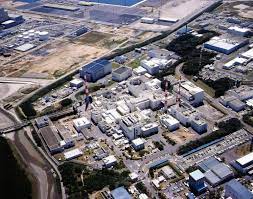
Righting shoddy nuclear waste storage site to cost Japan 36 bil. yen
https://english.kyodonews.net/news/2023/01/a53b75be634e-righting-shoddy-nuclear-waste-storage-site-to-cost-japan-36-bil-yen.html – 16 Jan 23, The Japan Atomic Energy Agency estimates that it will cost taxpayers 36.1 billion yen ($280 million) to rectify the shoddy storage of radioactive waste in a storage pool at the Tokai Reprocessing Plant, the nation’s first facility for reprocessing spent nuclear fuel, an official said Sunday.
Around 800 containers of transuranic radioactive waste, or “TRU waste,” were dropped into the pool from 1977 to 1991 using a wire in the now-disused plant in Tokai, a village in Ibaraki Prefecture northeast of Tokyo. They emit high levels of radiation.
The waste includes pieces of metal cladding tubes that contained spent nuclear fuel, generated during the reprocessing process. The containers are ultimately supposed to be buried more than 300 meters below surface.
The agency has estimated that 19.1 billion yen will be needed to build a new storage facility for the containers, and 17 billion yen for a building that will cover the storage pool and the crane equipment to grab containers.
The 794 containers each are about 80 centimeters in diameter, 90 cm tall and weigh about 1 ton, with many lying on their sides or overturned in the pool. Some have had their shape altered by the impact of being dropped.
The containers were found stored in the improper manner in the 1990s. While the agency said the storage is secure from earthquakes and tsunamis, it has nonetheless decided to improve the situation.
The extractions have been delayed by about 10 years from the original plan and are expected to begin in the mid-2030s.
The Tokai Reprocessing Plant was the nation’s first plant that reprocessed spent fuel from nuclear reactors to recover uranium and plutonium. Between 1977 and 2007, about 1,140 tons of fuel were reprocessed. The plant’s dismantlement was decided in 2014 and is expected to take about 70 years at a cost of 1 trillion yen.
Nuclear waste project in New Mexico opposed in recent poll, company asserts local support
Adrian Hedden, Carlsbad Current-Argus, 14 Jan 23,
New Mexicans in every region of the state allegedly opposed storing high-level nuclear waste in their state, according to a recent poll, as a New Jersey company hoped to build a facility to do so near Carlsbad.
The poll, commissioned by Albuquerque-based Southwest Research and Information Center in a partnership with the Center for Civic Policy surveyed 1,015 voters across the state from Dec. 7 to 14.
It found 60 percent of those surveyed were in opposition to the project, with 30 percent supporting and 10 percent undecided.
Holtec International applied in 2017 for a license from the federal Nuclear Regulatory Commission (NRC) to build and operate what it called a consolidated interim storage facility (CISF) in a remote area near the border of Eddy and Lea counties.
Last year, the NRC published its final environmental impact statement (EIS), contending the project would have little impact on the environment, and recommending the license be issued.
The CISF would temporarily store up to 100,000 metric tons of spent nuclear fuel rods, expected to be brought into the site via rail from nuclear power plants around the country through a 40-year license with the NRC.
The 1,000-acre plot of land where the facility would be built was owned by the Eddy-Lea Energy Alliance, a consortium of local leaders from the cities of Carlsbad and Hobbs, and Eddy and Lea counties.
The Alliance recruited Holtec and set up a revenue-sharing agreement with the company once the CISF goes into operations.
Despite the poll, Holtec officials argued the project was largely supported by New Mexico, after spokesman Gerges Scott said representatives traveled to local governments throughout the state.
Ed Mayer, Holtec project manager of the CISF said the company had adequate support for the project, after he and other representatives met with local leaders and first responders both around the site and along the rail lines.
“We are educating the affected populations, not only from the facility perspective in southeast New Mexico, but from a state perspective on the rail lines,” Mayer said. …………………………….
But opponents, including Southwest Research – a frequent critic of Holtec and the nearby Waste Isolation Pilot Plant repository for transuranic (TRU) nuclear waste – maintained the project would bring an undue risk to New Mexicans nearby and Americans along the waste transportation routes.
That’s why opposition was spread across political parties, gender and ethnicity, said Nuclear Waste Program Manager Don Hancock at Southwest Research and Information Center.
The poll showed more than half of those surveyed in the region were against the project, with opposition also coming irrespective of political affiliation. About 70 percent of Democrats polled opposed Holtec, along with 51 percent of Republicans and 55 percent of Independents.
When broken down by gender, more men supported the project than women, according to the poll.
A majority of Republican men polled were in favor at 51 percent, while 61 percent of Republican women were against the project, read the poll
White men were mostly for the project overall at 49 percent of voters polled in favor, while 71 percent of white women were against.
Hispanic men and women both mostly opposed the project at 51 and 78 percent against, respectively read the poll.
Central, northeast and southwest New Mexico showed opposition of 60 percent or more, while more conservative regions in the southeast and northwest showed 57 and 56 percent against, respectively, the poll showed.
Critics argue storing nuclear waste puts undue risk on New Mexico
Hancock said the poll showed temporary nuclear waste storage was not supported by New Mexico voters, arguing it was opposed through decades of proposals like Holtec’s.
“I’m not surprised by the results because for more than 45 years New Mexicans have strongly opposed high-level waste in New Mexico, whether the waste is proposed for the Waste Isolation Pilot Plant in the 1970s and ‘80s, for Mescalero Apache land in the 1990s, or by Holtec,” he said.
Opposition to the project also came from some of New Mexico’s highest-ranking state officials, and its Congressional delegation, with New Mexico Gov. Michelle Lujan Grisham calling the proposal “economic malpractice” for its potential, she said, of imperiling nearby oil and gas and agriculture industries.
U.S. Sen. Martin Heinrich (D-NM) co-sponsored a bill introduced in the U.S. Senate last year to block any federal funds from supporting such a project.
At the state level, New Mexico Sen. Jeff Steinborn (D-36) was a lead opponent of Holtec’s in the Legislature.
While Texas lawmakers recently passed a bill to ban high-level waste storage in their state, Steinborn said New Mexico policymakers should consider a similar measure to prevent the project coming to fruition.
“From the very beginning this has been a dangerous plan pushed on New Mexico, with real risks for all of our communities, and no end in sight,” Steinborn said. “It’s time for this project to be canceled and be replaced by the federal government committing to a true consent based siting process for the permanent storage of this waste.” https://www.currentargus.com/story/news/2023/01/14/nuclear-waste-project-new-mexico-opposed-recent-statewide-poll-holtec-international-energy/69802597007/
Savannah River Site, Los Alamos plutonium pit production plan could cost over $30 billion

Matthew Christian, Aiken Standard, S.C. Sat, January 14, 2023 https://news.yahoo.com/savannah-river-los-alamos-plutonium-005900374.html?guccounter=1&guce_referrer=aHR0cHM6Ly9uZXdzLmdvb2dsZS5jb20v&guce_referrer_sig=AQAAADJqdcGm_qX6CdNLQ8_g7p81OistELVP4KvAUR1PfQl-0Q2SBtdSRa8GwdKyTIcwvX8aofXxou_a1DmL9axGTUu9S4o5f35bRYrwMTXGG5ZaoooE2PgjQaFWi5uLyJbf3gg8EShjtVi5A26UqvyJcSYMPWp9GQCX2T9NlsjflzJW
Jan. 13—It could cost over $30 billion for the National Nuclear Security Administration to reestablish plutonium pit production, according to recently released report.
Allison Bawden, director of natural resources and environment at the Government Accountability Office, wrote Thursday the Government Accounting Office has identified between $18-$24 billion in potential costs to begin production of 80 plutonium pits per year by 2036 at the Savannah River Site and Los Alamos National Laboratory.
Plutonium pits are the core of a nuclear weapon into which a neutron is injected to begin an uncontrolled reaction.
The United States has been without a permanent capability for plutonium pit production since 1989 after a combination of environmental mismanagement — the EPA and the FBI raided the facility in 1989 after receiving reports of numerous environmental violations from employees — and the end of the Cold War stopped pit production at the Rocky Flats facility in Colorado.
From 2007-2012, around 10 pits per year were made at the Los Alamos National Laboratory.
Trying to restart plutonium pit production and modernizing the Los Alamos National Laboratory for production has cost $8.6 billion since 2005 according to the report.
NNSA plans to produce 50 pits per year at the Savannah River Site beginning in 2036 and 30 pit per year at the Los Alamos National Laboratory beginning in 2027.
At the Savannah River Site, the plans call for the failed Mixed-Oxide Fuel Fabrication Facility to be converted into the Savannah River Plutonium Production Facility.
Bawden says the NNSA estimates through 2035 a cost of between $6.9-$11.1 billion to make the conversion, which is in three steps: getting the main building ready, providing utilities and other infrastructure to the area and constructing an administration building, security facilities and a training area.
Other costs include $6.94 billion for plutonium modernization program at the Savannah River Site and the Los Alamos National Laboratory .
At the Savannah River Site, Bawden says costs include preparing employees to produce pits and learning from the Los Alamos National Laboratory how to produce pits more efficiently. She says at Los Alamos the costs include designing a pit production line, getting equipment, hiring and training staff and making sure the production line is working and checking the quality of the produced pits.
She adds other costs at the Los Alamos National Laboratory include between $4.17-$5.61 billion for capital projects, $240-244 million for support buildings and $45-46 million for maintenance and recapitalization.
Bawden spends a few pages in the 84-page report discussing activities at other Department of Energy-owned sites that are not included in the NNSA cost estimates.
Those activities include design of a warhead at Lawrence Livermore National Laboratory and the lab making sure the produced pits meet the specifications of the warhead, experimental facilities at the Nevada National Security Site, production of non-nuclear pit components at the Kansas City National Security Campus, disassembling pits at the Pantex Plant in Texas and storing produced waste at the Waste Isolation Pilot Plant in New Mexico.
Including these costs and developing more thorough estimates of the costs at the Savannah River Site and Los Alamos is one of two recommendations the GAO makes in the report.
The other is for the NNSA to develop a more complete schedule of activities and when they’re supposed to happen.
Bawden notes NNSA decision-makers said both recommendations will be implemented later in the process when firm construction plans for the Savannah River Plutonium Production Facility are set in 2024 or 2025. She adds the NNSA decision-makers said they are hesitant to make more thorough cost estimates because of a concern of making an estimate, then paying a higher cost and having the public concerned about rising costs for the project.
Significant environmental victory for Savannah River Site Watch in stopping import of high level nuclear waste from Germany
A decade-long effort to export a large volume of highly radioactive nuclear
waste from Germany to the U.S. Department of Energy’s Savannah River Site
(SRS) in South Carolina has been terminated, resulting in a significant
environmental victory.
The German company managing the waste at the Juelich
research site informed the public-interest group Savannah River Site Watch
(SRS Watch) that “the option to ship the aforementioned spent fuel has
indeed been terminated…” These definitive words bring an end to a
decade-long effort by DOE to import an unusual form of highly radioactive
spent fuel to SRS.
Savanah River Site Watch 10th Jan 2023
Does anyone know why I get this message? When I try to find out about Savanah River Site Watch, and especially when I try to find out about “a significant
environmental victory” . – Savanah River Site Watch 10th Jan 2023
https://srswatch.org/3832-2/
The U.S. Can’t Make Enough Plutonium Triggers for Its Nuclear Warheads
The Pentagon wants 80 new plutonium pits per year by 2030. It doesn’t look like that’s possible.
VICE, By Matthew Gault 13 Jan 23,
American power relies on the constant threat of nuclear annihilation. One of the reasons the U.S. military is so powerful is that the country is sitting on more than 5,000 potential world-ending nuclear weapons. But those nukes are aging and America hasn’t been building more. The Pentagon’s goal is to spin up production and make 80 plutonium pits—the trigger mechanism for nukes—a year by 2030. A new report from federal investigators said that’s a pipe dream.
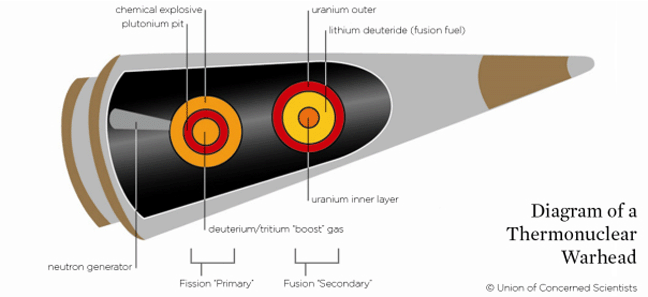
A nuclear pit is a hollow ball of plutonium. On a basic level, nuclear weapons work by surrounding one of these balls with high explosives. When the high explosives go off, they apply uniform pressure to the plutonium pit and cause a nuclear explosion. They are a key ingredient in nuclear weapons, but America hasn’t made a new one since 1989.
America’s nuclear infrastructure is crumbling and in desperate need of modernization, according to the Pentagon. To keep America’s nukes running, the Pentagon wants to start production again. According to a new report from the Government Accountability Office (GAO), it’s not going well.
This isn’t shocking. The National Nuclear Safety Administration (NNSA) warned Congress in 2022 that the official plan to meet a deadline of 80 pits produced per year by 2030 wasn’t going to happen. According to the GAO, the NNSA doesn’t even know how much it will cost to create the infrastructure to build these pits, what resources it will need, or how long the project will take. “According to officials, such a life cycle cost estimate has not been completed because of concerns about releasing preliminary or uncertain information,” the report said.
For a brief period after the end of the Cold War it seemed like broad nuclear disarmament might be possible. That didn’t happen and now the U.S. is falling behind on modernization goals it set for itself. …………………….
America has pushed to modernize its nuclear forces. The U.S. Air Force is building a new intercontinental-ballistic missile and revealed a new stealth bomber last year with the fanfare of a Super Bowl halftime show. But these fancy new weapons require plutonium cores, and it doesn’t look like the U.S. can build them fast enough. https://www.vice.com/en/article/88qp5k/the-us-cant-make-enough-plutonium-triggers-for-its-nuclear-warheads
Slew of companies keeping watch on DOE nuclear cleanup work for small biz
More than 20 companies expressed interest to the Department of Energy’s Office of Environmental Management in landing a slice of various nuclear remediation projects set aside for small business. Twenty-one signed up by Dec. 20 to be on an “interested vendors”… (subscribers only) more https://www.exchangemonitor.com/slew-of-companies-keeping-watch-on-doe-nuclear-cleanup-work-for-small-biz-2/
1 This Month

of the week – Shut Down Drone Warfare!


Tell the Ukrainian Government to Drop Prosecution of Peace Activist Yurii Sheliazhenko

Petition to revoke the licensing of the Near Surface Nuclear Disposal Facility (NSDF) at Chalk River. https://www.ourcommons.ca/petitions/en/Petition/Details?Petition=e-7247
To see nuclear-related stories in greater depth and intensity – go to https://nuclearinformation.wordpress.com
-
Archives
- April 2026 (79)
- March 2026 (251)
- February 2026 (268)
- January 2026 (308)
- December 2025 (358)
- November 2025 (359)
- October 2025 (376)
- September 2025 (257)
- August 2025 (319)
- July 2025 (230)
- June 2025 (348)
- May 2025 (261)
-
Categories
- 1
- 1 NUCLEAR ISSUES
- business and costs
- climate change
- culture and arts
- ENERGY
- environment
- health
- history
- indigenous issues
- Legal
- marketing of nuclear
- media
- opposition to nuclear
- PERSONAL STORIES
- politics
- politics international
- Religion and ethics
- safety
- secrets,lies and civil liberties
- spinbuster
- technology
- Uranium
- wastes
- weapons and war
- Women
- 2 WORLD
- ACTION
- AFRICA
- Atrocities
- AUSTRALIA
- Christina's notes
- Christina's themes
- culture and arts
- Events
- Fuk 2022
- Fuk 2023
- Fukushima 2017
- Fukushima 2018
- fukushima 2019
- Fukushima 2020
- Fukushima 2021
- general
- global warming
- Humour (God we need it)
- Nuclear
- RARE EARTHS
- Reference
- resources – print
- Resources -audiovicual
- Weekly Newsletter
- World
- World Nuclear
- YouTube
-
RSS
Entries RSS
Comments RSS
 nuclear-news