UK to restart nuclear submarine defuelling in 2026

By Lisa West, -UK Defence Journal 23rd Dec 2025 https://ukdefencejournal.org.uk/uk-to-restart-nuclear-submarine-defuelling-in-2026/
The Ministry of Defence has confirmed that defuelling of the UK’s decommissioned nuclear-powered submarines is set to restart in 2026, as preparations continue at specialist dock facilities in Devonport.
In a written parliamentary answer, defence minister Luke Pollard said the twelve remaining first-generation submarines powered by pressurised water reactors would be handled through a tightly regulated process overseen by the Office for Nuclear Regulation.
He said the submarines would dock in “a specialised, licensed dock in Devonport”, where “the used fuel will be removed, loaded into a qualified transport container and transported to Sellafield prior to long-term storage in the Geological Disposal Facility.”
Pollard confirmed that dismantling of each vessel would only take place once defuelling is complete, adding that “work is underway to prepare the dock facilities and associated resources in line with plans to recommence defueling in 2026.”
The update also set out progress on the UK’s first full submarine dismantling programme. HMS Swiftsure, the demonstrator vessel for the Submarine Dismantling Project, began dismantling at Rosyth in 2023.
According to Pollard, the project “will refine the disposal process and is on track to be dismantled by the end of 2026, achieving the commitment given to the Public Accounts Committee in 2019.”
He said lessons from Swiftsure and the Devonport defuelling programme would be used to firm up timelines for the remaining fleet, stating that “lessons learned from these defuel and dismantling projects will provide more certainty around the schedule for defueling and dismantling the remaining 22 decommissioned submarines.”
The UK currently has 27 decommissioned nuclear submarines awaiting defuelling or dismantling, a long-running issue highlighted repeatedly by the National Audit Office and parliamentary committees concerned about safety, cost and delay.
73 Organizations Send Joint Letter Calling on the Federal Government to Improve Nuclear Waste Oversight

73 organizations representing a broad segment of Canadian society have sent a joint letter to the federal government urging more oversight of the nuclear industry and of nuclear waste projects.
In the letter, the groups urged the Prime Minister and the Ministers of Environment and Climate Change and of Energy and Natural Resources to exercise oversight of the Nuclear Waste Management Organization’s “Adaptive Phased Management Project” to transport, process, bury and eventually abandon all of Canada’s nuclear fuel waste at the NWMO’s selected site in the heart of Treaty 3 Territory in northwestern Ontario and its upcoming impact assessment process.
The groups expressed an overarching concern about the lack of federal oversight of this project since its inception in 2002.
More recently, the NWMO has made it known that they are seeking to have transportation of the radioactive wastes excluded from the project’s impact assessment process. But for 20 years the NWMO has been describing transportation as part of their project, and the Impact Assessment Act requires activities that are integral to – or, in the language of the Act “incidental” to – the project be included in the assessment.
The joint letter requests that the federal government provide immediate oversight and direction in four areas:
73 organizations representing a broad segment of Canadian society have sent a joint letter to the federal government urging more oversight of the nuclear industry and of nuclear waste projects.
In the letter, the groups urged the Prime Minister and the Ministers of Environment and Climate Change and of Energy and Natural Resources to exercise oversight of the Nuclear Waste Management Organization’s “Adaptive Phased Management Project” to transport, process, bury and eventually abandon all of Canada’s nuclear fuel waste at the NWMO’s selected site in the heart of Treaty 3 Territory in northwestern Ontario and its upcoming impact assessment process.
The groups expressed an overarching concern about the lack of federal oversight of this project since its inception in 2002.
More recently, the NWMO has made it known that they are seeking to have transportation of the radioactive wastes excluded from the project’s impact assessment process. But for 20 years the NWMO has been describing transportation as part of their project, and the Impact Assessment Act requires activities that are integral to – or, in the language of the Act “incidental” to – the project be included in the assessment.
The joint letter requests that the federal government provide immediate oversight and direction in four areas:
What to do with Britain’s radioactive waste?

by Ian Fairlea, beyondnuclearinternational .
“………………………………………………………………………………… Radioactive nuclear waste is produced by all nuclear activities. For example, uranium mining produces a great deal of waste in the form of ore spoil like all mining. Since uranium is radioactive, so are its ore wastes. So also are all the processes of refining the ore, enriching the uranium, turning it into fuel for reactors, transportation, burning it in nuclear power stations, processing the used fuel, and its handling and storage. They all create more nuclear waste.
The reason is that everything that comes into contact with radioactive materials, including the containers in which they are stored or moved and even the buildings in which they are handled, become contaminated with radioactivity or are activated by radiation
All radioactive waste is dangerous to human life as exposure to it can cause leukaemia and other cancers. It is usually categorised as low, intermediate or high-level waste. As the radioactivity level increases, so does the danger. Extremely high levels of radioactivity can kill anyone coming into contact with it – or just getting too close to it – within a matter of days or weeks.
Radioactive materials slowly lose their radioactivity and so can become in theory safe to handle but in most cases this is a very slow process. Plutonium-239, for instance, has a half-life of over 24,000 years which means it will remain lethal for over 240,000 years. Other radio-isotopes remain radioactive for millions or even billions of years.
The safe, long-term storage of nuclear waste is a problem that is reaching crisis point for both the civil nuclear industry and for the military.
During the Cold War years of the 1950s and 1960s, the development of the British atomic bomb was seen as a matter of urgency. Dealing with the mess caused by the production, operating and even testing of nuclear weapons was something to be worried about later, if at all.
For example, the Ministry of Defence does not really have a proper solution for dealing with the highly radioactive hulls of decommissioned nuclear submarines, apart from storing them for many decades. As a result, 19 nuclear-powered retired submarines are still waiting to be dismantled, with more expected each year. Yet Britain goes on building these submarines.
This callous disregard for the future has spilled over to the nuclear power industry. For example, at Dounreay, in the north of Scotland, nuclear waste and scrap from the experimental reactor and reprocessing plants were simply tipped down a disused shaft for over 20 years. No proper records of what was dumped were kept and eventually, in 1977, an explosion showered the area with radioactive debris. In April 1998, it was finally announced that excavation and safe removal of the debris had cost £355 million.
The problems of long term, secure storage of nuclear waste are unsolved and growing more acute year by year. Earlier attempts by the nuclear industry to get rid of it by dumping it in the sea were stopped by environmental direct action, trades union protests and now by law.
All details concerning military nuclear waste are regarded as official secrets. However, large and growing quantities of radioactive waste exist at the Rosyth and Devonport dockyards and in particular at the Aldermaston and Burghfield Atomic Weapons Establishments.
One feature of Aldermaston and Sellafield in particular is that they are old sites, and have grown up in an unplanned, haphazard way. New buildings are fitted in between old, sometimes abandoned, buildings. Some areas and buildings are sealed off and polluted by radioactivity. Local streams, and in the case of Sellafield the sea shore, are polluted. The demolition of old radioactive buildings is a delicate, slow and dangerous process. In the circumstances it is hardly surprising that the amount of nuclear waste can only be estimated.
Civil intermediate level solid waste is mainly stored at Sellafield awaiting a decision on a national storage facility.
Military intermediate level solid waste is stored where it is created: dockyards, AWE plants etc. Both civil and military high level solid waste is generally moved to Sellafield for temporary storage.
The major problems are with the long-term storage of intermediate and in particular high-level wastes. Since these are very dangerous and very long-lived, any storage facility has to be very secure (i.e. well-guarded) and safer over a longer period – some tens of thousands of years – than anything yet designed and built by humanity.
Because of this very long time scale, it can never be sealed up and forgotten. Containers corrode with time. There are earth movements. Water seeps through rocks. The waste will have to be stored in such a form that it cannot be stolen and misused and in such a way that it can be inspected and if necessary retrieved and moved.
Plans to dig a trial deep storage facility under the Sellafield site were thrown out in 1997. Geological evidence suggested that the local rock is too fissured and liable to be affected by water seepage.
This threw all the nuclear industry’s plans into confusion. Instead of having a storage site ready by 2010, the date has been put back more or less indefinitely. No alternative site has even been identified.
Apart from the technical, geological problems, few communities seek a huge, long-term nuclear waste storage site in their neighbourhood. Indeed the original choice of Sellafield was as much political as technical. With most local jobs depending on nuclear industry already, there would have been less local opposition than elsewhere.
Nuclear waste is a problem that the nuclear industry has failed to consider seriously for over sixty years but one that can no longer be put off for future generations to cope with.
The effects of any nuclear accidents, such as those at Chernobyl in 1986 and Fukushima in 2011, are also very long-lasting and will affect future generations. The problems of nuclear waste are nowhere near solution. The history of the nuclear industry does not inspire confidence………………………………………………………. https://beyondnuclearinternational.org/2025/12/14/does-britain-really-need-nuclear-power/
Further delay in Finnish repository licence review

WNN, 5 December 2025
Finland’s Ministry of Employment and the Economy has granted the country’s nuclear regulator a third extension to the deadline to complete its assessment of Posiva Oy’s operating licence application for the world’s first used nuclear fuel repository. The regulator’s statement is now expected by mid-2026.
Radioactive waste management company Posiva submitted its application, together with related information, to the Ministry of Economic Affairs and Employment on 30 December 2021 for an operating licence for the used fuel encapsulation plant and final disposal facility currently under construction at Olkiluoto. The repository is expected to begin operations in the mid-2020s. Posiva is applying for an operating licence for a period from March 2024 to the end of 2070.
The government will make the final decision on Posiva’s application, but a positive opinion by the Radiation and Nuclear Safety Authority (STUK) is required beforehand. The regulator began its review in May 2022 after concluding Posiva had provided sufficient material. The ministry had requested STUK’s opinion on the application by the end of 2023. However, in January last year, STUK requested the deadline for its opinion be extended until the end of 2024. In December, the ministry extended the deadline for the regulator’s opinion to 31 December 2025.
The ministry has now extended the deadline until the end of June 2026, “if it is possible to do so by then”. According to STUK, the new timetable is possible, but tight, for both the authority and the licence applicant.
Although STUK’s assessment of the application is in the final stages, the statement and safety assessment cannot be completed until it has assessed and approved all of Posiva’s operating licence application materials……………
At the repository, used fuel will be placed in the bedrock, at a depth of about 430 metres. The disposal system consists of a tightly sealed iron-copper canister, a bentonite buffer enclosing the canister, a tunnel backfilling material made of swellable clay, the seal structures of the tunnels and premises, and the enclosing rock
…………… The operation will last for about 100 years before the repository is closed.
….STUK said. “In particular, the demonstration of the performance of the clay material, which acts as one of the barriers to the spread of radioactive substances, is still under way. Posiva replaced the clay material in the original plans with another, and the effects of the new material on the long-term safety of the final disposal still need to be assessed.” https://www.world-nuclear-news.org/articles/further-delay-in-finnish-repository-licence-review#:~:text=Finland’s%20Ministry%20of%20Employment%20and,now%20expected%20by%20mid%2D2026
Towards a transparent and responsible management of radioactive waste

Ottawa, December 4, 2025, www.ccnr.org/release_radwaste_transport_2025.pdf
Bloc Québécois spokesperson for the Environment and Climate Change, Patrick Bonin, held a press conference on December 2 on Parliament Hill in Ottawa, alongside Lance Haymond, Chief of the Kebaowek First Nation, Lisa Robinson, Chief of the Wolf Lake First Nation, and representatives of several environmental and anti-radioactive-pollution groups to co-sign a letter along with more than 80 environmental associations, elected officials, trade unions, and First Nations representatives in Ontario, Quebec and the Rest of Canada, calling for a moratorium on the transport of radioactive waste over public roads and bridges to the Chalk River site located beside the Ottawa River. [See the letter in English and French at www.ccnr.org/letter_e_f_2025.pdf ]
The signatories are calling on the federal government to ban, among other things, all imports of radioactive waste from other countries, including disused medical sources, expired tritium light sources, and irradiated nuclear fuel.
They are also calling on the Minister of Environment and Climate Change to conduct a strategic assessment of the transport of high-level and intermediate-level radioactive waste on public roads.
Quotes:
Ginette Charbonneau, spokesperson for the Coalition Against Radioactive Pollution, deplores the fact that “it is irresponsible to transport all radioactive waste under federal jurisdiction to Chalk River. It is doubly dangerous to transport the waste twice: once for temporary storage at Chalk River and a second time to its final destination.”
Gordon Edwards, Ph.D., president of the Nuclear Watchdog Canadian Coalition for Nuclear Responsibility, states that “The Age of Nuclear Waste is just beginning. It’s time to stop and think. First, we must stop moving the waste. This only increases the costs and the risks without solving the problem. Second, we must think of the need for three things – justfiication, notification, and consultation – before moving any of this dangerous human-made cancer-causing material over public roads and bridges.”
Jean-Pierre Finet of the Regroupement des organismes environnementaux en énergie (Alliance of Environmental Organizations on Energy) states, “We wholeheartedly support the call for a moratorium on the transport and importation of waste and the request for a strategic environmental assessment. We believe that Chalk River must cease to be our government’s nuclear waste dump.”“
“In 2017, Ottawa residents were denied a regional environmental impact assessment of radioactive wastes accumulating alongside the Ottawa River. Given all the proposed waste transfers underway and yet to be implemented, a strategic assessment is more urgent than ever,” explains Dr. Ole Hendrickson of the Ottawa River Institute.
“The government is willing to accept unacceptable risks, to silence affected nations, and to operate without any transparency or accountability,” says Lance Haymond, Chief of the Kebaowek First Nation. “We have learned long ago: Silence is Consent. We will not be silent.”
Lisa Robinson, Chief of the Wolf Lake First Nation, Canada, says, “We are all calling on Canada to do better with the nuclear situation in storage and transportation, and we call on all Canadian to insist on complete accountability for the tens of billions of dollars of public money that is being spent by those hired to manage these indestructible radioactive wastes.”
Contacts :
English
Gordon Edwards, Canadian Coalition for Nuclear Responsibility, Montreal
– ccnr@web.ca 514-839-7214
Ole Hendrickson, Concerned Citizens of Renfrew County and Area, Ottawa
– oleqhendrickson@gmail.com 613-735-4876
Brennain Lloyd, Northwatch, We the Nuclear Free North, North Bay, Ontario
– brennain@onlink.net 705-493-9650
French/English
Ginette Charbonneau Ralliement contre la pollution radioactive Oka (Québec)
– ginettech@hotmail.ca 514=246-6439
Jean-Pierre Finet, Regroupement des organismes environnementaux en énergie, Montréal
– pierre.finet@gmail.com 514-515-1957
Eva Schacherl, Council of Canadians – Ottawa
– evaschacherl@gmail.com 613-316-9450
Article: Transferts de déchets radioactifs à Chalk River | Le Bloc québécois reçoit de
nombreux appuis et ravive son appel à un moratoire | La Presse
Watch the press conference : Le Bloc demande un moratoire sur le transport de matières nucléaires | À la une | CPAC.ca
Link to the letter:letter_e_f_2025.pdf
Signatories of the letter…………………………………………………………………….
Fifth Belgian reactor is permanently shut down
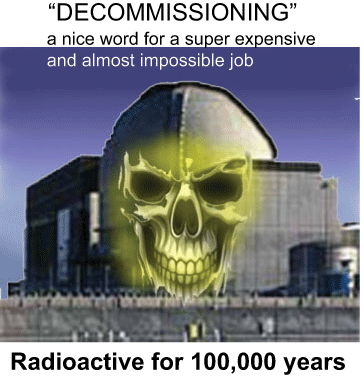
World Nuclear News, 1 December 2025
Unit 2 of the Doel nuclear power plant in Belgium’s Flanders region has been taken offline for the final time after 50 years of operation and disconnected from the grid. Its closure is in line with Belgium’s nuclear phase-out policy, under which four other reactors have already been shut down.
Belgium’s Federal Agency for Nuclear Control (FANC) said the operation to shut down the 445 MWe (net) pressurised water reactor (PWR) was carried out under its supervision.
Doel 2 has now entered the decommissioning phase in preparation for its actual dismantling. Fuel will be unloaded from the reactor and cooled in the storage pool, so it can later be transported to temporary storage.
“As with the other shutdowns, the process began with the submission of a ‘notice of cessation of activities’ to the FANC,” the regulator said. “This document describes in great detail the activities that will be carried out after the shutdown to prepare for decommissioning.”
Belgium’s federal law of 31 January 2003 required the phase-out of all seven nuclear power reactors in the country. Under that policy, Doel 1 and 2 were originally set to be taken out of service on their 40th anniversaries, in 2015. However, the law was amended in 2013 and 2015 to provide for Doel 1 and 2 to remain operational for an additional 10 years. Doel 1 was retired in February this year. Duel 3 was closed in September 2022 and Tihange 2 at the end of January 2023. Tihange 1 was disconnected from the grid on 30 September this year……………………………………………….https://world-nuclear-news.org/articles/fifth-belgian-reactor-permanently-shut-down?cid=15961&utm_source=omka&utm_medium=WNN_Daily:_1_December_2025&utm_id=493&utm_map=24ecfe77-e3db-473a-be05-7c037a58ceb4
Ministry Of Defence looking at ‘various sites’ for sub dismantling project

COMMENT. Put more simply. the UK government doesn’t really know what to do with the toxic wastes from nuclear submarines.
Governments are obsessed with “defence” against each other. Meanwhile the public thinks ‘jobs, jobs, jobs” even if those jobs are toxic, and part of a useless industry.
By George Allison, November 28, 2025, https://ukdefencejournal.org.uk/mod-looking-at-various-sites-for-sub-dismantling-project/
A written answer in Parliament has confirmed that the Ministry of Defence is actively considering multiple locations for the UK’s permanent submarine dismantling and disposal capability.
Responding to Graeme Downie MP, defence minister Luke Pollard said the demonstrator vessel Swiftsure continues to be dismantled at Rosyth and remains on track to complete in 2026. He noted that “there are six further legacy submarines in Rosyth awaiting to enter the dismantling process.”
Those boats, alongside the 15 stored at Devonport, form the initial batch being processed under the Submarine Dismantling Project.
Pollard confirmed that the enduring solution will be delivered through a separate effort, the Submarine Disposal Capability Project, which is still in its concept phase. He stated that the department is “assessing options for the capability and its location with various sites under consideration within the UK,” adding that Parliament will be informed once a decision is ready.
This aligns with the practical pressures on the Defence Nuclear Enterprise. Rosyth can process only a small number of hulls at a time, while Devonport’s workload is dominated by defuelling, refit work and major safety driven upgrades. Both sites have finite regulatory and environmental headroom.
The broader SDP context helps explain the direction of travel as since 2013 the programme has been tasked with dealing with 27 retired submarines, removing radioactive and conventional waste safely and refining methods as it progresses. Swiftsure’s dismantling has already informed improved procedures, and the MoD reports that later boats will see faster and cheaper waste removal.
The Swiftsure project has proven the process, but the long term question remains open: where should the UK base a facility that will handle future decommissioned submarines on a rolling, multi decade basis. Pollard’s answer confirms that this decision is now in play.
The Mind-Bending Challenge of Warning Future Humans about Nuclear Waste
Designing nuclear-waste repositories is part engineering, part anthropology—and part mythmaking
Scientific American, By Vincent Ialenti edited by Seth Fletcher, 17 Nov 25
“……………………………………………………………………………………………………. In 2024 NWMO announced that Canada’s deep geological repository for spent nuclear fuel would be built in the granite formations of northwestern Ontario, near the Township of Ignace and the Wabigoon Lake Ojibway Nation. The decision capped off a 14-year siting effort that solicited volunteer host communities and guaranteed them the right to withdraw at any stage of the process. NWMO is now preparing for a comprehensive regulatory review, which will include a licensing process conducted by the Canadian Nuclear Safety Commission. This means the development of impact assessments that will be specific to the Ignace site. NWMO has also pledged an Indigenous-led regulatory process alongside federal oversight, with the Wabigoon Lake Ojibway Nation conducting its own assessments to ensure the project reflects Anishinaabe principles of ecological stewardship. If approvals proceed, construction could begin in the 2030s, and the repository could go into operation in the 2040s.
A deep-time repository, like a deep-space probe, must endure without maintenance or intervention, independently carrying human intent into the far future.
A deep geological repository can be seen as a reverse ark: a vessel designed not to carry valuables forward in time but to seal dangerous legacies away from historical memory. Or it can be understood as a reverse mine: an effort returning hazardous remnants to the Earth rather than extracting resources from it. Either way it is more than just a feat of engineering. Repository projects weave together scientific reasoning, intergenerational ethics and community preferences in decisions that are meant to endure longer than empires. As messages to future versions of ourselves, they compel their designers to ask: What symbols, stories or institutions might bridge epochs? And what does it mean that we are trying to protect future humans who may exist only in our imaginations?
……………………………..An enduring question for all repository programs is whether—and, if so, how—to mark their sites and archive knowledge about them. There is no guarantee that the languages we speak today will remain intelligible even a few thousand years from now
…………………………………………. As NWMO prepares for construction in Ignace in the 2030s, the question of long-term communication must increasingly shift from theory to practice. Canada has participated in the Organization for Economic Co-operation and Development’s Nuclear Energy Agency’s Preservation of Records, Knowledge and Memory initiative, which has explored strategies ranging from warning markers to staged transfers of responsibility across generations. In a 2017 safety report, NWMO wisely conceded a limit: “repository records and markers (and passive societal memory) are assumed sufficient to ensure that inadvertent intrusion would not occur for at least 300 … years.” Beyond that horizon, the premise changes. No monument, land-use restriction, monitoring system or archive can be trusted to endure indefinitely………………………………………………………………………… https://www.scientificamerican.com/article/nuclear-waste-arks-are-a-bold-experiment-in-protecting-future-generations/
Los Alamos National Laboratory Reneges on Active Confinement Ventilation Systems at Plutonium Facility, PF-4.

| Concerned Citizens for Nuclear Safety .14 Nov 25 |
Los Alamos National Laboratory (LANL) continues to neglect its obligations to safely operate its nuclear weapons facilities in a manner required by laws, orders, guidance and common sense.
A recent report from the Defense Nuclear Facilities Safety Board (DNFSB or the Board) details the threats from the release of plutonium contaminated air during a seismic event from the LANL Plutonium Facility, or PF-4. For over 20 years, the Board has recommended that LANL establish active confinement ventilation systems for PF-4, and LANL agreed. https://www.dnfsb.gov/content/review-los-alamos-plutonium-facility-documented-safety-analysis
Active confinement ventilation systems require negative air pressure in rooms and buildings where plutonium is stored, handled and processed. In the event of seismic activity, or other possible catastrophic events, the negative air pressure would keep the contamination inside where it could be held and filtered before being released.
The converse, which is called passive confinement systems, would do nothing. No filtration would occur. Contaminated air would move out of the building and into the air we breathe. Depending on the wind direction, radioactive plutonium particles would be deposited in neighborhoods, on hiking trails, fields, school grounds, and in the Rio Grande.
Residents outraged as US nuclear plant gets greenlight to dump radioactive waste into major river: ‘Potential long-term consequences’
“We really don’t know enough.”
The Cool Down, by Kristen Lawrence, November 5, 2025
A federal court has ruled that a nuclear plant in New York can dump radioactive waste into the Hudson River, a decision that overrides a 2023 ban on releasing treated wastewater into the river.
What’s happening?
As Surfer Magazine reported, the ruling will allow Holtec, a nuclear-power-focused energy company, to release around 45,000 gallons per year of treated wastewater from the decommissioned Indian Point plant into the Hudson.
The site is only 40 miles from Rockaway Beach, one of the most popular surfing locations in the state and the only one within NYC’s limits.
U.S. District Judge Kenneth Karas ruled that federal authority over nuclear regulation supersedes the prior ban that was the result of the “Save the Hudson” campaign, which was in response to a proposal by Holtec to release radioactive wastewater into the river.
Holtec will now be allowed to dump the materials — mostly tritiated water, which Surfer explained “contains the nuclear-energy byproduct tritium — into the Hudson, with around 1.5 million gallons expected to enter the river in the next several years.
Even though the 45,000 gallons set to be dumped annually is within safe limits, according to the federal government, the public and environmental organizations like Riverkeeper worry about how the waste will affect people’s health and the surrounding ecosystem……………………………
“We really don’t know enough about how tritium behaves in the environment [at diluted levels] to assess potential long-term consequences to the environment, to the food chain, and ultimately to humans,” Timothy Mousseau, biologist at the University of South Carolina, told Chemical & Engineering News.
There are also concerns that fewer people will want to surf and swim in the Hudson because of the new regulations.
Surfer reported that the river had only recently become a “viable recreational waterway” and that dumping radioactive waste may deter people from visiting…………………………….. https://www.thecooldown.com/green-business/radioactive-waste-hudson-river-nuclear-plant/
New U.S. nuclear power boom begins with old, still-unsolved problem: What to do with radioactive waste
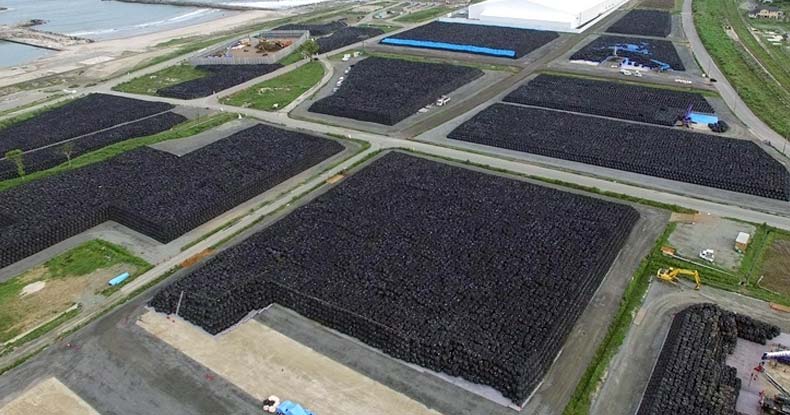
“I’m not sure that the tech industry has really thought through whether they want to be responsible for managing nuclear waste at their data center sites.”
Bob Woods CNBC, Sun, Nov 9 2025
Key Points
- The Trump administration aims to quadruple the current nuclear energy output over the next 25 years through construction of conventional reactors and next-gen small modular reactors, but a clear solution has yet to emerge for the old issue of radioactive waste.
- More than 95,000 metric tons of spent nuclear fuel (with a minority from weapons programs) sits temporarily stockpiled in special water-filled pools or dry casks at 79 sites in 39 states.
- The Department of Energy has no permanent disposal facility for nuclear waste, leaving taxpayers on the hook for payments to utilities of up to $800 million every year in damages, a bill that has reached $11.1 billion since 1998, and could grow to $44.5 billion in the future.
Nuclear power is back, largely due to the skyrocketing demand for electricity, including big tech’s hundreds of artificial intelligence data centers across the country and the reshoring of manufacturing. But it returns with an old and still-unsolved problem: storing all of the radioactive waste created as a byproduct of nuclear power generation.
In May, President Trump issued executive orders aimed at quadrupling the current nuclear output over the next 25 years by accelerating construction of both large conventional reactors and next-gen small modular reactors. Last week, the U.S. signed a deal with Westinghouse owners Cameco and Brookfield Asset Management to spend $80 billion to build nuclear plants across the country that could result in Westinghouse attempting to spinoff and IPO a stand-alone nuclear power company with the federal government as a shareholder.
There’s a growing consensus among governments, businesses and the public that the time is right for a nuclear power renaissance, and even if the ambitious build-out could take a decade or more and cost hundreds of billion of dollars, it will be an eventual boon to legacy and start-up nuclear energy companies, the AI-fixated wing of the tech industry and investors banking on their success.
But there are plenty of reasons to be skeptical. Only two nuclear power plants have been built since 1990 — more than $15 billion over budget and years behind schedule — and they went online in just the last two years. Almost all of the 94 reactors currently operating in 28 states, generating about 20% of the nation’s electricity, were built between 1967 and 1990. And though often unspoken, there’s the prickly issue that’s been grappled with ever since the first nuclear energy wave during the 1960s and ’70s: how to store, manage and dispose of radioactive waste, the toxic byproduct of harnessing uranium to generate electricity — and portions of which remain hazardous for millennia.
Solutions, employing old and new technologies, are under development by a number of private and public companies and in collaboration with the Department of Energy, which is required by law to accept and store spent nuclear fuel.
The most viable solution for permanently storing nuclear waste was first proffered back in 1957 by the National Academy of Sciences. Its report recommended burying the detritus in deep underground repositories (as opposed to the long-since-abandoned notion of blasting it into low-Earth orbit). It wasn’t until 1982, though, that Congress passed the Nuclear Waste Policy Act, assigning the DOE responsibility for finding such a site…………………………………
Other nations have moved forward with the idea. Finland, for instance, is nearing completion of the world’s first permanent underground disposal site ………………………………………..
An American startup, Deep Isolation Nuclear, is combining the underground burial concept with oil-and-gas fracking techniques. The methodology, called deep borehole disposal, is achieved by drilling 18-inch vertical tunnels thousands of feet below ground, then turning horizontal. Corrosion-resistant canisters — each 16 feet long, 15 inches in diameter and weighing 6,000 pounds — containing nuclear waste are forced down into the horizontal sections, stacked side-by-side and stored, conceivably, for thousands of years………………………………………………………………..
Recycling radioactive waste for modular reactors
An entirely different, old-is-new-again technology, pioneered in the mid-1940s during the Manhattan Project, is gathering steam. It involves reprocessing spent fuel to extract uranium and other elements to create new fuel to power small modular reactors. The process is being explored by several startups, including Curio, Shine Technologies and Oklo.

Oklo has gained attention among investors drawn to its two-pronged approach to nuclear energy. The company — which went public via a SPAC in 2024, after early-stage funding from OpenAI CEO Sam Altman, Peter Thiel’s venture capital firm and others — announced in September that it is earmarking $1.68 billion to build an advanced fuel reprocessing facility in Oak Ridge, Tennessee. Concurrently, the company signed an agreement with the Tennessee Valley Authority “to explore how we can take used nuclear fuel sitting on its sites and convert it into fuel we can use in our reactors,” said a company spokeswoman……………………………..
Oklo exemplifies both the promise and the perplexity associated with the rebirth of nuclear power. On one hand is the attraction of repurposing nuclear waste and building dozens of SMRs to electrify AI data centers and factories. On the other hand, the company has no facilities in full operation, is awaiting final approval from the NRC for its Aurora reactor, and is producing no revenue. Oklo’s stock has risen nearly 429% this year, with a current market valuation of more than $16.5 billion, but share prices have fluctuated over the past month.
“It’s a high-risk name because it’s pre-revenue, and I anticipate that the company will need to provide more details around its Aurora reactor plans, as well as the [fuel reprocessing] program on the [November 11] earnings report call,” said Jed Dorsheimer, an energy industry analyst at William Blair in a late October interview. “
In the meantime, more than 95,000 metric tons of spent nuclear fuel (about 10,000 tons is from weapons programs) sits temporarily stockpiled aboveground in special water-filled pools or dry casks at 79 sites in 39 states, while about 2,000 metric tons are being produced every year. ………………………………………………………………………
Allison Macfarlane, professor and director of the School of Public Policy and Global Affairs at the University of British Columbia, as well as the chair of the NRC from 2012–2014, deems spent fuel reprocessing as far too expensive and a source of new waste streams, and dismisses deep borehole disposal as a “non-starter.”……………………
As far as nuclear waste, “we need to put [it] deep underground,” Macfarlane said.
………………………………………………………………….the rush to build new reactors — and generate even more waste — marches on alongside the data center boom……………………………….
Those long timelines alone should be a deterrent, said Tim Judson, executive director of the Nuclear Information Resource Service, a nonprofit advocate for a nuclear-free world. “It is fanciful to think that nuclear energy is going to be helpful in dealing with the increases in electricity demand from data centers,” he said, “because nuclear power plants take so long to build and the data centers are being built today.”
And then there’s the waste issue, Judson said. “I’m not sure that the tech industry has really thought through whether they want to be responsible for managing nuclear waste at their data center sites.”
But you can count Gates, the big tech billionaire who was backing nuclear even before the AI data center boom, as having not only thought about the waste problem, but dismissed it as major impediment. “The waste problems should not be a reason to not do nuclear,” Gates said in an interview with the German business publication Handelsblatt back in 2023….. https://www.cnbc.com/2025/11/09/nuclear-power-energy-radioactive-waste-storage-disposal.html
Brian Goodall says no to next stage of submarine dismantling
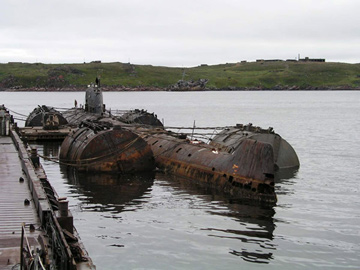
“Whichever way we deal with all seven of the subs currently at the dockyard I remain completely against any further nuclear submarines being brought to Rosyth.
By Ally McRoberts, Dunfermline Press, 8th Nov 2025
REMOVING the reactor from one of the laid-up nuclear submarines at Rosyth Dockyard is a “stage too far”.
Local SNP councillor Brian Goodall said there was “no need” to cut out the most radioactive parts left in HMS Swiftsure, which is being dismantled as part of an innovative recycling scheme.
He said there was nowhere to safely store the waste and it would also be cheaper to not go ahead – a stance that Labour MP Graeme Downie said was an “insult to the highly skilled team at Rosyth”.
Cllr Goodall said: “The next step will see Babcock cutting out the pressure vessel from the reactor compartment of the decommissioned nuclear submarine Swiftsure, in an experimental process that has never been done anywhere in the world before.
“This part of the submarine dismantling project has required Babcock to seek an increase in the limits to the levels of radioactivity they are allowed to discharge into the environment around the area.
“I believe there’s no clear justification for the cutting out of the pressure vessel, and that the removal for long term storage of the entire reactor compartment would be the more logical, proven, safer and cheaper approach to the next step in the dismantling process.”
There are currently seven old nuclear subs laid up at Rosyth and another 15 at the Devonport naval base in Plymouth.
A further five are due to come out of service.
The dismantling programme at the dockyard began in 2015 – Swiftsure is the first to be cut up – and in September yard bosses said Rosyth could become a “centre of excellence” for dealing with the UK’s old nuclear subs.
The project is doing what no-one else has attempted to do – removing the most radioactive parts left in the vessel, the reactor and steam generators, and recycling up to 90 per cent of the ship.
However, Cllr Goodall said: “The only justification ever given for cutting out the reactor pressure vessels in this way was to reduce the volume of the intermediate level radioactive waste that would be going into the UK’s deep geological radioactive waste facility.
“But such a facility does not exist and it looks like it never will, so long term, near surface storage at a nuclear licensed facility in England, like Capenhurst or Sellafield, is now the most likely outcome.
“And so there’s no need to take forward the experimental stage two part of the proposed procedure, with the increased radioactive discharges associated with it.”
He said he had made the same point at the consultation stage in 2012, before the dismantling of subs at Rosyth got the go ahead.
The councillor continued: “While I support the demonstrator project and, if it’s successful, I’d reluctantly back the on-site dismantling of the six other decommissioned submarines that are currently at Rosyth, I feel it’s not too late to rethink stage two of the process.
“Whichever way we deal with all seven of the subs currently at the dockyard I remain completely against any further nuclear submarines being brought to Rosyth.
“With homes within metres of the site and schools, shops and countless other businesses right next door, Rosyth should never have become a nuclear facility and radioactive waste store.
“We should now be doing all we can to create a long positive, clean, green future for the dockyard.”…………………https://www.dunfermlinepress.com/news/25606854.brian-goodall-says-no-next-stage-submarine-dismantling/
Radioactive waste from Canada would be buried in Utah under EnergySolutions proposal.
The company wants to import more than 1 million cubic yards of low-level radioactive waste from Canada to its facility in Utah’s West Desert.
Salt Lake Tribune, By Leia Larsen and Jordan Miller, Nov. 8, 2025
A Utah company wants to import massive amountsof Canadian radioactive waste to a facility less than 100 miles from the state’s largest population center.
EnergySolutions seeks to transport up to 1.3 million cubic yards of low-level radioactive and mixed waste — enough to fill roughly 400 Olympic-sized swimming pools — from Ontario, Canada, to its Clive facility in Tooele County,it confirmed in a statement Thursday. The international nuclear services company is headquartered in Salt Lake City.
Its proposal, if approved, would mark the first time Utah allows foreign radioactive waste to be stored within state boundaries.
The company currently accepts low-level radioactive and other hazardous waste from across the nation at the Clive site for burial, which opened in 1988.
The request is under consideration by the Northwest Interstate Compact on Low-Level Radioactive Waste Management, which manages the disposal of such waste in Utah and seven other states. At least six states must approve the proposal, and Utah can veto it.
EnergySolutions says it will ask Utah regulators for permission to expand its storage capacity to accept the waste from Canada and shipments from across the U.S. The company expects to pay $30 million under a new tax imposed by the state Legislature in order to generate money for Gov. Spencer Cox’s Operation Gigawatt — his initiative to double energy production in Utah over the next decade…………………………………………………………………..
What kind of radioactive waste could come to Utah?
……………………..Typical low-level radioactive materials include contaminatedprotective clothing, filters, cleaning rags, medical swabs and syringes, according to the NRC. However, a lobbyist for EnergySolutions told lawmakers this year, while discussing the proposed expansion, the waste could include components of decommissioned nuclear power plants.
The Canadian shipments would also include mixed waste, which is any type of radioactive material that is combined with hazardous waste.
The Clive facility currently holds Class A radioactive “soil, concrete rubble, demolition debris, large components and personal protective equipment,” a company spokesperson said. That waste comes from the federal government and domestic power plants.
EnergySolutions will only accept foreignwaste generated within the province of Ontario, it noted in a letter filed Sept. 9 seeking approval from the interstate compact. The materials cannot be shipped from other locations. No depleted uranium will travel from Canada to the landfill site, the company confirmed.
This case would mark the first time a state in the compact accepts foreign radioactive waste, confirmed Kristen Schwab, executive director of the Northwest Interstate Compact. And only two states in the compact accept low-level radioactive waste for disposal at all — Utah and Washington.
…………………………………… HEAL Utah, an environmental watchdog, said it has concerns about potential spills along the route.
“Historically, Utah residents have been concerned about waste coming through their communities to be dumped in our state,” said Carmen Valdez, a senior policy associate for the nonprofit.
EnergySolutions previously sought to ship parts of a dismantled nuclear plant from Italy to its Utah location in 2008. The state vetoed the plan with the backing of then-Gov. Jon Huntsman, who bristled at the idea of storing radioactive materials from other countries.
“As I have always emphatically declared,” Huntsman said at the time, “Utah should not be the world’s dumping ground.”
Cox did not directly respond Friday to a question about whether he supports EnergySolutions’ proposal.
In order to import the Canadian waste, EnergySolutions must get a license from the Nuclear Regulatory Commission and the Canadian Nuclear Safety Commission, the company confirmed.
The company also needs approval from the Utah Department of Environmental Quality to move forward with its facility expansion. The company estimates will keep the Clive site operational for another 45 years.
The Utah Legislature earlier this year passed Senate Bill 216, which streamlined the process for such expansions and added a new tax on facilities that plan to scale up. Revenue generated from that tax would go to the Utah Energy Research Fund.
EnergySolutions said it would apply for the expansion by Dec. 31, and DEQ confirmed it has not yet received an application.
The company wants compact officials to approve the Ontario deal ahead of that state process, EnergySolutions said in an Oct. 31 follow-up letter. Waiting until DEQ approves its expansion would cause delays, it said.
One member of the compact committee suggested imposing a 10-year deadline for EnergySolutions to import the 1.3 million cubic yards of waste from Ontario to the Clive site. The company opposed the timeline, saying it would jeopardize its ability to “reasonably recover its investment,” including the $30 million expansion tax………
Shipments from Ontario will account for a fraction of the waste ultimately stored in the planned expansion, the company and DEQ said.
……………………………….Environmental advocates at HEAL remain wary about importing waste from other countries.
“We do have to find solutions to storing that waste safely,” Valdez said, “but we want to really ensure that we have enough means to manage the waste that already exists in the United States before we start accepting international waste at the benefit and profit of a private company.”
Low-level radioactive waste generated in Utah — from facilities like medical labs or universities, for example — is not disposed of in the state. As a member of the compact, Utah sends its waste to a facility in Richland, Washington.
The compact committee plans to discuss EnergySolutions’ proposal again at a meeting on Nov. 25. https://www.sltrib.com/news/environment/2025/11/07/utahs-energysolutions-proposes/
Los Alamos National Laboratory Prioritizes Plutonium “Pit” Bomb Core Production Over Safety

Santa Fe, NM – The independent Defense Nuclear Facilities Safety Board recently released its Review of the Los Alamos Plutonium Facility Documented Safety Analysis. It concluded that:
“While LANL facility personnel continue to make important upgrades to the Plutonium Facility’s safety systems, many of those projects have encountered delays due to inconsistent funding and other reasons. DOE and LANL should consider prioritizing safety-related infrastructure projects to ensure that the Plutonium Facility safety strategy adequately protects the public, as the facility takes on new and expansive national security missions.” (Page 24)
In early October 2024, the Department of Energy’s semi-autonomous National Nuclear Security Administration (NNSA) announced with great fanfare that the Los Alamos Lab had produced its first “diamond stamped” plutonium pit for the nuclear weapons stockpile. Tens of billions of taxpayers’ dollars have been sunk into LANL’s long delayed and over budget pit production program. Given no further announcements, it is not currently known whether or not the Lab is meeting its congressionally required production goals. Endemic nuclear safety problems have long been an intractable issue, at one point even forcing a three-year halt to plutonium operations at LANL’s Plutonium Facility-4 (“PF-4”).
In its recent Review, the Safety Board reported:
“The [2009] Plutonium Facility safety basis described very large potential [radioactive] dose consequences to the public following seismic events…. DOE committed to upgrade and seismically qualify the ventilation system, with a particular focus on a specific ventilation subsystem…”
“As the only facility in the DOE complex that can process large quantities of plutonium in many forms, [PF-4] represents a unique capability for the nation’s nuclear deterrent. The Board has long advocated for the use of safety-related active confinement systems in nuclear facilities for the purposes of confining radioactive materials…Passive confinement systems are not necessarily capable of containing hazardous materials with confidence because they allow a quantity of unfiltered air contaminated with radioactive material to be released from an operating nuclear facility following certain accident scenarios. Safety related active confinement ventilation systems will continue to function during an accident, thereby ensuring that radioactive material is captured by filters before it can be released into the environment… (Page 2, bolded emphases added)
The Safety Board referred to DOE Order 420.1C, Facility Safety, which has a clear requirement that:
“Hazard category 1, 2, and 3 nuclear facilities… must have the means to confine the uncontained radioactive materials to minimize their potential release in facility effluents during normal operations and during and following accidents, up to and including design basis accidents… An active confinement ventilation system [is] the preferred design approach for nuclear facilities with potential for radiological release. Alternate confinement approaches may be acceptable if a technical evaluation demonstrates that the alternate confinement approach results in very high assurance of the confinement of radioactive materials.” (Page 2, bolded emphases added; PF-4 is a Hazard Category 2 nuclear facility)
Plutonium pit production at LANL is slated for a 15% increase to $1.7 billion in FY 2026. But in a clear example of how the NNSA prioritizes nuclear weapons production over safety, the DNFSB reported:
The active confinement safety system “remained the planned safety strategy for the Plutonium Facility for many years… However, in a March 2022 letter to the Board, the NNSA Administrator stated that the planned strategy would shift away from safety class active confinement… A safety class would require substantial facility upgrades far in excess to those that are currently planned… facility personnel also noted that some projects [for alternate confinement approaches] have been paused or delayed due to funding issues…” (Pages 3 and 21, bolded emphases added)
Instead of a technical evaluation demonstrating that “the alternate confinement approach results in very high assurance of the confinement of radioactive materials,” the Board concluded:
“Predicting the amount of release under passive confinement conditions can be quite complex. Fire or explosions could add energy to the facility’s atmosphere and introduce a motive force that could carry hazardous materials through an exhaust path… Therefore, determination of the amount of radioactive material that could escape the facility becomes very complex and uncertain.” (Page 8, bolded emphases added)
In sum, DOE reneged on its commitment to retrofit a safety class confinement system at PF-4, even as it ramps up plutonium pit production. At the same time, LANL has not demonstrated that its “alternate confinement approach results in very high assurance of the confinement of radioactive materials” in the event of an accident or earthquake.
This also contradicts the NNSA’s position that potential radioactive doses are vanishingly small. For example, the agency claims that the “Most Exposed Individual” of the public would have only a one in a million chance of developing a “Latent Cancer Fatality” from an accidental fire in gloveboxes at PF-4, which commonly process molten, pyrophoric plutonium. (Draft LANL Site-Wide Environmental Impact Statement, January 2025, Page D-23)
Moreover, pit production that involves plutonium-239 is not the only nuclear safety issue. PF-4 also processes plutonium-238, a dangerous gamma emitter, as a heat source for radioisotope thermoelectric generators (AKA nuclear batteries). The Safety Board’s Review noted:
While newly installed gloveboxes meet seismic requirements, and facility modifications associated with the pit production mission prioritize upgrades for some gloveboxes, others have known seismic vulnerabilities and will not be able to perform their credited post-seismic function. Many of these deficient gloveboxes are associated with processing heat source plutonium, a high-hazard material which accounts for much of the facility’s overall safety risk… Upgrading glovebox support stands is important to return the facility to a safety posture more reliant on credited engineered features…” (Pages 22-23, bolded emphases added)
Nuclear safety issues will always be inherent to plutonium pit production, yet new pit production itself is simply not necessary. No currently planned production is to maintain the safety and reliability of the existing nuclear weapons stockpile. Instead, it is all for new-design nuclear weapons, which could prompt the U.S. to resume full-scale testing, as Trump has recently ordered. Pit production is the NNSA’s most expensive program ever, but it has no credible cost estimates. Independent experts have concluded that pits last at least a century (their average age now is ~43) and there are at least 15,000 existing pits already stored at the Pantex Plant near Amarillo, TX.
Moreover, the future of the independent Defense Nuclear Facilities Safety Board is in doubt, without whom the DOE’s chronic nuclear safety record would not be publicly known. The DNFSB’s five-member Board recently lost its quorum because of term limits. The Board desperately needs nominations from the Trump Administration, which so far has not happened either by design or neglect.
Jay Coghlan, Director of Nuclear Watch New Mexico, commented, “We are facing a perfect storm of expanding plutonium pit production and diminishing oversight by the Safety Board. LANL’s expanding nuclear weapons programs are sucking money from the Lab’s other programs that are truly needed, such as nonproliferation, cleanup and renewable energy research (which is being completely eliminated). NNSA’s prioritization of plutonium pit production for the new nuclear arms race and the erosion of nuclear safety could have disastrous results for northern New Mexico.”
The DNFSB’s Review of the Los Alamos Plutonium Facility Documented Safety Analysis is available at https://www.dnfsb.gov/sites/default/files/2025-10/Review of the Los Alamos Plutonium Facility Documented Safety Analysis %5B2026-100-001%5D.pdf https://nukewatch.org/wp-content/uploads/2025/11/LANL-Prioritizes-Plutonium-Pit-Bomb-Core-Production-Over-Safety.pdf
Hinkley Point B to begin 95-year decommissioning plan
Clara BullockSomerset, 5 Nov 25, https://www.bbc.com/news/articles/c986pvg41y2o
A former nuclear power station will begin its 95-year decommissioning process after regulators granted formal consent.
EDF’s Hinkley Point B, which lies on the Somerset coast near Stogursey, has been given the green light to be demolished by the Office for Nuclear Regulation (ONR).
In August 2022, Hinkley Point B reached the end of its operating life after nearly 46 years of generating electricity.
Dan Hasted, ONR director of regulation, said: “We will continue to proportionately regulate the Hinkley Point B site throughout the decommissioning phase to safeguard workers and the public.”
The nuclear site will transfer from EDF to the Nuclear Restoration Services next year, which will oversee the site’s dismantling.
Under the proposals, Hinkley Point B, which opened in 1976, could be decommissioned in three phases.
The first phase, which will last until 2038, includes the dismantling of all buildings and plant materials except for the site’s safestore structure. This facility will be used to store and manage the residential nuclear waste from the power station.
The second phase will see “a period of relative inactivity” of up to 70 years from 2039, to allow for the radioactive materials within the safestore to safely decay.
The final phase will see the former reactor and debris vaults being dismantled and removed.
Meanwhile, a new nuclear power station, Hinkley Point C, is being constructed near Hinkley B.
1 This Month

of the week – Shut Down Drone Warfare!


Tell the Ukrainian Government to Drop Prosecution of Peace Activist Yurii Sheliazhenko

Petition to revoke the licensing of the Near Surface Nuclear Disposal Facility (NSDF) at Chalk River. https://www.ourcommons.ca/petitions/en/Petition/Details?Petition=e-7247
To see nuclear-related stories in greater depth and intensity – go to https://nuclearinformation.wordpress.com
-
Archives
- March 2026 (237)
- February 2026 (268)
- January 2026 (308)
- December 2025 (358)
- November 2025 (359)
- October 2025 (376)
- September 2025 (257)
- August 2025 (319)
- July 2025 (230)
- June 2025 (348)
- May 2025 (261)
- April 2025 (305)
-
Categories
- 1
- 1 NUCLEAR ISSUES
- business and costs
- climate change
- culture and arts
- ENERGY
- environment
- health
- history
- indigenous issues
- Legal
- marketing of nuclear
- media
- opposition to nuclear
- PERSONAL STORIES
- politics
- politics international
- Religion and ethics
- safety
- secrets,lies and civil liberties
- spinbuster
- technology
- Uranium
- wastes
- weapons and war
- Women
- 2 WORLD
- ACTION
- AFRICA
- Atrocities
- AUSTRALIA
- Christina's notes
- Christina's themes
- culture and arts
- Events
- Fuk 2022
- Fuk 2023
- Fukushima 2017
- Fukushima 2018
- fukushima 2019
- Fukushima 2020
- Fukushima 2021
- general
- global warming
- Humour (God we need it)
- Nuclear
- RARE EARTHS
- Reference
- resources – print
- Resources -audiovicual
- Weekly Newsletter
- World
- World Nuclear
- YouTube
-
RSS
Entries RSS
Comments RSS
 nuclear-news