Australia’s State governments fight each other to avoid having to store nuclear wastes
Expect weapons-grade NIMBYism as leaders fight over where to store AUKUS nuclear waste

Given that proposals for even low-level nuclear waste sites have been rejected by communities, who is going to take on the radioactive waste created by our new military pact?
ANTON NILSSON, FEB 01, 2024, Crikey,
here should Australia store the waste created by its investment in nuclear-driven submarines? It’s a question no-one knows the answer to yet — although we do know a couple of places where the radioactive waste won’t be stored. As the search for a solution continues, expect politicians to try to kick the radioactive can further down the road — and expect some weapons-grade NIMBYism from state and territory leaders if they’re asked to help out.
In August last year, plans to build a new nuclear waste storage facility in Kimba in South Australia were scrapped. As Griffith University emeritus professor and nuclear expert Ian Lowe put it in a Conversation piece, “the plan was doomed from the start” — because the government didn’t do adequate community consultation before deciding on the spot.
Resources Minister Madeleine King acknowledged as much when she told Parliament the government wouldn’t challenge a court decision that sided with traditional owners in Kimba, who opposed the dump: “We have said all along that a National Radioactive Waste Facility requires broad community support … which includes the whole community, including the traditional owners of the land. This is not the case at Kimba.”
Kimba wasn’t even supposed to store the high-level waste that will be created by AUKUS submarines — it was meant to store low-level and intermediate-level waste, the kind generated from nuclear medicine, scientific research, and industrial technologies. As King told Parliament, Australia already has enough low-level waste to fill five Olympic swimming pools, and enough intermediate-level waste for two more pools.
Where the waste from AUKUS will go is a question without answer. Deputy Prime Minister Richard Marles said in March last year the first reactor from a nuclear-powered submarine won’t have to be disposed of until the 2050s. He added the government will set out its process for finding dump sites within a year — which means Marles has until March this year to spill the details.
“The final storage site of high-level waste resulting from AUKUS remains a mystery,” ANU environmental historian Jessica Urwin told Crikey. “Considering the historical controversies wrought by low- and intermediate-level waste disposal in Australia over many decades, it is hard to see how any Australian government, current or future, will get a high-level waste disposal facility off the ground.”
In his comments last year, Marles gave a hint as to the government’s intentions: he said it would search for sites “on the current or future Defence estate”.
One such Defence estate site that’s been the focus of some speculation is Woomera in South Australia. “A federal government decision to scrap plans for a nuclear waste dump outside the South Australian town of Kimba has increased speculation it will instead build a bigger facility on Defence land at Woomera that could also accommodate high-level waste from the AUKUS submarines,” the Australian Financial Review reported last year.
Urwin said such a proposal could trigger local opposition as well.
Due to Woomera’s proximity to the former Maralinga and Emu Field nuclear testing sites, and therefore its connections to some of the darkest episodes in Australia’s nuclear history, communities impacted by the tests and other nuclear impositions (such as uranium mining) have historically pushed back against the siting of nuclear waste at Woomera,” she said.
Australian Submarine Agency documents released under freedom of information laws in December last year show there is little appetite among state leaders to help solve the conundrum.
A briefing note to Defence secretary Greg Moriarty informed him that “state premiers (Victoria, Western Australia, Queensland, and South Australia) [have sought] to distance their states from being considered as potential locations”. ………………………………………………….. more https://www.crikey.com.au/2024/02/01/aukus-nuclear-waste-storage-australia/
Still no end in sight for Fukushima nuke plant decommissioning work
January 27, 2024 (Mainichi Japan), https://mainichi.jp/english/articles/20240127/p2a/00m/0na/003000c
OKUMA, Fukushima — Nearly 13 years since the triple-meltdown following the March 2011 Great East Japan Earthquake and tsunami, it is still unclear when decommissioning of the Fukushima Daiichi Nuclear Power Station’s reactors will be completed.
Operator Tokyo Electric Power Company (TEPCO) Holdings Inc. showed the power plant to Mainichi Shimbun reporters on Jan. 26 ahead of the 13th anniversary of the nuclear accident. Radiation levels in many areas are almost normal, and people can move in ordinary work clothes. However, the most difficult part of the work, retrieving melted nuclear fuel, has been a challenge. The management of solid waste, which is increasing daily, also remains an issue. The decommissioning of the reactors, which is estimated to take up to 40 years, is still far from complete.
Meltdowns occurred in reactor Nos. 1, 2 and 3. The start of nuclear fuel debris removal at reactor No. 2, which had been scheduled to begin by the end of fiscal 2023, has just been postponed for the third time. Reactor buildings are still inaccessible due to high radiation, meaning the work has to be done remotely.
More than 1,000 tanks for storing treated wastewater are lined up next to reactor Nos. 1 through 4, and new facilities to stably store and process approximately 520,000 cubic meters of existing solid waste are being built by reactor Nos. 5 and 6.
Treated wastewater began being discharged into the ocean in 2023, and the tanks are gradually being removed, but there is no timetable for the disposal of the solid waste. A TEPCO representative said, “The final issue that remains is how to deal with the radioactive waste that continues to be produced even as the decommissioning of the plant progresses.”
Japanese original by Yui Takahashi, Lifestyle, Science & Environment News Department)
MP wants public vote on nuclear waste disposal
Richard Madden, BBC News, 26 January 2024 more https://www.bbc.com/news/articles/crg7nlwnz59o
People in part of East Yorkshire should be given a referendum on a proposal to bury nuclear waste, the area’s MP has said.
Nuclear Waste Services (NWS), a government agency, has identified South Holderness as having potential for a Geological Disposal Facility (GDF).
Beverley and Holderness MP Graham Stuart said any development would need public consent.
Officials behind the scheme said on Thursday that if the community did not express support the disposal facility would not be built.
‘Toughest test’
Mr Stuart said: “Everyone is right to be concerned about the possibility of a nuclear waste facility in our area.
“They are required to get local consent and I want that to be the toughest available test, a referendum of residents in the affected area”, he said.
A working group has been formed to look at the proposal and a series of public meetings will take place.
Drop-in sessions
- 1 February – Patrington Village Hall
- 2 February – Withernsea, The Shores Centre
- 8 February – Aldbrough Village Hall
- 9 February – Easington Community Hall
- 12 February – Burstwick Village Hall
All sessions run from 11:30 – 18:00 GMT.
Officials from NWS said the project could create thousands of jobs and investment in local infrastructure in South Holderness.
But campaigners in other areas have raised concerns about the impact on tourism, house prices and the environment, leading to protests.
The GDF would see waste stored under up to 3,280ft (1000m) underground until its radioactivity had naturally decayed.
Other proposals have been put forward in Cumbria and at Theddlethorpe on the Lincolnshire coast.
Plan to store nuclear waste under Holderness for 175 years

Nuclear waste from across the UK could be stored below an area of East Yorkshire for up to 175 years.
Government agency Nuclear Waste Services (NWS) announced proposals today to build a storage facility beneath South Holderness.
A group has been set up to examine the proposals, but the agency’s chief executive Corhyn Parr said the scheme would only go ahead with residents’ approval.
She said: “This is a consent-based process, meaning if the community does not express support… it won’t be built there.”
Ms Parr added that the new geological disposal facility would bring benefits to the area, including thousands of jobs and transport improvements.
Two similar working groups are already established in Cumbria and at Theddlethorpe on the Lincolnshire coast.
Dr David Richards, independent chair of the South Holderness working group, said the aim was to work with local communities to discuss the potential of a series of vaults and tunnels being built deep underground, or under the sea, where the material would be buried.
He added: “My role as chair is to make sure local communities have access to information and to understand what people think.”…………………………
Graham Stuart, the MP for Beverley and Holderness, said that he will be meeting with Dr David Richards to discuss the plans.
He wrote on Facebook: “I’ll be asking for a copper bottomed guarantee that nothing would happen without public consent…………………………. https://www.itv.com/news/calendar/2024-01-25/plan-to-store-nuclear-waste-under-east-yorkshire-for-175-years
Japan’s Fukushima nuclear plant: further delays for removal of melted fuel debris
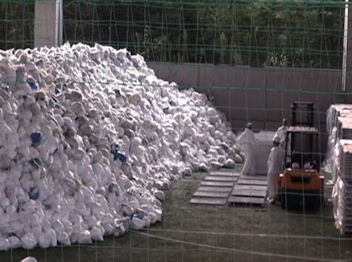
About 880 tons of highly radioactive melted nuclear fuel remain inside the three damaged reactors. Critics say the 30- to 40-year cleanup target set by the government and TEPCO for Fukushima Daiichi is overly optimistic. The damage in each reactor is different and plans need to be formed to accommodate their conditions.
NewsDay, By The Associated Press, January 25, 2024
TOKYO — The operator of the tsunami-hit nuclear plant in Fukushima announced Thursday a delay of several more months before launching a test to remove melted fuel debris from inside one of the reactors, citing problems clearing the way for a robotic arm.
The debris cleanup initially was supposed to be started by 2021, but it has been plagued with delays, underscoring the difficulty of recovering from the plant’s meltdown after a magnitude 9.0 quake and tsunami in March 2011.
The disasters destroyed the Fukushima Daiichi nuclear plant’s power supply and cooling systems, causing three reactors to melt down, and massive amounts of fatally radioactive melted nuclear fuel remain inside to this day.
The government and the Tokyo Electric Power Company Holdings, or TEPCO, initially committed to start removing the melted fuel from inside one of the three damaged reactors within 10 years of the disaster.
In 2019, the government and TEPCO decided to start removing melted fuel debris by the end of 2021 from the No. 2 reactor after a remote-controlled robot successfully clipped and lifted a granule of melted fuel during an internal probe.
But the coronavirus pandemic delayed development of the robotic arm, and the plan was pushed to 2022. Then, glitches with the arm repeatedly have delayed the project since then.
On Thursday, TEPCO officials pushed back the planned start from March to October of this year.
TEPCO officials said that the inside of a planned entryway for the robotic arm is filled with deposits believed to be melted equipment, cables and other debris from the meltdown, and their harder-than-expected removal has delayed the plan.
TEPCO now is considering using a slimmer, telescope-shaped kind of robot to start the debris removal.
About 880 tons of highly radioactive melted nuclear fuel remain inside the three damaged reactors. Critics say the 30- to 40-year cleanup target set by the government and TEPCO for Fukushima Daiichi is overly optimistic. The damage in each reactor is different and plans need to be formed to accommodate their conditions.
TEPCO has previously tried sending robots inside each of the three reactors but got hindered by debris, high radiation and inability to navigate them through the rubble, though they were able to gather some data in recent years.
Getting more details about the melted fuel debris from inside the reactors is crucial for their decommissioning. TEPCO plans to deploy four mini drones and a snake-shaped remote-controlled robot into the No. 1 reactor’s primary containment vessel in February to capture images from the areas where robots have not reached previously……… more https://www.newsday.com/news/nation/Japan-Fukushima-nuclear-plant-melted-fuel-decommissioning-v83291
Japan’s Fukushima nuclear plant further delays removal of melted fuel debris
Daily Mail, 26 Jan 24, TOKYO (AP) – The operator of the tsunami-hit nuclear plant in Fukushima announced Thursday a delay of several more months before launching a test to remove melted fuel debris from inside one of the reactors, citing problems clearing the way for a robotic arm.
The debris cleanup initially was supposed to be started by 2021, but it has been plagued with delays, underscoring the difficulty of recovering from the plant’s meltdown after a magnitude 9.0 quake and tsunami in March 2011……………………………………………
About 880 tons of highly radioactive melted nuclear fuel remain inside the three damaged reactors. Critics say the 30- to 40-year cleanup target set by the government and TEPCO for Fukushima Daiichi is overly optimistic. The damage in each reactor is different and plans need to be formed to accommodate their conditions.
TEPCO has previously tried sending robots inside each of the three reactors but got hindered by debris, high radiation and inability to navigate them through the rubble, though they were able to gather some data in recent years.
Getting more details about the melted fuel debris from inside the reactors is crucial for their decommissioning. TEPCO plans to deploy four mini drones and a snake-shaped remote-controlled robot into the No. 1 reactor’s primary containment vessel in February to capture images from the areas where robots have not reached previously………………. https://www.dailymail.co.uk/wires/ap/article-13006423/Japans-Fukushima-nuclear-plant-delays-removal-melted-fuel-debris.html
NNSA Issues Final Surplus Plutonium Environmental Impact Statement

The Department of Energy’s National Nuclear Security Administration (NNSA) published a Notice of Availability (NOA) in the Federal Register on Jan. 19, 2024, announcing the availability of the final Surplus Plutonium Disposition Program (SPDP) Environmental Impact Statement (EIS). The SPDP would employ the dilute and dispose strategy to safely and securely dispose of up to 34 metric tons of plutonium surplus to the Nation’s defense needs, using new, modified, or existing facilities at sites across the Nation.
The EIS satisfies NNSA’s obligations under the National Environmental Policy Act (NEPA) as the agency seeks to fulfill two important goals:
- Reduce the threat of nuclear weapons proliferation worldwide by dispositioning surplus plutonium in the United States in a safe and secure manner.
- Meet NNSA’s domestic and international legal obligations.
The 34 metric tons of surplus plutonium covered in the EIS was previously intended for use in fabricating mixed oxide (MOX) fuel. After irradiation in commercial power reactors, the fuel would have been stored pending disposal in a deep geologic repository for spent nuclear fuel. DOE cancelled the MOX project in 2018.
NNSA’s preferred alternative, the dilute and dispose strategy, also known as “plutonium downblending,” includes converting pit and non-pit plutonium to oxide, blending the oxidized plutonium with an adulterant, compressing it, encasing it in two containers, then overpacking and disposing of the resulting contact-handled transuranic (CH-TRU) waste underground in the Waste Isolation Pilot Plant (WIPP) facility in New Mexico. The approach would require new, modified, or existing capabilities at the Savannah River Site (SRS) in South Carolina, Los Alamos National Laboratory (LANL) in New Mexico, the Pantex Plant in Texas, and WIPP.
Under the No Action Alternative, up to 7.1 metric tons of non-pit plutonium would be processed at either LANL or SRS. If the processing occurs at LANL, then the resulting plutonium oxide would be transported to SRS. If it occurs at SRS, then the resulting material would remain there. In both cases the processed material would be diluted, characterized, packaged, and transported as CH-TRU defense waste to the WIPP facility for disposal.
The final SPDP EIS is posted on the NNSA NEPA reading room web page. NNSA will publish a Record of Decision (ROD) for the program after Feb. 20, 2024. The ROD will be published in the Federal Register and posted on the DOE NEPA and NNSA NEPA Reading Room websites.
NNSA announced its intent on Dec. 16, 2020, to prepare an EIS to evaluate the environmental impacts of the dilute and dispose strategy. It released the draft EIS for public comment on Dec. 16, 2022. It conducted three in-person public hearings and one virtual public hearing in January 2023. NNSA has incorporated public comments and developed the final SPDP EIS and is committed to complying with all appropriate and applicable environmental and regulatory requirements.
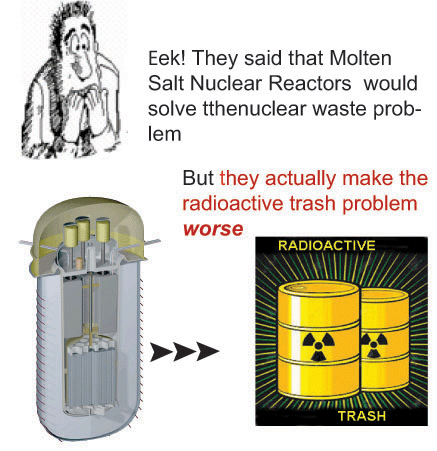
Nuclear power: molten salt reactors and sodium-cooled fast reactors make the radioactive waste problem WORSE

 reactors https://www.tandfonline.com/doi/full/10.1080/00963402.2018.1507791, Lindsay Krall &Allison Macfarlane, 31 Aug 18
ABSTRACT
Nuclear energy-producing nations are almost universally experiencing delays in the commissioning of the geologic repositories needed for the long-term isolation of spent fuel and other high-level wastes from the human environment. Despite these problems, expert panels have repeatedly determined that geologic disposal is necessary, regardless of whether advanced reactors to support a “closed” nuclear fuel cycle become available. Still, advanced reactor developers are receiving substantial funding on the pretense that extraordinary waste management benefits can be reaped through adoption of these technologies.
Here, the authors describe why molten salt reactors and sodium-cooled fast reactors – due to the unusual chemical compositions of their fuels – will actually exacerbate spent fuel storage and disposal issues. Before these reactors are licensed, policymakers must determine the implications of metal- and salt-based fuels vis a vis the Nuclear Waste Policy Act and the Continued Storage Rule.
The Politics of Nuclear Waste Disposal: Lessons from Australia
22 Jan 2024 | Jim Green and Dimity Hawkins, https://www.apln.network/projects/voices-from-pacific-island-countries/the-politics-of-nuclear-waste-disposal-lessons-from-australia
Click here to download the full report.
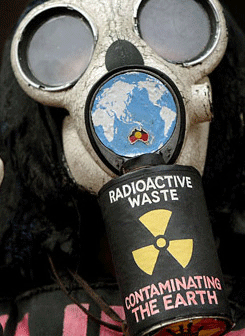
In this report, Jim Green and Dimity Hawkins explore Australia’s long and complex engagement with nuclear waste issues. With the failure to remediate atomic bomb test sites, and repeated failures to establish a national nuclear waste repository, the approaches of successive Australian governments to radioactive waste management deserve close scrutiny.
A recurring theme is the violation of the rights of Aboriginal First Nations Peoples and their successful efforts to resist the imposition of nuclear waste facilities on their traditional lands through effective community campaigning and legal challenges. Green and Hawkins argue for the incorporation of the UN Declaration on the Rights of Indigenous Peoples into Australian law, and amendments to the National Radioactive Waste Management Act to remove clauses which weaken or override Indigenous cultural heritage protections and land rights.
In addition, they highlight the need for studies, clean-up and monitoring of all British nuclear weapons test sites in Australia in line with the positive obligations in the Treaty on the Prohibition of Nuclear Weapons (TPNW). In light of the failure to manage existing radioactive waste management challenges, it must be questioned whether the Australian government can successfully manage the challenges of high-level nuclear waste management posed by the AUKUS defence pact and the plan to purchase and build nuclear-powered submarines.
This report was produced as part of a project on Nuclear Disarmament and the Anthropocene: Voices from Pacific Island Countries, sponsored by Ploughshares Fund.
Finland’s Radiation and Nuclear Safety Authority (STUK) wants to delay completion of its review on waste dump

Finland’s Radiation and Nuclear Safety Authority (STUK) has requested the
deadline for its opinion on Posiva Oy’s operating licence application for
the world’s first used fuel repository to be extended until the end of
2024. In September last year, it said it would not complete its review by
the end of 2023 as originally planned.
Radioactive waste management company
Posiva submitted its application, together with related information, to the
Ministry of Economic Affairs and Employment (TEM) on 30 December 2021 for
an operating licence for the used fuel encapsulation plant and final
disposal facility currently under construction at Olkiluoto.
The repository
is expected to begin operations in the mid-2020s. Posiva is applying for an
operating licence for a period from March 2024 to the end of 2070. The
government will make the final decision on Posiva’s application, but a
positive opinion by STUK is required beforehand. The regulator began its
review in May 2022 after concluding Posiva had provided sufficient
material. The ministry had requested STUK’s opinion on the application by
the end of 2023.
However, STUK announced in September that its safety
assessment and opinion on the application was taking longer than expected
and would not be completed by that deadline.
World Nuclear News 19th Jan 2024
https://www.world-nuclear-news.org/Articles/STUK-requests-extension-to-repository-review-deadl
Chalk River, or low-level nuclear governance.

Monique Pauzé, The author is a Bloc Québécois MP (Repentigny) and Environment critic., January 18, 2024
A few days ago, after several “rounds of work and consultation” that began in 2016, the Canadian Nuclear Safety Commission (CNSC) ruled in favor of the Chalk River Near Surface Waste Management Facility (NSWMF) project. Opposition to this open-air radioactive dump is undeniable: a multitude of aboriginal communities, citizen groups, scientists and over a hundred cities and municipalities spread around the Ottawa River, including Ottawa, Montreal and Gatineau.
To contextualize the issues surrounding this project, and to grasp the extent to which the authorization given is highly reprehensible, if not absurd, I believe it is pertinent to address it in the light of a study by the House of Commons Standing Committee on the Environment, specifically on Canada’s governance of radioactive waste. Held in 2022 and concluding with a report submitted to federal elected officials, the study is absolutely relevant today.
To begin with, we remind you that the International Atomic Energy Agency (IAEA) made suggestions and recommendations to the CNSC in 2019, during the peer review conducted by the Integrated Regulatory Review Service mission. As a result, we had confirmation, despite the government’s expressed pride, that Canada was not beyond reproach in this area, and this justified the attention of federal elected officials.
Many decried it: the essential principle of keeping radioactive waste away from sources of drinking water is not respected, and in many respects the project is at odds with the recommendations and guidelines of the IAEA, as well as with the five principles agreed and adopted by the leaders of 133 First Nations in Ontario.
There is an absence of consideration for the possible hazards associated with the project’s location and underground, hazards that attract less attention than the risks of contamination of watercourses, tributaries of the river, from which potentially millions of people draw their drinking water.
Legitimate opposition
In addition, Chalk River is located at the junction of geological fractures and in the western Quebec earthquake zone, a seismic belt that spans the Ottawa Valley, the Laurentians and parts of eastern Ontario. The volume of various radioactive wastes that will be buried in the open pit is substantial. Witnesses and experts have raised the issue of the lack of clarity in identifying the substances that will be introduced into the mound.
Opposition to the project is absolutely legitimate.
Several witnesses to this study accurately addressed the physical characteristics of Canadian radioactive waste, highlighting the redefinition of what constitutes intermediate-level radioactive waste, hidden in a CNSC “proof regulation” adopted in June 2020. William Turner, retired from Atomic Energy of Canada Limited and a resident of Deep River, provided the committee with a detailed fact sheet on this issue.
Gilles Provost, a science journalist and witness to the study, wrote in Le Devoir on June 13 of the same year: “[…] we come up against a scientific absurdity: in physics, the activity of a radioactive product is its decay rate. The faster it decays, the higher its activity. This means that a radioactive product with [higher] activity according to physics would now be low-level waste according to the new definition decreed by the CNSC!”
This new definition has concrete effects, since the Chalk River SRWMF is designed to receive only low-level waste. The result? Waste considered to be medium-level by physical science will end up in the mound, since it is now considered to be low-level.
For the Aboriginal communities of Kebaowek and Kitigan Zibi, the process chosen by the CNSC constitutes a failure in its duty to consult properly.
In addition to the disturbing comments made or sent by their representatives during the parliamentary committee study in 2022 about the “coercive” nature of the consultative approach, the aboriginal communities are rightly relying on Article 29.2 of the United Nations Declaration on the Rights of Indigenous Peoples, which states that no decision on nuclear waste storage, small modular reactors, transport or decommissioning can be taken without free, prior and informed consent.
“[…] We could explain it to you, but you wouldn’t understand it anyway. We’ll give you all the information and you won’t understand it.” This excerpt from the testimony of Reg Niganobe, Chief of the Grand Council of the Anishinabe Nation and a witness to the 2022 study, is shocking: when a representative of the sector expresses himself in this way, I think the climate they want to create is incredibly unhealthy and contemptuous. Non-native groups have also been subjected to this type of “approach” in similar processes. Their submissions to the committee study attest to this.
If there is indeed a political will to consider the communities most directly affected by these issues, then they must be given the consideration they deserve.
Reconciliation? Participatory consultations? Transparent processes and compliance with IAEA standards? The CNSC reports to Minister Jonathan Wilkinson, and the mobilization against Chalk River will continue. The federal government had better change its mind… It has the authority to do so.
Kebaowek Nation calls for cancellationof nuclear waste disposal site at Chalk River
Nuclear waste disposal would run counter to Aboriginal rights and environmental protection.
by Alexia Leclerc, Pivot, January 16, 2024
The Kebaowek First Nation denounces the Canadian Nuclear Safety Commission’s decision to grant a license to the private company Canadian Nuclear Laboratories to build a radioactive waste disposal facility at Chalk River, on Algonquin Anishinabeg traditional territory. She believes that the Commission did not respect its duty to consult Aboriginal communities, and is concerned about the consequences for health and the environment.
Canadian Nuclear Laboratories (CNL) has obtained a federal licence to operate a 37-hectare area for, among other things, the permanent near-surface storage of up to 1,000,000 cubic metres of solid low-level radioactive waste.
This area is located on the unceded traditional territory of the Algonquin Anishinabeg Nation communities, who reject the project. The area is close to sacred sites such as Oiseau Rock and Pointe au Baptême, as well as the Kichi Sibi (Ottawa River) and its watershed, and several animal and plant species important to the ecosystem.
The community of Kebaowek strongly denounces this situation and calls on the federal government to stop the project. “The Commission’s decision is unacceptable,” said Lance Haymond, Chief of the First Nation, in a press release issued on January 9. “The Government of Canada must act quickly and affirm the suspension of the project without delay.”
CNL applied to the Canadian Nuclear Safety Commission (CNSC), a federal administrative tribunal, for an amendment to its current operating licence. The Commission, which issues licences to nuclear companies, is mandated to assess the environmental and human impacts of such a project, while ensuring that obligations to consult Aboriginal peoples are met.
Duty to consult not respected
“We believe that consultation has been inadequate, to say the least, and that our Aboriginal rights are threatened by this proposal,” says Lance Haymond.
The communities of Kebaowek and Kitigan Zibi, members of the Algonquin Anishinabeg Nation, intervened with the Commission in June 2022 to inform it that they had not been adequately consulted. The Commission gave them one year to provide a brief that would allow adequate consultation.
Only these two communities were given additional time for consultation activities, although other communities also requested this time.
The brief filed by Kebaowek and Kitigan Zibi states that all the communities of the Algonquin Anishinabeg Nation have potential title, interest and inherent rights over the entire Kichi Sibi watershed, beyond the limits imposed by the reserve and provincial system.
“How do they understand the duty to consult, when ten out of eleven communities refuse the project?” denounces Justin Roy, Councillor for the Kebaowek First Nation. “It’s not enough to simply inform and listen. What the communities want is to be able to sit at the discussion table, to take part in the decision-making and solution-making process.
He acknowledges that nuclear waste management needs to be addressed, but maintains that the current solution is inadequate.
The Kebaowek and Kitigan Zibi brief already asserted that approval of this project would violate the United Nations Declaration on the Rights of Indigenous Peoples. This states that states must take effective measures to prevent the storage or disposal of hazardous materials on the territories of indigenous peoples without their free, prior and informed consent.
When we asked about the criticisms of the consultations, the Commission simply referred us to its report, without comment. The report describes the consultation process and mentions the additional time granted to the two communities.
Threats to health
Kebaowek Chief Lance Haymond states “it is undeniable that the safety and health of people and the environment will be profoundly impacted for generations to come by this project”.
Gordon Edwards, president of the Canadian Coalition for Nuclear Responsibility, warns of the dangers of storing nuclear substances in the area, despite the Commission’s ruling. “Judging that there will be no significant environmental impacts doesn’t mean that there won’t be any.”
Gordon Edwards points out that even after the active life of this nuclear waste management site is over, radioactive materials from it will still be present in the environment for several thousand years.
The release of radioactive materials into the water of the Ottawa river that flows into the St. Lawrence will be monitored to ensure that the quantity respects Canadian standards, insists the Commission. However, Gordon Edwards warns that no public health or medical data will be collected on the health effects of exposure to people from these substances in the water.
“When we put radioactivity in the water we drink, we expose millions of people. Even if the level of exposure is very low, it exposes a lot of people to these radioactive cancer-causing agents.” He explains that the more people are exposed to radiation, the greater the number of cancers are expected.
“The main reason to keep radioactive materials out of the environment is to keep the number of people exposed to them as minimal as possible,” he sums up.
Impact on endangered species
Despite the Commission’s assessment, the Kebaowek First Nation also remains concerned about the project’s environmental impacts. “The Commission’s final decision is completely unfounded in concluding that the project […] will not have significant environmental effects,” insists Lance Haymond.
Justin Roy points out that several protected species inhabit this environment. For example, he points out that the Kebaowek and Kitigan Zibi brief assesses, among other things, that vegetation clearing would have an impact on the black ash, considered an endangered species by the Ontario government. However, there is no mention of the black ash in the Commission’s report.
Construction of the site would also require the destruction of hibernation sites, threatening the black bear population, says Justin Roy.
The Canadian Nuclear Safety Commission affirms that the environmental effects are for the most part insignificant, and that mitigation measures will be put in place to protect endangered species. In response to Pivot’s questions, it states that it will continue to observe the surrounding environment as part of the Independent Environmental Monitoring Program.
Commission decision a ‘gut-punch’, so years-long battle over radioactive waste mound will continue
“You cannot sit there and tell me that over the next 550 years nothing is going to leach out of this mound and get in and make its way into the surrounding environment and waterways.” —Kebaowek First Nation Councillor Justin Roy
By Shari Narine
Local Journalism Initiative Reporter
Windspeaker.com 12 Jan 24
Kebaowek First Nation is considering legal action now that the Canadian Nuclear Safety Commission has given the go ahead to Canadian Nuclear Laboratories (CNL) to construct a Near Surface Disposal Facility (NSDF) for solid low-level radioactive waste at its Chalk River Laboratories site on traditional unceded Algonquin territory.
“The big thing being discussed right now is pushing for a judicial review of the project. Just based on all of our environmental findings and the impacts that could be shown, we strongly believe we’d have a good case for this,” said Kebaowek First Nation Councillor Justin Roy.
Next steps will be decided once the legal team has fully reviewed the 169-page decision from the commission, which was released Jan. 9, he says.
The commission ruled it was confident that the NSDF project, an engineered containment mound for up to a million tonnes of radioactive and hazardous waste, was “not likely to cause significant adverse effects with respect to Aboriginal peoples.”
The containment mound is to be located 1.1 km from the Ottawa River on a bedrock ridge. The Kichi Sibi (Ottawa River) is sacred to the Algonquin people. The Chalk River site is also close to the sacred Algonquin sites of Oiseau Rock and Baptism Point.
The commission concluded “the design of the NSDF project is robust, supported by a strong safety case, able to meet its required design life, and sufficient to withstand severe weather events, seismic activity, and the effects of climate change.”
Roy calls the decision a “gut punch” but admits he is not surprised.
What does surprise him, however, is that the decision states that CNL adequately undertook a duty to consult with First Nations.
“I find that hard to believe when you have 10 of 11 Algonquin communities in direct opposition to the project. After everything that we’ve done over the last number of years and everything that we presented at last year’s hearing and then even in the hearing this last August, we’re just falling on deaf ears once again,” said Roy.
On June 9, the Algonquins of Pikwakanagan signed a long-term relationship agreement with CNL and Atomic Energy of Canada Limited, another nuclear organization. The agreement establishes a working group with representatives from all three parties.
The commission held that the disposal facility was also “not likely to cause significant adverse effects” when it came to fish and fish habitat, aquatic species at risk, migratory birds, or federal lands.
“We have inherent rights to our unceded Algonquin territory and that means we need to protect everything that encompasses that territory, from the environment, the trees, the land, the air, the water and all the living species that make up our Algonquin territory,” said Roy.
Algonquin people are on the ground, he said, hunting, fishing and picking berries and “were able to show that there are going to be plenty of environmental impacts and, especially, species at risk that are going to be affected by this.”……………………………………………………………… https://windspeaker.com/news/windspeaker-news/commission-decision-gut-punch-so-years-long-battle-over-radioactive-waste
Kebaowek First Nation strongly opposes nuclear waste storage facility in Chalk River
Radioactive waste site in Chalk River a go
National Observer, By Natasha Bulowski / Local Journalism Initiative / Canada’s National Observer, 9 Jan 24
The Canadian Nuclear Safety Commission has greenlit a proposed nuclear waste storage facility in Chalk River, Ont., after a years-long battle waged by concerned citizens, environmentalists and First Nations.
On Jan. 9, the commission announced Canadian Nuclear Laboratories’ operating licence will be changed to allow construction of a “near-surface disposal facility” to hold up to a million tonnes of radioactive and hazardous waste. Stored in a large mound, the waste would sit about a kilometre from the Ottawa River, a culturally important river for Algonquins, and this proximity to drinking water for millions is one of many factors that raised alarm bells for opponents.
The proposed facility, referred to as the NSDF, “is not likely to cause significant adverse environmental effects” as long as Canadian Nuclear Laboratories sticks to its proposed mitigation and monitoring measures, the commission said in its decision.
Within hours of the announcement, Kebaowek First Nation put out a press release calling on the federal government to intervene and stop the project. Organizations representing 10 of the 11 Algonquin First Nations have opposed the project, alongside leaders and elders from those nations. Pikwakanagan First Nation, the only Ontario-based Algonquin Nation and closest to Chalk River, signed a long-term relationship agreement with Canadian Nuclear Laboratories on June 9, 2023………………………………………………
Kebaowek First Nation Chief Lance Haymond called the commission’s decision “unacceptable” because it goes against the rights of Indigenous Peoples and environmental protection in a press release issued a few hours after the decision.
“I want to be very clear: the Algonquin Peoples did not consent to the construction of this radioactive waste dump on our unceded territory,” Haymond said. “We believe the consultation was inadequate, to say the least, and that our Indigenous rights are threatened by this proposal.”
Algonquin leaders from Kebaowek and Kitigan Zibi Anishinabeg First Nations and Algonquins of Barriere Lake have long opposed the NSDF and have urged the commission to heed their concerns about environmental and human health. At the final licensing hearing in August, Kebaowek and Kitigan Zibi Anishinabeg argued the consultation was inadequate because it began far too late in the decision-making process and did not appear to take their concerns or traditional knowledge seriously………………………………………….
James Walker, a nuclear waste expert and former director of safety engineering and licensing at AECL, disputed the proclamation that all waste will be low-level in a submission to the commission. His calculations, based on the inventory of waste provided by Canadian Nuclear Laboratories, show that much of it is intermediate-level radioactive waste and should not be placed in a near-surface facility. There is also no inventory management system to properly verify the waste complies with the acceptance criteria, he wrote. Walker said the project is “non-compliant with International Safety Standards” for these reasons……………………..
Last month, concerned citizen Ole Hendrickson initiated a House of Commons petition (authorized by Pontiac, Que. MP Sophie Chatel) calling for an international review of three radioactive waste projects including the NSDF at Chalk River. At the time of writing, it has almost 2,950 signatures. Petitions require a minimum of 500 signatures to be presented in the House of Commons and receive an official response from the government. https://www.nationalobserver.com/2024/01/09/news/radioactive-waste-site-chalk-river-go#
Mr President, saying that nuclear power will save the climate is a lie.
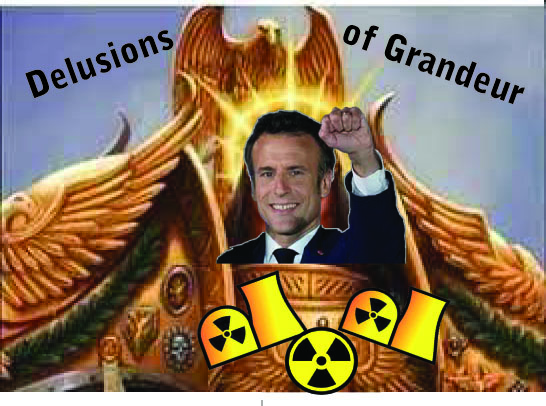
While Emmanuel Macron continues to affirm his attachment to the atom,
Yannick Jadot, Marine Tondelier, Eric Piolle and Sandra Regol are calling
on France not to get stuck again in costly and dangerous dependence on this
energy.
At the end of 2023, first in a forum, then in his wishes to the
French, President Macron reaffirmed his attachment to the relaunch of
nuclear power. He who questioned in 2017 the relevance of depending
three-quarters on a single source of electricity production has today
transformed into a nuclear industry salesman.
In Dubai, busy tripling
global production by 2050, he actively campaigned for the mention of
nuclear power in the final COP 28 agreement.
Liberation 9th Jan 2024
1 This Month

of the week – Shut Down Drone Warfare!


Tell the Ukrainian Government to Drop Prosecution of Peace Activist Yurii Sheliazhenko

Petition to revoke the licensing of the Near Surface Nuclear Disposal Facility (NSDF) at Chalk River. https://www.ourcommons.ca/petitions/en/Petition/Details?Petition=e-7247
To see nuclear-related stories in greater depth and intensity – go to https://nuclearinformation.wordpress.com
-
Archives
- April 2026 (91)
- March 2026 (251)
- February 2026 (268)
- January 2026 (308)
- December 2025 (358)
- November 2025 (359)
- October 2025 (376)
- September 2025 (257)
- August 2025 (319)
- July 2025 (230)
- June 2025 (348)
- May 2025 (261)
-
Categories
- 1
- 1 NUCLEAR ISSUES
- business and costs
- climate change
- culture and arts
- ENERGY
- environment
- health
- history
- indigenous issues
- Legal
- marketing of nuclear
- media
- opposition to nuclear
- PERSONAL STORIES
- politics
- politics international
- Religion and ethics
- safety
- secrets,lies and civil liberties
- spinbuster
- technology
- Uranium
- wastes
- weapons and war
- Women
- 2 WORLD
- ACTION
- AFRICA
- Atrocities
- AUSTRALIA
- Christina's notes
- Christina's themes
- culture and arts
- Events
- Fuk 2022
- Fuk 2023
- Fukushima 2017
- Fukushima 2018
- fukushima 2019
- Fukushima 2020
- Fukushima 2021
- general
- global warming
- Humour (God we need it)
- Nuclear
- RARE EARTHS
- Reference
- resources – print
- Resources -audiovicual
- Weekly Newsletter
- World
- World Nuclear
- YouTube
-
RSS
Entries RSS
Comments RSS
 nuclear-news