Burying radioactive nuclear waste poses enormous risks
by David Suzuki, July 31, 2024, https://rabble.ca/environment/burying-radioactive-nuclear-waste-poses-enormous-risks/
The spent fuel will remain radioactive for hundreds of thousands of years, and contamination and leaks are possible during storage, containment, transportation and burial.
As the consequences of burning dirty, climate-altering fossil fuels hit harder by the day, many are seizing on nuclear power as a “clean” energy alternative. But how clean is it?
Although it may not produce the emissions that burning fossil fuels does, nuclear power presents many other problems. Mining, processing and transporting uranium to fuel reactors creates toxic pollution and destroys ecosystems, and reactors increase risks of nuclear weapons proliferation and radioactive contamination. Disposing of the highly radioactive waste is also challenging.
In this case, the NWMO has already paid Indigenous and municipal governments large sums to accept its plans — ignoring communities that will also be affected along transportation routes or downstream of burial sites.
According to Canadian Dimension, industry expects to ship the wastes “in two to three trucks per day for fifty years, in one of three potential containers.” None of the three containment methods has been subjected to rigorous testing.
Even without an accident, trucking the wastes will emit low levels of radiation, which industry claims will produce “acceptable” exposure. Transferring it from the facility to truck and then to repository also poses major risks.
Although industry claims storing high-level radioactive waste in deep geological repositories is safe, no such facility has been approved anywhere in the world, despite many years of industry effort.
Canadian Dimension says, “a growing number of First Nations have passed resolutions or issued statements opposing the transportation and/or disposal of nuclear waste in northwestern Ontario, including Lac Seul First Nation, Ojibway Nation of Saugeen, Grassy Narrows First Nation, Fort William First Nation, and Wabaseemoong Independent Nations.”
Five First Nations — including Grassy Narrows, which is still suffering from industrial mercury contamination after more than 60 years — have formed the First Nations Land Alliance, which wrote to the NWMO, stating, “Our Nations have not been consulted, we have not given our consent, and we stand together in saying ‘no’ to the proposed nuclear waste storage site near Ignace.”
Groups such as We the Nuclear Free North are also campaigning against the plan.
All have good reason to be worried. As Canadian Dimension reports, “All of Canada’s commercial reactors are the CANDU design, where 18 months in the reactor core turns simple uranium into an extremely complex and highly radioactive mix of over 200 different radioactive ingredients. Twenty seconds exposure to a single fuel bundle would be lethal.”
The spent fuel will remain radioactive for hundreds of thousands of years, and contamination and leaks are possible during storage, containment, transportation and burial. Industry, with its usual “out of sight, out of mind” approach, has no valid way to monitor the radioactive materials once they’re buried.
With 3.3 million bundles of spent fuels already waiting in wet or dry storage at power plants in Ontario, New Brunswick, Quebec and Manitoba, and many more to come, industry is desperate to find a place to put it all.
Even with the many risks and no site yet chosen for burial, industry and governments are looking to expand nuclear power, not just with conventional power plants but also with “small modular reactors,” meaning they could be spread more widely throughout the country.
Nuclear power is enormously expensive and projects always exceed budgets. It also takes a long time to build and put a reactor into operation. Disposing of the radioactive wastes creates numerous risks. Energy from wind, solar and geothermal with energy storage costs far less, with prices dropping every day, and comes with far fewer risks.
Industry must find ways to deal with the waste it’s already created, but it’s time to move away from nuclear and fossil fuels. As David Suzuki Foundation research confirms, renewable energy from sources such as wind and solar is a far more practical, affordable and cleaner choice.
David Suzuki is a scientist, broadcaster, author and co-founder of the David Suzuki Foundation. Written with David Suzuki Foundation Senior Writer and Editor Ian Hanington.
Is Manitoba willing to accept nuclear waste risks?
ANNE LINDSEY. 2 Aug 24.
ANYONE driving Highway 17 from Winnipeg to Thunder Bay will pass through Ignace a couple of hours east of Dryden.
A modest Canadian Shield town with about 1,300 inhabitants, Ignace was built on the forest industry, but like so many northern Ontario towns, today actively seeks other economic opportunities.
The alert traveller will also notice many roadside signs between Kenora and Thunder Bay, proclaiming “No Nuclear Waste in Northwest Ontario.” The issue has reached a critical juncture recently in this area.
Hosting Canada’s high-level nuclear waste repository is one of the economic development opportunities being explored by Ignace.
On July 10, Ignace Town Council voted in favour of being a “willing host” for this massive storage hole in the ground and the accompanying transfer facility for the highly radioactive and toxic “spent” fuel from existing and future reactors.
The taxpayer-funded Nuclear Waste Management Organization or NWMO (consisting of the owners of Canada’s nuclear waste and charged by the federal government to find a repository site) provided Ignace a half-million dollar signing bonus, in addition to NWMO’s many donations and monetary contributions to local initiatives leading up to the vote.
Problems abound with this “willingness” declaration, not the least of which is that the site in question is not even in Ignace or in the same watershed. The Revell batholith site, 45 kilometres west of Ignace, lies on the watersheds of both theRainy River which flows into Lake of the Woods, and thence to the Winnipeg River and Lake Winnipeg, and the English River which flows north through Lac Seul and into Lake Winnipeg.
The waste will remain dangerous for literally millennia. Burying irretrievable nuclear waste in an excavated rock cavern that is deep underground where groundwater flows through the rock and eventually links to surface bodies has never been tested in real life. The industry relies on computer models to persuade us that future generations will not be at risk.
The waste will have to be transported to Revell, mostly from southern Ontario and New Brunswick — several massive shipments daily for 40 years for the existing waste — along the often-treacherous route skirting Lake Superior. It must then be “repackaged” in a surface facility into burial canisters.
Little is publicly known about what this entails, but any accidents and even routine cleaning will result in radioactive pollution to the surrounding waters posing a more immediate risk.
First Nations along the downstream routes have expressed their opposition to this project. Chief Rudy Turtle of Asubpeeschoseewagong (Grassy Narrows) was clear in his letter to the CEO of NWMO: “The water from that site flows past our reserve and into the waters where we fish, drink, and swim. The material that you want to store there will be dangerous for longer than Canada has existed, longer than Europeans have been on Turtle Island, and longer than anything that human beings have ever built has lasted. How can you reliably claim that this extremely dangerous waste will safely be contained for hundreds of thousands of years?”
His views are echoed by neighbouring chiefs, and other Treaty 3 First Nations have rejected nuclear waste transportation and abandonment through and in their territories. Wabigoon First Nation, the closest to the Revell site, will hold its own community referendum on willingness to host the site this fall. It’s not known how much money or other inducements NWMO has offered for a signing bonus.
In 1986, a citizens group in the Eastern Townships of Quebec successfully lobbied politicians on both sides of the border to reject a U.S. proposal for a massive nuclear waste repository in Vermont, on a watershed flowing into Canada.
Around the same time, Manitoba citizens convinced our government to oppose another proposed U.S. nuclear waste site — with potential for drainage to the Red River. And eventually, the NDP government of Howard Pawley passed Manitoba’s High-Level Radioactive Waste Act, banning nuclear waste disposal in this province.
Where does Manitoba stand today? We don’t know, even though the Revell site is not far from Manitoba and the water is flowing this way.
No single town should be making decisions with such profound risks to all of our health and futures. People who depend on Manitoba rivers and lakes (including Winnipeggers, via our water supply from Shoal Lake) should be part of this decision. Now is the time for our elected officials on Broadway and Main Street to become active stakeholders and demand a voice in the nuclear waste “willingness” question.
Anne Lindsey is a longtime observer of the nuclear industry and a Canadian Centre for Policy Alternatives Manitoba Research Associate. This article was written in collaboration with the Manitoba Energy Justice Coalition.
Japan continues search for its first nuclear waste disposal site by screening tiny rural town

by undergoing just the first step of screening, the town can receive grants of up to 2 billion yen (US$12.7 million).
Channel Newws Asia Michiyo Ishida, Louisa Tang 31 July 24
Japan has produced more than 19,000 tonnes of nuclear waste since it began generating atomic energy in the 1960s.
GENKAI, Japan: Cattle farmer Hiroshi Nakayama practically grew up with nuclear power in the rural town of Genkai, which has a population of just under 5,000.
The 56-year-old raises 2,000 black-haired wagyu, selling the best as premium and highly sought after Saga beef.
Even though his hometown in southern Kyushu island may one day become Japan’s final destination for nuclear waste, he brushed off concerns that it would affect his business.
Screening began last month to assess if Genkai, which has hosted a nuclear plant for about five decades, is suitable to serve as the country’s first radioactive waste disposal facility.
“Given Japan’s technology, I do not think there will be environmental contamination. Some people say it is dangerous, but no one has died from (the existence of) the nuclear plant,” Mr Nakayama told CNA…………………………
THIRD SITE TO BE SCREENED
Genkai is the third site to undergo screening after two others in Hokkaido which are still being reviewed. It is the only one among them that hosts a nuclear plant.
Japan needs a radioactive waste disposal facility as it has produced more than 19,000 tonnes of nuclear waste since it began generating atomic energy in the 1960s.
This waste will continue to accumulate in interim storage that is dangerous in the long run.
Nuclear waste needs to be stored at least 300 metres underground for about 100,000 years until radioactivity falls to acceptable levels.
Meanwhile, the entire process to select a permanent disposal site will take about 20 years.
Local authorities have the right to pull out at each stage, but by undergoing just the first step of screening, the town can receive grants of up to 2 billion yen (US$12.7 million).
The process begins with the collection of documents describing the town’s geological features. The central government-linked Nuclear Waste Management Organization will then spend two years studying the documents before publishing a report.
Based on that, local leaders will decide whether to move on to the next step.
MAYOR EXPRESSES MISGIVINGS
Some groups in Genkai, including hotel and restaurant associations, had pushed for their town to be screened by submitting petitions. These were approved by the local assembly which represents residents in Genkai.
While the town’s mayor Shintarou Wakiyama gave the green light in May, he said he has misgivings about a disposal site being built there.
One reason he cited was the size of Genkai – just 36 sq km.
“I thought we are too small and not suitable for hosting a final nuclear waste disposal site,” he added……………………………..
By having Genkai undergo screening, he said he hopes other towns will come forward.
He stressed that his decision to approve the screening was not driven by money, noting that the town’s coffers were already in good shape from substantial payouts due to hosting a nuclear plant. https://www.channelnewsasia.com/east-asia/japan-nuclear-radioactive-waste-disposal-site-screening-genkai-town-4513641
Radioactive Wastes from Nuclear Reactors

Questions and Answers, Gordon Edwards 28 July 24
“Why Are We Worried? – about decommissioning The San Onofre nuclear power plant ?
Dr. EDWARDS RESPONSE
Good question. If nuclear power were just generating electricity and nothing else, it would be safe. But it also mass-produces deadly radioactive poisons that were never found in nature before the nuclear age began, just 85 years ago.
For instance, nuclear fuel can be safely handled before it goes into the reactor, but after it comes out, it is millions of times more radioactive — and it will kill any nearby human being in a matter of seconds by means of an enormous blast of gamma radiation.
What makes the used fuel suddenly so dangerous? Well, inside the fuel, there are literally hundreds of brand new varieties of radioactive elements that are created by the splitting of uranium atoms – for example, iodine-131, cesium-137, strontium-90. These are radioactive varieties of non-radioactive elements that exist in nature all around us. They are human made radioactive poisons They’re like evil twins.
For example, ordinary table salt has a little bit of iodine added to it. It’s not radioactive. The iodine goes to the thyroid gland and helps to prevent a terrible disfiguring disease called goiter. Well, nuclear plants produce radioactive iodine. It also goes to the thyroid gland and causes cancer. 6000 children in Belarus had to have their thyroid glands surgically removed because of radioactive iodine from the Chernobyl nuclear accident of 1986, in Ukraine.
Meanwhile, in northern England and Wales, for 30 years after the Chernobyl disaster, sheep farmers could not sell their meat for human consumption when it was contaminated with radioactive cesium. To this day, hunters in Germany and Austria who kill a wild boar cannot eat the meat because of radioactive cesium contamination from Chernobyl. It’s in the soil.
You know, everything is made up of atoms. The only difference is that a radioactive atom will explode. It’s called an “atomic disintegration”. Radioactive atoms are like little time bombs. If they explode inside you, they damage living cells, especially DNA molecules. When DNA is damaged, it may make things grow in an unnatural way. Radiation-damaged cells can and do develop into cancers of all kinds.
Meanwhile, in northern England and Wales, for 30 years after the Chernobyl disaster, sheep farmers could not sell their meat for human consumption when it was contaminated with radioactive cesium. To this day, hunters in Germany and Austria who kill a wild boar cannot eat the meat because of radioactive cesium contamination from Chernobyl. It’s in the soil.
You know, everything is made up of atoms. The only difference is that a radioactive atom will explode. It’s called an “atomic disintegration”. Radioactive atoms are like little time bombs. If they explode inside you, they damage living cells, especially DNA molecules. When DNA is damaged, it may make things grow in an unnatural way. Radiation-damaged cells can and do develop into cancers of all kinds.
So radioactive wastes remain dangerous for millions of years. They are the most toxic wastes ever produced by any industry, ever. These poisons are essentially indestructible. Countless billions of dollars are planned to be spent to keep these materials out of the food we eat, the water we drink, and the air we breathe. At Hanford, in Washington State, the radioactive clean-up is estimated to cost more than $300 billion according to the US General Accounting Office. By building more reactors, we are just adding to the burden.
In reality, the ultimate products of a nuclear reactor are radioactive wastes and plutonium which remain dangerous for millions of year. The electricity is just a little blip on the screen, a short-term benefit for just a few decades. The radioactive legacy lasts forever………………………………………………………………………………. ———–
Is nuclear waste able to be recycled? Would that solve the nuclear waste problem?

Radioactive Wastes from Nuclear Reactors, Questions and Answers, Gordon Edwards 28 July 24.
Well, you know, the very first reactors did not produce electricity. They were built for the express purpose of creating plutonium for atomic bombs. Plutonium is a uranium derivative. It is one of the hundreds of radioactive byproducts created inside every uranium-fuelled reactor. Plutonium is the stuff from which nuclear weapons are made. Every large nuclear warhead in the world’s arsenals uses plutonium as a trigger.
But plutonium can also be used as a nuclear fuel. That first power reactor that started up in 1951 in Idaho, the first electricity-producing reactor, was called the EBR-1 — it actually suffered a partial meltdown. EBR stands for “Experimental Breeder Reactor” and it was cooled, not with water, but with hot liquid sodium metal.
By the way, another sodium-cooled electricity producing reactor was built right here in California, and it also had a partial meltdown. The dream of the nuclear industry was, and still is, to use plutonium as the fuel of the future, replacing uranium. A breeder reactor is one that can “burn” plutonium fuel and simultaneously produce even more plutonium than it uses. Breeder reactors are usually sodium-cooled.
In fact sodium-cooled reactors have failed commercially all over the world, in the US, France, Britain, Germany, and Japan, but it is still the holy grail of the nuclear industry, the breeder reactor, so watch out.
To use plutonium, you have to extract it from the fiercely radioactive used nuclear fuel. This technology of plutonium extraction is called reprocessing. It must be carried out robotically because of the deadly penetrating radiation from the used fuel.
Most reprocessing involves dissolving used nuclear fuel in boiling nitric acid and chemically separating the plutonium from the rest of the radioactive garbage. This creates huge volumes of dangerous liquid wastes that can spontaneously explode (as in Russia in 1957) or corrode and leak into the ground (as has happened in the USA). A single gallon of this liquid high-level waste is enough to ruin an entire city’s water supply.
In 1977, US President Jimmy Carter banned reprocessing in the USA because of fears of proliferation of nuclear weapons at home and abroad. Three years earlier, in 1974, India tested its first atomic bomb using plutonium from a Canadian research reactor given to India as a gift.
The problem with using plutonium as a fuel is that it is then equally available for making bombs. Any well-equipped group of criminals or terrorists can make its own atomic bombs with a sufficient quantity of plutonium – and it only takes about 8 kilograms to do so. Even the crudest design of a nuclear explosive device is enough to devastate the core of any city.
Plutonium is extremely toxic when inhaled. A few milligrams is enough to kill any human within weeks through massive fibrosis of the lungs.
A few micrograms – a thousand times less– can cause fatal lung cancer with almost 100% certainty. So even small quantities of plutonium can be used by terrorists in a so-called “dirty bomb”. That’s a radioactive dispersal device using conventional explosives. Just a few grams of fine plutonium dust could threaten the lives of thousands if released into the ventilation system of a large office building.
So beware of those who talk about “recycling” used nuclear fuel. What they are really talking about is reprocessing – plutonium extraction – which opens a Pandora’s box of possibilities. The liquid waste and other leftovers are even more environmentally threatening, more costly, and more intractable, than the solid waste. Perpetual isolation is still required. ————
“Nuclear disarmament is a right to life issue” – Catholic Archbishop John C Wester
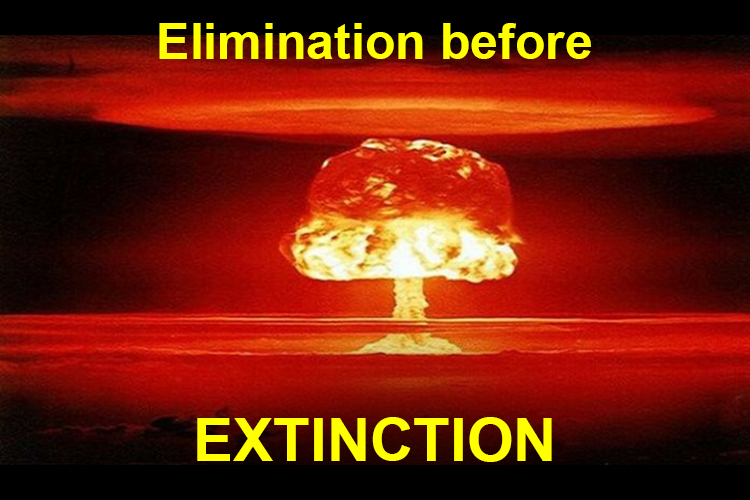
Nuclear weapons were invented here in my Archdiocese. Therefore, I feel a special responsibility to address humanity’s most urgent threat.
“Nuclear disarmament is a right to life issue. No other issue can cause the immediate collapse of civilization. In January 2022 I wrote a pastoral letter in which I traced the Vatican’s evolution from its uneasy conditional acceptance of so-called deterrence to Pope Francis’ declaration that the very possession of nuclear weapons is immoral.
“Therefore, what does this say about expanded plutonium pit production at the Los Alamos Lab? And what does it say about the obscene amounts of money that are being thrown at pit production, often excused as job creation?
“What does this say about the fact that the [NNSA] is pursuing expanded pit production without providing the public the opportunity to review and comment as required by the National Environmental Policy Act? I specifically call upon NNSA to complete a new LANL Site-Wide Environmental Impact Statement.
“In two weeks, I travel to Japan for the 79th atomic bombing anniversaries. The bishops of Santa Fe, Seattle, Hiroshima and Nagasaki have a simple message for world leaders. You utterly failed to begin serious negotiations as required by the 1970 NonProliferation Treaty. In this era, you must demonstrate concrete steps toward multilateral, verifiable nuclear disarmament by the 80th bombing anniversaries a year from now. http://nuclearactive.org/four-archbishops-urge-g7-leaders-to-undertake-concrete-steps-toward-nuclear-disarmament/
“I have a simple message for NNSA and the nuclear weapons labs. You’re very good at creating them. Now show us how smart you are by demonstrating how to get rid of nuclear weapons. Stop this new arms race that threatens all of civilization. Let’s preserve humanity’s potential to manifest God’s divine love toward all beings.
Pacific leaders, Japan, agree on Fukushima nuclear wastewater discharge (not everyone is happy)
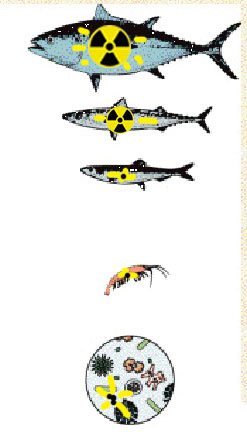
“The discharge, planned to continue for decades, is irreversible. Radionuclides bioaccumulate in marine organisms and can be passed up the food web, affecting marine life and humans who consume affected seafood,”
“The discharge, planned to continue for decades, is irreversible. Radionuclides bioaccumulate in marine organisms and can be passed up the food web, affecting marine life and humans who consume affected seafood,”
RNZ 19 July 2024 , By Pita Ligaiula in Tokyo
Consensus has been reached by Pacific leaders with Japan to address the controversial release of treated nuclear wastewater from the Fukushima nuclear power plant into the Pacific Ocean.
In August last year, Japan began discharging waste from about 1000 storage tanks holding 1.34 million metric tons of contaminated water collected after an earthquake and tsunami in 2011 that caused the meltdown of the Fukushima nuclear plant.
The agreement came at the Japanese hosted 10th Pacific Island Leaders Meeting (PALM10) on Thursday in the capital Tokyo attended by most of the Pacific Islands Forum (PIF) country leaders…………………………..
Pacific leaders emphasised the importance of a shared commitment to safeguarding the health, environment, and marine resources of the Pacific region and a need for transparency from Japan………………………………………….
TEPCO uses a process known as Advanced Liquid Processing System involving special filters which remove from the contaminated water most of the 62 types of radioactive materials, radionuclides such as cesium, strontium, iodine and cobalt but not tritium.
The leaders agreed to keep the ALPS treated water issue as a standing agenda item for future PALM meetings with Japan, supported by an ongoing review process. Their decision reflects concerns about addressing the long-term implications and ensuring continuous monitoring and evaluation.
While consensus was reached at the summit, the wastewater release continues to be questioned by some scientists.
Director of the Kewalo Marine Laboratory at the University of Hawaii, Research Professor Robert Richmond, said concerns remain regarding the efficacy of the ALPS treatment and the contents of the thousands of storage tanks of radioactive wastewater.
“The long-term effects of this discharge on Pacific marine ecosystems and those who depend on them are still unknown. Even small doses of radiation can cause cancer or genetic damage,” Richmond said in a statement to BenarNews after the agreement.
He criticised the current monitoring program as inadequate and poorly designed, failing to protect ocean and human health.
“The discharge, planned to continue for decades, is irreversible. Radionuclides bioaccumulate in marine organisms and can be passed up the food web, affecting marine life and humans who consume affected seafood,” Richmond said……………………………………………… https://www.rnz.co.nz/international/pacific-news/522582/pacific-leaders-japan-agree-on-fukushima-nuclear-wastewater-discharge—
Fukushima plant ends 7th round of treated water release into sea

Tokyo Electric Power Co. announced that it has completed the third round of
treated radioactive water discharge from the stricken Fukushima No. 1
nuclear power plant in this fiscal year. About 7,800 tons of filtered water
were released from storage tanks into the Pacific Ocean after being diluted
by a large volume of seawater, the company said on July 16. This was the
seventh batch of treated water dumped into the sea since TEPCO began the
discharge program in August last year. The utility plans four more rounds
of discharge before the current fiscal year ends in March.
Asahi Shimbun 17th July 2024
Yongbyon Nuclear Complex: New evidence of increased activity
Night-time lights visible at the Yongbyon radiochemical laboratory suggest that North Korea is covertly importing spent fuel rods for plutonium extraction reprocessing
DAILY NK By Bruce Songhak Chung, 16 July 24
Evidence suggests that North Korea is ramping up production of plutonium and uranium nuclear materials at the radiochemical laboratory and uranium enrichment facility in the Yongbyon nuclear complex, as it has begun full-scale operation of the experimental light water reactor this summer. Recently, major foreign media outlets covering North Korea have debated and verified the reliability of the thermal infrared analysis of the Yongbyon facility presented in a Daily NK column I published in May. This article summarizes thoughts and opinions on this matter, and also examines what is behind the intermittent night lights observed in Yongbyon through night-time luminosity images.
Recent conditions at the Yongbyon reactor and light water reactor area were examined using Maxar’s GeoEye-1 satellite imagery (40 centimeter resolution). In the June 19 satellite photo, heated cooling water from the reactor and light water reactor operation is clearly identified being discharged into the Kuryong River through two pump stations, accompanied by white foam. This marks the 16th cooling water discharge detected this year. As it continues to appear in satellite images since late April, the experimental light water reactor appears to have entered full-scale operation. The South Korean Ministry of National Defense had previously predicted that the Yongbyon light water reactor would enter normal operation in or around the summer months.
Below the second pump station, a yellow substance spread out in a rectangular shape can be seen on the ground. This could be wheat or barley being dried after harvest. In North Korea, mid-June is the peak harvest time for wheat and barley in the fields, followed typically by planting corn as the year’s second crop. Soldiers and workers guarding the Yongbyon nuclear facility appear to be engaging in farming activities in empty spaces within the complex as food rations are insufficient.
Analysis of Yongbyon thermal infrared satellite imagery………………………………………………………………………………………..
Repairs of the boiler room in the Yongbyon thermal power plant ………………………………………………………
Mysterious late night lights at the radiochemical laboratory………………………………………………………….
influential foreign media outlets recently released an assessment about thermal infrared analysis, which is used to determine the operational status of the Yongbyon nuclear facilities. The prominent U.S. North Korea-focused website Beyond Parallel has provided an in-depth analysis of the reliability of thermal infrared data. I read the three articles with great interest. The conclusion of the series of articles evaluated the results of the thermal infrared analysis of North Korea’s Yongbyon nuclear facilities as generally reliable. The outlet explained that after obtaining and comparing Yongbyon facility operation records for over two years held by the U.N., the results largely matched those of the thermal infrared analysis. When high heat was detected in the thermal infrared data, it corresponded with the operation of the Yongbyon facilities. However, the caveat was that facilities operating at low intensity might not be detected due to weak heat emissions. They also recommended drawing comprehensive conclusions by combining thermal infrared analysis with various other data, as there are still imperfections in the analysis. This is valuable advice worth noting.
Please send any comments or questions about this article to dailynkenglish@uni-media.net. https://www.dailynk.com/english/yongbyon-nuclear-complex-new-evidence-of-increased-activity/
–
July 16, 2024
Radiation levels assessed for on-site burial plan at old nuclear power station
Demolition and disposal is due to start in 2030
Andrew Forgrave, 14 July 2024 https://www.dailypost.co.uk/news/north-wales-news/radiation-levels-assessed-site-burial-29523489
Potential radiation levels arising from the next-stage decommissioning of a former nuclear power station have been assessed as within safety thresholds. Magnox, owner of the Trawsfynydd site in Gwynedd, is aiming to demolish and infill the site’s ponds complex before capping it with concrete.
In two scenarios – for future site occupiers and for some local wildlife – the UK’s Nuclear Restoration Services (NRS) said dosages could exceed safe levels. But the company said its own assessments were cautious and under criteria set by Natural Resources Wales (NRW) all safety thresholds were met.
Trawsfynydd stopped generating electricity in 1991 after operating for 26 years. Years of demolition and on-site disposal are planned. The reactor buildings are scheduled for completion by 2055 with final site clearance activities ending by 2070. The site will then be released from radioactive substances regulation “some time after that”.
First to be tackled will be the ponds complex – a set of buildings running alongside the site’s two reactor buildings. This is due for demolition in 2030 and this could take up to two years.
For this Magnox needs to amend its environmental permit and has applied to NRW for permission. A four-week public consultation was launched this week.
Martin Cox, NRW’s head of operations for northwest Wales, said: “We understand this permit variation is of particular interest to the public and local community. As the regulator for this application we are committed to keeping the community and environment healthy.
We must be satisfied the proposed demolition, disposal, and capping is done in ways that are safe and meet our standards for the protection of people and the environment while allowing the site to be released from radioactive substances regulation in the future.”
The ponds complex contains concrete pools formerly used to cool and store used nuclear fuel before it was sent to Sellafield in Cumbria for reprocessing. This process ended in 1997 and 99.9% of all radioactive waste has been removed from the site.
Below the ponds and storage vaults are box-like structures capable of storing about 5,000 cubic metres of material, which is twice the volume of an Olympic-sized swimming pool. The plan is to fill these with “slightly radioactive” broken concrete from the demolished structures above them.
Magnox has submitted a “site-wide environmental safety case”, supported by more than 30 technical reports, to NRW. One includes radioactivity estimates by NRS for the ponds complex spanning four scenarios: natural evolution, human intrusion, site occupancy, and environmental impact.
Dosage levels for “inadvertent” human intrusion were found to meet safety thresholds “in all credible scenarios”. Screening criteria was also met for wildlife and plants in the surrounding area apart from the uppermost stretch of Afon Tafarn-helyg, a tributary of the Afon Dwyryd. Magnox noted its criteria was stricter that NRW’s under which the threshold would be met.
For site occupiers Magnox said a few features, just below ground, might breach its safety guidelines but not NRW’s. It added: “This exceedance is for a configuration that cautiously assumes a 0.15 m (minimum) cap thickness. Moreover such worst-case dose rates would be expected to drop below 0.017 mSv/year after around 100 years beyond the assumed end-state date (2083) and the probability of receiving such a dose is expected to be low.”
In any case radioactivity estimates are expected to decrease prior to demolition as further decommissioning continues. Additional borehole investigations are being conducted this year beneath the ponds complex to get a better understanding of groundwater flows. NRS added: “In short, the proposed disposals will be safe while they are being implemented, for the decades while the site remains under regulatory control, and then afterwards into the indefinite future.”
When considering Magnox’s bid for a permit variation to allow on-site disposal at Trawsfynydd NRW will be consulting with experts in Public Health Wales and the Office of Nuclear Regulation. The process is expected to be “lengthy”.
You can take part in the consultation, and view related documents, here.
Radioactive Real Estate: Finding a Forever Home for Nuclear Waste
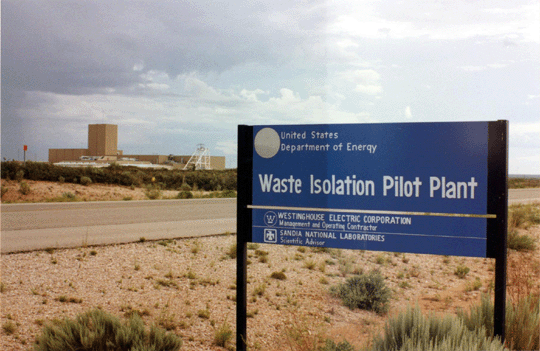
To this day, WIPP only houses transuranic waste with medium radioactivity from nuclear defense projects — not, for example, waste from nuclear energy, or items with very high or low levels of radioactivity. There is no pilot plant for high-level materials in the U.S. at the moment or in the plans
Undark, 10 July 2024, BY SARAH SCOLES
Castoffs from U.S. nuclear weapons get buried at one site in New Mexico. But what happens when that facility fills up?
THE LAND around Carlsbad, New Mexico is spiked with oil and gas wells. Mines hoist up minerals. Hotel parking lots teem with twinning white work trucks, driven by employees who specialize in pulling material out of the Earth.
Amid these extractors, though, are others putting material into the planet: They work for a facility called the Waste Isolation Pilot Plant, located about 40 minutes from downtown Carlsbad. At first glance, WIPP resembles a normal industrial site: A road sign near the entrance sports its inscrutable name, pointing toward tan warehouse-like buildings, evaporation ponds, and headframes for hoisting material.
Superficially, it looks like any other mine in the area. But that sameness belies the strangeness of what lies below ground: A huge subterranean salt deposit that stores nuclear waste from the country’s defense projects.
Once the repository is full, the salt will naturally undo the miners’ work: Tunnels and rooms will collapse, entombing the radioactive material and protecting life aboveground. WIPP has buried more than 14,000 shipments of nuclear waste since its start in 1999.
Twenty-five years after that opening, on a chilly March morning, a charter bus carries a crowd of people — some wearing cowboy attire, others in insulated vests zipped over dress shirts — into the parking lot. They congregate next to a semitruck laden with cylindrical cargo containers that sport radioactive warning labels. The labels, it turns out, are just for show. These containers are empty — staged for a photograph as part of WIPP’s 25th anniversary, and these guests have come to mark the occasion.
When the event starts, in a building plunked just before the security gate, Mark Bollinger, head of the Department of Energy’s Environmental Management Carlsbad field office, heads to a lectern.
“This,” he proclaims, “is a celebration.”
Others beg to differ. According to WIPP’s founding documents, the site should be winding down soon: It is a pilot plant — an experiment, a proof-of-concept — these critics argue, not a permanent one. The goal is to show that it is possible to safely store nuclear waste underground, shut the plant down, and seal it off. Initially, the timeline estimated disposal would stop in the middle of this decade, letting earth close around the waste. Over the course of WIPP’s operating life, and drawing on lessons learned here, the United States would identify and open new repositories for America’s nuclear waste.
That’s not exactly what has happened though.
Today, there are no concrete plans for new deep geologic repositories in the U.S. There are no established future sites for the medium-level nuclear waste that WIPP handles, nor for more dangerous radioactive waste, nor for the tens of millions of pounds of spent nuclear fuel from power plants. Indeed, much of the radioactive trash the country has created since the 1940s still lives in temporary storage, spread across the U.S. And officials now expect WIPP could remain open until the 2080s — decades beyond its originally conceived chronology.
The lack of permanent nuclear waste storage in the U.S. isn’t an engineering problem. “It’s not technically difficult,” said Allison Macfarlane, director of the School of Public Policy and Global Affairs at the University of British Columbia, and former chair of the U.S. Nuclear Regulatory Commission.
The solution, she says, is to bury it. The more radioactive, the deeper it goes.
Politically and culturally, however, convincing communities to permanently host nuclear detritus remains difficult, and WIPP is the world’s only operational example of a deep geological repository for nuclear waste — and the only one on the horizon. If officials are to find a post-WIPP solution for the mid-level nuclear waste being stored here — and the other kinds of radioactive discards — they’ll need to study how WIPP came to be, and why Carlsbad residents haven’t put up much of a fuss.
“In any future repository program,” said Matt Bowen, a senior research scholar at the Center on Global Energy Policy at Columbia University and a former official with the National Nuclear Security Administration, “state and local officials are going to want to understand WIPP.”
THE IDEA that you could store nuclear waste in salt dates to the 1950s, when the National Academy of Sciences published a report about radioactive waste disposal, identifying places where nuclear waste could remain undisturbed. Subterranean salt deposits, the panel of experts concluded, were the best spots, geologically speaking.
“The great advantage here is that no water can pass through salt,” read the report. Cracks in the mineral would heal themselves, theoretically helping halt radioactivity’s flow up or down. Salt deposits are also typically in seismically inactive areas, so nothing should shake the dangerous drums. “Abandoned salt mines or cavities especially mined to hold waste are, in essence, long-enduring tanks,” it continued.
Other geologic options that have been floated include crystalline rock, shale or clay, shale over hard rock, and volcanic rock called tuff, all of which can isolate the waste from the outside environment.
More than a decade passed before officials implemented the academy’s suggestion, with the defense apparatus continuing to produce nuclear waste the whole time. But when they did move forward with preliminary work in the 1970s, they settled on a part of New Mexico underlain by a huge slab of salt from the long-gone Permian Sea. This salt is 2,000 feet thick, starting 850 feet underground. It seemed perfect.
But first they needed to convince the public.
Proponents and politicians navigated this in part by allowing independent oversight and research and giving the state of New Mexico some power over the process. In the 1970s, the state created a radioactive and hazardous waste committee in the legislature, to recommend legislation for WIPP and for the transportation of radioactive material. And in the 1980s Congress allocated money to mine two shafts through the salt and research the site and its safety, access that allowed the state of New Mexico to do its own, independent research.
That was part of a plan that politicians and policymakers in favor of WIPP had in this era, says former Rep. John Heaton, whose district housed the future site. Namely, that they wanted the public to “hang loose.”
“Let’s not go overboard,” Heaton said of the advice to the public at the time. It is no use thinking of only bad-case scenarios or scary what-ifs. Let’s instead, the advice went, wait for the facts to come in.
As those facts arrived, independent researchers learned about how waste containers corroded over time, and how the underground salt behaved at different temperatures. The research pointed to the long-term safety of the site, and waiting on the scientific results had worked: Carlsbad was on board, with opposition coming mostly from larger, more liberal cities like Santa Fe, where Heaton lives now. And while the project did face controversy and opposition from the state, by the time the project was getting started, more people were in favor of WIPP than against it.
By 1992, politicians had drawn up the Waste Isolation Pilot Plant Land Withdrawal Act, giving more than 10,000 acres to WIPP and laying out its parameters — including the total amount of waste the Department of Energy could “emplace” — a fancy word used to mean “put underground.” WIPP would house material dubbed “transuranic,” largely objects contaminated with radioactive elements heavier than uranium — in this case, mostly plutonium — soiled during nuclear defense work.
(To this day, WIPP only houses transuranic waste with medium radioactivity from nuclear defense projects — not, for example, waste from nuclear energy, or items with very high or low levels of radioactivity. There is no pilot plant for high-level materials in the U.S. at the moment or in the plans.)
TODAY, WIPP is not just a hole in the ground but a series of tunnels and rooms largely housing barrels filled with pieces of rebar, rags, clothing, empty containers of spray adhesive — remnants of the objects engineers and technicians used while working on nuclear weapons or defense research.
…………………………………………………………………………………………………………… “legacy waste” — radioactive trash created long ago when records were less detailed and methods less stringent than they are now. Some of it was simply put in containers and buried in shallow trenches, or even above-ground, on the nuclear labs’ property during the Cold War. Legacy material makes up much of WIPP’s contents, and much of what will be in its future deliveries.
…………………………….. CHECKS and balances have been fine-tuned since 2014, when WIPP experienced its greatest setback.
February that year was a bad month for the plant. First, a truck hauling salt caught fire underground, spreading soot on important equipment and smoke throughout the site — and endangering the 86 workers underground. Everyone made it the 2,000 feet to the surface, but several had to be treated for smoke inhalation.
Just over a week later, in a different part of WIPP, a drum of waste exploded, turning itself essentially into a dirty bomb, blasting out transuranic radioactive material in a fiery burst.
Twenty-two workers received doses of radiation, and a small amount of contamination escaped into the outside world — about 3 percent of the amount of radiation from a chest X-ray.
The dangerous drum had originally come from Los Alamos, where workers had mixed in the wrong kind of cat litter — a simple substance that typically helps stabilize nuclear waste. But in this case, instead of combining the hazardous substances with inorganic kitty litter, they had mixed it with “an organic kitty litter,” the instructions having gotten garbled. And organic material can react with nitrates, causing chemical reactions that release heat. The increasing heat bumped up the pressure inside the drum, until it burst.
………………………………………………… The 2014 accidents may have been the most significant in WIPP’s history, but yearly, smaller incidents also occur. “It’s difficult to operate this kind of facility,” said Hancock. “Nobody in the world has ever safely operated a deep geologic repository.”
And that is the difference between the real world and a report from a national academy about what kind of rock or mineral is safe: A place can be perfect in geological theory, but when operated by flawed humans, it will be subject to their mishaps and misjudgments.
………………………………………………………………………Critics, like proponents, want the legacy waste cleaned up, and safely. But they don’t trust WIPP with that last part. While the bigger cities in the region are unlikely to suffer ill effects from a disaster at the plant itself, trucks of nuclear waste pass through on their highways. And some residents are concerned about the safety of those trucks. Any vehicle traveling anywhere, carrying anything, can have an accident.
They are also worried about WIPP’s proximity to oil and gas activity…………………………………………………………………..
WIPP RECENTLY received its latest 10-year operating permit from the state of New Mexico. As part of the final agreement, the DOE agreed to look for a future waste-disposal site, in another state. “I think it will be a consent-based siting program,” said Bowen, of repositories to come. “I don’t think anybody wants to fight states.”
But it will be hard to find a new, permanent place — or other places for the other kinds of nuclear waste out there. “At some point in time, we’re going to have to start this effort of establishing another deep geologic repository,” said Bowen. WIPP, after all, took decades to open, so starting now could mean getting a new space in the 2040s or 2050s, with more waste piling up in the meantime. “We need to get going on that,” he continued. He’s hopeful things may get started in 2025.
And as with WIPP, the hardest part won’t be finding more salt spots, or deciding between volcanic rock and shale: It will be getting the people sitting in Washington and the people living atop those deposits to agree to something. “The affected public has to trust those who are implementing this process and those who are regulating this process,” said Macfarlane.
But the requirement goes the other way, she added: The implementers and regulators have to trust the public. That latter part often falls apart, she said………………………………………………………………
In the 1990s, Sandia National Laboratories convened linguists, scientists, and anthropologists, among others, to figure out how to separate WIPP from the people of the future. They came up with a plan involving signs and symbols: The site will be surrounded by huge earthen berms, metal objects and magnets buried within, meant to reflect radar beams and make this place register as magnetically anomalous. The perimeter will also host 25-foot-tall granite columns, engraved with warnings, and no-go markers will be buried up to six feet deep throughout the site. WIPP’s center, if someone gets that far, will host an information center that includes pictorial messages today’s humans hope will convey “leave this alone” to future ones.
“Other nuclear waste disposal sites must be marked in a similar manner within the U.S. and preferably world-wide,” read the multidisciplinary report. Its authors likely imagined there would be plans for such sites by now, and that WIPP would soon be getting its warnings. But it got, instead, a birthday party. https://undark.org/2024/07/10/radioactive-real-estate-nuclear-waste-forever-home/?utm_source=Undark%3A+News+%26+Updates&utm_campaign=1b7bb2c675-RSS_EMAIL_CAMPAIGN&utm_medium=email&utm_term=0_5cee408d66-185e4e09de-%5BLIST_EMAIL_ID%5D
Water leaks reported at Germany’s Asse II radwaste facility
Staff Writer May 28, 2024, https://www.neimagazine.com/news/decommissioning-waste-management/water-leaks-reported-at-germanys-asse-ii-radwaste-facility/?cf-view&cf-closed
The ageing nuclear waste facility in the Asse II salt mine near Wolfenbüttel in Lower Saxony is facing a growing problem of water penetration. The mine, which holds some 126,000 barrels of low- and intermediate-level radioactive waste, is operated by Germany’s Federal Association for Final Storage (BGE – Bundesgesellschaft für Endlagerung), a federally owned company within the remit of the Federal Environment Ministry. In April 2017, BGE took over responsibility as operator of the Asse II mine and the Konrad and Morsleben repositories from the Federal Office for Radiation Protection. Salt water has been entering the facility for decades, increasing concern about the stability of the 13 chambers filled with waste.
From 1967 to 1978, around 47,000 cubic metres of low- and intermediate-level radioactive waste were emplaced in the mine according to information from former operator, the Association for Radiation Research (now known as Helmholtz Zentrum München, HMGU). Some 67% of the waste originated from NPPs. Typical waste included: filters, scrap metal, paper, laboratory waste, building rubble, wood, slurries and mixed waste. Other waste was delivered by research institutes, the nuclear industry and other waste producers such as the medical industry.
Records show how many drums are stored in the Asse mine, but there is some uncertainty as the radionuclide and substance inventory as the waste declaration at the time does not meet current standards. The radioactive waste was emplaced in 13 former mining chambers Two chambers are located in the central section and 10 in the southern flank of the mine at depths of 725 and 750 metres. A further chamber is located at the 511-metre level.
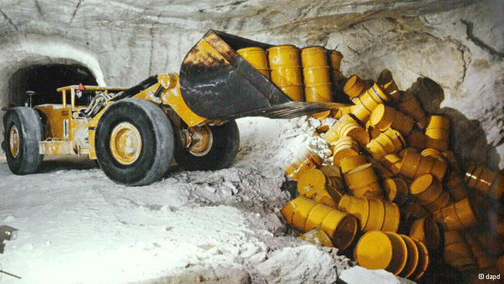
At the start of emplacement, the waste containers were stacked in an upright position. In order to make better use of the space, the former operator subsequently began stacking them on their sides. From 1971 onwards, the waste was primarily dumped using a wheel loader. The simultaneous handling of multiple drums led to lower costs and lower radiation exposure for staff. There were no plans for retrieval, and possible damage to the waste containers was disregarded. The surrounding rock salt was intended to provide long-term protection.
According to current laws and state of the art of science and technology, the final disposal of radioactive waste in the manner employed at the Asse II mine would not be eligible for a licence although no laws were broken based on the legislation in force at the time. If the waste were to remain in the mine, it would not be possible to demonstrate that the legal safety objectives would be met and the intention is for the waste to be retrieved. So far, none of the barrels have been removed and is not expected to start before 2033 as scientific methods to do it safely are still being investigated. It’s estimated it will cost at least €4.7bn ($5.1bn).
So far, the water penetrating the salt dome from the outside – some 12 cubic metres a day – has been mostly absorbed and pumped to the surface. However, the infiltration patter has changed, BGE head Iris Graffunder recently told the environmental committee of the Bundestag. Graffunder earlier pointed out the deteriorating situation. “Due to this strong change in water access, we are alarmed” she tolkd Braunschweig newspaper. According to the BGE, the amount of water at the main collection point has been decreasing for several months. “This means that the water is collecting somewhere else. That worries us,” she said.
Experts warn that is the partly torn and rusted barrels mix with the water this could eventually contaminates groundwater. The inventory reportedly consists of 104 tonnes of uranium, 81 tonnes of thorium and 29 kilograms of plutonium. There are also toxins such as arsenic, mercury and banned pesticides, which were also disposed of in the mine.
The BGE has applied for the complete renovation of the main collection point, which is located at the 658-metre level in the mine. Experts are currently trying to find and repair possible damaged areas. According to the BGE, the water infiltration has increased from 0.8 to three cubic metres on the lower 725-metre level. At the even lower collection points directly in front of the nuclear waste chambers at the 750-metre level no increase in the salt water level has so far been observed.
Federal Environment Minister Steffi Lemke (Greens) has expressed concern about the situation “I take the situation in the Asse II nuclear waste warehouse in Lower Saxony very seriously,” she said. She added that, in her view, the recovery of the waste was the safest option and “should remain our top priority”.
First Nation challenges nuclear waste decision in federal court

By Natasha Bulowski & Matteo Cimellaro | News, Urban Indigenous Communities in Ottawa | July 12th 2024Observer
A First Nation concerned about approval of a nuclear waste disposal facility near the Ottawa River was before federal court this week to challenge the decision.
The Canadian Nuclear Safety Commission greenlit the project on Jan. 9 and less than one month later, Kebaowek First Nation filed for a judicial review.
Kebaowek’s legal challenge is centred on the United Nations Declaration Act (UNDA), which enshrined the United Nations Declaration on the Rights of Indigenous Peoples (UNDRIP) into Canadian law. The declaration specifically references the need for free, prior and informed consent when hazardous waste will be stored in a nation’s territory.
Kebaowek argued in court that Canadian Nuclear Laboratories — the private consortium responsible for managing the Chalk River nuclear site — did not secure the First Nation’s free, prior and informed consent during the licensing process, as mandated under Canadian law, when it was looking to store the waste at a site about a kilometre from the Ottawa River. The Ottawa River (known as the Kichi Sibi in Algonquin) holds immense spiritual and cultural importance for the Algonquin people and is a source of drinking water for millions.
Canadian Nuclear Laboratories wants to permanently dispose of one million cubic metres of radioactive waste in a shallow mound as a solution to waste accumulated over the last seven decades of operations and into the future. The company said the containment mound will only hold low-level waste.
A former employee at Chalk River told Canada’s National Observer a portion of the waste destined for the mound is a “mishmash” of intermediate- and low-level radioactivity because prior to 2000 there were inadequate systems to properly label, characterize, store and track what was produced at Chalk River or shipped there from other labs. Intermediate-level waste remains radioactive for longer than low-level waste and requires disposal deeper underground.
“It’s such a huge project that I don’t think most people are aware of just how big this is,” Coun. Justin Roy of Kebaowek First Nation told Canada’s National Observer in an interview after a press conference in Ottawa on July 10.
“We’re not talking about a pipeline that might not be there in a couple dozen years, or a mine that’s going to be up and running and close in 20 years, or a bridge that might be torn down one of these days. We’re talking about a huge mound that has a life expectancy, expectancy upwards of 500 years,” Roy said.
The First Nation is asking the Federal Court of Appeals to reject the nuclear safety commission’s decision to greenlight the facility and declare that the commission breached its duty to consult Kebaowek.
Kebaowek was in federal court July 10 and 11 to make its case that the project approval should be set aside or reconsidered. The First Nation argued two main points: First, that the nuclear safety commission refused to take the Canadian UNDRIP act into consideration, and that means the consultation process was flawed from the outset.
Second, the nation argues the project will rely largely on a forest management plan that has yet to be created to mitigate environmental impacts, Coun. Justin Roy of Kebaowek First Nation told Canada’s National Observer in an interview.
Canadian Nuclear Laboratories’ lawyers argued the commitment to create a forest management plan and have it approved by the nuclear safety commission is appropriate, and disagreed with Kebawoek’s description of it as a “blank piece of paper,” saying it is intended to be a “living document” and respond to different situations yet to arise. The company’s testimony on July 11 also highlighted different instances — letters, phone calls, in-person meetings — where it engaged with Kebaowek First Nation.
Justice Julie Blackhawk will issue a decision at a later date.
A ‘litmus test’
When Parliament was in its consultation process regarding the United Nations Declaration Act, First Nation leadership across Canada spoke up because chiefs thought the legislation “needed to have teeth,” Lance Haymond, Chief of Kebaowek First Nation said in an interview. However, the legislation was never re-written to give it weight, leading to a “failure of implementation from the beginning,” he explained.
“Here we are stuck with a piece of legislation that could be stronger,” Haymond said of testing the United Nations Declaration Act (UNDA) in court over the nuclear waste facility. The success or failure of the judicial review will serve as a litmus test of how much sway the new Canadian law holds in the courts, Haymond said.
“Our case will hopefully demonstrate how it can be applied in a real world situation,” he added.
This judicial review is one of three legal challenges against the near surface disposal facility.
At a July 10 press conference, Sébastien Lemire, Bloc Québécois MP for Abitibi-Témiscamingue, emphasized his party’s support for the legal challenge. Lemire also promised continued support at future press conferences, in Question Period and in work at committees like the Standing Committee on Indigenous and Northern Affairs.
Canadian Nuclear Laboratories is run by a consortium of private companies (including AtkinsRéalis, formerly known as SNC-Lavalin) and is contracted by the federal government to operate its laboratories and deal with waste.
Over 75 years, Chalk River Laboratories developed CANDU reactors, did nuclear weapons research, supplied the United States’ nuclear weapons program with plutonium and uranium, and at one time was the world’s largest supplier of medical isotopes used to diagnose and treat cancers.
About 60 people attended a public rally in front of the Supreme Court on July 10 to support the First Nation, according to Vi Bui with the Council of Canadians.
It’s not the first time the public has given their support.
Kebaowek’s legal fund has been largely crowdfunded and supported by Raven Trust, a charity that raises legal funds for Indigenous nations, Haymond said.
If Kebaowek loses, it’s still unclear if they will appeal the decision, he added.
“Our ancestors would probably roll over in their graves if they were to hear that we would just allow a nuclear waste dump that’s going to hold one million cubic metres of waste adjacent to the Ottawa River,” Roy said. “We are people who have been here since time immemorial; this mound, if it proceeds, it can maybe outlast all of us here.”
Ignace, Ontario, betrayed by Council, on nuclear waste decision

Ignace has voted in favour of continuing in the Nuclear Waste Management Organization’s siting process, which brings Northwestern Ontario one step closer to being put on the receiving end of all of Canada’s high-level nuclear waste.
The NWMO has said it will select a single site by the end of 2024 for a deep geological repository for Canada’s existing stockpiles and future inventory of high-level nuclear fuel waste. The project will include transportation of the waste in 2-3 trucks per day for over 50 years, then processing at the site in a still-to-be-designed waste transfer facility, and finally placement deep underground in a series of tunnels and vaults so radioactive no workers can be present during the emplacement process.
An “ad hoc willingness committee”, appointed by the Township in February, delivered its recommendation in a special meeting of Council this afternoon. Immediately after the presentation by Committee co-chair Roger Dufault, Council voted to continue in the Nuclear Waste Management Organization’s site selection process.
The NWMO has been studying the Revell Site, between Ignace and Dryden, since 2010. In 2020 the NWMO narrowed its list of candidate sites to just two: the Revell Site in Northwestern Ontario and the Teeswater site in the Municipality of South Bruce in Southwestern Ontario. The Revell Site is 45 kilometres outside the Township of Ignace and is in a different watershed.
“We feel betrayed”, said Ignace resident Sheila Krahn.
“For the last ten years we’ve been bombarded with promotional messages from the NWMO, and when it was finally time for a decision, we didn’t even get a vote. I don’t believe that the majority of people in Ignace support this project, but so many people didn’t trust the so-called “willingness process” and didn’t participate.”
Instead of a referendum such as the one scheduled for South Bruce on October 28th, Ignace hired a consultant to conduct interviews and run an online poll. The online registration required scans of government ID and asked residents if they supported continuing in the NWMO siting process, rather than asking a more direct question about whether they agreed with the NWMO’s project.
“The NWMO siting process is all about getting to “yes”, so they can claim some semblance of public support”, explained Northwatch spokesperson Brennain Lloyd.
“They missed the mark with this one. They’ve spent an estimated $10 million of electricity ratepayers’ money trying to convince Ignace to support their nuclear waste project, but at the end of the day what they bought was a questionable outcome from a largely unelected council of a community that has no authority and is not even in the same watershed as the NWMO’s candidate site.
The NWMO has deemed Ignace to be the “host community”, despite Ignace’s distance from the site, lack of jurisdiction, and the presence of other communities closer to the site and downstream. In 2020 the Township of Ignace passed a resolution that the Township itself would make the decision on behalf of the people of Ignace, rather than holding a referendum, as the Municipality of South Bruce will carry out on October 28, 2024. In 2023 the Township hired the consulting firm With Chela Inc., which conducted a number of interviews and held an online poll. The consultant’s report was presented in-camera to Ignace’s “Ad Hoc Willingness Committee”, which had been selected and appointed by the Council in February. This “ad hoc” committee recommendation to Council, presented today, is to stay in the NWMO siting process. Minutes later Council voted to accept the recommendation, committing the current and future councils to adhering to the terms and conditions of a “hosting agreement” signed by the Township of Ignace and the NWMO in March 2024.
“At minimum this should be a regional decision, not the decision of one small upstream council”, added Wendy O’Connor, a volunteer with the northern Ontario alliance We the Nuclear Free North.
“There is a growing list of municipalities and First Nations passing resolutions against the NWMO using northern Ontario as the dumping ground for high-level nuclear waste. It will be astounding to see the NWMO select the Revell site, despite the poor decision made by the Ignace Township Council today”.
There is broad opposition to the NWMO project from individuals, community and citizens’ groups, municipalities, and First Nations. In addition to criticism of the project itself due to the negative impacts on the environment and human health during transportation and operation and after radioactive waste abandonment, the NWMO siting process and the Township of Ignace’s approach have also been soundly criticized for being secretive, undemocratic, and lacking scientific and technical rigour.
-
Archives
- October 2026 (120)
- September 2026 (339)
- August 2026 (330)
- July 2026 (355)
- June 2026 (287)
- May 2026 (306)
- April 2026 (356)
- March 2026 (251)
- February 2026 (267)
- January 2026 (308)
- December 2025 (358)
- November 2025 (359)
-
Categories
- 1
- 1 NUCLEAR ISSUES
- business and costs
- climate change
- culture and arts
- ENERGY
- environment
- health
- history
- indigenous issues
- Legal
- marketing of nuclear
- media
- opposition to nuclear
- PERSONAL STORIES
- politics
- politics international
- Religion and ethics
- safety
- secrets,lies and civil liberties
- spinbuster
- technology
- Uranium
- wastes
- weapons and war
- Women
- 2 WORLD
- ACTION
- AFRICA
- Atrocities
- AUSTRALIA
- Christina's notes
- Christina's themes
- culture and arts
- Events
- Fuk 2022
- Fuk 2023
- Fukushima 2017
- Fukushima 2018
- fukushima 2019
- Fukushima 2020
- Fukushima 2021
- general
- global warming
- Humour (God we need it)
- Nuclear
- RARE EARTHS
- Reference
- resources – print
- Resources -audiovicual
- Weekly Newsletter
- World
- World Nuclear
- YouTube
-
RSS
Entries RSS
Comments RSS