ALL reactor-produced plutonium is usable in nuclear weapons.

Gordon Edwards 19 May 4
Whenever plutonium is created in a nuclear reactor, it is always mostly plutonium-239. The higher isotopes – plutonium-240, plutonium-241, plutonium-242 – are always present in diminishing order of importance.
A lighter “burnup” (a shorter residence time in the reactor) will reduce the opportunity for the heavier isotopes to be created (by repeated neutron captures), and so the relative percentage of plutonium-239 will be that much greater.
The important thing to know is that ALL reactor-produced plutonium is usable in nuclear weapons, including the even-numbered isotopes.
See www.ccnr.org/plute_for_bombs_GE_2024.pdf
Plutonium-238 is only a very small fraction of the plutonium in used reactor fuel. By itself, plutonium-238 is the only isotope of plutonium that probably cannot be used for bomb-making, simply because it generates too much spontaneous heat for the bomb to be stable (i.e. the concentniopnal explosive=s needed for detonation will likely melt.)
However the presence of very small amounts of plutonium-238, as in any plutonium extracted from used nuclear fuel, is not a serious problem..
Nuclear waste to be buried 650ft under the English countryside.

Swathes of nuclear waste are set to be buried in the English countryside
after ministers agreed to dig a 650ft pit starting this decade. The
facility, which has yet to be allocated a site, will hold some of the 5m
tonnes of waste that was generated by nuclear power stations over the past
seven decades.
This will ease pressure on the 17 nuclear waste disposal
plants currently in operation around the country, which consist of giant
sheds and cooling ponds. The largest facility is the Sellafield site in
Cumbria.
Plans for the 650ft pit will see it house so-called
intermediate-level waste, possibly in a mine on a pre-existing nuclear site
to minimise planning objections. The facility will be separate from the
much deeper geological disposal site that will hold the UK’s most
dangerous waste, such as plutonium, which is unlikely to be built until
after 2050.
The proposals come amid fears Britain’s stockpile of nuclear
waste will grow in the coming decades with nowhere to put it. Concerns are
particularly acute as the Government is currently planning to build at
least three new nuclear power stations. This will put the country at odds
with the 1976 review of nuclear waste policy by the Royal Commission on
Environmental Pollution, which warned the UK was accumulating nuclear waste
so fast that it should stop building reactors until it had a solution.
Ministers want to brand nuclear energy as a “green” and
“sustainable” fuel. However, experts on the Government’s own advisory
body, the Committee on Radioactive Waste Management, have said such terms
are misleading if there is no safe place to store radioactive waste.
A government spokesman said: “In addition to long-term plans to dispose of
the most hazardous radioactive waste in a geological disposal facility
hundreds of metres underground, the Nuclear Decommissioning Authority will
explore a facility closer to the surface for less hazardous radioactive
waste. “While a geological disposal facility is not expected to be ready
until the 2050s, a shallower disposal facility – which is up to 200m
below ground – could be available within 10 years.”
Telegraph 16th May 2024
Japan starts 6th discharge of Fukushima nuclear-contaminated wastewater

CGTN, 17-May-2024
Japan on Friday started the sixth round of release of nuclear-contaminated wastewater from the crippled Fukushima Daiichi Nuclear Power Plant into the Pacific Ocean.
Despite opposition among local fishermen, residents as well as backlash from the international community, Tokyo Electric Power Company (TEPCO), the plant’s operator, started releasing the radioactive wastewater in the morning, the second round in fiscal 2024.
The same as the previous rounds, about 7,800 tonnes of wastewater are being discharged from about a kilometer off the coast of Fukushima Prefecture via an underwater tunnel until June 4.
According to the TEPCO, the concentrations of all radioactive substances other than tritium in the water stored in the tank scheduled for release were below the national release standards, while the concentration of tritium that cannot be removed will be diluted with seawater.
The Chinese Embassy in Japan expressed firm opposition to this unilateral move of ocean discharge. While safety and reliability have yet to be ensured, Japan’s dumping of nuclear-contaminated water has repeatedly raised risks to neighboring countries and marine ecology, a spokesperson for the embassy said.
The spokesperson called on the Japanese side to attach great importance to the concerns at home and abroad and to fully cooperate in setting up an independent international monitoring arrangement that remains effective in the long haul and has the substantive participation of stakeholders.
………………………….. In fiscal 2024, the TEPCO plans to discharge a total of 54,600 tonnes of contaminated water in seven rounds, which contains approximately 14 trillion becquerels of tritium. https://news.cgtn.com/news/2024-05-17/news-1tFIzr3u9Da/p.html
Welsh Nuclear Free Local Authorities welcome Traws abandonment from New Nuclear plans
https://www.nuclearpolicy.info/news/welsh-nflas-welcome-traws-abandonment-from-new-nuclear-plans/
The Welsh Nuclear Free Local Authorities Forum hope that the decision made by Great British Nuclear to temporarily postpone plans for new nuclear at Trawsfynydd at this time might become a permanent one.
In March, responding to the UK Government consultation on the siting of new nuclear plants after 2025, the Welsh NFLAs said that the Trawsfynydd site was wholly inappropriate for redevelopment as it lies within the beautiful Eryri National Park. Ministers have previously agreed that any Geological Disposal Facility will not be in the Lake District National Park, and the NFLAs have called for this principal to be applied as a blanket ban on new nuclear plants in National Parks, at World Heritage Sites and in Areas of Outstanding Natural Beauty.
Great British Nuclear has just announced that the site ‘may not be able to deploy quite as quickly as some other sites’, with reports that site was too small and lacked sufficient cooling water to support the deployment of so-called Small Modular Reactors for the foreseeable future.
Trawsfynydd had an operating Magnox nuclear reactor on site until 1991. It was unique in being inland and cooled by the water of an artificial lake, but it is also a brutalist eyesore standing out stark and ugly against the idyllic backdrop of mountains and forest. The plant is now being dismantled by the Nuclear Decommissioning Authority, a British taxpayer funded body responsible for decommissioning redundant nuclear plant and for managing Britain’s radioactive waste inventory.
To the NFLAs, locating a new nuclear power plant in any National Park would be entirely incompatible with the Sandford Principal. From 1971 until 1974, Lord Sandford chaired a committee which examined the future management of National Parks in England and Wales:
‘National Park Authorities can do much to reconcile public enjoyment with the preservation of natural beauty by good planning and management and the main emphasis must continue to be on this approach wherever possible. But even so, there will be situations where the two purposes are irreconcilable… Where this happens, priority must be given to the conservation of natural beauty’.
We want to see the old Trawsfynydd plant decommissioned, and the site cleared and landscaped, as soon as practicable. n our view, any proposed new medical isotope facility would be better located at Bangor University, which has an established academic nuclear faculty and has much better transport links. The activities of the Welsh taxpayer funded Cwmni Egino, which was established to pursue new nuclear at the site, are entirely at variance with the stated ambition of the Welsh Government to source the nation’s domestically consumed electricity from truly ‘green’ sources. The body should be abolished, and its resources used to support the development of Welsh renewable energy projects.
Australia risks being ‘world’s nuclear waste dump’ unless Aukus laws changed, critics say

Labor-chaired inquiry calls for legislation to rule out accepting high-level nuclear waste from US and UK submarines among other recommendations
Daniel Hurst Foreign affairs and defence correspondent, https://www.theguardian.com/world/article/2024/may/13/australia-aukus-deal-submarines-critics-nuclear-waste
Australia risks becoming the “world’s nuclear waste dump” unless the Albanese government moves to rewrite its proposed Aukus laws, critics say.
A Labor-chaired inquiry has called for the legislative safeguard to specifically rule out accepting high-level nuclear waste from the US and the UK. One of the members of a Senate committee that reviewed the draft laws, independent senator Lidia Thorpe, said the legislation “should be setting off alarm bells” because “it could mean that Australia becomes the world’s nuclear waste dump”.
The government’s bill for regulating nuclear safety talks about “managing, storing or disposing of radioactive waste from an Aukus submarine”, which it defines broadly as Australia, UK or US submarines.
In a report published on Monday, the Senate’s foreign affairs, defence and trade legislation committee said this wording did not reflect the government’s promise not to accept high-level nuclear waste.
It recommended that the government consider “amending the bill so that a distinction is made between Australia’s acceptance of low-level nuclear waste from Aukus partners, but non-acceptance of high-level nuclear waste”.
The government has left the door open to accepting low-level waste from US and UK nuclear-powered submarines when they conduct rotational visits to Western Australia in the first phase of the Aukus plan. Low-level waste contains small amounts of radioactivity and include items such as personal protective equipment, gloves and wipes.
“According to the Australian Submarine Agency, nuclear-powered submarines only generate around a ‘small skip bin’ of low-level naval nuclear waste per submarine per year and that intermediate- and high-level waste will not become a concern until the first naval nuclear reactor requires disposal in the mid-2050s,” the Senate committee report said.
The government has yet to decide on the location for the disposal of radioactive waste from the submarines.
But infrastructure works proposed for HMAS Stirling – the naval base in Western Australia – to support the increased rotational visits are expected to include an operational waste storage facility for low-level radioactive waste.
The Department of Defence has argued any changes to the definitions should not prevent “regulatory control of the management of low-level radioactive waste from UK or US submarines” as part of those rotational visits.
Thorpe, an independent senator, said the call to prohibit high-level nuclear waste from being stored in Australia was “backed by experts in the field and was one of the major concerns raised during the inquiry into the bill”.
“The government claims it has no intention to take Aukus nuclear waste beyond that of Australian submarines, so they should have no reason not to close this loophole,” Thorpe said.
“They also need to stop future governments from deciding otherwise. We can’t risk our future generations with this.”
The government’s proposed legislation would set up an Australian naval nuclear power safety regulator to oversee the safety of the nuclear-powered submarines.
The committee made eight recommendations, including setting “a suitable minimum period of separation” to prevent a revolving door from the Australian Defence Force or Department of Defence to the new regulator.
The main committee report acknowledged concerns in the community that Australia might become a “dumping ground” for the Aukus countries, but it said the term was “not helpful in discussing the very serious question of national responsibility for nuclear waste”.
It also said the bill should be amended to ensure the regulator was transparent about “any accidents or incidents” with the soon-to-be-established parliamentary oversight committee on defence.
The Labor chair of the committee, Raff Ciccone, said the recommendations would “further strengthen the bill” and help “ensure Australia maintains the highest standards of nuclear safety”.
In a dissenting report, the Greens senator David Shoebridge said the legislation was “deeply flawed”, including because the regulator would report to the defence minister.
“The proposed regulator lacks genuine independence, the process for dealing with nuclear waste is recklessly indifferent to community or First Nations interests and the level of secrecy is a threat to both the environment and the public interest,” Shoebridge said.
The defence minister, Richard Marles, was contacted for comment.
Government asks Genkai mayor to accept site survey to host nuclear waste
Industry minister Ken Saito has asked the mayor of the town of Genkai in Saga Prefecture to accept a so-called literature survey, as part of the process for selecting a final disposal site for high-level radioactive waste from nuclear plants.
Saito sought understanding from Genkai Mayor Shintaro Wakiyama at a meeting in Tokyo on Tuesday, saying that “the literature survey is not directly connected to the selection.”
Last month, the Genkai town assembly approved a petition submitted by local business groups asking for the literature survey request to be accepted.
“I’m torn between the town assembly’s decision and my thinking,” Wakiyama told reporters after the meeting with Saito. The mayor said that he will make a decision by the end of this month.
A literature survey is the first of three stages in the selection process for disposal sites, and involves the condition of geological strata being examined on paper, based on maps and other data.
So far, a literature survey has been accepted only by the town of Suttsu and the village of Kamoenai, both in Hokkaido.
For a literature survey to be conducted, a local government must apply for or accept a central government request.
Nuclear waste at center of testy Nevada Senate race

The Hill , BY NICK ROBERTSON AND ZACK BUDRYK – 05/05/24
Nevada Republican Senate candidate Sam Brown is under fire from Democrats for 2022 remarks in which he expressed support for plans to store federal nuclear waste at Yucca Mountain.
Nevada lawmakers from both parties have strongly resisted a federal plan to turn the isolated southwest Nevada mountain — about 90 miles northwest of Las Vegas — into a nuclear waste storage facility since the idea was first proposed in the 1980s.
But Brown has expressed support for the idea in the past, and he can be heard in a new recording from his 2022 campaign saying the state risked losing out on an opportunity if it blocked the plans.
“If we don’t act soon, other states … are assessing whether or not they can essentially steal that opportunity from us,” he said in the recording, first obtained by The Los Angeles Times.
Brown, who is seen as a favorite in Nevada’s GOP Senate primary this June, said in a statement to The Hill he was not actively calling for the reopening of Yucca Mountain, but that future proposals should be considered.
“I am not strictly committed to opening Yucca Mountain at this time,” Brown said. “However, I will consider all thoroughly vetted future proposals, with the safety of Nevadans being my top priority, while ensuring the proposals are substantially economically beneficial.”
Sen. Jacky Rosen (D-Nev.), who is running for reelection, quickly seized on the comments. Rosen is seen as vulnerable this fall in a state where former President Trump is up in polls. The Cook Political Report lists her seat as a toss-up.
“For decades, Nevadans across party lines have been clear that we will not allow our state to become the dumping ground for the rest of the nation’s nuclear waste,” Rosen said in a statement. “I’ve been fighting against Washington politicians trying to force nuclear waste storage at Yucca Mountain since Sam Brown was still living in Texas, and his extreme support for this dangerous and unpopular project underscores how little he understands the needs of our state.”…………………………………………………. more https://thehill.com/homenews/state-watch/4642131-nuclear-waste-at-center-of-testy-nevada-senate-race/
Land Defence Alliance stands united against the burial of nuclear waste
The group held a rally in Waverley Park on Tuesday afternoon.
NWO Newswatch, Clint Fleury, Apr 30, 2024
THUNDER BAY – With the decision on where Canada will store its nuclear waste looming, four of the six First Nations representatives from the Land Defence Alliance held a rally in Waverley Park to voice their concerns and dangers of this controversial project.
“We’re concerned about future leaks and accidents and we’re very concerned that if that should happen, it could contaminate the local environment like the animals and also the air and the grounds,” said Grassy Narrows Chief Rudy Turtle in an interview with Dougall Media.
Turtle was the first to take the microphone and send out a profound message of solidarity with his fellow First Nations who are opposed to the burial of used nuclear waste in the Revell Lake area.
Currently, Ignace Township and nearby Wabigoon Lake Ojibway Nation are each in a “willingness process” to decide whether they will be hosts for a deep geological repository between their communities.
Outside of Ignace and Wabigoon Lake Ojibway Nation, no other municipality or First Nation communities have a right to vote on their willingness to allow the storage of nuclear waste in Northwestern Ontario.
In southern Ontario, the municipalities of South Bruce and Saugeen Ojibway Nation are also considering being willing hosts to the repository where it is situated near them.
For many, there are too many variables and “what if” questions as the deep geological repository project slowly becomes less like a science fiction concept.
The trouble is that for many First Nation communities, the government’s track record of leaving contaminated industrial sites on treaty land has given way to skepticism. ……………………………………………………………………..
Turtle explained: “It’s coming from down south which is like 28 hours of driving, or whether it’s coming by train, it’s still like over 20 hours and there’s always the possibility of an accident. We’ve seen it happen with other chemicals. We’ve seen it happen with oil transportation.
“So, the potential, the possibility is there of an accident and people should be concerned about that. The towns that are in between during those 20-hour travel times. Those towns should be concerned. Those towns should be worried about the potential of having nuclear waste dumped or accidentally dumped along their communities.”
At the end of the rally, the Land Defence Alliance stood united to say no to the burial of nuclear waste in Northwestern Ontario. https://www.nwonewswatch.com/local-news/land-defence-alliance-stands-united-against-the-burial-of-nuclear-waste-8676906
Bill before Australian Parliament would allow UK and USA to dump decades of high-level nuclear waste in Australia.

Dave Sweeney, 6 May 24
Minister Marles has a Bill before Parliament to establish a dedicated regulator for military radioactive waste arising from AUKUS – it is deeply flawed legislation but a particular concern is that it would permit Australia hosting UK and US naval nuclear waste – including waste from six decades of their nuclear submarine programs.
Media attention to this has been limited apart from https://www.theguardian.com/world/2024/apr/02/poison-portal-us-and-uk-could-send-nuclear-waste-to-australia-under-aukus-inquiry-told and a story from today’s Australian.
ACF has put in a submission and a supplementary and presented to a current inquiry by the Senates Foreign Affairs, Defence and Trade Committee.
This Committee – https://www.aph.gov.au/Parliamentary_Business/Committees/Senate/Foreign_Affairs_Defence_and_Trade/ANNPSBills23 – is due to report on May 13 and is likely to be supportive of the plan and there are concerns that Marles may look to do a deal with Dutton and steam this legislation through under the cover of the Budget week.
Marles states that the government ‘has no intention’ to do this but we have clear confirmation that the legislation would allow for the import and hosting of AUKUS partners military waste.
On 13 March 2024, the Chair of the Senate Committee investigating the bill asked Government officials: “could you also clarify whether there is scope in the legislation for Australia to take high-level waste from the US and UK submarines? Mr Kim Moy from the Department of Defence confirmed that this was the case. In a subsequent hearing on April 22, Senator David Shoebridge sought to establish whether other stakeholders were aware of this fact. Mr Peter Quinlivian, Senior Legal Counsel for weapons manufacturer BAE Systems Australia, admitted that “the legislation, as drafted, is in language that would accommodate that scenario”.
This loophole must be closed
The undersea nuclear graveyard now more costly than HS2
Behind the much delayed plan to store the radioactive waste generated over decades
A vast subsea nuclear graveyard planned to hold Britain’s burgeoning piles of radioactive waste is set to become the biggest, longest-lasting and most expensive infrastructure project ever undertaken in the UK… ……………………………..(Subscribers only) https://www.telegraph.co.uk/business/2024/05/05/66bn-nuclear-graveyard-became-expensive-challenge/
To find a place to store spent nuclear fuel, Congress needs to stop trying to revive Yucca Mountain

Bulletin, By David Klaus | April 30, 2024
A recent congressional hearing strangely resembled the film Groundhog Day. The hearing—titled “American Nuclear Energy Expansion: Spent Fuel Policy and Innovation”—not only rekindled a decades-old debate about whether to recycle spent nuclear fuel from reactors; it also provided a platform to relive yet again the fantasy that somehow the US government can resolve all of the political, legal, and technical issues necessary to build a permanent nuclear waste storage facility at Yucca Mountain, Nevada.
The Republican leadership of the House Committee on Energy and Commerce clearly supported one path forward for commercial spent fuel. In her opening remarks, committee chair Cathy McMorris Rodgers, a Republican from Washington state, urged the committee to “update the law and build state support for a permanent repository at Yucca Mountain.” In his own opening remarks, Jeff Duncan, a South Carolina Republican and chair of the subcommittee hosting the hearing, lamented that “[u]nfortunately, the political objections of one state, NOT based on scientific reality, blocked the [Yucca Mountain] repository from being licensed and constructed.” Yucca Mountain was a recurrent theme in witness testimony and congressional questioning throughout the hearing.
But to really advance federal policy and innovation on spent nuclear fuel, Congress needs to learn the lessons of Yucca Mountain and to stop trying to revive it.
In the 2020 presidential campaign, Donald Trump and Joe Biden agreed there shouldn’t be an underground repository to permanently store nuclear waste at Yucca Mountain in Nevada, and that it was time for everyone else to accept that the project was finally off the table. As was the case four years ago, it is very unlikely the next administration, be it led by President Biden or President Trump, is going to reverse its position and attempt to revive a multibillion-dollar infrastructure project that has been dormant for over a decade.
Even if support were to emerge at the federal level, attempting to obtain permits for the facility would create an extraordinary legal and regulatory morass. The state of Nevada alone had filed over 200 objections to the Yucca Mountain construction and operating permits that the Nuclear Regulatory Commission (NRC) was considering before the process for considering them was suspended in 2011…………………………………………………………………………………… more https://thebulletin.org/2024/04/to-find-a-place-to-store-spent-nuclear-fuel-congress-needs-to-stop-trying-to-revive-yucca-mountain/
Barrels Of Radioactive Waste Turn Up Off The Coast Of California

by Trisha Leigh, 27 Apr 24, https://twistedsifter.com/2024/04/barrels-of-radioactive-waste-turn-up-off-the-coast-of-california/
Mysterious radioactive waste showing up anywhere would be cause for concern, but today it’s barrels full of it off the coast of Los Angeles.
There is a notorious “graveyard” of discarded barrels off the coast of Los Angeles. They’re half-sucked into the seafloor and now scientists believe they contain not only toxic chemicals, but low-level radioactive waste as well.
For a long time, people assumed the barrels contained a dangerous pesticide called DDT, but this new study, published in Environmental Science & Technology, suggests they contain radioactive isotopes tritium and carbon-14.
These chemicals were once used in hospitals, labs, and industrial operations in the area.
David Valentine, lead researcher at UC Santa Barbara, says this might not be the worst thing they could have learned.
“This is a classic situation of bad versus worse. It’s bad we have potential low-level radioactive waste just sitting there on the seafloor. It’s worse that we have DDT compounds spread across a wide area of the seafloor at concerning concentrations.”
To be clear, they’re both bad, even if one compound might be a little bit worse.
The barrels were first discovered in 2020, and scientists have been working since to analyze the surrounding sediment and water to understand what could be inside of them.
They also went through hundreds of pages of old records to find evidence for who might have been dumping waste in the area.
One of them, California Salvage, could have been dumping radioactive waste.
They had received a permit for disposing of the stuff, but the US Atomic Energy Commission claims this permit was never activated.
There’s pretty much no accountability and no way to retroactively apply any now, either. Researchers say it’s more than possible that the radioactive material was dumped within 150 miles of shore.
The Atomic Energy Commission has a map that shows that, between 1946 and 1970, more than 56,000 barrels of radioactive waste was dumped on the US end of the Pacific Ocean.
Marine radiochemist Ken Buesseler, who was not involved in the study, says these are grim findings.
“The problem with the oceans as a dumping solution is once it’s there, you can’t go back and get it. These 56,000 barrels, for example, we’re never going to get them back.”
As always, it seems today’s scientists are hamstrung by the actions of the past.
And all of the ways we have to correct them aren’t working fast enough to keep up
Indigenous leaders decry lack of consent for nuclear waste on their homelands
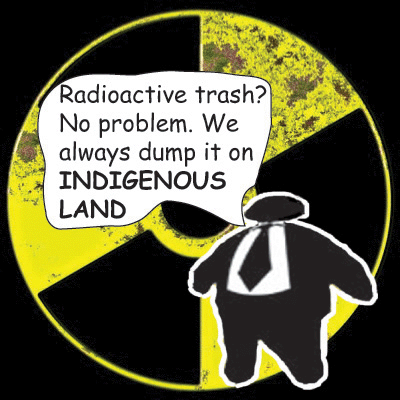
OTTAWA, April 30, 2024 — Today, leaders of Indigenous communities in New Brunswick, Quebec and Ontario express their strong concern about the lack of Indigenous consent for nuclear waste, uranium mining and refining on their homelands.
Article 29(2) of the United Nations Declaration on the Rights of Indigenous Peoples (UNDRIP) states: “States shall take effective measures to ensure that no storage or disposal of hazardous materials shall take place in the lands or territories of Indigenous peoples without their free, prior and informed consent.”
The Government of Canada is promoting an expansion of nuclear energy across the country without the free, prior and informed consent of Indigenous Nations affected. Like the existing reactors, new nuclear reactors will leave a toxic legacy for all living things for thousands of years.
Already, dozens of communities have radioactively contaminated sites on their homelands, and they and others must carefully consider the impacts of proposed permanent repositories for nuclear waste on the next seven generations.
Hugh Akagi is Chief of the Peskotomuhkati Nation in Canada, whose homeland is the unwilling host of the Point Lepreau Nuclear Generating Station on the world-renowned Bay of Fundy in New Brunswick. The reactor was built and later refurbished without the Nation’s consent. Now the federal and New Brunswick governments are spending public funds to develop two new nuclear reactors on the Point Lepreau site.
Chief Akagi has written several times to the Minister of Environment and Climate Change Canada, to express concerns about the proposed projects and ask questions about the high-level used nuclear fuel waste in temporary storage at the Point Lepreau site.
“The nuclear fuel chain – mining uranium, chemically processing the ore, fabricating the fuel, fissioning uranium in a reactor creating toxic radioactive waste remaining hazardous for tens of thousands of years – leaves a legacy of injustices disproportionately felt by Indigenous peoples and all our relations,” says Chief Akagi.
In 2021, the Wolastoq Grand Council in New Brunswick published a resolution on nuclear energy and nuclear waste on traditional Wolastoq homeland.
Grand Council Chief Ron Tremblay, says: “Wolastoqewi-Elders define Nuclear in their language as ‘Askomiw Sanaqak,’ which translates as ‘Forever Dangerous.’ That’s why we called for First Nation alternative energy solutions, including renewables and energy efficiency, as well as no more public funding for nuclear and the phasing out of the Point Lepreau reactor.”
The Blind River uranium refinery owned and operated by Cameco is located on lands which since AD 800 have been the site of vibrant Indigenous occupation and life, including as the ancestral lands of the people of Mississauga First Nation (MFN), and MFN’s access to these lands and waters has been barred by virtue of Cameco’s nuclear operations at the site.
Mississauga First Nation has never consented to the lands being used for nuclear activities nor as disposal grounds for radioactive wastes and there continues to be no equitable redress for this loss of access to their ancestral lands located on the Mississauga Delta.
“The existence of nuclear operations on our ancestral lands has contributed to our loss of culture and spiritual traditions and has been detrimental to our health and well-being of our First Nation, said Mississauga First Nation Councillor Peyton Pitawanakwat. “Cameco has materially benefitted and continues to benefit, from the operations at Blind River, which remains the world’s largest uranium refinery. The proposal to now site radioactive wastes on our lands would perpetuate an existing environmental injustice and amount to environmental racism.”
The Kichi Sibi or Ottawa River, which forms the boundary between Ontario and Quebec, is another site of conflict. The Chiefs of Kebaowek and Kitigan Zibi Anishinabeg First Nations in Quebec last year made public their Indigenous-led assessment of a million-cubic-metre radioactive waste mound to be built at Chalk River Laboratories on the shores of the Kichi Sibi on unceded Algonquin territory. Their assessment covered the project’s impact on their culture, land, water and wildlife. An experimental nuclear reactor is also planned for Chalk River.
“The Kichi Sibi is sacred to our peoples and at the heart of our unceded homeland,” said Chief Lance Haymond, of Kebaowek First Nation. “The Algonquin peoples never consented to the Chalk River site being used for over 75 years for nuclear reactors and research, and now being the site for a permanent radioactive waste dump. Consultation was far too late and inadequate, and we reject the plan.”
In spite of the clear opposition to the project by ten Algonquin First Nations, the Canadian Nuclear Safety Commission approved the Near Surface Disposal Facility in January 2024. Two First Nations have launched a legal challenge to the decision, as have several citizen groups.
The federal government says that reconciliation is a priority. How UNDRIP will be respected by the Government of Canada – which signed it in 2016 and passed the United Nations Declaration on the Rights of Indigenous Peoples Act in 2021 – remains to be seen.
Dounreay & Scottish Nuclear Policy
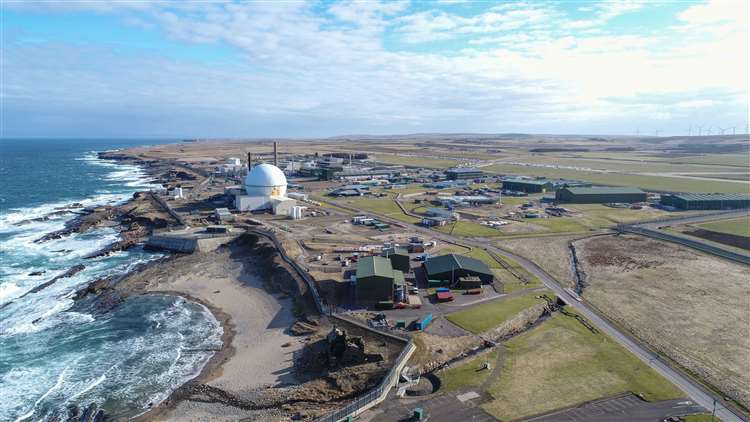
Allan Dorans , SNP MP for Ayr, Carrick and Cumnock:
Workers at the Dounreay nuclear power complex on Scotland’s north coast plan strike action
next month which will further delay the decommissioning of a plant which
started operating in 1955.
The Prospect, Unite and GMB unions are all
involved. The GMB, the main union for nuclear energy workers, champions
alongside Scottish Labour proposals for new nuclear power stations in
Scotland, despite widespread public opposition to them. The union also
helps to fund Labour candidates.
While it is always disturbing to hear of
industrial conflict at a nuclear plant, these strikes will in reality,
relatively speaking, make little difference to the decommissioning process.
Why? Decommissioning began in 2019 and the plan envisages taking 50-60
years to complete.
But “complete” doesn’t mean the same to the company
responsible for the clean-up and demolition of Dounreay, Magnox Ltd, what
it means to most of us, and the site will be under surveillance – ie, not
usable – for at least 300 years. Leaving aside for the moment the appalling
financial costs of nuclear decommissioning, rarely mentioned in Scottish
Labour’s campaign material, what about the costs for the local people and
the environment over the last nearly 70 years?
There have been three
significant accidents and countless smaller ones. On May 10, 1977, a
65-metre (213ft) deep shaft at the plant was packed with radioactive waste
with at least 2 kg of sodium and potassium. Seawater flooded in and
reacted violently with the sodium and potassium, blowing the huge steel and
concrete lids off the shaft. The explosion littered the area with
radioactive particles, with around 150 of these being found on the beach in
the following 20 years.
This was, according to the New Statesman in 1995,
the worst nuclear accident ever in the UK. Dounreay was never prosecuted.
Researchers based at Oxford University, reporting – conveniently for some
political forces – in July 2014 revisited earlier studies of the incidence
of leukaemia around Sellafield and Dounreay and concluded that children,
teenagers and young adults currently living close to the facilities were
not at an increased risk of developing cancers.
The researchers, who were
dependent upon UK Government grants for their survival, downplayed two
earlier studies that found a raised risk of leukaemia among 0 to
14-year-olds and 15- to 24-year-olds living within 12.5km of Dounreay
during the period 1979-84. A subsequent study in 1996 reported an excess of
childhood leukaemia and Non-Hodgkin’s Lymphoma (NHL) within 25 km of
Dounreay for the period 1968-93. The researchers do not tell us just how
many cases, how many more children and young adults than expected, had
developed these often-deadly cancers, but 1287 cases near seven nuclear
sites in Scotland were looked at in the second study.
Around Dounreay,
almost twice as many cases as expected were found. The difference was
greatest around Dounreay. If we share the 1287 cases among the seven sites,
we get around 180 cases near Dounreay, of which half or might not have
occurred if the plant had never been built. To, me that’s “significant”
and I feel sure it was for those young people and their families. With
every passing month, it becomes clearer that Scottish Labour must
reconsider their plans for a nuclear Scotland.
The National 29th April 2024
NNSA Delays Urgent Research on Plutonium “Pit” Aging But Spends Billions on Nuclear Weapons Bomb Cores

Concerned Citizens for Nuclear Safety, 28 Apr 24 http://nuclearactive.org/
This week, CCNS highlights portions of a recent press release by Nuclear Watch New Mexico, Tri-Valley Communities Against a Radioactive Environment (Tri-Valley CARES), and the Savannah River Site Watch about the National Nuclear Security Administration (NNSA). Their piece suggests NNSA does not have its priorities straight in neither producing up-to-date information on the way plutonium appears to age nor providing this information in a timely manner to the public. The entire press release is posted at http://nuclearactive.org/wp-content/uploads/2024/04/240417-NWNM-SRSW-TVC-Plutonium-Aging-PR.pdf
The press release reads: “Nearly three years after filing a Freedom of Information Act request, the public interest group Savannah River Site Watch has finally received [] the congressionally required Research Program Plan for Plutonium and Pit Aging.
However, the document is 40% blacked out, including references and acronyms.
Plutonium ‘pits’ are the radioactive cores of all U.S. nuclear weapons. The NNSA claims that potential aging effects are justification for a ~$60 billion program to expand production. However, the Plan fails to show that aging is a current problem. To the contrary, it demonstrates that NNSA is delaying urgently needed updated plutonium pit aging research.
“In 2006 independent scientific experts known as the JASONs concluded that plutonium pits last at least 85 years without specifying an end date. The average pit age is now around 40 years. A 2012 follow-on study by the Lawrence Livermore nuclear weapons lab concluded:
’This continuing work shows that no unexpected aging issues are appearing in plutonium that has been accelerated to an equivalent of [approximately] 150 years of age. The results of this work are consistent with, and further reinforce, the Department of Energy Record of Decision to pursue a limited pit manufacturing capability in existing and planned facilities at Los Alamos instead of constructing a new, very large pit manufacturing facility…’
“Since then NNSA has reversed itself. In 2018 the agency decided to pursue the simultaneous production of at least 30 pits per year at the Los Alamos National Laboratory (LANL) in northern New Mexico and at least 50 pits per year at the Savannah River Site (SRS) in South Carolina. Upgrades to plutonium facilities at LANL are slated to cost $8 billion over the next five years. The redundant Savannah River Plutonium Processing Facility in South Carolina will cost up to $25 billion, making it the second most expensive building in human history.
“Hundreds of billions of taxpayers’ dollars and future international nuclear weapons policies are at stake. …
-
Archives
- October 2026 (120)
- September 2026 (339)
- August 2026 (330)
- July 2026 (355)
- June 2026 (287)
- May 2026 (306)
- April 2026 (356)
- March 2026 (251)
- February 2026 (267)
- January 2026 (308)
- December 2025 (358)
- November 2025 (359)
-
Categories
- 1
- 1 NUCLEAR ISSUES
- business and costs
- climate change
- culture and arts
- ENERGY
- environment
- health
- history
- indigenous issues
- Legal
- marketing of nuclear
- media
- opposition to nuclear
- PERSONAL STORIES
- politics
- politics international
- Religion and ethics
- safety
- secrets,lies and civil liberties
- spinbuster
- technology
- Uranium
- wastes
- weapons and war
- Women
- 2 WORLD
- ACTION
- AFRICA
- Atrocities
- AUSTRALIA
- Christina's notes
- Christina's themes
- culture and arts
- Events
- Fuk 2022
- Fuk 2023
- Fukushima 2017
- Fukushima 2018
- fukushima 2019
- Fukushima 2020
- Fukushima 2021
- general
- global warming
- Humour (God we need it)
- Nuclear
- RARE EARTHS
- Reference
- resources – print
- Resources -audiovicual
- Weekly Newsletter
- World
- World Nuclear
- YouTube
-
RSS
Entries RSS
Comments RSS