“Tritium Removal”: A Report on the Proposed MCECE Facility at Chalk River.
Gordon Edwards, 2 Mar 24
As it happens, both heavy water (used in all Canadian CANDU reactors) and tritium (produced in great quantities as a radioactive pollutant from CANDU reactors) are sensitive materials from the point of view of nuclear weapons proliferation.
Heavy water can be used to produce nuclear-weapons usable plutonium without the need to buy enriched uranium, a carefully controlled material. And tritium, in a purified form, can be used to vastly increase the explosive yield of an atomic bomb by acting as a “booster”. As little as two grams of tritium can magnify the blast of an implosion-type nuclear bomb by a factor of ten.
These matters are briefly touched upon in this report, which is mainly focussed on the dangers of tritium as an environmental pollutant that can endanger the health and safety of humans and the environemnt, especially for pregnant women.
“Tritium Removal”: A Report on the Proposed MCECE Facility at Chalk River
Prepared for Keboawek First Nation by Gordon Edwards, Ph.D.
Executive Summary
In a letter to Keboawek First Nation dated February 2, 2024 (reference # 2), we read that “CNL is restoring and protecting Canada’s environment by reducing and effectively managing nuclear liabilities. Among these liabilities is Atomic Energy of Canada’s (AECL) large inventory of tritium- contaminated heavy water.” In an accompanying Fact Sheet (reference # 3) CNL states that “tritiated heavy water cannot be used, re-used or disposed of in its current form.”
The fact that tritium-contaminated heavy water cannot be used, re-used, or even disposed of in its present form is a testament to the considerable hazards posed by radioactive tritium. Nevertheless, tritiated heavy water can be safely stored, and kept out of the environment, as is being done at present. There is no reason given by CNL as to why such storage cannot be continued indefinitely, until the radioactive tritium has disintegrated to innocuous levels.
Instead, CNL plans to build a tritium removal facility called the Modernized Combined Electrolysis and Catalytic Exchange facility (MCECE) to extract the radioactive tritium in a gaseous form from the non-radioactive heavy water. In the above-mentioned letter from CNL, we learn that CNL expects tritium emissions into the environment from this facility. Some simple arithmetic reveals that up to 10.7 trillion becquerels of tritium will be dispersed into the environment per year from this facility. (In the letter, up to 2 curies per week of tritium gas (T2) and up to 5 curies per week of deuterium tritium (DT) will be released into the atmosphere, for a total of 259 billion becquerels of tritium per week. Assuming an 80 percent capacity factor, that’s 10.7 trillion becquerels of tritium released per year.)
It is concluded that there is no justification for the proposed facility in terms of “protecting the environment by reducing and effectively managing nuclear liabilities”. The proposed facility does nothing to reduce the amount of radioactive tritium, but it does provide a mechanism for dispersing trillions of becquerels of tritium into the environment every year. Tritium is not effectively managed to protect the environment. Evidently, indefinite safe storage of tritium- contaminated heavy water is the preferred option if protecting the environment is the goal.
New plans to dismantle Rosyth dead nuclear submarines left for decades
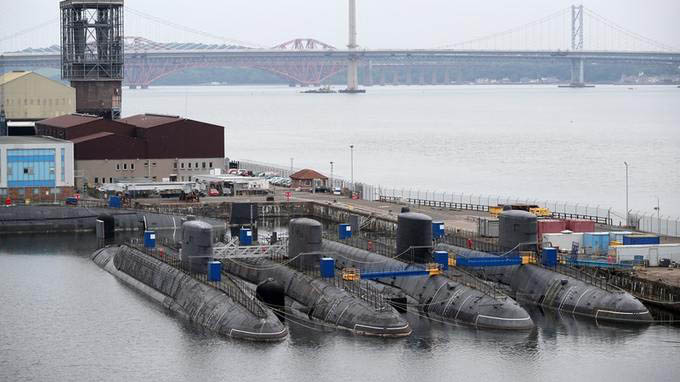
One of the old nuclear subs, Dreadnought, has been laid up at Rosyth for 44 years
By Ally McRoberts, Content Editor, https://www.thenational.scot/news/24154347.new-rosyth-dockyard-building-submarine-dismantling/ 1 Mar 24
THERE are plans for a new building at Rosyth Dockyard to dismantle the old nuclear submarines that are stored there.
Babcock International has applied to Fife Council for permission to construct a large steel shed at dry dock number two.
If approved it will be 70 metres long, 18m wide and 20m high and “aid dismantling operations” at the yard, where seven old subs have been laid up for decades.
A separate planning application related to the project, for a metal waste disposal facility at the corner of Wood Road and Caledonia Road, was submitted to the council late last year.
Blyth and Blyth, of Edinburgh, have been appointed by Babcock as civil and structural engineering consultants for the Rosyth Submarine Dismantling Project and are agents for both applications.
The last of the subs at the dockyard came out of service in 1996 and Dreadnought has been there the longest, coming up for 44 years.
Laid up in Rosyth since 1980, longer than it was in service, getting rid of it and the six other vessels is part of a pledge given in 2022 by the UK Government to Fife Council to “de-nuclearise Rosyth” by 2035.
Councillors were also told of a world first with plans to take out the reactor – “the most radioactive part” – before cutting up the ships with the overall ambition of turning them into “razor blades and tin cans”.
Most of the low-level radioactive waste should be gone from Rosyth by the end of this year.
Documents submitted with the latest planning application says that the new building would be 1162 square metres in size.
The site is currently an area of hardstanding, used for the external storage of materials and equipment associated with the refurbishment of vessels in the dry dock.
Waste produced from the dismantling process “shall be processed in other existing buildings within the dock facilities”.
In total, the UK has 27 old Royal Navy submarines to be scrapped – others are stored at Devonport – and the UK Government has been heavily criticised for delays in dealing with the nuclear legacy.
Maintaining the vessels costs £30m a year.
“Tritium Removal” A Report on the Proposed MCECE nuclear Facility at Chalk River
“Tritium Removal” A Report on the Proposed MCECE Facility at Chalk
River by Gordon Edwards, Ph.D. for the Keboawek First Nation. In a letter
to Keboawek First Nation dated February 2, 2024 (reference # 2), we read
that “CNL is restoring and protecting Canada’s environment by reducing
and effectively managing nuclear liabilities.
Among these liabilities is
Atomic Energy of Canada’s (AECL) large inventory of tritium contaminated
heavy water.” In an accompanying Fact Sheet (reference # 3) CNL states
that “tritiated heavy water cannot be used, re-used or disposed of in its
current form.”
The fact that tritium-contaminated heavy water cannot be
used, re-used, or even disposed of in its present form is a testament to
the considerable hazards posed by radioactive tritium. Nevertheless,
tritiated heavy water can be safely stored, and kept out of the
environment, as is being done at present. There is no reason given by CNL
as to why such storage cannot be continued indefinitely, until the
radioactive tritium has disintegrated to innocuous levels.
Canadian Coalition for Nuclear Responsibility 27th Feb 2024
Locals oppose nuclear waste plant – parish council
Bob Cooper, Political reporter, BBC Radio Cumbria, 28 Feb 24 https://www.bbc.com/news/articles/c0jvjx8kn5xo—
Opponents of plans to seal some of the UK’s most lethal nuclear waste underground have called for communities to have more of say.
Whicham Parish Council in west Cumbria held a postal survey, in which more than three quarters of those who responded opposed the idea.
It is part of an area in which officials are exploring the possibility of siting a Geological Disposal Facility (GDF).
Cumberland Council said there was “no reason” for parish councils to conduct ballots.
Nuclear Waste Services, the body that oversees the project, described a GDF as “a highly engineered structure consisting of multiple barriers that will provide protection over hundreds of thousands of years.”
High-level nuclear waste would be sealed up to 1km (0.62 mile) underground, or possibly under the seabed.
Searches for a potential place for the facility are taking place in three areas, including two in Cumbria and another in Lincolnshire.
‘Impact on communities’
The process of identifying a site is expected to take 10 to 15 years and it could be ready to start receiving waste in the 2050s.
The Whicham postal vote was carried out in 2023 and the parish council said 251 out of 400 parishioners replied, which was a 63% turnout.
The council said 77% were opposed to a GDF in the parish, 15% were in favour, 6% were neutral, while the rest of the forms were blank.
Richard Outram, from Nuclear Free Local Authorities, a group of councils opposed to nuclear developments, said other parish councils should follow Whicham and conduct polls.
“The geological disposal facility, or a nuclear waste dump, is a massive engineering project that’s going to impact on communities for tens of years,” he said.
“It’s important to regularly take the public temperature and one way of doing that is by each parish council holding a regular parish poll.”
‘Too early’
Cumberland Council is the authority with the power to withdraw local communities from the siting process, external.
It is also responsible for conducting a formal test of public support, external, such as a local referendum, before a site can be approved.
The Labour-led authority recently wrote to parish councils telling them they did not need to conduct polls because “detailed public opinion monitoring in the Search Areas is already carried out”.
It also said it was too early in the process to carry out an official test of public support.
Meanwhile, Nuclear Waste Services said surveys to monitor local opinion would be carried out by a professional polling company.
Burying nuclear waste the best of a bad bunch of options
A reader offers her opinion on what to do with nuclear waste as Saskatchewan considers small modular reactors for its future energy needs.
I share the concern that Dale Dewar expressed in the StarPhoenix of Feb. 20 about the long-term management of Canada’s used nuclear fuel.
However, my conclusion is that, while far from ideal, deep burial is the best of a bunch of bad available options. There are no good options. Even proposals to extract recyclable material from the used fuel will leave behind most of the waste to be somehow disposed of.
Dewar’s suggestion that the wastes should remain permanently on the surface, with a system of rolling stewardship that would be passed on from generation to generation, might work in a world that could be guaranteed to be permanently free of war, terrorism, natural disasters, negligence and political instability.
But that’s not the world we live in. We cannot assume that safe stewardship would be maintained in perpetuity. Leaving the wastes indefinitely on the surface would seem to create far greater risk than deep geological burial would.
Of course, it would have been nice if we had thought about this problem before we started creating these wastes.
China is ‘unlikely’ to lift import ban on Japanese seafood as dumping continues
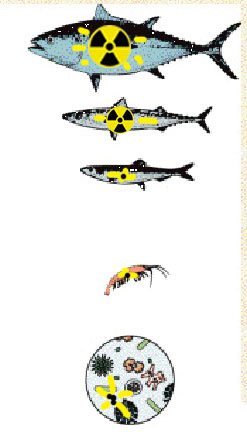
predatory species higher up in the food chain have a greater chance of experiencing bioaccumulation and biomagnification of radioactive substances. As time goes on and more nuclear-contaminated water is discharged, the negative effects will only increase
By GT staff Feb 25, 2024 , https://www.globaltimes.cn/page/202402/1307658.shtml
Half a year after Japan opened Pandora’s box by dumping nuclear-contaminated wastewater from the crippled Fukushima Daiichi nuclear power plant into the ocean, Japanese media are discussing the possibility of bilateral talks for getting China to revoke its import ban on Japanese marine products, in an apparent attempt to test the waters.
In response, Chinese experts told the Global Times on Sunday that, in the short term, it is unlikely that China will revoke the ban as there are currently no conditions for a withdrawal.
Meanwhile, a Kyodo News survey on Friday showed that most Japanese fishery groups have been affected by the discharge, with many feeling the impact through China’s import ban on Japanese seafood.
The survey found that 29 out of 36 respondents among the members of the National Federation of Fisheries Cooperative Associations said they “had felt” or “had somewhat felt” negative effects, including financial damage due to the contaminated water dumping, overwhelmingly due to the subsequent import ban by China.
Chinese Foreign Ministry spokesperson Mao Ning said at a regular press conference that the precautionary measures taken by China and some other countries in response to Japan’s move are aimed at protecting food safety and people’s health.
“These measures are entirely legitimate, reasonable and necessary,” Mao said.
Chang Yen-chiang, director of the Yellow Sea and Bohai Sea Research Institute of Dalian Maritime University, revealed several main factors why China is less likely to revoke the ban in the short run.
There is no halt in the ocean discharge, that is, the Japanese side has not withdrawn from their erroneous actions, he said.
Currently, half a year has passed since the dumping began, meaning that under the influence of ocean currents, the impact of Japan’s nuclear-contaminated water discharge on East Asia may just be starting, and further impacts need to be assessed, Chang said.
In addition, predatory species higher up in the food chain have a greater chance of experiencing bioaccumulation and biomagnification of radioactive substances. As time goes on and more nuclear-contaminated water is discharged, the negative effects will only increase, Chang said. “Under these circumstances, how could the ban be lifted?” the expert asked.
TEPCO – operator of the Daiichi plant – plans to release a total of about 54,600 tons of nuclear-contaminated water on seven occasions in the 2024 fiscal year, more than double the amount of 2023, according to media reports.
Chang called on Japan to consider solving the Fukushima nuclear power plant issue on a fundamental level, such as focusing on research on how to handle the burnt-out nuclear reactors. Otherwise, radioactive substances will continue to be produced endlessly, and the discharge of nuclear contamination could last for over 100 years, making the situation increasingly worse.
Japanese media have reported on a series of scandals concerning leaks occurring during the contaminated water discharge process, which led to soil contamination around the nuclear power plant.
Most recently, 1.5 metric tons of highly radioactive water escaped in early February during valve checks at a treatment machine designed to remove cesium and strontium from the contaminated water, according to TEPCO.
According to Japanese experts studying the soil, the radiation levels in Fukushima soil are much higher compared to other areas.
“We should be more vigilant toward crops and plants grown in this contaminated soil. China should increase radioactive testing of Japanese agricultural products and cosmetics imports,” Chang stated.

China is ‘unlikely’ to lift import ban on Japanese seafood as dumping continues
By GT staff reportersPublished: Feb 25, 2024 09:50 PM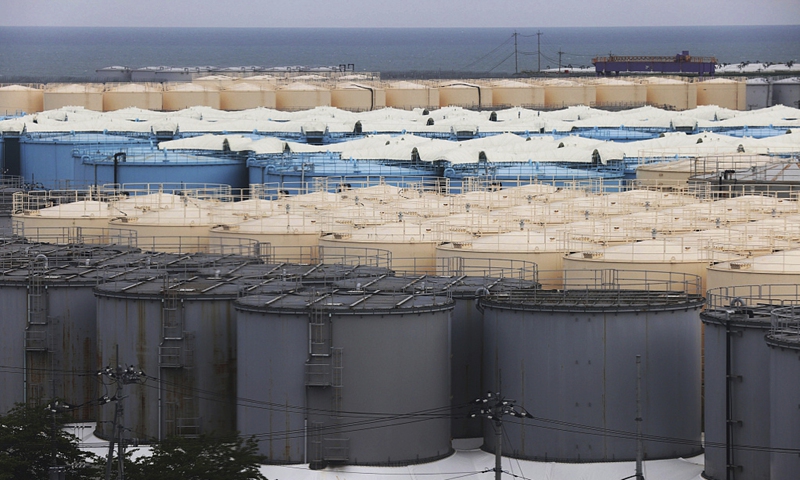
Water tanks near Fukushima Daiichi nuclear power plant in Okuma town of Fukushima prefecture on May 26, 2023 Photo: VCG
Half a year after Japan opened Pandora’s box by dumping nuclear-contaminated wastewater from the crippled Fukushima Daiichi nuclear power plant into the ocean, Japanese media are discussing the possibility of bilateral talks for getting China to revoke its import ban on Japanese marine products, in an apparent attempt to test the waters.
In response, Chinese experts told the Global Times on Sunday that, in the short term, it is unlikely that China will revoke the ban as there are currently no conditions for a withdrawal.
Meanwhile, a Kyodo News survey on Friday showed that most Japanese fishery groups have been affected by the discharge, with many feeling the impact through China’s import ban on Japanese seafood.
The survey found that 29 out of 36 respondents among the members of the National Federation of Fisheries Cooperative Associations said they “had felt” or “had somewhat felt” negative effects, including financial damage due to the contaminated water dumping, overwhelmingly due to the subsequent import ban by China.
Chinese Foreign Ministry spokesperson Mao Ning said at a regular press conference that the precautionary measures taken by China and some other countries in response to Japan’s move are aimed at protecting food safety and people’s health.
“These measures are entirely legitimate, reasonable and necessary,” Mao said.
Chang Yen-chiang, director of the Yellow Sea and Bohai Sea Research Institute of Dalian Maritime University, revealed several main factors why China is less likely to revoke the ban in the short run.
There is no halt in the ocean discharge, that is, the Japanese side has not withdrawn from their erroneous actions, he said.
Currently, half a year has passed since the dumping began, meaning that under the influence of ocean currents, the impact of Japan’s nuclear-contaminated water discharge on East Asia may just be starting, and further impacts need to be assessed, Chang said.
In addition, predatory species higher up in the food chain have a greater chance of experiencing bioaccumulation and biomagnification of radioactive substances. As time goes on and more nuclear-contaminated water is discharged, the negative effects will only increase, Chang said. “Under these circumstances, how could the ban be lifted?” the expert asked.
TEPCO – operator of the Daiichi plant – plans to release a total of about 54,600 tons of nuclear-contaminated water on seven occasions in the 2024 fiscal year, more than double the amount of 2023, according to media reports.
Chang called on Japan to consider solving the Fukushima nuclear power plant issue on a fundamental level, such as focusing on research on how to handle the burnt-out nuclear reactors. Otherwise, radioactive substances will continue to be produced endlessly, and the discharge of nuclear contamination could last for over 100 years, making the situation increasingly worse.
Japanese media have reported on a series of scandals concerning leaks occurring during the contaminated water discharge process, which led to soil contamination around the nuclear power plant.
Most recently, 1.5 metric tons of highly radioactive water escaped in early February during valve checks at a treatment machine designed to remove cesium and strontium from the contaminated water, according to TEPCO.
According to Japanese experts studying the soil, the radiation levels in Fukushima soil are much higher compared to other areas.
“We should be more vigilant toward crops and plants grown in this contaminated soil. China should increase radioactive testing of Japanese agricultural products and cosmetics imports,” Chang stated.
As Japanese industries, including fisheries and cosmetics, have been affected, Japanese media continues to report news about bilateral talks aimed at getting China to revoke its import ban on Japanese marine products, trying to test the reaction from China.
The Asahi Shimbun revealed Friday that nuclear experts from Japan and China started talks in January regarding contaminated water. The report noted that the Chinese side has still shown no signs of ending its import ban.
The Kyodo News reported on Thursday that when Chinese Ambassador to Japan Wu Jianghao met with the leader of the Social Democratic Party, Mizuho Fukushima, in January, China’s import suspension was also discussed, but there were no conditions for lifting the ban at present.
Iran Reduces Near-Weapons-Grade Stockpile, Defying Expectations
Move could signal an effort to de-escalate nuclear tensions with Washington
By Laurence Norman, Feb. 26, 2024
VIENNA—Iran reduced its stockpile of near-weapons-grade nuclear material even as it continued expanding its overall nuclear program, the United Nations’ atomic watchdog said Monday, marking a surprise step that could ease tensions with Washington.
The move comes at a moment when Iran and the U.S. have sought to avoid direct confrontation in the regional conflict that grew out of Hamas’s terrorist attack on Israel on Oct. 7 and Israel’s aggressive response………… (Subscribers only) more https://www.wsj.com/world/middle-east/iran-reduces-near-weapons-grade-stockpile-defying-expectations-ba384777
Buried Nuclear Waste From the Cold War Could Resurface as Ice Sheets Melt
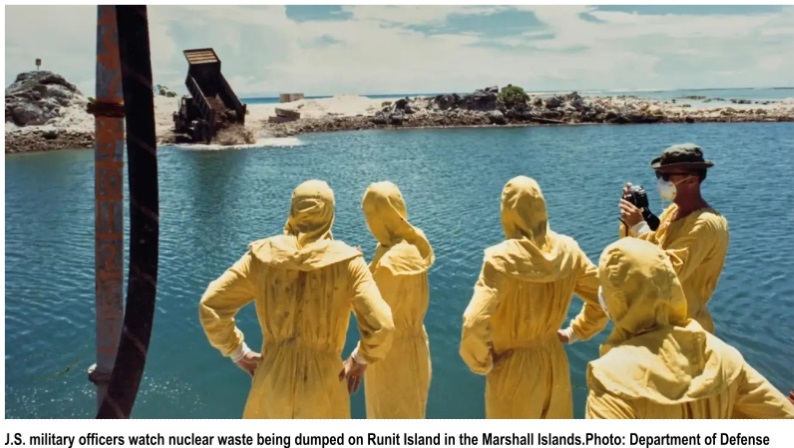
Decades after the U.S. buried nuclear waste abroad, climate change could unearth it.
By Anita Hofschneider, Grist, https://gizmodo.com/buried-nuclear-waste-from-the-cold-war-could-resurface-1851286777
Ariana Tibon was in college at the University of Hawaiʻi in 2017 when she saw the photo online: a black-and-white picture of a man holding a baby. The caption said: “Nelson Anjain getting his baby monitored on March 2, 1954, by an AEC RadSafe team member on Rongelap two days after ʻBravo.ʻ”
Tibon had never seen the man before. But she recognized the name as her great-grandfatherʻs. At the time, he was living on Rongelap in the Marshall Islands when the U.S. conducted Castle Bravo, the largest of 67 nuclear weapon tests there during the Cold War. The tests displaced and sickened Indigenous people, poisoned fish, upended traditional food practices, and wrought cancers and other negative health repercussions that continue to reverberate today.
A federal report by the Government Accountability Office published last month examines what’s left of that nuclear contamination, not only in the Pacific but also in Greenland and Spain. The authors conclude that climate change could disturb nuclear waste left in Greenland and the Marshall Islands. “Rising sea levels could spread contamination in RMI, and conflicting risk assessments cause residents to distrust radiological information from the U.S. Department of Energy,” the report says.
In Greenland, chemical pollution and radioactive liquid are frozen in ice sheets, left over from a nuclear power plant on a U.S. military research base where scientists studied the potential to install nuclear missiles. The report didn’t specify how or where nuclear contamination could migrate in the Pacific or Greenland, or what if any health risks that might pose to people living nearby. However, the authors did note that in Greenland, frozen waste could be exposed by 2100.
“The possibility to influence the environment is there, which could further affect the food chain and further affect the people living in the area as well,” said Hjalmar Dahl, president of Inuit Circumpolar Council Greenland. The country is about 90 percent Inuit. “I think it is important that the Greenland and U.S. governments have to communicate on this worrying issue and prepare what to do about it.”
The authors of the GAO study wrote that Greenland and Denmark haven’t proposed any cleanup plans, but also cited studies that say much of the nuclear waste has already decayed and will be diluted by melting ice. However, those studies do note that chemical waste such as polychlorinated biphenyls, man-made chemicals better known as PCBs that are carcinogenic, “may be the most consequential waste at Camp Century.”
The report summarizes disagreements between Marshall Islands officials and the U.S. Department of Energy regarding the risks posed by U.S. nuclear waste. The GAO recommends that the agency adopt a communications strategy for conveying information about the potential for pollution to the Marshallese people.
Nathan Anderson, a director at the Government Accountability Office, said that the United States’ responsibilities in the Marshall Islands “are defined by specific federal statutes and international agreements.” He noted that the government of the Marshall Islands previously agreed to settle claims related to damages from U.S. nuclear testing.
“It is the long-standing position of the U.S. government that, pursuant to that agreement, the Republic of the Marshall Islands bears full responsibility for its lands, including those used for the nuclear testing program.”
To Tibon, who is back home in the Marshall Islands and is currently chair of the National Nuclear Commission, the fact that the report’s only recommendation is a new communications strategy is mystifying. She’s not sure how that would help the Marshallese people.
“What we need now is action and implementation on environmental remediation. We don’t need a communication strategy,” she said. “If they know that it’s contaminated, why wasn’t the recommendation for next steps on environmental remediation, or what’s possible to return these lands to safe and habitable conditions for these communities?”
The Biden administration recently agreed to fund a new museum to commemorate those affected by nuclear testing as well as climate change initiatives in the Marshall Islands, but the initiatives have repeatedly failed to garner support from Congress, even though they’re part of an ongoing treaty with the Marshall Islands and a broader national security effort to shore up goodwill in the Pacific to counter China.
The San Onofre Briefing: The Latest on SoCal’s Shut Down Nuclear Power Plant
5 Feb 2024
What does it mean for a nuclear plant to be decommissioned? What’s the status of the nuclear waste currently stored on-site at San Onofre? What concerns does the public need to be aware of? Is San Onofre safe? As advocates for a safe and sustainable future for Southern California, SLF is thrilled to present the next edition of our First Fridays Series, “The San Onofre Briefing: The Latest on SoCal’s Shut Down Nuclear Power Plant.” This edition is a comprehensive exploration of the recent developments surrounding the decommissioning of the San Onofre Nuclear Generating Station. Our expert panel – including a retired Admiral of the US Navy and the Former Chair of the US Nuclear Regulatory Commission – delves into the current status, environmental impact, and public health implications of the shut-down nuclear site.
Waste issues need consideration in SMR deployment, says UK’s Committee on Radioactive Waste Management (CoRWM).

https://world-nuclear-news.org/Articles/Waste-issues-need-consideration-in-SMR-deployment 14 Feb 24
Waste management issues need to have a significantly greater prominence in the process of developing and deploying small modular reactor and advanced modular reactor designs, according to the UK’s Committee on Radioactive Waste Management (CoRWM).
There is considerable impetus for the development of small modular reactor (SMR) and advanced modular reactor (AMR) designs and their commercial deployment, both for energy security and for environmental reasons, particularly given the historic difficulties of deploying reactors at gigawatt scale,” CoRWM notes in a new position paper.
However, it says the issue of managing the used fuel and radioactive waste from these new reactors “appears, with some exceptions … to have been largely ignored or at least downplayed up to now”. It adds that the issue “must be considered when selecting technologies for investment, further development, construction and operation”.
The paper says: “This must involve addressing the uncertainties about such management at an early stage, to avoid costly mistakes which have been made in the past, by designing reactors without sufficient consideration of how spent fuel and wastes would be managed, and also to provide financial certainty for investors regarding lifetime costs of operation and decommissioning.”
CoRWM says it is essential to know: the nature and composition of the waste and, in particular, of the used fuel; its likely heat generation and activity levels; how it could feasibly be packaged and its volume; and when it is likely to arise.
“So far there is little published material from the promoters and developers of new reactor types to demonstrate that they are devoting the necessary level of attention to the waste prospectively arising from SMR/AMRs,” it notes.
The position paper provides recommendations to the UK government, Great British Nuclear (GBN), and Nuclear Waste Services and regulators to consider as SMR and AMR deployment is progressed.
“There are many questions to be answered concerning the radioactive waste and spent fuel management aspects of the design and operation of SMRs and AMRs,” CoRWM says. “This paper begins the process of raising them, with the caveat that our knowledge of the reactor designs and their fuel requirements is relatively immature compared with large GW reactors.”
CoRWM says there are various mechanisms by which these questions could be addressed in the process of obtaining approval for the new reactors. These are principally: the process of justification, which will be mandatory for all new reactor types; Generic Design Assessment which is optional and non-statutory; nuclear site licensing; and environmental permitting.
“The last two stages of control may in some cases come too late in the process to allow for effective optimisation of designs and the selection of materials that reduce waste,” CoRWM says. “It remains to be seen how effective these mechanisms will be and whether they will occur sufficiently early in the decision-making process to ensure that radioactive waste management is fully and responsibly addressed.”
CoRWM was established in 2003 as a non-statutory advisory committee and is classed as a non-departmental public body. Its purpose is to provide independent advice to the UK government, and the devolved administrations based on scrutiny of the available evidence on the long-term management of radioactive waste, arising from civil and, where relevant, defence nuclear programmes, including storage and disposal.
The UK government has plans to expand nuclear energy capacity to 24 GW by 2050, with a fleet of SMRs a key part of that strategy. Last year, the government and the new GBN arms-length body set up to help deliver that extra capacity began the selection process for which SMR technology to use. In October, EDF, GE Hitachi Nuclear Energy, Holtec, NuScale Power, Rolls Royce SMR and Westinghouse were invited to bid for UK government contracts in the next stage of the process.
Devonport Dockyard nuclear sub dismantling will be hit by delays, new report predicts
Nuclear Information Service expects no quick fix for removal of 15 decommissioned submarines laid up at Devonport
William Telford, Business Editor, 15 Feb 24 Plymouth Live
The dismantling of 15 decommissioned nuclear subs at Devonport Royal Dockyard is likely to hit delays, according to a new report. The briefing document published by the independent Nuclear Information Service says a history of infrastructure work at the Plymouth facility means “delays are more likely to materialise than not”.
The report said upgrades to 14 and 15 Docks and the Submarine Refit Complex at Devonport are overdue and progress on submarine dismantling is “on hold” while the Government focuses on its £298m “demonstrator” project to fully dismantle HMS Swiftsure at Rosyth, forecast to be complete at the end of 2026.
The Ministry of Defence told Plymouth Live it aims to dismantle the nuclear submarines at Devonport “as soon as practicably possible”. It said the Swiftsure project will “inform and refine” the dismantling process for subsequent submarines and provide more certainty on the dismantling schedule for future submarines and remains on schedule for completion by the original target date of 2026.
The Nuclear Information Service’s briefing report on Devonport Royal Dockyard gives an overview of the facility and its role in servicing the UK’s submarine fleet, including its nuclear-armed submarines. The report said: “The 15 out-of-service nuclear submarines stored at Devonport, and a further seven that are at Rosyth, together comprise every nuclear submarine the Navy has ever fielded.
“Aside from the long-overdue upgrades to 14 and 15 Docks, and the Submarine Refit Complex, progress on submarine dismantling is on hold while the Government focuses on its ‘demonstrator’ project to fully dismantle HMS Swiftsure. This work is being undertaken at Rosyth and is currently forecast to be complete at the end of 2026 at a cost of £298m.
“Three more submarines at Rosyth have had low-level waste removed from them, but it is not clear if work to defuel the nine submarines at Devonport that are still carrying nuclear fuel will begin before completion of the demonstrator project.
In 2016 the MoD estimated that fully dismantling 27 submarines would cost £2.4bn. Although the risk to in-service submarine availability from delays to submarine dismantling and defuelling is lower than from delays to the maintenance schedule, the history of problems with the project and with infrastructure work at Devonport suggests that delays are more likely to materialise than not.”…………………………..more https://www.plymouthherald.co.uk/news/plymouth-news/devonport-dockyard-nuclear-sub-dismantling-9098888—
‘Holderness nuclear waste site seems ludicrous’ – expert warns of ‘significant’ risks
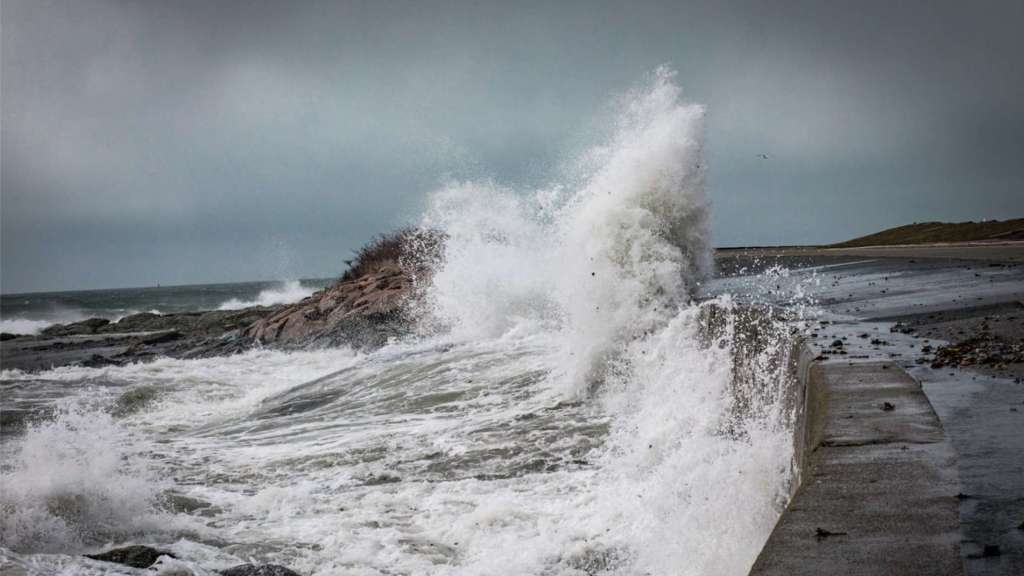
“Over the next 50 to 100 years the issue is sea level rise, but in the nearer term it’s storm surge risk. So why on earth are they looking at this location?
Dr Paul Dorfman is astonished that a Geological Disposal Facility is being considered for South Holderness
By Joseph Gerrard, Local Democracy Reporter 12 Feb 24
An expert has warned against proposals to build an underground radioactive nuclear waste site under Holderness.
Dr Paul Dorfman, an academic and former government adviser, told LDRS he was astonished that a Geological Disposal Facility (GDF) had been proposed for south Holderness. The researcher, who specialises in nuclear waste management, said the risks included flooding and rising sea levels. He also claimed that GDFs were decades away from being proven as a concept………………………………
Under the proposals, radioactive waste would be put into containers and stored hundreds of metres underground at a site which would operate for 175 years. The network of underground vaults and tunnels built within natural geological formations would then be back-filled and the surface site would be given over to other uses.
The establishment of the South Holderness Working Group, which includes East Riding Council, could see funding of up to £2.5m granted if the proposals progress. A facility would only be built if the majority of people in the affected area were shown to want it through a “Test of Support” – though the form that this would take has yet to be decided.
Since the announcement, opposition has been growing to the proposals including with the formation of a local GDF Action Group vowed to oppose it. Beverley and Holderness MP Graham Stuart has also backed a call from South East Holderness councillors Lyn Healing and Sean McMaster for the council to withdraw from the project.
‘Significant risks’
Dr Dorfman is a fellow of the University of Sussex’s Science Policy Research Unit and chairs the Greenpeace-backed Nuclear Consulting Group. His work has included advising the Government, including the Ministry of Defence, on nuclear waste management
Dr Dorfman said the proposals threw up problem after problem and the case for a GDF in south Holderness was knocked out of court when stacked against the evidence. The academic said: “There’s lots of discussions around nuclear energy, but that’s beside the point in this case, it’s about the site itself.
“This is an appalling site, it seems ludicrous, the area seems to have a socially disadvantaged community, and all that implies for why this location has been chosen. There’s lots of models, including the Environment Agency’s, which show this area is at risk of flooding.
“That’s because of sea levels and future sea level rises, there’s some uncertainty over how that will play out. But what there isn’t uncertainty over is the risk of storm surges.
“Over the next 50 to 100 years the issue is sea level rise, but in the nearer term it’s storm surge risk. So why on earth are they looking at this location?
“The other issue is that GDFs are largely conceptual. Yes, one’s been constructed in Sweden, but it’s still an ongoing experiment due to sets of ongoing questions around the containment, the backfill, and most importantly whether the highly radioactive waste can be securely isolated from the wider environment for tens of thousands of years.
“What would happen if there is an accident or incident at a GDF? Significant key underlying research hasn’t been completed, so the question remains, how you can start something like this before you know what you’re doing?
“The current European consensus supports the GDF concept. We have this shared problem of nuclear waste, and we must find a way of managing this extraordinarily toxic stuff. France has also been trying to build a GDF, but they’ve also had significant problems with community acceptance.
“It’s all very well saying let’s do this, but what if deep emplacement makes matters worse? The UK has an existential nuclear waste burden. What are we going to do with it? Well, at the end of the day, no one really knows.
“There may be no final solution, we may have to store it. With a GDF, there’s a huge amount of uncertainty around the underlying geology, would it remain stable for millennia? Then there’s a security issue. Once a GDF is operational, there’s still going to be an opening somewhere.
“And there’s going to be years of trying to emplace this highly radioactive stuff under the ground in containers. It has to be restated that high and mid-level radioactive waste is hugely toxic, and once emplaced, if something goes wrong, then we have a whole set of new problems.
“So, you’ve got problem after problem, and then on top of that you’ve got the issue in south Holderness of the significant risk of flooding. At that point we should just say forget it. This raises the question as to why this site was selected and all that implies for those who have been doing the site selection.
“As for me, I’m astonished the site is being considered. Clearly there will have been preliminary discussions on planning gain for the wider area, with the investment and jobs it would create.
“At a time when money is tight for local people and the local authority, any new money would be welcome. There’s always an upside to any new development, but this has to be weighed against the downside, which in this case is building a high-level nuclear waste site in an area of flooding risk, and the potential hazard to the local community over generations.
“I can’t put into words how amazed I am by this choice of location. As if there weren’t enough problems with a GDF already, south Holderness is a deeply problematic location.”……………………………………………………………………………… https://www.hulldailymail.co.uk/news/hull-east-yorkshire-news/holderness-nuclear-waste-site-seems-9090538
Final public meeting to discuss South Holderness nuclear waste plan
The final public meeting to discuss plans to bury nuclear waste in East
Yorkshire takes place later. The drop-in session at Burstwick Village Hall
is the last of five organised by Nuclear Waste Services (NWS).
The government agency has named South Holderness as having potential for a
Geological Disposal Facility (GDF). Chief executive Corhyn Parr previously
said the scheme would only go ahead with community support. The GDF would
see waste stored up to 3,280ft (1,000m) underground until its radioactivity
had naturally decayed. Officials from NWS said the project could create
thousands of jobs and investment in local infrastructure in the area. The
proposed South Holderness site is one of three areas in England being
considered.
However, the plan has attracted opposition, with two local
councillors calling on East Riding of Yorkshire Council to end talks with
NWS. Beverley and Holderness Conservative MP Graham Stuart, who is also the
Minister for Energy Security, has backed the councillors’ motion saying
“Our community says no”.
BBC 12th Feb 2024
Canada citizens challenge environmental safety of Canadian Nuclear Safety Commission waste facility near Ottawa River

Pitasanna Shanmugathas | Vermont Law & Graduate School, US, FEBRUARY 9, 2024 https://www.jurist.org/news/2024/02/canada-citizens-challenge-environmental-safety-of-canadian-nuclear-safety-commission-waste-facility-near-ottawa-river/
A group of Canadian citizens launched a legal challenge against the Canadian Nuclear Safety Commission (CNSC) on Thursday over the commission’s recent approval of the construction of a Near Surface Disposal Facility (NSDF) near the Ottawa River. Led by the Concerned Citizens of Renfrew County and Area, Ralliement contre la pollution radioactive, and the Canadian Coalition for Nuclear Responsibility, the challenge encompasses a broad array of environmental and public health concerns surrounding the NSDF’s potential impacts.
At the core of this legal action is an application for judicial review pursuant to section 18 of the Federal Courts Act. The challenge targets the CNSC’s decision, dated January 8, approving Canadian Nuclear Laboratories’ (CNL) application to amend the Nuclear Research and Test Establishment Operating License for the Chalk River Laboratories sites. This amendment would authorize the construction of the NSDF, classified as a Class IB Nuclear Facility—a project not previously sanctioned under the existing license.
Represented by Nicholas Pope, the applicants seek an order to quash the decision to amend the license for NSDF construction.
The NSDF is envisaged as a nuclear waste disposal facility designed to contain up to one million cubic meters of radioactive waste. Its anticipated lifespan comprises several phrases, including a construction phase, operation phase, closure phase, institutional control period, and post-institutional control period. Of potential concern to the applicants is the potential for rainwater infiltration during the operation phase, which could lead to the leaching of radioactive materials into the environment. Moreover, plans to mitigate this risk by discharging treated wastewater into Perch Lake, a tributary of the Ottawa River, have raised further alarm.
To secure the license amendment, CNL underwent a rigorous approval process, which required an environmental assessment under the Canadian Environmental Assessment Act, compliance with the Nuclear Safety and Control Act (NSCA), and consultation with Indigenous communities. However, the applicants raised concerns about the CNL’s fulfillment of these requirements.
Of particular contention is the inclusion of an override section within the Waste Acceptance Criteria documented submitted by CNL. This provision, if implemented, would ostensibly permit the disposal of waste that does not meet the established acceptance criteria, thereby eroding any assurances of stringent waste management standards and rendering the safety case effectively null and void. Moreover, concerns persist regarding the efficacy of waste verification processes to ensure compliance with the acceptance criteria.
Assertions have been made that the CNL failed to adequately consider the environmental impacts of alternative wastewater discharge methods, including the proposed pipeline to Perch Lake.
In a comment to JURIST, Pope asserted:
According to Canadian Nuclear Laboratories, the proponents of the project, even if all goes according to plan and there are no disruptive events, the public will still be subjected to radiation doses that are one and a half times the regulated standard for radioactive material that have been released from regulatory controls. And, if a disruptive event does occur, the public could receive up to fourteen times the legal limit of a radiation dose. So this surface level facility has been designed to only last for 550 years before it erodes and only be under institutional control for 300 years yet the materials they are planning on placing in this mound have half-lives of thousands of years and will remain radioactive for thousands of years—well beyond when it is no longer under governmental control and when the cover has eroded away so the materials will be free to be released into the environment.
The applicants also raised concerns about CNL’s compliance with consultation requirements with Indigenous nations, particularly Kebaowek First Nation, whose traditional territory encompasses the proposed NSDF site.
‘All we can do is hope for the best’: Concerns persist about Canada’s planned radioactive waste disposal site


dilution is not a solution to pollution. It just means that millions of people are going to be exposed to much smaller doses. When it comes to cancer-causing materials, the number of people exposed “is very important” because when even a small dose of tritium or any other radioactive material is allowed to enter the drinking water for millions of people, the number of expected cancers and genetic mutations is magnified by the size of the population”
By Natasha Bulowski | News, Ottawa Insider | February 6th 2024
Everyone agrees a safe solution is needed for Canada’s current and future radioactive waste. But whether a recently approved disposal facility in Deep River, Ont., is the answer is the subject of hot debate.
The “near-surface disposal facility” (NSDF) will see up to one million cubic metres of radioactive waste buried in a shallow mound at Chalk River Laboratories (CRL), about 190 kilometres northwest of Ottawa. Project proponents argue Canada must find a way to store low-level nuclear waste, some of which is currently not well-managed…….
Opponents argue the project, a kilometre from the Ottawa River, poses risks to the drinking water supply for millions, will not safely contain the waste and the company failed to adequately consult many Algonquin Nations. Representatives from six concerned groups recently wrote an open letter to the federal government urging it to halt the project. The waste contains long-lived radionuclides, which many experts say require far more robust containment than this facility will offer.
Radionuclides are unstable, radioactive atoms. Some will remain radioactive for thousands or millions of years, while others are short-lived and decay quickly. The Environmental Protection Agency and other health organizations classify all radionuclides as cancer-causing.
Of the radionuclides present in the waste destined for the NSDF, 19 of 29 listed by Canadian Nuclear Laboratories (CNL) have half-lives of more than a thousand years. This means they’ll be present for more than 10,000 years, said Gordon Edwards, president of the Canadian Coalition for Nuclear Responsibility, in his 2022 submission to the Canadian Nuclear Safety Commission (CNSC). Another 12 on the list have half-lives of more than 100,000 years, so they will remain in the NSDF for well over a million years, wrote Edwards, a retired professor of mathematics and science with over 45 years serving as a consultant on nuclear issues.
Several groups and many Algonquin Nations are worried about the radionuclides, particularly one called tritium. This radioactive form of hydrogen is a carcinogen most dangerous when ingested because it enters the waterways with ease and can’t be filtered out with water treatment methods either at CRL or at the municipal level, notes Edwards.
These long-lived radionuclides are in “limited” quantities and “intrinsically part of the radiological fingerprints of waste streams at CRL and other CNL sites,” reads CNL’s submission. “It is not practical, technical, or economical to separate the long-lived radionuclides” because much of the waste is in the form of soil and building debris, it says.
CNL is run by a consortium of private companies (including AtkinsRéalis, formerly known as SNC-Lavalin) and contracted by the federal government to operate its laboratories and deal with waste.
When completed, CNL says the facility will resemble a huge grassy mound the size of 10 soccer fields. The bottom and top of the mound will be lined with synthetic membranes to keep water from getting in, according to CNL.
Construction is expected to take three years and cost $475 million, along with an estimated $275 million in operating costs over 50 years. During that time, CNL will verify all waste placed in the hollowed-out depression in the hillside meets the waste acceptance criteria.
The loose soil and smaller building debris will be compacted into layers and larger debris and waste packaged in drums and containers will be placed in the mound. Water that contacts areas where waste is stored or handled will be routed through a wastewater treatment plant and discharged in nearby Perch Lake. Once all the waste is inside, the final cover of earthen materials and a synthetic membrane go on top to keep precipitation away from the mound.
According to CNL’s draft monitoring plan, wastewater treatment will continue for 30 years and after that, it will be up to the liner and facility design to contain the mound’s contents. Some surveillance will take place to verify the facility is meeting environmental requirements. The top and bottom liners — which are supposed to “remain functional” for 500 years — will eventually erode.
However, it is “a critical flaw” that CNL didn’t plan for waste to be retrieved if something goes wrong later, the Canadian Environmental Law Association argued at the 2022 licensing hearings.
A retrieval plan is important because it gives future generations access to the waste for monitoring, repairs, to move it to a safer location or take advantage of safer technologies in the future, said Tanya Markvart, the law association’s environmental consultant.
“We really don’t know what’s going to happen over the next 100 to 500 or 2,000 years,” said Markvart.
CNL says there’s no plan to retrieve the waste because the facility design will safely manage it long term, but notes nothing is stopping future generations from retrieving its contents. But the law association says it is “unjust to shift the burden” to future generations, who neither created nor benefited from activities that made the radioactive waste………………………………………………………………………………………………………………….
Water worries
The NSDF’s proximity to the Ottawa River concerns environmentalists, many Algonquin leaders and more than 140 municipalities downstream. CNL materials indicate the facility’s base will be 50 metres above the current water levels of the Ottawa River and on bedrock sloping away from the river.
“Any site anywhere in the Ottawa Valley eventually drains to the river. That’s just basic hydrogeology,” said Mayor D’Eon, a member of CNL’s environmental stewardship council, when asked about opponents’ concern for the river.
“So whether you put it on that military base, which some people have said, or five kilometres away, hydrogeology takes everything to the Ottawa River,” she said.
The bedrock slopes towards Perch Lake, which has a creek that feeds directly into the Ottawa River and in the event of an overflow or other design failure, it wouldn’t take long for contaminated water to reach the lake, according to the Ottawa Riverkeeper, a charity focused on the health of the river and its tributaries. Hydrologist Wilf Ruland reviewed the NSDF proposal for Ottawa Riverkeeper and noted the location has “unfavourable geology” and will rely entirely on the NSDF’s engineered features to contain, collect and treat contaminated water leaching from the mound and prevent it from contaminating groundwater and surface water flow systems. The Ottawa Riverkeeper is also concerned about the presence of chemical contaminants and heavy metals, not just radioactivity.
………………………………. Edwards doesn’t think the waste would cause “a huge kill-off,” after all, “the Ottawa River is huge and the stuff does get diluted,” he told Canada’s National Observer in an interview.
“But we’ve learned over the years that dilution is not a solution to pollution. It just means that millions of people are going to be exposed to much smaller doses.” When it comes to cancer-causing materials, the number of people exposed “is very important” because when even a small dose of tritium or any other radioactive material is allowed to enter the drinking water for millions of people, the number of expected cancers and genetic mutations is magnified by the size of the population, added Edwards.
Pontiac County, Que., made up of 18 municipalities, is right across the river from the facility. Unlike Deep River, which calls itself the “proud home of Canadian Nuclear Laboratories,” Pontiac has opposed the project location from the get-go, said Jane Toller, head of the county council, in an interview with Canada’s National Observer………………………………………………………………………………………….
Toller supports Kitigan Zibi and Kebaowek First Nations, which are currently pressuring the federal government to deny CNL permits required under the Species at Risk Act. Toller says the CNSC’s decision is a “cut-and-dry” violation of the United Nations Declaration on the Rights of Indigenous Peoples, which says no hazardous material can be stored on Indigenous land without prior, free and informed consent. While Pikwakanagan First Nation — the Algonquin nation closest to the facility — signed an agreement with CNL, Kitigan Zibi and Kebaowek say they were not adequately consulted and do not consent to the facility.
“I just don’t know why our federal government has not paid attention to that,” said Toller.
The CNSC’s recent decision only granted CNL a licence to construct the facility. The company still must apply for an operating licence.
Natasha Bulowski / Local Journalism Initiative / Canada’s National Observer
1 This Month


18 March Webinar @ 1 PM EST: An Assessment of SMR Projects: The Case of Canada
register for the zoom:
https://us02web.zoom.us/webinar/register/WN_o8BIIOUvQ2ONJR1nta65DQ#/registration


of the week – STOP SMALL MODULAR REACTORS IN CANADA
To see nuclear-related stories in greater depth and intensity – go to https://nuclearinformation.wordpress.com
-
Archives
- March 2026 (139)
- February 2026 (268)
- January 2026 (308)
- December 2025 (358)
- November 2025 (359)
- October 2025 (376)
- September 2025 (258)
- August 2025 (319)
- July 2025 (230)
- June 2025 (348)
- May 2025 (261)
- April 2025 (305)
-
Categories
- 1
- 1 NUCLEAR ISSUES
- business and costs
- climate change
- culture and arts
- ENERGY
- environment
- health
- history
- indigenous issues
- Legal
- marketing of nuclear
- media
- opposition to nuclear
- PERSONAL STORIES
- politics
- politics international
- Religion and ethics
- safety
- secrets,lies and civil liberties
- spinbuster
- technology
- Uranium
- wastes
- weapons and war
- Women
- 2 WORLD
- ACTION
- AFRICA
- Atrocities
- AUSTRALIA
- Christina's notes
- Christina's themes
- culture and arts
- Events
- Fuk 2022
- Fuk 2023
- Fukushima 2017
- Fukushima 2018
- fukushima 2019
- Fukushima 2020
- Fukushima 2021
- general
- global warming
- Humour (God we need it)
- Nuclear
- RARE EARTHS
- Reference
- resources – print
- Resources -audiovicual
- Weekly Newsletter
- World
- World Nuclear
- YouTube
-
RSS
Entries RSS
Comments RSS
 nuclear-news