The UK’s nuclear waste problem
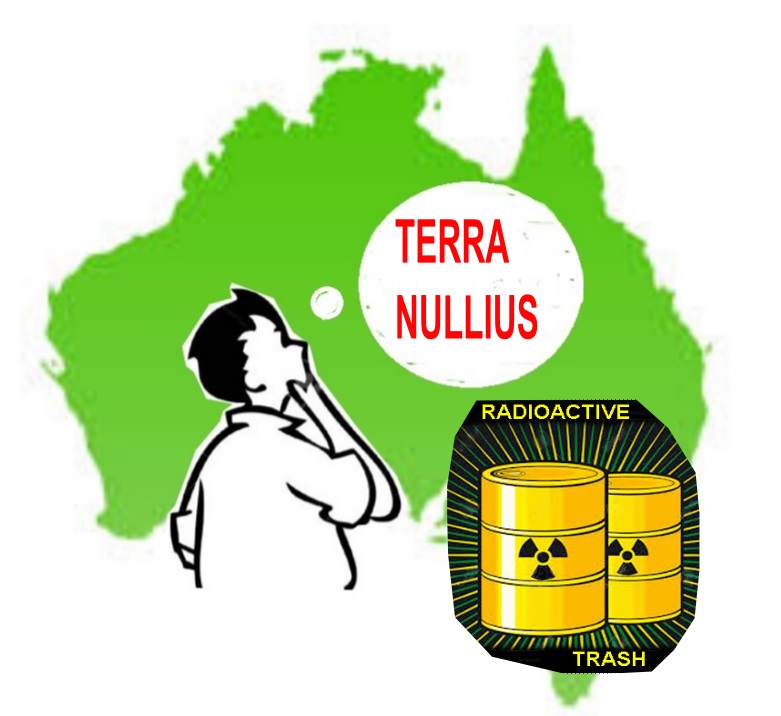
“more nuclear power means more nuclear waste”
By Chas Newkey-Burden, The Week UK, 16 Sept 24 https://theweek.com/environment/the-uks-nuclear-waste-problem
Safety concerns as ‘highly radioactive’ material could be buried in the English countryside
“Not in my backyard” is a term normally used in conversations about proposed new housing or rail lines, but a version of it could soon be heard about one of the most dangerous materials on the planet.
Nuclear power stations are filling up with radioactive waste, so “swathes” of the highly dangerous material are set to be “buried in the English countryside”, said The Telegraph. For local communities, it isn’t so much “not in my backyard” as “not under my backyard”, said the Financial Times.
‘100,000 years of hazard’
Sellafield, in Cumbria, is the “temporary home to the vast majority of the UK’s radioactive nuclear waste”, said the BBC, “as well as the world’s largest stockpile of plutonium”. It’s stuck there because no long-term, high-level waste facilities have been created to deal with it.
The “highly radioactive material” releases energy that can infiltrate and damage the cells in our bodies, Claire Corkhill, professor of radioactive waste management at the University of Bristol, told the broadcaster, and “it remains hazardous for 100,000 years”.
The permanent plan to handle the waste currently at Sellafield is to first build a designated 650ft-deep pit to store it. Although the contentious matter of its location has yet to be agreed, the facility will hold some of the 5 million tonnes of waste generated by nuclear power stations over the past seven decades. Then, in the second half of the century, a much deeper geological disposal site will be dug, which will hold the UK’s “most dangerous waste”, such as plutonium, said The Telegraph.
The problem is only going to get bigger because nuclear power is a central part of the government’s mission for “clean power by 2030” and “more nuclear power means more nuclear waste”, said the BBC.
With at least three new nuclear power stations planned, said The Telegraph, the country will quickly be “at odds with” the 1976 review of nuclear waste policy by the Royal Commission on Environmental Pollution, which warned the UK was amassing nuclear waste so fast that it should stop building reactors until it had a solution.
‘Poison portal’
Some believe part of that solution will be found overseas. Earlier this year, there were warnings that Australia could become a “poison portal” for the UK and US as a result of a new three-nation defence pact called Aukus. The original wording of the agreement would allow for facilities to be created to dispose of waste from “Aukus submarines”, which could have included UK and US vessels.
Dave Sweeney, the Australian Conservation Foundation’s nuclear free campaigner, warned at the time that Aukus partners could see Australia as “a little bit of a radioactive terra nullius”.
After pushback, the Australian government added a loophole to the legislation to “ensure Australia will not become a dumping ground for nuclear waste”, said The Guardian.
But the Australian Greens’ defence spokesperson, David Shoebridge, said the changes did not go far enough. The amendment only addresses high-level radioactive waste, he said, and “still allows the US and UK to dump intermediate-level waste, and Australian high-level waste, anywhere in Australia”.
Nuke waste confusion continues with D.C. Circuit ruling

Kennedy Maize, https://energycentral.com/c/um/nuke-waste-confusion-continues-dc-circuit-ruling. 13 Sept 24
The D.C. Circuit appeals court has upheld the authority of the U.S. Nuclear Regulatory Commission to license private, away-from-reactor storage of spent nuclear fuel, adding confusion to the gnarly issue of what to do with high-level nuclear waste. With federal circuit courts in collision, it may take the U.S. Supreme Court to sort it out.
On Aug. 27, a three-judge D.C. Circuit panel rejected a challenge to a 2021 Nuclear Regulatory Commission license to Interim Storage Partners, a subsidiary of Orano USA, for a private, above-ground “temporary” waste storage site in West Texas near the New Mexico state line. Not long after that, the NRC granted a similar license to Holtec International for an above-ground storage site in eastern New Mexico, close to the Texas line.
In granting the Holtec license, the NRC rejected petitions to intervene by Beyond Nuclear, a Maryland anti-nuclear group, the Sierra Club, and Texas-based Fasken Land and Minerals, a Permian Basin oil and gas producer.
Almost exactly a year ago (Aug. 25, 2023), the ultra-conservative Fifth Circuit Court of Appeals, with jurisdiction in Texas, Louisiana, and Texas, rejected the NRC license for the Texas site in a case brought by Texas Gov. Greg Abbott and Fasken. The Fifth Circuit ruled that neither the Atomic Energy Act nor the Nuclear Waste Policy Act authorized private, away-from-reactor storage of spent fuel, at least until a final federal underground repository is available. That prospect is far in the future, if at all.
In March, the Fifth Circuit expanded its ban of the Texas project to Holtec’s New Mexico waste project, despite it being outside the court’s jurisdiction. In an unpublished decision, the circuit court wrote, “Because this court’s holding in Texas v. NRC dictates the outcome here, we GRANT Fasken’s and PBLRO’s petition for review and VACATE the Holtec license.” The court also rejected an NRC petition to move the case to the D.C. appeals court.
That led to the anti-nuclear filing in D.C., challenging to NRC’s decision to deny them intervenor status in the Holtec license case. In the denial of the petition last month, Judge Neomi Rao wrote for the panel that “the Commission reasonably declined to admit petitioners’ factual contentions and otherwise complied with statutory and regulatory requirements when rejecting the requests to intervene.”
Rao also took on some of the Fifth Circuit’s ruling about the authority for away-from-reactor, above-ground storage. Rao wrote, “According to Beyond Nuclear, the [waste policy act] prohibits DOE from taking title to private spent nuclear fuel until a permanent repository for the disposal of spent nuclear fuel is built, so it is unlawful for the Commission to consider the application.” That’s an assertion the Fifth Circuit also made.
Citing a 2004 D.C. Circuit decision, Rao found, “Even if the NWPA prohibits DOE from taking title to private spent nuclear fuel until a permanent repository for the disposal of such fuel is built, a point we assume without deciding, the statute does not affect ‘the NRC’s authority under the AEA to license and regulate private use of private away-from-reactor spent fuel storage facilities.’
” The Commission correctly determined that Beyond Nuclear did not raise a genuine dispute of law or fact, so we deny its petition for review.”
Rao, 51, a Trump appointee, has served on the D.C. Circuit Court since March 2019.
As the online legal site Justia noted, “Additionally, the court determined that Fasken’s late-filed contentions were procedurally defective, untimely, and immaterial.”
An analysis by the D.C. law firm Hogan Lovells commented, “This decision is contrary to recent Fifth Circuit decisions, but in line with prior D.C. Circuit and Tenth Circuit decisions—further deepening the circuit split on such authority and increasing the likelihood the Supreme Court will consider the issue in its upcoming term.”
The analysis noted that “commercial interim storage” (CIS) “was initially challenged in federal courts in the early 2000s, when the NRC was licensing the first commercial CIS, known as the Private Fuel Storage facility. At that time, a number of court challenges were brought contesting the NRC’s authority to license a CIS facility, and in two circuit court decisions—specifically, in the D.C. Circuit and the Tenth Circuit—the court upheld the NRC’s authority to license the CIS under the AEA. For NRC licensing decisions, as a general matter, the federal circuit courts have direct appellate review, and the appeal can be brought in either the D.C. Circuit or the circuit court where the proposed facility is located.”
How to Make a ‘War Reserve’ Nuclear Bomb

Earlier this year, at the annual Nuclear Deterrence Summit in Washington, D.C., there was a palpable sense of excitement at the return to Cold War strategies of shoring up our nuclear arsenal. Today, with what some call the two-peer problem—Russia and China—and the specter of nuclear-armed rogue nations and terrorists, the NSE is racing against what-if targets. The language is aggressive. Opposition is largely mute. Congress has opened the tap. The NSE is hiring, training, building, and spending billions a year.
The dark art of crafting nuclear ‘pits’ was almost lost. Now it’s ramped up into a multibillion dollar industry.
The Progressive Magazine, by Jim Carrier , September 5, 2024
Sometime in the next few months a technician at Los Alamos National Laboratory, using an arc welder, will seal together two half-domes of plutonium, creating a “pit,” a seven-pound ball the size of a grapefruit, which, if tucked into America’s newest nuclear warhead and triggered above Times Square, would destroy most of Manhattan and kill more than 1.2 million people.
The bomb is part of a $1.7 trillion plan to rebuild the U.S. nuclear arsenal. The new pit, and hundreds like it, are being made for the W87-1, a new warhead designed to sit atop the Sentinel, a new intercontinental ballistic missile design that will replace all 400 Minuteman III missiles that have been on alert in silos across the Upper Midwest for the last five decades.
Not since the Manhattan Project, the crash program during World War II to invent the atomic bomb, has so much money and urgent energy been spent by the United States to create a weapon of mass destruction. In a paradox of nuclear madness, production of the W87-1—each one with a yield of around 400 kilotons, twenty times larger than the bombs that destroyed Hiroshima and Nagasaki—is breathing life into the U.S. Nuclear Security Enterprise (NSE), the agency that makes nuclear weapons and runs the planes, missiles, and submarines that deliver them.
The warhead “is reinvigorating and transforming the production complex such that NSE can once again produce all of the components typically required for modern nuclear warheads,” according to the Lawrence Livermore National Laboratory, which designed the W87-1. “This work will give the nation expanded options for maintaining an effective nuclear deterrence posture for decades to come.”
Earlier this year, at the annual Nuclear Deterrence Summit in Washington, D.C., there was a palpable sense of excitement at the return to Cold War strategies of shoring up our nuclear arsenal. Today, with what some call the two-peer problem—Russia and China—and the specter of nuclear-armed rogue nations and terrorists, the NSE is racing against what-if targets. The language is aggressive. Opposition is largely mute. Congress has opened the tap. The NSE is hiring, training, building, and spending billions a year.
At Los Alamos, the urgency can be seen inside Plutonium Facility Building 4, known as PF-4, the only building in the United States where plutonium pits are made. Working around the clock, technicians are dismantling old contaminated glove boxes—the laboratory apparatus that allow technicians using built-in gloves to work with toxic or volatile substances inside a sealed chamber—before a new shift of workers arrives to install shiny new steel glove boxes for work on the new pits…………………….
The process of turning plutonium into a bomb is a dark art—an alchemy invented in 1945 on the same New Mexico mesa. Wizards of physics and math who divined the immense energy locked within its atoms, together with master machinists, created the first atomic bomb, “Trinity,” and its copy, “Fat Man,” which destroyed Nagasaki with the power of twenty kilotons, or 20,000 tons of TNT. These two plutonium bombs produced enough heat and radiation to ignite, or trigger, the kind of fusion fire present in the sun.
One year later, as Baby Boom children were teething, Los Alamos blew up a similar plutonium bomb named “Baker” on Bikini Atoll. Its twenty-one-kiloton underwater eruption captured both the bounty of nuclear power and America’s intent to weaponize it.
During the Cold War, Los Alamos produced ninety-four different nuclear weapons—bigger, smaller, deadlier, more accurate. Many were thermonuclear, or hydrogen bombs, whose design, first revealed to the public by Howard Morland in this magazine in 1979, was theorized during the Manhattan Project. In 1952, Los Alamos, using a plutonium pit as a trigger, detonated its first thermonuclear bomb. That same year, the United States built the Rocky Flats Plant, a plutonium pit factory outside Denver. It produced 1,000 pits a year.
The hands-on, metallurgical master craft of fashioning pits was almost lost, though, when Rocky Flats was raided and closed in 1989 by the FBI for massive environmental crimes—the year the Soviet Union began to collapse, ending the Cold War. The NSE fell into a funk, reduced to cleaning up its messes and “stockpile stewardship.”……………………………………………………………………………………………….
“The reestablishment of pit production capabilities is the largest and most complex infrastructure undertaking at NNSA since shortly after the Manhattan Project,” Jill Hruby, administrator of the National Nuclear Security Administration, told the Strategic Weapons in the 21st Century Symposium on April 18. “Our current total estimated acquisition cost range for pit production is $28-37 billion . . . . I know that’s a lot of money . . . . Los Alamos is on track to diamond stamp the first fully qualified War Reserve pit for the W87-1 this year. We anticipate Los Alamos achieving the capability to produce the thirty pits per year envisioned by the two-site plan in or near 2028, with increased manufacturing rate confidence as we install equipment through 2030.”
he United States will never need to make plutonium again. During the Cold War, nuclear reactors at Hanford, Washington, produced more than sixty tons of plutonium. Some 14,000 pits, made by Rocky Flats, each bearing the War Reserve diamond stamp, are warehoused in Pantex, Texas.
As Los Alamos cranks up its program, pits are brought from Pantex, torn apart, and subjected to pyrochemistry, which removes impurities. The metal is then heated into a hot syrup and poured into molds, creating two halves of a sphere. These are welded together. This process is done in rows of connected glove boxes, the plutonium moving from one to another in an overhead trolley system, and dumbwaiters that raise and lower it.
Today at Los Alamos, hundreds of people work at the plutonium factory, some of them making plutonium heaters for space vehicles. But on the pit side, fewer than ten people in the world are trained or are being trained to perform final pit assembly, which must be done by hand inside a large, walk-in glove box, wearing multiple layers of personal protective equipment to prevent plutonium contamination. These master machinists and welders hold Q clearances and undergo annual physical and mental exams. It can take up to four years to train them.
…………………………………………………………………………… fundamental questions are being raised. Scientists debate whether new pits are really needed when existing pits might last for decades. And the need for the W87-1 and the Sentinel missile itself is being questioned because of rising costs and its vulnerability as a land-based, easily targeted weapon. The Pentagon reported in July that the missile’s estimated cost has risen 81 percent over budget to $141 billion.
In New Mexico, two longtime watchdog organizations, the Los Alamos Study Group and Nuclear Watch New Mexico, list dozens of reasons to not make pits at Los Alamos: waste disposal, radiation deposits, earthquake potential, cost and schedule overruns among them.
“Every dollar spent at LANL [Los Alamos National Laboratory] on this program is wasted,” wrote Greg Mello of the Los Alamos Study Group. “Every drum of waste produced in the process need not have been produced. Every career spent making these pits, or supporting the work, is a career that could have been spent building a sustainable, moral, responsible future. The LANL pit production program is a symptom of pure arrogance, greed, and management failure at the highest levels of government.”
………………………. As America’s nuclear train chugs forward, it is virtually certain that if the Sentinel missiles containing the Los Alamos pits are in their silos by the early 2030s, as planned, they will inflame an arms race that is already underway, while posing—if we’re lucky—nothing more than an apocalyptic threat in a new Cold War. https://progressive.org/magazine/how-to-make-a-war-reserve-nuclear-bomb-carrier-20240905/
More than 200 Russian nuclear submarines have been dismantled.
Rosatom has said that its work to resolve nuclear legacy issues in
Russia’s Far East has been successful, including the dismantling of dozens
of decommissioned nuclear-powered submarines. In total, the state nuclear
corporation said, 202 Russian nuclear-powered submarines decommissioned
before 2022 have been dismantled, including 82 from the country’s Far East.
It added that all used nuclear fuel has been removed from the region. The
reactor compartments of the dismantled nuclear submarines have been placed
in specially constructed containers in a secure site on land, and are
subject to radiation monitoring and maintenance, such as checking the
condition of the anti-corrosion protective coating, the company said.
World Nuclear News 11th Sept 2024
‘Unacceptable’: Is this Ontario nuclear waste dump a risk to Quebec’s water supply?
The Bloc Québécois is calling for work to immediately stop on an already-approved nuclear waste facility at the Chalk River research site in eastern Ontario, arguing its current placement unnecessarily risks Quebecers’ water supply — a claim that the company behind the project denies.
Sept. 10, 2024, By Alex Ballingall, Ottawa Bureau, Toronto Star
OTTAWA — The Bloc Québécois is calling for work to immediately stop on an already-approved nuclear waste facility at the Chalk River research site in eastern Ontario, arguing its current placement unnecessarily risks Quebecers’ water supply — a claim the company behind the project denies.
Bloc Leader Yves-François Blanchet held a news conference on Parliament Hill Monday with First Nations from Ontario and Quebec who also oppose the project. Trumpeting his solidarity with the leaders, who claim the project’s approval early this year violated their rights as Indigenous Peoples, Blanchet said the waste facility is too close to the Ottawa River that separates Quebec from Ontario and flows into the St. Lawrence River.
Speaking in French, Blanchet described the plan as a way to take the “dangerous” waste from Ontario’s nuclear industry and place it in a spot that he claimed could put the water supply of Quebecers at risk.
“This is unacceptable to us,” Blanchet said. He added that the planned facility “should be placed elsewhere.”
Chief Lance Haymond of the Kebaowek First Nation, who attended the news conference with Blanchet, accused the company building the facility — Canadian Nuclear Laboratories, which is contracted to run the Chalk River facility by an arms-length federal Crown corporation — of dismissing his community’s concerns, which include worries about disruption to local bears and other wildlife.
Haymond said the company is presenting a “façade of reconciliation” over its failure to seek his nation’s consent for the project, which is on unceded territory of the Algonquin Anishinaabeg near Deep River, Ont., almost 200 kilometres northwest of Ottawa.
The Kebaowek First Nation has also launched a legal process in Federal Court that seeks to overturn the January decision by Canada’s federal nuclear regulator to green-light the project.
“We will not stand by while our rights are trampled, our lands desecrated and our future put at risk,” Haymond said. ……………………………………………………………..
The Canadian Nuclear Safety Commission approved the project in January, more than eight years after Canadian Nuclear Laboratories first raised the idea.
A spokesperson for the commission declined to comment Monday, citing the Federal Court challenge………………………………………………………………………….
According to the safety commission, most of the waste slated for disposal there will come from the company’s existing Chalk River Laboratories operation at the site, with about 10 per cent coming from other sites, including commercial sources like hospitals and universities.
The waste site is planned as an “engineered containment mound” that covers 37 hectares, alongside other facilities like a wastewater treatment plant.
The project has been controversial for months, with several municipalities in the region and environmental groups stating their opposition alongside First Nations. Bloc MPs and Green Leader Elizabeth May have also denounced the project. https://www.thestar.com/politics/federal/unacceptable-is-this-ontario-nuclear-waste-dump-a-risk-to-quebecs-water-supply/article_27adb27e-6ec2-11ef-985e-9345e7a9932d.html?source=newsletter&utm_source=ts_nl&utm_medium=email&utm_email=C574FBD817092BE3920DD70067C080F0&utm_campaign=frst_1906
Which rural area will take the UK’s nuclear waste?

each community being considered for a geological disposal facility (GDF) now receives about £1m a year in investment
If a GDF is built here, Mr Moore says, there will be billions of pounds invested in the area
Victoria Gill and Kate Stephens, Science correspondent and senior science producer, BBC News, 9 Sept 24

“………………………………………………………………………..Sellafield is filling up – and experts say we have no choice but to find somewhere new to keep this material safe.
Nuclear power is also part of the government’s stated mission for ”clean power by 2030”. More nuclear power means more nuclear waste.
…………………….. Sellafield runs 24 hours a day with 11,000 staff. It costs more than £2bn per year to keep the site going, and it comprises more than 1,000 buildings, connected by 25 miles of road.
However, in recent years, doubts have been raised about the site’s security and physical integrity.
One of its oldest waste storage silos is currently leaking radioactive liquid into the ground. That is a “recurrence of a historic leak” that Sellafield Ltd, the company that operates the site, says first started in the 1970s.
Sellafield has also faced questions about its working culture and adherence to safety rules. The company is currently awaiting sentencing after it pleaded guilty, in June, to charges related to cyber-security failings.
An investigation by the Guardian revealed that the site’s systems had been hacked, although the Office for Nuclear Regulation said there was “no evidence that any vulnerabilities had been exploited” by the hackers.
All of this has cast a shadow over an operation that, as well as taking in newly created nuclear waste, also houses several decades worth of much older radioactive material.
The site no longer produces or reprocesses any nuclear material, but this is where the race began to produce plutonium for nuclear weapons at the height of the Cold War.
“It was the dawn of the nuclear age,” says Roddy Miller, Sellafield’s operations director. “But because it was a race, not a lot of thought was given to the long-term safe storage of the waste materials that were produced.”
The leaking storage silo, which was built in the 1960s, is just one of the buildings that now has to be emptied so the material inside can go into more modern silos. The building was only ever designed to be filled, and Sellafield says its plans to clear the site and demolish the building are the safest option.
The site’s head of retrievals, Alyson Armett, points out that without a “permanent solution” for the nuclear waste, the plans to decommission could be delayed.
The current plan for that permanent solution is to bury the waste deep underground.
A complicated search – both scientifically and politically – is currently on for somewhere to lock it away from humanity permanently.
“We need to isolate it from future populations or even civilisations, that’s the timescale we’re looking at,” says Prof Corkhill…………………………………………………..
The plan for permanent, underground storage is to contain that solid waste in a Russian doll-like series of barriers. The glass, encased in steel, will be shielded in concrete, then buried beneath the Earth‘s own barriers – layers of solid rock.
The question is, where will that facility be?
‘The waste is already here’
Six years ago, communities in England and Wales were asked to come forward if they were willing to consider having a disposal facility built near their town or village.
Potential sites will need the ideal geology – enough solid rock to create that permanent barrier. However, they also need something that might be more difficult – a willing community.
There are financial incentives for communities to take part in this discussion. So far, five have come forward. Two have already been ruled out. Allerdale in Cumbria was deemed unsuitable because there was not enough solid bedrock. Then, in September, councillors in South Holderness, in Yorkshire, withdrew after a series of local protests.
Government scientists are assessing the remaining three communities that are currently in the running. Geologists have been carrying out seismic testing – looking for that all-important impermeable rock.
One of the communities being considered is very close to the Sellafield site in West Cumbria, at Seascale.
It is not yet clear if Mid Copeland, the area under consideration that includes Seascale, will have the right rock. The survey and consultation here – and in the other locations being considered – are in their early stages and scheduled to last at least a decade.
In the meantime, the conversation goes on and each community being considered for a geological disposal facility (GDF) now receives about £1m a year in investment while initial scientific tests are carried out.
Mr Moore is part of a committee called a GDF partnership. It includes local residents, local government and representatives of Nuclear Waste Services, which is the government body behind this project.
These partnerships aim to keep the process transparent and ensure local people are well-informed. They also decide how the money is spent.
If a GDF is built here, Mr Moore says, there will be billions of pounds invested in the area. “If we’re going to host this on behalf of the UK, the community should benefit,” he says.
Also still on the shortlist are South Copeland, again on the Cumbrian coast, and a site on the east coast in Lincolnshire, where there have been a number of peaceful, but angry, protests.
On Halloween 2021 in Theddlethorpe, one of the local villages, several residents used their gardens to put up garish anti-nuclear dump scarecrows, inspired by an idea from pressure group the Guardians of the East Coast, which is campaigning against the disposal facility.
Ken Smith, from nearby Mablethorpe, is a member of both the campaign group and the local GDF partnership.
He thinks the government’s approach to finding a nuclear waste disposal site “stinks”.
Mr Smith is concerned that the voices of those most affected might not be heard and says it is unclear how local opinion will be measured at the end of the consultation…………………………………………………………………………………………………………………
https://www.bbc.co.uk/news/articles/czx6e2x0kdyo
TEPCO restarts debris extraction attempt at Fukushima plant

 KYODO NEWS – https://english.kyodonews.net/news/2024/09/35e573ef1ad3-urgent-tepco-restarts-debris-extraction-attempt-at-fukushima-plant.html
The operator of the Fukushima Daiichi nuclear complex restarted Tuesday a bid to retrieve a small amount of melted fuel from one of its stricken reactors after its first attempt last month was suspended due to setup complications.
The trial extraction was put on hold on Aug. 22 due to issues discovered during preparations, according to Tokyo Electric Power Company Holdings Inc.
The resumption comes after TEPCO confirmed that five pipes set to be used to insert a retrieval device into the No. 2 reactor’s containment vessel are now installed in the correct order.
TEPCO said earlier that it and contractor Mitsubishi Heavy Industries Ltd. failed to check the order in which the pipes were set up, causing the earlier issues.
There are an estimated 880 tons of fuel debris in the Nos. 1, 2 and 3 reactors.
The task of retrieving melted fuel remains a serious challenge in the decades-long decommissioning plan for the Fukushima Daiichi complex, which was damaged following a massive earthquake and tsunami in March 2011.
A robot resumes mission to retrieve a piece of melted fuel from inside a damaged Fukushima reactor

The goal of the operation is to bring back less than 3 grams (0.1 ounce) of an estimated 880 tons of fatally radioactive molten fuel that remain in three reactors.
An operation to send an extendable robot into one of three damaged reactors at Fukushima Daiichi nuclear power plant to bring back a tiny gravel of melted fuel debris has resumed, nearly three weeks after its earlier attempt was suspended due to a tech…
By MARI YAMAGUCHI Associated Press, September 10, 2024, https://abcnews.go.com/International/wireStory/robot-resumes-mission-retrieve-piece-melted-fuel-inside-113538057
An extendable robot on Tuesday resumed its entry into one of three damaged reactors at Fukushima Daiichi nuclear power plant to retrieve a fragment of melted fuel debris, nearly three weeks after its earlier attempt was suspended due to a technical issue.
The collection of a tiny sample of the spent fuel debris from inside of the Unit 2 reactor marks the start of the most challenging part of the decadeslong decommissioning of the plant where three reactors were destroyed in the March 11, 2011, magnitude 9.0 earthquake and tsunami disaster.
The sample-return mission, initially scheduled to begin on Aug. 22, was suspended when workers noticed that a set of five 1.5-meter (5-foot) add-on pipes to push in and maneuver the robot were in the wrong order and could not be corrected within the time limit for their radiation exposure, the plant operator Tokyo Electric Power Company Holdings said.
The pipes were to be used to push the robot inside and pull it back out when it finished. Once inside the vessel, the robot is operated remotely from a safer location.
The robot, nicknamed “telesco,” can extend up to about 22 meters (72 feet), including the pipes pushing it from behind, to reach its target area to collect a fragment from the surface of the melted fuel mound using a device equipped with tongs that hang from the of the robot.
The mission to obtain the fragment and return with it is to last about two weeks.
The mix-up, which TEPCO called a “basic mistake,” triggered disappointment and raised concerns from officials and local residents. Industry Minister Ken Saito ordered TEPCO President Tomoaki Kobayakawa a thorough investigation of the cause and preventive steps before resuming the mission.
The pipes were brought into the Unit 2 reactor building and pre-arranged at the end of July by workers from the robot’s prime contractor and its subsidiary, but their final status was never checked until the problem was found.
TEPCO concluded the mishap was caused by a lack of attention, checking and communication between the operator and workers on the ground. By Monday, the equipment was reassembled in the right order and ready for a retrial, the company said.
The goal of the operation is to bring back less than 3 grams (0.1 ounce) of an estimated 880 tons of fatally radioactive molten fuel that remain in three reactors. The small sample will provide key data to develop future decommissioning methods and necessary technology and robots, experts say.
The government and TEPCO are sticking to a 30 to 40-year cleanup target set soon after the meltdown, despite criticism it is unrealistic. No specific plans for the full removal of the melted fuel debris or its storage have been decided.
Rare photos show Earth’s fatal hotspot that can kill any human standing nearby in just five minutes

Harrowing photos of the lethal area reveal how dangerous it is to be near the hotspot
Joshua Nair, https://www.ladbible.com/news/world-news/chernobyl-elephants-foot-radiation-photos-743946-20240906 6 Sept 24
There’s a spot on Earth that is so dangerous, it could kill someone if they stood nearby for just five minutes.
And the story behind it is haunting.
A lot of things on our blue planet can be dangerous towards us humans, but something we can’t really avoid is radiation.
No, I’m not talking about generating electricity for all of our technology, I mean the radiation that can be caused by the use of weapons, which can leave everlasting effects on certain areas of the world.
Nuclear weapons are bad, but the biggest tragedy related to this isn’t to do with weapons at all, and it occurred in Chernobyl after a tragic power plant explosion in Pripyat, Ukraine.
What was the Chernobyl disaster?
At a nuclear power plant in the Ukrainian city of Chernobyl on 26 April, 1986, reactor number four exploded during a failed steam test, killing 30 people instantly.
Radiation released could be detected in countries as far as Sweden, while several civilians and workers in the area would go on to die from severe radiation poisoning, while others died from other health issues and terminal illnesses from the unsafe levels of radiation put into the atmosphere.
It is still by far and away the worst nuclear disaster in human history, reportedly costing governments around $700 million (£532 million) to deal with, while the area is uninhabitable.
The ‘Elephant’s Foot’
Known as the most dangerous object on the planet, it was caused by the Chernobyl disaster as a large hunk formed at the bottom of the reactor, which was caused by uranium fuel becoming molten when it overheated.
Steam blew the reactor apart, as heat, steam and molten nuclear fuel combined to make a 100-ton flow of dangerous chemicals that poured out of the reactor and through to the basement of the plant, solidifying and being given the name the ‘Elephant’s Foot’, resembling one.
Why is it so dangerous?
People soon realised after the explosion that it shouldn’t be approached for a while, as the radioactive lump continued to sear for months.
When measured, the Elephant’s Foot released almost 10,000 roentgens per hour, equivalent to the exposure given by four and a half million chest X-rays.
It’s is incredibly dangerous, with photos of people near the hotspot showcasing some of the bravest scientists out there, putting their lives at risk to better understand the Elephant’s Foot.
According to science magazine Nautilus, 30 seconds of exposure would have your cells haemorrhaging, and in just four minutes, violent vomiting and diarrhoea would hit, and if you got to five minutes in the lump’s vicinity, you’d die within two days.
Studies on the Elephant’s Foot
People have chosen to visit and study the site for short periods of time, and while it is still cooling down, the Elephant’s Foot is incredibly dangerous to be around, as scientists have only taken the smallest of samples to carry studies out on.
The Elephant’s Foot remains entombed in the New Safe Confinement (NSC) that was slid over Chernobyl to prevent any more radiation leaks from the nuclear power plant.
Complex compensation scheme represents tacit admission that nuke dump causes blight.
Viewers familiar with the advice of TV house-hunters, Kirsty and Phil will
know that the ‘Location, Location, Location’ of a property relative to
local amenities and beauty spots is often a major determinant of price.
Imagine then how crestfallen an eager would-be purchaser on the show would
be to discover that the seaside home of their dreams they had just viewed
might in the future be blighted by a massive mining project akin to
building the Channel Tunnel, into which the UK’s most deadly stockpile of
radioactive waste would be deposited for eternity?
The UK/Ireland Nuclear Free Local Authorities would be completely unsurprised that such news might cause prospective buyers to back out or make an offer for the property
which is substantially below the asking price.
This has been the fear of
some prospective property owners wishing to sell their homes in the three
Search Areas in West Cumbria and East Lincolnshire where investigations by
Nuclear Waste Services are currently underway to determine if these might
be the ‘location, location, location’ for their Geological Disposal
Facility.
NFLA 2nd Sept 2024
Atomic Tragedy? Plutonium Levels Near US Nuclear Site In Los Alamos Similar To Chernobyl – New Study.

https://www.eurasiantimes.com/plutonium-levels-at-los-alamos-comparab/—28 Aug 24
Los Alamos, the birthplace of the American atomic bomb under the Manhattan Project led by Robert Oppenheimer, is now facing a troubling revelation. According to a recent study by Northern Arizona University, plutonium levels in the area are alarmingly high, comparable to those found at the Chernobyl nuclear disaster site.
The Guardian reported that “extreme concentrations” of plutonium were detected in soil, plants, and water around Los Alamos, a location in New Mexico that was once the center of the US nuclear weapons development.
These findings were part of a study led by scientist Michael Ketterer, who noted that the levels of this radioactive material were “among the highest” ever found in a publicly accessible area in the US.
His research indicates that these levels are similar to those observed in Chornobyl, Ukraine, the site of the catastrophic nuclear spill during the Soviet era.
Ketterer expressed shock at the discovery, stating, “This is one of the most shocking things I’ve ever stumbled across in my life.” He highlighted that these radioactive isotopes are “hiding in plain sight,” posing a significant environmental risk.
Historically, from the 1940s until 1963, the Los Alamos National Laboratory disposed of radioactive waste into a nearby canyon, which eventually earned the nickname Acid Canyon due to its severe contamination.
The Atomic Energy Commission and the U.S. Department of Energy later initiated a massive remediation effort costing at least $2 billion, which was said to bring the area into compliance with federal cleanup standards by the 1980s.
The land was subsequently released to Los Alamos County, which developed it into a popular dirt trail for bikers, hikers, and runners.
Despite the high levels of plutonium detected, Ketterer said that the immediate danger to trail users is low. However, he cautioned that the environmental risks remain significant.
Plutonium contamination can potentially infiltrate water supplies, ultimately flowing into the Rio Grande, and may enter the food chain through plants. Additionally, in the event of a wildfire, plutonium could be dispersed widely as ash.
Public health advocates are also urging the government to post signage warning visitors about the contamination, which would allow them to make informed decisions about using the trail.
Department oF Energy Downplays Risks
Tina Cordova of the Tularosa Basin Downwinders Consortium said that the findings serve as a stark reminder of New Mexico’s long-term radioactive challenges.
She pointed out that the persistent presence of plutonium, which has a 24,000-year half-life, underscores a “terrible legacy” left by the Trinity bomb, which was notably inefficient and left behind a substantial amount of unfissioned plutonium.
However, the Department of Energy, in response to concerns, said that the detected plutonium levels at Los Alamos are “very low and well within the safe exposure range.”
Similarly, the US Department of Energy’s Environmental Management Los Alamos Field Office maintains that the concerns raised by Ketterer and Nuclear Watch align with data that has been publicly accessible for years and asserts that the canyon remains safe for unrestricted use.
The Department references a 2018 study that estimates that individuals who frequent the canyon are exposed to less than 0.1 milligrams of radiation annually.
This level is notably lower compared to the average yearly radiation dose of 620 millirems from all sources, as reported by the US Nuclear Regulatory Commission.
This study indicates that the radiation exposure in the canyon is well below the broader average, highlighting the relatively low risk for those using the area for recreational purposes.
However, Ketterer and his colleague Jay Coghlan, director of Nuclear Watch, caution that while the immediate health risks may be minimal, there are ongoing issues regarding the downstream migration of plutonium, its absorption by plants, and the potential spread of contaminated ash from wildfires.
Ketterer described the situation as one that cannot be entirely resolved, likening attempts to clean the area to trying to remove salt from a shag carpet.
He stressed the importance of transparency, suggesting that informing residents and visitors about the contamination is crucial, even if the problem itself cannot be fully rectified.
Meanwhile, the study’s release comes amid the Department of Defense’s announcement to increase plutonium pit production at Los Alamos, a key component in nuclear weapons.
Concurrently, a defense bill recently approved by the US Senate provides expanded funding for those affected by government-related radioactive waste, but it notably excludes the Los Alamos area, a decision that has sparked outrage among local health advocates.
Tepco aims to dismantle Fukushima water tanks from 2025
Tokyo Electric Power Company Holdings aims to begin dismantling tanks used for storing treated wastewater in 2025. The tanks are now empty following water discharges into the Pacific since August last year.
Tepco released a total of 62,400 metric tons of treated water from its meltdown-stricken Fukushima No. 1 nuclear power plant in eight rounds of discharges over the past year.
Investigations by the government and Tepco into the surrounding sea areas have shown that the concentration of the radioactive substance tritium, contained in the treated water, is far below the safety limit. Last month, the International Atomic Energy Agency published a report that the water releases meet international safety standards………. (Subscribers only)
Japan Times 26th Aug 2024
https://www.japantimes.co.jp/news/2024/08/26/japan/fukushima-water-tanks-dismantle/
Extreme’ levels of plutonium contamination found in Los Alamos
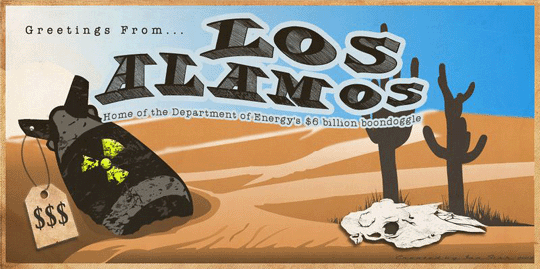
- Levels are comparable to Chernobyl nuclear disaster in Ukraine: Researcher
- Government says area remains safe
- Researchers say area visitors must be warned
Safia Samee Ali, Aug 28, 2024, https://www.newsnationnow.com/science/extreme-levels-plutonium-contamination-los-alamos/
NewsNation) — High levels of plutonium have been found around Los Alamos, the birthplace of the atomic bomb, raising alarms ahead of plans by the federal government to restart nuclear weapons manufacturing in the same area.
Michael Ketterer, a Northern Arizona University professor emeritus who analyzed soil, water and vegetation samples taken along a popular hiking and biking trail in Acid Canyon, said that there were more extreme concentrations of plutonium found there than at other publicly accessible sites he has ever researched.
Ketterer has compared the levels to those found at the site of the Chernobyl nuclear disaster in Ukraine.
“This is one of the most shocking things I’ve ever stumbled across in my life,” he said.
“It’s just an extreme example of very high concentrations of plutonium in soils and sediments. Really, you know, it’s hiding in plain sight.”
The Department of Energy’s Environmental Management Los Alamos Field Office said that the findings are consistent with department data that has been publicly available for years and that the canyon remains safe for unrestricted use.
But Nuclear Watch, a group Ketterer worked with, said officials need to warn people against coming in contact with water in Acid Canyon.
From 1943 until 1963, liquid and often radioactive waste was dumped down a canyon near Los Alamos National Laboratory, which gave it the name Acid Canyon.
Jay Coghlan, director of Nuclear Watch, said plutonium contamination in the heart of Los Alamos is a concern, particularly as the Energy Department and the National Nuclear Security Administration are slated to begin producing plutonium pits once again in an effort to build up nuclear weaponry.
The federal government began cleaning up Acid Canyon in the late 1960s and eventually transferred the land to Los Alamos County.
Officials determined in the 1980s that conditions within the canyon met DOE standards and were protective of human health and the environment.
The Associated Press contributed to this story.
Britain’s Dirtiest Beaches – Don’t Mention the Pu!

The cocktail of radioactive wastes on our beaches is a direct result of the uranium fuel industry whose product is actually nuclear wastes rather than the ephemeral here today gone tomorrow electricity.
On By mariannewildart, https://mariannewildart.wordpress.com/2024/08/23/britains-dirtiest-beaches-dont-mention-the-pu/
Seascale and Haverigg are in the top 10 dirtiest beaches for poo – they also contain Pu (Plutonium) but no-one is looking at the health impacts of long lived radio-toxic pollution on our beaches.
The West Cumbrian coastline cradling the World Heritage Site of the Lake District has two entries in the top 10 dirtiest beaches featured in yesterday’s Express. While much is made quite rightly of the health impacts of sewage pollution no-one is willing to talk about the Pu (Plutonium) on West Cumbrian beaches and in harbours near the worlds riskiest nuclear waste site. Sellafield has a larger workforce 11,000+ than all the surrounding towns and villages put together. According to the Environment Agency “We are working with Sellafield Limited to investigate the potential impact of non-radioactive discharges from the Sellafield site. The primary focus is on sewage originating from the toilet facilities provided on site for the Sellafield workforce. The work is considering whether the level of sewage treatment needs to be enhanced to improve and protect the bathing water quality at Seascale thus protecting public health”. 2024 Bathing Water Profile for Seascale.
The West Cumbrian coastline cradling the World Heritage Site of the Lake District has two entries in the top 10 dirtiest beaches featured in yesterday’s Express. While much is made quite rightly of the health impacts of sewage pollution no-one is willing to talk about the Pu (Plutonium) on West Cumbrian beaches and in harbours near the worlds riskiest nuclear waste site. Sellafield has a larger workforce 11,000+ than all the surrounding towns and villages put together. According to the Environment Agency “We are working with Sellafield Limited to investigate the potential impact of non-radioactive discharges from the Sellafield site. The primary focus is on sewage originating from the toilet facilities provided on site for the Sellafield workforce. The work is considering whether the level of sewage treatment needs to be enhanced to improve and protect the bathing water quality at Seascale thus protecting public health”. 2024 Bathing Water Profile for Seascale.
Nuclear wastes continue to arrive daily and a vicious cocktail of nuclear wastes continues to pour into the Irish Sea daily. Enough was enough decades ago. But this gargantuan radio-toxic turd on the Lake District coastline continues to accept nuclear wastes from existing reactors in the UK while MPs, government and the nuclear industry agitate for ever more nuclear waste from new build next to Sellafeld and elsewhere.
The cocktail of radioactive wastes on our beaches is a direct result of the uranium fuel industry whose product is actually nuclear wastes rather than the ephemeral here today gone tomorrow electricity.
So the nuclear waste industry’s message is ‘Don’t mention the Pu.’ In fact the nuclear industry has a vested interest in encouraging youngsters to dig for hours on the beaches – its great PR for the nuclear waste industry and says “look we are great neighbours and we are giving you (tax payers) money for your beach events because the beaches are soooo safe.”
The Nuclear Decommissioning Authority (NDA)NDA’s £30 million investment into nuclear research & innovation
The Nuclear Decommissioning Authority (NDA) has awarded contracts totalling
£30million to drive innovation and research into new techniques to deliver
safe, sustainable and cost-effective decommissioning.
The NDA is cleaning up the UK’s oldest nuclear sites which were designed without
decommissioning in mind, posing challenges which require first-of-a-kind
engineering and technological solutions. Research is an essential part of
the decommissioning programme and each year the NDA group invest
£100million in Research & Development (R&D). The aim is to solve
challenging technical problems more effectively, more efficiently, and,
where possible, for less cost.
The NDA Research Portfolio (NRP) competition
forms a key part of the NDA’s strategic research programme and provides
direct funding for research that supports strategic objectives including
growing and maintaining diverse skills within the supply chain and
promoting innovation across multiple sites.
Electronic Specifier 19th Aug 2024
-
Archives
- October 2026 (120)
- September 2026 (339)
- August 2026 (330)
- July 2026 (355)
- June 2026 (287)
- May 2026 (306)
- April 2026 (356)
- March 2026 (251)
- February 2026 (267)
- January 2026 (308)
- December 2025 (358)
- November 2025 (359)
-
Categories
- 1
- 1 NUCLEAR ISSUES
- business and costs
- climate change
- culture and arts
- ENERGY
- environment
- health
- history
- indigenous issues
- Legal
- marketing of nuclear
- media
- opposition to nuclear
- PERSONAL STORIES
- politics
- politics international
- Religion and ethics
- safety
- secrets,lies and civil liberties
- spinbuster
- technology
- Uranium
- wastes
- weapons and war
- Women
- 2 WORLD
- ACTION
- AFRICA
- Atrocities
- AUSTRALIA
- Christina's notes
- Christina's themes
- culture and arts
- Events
- Fuk 2022
- Fuk 2023
- Fukushima 2017
- Fukushima 2018
- fukushima 2019
- Fukushima 2020
- Fukushima 2021
- general
- global warming
- Humour (God we need it)
- Nuclear
- RARE EARTHS
- Reference
- resources – print
- Resources -audiovicual
- Weekly Newsletter
- World
- World Nuclear
- YouTube
-
RSS
Entries RSS
Comments RSS

