Plutonium just had a bad day in court

In a major decision whose consequences are still being assessed, a federal judge declared that plutonium pit production — one ingredient in the U.S. government’s $1.5 trillion nuclear weapons expansion — has to be performed in accordance with the nation’s strongest environmental law
SEARCHLIGHT NEW MEXICO, by Alicia Inez Guzmán, October 17, 2024
Most Americans don’t seem aware of it, but the United States is plunging into a new nuclear arms race. At the same time that China is ramping up its arsenal of nuclear weapons, Russia has become increasingly bellicose. After a long period of relative dormancy, the U.S. has embarked on its own monumental project to modernize everything in its arsenal — from bomb triggers to warheads to missile systems — at a cost, altogether, of at least $1.5 trillion.
Los Alamos National Laboratory plays a vital role as one of two sites set to manufacture plutonium “pits,” the main explosive element in every thermonuclear warhead. But as a recent court ruling makes clear, the rush to revive weapons production has pushed environmental considerations — from nuclear waste and increases in vehicular traffic to contamination of local waterways, air and vegetation — to the wayside.
That just changed dramatically. On Sept. 30, United States District Judge Mary Geiger Lewis of South Carolina ruled that the federal government violated the National Environmental Policy Act — the “Magna Carta” of federal environmental law — when it formulated and began to proceed with plans to produce plutonium pits at LANL and the Savannah River Site, in Aiken, South Carolina.
“[T]he Court is unconvinced Defendants took a hard look at the combined effects of environmental impacts of their two-site strategy,” Lewis wrote of the Department of Energy (DOE) and the National Nuclear Security Administration (NNSA), which together oversee America’s nuclear weapons stockpile.
The ruling was momentous for the anti-nuclear community. But it was also mystifying, because Judge Lewis didn’t provide a roadmap for how to move forward with this extraordinarily complicated policy dispute. Rather than bringing pit production to a halt — which plaintiffs argued for in their original complaint, filed in 2021 — the judge instead ordered the parties to reach some sort of “middle ground” among themselves and submit a joint proposal by Oct. 25. What that will consist of is anybody’s guess. The judge was clear on one point, though — she’ll be keeping a close eye on the matter by maintaining jurisdiction over the case. Injunctive relief, she added, could still be in the cards.
NEPA’s rules require that agencies take a “hard look” at potential environmental impacts. NEPA does not, however, dictate what decision should be made once those impacts are identified.
Previous impact statements have spelled out a vast array of potential hazards for nuclear facilities. These have included an “inadvertent criticality event,” which happens when nuclear material produces a chain reaction and a pulse of potentially fatal radioactivity. Another risk is fire igniting inside a glovebox — the sealed enclosure where radioactive materials like plutonium are handled — and then resisting suppression, leading to widespread contamination. Other possibilities: a natural gas explosion at vulnerable nuclear sites or a wildfire on LANL’s sprawling campus, which is bounded on all sides by the towns of Los Alamos and White Rock, the Pueblo of San Ildefonso, the Santa Fe National Forest and Bandelier National Monument.
“Perhaps more significantly,” Judge Lewis stated, those impact statements “provide a springboard for public comment,” a kind of mechanism for citizens to express criticism and concern and, in some cases, identify a project’s blindspots — risks to people and places that have not been properly taken into account.
An announcement from the DOE the following day was telling, if not defiant: The first plutonium pit manufactured as part of this modernization program was ready to be deployed into the stockpile. That pit — made at LANL but the product of multiple facilities across the nation’s nuclear weapons complex — is intended for a new warhead, which will be strapped into a new intercontinental ballistic missile called the Sentinel. The Sentinel program, at $140 billion, is one of the costliest in the history of the U.S. Air Force……………………………………………………………………….
Now, almost 40 years later, the court found that the agencies charged with reviving the nuclear weapons complex have not properly evaluated the perils that could come with turning out plutonium pits at two different sites, thousands of miles apart. For the plaintiffs in this case — which include Nuclear Watch New Mexico, Savannah River Site Watch, Tri-Valley Communities Against a Radioactive Environment and the Gullah/Geechee Sea Island Coalition — Lewis’s decision to intervene is a milestone.
“We’ve had a pretty significant victory here on the environmental front,” said Tom Clements, the director of Savannah River Site Watch. “Nonprofit public interest groups are able to hold the U.S. Department of Energy accountable.”
………………………………………………………………………………………………….. For LANL, which sits on the kind of forested land typical of the Pajarito Plateau, wildfire is a major risk. …………………………………………………..
A “parade of horribles”
The array of sites that play some role in this latest phase of pit production goes well beyond LANL and SRS, and includes existing facilities in Amarillo, Texas; Kansas City, Missouri; and Livermore, California. Hypothetically, if the feds ever produce the kind of environmental impact statement plaintiffs demand, it could potentially cover this entire constellation, requiring public hearings at each location and in Washington, D.C………………………………………… more https://searchlightnm.org/federal-judge-ruling-plutonium-pits-environmental-impact/?utm_source=Searchlight+New+Mexico&utm_campaign=ae33d0dc0a-10%2F15%2F2024+%E2%80%93+Plutonium&utm_medium=email&utm_term=0_8e05fb0467-ae33d0dc0a-395610620&mc_cid=ae33d0dc0a&mc_eid=a70296a261
The Energy Department just made one plutonium pit. Making more is uncertain

Bulletin, By Dylan Spaulding | October 10, 2024
Two conflicting developments arose this month in US efforts to produce new plutonium pits for its nuclear weapons: The National Nuclear Security Administration (NNSA) announced it had produced a warhead-ready pit—the explosive core of a nuclear weapon—for the first time in decades, and a federal court ruled that NNSA will be required to consider the cumulative environmental and health impacts of its pit production program.
Overshadowing these events is a vigorous debate over the necessity for new pits at all. Previous analyses have found that plutonium pits have viable lifespans well beyond the expected service life of the current stockpile, whereas production of pits for new weapons is part of a sweeping US nuclear modernization that raises concern over the future of arms control and any possibility for stockpile reductions at a time of deteriorating international relations.
The two most recent developments illustrate a critical tension in the US nuclear weapons program: New pit production demonstrates a doubling down of US reliance on nuclear weapons for the 21st century. The failure to adhere to environmental policy in doing so highlights the unwitting cost that US citizens may bear for this policy choice—as they have repeatedly in the past………………………………………………………………………………………………………………………………………………………………….
…….Production challenges. Despite any fanfare, demonstrating the ability to certify one plutonium pit doesn’t guarantee smooth sailing toward Los Alamos’s mandated production goals.
The Los Alamos’ Plutonium Facility at Technical Area 55 (PF-4) is conducting the dangerous and difficult work of pit production while also undergoing construction and modernization, with work happening round-the-clock—several other plutonium-related missions are pursued under the same roof. The facility has been criticized for deficiencies in personal safety and safety-related engineering, including recent glovebox fires, floods, worker exposure to plutonium and beryllium, and violations of criticality safety rules. The likelihood of such incidents increases as a result of fast-paced work in close-quarters with a mostly new workforce. In 2013, the PF-4 facility was shut down for three years following a severe criticality safety violation; a repeat could prove fatal, literally and figuratively.
…………………………………………… Regardless of Los Alamos’ success, the congressionally mandated quota of 80 pits per year remains impossible to meet by NNSA’s own admission. This number relies on completion and commissioning of a second production facility at the Savannah River Site in South Carolina, which won’t be operational until the mid-2030s at the earliest.
Just as the future rate of plutonium pit production is uncertain, the missile these pits are intended for—the new Sentinel intercontinental ballistic missile—is also not likely to be completed on schedule. The troubled Sentinel project remains vastly over budget and behind schedule, putting its future at risk and making coordination of the warhead and missile difficult to foresee. Problems or changes in scope for either program will affect the other.
A federal court ruling. Coinciding with NNSA’s announcement of the first diamond-stamped pit, a US District Court ruled that the Energy Department and the NNSA violated the National Environmental Policy Act (NEPA) by failing to properly consider alternatives before proceeding with pit production, requiring the agency to conduct a programmatic environmental impact assessment.
This was a victory for transparency and the community groups—among them, Savannah River Site Watch, Nuclear Watch New Mexico, Tri-Valley Communities Against a Radioactive Environment (CAREs), and the Gullah/Geechee Sea Island Coalition—who, for years, have been asking for such an assessment.
Reestablishing pit production on the scale now contemplated is potentially the biggest investment in the nuclear weapons complex since the Manhattan Project. With it comes hiring and training of thousands of new employees, increased transportation between sites, new construction, safely handing radioactive material, and the generation of new nuclear waste. The cumulative nature of these activities, occurring across many Energy Department’s sites, demands that the impacts of pit production be considered holistically in the form of a programmatic environmental impact assessment.
The environmental impact statements issued by the national laboratories offer perhaps the best public-facing analyses of whether their plans comply with standards for protection of public safety and the environment, including the likelihood of specific scenarios and associated risk of public exposure to hazards such as chemicals or radiation. Still, the NNSA has—until now—resisted issuing such a programmatic statement.
The agency clearly recognizes that pit production involves much of the US nuclear weapons complex. The press release announcing the first diamond-stamped pit thanked workers in Kansas City, Lawrence Livermore National Labs, Los Alamos, and the Pantex plant in Texas. But the NNSA has so far relied on a series of addenda and supplements to a 2008 environmental impact statement for work at Los Alamos and considers Savannah River separately. These assessments largely ignore the cross-complex collaboration required and the subsequent risks, including impacts on the potentially overburdened Waste Isolation Pilot Plant in New Mexico that must absorb the prolific—and complex—waste stream from the pit production process.
The court ruling—which holds that the Energy Department and the NNSA did not follow environmental requirements in pursuing two production sites—will require the NNSA to conduct a new review, bringing renewed public scrutiny and allowing a new opportunity for input from concerned opponents.
An unclear horizon. A programmatic environmental impact statement can take years before it’s finalized. The judge in the case declined to halt construction at NNSA’s second pit production site at Savannah River while the new assessment is being carried out, and the two parties have until October 21st to seek an agreement. It’s likely that the NNSA will argue that stopping pit-production work would be too expensive, too disruptive, and too damaging to national security to consider. It remains unclear what the potential consequences could be if the NNSA decides to challenge the ruling.
While work at Los Alamos is likely to continue amid a programmatic assessment, design choices are still underway at the Savannah River Site, where the NNSA is attempting to retrofit the troubled former mixed oxide (MOX) fuel fabrication plant which never reached productivity despite more than $7 billion of investment. This site is years away from being active and will require extensive transformation that may cost as much as $25 billion. Given this enormous investment, a programmatic environmental impact statement can ensure that this transformation better addresses the actual hazards and better protects communities, workers, and the environment.
Reestablishing pit production in the United States is a massive undertaking. It involves resurrecting a lost capacity that requires complicated engineering, construction, and extremely hazardous work processes that will be carried out by a largely new work force with little to no prior experience. NNSA and its contractors must manage safety risks across multiple sites where new hazardous waste will be generated in communities that don’t want it and where the Energy Department has a poor historic track record of environmental stewardship.
Congress and the Biden administration should eliminate the mandated 80 pit per year requirement while the NNSA conducts a new, thorough environmental assessment that would go a long way toward promoting increased safety and public protection—a challenge that the NNSA and the labs should take seriously. https://thebulletin.org/2024/10/the-energy-department-just-made-one-plutonium-pit-making-more-is-uncertain/
A desire to leave not a ‘compelling need’ under nuke dump compo scheme say Nuclear Waste Services

Residents no longer able to live under the continued threat of a potential nuclear waste dump will be unable to avail themselves of compensation if they simply sell up at a loss under the terms of the scheme recently announced by Nuclear Waste Services.
Last month, Nuclear Waste Services launched the Property Value Protection Scheme to compensate homeowners who sell their properties in the three GDF Search Areas in West Cumbria and East Lincolnshire for a sum that is lower than the ‘market price’ because the market has been blighted by the threat of a Geological Disposal Facility.
Given that a big factor in determining property price is ‘location, location, location’, future residency in an area hosting a GDF which we described as ‘a massive mining project akin to building the Channel Tunnel, into which the UK’s most deadly stockpile of radioactive waste would be deposited for eternity’, must inevitably result in blight, particularly in quiet, seaside retirement communities and those with no historic association with the nuclear industry.
In response, the NFLAs published a critique of the scheme as overly complex and too restrictive.[1]
Eligibility for compensation requires the applicant to hurdle five key conditions and supply complex evidence. One key hurdle is the need to demonstrate a ‘compelling need’ to sell.
On reading our critique, a Cumbrian resident and local Parish Councillor set out for the NFLAs their circumstances:
“I currently live in a rural hamlet with open countryside surrounding me, with far reaching views over the countryside to the mountains beyond. It is quiet and peaceful. This is the type of property and lifestyle I have chosen. I did not choose to live near a 1 KM square head works for a GDF with the long-term build and operating life with the noise, visual disturbance and general impact the development would bring. I would not live in that environment.”
The Secretary read out this scenario to NWS officials at the Nuclear Decommissioning Authority’s Stakeholder Summit in September and asked them if the desire to escape the prospect of a future GDF development would be accepted as a ‘compelling need’’.
After a follow up exchange of emails, the response was a resounding No: ‘A desire to move away from an area being considered to host a potential GDF would not meet the “compelling” need criteria of the PVP scheme.’
Although on the face of it, the NWS reply represents for people wishing to move a massive disappointment, the actual position may – as per usual with the GDF process – be more nuanced. For under the published guidance, ‘Section 3.5 – Criteria 5: Compelling need to sell’ it states that a compelling need includes ‘a significant change in health’.
It is clear from public questions posed at recent meetings of the East Lindsey District Council that the continued uncertainty is taking a toll on the emotional, mental and physical health of some residents. Surely then, in circumstances where they have had to obtain related professional medical treatment, the need to move must constitute a ‘compelling need?’ To the NFLAs taking a counterview would be inhumane.
Regrettably they will be unable to rely on any sympathy from any member with local residency and knowledge of the situation on the ground; for it has been made clear to the NFLAs that only specialists with relevant experience of administering similar compensation schemes used with other large national infrastructure projects will be eligible for appointment as ‘independents’ to the five-member panel that will consider applications. Tellingly no positions will be reserved for members of the Community Partnerships.
For more information, please contact Richard Outram, NFLA Secretary by email to richard.outram@manchester.gov.uk
The Anishinaabe community fighting nuclear waste dumping, one step at a time‘
‘There’s more fresh water in this part of the country than there is in the Great Lakes, and they want to destroy that’
Ricochet, Crystal Greene, September 23 2024
Every September long weekend for the past five years, Indigenous and non-Indigenous allies have walked together along the TransCanada Highway 17 to peacefully protest the proposed dumping of nuclear waste on Treaty 3 lands in northwestern Ontario.
Among the walkers at the annual Walk Against Nuclear Waste was an Anishinaabe grandmother, who started the walk in hopes that more people will “wake up” to what’s at stake with the possibility of a deep geological repository (DGR) that would contain all of Canada’s high-level nuclear waste within their watershed.
“This is my last year and I feel like I’m gonna miss it, but it was a good awareness. I’m okay with that,” Darlene Necan, told Ricochet Media as vehicles zoomed by on TransCanada Highway 17, many beeping their horns in support throughout the roadside interview.
On September 1, two groups left from Ignace and Wabigoon at the same time. Over two days the group of about 30 participants walked about 40 kilometres from each direction.
They all met up at a rest stop near Revell Lake, the site where the Nuclear Waste Management Organization has done exploration drilling for the potential $26-billion DGR, which would sit at headwaters of the Wabigoon River and Turtle River watersheds. The underground facility would be used to bury and abandon millions of bundles of spent fuel from Canadian nuclear power plants.
“We cannot foresee the future, but what if it does happen? What if there’s a leak?” Necan said. “The creator gifted us this beautiful land for all of us to live, but who are these people to come here and economically destroy it? Money is never going to last.”
Necan, 65, is also known for asserting Anishinaabe title by building a cabin on her traditional territory at Savant Lake, Ontario, without permits, after she grew tired of waiting for housing from her band, Ojibway Nation of Saugeen #258. She was charged under the Public Lands Act with construction on so-called Crown land.
It’s no surprise that she took on the responsibility to alert others about the NWMO’s plan to transport, bury and abandon the waste.
There is a strong sense of urgency as the NWMO is set to finalize its chosen waste site, narrowed down from a list of 22 locations in Canada, a process that began in 2010.
By the end of the year, NWMO will choose either the Revell Lake site, near where the walk ended, or a Bruce County site in southwestern Ontario.
Rather than having the radioactive waste shipped by truck or train for the next 50 plus years —which they foresee is an accident waiting to happen — walkers say they want to see the waste all kept where it originated from, and for Canada to stop producing nuclear energy altogether.
The NWMO is an industry-funded organization made up of representatives from Canada’s nuclear power industry who’ve been looking for a way to deal with the approximately 100,000 tonnes of waste they’ve produced that will be radioactive for tens of thousands of years.
In a report to the Standing Committee on Environmental and Sustainable Development, a northwestern Ontario coalition “We the Nuclear Free North” describes the flaws and weaknesses of the DGR project along with the serious risks expressed by experts.
“Numerous experts in the fields of geology, chemistry and physics warn of the insufficiency of current scientific knowledge to guide a project of the nature and magnitude of the NWMO’s proposed plan,” the coalition wrote .
Their report broke down NWMO’s “conceptual” plan.
The waste would be transported by truck and received at a fuel packaging plant where it would be placed into containers.
The water used during the process to decontaminate the devices used for the waste in-transit would become contaminated with radionuclides and moved into a tailings pond, and be contained as a low-to-medium level radioactive liquid waste.
The waste in containers would be lowered to the DGR underground storage facility, made up of rooms blasted out of precambrian rock, 500 to 1000 metres below the Earth’s surface.
Since there is no way for the high-level radioactive nuclear fuel to deactivate, except for time, it would continue to generate heat, years after being stored. It could lead to pressure build-up, causing fractures in the DGR walls, where the groundwater would seep in and mix with water-soluble radionuclides.
Eventually, the free-moving contaminated water would reach the two watersheds, through cracks in the DGR, and a sump pump would need to be used to bring liquid to a surface tailings pond.
Another risk to hosting a DGR in the Revell Lake area are low magnitude earthquakes that have been documented by Environment Canada. A quake could fracture the DGR and increase flow of water into the facility and send contaminated water into the watersheds…………………………………………………………. more https://ricochet.media/indigenous/the-anishinaabe-community-fighting-nuclear-waste-dumping-one-step-at-a-time/
UK Government seeks software to track radioactive waste as nuclear site decommissioned
1 oct 24, Power Technology,
Ten months after the Joint European Torus ceased operating, the United Kingdom Atomic Energy Authority is embarking on a long-term decommissioning project and needs new software to support its work
A government body is seeking to make a six-figure investment in software to help log and track radioactive waste created over the coming years as a long-standing nuclear fusion research site is decommissioned.
Based in Oxfordshire, the Joint European Torus (JET) facility began operating in 1983 and conducted its final test late last year. A decommissioning process – which will last until 2040 – has now begun. Work will be led by the UK Atomic Energy Authority, an arm’s-length body of the Department for Energy Security and Net Zero.,………………………………………
First civil nuclear site decommissioned in the UK
It took 10 years for Veolia and Imperial College London to complete the
decommissioning of the first civil nuclear site in the UK. The Reactor
Centre at Imperial’s Silwood Park eco-campus in Ascot housed the UK’s
last civilian nuclear reactor for almost 50 years until it closed in 2012.
The long and complex project required demolition of the reactor, safely
managing hazardous materials, and restoring the site to its original state
to make it safe for public use. Veolia’s specialist decommissioning team,
KDC, supported Imperial in planning the complex project, which included the
cutting operations to reduce the reactor concrete shielding, removal and
demolition of the facility. The operation required the design and use of
new equipment to safely deconstruct the facility.
Construction Management 1st Oct 2024,
https://constructionmanagement.co.uk/first-civil-nuclear-site-decommissioned-in-the-uk/
Plutonium vs Democracy: A Necessary Debate

by Gordon Edwards and Susan O’Donnell submitted to the CNSC on September 30 2024
www.ccnr.org/CCNR_CNSC_Plutonium_Paper_Sept_30_2024.pdf
The following appeal was inserted into the document:
An Appeal for Public Consultation
There is a growing pressure on the government of Canada to allow the civilian use of plutonium as a commercial reactor fuel. Such a move requires extracting plutonium from used nuclear fuel, thereby making it accessible. Once accessible, plutonium can be used as a nuclear fuel or as a nuclear explosive. Even a crude explosive device using plutonium is capable of causing enormous destruction and killing thousands.
The security measures needed to safeguard society from the threat of nuclear terrorism when plutonium becomes an article of commerce are so severe that our democratic way of life will be seriously threatened. Enforced secrecy, intrusive surveillance, and privately maintained security forces equipped with military-style weapons, are not what Canadians have come to expect from their energy suppliers.
In the last two decades, Canada has seen the wisdom of eliminating weapons-usable uranium entirely from civilian use, thereby obviating the need for extreme security measures otherwise needed to keep that material out of the hands of criminals and terrorists. In the same way, keeping plutonium out of circulation is the best way to prevent the further growth of a powerful nuclear security regime that is becoming increasingly militarized, with access to prohibited weapons under Bill C-21.
We urge CNSC to advise Parliament that there is a need in Canada for a broad public consultation or debate on the social desirability of moving toward the civilian use of plutonium in Canada or choosing to avoid that option altogether. As in the case with highly enriched uranium, we believe that there is no demonstrable need for plutonium with or without an expanded nuclear industry. Given the stakes, it is up to the people of Canada to decide the issue by democratic means. That requires a mechanism of consultation that goes far beyond public hearings.
Rumina Velshi, a past president of CNSC, has said ““Reprocessing is going to be a huge, huge deal for this country. We need to be clear: If this is not an area that this country is interested in pursuing, put a stop to it. And if there is a possibility, then let’s at least start that conversation”
As an Agency whose legal mandate is to serve the public interest rather than the interests of the industry, we urge the CNSC to speak out publicly on this important matter so that Canadians are not blindly led into a future that they may live to regret.
Gordon Edwards and Susan O’Donnell, September 30 2024.
“Drop Out of Nuclear Dump Plan” Message to Nuclear Waste Services “Drop In”
By mariannewildart, https://mariannewildart.wordpress.com/2024/09/30/drop-out-of-nuclear-dump-plan-message-to-nuclear-waste-services-drop-in/—
“Drop Out of Nuclear Dump Plan” was the message from campaigners at the Nuclear Waste Services “Drop In” at the Beacon Portal, Whitehaven on Saturday 28th September.
The Plan
Should Nuclear Waste Services plan in Cumbria be taken to conclusion a giant mine as deep as Scafell is high at 1000m and larger than the City of Westminster at 25km square would be excavated under the Irish Sea in order to bury the UK’s high level nuclear wastes in the hope that it would stay buried. The above ground area of a Geological Disposal Faciity (GDF) at 1km square, would be nearly as big as Hyde Park in London and would sit alongside the National Park boundary on the Lake DIstrict coast. Lakes Against Nuclear Dump (LAND) a Radiation Free Lakeland campaign chatted with members of the public on Saturday outside Nuclear Waste Services event. LAND were thanked by members of the public for showing resistance to the plan for a deep nuclear dump or Geologicial Disposal Facility under the Lake District’s coast.
Irish Sea Geology a Giant Heat Sink?
Lakes Against Nuclear Dump LAND campaigner Marianne Birkby said “no other industry would have the sheer brass neck to plan to use the geology of the supposedly protected Irish Sea as a gigantic heat sink for their ever increasing wastes. No other industry produces heat generating nuclear wastes . The reason the infamous leaks at the once state of the art Magnox silos at Sellafield are impossible to find and stop is precisely because the silos are buried 6 metres underground.” Campaigners asked how long it would take the heat from buried high level nuclear wastes to reach the Irish Sea bed. Nuclear Waste Services staff replied that they would “find out” It is clear that alongside the radiological impacts the industry cannot point to any research on the short or long term impacts of thermal heating of the deep geology and ocean specifically of the Irish Sea from a Geological Disposal Facility.
Earthquakes and Plutonium
Campaigners asked about the earthquake risks of deep mining so close to the plutonium stockpiles at Sellafield and were told that “the government is working on a plan for the plutonium so it won’t be a problem at the time mining begins”. LAND Campaigners say that the Nuclear Decommissioning Authority’s “preferred” option is to use plutonium as MOX fuel . MOX (mixed oxide) fuel contains a tiny amount of plutonium blended with uranium.
The net result is the production of ever more plutonium for “reuse as fuel in reactors followed by disposal (of unusable plutonium) in a GDF.” Much more land would be required for MOX fabrication facilities. The NDA say “The policy position recognises that not all the inventory could be reused; therefore, any strategy will also require the development of approaches to immobilise plutonium for storage pending disposal.” Nuclear Waste Services assurance to the public at the “drop in” that the plutonium problem “will not exist when mining begins” is clearly at odds with reality. LAND say “burning MOX fuel would increase the nuclear sprawl at Sellafield and would increase, not decrease the plutonium stockpiles. Instead of reducing the “exceptional circumstances” of a severe accident at Sellafield the nuclear industry and government seem hell bent on increasing the likelihood of severe accident with proposing earthquake inducing mining to bury high level nuclear wastes while at the same time proposing increasing the plutonium mess at Sellafield.”
Orange Harbour a Visual Reminder of Fragile Area
The continuing acid mine pollution pouring into Whitehaven Harbour for two years with no end in sight is a terrible visual reminder that deep mining in this fragile area of West Cumbria should be banned and that is say campaigners without the area containing the world’s largest stockpiles of plutonium.
Most Dangerous Experiment Since Splitting the Atom
Lakes Against Nuclear Dump say The potential disastrous impacts of the plan could be on planetary scale but a future “test of public support” is limited to those who are now benefitting from £millions for every year the manufactured “Community Partnership” with Nuclear Waste Services continues along the “Journey to GDF” aka Nuclear Dump Under the Lake District Coast
References:…………………………………………….
Despite vastly different social and political contexts, Finland, Germany and France are all grappling with the question of safe nuclear waste disposal.
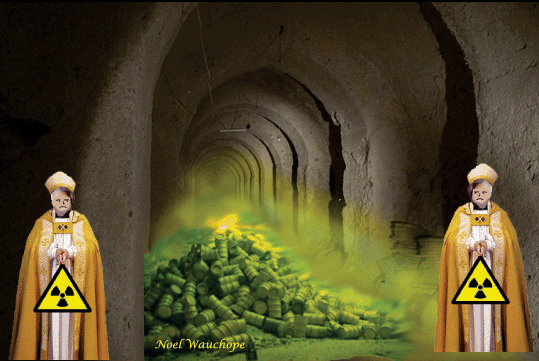
“At first, there was strong opposition to the reactors, but it eventually disappeared”,……… One explanation lies in the massive financial support provided by the nuclear power plant operator, TVO, to the municipality of Eurajoki. ……………………………..[Opponents] all share a common trait: they feel that they have been silenced, either by unspoken ostracisation or by more explicit confrontations.
The waste to be stored in Cigéo amounts to only 3 per cent of France’s waste, but 99 per cent of its radioactivity.
in a leaked document produced by a Land Operations Engineer of Andra, consulted by Equal Times, farmers of the region are listed and labelled according to whether they have been or can be “managed”.
By Guillaume Amouret, Michalina Kowol, Maxime Riché, 24 September 2024 https://www.equaltimes.org/despite-vastly-different-social?lang=en
“It looks just like wallpaper,” Jean-Pierre Simon says, pointing at the dark green line of trees that separate the fields, now glimmering in the setting sun. It is a landscape that he has admired for decades. “But soon, there will be a railway, and a train carrying nuclear waste on the horizon,” laments the farmer, his voice becoming bitter. His family has been living here, near Bure in the Meuse department of north-eastern France, for three generations. The question is, how many more generations will stay here to cultivate these fields in the future.
“Our goal is to reconcile the economy with our planet,” promised Ursula von der Leyen when she presented the adoption of the European Green Deal in 2019, shortly after she first assumed the presidency of the European Commission. Two years later, the European Parliament adopted the European Climate Law, which promised to turn the European Union climate-neutral by 2050. Another year later, in 2022, the European Parliament agreed to label both natural gas and nuclear power investments as climate-friendly sources of energy. In the latest European elections, held in June 2024, the centre-right European People’s Party, led by von der Leyen, again secured the majority of the seats.
But EU member states remain divided when it comes to investing in – and relying on – nuclear energy. On one hand, there’s France, which currently produces around 70 per cent of its electricity using nuclear power, and which recently passed a law to facilitate the construction of six (and up to 14) new reactors. In 2023, Finland’s first European Pressurised Water Reactor (EPR) in the country’s second nuclear power plant, Olkiluoto, started regular production; the country’s first nuclear power plant, Loviisa, began operating in 1977. And while some EU countries, like Poland, are planning to start building their first nuclear power plants in the coming years, others – like Germany – have opted out of nuclear energy production. The country’s last remaining nuclear power plants were closed in April 2023.
But it is not only the process of producing nuclear energy that sparks controversy, especially after the devastation caused by the accidents in Chernobyl (in Ukraine in 1986) and Fukushima (in Japan in 2011). Countries that have produced and relied on nuclear energy, like France, Germany and Finland, all face the same question: how to safely dispose of nuclear waste?
Finland: silenced detractors amid widespread support
Finland is considered one of the forerunners when it comes to nuclear energy. Roughly 20 years ago, the municipality of Eurajoki in western Finland not only accepted the erection of an EPR nuclear power generator but also the digging of Onkalo. Finnish for ‘cave’, it is a repository for spent nuclear fuel. It will become the first of its kind in the world at its opening, planned for 2025, after €900 million of construction costs. The overall cost is expected to reach €5 billion.
Finland: silenced detractors amid widespread support
Finland is considered one of the forerunners when it comes to nuclear energy. Roughly 20 years ago, the municipality of Eurajoki in western Finland not only accepted the erection of an EPR nuclear power generator but also the digging of Onkalo. Finnish for ‘cave’, it is a repository for spent nuclear fuel. It will become the first of its kind in the world at its opening, planned for 2025, after €900 million of construction costs. The overall cost is expected to reach €5 billion.
Run by the Finnish energy company Posiva Oy about 240 kilometres from Helsinki and situated 400 metres under the surface of the Earth, dug into the Finnish granite bedrock, Onkalo will become the final resting place for used nuclear fuel rods originating from the country’s five reactors: three on the island of Olkiluoto, right next door, and two in Loviisa in the south-east of the country.
The Onkalo project works according to the KBS-3 model, first developed in Sweden: spent fuel rods are inserted in copper cylinders, which offer the first barrier against the propagation of radioactive materials. The cylinders are then put in slots dug into granite. Finally, bentonite clay seals the copper capsules in their slots and fills in the deposition tunnels, and acts as a buffer between the copper and the granite.
One explanation lies in the massive financial support provided by the nuclear power plant operator, TVO, to the municipality of Eurajoki. In 2022, over a total of €57 million in tax revenues for the town, TVO would have paid €20 million in property taxes, according to Eurajoki’s mayor.
Sirkka supports the presence of TVO and the Onkalo, like most of the inhabitants of Eurajoki that Equal Times spoke to. Their trust could be considered as representative of the Finnish population nowadays. If acceptance of nuclear power was under 25 per cent back in 1983, it jumped to 61 per cent in 2024, according to a recent poll. And negative views decreased from 40 per cent to 9 per cent during the same time period.
But this does not mean that everyone agrees to the project.
We spoke to several residents – either historical opposition figures involved for decades in the protests against the construction of Onkalo or younger people, active until recently – who asked to remain anonymous. They all share a common trait: they feel that they have been silenced, either by unspoken ostracisation or by more explicit confrontations.
Some went as far as intimidating those against the plan, “sometimes walking under their windows with rifle guns”, as one person recalls. Another person we met had the feeling that because her opposition to the project was publicly known, she slowly lost her friends and had to search for work in other cities, further and further away from her hometown. She felt local employers would not want to hire her because of her opinions – although none explicitly gave this reason. Another opponent, after being involved in one of the marches organised against nuclear energy a few years ago, suffered from violent police repression and also decided to drop the fight, seeking refuge in a secluded property, far away from those painful memories.
On the other side of the Bothnia Gulf, work by researchers at the KTH Royal Institute of Technology in Stockholm, Sweden, questions the durability of copper containers in the long term. To offer protection from any radiation, the capsules would have to hold the nuclear waste safely for 100,000 years. But in a study published in January 2023, the corrosion scientist Jinshan Pan and his team point out the risks regarding embrittlements, cracks and corrosion due to sulphides in groundwater and called for “a comprehensive understanding of the corrosion mechanism […] to provide a solid scientific basis for the risk assessment of copper canisters in the final disposal of nuclear waste”. In a nutshell, he called for more studies on copper corrosion. The operator of Onkalo, Posiva, opposed these findings, arguing that sulphide levels are low enough to ignore this particular type of corrosion. It has not conducted any new research on the topic so far.
Germany’s nuclear phase-out
While Finland races ahead to be the first country to have a fully functioning spent nuclear fuel deposit, other countries like Germany seem to be far from even designing a location.
It all started on shaky ground in 1977, as a salt dome near Gorleben, right between Hamburg and Berlin, was designated to be the last resting place for spent nuclear fuel.
This decision sparked a massive opposition movement, which contributed to forming the ‘Anti-Atom-Bewegung’, the anti-nuclear-movement in Germany. Wolfgang Ehmke, spokesperson of the Bürgerinitiative Lüchow-Dannenberg, the anti-nuclear movement near Gorleben, is an activist of the first hour. To him, the nuclear phase-out in Germany is “not only due to our action, but also a series of lucky and unlucky events”.
The first phase of the new search terminated in 2020 and stated de facto that Gorleben is not suited for such an infrastructure. Its geological characteristics did not meet the conditions which the future disposal site should respond to.
The location analysis is currently making slow but steady progress. In a recent interview with the local newspaper Braunschweiger Zeitung, the president of the federal agency for nuclear wastes disposal (BGE), Iris Graffunder, explained that ten potential locations should be set for 2027. However, a final decision on the location will not be announced before 2046.
As for Gorleben, the federal agency for nuclear waste disposal announced its dismantlement last year. The salt that was dug out from the site for the construction and stored in a heap ever since, should be returned to the dome later this year. Observing every action and gesture of the agency, Bürgerinitiative Lüchow-Dannenberg remains critical concerning the date: “We are still waiting for the announced test run, before the final dismantlement,” explains Ehmke. Until then, its maintenance will have cost €20 million per year.
High tension over new waste repositories in France
Swallows fly in and out of Jean-Pierre’s barn, which provides shelter and shade on a hot June evening. JP, as everybody in Bure knows him, now armed with a rake, has been working since the early morning – like he does every day. A row of white and brown cows chew lazily on their hay. Only every now and then a low-pitched moo breaks the silence.
But Bure, in north-eastern France, about 300 km east of Paris, is far from quiet. The village, home to about 80 people, is the main stage of a political fight between the French state and anti-nuclear activists. Here, demonstrators have clashed with police on numerous occasions. In 2018, about 500 policemen were mobilised to evacuate protesters occupying a nearby forest. Even today, tensions are still palpable in Bure and the neighbouring villages. Police cars patrol the streets frequently, inhabitants denounce house searches and living under constant police supervision.
The reason? Bure’s underground is a construction site. France’s nuclear waste repository – named Cigéo for “industrial centre for geological deposit” – is supposed to store a total of 83,000m³ of high-level, long-life and medium-level nuclear waste. France produces around 70 per cent of its electricity from nuclear power.
Some of the demonstrators who came to Bure to support the local protest decided to stay and revive the countryside with sustainable farming. Like Mila and Jan, who hoped to start a new chapter in their lives here, far from the clamour of the city. Their dream is to raise goats: “We would like to produce our own goat cheese, to have just enough for ourselves and perhaps sell or exchange with others,” says the young couple who until recently, lived in an old house in a village next to Bure. However, this summer, they were forced out by the prefecture. While local authorities invoked the apparently ‘unsanitary conditions’ of the habitation, Jan and Mila’s landlord is convinced that the mayor of the village simply doesn’t want anyone who opposes Andra, the French national agency for nuclear waste management, to settle in the municipality. Since last year, Andra embarked on an unprecedented large-scale appropriation programme to acquire the land needed to construct the deposit.
Despite the nuclear waste’s high radioactivity levels, Andra has offered assurances that the location in Bure is safe: Cigéo is being constructed within a layer of Callovo-Oxfordian clay, deposited on-site about 160 million years ago. The conditioning of the waste and the protective layer of clay rock will help to avoid radioactive dispersion, the agency says. The storage is designed to remain safe during its operation for 100 years, as well as after its closure, for another 100,000 years. The deep storage project should enter its pilot phase in 2035.
But whether generations-old farmers like JP, or newcomers like Jan and Mila, will be able to continue their lives here is a different question. Andra plans to acquire an additional 550 plots to continue with the construction of its mega-project. Cigéo was declared of public interest in 2022, so the company now has the right to expropriate landowners. “I am 64, it is time for me to retire,” says JP. “My son applied to take over the farm, but Cigéo also covets some of my land parcels,” he laments. The agency recently asked for an extra strip of land alongside the former railway that will become the transportation channel for incoming spent nuclear fuel, and this further threatens the viability of JP’s plots, which would become much harder to work – or sell – if Andra’s request is granted.
In January 2023, Andra submitted an application to the national nuclear security agency, IRSN (Institute for Radiation Protection and Nuclear Safety), to authorise the construction of the final disposal in place of the current underground laboratory. After a reform of the nuclear security agency last year, and the termination of its previous president’s mandate, its new head was nominated in May 2024. And it is no less than the current president of Andra, Pierre-Marie Abadie, designated by President Emmanuel Macron. This choice raised doubts regarding the integrity of the entire project’s authorisation process, as critics pointed out conflict of interests.
“For now, we don’t see the bulldozers smashing the ground,” says JP. But he still remains sceptical: “I have doubts about my ability to stay here, should my farm be taken over. But I don’t have much time to reflect and think,” he says.
For now, JP must go back to work.
This article was developed with the support of Journalismfund.eu.
New developments at Sellafield for endless storage of ever-increasing amounts of highly radioactive spent nuclear fuel.
Sellafield to store all fuel from UK’s operational nuclear power stations, by Business Crack, September 25, 2024

I would have thought that it might be a good idea to plan for not making any more of this poisonous stuff.
But I guess that’s not in the official, expert, thinking.
A new space-saving rack at Sellafield will enable the site to store all the fuel expected from the UK’s operational nuclear sites.
The first fuel has been placed into a storage rack and the firm said it was set to save billions of pounds.
Known as the 63-can rack, the container allows the Thorp pond to store 50% more spent nuclear fuel.
Without the rack, a new storage pond would have to be built, potentially costing billions of pounds.
The rethink was required because Thorp needs to store more fuel than previously thought because the UK no longer reprocesses spent fuel, but instead stores it underwater prior to disposal.
The rack has been 16 years in the making and represents a success story for UK manufacturing.
Weighing 7 tonnes and standing 5.5 metres high, the stainless steel containers are being built by a consortium of Cumbrian manufacturers and Stoke-based Goodwin International.
Between them, they will manufacture 160 racks. Another 340 racks will be needed in the future…………………………………………………………………….
“These racks will increase fuel capacity from 4,000 tonnes to 6,000 tonnes, meaning we can accommodate all current and future arising, negating the need for a new storage facility……………………………………………………………………..
Because fuel will be stored for longer than was originally intended, the pond has required other alterations including raising the pH level to avoid corrosion and installing new cooling capacity, Sellafield Ltd said. https://businesscrack.co.uk/2024/09/25/sellafield-to-store-all-fuel-from-uks-operational-nuclear-power-stations/
Spent nuclear fuel shipped to Japan’s 1st interim storage facility in Aomori
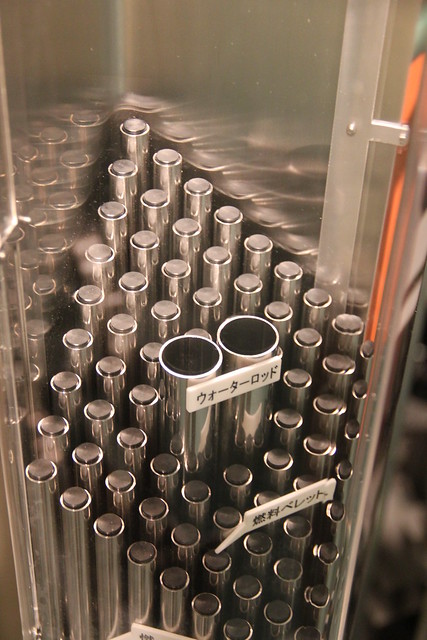
The interim storage facility, set up with joint investment from TEPCO and Japan Atomic Power Co, can store up to 5,000 tons of spent nuclear fuel for up to 50 years.
But there are concerns that the storage period will be exceeded
Sep. 25 TOKYO, https://japantoday.com/category/national/spent-nuclear-fuel-shipped-to-japan’s-1st-interim-storage-facility
The operator of a nuclear power plant in central Japan on Tuesday shipped spent fuel to the country’s first interim storage facility.
Tokyo Electric Power Company Holdings Inc sent 69 spent fuel assemblies from the Kashiwazaki-Kariwa plant in Niigata Prefecture by ship. The fuel will be delivered to the interim storage facility in Mutsu, Aomori Prefecture, on Thursday at the earliest.
With capacity at spent fuel pools at the plant’s No. 6 and No. 7 reactors approaching the limit, TEPCO plans to transfer two containers that can hold 138 fuel assemblies and five containers with 345 assemblies from the plant to the interim storage facility in fiscal 2025 and fiscal 2026, respectively.
The 69 assemblies, which had been kept at the No. 4 unit, were shipped out in a metal container.
The interim storage facility, set up with joint investment from TEPCO and Japan Atomic Power Co, can store up to 5,000 tons of spent nuclear fuel for up to 50 years.
But there are concerns that the storage period will be exceeded as a nuclear fuel recycling plant due to be built in Rokkasho, also in Aomori, has yet to be completed.
The storage facility is expected to begin operations in late October following inspections by the Nuclear Regulation Authority.
There were 13,752 spent fuel assemblies kept at the Nos. 1-7 reactors at Kashiwazaki-Kariwa before the shipment, accounting for over 80 percent of the spent fuel pools’ capacity. At No. 6 and No. 7 units, the spent fuel pools were at over 90 percent capacity.
Japan and 11 other countries call for early start of fissile material ban talks

New York – https://www.japantimes.co.jp/news/2024/09/24/japan/politics/kishida-nuke-material-ban-treaty/
Japan and 11 other countries on Monday agreed to work together to launch negotiations immediately on a proposed treaty banning the production of fissile materials, including highly enriched uranium and plutonium, for nuclear weapons.
A Fissile Material Cut-off Treaty will significantly contribute to nuclear disarmament and nonproliferation, high-level representatives from the 12 countries, including Prime Minister Fumio Kishida, said in a joint statement after a meeting in New York.
“A nondiscriminatory, multilateral and effectively verifiable treaty banning the production of fissile material for nuclear weapons and other nuclear explosive devices would represent a significant practical contribution to nuclear disarmament and nonproliferation efforts,” the statement said.
“The participants confirmed that they would work closely together…for the immediate commencement of negotiations on an FMCT,” the statement said. The 12 countries included three nuclear powers — the United States, Britain and France.
Kishida told the meeting that a strong political will is needed to start FMCT negotiations. Creating a momentum for an early start of the negotiations will help to maintain and strengthen the Nuclear Non-Proliferation Treaty regime, he said.
He also said Japan will send hibakusha atomic bomb victims abroad to promote the understanding of the reality of exposure to nuclear weapons. Next year marks 80 years since the U.S. atomic bombing of Hiroshima and Nagasaki.
Nuclear plant’s decommissioning could take 95 years
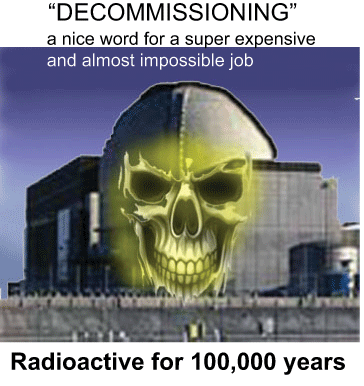
Daniel Mumby, Local Democracy Reporting Service, 19 Sept 24, https://www.bbc.com/news/articles/c8699v4dvexo
Residents are being asked for their views on how a former nuclear power station should be safely decommissioned.
The Hinkley Point B facility, which lies on the Somerset coast north of Stogursey, ceased operations in August 2022, after cracks developed in the plant’s graphite cores, creating potential safety concerns.
EDF Energy, which owns the facility, has applied to the Office for Nuclear Regulation (ONR) for formal permission to decommission the site, which could take about 95 years.
Somerset residents now have three months to voice their views.
Under the proposals, Hinkley Point B, which opened in 1976, could be decommissioned in three phases.
The first phase, which will last until 2038, includes the dismantling of all buildings and plant materials except for the site’s safestore structure. This facility will be used to store and manage the residential nuclear waste from the power station.
The second phase will see “a period of relative inactivity” of up to 70 years from 2039, to allow for the radioactive materials within the safestore to safely decay, according to the Local Democracy Reporting Service.
While physical activity within the site will be minimal during this phase, the former power station will remain under close surveillance with “periodic maintenance interventions” to prevent any risk to health or national security.
The third and final phase will see the former reactor and debris vaults being dismantled and removed and any final landscaping work being completed – with EDF estimating that this will be finished by 2118.
The consultation is running until 9 December, with the ONR expected to publish its formal response in early 2025.
Hinkley Point C
EDF is currently building Hinkley Point C, which has a target completion date of June 2027.
Costing about £46bn, it is expected to generate enough electricity to supply some six million homes for the next 60 years.
Germany’s dirty secret: Its leaking nuclear waste dump
Kiyo Dörrer, September 19, 2024
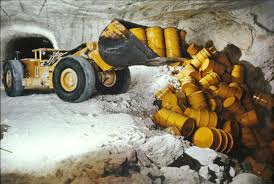
Germany has a dirty little secret. In the middle of the country, deep underground, a radioactive waste dump has been leaking for decades. And nobody really knows what do to with it.
Deutsche Welle 19th Sept 2024, https://www.dw.com/en/germanys-dirty-secret-its-leaking-nuclear-waste-dump/video-70237250
Dounreay nuclear wastes : new snake like robot to access off limits areas
A new robot has been trialled at Dounreay in order to reach “severely
restricted” areas at the former experimental nuclear plant. During
decommissioning of the reactor, engineers have had to come up with
innovative solutions to access parts of the plant that are off limits to
humans.
John O’Groat Journal 17th Sept 2024
-
Archives
- October 2026 (112)
- September 2026 (339)
- August 2026 (330)
- July 2026 (355)
- June 2026 (287)
- May 2026 (306)
- April 2026 (356)
- March 2026 (251)
- February 2026 (267)
- January 2026 (308)
- December 2025 (358)
- November 2025 (359)
-
Categories
- 1
- 1 NUCLEAR ISSUES
- business and costs
- climate change
- culture and arts
- ENERGY
- environment
- health
- history
- indigenous issues
- Legal
- marketing of nuclear
- media
- opposition to nuclear
- PERSONAL STORIES
- politics
- politics international
- Religion and ethics
- safety
- secrets,lies and civil liberties
- spinbuster
- technology
- Uranium
- wastes
- weapons and war
- Women
- 2 WORLD
- ACTION
- AFRICA
- Atrocities
- AUSTRALIA
- Christina's notes
- Christina's themes
- culture and arts
- Events
- Fuk 2022
- Fuk 2023
- Fukushima 2017
- Fukushima 2018
- fukushima 2019
- Fukushima 2020
- Fukushima 2021
- general
- global warming
- Humour (God we need it)
- Nuclear
- RARE EARTHS
- Reference
- resources – print
- Resources -audiovicual
- Weekly Newsletter
- World
- World Nuclear
- YouTube
-
RSS
Entries RSS
Comments RSS

