Mon Dieu, Electricite de France is supposed to pay for nuclear waste storage
Under French law, EDF has to build a portfolio of assets to enable it to pay for the decommissioning of France’s 58 nuclear reactors and radioactive waste storage…EDF was supposed to have set aside enough money by the end of June 2011 for decommissioning of all of its nuclear assets and waste storage. A planned power law gave the utility a five- year extension on the deadline to June 2016.
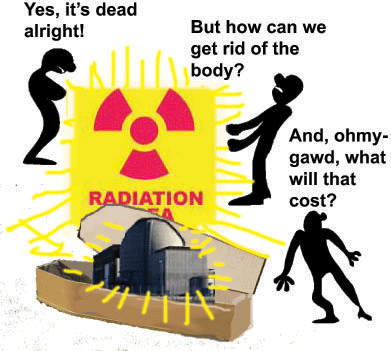
EDF Puts 50% of RTE Grid Operator into Dedicated Fund for Nuclear Charges – Bloomberg, By Tara Patel – Jan 3, 2011 Electricite de France said it will improve its debt ratio with the transfer of half the French power grid Reseau de Transport d’Electricite into a fund that will cover costs for dismantling nuclear reactors……… Continue reading
Blue Ribbon Commission for America’s Nuclear Future targeting South Carolina for waste dump?
South Carolina might be forced to take on an even larger nuclear waste role than it already has.

Blue Ribbon panel to tour SRS, look for solution, The Augusta Chronicle, 3 Jan 2011, Group tasked with finding answer for waste problem By Rob Pavey.In terms of nuclear issues, the eyes of the nation will be on Augusta this week as the Obama Administration’s Blue Ribbon Commission for America’s Nuclear Future visits Savannah River Site and Augusta. Continue reading
Showdown at the ole Texas nuclear waste dump
Vermont’s nuclear waste showdown in Texas Burlington free Press, 28 Dec 10, Gov.-elect Peter Shumlin’s inauguration is causing a stir in Texas that’s reverberating back here to Vermont.That’s where a commission will meet two days before Shumlin takes office to vote on whether to allow radioactive waste from states to be dumped in a long-planned Texas site that was going to be strictly for Texas and Vermont. Continue reading
An evil Christmas present for Texas – nuclear waste importing
“This is an evil Christmas present from WCS and Harold Simmons,” said Tom “Smitty” Smith, director of the liberal environmental group Public Citizen of Texas. After a news conference blasting the plan, Smith and other environmentalists rolled a black barrel, with a radioactive symbol on the outside, under the state Christmas tree outside the Texas Capitol
Activists protest nuke waste plan for West Texas Houston Chronicle, 24 Dec 2010 The Associated Press AUSTIN, Texas — Warning that Texas could soon become the dumping grounds for nuclear waste from around the nation, environmentalists accused state regulators and a politically connected company Thursday of rushing a dump expansion proposal past Texans who are too focused on the holidays to even notice. Continue reading
UK nuclear waste burial site endangered by earthquake risk
 “It would be stupidity to bury high levels of radioactive material underground in areas which can be affected by earthquakes.
Earthquake ‘could hit plans to bury nuclear waste’, Whitehaven News, By Alan Irving, 22 December 2010 WEST Cumbria’s potential for burying highly radioactive nuclear waste could have taken a step back as a result of Tuesday night’s earthquake, say campaigners.Seismic tremors have to be seriously considered as part of a watertight safety review if a site is eventually found which appears to have the right geology. Continue reading
US Energy Department’s dilemma over depleted uranium disposal
 This type of low-level radioactive waste, though it meets state standards now, presents a special problem for regulators because it gets increasingly hazardous for around 1 million years and large quantities could potentially exceed state hazard allowances. Separate from the Savannah River waste, the company already has buried 49,000 tons of DU from past disposal contracts…..
 Energy Department cancels search for interim depleted uranium storage | The Salt Lake TribuneBy Judy fahys Dec 21, 2010 The U.S. Energy Department has scrapped its search for temporary storage for two shipments of depleted uranium and is now looking for another place to bury the low-level radioactive waste permanently. Continue reading
Attack on a UK nuclear train would be a terrorist coup
particularly concerned about the possibility of an attack on the nuclear trains that go through the main Olympic site in east London, since a successful attack on one of them in its vicinity, whether during or in the lead-up to the Games, would be a terrorist media spectacular.

Video of UK protest Guest post: The Nuclear trains that threaten our safety | The Olympic Borough

The Nuclear trains that threaten our safety, The Olympic Borough, Dec 20th, 2010 by Dave.Anyone who uses Stratford station on a regular basis may have encountered this lot, the Nuclear Trains Action Group (NTAG), doing their best to raise awareness about what they believe is a serious threat to our safety and security. Continue reading

Big campaign donations likely to get nuclear waste dump approved
The radioactive waste to be dumped near West Texas aquifers will be hot for tens of thousands of years.6 Waste Control’s license extends a mere 15 years. Thereafter that gullible sap–the Texas taxpayer–will be left holding the bag.

Rick Perry’s nuclear money machine dallasnews.com, Wayne Slater, Dec 20, 2010, Dallas billionaire Harold Simmons is the focus of a new study that says his $1.1 million investment in Gov. Rick Perry this year could pay many millions in return. The issue is the West Texas nuclear waste dump that Simmons controls. Continue reading
Despite setback, Nevada will fight against Yucca Mt nuclear waste dump
“While the NRC may not have ruled in Nevada’s favor on this latest challenge, the Yucca Mountain Project is already in mothballs and by the time we’re done, this boondoggle will be a pile of bleached bones in the Nevada desert,”

Nev. Gov.-elect Sandoval vows fight on Yucca Mt. Las Vegas Sun, The Associated Press, Dec. 15, 2010 .Despite a setback from a U.S. licensing panel, opponents of a national nuclear waste repository in Nevada say they will press the Nuclear Regulatory Commission to examine new science about potential dangers stemming from erosion at the site. Continue reading
Costly new attempt to make Chernobyl nuclear reactor safer
New shelter over Chernobyl nuclear reactor to be built in 2015, ITAR-TASS, KIEV, December 13 — A new shelter over the fourth power unit of the Chernobyl nuclear power plant will be commissioned in 2015, Ukrainian Minister of Emergency Situations Viktor Baloga said during a visit to the Chernobyl nuclear power plant with Administrator of the U.N. Development Programme Helen Clark on Sunday……Under the project a new arch-shaped shelter 108 meters high and 150 meters long will be built over the current sarcophagus. The facility will be equipped with modern radiation security control systems. The new Chernobyl shelter will have 100 years of service life… ITAR-TASS
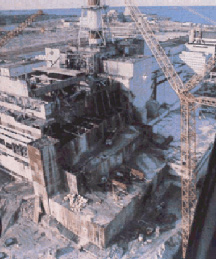
Cleanup of nuclear plant will be delayed, and full cost unknown
Texas opposition to allowing nuclear waste from other States
Commenters on proposed nuke rules mostly opposed, Houston Chronicle, By BETSY BLANEY Associated Press 9 Dec 2010, A commission overseeing the burial of low-level radioactive waste in Texas heard mostly opposition at a public hearing on proposed rules to allow nuclear waste from 36 other states to be buried near the New Mexico border…….Commenters on proposed nuke rules mostly opposed | AP Texas News | Chron.com – Houston Chronicle
Faced with mass protests, Germany stops transport of nuclear waste to Russia
German environmentalists said they would stage protests against the shipment, which they branded “highly dangerous”.
Demonstrators in Moscow rallied against the plans in August, citing the threat of “terrorist acts” and risk of forest fires leading to radioactive contamination.

Germany calls off disputed nuclear shipment to Russia, Google hosted news, (AFP) – 7 Dec 10, BERLIN — Germany on Monday called off hotly-disputed plans to ship radioactive nuclear waste to Russia as it doubted the cargo would be safely disposed of, a spokeswoman for the environment ministry said. Continue reading

Scottish govt ponders export of nuclear waste
Dounreay Radioactive Waste Substitution Consultation 2010, The Scottish Government, 7 Dec 10, “……….Dounreay’s Historic Contracts & the Current Situation
2.1.6 The contracts entered into by UKAEA contained clauses allowing for the radioactive waste allocated to overseas customers under the reprocessing contracts to be returned to the country of origin:- the “Return of Waste Clauses”. It is Government policy that these clauses be enacted and the radioactive waste sent back to the countries of origin. However to enact these clauses, the NDA is contractually obliged to return the radioactive waste in a form which can be safely transported and stored in accordance with such regulations as may be specified by the relevant competent national authorities.
2.1.7 The countries with radioactive waste at Dounreay which is due to be returned to them are Australia, Belgium, Germany and Italy…….. Dounreay Radioactive Waste Substitution Consultation 2010
Complicated nuclear waste problems between USA States
The prospect of losing space to waste from generators in other states worries the incoming governor of Vermont, Peter Shumlin, who has vowed to shut down that state’s reactor, Vermont Yankee.
Texas Proposal Spurs Race to Dispose of Nuclear Waste – NYTimes.com, By MATTHEW L. WALD December 2, 2010 WASHINGTON — Aged nuclear plants in Vermont and Illinois may be playing the equivalent of musical chairs in a graveyard, vying for space at a dump in Texas whose owner hopes to accept radioactive waste from many other states. Continue reading
1 This Month
23-25 October – on Zoom – World BEYOND War’s annual global conferenc


Shut down the radiation-damaged Heysham nuclear reactors now
To see nuclear-related stories in greater depth and intensity – go to https://nuclearinformation.wordpress.com

Say No to NASA’s Reckless Nuclear Reactor on the Moon
Say No to NASA’s Reckless Nuclear Reactor on the Moon

-
Archives
- October 2026 (247)
- September 2026 (339)
- August 2026 (330)
- July 2026 (355)
- June 2026 (287)
- May 2026 (306)
- April 2026 (356)
- March 2026 (251)
- February 2026 (267)
- January 2026 (308)
- December 2025 (358)
- November 2025 (359)
-
Categories
- 1
- 1 NUCLEAR ISSUES
- business and costs
- climate change
- culture and arts
- ENERGY
- environment
- health
- history
- indigenous issues
- Legal
- marketing of nuclear
- media
- opposition to nuclear
- PERSONAL STORIES
- politics
- politics international
- Religion and ethics
- safety
- secrets,lies and civil liberties
- spinbuster
- technology
- Uranium
- wastes
- weapons and war
- Women
- 2 WORLD
- ACTION
- AFRICA
- Atrocities
- AUSTRALIA
- Christina's notes
- Christina's themes
- culture and arts
- Events
- Fuk 2022
- Fuk 2023
- Fukushima 2017
- Fukushima 2018
- fukushima 2019
- Fukushima 2020
- Fukushima 2021
- general
- global warming
- Humour (God we need it)
- Nuclear
- RARE EARTHS
- Reference
- resources – print
- Resources -audiovicual
- Weekly Newsletter
- World
- World Nuclear
- YouTube
-
RSS
Entries RSS
Comments RSS

