Dubious plan by Lynas to sell 300,000 tonnes of converted radioactive wastes
The anti-Lynas groups also questioned today whether the market “can fully absorb the colossal amount produced given that Lynas will be producing at least 300,000 tonnes of contaminated waste every year.”
Locals say market won’t buy Lynas’ recycled waste, ww.themalaysianinsider.com/mobile/malaysia/article/locals-say-market-wont-buy-lynas-recycled-waste/ The Malaysian Insider ,21 April, By Shannon Teoh KUALA LUMPUR, — Lynas Corp’s plans to recycle waste from its controversial RM2.5 billion rare earth plant in Kuantan into a commercial product will not be accepted by the market, local residents opposed to the refinery said today.(Jan 26 ) Continue reading
Rare Earths company has no proper radioactive waste management plan
Unlike the Lynas plant, the other three refineries’ radioactive wastes are sent back to the respective mines.
“Lynas has no concrete radioactive waste management plan. Lynas claims it can store its waste onsite forever.
The Lynas plant, she added, would have 500 tonnes of liquid discharge per hour channelled into the Balok River.
 Lynas whitewashing refinery safety concerns, says Fuziah, The Malaysian Insider, By Shazwan Mustafa Kamal April 16, 2012 KUALA LUMPUR, — PKR’s Fuziah Salleh has accused Lynas Corp of whitewashing safety concerns of its planned refinery in Kuantan by claiming there is a “concerted political campaign” against the plant’s construction,
In response, Fuziah accused the Lynas Corp head of “deviating” from the real issue of safety, saying that a simple comparative study showed the Lynas refinery did not support any form of “sustainable development.”
“They are not addressing concerns of safety, whitewashing safety concerns, silent about safety issues. “They have only addressed radiation aspects, external radiation… they are narrow-minded in terms of perspective of radiation,” the PKR vice-president told The Malaysian Insider. Continue reading
The cleanup of Moab uranium tailings – 17 more years to go?
 Lack of funding to slow cleanup of uranium tailings (includes video) KSL.com Utah By Geoff Liesik , 13 April 12, MOAB — Environmental crews have removed more than 5 million tons of radioactive tailings from the banks of the Colorado River in less than three years.
They still have about 11 million tons to go, but the pace of the cleanup is about to slow down. Continue reading
The bitter history of Malaysia’s Bukit Merah rare earths project.
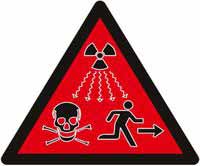 Some of the surviving residents of Bukit Merah are still plagued with severe health problems. Until this very day, the Malaysian authorities refuse to acknowledge that the radioactive waste was responsible for the sudden escalation of health problems among the residents
Today, the government is the official custodian of this repository in Bukit Merah. This site in Bukit Merah is declared as a restricted and dangerous dump site for radioactive materials but a curtain of official silence has descended on it. Has the government not learnt from Bukit Merah?
The Lynas project is likely to be a replay of the ARE fiasco but on a much larger scale.
The benefits gained by Malaysia from the Lynas investment are very little relative to the risks involved. Whilst the profits of the project go to Lynas (untaxed) and the few Malaysian companies that are involved in the construction of and the provision of supplies to the Gebeng rare earth plant, the radioactive waste will remain in
Malaysian soil for hundreds of years.
Lynas issue: Not learning from bitter experience —The Malaysian Insider, Richard Pendragon, April 12, 2012 “……..Bukit Merah The history of the rare earth industry in Malaysia is little known to most Malaysians. Most Malaysians in fact think that the Lynas project in Pahang is the first time Malaysia has been associated with this industry.
Few Malaysians actually know that there was a rare earth plant in Bukit Merah, Perak, which has been closed some 10 or more years ago, following a ruling by the High Court of Malaysia that the company involved was in negligence, and that the radioactive waste generated by the plant was dangerous and had to be removed and secured in a safe
place away from people for hundreds of years.
The evidence of the hazardous legacy of this rare earth plant is still present in our midst as a reminder to every one of the risks involved. Continue reading
The danger of nuclear powered drones, and plutonium for spacecraft
 The Deadly Folly of Nuclear Power Overhead HUFFINGTON POST, Karl Grossman: 04/12/2012 The crash last week of a U.S. drone on the Seychelles Islands– the second crash of a U.S. drone on Seychelles in four months — underlines the deadly folly of a plan of U.S. national laboratory scientists and the Northrop Grumman Corp. for nuclear-powered drones. Continue reading
The eternal cost of dealing with dead, but radioactive, nuclear reactors
Turkish nuclear power – an unwarranted venture, Hurriyet Daily News, ERHUN KULA, 12 April 12 “……Studies in France (available from the author), the most nuclear dependent nation, reveal that nuclear energy is more expensive then hydro and fossil fuel powered units, even when the end cost of nuclear power plants – which is decommissioning and storing highly dangerous nuclear wastes in repositories for thousands of years – is ignored. The most expensive and risky problem with nuclear energy is the safe disposal of the radioactive waste. It has to be transported over long distances, stored and monitored over a very long period of time.
A few months ago the Mersin Akkuyu Nuclear Electricity Production Corporation commissioned an “independent” engineering company, DOKAY, to carry out an environmental impact assessment of the proposed nuclear power unit. In its over 100 page report, DOKAY provided a “pleasing” document to its sponsor. As for nuclear wastes – the end product – only a few sentences are reserved, which is quite outrageous.
There are more than 400 nuclear reactors operating in various countries. A nuclear power station has 35-40 years of operating life. After that it must be dismantled and the area must be cleaned up (the decommissioning process). But so far, no nuclear power station has been completely decommissioned in the world. It has been estimated that decommissioning could last about 50 years and it would cost more than the construction cost.
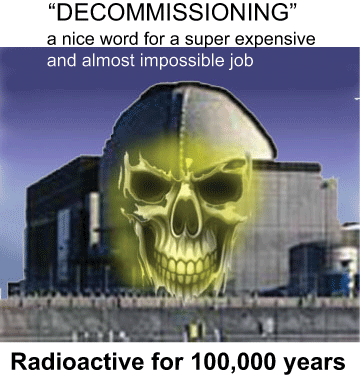
One of the earliest decommissioning efforts is taking place at Dounrey plant, on the northern tip of Scotland. It started more than 15 years ago and we need at least 30 years more to finish the job. After that, waste must be stored in nuclear graves (waste repositories) for thousands of years. United States regulations require the storage period to be at least 10,000 years.
The cost of decommissioning and waste storage will fall upon future generations at huge costs. My American colleague, Prof. S. Frachette, argues that large quantities of nuclear waste is likely to endanger the health, safety and civil liberties of generations yet to be born.
Professor Erhun Kula, from Istanbul’s Bahçesehir University, researched economic and moral aspects of nuclear power in the U.K., the United States and Sweden, and has published widely in this field. http://www.hurriyetdailynews.com/turkish-nuclear-power–an-unwarranted-venture.aspx?pageID=238&nID=18223&NewsCatID=396
Germany needs to make sure that nuclear companies pay for nuclear decommissioning
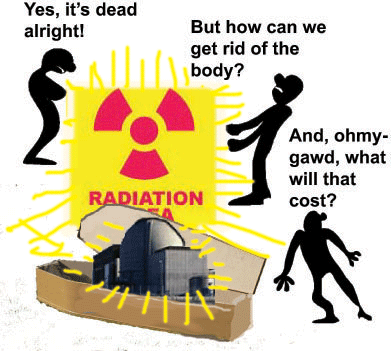 Germany open to nuclear shutdown fund – minister Greenpeace calls for state to run nuclear dismantling fund
* Environment minister says Greenpeace proposal can be examined
* Major utilities reject idea
DUESSELDORF, Germany, April 11 (Reuters) – Germany would consider ringfencing billions of euros to be put aside by utilities for disposing of radioactive waste, the environment minister said, to ensure decommissioning of the country’s nuclear power plants is completed decades from now. He was speaking on Wednesday in response to a call from environmental group Greenpeace that wants the government to administer some of the money earmarked for nuclear decommissioning.
German Chancellor Angela Merkel’s decision last year, following Japan’s nuclear plant disaster, to phase out nuclear power by 2022 has thrown big utilities on the defensive, weakening their finances and forcing them to rethink their business models.
Germany’s top four nuclear operators – E.ON, RWE , EnBW and Swedish’s Vattenfall – are footing the bill to dismantle the plants and dispose of radioactive waste. They have already made provisions of more than 30 billion euros ($39.3 billion).
Managing the disposal of waste will take decades after the last nuclear plant is due to shut in 2022 and Greenpeace fears that the companies may not be able to honour their obligations in the future or could try to wriggle out of them.
Parking the companies’ money in a separate state-run fund would protect German taxpayers should one or more of the firms become insolvent, Greenpeace said. “This is an idea that can be examined,” Environment Minister Norbert Roettgen told Reuters on Wednesday, adding it was clear that the operators of nuclear plants were responsible for dismantling them. ”We need to look at whether a combined fund is a better solution than relying on individual responsibility,” he added.
Greenpeace has also called for provisions to be raised to 44 billion euros. http://www.reuters.com/article/2012/04/11/germany-nuclear-idUSL6E8FB2XT20120411
There’s gold in them thar dead nuclear reactors

Christina Macpherson's websites & blogs
And some of us thought that the nuclear industry wasn’t profitable any more!
Well, after ripping off the taxpayer all these years they will now be back in business with a vengeance. The almost eternal task of buryng dead nuclear reactors could turn out to be even more profitable than ever
UK in nuclear decommissioning deal with Japan http://www.reuters.com/article/2012/04/10/japan-britain-nuclear-idUSL6E8FA3JP20120410 by Oleg
Vukmanovic; Edited by David Holmes LONDON, April 10 Apr 10, 2012 (Reuters) – Britain and Japan signed a framework civil nuclear co-operation pact opening up Japan’s multi-billion pound decommissioning sector to UK companies, the UK energy ministry said.
The announcement on Tuesday came as UK Prime Minister David Cameron kicked off his tour of Asia in Japan. The tour is aimed at boosting trade and investment ties, while the nuclear pact follows the devastating Fukushima nuclear plant meltdown in March last year. Continue reading
Plutonium in space – another great idea from the pro nuclear lobby
 despite precautions, scenarios exist in which plutonium-238 from spacecraft could contaminate Earth. If a nuclear-laden spacecraft performed a high-speed slingshot fly-by and a calculation mistake occurred, the craft could enter the Earth’s atmosphere, disintegrate, and spew plutonium throughout the planet.
The public will have to weigh the benefits [what benefits? – Christina Macpherson] of these pioneering space missions against the costs and risks of use
 Nuclear Renaissance in Space, Miller-McCune, By Wendee Holtcamp, April 6, 2012 As the U.S. prepares to relaunch domestic production of plutonium-238, the space community wishes to assure the public of its safety. Are they right?
In this, the 50th year of using nuclear energy for space missions, the U.S. is preparing to restart domestic production of a plutonium isotope that fuels space vehicles — a topic that was front and center at the recent Nuclear and Emerging Technologies for Space conference, held in The Woodlands, Texas…. Continue reading
Canada’s nuclear waste problem, risks to Lake Huron
In Canada’s 40-year nuclear power program, two million used fuel bundles have been created, enough to fill six hockey arenas. As Canada’s largest nuclear plant, about 50 per cent of that used nuclear waste is stored above ground at the Bruce plant…..

 Nuclear-waste dump proposal sparks protest in cottage country, Frances Barrick, The Record Apr 04 2012 SAUGEEN SHORES — The battles lines are drawn in Saugeen Shores over the contentious issue of whether this Lake Huron tourist community should be the site of Canada’s first underground repository for high-level nuclear waste.
“I can’t imagine why people would want to come here and vacation beside Canada’s nuclear waste dump,” Continue reading
A very long haul to clean up Savannah River’s plutonium wastes
The amount of plutonium in the waste tanks is uncertain. Savannah River was built to make plutonium, and the material in the tanks is what was left over after the material was produced in reactors and scavenged in chemical plants. But a fair amount ended up in the waste tanks
A Very Long Road for Military Nuclear Waste By MATTHEW L. WALD, NYT, March 29, 2012 Slowly, slowly, the Energy Department is moving forward with solidifying the liquid nuclear wastes left over from cold-war weapons production. On Thursday, the department said it had closed two more of the 51 underground tanks at the Savannah River Site in western South Carolina. The high-level waste was mixed with molten glass to keep it chemically locked up for millennia, and the lower-level material was mixed with a kind of cement that is supposed to keep it in place until the radioactivity dies down.
The department has 22 tanks at Savannah River that do not meet Environmental Protection Agency standards , mostly because they are single-wall tanks rather than double-wall. It closed two of them in 1997 but has faced numerous technical problems. Continue reading
Lynas rare earths company has to get Australia to agree to take back radioactive wastes
Onus is on Lynas to get nod for waste shipment’, The Malaysian Star Reports by MARTIN CARVALHO, YUEN MEIKENG, RAHIMY RAHIM and TASHNY SUKUMARAN , 29 March 12, THE onus of obtaining permission from the authorities to ship waste from the proposed rare earth plant in Gebeng, Pahang, to Australia lies with operators Lynas Corporation, said Science, Technology and Innovations Minister Datuk Seri Dr Maximux Ongkili.
“There has been no official word from the authorities in Australia over the shipment (of the waste) and I have not received any formal communication,” he said at Parliament lobby.
Though helping facilitate Lynas’ investment in setting up the plant here, he noted there were conditions that the company must fulfil with the onus on them to obtain approval for waste shipment to Australia if the need arose. “We are not here for the purpose of just helping Lynas. We have set conditions and they must follow,” he said.
The Atomic Energy Licensing Board’s (AELB) imposed five conditions for the issuance of a temporary operating licence for the Lynas plant which includes locating a suitable site for a permanent disposal facility. “If Lynas cannot process the wastes here according to our standard or cannot find a permanent disposal site, then they have to seek a site outside this country…..
“Otherwise, I am not giving the licence as they have signed for that,” Ongkili repeatedly said….. Ongkili said Lynas Corporation chose to have its rare earth plant in Malaysia because the cost to operate the facility here was 30% of that in Australia….. http://thestar.com.my/news/story.asp file=/2012/3/28/parliament/11002216&sec=parliament
Alas, ‘fast breeder’ reactors don’t solve the nuclear waste problem
 Ultimately, however, the core problem may be that such new reactors don’t eliminate the nuclear waste that has piled up
Can Fast Reactors Speedily Solve Plutonium Problems? The U.K. is grappling with how to get rid of weapons-grade plutonium and may employ a novel reactor design to consume it , Scientific American, By David Biello | March 21, 2012 The U.K. has nearly 100 metric tons of plutonium—dubbed “the element from hell” by some—that it doesn’t know what to do with.
The island nation does not need the potent powder to construct more nuclear weapons, and spends billions of British pounds to ensure that others don’t steal it for that purpose. The unstable element, which will remain radioactive for millennia, is the residue of ill-fated efforts to recycle used nuclear fuel. Continue reading
Students alerting public to danger of nuclear waste dumping in Cumbria, UK
the proposals … will be a ‘travesty of democracy’…..
there are claims that important scientific information is being ignored
 Students fight Cumbria nuclear dump plan The Westmorland Gazette, 23 March 12, CONSULTATION over whether a nuclear waste repository should be built on Cumbria’s west coast comes to a close tomorrow with opponents making their voices heard in many imaginative ways… Continue reading
Texas likely to take in radioactive wastes from other States
 Critics maintain that that Mr. Simmons’s financial might has helped him win state backing for the site. Mr. Simmons has donated more than $1 million to Gov. Rick Perry, who appoints board members to Texas agencies that oversee the waste site,
Texas Nears Approval of Multistate Nuclear-Waste Dump WSJ, By NATHAN KOPPEL, March 23, 2012, Texas moved closer Friday to allowing low-level radioactive waste from dozens of states to be trucked in and disposed at a site in West Texas, which would become one of only four in the nation that could take low-level radioactive waste shipped from out of state.
A state agency with oversight of waste imports adopted rules Friday that help clear the way for the 1,338-acre dump near the New Mexico border, despite concerns expressed by environmentalists that such a facility may be unsafe. Continue reading
1 This Month
23-25 October – on Zoom – World BEYOND War’s annual global conferenc


Shut down the radiation-damaged Heysham nuclear reactors now
To see nuclear-related stories in greater depth and intensity – go to https://nuclearinformation.wordpress.com

Say No to NASA’s Reckless Nuclear Reactor on the Moon
Say No to NASA’s Reckless Nuclear Reactor on the Moon

-
Archives
- October 2026 (231)
- September 2026 (339)
- August 2026 (330)
- July 2026 (355)
- June 2026 (287)
- May 2026 (306)
- April 2026 (356)
- March 2026 (251)
- February 2026 (267)
- January 2026 (308)
- December 2025 (358)
- November 2025 (359)
-
Categories
- 1
- 1 NUCLEAR ISSUES
- business and costs
- climate change
- culture and arts
- ENERGY
- environment
- health
- history
- indigenous issues
- Legal
- marketing of nuclear
- media
- opposition to nuclear
- PERSONAL STORIES
- politics
- politics international
- Religion and ethics
- safety
- secrets,lies and civil liberties
- spinbuster
- technology
- Uranium
- wastes
- weapons and war
- Women
- 2 WORLD
- ACTION
- AFRICA
- Atrocities
- AUSTRALIA
- Christina's notes
- Christina's themes
- culture and arts
- Events
- Fuk 2022
- Fuk 2023
- Fukushima 2017
- Fukushima 2018
- fukushima 2019
- Fukushima 2020
- Fukushima 2021
- general
- global warming
- Humour (God we need it)
- Nuclear
- RARE EARTHS
- Reference
- resources – print
- Resources -audiovicual
- Weekly Newsletter
- World
- World Nuclear
- YouTube
-
RSS
Entries RSS
Comments RSS

