Decommissioning Fukushima nuclear reactors will take 50 years at the very least
 Stricken nuke plant struggles on, Yahoo 7 Finance, AAP Jun 10, 2013 “……Experts, including even the most optimistic government officials, say decommissioning Fukushima Dai-ichi will take nearly a half-century.
TEPCO acknowledges that the exact path to decommissioning remains unclear because an assessment of the state of the melted reactor cores has not yet been carried out. Since being brought under control following the disaster, the plant has suffered one setback after another.
A dead rat caused a power blackout, including temporarily shutting down reactor-cooling systems, and leaks required tons of water to be piped into hundreds of tanks and underground storage areas.
The process of permanently shutting down the plant hasn’t gotten started yet and the work up to now has been one makeshift measure after another to keep the reactors from deteriorating.
Thousands of spent nuclear fuel rods that are outside the reactors also have to be removed and safely stored. Taking them out is complex because the explosions at the plant have destroyed parts of the structure used to move the rods under normal conditions. The process of taking out the rods, one by one, hasn’t even begun yet. The spent rods have been used as fuel for the reactors but remain highly radioactive…….”.http://au.finance.yahoo.com/news/stricken-nuke-plant-struggles-000105277.html
Demolishing San Onofre nuclear plant – 50 years and $billions in costs
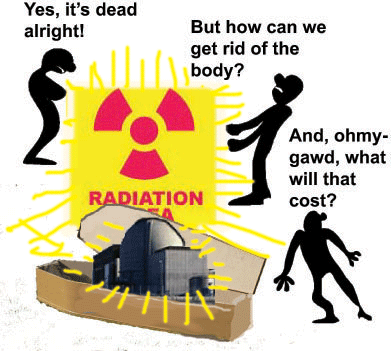 A long cooling-off period for San Onofre nuclear plant http://articles.latimes.com/2013/jun/08/local/la-me-san-onofre-nuclear-20130609 Tearing down San Onofre’s two nuclear reactors will be a technically complex job completed over decades. It’s likely Southern California Edison will first mothball the plant.|By Ralph Vartabedian, Los Angeles Times
Southern California Edison built San Onofre’s two nuclear reactors in about nine years, but tearing them down will be a technically complex, multibillion-dollar job completed over decades. It is likely that Edison first will mothball the plant, which under federal rules could keep its imposing imprint on the Orange-San Diego County coastline for another half-century.
When the plant does come down, it will be a massive job.
Tons of highly radioactive fuel now stored in pools will have to cool before the rods can be moved to concrete pads outdoors. Giant pipes that extend more than a mile into the ocean will have to come out. Pieces of the reactors will have to be cut with special saws and torches that reach 20 feet into the vessels’ cooling water. Continue reading
Nuclear waste rolling in to Texas dump site

 Texas Site Begins Taking Federal Nuclear Waste http://abcnews.go.com/US/wireStory/texas-site-begins-taking-federal-nuclear-waste-19343196#.UbJENOdwo6I By BETSY BLANEY Associated Press ANDREWS, Texas June 7, 2013 (AP) Republican mega-donor Harold Simmons’ remote hazardous waste dump in West Texas began accepting low-level radioactive material Thursday from a federal lab in New Mexico — the latest step in Simmons’ vision of site that accept all types of waste. Continue reading
USA’s nuclear waste policy is a mess
Feds Fail on Nuclear Waste, Mational Review Online, Jack Spencer, June 6,The federal government assumed responsibility for nuclear-waste management more than 30 years ago. The Nuclear Waste Policy Act of 1982 created an ostensibly simple system: Nuclear utilities would pay the U.S. Treasury a fee, collected from their customers, to cover the costs, and the government would see to it that the waste was taken care of. The act and its amendments over the years specified every detail of the disposal process. They stipulated how the waste would be disposed of, where, and who would be responsible.
Surprise! Despite the politicians’ and bureaucrats’ best efforts to centrally plan a long-term solution, the system doesn’t work. Although the government successfully collects money from the consumers of nuclear-generated electricity — nearly $30 billion since 1982 — it has collected zero nuclear waste. And as the waste — nearly 70,000 tons and counting — continues to build up at nuclear plants around the country, the government continues to dither. It literally has no plan to collect and dispose of the waste.
To address this, earlier this spring four senators released a draft of another “solution”: the Nuclear Waste Administration Act of 2013. Unfortunately, the NWAA does nothing to fix the failed system. Instead, it accepts the notion that the feds, not waste producers themselves, should be responsible for nuclear-waste management, and it continues the policy of having waste producers pay a flat fee for these services…….
Hanford’s radioactive waste tanks producing unknown radionuclides
 Official: Leaking tanks at U.S. nuclear site produce altogether new elements — “They’re just their own reactors… generating their own little world in there” http://enenews.com/official-leaking-tanks-nuclear-site-produce-altogether-new-elements-theyre-reactors-generating-little-world
Title: Will Hanford ever be cleaned up?
Source: The Associated Press
Author: SHANNON DININNY
Date: June 2, 2013
[…] The deadline for treating all of the waste at the Hanford nuclear reservation was once 2028. Now it’s 2047 […]
Technical problems, mismanagement and repeated delays have plagued the interminable cleanup of the 586-square-mile site, prolonging an effort that has cost taxpayers $36 billion to date and is estimated will cost $115 billion more. […]
One problem is knowing exactly what is in each tank. A database listing the contents of each is only a best guess, relying on historical information about the site and waste samples that are very limited, said Cheryl Whalen of the state Department of Ecology. […]
Whalen also said some elements that are in very small quantities, but could be very hazardous, aren’t even recorded. In addition, some of the radionuclides inside produce altogether new elements under the right conditions.
“The tanks create their own chemical environment. Between the heat and the radionuclides and the chemicals that are already in there, they’re just their own nuclear reactors,” Whalen said. “They’re generating their own little world in there.” […]
See also: TV: Leaking Strontium-90 is “boiling the material around it” at U.S. nuclear site — Eating through tank liners (VIDEO)
Biggest pile of plutonium in the world: Britain’s nightmare
 Britain has accumulated the biggest stockpile of civil
plutonium in the world, a target for terrorists and future bomb-makers. What was once thought to be a valued asset is now a costly liability. The Government faces a dilemma. Should it try to
turn the stuff into nuclear fuel at huge cost or write off the plutonium altogether? Previous attempts to deal with the problem went disastrously wrong, costing the taxpayer more than a billion pounds. Tonight File on 4 investigates what’s been called one of the most embarrassing failures in British industrial history. And now MP’s are worried taxpayers could be asked to pay up again. Continue reading
Britain’s quite horrible problem of stockpiled plutonium
UK’s plutonium stockpile dilemma http://www.bbc.co.uk/news/uk-21505271 By Rob Broom byFile on 4 June 2013, Britain has accumulated the biggest stockpile of civil plutonium in the world. What was once a valued asset is now viewed as a costly liability and a target for terrorists.
Previous attempts to deal with the stockpile have gone wrong and the government now faces a dilemma. Should it try to turn the stuff into nuclear fuel or write off the plutonium altogether?
Amid tight security at the Sellafield nuclear plant in Cumbria, is a store holding most of Britain’s stockpile of plutonium. Continue reading
USA’s Hanford nuclear radioactive wasteland
In all, since that very first leak in the 1950s, at least 69 tanks are known to have excreted more than 1 million gallons of waste – and possibly far more – into the soil.
Nuclear dump an environmental wasteland 3 New NZ, By Shannon Dininny, 3 June 13, A stainless steel tank the size of a basketball court lies buried in the sandy soil of southeastern Washington state, an aging remnant of US efforts to win World War II. The tank holds enough radioactive waste to fill an Olympic-sized swimming pool. And it is leaking.
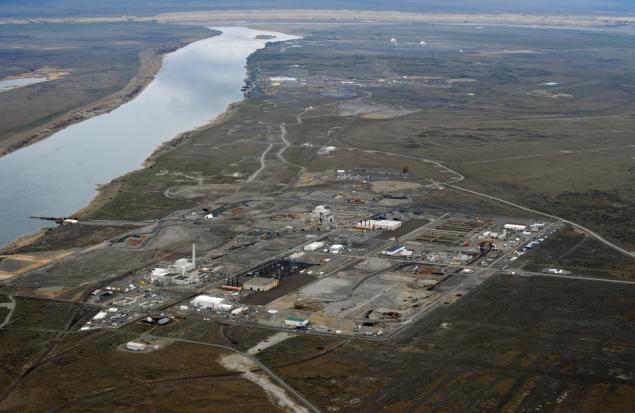
For 42 years, tank AY-102 has stored some of the deadliest material at one of the most environmentally contaminated places in the country: the Hanford Nuclear Reservation. Continue reading
Britain’s rather horrible plutonium and Mixed Oxide Fuel (MOX) dilemma
 “……….The Government wants to try and turn plutonium into a fuel which can be used
Transferring nuclear wastes – it’s like a game of “Pass The Parcel”
Australia-Euratom Nuclear Safeguards: Plutonium Retransfers …..The Agreement will enter into force when Australia notifies the Delegation to the European Commission that all domestic requirements necessary to give effect to the Agreement have been satisfied…. Department of Foreign Affairs and Trade – Australian Government 01/06/2013 | Press release  distributed by noodls http://www.noodls.com/view/2FBAFE516E5E78B9F15B62CBEB136F9A32994CC7
 Australia and the European Atomic Energy Community (Euratom) exchanged diplomatic notes in Canberra on 28 May 1998 as the first step towards bringing into force an Agreement under which Australia will – subject to certain conditions – broaden its consent for the return from the European
 Union to Japan of Australian obligated plutonium following the reprocessing of Japanese spent fuel in Europe. The European Union is an important provider of nuclear fuel cycle services for countries purchasing Australian uranium and Japan is a major market for Australian uranium exports. Continue reading
Radioactive wastes with a half life of 704 million years, for Nevada
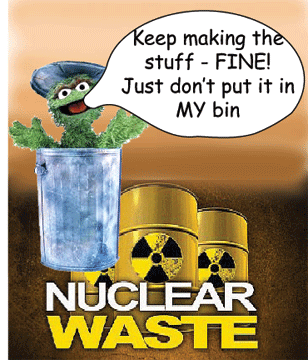 Nye county officials: Uranium waste might require underground concrete container By KEITH ROGERS LAS VEGAS REVIEW-JOURNAL, 30 May 13 Burying a ton of orphaned uranium waste from Tennessee at the Nevada National Security Site might require installing a concrete container to keep its radioactive ingredients out of the environment and its dirty bomb material from falling into the wrong hands, according to Nye County officials who were at a closed-door meeting this week.
And with a half life of 704 million years for its main component, uranium-235 — the atom-splitting material used in the first U.S. nuclear bomb — they wonder if the Department of Energy can maintain high-security vigilance and keep radioactive contaminants from seeping into the environment long after its containment has decayed.
“Having to rely on the government to maintain security is an issue. It’s very difficult to look that far into the future,” said Darrell Lacy, director of the Nye County Nuclear Waste Repository Project Office. Continue reading
Beaverlodge area – an example of uranium mining’s filthy legacy
Uranium mining legacy expensive, The Star Phoenix, By Ann Coxworth, May 30, 2013 “…….The Canadian Nuclear Safety Commission recently reviewed plans for continuing management of some of the contaminated sites in northern Saskatchewan – relics of uranium mining activities that took place during the 1960s and 1970s.
The cost of remediating surface waters to levels compatible with Saskatchewan surface water quality objectives is so overwhelming thatwe know it will never happen.
Because the companies that caused the pollution are no longer in existence, these costs now fall to the federal and provincialtaxpayers. The goal of industry and regulators now is simply to prevent the contamination from getting any worse.
One such contaminated region is the Beaverlodge area. Continue reading
Kentucky’s dangerous, toxic, nuclear brew and the failure of USEC Inc
 The Paducah plant cannot legally stay open, and it can’t safely be shut down—a lovely metaphor for the end of the Atomic Age and a perfect nightmare for the people of Kentucky.
Countdown to Nuclear Ruin at Paducah EcoWatch May 22, 2013 by Geoffrey Sea Disaster is about to strike in western Kentucky, a full-blown nuclear catastrophe involving hundreds of tons of enriched uranium tainted with plutonium, technetium, arsenic, beryllium and a toxic chemical brew. But this nuke calamity will be no fluke. It’s been foreseen, planned, even programmed, the result of an atomic extortion game played out between the U.S. Department of Energy (DOE) and the most failed American experiment in privatization, the company that has run the Paducah plant into the poisoned ground, USEC Inc.
As now scheduled, main power to the gargantuan gaseous diffusion uranium plant at Paducah, Kentucky, will be cut at midnight on May 31, just nine days from now—cut because USEC has terminated its power contract with TVA as of that time [“USEC Ceases Buying Power,” Paducah Sun, April 19, page 1] and because DOE can’t pick up the bill.
DOE is five months away from the start of 2014 spending authority, needed to fund clean power-down at Paducah. Meanwhile, USEC’s total market capitalization has declined to about $45 million, not enough to meet minimum listing requirements for the New York Stock Exchange, pay off the company’s staggering debts or retain its operating licenses under financial capacity requirements of the Nuclear Regulatory Commission. Continue reading
USA State Attorneys General want more options in nuclear waste management

eventually, someone in America would think of the idea of shutting down nuclear plants, at least till there’s a way to permanently solve the wastes problem
Flaws in the NRC’s review to date, the attorneys general said, include that it has not given adequate consideration to two alternatives:
— A rule saying that after five years cooling in specially constructed pools, the waste would have to be moved to hardened concrete and steel casks on plant grounds. That would leave much less radioactive material in spent fuel pools that have been described as more vulnerable to earthquakes or terrorist attacks.
 — “The alternative of not allowing further production of spent fuel until the NRC determines that there is a safe and environmentally acceptable permanent waste repository to receive the additional spent fuel.” Not allowing further production of spent fuel would mean shutting down the entire U.S. nuclear industry.
Federal Nuclear Waste Rules Need To Be Improved, Attorneys General Petition NRC http://www.huffingtonpost.com/2013/05/23/federal-nuclear-waste-rules_n_3328495.html?utm_hp_ref=green AP By By DAVE GRAM : 05/23/2013 MONTPELIER, Vt. — Attorneys general in Vermont, New York, Massachusetts and Connecticut announced Thursday they are petitioning the Nuclear Regulatory Commission for a more thorough environmental review of storage of highly radioactive nuclear waste at plant sites. Continue reading
Plan for nuclear waste near Lake Huron concerning Michigan State Senators
 Michigan state Senate says Ontario nuclear waste site ‘raises serious concerns’ The Star, 24 May 13The proposed site, a Senate resolution notes, is less than 1.6 kilometres from the Lake Huron shoreline and “upstream from the main drinking water intakes for southeast Michigan.” State senators in Michigan say that a planned nuclear waste disposal site near Kincardine, Ont., “raises serious concerns.”
The concern is expressed in a resolution passed Tuesday by the Senate.
The senate also proposes that the public comment period on the proposal, which wraps up Friday, should be extended.
Sen. Hoon-Yung Hopgood, who introduced the resolution, said that it will be submitted to the formal comment process on the waste site.
Ontario Power Generation (OPG) proposes to construct the facility at the Bruce nuclear station beside Lake Huron….. The proposed site’s proximity to the lake caught the attention of the Michigan senators.
The resolution, which carried without dissent on a voice vote, notes that Michigan rules prohibit low-level nuclear waste from being stored within 10 miles (16 kilometres) of the lakes and rivers in the Great Lakes system bordering Michigan.
“We encourage Canada to consider similar siting criteria,” the resolution says.
The proposed site, the resolution notes, is less than a mile (1.6 kilometres) from the Lake Huron shoreline and “upstream from the main drinking water intakes for southeast Michigan.”….. http://www.thestar.com/business/economy/2013/05/23/michigan_senate_says_ontario_nuclear_waste_site_raises_serious_concerns.html
1 This Month




9 September – online public forum THREE MILE ISLAND:
7-8:30 PM ET,
Legacy, resistance to reopening – https://us02web.zoom.us/webinar/register/WN_-LGJU4j6TD2Hgf0rpgAr1A#/registration
The nuclear industry and the U.S. Nuclear Regulatory Commission are threatening to restart Pennsylvania’s permanently closed and decommissioning Three Mile Island Unit 1 nuclear power station. Three expert speakers will present the resistance to this dangerous misadventure in a webinar hosted by the Clamshell Alliance, Beyond Nuclear and Massachusetts Peace Action.

No Nuclear in Cwm Llynfi! Stop the nuclear power station near Maesteg.
To see nuclear-related stories in greater depth and intensity – go to https://nuclearinformation.wordpress.com
-
Archives
- September 2026 (116)
- August 2026 (330)
- July 2026 (355)
- June 2026 (287)
- May 2026 (306)
- April 2026 (356)
- March 2026 (251)
- February 2026 (267)
- January 2026 (308)
- December 2025 (358)
- November 2025 (359)
- October 2025 (375)
-
Categories
- 1
- 1 NUCLEAR ISSUES
- business and costs
- climate change
- culture and arts
- ENERGY
- environment
- health
- history
- indigenous issues
- Legal
- marketing of nuclear
- media
- opposition to nuclear
- PERSONAL STORIES
- politics
- politics international
- Religion and ethics
- safety
- secrets,lies and civil liberties
- spinbuster
- technology
- Uranium
- wastes
- weapons and war
- Women
- 2 WORLD
- ACTION
- AFRICA
- Atrocities
- AUSTRALIA
- Christina's notes
- Christina's themes
- culture and arts
- Events
- Fuk 2022
- Fuk 2023
- Fukushima 2017
- Fukushima 2018
- fukushima 2019
- Fukushima 2020
- Fukushima 2021
- general
- global warming
- Humour (God we need it)
- Nuclear
- RARE EARTHS
- Reference
- resources – print
- Resources -audiovicual
- Weekly Newsletter
- World
- World Nuclear
- YouTube
-
RSS
Entries RSS
Comments RSS
 nuclear-news
