12,500th Shipment Of Nuclear Waste to USA’s Waste Isolation Pilot Plant
 WIPP Facility Receives 12,500 Shipment Of Nuclear Waste https://www.krwg.org/post/wipp-facility-receives-12500-shipment-nuclear-waste By KRWG NEWS AND PARTNERS CARLSBAD, N.M. (AP) 3 July 19, — The federal government’s underground nuclear waste repository in New Mexico has received its 12,500th shipment since operations began two decades ago.
The U.S. Energy Department made the announcement Tuesday, saying the shipment arrived at the Waste Isolation Pilot Plant just before midnight on June 27.
The shipment originated at Idaho National Laboratory.
The repository is licensed to take Cold War-era waste generated by decades of bomb-making and defense-related nuclear research. The waste includes gloves, clothing, tools and other materials contaminated with radioactive elements.
In all, more than 178,500 containers have been trucked over 14.9 million miles to the repository from sites around the country since 1999. The waste is entombed in disposal rooms carved out of an ancient salt formation about half a mile down.
Push to bribe Nevada residents to accept Yucca Mt as nuclear waste dump
An opinion piece in a national newspaper suggested that the best way to get Nevadans to stand aside and let high-level radioactive waste roll into Yucca Mountain would be to pay rent to each of us once a year for 10 years.
What a terrible deal: We would give up all ability to fight any injustice or infringement of the rules while waste was transported through our state. We’d get just 10 years of rent payments for a facility that is supposed to house waste for a million years.
More preposterous yet, the suggested amount is $500 per year per person, which looks more like a small tax refund than a hedge against a facility that could easily lead to a calamity. If a nuclear waste train passing behind the resort corridor in Las Vegas derailed — as a train in Northern Nevada did recently — the damage to our economy could be very severe and long lasting.
But to even suggest that we would consider a payoff in exchange for accepting the nation’s nuclear waste is offensive. The suggestion assumes that we are stupid.
That’s wrong. We are not only knowledgeable, but also experienced on this issue. Nevada learned a painful lesson during and after atomic weapons testing. It took 50 years of begging and legal action for some of the victims’ families to finally be paid a set sum. We are not going to walk into that situation again, regardless of the amount of the bribe.
Another large fallacy in the thinking of those who would plot to buy Nevadans is the belief that Yucca Mountain is a repository, ready and waiting for the nation’s waste.
Yes, billions were spent there but all that is there is a tunnel where some experiments were done. There are no waste emplacement tunnels or receiving facilities. In addition to the money spent over a 20-year period, the Department of Energy estimates that over $100 billion of new money would be needed.
In addition to the huge amounts of money that Congress would have to appropriate year after year, the time required to get to an operational Yucca Mountain repository is significant. …..https://lasvegassun.com/news/2019/jul/01/proponents-of-nuclear-waste-dump-have-a-new-strate/
Washington State officials not happy about re-classification of nuclear waste
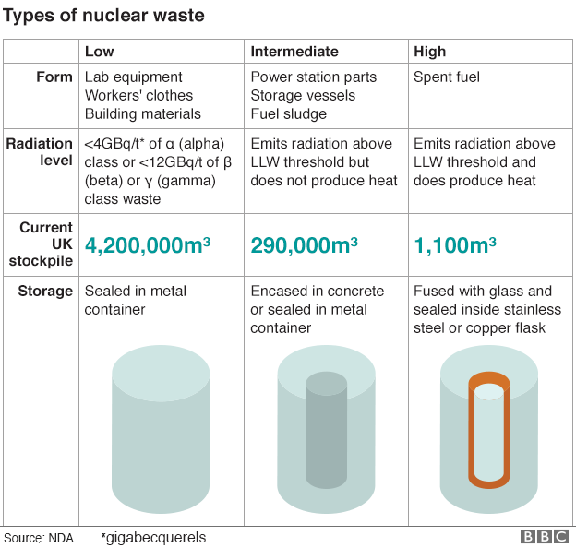
State and top fed official at odds over Hanford high level radioactive waste, Tri City Herald, ANNETTE CARY,
A top Department of Energy official is fighting what he says are misconceptions about a new policy on which Hanford and other nuclear weapons complex waste must be treated and disposed of to the stringent standards required for high level radioactive waste.
The DOE undersecretary for science, Paul Dabbar, said as of now there is no change proposed for waste handled as high level at Hanford.
“We’re proposing nothing here,” he said. “We don’t have any plans to propose anything in Washington state.”
But key state of Washington officials are not buying his explanation……..
When the new DOE policy on classifying high level waste was announced earlier this month, Washington state Gov. Jay Inslee and Attorney General Bob Ferguson said in a joint statement that all options would be considered to stop “this reckless and dangerous action.”
STATE: HANFORD WASTE COULD BE RECLASSIFIED
Bellon said after the meeting with Dabbar that he claimed the new interpretation for high level waste currently only applies to certain waste in South Carolina.
But there was no exclusion for Hanford in the policy change as announced by DOE in the Federal Register, she said. “So as it stands, the Federal Register notice could be used to make substantial and potentially harmful changes to the ongoing cleanup at Hanford,” she said.
She and other state leaders “are concerned that the Department of Energy’s high level waste reinterpretation will be a mechanism for it to do less than what is legally required,” she said.
Congress has passed laws that define high level waste that results from processing irradiated nuclear fuel if the waste is “highly radioactive.”
At Hanford, chemicals were used to separate plutonium from irradiated fuel at huge reprocessing plants for the nation’s nuclear weapons program from World War II through the Cold War.
The fuel reprocessing left 56 million gallons of radioactive and hazardous chemical waste stored in underground tanks until it can be treated for disposal, which is now handled as high level waste. In addition, an estimated 1 million gallons of the processing waste leaked or spilled into the ground in central Hanford.
DOE’s change of policy would allow waste from fuel reprocessing to be classified as low level waste if it can meet radioactive concentration limits set for low level waste and could be safely disposed of at a site other than a deep geological repository, as required for high level waste……..
DOE now is moving forward with an initial look at whether up to 10,000 gallons of recycled wastewater at Savannah River could be classified as low level radioactive waste rather than high level radioactive waste. As high level waste it must be turned into a stable glass form and stored until the nation has a deep geological repository, such as proposed at Yucca Mountain, Nev.
If the waste is classified as low level, it could be turned into a concrete-like grout form and disposed of off site, possibly at the Waste Control Specialists site for low level waste in Texas.
Dabbar said risk would be reduced by disposing of the waste sooner………..
FUTURE OF HANFORD ADVISORY BOARD
Protecting the Columbia River from the radioactive sludge has been one of the priorities of the Hanford Advisory Board, a board with representatives of Hanford workers, local residents, local governments, environmental groups and others that provide advice to DOE and its regulators on environmental cleanup.
It is among the federal advisory boards that DOE will be evaluating after a June 14 order by the president that all federal agencies evaluate the need for each of its federal advisory committees and disband at least a third of them to reduce costs and improve government efficiency.
Dabbar has had no DOE conversations on which of the many DOE boards may be cut, he told the Herald.
The Hanford Advisory Board would be considered in conjunction with the umbrella board for different DOE cleanup sites, the Environmental Management Site Specific Advisory Board. https://www.tri-cityherald.com/news/local/hanford/article231846798.html
UK’s Department for Business, Energy and Industrial Strategy reports solely on England’s responses re nuclear waste issues
BEIS 27th June 2019 The final policy is published in Implementing geological disposal: working
with communities, which updates and replaces the 2014 white paper,
Implementing Geological Disposal in England.
This consultation was on
behalf of the UK government and the Department of Agriculture, Environment
and Rural Affairs (DAERA) in Northern Ireland. The Department of
Agriculture, Environment and Rural Affairs (DAERA) has published separately
a summary of responses from respondents in Northern Ireland.
Future policy decisions in relation to geological disposal in Northern Ireland would be a
matter for the Northern Ireland Executive, which is currently suspended.
Accordingly, the summary of the responses and consequential final policy
decisions referred to in this document, apply solely to England. The Welsh
Government consulted in parallel with the UK government on policy proposals
for working with communities as part of a consent-based approach to finding
a location for a GDF for higher activity radioactive waste. The Welsh
Government will publish its response to the consultation shortly.
UK’s Department for Business, Energy and Industrial Strategy reports on progress in Radioactive Waste Management
BEIS 27th June 2019 Department for Business, Energy & Industrial Strategy, Eighth annual report explaining the background to the Geological Disposal Programme and covering progress between April 2017 and April 2019. In its
November 2010 response to the House of Lords Science and Technology Select
Committee’s report, Radioactive Waste Management: a Further Update (March
2010), the UK government committed to producing an annual report to
Parliament, setting out progress in relation to the management of higher
activity radioactive waste.
The eighth report sets out progress made in
relation to the management of higher activity radioactive waste for the
period April 2017 to April 2019. Following the publication of the updated
policy framework for higher activity radioactive waste in December 2018,
and the launch of the process to identify a location to develop a
geological disposal facility (GDF), this will be the last report produced
under our 2010 commitment.
U.S. senators agonise over nuclear waste debacle, (but with no thought of stopping producing radioactive trash)
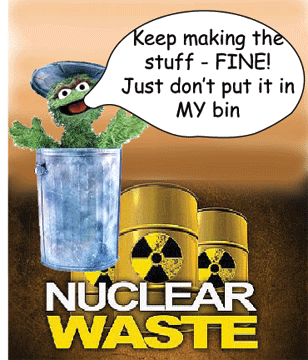 SENATORS TRY—AGAIN—TO SOLVE THE NUCLEAR WASTE DEBACLE, WIRED, RIC NIILER, 28 June 19
The place that the government picked to store all the nuclear waste back in 1987, a repository in Yucca Mountain, Nevada, was canceled in 2009 by the Obama administration. Since then, the project has been in a bureaucratic limbo. The Trump administration moved to take another look at Yucca Mountain and restart the licensing process, but Congress removed funds to do that from last year’s budget.
“It is long, long past time to figure this out, and the sooner we find a path the better,” said Senator Lisa Murkowski (R–Alaska) as she opened a hearing on the issue Thursday in the Senate’s Energy and Natural Resources Committee. Murkowski is sponsoring a bill that would both create a new agency in charge of handling nuclear waste and develop a way for local consent to become part of the decision-making process, although insulated from pressure by members of Congress. That means that the local residents living near a selected site—either temporary or permanent—would get some say in the matter, although perhaps not a veto.
Murkowski’s bill would set up a new agency outside of Congress to pick a place for a new temporary nuclear waste site to take the spent fuel right away (well, within 10 years). The big holdup is “consent.” While some local communities or native tribes might want the money or jobs that go along with hosting a nuclear waste site, state politicians have blocked such attempts in Nevada, Utah, and Tennessee.
Strong opinions at forum about producing nuclear weapon cores at the Savannah River Site
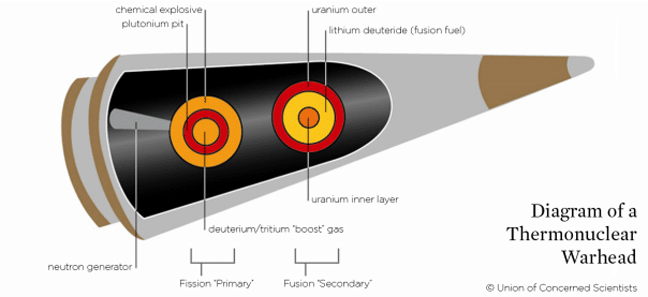
Opinions on nuclear project at SC plant clash at public forum, Post and Courier, By Colin Demarest cdemarest@aikenstandard.com, Jun 28, 2019 NORTH AUGUSTA — Vocal support for producing nuclear weapon cores at the Savannah River Site sharply contrasted with questions, criticism and pushback Thursday night at a government-led public forum.
The U.S. Department of Energy’s National Nuclear Security Administration wants to produce 50 of the weapon components each year at the sprawling complex near Aiken. The cores, known as plutonium pits, use one of the world’s most dangerous substances to trigger a series of explosions that unleash the deadly potential of nuclear weapons.
Supporters tout the economic benefits of the project, which would create about 1,000 jobs and provide a new anchor for SRS after the government abandoned its long-delayed efforts to finish a facility designed to turn weapons-grade plutonium into fuel for nuclear power plants.
Critics, however, remain skeptical of the proposed mission and worry about the potential risks to the environment and workers’ health.
A slew of officials, including Aiken Mayor Rick Osbon, Aiken County Council Chairman Gary Bunker and Jim Marra of Citizens for Nuclear Technology Awareness, voiced support for the effort, offering their takes on why SRS is the correct fit for the looming weapons-oriented mission.
Encouragement also came from several chambers of commerce, University of South Carolina Aiken, and state and federal lawmakers.
……… Nuclear watchers and other groups, however, took aim at the effort’s multibillion-dollar projected cost, as well as potential dangers from exposing the environment and workers to plutonium.
“What is the environmental impact of a nuclear weapon?” Glenn Carroll, with Nuclear Watch South, said Thursday. “The absolute and wholesale destruction of the environment. Every human, every animal. Every plant.”
The anticipated costs of pit production have raised eyebrows in Washington, D.C. A congressional budget report published this year estimated pit production would cost $9 billion over the next decade.
Among other things, SRS Watch Director Tom Clements said the pit production process was off to a “rocky start.”
“The project is not funded by Congress, it’s not authorized by Congress,” he said.
Clements, alongside Tri-Valley CAREs and Nuclear Watch New Mexico, hosted a pit production forum earlier this month at the Aiken Municipal Building. He and others urged opponents to push back against the plan.
The public “can be effective against bad Department of Energy ideas, like the pit production one,” Clements said at the time.
One Aiken resident on Thursday described the pit production effort at SRS as hurried, and a woman representing The Human Family organization expressed concerns about earthquakes and becoming a target of terrorism.
………. The NNSA terminated the MOX project — which was over-budget and congressionally controversial — on Oct. 10, 2018. The government had shoveled almost $8 billion into the effort by that point, but it remained years and billions of dollars away from completion.
Clements on Thursday told the audience the Energy Department and others are attempting to “sweep the MOX debacle under the rug.”
The NNSA hosted the meeting to collect public comments on pit production and a related environmental assessment. https://www.postandcourier.com/news/opinions-on-nuclear-project-at-sc-plant-clash-at-public/article_3abec846-99aa-11e9-bf78-e395a709cf68.html
Proposed nuclear storage consent bill excludes Yucca Mountain
The Nuclear Waste Administration Act would require a state’s governor, affected tribes and local governments to OK any proposed site. But it would not apply to “any proceeding or any application for any license or permit pending,” which would exempt Yucca Mountain, said Robert Halstead, executive director of the Nevada Agency for Nuclear Projects.
“Specific provisions would exclude Nevada from the newly created consent-based siting process that would apply to all other potential repository host states,” Halstead said in a letter to the Senate Committee on Energy and Natural Resources, which held a hearing on the bill today…… https://lasvegassun.com/news/2019/jun/27/proposed-nuclear-storage-consent-bill-excludes-nev/
Finland’s nuclear waste burial site to store wastes from two nuclear power plants

Nuclear waste firm plans big investment at Olkiluoto final disposal site https://yle.fi/uutiset/osasto/news/nuclear_waste_firm_plans_big_investment_at_olkiluoto_final_disposal_site/10847558 26 June 19
According to Posiva, the decision will lead to the world’s first safe final disposal system for nuclear waste. Nuclear waste firm Posiva is to spend some 500 million euros on a production facility for spent fuel handling at its underground Onkalo site, adjacent to the Olkiluoto nuclear power plant in Eurajoki, southwest Finland.
The company plans to build a final disposal facility and an encapsulation plant, which it says will allow spent nuclear fuel rods to be stored safely for millennia.
Posiva is owned by the utilities TVO and Fortum, which plan to use Onkalo to store waste from Olkiluoto and Loviisa nuclear power plants.
Olkiluoto has two reactors, with a long-delayed third one due to begin operations sometime next year, more than a decade behind schedule. Plans for a fourth reactor have been shelved. Loviisa has two reactors built in the late 1970s. Posiva has said there is no room at Onkalo for waste from the proposed Fennovoima plant in northern Finland, which has yet to receive a construction permit.
“World’s first”
Sections of the Onkalo storage cave that have already been dug out will be upgraded with systems needed for begin the final disposal procedures.
According to Posiva CEO Janne Mokka, the investment decision paves the way for the world’s first safe final disposal system for nuclear waste.
“In Finland, full life-cycle management is a precondition for the production of climate-friendly nuclear electricity. Posiva will execute the final disposal of the spent fuel of its owners’ Olkiluoto and Loviisa nuclear power plants responsibly,” he said in a statement on Tuesday.
The firm estimates that the half-billion-euro construction project will generate some 2,500 person years of employment.
“We expect to award contracts for the most significant works in the near future,” Mokk
U.S. Congressional panel to discuss options on what to do with nuclear wastes
|
US Senate panel takes up thorny issue of nuclear waste https://www.kansas.com/news/business/article232008162.htmlALBUQUERQUE, N.M. 26June 19
A congressional panel is scheduled to hear from experts as it weighs legislation aimed at tackling the decades-old problem of how to handle spent nuclear fuel and other high-level waste that has been piling up around the United States. The Senate Energy and Natural Resources Committee on Thursday will be discussing temporary and permanent options for dealing with the waste. Scientists, environmentalists and officials with the Nuclear Energy Institute are expected to testify. Development of a proposed long-term storage site at Nevada’s Yucca Mountain was halted during the Obama administration, although the Trump administration has moved to restart the licensing process despite stiff resistance in Nevada. Private companies also have applied for licenses to open temporary storage facilities in New Mexico and West Texas. Those proposals also face political opposition. |
|
Deep Isolation of nuclear wastes could be an effective part of permanently shutting down this toxic industry
 I don’t usually post James Conca’s work, as he is a propaganda voice for the nuclear industry. Here he’s praising a nuclear waste disposal technology, because Conca sees it as being able to ensure that the radioactive trash might later be retrieved, and, miraculously, function as fuel for nuclear fast breeder reactor.
However, this technology has advantages in the cause of PERMANENT disposal of used nuclear fuel rods – disposal that could be done fairly close to the point of origin – each nuclear power station.
This has promise as a viable technique, as part of PERMANENT SHUTDOWN OF THE NUCLEAR INDUSTRY.
 Deep Borehole Nuclear Waste Disposal Just Got A Whole Lot More Likely, Forbes, James Conca, 24 June 19 Deep Isolation is a recent start-up company from Berkeley that seeks to dispose of nuclear waste safely at a much lower cost than existing strategies.
The Deep Isolation strategy begins with a one-mile vertical access drillhole that curves into a two-mile horizontal direction where the waste is stored. The horizontal repository portion has a slight upward tilt that provides additional isolation, and isolating any mechanisms that could move radioactive constituents upward. They would have to move down first, then up, something that cannot occur by natural processes.
DEEP ISOLATION
The borehole technology was developed to frack natural gas and oil wells, but Deep Isolation realized it could dispose of nuclear waste just as well.
Today the company announced it was partnering with nuclear giant Bechtel National, Inc. to bring Deep Isolation’s patented technology to fruition……. The idea of deep borehole disposal for nuclear waste is not new, but Deep Isolation is the first to consider horizontal wells and is the first to actually demonstrate the concept in the field (see figure), showing that the technology is not just theoretical. The field demonstration occurred on January 16th when it placed and retrieved a waste canister from thousands of feet underground.
The technology takes advantage of recently developed fracking technologiesto place nuclear waste in a series of two-mile-long tunnels, a mile below the Earth’s surface, where they’ll be surrounded by a very tight rock known as shale. This type of shale is so tight that it takes fracking technology to get any oil or gas out of it at all. ……..
Under this new agreement, Bechtel will provide support such as project management, financial/business and engineering capability for Deep Isolation’s sales in both domestic and international markets, including those with the U.S. Department of Energy. Deep Isolation will provide options to support Bechtel’s cleanup work at federal government sites around the country. Deep Isolation could also be a key player in Bechtel’s decommissioning contracts at commercial nuclear power plants in the U.S. and worldwide.
James Taylor, general manager of Bechtel’s Environmental business line, said, “Deep geologic disposal is the scientific consensus for permanently removing and disposing used nuclear fuel and high-level waste from their current locations around the country. We have long-term expertise in design, engineering and licensing, as well as the boots-on-the-ground experience with the everyday challenges of cleaning up radioactive waste. “….. https://www.forbes.com/sites/jamesconca/2019/06/24/deep-borehole-nuclear-waste-disposal-just-got-a-whole-lot-more-likely/#489747b767c8
The worrying secrecy of Russia about the true state of its nuclear wastes

Environmentalists concerned about where Andreyeva Bay spent nuclear fuel is being sent Bellona, June 24, 2019 by Anna Kireeva, translated by Charles Digges
Representatives from Rosatom, Russia’s nuclear corporation, have sought to sooth environmentalist over concerns that removing tons of spent nuclear fuel from an old submarine base near Murmansk won’t cause further contamination risks at Mayak, the country’s notorious fuel reprocessor, located 3,000 kilometers to the south.
The submarine base is Andreyeva Bay, situated 60 kilometers east of Russia’s Norwegian border, and its cleanup is one of the most important joint environmental efforts that Oslo and Moscow have taken on in decades. Bellona has been at the forefront of advocating for the removal of the base’s 22,000 spent nuclear submarine fuel rods, which threaten to contaminate the Barents Sea.
After years of negotiations among Bellona, and the governments of Norway and Russia, removal of the fuel at Andreyeva Bay finally began in June of 2017. From there it is taken to Mayak, near the Ural Mountain city of Chelyabinsk, for treatment and reprocessing.
But Mayak has a checkered past. Now one of he world’s most voluminous nuclear fuel reprocessing facilities, the Mayak Production Association is also responsible for decades of nuclear contamination throughout the Ural region.
The Russian government also has a history of covering up that contamination, and it was these concerns that some environmentalists brought to a press conference in Tromsø, Norway when a joint Russian-Norwegian Commission on nuclear submarine disposal wrapped up on Friday.
Vitaly Servetnik, co-chairman of the Russian Social-Ecological Union, was among the environmentalists who attended the press conference, which was a first time event for the Commission, which has traditionally closed its doors to the press and the public.
“Sending spent nuclear fuel and radioactive waste from the Murmansk region to the Chelyabinsk Region, in our opinion, is not only moving the problem from one region to another through the whole country, but also aggravating existing problems in the areas around the Mayak plant,” Servetnik said, addressing the commission. “In addition, there is no information available to us about how much and what kind of waste is being brought there.”
It’s necessary to point out that Russia doesn’t view spent nuclear fuel as waste. The Russian nuclear industry — like the ones Britain and France but unlike the one in the United States — adopts a closed nuclear fuel cycle. This means that it treats spent nuclear fuel – including the submarine fuel found at Andreyeva Bay, as a resource from which more fuel can be synthesized.
At present, and for the foreseeable future, Mayak is the only facility in Russia capable of reprocessing spent nuclear fuel. Simply not taking the spent nuclear fuel from Andreyeva Bay to Mayak, as Servetnik suggests, is therefore a technological impossibility for Russia’s nuclear industry.
Servetnik also expressed concern about the transparency about how Mayak is run, and how difficult it is to get information about its procedures if an environmental group is not a member of Rosatom’s public council.
“The real situation at Mayak is much worse than what Rosatom representatives are telling us about it,” he said at the conference.
Rosatom representatives who were present fundamentally disagreed with Servetnik’s statement……….
After the conclusion of the conference, Servetnik and other environmentalists who attended weren’t reassured by Rosatom’s insistence that they need not worry about the fuel transfers from Andreyeva Bay to Mayak.
“The state corporation views the movement of radioactive waste and spent nuclear fuel as part of an integrated process,” he said. “If that’s the case, then all of the attention the Russian and international community devoted to the project of cleaning up Andreyeva Bay should now be devoted to Chelyabinsk Region [where Mayak is located].”
Andrei Zolotkov, who heads Bellona’s Murmansk office, agrees that much of Mayak’s environmental history leaves much to be desired, that that its transparency about its activities past and present is required.
High costs of Britain’s nuclear submarine graveyards
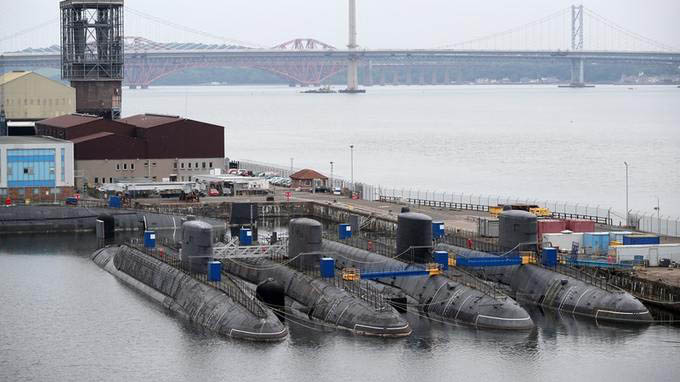 Plymouth Live 22nd June 2019 , Devonport is home to 13 retired Royal Navy submarines – some of which
were removed from service almost 30 years ago. Now the MoD wants to get
permission to store four more unwanted nuclear subs in the city. Dubbed
Plymouth’s nuclear graveyard, this week Plymouth MP Luke Pollard warned the
taxpayer is spending £30 million a year to maintain sites such as these,
including the one in Devonport, and another one in Rosyth, Scotland.
Political opposition grows to Holtec’s nuclear waste storage plan for New Mexico
Political opposition grows to nuclear waste storage plan, SF Chronicle, June 21, 2019 ALBUQUERQUE, N.M. (AP) — Plans by a New Jersey-based company to temporarily store spent nuclear fuel from commercial reactors in the New Mexico desert is running into more political trouble, as some of the state’s top elected officials are raising red flags.
Congresswoman Deb Haaland became the latest member of the delegation to weigh in Friday, sending a letter to the U.S. Energy Department and the Nuclear Regulatory Commission.
The first-term Democratic lawmaker suggested existing railways weren’t built to withstand the weight of the special casks that would be used to transport the high-level waste from sites around the country to southeastern New Mexico.
Haaland said there are no plans for new construction or renovations as part of the project proposed by Holtec International and that cities and states shouldn’t bear the cost of the infrastructure improvements needed to ensure safe transportation.
“I believe such a facility poses too great a risk to the health and safety of New Mexicans, our economy and our environment,” Haaland wrote.
Holtec is seeking a 40-year license from federal regulators to build what it has described as a state-of-the-art complex near Carlsbad……….
n her letter, Haaland pointed to past studies done by the Energy Department when it was considering Yucca Mountain. She said modeling predicted rail accidents at a rate of 1 in 10,000 shipments.
She also said the agency has found that a severe accident involving one cask of radioactive waste has the potential to contaminate dozens of square miles and result in hundreds of millions of dollars in cleanup costs.
State and industry officials also have concerns about potential effects on oil and gas development, as Holtec’s proposed site is located within the Permian Basin — one of the world’s most prolific energy production regions. https://www.sfchronicle.com/news/article/Political-opposition-grows-to-nuclear-waste-14028381.php
1 This Month

of the week – Shut Down Drone Warfare!


Tell the Ukrainian Government to Drop Prosecution of Peace Activist Yurii Sheliazhenko

Petition to revoke the licensing of the Near Surface Nuclear Disposal Facility (NSDF) at Chalk River. https://www.ourcommons.ca/petitions/en/Petition/Details?Petition=e-7247
To see nuclear-related stories in greater depth and intensity – go to https://nuclearinformation.wordpress.com
-
Archives
- April 2026 (114)
- March 2026 (251)
- February 2026 (268)
- January 2026 (308)
- December 2025 (358)
- November 2025 (359)
- October 2025 (376)
- September 2025 (257)
- August 2025 (319)
- July 2025 (230)
- June 2025 (348)
- May 2025 (261)
-
Categories
- 1
- 1 NUCLEAR ISSUES
- business and costs
- climate change
- culture and arts
- ENERGY
- environment
- health
- history
- indigenous issues
- Legal
- marketing of nuclear
- media
- opposition to nuclear
- PERSONAL STORIES
- politics
- politics international
- Religion and ethics
- safety
- secrets,lies and civil liberties
- spinbuster
- technology
- Uranium
- wastes
- weapons and war
- Women
- 2 WORLD
- ACTION
- AFRICA
- Atrocities
- AUSTRALIA
- Christina's notes
- Christina's themes
- culture and arts
- Events
- Fuk 2022
- Fuk 2023
- Fukushima 2017
- Fukushima 2018
- fukushima 2019
- Fukushima 2020
- Fukushima 2021
- general
- global warming
- Humour (God we need it)
- Nuclear
- RARE EARTHS
- Reference
- resources – print
- Resources -audiovicual
- Weekly Newsletter
- World
- World Nuclear
- YouTube
-
RSS
Entries RSS
Comments RSS
 nuclear-news