Removal of Fort Belvoir’s SM-1 nuclear reactor to proceed after Army finalizes environmental assessment
That is according to USACE Project Manager Brenda Barber, who provided an update by email to SM-1 stakeholders on May 18, 2020.
Following a public comment period, Barber announced that the SM-1 project’s Environmental Assessment (EA) and Finding of No Significant Impact (FNSI) have been finalized and published online:……..
“The team is now focused on completing the Decommissioning Planning in preparation for awarding a decommissioning contract,” Barber stated.
“The project team still anticipates awarding a decommissioning contract by September 2020 with mobilization work on site beginning in early 2021.”……….
Barber noted that the coronavirus (COVID-19) pandemic has not had any immediate significant impact on the project schedule, since most of the work at this administrative phase is being done virtually. The site remains secure and environmental and radiological monitoring and inspections continue.
For information about the project, visit: nab.usace.army.mil/Missions/Environmental/SM-1
Questions and comments can continue to be sent to the project’s corporate communications team by emailing Brenda.M.Barber@usace.army.mil or calling (410) 375-4565 https://forthuntherald.com/removal-of-fort-belvoirs-sm-1-nuclear-reactor-to-proceed-after-finalizing-environmental-assessment/
Indian Point nuclear power station – Unit 2 permanently closed
|
Indian Point 2 permanently closes, Nuclear Engineering International 4 May 2020 Unit 2 at the US Indian Point nuclear power plant closed on 30 April as part of a deal reached in January 2017 between Entergy, the state of New York and the environmental group Riverkeeper. The plant’s two pressurised water reactor (PWRs) generated a quarter of the electricity used in New York City and Westchester County in 2017.Indian Point 2, with a net generating capacity of 998MWe, began commercial operation in 1974. Indian Point 3, a 1030MWe unit began operating in 1976 and is due to retire in April 2021. New natural gas power plants and efficiency measures are expected to up the slack.
Entergy has agreed to sell the plant to Holtec International, a New Jersey-based decommissioning firm. But the licence transfer, which is pending Nuclear Regulatory Commission approval, will take place only after the plant closes in 2021…… Entergy said in a statement that it is committed to continued operation of the nuclear fleet in Louisiana, Arkansas and Mississippi. It shut down Pilgrim in Massachusetts last year and plans to close the Palisades nuclear plant in Michigan in 2022. Both these facilities will be decommissioned by Holtec, through its affiliate Comprehensive Decommissioning International…..https://www.neimagazine.com/news/newsindian-point-2-permanently-closes-7904262
|
|
Nuclear reactor pressure vessel to be shipped by rail to Utah, from Sanonofre
The reactor pressure vessel for Unit 1, the first of three reactors on site, will get a permanent home in Utah, By TERI SFORZA | tsforza@scng.com | Orange County Register, May 1, 2020 The original plan, nearly 20 years ago, was to plop the retired nuclear reactor pressure vessel on a barge and ship it off — via the Panama Canal or all the way around the tip of South America — to a final resting place in South Carolina.But there were strong objections to transporting the huge metal shell that way. After all, atoms had actually been split inside it. And so the giant, but empty, heart of San Onofre Nuclear Generating Station’s Unit 1 was packed away in a huge steel cylinder in 2002. The cylinder was filled with grout for shielding against radiation. It was sealed, and has been stored at the plant ever since.
Now — as serious tear-down work gets under way on Units 2 and 3 — the heart of long-ago-dismantled Unit 1 is finally slated to leave San Onofre forever.
Operator Southern California Edison is preparing to ship Unit 1’s reactor pressure vessel to a licensed disposal facility in Clive, Utah, which is owned by Energy Solutions, one of San Onofre’s decommissioning contractors. It will have company: San Onofre’s retired steam generators were shipped to Clive in 2012.
Though officials can’t get too specific on precisely when or how the vessel will go — for safety reasons — they’ve been preparing a rail spur to haul heavy components off site.
The reactor vessel is considered low-level waste, the least hazardous of the Nuclear Regulatory Commission’s radioactive waste classifications. Contaminated cleaning supplies, used disposable protective clothing and reactor parts are other examples of low-level waste.
How can the crucible for nuclear reactions be low-level waste? The most radioactive parts within it were removed, cut up, and stored with higher-level waste on site, said John Dobken, a spokesman for Edison. What’s left is Cobalt-60, which has a half-life of about five years.
Unit 1 was retired in 1992, and the reactor vessel has been packaged for 18 years, so it has gone through about five half-lives, reducing its radioactivity, Dobken said.The contact dose rate for the vessel package is less than 0.1 millirem an hour, which is 500 times below the Department of Transportation limit for these types of shipments, Edison said in a primer on the move. For comparison, a chest X-ray provides a dose of 10 millirem.
Since this is low-level waste, it was never part of Edison’s contract with the federal government requiring the U.S. Department of Energy to haul away high-level waste by 1998 in exchange for payments into the Nuclear Waste Fund.
The federal government’s paralysis on finding a permanent home for the nation’s high-level nuclear waste is why 40 years’ worth of it remains stuck on site, generating sharp controversy.
While critics have called on Edison to cease decommissioning work at San Onofre during the lock-down, it proceeds with “pandemic protocols” in place, Dobken said. Everyone on site must wear a mask and practice social distancing.
———————————–
By the numbers: The package weighs 770 tons, or more than 1.5 million pounds. Inside is the Unit 1 reactor pressure vessel, pieces of radioactive metal and grout for radiation shielding. It’s a 2-inch-thick carbon steel cylindrical canister with a 3-inch-thick carbon steel liner; top and bottom plates are 3 inches thick. The canister is 38.5 feet long and 15.5 feet in diameter.
Indian Point nuclear power station’s first step to closure, as one reactor shuts down
 Nuclear power plant north of New York City to start shutdown, Daily Journal ,By MARY ESCH Associated Press, Apr 29, 2020
ALBANY, N.Y. (AP) — With the push of a red button, one of the two operating nuclear reactors at the Indian Point Energy Center along the Hudson River north of New York City will shut down Thursday night as federal regulators consider the plant owner’s proposal to sell it to a company that plans to demolish it by the end of 2033 at a projected cost of $2.3 billion.
The 1,020-megawatt Unit 2 reactor will close for good Thursday and 1,040-megawatt Unit 3 will close in April 2021 as part of a deal reached in January 2017 between Entergy Corp., the state of New York and the environmental group Riverkeeper. The Unit 1 reactor shut down in 1974, 12 years after the plant began operation in the Westchester County town of Buchanan……
Democratic Gov. Andrew Cuomo had long sought the shutdown, saying the plant 24 miles north of Manhattan posed too great a risk to millions of people who live and work nearby. Riverkeeper noted Hudson River fish kills, soil and water contamination, recurrent emergency shutdowns and vulnerability to terrorist attacks. Entergy cited low natural gas prices and increased operating costs as key factors in its decision to close Indian Point and exit the merchant power business.
A year ago, Entergy announced a deal to sell the 240-acre facility to the New Jersey-based decommissioning firm Holtec International, which has submitted a dismantling plan to the Nuclear Regulatory Commission. At a public information session held online last week, NRC representatives said the commission is reviewing Holtec’s financial and technical qualifications, as well as public comments, before approving the license transfer.
According to the NRC, Indian Point will join 13 other nuclear power plants across the United States that have begun the decades-long process of decommissioning, which dismantles a facility to the point that it no longer presents a radioactive danger.
Under the decommissioning process, spent fuel rod assemblies are initially placed in large pools of water where the hot fuel is cooled for at least two years. Then the spent fuel is transferred into giant steel and concrete cylinders that stay at the site unless or until a national nuclear waste storage facility is created……..
A 2017 analysis by the New York Independent System Operator, which runs the state’s electrical grid, concluded that Indian Point’s closure won’t impair the grid’s ability to keep New York City’s lights on. ……https://www.smdailyjournal.com/news/state/nuclear-power-plant-north-of-new-york-city-to-start-shutdown/article_62453a0b-19d7-5baf-9dfc-a7db2d15710f.html
Microbes in nuclear fuel ponds slow down the decommissioning process
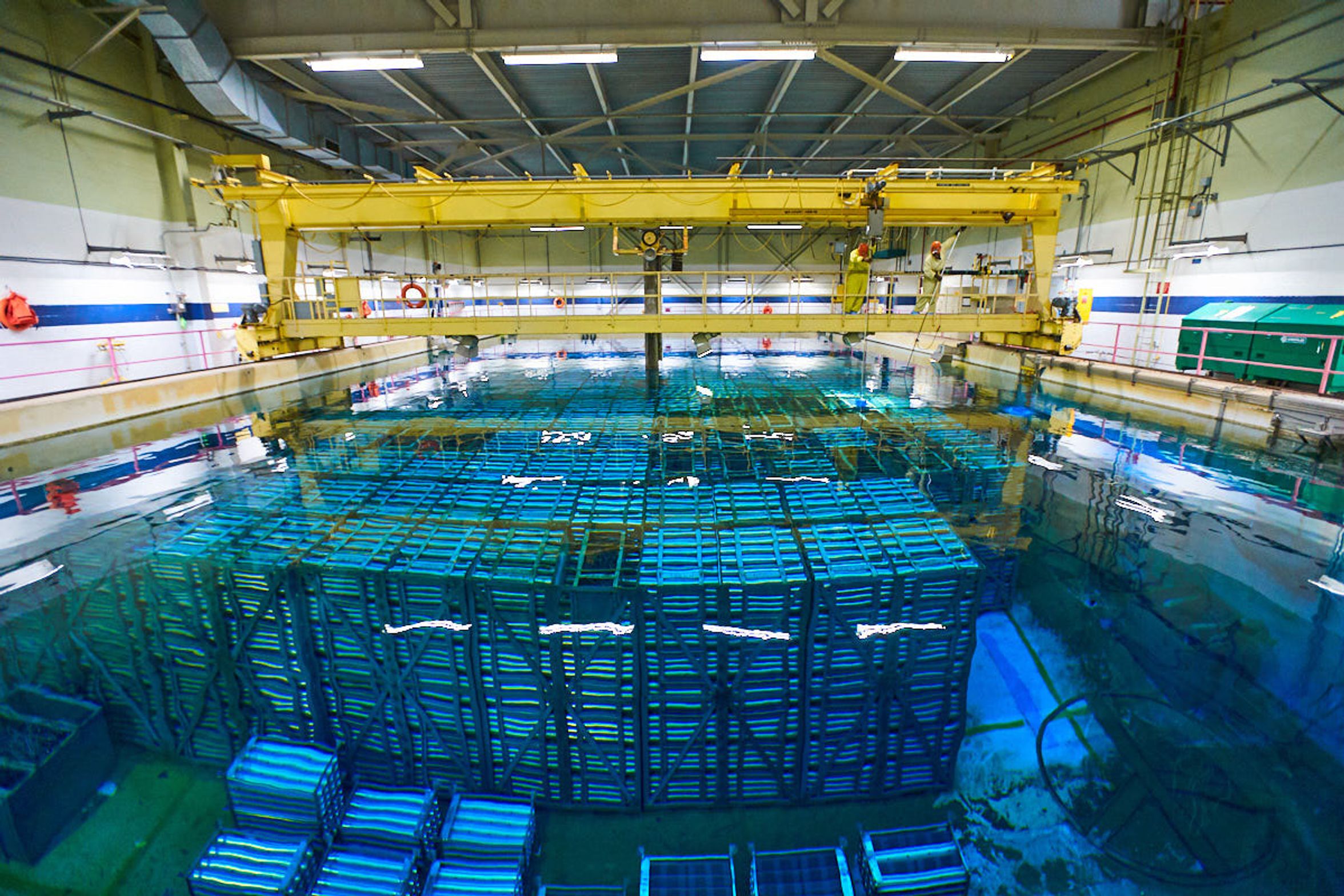 Manchester University 8th April 2020,Two new research papers from The University of Manchester, working with colleagues at Sellafield Limited and the National Nuclear Laboratory show that microbes can actively colonise some of the most intensively radioactive waste storage sites in Europe. When nuclear facilities such as
Sellafield were designed and built more than 50 years ago, it was sensible to assume that the conditions in the pond would prevent microbial life from taking hold, but now new research shows that this is not the case. The growth of microbial life in nuclear facilities can cause uncertainty or problems. Understanding how microbial life can inhabit environments such as
fuel storage ponds is vital to progress nuclear decommissioning work such as at Sellafield. Microbes are a group of organisms that, including bacteria and algae, are known to inhabit a wide range of habitats on Earth. Improvements in detection technology in recent years has allowed microorganisms to be detected in environments previously thought to be inhospitable to life. It is now becoming clear that some microorganisms are capable of withstanding surprisingly high doses of radiation, at levels significantly greater than seen in natural environments. Power Technology 8th April 2020, University of Manchester researchers have discovered microbial life can
Geomicromicrobiologists studied microbes that can cause summer blooms in
nuclear fuel storage ponds, slowing down the decommissioning process of retired nuclear plants. Summer blooms reduce visibility and disrupt fuel retrieval. University of Manchester microbiology professor Jonathan Lloyd
said: “Our research focused on Sellafield’s First Generation Magnox Storage Pond (FGMSP), which is a legacy pond that has both significant levels of radioactivity in conjunction with a highly alkaline pH (11.4), equivalent to domestic bleach. “The ultimate aim of this work was to identify the microbes that can tolerate such an inhospitable environment, understand how they tolerate high radiation levels, and help site operators control their growth. “The growth of the microorganisms in the FGMSP inhibits the operations in the pond, which is currently a priority for decommissioning. “ |
|
|
The clean-up of the Fukushima nuclear mess is not going to schedule – continual decommissioning delays
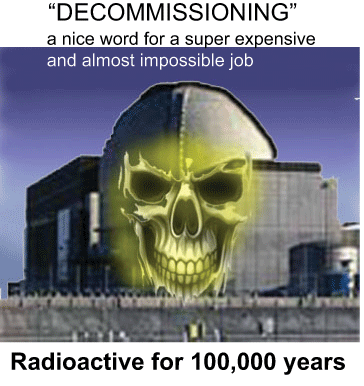 Japan’s 3/11 Recovery Stalled by Fukushima Japan’s 3/11 Recovery Stalled by Fukushima  Decommissioning Delays Decommissioning DelaysDelays in dismantling the disaster-stricken nuclear power complex cast doubt on whether recovery goals will move forward according to schedule. The Diplomat By Thisanka Siripala, March 13, 2020 Nine years after a quake-triggered tsunami sparked a triple meltdown at Fukushima Daiichi nuclear power plant, decontamination and decommissioning continues in northeastern Japan. The ultimate goal of removing all debris is expected to take anywhere between 30 to 40 years, but progress has been slower than originally planned. So far just one-fourth of decommission work has been completed, drawing attention to work that has not yet begun. The Fukushima decommissioning and decontamination draft has been amended five times. While changes published in December offered a specific time frame for the first time, the latest timetable for debris removal has been pushed back five years, citing the need for additional safety precautions. Previously, the process of removing spent fuel was scheduled from 2021 to 2024. But work on reactor two looks more likely to start in 2025 and last until 2027, followed by reactor one work commencing sometime between March 2028 and March 2029. ……..
The next decommissioning stage sets out the removal of 4,471 spent fuel rods inside the cooling pools of reactors one to six. But the biggest obstacle is finding a way to locate and remove the molten nuclear fuel. With frequent delays, evacuees face a constant sense of uncertainty,
tangled in a waiting game to see whether decommissioning work can be completed in 30 years.
Reactor two is seen as the safest and easiest option to start full-scale debris removal since it suffered the least structural damage with only “some fuel” melting through the pressure vessel and accumulating at the bottom of the containment vessel. But with no established method for debris retrieval, attempts to survey the location and distribution of molten nuclear fuel among the rubble requires a lengthy trial and error process. In mid-February 2019 an attempt to probe and collect samples from reactor two failed to find and lift the main nuclear fuel debris, instead lifting portions of pebble-like sediment with the lowest radiation readings from the surface. At this stage there is no way for TEPCO, the company that owns the Fukushima Daiichi plant, to determine where fuel debris lies among the rest of the metal debris. It’s estimated that reactor two alone contains 237 metric tons of debris while reactors one and three contain a combined 880 tons. The complexity of debris removal requires developing specialized technology that does not yet exist.
Also plaguing decommissioning efforts is the battle over how to safely dispose of 1 million tons of contaminated water that were used to cool nuclear fuel. Currently, huge tanks on the premises store the polluted runoff, which could fill 400 Olympic swimming pools, but space is expected to run out by mid-2022. On average 170 tons of contaminated water is produced to cool fuel in nuclear reactors. Without constant cooling, nuclear fuel risks melting from its own heat in a process called decay heat. With two years needed to prepare a disposal method, time is running out for a final decision. Government proposals to slowly release contaminated water into the ocean has sparked fierce backlash from locals and the agriculture and fishing industries, who argue traces of radioactive materials such as tritium still found in “treated” water could further harm a region still struggling to restore its international reputation……..
To make matters worse, decommissioning operations have been temporarily suspended due to the spread of coronavirus. Tepco was forced to cancel on-site inspections of reactor one scheduled during March, which would have brought together some 1,800 experts and members of parliament, as well as local residents and student groups. https://thediplomat.com/2020/03/japans-3-11-recovery-stalled-by-fukushima-decommissioning-delays/
|
|
|
Kazakhstan local residents may be stuck with costs of decommissioning nuclear reactor
|
Local residents pay for decommissioning of Kazakhstan’s BN-350 reactor https://www.neimagazine.com/news/newslocal-residents-pay-for-decommissioning-of-kazakhstans-bn-350-reactor-7796914 27 February 2020 During a public hearing of the feasibility study on the environmental impact of decommissioning of the BN-350 fast reactor in Kazakhstan, Bulat Zhumakanov, representative of regional utility MAEK-Kazatomprom, said residents Aktau in Mangystau province, where the reactor is sited, will continue to pay for its maintenance.The BN-350, a sodium-cooled industrial fast neutron reactor, was physically launched in 1972, and was connected to the Mangystau power system in 1973. In 1998, it was closed down and formally began decommissioning the following year.
MAEK-Kazatomprom has supplied Mangystau region of Kazakhstan with electricity, heat and water since 1967. It is responsible for three gas and oil power plants with total installed capacity 1330MWe, a desalination plant and for decommissioning the BN-350 reactor. According to representatives of the development company, METR, preliminary information, puts the total cost of decommissioning the BN-350 at KZT125 billion ($330m) excluding inflation. Zhumakanov said this year Kazakhstani Wealth Fund Samruk-Kazyna has allocated KZT1.2 billion for the maintenance of the reactor. However, funds will still be taken from local residents through the electricity tariff for repair work. An application has been made to the federal budget, but whether money will be allocated from the republican budget in future “remains open”, he said. The tariff has been in place for 20 years and residents have been pressing the government to provide the necessary funding. Decommissioning of the BN-350 reactor is planned in three stages:
From 1999 to 2016, with the financial support of the US government, nuclear fuel was removed, primary circuit sodium was treated to remove from caesium radionuclides, a project was implemented to process the used fuel, to passivate sodium residues in the first circuit, and other work. The decommissioning process must be continued and cannot be delayed, said representatives of MAEK-Kazatomprom. The tanks in which radioactive waste is stored have been in operation since 1972, and need upgrading. Some 3000 cubic metres of liquid radioactive waste, mainly sodium and caesium-137, which has a half-life of 30 years, are stored at MAEK-Kazatomprom. |
|
Sweden now faces years of nuclear reactor shutdowns and waste disposal problems
Sweden prepares for a decade of nuclear decommissioning, NS Energy, By Kristina Gillin 27 Feb 2020 ,
Sweden is preparing to dismantle and demolish six large power reactors on three sites over the coming years.
By the end of 2020, half of Sweden’s nuclear reactors will have been permanently shut down for decommissioning. The six large reactors are expected to undergo nuclear decommissioning in Sweden over the next decade.
Besides these, the Ågesta prototype reactor, a combined heat and power plant is about to commence dismantling.
Nuclear decommissioning at Sweden’s Barsebäck nuclear power plant
The twin units at Barsebäck, a few miles across the straight from Denmark, ceased to generate power in 1999 and 2005, respectively.
After shutdown, all spent fuel was removed and shipped to Sweden’s central interim storage facility (Clab) in Oskarshamn. Major decontamination of systems was also done early. However, dismantling had to wait, due to a lack of facilities for storage or disposal of decommissioning waste………
Funding and nuclear waste disposal in Sweden
Owners of nuclear power plants in Sweden have a statutory duty to dispose of their wastes. They are also required to set aside funding for waste management and nuclear decommissioning in Sweden. The funding is held in the Nuclear Waste Fund, a segregated Swedish government fund.
To fulfil the obligations, they jointly own the Swedish Nuclear Fuel and Waste Management Co (SKB). SKB’s scope covers disposal of most radioactive waste streams, interim storage of spent fuel and transportation between the various sites.
SKB is also responsible for compiling cost estimates for decommissioning and waste management every three years.
This to ensure that payments into the Nuclear Waste Fund are sufficient to cover future costs.
According to the 2019 estimates, the total cost of waste disposal, spent fuel storage and decommissioning is approximately SEK 147 billion (around €14 billion). Of this, about SEK 53 billion (around €5 billion) has been spent to date.
These figures include most of SKB’s scope but exclude the costs of near-surface disposal facilities for very low-level waste at Oskarshamn, Ringhals and Forsmark.
The majority of low- and intermediate-level waste from all Swedish reactors will be disposed of in SFR, a shallow geological repository for short-lived waste on the Forsmark nuclear site.
SFR has been in operation since 1988 but is currently licensed for operational waste only. To accommodate decommissioning waste, SKB plans to expand SFR’s capacity from 63,000 to 180,000 m3. An application for the expansion was submitted in 2014.
Pending regulatory approvals, construction of the new rock vaults will take place from 2023 to 2029. https://www.nsenergybusiness.com/news/nuclear-decommissioning-sweden/?fbclid=IwAR1me9D6hKLIPYP8Hp9tRS7Fgt6ksTbZ9t0Gvpo8IHCHgjIkeBqRnDgO79
Lawmakers seek safeguards on decommissioning of Pilgrim Nuclear Power Station
|
Lawmakers seek safeguards on nuclear plant decommissioning, 22 WWLP.com by: Chris Lisinski: Jan 25, 2020 BOSTON (SHNS) – Lawmakers are seeking additional influence over the decommissioning of the recently shuttered Pilgrim Nuclear Power Station, but a representative for the company conducting the work argued Wednesday that those attempts may be unconstitutional.
Tom Joyce, a lobbyist for Holtec Decommissioning International, said that bills imposing higher clean-up standards (H 2904 / S 1949) or reforming how decommissioning is funded (S 1948, S 1992) would exceed the state’s authority and infringe on the jurisdiction of the federal Nuclear Regulatory Commission. Joyce told the Joint Committee on Telecommunications, Utilities and Energy that passage of the bills would likely prompt a lawsuit from Holtec, delaying the decommissioning process that the company has said will take seven years…….. Backers of the legislation, though, see the proposals as important steps to protect local stakeholders amid a process that has drawn criticism and a lawsuit from the attorney general. Plymouth Republican Rep. Mathew Muratore, who filed one of the bills that would require decommissioning to meet stricter environmental standards, said his goal is to ensure the land is clean enough to appeal to potential businesses and avoid remaining vacant…… The Pilgrim facility officially ended operations on May 31 after decades of generating power. In August, the NRC approved the transfer of Pilgrim’s license from Entergy to Holtec International to handle its decommissioning. Attorney General Maura Healey, with the backing of the Baker administration, filed a lawsuit seeking to block the transfer until the NRC holds a hearing on concerns about Holtec’s ability to decommission the plant safely, its financial stability and the company’s alleged involvement in a kickback scheme. Speakers at Wednesday’s committee hearing said the case, which also features the Pilgrim Watch group as a party, is still pending. Other bills before the committee (S 1948, S 1992) would charge the owners of any nuclear power station in the state $25 million per year and stash the money into a fund managed by the state treasurer only to be used for postclosure activities. Pilgrim Watch chair Mary Lampert said that money would serve as an “insurance policy” – if decommissioning concluded using the existing trust fund set aside for those purposes, the owners would get back the additional funding plus interest, she said. If not, the state would have a reserve ready to cover any shortfall. Without a safety net backing up the more than $1 billion trust fund, Lampert said taxpayers would be on the hook. “Who’s going to pay the difference? We’re going to pay the difference,” she told the committee. “Holtec cannot be required to do so. Why can it not be required to do so? Because it is a limited liability company and you cannot get blood out of this stone.” Rep. Sarah Peake, a cosponsor of the bill, said Connecticut found itself footing a $480 million bill to complete decommissioning of the former Connecticut Yankee Nuclear Power Plant. Like the legislation concerning cleanup standards, Joyce argued the funding proposals would unconstitutionally circumvent NRC authority…. Muratore and Lampert said they did not agree with that argument, with the latter arguing that the bills in question are all “money bills” and therefore grant the state authority to take additional action. “States have the authority to enact a more conservative (environmental) standard if it applies after NRC has released the site because once the NRC has released the site, it no longer has authority, so there is not a question of preemption,” Lampert said. In his fiscal year 2021 budget unveiled Wednesday, Gov. Charlie Baker proposed language that would allow the Department of Public Health to assess operators of nuclear reactors in the process of being decommissioned — such as Holtec — for the costs of radiation monitoring and emergency planning associated with the project. https://www.wwlp.com/news/state-politics/lawmakers-seek-safeguards-on-nuclear-plant-decommissioning/ |
|
Tepco estimates 44 years to decommission its Fukushima No. 2 nuclear plant.
Japan Times 23rd Jan 2020, Tokyo Electric Power Company Holdings Inc. has estimated that it will take 44 years to decommission its Fukushima No. 2 nuclear plant. Tepco presented the outline of decommissioning plans to the municipal assembly of Tomioka, one of the two host towns of the nuclear plant, on Wednesday.
The Fukushima No. 2 plant is located south of the No. 1 plant, which suffered a triple meltdown accident in the wake of the March 2011 massive earthquake and tsunami.
According to the outline, the decommissioning process for the No.
2 plant will have four stages, taking 10 years for the first stage, 12
years for the second stage and 11 years each for the third and fourth
stages.
Tepco will survey radioactive contamination at the nuclear plant in
the first stage, clear equipment around nuclear reactors in the second,
remove the reactors in the third and demolish the reactor buildings in the
fourth. Meanwhile, the plant operator will transfer a total of 9,532 spent
nuclear fuel units at the plant to a fuel reprocessing company by the end
of the decommissioning process, and 544 unused fuel units to a processing
firm by the start of the third stage.
https://www.japantimes.co.jp/news/2020/01/23/national/tepco-fukushima-decommissioning/#.Xi1KBmj7RPb
Britain’s £1.2bn cleanup begins, of Berkeley power station, closed 30 years ago
 Nuclear waste removal begins 30 years after power station closure, https://www.bbc.com/news/uk-england-somerset-50866867 5 Jan 2029, Work has begun on removing nuclear waste from Berkeley power station, 30 years after it was decommissioned.The disused Magnox generator, situated on the banks of the River Severn in Gloucestershire, closed in 1989. Nuclear waste removal begins 30 years after power station closure, https://www.bbc.com/news/uk-england-somerset-50866867 5 Jan 2029, Work has begun on removing nuclear waste from Berkeley power station, 30 years after it was decommissioned.The disused Magnox generator, situated on the banks of the River Severn in Gloucestershire, closed in 1989.
It was the world’s first commercial power station and its laboratories and many of its buildings have already been dismantled. Work emptying its vast concrete vaults of the nuclear waste Berkeley generated is only now able to safely begin. But it will not be safe for humans to go inside its reactor cores until 2074. The BBC has been given a rare glimpse of what is stored under the disused site.For the past 50 years parts of the coastline of the west of England have been dominated by nuclear power stations. The 1960s saw the construction of Hinkley A and Hinkley B in Somerset, with both Oldbury and Berkeley built on the banks of the River Severn in the 1950s. Only Hinkley B is still in use but the nuclear waste the stations generated has remained in place. It takes hundreds of years to decompose and has to be stored underground. It will cost an estimated £1.2bn to fully decommission Berkeley. About 200 people are currently working on the site under strict security. Work emptying waste products from the concrete vaults, eight metres (26ft) underground, is a complicated process. They contain used graphite from the fuel elements in the nuclear generating process, material from the cooling ponds and from the laboratories. The removal is expected to take five or six years to complete. Rob Ledger, waste operations director at Berkeley, said: “When the power stations first started generating I don’t think there was much thought put into how the waste was going to be dealt with or retrieved. “It’s taken a while to develop the equipment and the facilities [to do this]. “A mechanical arm moves the debris into position and then a ‘grab’ comes down through an aperture in the vaults and picks up the debris [and] puts it into a tray. “Each debris-filled tray weighs up to 100kg (220lb). “The automated machinery is controlled by computers [and] tips [the waste] into a cast iron container.” The containers will house the waste in an intermediate storage facility until a long-term solution can be found. “Nuclear waste does take a long time to decay… it’s hundreds of years. And that’s why we have to go to these lengths, to store it safely,” said Mr Ledger. Eventually the boxes will be housed deep underground in a long-term storage facility. The location has not yet been decided by the government. There are currently estimated to be almost 95,000 tonnes of nuclear waste in the form of graphite blocks across the UK. But if the Carbon 14 can be extracted from the blocks, they become much safer and easier to deal with. A new process is being explored, by scientists at Bristol University, to ensure not all of the waste will be discarded. They have developed a process that uses reactor core spent contents in a new power form. Carbon 14 from nuclear reactors is infused into wafer-thin diamonds, man-made in a lab at Bristol University. They then become radioactive and form the heart of a battery that would last for many thousands of years. The tiny batteries could be used in pacemakers, hearing aids or sent into space as part of the space programme. The process is being piloted in association with the UK Atomic Energy Authority in Abingdon. It is hoped the decommissioned Gloucestershire site may be redeveloped to manufacture the new batteries, creating jobs in the region. |
|
Germany To Close All Nuclear Plants By 2022
In the wake of the Fukushima disaster in Japan in 2011, Germany ordered the immediate shutdown of eight of its 17 reactors, and plans to phase out nuclear power plants entirely by 2022.
The Philippsburg 2 reactor near the city of Karlsruhe in southwestern Germany has provided energy for 35 years. The Philippsburg 1 reactor—opened in 1979—was taken offline in 2011.
Over the past few years, nuclear power generation in Germany has been declining with the shutdown of its nuclear plants, while electricity production from renewable sources has been rising.
A government-appointed special commission at Europe’s largest economy announced the conclusions of its months-long review and proposed that Germany shut all its 84 coal-fired power plants by 2038.
Germany, where coal, hard coal, and lignite combined currently provide around 35 percent of power generation, has a longer timetable for phasing out coal than the UK and Italy, for example—who plan their coal exit by 2025—not only because of its vast coal industry, but also because Germany will shut down all its nuclear power plants within the next three years.
The closure of all nuclear reactors in Germany by 2022 means that Germany might need to retain half of its coal-fired power generation until 2030 to offset the nuclear phase-out, German Economy and Energy Minister Peter Altmaier said earlier this year.
Germany’s nuclear phase-out enters final stretch
The 2011 Fukushima nuclear disaster in Japan led to widespread anti-atomic-power protests across Germany. Two months after the accident, Chancellor Angela Merkel announced that all plants would be closed over the next decade, making Germany the second country after Italy to shut down all of its atomic energy stations.
The German Federation for the Environment and Nature Conservation (BUND) welcomed the news. A BUND spokesman said the group hoped to see the end of nuclear power being “conjured up again and again as a supposed healing charm and climate savior.”
However, Wolfram König, who heads the German government’s office for the nuclear phase-out, warned that the country still faced the great “challenge” of trying to phase out both coal and atomic energy at the same time.https://www.dw.com/en/germany-shuts-down-atomic-plant-as-nuclear-phase-out-enters-final-stretch/a-51845616
2 nuclear reactors in Fukui Prefecture to be shut down
Kansai Electric Power Co. will spend ¥118.7 billion to dismantle the Nos. 1 and 2 units at the Oi nuclear power plant, with work expected to wrap up in the fiscal year ending March 2049.
The units, which each have an output capacity of more than 1 million kilowatts, are the most powerful reactors to be approved for decommissioning by the Nuclear Regulation Authority since a magnitude 9.0 earthquake and subsequent tsunami caused a meltdown at the Fukushima No. 1 plant in March 2011.
Following the disaster, the government placed a 40-year limit on the lifespan of reactors in the country, with a possible 20-year extension if strict safety standards are met.
As both units came online in 1979 and were approaching the 40-year limit, Kansai Electric had a choice of applying for the extension or scrapping them.
In December 2017, the utility announced it would scrap the aging reactors, citing the high cost of implementing additional safety measures. Kansai Electric submitted the decommissioning plan to the authority in November 2018.
The plant’s Nos. 3 and 4 units came online in 1991 and 1993, respectively, and are currently active.
Around 23,000 tons of low-level radioactive waste will be remain following the dismantling process, according to the plan, along with another 13,200 tons of nonradioactive waste.
The plan does not state where the waste will be stored.
8-10 years for Southern California Edison to demolish San Onofre Nuclear Generating Station

The permit will allow Edison contractors to begin removing major structures at the facility, located on an 85-acre chunk of Marine Corps Base Camp Pendleton owned by the Department of the Navy. SONGS is home to 3.55 million pounds of used-up nuclear fuel, between the Pacific and Interstate 5…..
Ultimately, the federal government has the final say about where used-up commercial nuclear fuel should go. But since a permanent site has not been found, nuclear waste at plants like SONGS have been piling up for decades. …….
A provision within the commission’s vote added a special condition to the permit concerning the demolition of two spent fuel pools where used-up nuclear waste is stored.
Under the provision, Edison will not get rid of the pools until it funds an independent third-party review of an inspection and maintenance plan regarding the condition of canisters in dry storage and forwards the findings to the Coastal Commission. Edison also agreed to start the plan by March 31, 2020 — seven months earlier than scheduled.
In return, the commission agreed to not sit on the report and vote on a recommendation by Coastal Commission staff by July 2020.
The proposed demolition of the pools at Units 2 and 3 dominated much of the discussion that dragged out for most of the day.
While fuel inside a nuclear reactor typically loses its efficiency after about four to six years, it is still thermally hot and emits a great deal of radiation. To keep the fuel cool, nuclear plant operators place the used-up waste in a metal rack and lower it into a deep pool of water, typically for at least five years. Once cooled, the fuel is often transferred to a dry storage facility.
Some speakers supported removal of the pools but others insisted they must remain to make sure the canisters holding the waste can be retrieved and inspected.
While fuel inside a nuclear reactor typically loses its efficiency after about four to six years, it is still thermally hot and emits a great deal of radiation. To keep the fuel cool, nuclear plant operators place the used-up waste in a metal rack and lower it into a deep pool of water, typically for at least five years. Once cooled, the fuel is often transferred to a dry storage facility.
Some speakers supported removal of the pools but others insisted they must remain to make sure the canisters holding the waste can be retrieved and inspected………
The dismantlement will be carried out by a general contractor selected in December 2016 — a joint venture of AECOM and Energy Solutions called SONGS Decommissioning Solutions. The decommissioning will be paid for by $4.4 billion in existing trust funds, The money has been collected from SONGS customers and invested in dedicated trusts. According to Edison, customers have contributed about one-third of the trust funds while remaining two-thirds has come from investments by the company.
Some of the work can begin before the waste transfers are completed, provided they are “geographically separate from locations where fuel storage and transfer operations occur,” Dobken said.
After transfers were suspended for a little more than one year after the August 2018 incident involving the 50-ton canister, Edison resumed moving canisters in July. Workers have moved 35 canisters to dry storage thus far, with 38 more to go. Transfer operations are expected to be completed by mid-2020…….
SONGS is far from the only nuclear plant with waste on-site. About 80,000 metric tons of used commercial fuel has piled up at 121 sites in 35 states because the federal government has not found a repository where it can be stored. Federal authorities were supposed to begin taking custody of spent fuel in 1998. https://www.sandiegouniontribune.com/business/energy-green/story/2019-10-17/coastal-commission-oks-permit-to-begin-dismantlement-at-san-onofre-nuclear-plant
1 This Month



Shut down the radiation-damaged Heysham nuclear reactors now
To see nuclear-related stories in greater depth and intensity – go to https://nuclearinformation.wordpress.com

Say No to NASA’s Reckless Nuclear Reactor on the Moon
Say No to NASA’s Reckless Nuclear Reactor on the Moon
-
Archives
- October 2026 (247)
- September 2026 (339)
- August 2026 (330)
- July 2026 (355)
- June 2026 (287)
- May 2026 (306)
- April 2026 (356)
- March 2026 (251)
- February 2026 (267)
- January 2026 (308)
- December 2025 (358)
- November 2025 (359)
-
Categories
- 1
- 1 NUCLEAR ISSUES
- business and costs
- climate change
- culture and arts
- ENERGY
- environment
- health
- history
- indigenous issues
- Legal
- marketing of nuclear
- media
- opposition to nuclear
- PERSONAL STORIES
- politics
- politics international
- Religion and ethics
- safety
- secrets,lies and civil liberties
- spinbuster
- technology
- Uranium
- wastes
- weapons and war
- Women
- 2 WORLD
- ACTION
- AFRICA
- Atrocities
- AUSTRALIA
- Christina's notes
- Christina's themes
- culture and arts
- Events
- Fuk 2022
- Fuk 2023
- Fukushima 2017
- Fukushima 2018
- fukushima 2019
- Fukushima 2020
- Fukushima 2021
- general
- global warming
- Humour (God we need it)
- Nuclear
- RARE EARTHS
- Reference
- resources – print
- Resources -audiovicual
- Weekly Newsletter
- World
- World Nuclear
- YouTube
-
RSS
Entries RSS
Comments RSS

