Simon Daigle lists the public concerns that must be addressed in planned development of BWRX-300 small nuclear reactors – Submission to Canadian Nuclear Safety Commission
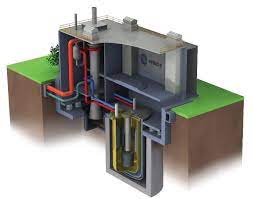
Submission Concerning the Proposed Development of BWRX-300 – multiple reactors at the Darlington Site (Ontario)
Submitted November 19,2023 by Simon J Daigle, Simon J Daigle, B.Sc., M.Sc., M.Sc(A) Montreal, Quebec Canada
Response to the proposed development of OPGs BWRX-300 reactors at the Darlington CANDU reactors site and the items below are all real public concerns and must all be addressed independently and individually, as per the following categories:
CNSC licensing of the BWRX-300 reactors & Multiple Reactors nearby a NPP is inadequate [References: 1, 2, 4, 5]
- BWRX-300 stands for Boiling Water Reactor eXperimental 300 and developed by GE Hitachi Nuclear Energy (GEH) and will not aim to address any key challenges faced by traditional nuclear power plants. In fact, they will be costly, and generate extremely toxic nuclear wastes more than what would be expected by traditional NPP plants. [Ref. 4].
- This experimental compact design will not reduce construction costs, will not simplify operation nearby one NPP, or will ever enhanced safety measures. In fact, it will do the exact opposite as per IAEA [Ref. 1 and 5].
- It is questionable to say the least that by utilizing natural circulation and passive safety systems you will eliminate the need for external pumps and active cooling mechanisms because during a meltdown, fire or catastrophic event (lightening, flooding, extreme air temperatures over decades because of climate change), who will shut it off? A worker? I’m more reassured when a Pilot on commercial flight is present when he or she is using the auto-pilot function [Ref. 1].
- CNSC license to built an experimental reactor based on the CNSC’s decision that OPG has met the recommendations of the 2011 Environmental Assessment Report by the JRP is not objectively verifiable or can be validated based on the 2023 Update report [Ref. 2].
- No objective evidence is available to validate what specific recommendations of the JRP have been adopted, analysed and/or implemented by OPG or CNSC. [Ref. 2].
- No BWRX-300 reactors are operating anywhere in the world and is a real public concern for the citizens living nearby as well as the potential impacts of a catastrophic environmental event that could be transboundary across many municipalities.
Engineering Design Risks: Experimental, Natural water cooling & neutron leakage [4,5].
- Water cannot be used to cool a reactor as it is experimental design reactor that will use use low pressure water to remove heat from the core. A distinct feature of this reactor design is that water is circulated within the core by natural circulation and yet no data is measured or validated by any laboratory confirmed analysis or modelling study.
- Neutron leakage will be problematic for any SMR design as well as for the BRMX-300 reactor as no proof of any safe SMR reactor system can be validated or compared too to this very day.
- This is no experimental data to elude or conclude that this experimental reactor will work in terms of an internal cooling system of the core.
- BWRX-300 is by all means not small as it covers a full football field.
- No BWRX-300 reactors are operating anywhere in the world.
- The proposed design and operation of a BWRX-300 is entirely different from the CANDU design and involves a structure and a method of operating which is, in large part, below ground level.
- No data on any potential meltdown of the core of any modular nuclear including BWRX-300 including catastrophic events cascading located nearby a Nuclear Power Plant.
- Neutron leakage is a huge problem with SMRs and will be as well with the BWRX-300.
- SMR Neutronics and Design: [Ref. 4].
- “A nuclear reactor is designed to sustain criticality, a chain reaction of fission events that generates energy (∼200 MeV per fission event) and extra neutrons that can cause fission in nearby fissile nuclides.
- The neutron “economy” of a reactor depends on the efficiency of the chain reaction process; the fate of neutrons absorbed by abundant nuclides, such as 238U or 232Th; the fission of newly generated fissile nuclides, such as 239Pu and 233U; and the loss of neutrons across the fuel boundary.
- These “lost” neutrons can activate structural materials that surround the fuel assemblies. Each of these physical processes generates radioactive waste.
- Thus, the final composition of the SNF and associated wastes depend on the initial composition of the fuel, the physical design of the fuel, burnup, and the types of structural materials of the reactor.
- The probability of neutron leakage is a function of the reactor dimensions and the neutron diffusion length, the latter of which is determined by the neutron scattering properties of the fuel, coolant, moderator, and structural materials in the reactor core.
- The neutron diffusion length will be the same in reactors that use similar fuel cycles and fuel–coolant–moderator combinations; thus, the neutron leakage probability will be larger for an SMR than for a larger reactor of a similar type.”
- Public Consultation, indigenous peoples and social acceptability: [Ref. 2].
- No objective evidence has been elucidated or clearly documented with transparency.
- EIA Impact statement: page 84 of [Ref. 2].
- EIA impact statement, nor final PPE parameters, did not follow IAEA Multi-Unit Probabilistic Safety Assessment required for 1 or 4 experimental reactors nearby a Nuclear Power Plant despite the fact that EIA significance analysis had assessed all the residual adverse effects [Ref. 1, 5]. Please refer to the list of EIA and PPE selected quotes below as the reference to compare with the IAEA Multi-Unit Probabilistic Safety Assessment that is lacking [Ref. 1, 5].
EIA and PPE selected quotes:
“EIS significance analysis had assessed all the residual adverse effects to be “Not Significant”. Of the likely residual adverse effects that were forwarded for assessment of significance in the EIS:
• Seven (7) were also determined to result in minor residual adverse effects from the BWRX-300 but less than that described in the EIS,
• Four (4) were not applicable to the BWRX-300 reactor,
• Five (5) were determined to have residual adverse effects not significant after completion of additional studies to assess the likely effects to retained terrestrial features not considered in the EIS.
- The PPE Of the 198 PPE parameters, 60 PPE parameters were not applicable to the BWRX-300. Of the 138 applicable PPE parameters evaluated, eight (8) BWRX-300 parameters are currently not within their respective PPE parameters. These are largely due to characteristics inherent to the design of the GEH reactor technology. These eight parameters are related to the following topics:
- The rate of fire protection water withdrawal and the quantity of water in storage,
- Deeper foundations (38 m below grade) than the reactors previously assessed in the EIS (13.5 m),
- Airborne releases of radioactive contaminants and normal operation minimum release height above finished grade,
- The different proportions of radionuclides in solid wastes generated by the operation of the BWRX-300,
- The weight of the cask used to transport the BWRX-300 spent fuel on site, and
- The multiplication factors applied to basic wind speed to develop the plant design.
- A full environmental impact assessment is required to fulfill provincial and federal jurisdiction best practices for air, water and soil & biosphere impacts during a catastrophic event or meltdown of this experimental reactor as well as maritime and lake biosphere impacts.
Nuclear accidents, incidents, multiple explosion risks or 1 or 4 BMRX-300 reactors nearby a NPP, Soil Stability, hydrogeology, lithospheric & seismic Risks: [Ref. 1,2, 5].
- No objective risk assessment has been completed by OPG or CNSC as per the required IAEA Multi-Unit Probabilistic Safety Assessment required for 1 or 4 experimental reactors nearby a Nuclear Power Plant. [Ref. 1,5].
- The appropriateness of building 1 or 4 untested reactors next to the 4 existing CANDUs at Darlington as well as the current and potential stored nuclear waste is questionable given the fact that the probabilistic safety assessment was not completed according to the IAEA methodology [Ref. 1].
- JRP recommendations concerning the physical conditions of the Darlington site need to be applied with transparency by OPG and the CNSC. [Ref. 2].
Other public and safety concerns: these issues need to be addressed
- Climate change impacts have not been included in the EIS report.
- Unknown: reliability data to reduce the risk of potential accidents.
- Unknown: demonstrating that the BMRX-300 is a clean and reliable source of electricity, capable of generating vast amounts of energy without producing greenhouse gas emissions as it is only an experimental design.
- Concerns surrounding safety, waste disposal, and cost have hindered its widespread adoption globally. A handful of countries have adopted this design but no data on the true financial costs to governments or to that taxpayer. [Ref. 4].
Unknown: BWRX-300 did not address safety concerns, efficiency, efficacy as a cost-effective alternative compared to renewables such as hydro, solar or wind energy generation.
Unknown: sustainability and reliability compared to wind and solar energies to meet the growing demand for electricity.- BWRX-300 represents a significant step backwards in power technology. It is not compact, it does not meet nuclear wastes (as per the IAEA ALARA principle) that will last for thousands of years, and most certainly, it is not cost effective over time to store and monitor SMR or BWRX-300 nuclear wastes based on the probability of any heat instability of the nuclear core over time and the generation of highly toxic nuclear waste. You cannot turn off radioactivity like an electrical light bulb as there are no fuse switch off for ionizing radiation.
A small modular reactor’s demise calls for big change in Energy Department policy
By Henry Sokolski | November 14, 2023, https://thebulletin.org/2023/11/a-small-modular-reactors-demise-calls-for-big-change-in-energy-department-policy/
NuScale Power Corp., which is developing America’s flagship small modular reactor (SMR), has lost its only firm utility customer, the Utah Associated Municipal Power System. That utility pulled the plug last week on the project just days after Iceberg Research, a financial advisory firm, urged investors to short sell NuScale (that is, to bet the value of its shares will decrease). Shares, worth $14.87 in August, plummeted more than 85 percent, closing Monday at $2.23.

Regrettably, the US Energy Department has already given NuScale hundreds of millions in grants, and the US Export Import Bank and the US Development Finance Corporation have promised NuScale another $4 billion in financing toward a plant in Romania. NuScale’s latest loss could cast a financial pall over its parent company, the Fluor Corporation, and other Energy Department-backed SMR projects, X-Energy and Oklo.
How could this happen? Simple: The Energy Department overrode market signals, went all in with SMRs and NuScale, and stuck US taxpayers with the tab. Sadly, this is nothing new. Think Solyndra, ethanol mandates, Fisker automobiles, fast breeder reactors, and synthetic fuels.
The NuScale case, however, is worse. In the Energy Department’s zeal to sell SMRs so the country can get to net zero carbon dioxide emissions, the department failed to focus on its primary missions. These include setting energy cleanliness and efficiency standards, assuring nuclear security, spotlighting energy market trends, and conducting basic energy research to validate unproven energy concepts—e.g., fusion power—rather than commercializing systems we know already work — e.g., fission reactors. That failure of focus raises obvious questions.
Did the Energy Department do due diligence in assessing NuScale’s financial health and integrity? Did it properly weigh independent analyses that questioned the economic and environmental viability of small modular reactors more generally?Also, what of the nuclear security issues that building these plants in war zones raise?

The State and Energy departments have been pushing federal financing to export SMRs to Ukraine, its immediate neighbors, and East Asia. All of the proposed projects are within shooting distance of Russian, Chinese, and North Korean missiles. Worse, officials in Moscow, Beijing, and Pyongyang have all threatened to attack such plants.

Japan’s prime minister and Ukrainian officials have called for increased hardening and military protections for their reactors (including installing missile defenses as Belarus has at its reactor). The Energy Department, however, has yet to offer any narrative on how it might keep US-exported reactors safe against such assaults.
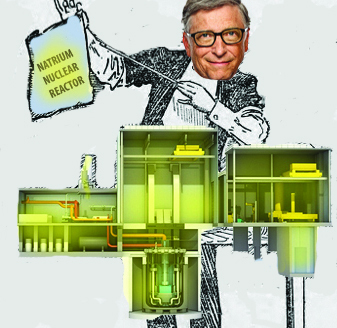
Then there are the nuclear weapons proliferation headaches that the exporting of small fast reactors present. One of the Energy Department’s favorite SMR projects, Bill Gates’ Natrium fast reactor, is largely a knock off of the Prism fast breeder reactor. It was designed to produce plutonium, much of which would be super weapons-grade plutonium (i.e., even easier to make into weapons than what our military uses). TerraPower, which is developing Natrium, says it plans on exporting Natrium plants. One would think the Energy Department could have explained how such reactor technology can be shared without spreading fissionable material to make nuclear bombs. So far, it has not.
Some argue that providing nuclear alternatives to Russian natural gas and preventing global warming should overshadow such proliferation concerns. Yet, most of Russia’s top gas customers are now buying elsewhere. As for fighting global warming, victory is only possible by reducing carbon dioxide emissions in the cheapest, quickest fashion. SMRs are neither quick nor cheap.
Both the nuclear industry and its critics have long favored using marginal abatement cost models to determine which energy fixes to make first to curb carbon emissions at the lowest cost. Using these models, it’s clear that making natural gas substitutions for coal-fired plants, increasing efficiencies, reducing energy demand, improving electrical transmission and storage systems, and tapping renewables all should come well before building new nuclear plants. Unfortunately, the Energy Department has yet to reference any of these models in its public statements about SMRs.
So how is the misplaced confidence in SMRs best remedied?
First, Congress should wind down the funding of Energy Department schemes to commercialize energy “winners,” nuclear or nonnuclear. Instead, the department and Congress should focus on setting energy and cleanliness goals and deadlines. To incentivize industry to meet them, the Energy Department should consider offering industry prizes.
Second, the Energy Department should make the most favored greenhouse gas cost abatement models, such as the popular McKinsey Company package, publicly available for all to use and improve. To feed better data into these models, Congress should require the Energy Department to report annually on the real costs (including subsidies) of different types of electrical generation, distribution, transmission, and storage systems.
Finally, before the United States exports any small modular reactors, the Energy Department and the Pentagon should clarify what can (and can’t) be done to protect them against military assaults and what the nuclear proliferation dangers are in the various nations that would operate them. It’s bad enough that Energy Department-backed reactors are burning holes in taxpayers’ pockets. At the very least, the Energy Department and the Pentagon should make sure that they don’t blow up in everyone’s face.
Small nuclear reactors in Canada: at what cost?

Transparency requirements in the U.S. forced NuScale proponents to disclose the projected costs of electricity to potential investors on a regular basis. This is not the case in Canada.
none of the Canadian nuclear proponents have laid out the projected costs of electricity production. In New Brunswick, the government has changed legislation to force the electricity utility to purchase power from new nuclear reactors even when it is not the lowest cost option.
Canadian Coalition for Nuclear Responsibility https://crednb.ca/2023/11/13/small-nuclear-reactors-in-canada/
In collaboration with and endorsed by:
Clean Green Saskatchewan, Coalition for Responsible Energy Development in New Brunswick, Friends of the Earth Canada, Inter-Church Uranium Committee Educational Cooperative (Saskatchewan), Ontario Clean Air Alliance, Prevent Cancer Now Le Regroupement des organismes environnementaux en énergie, (Quebec), The Society of High Prairie Regional Environmental Action Committee (Alberta) 23 Nov 23
The sudden cancellation last week of the first small nuclear reactor project in the United States, the NuScale project, calls into question the economic viability of Canada’s plans to develop and deploy small modular reactors.
Potential customers in Utah balked at the soaring projections for the cost of electricity the NuScale reactor would generate, and the project was unable to recruit other customers to buy its power.
Today, in response, civil society groups across Canada are demanding transparency and accountability for the costs of other small nuclear reactor designs planned in this country.
“Canada should stop writing blank cheques to nuclear promoters who cannot deliver on their promises of cheap, reliable electricity,” said Gordon Edwards, President of the Canadian Coalition for Nuclear Responsibility.
Transparency requirements in the U.S. forced NuScale proponents to disclose the projected costs of electricity to potential investors on a regular basis. This is not the case in Canada.
Earlier this year, the target price for electricity from the NuScale project rose by over 50 percent to $89 US per MWh ($122.99 Canadian) with indications that future increases would be forthcoming. Investor confidence was shaken, and the project was scrapped.
The NuScale reactor design has been in development for more than 15 years and the company’s first commercial joint venture with electrical utilities in Utah was launched in 2015.
Governments in New Brunswick, Ontario, Saskatchewan and Alberta have committed to building small reactors, while the Quebec government is conducting feasibility studies.
However, none of the Canadian nuclear proponents have laid out the projected costs of electricity production. In New Brunswick, the government has changed legislation to force the electricity utility to purchase power from new nuclear reactors even when it is not the lowest cost option.
Three years ago, more than 140 civil society groups across Canada signed a statement calling the proposed new reactors a “dirty, dangerous distraction,” from real climate action.
Nuclear critics have consistently said these new reactor designs will take too long to develop, and will cost too much compared with existing proven renewable energy option, to deal effectively with the climate crisis that requires immediate action.
To date, federal and provincial taxpayers have subsidized these reactors through a $970 million low interest loan to Ontario Power Generation, more than $100 million in grants to private companies and public utilities in Ontario, New Brunswick, Saskatchewan and Alberta, and millions more to research fuelling requirements for small reactors at Chalk River.
Civil society groups are demanding accountability for these costly nuclear developments. Without full transparency, taxpayers and ratepayers will be forced to subsidize these experimental reactor projects and pass on an unwanted economic debt legacy to our children and grandchildren, along with the radioactive waste legacy that all nuclear reactors are adding to every day.
Quotes:
Michael Poellet, President, Inter-Church Uranium Committee Educational Cooperative:
“Small Modular Reactors (SMRs) were meant to remedy the grossly excessive, over-budget costs of nuclear power generation. With the price of renewables dropping precipitously the economics of SMRs has only worsened. The cancellation of the NuScale project with its utility partner Utah Associated Municipal Power Systems demonstrates that commercial electrical generation with SMRs is not economically viable. Canadian federal and provincial governments must allow the economic realities to break the spell that enchantment with SMRs has over them.”
rix ?
Media release from CRED-NB and collaborators. Le français suit…
From:
Canadian Coalition for Nuclear Responsibility
In collaboration with and endorsed by:
Coalition for Responsible Energy Development in New Brunswick
Inter-Church Uranium Committee Educational Cooperative (Saskatchewan)
Le Regroupement des organismes environnementaux en énergie (Quebec)
The Society of High Prairie Regional Environmental Action Committee (Alberta)
For immediate release
November 13, 2023
Small nuclear reactors in Canada: at what cost?
The sudden cancellation last week of the first small nuclear reactor project in the United States, the NuScale project, calls into question the economic viability of Canada’s plans to develop and deploy small modular reactors.
Potential customers in Utah balked at the soaring projections for the cost of electricity the NuScale reactor would generate, and the project was unable to recruit other customers to buy its power.
Today, in response, civil society groups across Canada are demanding transparency and accountability for the costs of other small nuclear reactor designs planned in this country.
“Canada should stop writing blank cheques to nuclear promoters who cannot deliver on their promises of cheap, reliable electricity,” said Gordon Edwards, President of the Canadian Coalition for Nuclear Responsibility.
Transparency requirements in the U.S. forced NuScale proponents to disclose the projected costs of electricity to potential investors on a regular basis. This is not the case in Canada.
Earlier this year, the target price for electricity from the NuScale project rose by over 50 percent to $89 US per MWh ($122.99 Canadian) with indications that future increases would be forthcoming. Investor confidence was shaken, and the project was scrapped.
The NuScale reactor design has been in development for more than 15 years and the company’s first commercial joint venture with electrical utilities in Utah was launched in 2015.
Governments in New Brunswick, Ontario, Saskatchewan and Alberta have committed to building small reactors, while the Quebec government is conducting feasibility studies.
However, none of the Canadian nuclear proponents have laid out the projected costs of electricity production. In New Brunswick, the government has changed legislation to force the electricity utility to purchase power from new nuclear reactors even when it is not the lowest cost option.
Three years ago, more than 140 civil society groups across Canada signed a statement calling the proposed new reactors a “dirty, dangerous distraction,” from real climate action.
Nuclear critics have consistently said these new reactor designs will take too long to develop, and will cost too much compared with existing proven renewable energy option, to deal effectively with the climate crisis that requires immediate action.
To date, federal and provincial taxpayers have subsidized these reactors through a $970 million low interest loan to Ontario Power Generation, more than $100 million in grants to private companies and public utilities in Ontario, New Brunswick, Saskatchewan and Alberta, and millions more to research fuelling requirements for small reactors at Chalk River.
Civil society groups are demanding accountability for these costly nuclear developments. Without full transparency, taxpayers and ratepayers will be forced to subsidize these experimental reactor projects and pass on an unwanted economic debt legacy to our children and grandchildren, along with the radioactive waste legacy that all nuclear reactors are adding to every day.
Quotes:
Michael Poellet, President, Inter-Church Uranium Committee Educational Cooperative:
“Small Modular Reactors (SMRs) were meant to remedy the grossly excessive, over-budget costs of nuclear power generation. With the price of renewables dropping precipitously the economics of SMRs has only worsened. The cancellation of the NuScale project with its utility partner Utah Associated Municipal Power Systems demonstrates that commercial electrical generation with SMRs is not economically viable. Canadian federal and provincial governments must allow the economic realities to break the spell that enchantment with SMRs has over them.”
David Geary, Writer and Researcher, Clean Green Saskatchewan:
“Our group, Clean Green Saskatchewan, was always confident that NuScale and all other SMR startup enterprises, GE-Hitachi included [a new reactor design selected for Ontario and Saskatchewan], would fail because of the ‘bottom line’ … i.e., the economics, the ‘financials’. They simply cannot compete in the energy marketplace…compared to any other electrical energy producing technology.”
Jack Gibbons, Chair, Ontario Clean Air Alliance
“The failure of the most advanced small nuclear project in the U.S. to come even remotely close to being financially viable should be a wake-up call for politicians in Canada dreaming about castles in the sky. Counting on unproven new nuclear technology to provide low-cost power is like counting on snow in July. It is time for Premier Ford to follow Hydro Quebec’s example and develop a financially prudent plan to meet all of Ontario’s future electricity needs by investing in energy efficiency, renewables and storage. It doesn’t make sense to waste public money on high-cost, high-risk nuclear projects when we have much cleaner, safer and lower cost options to keep our lights on.”
Susan O’Donnell, Spokesperson, Coalition for Responsible Energy Development in New Brunswick
“Our provincial government is backing two nuclear start-ups and their experimental small reactor designs. These two designs are based on earlier reactors that never operated successfully commercially despite billions of dollars in public subsidies in other countries. We believe that despite the tens of millions of public dollars given to the start-ups so far, their costly boondoggles will never be built. In effect, our government is kicking the can down the road, delaying real climate action by betting on unicorns and fairy dust.”
Gordon Edwards, President, Canadian Coalition for Nuclear Responsibility
“Public utilities are owned by the government. People elect the government. So every citizen is a shareholder in the utility company and deserves to be kept informed of all business decisions that they will ultimately have to pay for. In the midst of a climate crisis and crippling inflation, Spending Money Recklessly (SMR) is a terrible strategy. We should not delay climate action by wasting our time, our money, and our political will on speculative reactors that are all ‘first-of-a-kind’ experiments.”
Jean-Pierre Finet, Porte-parole, Regroupement des organismes environnementaux en énergie
“There is no social acceptability for nuclear energy in Quebec. Small modular reactors are not only costly, they take away government funding that would be better used on proven technologies such as heat pumps and heat storage. It is time that the Canadian government comes clean about the cost of this pseudo clean energy.”
America’s first SMR fizzles out as uranium continues to ride high
SMR developer NuScale has, predictably, rebutted a short seller’s report from Iceberg Research on its operations last month.
Its stock is down 81% over the past year.
Yet enthusiasm for the nuclear renaissance is still strong
Stockhead, Josh Chiat, 14 Nov 23
Small modular reactors — they’re the technology the nuclear power industry hopes will mainstream the controversial energy sector and prove it can expand without the massive scale of traditional nuclear energy.
But the emerging market has been dealt a blow just as enthusiasm for a nuclear renaissance hits a new level of intensity.
It came in the form of a decision from the Utah Associated Municipal Power Systems and advanced SMR developer NuScale to dump a plan called the “Carbon Free Power Project”.
That would have been the first SMR rolled out in the States, six minireactors due to be constructed in Idaho Falls from 2026. But NuScale and UAMPS deemed it unviable after subscriptions fell well below the level required to underwrite the project’s construction.
It came despite strong political support, including from the Biden Administration, amid long delays and cost overruns for conventional plants.
Wood Mackenzie vice-chair of Americas Ed Crooks said it was a serious setback for the SMR industry.
“But while the end of the Carbon Free Power Project was not entirely unexpected, it is still a serious setback for nuclear power in the US, and for hopes of reducing greenhouse gas emissions globally,” he said in a note.
“It is increasingly likely that no new SMRs will be built in the US or Europe in the 2020s.”
According to Crooks the levelised cost of energy for the power to be delivered by the dumped project was over double that of utility-scale solar and materially higher than gas turbines.
“Estimates published in January set a target levelised cost of energy (LCOE) for the plant of US$89 per megawatt hour, up from an earlier estimate of US$58/MWh, including the benefit of tax credits and federal government support,” he wrote.
“But even that revised target relied on some favourable assumptions. Hitting that US$89/MWh target depended on cutting US$700 million from the Carbon Free Power Project’s estimated cost of US$5.1 billion.
“Without that, the LCOE would be US$105/MWh, and there were clear risks that it could rise higher.
“Wood Mackenzie calculated last year that the average LCOE from a combined-cycle gas turbine power plant in the US was US$58/MWh, while utility-scale solar was US$43/MWh.
“That makes the Carbon Free Power Project’s cost estimates seem expensive, even before any additional overruns.”
Enthusiasm for nuclear continues
Despite that news, SMR developer NuScale has, predictably, rebutted a short seller’s report from Iceberg Research on its operations last month.
Its stock is down 81% over the past year.
Yet enthusiasm for the nuclear renaissance is still strong, …………………………………………………………. https://stockhead.com.au/resources/ground-breakers-americas-first-smr-fizzles-out-as-uranium-continues-to-ride-high/
Deal to build pint-size nuclear reactors canceled, ‘avoiding a giant financial debacle.’

NuScale Power’s small modular reactors promised cheaper nuclear power, but costs soared and utilities balked
Science, NOV 2023 BY ADRIAN CHO
A plan to build a novel nuclear power plant comprising six small modular reactors (SMRs) fell apart this week when prospective customers for its electricity backed out. Utah Associated Municipal Power Systems (UAMPS), a coalition of community-owned power systems in seven western states, withdrew from a deal to build the plant, designed by NuScale Power, because too few members agreed to buy into it. The project, subsidized by the U.S. Department of Energy (DOE), sought to revive the moribund U.S. nuclear industry, but its cost had more than doubled to $9.3 billion.
“We still see a future for new nuclear,” says Mason Baker, CEO and general manager of UAMPS, which planned to build the plant in Idaho. “But in the near term, we’re going to focus on … expanding our wind capacity, doing more utility-scale solar, [and] batteries.” NuScale, which was spun out of Oregon State University in 2007, declined to make anyone available for an interview. But David Schlissel of the Institute for Energy Economics and Financial Analysis says, “The communities and their ratepayers have avoided a giant financial debacle.”
To some observers, the plan’s collapse also raises questions about the feasibility of other planned advanced reactors, meant to provide clean energy with fewer drawbacks than existing reactors. NuScale’s was the most conventional of the designs, and the closest to construction. “There’s plenty of reasons to think [the other projects] are going to be even more difficult and expensive,” says Edwin Lyman, a physicist and director of nuclear power safety at the Union of Concerned Scientists.
The U.S. nuclear industry has brought just two new power reactors online in the past quarter-century. In a deregulated power market, developers have struggled with the enormous capital expense of building a power reactor. Two new reactors at Plant Vogtle in Georgia, one of which came online in May, cost more than $30 billion.
To whack down cost, engineers at NuScale decided to think small. Each NuScale SMR would produce just a fraction of the 1.1 gigawatts produced by one of the new Vogtle reactors. As originally conceived in 2014, the plant would contain 12 SMRs, each producing 60 megawatts of electricity, for $4.2 billion.
Small reactors are not an obvious winner. Basic physics dictates that a bigger nuclear reactor will be more fuel efficient than a smaller one. And a big nuclear plant can benefit from economies of scale. However, a small reactor can be simpler. For example, NuScale engineers rely on convection to drive cooling water through the core of each SMR, obviating the need for expensive pumps. SMRs also can be mass-produced in a factory and shipped whole to a site, reducing costs.
Size aside, NuScale’s SMR is relatively conventional. Whereas other advanced reactor designs rely on exotic coolants, NuScale’s sticks to water. It also uses the same low-enriched uranium fuel as existing power reactors. Those features helped the NuScale design win approval from the Nuclear Regulatory Commission (NRC) in September 2020—the only advanced reactor to have done so.
DOE agreed to host the plant at its Idaho National Laboratory, bypassing the long site permitting process commercial reactors ordinarily face. Still, by the time NRC approved the design, the cost for the project has risen to $6.1 billion. That led DOE to chip in $1.4 billion and developers to reduce the design to six modules, each pumping out 77 megawatts. In January, an analysis revealed that the cost had increased by an additional $3 billion. It suggested power from the plant would cost $89 per megawatt-hour, roughly three times as much as power from wind or utility-scale solar.
Why the costs sky-rocketed remains unclear. Lyman notes that NuScale’s first plant was always going to be expensive, as the company’s production lines still need to be developed. Even so, he says, NuScale designers overestimated how much they could save with a simpler design. “They never demonstrated that you could compensate for that penalty in economies of scale with these other factors.”
Jacopo Buongiorno, a nuclear engineer at the Massachusetts Institute of Technology, says the NuScale design has an Achilles’ heel. Each reactor’s core resides within a double-walled steel cylinder, with a vacuum between the walls to keep heat from leaking out. The reactor modules sit in a big pool of water, which in an emergency can flood into the vacuum space around a reactor to prevent it overheating. Compared with a conventional reactor’s building, the pool requires more reinforced concrete, the price of which has soared, Buongiorno says. “In terms of tons of reinforced concrete per megawatt of power, NuScale’s design is off the chart.”
UAMPS’s members balked at the cost of that power. UAMPS had to line up agreements to buy 80% of the plant’s 462 megawatt output before early next year, Baker says, but it had commitments for only 26%. On 7 November the 26 of the 50 UAMPS members that had signed up for the project voted to terminate it, Baker says.
Other, more ambitious nuclear projects are in the works. DOE has agreed to help a company called Terrapower develop a reactor that will use molten sodium as a coolant. It will also help another company, X-power, develop an SMR cooled by xenon gas. Both plants would use novel fuel enriched to 20% uranium-235. That fuel is not yet commercially available, and it could make those designs even more expensive, Lyman says………………………….. https://www.science.org/content/article/deal-build-pint-size-nuclear-reactors-canceled
 | |||
| |||
Small Nuclear Reactor Contract Fails, Signaling Larger Issues with Nuclear Energy Development in U.S
Statement by Dr. Edwin Lyman, Director of Nuclear Power Safety, Union of Concerned Scientists, Nov 9, 2023
https://www.ucsusa.org/about/news/small-nuclear-reactor-contract-fails-signaling-larger-issues-nuclear-energy-development
NuScale Power Cooperation, the first company in the United States to secure approval for the design of a small modular nuclear reactor (SMR), ended its contract with the Utah Associated Municipal Power Systems (UAMPS) on Wednesday. The companies cited rising costs as the reason for terminating the contract.
Throughout the development process, NuScale made several ill-advised design choices in an attempt to control the cost of its reactor, but which raised numerous safety concerns. The design lacked leak-tight containment structures and highly reliable backup safety systems. It also only had one control room for 12 reactor units despite the Nuclear Regulatory Commission (NRC) typically requiring no more than two units per control room.
Additionally, the company led efforts to sidestep critical safety regulations, including requirements for offsite emergency response plans to protect nearby communities. But NuScale’s justification for all this regulatory corner-cutting—that the design is “passively safe”—was undermined when concerns about its passive emergency core cooling system arose late in the design certification process.
The end of the project reflects the fragility of the advanced nuclear power industry in the U.S., which has been driven by an oversupply of reactor developers and a lack of genuine demand. As new reactor developers look for utilities and other end users to buy their products, the high cost and risks of their experimental, untested technologies are proving too onerous.
Below is a statement by Dr. Edwin Lyman, the director of nuclear power safety at the Union of Concerned Scientists (UCS).
“The termination of NuScale’s contract signals the broader challenges of developing nuclear energy in the United States. Placing excessive reliance on untested technologies without adequate consideration of economic viability, practicality, and safety concerns is irresponsible and clearly won’t work. The failure of this project underscores the need for decision makers to work diligently to ensure that the pursuit of nuclear energy aligns with the imperatives of public safety and financial feasibility.
“For all its problems, NuScale is one of the designs with the best prospects for commercialization because of its similarity to conventional light-water reactors, which allowed the company to learn from extensive operating experience and to leverage much of the existing nuclear power supply chain. Thus, the failure of the NuScale project with UAMPS does not bode well for the dozens of other, more exotic reactor types in various stages of development that are being touted as the next best thing in nuclear power, such as sodium-cooled fast reactors, gas-cooled reactors and molten-salt reactors. These reactors, which are based on much less mature designs and generally require fuels and materials that are not readily available, will be even riskier bets than NuScale for the foreseeable future. There are currently no other new nuclear power reactor designs under NRC licensing review.
“As private interests continue to turn their attention to emerging nuclear energy technology, lessons from this project should be held top of mind.” #nuclear #antinuclear #nuclearfree #NoNukes
The First Small-Scale Nuclear Plant in the US Died Before It Could Live

“One of the stories they’ve kept telling people was that the SMR was going to be a lot cheaper than large-scale nuclear,” David Schlissel, an analyst at the nonprofit Institute for Energy Economics and Fiscal Analysis, told WIRED last month. “It isn’t true.”
Wired. 10 Nov 23
Six nuclear reactors just 9 feet across planned for Idaho were supposed to prove out the dream of cheap, small-scale nuclear energy. Now the project has been canceled.
The plan for the first small-scale US nuclear reactor was exciting, ambitious, and unusual from the get-go. In 2015, a group of city- and county-run utilities across the Mountain West region announced that they were betting on a new frontier of nuclear technology: a mini version of a conventional plant called a “small modular reactor” (SMR).
Advocates said the design, just 9 feet in diameter and 65 feet tall, was poised to resurrect the US nuclear industry, which has delivered only two completed reactors this century. It was supposed to prove out a dream that smaller, modular designs can make splitting atoms to boil water and push turbines with steam much cheaper. But first that reactor, the Voygr model designed by a startup called NuScale, had to be built. A six-reactor, 462-megawatt plant was slated to begin construction by 2026 and produce power by the end of the decade.
On Wednesday, NuScale and its backers pulled the plug on the multibillion-dollar Idaho Falls plant. They said they no longer believed the first-of-its-kind plant, known as the Carbon Free Power Project (CFPP) would be able to recruit enough additional customers to buy its power.
Many of the small utilities underwriting the pioneering project, members of a group called the Utah Associated Municipal Power Systems (UAMPS) saw the pint-sized nuclear plant as a potential solution to pressure to reduce their carbon emissions. The Department of Energy, which was due to host the plant at Idaho National Lab, awarded $1.4 billion to the project over 10 years.
But as WIRED reported in February, the utilities backing the plant were spooked late last year by a 50 percent increase in the projected costs for the project—even after factoring in substantial funds from the Inflation Reduction Act. The Idaho Falls reactors’ chances of survival began to look slimmer.
At the time, commitments in place to buy the reactor’s future power covered less than 25 percent of its output. UAMPS set itself a year-end deadline to bump that figure to 80 percent by recruiting new customers. Reaching that number was seen as key to ensuring the project’s long-term viability. As the project moved into site-specific planning and construction, its costs were poised to become more difficult to recoup if the plant ultimately failed, heightening the risks for the members.
Atomic Homecoming
As recently as last month, local officials returned to their communities from a UAMPS retreat with a reassuring message that the Idaho Falls project was on track to secure the new backers it needed, according to local meetings reviewed by WIRED.
That appeared to be good news in places like Los Alamos, New Mexico, where an official this spring described the project as a “homecoming” for atomic technology. The project was due to arrive just in time to help the county meet its goal of decarbonizing its electrical grid and adjusting to the retirement of aging fossil fuel plants nearby. At the time, locals expressed concern about where they would find clean and consistent power if the first-of-its-kind plant was to go away, given limited capacity to connect to new wind and solar projects in the region.
Now that the project is dead, SMR skeptics say the municipalities should find those cleaner power sources and focus on proven technologies. “One of the stories they’ve kept telling people was that the SMR was going to be a lot cheaper than large-scale nuclear,” David Schlissel, an analyst at the nonprofit Institute for Energy Economics and Fiscal Analysis, told WIRED last month. “It isn’t true.”
UAMPS spokesperson Jessica Stewart told WIRED that the utility group would expand its investments in a major wind farm project and pursue other contracts for geothermal, solar, battery, and natural gas projects………………………………………………………………………………………………….. more https://www.wired.com/story/first-small-scale-nuclear-plant-us-nuscale-canceled/
Failed U.S. Nuclear Project Raises Cost Concerns for Canadian Small Modular Reactor (SMR) Development
“Once you’re on a dead horse, you dismount quickly. That’s where we are here.”
“the massively expensive SMR projects in Canada will eventually face the same reckoning”
Primary Author: Mitchell Beer, The Energy Mix, November 10, 2023 more https://www.theenergymix.com/2023/11/10/failed-u-s-nuclear-project-raises-cost-concerns-for-canadian-smr-development/
NuScale and its customer, Utah Associated Municipal Power Systems (UAMPS), announced they were cancelling the project earlier this week, after its anticipated cost increased 53% over earlier estimates, Bloomberg reports. “The decision to terminate the project underscores the hurdles the industry faces to place the first so-called small modular reactor into commercial service in the country.”
But a clear-eyed assessment of the project’s potential was really made possible by a level of accountability that doesn’t exist in Canada, said Gordon Edwards, president of the Canadian Coalition for Nuclear Responsibility.
“Private investors in Utah forced NuScale to divulge financial information regarding the cost of electricity from its proposed nuclear plant,” and “cost became the deal-breaker,” Edwards told The Energy Mix in an email. “Publicly-owned utilities in Canada are not similarly accountable. The public has little opportunity to ‘hold their feet to the fire’ and determine just how much electricity is going to cost, coming from these first-of-a-kind new nuclear reactors.”
In the U.S., the business case started to fall apart last November, when NuScale blamed higher steel costs and rising interest rates for driving the cost of the project up from US$58 to $90 or $100 per megawatt-hour of electricity. The new cost projection factored in billions of dollars in tax credits the project would receive under the Biden administration’s Inflation Reduction Act, amounting to a 30% saving.
At the time, the Institute for Energy Economics and Financial Analysis (IEEFA) estimated the total subsidy at $1.4 billion. This week, Bloomberg said NuScale had received $232 million of that total so far.
The cost increase meant that UAMPS “will not hit certain engineering, procurement, and construction benchmarks, allowing participants to renegotiate the price they pay or abandon the project,” Utility Dive wrote.
Scott Hughes, power manager for Hurricane City Power, one of the 27 municipal utilities that had signed on to buy power from the six NuScale reactors, said the news was “like a punch in the gut when they told us.” Another municipal utility official called the increase a “big red flag in our face.”
Nearly a year later, NuScale had to acknowledge that UAMPS would not be able to sell 80% of the output from the 462-MW project to its own members or other municipal utilities in the western U.S., Bloomberg writes. “The customer made it clear we needed to reach 80%, and that was just not achievable,” NuScale CEO John Hopkins said on a conference call Wednesday. “Once you’re on a dead horse, you dismount quickly. That’s where we are here.”
In Canada, “the massively expensive SMR projects in Canada will eventually face the same reckoning” predicted Susan O’Donnell, an adjunct research professor at St. Thomas University and member of the Coalition for Responsible Energy Development in New Brunswick. While the Canadian Energy Regulator’s modelling assumes SMRs could be built at a cost of C$9,262 per kilowatt in 2020, falling to $8,348 per kilowatt by 2030 and $6,519 by 2050, the latest cost estimate from NuScale exceeded $26,000 per kilowatt in Canadian dollars, O’Donnell said—and the technology had been in development since 2007.
“Too bad our leaders have chosen to pursue an energy strategy which is too expensive, too slow, and too costly in comparison with the alternatives of energy efficiency and renewables—the fastest, cheapest, and least speculative strategies,” Edwards wrote. He added that waste disposal and management challenges and costs for SMRs will be very different from what Canadian regulators have had to confront with conventional Candu nuclear reactors.
The news from NuScale landed just days after civil society groups in the European Union warned that SMR development won’t help the continent reach its climate goals. Citing prolonged project delays and cost overruns, the long time frame to develop unproven technologies, and the risks associated with radioactive waste disposal and proliferation of nuclear materials, they urged EU governments to focus on renewable energy, power grid development, and energy storage.
“Nuclear energy is being pushed by powerful lobbies and geostrategic interests,” with several EU states relying on Russian state nuclear company Rosatom for their uranium supplies, the groups said. “To quickly decarbonize, we must choose cheap technologies, easy to deploy at scale, like solar panels and windmills.”
But in the U.S., proponents are still holding out hope for future SMR development. “We absolutely need advanced nuclear energy technology to meet ambitious clean energy goals,” the U.S. Department of Energy said in a statement. “First-of-a-kind deployments, such as CFPP, can be difficult.”
Uncertainties in estimating production costs of future nuclear technologies: A model-based analysis of small modular reactors
Björn Steigerwald ab, Jens Weibezahn ca, Martin Slowik d, Christian von Hirschhausen ab
Highlights
- •We present a unique cost data set on 19 small modular reactors.
- •Manufacturer cost estimates are mostly too optimistic compared to production theory.
- •A Monte Carlo simulation shows that no concept is profitable or competitive.
- •Median NPVs are negative ranging from 3 (HTR) to 293 (SFR) million USD/MWel.
- •Median LCOEs start at 116 USD/MWh for HTRs and at 218 USD/MWh for PWRs.
Abstract
Predicting future costs of technologies not yet developed is a complex exercise that includes many uncertain parameters and functional forms. In that context, small modular reactor (SMR) concepts that are in a rather early development stage claim to have cost advantages through learning effects, standardized design, modularization, co-siting economies, and other factors, such as better time-to-market even though they exhibit negative economies of scale in their construction costs due to their lower power output compared to conventional nuclear reactors.
In this paper, we compare two different approaches from production theory and show that they have a theoretically equal structure. In the second step, we apply these approaches to estimate a range of potential construction costs for 15 SMR projects for which sufficient data is available. These include water cooled, high temperature, and fast neutron spectrum reactors. We then apply the Monte Carlo method to benchmark the cost projections assumed by the manufacturers by varying the investment costs, the weighted average cost of capital, the capacity factor, and the wholesale electricity price in simulations of the net present value (NPV) and the levelized cost of electricity (LCOE).
We also test whether the differences between the manufacturer estimates and ours differ between technology families of SMR concepts and apply a sensitivity analysis. Here we contribute to an intensifying debate in the literature on the economics and finance of SMR concepts. The Monte Carlo analysis suggests a broad range of NPVs and LCOEs: Surprisingly, the lowest LCOE is calculated for a helium-cooled high-temperature reactor, whereas all of the light water reactors feature higher LCOEs.
None of the tested concepts is able to compete economically with existing renewable technologies, not even when taking their variability and necessary system integration costs into account. The numerical results also confirm the importance of the choice of production theory and parameters. We conclude that any technology foresight has to take as much of the case specifics into account, including technological and institutional specifics; this also holds for SMR concepts……………………………………………………………………………………………………………………………………………………………………more https://www.sciencedirect.com/science/article/pii/S0360544223015980 #nuclear #antinuclear #nuclearfree #NoNukes
Business complications for SMR companies X-energy and NuScale – 6 November last day of trading in public shares

NEI Magazine, 3 November 2023
US-based X-Energy Reactor Company and publicly-traded special purpose acquisition company Ares Acquisition Corporation (AAC), have mutually agreed to terminate their previously announced business combination agreement with immediate effect. ……. X-energy and AAC agreed not to proceed with the transaction citing “challenging market conditions, peer-company trading performance and a balancing of the benefits and drawbacks”.
……………………………………….Neither party is required to pay the other a termination fee as a result of the mutual decision to terminate the agreement. AAC determined that it will not be able to consummate an initial business combination within the time period required by its amended and restated memorandum and articles of association and intends to dissolve and liquidate. AAC anticipates that the last day of trading in the public shares will be 6 November…………………….
NuScale is also facing difficulties after a lengthy report by Iceberg Research entitled “Nuscale Power ($SMR): A fake customer and a major contract in peril cast doubt on NuScale’s viability”. Iceberg alleged that NuScale had sold 24 reactors to a “fake customer”. This referenced a deal NuScale announced in October to supply Standard Power with 1,848 MWe of power provided by 24 SMRs to power two US data centre sites. Iceberg predicts Standard Power will be unable to support the contract.
……………………………….. The Standard Power deal is bigger than NuScale’s other contract, with the government-backed Carbon Free Power Project (CFPP) to provide Utah Associated Municipal Power Systems (UAMPS) with 462 MWe. Iceberg said NuScale has “around 15 months before its cash runs out” and that the UAMPS contract is reaching a crucial stage. Overall shares in NuScale have fallen around 75% since their peak in late 2022, from around $14 to around $3.5……………………………………………………………………………… https://www.neimagazine.com/news/newsbusiness-complications-for-smr-companies-x-energy-and-nuscale-11268599. #nuclear #antinuclear #nuclearfree #NoNukes #smr
Bad guys and bombs: The nuclear risks of small modular reactors

National Observer, By John Woodside November 3rd 2023
Nuclear proliferation experts are warning that 50 years of policy designed to limit the spread of nuclear weapons is unravelling as governments invest in certain small modular reactors that could be misused to build bombs.
The concerns are aimed at Moltex, a Saint John, N.B., nuclear startup building small modular reactors (SMRs) that will be powered with spent fuel from CANDU reactors. To make the fuel, Moltex plans to separate plutonium from uranium in CANDU waste and use the extracted plutonium to power new SMRs.
It is this separation process that led a dozen nuclear scientists to write to Prime Minister Justin Trudeau in September, warning him that Moltex is a nuclear weapon proliferation risk and calling for a formal risk assessment of emerging nuclear technologies.
Edwin Lyman, Union of Concerned Scientists nuclear power safety director, was one of the signatories of the letter. Lyman — who has testified multiple times before the U.S. Congress and the Nuclear Regulatory Commission on the topics of nuclear power safety, security and proliferation — said that by separating and concentrating plutonium, Moltex is completing one of the most difficult steps on the path to making a bomb.
“The very process of extracting plutonium from the spent nuclear fuel and concentrating it is itself a very serious proliferation and security threat because you’re simply doing the work of the bad guys for them by concentrating and extracting plutonium,” he said.
Extracting plutonium from nuclear waste, converting it into a fuel and then transporting the fuel to a reactor increase the nuclear weapon proliferation threat “immensely,” Lyman said. The alternative is leaving the plutonium in the waste, where it is more difficult to extract, he said.
Currently, nuclear waste created by existing reactors is stored in facilities designed for interim storage. But because the waste stays radioactive for thousands of years, long-term storage solutions are a pressing concern. Canada is exploring plans to deal with the waste by burying it deep underground. Moltex, which has received at least $50.5 million worth of federal government subsidies, $10 million from New Brunswick, and $1 million from Ontario Power Generation (and is eyeing roughly $200 million more), said its SMRs, which will use plutonium extracted from the waste and use it as new energy to power a reactor, is another viable solution because the waste becomes less radioactive in the process.
Both recycling and burying spent nuclear fuel come with risks. Burying the waste deep underground could hypothetically mean the site could be exploited as a plutonium mine for future nuclear weapon production while reprocessing it could open the door for clandestine repurposing.
The reactor technology is still being developed, but in the view of nuclear weapon proliferation experts interviewed by Canada’s National Observer, the Moltex design is similar enough to previously studied nuclear technologies that are called “proliferation-prone” rather than “proliferation-resistant.” For that reason, the company should be stopped in its tracks, they say…………………………………………….
Kuperman said it’s “misleading” to say the proliferation risk is only for a short period of time because Moltex not only would need to reprocess spent fuel at the start of its process to obtain the plutonium it needs but would also reprocess the fuel over the life of the reactor to “remove undesired products of reactor operation.” In other words, the proliferation risks last the life of each reactor, which is estimated at 60 years.
He said safeguards are also difficult, if not impossible, to implement when the risk is that plutonium could be diverted from the reactor to make bombs because discovering misuse after the fact is too late. A 2009 study from six U.S. national laboratories analyzing various types of nuclear-reprocessing technologies, some of which Kuperman described as similar to Moltex’s design, emphasized this risk.
“While an attempt by the state to separate pure plutonium in facilities using these technologies might be readily detected, once the state has withdrawn or broken out from its non-proliferation obligations, estimates of the time to convert the facility to separate pure plutonium ranges from a few days to a few weeks,” the study found.
That 2009 study is “objective and authoritative,” Kuperman said. “By contrast, the Moltex CEO is a businessman trying to make money by downplaying the nuclear weapons proliferation risks of his technology.”
In Kuperman’s view, the big picture is that there is a documented history of nuclear energy with peaceful purposes in mind having been misused to create bombs — and there is no reason to risk it again………………………………. more https://www.nationalobserver.com/2023/11/03/news/bad-guys-bombs-nuclear-risks-small-modular-reactors #nuclear #antinuclear #nuclearfree #NoNukes
Lawyers circle nuclear startup NuScale over claims a 24-reactor deal will fail
Short seller brands blockchain firm Standard Power a “fake customer”
October 27, 2023 By Peter Judge https://www.datacenterdynamics.com/en/news/lawyers-circle-nuclear-startup-nuscale-over-claims-a-24-reactor-deal-will-fail/
Nuclear power startup NuScale is facing investigation by lawyers after a short-seller’s report alleged that it has sold 24 reactors to a “fake customer.”
NuScale announced a deal earlier this month to supply blockchain firm Standard Power with 1,848MW of power provided by 24 of NuScale’s small modular reactors (SMRs), to power two US data center sites.
Last week its share price dropped around 10 percent after a scathing report from short seller Iceberg Research claimed that the deal, estimated at $37 billion, had “zero chance of being executed.” The shares bounced back around six percent earlier this week, when NuScale responded, saying the Iceberg claims were “riddled with speculative statements with no basis in fact.”
NuScale has contracted to provide Standard Power with 1,848MW of power, but Iceberg predicts Standard Power will be unable to support the contract. Among other things, Iceberg points out that Standard Power’s CEO Maxim Serezhin has an outstanding $54k tax warrant in New York, rendering his assets vulnerable to seizure, adding that a former Standard Power leader, Adam Swickle, was found guilty of securities fraud in 2003.
The Standard Power deal is massively bigger than NuScale’s only other contract, with the government-backed Carbon Free Power Project (“CFPP”) to provide Utah Associated Municipal Power Systems (“UAMPS”) with 462MW, and is also bigger than Standard Power’s other major deal, a 200MW contract for nuclear power at Shippingport Pennsylvania.
Iceberg says NuScale has “around 15 months before its cash runs out,” and says the UAMPS contract is reaching a crucial stage, claiming: “NuScale has been given till around January 2024 to raise project commitments to 80 percent or 370 MWe.”
Iceberg also cast doubt on NuScale’s commercial partner Entra1, saying it was set up in 2021 to finance NuScale reactors, has only one employee, and was “very unlikely to be able to finance even a portion of this contract.”
NuScale said it “will not engage in a point-by-point rebuttal of every falsehood,” but issued statements on several points, saying that NuScale has a “solid balance sheet,” and that US Department of Energy (DOE) support for the CFPP “has advanced our SMR technology to the point of commercialization.”
DOE support has been a key factor in NuScale’s development, helping it bring nuclear power down to a commercial price point, however, the price of nuclear electricity from its projected plans has been creeping up, from an initial estimate of $55 per MWh to around $90 per MWh, making it less competitive.
NuScale said it “will not engage in a point-by-point rebuttal of every falsehood,” but issued statements on several points, saying that NuScale has a “solid balance sheet,” and that US Department of Energy (DOE) support for the CFPP “has advanced our SMR technology to the point of commercialization.”
Iceberg suggests that it may not be able to fully deliver without further support from the US government, which it says will “dilute” shareholder value. NuScale went public with a SPAC in May 2022.
Lawyers investigated NuScale on behalf of investors over “possible violations of federal securities laws,” include Howard G. Smith, which issued a press release this week, and Rosen Law Firm, which is planning a class action lawsuit. These releases are classed as “attorney advertising.”
Overall shares in NuScale have fallen around 75 percent since their peak in late 2022, from around $14 to around $3.5.
NUSCALE POWER ($SMR): A FAKE CUSTOMER AND A MAJOR CONTRACT IN PERIL CAST DOUBT ON NUSCALE’S VIABILITY
As of now, there are only two operational SMR plants in the world — located in Russia and China — and both have experienced cost blowouts and delays. NuScale claims approximately 680 issued and pending global patents. But the company does not have an operational SMR and the only revenue it generates comes from the reimbursement of specific R&D activities.
Considering Fluor’s plan to divest its NuScale stake and the apparent lack of substantial activity at Entra1, one could speculate that Standard Power and Entra1 were brought in primarily to pump NuScale’s stock, just like many other SPACs.
October 19, 2023 · by Iceberg Research
Main Findings
- NuScale, a developer of small modular nuclear reactors (SMR), recently disclosed a huge contract with blockchain datacenter service provider Standard Power. The deal aims for a projected capacity of 1,848 MWe that we estimate is worth ~$37bn. This contract has zero chance of being executed as Standard Power clearly does not have the means to support contracts of this size. Its managing director Adam Swickle was found guilty of securities fraud in the past. Entra1 — NuScale’s commercial partner — is expected to help with the funding. The company was created in 2021 and it is very unlikely to be able to finance even a portion of this contract.
- NuScale has a more credible contract with the Carbon Free Power Project (“CFPP”) for the Utah Associated Municipal Power Systems (“UAMPS”). CFPP participants have been supportive of the project despite contracted energy prices that never seem to stop rising, from $55/MWh in 2016, to $89/MWh at the start of this year. What many have missed is that NuScale has been given till around January 2024 to raise project commitments to 80% or 370 MWe, from the existing 26% or 120 MWe, or risk termination. Crucially, when the participants agreed to this timeline, they were assured refunds for project costs if it were terminated, which creates an incentive for them to drop out. We are three months to the deadline and subscriptions have not moved an inch.
- NuScale has around 15 months before its cash runs out. We fully expect further shareholder dilution, as completion of the CFPP remains an iffy prospect with its constant cost overruns. On 13 October 2023, former CFO Chris Colbert sold the last of his NuScale stake.
- We believe these commercial and financial struggles present hurdles NuScale won’t cross without continued support from the Department of Energy (“DOE”). This presents a double-edged sword. Even if that support continues, the DOE’s usual policy is that costs have to be shared with the private sector, meaning that existing shareholders will be diluted.
Presentation of NuScale
NuScale Power Corporation, based in Portland, Oregon, has been developing small modular nuclear reactors (“SMRs”) since 2007. In May 2022, the company went public through a merger with SPAC Spring Valley Acquisition Corp. NuScale’s market cap stands at ~$1.2bn. This valuation combines both Class A and Class B shares, which can’t be traded unless converted to Class A. Fluor Enterprises Inc, NuScale’s parent company, holds 126 million Class B shares that represent 55.8% of NuScale’s voting power.
SMRs have power capacities of up to 300 MWe per unit while conventional nuclear reactors generate around 1,000 MWe. For example, NuScale’s design is 77 MWe. These SMRs come with lower upfront costs because of their smaller size. But this benefit is offset by lower economies of scale compared to conventional reactors.
Over the last 16 years, NuScale has spent ~$1.6bn to develop its SMR tech, funded by a mix of SPAC money, government grants, and private investments. The Department of Energy (“DOE”) has contributed over $650m of grants to NuScale’s endeavors.
The company is going toe-to-toe with industry goliaths like Westinghouse, Rolls-Royce, EDF, etc. But it managed to snag the first-ever Standard Design Approval from the Nuclear Regulatory Commission in 2020 – a 12-module plant at 50 MWe each. However, in August 2023, the company decided to switch the blueprint – a six-plant design featuring an uprated 77 MWe. NuScale is now waiting for the new design’s approval, which would take ~24 months according to the company.
As of now, there are only two operational SMR plants in the world — located in Russia and China — and both have experienced cost blowouts and delays. NuScale claims approximately 680 issued and pending global patents. But the company does not have an operational SMR and the only revenue it generates comes from the reimbursement of specific R&D activities.
As for customers, NuScale has two significant contracts. The first is a 462 MWe agreement with the Utah Associated Municipal Power Systems (“UAMPS”), a consortium that supplies wholesale electricity to around 50 municipalities, priced at $9.3bn. The second is a 1,848 MWe deal that was recently signed with blockchain datacenter service provider Standard Power, with an estimated value of ~$37bn.
New client Standard Power: Crypto mixed with nuclear energy – What could possibly go wrong?
On 6 October 2023, NuScale’s stock popped over 20%, after the company announced its largest-ever contract, to deliver 24 units of 77 MWe modules in 2029. As part of this agreement, NuScale’s commercial partner Entra1 would develop, manage, own, and operate these SMRs, while blockchain datacenter service provider Standard Power would be the end-user.
The deal’s total projected output is 1,848 MWe, four times the size of NuScale’s existing agreement with its other major client UAMPS, and translates to a staggering $37bn financial commitment. Considering there are only two operational SMR plants globally, one in China and the other in Russia, this agreement not only marks a significant achievement for NuScale but also holds the distinction of being the largest SMR contract ever.
Unsurprisingly, the sell-side cheerleaders have applauded this deal…………………………….
Both Standard Power and Entra1 present obvious credit and performance risks.
1) Standard Power
Standard Power was formed in 2018 to provide data centre services for blockchain mining and high performance computing applications.
According to its LinkedIn page, the company operates with just 30 employees.
Searching the internet suggests that Standard Power’s most significant partnership to date was with Cipher Mining. In 2021, the company signed a hosting agreement with Cipher ‘to provide a total mining capacity of at least 200 MW’. This deal ultimately fell apart as the contract was terminated in February this year (see below on original).
In addition, Standard Power’s management team raises some serious red flags, especially when it comes to their managing director, Adam Swickle.
Swickle has a track record that screams “investor beware”. He cut his teeth at notorious Wall Street firms like Stratton Oakmont and Meyers Pollock & Robbins — both infamous for pump-and-dump schemes and ultimately shuttered due to regulatory crackdowns.
In 2003, the SEC went after Swickle for setting up a fake foreign exchange trading house and making off with investors’ cash. As the CEO of United Currency Group, from May 2001 to December 2002, he conducted a fraudulent offering of securities based on misleading info. This included the company’s plans for an IPO, Swickle’s own background, and how corporate funds would be used. …………………………………………………………………………..
Taking these factors into consideration, it appears that Standard Power does not have the balance sheet to support this contract, both in the present and in the future.
2) ENTRA1
NuScale portrays Entra1 as having a “strong global pipeline of energy production projects” and a ““one-stop-shop” for the financing, investment, development, execution, and management of NuScale-powered projects and opportunities”, suggesting that Entra1 will finance the Standard Power contract.
Entra1 was incorporated in Delaware in December 2021. But the firm has only one employee referenced on LinkedIn, its online presence is almost non-existent, its Twitter account is essentially a NuScale bulletin board, and its only announced deal is unsurprisingly, with NuScale.
At a recent Analyst/Investor Day event, it was disclosed that Wadie Habboush, the founder of Entra1, has a longstanding personal relationship with NuScale’s CEO, John Hopkins. Around 10 years ago, Habboush formed a joint venture with Fluor — NuScale’s controlling shareholder — for projects in the Middle East e.g., Iraq. We can’t see how experience working on Middle Eastern projects would be directly transferable to managing a $37bn mega-SMR project in the US.
Fluor, NuScale’s controlling shareholder, has been open about its intention to reduce its stake (55.8%) in the company. Its long-term plan is to own only 20%-25% of NuScale as per EVP Joseph Brennan on Fluor’s 3Q22 call. He further elaborated in 4Q22 that Fluor had “kicked off the strategic exercise” and the company would be in a better position to discuss that at the end of 1Q23. There were no updates on Fluor’s 2Q23 call.
Considering Fluor’s plan to divest its NuScale stake and the apparent lack of substantial activity at Entra1, one could speculate that Standard Power and Entra1 were brought in primarily to pump NuScale’s stock, just like many other SPACs.
We believe that the contract with Standard Power has zero chance of being executed. Announcing a deal with such counterparties damages the credibility of a company in an industry where public trust is paramount. We doubt established players like Westinghouse would deal with a questionable client like Standard Power.
The situation at the Carbon Free Power Project is much worse than what NuScale lets on
Unlike Standard Power, the Carbon Free Power Project (“CFPP”) started off as a sound counterparty. The project was launched in 2015 by the Utah Associated Municipal Power Systems (UAMPS), as part of its long-term strategy to reduce carbon emissions and replace outdated coal-fired plants. If completed, the Idaho Falls plant will begin generating power in 2029, and will deploy six, 77-MWe modules to generate 462 MW of electricity by 2030. Its development and construction is funded under a cost-share agreement between the DOE and UAMPS.
Originally, between 2016 and 2020, NuScale priced the power at $55/MWh. Then, the price was raised to $58/MWh when the project was downsized from 12 reactor modules to just six (924 MWe to 462 MWe). By December 2019, 35 UAMPS members had signed on for 200 MW of power. But escalating costs have caused these numbers to shrink. As of March this year, there were 26 participants, and subscriptions dropped to ~120 MW (see appendix for table), representing 26% of the project’s total capacity.
The shocker came in January this year when new cost estimates pushed that figure up by 53%, setting it at $89/MWh. NuScale attributed the significant increase to a 75% rise in estimated construction costs, from $5.3bn to $9.3bn, caused by factors such as commodity price inflation and higher interest rates. The actual cost would be much higher, if not for more than $4bn in subsidies the project expects to get from US taxpayers, according to the Institute for Energy Economics and Financial Analysis.
The good news for NuScale is that the participants extended their commitment and accepted the revised cost. On NuScale’s 1Q23 earnings call, CEO Hopkins stated, “Right now, we feel very comfortable with that $89 megawatt hour.”
What was generally overlooked in the press is that the agreement includes conditions that essentially kick the can down the road, and endanger the project. The extension (Pg 4) states that NuScale must raise subscription levels from its current 120 MWe (26% of total capacity) to 370 MWe (80% of total capacity), on the earlier of the combined license application (“COLA”) submission, or 1 February 2024. ……………………………………………..
UAMPS member Idaho Falls laid out the stakes at its council meeting (Pg 4) in February. If NuScale fails to meet the subscription target, and costs continue to go up, so does the risk of project termination………………………………….
Key to the extension is this condition: participants will be refunded their costs if the 80% threshold is not reached. Now, with this new clause, they have a strong financial incentive to withdraw if NuScale fails to meet the subscription target.
NuScale has around three months to the deadline but is nowhere near the 80%. In August 2023, the company told news outlet Power that “no changes have occurred since March”. At a September meeting of the Washington City power board, when asked about subscription progress, director Rick Hansen said (1:01:10-1:04:00) that “Not anybody that’s able to or willing to sign at this point.” He added. “We have lots of cheerleaders but not a lot of people that want to jump in the game at this point.” Interested parties want additional mechanisms to de-risk it, according to him. This suggests no one has signed on since March.
The contract that has lent NuScale credibility is hitting a wall. The company seems to echo this sentiment, based on recent language in its 10-Q, which now adds: “While it is reasonably possible we will be required to pay these amounts, no accrual has been recorded in our financial statements.”…………………
Specifically, NuScale had a capped financial obligation’ of $83.5m to UAMPS. As of the end of June, this looming liability was around $37m.
Even if the project continues, NuScale’s $89/MWh commitment adds further financial risk. The nuclear reactor industry has a notorious history of cost overruns and delays during the construction stage. NuScale has not built a SMR yet so there’s no reason to believe the company will defy industry norms. For equity holders, this is uncomfortable, as they will bear the brunt of these performance shortfalls and costs.
NuScale’s heavy cash burn will lead to shareholder dilution
NuScale’s financial position appears increasingly shaky under the uncertainty hanging over the CFPP. The company has around 15 months of cash, based on its end-June cash balance of ~$215m, and LTM operating cash flow of negative $167m. That runway could stretch to ~26 months if the company maxes out its $150m at-the-market equity line, announced on 9 August 2023. But this does not account for potential CFPP cost repayments………………
We fully expect further shareholder dilution. Completion of the CFPP remains an iffy prospect, and given NuScale’s track record with cost overruns, that seems almost inevitable.
Against this backdrop, we noted that former CFO Chris Colbert has been selling his shares since May 2023, fully unloading his stake on 13 October 2023 – reaping total gross proceeds of ~$1.7m over this period. This could be a leading indicator of NuScale’s unspoken issues. …………
Conclusion
NuScale’s delusional contract with Standard Power seems more like an act of desperation to shore up investor confidence, rather than a strategic move. The company is struggling and we believe its equity has little to no value without government support. Even if that support continues, the DOE’s usual policy is that costs have to be shared with the private sector, meaning that existing shareholders will be diluted.
Importantly, the DOE holds a non-exclusive worldwide license to NuScale’s intellectual property, according to financing agreements. This creates the possibility that the DOE could simply transfer this intellectual property to a more established player, if NuScale is unable to meet performance obligations. ……………………..
We are short NuScale……………………………
Appendix………….. https://iceberg-research.com/2023/10/19/nuscale-power-smr-a-fake-customer-and-a-major-contract-in-peril-cast-doubt-on-nuscales-viability/ #nuclear #antinuclear #nuclearfree #NoNukes
Why are Small Modular Nuclear Reactors a Dog’s Breakfast of Designs?
SMRs Information Task Force, 18 Oct 23 https://preview.mailerlite.com/i0i8d4u0o3/2327788063679321961/y8d5/
As of 2023 roughly 50 small modular reactor (SMR) designs are under development, with electrical generating capacity varying between 5 and 300 megawatts.
Compared to the current generation of larger nuclear reactors, SMRs would require smaller capital investments and provide options for deployment at remote locations with smaller power demands. But as reactor size goes down, unit cost goes up, as does the amount of radioactive waste per unit of electricity generated.
Different technology options attempt to address the concerns that plague the nuclear industry: safety, cost, radioactive waste, and weapons proliferation. However, designing for “passive safety”, opting for “waste recycling”, or providing “proliferation resistance” all involve trade-offs. With no clear “best” design, and no sizeable market, there is no justification for building a factory to mass-produce “modular” components to bring down costs.
SMR promoters have steered the debate away from these issues, arguing that all options for addressing climate change must be on the table. More SMR designs mean more opportunities to secure public subsidies.
The Government of Canada appears to have accepted the “all options” argument, and by funding multiple SMR designs is contributing to the illusion of profitability. Canada’s nuclear regulator, despite its limited capacity for technical assessment of SMR designs, has opted to boost them through largely inconsequential “vendor design reviews.”
| More than 80 years have passed since the first controlled, self-sustaining nuclear chain reaction. All proposed SMRs are essentially variations on older reactor designs that were tested decades ago and eventually abandoned. The World Nuclear Industry Status Report concludes that SMRs “will likely face major economic challenges and not be competitive on the electricity market.” #nuclear #antinuclear #nuclearfree #NoNukes |
Small modular nuclear reactors: Unlikely, unaffordable, dirty and dangerous
So local jobs may only amount to security, cutting the grass, and periodic reactor maintenance with possible radiation exposure.
The Appalachia Peace Education Center in Abingdon considers the small reactors a bad idea. Here’s why.
by Rees Shearer, October 16, 2023 https://cardinalnews.org/2023/10/16/small-modular-nuclear-reactors-unlikely-unaffordable-dirty-and-dangerous/
A year ago, Gov. Glenn Youngkin came to Bristol to announce proposals from his new Virginia Energy Plan. He declared, “A growing Virginia must have reliable, affordable and clean energy for Virginia’s families and businesses.”
As a requisite to achieving those goals, the Governor proposed four small modular nuclear reactors for the Southwest Virginia Coalfields. But SM[n]Rs fail to meet the governor’s three laudable goals.
SM[n]Rs cannot be reliably licensed and constructed for a decade or more. No commercial SM[n]R has been successfully licensed. There are competing designs and even the Governor said the project would take 10 years. Nuclear power has a notorious history of construction and licensing delays. That means no new nuclear energy generation for at least a decade. There can be no reliable generation when the plant is not up and running. Solar energy and energy storage on restored mine lands can be brought online in a fraction of that time.

SM[n]Rs are unaffordable. At utility scale, the electricity energy standard, Lazards Levelized Cost of Energy, rates nuclear as the most expensive means to generate electric power. It’s not clear whether nuclear waste management, insurance, and decommissioning are included among the costs. The Nu-Scale reactor, under construction in Idaho, is the only SM[n]R even close to licensing. Between 2016 and 2023, NuScale’s estimated power cost increased 60%. That’s in addition to $4 billion in subsidies from U.S. taxpayers. The latest nuclear project to come online (seven years late), Georgia Power’s Vogtle Units 3 and 4, exceeded cost projections by 120%. It’s unclear how much of the cost overruns customers will be forced to shell out. Nuclear power construction history shows an unfailing correlation between new designs and cost increases and project delays. Youngkin is opting for new technology designs. SM[n]Rs will not be affordable and Apco and Dominion Energy try to make sure customers bear the costs, even if the SM[n]R project is canceled before generating one Watt. The LCOE shows solar and on-shore wind, even adding battery storage, are the lowest cost sources of new power generation.
SM[n]Rs are dirty and dangerous. SM[n]Rs produce plutonium 239, the most lethal element in high-level nuclear waste. A Stanford University study concluded that “small modular reactors may produce a disproportionately larger amount of nuclear waste than bigger nuclear plants.” That element is deadly for a quarter million years, a horrifying legacy. There is no permanent storage solution. Just to maintain this waste is already costing taxpayers and utility customers tens of billions of dollars. Additionally, plutonium 239 is the key element in proliferation of nuclear weapons and nuclear terrorism. There is risk of radiation leaks or a catastrophic accident. This becomes all the more concerning, given the proximity of sites already evaluated as potential SM[n]R locations to Southwest Virginia schools, neighborhoods, and downtowns. The governor proposes reprocessing the waste, which adds transportation and terrorism risks.
But what about jobs, you may ask? Modular design means that the reactors would be manufactured in one central location. Modules would be transported by truck to reactor sites. Then a specialized crew, moving from site to site, would assemble the reactor. At most, ground preparation will be the work for local contractors. What about high skill nuclear technology jobs the Governor is touting? A spokesperson at NuScale Power, eagerly anticipated, “NuScale developed the information needed to obtain NRC approval that allows up to 12 NuScale Power Modules to be operated remotely from a single control room.” So local jobs may only amount to security, cutting the grass, and periodic reactor maintenance with possible radiation exposure.
The Clinch Coalition is a leading regional voice for transparency and opposition to SM[n]Rs. The Coalition developed satellite videos (available at their website), demonstrating the risky proximity of homes, a school and businesses of three of seven SM[n]R sites proposed in a study by LENOWISCO Planning District Commission.
Gov. Youngkin could have proposed solar farms on restored mine lands. When combined with current technology battery storage, solar generates reliable, affordable and clean power — 24/7, installed and maintained by a local workforce — today. Just what the governor said he wanted.
Rees Shearer is a 40-year member of the Appalachian Peace Education Center in Abingdon. He writes this on the center’s behalf in response to the Sept. 9 opinion piece: “Virginia’s clean energy revolution begins in Southwest.” #nuclear #antinuclear #nuclearfree #NoNukes
1 This Month
10 March A LIVE WEBINAR THE REAL EFFECTS OF NUCLEAR POWER
What the Industry Isn’t Telling Us
1:00 PM Mountain, 2 pm Central, 3 pm Eastern. Live on the Keepers of the Water Facebook page



18 March Webinar @ 1 PM EST: An Assessment of SMR Projects: The Case of Canada
register for the zoom:
https://us02web.zoom.us/webinar/register/WN_o8BIIOUvQ2ONJR1nta65DQ#/registration


of the week – STOP SMALL MODULAR REACTORS IN CANADA
To see nuclear-related stories in greater depth and intensity – go to https://nuclearinformation.wordpress.com
-
Archives
- March 2026 (109)
- February 2026 (268)
- January 2026 (308)
- December 2025 (358)
- November 2025 (359)
- October 2025 (376)
- September 2025 (258)
- August 2025 (319)
- July 2025 (230)
- June 2025 (348)
- May 2025 (261)
- April 2025 (305)
-
Categories
- 1
- 1 NUCLEAR ISSUES
- business and costs
- climate change
- culture and arts
- ENERGY
- environment
- health
- history
- indigenous issues
- Legal
- marketing of nuclear
- media
- opposition to nuclear
- PERSONAL STORIES
- politics
- politics international
- Religion and ethics
- safety
- secrets,lies and civil liberties
- spinbuster
- technology
- Uranium
- wastes
- weapons and war
- Women
- 2 WORLD
- ACTION
- AFRICA
- Atrocities
- AUSTRALIA
- Christina's notes
- Christina's themes
- culture and arts
- Events
- Fuk 2022
- Fuk 2023
- Fukushima 2017
- Fukushima 2018
- fukushima 2019
- Fukushima 2020
- Fukushima 2021
- general
- global warming
- Humour (God we need it)
- Nuclear
- RARE EARTHS
- Reference
- resources – print
- Resources -audiovicual
- Weekly Newsletter
- World
- World Nuclear
- YouTube
-
RSS
Entries RSS
Comments RSS
 nuclear-news