SMRs most expensive of all electricity technologies per kW generation
31 Mar, 2025 By Tom Pashby
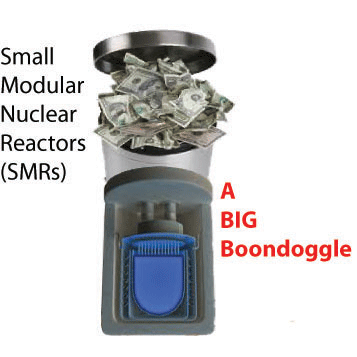
Small modular reactors (SMRs) are projected to be the most expensive source per kW of electricity generated when compared with natural gas, traditional nuclear and renewables.
(behind a paywall)
Mini nuclear reactor rush has a short half-life.

By Rob Cyran,
The rush to produce mini nuclear reactors on the cheap might have a short
half-life. In search of vast quantities of power for the data centers
fueling artificial intelligence, Meta Platforms, Alphabet and Amazon have
backed a goal, to triple the world’s nuclear power capacity by 2050.
The prospects for nuclear are indeed brightening, but it is still more
expensive and far slower to build than renewables. The upstart approach of
making smaller, identikit reactors will struggle even harder to close that
gap. Theoretically, SMRs can reduce costs by simplifying the underlying
design into a set of mass-produced, standard parts made off-site. About 95
companies are actively chasing this dream, according to John Ketchum, chief
executive of NextEra, the nation’s largest power developer.
Big names are in the fray, like OpenAI chief Sam Altman and his side project Oklo, or
Google and Amazon, which have invested in Kairos and X-energy,
respectively. UK-based engineering giant Rolls-Royce is urging the British
government to begin moving ahead with new projects.
This idea isn’t entirely new. The U.S. built some small commercial reactors in the 1960s.
But bigger reactors benefit from economies of scale, requiring
proportionately less material and fewer operating staff, resulting in a
one-third advantage versus smaller plants in costs per kilowatt of power,
Reuters 31st March 2025
https://www.reuters.com/breakingviews/mini-nuclear-reactor-rush-has-short-half-life-2025-03-31/
Behind the hype -“New wave of smaller, cheaper nuclear reactors sends US states racing to attract the industry “

No modular reactors are operating in the U.S. and a project to build the first, this one in Idaho, was terminated in 2023, despite getting federal aid.
The U.S. remains without a long-term solution for storing radioactive waste
Nuclear also has competition from renewable energies.
New wave of smaller, cheaper nuclear reactors sends US states racing to attract the industry, By ASSOCIATED PRESS, 29 March 2025 https://www.dailymail.co.uk/wires/ap/article-14549543/New-wave-smaller-cheaper-nuclear-reactors-sends-US-states-racing-attract-industry.html
HARRISBURG, Pa. (AP) – With the promise of newer, cheaper nuclear power on the horizon, U.S. states are vying to position themselves to build and supply the industry’s next generation as policymakers consider expanding subsidies and paving over regulatory obstacles.
Advanced reactor designs from competing firms are filling up the federal government’s regulatory pipeline as the industry touts them as a reliable, climate-friendly way to meet electricity demands from tech giants desperate to power their fast-growing artificial intelligence platforms.
The reactors could be operational as early as 2030, giving states a short runway to roll out the red carpet, and they face lingering public skepticism about safety and growing competition from renewables like wind and solar. Still, the reactors have high-level federal support, and utilities across the U.S. are working to incorporate the energy source into their portfolios.
Last year, 25 states passed legislation to support advanced nuclear energy and this year lawmakers have introduced over 200 bills supportive of nuclear energy, said Marc Nichol of the Nuclear Energy Institute, a trade association whose members include power plant owners, universities and labor unions.
“We´ve seen states taking action at ever-increasing levels for the past few years now,” Nichol said in an interview.
Smaller reactors are, in theory, faster to build and easier to site than conventional reactors. They could be factory-built from standard parts and are touted as flexible enough to plunk down for a single customer, like a data center or an industrial complex.
Advanced reactors, called small modular reactors and microreactors, produce a fraction of the energy produced by the conventional nuclear reactors built around the world for the last 50 years. Where conventional reactors produce 800 to 1,000 megawatts, or enough to power about half a million homes, modular reactors produce 300 megawatts or less and microreactors produce no more than 20 megawatts.
Tech giants Amazon and Google are investing in nuclear reactors to get the power they need, as states compete with Big Tech, and each other, in a race for electricity.
For some state officials, nuclear is a carbon-free source of electricity that helps them meet greenhouse gas-reduction goals. Others see it as an always-on power source to replace an accelerating wave of retiring coal-fired power plants.
Tennessee Gov. Bill Lee last month proposed more than $90 million to help subsidize a Tennessee Valley Authority project to install several small reactors, boost research and attract nuclear tech firms.
Long a proponent of the TVA’s nuclear project, Lee also launched Tennessee’s Nuclear Energy Fund in 2023, designed to attract a supply chain, including a multibillion-dollar uranium enrichment plant billed as the state’s biggest-ever industrial investment.
In Utah, where Gov. Spencer Cox announced “Operation Gigawatt” to double the state’s electricity generation in a decade, the Republican wants to spend $20 million to prepare sites for nuclear. State Senate President J. Stuart Adams told colleagues when he opened the chamber’s 2025 session that Utah needs to be the “nation´s nuclear hub.”
Texas Gov. Greg Abbott declared his state is “ready to be No. 1 in advanced nuclear power” as Texas lawmakers consider billions in nuclear power incentives.
Michigan lawmakers are considering millions of dollars in incentives to develop and use the reactors, as well as train a nuclear industry workforce.
One state over, Indiana lawmakers this month passed legislation to let utilities more quickly seek reimbursement for the cost to build a modular reactor, undoing a decades-old prohibition designed to protect ratepayers from bloated, inefficient or, worse, aborted power projects.
In Arizona, lawmakers are considering a utility-backed bill to relax environmental regulations if a utility builds a reactor at the site of a large industrial power user or a retired coal-fired power plant.
Still, the devices face an uncertain future.
No modular reactors are operating in the U.S. and a project to build the first, this one in Idaho, was terminated in 2023, despite getting federal aid.
The U.S. Department of Energy last year, under then-President Joe Biden, estimated the U.S. will need an additional 200 gigawatts of new nuclear capacity to keep pace with future power demands and reach net-zero emissions of planet-warming greenhouse gases by 2050 to avoid the worst effects of climate change.
The U.S. currently has just under 100 gigawatts of nuclear power operating. More than 30 advanced nuclear projects are under consideration or planned to be in operation by the early 2030s, Nichol of the NEI said, but those would supply just a fraction of the 200 gigawatt goal.
Work to produce a modular reactor has drawn billions of dollars in federal subsidies, loan guarantees and more recently tax credits signed into law by Biden.
Those have been critical to the nuclear industry, which expects them to survive under President Donald Trump, whose administration it sees as a supporter.
The U.S. remains without a long-term solution for storing radioactive waste, safety regulators are under pressure from Congress to approve designs and there are serious questions about industry claims that the smaller reactors are efficient, safe and reliable, said Edwin Lyman, director of nuclear power safety at the Union of Concerned Scientists.
Plus, Lyman said, “the likelihood that those are going to be deployable and instantly 100% reliable right out of the gate is just not consistent with the history of nuclear power development. And so it´s a much riskier bet.”
Nuclear also has competition from renewable energies.
Brendan Kochunas, an assistant professor of nuclear engineering at the University of Michigan, said advanced reactors may have a short window to succeed, given the regulatory scrutiny they undergo and the advances in energy storage technologies to make wind and solar power more reliable.
Those storage technologies could develop faster, bring down renewables’ cost and, ultimately, make more economic sense than nuclear, Kochunas said.
The supply chain for building reactors is another question.
The U.S. lacks high-quality concrete- and steel-fabrication design skills necessary to manufacture a nuclear power plant, Kochunas said.
That introduces the prospect of higher costs and longer timelines, he said. While foreign suppliers could help, there also is the fuel to consider.
Kathryn Huff, a former top Energy Department official who is now an associate professor at the University of Illinois Urbana-Champaign, said uranium enrichment capacity in the U.S. and among its allies needs to grow in order to support reactor production.
First-of-their-kind reactors need to get up and running close to their target dates, Huff said, “in order for anyone to have faith that a second or third or fourth one should be built.”
DOE Reissues $900M Nuclear SMR Opportunity, Scraps Community Criteria to Focus on Technical Merit
Power, Mar 26, 2025, by Sonal Patel
The U.S. Department of Energy (DOE) has reissued a $900 million funding opportunity to accelerate deployment of Generation III+ small modular reactors (SMRs), removing community benefit requirements and shifting the focus solely to technical merit—a move that reflects the Trump administration’s revised energy and industrial priorities.
The funding opportunity announcement (FOA)—officially designated DE-FOA-0003485—was first issued in October 2024, backed by funds appropriated through the 2021 Infrastructure Investment and Jobs Act (IIJA) and authorized under the Consolidated Appropriations Act of 2024. The effort remains jointly administered by the Office of Nuclear Energy and the Office of Clean Energy Demonstrations (OCED), with technical support from the National Nuclear Security Administration (NNSA)……………………………………………………………………………………………………………………….
Community Requirements Dropped
According to the FOA, eligible Tier 1 projects must feature Generation III+ light-water reactor (LWR) designs ranging between 50 MWe and 350 MWe per unit. (To be considered, total plant output, including process heat loads, must be below 350 MWe.) Projects may involve single-unit or multi-unit configurations with no cap on total site output. Designs must meet a minimum Technology Readiness Level (TRL) of 6, signaling sufficient maturity for system-level validation and procurement.
The FOA also stresses that cost-sharing is a core requirement. “DOE cannot contribute more than 50% of the overall project cost; therefore, the total award value will be no less than $1.6 billion, if the full government share is awarded.” It adds that “DOE will pay out based on previously agreed milestone amounts upon their completion,” and that “the agreed upon milestone payment from DOE cannot account for more than 50% of the project costs incurred in completing the milestone.”………………………………………………………………………………………………………………………………………….
The most prominent change— as highlighted above—is that the March 24 submission formally eliminates all community benefit obligations that were central to the October 2024 solicitation. That includes the removal of the Community Benefits Plan, which had been a required five-page submission outlining how projects would support community and labor engagement, workforce investment, and equity objectives. It also eliminates the “Program Policy Factors” section, which the DOE previously used after technical review to prioritize projects based on geographic diversity, local job creation, engagement with disadvantaged communities, and alignment with broader social goals such as the Justice40 Initiative. The reissued FOA now states that “applications will be evaluated solely on technical merit.”……………………………………………………………………………………………more https://www.powermag.com/doe-reissues-900m-nuclear-smr-opportunity-scraps-community-criteria-to-focus-on-technical-merit/
Failure After Failure: Let’s Ditch Small Modular Reactors.

The World Mind, February 25, 2025, Carmine Miklovis https://www.theworldmind.org/briefing-archive/failure-after-failure-lets-ditch-small-modular-reactors2025/2/25
Imagine a revolutionary new coffee machine – one that can get twice as much coffee from the same amount of beans. This machine would make coffee cheaper to make at home and buy at shops like Dunkin’ and Starbucks. This coffee machine starts to get buy-in from major companies in the coffee business, like Keurig and Nespresso, and is projected to be launched in Summer 2025. Halfway through the spring, it’s announced that, due to delays, it will now be launched in Winter 2027. After another delay, it’s announced that the project is now expected by 2030. Keurig and Nespresso, in response, withdraw from the project, further delaying it until 2035. After 10 years of delays, would you still invest in this machine? Probably not, so why are we investing in an energy technology that’s built on the same promises?
Small modular reactors (SMRs), unlike the coffee machine, are a real technology that promise to make nuclear energy cheaper and more accessible. In theory, their smaller size allows them to be deployed more quickly and in a variety of settings, an advantage over solar panels, wind turbines, and tidal energy, which have location restrictions. Some of these reactor designs can reprocess spent fuel (known as a “closed fuel cycle”) to extract more energy than traditional reactors can from the same amount of fuel. As such, many have hailed these nuclear reactors as the key to addressing the climate crisis, as they seem to resolve a lot of the current problems that have plagued nuclear power thus far.
On an international level, France and India have announced plans to begin constructing SMRs together, praising the energy source for its potential to enable the transition to a low-carbon future. India is also expected to work with U.S. firms to enhance investment in the technology. Similarly, Trump’s pick for energy secretary, Chris Wright, served on the board of Oklo Inc., a company that focuses on advanced nuclear technology, and is pushing for investments in nuclear energy (alongside fossil fuels). As the Trump administration ditches renewables for fossil fuels and nuclear energy, some, including Wright, have said that now is the time for the nuclear renaissance.

Unfortunately, however, it seems increasingly likely that these reactors will fail to live up to their promise. Talks of deploying small modular reactors have been ongoing for over a decade, and while around a hundred designs exist, only two reactors have been deployed–one in China and one in Russia. In the U.S., while private companies and the federal government have invested billions into their development, projects have faced delays and cancellations. Long construction times, issues with quality control, and disproportionately high energy costs (for producers and consumers alike) have led many to conclude that the energy source is a false promise. Recognizing this failure, many of the largest energy companies, such as Babcock & Wilcox and Westinghouse have withdrawn their investments, leaving many other investors hesitant to put any of their assets in the nuclear cause. While the potential of these models is exciting in theory, investors would much rather hedge their bets on just about anything else.
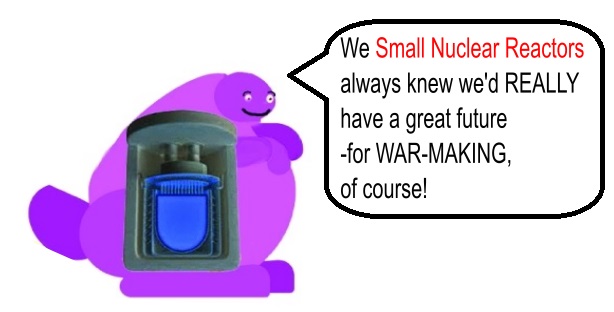
To make matters worse, small modular reactors come with an additional catch: they risk enabling the proliferation of nuclear weapons. SMRs are a dual-use technology; after reactors have extracted energy from the fuel rods (the real-life equivalent of the coffee beans from earlier), they’re left with weapons-grade plutonium in the nuclear waste that could be used to create a potent nuclear weapon. This risk is particularly acute for reactors that reprocess for more energy, as the leftover waste is more potent and more viable for a nuclear weapon.
This presents a particular challenge, as in order for the touted benefits of SMRs to materialize, they need to distinguish themselves from the nuclear reactors we have now. As such, these new designs have to be more efficient and take advantage of their versatility, which means a lot of smaller reactors capable of reprocessing. More fissile material (in quantity and quality) coming out of more reactors makes it difficult to effectively monitor where all the waste goes. To complicate things, monitoring is already a problem, as it’s difficult to accurately measure nuclear material as it’s being transported from the facility to a waste disposal unit. The ease of diverting material could provide a pathway for states that have long had nuclear ambitions, such as Iran (who is also in a proxy war against a nuclear-armed adversary), or opportunistic non-state actors (such as domestic extremists or terrorist groups like ISIS) to finally get their hands on a nuclear weapon.
Unfortunately for proponents, it’s unlikely that the U.S. will be able to control or monitor the spread of this technology. The U.S. cannot set the standards for SMRs when it continues to lag behind Russia and China in production. Even then, why would countries already in China’s global infrastructure program, known as the Belt and Road Initiative, choose to get nuclear reactor designs from the U.S. further down the line when they can get nuclear reactors from China now? Chinese energy technology is likely more interoperable—able to work with pre-existing infrastructure—than U.S. designs, further restricting the U.S.’ potential market share. Even our closest allies wouldn’t want U.S. models, as some of them, including Germany and Japan, have given up on nuclear energy altogether. Given this hesitation and the long delays, SMRs would either fail to be deployed at a sufficient scale to resolve climate change, or would be completed hastily, which increases the risk of state or non-state actors acquiring a nuclear weapon.
While some may argue that any investment in renewable energy is a net positive in the fight against climate change, investing in nuclear energy hamstrings the response of future administrations. Investing in nuclear power creates a dangerous moral licensing, wherein future leaders may feel less incentivized to invest in other, effective renewable energy sources because they feel that they already have it covered with nuclear power. Historically, because of the way subsidies are distributed under the Clean Power Plan, nuclear energy actively stifles the development of other energies. In an effort to make nuclear power prices competitive, the U.S. government subsidizes it, which actively siphons those subsidies away from solar, wind, and tidal energy. As solar energy becomes the cheapest option available, subsidies to expand its gap or aid its clean partners could enhance renewable energy’s grip on the market. Absent these subsidies, however, fossil fuels may retain their foothold in the market for the foreseeable future. Given the existential threat at stake, the risk that this poses for the climate response cannot be overstated.
While advocates of SMRs are right that renewable energy needs to be adopted swiftly, trying to haphazardly rush out these reactors to deploy around the world risks trading one crisis for another, enabling a new era of nuclear proliferation. Similarly, if the Trump administration wants to keep its promise of low energy prices, their best bet is to stop investing in the nuclear power industry and let solar and wind energy take the reins. Like the hypothetical coffee machine, the benefits of SMRs will remain a nice thought, but nothing more than that. As climate change beckons at our doorstep, we can’t afford to invest in a false promise—it’s time to ditch SMRs.
The SMR Gamble: Betting on Nuclear to Fuel the Data Center Boom

“Who’s going to insure these plants?” “That’s a huge unknown. “
Mar 3, 2025, by Sonal Patel Power Mag
Data center power demand is accelerating, pushing the grid to its limits and prompting tech giants to bet on next-generation nuclear reactors. But given steep costs, regulatory hurdles, and uncertain scalability, is nuclear the future of data center energy—or just another high-stakes gamble?
At the end of January, Chinese artificial intelligence (AI) startup DeepSeek unveiled two large language models (LLMs)—DeepSeek-R1 and DeepSeek-R1-zero. Unlike previous generations of AI models, DeepSeek’s breakthrough reduced the compute cost of AI inference by a factor of 10, allowing it to achieve OpenAI GPT-4.5-level performance while consuming only a fraction of the power.
The news upended future electricity demand assumptions, rattling both the energy and tech sectors. Investment markets reacted swiftly, driving down expectations—and share prices—for power generation, small modular reactor (SMR) developers, uranium suppliers, gas companies, and major tech firms.
Yet, amid the chaos, optimism abounded. Analysts pointed to Jevons paradox, the economic principle that efficiency gains can increase consumption, rather than reduce it. “Our model shows a ~90% drop in the unit cost of compute over a six-year period, and our recent survey of corporate AI adoption suggests increases in the magnitude of AI use cases,” said Morgan Stanley Research. The U.S. remains the dominant market for AI-driven data center expansion, with 40 GW of new projects under development, aligning with a projected 57 GW of AI-related compute demand by 2028. Already, that load is transforming the energy landscape. A recent POWER analysis shows that U.S. data center electricity consumption could reach between 214 TWh and 675 TWh annually by 2030, up from 176 TWh in 2023 (Figure 1 on original)………………………………
Emerging Business Challenges
Still, beyond regulations, the actual business of running co-located nuclear plants remains uncertain. While recent discussions highlight tech companies as potential investors in advanced nuclear facilities, data center sources confirmed most aren’t attracted to the prospect of owning and operating nuclear plants.
“Data center operators are not in the business of running power plants,” said Walsh. “They want reliability and cost certainty, but they don’t want to deal with regulatory oversight, fuel procurement, or reactor maintenance.”………………………
From an operational standpoint, co-located facilities can pose new risks, as Nina Sadighi, professional engineer and founder of Eradeh Power Consulting told POWER. “Who’s going to insure these plants?” she asked. “That’s a huge unknown. Right now, insurance providers are hesitant because of the regulatory and operational complexity. The traditional nuclear liability structures are built around large reactors with established operational histories, and when you introduce something novel like SMRs or microreactors, you’re dealing with a very different risk profile.”
Sadighi, though generally optimistic about nuclear’s suitability for data centers, also pointed to potential workforce-related challenges that hinge on timely deployment. “If we train nuclear workers now, but deployment gets delayed, those workers won’t wait around,” she said. “The nuclear workforce pipeline is not like a tech workforce, where people can pivot between roles quickly. These are specialized skills that require years of training, and if there’s uncertainty about job stability, we risk losing them to other industries entirely,” she said. Sadighi also raised concerns about the stringent operational protocols that add to labor inefficiencies.
Finally, while the data center industry isn’t solely bent on economics—and told POWER sustainability with a long-term vision is a bigger priority—scaling up will require significant investment. That has sparked all kinds of debate. Lux Research estimates first-of-a-kind (FOAK) SMRs could cost nearly three times more than natural gas ($331/MWh versus $124/MWh) and more than 10 times more when factoring in cost overruns and delays. The firm projects SMRs won’t be cost-competitive before 2035. “Cheap nuclear just isn’t in the cards in the next two decades,” it says.
The fundamental debate is rooted in several uncertainties—which is not uncommon for emerging sectors, experts also generally pointed out. “Tax credits—especially the clean electricity production tax credits and investment tax credits—will be vital to the commercial viability of these projects, especially considering the FOAK risk,” said Teplinsky. “DOE [U.S. Department of Energy] loan guarantees and direct financing from the Federal Financing Bank at low rates are also essential to companies’ ability to secure debt and reduce cost of capital. Grant funding to support commercial demonstrations and high-assay low-enriched uranium support are also key.” ………………..
https://www.powermag.com/the-smr-gamble-betting-on-nuclear-to-fuel-the-data-center-boom/
Small modular reactor plans edge closer, amid claims that the technology makes no economic sense
By Simon Hacker, Punchline Gloucester 28th Feb 2025
…………………………………….Dale Vince, the owner of Stroud-based green energy group Ecotricity, has
roundly condemned the technology for “defying the economic laws of
gravity”.
Speaking on his weekly Zerocarbonista podcast, Mr Vince said:
“When you come to small nukes, the government and the nuclear industry have
consistently said that we will get lower bills, but they don’t put a number
on it. They are ecomonists without numbers!
Energy minister Ed Miliband: keen to move ahead on SMR plans. Big nuclear is the most expensive electricity we have ever made, it’s off the charts compared to renewable
energy and one of the fundamental laws of physics is that the economies of
scale come by making something bigger, not by making something smaller –
it always costs money to miniaturise.
So here they are, saying we can
miniatarise nuclear reactors that famously went decades late and billions
over budget… and they’ll be cheap. I don’t believe that for a second and
what we are of course doing is proliferating the risk.”
He added: “It’s always worth imagining what it would be like if the Romans had nuclear
power. If they did, Bath would be a toxic no-go zone. It’s only 2,000 years
ago and sounds like a long time, but not in the context of toxic nuclear
waste.” Whether Berkeley and neighbouring site Oldbury-on-Severn progress
with Rolls Royce’s SMR bid, the technology’s pathway to viable commercial
models for energy production remains challenging: as of today, only China
and Russia have operational SMRs, with China’s HTR-PM pebble-bed reactor
connected to the grid and Russia’s floating Akademik Lomonosov plant
utilizing two 35MW SMRs. https://www.punchline-gloucester.com/articles/aanews/smr-plans-edge-closer-amid-claims-the-technology-makes-no-economic-sense
Small Nuclear Reactor developer groups raise $1.5bn amid race to power AI boom
Developers of small modular nuclear reactors have raised at least $1.5bn in
funding over the past year, tapping into a surge of investor interest
linked to power supply deals agreed with Big Tech.
They have also secured pledges of billions of dollars of support from governments, amid a global race to launch new technologies considered critical to powering the
artificial intelligence revolution.
The largest fundraising of $700mn was closed this month by X-energy, a US developer that added Jane Street and other institutional investors to a register that included technology giantAmazon,
Ken Griffin, founder and chief executive of Citadel and chemical
company Dow. Paris-based developer Newcleo raised $151mn in September and
US-based developers Blue Energy and Last Energy raised $45mn and $40mn
respectively last year.
Nano Nuclear Energy, a developer of microreactors
which listed in May, raised $134mn capital in 2024. Three SMR developers
listed in New York, Oklo, NuScale and Nano Nuclear, raised more than $700mn
through share sales and other financing mechanisms over the past 12 months,
according to a Financial Times analysis of public records and data from
PitchBook and BloombergNEF.
Westinghouse, Rolls-Royce, Holtec
International, GE Hitachi and Bill Gates’ TerraPower are also among a host
of companies investing in about 60 SMR projects globally, according to
World Nuclear Association data. Amazon’s purchase of a stake in X-energy
and Google’s power supply deal with SMR developer Kairos Power, which both
occurred in October, have shaken up a funding market that soured in 2023
because of high interest rates and inflation.
But analysts warn developers
still face technical, regulatory and funding risks despite the improved
sentiment.
FT 19th Feb 2025, https://www.ft.com/content/2d84198e-7eeb-4154-bbf2-9a469b0cc700
Pioneering micro nuclear reactors to be built in Britain.
Major test for UK’s energy policy as four reactors planned on site of former power
station in Wales. Britain’s first “micro” nuclear reactors are to be
built on the site of a former coal-fired power station in south Wales. Four
reactors will be installed at the decommissioned Llynfi power station in
Bridgend under the proposals, each generating up to 20 megawatts (MW) of
electricity. These will be assembled in modules after being produced in a
factory off-site. The 14-acre project is being overseen by Last Energy, a
Washington-headquartered business, in a major early test for the
Government’s green energy policy. It will be the first new UK location to
house a commercial nuclear power reactor since the Torness nuclear power
station in East Lothian in 1978. Until now, modern UK nuclear projects have
been built on sites previously occupied by an earlier plant.
Telegraph 17th Feb 2025
Starmer’s nuclear reactors won’t be small, cheap or popular

David Elliott and Arthur Stansfield on Labour’s plans for expanding nuclear power plants, https://www.theguardian.com/environment/2025/feb/16/starmers-nuclear-reactors-wont-be-small-cheap-or-popular
Labour’s plan for siting small nuclear reactor plants around the country (Keir Starmer unveils plan for large nuclear expansion across England and Wales, 6 February) feels almost like something Donald Trump would come up with. The reality is that they would not be small – for example, the system being developed by Rolls-Royce is 470 megawatts, larger than most of the old, now closed, magnox reactors that were built in the UK in the 1960s.
And they will not be cheap – even backers, like the Tony Blair Institute for Global Change, have admitted that they “could have higher costs per MW compared to gigawatt-scale reactors”. And there would be a range of safety- and security-risk issues with local deployment, adding to the cost – nuclear plants are usually located in remote sites. Will many people want one near them? By comparison, with costs falling, public support for renewables, like solar and offshore wind, has never been higher.
David Elliott
Emeritus professor of technology policy, the Open University
Great British Nuclear competition winners announcement still ‘around Spending Review’

13 Feb, 2025 By Tom Pashby
Great British Nuclear (GBN) has confirmed that the winners of its small modular reactor (SMR) competition will still be announced around the time of the Spending Review on 11 June 2025, despite reports that it would take place on 26 March at the Spring Statement.
GE-Hitachi, Holtec Britain, Rolls-Royce SMR and Westinghouse Electric Co. were announced as the final four companies in contention following the conclusion of the initial tender
stage at the end of September. NuScale dropped out at this point, while EDF
exited the competition in July when it failed to submit documents before
the deadline.
GBN completed two rounds of assessment with the four
shortlisted companies and is now entering negotiations ahead of the
submission of final tenders. The nuclear body said in November 2024 it had
started “detailed negotiations” with the four small modular reactor
(SMR) developers remaining in its competition for deployment in the UK. GBN
debunks financial news site report. Financial news site The Motley Fool
reported on 11 February that the announcement was “expected to be
announced by Great British Nuclear on or around the time of the Spring
Budget Statement, scheduled for 26 March”.
New Civil Engineer 13th Feb 2025, https://www.newcivilengineer.com/latest/great-british-nuclear-competition-winners-announcement-still-around-spending-review-13-02-2025/
NuScale Power Corporation (SMR) Stock Plunges 25% Amid DeepSeek AI Concerns and Reevaluation of AI-Driven Energy Demand

Yahoo! Finance, Ghazal Ahmed, Thu, January 30, 2025
We recently published an article titled These 29 AI Electricity, Infrastructure Stocks Are Crashing Due to DeepSeek News. In this article, we are going to take a look at where NuScale Power Corporation (NYSE:SMR) stands against the other AI stocks.
Investors are pulling back from the artificial intelligence trade. Previously, a report by the Lawrence Berkeley National Laboratory highlighted that US data centers are expected to use 6.7% to 12% of all power by 2028. However, one artificial intelligence startup has upended these estimates, leaving investors wondering whether the anticipated surge in power demand and data center expansion still holds.
Energy, infrastructure, and real-estate stocks were tanking on Monday, even though they were known to be less crowded alternatives to stocks such as Nvidia. Monday’s broad-market selloff has revealed how a vast number of energy-related companies have been banking on the AI boom and the anticipated power surge it was expected to bring.
DeepSeek, an artificial intelligence startup from China, caused a frenzy in the AI world after launching its latest AI models. The company claims that these models built are at par or better than industry-leading models in the United States. They require fewer chips and are made at a fraction of the cost. All of these updates are now threatening to upset the technology world. Once the best-performing securities over the past 18 months, US electricity providers are now one of the hardest hit sectors with investors reevaluating their outlooks toward artificial intelligence and the magnitude of money that they are spending………………………………….
DeepSeek AI is also threatening the dominance of current leaders in the artificial intelligence world. This could potentially slow down the deployment of their data centers. However, an energy economist at the University of Houston noted that the wider adoption of AI could be positive news…………………………………………………………
NuScale Power Corporation (NYSE:SMR)
Number of Hedge Fund Holders: 18
Share Price Decline: (25.02%)
NuScale Power Corporation (NYSE:SMR) designs and markets small modular reactors (SMRs). Another stock heavily tied to the AI world, Corvallis-based NuScale has previously benefited from the idea that AI-driven electricity demand increases could boost its small modular reactor business. Now that Wall Street is reevaluating the energy requirements of AI, energy and related utilities stocks have been tanking. In particular, NuScale saw its shares plunge by 25% following the news regarding DeepSeek. Not only do DeepSeek’s AI models use less computing power and chips, but the model released is also open-source. This move has made it harder for competitors to justify the huge costs that they have been spending on hardware, software, and expertise needed to develop similar systems…………….https://finance.yahoo.com/news/nuscale-power-corporation-smr-stock-015431414.html
Nuclear Waste: The Dark Side of the Microreactor Boom

By Haley Zaremba – Jan 15, 2025, https://oilprice.com/Alternative-Energy/Nuclear-Power/Nuclear-Waste-The-Dark-Side-of-the-Microreactor-Boom.html
The nuclear energy sector is experiencing a revival, driven by factors such as increased energy demand and support from governments and tech companies.
Microreactors, a new form of nuclear technology, are being touted for their lower costs and smaller size, but they produce a significantly higher volume of nuclear waste.
Despite concerns about nuclear waste, the development and deployment of microreactors continue to gain momentum, driven in part by the growing energy needs of AI.
Nuclear energy is ready for its close-up. After decades of steep decline in the sector and relatively high levels of public mistrust for the controversial technology, the tides are turning in favor of a nuclear energy renaissance. The public memory of disasters like Fukushima, Three Mile Island, and Chernobyl is fading, and the benefits of nuclear – a zero-carbon, baseload energy source – are getting harder to ignore as deadlines for climate commitments grow closer and energy demand ticks ever higher. But the future of the nuclear energy sector will look a bit different than its last boom time, from technological advances to the makeup of its biggest backers.
In Russia and Asia, nuclear energy has stayed popular, but in the West, nuclear had almost entirely fallen out of favor up until the last few years. In the United States, the Biden administration helped to build momentum for a nuclear comeback through its flagship Inflation Reduction Act, which included tax breaks and other incentives for various nodes of the nuclear sector. Over in Europe, nuclear advocates are trying to push through policy supporting nuclear power as Europe reconfigures its energy landscape to contend with energy sanctions on Russia. Public opinion in the West is also shifting in favor of nuclear power. As of 2023, a Gallup poll showed that support for nuclear energy in the United States was at a 10-year high.
Some of the biggest proponents of the nuclear energy renaissance are big tech bigwigs, who point to the power source as a critical solution to feed the runaway power demand of Artificial Intelligence. In fact, the growth trend of data centers’ energy demand is so extreme that it will soon outstrip the United States’ production potential if nuclear energy – and a host of other low-carbon solutions – are not utilized, and soon. Tech bigwigs, therefore, have good reason to back nuclear energy – oh, and they also just so happen to be behind a rash of nuclear energy startups.
But the new kind of nuclear that these companies are trying to bring onto the scene will not be the same as the nuclear technologies that had so solidly fallen out of favor over the last few decades. Traditional nuclear energy has a number of drawbacks, most notably its extremely high up-front costs and the additional costly burden of storing hazardous nuclear waste. New nuclear advocates want to confront the former challenge by rolling out much smaller versions of nuclear reactors, which can essentially be mass-produced and then installed on site for much lower development costs.
Currently, the industry is undergoing a competitive race to corner the market on nuclear microreactors, which are about the size of a shipping container and function somewhat like a giant battery pack. “Microreactors have the ability to provide clean energy and have passive safety features, which decrease the risk of radioactive releases,” Euro News recently reported. “They are also much cheaper than bigger plants as they are factory-built and then installed where they are needed in modules.”
These microreactors can be used in a huge range of applications and do not require any on-site workers for their operation and maintenance. Instead, they can be operated remotely and autonomously. As a result, they have much lower overhead costs as well as lower up-front costs. So what’s the downside?
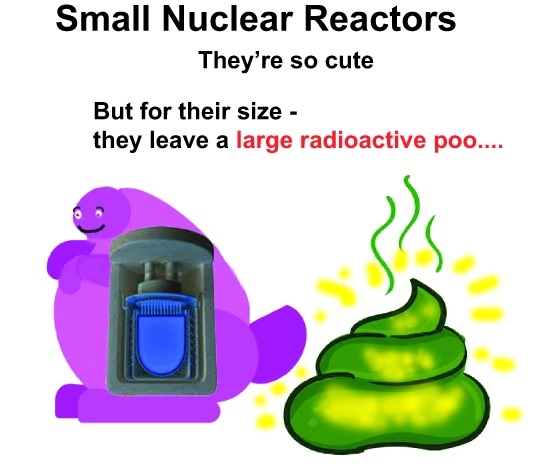
Well, it’s a big one. Scientists have found that, contrary to what nuclear advocates have touted, small nuclear reactors produce extremely high levels of nuclear waste, and could even be worse for the planet than their full-sized predecessors. “Our results show that most small modular reactor designs will actually increase the volume of nuclear waste in need of management and disposal, by factors of 2 to 30,” said Stanford study lead author Lindsay Krall. “These findings stand in sharp contrast to the cost and waste reduction benefits that advocates have claimed for advanced nuclear technologies.”Some members of the scientific community have taken notice: “Say no to small modular reactors,” blasted a recent headline from the Bulletin of Atomic Scientists.
However, the voices decrying the rollout of small- and microreactors seem to be in the minority, as the Silicon Valley-backed industry barrels full speed ahead. Countries across Europe have jumped into the race as well, and its high levels of momentum – fuelled by the seemingly unstoppable expansion of AI – are unlikely to be impeded by the scientists yelling doomsday warning, however well-founded, from the sidelines.
Weatherwatch: Could small nuclear reactors help curb extreme weather? There’s a credibility gap.

As natural disasters make need to cut CO2 emissions clearer than ever, energy demand of AI systems is about to soar.
Paul Brown 27 Jan 25 – https://www.theguardian.com/world/2025/jan/17/weatherwatch-could-small-nuclear-reactors-help-curb-extreme-weather
Violent weather events have been top of the news agenda for weeks, with scientists and fact-based news organisations attributing their increased severity to climate breakdown. The scientists consulted have all emphasised the need to cut greenhouse gas emissions.
At the same time there are predictions about artificial intelligence and datacentres urgently needing vast amounts of new electricity sources to keep them running. Small modular nuclear reactors (SMRs) have been touted as the green solution. The reports suggest that SMRs are just around the corner and will be up and running in the 2030s. Google first ordered seven, followed by Amazon, Microsoft and Meta each ordering more.
With billions of dollars on offer, many startup and established nuclear companies are getting in on the act. More than 90 separate designs for SMRs are being marketed across the world. Many governments, including the UK, are pouring money into design competitions and other ways to incentivise development.
In all this there is a credibility gap. None of the reactor designs have left the drawing board, prototypes have not been built or safety checks begun, and costs are at best optimistic guesses. SMRs may succeed, but let big tech gamble their spare billions on them while the rest of us are building cheap renewables we know work.
Lawsuit challenges NRC on SMR regulation

Friday, 10 January 2025, https://www.world-nuclear-news.org/articles/lawsuit-challenges-nrc-on-smr-regulation
The States of Texas and Utah and microreactor developer Last Energy Inc are challenging the US regulator over its application of a rule it adopted in 1956 to small modular reactors and research and test reactors.
Under the US Nuclear Regulatory Commission (NRC) Utilization Facility Rule, all US reactors are required to obtain NRC construction and operating licences regardless of their size, the amount of nuclear material they use or the risks associated with their operation. The plaintiffs say this imposes “complicated, costly, and time-intensive requirements that even the smallest and safest SMRs and microreactors – down to those not strong enough to power an LED lightbulb” must satisfy to secure the necessary licences. This does not only affect microreactors: existing research and test reactors such as those at the universities in both Texas and Utah face “significant costs” to maintain their NRC operating licences, the plaintiffs say.
In the filing, Last Energy – developer of the PWR-20 microreactor – says it has invested “tens of millions of dollars” in developing small nuclear reactor technology, including USD2 million on manufacturing efforts in Texas alone, and has agreements to develop more than 50 nuclear reactor facilities across Europe. But although it has a “preference” to build in the USA, “Last Energy nonetheless has concluded it is only feasible to develop its projects abroad in order to access alternative regulatory frameworks that incorporate a de minimis standard for nuclear power permitting”.
Noting that only three new commercial reactors have been built in the USA over the past 28 years, the plaintiffs say building a new commercial reactor of any size in the country has become “virtually impossible” due to the rule, which it says is a “misreading” of the NRC’s own scope of authority.
They are asking the court to set aside the rule, “at least as applied to certain small, non-hazardous reactors”, and exempt their research reactors and Last Energy’s small modular reactors (SMRs) from the commission’s licensing requirements.
Houston, Texas-based law firm King & Spalding said the lawsuit, if it is successful, would “mark a turning point” in the US nuclear regulatory framework – but warns that it could also create greater uncertainty as advanced nuclear technologies get closer to commercial readiness.
“Regardless the outcome, the Plaintiffs’ lawsuit highlights the challenges in applying the Utilization Facility Rule to the advanced nuclear reactors now under development in the US,” the company said in in analysis released on 9 January.
But the NRC is already addressing the issue: in 2023, it began the rulemaking process to establish an optional technology-inclusive regulatory framework for new commercial advanced nuclear reactors, which would include risk-informed and performance-based methods “flexible and practicable for application to a variety of advanced reactor technologies”. SECY-23-0021: Proposed Rule: Risk-Informed, Technology-Inclusive Regulatory Framework for Advanced Reactors is currently open for public comment until 28 February, and the NRC has said it expects to issue a final rule “no later than the end of 2027”.
The lawsuit has been filed with the US District Court in the Eastern District of Texas.
1 This Month



Shut down the radiation-damaged Heysham nuclear reactors now
To see nuclear-related stories in greater depth and intensity – go to https://nuclearinformation.wordpress.com

Say No to NASA’s Reckless Nuclear Reactor on the Moon
Say No to NASA’s Reckless Nuclear Reactor on the Moon
-
Archives
- October 2026 (256)
- September 2026 (339)
- August 2026 (330)
- July 2026 (355)
- June 2026 (287)
- May 2026 (306)
- April 2026 (356)
- March 2026 (251)
- February 2026 (267)
- January 2026 (308)
- December 2025 (358)
- November 2025 (359)
-
Categories
- 1
- 1 NUCLEAR ISSUES
- business and costs
- climate change
- culture and arts
- ENERGY
- environment
- health
- history
- indigenous issues
- Legal
- marketing of nuclear
- media
- opposition to nuclear
- PERSONAL STORIES
- politics
- politics international
- Religion and ethics
- safety
- secrets,lies and civil liberties
- spinbuster
- technology
- Uranium
- wastes
- weapons and war
- Women
- 2 WORLD
- ACTION
- AFRICA
- Atrocities
- AUSTRALIA
- Christina's notes
- Christina's themes
- culture and arts
- Events
- Fuk 2022
- Fuk 2023
- Fukushima 2017
- Fukushima 2018
- fukushima 2019
- Fukushima 2020
- Fukushima 2021
- general
- global warming
- Humour (God we need it)
- Nuclear
- RARE EARTHS
- Reference
- resources – print
- Resources -audiovicual
- Weekly Newsletter
- World
- World Nuclear
- YouTube
-
RSS
Entries RSS
Comments RSS

