Nuclear regulators OK fuel reprocessing plant, NHK, 29 Jul 20, Japan’s nuclear regulators have given a firm the green light to complete the construction of a fuel reprocessing plant, which is the centerpiece of the government’s nuclear fuel recycling policy.The plant in Aomori Prefecture, northeastern Japan, is operated by Japan Nuclear Fuel Limited. The facility is designed to extract plutonium for recycling from spent nuclear fuel generated by power plants…….
The regulators said on Wednesday that they had received about 760 opinions, and that many of them were about safety. The risk of radioactive materials leaking out was among the concerns.
The regulators concluded that the operator had measures in place to deal with the concerns, and said the firm’s application had been approved.
Japan Nuclear Fuel Limited wants to complete construction by September 2021, and launch operations in 2022. But the construction work, which began 27 years ago, has been delayed by problems. That has caused the cost to balloon to more than 130 billion dollars.
Plans to use the reprocessed plutonium are not moving forward as initially outlined.
The government and energy firm also still need to obtain local approval. https://www3.nhk.or.jp/nhkworld/en/news/20200729_20/
July 30, 2020
Posted by Christina Macpherson |
Japan, reprocessing |
Leave a comment
Coast Guard To Deliver Nuclear Icebreaker Plan to White House
The plan will include options to lease new breakers or build new nuclear-powered ships as Russia and China leap ahead of US capabilities in the Arctic. WASHINGTON: The Coast Guard is on track to deliver plans for a new generation of potentially nuclear-powered icebreakers to the White House by August 10, just two months after the Trump administration issued a surprise public directive to do so…….. https://breakingdefense.com/2020/07/coast-guard-to-deliver-nuclear-icebreaker-plan-to-white-house/
July 30, 2020
Posted by Christina Macpherson |
technology, USA |
Leave a comment
France’s global nuclear fusion device a puzzle of huge parts, AP, By ELAINE GANLEY. 29 Jul 20,
“…….. Billed as the world’s largest science project, ITER is gigantic. The circular device, called a tokamak, has a 30-meter circumference, stands 30 meters (100 feet) high, and is made up of more than a million parts constructed in numerous countries. ………Some pieces transported to France weigh several hundred tons. Tools to put the reactor together match that size, with giant lifts that must transfer components over the walls and down into “the pit.” A key component being built by the U.S., the Central Solenoid, is the most powerful of ITER’s numerous magnets. Together, they will be strong enough to lift an aircraft carrier.
The project begun in 2006 is far from over. The experimental reactor is to head for another landmark moment in five years, described as a “trial run” when scientists launch what is called “First Plasma” showing that the machine functions, including magnetic fields and other operations……
The project’s estimated cost just for the EU was about 20 billion euros ($23.5 billion), Bigot told reporters. He said a full price tag was difficult to estimate because participating countries make their own contributions. https://apnews.com/c9e1780864431c3edcd1cc2c17568c54
|
|
|
July 30, 2020
Posted by Christina Macpherson |
France, technology |
Leave a comment

readers may wonder how UAMPS convinced some members to sign an “option” contract, which eventually converts to a “hell-or-high-water” contract, meaning that the buyer has no right, under any circumstances, to abandon the contract once construction, the Achilles heel of nuclear projects, is authorized.
|
|
 Kurt Hamman: Questions to be asked about nuclear power proposal, https://www.sltrib.com/opinion/commentary/2020/07/27/kurt-hamman-questions-be/ By Kurt Hamman The Tribune, 28 July 20, Kurt Hamman: Questions to be asked about nuclear power proposal, https://www.sltrib.com/opinion/commentary/2020/07/27/kurt-hamman-questions-be/ By Kurt Hamman The Tribune, 28 July 20,
Over 20 municipalities, primarily located in Utah, have signed a contract with Utah Associated Municipal Power Systems (UAMPS) to purchase entitlement shares for a first-of-a-kind nuclear power plant based on NuScale’s unproven small modular reactor (SMR) design. [and they’re not really small at all]

Ignoring the history of commercial nuclear plant construction, advocates have promoted the SMR project as a cost-effective energy resource without fully addressing the economic, contractual and litigation risks with stakeholders.
Between 1953 and 2008, approximately 250 commercial nuclear reactors were ordered in the United States. During this period, ratepayers (and investors) bore the burden for well over $200 billion (in 2009 dollars) in costs for completed and abandoned nuclear plants.
For example, one of the largest municipal bond defaults occurred in 1982 when the Washington Public Power Supply System defaulted on $2.25 billion in bonds for two nuclear power plant construction projects. In an effort to reduce their losses, bondholders sued a group of utilities (including several Idaho cities) that entered into contracts to pay for the plants.
 However, the Vogtle project, supported with $12 billion in taxpayer-backed loan guarantees and plagued with cost overruns and delays, remains under construction. However, the Vogtle project, supported with $12 billion in taxpayer-backed loan guarantees and plagued with cost overruns and delays, remains under construction.
Well, what about the UAMPS SMR project, including the $65 dollars per megawatt-hour (price cost of electricity) sales pitch?
During a 2018 Los Alamos County Council meeting, held to consider approval of the UAMPS power sales contract, a council member asked a UAMPS lawyer, “There’s been mention of a target of $65 a megawatt-hour. How did we come up with that number?” Another council member, probing into the terms of the contract, expressed additional concern. The councilor stated, “I feel like we’re being sold a bill of goods with $65 a megawatt-hour.”
With that said, readers may wonder how UAMPS convinced some members to sign an “option” contract, which eventually converts to a “hell-or-high-water” contract, meaning that the buyer has no right, under any circumstances, to abandon the contract once construction, the Achilles heel of nuclear projects, is authorized.
Having a similar concern, especially given the history of nuclear plant construction, a sincere effort was made to address project risks with the UAMPS SMR project chair, including sharing concerns about transparency and proposing possible ways to minimize risks to ratepayers, including contract modifications such as price guarantees and redefining the construction period. Unfortunately, my questions and concerns fell on deaf ears.
|
|
July 28, 2020
Posted by Christina Macpherson |
business and costs, marketing of nuclear, politics, secrets,lies and civil liberties, Small Modular Nuclear Reactors, spinbuster, USA |
Leave a comment

U.S. eyes building nuclear power plants for moon and Mars https://www.pbs.org/newshour/nation/u-s-eyes-building-nuclear-nts-fpower-plaor-moon-and-mars Nation Jul 24, 2020 BOISE, Idaho (AP) — The U.S. wants to build nuclear power plants that will work on the moon and Mars, and on Friday put out a request for ideas from the private sector on how to do that.
The U.S. Department of Energy put out the formal request to build what it calls a fission surface power system that could allow humans to live for long periods in harsh space environments.
The Idaho National Laboratory, a nuclear research facility in eastern Idaho, the Energy Department and NASA will evaluate the ideas for developing the reactor.
The lab has been leading the way in the U.S. on advanced reactors, some of them micro reactors and others that can operate without water for cooling. Water-cooled nuclear reactors are the vast majority of reactors on Earth.
“Small nuclear reactors can provide the power capability necessary for space exploration missions of interest to the Federal government,” the Energy Department wrote in the notice published Friday.
The Energy Department, NASA and Battelle Energy Alliance, the U.S. contractor that manages the Idaho National Laboratory, plan to hold a government-industry webcast technical meeting in August concerning expectations for the program.
The plan has two phases. The first is developing a reactor design. The second is building a test reactor, a second reactor be sent to the moon, and developing a flight system and lander that can transport the reactor to the moon. The goal is to have a reactor, flight system and lander ready to go by the end of 2026.
The reactor must be able to generate an uninterrupted electricity output of at least 10 kilowatts. The average U.S. residential home, according to the U.S. Energy Information Administration, uses about 11,000 kilowatt-hours per year. The Energy Department said it would likely take multiple linked reactors to meet power needs on the moon or Mars.
In addition, the reactor cannot weigh more than 7,700 pounds (3,500 kilograms), be able to operate in space, operate mostly autonomously, and run for at least 10 years.
“This may drive or start an international space race to build and deploy new types of reactors requiring highly enriched uranium.”
– Edwin Lyman, director of Nuclear Power Safety at the Union of Concerned Scientists
The Energy Department said the reactor is intended to support exploration in the south polar region of the moon. The agency said a specific region on the Martian surface for exploration has not yet been identified.
Edwin Lyman, director of Nuclear Power Safety at the Union of Concerned Scientists, a nonprofit, said his organization is concerned the parameters of the design and timeline make the most likely reactors those that use highly enriched uranium, which can be made into weapons. Nations have generally been attempting to reduce the amount of enriched uranium being produced for that reason.
“This may drive or start an international space race to build and deploy new types of reactors requiring highly enriched uranium,” he said.
Earlier this week, the United Arab Emirates launched an orbiter to Mars and China launched an orbiter, lander and rover. The U.S. has already landed rovers on the red planet and is planning to send another next week.
Officials say operating a nuclear reactor on the moon would be a first step to building a modified version to operate in the different conditions found on Mars.
“Idaho National Laboratory has a central role in emphasizing the United States’ global leadership in nuclear innovation, with the anticipated demonstration of advanced reactors on the INL site,” John Wagner, associate laboratory director of INL’s Nuclear Science & Technology Directorate, said in a statement. “The prospect of deploying an advanced reactor to the lunar surface is as exciting as it is challenging.”
July 27, 2020
Posted by Christina Macpherson |
space travel, USA |
Leave a comment
While the nuclear macho men plan more nuclear, and nuclear weapons in space, it seems that it takes a woman, Alice Gorman, to investigate the radioactive pollution on Earth and in space, due to these activities
Nuclear sites still dangerous in 24,000 years, say space archaeologists
Some nuclear tests were conducted also in outer space and nuclear fuel was employed as propellant for rockets. https://www.jpost.com/health-science/nuclear-sites-still-dangerous-in-24000-years-space-archaeologists-say-636379 By ROSSELLA TERCATIN JULY 26, 2020
In July 1945, a test conducted in the deserts of New Mexico officially propelled humanity into the nuclear era. Only weeks after the Trinity Test, two atomic bombs were dropped on the Japanese cities of Hiroshima and Nagasaki.
In the following decades, while no other nuclear device was detonated in an act of war, military tests and studies continued.
Seventy-five years later, space
archaeologists are wondering how to warn humanity of the future that the sites where these experiments were carried out are still dangerous, Alice Gorman, associate professor at Flinders University in Adelaide, Australia, told
The Jerusalem Post.
“The type of plutonium used in the Trinity Test, plutonium-239, has a half-life of 24,000 years, meaning that after this time, only half of it will have decayed into a safe, non-radioactive element. How do we communicate to people living then that the site is dangerous?”
Gorman said the issue presents two challenging elements: What materials can survive such a long time, and what form of language can be used to deliver the actual message?
“As for the first difficulty, we know that stones and pottery last a very long time,” she said. “But the second point raises a big archaeological question related to symbolic communication. If we look at rock art from 20,000 years ago, we can see that there are pictures of animals, but we do not know what those pictures mean. Therefore, it is possible that our current symbols to mark radioactive sites, the yellow [and] black sign, will be interpreted as an invitation to explore the area, rather than to keep away from it.”
The issue is especially important for archaeologists of the future because in some cases, while the danger would be very limited or
not even relevant on the surface, the nuclear waste and its radiation are deeper in the ground, and conducting a dig would be
especially risky. For example, such is the case of Maralinga, a remote area in southern Australia where the UK conducted several
nuclear tests.
Some nuclear tests were conducted in outer space, and nuclear fuel was employed as propellant for rockets.
If the UN Outer Space Treaty of 1967 prohibited nuclear weapons in space, the issue of its weaponization remains very relevant.“Recently, Russia tested an anti-satellite weapon, reawakening the debate,” Gorman told the
Post.
She began to work in space archaeology following years of work focused on stone-tool analysis and the aboriginal use of bottle glass after European settlement.
Space archaeology deals with the same issues of regular archaeology, understanding material culture, human behavior and the interaction with the surrounding environment, Gorman said.
“However, we are looking at the post-Second World War period, when the very same rockets that had been developed as missiles started to send spacecraft into orbit,” she said. “We are interested in all of what is on earth, like rocket launch sites or tracking antennas and reception development, as well as town or residential areas where people who worked on these projects live, but also satellites, space junk and all the places on other planets where humans have sent spacecrafts.”
“We are asking the same questions other archaeologists are, but we have the limitations that we cannot visit many of the sites in person, and instead, we have to rely on records or images,” she added.
Gorman was drawn to space archaeology by the idea of exploring space junk, those many objects that cannot even be seen in the sky circling the Earth. Currently, she is working on the archaeology of the International Space Station.
The recent attempt by Israel to land a robotic unit on the moon with the Beresheet mission represents a very interesting development for space archaeologists, Gorman said.
“For many decades, the only material cultures present on the moon were the American and the Soviet one,” she said. “As new countries have started to reach the moon, this has changed, bringing more diversity to the field.”
July 27, 2020
Posted by Christina Macpherson |
- plutonium, 2 WORLD, space travel |
Leave a comment
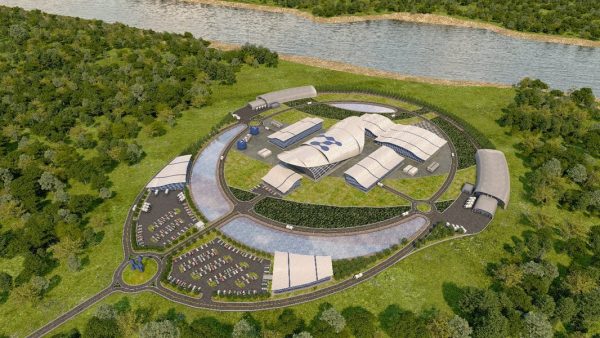
100% Renewables 16th July 2020, The Government has just announced a £40 million research programme into so-called advanced modular reactor technology that is highly unlikely ever to see any practical use. That is because the so-called small modular reactors (SMRs) are much too expensive for civilian use.
In an important sense it is nonsense to talk about research to develop SMRs as a ‘new’ technology simply because they already exist. They power military submarines and also US aircraft carriers. Their design is simply a smaller
version of the Pressurised Water Reactor (PWR) design that dominates the world nuclear power industry. Indeed PWRs began as small projects housed in submarines which were then developed up in scale so that they could produce electricity more cheaply.
At 450 MW for their proposed plant, the plant is not far off the same order of magnitude as conventional plant – for
example the AGR series that currently generates the bulk of British nuclear plant has units of around 600-660 MW. In fact, as Tom Burke points out, they are close to the size of Britain’s first generation of reactors, the ‘Magnox’ reactors.
Neither is the plant proposed by Rolls Royce modular in the sense that such plant can be rolled off a production line. What Rolls Royce claims is that some parts can be produced in a ‘modular’ fashion. This is not the same as producing whole units off a production line, and in fact the developers of the nuclear plant Vogtle in the USA also claim to produce parts in a ‘modular ‘fashion (although this plant is now hopelessly behind schedule with very large cost overruns).
https://100percentrenewableuk.org/blog
July 18, 2020
Posted by Christina Macpherson |
Reference, Small Modular Nuclear Reactors, UK |
Leave a comment


 I was disappointed that the New Energy Times had the DCMA take down a post on this site. It was- “Nuclear fusion: American Association for the Advancement of Science deceived by ITER propagandists”. But of course, they had every right to do so, as it was their article.
Here at nuclear-news, we strive to get out all the information we can, on the often weird and wonderful, not to say dangerous and secretive, world of the nuclear industry.
When it comes to nuclear fusion, the story is extra muddied, because the ordinary peasant, including myself, has trouble trying to understand the ins and outs of this extraordinary technology, which has great promise for clean energy, – or maybe not.
What I did glean from the now-disappeared article, was that the International Thermonuclear Experimental Reactor (ITER) program, or some of its proponents have misled non-experts about the potential power output of the ITER experimental nuclear fusion reactor. It’s a complicated story, involving various people, including Professor Ian Chapman, Chief Executive Officer of the UK Atomic Energy Agency. And – it’s a story of widespread, consistent, and long-standing deception, repeated in many prestigious websites and reputable journals.
Anyway – this story of murky competition in the nuclear fission drive, is detailed in another article in the New Energy Times – more http://news.newenergytimes.net/2017/12/11/evidence-of-the-iter-power-deception/
It doesn’t increase our faith in costly nuclear high tech research.
July 14, 2020
Posted by Christina Macpherson |
Christina's notes, secrets,lies and civil liberties, technology |
2 Comments
 Proposed Emergency Plan Exemption for New Nuclear Designs Raises Concerns, https://www.publicnewsservice.org/2020-07-13/energy-policy/proposed-emergency-plan-exemption-for-new-nuclear-designs-raises-concerns/a70806-1 July 13, 2020 Eric Tegethoff, Public News Service – ID
BOISE, Idaho — A proposal from the federal Nuclear Regulatory Commission exempting emergency planning for new nuclear plant designs is raising alarms.
The NRC proposal would allow facilities to end emergency preparedness zones at their boundaries.
That zone is currently set at a 10-mile radius around plants and a 50-mile ingestion zone to protect against contaminated food and water.
Timothy Judson, executive director of the Nuclear Information and Resource Service, says emergency zones have been required since the Three Mile Island accident in 1979.
“Having the emergency evacuation plans and emergency response plans is part of the social contract with nuclear power and has been in the U.S. for over 40 years now,” he points out.
One NRC commissioner says it’s a radical departure from past practices.
The Federal Emergency Management Agency has expressed concerns about the proposal to exempt the agency from evaluating evacuation plans.
In support of the proposal, the Nuclear Energy Institute says NRC is modernizing the rules for new nuclear power designs that don’t have the same risks as old designs.
The NuScale small modular reactor project at the Idaho National Laboratory could benefit from these new rules. But Judson says exempting this project from emergency planning regulations exposes why these rules are a bad idea.
“They’re designed to have 12 of these reactors all built in the same building and together, those 12 reactors would be larger than many commercially operating nuclear reactors in the country right now,” he points out.
Judson says the proposal would keep everyone, including utility companies to nearby communities, in the dark on nuclear safety plans.
“Whether you support nuclear power or don’t support nuclear power, everyone supports nuclear safety,” he stresses.
The NRC is accepting public comment on the proposal through July 27.
July 14, 2020
Posted by Christina Macpherson |
safety, Small Modular Nuclear Reactors |
Leave a comment
Ministers cool on Chinese nuclear reactors John Collingridge
Sunday July 12 2020,, The Sunday Times A Chinese-backed plan to build small nuclear reactors in Britain has been snubbed, in the latest sign of the chill in Anglo-Sino relations.
DBD, a Cheshire-based engineering firm, was working with China’s Institute of Nuclear and New Energy Technology to build a fleet of gas-cooled small reactors, and had hoped to win government funds. However, ministers have awarded £10m each to three rival projects — including an experimental plan for a fusion reactor. A version of the DBD reactor has already been built in China. DBD declined to comment……. (subscribers only) https://www.thetimes.co.uk/article/ministers-cool-on-chinese-nuclear-reactors-k2m8j76qf
July 13, 2020
Posted by Christina Macpherson |
China, politics international, Small Modular Nuclear Reactors, UK |
Leave a comment
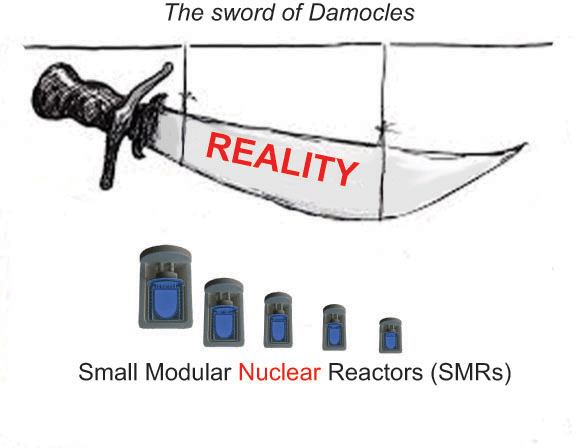
 ‘Many issues’ with modular nuclear reactors says environmental lawyer
Jordan Gill · CBC News ·Dec 03, 2019 Modular nuclear reactors may not be a cure for the nation’s carbon woes, an environmental lawyer said in reaction to an idea floated by three premiers.
Theresa McClenaghan, executive director of the Canadian Environmental Law Association, said the technology surrounding small reactors has numerous pitfalls, especially when compared with other renewable energy technology.
This comes after New Brunswick Premier Blaine Higgs, Saskatchewan Premier Scott Moe and Ontario Premier Doug Ford agreed to work together to develop the technology……..
The premiers say the smaller reactors would help Canada reach its carbon reduction targets but McClenaghan, legal counsel for the environmental group, disagrees
“I don’t think it is the answer,” said McClenaghan. “I don’t think it’s a viable solution to climate change.”
McClenaghan said the technology behind modular reactors is still in the development stage and needs years of work before it can be used on a wide scale.
“There are many issues still with the technology,” said McClenaghan. “And for climate change, the risks are so pervasive and the time scale is so short that we need to deploy the solutions we already know about like renewables and conservation.”
Waste, security concerns: lawyer
While nuclear power is considered a low-carbon method of producing electricity, McClenaghan said the waste that it creates brings its own environmental concerns.
“You’re still creating radioactive waste,” said McClenaghan.
“We don’t even have a solution to nuclear fuel waste yet in Canada and the existing plans are not taking into account these possibilities.”
McClenanghan believes there are national security risks with the plan as well.
She said having more reactors, especially if they’re in rural areas, means there’s a greater chance that waste or fuel from the reactors could be stolen for nefarious purposes.
“You’d be scattering radioactive materials, potentially attractive to diversion, much further across the country,” said the environmental lawyer. https://www.cbc.ca/news/canada/new-brunswick/many-issues-modular-nuclear-1.5381804
June 27, 2020
Posted by Christina Macpherson |
Canada, Small Modular Nuclear Reactors |
Leave a comment
 THE PENTAGON IS WORRIED A SPACE NUKE WILL FRY ITS SATELLITES, https://futurism.com/the-byte/pentagon-worried-space-nuke-fry-satellites JUNE 18TH 20__DAN ROBITZSK
I__
Space Nukes
The U.S. Department of Defense released a new space strategy report on Wednesday. In it, the military revealed that it’s concerned that nukes detonated in space could wipe out its fleet of satellites.
It’s not a new concern, since space nukes were originally banned in the 1967 Outer Space Treaty. But all the same, Business Insider reports that the Pentagon is particularly concerned that China and Russia might strike — a dire warning for the future of combat.
The report specifically identified China and Russia as immediate threats. Such an attack could potentially devastate military communication networks as well as the myriad other systems that depend on satellites.
“The challenge of a nuclear detonation is that it creates an electromagnetic pulse and a signal that could then take out indiscriminately many satellites in space and essentially fry the electronics,” Deputy Assistant Secretary of Defense for Space Policy Stephen Kitay said at a press conference on the report, according to BI.
“That is a threat that we have to potentially be prepared for — a nuclear detonation in space,” he added.
If nothing else, the report is yet another sign that the idea of space remaining peaceful seems to be slipping away.
“I wish I could say that space is a sea of tranquility, but the fact of the matter is that space is contested,” Kitay said. “Outer space has emerged as a key arena of potential conflict in an era of great power competition.”
June 27, 2020
Posted by Christina Macpherson |
space travel, USA |
Leave a comment
Daily on Energy, presented by API: Inside the new US policy on financing nuclear abroad, Washington Examiner, by Josh Siegel, Energy and Environment Reporter & Abby Smith, Energy and Environment Reporter | June 22, 2020
INSIDE NEW POLICY ON FINANCING NUCLEAR ABROAD: The U.S. International Development Finance Corporation mostly had small nuclear reactors in mind when it proposed this month lifting its ban on funding nuclear projects overseas. But a senior official from the DFC – a greatly expanded successor to the Overseas Private Investment Corporation – says the agency also envisions select situations for funding traditional large reactors, despite recent projects being delayed or canceled by cost overruns……..
The official cited a move by Congress a year after lawmakers passed the BUILD Act in 2018, which authorized the DFC, that called on the U.S. government to support energy diversification projects in Europe as a counter to Russia’s “energy dominance.”
It’s worth noting that some European Union member states, like Germany, are strongly anti-nuclear. Nuclear plant construction is currently underway in only three EU member states — Finland, France and Slovakia — according to the
World Nuclear Association).
Opening the door for SMRs: Small modular nuclear reactors, meanwhile, are still under development and a decade or so from becoming widely operational. This has critics of the DFC’s move questioning the timing of it. The DFC official countered the new policy puts the U.S. in the game with China and Russia, which are already aggressively promoting their advanced nuclear technologies in developing countries……..
the policy shift commits DFC to nothing if small reactors end up being a flop. The DFC met with small reactor developers such as NuScale, an Oregon-based company seeking to be the first to have its license approved by the Nuclear Regulatory Commission, that were pushing for the agency to change its policy……
The DFC offers direct equity financing, loans, and political risk insurance, while Ex-Im can only offer credit or lending. The DFC has a total investment limit of $60 billion, amounting to about a $1 billion maximum per project, the official said.
He acknowledged the DFC does not have in-house expertise on nuclear power at the moment, but he said it’s not uncommon for the young agency to work with independent engineers and experts from other agencies to assess financing opportunities.
June 23, 2020
Posted by Christina Macpherson |
business and costs, politics international, Small Modular Nuclear Reactors, USA |
Leave a comment
-
U.S. conversion factory’s equipment is on the auction block
-
After $8 billion spent, critics see sale at ‘giveaway prices’
Need some parts for a nuclear plant? The government has a few to spare.
Electrical transformers, motors, and pieces of special glove boxes designed to safely handle radioactive material are available as the government auctions off equipment from a now-abandoned nuclear project that was supposed to turn weapons-grade plutonium into fuel for commercial nuclear reactors.
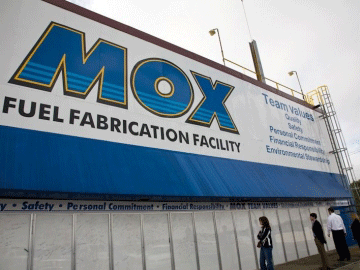
The online fire sale, which ended Thursday evening, is part of an effort to recoup some of the nearly $8 billion taxpayers spent on the so-called Mixed Oxide (MOX) Fuel Fabrication Facility in Aiken, South Carolina, which sits partially finished.
The Trump administration pulled the plug on the project in 2018 following years of ballooning cost estimates and delays. Envisioned in 1999 with a price-tag of $620 million, it swelled to nearly $48 billion with an estimated completion date in the 2040s. Metric tons of plutonium transferred to the site for conversion remain there.
The thousands of items up for grabs are in their original packaging and “present a rare opportunity to acquire brand new equipment that is top nuclear grade,” said Diana Peterson, president of the auction company AW Properties Global, which has been awarded the subcontract to sell off the goods.
Plutonium Handling
Among the items are 101 pallets of glove box assembly kits — sealed boxes with two arm-length gloves attached to holes in the side, used to handle plutonium and other radioactive materials. The high bid was $20,000 as of Thursday afternoon.
A pair of 3,750 kilo-volt-ampere transformers is going for $70,000. Also available are 300,000 pounds of ventilation equipment, as well as reams of switches, control panels, valves, and electrical equipment.
To critics, the sale is a fitting capstone to a project they say has been beset by waste from the start.
“This give-away sale of equipment from the MOX debacle highlights the massive waste of money spent on equipment that was stockpiled willy-nilly just to spend annual budgets and enrich contractors,” said Tom Clements, director of Savannah River Site Watch, a non-profit public-interest group that monitors work at the sprawling site that made nuclear bomb materials in the 1950s.
There should be a “full accounting to the public about how much was spent on stockpiled MOX equipment, how much has been given away or scrapped, and how much is being sold at pennies on the dollar,” Clements said.
The National Nuclear Security Administration, the Energy Department arm responsible for the site, said the auction was being held in accordance with all government property regulations.
“Any inventory that could not be reused by our government, is going to auction as part of our commitment to recapitalize project value,” the agency said in a statement.
(Adds comment from NNSA in final two paragraphs.)
June 22, 2020
Posted by Christina Macpherson |
- plutonium, business and costs, reprocessing, USA |
Leave a comment
|
Hydrogen May Be a Lifeline for Nuclear—But It Won’t Be Easy, Power, Jun 11, 2020, by Sonal Patel Four U.S. nuclear generators—Energy Harbor, Xcel Energy, Exelon, and Arizona Public Service (APS)—are making headway on projects to demonstrate hydrogen production at nuclear plants, but scaling those efforts up to net new end-users and sources of revenue is still ridden with hurdles, company officials said in a panel discussion at the American Nuclear Society’s (ANS’s) virtual 2020 annual meeting on June 9………
The economics are especially important for Exelon, the nation’s largest nuclear generator, and exploring hydrogen production is a natural evolution to keep its plants financially afloat amid stagnating load growth and challenging economics in competitive energy markets, Greenlee said.
Energy Harbor faces similar predicaments. In 2018, the independent power producer—which was known as FirstEnergy Solutions until Feb. 27, when it completed Chapter 11 restructuring—had planned to shutter Davis-Besse in 2020; along with the twin-unit 1,872-MW Beaver Valley Power Station in Shippingport, Pennsylvania, in 2021; and the Perry Nuclear Power Plant in Perry, Ohio, in 2021. Last year, Energy Harbor pushed for and won nuclear subsidies in Ohio to keep the Davis-Besse and the Perry nuclear plants open through 2027, and this March, it said Beaver Valley would remain open. Like Energy Harbor, Exelon helped enact the Future Energy Jobs Act in December 2016 (it went into effect in June 2017), to keep Exelon’s Clinton and Quad Cities plants running. Exelon also strongly backed New York’s Clean Energy Standard, a measure that became effective in April 2017, to preserve the at-risk Nine Mile Point, FitzPatrick, and Ginna reactors in upstate New York. And in 2018, New Jersey also enacted zero-emission credits (ZECs) to bolster profitability of the Hope Creek plant, which is owned by PSEG, and Salem, whose output Exelon owns jointly with PSEG. As Greenlee noted, Exelon has since 2018 been seeking ways to “repurpose” its nuclear plants to make them more viable. The company’s efforts included convening academic experts, former employees, and former federal regulators in a brainstorm session. “And over the last several years, what we have boiled that table down to is, basically, hydrogen,” he said. “Hydrogen is what we want to look at going forward. We think it fits in with potentially a future hydrogen economy.” ……. https://www.powermag.com/hydrogen-may-be-a-lifeline-for-nuclear-but-it-wont-be-easy/
|
|
June 13, 2020
Posted by Christina Macpherson |
business and costs, technology, USA |
Leave a comment










 nuclear-news