Say “yes” to an impact assessment for nuclear experiment on the Bay of Fundy.
This is not just a New Brunswick issue. If successful, these SMRs could be deployed in hundreds of communities across the country, their radioactive waste added to our existing stockpiles for which no solution currently exists.
Coalition for Responsible Energy Development in New Brunswick (CRED-NB) 15 July 22, To learn what this nuclear project on the Bay of Fundy is all about, read our request to federal Environment Minister Steven Guilbeault HERE. (French version HERE.)
Once again, NB Power wants to limit public input on their latest experiment. But this time it’s a nuclear experiment! We need to have a say!
The nuclear industry wants to build experimental nuclear reactors (SMRs) at Point Lepreau on the Bay of Fundy in New Brunswick. They want to do it without a federal impact assessment!
This means the public will have limited input, it’s not fair and it’s not right.
Pressure from the nuclear industry lobby changed our federal environmental assessment law in 2019, exempting SMRs from undergoing a full environmental impact assessment (IA).
We’re asking the federal government to order an impact assessment for this nuclear experiment which could have profound and lasting impacts on the Bay of Fundy and the coastal communities and marine life it supports.
Click here to use our action tool to write to Minister Guilbeault to support our request – it takes less than a minute! We’re working with the Ontario Clean Air Alliance to gather support across the country. Please use it and share!
The Coalition for Responsible Energy Development in New Brunswick (CRED-NB) is challenging the exemption for the “SMR Demonstration Project” at Point Lepreau on the Bay of Fundy. and asking asking the federal government to step in and order the project undergo a full, IA under the Impact Assessment Act.
For more information about why an impact assessment is required, read the formal request to federal Environment Minister Steven Guilbeault HERE. (French version HERE.)
The current exemption not only erodes public involvement and oversight of the project but also means there will be no full reckoning of the alternatives to the energy project and its impacts to social, economic, Indigenous and environmental values.
In contrast, an IA is a “look before you leap” process allowing the public to weigh in on alternatives to the project, risks emanating from all stages of the project (from building to eventual decommissioning and oversight of the radioactive materials) and the project’s cumulative social, economic and environmental impacts.
CRED-NB is asking people across Canada to support the campaign. This is not just a New Brunswick issue. If successful, these SMRs could be deployed in hundreds of communities across the country, their radioactive waste added to our existing stockpiles for which no solution currently exists.
Please join us in this effort. Use our action tool to write Minister Guilbeault to support the CRED-NB request for a full impact assessment for the SMR demonstration project.……. more https://crednb.ca/dr/
More delays for the multi-billion-euro ITER nuclear fusion project in France
The multi-billion-euro ITER nuclear fusion project in France faces yet
more delays because transport sanctions imposed in response to the invasion
of Ukraine could stop key parts from Russia reaching Europe, according to a
senior official in Europe’s contribution to the initiative. Leonardo
Biagioni, deputy chief financial officer at Fusion for Energy, which
manages Europe’s contribution to ITER, said that sanctions would “most
likely” delay the project. Speaking this morning at the EuroScience Open
Forum (ESOF) in Leiden, he said that transport sanctions against Russia,
including restrictions on Russian registered vessels docking in European
ports, risk making it hard to move parts manufactured by Russia to ITER’s
site in the south of France.
Science Business 14th July 2022
https://sciencebusiness.net/news/iter-faces-further-delays-if-key-parts-stuck-russia
New Energy Security Bill waters down regulation for fusion, warns Nuclear Free Local Authorities
As the Nuclear Free Local Authorities have feared, following a pre-Christmas BEIS consultation, the Johnson Government has recently revealed its plans to relax the regulatory regime applicable to future fusion reactors by choosing not to classify them as ‘nuclear installations’.
Fission nuclear reactors are subject to nuclear site licencing requirements overseen by the Office of Nuclear Regulation under the Nuclear Installations Act 1965 (NIA 1965), but government ministers have now decided that fusion plants should instead be regulated by the Health and Safety Executive and Environment Agency like other industrial facilities. The new Energy Security Bill just introduced to Parliament by the Business Secretary will exclude fusion reactors from the provisions of the NIA 1965.
Ministers claim that fusion does not present the same ‘higher hazards’ found in fission plants, but the NFLA fears that their decision is about making the UK attractive to investors in their haste to make the UK a ‘fusion industry superpower’ rather than prioritising public safety.
In its response to the Department of Business, Energy and Industrial Strategy (BEIS) consultation, the NFLA had called for ‘no watering down’ of the regime, challenging the notion that fusion was largely without risk.
For research commissioned by the NFLA revealed that fusion would result in the production of large quantities of radioactive waste, with the risk that radioactive tritium could enter the water supply. Fusion also requires immense temperatures, hotter than the sun, to spark and sustain a fusion reaction and this energy must be safely contained using challenging and unproven engineering solutions. Operation would also result in the whole structure being subjected to prolonged exposure to neutron radiation, a situation which if not carefully monitored could result in the very integrity of the reactor vessel being placed in jeopardy.
The Chair of the NFLA Steering Committee, Councillor David Blackburn, said: “The NFLA’s view is that the government’s decision is misguided. It seems blasé to treat a fusion plant for regulatory purposes in the same way as a factory making chemical products. Fusion presents some of the same hazards and challenges as fission, but some are new; surely then fusion is nuclear and so a plant utilizing this technology must be a ‘nuclear installation’.
“In the view of the NFLA, there is no logical reason on safety grounds not to apply the same regulatory regime to fusion reactors as fission reactors. By signalling through the Energy Security Act their determination to exclude fusion from the rigours of the licencing regime, it seems clear that the present government is more focused on reducing the regulatory and cost burden on investors and commercial operators entering the market, putting expediency and profits before public safety.”
On waste management and decommissioning, the government’s position is even more unclear with ministers calling it ‘premature’ to outline clear proposals at this time, something the NFLA is especially perturbed about.
Councillor Blackburn added: “It is a shame that ministers have missed a trick by refusing to state clearly that future operators will have to share a greater burden of the cost of decommissioning and waste management, rather than passing the bill to the Nuclear Liabilities Fund and ultimately the British taxpayer.”
The Corporatization of Space.

The Corporatization of Just About Everything,
Consortium News, Tom Valovic, July 6, 2022………………………………………… let’s draw on the self-declared wisdom of Time magazine for guidance. (This is a publication that’s now in the Big Tech/Big Media” camp as it’s now owned by the CEO of Salesforce.com). In the same issue, another article gushed over the fact that corporations are poised to dominate the exploration and use of space:“….NASA made it clear that when that clock does toll, the U.S. will be getting out of the space station game, likely for good. Instead, the space agency signed a $415.6 million seed money deal with three companies — Blue Origin, Nanoracks, and Northrop Grumman — to develop their own private space stations, on which NASA and other customers could lease space for professional crews and tourists. The article goes on to point out that, in a press statement, a NASA spokesperson boasted that….
” NASA is once again leading the way to commercialize space activities” and that “we are partnering with U.S. companies to develop the space destinations where people can visit, live, and work.”
It seems abundantly clear that the top-down corporate model of governance is fundamentally anti-democratic by its very nature and the waning power and direction of our democratic institutions worldwide has much to do with this fact.
…. uncontrolled and uncontrollable market forces are no substitute for thoughtful and enlightened public policy and democratic norms. Granted, this is in short supply these days but allowing corporations to fill that void is hardly a solution.
As our glorious planet continues to experience crisis after crisis, it’s sad and troubling that there seems to be no shortage of profiteers looking to make an easy buck off the spoils. It seems abundantly clear that the top-down corporate model of governance is fundamentally anti-democratic by its very nature and the waning power and direction of our democratic institutions worldwide has much to do with this fact……. https://consortiumnews.com/2022/07/06/the-corporatization-of-just-about-everything/
Tom Valovic is a journalist and the author of Digital Mythologies (Rutgers University Press), a series of essays that explored emerging social and political issues raised by the advent of the Internet. He has served as a consultant to the former Congressional Office of Technology Assessment. Tom has written about the effects of technology on society for a variety of publications including Columbia University’s Media Studies Journal, the Boston Globe, and the San Francisco Examiner, among others.
Enthusiastic space travel publicity avoids mentioning radiation danger
We need to talk about radiation in space, Cosmos By Jamie Seidel/1 July 2022,
Escape from it all: go above and beyond in your quest for relaxation. Space hotels promise to capitalise on the ultimate dream. But there’s an elephant in orbit, and nobody’s talking about it.
“We’ve seen a lot of great concept designs for orbital hotels lately,” says Dr Iwan Cornelius. “But none of them seem worried about radiation.”
Cornelius is the managing director of Amentum Scientific, an Australian predictive scientific modelling company that quantifies the risks of radiation exposure for the aviation, transport, mining and space industries.
“I’m guessing being sick in space is not good,” the former radiation worker quips. “It’s a long way to your local GP – and the emergency department.”
Radiation exposure has bothered NASA since the earliest days of its space programs. It’s why the International Space Station (ISS) has a tiny bunker surrounded by water and equipment where astronauts can hunker down.
Space tourism is closer to reality than you think – but a few important things remain to be ironed out.
Escape from it all: go above and beyond in your quest for relaxation. Space hotels promise to capitalise on the ultimate dream. But there’s an elephant in orbit, and nobody’s talking about it.
“We’ve seen a lot of great concept designs for orbital hotels lately,” says Dr Iwan Cornelius. “But none of them seem worried about radiation.”
Cornelius is the managing director of Amentum Scientific, an Australian predictive scientific modelling company that quantifies the risks of radiation exposure for the aviation, transport, mining and space industries.
“I’m guessing being sick in space is not good,” the former radiation worker quips. “It’s a long way to your local GP – and the emergency department.”
Radiation exposure has bothered NASA since the earliest days of its space programs. It’s why the International Space Station (ISS) has a tiny bunker surrounded by water and equipment where astronauts can hunker down.
“One thing you’ll notice with all these concept diagrams for space hotels is there’s not a lot of information about a radiation refuge.”
…………… “If we’re talking about a packed hotel in space, where will they go?” Cornelius asks. “How long will it take to get there? Does everyone get access to a shelter – including staff? I don’t know if this is being thought through”.
And solar events aren’t the only space radiation source…………………………….
NASA to spend $15 billion of tax-payers’ money on designs for nuclear reactors on the moon.

In a newly announced initiative, NASA has commissioned three individual
companies to produce plans for the possible use of nuclear power bases on
the Moon. With the potential of such bases becoming more than just a
concept by the late 2020s, the three companies involved – Lockheed Martin,
Westinghouse, and a joint effort between Intuitive Machines and X-Energy
named XI – will command the contract value of an estimated $5 billion each
for their individual designs of lunar-based nuclear fission system.
The National (Wales) 27th June 2022
Small modular nukes fall short on climate promises, new study suggests.

SMRs are inherently less efficient, hence the “higher volumes and greater complexity” of the waste, says the study. SMRs leak more neutrons, which impairs the self-sustaining nuclear reaction.
GreenBiz, By Clifford Maynes, 1 July 22, Small modular reactors (SMRs), seen by the beleaguered nuclear industry as a shining hope for a global revival, may have hit a serious snag. A new study finds that mini-nuclear power stations produce higher volumes of radioactive waste per unit of generation than larger-scale traditional ones.
The United States, the United Kingdom and Canada are among the countries investing in SMRs on the hope of a cheaper, faster way to build out nuclear capacity. In Canada, the federal government is leading and funding a “Team Canada” approach involving several provinces, industry players, and others, envisioning SMRs as “a source of safe, clean, affordable energy, opening opportunities for a resilient, low-carbon future and capturing benefits for Canada and Canadians.”
In Ontario, the Ford government selected GE Hitachi to build an SMR at the Darlington nuclear plant site, with a projected in-service date of 2028.
Now, however, the first independent assessment of radioactive waste from SMRs has modeled the waste from three SMR designs, Toshiba, NuScale and Terrestrial Energy. The conclusion: “SMRs could increase the volume of short-lived low and intermediate level wastes… by up to 35 times compared to a large conventional reactor,” New Scientist reports.

“For the long-lived equivalent waste, SMRs would produce up to 30 times more,” the story adds. For spent nuclear fuel, up to five times more.
Stanford University’s Lindsay Krall, who led the research, said information from the industry is “promotional,” echoing past criticisms that SMRs are still “PowerPoint reactors” with no detailed engineering to back up the concept. “SMR performed worse on nearly all of our metrics compared to standard commercial reactors,” Krall said.
SMRs are inherently less efficient, hence the “higher volumes and greater complexity” of the waste, says the study. SMRs leak more neutrons, which impairs the self-sustaining nuclear reaction.
“The study concludes that, overall, small modular designs are inferior to conventional reactors with respect to radioactive waste generation, management requirements, and disposal options,” Stanford News reports.
“The research team estimated that after 10,000 years, the radiotoxicity of plutonium in spent fuels discharged from the three study modules would be at least 50 percent higher than the plutonium in conventional spent fuel per unit energy extracted.”
……………………………………. Proponents hope SMRs will have “small is beautiful” appeal and focus on their potential to reduce greenhouse gas emissions. But critics say they sidestep public concerns about accidents, wastes, cost and other impacts, noting that SMRs aren’t small: the Darlington reactor will be rated at 300 megawatts, about a third the size of the existing Candu reactors on the site, and more than half the size of the units at the nearby Pickering station.
SMRs are also new and unproven, critics warn. They say there is no reason to think SMR construction will be exempt from the massive cost overruns and completion delays that typically plague reactor construction, and megaprojects in general. And there is no real-world experience to date to demonstrate that SMRs can be built on time and on budget.
The biggest concern is that SMRs will soak up investment dollars and grid capacity that should go to proven, successful renewables such as solar and wind, which can be rapidly deployed and have falling rather than escalating costs. Because of the time lag, nuclear is not expected to make a large contribution to meeting the immediate, global goal of reducing global greenhouse gas emissions by 45 percent by 2030. The Intergovernmental Panel on Climate Change noted in its sixth assessment that small-scale, distributed energy sources such as wind and solar had exceeded expectations, while large, centralized technologies such as nuclear had fallen short.
“It takes too long to site and build nuclear reactors, especially compared to solar and wind installations,” said MIT researcher Kate Brown. https://www.greenbiz.com/article/small-modular-nukes-fall-short-climate-promises-new-study-suggests
Lost in space: Astronauts struggle to regain bone density
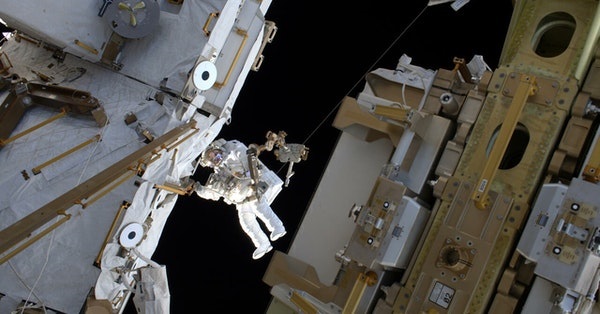
France 24 30/06/2022 Paris (AFP) – Astronauts lose decades’ worth of bone mass in space that many do not recover even after a year back on Earth, researchers said Thursday, warning that it could be a “big concern” for future missions to Mars.
Previous research has shown astronauts lose between one to two percent of bone density for every month spent in space, as the lack of gravity takes the pressure off their legs when it comes to standing and walking.
To find out how astronauts recover once their feet are back on the ground, a new study scanned the wrists and ankles of 17 astronauts before, during and after a stay on the International Space Station.
The bone density lost by astronauts was equivalent to how much they would shed in several decades if they were back on Earth, said study co-author Steven Boyd of Canada’s University of Calgary and director of the McCaig Institute for Bone and Joint Health.
The researchers found that the shinbone density of nine of the astronauts had not fully recovered after a year on Earth — and were still lacking around a decade’s worth of bone mass.
The astronauts who went on the longest missions, which ranged from four to seven months on the ISS, were the slowest to recover.
“The longer you spend in space, the more bone you lose,” Boyd told AFP.
Boyd said it is a “big concern” for planned for future missions to Mars, which could see astronauts spend years in space……………………..
Guillemette Gauquelin-Koch, the head of medicine research at France’s CNES space agency, said that the weightlessness experienced in space is “most drastic physical inactivity there is”.
“Even with two hours of sport a day, it is like you are bedridden for the other 22 hours,” said the doctor, who was not part of the study.
“It will not be easy for the crew to set foot on Martian soil when they arrive — it’s very disabling.”…………………………………. https://www.france24.com/en/live-news/20220630-lost-in-space-astronauts-struggle-to-regain-bone-density—
The impossibility of humans colonising space
Ukraine Is The Most Aggressively Trolled War Of All Time: Notes From The Edge Of The Narrative Matrix, Caitlin’s Newsletter, Caitlin Johnstone 30n June 22
”……………………………………………………………………………..One thing we learned from Covid is that being stuck inside sucks. Space colonization would be like being in permanent lockdown with no windows, no Uber Eats, no birdsong or rain on the roof and no chance of ever going home. Even if it somehow became possible, it’s a dumb idea and I hate it.
And there’s no reason to believe it will ever become possible. Science is nowhere near finished learning about all the countless ways the human organism is inseparably intertwined with Earth. The belief that we can solve our problems with space colonization is unscientific. We’re just going to have to change how we function as a species.

The biggest obstacle remains the fact that science has no idea how to sustain human life in a way that is separate from earth’s ecosystem. We don’t even have any evidence that it’s possible. We’re no closer to being able to do it than we were a thousand years ago; today’s space stations are not independent of Earth’s ecosystem in even the tiniest way. They’re still 100 percent dependent on terrestrial supplies, which is an unsustainable model if you’re talking about actual colonization.
The idea of space colonization appeals to the capitalist mentality because it means we can keep expanding our population and keep expanding the economy and keep harvesting and consuming resources in the way we have been. But there’s literally zero scientific evidence that it’s feasible.
A future of space colonization is a fairy tale we tell ourselves so that we won’t have to change. So we can keep up our egocentric way of functioning without adapting and transcending our self-destructive patterns. We’re like a slacker who refuses to get off their parents’ couch and get their shit together who babbles made-up nonsense about NFT get-rich-quick schemes when asked about their plans for the future.
Collective extinction is easier to imagine than collective ego death. https://caitlinjohnstone.substack.com/p/ukraine-is-the-most-aggressively?utm_source=substack&utm_medium=email
Much hyping for France’s NUWARD small modular reactor (SMR) design: construction to start in 2030 (but will it be a lemon?)

France’s NUWARD SMR Will Be Test Case for European Early Joint Nuclear Regulatory Review, Power, 5 June 22. The French Nuclear Safety Authority (ASN), the Czech State Office for Nuclear Safety (SUJB), and Finland’s Radiation and Nuclear Safety Authority (STUK) have picked France’s NUWARD small modular reactor (SMR) design as a test case for an early joint regulatory review for SMRs. The development marks a notable step by European regulators to align practices in a bid to harmonize licensing and regulation for SMRs in the region.
EDF, an entity that is majority held by the French government, on June 2 announced the reactor design will be the subject of the review, which “will be based on the current set of national regulations from each country, the highest international safety objectives and reference levels, and up-to-date knowledge and relevant good practice.”
The technical discussions and collaborative efforts associated with the review will both help ASN, STUK, and SUJB “increase their respective knowledge of each other’s regulatory practices at the European level,” as well as “improve NUWARD’s ability to anticipate the challenges of international licensing and meet future market needs,” it said.
A European Frontrunner
NUWARD, which is still currently in the conceptual design phase, may be a frontrunner in the deployment of SMRs in Europe. It was unveiled in 2019 by EDF, France’s Alternative Energies and Atomic Energy Commission (CEA), French defense contractor Naval Group, and TechnicAtome, a designer of naval propulsion nuclear reactors and an operator of nuclear defense facilities. The consortium in May tasked Belgian engineering firm Tractabel with completing—by October 2022—conceptual design studies for parts of the conventional island (turbine hall), the balance of plant (water intake and servicing system), and the 3D modeling of the buildings that will house those systems.
Launched as a design that derives from the “best-in-class French technologies” and “more than 50 years of experience in pressurized water reactor (PWR) design, development, construction, and operation,” the design proposes a 340-MWe power plant configured with twin 170-MWe modules. NUWARD is based on an integrated PWR design with full integration of the main components within the reactor pressure vessel, including the control rod drive mechanisms, compact steam generators, and pressurizer, CEA says.
As “the most compact reactor in the world,” the design is well-suited for power generation, including replacing coal and gas-fired generation, as well as for electrification of medium-sized cities and isolated industrial sites, CEA says. According to Tractabel, the next phase of the NUWARD project—the basic design completion—is slated to begin in 2023. Construction of a reference plant is expected to start in 2030.
Crucial to SMR Deployment: Harmonization of Regulations
On Thursday, EDF noted that while SMR technology innovation is important, deployment of SMRs, which will be integral to the energy transition toward carbon neutrality, will require “a serial production process and a clear regulatory framework.” Harmonization of regulations and requirements in Europe and elsewhere will be “an essential element to support aspirations of standardization of design, in-factory series production and limited design adaptations to country-specific requirements,” it said.
Several efforts to encourage collaboration on SMR licensing and regulatory alignment are already underway in Europe. These include the European SMR Partnership led by FORATOM, the Brussels-based trade association for the nuclear energy industry in Europe, and the Sustainable Nuclear Energy Technology Platform (SNETP), as well as the Nuclear Harmonisation and Standardisation Initiative (NHSI), which the International Atomic Energy Agency launched in March.
The European Union is separately spearheading the ELSMOR project, which aims to enhance the European capability to assess and develop the innovative light water reactor (LWR) SMR concepts and their safety features, as well as sharing that information with policymakers and regulators.
SMRs Part of Future Plans for France, Czech Republic, Finland
Participation of the three countries—France, the Czech Republic, and Finland—is noteworthy for their near-term plans to expand generation portfolios with new nuclear. French President Emmanuel Macron on Feb. 10 said France will build six new nuclear reactors and will consider building eight more. Macron also notably said $1.1 billion would be made available through the France 2030 re-industrialization plan for the NUWARD SMR project.
In the Czech Republic, which has six existing nuclear reactors that generate about a third of its power, energy giant ČEZ has designated a site at the Temelín Nuclear Power Plant as a potential site for an SMR. ČEZ has signed a memorandum of understanding on SMRs with NuScale, and it also has cooperation agreements with GE Hitachi, Rolls-Royce, EDF, Korea Hydro and Nuclear Power, and Holtec.
Finland has five operating reactors, and it is in the process of starting up Olkiluoto 3, a 1.6-GW EPR (EDF’s next-generation nuclear reactor), whose construction began in 2005. Two others were planned: Olkiluoto 4 and Hanhikivi 1. Early in May, however, Finnish-led consortium Fennovoima said it had scrapped an engineering, procurement, and construction contract for Russia’s state-owned Rosatom to build the 1.2-GW Hanhikivi 1, citing delays and increased risks due to the war in Ukraine. On May 24, Fennovoima withdrew the Hanhikivi 1 nuclear power plant construction license application.
The VTT Technical Research Centre of Finland is actively developing an SMR intended for district heating. While Finland now mostly relies on coal for district heat, it has pledged to phase out coal by 2029. VTT, notably, coordinates with the ELSMOR project for European SMR licensing practices. In addition, VTT says it is leading a work package related to the new McSAFER project, which is developing next-generation calculation tools for the modeling of SMR physics.
—Sonal Patel is a POWER senior associate editor (@sonalcpatel, @POWERmagazine).
South Korean government to massively fund developing small nuclear reactors, partnering with USA companies NuScam and Terra Power.
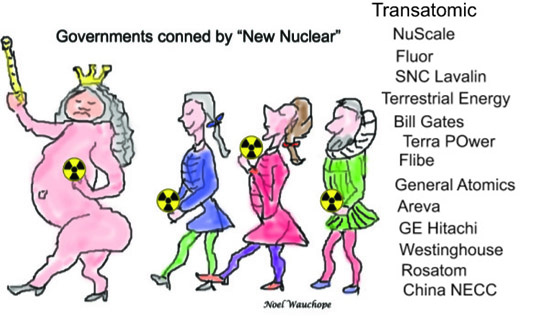
Policymakers endorse massive injection of state money for SMR development
Lim Chang-won Reporter(cwlim34@ajunews.com) | Lim Chang-won Reporter, email : cwlim34@ajunews.com© Aju Business Daily & www.ajunews.com
June 2, 2022, SEOUL — With the blessing of President Yoon Suk-yeol, South Korea’s nuclear power industry grabbed a new opportunity to rebound after policymakers endorsed a massive injection of state money for the development of a relatively safe small modular reactor called “i-SMR” that can be operated in an underground water tank and cooled naturally in case of emergency.
Yoon, who took office in early May, dumped his predecessor’s “nuclear-exit” policy of phasing out nuclear power plants and vowed to actively revitalize South Korea’s struggling nuclear power industry and develop next-generation reactors, insisting that nuclear power plants are an essential factor in restoring industrial competitiveness.
Up to Yoon’s expectations, the proposed development of i-SMRs has passed a preliminary feasibility study, according to the Ministry of Science and ICT. Some 399.2 billion won ($319.9 million) will be spent from 2023 to 2028 for the i-SMR project aimed at developing a reactor with a power generation capacity of less than 300 megawatts. ……..
Mainly through partnerships with American companies, South Korean companies have jumped into the SMR market, such as Hyundai E&C and Doosan Enerbility, a key player in South Korea’s nuclear industry that tied up with NuScale Power, an SMR company in the United States.
In May 2022, Samsung C&T strengthened its partnership with NuScale Power to cooperate in SMR projects in Romania and other East European countries. SK Group tied up with TerraPower for cooperation in the development and commercialization of SMR technology.
Separately, the government approved the proposed spending of 348.2 billion won from 2023 to 2030 to develop technologies for the dismantling of defunct reactors………
Hyundai E&C has tied up with its American partner, Holtec International, for the decommissioning of defunct nuclear power plants, starting with the Indian Point Energy Center in Buchanan in Westchester County. https://www.ajudaily.com/view/20220602110820983
Co-Founder of Green and Blacks Calls Out Small Modular Reactors: They Would Produce 30 Times As Much Nuclear Waste
While Nuclear Luvvies and Lords in Cumbria Big Up Small Modular Reactors being touted by Rolls Royce, science is stacked against them. IF science is genuinely allied to ethics and a living planet then Small Modular Reactors (or any nuclear fuelled plan ) should not even be on the table.
Co-Founder of Green and Blacks Calls Out Small Modular Reactors: They Would Produce 30 Times As Much Nuclear Waste — RADIATION FREE LAKELAND
ular Reactors
(or any nuclear fuelled plan) should not even be on the table. Craig Sams
the co-founder of Green and Blacks has written on social media: “This was
what I wrote 12 years ago. The New Scientist now reports that SMRs (Small
Modular Reactors) produce 30 times as much nuclear waste for the amount of
electricity produced and its more complex. I realise Boris upset everyone
by boozing when he should’ve been following his own rules, but condemning
future generations to even worse nuclear waste problems than we already
have is the real crime against humanity. No more nuclear. The French
nuclear power stations are corroding badly and nobody’s sure what to do.
The Irish Sea is still contaminating fish. We had to stop serving laver
bread in our restaurant Seed back in 1970 because of radioactive waste
contamination and things have only got worse since then. Wind, solar,
geothermal, oil,gas, anything but nuclear”
Radiation Free Lakeland 2nd June 2022
Small nuclear reactors produce ’35x more waste’ than big plants

Mini nuclear reactors that are supposed to usher in an era of cheaper and
safer nuclear power may generate up to 35 times more waste to produce the
same amount of power as a regular plant, according to a study.
A team of researchers at Stanford University and the University of British Columbia
came to this conclusion after studying a design from each of three small
modular reactor (SMR) manufacturers: NuScale Power, Toshiba, and
Terrestrial Energy.
The study, published this week, found that not only did
those particular SMR approaches generate five times the spent nuclear fuel
(SNF), 30 times the long-lived equivalent waste, and 35 times the low and
intermediate-level waste (LILW), their waste is also more reactive,
therefore more dangerous and consequently harder to dispose of.
The Register 2nd June 2022
https://www.theregister.com/2022/06/02/nuclear_reactors_waste/
Nuclear waste from small modular reactors

Lindsay M. Krall https://orcid.org/0000-0002-6962-7608 Lindsay.Krall@skb.se, Allison M. Macfarlane https://orcid.org/0000-0002-8359-9324, and Rodney C. Ewing https://orcid.org/0000-0001-9472-4031Authors Info & Affiliations
May 31, 2022 Small modular reactors (SMRs), proposed as the future of nuclear energy, have purported cost and safety advantages over existing gigawatt-scale light water reactors (LWRs). However, few studies have assessed the implications of SMRs for the back end of the nuclear fuel cycle. The low-, intermediate-, and high-level waste stream characterization presented here reveals that SMRs will produce more voluminous and chemically/physically reactive waste than LWRs, which will impact options for the management and disposal of this waste. Although the analysis focuses on only three of dozens of proposed SMR designs, the intrinsically higher neutron leakage associated with SMRs suggests that most designs are inferior to LWRs with respect to the generation, management, and final disposal of key radionuclides in nuclear waste.
Abstract
Small modular reactors (SMRs; i.e., nuclear reactors that produce <300 MWelec each) have garnered attention because of claims of inherent safety features and reduced cost. However, remarkably few studies have analyzed the management and disposal of their nuclear waste streams. Here, we compare three distinct SMR designs to an 1,100-MWelec pressurized water reactor in terms of the energy-equivalent volume, (radio-)chemistry, decay heat, and fissile isotope composition of (notional) high-, intermediate-, and low-level waste streams. Results reveal that water-, molten salt–, and sodium-cooled SMR designs will increase the volume of nuclear waste in need of management and disposal by factors of 2 to 30. The excess waste volume is attributed to the use of neutron reflectors and/or of chemically reactive fuels and coolants in SMR designs. That said, volume is not the most important evaluation metric; rather, geologic repository performance is driven by the decay heat power and the (radio-)chemistry of spent nuclear fuel, for which SMRs provide no benefit.
SMRs will not reduce the generation of geochemically mobile 129I, 99Tc, and 79Se fission products, which are important dose contributors for most repository designs. In addition, SMR spent fuel will contain relatively high concentrations of fissile nuclides, which will demand novel approaches to evaluating criticality during storage and disposal. Since waste stream properties are influenced by neutron leakage, a basic physical process that is enhanced in small reactor cores, SMRs will exacerbate the challenges of nuclear waste management and disposal.
In recent years, the number of vendors promoting small modular reactor (SMR) designs, each having an electric power capacity <300 MWelec, has multiplied dramatically (1, 2). Most recently constructed reactors have electric power capacities >1,000 MWelec and utilize water as a coolant. Approximately 30 of the 70 SMR designs listed in the International Atomic Energy Agency (IAEA) Advanced Reactors Information System are considered “advanced” reactors, which call for seldom-used, nonwater coolants (e.g., helium, liquid metal, or molten salt) (3). Developers promise that these technologies will reduce the financial, safety, security, and waste burdens associated with larger nuclear power plants that operate at the gigawatt scale (3). Here, we make a detailed assessment of the impact of SMRs on the management and disposal of nuclear waste relative to that generated by larger commercial reactors of traditional design.
Nuclear technology developers and advocates often employ simple metrics, such as mass or total radiotoxicity, to suggest that advanced reactors will generate “less” spent nuclear fuel (SNF) or high-level waste (HLW) than a gigawatt-scale pressurized water reactor (PWR), the prevalent type of commercial reactor today. For instance, Wigeland et al. (4) suggest that advanced reactors will reduce the mass and long-lived radioactivity of HLW by 94 and ∼80%, respectively. These bulk metrics, however, offer little insight into the resources that will be required to store, package, and dispose of HLW (5). Rather, the safety and the cost of managing a nuclear waste stream depend on its fissile, radiological, physical, and chemical properties (6). Reactor type, size, and fuel cycle each influence the properties of a nuclear waste stream, which in addition to HLW, can be in the form of low- and intermediate-level waste (LILW) (6–8). Although the costs and time line for SMR deployment are discussed in many reports, the impact that these fuel cycles will have on nuclear waste management and disposal is generally neglected (9–11).
Here, we estimate the amount and characterize the nature of SNF and LILW for three distinct SMR designs. From the specifications given in the NuScale integral pressurized water reactor (iPWR) certification application, we analyze basic principles of reactor physics relevant to estimating the volumes and composition of iPWR waste and then, apply a similar methodology to a back-end analysis of sodium- and molten salt–cooled SMRs. Through this bottom-up framework, we find that, compared with existing PWRs, SMRs will increase the volume and complexity of LILW and SNF. This increase of volume and chemical complexity will be an additional burden on waste storage, packaging, and geologic disposal. Also, SMRs offer no apparent benefit in the development of a safety case for a well-functioning geological repository.
1. SMR Neutronics and Design………………
2. Framework for Waste Comparison………….
3. SMR Waste Streams: Volumes and Characteristics………….
…………..
3.3.2. Corroded vessels from molten salt reactors.
Molten salt reactor vessel lifetimes will be limited by the corrosive, high-temperature, and radioactive in-core environment (23, 24). In particular, the chromium content of 316-type stainless steel that constitutes a PWR pressure vessel is susceptible to corrosion in halide salts (25). Nevertheless, some developers, such as ThorCon, plan to adopt this stainless steel rather than to qualify a more corrosion-resistant material for the reactor vessel (25).
Terrestrial Energy may construct their 400-MWth IMSR vessel from Hastelloy N, a nickel-based alloy that has not been code certified for commercial nuclear applications by the American Society of Mechanical Engineers (26, 27). Since this nickel-based alloy suffers from helium embrittlement (27), Terrestrial Energy envisions a 7-y lifetime for their reactor vessel (28). Molten salt reactor vessels will become contaminated by salt-insoluble fission products (28) and will also become neutron-activated through exposure to a thermal neutron flux greater than 1012 neutrons/cm2-s (29). Thus, it is unlikely that a commercially viable decontamination process will enable the recycling of their alloy constituents. Terrestrial Energy’s 400-MWth SMR might generate as much as 1.0 m3/GWth-y of steel or nickel alloy in need of management and disposal as long-lived LILW (Fig. 1, Table 1, and SI Appendix, Fig. S3 and section 2) [on original]…………
4. Management and Disposal of SMR Waste
The excess volume of SMR wastes will bear chemical and physical differences from PWR waste that will impact their management and final disposal. …………………….
5. Conclusions
This analysis of three distinct SMR designs shows that, relative to a gigawatt-scale PWR, these reactors will increase the energy-equivalent volumes of SNF, long-lived LILW, and short-lived LILW by factors of up to 5.5, 30, and 35, respectively. These findings stand in contrast to the waste reduction benefits that advocates have claimed for advanced nuclear technologies. More importantly, SMR waste streams will bear significant (radio-)chemical differences from those of existing reactors. Molten salt– and sodium-cooled SMRs will use highly corrosive and pyrophoric fuels and coolants that, following irradiation, will become highly radioactive. Relatively high concentrations of 239Pu and 235U in low–burnup SMR SNF will render recriticality a significant risk for these chemically unstable waste streams.
SMR waste streams that are susceptible to exothermic chemical reactions or nuclear criticality when in contact with water or other repository materials are unsuitable for direct geologic disposal. Hence, the large volumes of reactive SMR waste will need to be treated, conditioned, and appropriately packaged prior to geological disposal. These processes will introduce significant costs—and likely, radiation exposure and fissile material proliferation pathways—to the back end of the nuclear fuel cycle and entail no apparent benefit for long-term safety.
Although we have analyzed only three of the dozens of proposed SMR designs, these findings are driven by the basic physical reality that, relative to a larger reactor with a similar design and fuel cycle, neutron leakage will be enhanced in the SMR core. Therefore, most SMR designs entail a significant net disadvantage for nuclear waste disposal activities. Given that SMRs are incompatible with existing nuclear waste disposal technologies and concepts, future studies should address whether safe interim storage of reactive SMR waste streams is credible in the context of a continued delay in the development of a geologic repository in the United States.
Supporting Information
Appendix 01 (PDF)
Note
This article is a PNAS Direct Submission. E.J.S. is a guest editor invited by the Editorial Board.
References…………………………….. https://www.pnas.org/doi/10.1073/pnas.2111833119
Elon Musk’s satellites for the war in Ukraine
From CNGNN Italy, 29 May 22, Elon Musk, the richest man in the world whose wealth nearly doubled in the two pandemic years, offered $ 44 billion to buy Twitter, which he says would become “the platform for free speech across the country world“. Elon Musk owns SpaceX, an aerospace company based in California.
SpaceX makes rockets and satellites to build Starlink, a broadband Internet system that once is completed will cover the entire world. SpaceX has so far put 2,500 satellites into orbit with rockets carrying 50 satellites at a time and plans to place 42,000 Starlink satellites in low orbit occupying 80% of this space.
Starlink was presented as a commercial satellite system but has fundamental military applications. In fact, satellites in low orbit transmit signals at a much higher speed than those in geosynchronous orbit around the equator. The US Army and Air Force fund and test Starlink to use its military capabilities. For example, last March, the US Air Force reported that conventional and nuclear dual-capacity F-35A fighters had carried out data transmission using Start link satellites at speed 30 times faster than traditional connections.SpaceX’s Starlink satellites are already being used by the Ukrainian military to guide drones, artillery shells, and missiles into Russian positions. This is confirmed by General Dickinson, head of the US Space Command, who declared to the Senate that “Elon Musk’s Starlink demonstrates in Ukraine what the mega-constellations of satellites can do“. Elon Musk’s SpaceX is part of the group of ten largest commercial satellite operators collaborating with US Space Command at the Vandenberg military space base in California.
1 This Month



26 September – International Day for the Total Elimination of Nuclear Weapons


PLEASE OPPOSE HR 8255 AND S.3639 – bills would accelerate satellite deployment, with no environmental review or safeguards – https://ncstd5li.quorum.us/campaign/169331/
To see nuclear-related stories in greater depth and intensity – go to https://nuclearinformation.wordpress.com
-
Archives
- September 2026 (245)
- August 2026 (330)
- July 2026 (355)
- June 2026 (287)
- May 2026 (306)
- April 2026 (356)
- March 2026 (251)
- February 2026 (267)
- January 2026 (308)
- December 2025 (358)
- November 2025 (359)
- October 2025 (375)
-
Categories
- 1
- 1 NUCLEAR ISSUES
- business and costs
- climate change
- culture and arts
- ENERGY
- environment
- health
- history
- indigenous issues
- Legal
- marketing of nuclear
- media
- opposition to nuclear
- PERSONAL STORIES
- politics
- politics international
- Religion and ethics
- safety
- secrets,lies and civil liberties
- spinbuster
- technology
- Uranium
- wastes
- weapons and war
- Women
- 2 WORLD
- ACTION
- AFRICA
- Atrocities
- AUSTRALIA
- Christina's notes
- Christina's themes
- culture and arts
- Events
- Fuk 2022
- Fuk 2023
- Fukushima 2017
- Fukushima 2018
- fukushima 2019
- Fukushima 2020
- Fukushima 2021
- general
- global warming
- Humour (God we need it)
- Nuclear
- RARE EARTHS
- Reference
- resources – print
- Resources -audiovicual
- Weekly Newsletter
- World
- World Nuclear
- YouTube
-
RSS
Entries RSS
Comments RSS
 nuclear-news