Russia aims to dominate the Arctic, with nuclear ice-breakers
Moscow eyes ‘mastering’ Arctic waters with nuclear icebreaker fleet, Daily Sabah, BY FRENCH PRESS AGENCY – AFP, 8 Sept 21,
ABOARD THE ’50 YEARS OF VICTORY’ TRANSPORTATION SEP 08, 2021 11:24 AM GMT+3 s ice cover in the Arctic recedes with climate change, Russia is hard at work to secure supremacy in the warming region with a fleet of giant nuclear-powered icebreakers.
Moscow sees the development of the Arctic as a historic mission and already has huge projects to exploit its natural resources.
Its next big plan is for year-round use of the Northern Sea Route (NSR), a shipping lane through Arctic waters Russia hopes could rival the Suez Canal.
Here are some key facts about Russia’s plans for the Arctic:
Historic ambitions
As an icebreaker called the “50 Years of Victory” left the port of Murmansk for the North Pole this summer, its captain told an Agence France-Presse (AFP) journalist on board that Russia has a special role to play in the Arctic.
“A third of our territory lies above the Arctic Circle. Our ancestors have long mastered frozen waters. We are continuing this successfully,” Dmitry Lobusov said.
President Vladimir Putin has made the development of the Arctic a strategic priority and state companies such as Gazprom Neft, Norilsk Nickel and Rosneft already have major projects in the Arctic to extract oil, gas and minerals.
“The Arctic region has enormous potential,” Russian Deputy Prime Minister Alexander Novak said earlier this month.
“In terms of resources, we’re talking about 15 billion tons of oil and 100 trillion cubic meters of gas. Enough for tens if not hundreds of years,” he said.
Suez alternative
The NSR links the Pacific to the Atlantic through Russian Arctic waters.
It is not currently navigable year-round without the help of icebreakers, though in summer some specialized classes of ships can pass through.
With the ice cover receding, Moscow is aiming for year-round navigation by 2030…………..
Growing fleet
Rosatom, which already has a fleet of five icebreakers and a container ship, is building four more nuclear-powered vessels within the next five years.,,,,,,,,,,,
Environmental worries
Environmental groups have slammed the race for hydrocarbons and the increased presence of nuclear reactors in the Arctic – an already fragile ecosystem dramatically affected by climate change.
Greenpeace has said that “the incident-ridden history of Russian nuclear icebreakers and submarines” should cause alarm.,,,, https://www.dailysabah.com/business/transportation/moscow-eyes-mastering-arctic-waters-with-nuclear-icebreaker-fleet
Study: Mars Missions Should Be Limited to 4 Years to Protect from Radiation
Study: Mars Missions Should Be Limited to 4 Years to Protect from Radiation, VOA Learning English, 5 Sep 21, A new study has found that future missions to Mars should be limited to four years to protect astronauts from harmful radiation.
The study also says that missions should be carried out during specific times to reduce the level of exposure to dangerous particles.
The U.S. space agency NASA currently has plans to send astronauts back to the moon. It also plans to one day send astronauts to Mars. Those plans include missions that would keep astronauts in space for long periods.
China has also announced plans to send astronauts to Mars by 2033. Such missions present great risks to humans because of the high level of radiation in space.
Radiation exposure can cause a series of health issues, including skin burns, heart problems and cancer. NASA has spent many years studying ways to protect human space travelers from radiation.
On Earth, we also experience exposure to radiation from the sun. But our planet’s magnetic field protects us from dangerously high levels.
Two main kinds of radiation can affect humans and equipment in space. One is produced by particles released from the sun. The other comes from high energy particles created by cosmic rays from outside our solar system. NASA says the second kind can be more dangerous to humans and more destructive to equipment.
In the new study, researchers used modeling methods to predict levels of radiation exposure during future space missions. They combined geophysical models of particle radiation with models for how radiation would affect human passengers and spacecraft……………………. https://learningenglish.voanews.com/a/study-mars-missions-should-be-limited-to-four-years-to-protect-from-radiation/6202556.html
Cosmic radiation will probably prevent growing crops on Mars
Greenhouses Probably Won’t Work for Growing Crops on Mars Because of Cosmic Radiation https://scitechdaily.com/greenhouses-probably-wont-work-for-growing-crops-on-mars-because-of-cosmic-radiation/
By ANDY TOMASWICK, UNIVERSE TODAY SEPTEMBER 4, 2021 MARS is a lifeless wasteland for more than one reason. Not only are the temperatures and lack of water difficult for life to deal with, the lack of a magnetic field means radiation constantly pummels the surface. If humans ever plan to spend prolonged periods of time on the red planet, they’ll need to support an additional type of life – crops. However, it appears that even greenhouses on the surface won’t do enough to protect their plants from the deadly radiation of the Martian surface, at least according to a new paper published by researchers at Wageningen University and the Delft University of Technology.
Ideally, agriculture on the Maritan surface would consist of greenhouse domes and allow what limited sunlight hits the planet to make it through to the crops they house directly. However, current technology greenhouse glass is incapable of blocking the deadly gamma radiation that constantly irradiates Mars. Those gamma radiation levels, which are about 17 times higher on Mars than on Earth, are enough to affect crops grown in greenhouses on the surface significantly.
The researchers ran an experiment where they planted garden cress and rye and measured the crop output of a group irradiated with Martian levels of gamma radiation with those grown in a “normal” environment with only Earth-level radiation. The crops in the irradiated group ended up as dwarves, with brown leaves, and resulted in a significantly decreased harvest after 28 days of growth.
To mimic the gamma radiation environment, Nyncke Tack, an undergraduate researcher who performed much of the work for the project, used 5 separate cobalt-60 radiation sources. These were scattered evenly overhead of the test crops to create a “radiation plane” similar to the ever-present radiation field on Mars.
Other confounding factors, including adding beta and alpha radiation, could also contribute to crop deterioration, though solid objects more easily stop those types of radiation. The research team, who was not surprised by their findings, suggests building underground farms where the planet’s regolith blocks most if not all of that radiation. This would have the obvious disadvantage of losing access to sunlight, but would have the added benefit of being a much more controllable environment, with LEDs and temperature control filling in for environmental conditions on the surface.
To prove their theory, the team is next commandeering a Cold War-era bunker in the Netherlands to see if their same irradiation experiments affect crops grown inside if the irradiation is coming from outside. While not a direct analog for Martian regolith, it’s a novel approach to understanding how humans might eventually farm the sky.
Radiation could restrict crewed Mars missions to less than four years
Radiation could restrict crewed Mars missions to less than four years, New Atlas By David Szondy, September 04, 2021 An international team of scientists has calculated that a crewed mission to Mars should only last a maximum of four years if the astronauts’ health isn’t to be endangered by prolonged exposure to cosmic radiation.Planning a crewed mission to Mars would be one of the most daunting challenges of any exploration attempt ever made by humanity. Every aspect of such a multi-year adventure would have complex impacts on every other factor, producing a constant tug of war as scientists and engineers seek compromises to fulfill mission requirements.
As well as things like engine type, crew numbers, diet, and a thousand other things, planning also needs to take into account the ever-present hazard of radiation. Once outside of the protective envelope of the Earth’s atmosphere and its magnetic field, the astronauts would be at the mercy of cosmic rays from the Sun and the larger galaxy, so the question is, how to minimize such a threat?………………….
a mission that lasted longer than four years would expose the crew to dangerous levels of radiation before returning to Earth, which puts an upper limit on mission time.
One reason for this limit is the nature of the radiation hazard. The worst danger would be from GCRs because they are so energetic that when the researchers used models of human organs and set them behind different shields, the shielding material itself becomes a problem.
There are many different ways to shield an astronaut, including heavy metal plates, tanks of water, or slabs of low-density polymers. The problem is that a shield heavy enough to provide direct protection not only causes weight issues for the spacecraft, the shield can also give off secondary radiation as the cosmic rays split the atoms in the shield…………https://newatlas.com/space/radiation-could-limit-crewed-mars-missions-four-years/
Advanced nuclear reactors need the government to create a market – nuclear loves socialism

……….………. Advanced reactors are in a position where they need a HALEU supply for commercialization of their technology to be possible, but there needs to be commercial market with demand for the fuel in place for the HALEU supply to get off the ground, according to nuclear engineer Matthew Corradini, a professor emeritus at the University of Wisconsin. “It’s a chicken and egg situation,” he said
One solution proposed by NEI is for the federal government to create the market ………….
Nuclear reactors of the future have a fuel problem, Utility Dive
Higher levels of uranium enrichment can unlock value from smaller and simpler reactors, but they come with new hurdles that the nuclear industry says only the federal government can address. Aug. 30, 2021 By Matthew Bandyk

President Joe Biden entered office being hailed by nuclear power advocates as perhaps the most pro-nuclear-energy president ever. He followed up his campaign trail discussions of nuclear energy as a necessary source of carbon-free emissions with a budget that proposed a record-setting $1.85 billion for the U.S. Department of Energy’s Office of Nuclear Energy
But many in the nuclear industry are concerned that the budget does not sufficiently address a problem that could prevent nuclear reactors of the future from being able to function. The impasse would stand even if technological advancements to make nuclear energy technology cheaper and easier to operate are realized. Some of the most prominent of these next-generation reactor designs can only run on a fuel for which there is no commercial supply chain currently — and building that supply chain could take years and lots of political will, according to reactor developers and nuclear fuel supply companies alike.

The nuclear industry, beset by massive cost overruns in the construction of current-generation reactors, has placed its hopes for new nuclear capacity in “advanced” or “next-generation” reactor designs, a broad category that includes everything from smaller versions of conventional light-water reactors to designs that eschew water entirely in favor of other cooling substances in the nuclear core like helium or salt. These reactors have the potential to help achieve decarbonization goals [an unlikely claim, and certainly not in time for the urgent climate need] by replacing fossil fuel plants, powering the production of clean hydrogen and firming renewable energy, among other possibilities. Several companies are developing designs and targeting deployment of their first commercial demonstration projects over the next decade.
Both the Biden and Trump administrations have supported research and development efforts toward advanced reactors, and Congress has passed legislation intended to streamline the regulatory path ahead. But the Nuclear Energy Institute (NEI), the primary trade association for the nuclear industry, argues that if advanced reactors are to succeed, the federal government needs to do much more to create a domestic market for this fuel. “The commercialization of many advanced nuclear technologies is in jeopardy,” NEI President and CEO Maria Korsnick said in a 2020 letter to then-U.S. Energy Secretary Dan Brouillette.
The biggest policy change advocated by NEI is for the federal government to sign a contract with a nuclear fuel supplier to essentially create a new market.
Both the Biden and Trump administrations have supported research and development efforts toward advanced reactors, and Congress has passed legislation intended to streamline the regulatory path ahead. But the Nuclear Energy Institute (NEI), the primary trade association for the nuclear industry, argues that if advanced reactors are to succeed, the federal government needs to do much more to create a domestic market for this fuel. “The commercialization of many advanced nuclear technologies is in jeopardy,” NEI President and CEO Maria Korsnick said in a 2020 letter to then-U.S. Energy Secretary Dan Brouillette.
What is HALEU?
What most of the advanced reactor developers seeking Nuclear Regulatory Commission (NRC) approval have in common, however, is that they would not be fueled by the form of uranium used in most nuclear power plants operating around the world today. Rather, they would use a form that is more highly enriched — or, to be more specific, has been made into a more fissionable form by using technology such as centrifuges to alter the balance of protons and neutrons in the uranium……….

TerraPower, the Bill Gates-funded startup that is developing the Natrium sodium fast reactor with GE Hitachi Nuclear Energy, is also banking on HALEU. While, at 345-MW, the Natrium reactor is much larger than Oklo’s, TerraPower’s design also relies on the high uranium-235 content of HALEU to allow the reactor to run efficiently, particularly when ramping up or down to follow changes in load driven by renewable energy. TerraPower declined to comment for this story. The startup and Centrus have said they plan to work together to expand HALEU production after Centrus’s DOE contract ends in 2022.
……………….. Advanced reactors are in a position where they need a HALEU supply for commercialization of their technology to be possible, but there needs to be commercial market with demand for the fuel in place for the HALEU supply to get off the ground, according to nuclear engineer Matthew Corradini, a professor emeritus at the University of Wisconsin. “It’s a chicken and egg situation,” he said
One solution proposed by NEI is for the federal government to create the market …………. https://www.utilitydive.com/news/nuclear-reactors-of-the-future-have-a-fuel-problem/604707/
Weaponising space -the high road to World War 3, but profitable for weapon and space companies

Insane U.S. Plan to Spend Billions on Weaponizing Space Makes Defense Contractors Jump for Joy—But Rest of World Cowers in Horror at Prospect of New Arms Race Leading to World War IIICovertAction Magazine By Karl Grossman – August 25, 2021 Imagine this scenario from the year 2045: The U.S. and China, after years of belligerence, go to war over control of the Taiwan straits; most of the battles are fought through cyber-attacks and space-based weapons systems that had been perfected over the previous decades.
In a desperate maneuver, the U.S. activates its “rods from God”—a scheme developed in Project Thor involving telephone-pole-sized tungsten rods being dropped from orbit reaching a speed ten times the speed of sound [7,500 miles per hour] hitting with the force of nuclear weapons—and Beijing’s military command centers and other significant targets are destroyed.
The above scenario looks increasingly plausible given a) the growing prospect of war between the U.S. and China; and b) the growing militarization of space by the U.S.—in violation of the landmark Outer Space Treaty of 1967 that sets aside space “for peaceful purposes.”
U.S. Space Force and the Evisceration of the 1967 Outer Space Treaty
Donald Trump declared at a meeting of the National Space Council of the U.S. in 2018 that “it is not enough to merely have an American presence in space, we must have American dominance in space…. I’m hereby directing the Department of Defense and Pentagon to immediately begin the process necessary to establish a Space Force as the sixth branch of the armed forces … It is going to be something.”

Indeed, the U.S. Space Force, established in December 2019, is something—and can, if not will, destroy the visionary Outer Space Treaty of keeping space for peace.
The Outer Space Treaty of 1967 was put together by the U.S., Great Britain and the former Soviet Union and has wide support from nations around the world. 111 countries are parties to the treaty, while another 23 have signed the treaty but have not completed ratification.
As Craig Eisendrath, who as a young U.S. State Department officer was involved in the treaty’s creation, told me—and I quote him in my book Weapons in Space—“we sought to de-weaponize space before it got weaponized … to keep war out of space.”
“This foundational treaty has allowed for half a century of ever expanding peaceful activity in space, free from man-made threats,” writes Paul Meyer, in his chapter “Arms Control in Outer Space: A Diplomatic Alternative to Star Wars” in the book Security in the Global Commons and Beyond.[1]
The Outer Space Treaty bars placement “in orbit around the Earth any objects carrying nuclear weapons or any other kinds of weapons of mass destruction or from installing such weapons on celestial bodies.”
Biden Signs Off on Space Force
Republican Trump’s successor as U.S. president, Democrat Joe Biden, has not pulled back on the U.S. Space Force. As Defense News headlined in 2021: “With Biden’s ‘full support,’ the Space Force is officially here to stay.”
Its article opened: “U.S. President Joe Biden will not seek to eliminate the Space Force and roll military space functions back into the Air Force, the White House confirmed.” It continued: “White House spokeswoman Jen Psaki told reporters during a Feb. 3 briefing that the new service has the ‘full support’ of the Biden administration.” And it went on: “‘We’re not revisiting the decision,’ she said.”
Most Democrats in the U.S. Congress voted for the legislation providing for formation of the U.S. Space Force as pushed by Trump. All Republicans in the U.S. Congress voted for it.
False Pretext
For decades there has been an effort to extend the Outer Space Treaty and enact the Prevention of an Arms Race, the PAROS treaty, which would bar any weapons in space.
China, Russia (and U.S. neighbor Canada) have been leaders in seeking passage of the PAROS treaty. But the U.S.—through administration after administration, Republican and Democrat—has opposed the PAROS treaty and effectively vetoed it at the United Nations.
Although the PAROS treaty has broad backing from nations around the world, it must move through the UN’s Conference on Disarmament which functions on a consensual basis.
A rationale for the U.S. Space Force now being claimed is that it is necessary to counter moves by China and Russia in space, particularly development of anti-satellite weapons.
That is what a CNN report in August 2021, titled “An Exclusive Look into How Space Force Is Defending America,” centrally asserted. There was no mention in the six-minute-plus CNN piece of how China and Russia (and Canada) have led for decades in the push for PAROS, and how China and Russia in recent times have reiterated their calls for space to be weapons-free.
“We are calling on the international community to start negotiations and reach agreement on arms control in order to ensure space safety as soon as possible,” said the Chinese Foreign Ministry spokesperson, Zhao Lijian, in April 2021. “China has always been in favor of preventing an arms race in space; it has been actively promoting negotiations on a legally binding agreement on space arms control jointly with Russia.”
A day earlier, Russian Foreign Minister Sergey Lavrov called for talks to create an “international legally binding instrument” to ban the deployment of “any types of weapons” in space. Lavrov said: “We consistently believe that only a guaranteed prevention of an arms race in space will make it possible to use it for creative purposes, for the benefit of the entire mankind. We call for negotiations on the development of an international legally binding instrument that would prohibit the deployment of any types of weapons there, as well as the use of force or the threat of force.”
Onward and Upward!

Meanwhile, the U.S. Space Force drives ahead.
It has requested a budget of $17.4 billion for 2020 to “grow the service,” reports Air Force Magazine. “Space Force 2022 Budget Adds Satellites, Warfighting Center, More Guardians,” was the headline of its article. And in the first paragraph, it adds “and fund more than $800 million in new classified programs.” (“Guardians” is the name adopted by the U.S. Space Force in 2021 for its members.)
A recruitment drive is under way.
The U.S. Space Force “received its first offensive weapon … satellite jammers,” reported American Military News in 2020. “The weapon does not destroy enemy satellites, but can be used to interrupt enemy satellite communications and hinder enemy early warning systems meant to detect a U.S. attack,” it stated…………
“US Space Command—dominating the space dimension of military operations to protect US interests and investment. Integrating Space Forces into war-fighting capabilities across the full spectrum of conflict,” trumpeted Vision for 2020……….
I displayed the comments of U.S. Space Command Commander-in-Chief Joseph W. Ashy in Aviation Week and Space Technology in 1996: “It’s politically sensitive, but it’s going to happen,” said the general.

Some people don’t want to hear this … but—absolutely—we’re going to fight in space. We’re going to fight from space and we’re going to fight into space…. We will engage terrestrial targets someday—ships, airplanes, land targets—from space.” U.S. Space Command Commander-in-Chief General Joseph W. Ashy……………
Star Wars and America’s Nazis

German Major General Walter Dornberger, who had been in charge of the entire Nazi rocket program, and how he “in 1947 as a consultant to the U.S Air Force and adviser to the Department of Defense … wrote a planning paper for his new employers.
He proposed a system of hundreds of nuclear-armed satellites all orbiting at different altitudes and angles, each capable of re-entering the atmosphere on command from Earth to proceed to its target. The Air Force began early work on Dornberger’s idea under the acronym NABS (Nuclear Armed Bombardment Satellites).”
Insane U.S. Plan to Spend Billions on Weaponizing Space Makes Defense Contractors Jump for Joy—But Rest of World Cowers in Horror at Prospect of New Arms Race Leading to World War III CovertAction Magazine By Karl Grossman – August 25, 2021 ” ……………………………………..Star Wars and America’s Nazis
U.S. interest in militarizing and weaponizing space goes back well before the Vision for 2020 and other bellicose U.S. plans for space in the 1990s, or Ronald Reagan’s Strategic Defense Initiative dubbed “Star Wars,” in the 1980s. Its roots are with the former Nazi rocket scientists and engineers brought to the U.S. from Germany after World War II under the U.S.’s Operation Paperclip, where more than 1,600 German scientists, engineers and technicians were taken from former Nazi Germany to the U.S. for government employment after the end of World War II in Europe, between 1945 and 1959.
They ended up at the U.S. Army’s Redstone Arsenal in Huntsville, Alabama—to use “their technological expertise to help create the U.S. space and weapons program,” writes Jack Manno, a State University of New York professor, in his 1984 book Arming the Heavens: The Hidden Military Agenda for Space, 1945-1995 (1984).
“Many of the early space war schemes were dreamt up by scientists working for the German military, scientists who brought their rockets and their ideas to America after the war,” he writes. Many of these scientists and engineers “later rose to positions of power in the U.S. military, NASA, and the aerospace industry.”

Among them were “Wernher von Braun and his V-2 colleagues,” who began “working on rockets for the U.S. Army” and, at the Redstone Arsenal, “were given the task of producing an intermediate range ballistic missile to carry battlefield atomic weapons up to 200 miles. The Germans produced a modified V-2 renamed the Redstone…. Huntsville became a major center of U.S. space military activities.”
Manno tells the story of former German Major General Walter Dornberger, who had been in charge of the entire Nazi rocket program, and how he “in 1947 as a consultant to the U.S Air Force and adviser to the Department of Defense … wrote a planning paper for his new employers.
He proposed a system of hundreds of nuclear-armed satellites all orbiting at different altitudes and angles, each capable of re-entering the atmosphere on command from Earth to proceed to its target. The Air Force began early work on Dornberger’s idea under the acronym NABS (Nuclear Armed Bombardment Satellites).”
In my subsequent Weapons in Space, Manno tells me that “control over the Earth” was what those who have wanted to weaponize space seek. He said the Nazi scientists are an important “historical and technical link, and also an ideological link…. The aim is to … have the capacity to carry out global warfare, including weapons systems that reside in space.”
Dornberger’s nuclear link continues in various forms throughout the U.S. military space program. The Strategic Defense Initiative scheme of Reagan—although this was barely disclosed at the time—was predicated on orbiting battle platforms with on-board hypervelocity guns, particle beams and laser weapons. They were to be energized by on-board nuclear reactors.
As General James Abrahamson, SDI director, said at a Symposium on Space Nuclear Power and Propulsion, “without reactors in orbit [there is] going to be a long, long light [extension] cord that goes down to the surface of the Earth” to bring up power to energize space weaponry………………….[2] https://covertactionmagazine.com/2021/08/25/insane-u-s-plan-to-spend-billions-on-weaponizing-space-makes-defense-contractors-jump-for-joy-but-rest-of-world-cowers-in-horror-at-prospect-of-new-arms-race-leading-to-world-war-iii/
Nuclear power and nuclear weapons together, in a bonanza for a privatised space industry
Insane U.S. Plan to Spend Billions on Weaponizing Space Makes Defense Contractors Jump for Joy—But Rest of World Cowers in Horror at Prospect of New Arms Race Leading to World War III
CovertAction Magazine By Karl Grossman – August 25, 2021 ”……………….New World Vistas
A 1996 U.S. Air Force report, New World Vistas: Air and Space Power for the 21st Century, speaks of how “new technologies will allow the fielding of space-based weapons of devastating effectiveness to be used to deliver energy and mass as force projection in tactical and strategic conflict. These advances will enable lasers with reasonable mass and cost to effect very many kills.”
However, “power limitations impose restrictions” on such space weaponry making them “relatively unfeasible,” but “a natural technology to enable high power is nuclear power in space.” Says the report: “Setting the emotional issues of nuclear power aside, this technology offers a viable alternative for large amounts of power in space.”
This linkage continues.
A 104-page report issued by the National Academies of Sciences, Engineering and Medicine in 2021 entitled Space Nuclear Propulsion for Human Mars Exploration declared: “Space nuclear propulsion and power systems have the potential to provide the United States with military advantages.”
The report’s central focus is the advocacy of rocket propulsion by nuclear power for U.S. missions to Mars and lays out “synergies” in space nuclear activities between NASA and the U.S. military.

On December 19, 2021, just before he was to leave office, Trump signed Space Policy Directive-6, titled “National Strategy for Space Nuclear Power and Propulsion.”
Its provisions include: “DoD [Department of Defense] and NASA, in cooperation with DOE [Department of Energy], and with other agencies and private-sector partners, as appropriate, should evaluate technology options and associated key technical challenges for an NTP [Nuclear Thermal Propulsion] system, including reactor designs, power conversion, and thermal management. DoD and NASA should work with their partners to evaluate and use opportunities for commonality with other SNPP [Space Nuclear Power and Propulsion] needs, terrestrial power needs, and reactor demonstration projects planned by agencies and the private sector.”
It continues: “DoD, in coordination with DOE and other agencies, and with private sector partners, as appropriate, should develop reactor and propulsion system technologies that will resolve the key technical challenges in areas such as reactor design and production, propulsion system and spacecraft design, and SNPP system integration.”
The members of the committee that put together the report for the National Academies included executives of the aerospace and nuclear industry—a key element in U.S. space policy.
For example, as the report states, there were: Jonathan W. Cirtain, president of Advanced Technologies, “a subsidiary of BWX Technologies which is the sole manufacturer of nuclear reactors for the U.S. Navy”; Roger M. Myers, owner of R. Myers Consulting and who previously at Aerojet Rocketdyne “oversaw programs and strategic planning for next-generation in-space missions [that] included nuclear thermal propulsion and nuclear electric power systems; and Joseph A. Sholtis, Jr., “owner and principal of Sholtis Engineering & Safety Consulting, providing expert nuclear, aerospace, and systems engineering services to government, national laboratories, industry, and academia since 1993.”
And so on.
“Rigged Game in Washington”

The Global Network Against Weapons and Nuclear Power in Space was formed in 1992 at a meeting in Washington, D.C., and has been the leading group internationally challenging the weaponization and nuclearization of space.
Its coordinator, Bruce Gagnon, in a 2021 interview with me, said: “The aerospace industry has long proclaimed that ‘Star Wars’ would be the largest industrial project in human history. Add the nuclear industry’s ambition to use space as its ‘new market,’ and one can imagine the money that would be involved. These two industry giants have put their resources together to ensure their ‘control and domination’ of the U.S. Congress. Both political parties are virtually locked down when it comes to appropriating funds to move the arms race into space and to colonize the heavens for corporate profits. Just one example is the recent approval in Congress of the creation of the ‘Space Force’ as a new service branch in the military.”
During the Trump administration (with the Democrats in control of the House of Representatives) the Space Force was ‘stood up’ as they like to say in the biz,” said Gagnon. “The Democrats could have stopped the creation of this new military branch. During the little congressional debate that did occur, the only thing the Democrats requested was to call it the ‘Space Corps’ (like the Marine Corps). It’s a rigged game in Washington when it comes to handing out money to the aerospace industry.”
Gagnon continued: “In his book, The Pentagon’s New Map: War and Peace in the 2lst Century, former Navy War College Professor Thomas Barnett writes that, under globalization of the world economy, every country will have a different role. We won’t produce shoes, cars, phones, washing machines and the like in the U.S. anymore because it is cheaper for industry to exploit labor in the global south.
Our role in the U.S., Barnett says, will be ‘security export.’ That means we will endlessly fight wars in the parts of the world where nations are not yet ‘fully integrated’ into corporate capitalism. Having a dominant military in space would enable the US to see, hear and target everything on the Earth.”
“In order to put together a global ‘Leviathan’ military capability,” Gagnon continued, “space must be militarized and weaponized. The cost of doing so is enormous and requires cuts in social and environmental spending and larger contributions from NATO member nations.”
“In addition to using space technology to control Earth on behalf of corporate capital, the new Space Force will have another key job. They will be tasked with attempting to control the pathway on and off the planet Earth. In the 1989 Congressional Study entitled Military Space Forces: The Next 50 Years, congressional staffer John Collins writes on pages 24 and 25: “Nature reserves decisive advantage for L4 and L5, two allegedly stable [space] libration points that theoretically could dominate Earth and moon, because they look down both gravity wells. No other location is equally commanding…. Armed forces might lie in wait at that location to hijack rival shipments on return.”
Privatized Gold Rush

“The Pentagon is looking to a future where space would be fully privatized and a new gold rush would ensue. Corporations and rich fat-cats like Jeff Bezos, Elon Musk and Richard Branson, while ignoring the UN’s Outer Space and Moon Treaties that call the heavens the ‘province of all mankind,’ would move to control the shipping lanes from Earth into space. The Space Force would be used by these ‘space entrepreneurs’ as their own private pirate forces to ensure they controlled the extraction of resources mined from planetary bodies. This provocative vision would in the end recreate the global war system, which has been deeply embedded into the culture and consciousness here on Earth. Russia, China and other space-faring nations are not going to allow the US to be the ‘Master of Space.’”
Planting Earth’s Toxic Residue in the Heavens and the Fight to Stop It

Says Gagnon: “I call this the bad seed of greed, war and environmental devastation that we are poised to plant into the heavens.”
“It is my hope that the global public would quickly awaken to a deep understanding and not allow corporate oligarchs or the military to encircle our planet with so much space junk that we would be forever entombed on Earth, or continue to punch a hole in the Earth’s delicate ozone layer from toxic rocket exhaust after each of their tens of thousands of coming launches, or ruin the sacred night sky with blinking satellites for 5G that will in the end be used by the Space Force for expanded ‘space situational awareness’ and targeting capabilities.”
“We have reached the point in human history where we need the immediate intervention by the citizen taxpayers of the planet to ensure that our tiny orbiting satellite called Earth remains livable for the future generations,” Gagnon declared. “We can’t fall for the public relations story-line of the cowboy sailing off into space to discover the new world. We know how that movie turns out in the end—just ask the Native American people.”
U.S. Army Colonel John Fairlamb (Ret.), in 2021 wrote in The Hill, the Washington, D.C., news website: “Let’s be clear: Deploying weapons in space crosses a threshold that cannot be walked back.” Fairlamb’s background includes being International Affairs Specialist for the Army Space and Missile Defense Command and Military Assistant to the U.S. Secretary of State for Political Military Affairs.
“Given the implications for strategic stability, and the likelihood that such a decision [to deploy weapons in space] by any nation would set off an expensive space arms race in which any advantage gained would likely be temporary, engaging now to prevent such a debacle seems warranted,” wrote Fairlamb.
His piece was headed: “The U.S. should negotiate a ban on basing weapons in space.”
“It’s time,” Fairlamb wrote, “for arms control planning to address the issues raised by this drift toward militarization of space. Space is a place where billions of defense dollars can evaporate quickly and result in more threats about which to be concerned. Russia and China have been proposing mechanisms for space arms control at the United Nations for years; it’s time for the U.S. to cooperate in this effort.”
As Alice Slater, a member of the boards of both the Global Network Against Weapons and Nuclear Power in Space and the organization World BEYOND War, says: “The U.S. mission to dominate and control the military use of space has been, historically and at present, a major obstacle to achieving nuclear disarmament and a peaceful path to preserve all life on Earth. Reagan rejected Gorbachev’s offer to give up ‘Star Wars’ as a condition for both countries to eliminate all their nuclear weapons … Bush and Obama blocked any discussion in 2008 and 2014 on Russian and Chinese proposals for a space-weapons ban in the consensus-bound Committee on Disarmament in Geneva.”
At this unique time in history when it is imperative that nations of the world join in cooperation to share resources to end the global plague assaulting its inhabitants and to avoid catastrophic climate destruction or Earth-shattering nuclear devastation,” said Slater, “we are instead squandering our treasure and intellectual capacity on weapons and space warfare.”
And yet far worse is to come—unless there is a return to the vision of the Outer Space Treaty of 1967. The latter needs to be expanded, U.S. Space Force dismantled, and a full global commitment made to keep space for peace.
As we go to press, Breaking Defense published an article: “Pentagon Poised To Unveil, Demonstrate Classified Space Weapon.” This was its headline. Above the headline it stated: “Show Coverage: Space Symposium 2021”
The piece begins: “For months, top officials at the Defense Department have been working toward declassifying the existence of a secret space weapon program and providing a real-world demonstration of its capabilities.” It continues: “The system in question long has been cloaked in the blackest of black secrecy veils—developed as a so-called Special Access Program known only to a very few, very senior government leaders.”
The August 20th article features below its headline a large illustration of—as its caption reads—“Directed energy anti-satellite weapons for the future (Lockheed Martin)”
Space Symposium 2021 was to be held in Colorado Springs, Colorado between August 23 and 26. A main speaker was to be General John W. “Jay” Raymond, chief of space operations of the U.S. Space Force.
Breaking Defense describes itself as “the digital magazine on the strategy, politics and technology of defense,” adding: “It’s a new era in defense, where new technologies, new warfare domains and a rapidly shifting military and political landscape have profound implications for national security.”
Exposure to radiation can affect DNA: Astronauts on long-duration missions in space at risk
Exposure to radiation can affect DNA: Astronauts on long-duration missions in space at risk https://www.indiatoday.in/science/story/space-radiation-dna-change-chromosomes-nasa-mars-moon-mission-1844172-2021-08-23
Scientists have measured the levels of chromosome alterations from radiation and other factors before and after a space mission. s countries rush to the Moon, with plans afoot for future manned exploration of Mars and beyond, one of the biggest threats to astronauts is being exposed to radiation in space. Researchers at the International Space Station (ISS) have now detected and measured the radiation exposure damage to astronauts during spaceflight.
Astronauts on board the flying outpost have continuously been studying ways to reduce the risks of the hazards of spaceflight and develop capabilities to predict space radiation exposure for future exploration missions.
In a study published in the journal Nature-Scientific Reports, scientists demonstrate how the sensitivity of an individual astronaut’s DNA to radiation exposure on Earth can predict their DNA’s response during spaceflight as measured by changes to their chromosomes.
Radiation exposure for astronauts
As part of the research, scientists studied blood samples of 43 crew missions taken pre-flight and post-flight. While pre-flight blood samples were exposed to varying doses of gamma rays, post-flight blood samples were collected shortly and several months after landing.
“We wanted to know if it is possible to detect and measure radiation exposure damage in the bodies of astronauts, and if there were differences based on age, sex, and other factors that could be measured before they go into space,” said senior scientist Honglu Wu from Nasa’s Johnson Space Center. Researchers studied the impact of these radiations on the chromosomes of astronauts. Chromosomes contain our bodies’ DNA building blocks, and altering them can increase the risk of developing cancer and other diseases.
During the experiment, scientists measured the levels of chromosome alterations from radiation and other factors before and after a mission. These alterations to chromosomes are observed in a very small percentage of individual cells within a person’s blood.
Here’s what they found
As part of the study, scientists conducted three measurements, first, they analysed blood samples of astronauts before they flew to the ISS, to assess their baseline chromosomal status, then these blood samples were intentionally exposed to gamma-ray radiation on Earth to measure how easily the cells accumulate changes, and third, after the astronauts returned from their missions, the study team again took blood samples from the individuals to assess their level of chromosomal alterations.
Following the deep analysis of samples scientists found:
- Older crew members had higher levels of baseline chromosomal irregularities
- Blood cells of older astronauts were more sensitive to developing chromosomal alterations
- Crew members with higher inherent sensitivity, as determined by gamma radiation on the ground, were more likely to see higher levels of changes to their chromosomes in their post-flight blood samples compared to those with lower sensitivity
- Individuals who showed higher baseline chromosomal alterations in their pre-flight blood samples tended to also be more sensitive to developing additional chromosomal changes
- “The findings suggest that if older astronauts indeed have higher sensitivities to radiation, they might be at higher risk of chromosome alterations,” said Wu.
What is space radiation?
The ISS is permanently exposed to several radiations emerging from the vastness of the cosmos including continuous bombardment of particles from the Sun. Space radiation originates from Earth’s magnetic field, particles shot into space during solar flares, and galactic cosmic rays, which originate outside our solar system.
Continuous exposure to these radiations can lead to cancer alterations to the central nervous system, cardiovascular disease, and other adverse health effects. While astronauts are protected from major radiation in low-earth orbit, due to Earth’s magnetic field, spacecraft shielding and a limited time in space, these factors would dramatically change for long-duration missions.
Therefore, studying these changes is critical so that new ways and medical treatments can be devised.
The nuclearization of space

“Where will those funds come from? Maybe from the budget that helps deal with our current climate crisis here on Mother Earth.”
Not mentioned by Aviation Week & Space Technology was an accident the year earlier—involving a radioisotope thermoelectric generator, SNAP-9A, not a reactor but a device utilizing heat from the breakdown of plutonium to produce electricity. The satellite on which it was to provide power failed to attain orbit and crashed back into the atmosphere, the plutonium in SNAP-9A dispersing and spreading widely on Earth.
Dr. John Gofman, an M.D. and Ph.D. involved in the isolation of plutonium during the Manhattan Project and long a professor of medical physics at the University of California at Berkeley, connected the SNAP-9A accident with a spike in lung cancer on Earth.
despite claiming for decades that nuclear power was needed for space probes, NASA used three solar photovoltaic panels on its Juno space probe, which in 2016 reached Jupiter. Juno is still up there, orbiting and studying the solar system’s largest planet, at which sunlight is a hundredth of what it is on Earth.
Fast track to Mars could come at terrible price
The nuclearization of space — Beyond Nuclear International The nuclearization of space https://beyondnuclearinternational.org/2021/08/22/the-nuclearization-of-space/
Defense Department signals growing interest By Karl Grossman 22 Aug 21,
“BACK TO THE FUTURE NASA’S NEW NUCLEAR VISION” was the headline emblazoned on the cover of the May 3-16, 2021 edition of the leading U.S. aerospace trade publication, Aviation Week & Space Technology.
“More than sixty years after the U.S. began serious studies into nuclear propulsion for space travel, NASA is taking the first steps on a new path to develop nuclear-powered engines for crewed missions to Mars by the end of the next decade,” it began.
“Nuclear enabled space vehicles would allow NASA to keep the round-trip crewed Mars mission duration to about two years, versus more than three years with the best chemical rockets and even longer with solar electric propulsion,” the extensive five-page piece declared.
Also, it said, “other factors strengthening the case for nuclear power include growing interest from the Defense Department in using the technology to extend operational capability in space.”
Continue readingArnie Gundersen writes to Bill Gates – about public funding for Gates’ false Natrium nuclear solution to climate change
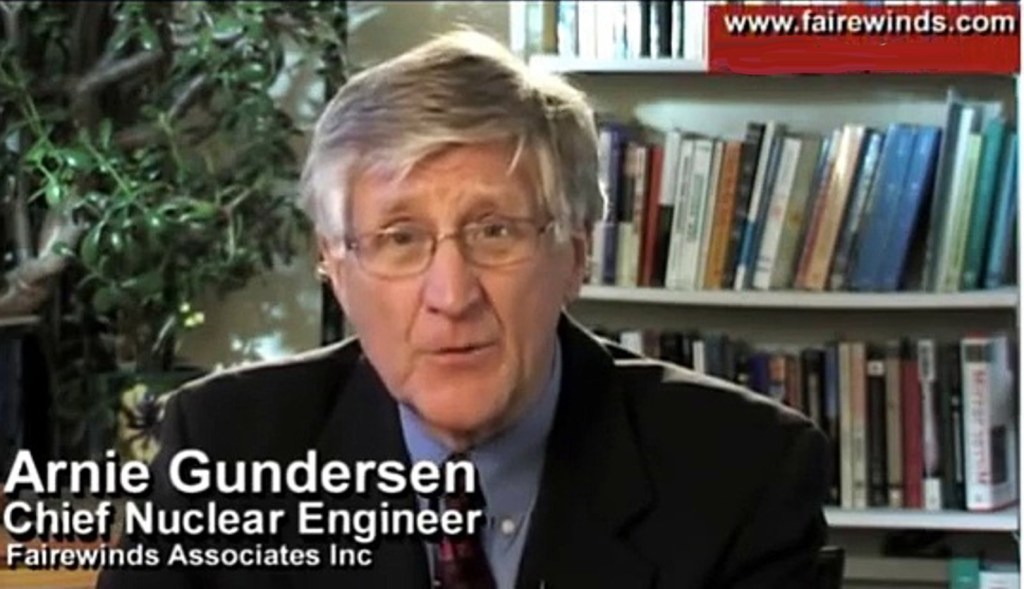
History shows a legacy of failures in the pursuit of the sodium reactor fantasy. As Admiral Rickover said almost 70 years ago, sodium reactors are “expensive to build, complex to operate, susceptible to prolonged shutdown as a result of even minor malfunctions, and difficult and time-consuming to repair.”
Mr. Gates, it’s time to face the music (and the facts) – your supposedly foolproof, sodium-cooled Natrium brainchild will encounter those same obstacles. In my fifty years of nuclear power expertise, I have learned that sooner or later, in any foolproof system, the fools are going to exceed the proofs. Now is the time to stop the Natrium marketing hype and instead use those precious public funds to pursue renewable energy options with a proven history of actually working inexpensively in a time frame that will prevent catastrophic climate change!
An Open Letter to Bill Gates About his Wyoming Atomic Reactor, https://www.counterpunch.org/2021/08/20/an-open-letter-to-bill-gates-about-his-wyoming-atomic-reactor/
BY ARNIE GUNDERSEN Dear Mr. Gates,
I am writing this open letter to you because I believe you have crossed the line by leveraging your fortune maneuvering State Governments and indeed the US Government to syphon precious taxpayer funds in support your latest atomic contrivance in Wyoming. How you spend your personal fortune is your decision and yours alone, but I question your zeal to leverage that fortune by securing additional public funds for an unproductive techno-solution[1] that claims to solve the climate crisis! Your latest technofix is the scheme to have taxpayers fund your new nuclear power concept in Wyoming, claiming that it will mitigate the climate crisis. It won’t!
Atomic power generation is not part of your skillset, but it is mine. The many facets of nuclear energy have been areas of my professional focus for the last 50 years. Beginning in 1971 with two nuclear engineering degrees, a Reactor Operator’s license, a corporate Senior Vice President position for an atomic licensee, a nuclear safety patent, two peer reviewed papers on radiation, and a best-selling book on Fukushima, nuclear power is in my wheelhouse, not yours.
Based on my experience, I am writing this public letter to express my fear that you have made a huge mistake by proposing to build a sodium-cooled small modular reactor (SMR) in Wyoming. Mr. Gates, your atomic power company Natrium (for the Latin word for sodium) is following in the footsteps of a seventy-year long record of sodium-cooled nuclear technological failures. Your plan to recycle those old failed attempts to resurrect liquid sodium yet again will siphon valuable public funds and research from much more inexpensive and proven renewable energy alternatives. Spending public funds on Natrium will make the global climate crisis worse, not better!
Let me explain why Natrium is doomed. As you probably have already been told, all present-day atomic reactors are cooled by water and are called Light Water Reactors (LWRs). Similarly, all US coal, oil, and gas-fired electric plants heat water, not exotic coolants. While some Small Modular Reactors concepts retain water cooling, Natrium’s proposed design deviates from this pattern by cooling the atomic chain reaction using an exotic coolant and specially designed steam generators to remove the atomic heat. Nuclear power concepts that do not use water for cooling are called Non-Light Water Reactors (or NLWRs), and Natrium claims that cooing with liquid sodium is safer and more reliable than traditional water-cooled reactors. What evidence exists to support that assertion?
World renowned energy economist Mycle Schneider calls Natrium and other proposed conceptual reactors “PowerPoint Reactors” as none are close to being fully designed yet all are being marketed as though their successful and safe operation were a fait accompli. According to Mycle Schneider, as reported in Politico EU:
All they have right now are basically PowerPoint reactors — it looks nice on the slide but they’re far from an operating pilot plant. We are more than a decade away from anything on the ground.”
The Union of Concerned Scientists (UCS) recently completed an exhaustive, 140-page study of the supposed safety improvements claimed by NLWR manufactures like Natrium. Entitled Advanced Isn’t Always Better, UCS concludes:
“But a fundamental question remains: Is different actually better? The short answer is no. Nearly all of the NLWRs currently on the drawing board fail to provide significant enough improvements over LWRs to justify their considerable risks.”
Recently, the media and governors in western states have become enthralled with one NLWR design hyped by you and your publicity team at Natrium. Using your successes at Microsoft, you are now asking state and national governments to bankroll a “fast reactor” concept that is cooled by liquid sodium.
“Wyoming To Lead The Coal-To-Nuclear Transition
Interest for new nuclear plants is growing beyond Wyoming as states in the western region like Montana, Nebraska, Utah, Idaho and North Dakota reevaluate the role of nuclear energy – particularly applications for advanced nuclear reactors … the brainchild of Bill Gates, … has developed a 345 MW sodium-cooled fast reactor with a molten salt-based energy storage system.”
The history of sodium as an atomic coolant does not support your grandiose claims for its success. Mr. Gates, the marketing hype associated with your latest “brainchild” ignores 70 years of failures using liquid sodium as an atomic reactor coolant. What follows are just a few examples of the monumental failures that have used liquid sodium that I am not so sure you have studied carefully before pressing for government funds in pursuit your idea.
According to Scientific American, liquid sodium “is no mere novelty; as dangerous as it is captivating… Sodium has significant disadvantages. On contact with air, it burns; plunged into water, it explodes.”
The Bulletin of Atomic Scientists goes even further stating:
“Unfortunately, this pitch glossed over stubborn facts… because plutonium fast-breeder reactors use liquid metal coolants, such as liquid sodium, operating them safely is far more challenging and expensive than conventional reactors. When private industry tried in the early 1960s to operate its own commercial-sized fast-breeder, Fermi I, the benefits were negative. Barely three years after Fermi 1 came online, a partial fuel meltdown in 1966 brought it down… These facts, however, are rarely emphasized….”
In addition to the meltdown at Fermi 1, whose failure is highlighted in the book We Almost Lost Detroit, other sodium cooled reactors have failed in the United States and worldwide. Beginning in 1950, the Navy attempted to develop a sodium-cooled reactor for the Seawolf submarine. According to the American Nuclear Society, Admiral Rickover, the founder of the nuclear Navy, testified to Congress in 1957 stating:
“We went to full power on the Seawolf alongside the dock on August 20 of last year. Shortly thereafter, she developed a small leak. It took us 3 months, working 24 hours a day, to locate and correct the leak. This is one of the serious difficulties in sodium plants.”
Rickover killed the Navy’s sodium powered reactor because of sodium leaks, sodium’s volatility and because sodium repairs take too long and radiation exposure to workers was too high. The problem of high radiation exposures to maintenance personnel while repairing inevitable sodium leaks was also highlighted by Rickover in that same 1957 testimony when he stated:
“Sodium becomes 30,000 times as radioactive as water. Furthermore, sodium has a half-life of 14.7 hours, while water has a half-life of about 8 seconds.”
Making rapid repairs in a sodium-cooled reactor is impossible because sodium becomes highly radioactive as it flows through the reactor core and it stays radioactive for weeks after shutdown. In contrast, water used to cool conventional reactors stays highly radioactive for about one minute.
After failed attempts to use liquid sodium on the Seawolf and on Fermi 1, nuclear zealots convinced the US Congress to subsidize yet another sodium-cooled reactor at Clinch River in Tennessee. The concept of a sodium reactor at Clinch River originated before the meltdown at Fermi 1, but was continued with huge government subsidies until 1984. Overcoming the safety issues presented by cooling atoms using liquid sodium led to delays and cost overruns that were certainly significant factors when the project was finally killed by Congress. However, serious, game-changing, safety concerns were also a factor in the cancelation of the project. According to The Rise and Demise of the Clinch River Breeder Reactor in Scientific American:
“In 1982 … the Energy Department videotaped safety tests it had conducted of how molten sodium might react once it came in contact with the reactor’s concrete containment structure. Concrete contains water crystals. Molten sodium reacts explosively when it comes in contact with oxygen, including oxygen contained in water. What the test demonstrated and the video showed was concrete exploding when it came in contact with liquid sodium.”
Even after the cancelation of the Clinch River fiasco, those same nuclear zealots continued to pursue the fantasy of a sodium-cooled reactor at the Monju site in Japan. Construction began in 1985 and about a decade later, the Monju sodium-cooled reactor was finally ready to operate. It did not operate long, however. After operating only 4 months, Monju had an emergency shutdown when the inevitable sodium leak caused an inevitable sodium fire.
According to a report issued by the Monju Construction Office entitled Sodium Leak at Monju-Causes and Consequences, the failure mode that caused the leak could not have been anticipated by Monju’s designers.
“On December 8, 1995, a sodium leak from the Secondary Heat Transport System (SHTS) occurred in a piping room of the reactor auxiliary building at Monju. The sodium leaked through a thermocouple temperature sensor due to the breakage of the well tube of the sensor installed near the outlet of the Intermediate Heat Exchanger (IHX) in SHTS Loop C… On the basis of the investigations, it was concluded that the breakage of the thermocouple well was caused by high cycle fatigue due to flow induced vibration in the direction of sodium flow.”
After ten years of construction, Monju’s four months of operation were followed by a fifteen year shutdown, Monju again restarted in 2010, but operated for less than a year when the equipment used for refueling fell into the reactor while a refueling was in progress. It never restarted. The simple fact is that the Monju sodium reactor took ten years to construct, ran intermittently for one year, and failed operate for twenty years. And then there is the matter of Japan’s government subsidized costs which exceeded $11 Billion USD.

“The move to shut the Monju prototype fast breeder reactor in Fukui prefecture west of Tokyo adds to a list of failed attempts around the world to make the technology commercially viable and potentially cut stockpiles of dangerous nuclear waste…. With Monju’s shutdown, Japan’s taxpayers are now left with an estimated bill of at least 375 billion yen ($3.2 billion) to decommission its reactor, on top of the 1 trillion yen ($8.5 billion) spent on the project.”
A half a world away from Japan, France generates 75% of its electricity for light water cooled atomic reactors and has also considered sodium reactors. Given the repeated failures of sodium-cooled technology in Japan and the US, and with the falling price of renewable power, in 2019 France chose not to pursue the path chosen by you and Natrium. According to Reuters, France has decided to pull the plug on its sodium-cooled reactor designs for at least half a century!
PARIS (Reuters) – France’s CEA nuclear agency has dropped plans to build a prototype sodium-cooled nuclear reactor, it said on Friday, after decades of research and hundreds of millions of euros in development costs. Confirming a report in daily newspaper Le Monde, the state agency said it …is no longer planning to build a prototype in the short or medium term. “In the current energy market situation, the perspective of industrial development of fourth-generation reactors is not planned before the second half of this century,”
There are more reports I could outline but I think I have made my point! History shows a legacy of failures in the pursuit of the sodium reactor fantasy. As Admiral Rickover said almost 70 years ago, sodium reactors are “expensive to build, complex to operate, susceptible to prolonged shutdown as a result of even minor malfunctions, and difficult and time-consuming to repair.”
Mr. Gates, it’s time to face the music (and the facts) – your supposedly foolproof, sodium-cooled Natrium brainchild will encounter those same obstacles. In my fifty years of nuclear power expertise, I have learned that sooner or later, in any foolproof system, the fools are going to exceed the proofs. Now is the time to stop the Natrium marketing hype and instead use those precious public funds to pursue renewable energy options with a proven history of actually working inexpensively in a time frame that will prevent catastrophic climate change!
Signed,
Arnold “Arnie” Gundersen
Action on climate change is stalled by unwise spending on small nuclear reactors

So Who Is Advocating For SMRs & Why?
So why are they doing this?
Because it allows them to defer governmental climate action while giving the appearance of climate action. They can pander to their least intelligent and wise supporters by asserting that renewables aren’t fit for purpose, while also not doing anything about the real problem because SMRs don’t exist in a modern, deployable, operable form yet.
the people asserting that SMRs are the primary or only answer to energy generation either don’t know what they are talking about, are actively dissembling or are intentionally delaying climate action.
Small nuclear reactor advocates refuse to learn the lessons of the past, While history doesn’t repeat, merely rhymes, SMRs are rhyming hard, Medium.com Michael Barnard, 12 Aug 21, Like hydrogen, small modular nuclear reactors have been seeing a resurgence of interest lately. Much of that is driven by governmental policies and investments focusing on the technology. Much of it comes from the nuclear industry. And inevitably, some comes from entrepreneurs attempting to build a technology that they hope will take off in a major way, making them and their investors a lot of money.
Small modular reactors won’t achieve economies of manufacturing scale, won’t be faster to construct, forego efficiency of vertical scaling, won’t be cheaper, aren’t suitable for remote or brownfield coal sites, still face very large security costs, will still be costly and slow to decommission, and still require liability insurance caps. They don’t solve any of the problems that they purport to while intentionally choosing to be less efficient than they could be. They’ve existed since the 1950s and they aren’t any better now than they were then.
Most of the attention and funding is misguided at best, and actively hostile to climate action at worst.
There are a handful of differences between them and traditional nuclear generation reactors. The biggest one is that they are smaller, hence the ‘small’ and ‘medium’ in the names. They range from 0.068 MW to 500 MW in capacity, with the International Atomic Energy Association using small for up to 300 MW and medium for up to 700 MW.
Despite the buzz, this is not new technology. The first nuclear generation plant was a Russian 5 MW device that went live in 1954. Hundreds of small reactors have been built for nuclear powered vessels and as neutron sources. This is well trodden ground. Most of the innovations being touted were considered initially decades ago.
Continue readingPentagon Poised To Unveil, Demonstrate Classified Space Weapon

Pentagon Poised To Unveil, Demonstrate Classified Space Weapon
The push to declassify an existing space weapon is being spearheaded by Gen. John Hyten, the vice chairman of the joint chiefs of staff. Breaking Defense, Theresa Hitchens, 20 Aug 21
Directed energy anti-satellite weapons for the future. (Lockheed Martin)
WASHINGTON: For months, top officials at the Defense Department have been working toward declassifying the existence of a secret space weapon program and providing a real-world demonstration of its capabilities, Breaking Defense has learned.
The effort — which sources say is being championed by Gen. John Hyten, the vice-chairman of the joint chiefs of staff — is close enough to completion that there was a belief the anti-satellite technology might have been revealed at this year’s National Space Symposium, which kicks off next week.ampioned
However, the crisis in Afghanistan appears to have put that on hold for now. Pulling the trigger on declassifying such a sensitive technology requires concurrence of the Director of National Intelligence, Avril Haines, and a thumbs up from President Joe Biden, sources explain; with all arms of the national security apparatus pointed towards Kabul, that is almost certainly not going to happen next week. And until POTUS says yes, nothing is for certain, of course.
The system in question long has been cloaked in the blackest of black secrecy veils — developed as a so-called Special Access Program known only to a very few, very senior US government leaders. While exactly what capability could be unveiled is unclear, insiders say the reveal is likely to include a real-world demonstration of an active defense capability to degrade or destroy a target satellite and/or spacecraft.
At least, that is what has been on the table since last year — when officials in the Trump administration viewed revealing the technology as a capstone to the creation of Space Command and Space Force. The plan apparently had been to announce it at the 2020 Space Symposium, which was cancelled due to the COVID-19 pandemic; the arrival of the Biden administration also led to a reevaluation of moving forward with the reveal.
Expert speculation on what could be used for the demonstration ranges from a terrestrially-based mobile laser used for blinding adversary reconnaissance sats to on-board, proximity triggered radio-frequency jammers on certain military satellites, to a high-powered microwave system that can zap electronics carried on maneuverable bodyguard satellites. However, experts and former officials interviewed by Breaking Defense say it probably does not involve a ground-based kinetic interceptor, a capability the US already demonstrated in the 2008 Burnt Frost satellite shoot-down.
Requests for comment to the offices of Hyten, Haines, and SPACECOM were not returned by deadline.
Many military space leaders believe that Space Force and Space Command must publicly demonstrate to Moscow and Beijing not just an ability to take out any space-based counterspace systems they may be developing or deploying, but also to attack the satellites they, like the US, rely upon for communications, positioning, navigation and timing (PNT), and intelligence, surveillance and reconnaissance (ISR).
Notably, the second-in-command of the Space Force recently foreshadowed movement in the long-running debate about declassification of all things related to national security space — a multifaceted and complex debate which has pitted advocates against upholders of the traditional culture of secrecy within DoD and the Intelligence Community.
“It is absolutely a true problem,” Gen. DT Thompson, deputy Space Force commander, responded to a question about over-classification during a July 28 Mitchell Institute event. “I wish we owned our own destiny in that regard, but we don’t — it’s part of a broader activity and we just have to work through that. What I will say is, I think we’re on the verge of a couple of significant steps.”
The Transparency Dilemma
In fact, Thompson’s comments represented only one of several comments, quietly dropped in speeches or interviews, from top military space officials pushing for declassification of high-end systems, following several years of a steadily intensifying drumbeat on the issue. A who’s-who list of top officers, DoD civilian leaders, and key members of Congress have for years been arguing that over-classification is harming the ability to convey the growing threat of foreign counterspace to lawmakers, the public and allied/partner nations — as well as the ability to cooperate with industry and foreign partners to mitigate those threats…………………
The central dilemma isn’t hard to understand, but the devil is in the details of solving it…………………… more https://breakingdefense.com/2021/08/pentagon-posed-to-unveil-classified-space-weapon/?utm_campaign=Breaking%20News&utm_medium=email&_hsmi=151302334&_hsenc=p2ANqtz-_WjJRXNH7oSN8eQo0iMMC52dIbrytHkcSOFjM1_zECxrz5zqaTLiWTN0lmaYIYa35tfuqxon2uOPfvbhS1zFeBwuIlrg&utm_content=151302334&utm_source=hs_email
Why Cosmic Radiation Could Foil Plans for Farming on Mars
Why Cosmic Radiation Could Foil Plans for Farming on Mars, New research suggests gamma rays stunt plant growth. Inside Science , August 20, 2021 – Karen Kwon, Friday, August 20, 2021 – — What would it take for humans to live on Mars? The first step is to successfully get people to the red planet, of course. Once there, the astronauts would face a task that could be even more difficult: figuring out how to survive in an environment that is vastly different from Earth’s. A new study demonstrates one of the challenges — Earth’s plants don’t grow as well when exposed to the level of radiation expected on Mars.
Wieger Wamelink, an ecologist at Wageningen University in the Netherlands who describes himself as a space farmer, has been frustrated by sci-fi depictions of growing plants on Mars. “What you often see is that they do it in a greenhouse,” he said, “but that doesn’t block the cosmic radiation,” which consists of high-energy particles that may alter the plants’ DNA. Mars lacks the same degree of protection from cosmic radiation that the Earth’s atmosphere and magnetic field provide. To prove his suspicion that cosmic radiation could be dangerous to plants, Wamelink decided to test the hypothesis himself.
First, Wamelink and his team had to recreate the cosmic radiation. The team settled on using gamma rays generated by radioactive cobalt, even though the actual cosmic radiation that bombards Mars’ surface consists of various types of radiation, including alpha and beta particles……………..
Four weeks after germination, the scientists compared the two groups and saw that the leaves of the group exposed to gamma rays had abnormal shapes and colors. The weights of the plants also differed; the rye plants in the gamma-ray group weighed 48% less than the regular group, and the weight of the garden cress exposed to gamma rays was 32% lower than their unblasted counterparts. Wamelink suspects the weight difference is due to the gamma rays damaging the plants’ proteins and DNA. The results were published in the journal Frontiers in Astronomy and Space Sciences this month……………. http://insidescience.org/news/why-cosmic-radiation-could-foil-plans-farming-mars
Boys fight over nuclear space toys. Jeff Bezos sues NASA over its contract with Elon Musk
 | |||
Moon race moguls: Bezos sues US government over SpaceX lunar lander contract, The Age, By Christian Davenport, August 17, 2021 Washington: Jeff Bezos’ Blue Origin space company is suing NASA to force it to fund a second spacecraft to ferry astronauts to and from the moon.
The suit, filed in the Court of Federal Claims on Tuesday AEST, seeks to allow the space company to win a slice of the lucrative $US2.9 billion ($3.96 billion) Human Landing System contract awarded solely to Elon Musk’s SpaceX.
It comes about two weeks after the US Government Accountability Office rebuffed Blue Origin’s protest of that decision.
In a statement, the company said it was “an attempt to remedy the flaws in the acquisition process found in NASA’s Human Landing System. We firmly believe that the issues identified in this procurement and its outcomes must be addressed to restore fairness, create competition, and ensure a safe return to the Moon for America.”
The contract is one of the most significant NASA programs in some time and has been a target for Blue Origin for years. In 2017, before there was even a formal request for proposals, the company pitched NASA on a lunar lander for cargo.
Blue Origin subsequently teamed up with Lockheed Martin, Northrop Grumman and Draper, traditional players in the American defence business, to bid for the program. And last year NASA awarded the Blue Origin-led team the biggest award in the initial phase of contracts.
But in April, NASA selected a single winner, SpaceX, to develop the spacecraft for what would be the first human landing on the moon since the last Apollo mission, in 1972. Given the funding for the initial round, the award was considered a major upset…..
Since then, Blue Origin has tried every lever at its disposal – lobbying Congress, filing the suits and waging a public relations war – to overturn the SpaceX award.
Blue Origin has claimed that SpaceX’s Starship spacecraft that would become the lunar lander is an “immensely complex and high risk” path for NASA to take since it would involve as many as 16 flights to fully fuel the spacecraft for a lunar landing.
Many in the space community have bristled at that bare-knuckles approach, especially since it was aimed at SpaceX……………. https://www.theage.com.au/world/middle-east/moon-race-moguls-bezos-sues-us-government-over-spacex-lunar-lander-contract-20210817-p58jfb.html
1 This Month
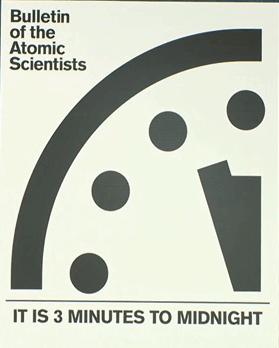
Watch the 2026 Doomsday Clock unveiling live here on January 27 at 10 a.m. EST
To see nuclear-related stories in greater depth and intensity – go to https://nuclearinformation.wordpress.com/

29 Jan. Thursday 7-8 p.m. Webinar – World’s Largest Nuclear Station in Port Hope, ON?


31st January – Challenging the War Machine – a DECLASSIFIED UK SUMMIT


Website of the Week
Now until to February 10, 2026 Radioactive waste storage in France: the debate is finally open! How to participate?
-
Archives
- January 2026 (277)
- December 2025 (358)
- November 2025 (359)
- October 2025 (376)
- September 2025 (258)
- August 2025 (319)
- July 2025 (230)
- June 2025 (348)
- May 2025 (261)
- April 2025 (305)
- March 2025 (319)
- February 2025 (234)
-
Categories
- 1
- 1 NUCLEAR ISSUES
- business and costs
- climate change
- culture and arts
- ENERGY
- environment
- health
- history
- indigenous issues
- Legal
- marketing of nuclear
- media
- opposition to nuclear
- PERSONAL STORIES
- politics
- politics international
- Religion and ethics
- safety
- secrets,lies and civil liberties
- spinbuster
- technology
- Uranium
- wastes
- weapons and war
- Women
- 2 WORLD
- ACTION
- AFRICA
- Atrocities
- AUSTRALIA
- Christina's notes
- Christina's themes
- culture and arts
- Events
- Fuk 2022
- Fuk 2023
- Fukushima 2017
- Fukushima 2018
- fukushima 2019
- Fukushima 2020
- Fukushima 2021
- general
- global warming
- Humour (God we need it)
- Nuclear
- RARE EARTHS
- Reference
- resources – print
- Resources -audiovicual
- Weekly Newsletter
- World
- World Nuclear
- YouTube
-
RSS
Entries RSS
Comments RSS
 nuclear-news