Some, but not all, First Nations support small nuclear reactors in New Brunswick

Moltex CEO says company has full support of all 15 First Nations in N.B. to develop SMRs
Jennifer Sweet · CBC News Feb 15, 2023
Companies trying to develop small modular nuclear reactors in New Brunswick are getting some support from an unlikely source.
An energy crisis is looming large, and SMRs have better potential than renewables in the short term, said Chief Terry Richardson of Pabineau First Nation, near Bathurst.
Richardson said he sees nuclear power as consistent with his cultural values.
“As First Nations, we are stewards of the land. Well, when we look at nuclear technology, it’s not a carbon emitter. So it’s not going to cause a problem. It’s going to actually solve the problem of carbon.
“If we don’t do something, we all know what’s happening with climate change.”
Pabineau has signed memoranda of understanding to work with two companies that have SMR projects under way at Point Lepreau — Moltex and ARC, said Richardson.
He describes the MOUs as “non-contractual, binding documents” that state a willingness to work together on development.
Details of exactly how his community and potentially other First Nations in the province may take part in SMR projects have yet to be negotiated, said Richardson.
“There’s going to be an opportunity to be involved on the equity side and that’s where we have to sit down and talk and discuss it and see where we’re going to go.”
After the initial development at Lepreau, ARC is talking about installing more SMRs in Belledune, Richardson noted, which could mean job opportunities in northern New Brunswick.
He also likes that Moltex is looking at reusing spent fuel rods, which it says would reduce the amount of toxic nuclear waste that already exists.
Study looks at SMR waste
A Canadian peer-reviewed study that came out last summer found the volume of waste from SMRs would be between double and 30 fold that from a typical reactor and that its chemical complexity would make it more difficult to manage.
Richardson said he is satisfied that plans are in place to deal with nuclear waste and added that maybe in the future there will be a way to recycle it…..
Moltex CEO Rory O’Sullivan told the legislative committee Wednesday that his company has the support of all 15 First Nations in the province to develop SMRs.
However, some other Indigenous leaders addressed the committee who have concerns about the SMR plans and the public investment in development.
Chief Hugh Akagi represents the Peskotomuhkati Nation at Skutik, which doesn’t have official recognition as a First Nation in Canada. https://www.cbc.ca/news/canada/new-brunswick/first-nations-small-modular-nuclear-reactors-1.6749808
U.S. military’s newest weapon against China and Russia: Hot air balloon

The Pentagon is quietly transitioning high-altitude balloon projects to the military services.
By LEE HUDSON, 07/05/2022 https://www.politico.com/news/2022/07/05/u-s-militarys-newest-weapon-against-china-and-russia-hot-air-00043860
The Pentagon is working on a new plan to rise above competition from China and Russia: balloons.
The high-altitude inflatables, flying at between 60,000 and 90,000 feet, would be added to the Pentagon’s extensive surveillance network and could eventually be used to track hypersonic weapons.
The idea may sound like science fiction, but Pentagon budget documents signal the technology is moving from DoD’s scientific community to the military services.
“High or very high-altitude platforms have a lot of benefit for their endurance on station, maneuverability and also flexibility for multiple payloads,” said Tom Karako, senior fellow for the International Security Program and Missile Defense Project director at the Center for Strategic and International Studies.
The Pentagon continues to invest in these projects because the military could use the balloons for various missions.
Over the past two years, the Pentagon has spent about $3.8 million on balloon projects, and plans to spend $27.1 million in fiscal year 2023 to continue work on multiple efforts, according to budget documents.
Meanwhile, the Pentagon is working on its own hypersonic weapons program, despite Wednesday’s failure of the latest test.
A bright spot for the U.S. is the balloons may help track and deter hypersonic weapons being developed by China and Russia.
Checking Back in on China’s Nuclear Icebreaker
Over four years after the project was announced, updates remain scarce on China’s first nuclear icebreaker.
The Diplomat, By Trym Eiterjord 13 Feb 23
In 2018, it became known that the state-owned China National Nuclear Corporation (CNNC) was embarking on a project to develop nuclear-powered icebreakers…………….
Over four years later, information about the project remains scarce, but a handful of patents recently filed by engineers at the CNNC Marine subsidiary would seem to indicate that development is moving forward. The content of these patents may give some insight into what is potentially China’s first nuclear-powered surface vessel.
The patents filed so far are concerned mainly with nuclear engineering. ……………………
Finally, the new subsidiary has filed a patent titled simply “A nuclear-powered icebreaker,”………………..
This is more or less the extent of new information to have come out since the project was first revealed in 2018……………………………….
The People’s Liberation Army Navy has also seemingly become interested in nuclear propulsion for polar-going icebreakers…………………….. more https://thediplomat.com/2023/02/checking-back-in-on-chinas-nuclear-icebreaker/
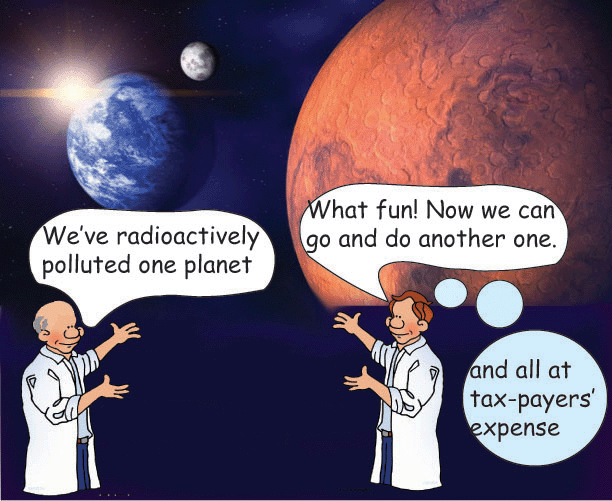
Another sign of madness? – thermonuclear propulsion technology to power a rocket to Mars.

Decisions on nuclear future are guided by myths.
By Linda Pentz Gunter 12 Feb 23
“…………………………………………………………. a sign of some kind of madness?
A few weeks later, that same presentiment [about the UK government] was re-evoked on reading a headline in the print edition of the Washington Post: US works on nuclear-powered rocket.
This is not an entirely new story, but an update on the plan to use thermonuclear propulsion technology to power a rocket to Mars.
There are so many things wrong with this. The premise is that not using a nuclear reactor to power the rocket will mean it will just be too tediously slow for human passengers to endure — a journey of seven months. With the reactor on board speeding the rocket on its way, the journey to Mars could be cut to what? A mere three and a half months. Not tedious at all!
Never mind that rockets have a nasty habit of sometimes exploding on the launch pad. And never mind that do we REALLY need to spend billions of dollars right now trying to get maybe three astronauts to Mars when we have a planet called Earth that desperately needs every dime and dollar available to save it?
The announcement was replete with the usual illogicalities. Sending astronauts on that seven-month journey to Mars in a traditional rocket was “dangerous” as “the radiation levels on a Mars mission could expose astronauts to radiation levels more than 100 times greater than on Earth.” Much better to send them there on a rocket powered by a nuclear reactor!
There is another agenda afoot here, of course, and it’s a military one and the sinister battle for who controls space.
If you thought shooting down the Chinese spy balloon was exciting, that was child’s play compared to what is planned for NASA’s nuclear reactors in space.
This includes being able to power satellites to become more agile in maneuvering away from “enemy” satellites. Using nuclear propulsion will achieve that, but what other consequences might result from a host of nuclear powered satellites buzzing around in space? It’s no surprise that the Space Force, created for war-fighting in space, is involved in all this.
And of course, apparently taking its cue from the mess we have already created on Earth, NASA wants to place nuclear reactors on the Moon as a power source. But for who or what exactly? Will we plant the US flag there while we are at it and claim a new military and strategic frontier? The signs are ominous.
And what about all the radioactive waste? Will we be boring deep holes in the Moon to bury it, or will we simply jettison it further into deep space? It’s bad enough that the oceans are already our dustbin. Now Space is to be our new nuclear waste frontier.
While all this was going on, evidence from yet more research poured in about how completely unnecessary it is to use nuclear power for anything, now or in the future.
Looking at every kind of power demand including energy consumption, electric vehicles, and commercial transport, then applying solar, wind, nuclear, heat pumps, storage and other technology, nuclear power was repeatedly eliminated from the mix for increasing costs without increasing reliability.
And yet, governments here and in far too many other parts of the world press on inexorably with plans to continue the use of nuclear power or develop new nuclear programs.
Despite all the evidence that this is — to understate it — a Very Bad Idea. https://beyondnuclearinternational.org/2023/02/12/signs-of-madness/
Linda Pentz Gunter is the international specialist at Beyond Nuclear and writes for and curates Beyond Nuclear International.
NASA and DARPA are working on a nuclear-powered rocket that could go to Mars
The technology would also have significant national security implications
Washington Post By Christian Davenport, February 3, 2023
“……………………………………… If NASA’s going to get to Mars, it needs to find a way to get there much faster. Which is one of the reasons it said last week that it is partnering with the Pentagon’s Defense Advanced Research Projects Agency on development of thermonuclear propulsion technology.
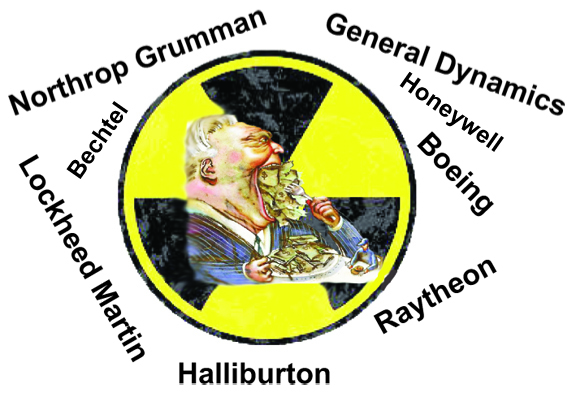
………………. DARPA, the arm of the Defense Department that seeks to develop transformative technologies, has been working on the program since 2021, when it awarded three contracts for the first phase of the program to General Atomics, Lockheed Martin and Blue Origin, the space company founded by Jeff Bezos. (Bezos owns The Washington Post.) A nuclear-powered rocket would use a nuclear reactor to heat propellant to extreme temperatures before shooting the fuel through a nozzle to produce thrust.

………………….. The program is called DRACO, for Demonstration Rocket for Agile Cislunar (or in the vicinity of the moon) Operation……………………..
The agencies hope they’ll be ready to demonstrate their work with a spaceflight in 2027.
NASA is also working with the Department of Energy on a separate project to develop a nuclear power plant that could be used on the moon and perhaps one day on Mars.
But getting to Mars is exceedingly difficult, and despite claims from NASA for years that it was gearing up to send astronauts there, the agency is nowhere close to achieving that goal.
One of the main obstacles is the distance. Earth and Mars are only on the same side of the sun every 26 months. But even at their closest points, a spacecraft would have to follow an elliptical orbit around the sun that, as Tory Bruno, the CEO of the United Launch Alliance, wrote in a recent essay, will require “a great sweeping arc of around 300 million miles to arrive.”
……………………………. . The need for spacecraft that can maneuver away from the enemy has become clear during the war in Ukraine. https://www.washingtonpost.com/technology/2023/02/03/nuclear-rocket-darpa-nasa/
There’s no planet B
Gathering this observation-based information is essential to counter an increasingly popular but flawed narrative that the only way to ensure our survival is to colonise other planets.
The best-case scenario for terraforming Mars leaves us with an atmosphere we are incapable of breathing
The scientific evidence is clear: the only celestial body that can support us is the one we evolved with. Here’s why
AEON, Arwen E Nicholson research fellow in physics and astronomy at the University of Exeter in the UK, Raphaëlle D Haywood senior lecturer in physics and astronomy at the University of Exeter in the UK. 3 Feb 23
At the start of the 22nd century, humanity left Earth for the stars. The enormous ecological and climatic devastation that had characterised the last 100 years had led to a world barren and inhospitable; we had used up Earth entirely. Rapid melting of ice caused the seas to rise, swallowing cities whole. Deforestation ravaged forests around the globe, causing widespread destruction and loss of life. All the while, we continued to burn the fossil fuels we knew to be poisoning us, and thus created a world no longer fit for our survival. And so we set our sights beyond Earth’s horizons to a new world, a place to begin again on a planet as yet untouched. But where are we going? What are our chances of finding the elusive planet B, an Earth-like world ready and waiting to welcome and shelter humanity from the chaos we created on the planet that brought us into being? We built powerful astronomical telescopes to search the skies for planets resembling our own, and very quickly found hundreds of Earth twins orbiting distant stars. Our home was not so unique after all. The universe is full of Earths!
This futuristic dream-like scenario is being sold to us as a real scientific possibility, with billionaires planning to move humanity to Mars in the near future. For decades, children have grown up with the daring movie adventures of intergalactic explorers and the untold habitable worlds they find. Many of the highest-grossing films are set on fictional planets, with paid advisors keeping the science ‘realistic’. At the same time, narratives of humans trying to survive on a post-apocalyptic Earth have also become mainstream.
Given all our technological advances, it’s tempting to believe we are approaching an age of interplanetary colonisation. But can we really leave Earth and all our worries behind? No. All these stories are missing what makes a planet habitable to us. What Earth-like means in astronomy textbooks and what it means to someone considering their survival prospects on a distant world are two vastly different things. We don’t just need a planet roughly the same size and temperature as Earth; we need a planet that spent billions of years evolving with us. We depend completely on the billions of other living organisms that make up Earth’s biosphere. Without them, we cannot survive. Astronomical observations and Earth’s geological record are clear: the only planet that can support us is the one we evolved with. There is no plan B. There is no planet B. Our future is here, and it doesn’t have to mean we’re doomed.
At the start of the 22nd century, humanity left Earth for the stars. The enormous ecological and climatic devastation that had characterised the last 100 years had led to a world barren and inhospitable; we had used up Earth entirely. Rapid melting of ice caused the seas to rise, swallowing cities whole. Deforestation ravaged forests around the globe, causing widespread destruction and loss of life. All the while, we continued to burn the fossil fuels we knew to be poisoning us, and thus created a world no longer fit for our survival. And so we set our sights beyond Earth’s horizons to a new world, a place to begin again on a planet as yet untouched. But where are we going? What are our chances of finding the elusive planet B, an Earth-like world ready and waiting to welcome and shelter humanity from the chaos we created on the planet that brought us into being? We built powerful astronomical telescopes to search the skies for planets resembling our own, and very quickly found hundreds of Earth twins orbiting distant stars. Our home was not so unique after all. The universe is full of Earths!
This futuristic dream-like scenario is being sold to us as a real scientific possibility, with billionaires planning to move humanity to Mars in the near future. For decades, children have grown up with the daring movie adventures of intergalactic explorers and the untold habitable worlds they find. Many of the highest-grossing films are set on fictional planets, with paid advisors keeping the science ‘realistic’. At the same time, narratives of humans trying to survive on a post-apocalyptic Earth have also become mainstream.
Given all our technological advances, it’s tempting to believe we are approaching an age of interplanetary colonisation. But can we really leave Earth and all our worries behind? No. All these stories are missing what makes a planet habitable to us. What Earth-like means in astronomy textbooks and what it means to someone considering their survival prospects on a distant world are two vastly different things. We don’t just need a planet roughly the same size and temperature as Earth; we need a planet that spent billions of years evolving with us. We depend completely on the billions of other living organisms that make up Earth’s biosphere. Without them, we cannot survive. Astronomical observations and Earth’s geological record are clear: the only planet that can support us is the one we evolved with. There is no plan B. There is no planet B. Our future is here, and it doesn’t have to mean we’re doomed.
Deep down, we know this from instinct: we are happiest when immersed in our natural environment. There are countless examples of the healing power of spending time in nature. Numerous articles speak of the benefits of ‘forest bathing’; spending time in the woods has been scientifically shown to reduce stress, anxiety and depression, and to improve sleep quality, thus nurturing both our physical and mental health. Our bodies instinctively know what we need: the thriving and unique biosphere that we have co-evolved with, that exists only here, on our home planet.
There is no planet B. These days, everyone is throwing around this catchy slogan. Most of us have seen it inscribed on an activist’s homemade placard, or heard it from a world leader. In 2014, the United Nations’ then secretary general Ban Ki-moon said: ‘There is no plan B because we do not have [a] planet B.’ The French president Emmanuel Macron echoed him in 2018 in his historical address to US Congress. There’s even a book named after it. The slogan gives strong impetus to address our planetary crisis. However, no one actually explains why there isn’t another planet we could live on, even though the evidence from Earth sciences and astronomy is clear. Gathering this observation-based information is essential to counter an increasingly popular but flawed narrative that the only way to ensure our survival is to colonise other planets.
The best-case scenario for terraforming Mars leaves us with an atmosphere we are incapable of breathing
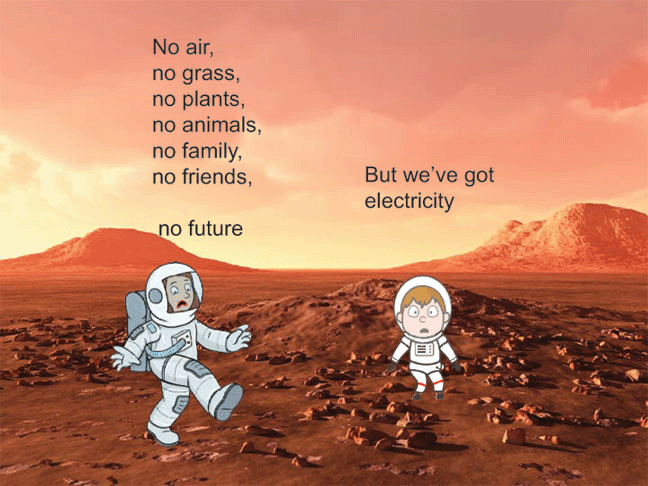
The most common target of such speculative dreaming is our neighbour Mars. It is about half the size of Earth and receives about 40 per cent of the heat that we get from the Sun. From an astronomer’s perspective, Mars is Earth’s identical twin. And Mars has been in the news a lot lately, promoted as a possible outpost for humanity in the near future. While human-led missions to Mars seem likely in the coming decades, what are our prospects of long-term habitation on Mars? Present-day Mars is a cold, dry world with a very thin atmosphere and global dust storms that can last for weeks on end. Its average surface pressure is less than 1 per cent of Earth’s. Surviving without a pressure suit in such an environment is impossible. The dusty air mostly consists of carbon dioxide (CO2) and the surface temperature ranges from a balmy 30ºC (86ºF) in the summer, down to -140ºC (-220ºF) in the winter; these extreme temperature changes are due to the thin atmosphere on Mars.
Despite these clear challenges, proposals for terraforming Mars into a world suitable for long-term human habitation abound. Mars is further from the Sun than Earth, so it would require significantly more greenhouse gases to achieve a temperature similar to Earth’s. Thickening the atmosphere by releasing CO2 in the Martian surface is the most popular ‘solution’ to the thin atmosphere on Mars. However, every suggested method of releasing the carbon stored in Mars requires technology and resources far beyond what we are currently capable of. What’s more, a recent NASA study determined that there isn’t even enough CO2 on Mars to warm it sufficiently.
Even if we could find enough CO2, we would still be left with an atmosphere we couldn’t breathe. Earth’s atmosphere contains only 0.04 per cent CO2, and we cannot tolerate an atmosphere high in CO2. For an atmosphere with Earth’s atmospheric pressure, CO2 levels as high as 1 per cent can cause drowsiness in humans, and once we reach levels of 10 per cent CO2, we will suffocate even if there is abundant oxygen. The proposed absolute best-case scenario for terraforming Mars leaves us with an atmosphere we are incapable of breathing; and achieving it is well beyond our current technological and economic capabilities.
Instead of changing the atmosphere of Mars, a more realistic scenario might be to build habitat domes on its surface with internal conditions suitable for our survival. However, there would be a large pressure difference between the inside of the habitat and the outside atmosphere. Any breach in the habitat would rapidly lead to depressurisation as the breathable air escapes into the thin Martian atmosphere. Any humans living on Mars would have to be on constant high alert for any damage to their building structures, and suffocation would be a daily threat…………………………………………………………………………………………….
Living on a warming Earth presents many challenges. But these pale in comparison with the challenges of converting Mars, or any other planet, into a viable alternative. Scientists study Mars and other planets to better understand how Earth and life formed and evolved, and how they shape each other. We look to worlds beyond our horizons to better understand ourselves. In searching the Universe, we are not looking for an escape to our problems: Earth is our unique and only home in the cosmos. There is no planet B. https://aeon.co/essays/we-will-never-be-able-to-live-on-another-planet-heres-why
Scepticism on the enthusiastic claims about nuclear fusion

The nuclear fusion community ended 2022 with a bang, when scientists at the
Lawrence Livermore National Laboratory in California reported that they had
created a reaction that produced more energy than it consumed.
This breakthrough, known as a fusion ignition, was hailed as a historic advance,
a critical step on the road to generating limitless clean energy by
replicating the reactions that power the sun. Following the announcement,
commentators immediately began to speculate about how close scientists are
to achieving that long-held dream.
But any claims about the start of the next clean energy revolution must be regarded skeptically. In part, this is
because when the energy-intensive lasers that produced the reaction are
also accounted for, the total energy used in the experiment was much more
than it created.
Additionally, to turn this kind of fusion reaction into an
actual power source, the same effect would have to be replicated at a much
higher frequency—more like several times a second rather than once a day.
The reality is that fusion energy is nowhere near ready for commercial use.
Nor will it be, until a successful innovation strategy for nuclear fusion
is devised.
Foreign Affairs 31st Jan 2023
https://www.foreignaffairs.com/world/long-way-nuclear-fusion
GE Hitachi group announce contract for grid-scale small nuclear reactor, requiring large taxpayer subsidy .

GE Hitachi and 3 partners announce first commercial contract for grid-scale SMR in North America.Utility Dive 30 Jan 23
Dive Brief:
- An energy and construction partnership announced Friday an agreement to build what it says will be the first grid-scale small modular reactor in North America. Terms were not disclosed.
- GE Hitachi Nuclear Energy, Ontario Power Generation, SNC-Lavalin and Aecon Group signed a contract to deploy a BWRX-300 small modular reactor at OPG’s Darlington New Nuclear Project site in Clarington, Ontario.
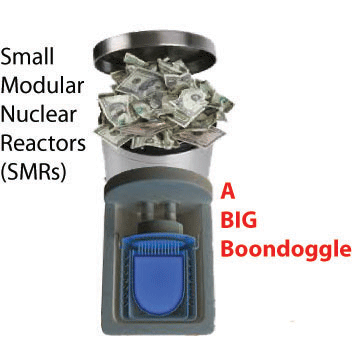
…………………………………….. Critics say SMRs, which are advanced nuclear reactors with a power capacity of up to 300 MW(e), according to the International Atomic Energy Agency, are financially feasible only because of large taxpayer subsidies. Detractors also say solar and wind power, which do not produce waste, can be deployed more quickly than SMRs. https://www.utilitydive.com/news/SMRs-reactor-GE-Hitachi-Ontario-Public-Power-Aecon-Group-nuclear/641483/
As SMR developer X-energy moves to go public, merger partner Ares cautions investors about risks
Utility Dive Stephen Singer, Editor, Jan. 27, 2023
Dive Brief:
- The partner in a merger with a small modular nuclear reactor developer going public has cautioned investors that changing markets and a “limited operating history” may ultimately be unfavorable to the business.
Ares Acquisition Corp., a special purpose acquisition company, warned in an S-4 filing with the U.S. Securities and Exchange Commission Wednesday of “limited operating experience for reactors of this type, configuration and scale” that could lead to higher than expected construction costs, maintenance requirements, operating expenses or changes in the timing of delivery. X Energy Reactor Co. announced the merger in December.- The market for SMRs generating electric power and high-temperature heat is not yet established and “may not achieve the growth potential we expect or may grow more slowly than expected,” Ares said. It’s backed by private equity firm Ares Management Corp.
Dive Insight:
The S-4 filing, which provides a preliminary proxy statement and spells out details of the renamed X-Energy business and market risks, provides boilerplate cautions to investors who require transparency and discussion of as many potential risks as possible. It highlights challenges in a still-emerging industry. The U.S. Nuclear Regulatory Commission on Jan. 19 certified NuScale Power’s SMR design, the first of its type to win federal approval………………………………
Ares said the market for SMRs, and particularly for SMRs using advanced nuclear technologies such as those employed in the Xe-100 — an 80 MWe reactor that can be scaled into a ‘four-pack’ 320 MWe power plant — has not yet been established. SMRs using advanced nuclear technologies have not been proven at scale, it said……………………..
Ares also warned that it may not attract customers for its SMR technology — a “relatively new and unproven technology” — as quickly as it expects, “or at all,” and acquiring customers may be more expensive than it currently anticipates.
In addition, Ares said the time and funding needed to bring X-energy’s nuclear fuel, TRISO-X, to market at scale may “greatly exceed” expectations………………….
Critics of SMRs have raised issues nearly identical to what Ares cited, calling out the reactors over the projected cost and time needed for siting and other approvals.
“Small modular reactors may be viable one day, but they are not today, will not be tomorrow and may never make as much economic sense as renewable sources of electricity,” the Institute for Energy Economics and Financial Analysis says. “We should stick to carbon-free energy sources that make financial and environmental sense.”………. more https://www.utilitydive.com/news/ares-acquisition-x-energy-smr-sec-investor-warning/641337/
Nuclear-powered rockets to Mars – there are serious safety risks.

No one wants to see nuclear debris raining down on the Florida coast or Disneyland, and that’s not the only possible scenario.
An accident in orbit could potentially drop radioactive material into the atmosphere.
Nuclear powered rockets could take us to Mars, but will the public accept them?
Bob McDonald’s blog: NASA and DARPA are beginning development of a new fission rocket, Bob McDonald · CBC Radio · Jan 27, 2023
NASA has signed an agreement with the U.S. Defense Advanced Research Projects Agency (DARPA) to develop a nuclear rocket that could shorten travel time to Mars by about one quarter compared to traditional chemical rockets. But before nuclear technology is launched into space, there are risks that need to be addressed to ensure public safety…………………….
While the technology of nuclear propulsion is certainly feasible, it may not be readily embraced by the public. The accidents at Chernobyl, Three Mile Island and Fukushima have left many people skeptical about nuclear safety. And there will be risk.
A nuclear rocket wouldn’t be used to launch a spacecraft from the Earth’s surface — it would be designed to run in space only. It would have to launch into orbit on a large chemical rocket — so the public would have to accept the risk of launching a nuclear reactor on a standard rocket filled with explosive fuel.
And rockets have and will malfunction catastrophically, in what with black humour rocket scientists sometimes call RUD — “rapid unscheduled disassembly.”
No one wants to see nuclear debris raining down on the Florida coast or Disneyland, and that’s not the only possible scenario. An accident in orbit could potentially drop radioactive material into the atmosphere.
Nuclear technology in another form has been used since the very beginning of the space program, just not for propulsion. Radioisotope Thermoelectric Generators (RTGs) have provided power to deep space probes for instruments, radios and cameras on a range of missions…………………….
The U.S. has seen several accidents, including one in 1968 when a launch failure of a Nimbus-1 weather satellite threw its RTG into the ocean. It was recovered intact and the fuel was reused on a later mission.
But there have been more serious accidents. Canadians may remember an incident from 1978, when a Soviet reconnaissance satellite scattered 50 kg of uranium from its nuclear thermal generator over 124,000 square kilometres of Canada’s North.
But a fission reactor is a much more complicated device involving higher temperatures, coolants and more nuclear fuel.
……………………. the engineers face a challenge to ensure that all checks and balances have been made to reassure the astronauts who will fly these machines — and people on the ground — that they can be operated safely before the technology is adopted. https://www.cbc.ca/radio/quirks/nuclear-powered-rockets-could-take-us-to-mars-but-will-the-public-accept-them-1.6727217
Rolls Royce wants to make sure that the tax-payer cops the cost of their small nuclear reactor folly

Rolls-Royce calls on government for more clarity on nuclear. https://www.energylivenews.com/2023/01/26/rolls-royce-calls-on-government-for-more-clarity-on-nuclear/
Executives of the engineering giant have cited Britishvolt as an example of a company which committed to a factory without having orders.
Dimitris Mavrokefalidis
Rolls-Royce has urged the government to provide more clear vision of its target to roll out 24GW of nuclear power generation by 2050.
During a session at the House of Commons Welsh Affairs Committee, asked when Rolls-Royce will start the process of building its first Small Modular Reactor factory, Alastair Evans, Director of Corporate and Government Affairs at Rolls-Royce SMR, said: “If you look at the Britishvolt example, that is an example of a company that committed to a factory without orders. We don’t have clarity on orders in the UK.
“So, as soon as we have that clarity that the UK Government wants to deploy Rolls-Royce SMRs, we will be able to get the first factory moving, but our shareholders need that clarity. Britishvolt is a very good example of where you try and run a business and build a factory and get things moving without that certainty, orders and customers.”
A few days ago, company representatives visited the first four sites which have the potential to host 15GW of new nuclear power capacity.
Mr Evans confirmed that once Rolls-Royce receives the green light from the government, then the whole process around the development of its first SMR facility will accelerate.
He said: “That was the purpose of doing our planning processes, getting the selection of our heavy pressure vessel sites – we’ve got 600 people in the Rolls-Royce SMR business today. So we are set up to deliver at pace. We are 600 UK-based workers looking at manufacturing, assembly, lead skills, and module concept. We are ready to go.”
NASA partners with the military to test nuclear fission-powered spacecraft engine by 2027
The technological advancement has long been seen as critical to long-haul missions, including a manned trip to Mars.
Aljazeera 24 Jan 2023
The top official at the United States space agency NASA has said the country plans to test a spacecraft engine powered with nuclear fission by 2027, an advancement seen as key to long-haul missions including a manned journey to Mars.
NASA will partner with the US military’s Defense Advanced Research Projects Agency (DARPA) to develop the nuclear thermal propulsion engine and launch it into space, NASA administrator Bill Nelson said on Tuesday. The project has been named the Demonstration Rocket for Agile Cislunar Operations or DRACO……………………..
Under the NASA-DARPA agreement, NASA’s Space Technology Mission Directorate will lead technical development of the nuclear thermal engine, which will eventually be integrated with an experimental spacecraft created by the military.
The agency said the last US nuclear thermal rocket engine tests were discontinued in the 1970s… https://www.aljazeera.com/news/2023/1/24/nasa-to-test-nuclear-fission-powered-spacecraft-engine-by-2027
Former DEA Nuclear Security Official Says Wyoming Reactor Not Safe

the sodium reactor planned for Kemmerer has a high degree of potential for explosive accidents and proliferation of nuclear weapons material.
Sodium reacts with water and air, which Tallen said poses a huge risk for accidents.
Cowboy State Daily, By Kevin Killough, State Energy Reporter
Kevin@CowboyStateDaily.com January 25, 2023January 25, 2023
When TerraPower and PacifiCorp announced in November 2021 that they had selected Kemmerer as the location of its Natrium reactor demonstration project, many welcomed the opportunity as a path to a diverse energy economy for Wyoming.
In the next few months, TerraPower plans to break ground on a sodium testing project for the larger demonstration project. If the reactor design is proven, it would provide lots of carbon-free energy and provide a viable replacement for retiring coal plants in the state, TerraPower said.
Wapiti resident Bill Tallen had a 20-year career with the Department of Energy that was focused on the threat posed by terrorists who sought ways to create improvised nuclear devices.
Tallen argues that the sodium reactor planned for Kemmerer has a high degree of potential for explosive accidents and proliferation of nuclear weapons material. Henry Sokoloski, executive director of the Nonproliferation Policy Education Center (NPEC), which is based in Washington D.C., has a lot of the same concerns.
Jeff Navin, director of external affairs with TerraPower, says these concerns have been considered and addressed as much as reasonably possible in the project’s design and development.
Not Opposed To Nuclear
Tallen said he’s not ideologically opposed to nuclear power. He said he rubbed elbows with that crowd years ago, but it’s not where he stands today.
“The distrust of nuclear power is one of the major ideological tenets of left-wing, anti-establishment politics,” Tallen said. “I had to say to them, I can’t agree with you on many of your basic assumptions. I’m just saying that this particular [Natrium] technology pursued the way it is right now – I don’t think it’s a good idea.”
Reaction Risk
The Natrium reactor being built in Kemmerer uses sodium instead of water as a heat sink for the reactor core. That heat will then be transferred to water, which will produce steam to turn turbines.
Sodium reacts with water and air, which Tallen said poses a huge risk for accidents.
“There’s never been a sodium reactor that has actually met its promises. They’ve all had leaks and fires and explosions and toxic releases,” Tallen said. “Granted, in America we haven’t had big problems, but the past is not always prologue. The risk is still there.” ……………………
Plutonium And Proliferation
Sokolski with NPEC said these reactors produce plutonium during the fission process.
“The plutonium produced in these machines isn’t just weapons usable. It isn’t even weapons grade. It’s super weapons grade,” Sokolski said.
The Natrium reactors run on high-assay low-enriched uranium, known commonly as HALEU. It’s currently produced only in Russia, and due to the invasion of Ukraine, supplies of the material are scarce. This has led to a delay in the Kemmerer project.
Tallen said that as these reactors grow and more HALEU is produced, it’s just inviting a nation like Iran to find sources of the material, which can be enriched to weapons-grade with the right facilities.
“These are parties that do in fact have, or can construct, enrichment capabilities and will not be concerned by U.S. export restrictions,” Tallen said. ……………………….. https://cowboystatedaily.com/2023/01/25/former-dea-nuclear-security-official-says-wyoming-reactor-not-safe/
New NASA Nuclear Rocket Plan Aims to Get to Mars in Just 45 Days
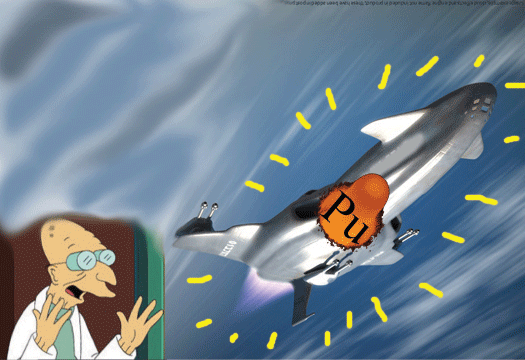
Science Alert23 January 2023, By MATT WILLIAMS, “…………………………. A few years ago, NASA reignited its nuclear program for the purpose of developing bimodal nuclear propulsion – a two-part system consisting of an NTP and NEP element – that could enable transits to Mars in 100 days.
As part of the NASA Innovative Advanced Concepts (NIAC) program for 2023, NASA selected a nuclear concept for Phase I development. This new class of bimodal nuclear propulsion system uses a “wave rotor topping cycle” and could reduce transit times to Mars to just 45 days………………………….
Nuclear-Electric Propulsion (NEP), on the other hand, relies on a nuclear reactor to provide electricity to a Hall-Effect thruster (ion engine), which generates an electromagnetic field that ionizes and accelerates an inert gas (like xenon) to create thrust. Attempts to develop this technology include NASA’s Nuclear Systems Initiative (NSI) Project Prometheus (2003 to 2005)………………………………………..
A transit of 45 days (six and a half weeks) would reduce the overall mission time to months instead of years. This would significantly reduce the major risks associated with missions to Mars, including radiation exposure, the time spent in microgravity, and related health concerns.
In addition to propulsion, there are proposals for new reactor designs that would provide a steady power supply for long-duration surface missions where solar and wind power are not always available………….. more https://www.sciencealert.com/new-nasa-nuclear-rocket-plan-aims-to-get-to-mars-in-just-45-days
Canadian MP Charlie Angus Questions the Claims of SMRs (Small Modular Reactors)
Proponents of SMRs are on a major spin campaign. None of them have been approved for licensing. The Toronto Star calls them a “boutique boondoggle”. The IPCC raises serious questions about the dangers of nuclear proliferation. Chris Keefer is their big proponent. Here is the exchange at the Natural Resources Committee.
“Proponents of SMRs are on a major spin campaign. None of them have
been approved for licensing. The Toronto Star calls them a “boutique
boondoggle”. The IPCC raises serious questions about the dangers of
nuclear proliferation.”
1 This Month



26 September – International Day for the Total Elimination of Nuclear Weapons


PLEASE OPPOSE HR 8255 AND S.3639 – bills would accelerate satellite deployment, with no environmental review or safeguards – https://ncstd5li.quorum.us/campaign/169331/
To see nuclear-related stories in greater depth and intensity – go to https://nuclearinformation.wordpress.com
-
Archives
- September 2026 (233)
- August 2026 (330)
- July 2026 (355)
- June 2026 (287)
- May 2026 (306)
- April 2026 (356)
- March 2026 (251)
- February 2026 (267)
- January 2026 (308)
- December 2025 (358)
- November 2025 (359)
- October 2025 (375)
-
Categories
- 1
- 1 NUCLEAR ISSUES
- business and costs
- climate change
- culture and arts
- ENERGY
- environment
- health
- history
- indigenous issues
- Legal
- marketing of nuclear
- media
- opposition to nuclear
- PERSONAL STORIES
- politics
- politics international
- Religion and ethics
- safety
- secrets,lies and civil liberties
- spinbuster
- technology
- Uranium
- wastes
- weapons and war
- Women
- 2 WORLD
- ACTION
- AFRICA
- Atrocities
- AUSTRALIA
- Christina's notes
- Christina's themes
- culture and arts
- Events
- Fuk 2022
- Fuk 2023
- Fukushima 2017
- Fukushima 2018
- fukushima 2019
- Fukushima 2020
- Fukushima 2021
- general
- global warming
- Humour (God we need it)
- Nuclear
- RARE EARTHS
- Reference
- resources – print
- Resources -audiovicual
- Weekly Newsletter
- World
- World Nuclear
- YouTube
-
RSS
Entries RSS
Comments RSS
 nuclear-news