Nuclear Fusion breakthrough hits hurdles as five experiments fail

Japan Times, BY DAVID R. BAKER, BLOOMBERG 17 May 23,
The U.S. government lab that made a long-awaited breakthrough in fusion energy late last year has run five similar experiments since then without being able to replicate the results.
The milestone came in December as the the Lawrence Livermore National Laboratory near San Francisco reported achieving the first fusion reaction that produced more energy than it took to create — a threshold known as ignition. The achievement opened the possibility of power plants one day running on nuclear fusion, the same energy source as the sun.
Since then, the lab has run five similar experiments, shooting the world’s most powerful laser at small diamond capsules filled with hydrogen, said Lawrence Livermore Director Kim Budil. But so far, ignition hasn’t been achieved again…………….
Speaking at an event at the lab Monday celebrating December’s breakthrough, U.S. Energy Secretary Jennifer Granholm said the federal government would spend $45 million over the next four years to create a series of research hubs pursuing the kind of fusion achieved at Lawrence Livermore, known as inertial confinement. https://www.japantimes.co.jp/news/2023/05/09/business/nuclear-fusion-experiments-fail/
Stanford-led research finds small modular reactors will exacerbate challenges of highly radioactive nuclear waste
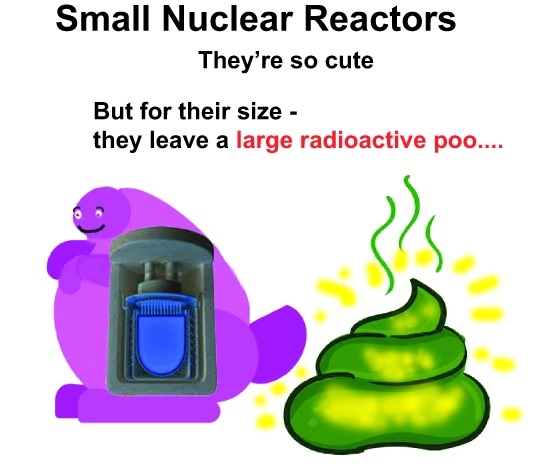
Small modular reactors, long touted as the future of nuclear energy, will actually generate more radioactive waste than conventional nuclear power plants, according to research from Stanford and the University of British Columbia.
BY MARK SHWARTZ, 30 May, News Stanford
Nuclear reactors generate reliable supplies of electricity with limited greenhouse gas emissions. But a nuclear power plant that generates 1,000 megawatts of electric power also produces radioactive waste that must be isolated from the environment for hundreds of thousands of years. Furthermore, the cost of building a large nuclear power plant can be tens of billions of dollars.
To address these challenges, the nuclear industry is developing small modular reactors that generate less than 300 megawatts of electric power and can be assembled in factories. Industry analysts say these advanced modular designs will be cheaper and produce fewer radioactive byproducts than conventional large-scale reactors.
But a study published May 31 in Proceedings of the National Academy of Sciences has reached the opposite conclusion.
“Our results show that most small modular reactor designs will actually increase the volume of nuclear waste in need of management and disposal, by factors of 2 to 30 for the reactors in our case study,” said study lead author Lindsay Krall, a former MacArthur Postdoctoral Fellow at Stanford University’s Center for International Security and Cooperation (CISAC). “These findings stand in sharp contrast to the cost and waste reduction benefits that advocates have claimed for advanced nuclear technologies.”
…………………………………. In the U.S. alone, commercial nuclear power plants have produced more than 88,000 metric tons of spent nuclear fuel, as well as substantial volumes of intermediate and low-level radioactive waste. The most highly radioactive waste, mainly spent fuel, will have to be isolated in deep-mined geologic repositories for hundreds of thousands of years. At present, the U.S. has no program to develop a geologic repository after spending decades and billions of dollars on the Yucca Mountain site in Nevada. As a result, spent nuclear fuel is currently stored in pools or in dry casks at reactor sites, accumulating at a rate of about 2,000 metric tonnes per year.
Simple metrics
Some analysts maintain that small modular reactors will significantly reduce the mass of spent nuclear fuel generated compared to much larger, conventional nuclear reactors. But that conclusion is overly optimistic, according to Krall and her colleagues.
“Simple metrics, such as estimates of the mass of spent fuel, offer little insight into the resources that will be required to store, package, and dispose of the spent fuel and other radioactive waste,” said Krall, who is now a scientist at the Swedish Nuclear Fuel and Waste Management Company. “In fact, remarkably few studies have analyzed the management and disposal of nuclear waste streams from small modular reactors.”
Dozens of small modular reactor designs have been proposed. For this study, Krall analyzed the nuclear waste streams from three types of small modular reactors being developed by Toshiba, NuScale, and Terrestrial Energy. Each company uses a different design. Results from case studies were corroborated by theoretical calculations and a broader design survey. This three-pronged approach enabled the authors to draw powerful conclusions.
“The analysis was difficult, because none of these reactors are in operation yet,” said study co-author Rodney Ewing, the Frank Stanton Professor in Nuclear Security at Stanford and co-director of CISAC. “Also, the designs of some of the reactors are proprietary, adding additional hurdles to the research.”
Neutron leakage
Energy is produced in a nuclear reactor when a neutron splits a uranium atom in the reactor core, generating additional neutrons that go on to split other uranium atoms, creating a chain reaction. But some neutrons escape from the core – a problem called neutron leakage – and strike surrounding structural materials, such as steel and concrete. These materials become radioactive when “activated” by neutrons lost from the core.
The new study found that, because of their smaller size, small modular reactors will experience more neutron leakage than conventional reactors. This increased leakage affects the amount and composition of their waste streams.
“The more neutrons that are leaked, the greater the amount of radioactivity created by the activation process of neutrons,” Ewing said. “We found that small modular reactors will generate at least nine times more neutron-activated steel than conventional power plants. These radioactive materials have to be carefully managed prior to disposal, which will be expensive.”
The study also found that the spent nuclear fuel from small modular reactors will be discharged in greater volumes per unit energy extracted and can be far more complex than the spent fuel discharged from existing power plants.
“Some small modular reactor designs call for chemically exotic fuels and coolants that can produce difficult-to-manage wastes for disposal,” said co-author Allison Macfarlane, professor and director of the School of Public Policy and Global Affairs at the University of British Columbia. “Those exotic fuels and coolants may require costly chemical treatment prior to disposal.”
“The takeaway message for the industry and investors is that the back end of the fuel cycle may include hidden costs that must be addressed,” Macfarlane said. “It’s in the best interest of the reactor designer and the regulator to understand the waste implications of these reactors.”
Radiotoxicity
The study concludes that, overall, small modular designs are inferior to conventional reactors with respect to radioactive waste generation, management requirements, and disposal options.
One problem is long-term radiation from spent nuclear fuel. The research team estimated that after 10,000 years, the radiotoxicity of plutonium in spent fuels discharged from the three study modules would be at least 50 percent higher than the plutonium in conventional spent fuel per unit energy extracted. ……..more https://news.stanford.edu/2022/05/30/small-modular-reactors-produce-high-levels-nuclear-waste/?fbclid=IwAR3hUe5R3zYb25eJ-8dJzM_vXATq4Du7Hk_XEhdeED_BTvwCqm0XLo3mE8o
Helion and Microsoft Lead World Down Nuclear Fusion Rabbit Hole
manufacturing the lasers used at Livermore and creating other inputs to set up the fusion process require much more energy than is accounted for in the final equation.
there’s so much money in the system, and so much desire to have this technological solution, people are very excited — and totally ignoring the fact that there is no result that has any energy output to it.”
Gizmodo, Molly Taft, May 12, 2023
Are we closer to the “Holy Grail” of clean energy? Silicon Valley wants you to believe.
This week, nuclear fusion startup Helion announced that it had inked a first-of-its-kind deal with Microsoft to provide 50 megawatts of power from a yet-to-be built power plant, all within the next five years. Unlike nuclear fission, the process that powers all the nuclear power plants existing today, nuclear fusion could create potentially unlimited energy. It’s a dream that scientists and engineers have been chasing for decades, with little luck.
The announcement from Helion and Microsoft is historic — and raises a lot of thorny questions about fusion, the role of tech in promoting new energy sources, and whether all this talk about fusion is even doing any good for the planet.
What is nuclear fusion, and why has it been so difficult to achieve?
Nuclear fusion is, simply put, the same process that powers the Sun. The Sun turns matter into energy through the enormous pressures and high temperatures at its core.
“If you smash atoms together hard enough and in a hot enough and dense enough environment, you can get essentially free energy,” said Charles Seife, a journalism professor at NYU’s Arthur L. Carter Journalism Institute and the author of Sun in a Bottle: The Strange History of Fusion and the Science of Wishful Thinking. “It’s enormous amounts of energy from very little fuel,” he told Earther.
Physicists have been chasing the dream of replicating the fusion process since the 1940s, when research into building nuclear reactors began. It quickly became clear that the problem was not replicating fusion itself but rather creating conditions in which the process produces more energy than it takes in. Fusion needs an enormous amount of energy, and almost all of the demonstrations of fusion scientists have accomplished thus far have not been able to reach the point where the energy output is greater than the input.
Seife said that the Livermore announcement is significant but pointed out that manufacturing the lasers used at Livermore and creating other inputs to set up the fusion process require much more energy than is accounted for in the final equation. He’s less impressed by the numerous nuclear fusion startups that have cropped up in Silicon Valley and elsewhere in recent years.
“I think there’s been something of a hype cycle” around fusion recently, he said. “There’s been a lot of venture capital flowing, and people have gotten better and better at leveraging dumb money into hype. You’ve got a lot of startups blooming everywhere that are replicating stuff that we were able to do in the 1960s in small labs, and putting their own spin on it. Because there’s so much money in the system, and so much desire to have this technological solution, people are very excited — and totally ignoring the fact that there is no result that has any energy output to it.”
What is Helion, and what is it promising?
Speaking of startups: enter Helion. Helion was founded in 2013 and was helped along by an infusion of cash from startup accelerator Y Combinator in 2014. That year, its CEO claimed that Helion could get a fusion reactor up and running in three years; two years ago, he said that the company would be able to generate fusion power and “go after commercially installed power generation” by 2024.
Despite the repeated misses on the timeline, Helion broke ground on its first reactor site in 2021, thanks in part to a $US375 million investment from Silicon Valley entrepreneur Sam Altman. It has now become the first fusion company to ink an actual power purchasing agreement for its services, and says that it will start supplying power to Microsoft in 2028 — more than 10 years after it initially said its reactor would be built.
Earther reached out to Helion to ask about its confidence in the timeline given its past misses. The recent results of its sixth prototype of a fusion reactor, a spokesperson wrote in an email, “give us great confidence that our timeline is realistic and that we can build the first fusion power plant by 2028.”
Can they actually do it?
Despite the company’s cheery outlook, there’s a lot of scepticism from experts around the Helion and Microsoft announcement, particularly the truncated timeline — including from Seife, who nevertheless says that he understands the hype.
“It’s so beautiful on paper,” Seife said. “That’s the appeal of it.”
Beyond Helion’s ability to perfect a process in five years that decades of research hasn’t yet gotten us to, there’s also a marked difference between advancing the science of fusion itself — which would alone be an incredible feat — and harnessing fusion for energy. A lot of the funding behind nuclear fusion in recent years in the U.S. has focused on achieving ignition, without an additional focus on creating usable energy from fusion; it’s a whole separate ballgame to actually put energy on the grid with the process. (Building a power plant alone is already a big infrastructure project that can take a couple years at best.)
“The classic joke is, ok, if you can produce energy, make me a cup of tea,” Seife said. “Once you make me a cup of tea, I will consider paying you money to do something, but first, make me a goddamn cup of tea.”
Is banking on fusion good for the planet?
A spokesperson for Helion told Earther in an email that the details of its power purchasing agreement with Microsoft won’t be made public. “That said, this is a real PPA, with commitments and obligations as well as penalties for failing to meet them,” the spokesperson said.
There are many questions left unanswered — has Microsoft paid Helion any money up-front? What are those commitments, obligations, and penalties, specifically? And, perhaps most importantly from a climate perspective, how much is Microsoft banking on this carbon-free fusion power?
………………………….. we don’t have much time to make the big changes we need. Creating plans that rely on technologies that haven’t been fully tested — and listening to Silicon Valley technocrats who keep making big promises and aren’t held to account when they don’t deliver — wastes valuable time, energy, and money that we could be spending on the clean energy technologies that we have today or are much nearer to deployment…… https://www.gizmodo.com.au/2023/05/helion-and-microsoft-lead-world-down-nuclear-fusion-rabbit-hole/
Microsoft just made a huge, far-from-certain bet on nuclear fusion
Microsoft just made a huge, far-from-certain bet on nuclear fusion, The Verge 10 May 23,
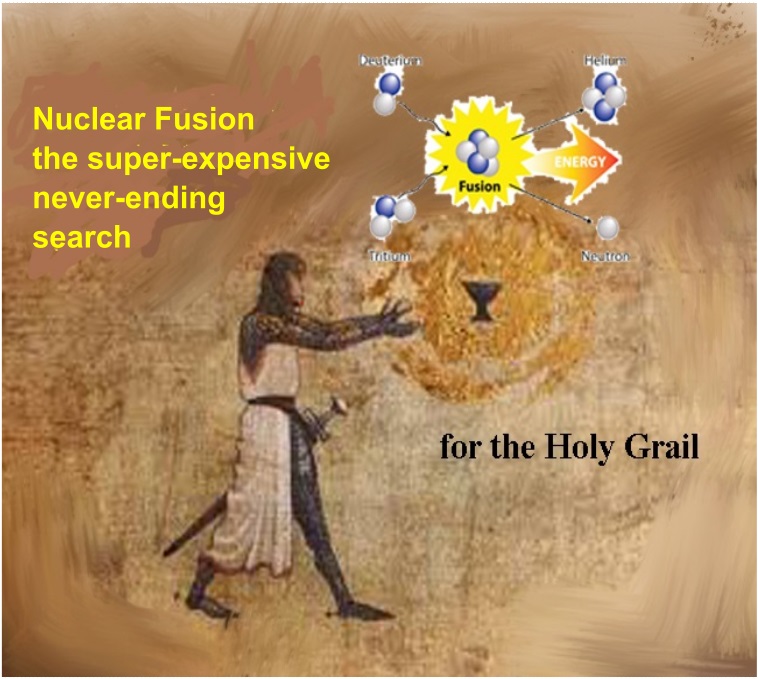
Microsoft just signed a jaw-dropping agreement to purchase electricity from a nuclear fusion generator. Nuclear fusion, often called the Holy Grail of energy, is a potentially limitless source of clean energy that scientists have been chasing for the better part of a century.
A company called Helion Energy thinks it can deliver that Holy Grail to Microsoft by 2028. It announced a power purchase agreement with Microsoft this morning that would see it plug in the world’s first commercial fusion generator to a power grid in Washington. The goal is to generate at least 50 megawatts of power — a small but significant amount and more than the 42MW that the US’s first two offshore wind farms have the capacity to generate today.
To say that’s a tall order would be the understatement of the year. “I would say it’s the most audacious thing I’ve ever heard,” says University of Chicago theoretical physicist Robert Rosner. “In these kinds of issues, I will never say never. But it would be astonishing if they succeed.”
Experts’ optimistic estimates for when the world might see its first nuclear fusion power plant have ranged from the end of the decade to several decades from now.
Helion’s success depends on achieving remarkable breakthroughs in an incredibly short span of time and then commercializing its technology to make it cost-competitive with other energy sources. Nevertheless, Helion is unfazed.
“This is a binding agreement that has financial penalties if we can’t build a fusion system,” Helion founder and CEO David Kirtley tells The Verge. “We’ve committed to be able to build a system and sell it commercially to [Microsoft].”……………………………………
The most advanced attempts at generating electricity through nuclear fusion involve shooting powerful laser beams at a tiny target or relying on magnetic fields to confine superheated matter called plasma with a machine called a tokamak.
Helion uses neither of those methods. The company is developing a 40-foot device called a plasma accelerator that heats fuel to 100 million degrees Celsius. It heats deuterium (an isotope of hydrogen) and helium-3 into a plasma and then uses pulsed magnetic fields to compress the plasma until fusion happens. (The company has a Youtube video that illustrates the process in much more detail.
Helion claims that the machine should eventually be able to recapture the electricity used to trigger the reaction, which can be used to recharge the device’s magnets.
Figuring out how to be energy efficient is crucial to make fusion power a reality. After all, you need extreme heat and pressure to force atoms to fuse together. ………………
Assuming Helion can pull this all off, it still has to ensure that it can do so in an affordable way. The cost of the electricity it generates for consumers would need to be comparable to or cheaper than today’s power plants, solar, and wind farms. The company isn’t sharing what price it agreed to in its power purchase agreement with Microsoft, but Kirtley says the company’s goal is to one day get costs down to a cent a kilowatt hour.
……………………as has been the case with dreams of nuclear fusion for decades — we’ll have to wait and see. https://www.theverge.com/2023/5/10/23717332/microsoft-nuclear-fusion-power-plant-helion-purchase-agreement
A mess of different Small Nuclear Reactor Designs in UK.
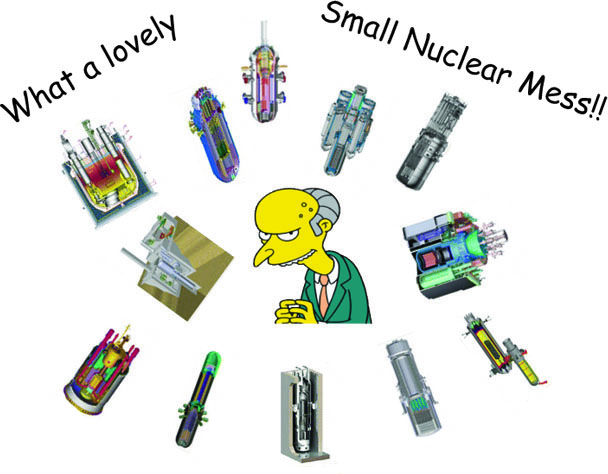
By the time SMRs might be deployable in significant numbers, realistically after 2035, it will be too late for them to contribute to reducing greenhouse gas emissions. The risk is that, as in all the previous failed nuclear revivals, the fruitless pursuit of SMRs will divert resources away from options that are cheaper, at least as effective, much less risky, and better able to contribute to energy security and environmental goals.
No2 Nuclear Power SAFE ENERGY E-JOURNAL No.97, April 2023
More designs of Small Modular Reactors (SMRs) are beginning to emerge which could rival the Rolls Royce design, so the government has decided to launch its competition to gather further evidence before any firm deals are struck. According to ONR a number of companies have, in recent months, applied to the Department for Business, Energy and Industrial Strategy (BEIS) for entry into Generic Design Assessment (GDA) process. BEIS is assessing those applications before deciding whether or not to ask ONR to start the GDA process. The plan is for the government to eventually award £1bn in co-funding to the winning SMR design. This money would help the company get through the GDA process.
At least six new SMR designs have applied to BEIS to be entered into the Generic Design Assessment (GDA) process. As well as Rolls Royce’s SMR, which has already entered the process. (1) The applicants are proposing to build a range of technologies including fast reactors and high temperature reactors which were built as prototypes in the 1950s and 1960s – but successive attempts to build demonstration plants have been short-lived failures. It is hard to see why these technologies should now succeed given their poor record.
The main claim for SMRs over their predecessors is that being smaller, they can be made in factories as modules using cheaper production line techniques, rather than one-off component fabrication methods being used at Hinkley Point C. Any savings made from factory-built modules will have to compensate for the scale economies lost. A 1,600MW reactor is likely to be much cheaper than 10 reactors of 160MW. And it will be expensive to test the claim that production line techniques will compensate for lost scale economies. By the time SMRs might be deployable in significant numbers, realistically after 2035, it will be too late for them to contribute to reducing greenhouse gas emissions. The risk is that, as in all the previous failed nuclear revivals, the fruitless pursuit of SMRs will divert resources away from options that are cheaper, at least as effective, much less risky, and better able to contribute to energy security and environmental goals. (2)
The six designs are:
- GE Hitachi (GEH) submitted an application for its BWRX-300 boiling water reactor in December.
- 2. The US firm Holtec has submitted its SMR-160 design, a 160MWe pressurised water reactor developed in collaboration with Mitsubishi Electric of Japan and Hyundai
- 3. US firm X-Energy, working with Cavendish Nuclear, wants to deploy its high-temperature gas reactor in the UK.
- 4. UK-Italian start-up Newcleo has submitted it lead-cooled fast reactor design. The company says it’s in discussions with the NDA about using Sellafield plutonium and depleted uranium. (3) The Company says it has raised £900m to further its plans which include the establishment of a first Mixed Plutonium-Uranium Oxides (MOX) production plant in France, with another plant to follow later in the UK. (4)
- 5. UK Atomics – a subsidiary of Denmark’s Copenhagen Atomics – says it has submitted a Generic Design Assessment (GDA) entry application for its small and modular thorium molten salt reactor. (5)
- 6. GMET, a Cumbrian engineering group which last year acquired established nuclear supplier TSP Engineering, said it is developing a small reactor called NuCell for production at TSP’s Workington facility. (6)
The list makes no mention of an application by NuScale, which has already expressed an interest in building at Trawsfynydd. (7) According to the Telegraph, NuScale’s reactor has received design approval from the US’s Nuclear Regulatory Commission (NRC) putting it ahead of the competition. (8) However, it was NuScale’s 50 MWe design which was approved by the NRC. That is no longer being pursued by the company. It is applying for a new approval for its 77 MWe design. Although NuScale claimed that the new design was so close to the original that the second approval would be simple, that is turning out not to be the case, as the NRC made clear in its recent letter. (9)
No mention either of the Last Energy micro reactor. The Company has signed a $19 billion deal to supply 34 x 20 MW nuclear reactors to Poland and the UK. These SMRs will be about 2.4 times the cost per MWh of the very expensive Hinkley facility. (10)
Mark Foy, Chief Executive and Chief Nuclear Inspector, Office for Nuclear Regulation, told the House of Commons Science and Technology Committee in January that he was assuming that ONR will be asked to undertake a number of GDAs for some of the SMR technologies that are currently being considered by BEIS. “Our assessment is that if BEIS determines that two or three technologies need to go through generic design assessment, that work will be done in the next four years, or thereabouts”. (11)
Prof Steve Thomas, Greenwich University, has critically assessed the current enthusiasm for Small Modular Reactors in the UK and elsewhere. He concludes:
“The risk is not so much that large numbers of SMRs will be built, they won’t be. The risk is that, as in all the previous failed nuclear revivals, the fruitless pursuit of SMRs will divert resources away from options that are cheaper, at least as effective, much less risky, and better able to contribute to energy security and environmental goals. Given the climate emergency we now face, surely it is time to finally turn our backs on this failing technology?” (12)
‘Green’ Freeports
Meanwhile, the Inverness Courier reports that the Cromarty Firth and Inverness green freeport hopes to fabricate parts for SMRs and then transport them to the construction site wherever that might be. (13) Highlands Against Nuclear Power (formerly Highlands Against Nuclear Transport) says nuclear should not be part of the Cromarty freeport vision. (14)
The Scottish NFLA convenor, Councillor Paul Leinster wrote to Scottish Government Net Zero Minister Michael Matheson asking him to reject nuclear power at Scotland’s two new Green Freeports and instead make them a hub for renewable technologies to produce power for the nation. (15) Unfortunately, the Minister replied saying he will not be opposed to a nuclear manufacturing facility in a supposed Green Freeport. (16)
Forth Green Freeport has said they have no plans for nuclear power generation at its sites – including Rosyth – after campaigners raised concerns. “The Forth Green Freeport vision for Rosyth is centred around a new freight terminal, offshore renewable manufacturing and green power generating capacity,” said the spokesperson. “The FGF will also enable the development of largescale advanced manufacturing, skills and innovation onsite, alongside a proposed new rail freight connection. This vision and the associated economic and community benefits will boost Fife and the wider region. There are no plans for nuclear power generation on FGF sites.” However, it’s possible FGF is answering the wrong question which is about manufacturing parts for SMRs, not nuclear generation. (17)
There were reports that the Ineos-run facility at Grangemouth was interested in building a Rolls Royce SMR, (18) but the Scottish Government said it would block such a move, (19) Energy Minister, Michael Matheson responded to a letter from Scottish NFLA chair, Councillor Paul Leinster, saying Scottish ministers “remain committed” to their “long-standing government policy to withhold support for any new nuclear power stations to be built in Scotland” and officials have been advised by Ineos that “Small Modular Reactors do not currently form part of their net zero road map for Grangemouth”. (20) The Scottish Tories attacked the Scottish Government for its stance describing it as anti-business. (21 https://www.no2nuclearpower.org.uk/wp/wp-content/uploads/2023/04/SafeEnergy_No97.pdf
MPs, Scientists Raise Alarm Over Climate Hype for Small Modular Reactors
The Energy Mix, May 2, 2023. Primary Author: Christopher Bonasia @CBonasia_
Several Members of Parliament and activists are warning the Canadian government that its support for nuclear energy projects could prove costly and ineffective—even as Prime Minister Justin Trudeau maintains that nuclear is “on the table” for achieving the country’s climate goals.
The federal government considers nuclear energy—including small modular reactors (SMRs) that are touted as easier to build and run than traditional nuclear plants—as key to meeting energy needs while aiming for net-zero by 2050.
………………..But on April 25, anti-nuclear activists and a cross-partisan group of MPs held a media conference on Parliament Hill, urging Ottawa to rethink its stance on nuclear and calling the energy source a dangerous distraction from climate action, reported CBC News.
Speakers in the group said Trudeau and his cabinet are getting bad advice about nuclear energy.
“The nuclear industry, led by the United States and the United Kingdom, has been lobbying and advertising heavily in Canada, trying to convince us that new SMR designs will somehow address the climate crisis,” said Prof. Susan O’Donnell, a member of the Coalition for Responsible Energy Development in New Brunswick (CRED-NB). The reality, she added, is that SMRs will produce “toxic radioactive waste” and could lead to serious accidents while turning some communities into “nuclear waste dumps”.
Moreover, there is “no guarantee these nuclear experiments will ever generate electricity safely and affordably,” O’Donnell said, since SMRs are still relatively untested.
Green Party Leader Elizabeth May called government funding for nuclear projects a “fraud.”
“It has no part in fighting the climate emergency,” May said. “In fact, it takes valuable dollars away from things that we know work, that can be implemented immediately, in favour of untested and dangerous technologies that will not be able to generate a single kilowatt of electricity for a decade or more.”
Liberal MP Jenica Atwin, New Democrat Alexandre Boulerice, and Bloc Québecois MP Mario Simard also attended the media event, the National Post reports. Atwin, who was first elected as a Green in 2019 before crossing the floor, “is the only Liberal to publicly break ranks so far, but said she has had conversations with colleagues who appear to be ‘open-minded’ to learning more about her concerns,” the Post says.
Advocacy groups like the Canadian Environmental Law Association (CELA) have also pushed back against SMRs, arguing they “pose safety, accident, and proliferation risks” akin to traditional nuclear reactors. CELA urged[pdf] the federal government to “eliminate federal funding for SMRs, and instead reallocate those investments into cost-effective, socially responsible, renewable solutions.”
The International Energy Agency (IEA) says renewables will “lead the push to replace fossil fuels” but that nuclear can help in countries where it is accepted. As of 2022, there were only three SMR projects in operation—one each in Russia, China, and India, CBC News reported.
Canada’s First SMR Passes Pre-Licencing
In Ontario, which currently produces 60% of its electricity from conventional nuclear stations, plans for one such SMR passed a regulatory checkpoint in March. Slated to be Canada’s first new nuclear reactor since 1993, the BWRX-300 is being built by Ontario Power Generation (OPG) and North Carolina-based GE Hitachi.
…………………………………………………………………….The review is not binding on the commission and does not involve the issuance of a licence, but its completion does give OPG “a head start on licencing,” said GE Hitachi spokesperson Jonathan Allen.
However, the pre-licencing review also revealed “some technical areas that need further development,” CNSC said. The commission will require OPG to supply further details on severe accident analysis and the engineered features credited for mitigation. OPG must also demonstrate that the reactor’s design meets the requirement for two separate and diverse means of reactor shutdown (or an alternative approach) and provide further information “on the protective measures for workers in the event of an out-of-core criticality accident.”
“From the list of areas needed for further development, it looks like [GE Hitachi] has some work to do,” said Allison Macfarlane, director of the University of British Columbia’s public policy school, who chaired the U.S. Nuclear Regulatory Commission (NRC) between 2012 and 2014.
BWRX-300 Raises Safety Questions
The BWRX-300 is a leading concept that GE Hitachi says is its simplest boiling water design, and could deliver 60% lower capital costs per megawatt than other SMRs.
But Edwin Lyman, director of nuclear power safety for the Union of Concerned Scientists, told The Mix he has concerns about the design. He pointed to a joint CNSC-NRC review [pdf] that identified several issues associated with reactor containment, including a potential for “reverse flow” of steam from the containment back into the reactor vessel under certain accident conditions. The review also found that the reactor’s reliance on isolation condensers may not always be effective to remove heat from the reactor during loss-of-coolant accidents.
“The consequences of a failure of isolation condensers is apparent from the fate of Fukushima Daiichi Unit 1, which experienced a core melt only hours after the system was lost,” Lyman said, citing the 2011 nuclear disaster in Ōkuma, Japan.
He added he is “extremely skeptical” that the BWRX-300 design will mature quickly enough to allow CNSC to make a meaningful determination of its safety in time for the anticipated 2028 start date. SMR designs need to undergo further testing and analysis before they can be considered safe, and yet vendors are rushing to deploy new, untested reactor designs without going through the necessary stages of technology development, including testing of full-scale prototypes, Lyman said.
“History has shown that shortcuts in this process are an invitation to disaster,” he added.
SMRs fall under the same Class 1A Nuclear Facilities Regulations as traditional reactors, so they do receive the same level of CNSC scrutiny. With its mandate to ensure the safe conduct of nuclear activities in Canada, the commission “will only issue a licence if the applicant has demonstrated the reactor can be operated safely,” the spokesperson said.
Next steps for the DNNP include a CNSC assessment, already under way, to review OPG’s licence application. This will result in a Commission Member Document that offers results and recommendations to an independent commission. Then there will also be two public hearings. The first is slated [pdf] for January 2024 and will consider the applicability of the previous environmental assessment to the BWRX-300. A separate, future hearing will determine whether to issue a construction licence for the DNNP.
“It is the independent commission who will make the decision as to whether the licensee or applicant is qualified to carry on the proposed activities and in a safe manner that protects the public and the environment,” the CNSC spokesperson said. https://www.theenergymix.com/2023/05/02/canadian-mps-raise-alarm-over-nuclear-energy-drive-for-climate-goals/
The danger of artificial intelligence controlling nuclear codes
NEVER GIVE ARTIFICIAL INTELLIGENCE THE NUCLEAR CODES
The temptation to automate command and control will be great. The danger is greater.
The Atlantic, By Ross Andersen, MAY 2, 2023
No technology since the atomic bomb has inspired the apocalyptic imagination like artificial intelligence. Ever since ChatGPT began exhibiting glints of logical reasoning in November, the internet has been awash in doomsday scenarios. Many are self-consciously fanciful—they’re meant to jar us into envisioning how badly things could go wrong if an emerging intelligence comes to understand the world, and its own goals, even a little differently from how its human creators do.
One scenario, however, requires less imagination, because the first steps toward it are arguably already being taken—the gradual integration of AI into the most destructive technologies we possess
Jacquelyn Schneider, the director of the Wargaming and Crisis Simulation Initiative at Stanford’s Hoover Institution, recently told me about a game she devised in 2018. It models a fast-unfolding nuclear conflict and has been played 115 times by the kinds of people whose responses are of supreme interest: former heads of state, foreign ministers, senior NATO officers. Because nuclear brinkmanship has thankfully been historically rare, Schneider’s game gives us one of the clearest glimpses into the decisions that people might make in situations with the highest imaginable human stakes……………………. (Subscribers only) https://www.theatlantic.com/magazine/archive/2023/06/ai-warfare-nuclear-weapons-strike/673780/
The age of small modular nuclear?

the CEO of Rolls Royce described it as “a Lego kit of parts” for building a nuclear reactor. So it’s not actually an Small Modular Reactor , but why not call it one if you can tap government funding by pretending it is?
BY AGREENERLIFEAGREENERWORLD ON By Jeremy Williams
There was something of a non-sequitur from Britain’s Chancellor Jeremy Hunt recently. “We don’t want to see high bills like this again,” he said of the country’s current energy costs. “It’s time for a clean energy reset. That is why we are fully committing to nuclear power in the UK, backing a new generation of small modular reactors.”
If I was hoping to bring down energy bills, then nuclear isn’t the first place I’d look. The cost of Hinkley Point C, Britain’s first new nuclear power plant in decades, was originally priced at £16 billion. That made it the most expensive building in the world, and that was before costs began to spiral upwards. The latest estimate is that it will cost £32 billion. So it really doesn’t make much sense for Jeremy Hunt to be promising lower bills with nuclear power.
But maybe it’s not about megaprojects like Hinkley. Maybe, as Hunt suggests, the future lies in the much-vaunted Small Modular Reactors (SMRs). A number of agencies are looking for smaller reactors that can be standardised and therefore built quickly and cheaply – cheap being relative in the world of nuclear. It ought to be cheaper to install a chain of SMRs than to build one massive and bespoke power station.
The theory is that if they are small and they are modular, then SMRs would be closer to a manufactured product than a construction project. That would mean economies of scale, and potentially prompt the kind of decline in costs that we’ve seen in solar or in battery technologies.
But SMRs have been discussed for years. How close are we to seeing them as part of a low-carbon electricity grid?
Let’s start with who is working on the idea. A recent overview of the sector from the OECD includes this map of various projects. It’s not exhaustive, but it shows the major players.

Most of the action is in the US, with other projects in China, Britain, France, Russia and a handful of others. Some of these are private enterprises, particularly the American ones. Elsewhere a lot of the work is coming from state-owned nuclear companies such as EDF in France, or Argentina’s CNEA. Anyone who has invested in nuclear power and research in the past is likely to have an SMR project on a drawing board somewhere.
Is anyone actually building them? Sort of, but only China and Russia have working SMRs so far – a demonstration plant in China, and Russia’s pioneering floating nuclear power station, the Akademik Lomonosov. I wouldn’t consider either of those to be good examples of what SMRs are supposed to be, but they’re the ones that get mentioned. Construction on further plants is underway in both countries, along with Argentina. As the OECD notes, “there are currently no SMRs licensed to operate outside of China or Russia.” Everywhere else, SMRs are in various phases of research, design and planning.
This doesn’t tell us much about how long it’s going to take to bring SMRs into the energy mix. That’s because the big obstacle in nuclear power isn’t technology, but regulation. It’s incredibly difficult and slow to bring a new nuclear technology to market, and rightly so, given its dangers. Licensing a new nuclear design in the US takes five years and costs a billion dollars – and that’s before you even apply to build anything. That’s just to confirm that the design is safe.
Things move incredibly slowly in the nuclear world. The concepts for the European Pressurised Reactor that’s being built at Hinkley Point – and which is considered a new design, were being done in the mid-nineties. So of the long list of companies with concepts for SMRs, how many of those will ever get built, and in how many decades? From a climate change perspective, speed matters. We don’t want to accelerate nuclear power at the expense of safety, but at the moment it is going to take too long to bring any of these new reactors online.

Here in the UK, there is one firm that is synonymous with SMRs, and that’s Rolls Royce. Any article on the subject in the UK will mention Rolls Royce and often illustrate the article with a glossy picture of their proposed design – as I’ve done above. What’s odd about this is that Rolls Royce’s design isn’t a small modular reactor. It’s being called that because it’s a buzzword, but it’s 470Mw in capacity. That’s smaller than Hinkley Point C at 3,300Mw, but it’s a whole lot larger than what is generally called an SMR.
Neither does it use modular reactors to achieve its larger power output. What Rolls Royce is doing is using modular construction techniques to build a traditional reactor a bit quicker. On Michael Liebriech’s Cleaning Up podcast, the CEO of Rolls Royce described it as “a Lego kit of parts” for building a nuclear reactor. So it’s not actually an SMR, but why not call it one if you can tap government funding by pretending it is?
Looking at where we are at the moment, I expect there will be a new generation of smaller nuclear power stations at some point in the future. I expect China will do it first, and that the economies of scale will happen there. If it ever reaches the UK, it will be a few years away.
A more urgent question is whether or not a new generation of nuclear power will happen in time to make a difference to climate change. That looks far less certain.
First published in The Earthbound Report.
India needs ‘space-based’ weapons – top generals

The space arms race is already ongoing, according to the chiefs of the Air Force and the Defense Staff.’
https://www.rt.com/news/575556-india-space-based-weapons/ 30 Apr 23
India must boost its defensive and offensive capabilities in the space domain, as the “future lies in having space-based platforms,” Air Chief Marshal Vivek Ram Chaudhari told a national security and geopolitics forum on Saturday.
“
In the future, instead of having purely land-based offensive systems, we should also have space-based offensive systems,” Chaudhari said, according to The Economic Times.
The competition and rivalry between the global powers in space “will have its effects across all other domains of warfare,” he said, predicting that his Air Force will soon turn into an Air Space Force, and “will be called upon to take part in space situational awareness, space denial exercises or space control exercises.”
“The race to weaponize space has already started and the day is not far when our next war would spread across all domains of land, sea, air, cyber and space,” the air force chief warned back in March. On Saturday he stated that the race has actually been ongoing ever since Nazi Germany first launched its V-2 rocket almost 80 years ago.
India’s Chief of Defense Staff, General Anil Chauhan, also recently stated that the “military applications of space is the dominant discourse from which we cannot remain divorced.”
“The aim for all of us should be developing dual-use platforms with special focus on incorporating cutting-edge technology,” he told the Indian DefSpace Symposium on April 11.
It remains unclear what kind of futuristic space weapons the military seeks to obtain, but Chaudhari said India should capitalize on the success of its 2019 anti-satellite missile test. The so-called Mission Shakti destroyed a satellite some 300km away in low-Earth orbit and was hailed at the time as an “unprecedented achievement” by Prime Minister Narendra Modi.
ndia has become the fourth “space superpower” after the US, Russia, and China, to openly demonstrate its ASAT missile capability. The space club members have regularly accused each other of weaponizing space, voicing suspicions over secretive military launches and dual-purpose tests, but have never admitted to possessing any orbital weapons systems.
The wrong stuff – Musk and the 4/20 rocket drill

on nearly all the times Musk has tried to land Starship its blown up or crashed.
But its Musk’s money, he can do whatever he likes with it surely? Actually, no Starship now forms a critical part of NASA’s lunar landing project. These tests are mostly taxpayer funded.
So on the 20th of April (4/20, so at least we know what he was smoking), chief twit Elon Musk launched his ego rocket to cheering crowds, which was deemed a success. …despite blowing itself to bits and scattering debris over a wetlands habitat. I’m sorry, but that’s not what can even be considered a success. But it just goes to show the double standards the media applies to Musk and other tech bro’s. And how lazy most journalists are.
The wrong stuff – Musk and the 4/20 rocket drill — daryanenergyblog
……………………………………. its considered bad luck to cheer during a rocket launch (as it was not unusual for people to cheer in these early days only for the rocket to shortly there after blow up). Musk and his fanboys seem intend on re-learning what we all ready know.
Indeed, there’s very little that we learnt from this test flight that couldn’t have been learned from ground testing, simulations, some quick calculations….or applying some basic common sense. For example, the main problem was how Musk’s rocket was less the world’s big’s rocket, but the the world’s biggest drill bit. It chewed up its own launch pad and effectively destroyed it, spraying chucks of concrete out to a distance of several hundred metres, damaging equipment on site (likely including the rocket itself as several engines failed immediately upon launch) and scatter debris into a protected wetland area.
This was entirely predictable and indeed several commentators did predict it (but obviously Musk the college drop out knows way more about rocketry than these guys with their fancy degrees). This is why most other launch complexes have a flame pit and maintain a large separation between the pad and anything that might not react well to flaming chucks of debris (like a tank full of propellants).
There were also some control and stability issues, as the aerodynamic surfaces at the front of the craft require control inputs from the engines at the back just to fly in a straight line (think of an arrow, where you put the fins on the front instead of on the back). Obviously, this means the engines have to work harder to steer. Plus you lose enough of the steerable engines (or you hit gimbal lock) and the rocket becomes uncontrollable (which towards the end of the flight, is basically what happened).
And since we are talking about it, I still can’t understand why he’s using Methane as a fuel. This gives a specific impulse of only 360s, while Lox/LH2 will give you at least 450s (i.e. 20% more bangs for each gram of fuel). And NASA has the RS-25 engines used by the SLS (based on the space shuttle engines, so a proven technology), which are also reusable and can be throttled. The only reason not to use them seems to be not invented here syndrome. Either way, it would make far more sense to adapt Starship to be brought up to orbit in sections by the SLS (or just go with a more sensible space craft design), or adapt SLS to lift it up in one go (e.g. cluster several core SLS stages together, similar to the soviet Energia system).
And least we forget, Starship is supposed to be a man rated rocket (which for NASA means getting the probability of loss down to 1 in 500…good luck with that one!). There has to be serious doubts about it meeting that now. Aside from the issued I discussed previously related to its stainless steel construction, it also has to undertake a very risky manoeuvre in order to separate both halves. The rocket does a 180 degree spin arse over end, sling shooting the upper stage away from the lower stage (keeping in mind the control issues I mentioned earlier, will be much worse due to the fact the rocket is now nose heavy, as most of the fuel in the lower stage is gone). And its possible the rocket broke its back trying to do this.
Its also unclear how Starship is supposed to separate and land safely in the event of a booster failure during the early launch phase (had more of those engines been lost earlier on, this type of failure would have occurred shortly after lift off). By contrast the Orion capsule on the SLS (or indeed Soyuz or the Dragon capsule) has an escape tower, which will boost the capsule and its crew away from a failing rocket. No such escape options appear to exist for Starship. Indeed on nearly all the times Musk has tried to land Starship its blown up or crashed.
But its Musk’s money, he can do whatever he likes with it surely? Actually, no Starship now forms a critical part of NASA’s lunar landing project. These tests are mostly taxpayer funded. Quite apart from the costs of delaying the entire lunar project, the costs of the impending FAA investigation and the time of the US wildlife service who are going to have to devote to cleaning up the mess in the wetlands.
And this is hardly the first time Musk has promised way more than he can deliver. As I mentioned before, Falcon was supposed to be fully reusable, but is only partially reusable (and even then, more in theory than practice), at a significantly higher cost. Hyperloop is still a pipe dream, and the loop is a glorified Disney ride. Meanwhile twitter is an increasingly unreliable hellscape which has lost half its value since he took it over, and self driving cars? Will be available in 2013, 2015, 2017, 2020, 2024.
I mean imagine if NASA behaved the same way as Musk. Or let’s suppose some Mexican billionaire started blowing up rockets just across the border in Mexico showering debris into the US. Would they be treated the same way by the US government or the media? No, they’d be pretty quick to shut them down. But being a billionaire is basically an excuse to get away with anything in America, even if its criminal, immoral or insane. https://daryanenergyblog.wordpress.com/2023/04/30/the-wrong-stuff-musk-and-4-20-rocket-drill/
Nuclear waste from small modular reactors – Simon Daigle comments on recent article

Simon J Daigle, B.Sc., M.Sc., M.Sc.(A) Concerned Canadian Citizen. Occupational / Industrial Hygienist, Epidemiologist. Climatologist / Air quality expert (Topospheric Ozone). 27 Apr 23
A recent article on SMRs in 2022 on potential nuclear waste risks and other proximate information on industrial and hazardous waste streams globally [References 2 to 5] below.
Nuclear waste from small modular reactors. PNAS Publication. Lindsay M. Kralla, Allison M. Macfarlaneb, and Rodney C. Ewinga. Edited by Eric J. Schelter, University of Pennsylvania, Philadelphia, PA; received June 26, 2021; accepted March 17, 2022 by Editorial Board Member Peter J. Rossky.
Simon Daigle comments:
- Development of SMRs have security issues and threats globally according to many experts including Dr Gordon Edwards (CCNR).
- SMR will produce more toxic radionuclides and waste stream analysis for potential SMR wastes streams are unknown in Canada and currently the Canadian government have no plans to complete this analysis yet or confirmed by an environmental impact assessment.
- SMR development and potential nuclear wastes generated will be extremely dangerous and toxic comparatively with current NPP SNF and other LILW [Ref. 1].
- SMR nuclear waste challenges of DGR disposal risks are unknown and are technically difficult to achieve even with safety assurances by governments globally, even more so for current nuclear wastes from NPP and other nuclear waste streams such as medical radiological waste streams.
- On a global scale, industrial and hazardous wastes are mismanaged to a point where poor countries are the favored territories to dump industry’s hazardous and industrial wastes because of poor regulatory or no regulatory legal framework to be followed by industries and corporations [Ref. 5].
- Global governments want to take on industrial and hazardous wastes for a financial benefit with no real ROI (Return on Investment) for any government or taxpayer when industrial waste companies know they can make a profit and unfortunately, the environment and population health in that country are impacted considerably without their own government helping out [Ref. 5]. This is also the case for nuclear wastes independent of point of origin and all coming from the nuclear industry’s operators, and similar industrial and hazardous waste operators on global scale.
- SMR development (and use) will have the same problems in disadvantaged poor or rich country that will accept SMR as a technology, and the result of a “free for all” dumping ground for nuclear waste that the nuclear industry chooses to dump on will inevitably happen in time. Poor countries are not equipped to deal with hazardous and industrial wastes generally to begin with and especially true for nuclear waste or any potential SMR waste streams.
- Hazardous wastes are already a problem in the province of Alberta. Alberta’s Oil Patch lands are contaminated and polluted to a point where taxpayers are on the hook for 260 billion dollars for the clean-up estimated in 2018 by one Alberta accountability office (Alberta Energy Regulator) [Ref. 2]. This figure is likely even higher in 2023. You could put a “financial” and hazardous caution tape all around Alberta for all the taxpayers in that province.
- If Alberta cannot clean the oil sands and patches, with its hazardous waste legacy coming from the oil industry because of failed financial securities, including the federal government oversight, we will also have a difficult time resolving any SMR nuclear waste issues and existing NPP nuclear waste streams and/or contaminated oil patch lands over decades or millennia as we are already having a difficult time resolving nuclear waste issues in Canada. The short-term benefit has always been profits for corporations and the Alberta taxpayer inherits the legacy waste [Ref. 2]
- International law is clearly inadequate for oil tanker spill accidents, oil platforms, oil exploration, under water gas pipelines, etc. Governments rely on corporate “citizenship” and due-diligence but we have already learned these failures over time with so much damages to the environment and to the population including maritime nuclear waste transport in international waters by nuclear merchants and inadequate insurance and financial securities. [Ref. 4].
- The impact of any nuclear waste accident or incident in open international waters by a nuclear waste operator independent of origin will be the same in the biosphere, financially and ecologically. It is highly likely to occur in time because there is no adequate emergency and contingency plan that exists with international agencies, corporations or governments including adequate financial insurance and securities [Ref. 4] to cover the damages. Very few international ocean cargo shippers accept to transport nuclear waste to any destinations because of the risks (including threats to security) with inadequate insurance and financial liabilities from any point of origin during an accident in international waters. So, who will pay the damages? No one.
- We have yet not cleared the lost nuclear bombs from WWII from the ocean floor so this makes you wonder who will take care of these nuclear wastes and other hazardous materials in time? Will it be IAEA or other international agency such as the IMO (International Maritime Organization). These hazardous and nuclear wastes, including lost nuclear warheads from WWII, in international waters are left to live on the ocean floor for archeologist to discover the “why they were lost” or “left there” to begin with in time [Ref. 3]. They are all plainly left out of sight for anyone to see. These lost nuclear warheads and similar weapons lost at sea remain a serious explosion hazard and ocean contamination is happening to this very day.
- If we can’t resolve current nuclear waste issues in Canada, and globally, we won’t be able to resolve (ever) new development of SMR technology accompanied with even more toxic nuclear wastes, as history showed us, we simply can’t.
- Similarly, we can’t even resolve our current issues for any hazardous and industrial wastes in Canada or globally, because somehow, somewhere, someone will inherit these wastes indefinitely in their backyard including all of its impacts on the biosphere and the general population. One example is clearly worrisome for Alberta with a 260 billion CDN clean up cost in 2018 in which will remain indefinitely [Ref. 2].
- Industries and governments are spreading hazardous wastes and pollution through a thin layer across the globe (air, water and soil), some thicker in concentration and toxicity in different geographic zones and all for a profit by corporations and industries. The population is always disadvantaged.
- In Feb 2023, one article proposed nuclear energy for maritime shipping and we are now looking at it to decarbonize international maritime transport, such as nuclear merchant ships, while further complicating nuclear risks and harm in international waters with nuclear pollution, risks and harm where insurance and financial securities are inadequate to this very day. [Ref. 4]. This is ridiculous to even consider given the risks and legacy waste generated but this article’s authors are from China where the government is planning to expand the nuclear industry.
- While NPP plants are decommissioning in some countries, we will se more advanced countries looking to take on nuclear waste processing and waste management and all will require land and ocean transportation.
- Air transport of nuclear materials or wastes are possible with air transport according to IATA (International Air Transport Association in Montreal) but are limited to Low Specific Activity (LSA) and Shipping Low-Level Radioactive Waste but we won’t see that happening on a large scale because of the obvious threats. IATA also provides information to irradiated individuals (from a source other than medical diagnosis or treatment) that needs to travel in order to reach a suitable treatment facility and new guidance was provided in 2011 by IATA.
- Usually, airlines do not know about radiation from within the body resulting from diagnostic procedures or may not know about contamination of an individual by radioactive material on the skin or clothes and the aviation industry monitoring these activities are inadequate. Just to add my personal experience, in 2006, I had a flight to New Baltimore (US) (within the US) to conduct an EHS audit for a company, and by curiosity, I noticed one traveller was equipped with medical equipment and I asked the flight attendant if there are any radionuclides in the equipment (with a radioactive symbol) or if the passenger had received oncology radiation treatment recently, and the answer was “I don’t know”! So I picked another seat in a different row but the other passengers were oblivious so I kept to myself the question that I even asked until the plane touchdown. Yes, people undergoing radiation treatment can be hazardous to family members at home and on flights. I won’t explain today, I will let an oncologist explain if one is brave and keen to explain.
- Self-governance by corporations is not acceptable for nuclear, hazardous and industrial wastes, and that includes the nuclear industry.
- The Canadian Government must adopt and practice better foresight, insight, hindsight, and oversight with SMRs and nuclear wastes with clear Authority, Accountability and Responsibility for Canadians and indigenous peoples, by Canadians and by indigenous peoples.
- Governments are not playing by their own rules as well for preventing the production of nuclear waste, nuclear risks or reducing harm and not even following IAEA’s ALARA principle “As Low as Reasonably Achievable”. It’s ironic and all for profit in which is a clear negative financially from the get go, even decades, for any taxpayer or any government.
Stop SpaceX from crashing rockets in the Pacific.
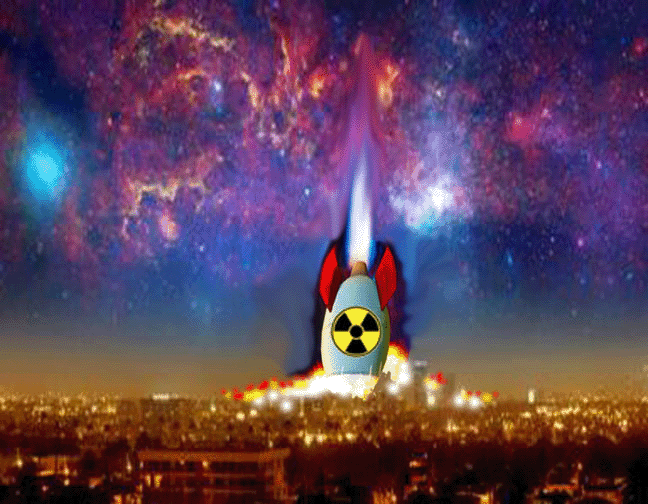
Hawaii should not be a collateral sacrifice zone for a private space company working for the pentagon
Hawaii needs to have input on SpaceX ocean-landing plan, STAR ADVERTISER. By Lynda Williams, APRIL 27, 2023
The world watched aghast as SpaceX blew up its own spaceship on April 20, four minutes after launch due to engine failure. Even though the mission was not completed, Elon Musk, CEO of SpaceX, claimed it was a success because the real goal was for the rocket to clear the launch pad at the spaceport in Boca Chica, Texas.
What most folks don’t know or realize is that Starship was always going to blow up when it crashlanded in the Pacific Ocean, just 62 nautical miles north of Kauai and a few hundred miles east of the Papahanaumokuakea Marine National Monument.
In the next test launch, which Musk boasted will happen in the next few months, the world’s largest spaceship will descend toward Earth in free fall and blow up upon impact with a force of a ton of TNT as fuel ignites in a great explosion. On a second and third launch test, Starship will break up in the atmosphere and tumble down and crash-land in a debris field several hundred miles southwest of the island chain.
SpaceX obtained a Federal Aviation Administration (FAA) commercial space launch license (experimental permit), rubber-stamped by the National Oceanic and Atmospheric Agency (NOAA) without any consultation of Hawaii’s people because, according to an email I received from the FAA: “No in-person public outreach was conducted in Hawaii as the Starship vehicle was planned to land outside of range for impacts to the residents of Hawaii.”
First of all, that is assuming everything goes exactly according to the plan, which we have all just witnessed doesn’t always happen. If the Starship goes off course by even a few degrees, the consequences could be catastrophic to Hawaii.
Secondly, I think most folks in Hawaii would agree that 62 miles north of Kauai is considered Hawaii culturally if not legally, and that is way too close for what is essentially a rocket bomb to crash-land.
SpaceX was not required to do a full environmental impact study (EIS), but a much-weaker environmental assessment (EA) that only requires the analysis of “nominal operations” or bestcase scenarios. Why was that allowed when the worst-case scenarios are so catastrophic?
In the EA, rather than doing a detailed analysis of the potential impact to marine mammals protected by the Endangered Species Act, NOAA wrote a “Biological Opinion” that argued “less than one” animal would be harmed by a 100 ton steel rocket exploding with the energy of a small nuclear bomb.
It came to that conclusion because it analyzed only one “nominal” scenario in which the rocket hits the water exactly horizontal to the surface with the fuel tanks orientated on top, which is impossible to control or predict. If the explosion is above water, NOAA argues, only a fraction of the energy will be transmitted into the ocean and travel deep enough to harm any of the 30 endangered species of whales, sharks, turtles, monk seals, dolphins and rays in Hawaii.
The EA has many unsubstantiated claims, such as no animals would be near the surface of the water during the crash — even though most are mammals that surface to breathe air.
It ignored the fact that Humpback whales migrate through the target “action area.” It assumed that most of the debris will be large enough to sink to the bottom of the ocean without encountering and injuring animals — but if any does drift into the Papahanaumokuakea Marine National Monument, then the Coast Guard would be sent to clean it up.
This alone is reason to contest the EA and demand an EIS since NOAA and the Office of Hawaiian Affairs co-manage Papahanaumokuakea and OHA should have been consulted, but was not.
The FAA and NOAA analyses are flawed, and both are failing in their duty to protect the people of Hawaii from extreme corporate and federal government abuse.
Hawaii must not become collateral damage and a colonized sacrifice zone for the government’s privatization of the space program and a billionaire’s personal ambition and corporate profits.
At minimum, the FAA must suspend the SpaceX license, conduct a full EIS and include the residents of Hawaii in the review process. The best plan is to ban SpaceX from trashing people and planet in Musk’s ego trip to Mars.
ISLAND VOICES
SpaceX: Should we colonise the solar system?
April 24, 2023 https://onefiniteplanet.org/wp/spacex-should-we-colonise-the-solar-system/
heard an on-air debate about the merits of the program in light of the explosion of the SpaceX starship rocket on April 20th.
Viewpoints were of course varied. They included the “we have this beautiful planet already and it makes no sense to be spending so much to go elsewhere” and very much focused on “colonising” the solar system with the viewpoint that this involves potentially many wealth people leaving Earth. Also discussed with the idea Mars could have had its own civilization in the past, and questions as to who owns space.
The points I feel should be highlighted:
The beautiful planet took 4 billion years before humans could survive on it without a spacesuit, won’t support us for much longer, and will become inadequate after the next big step for humanity.
Yes, we need to expand beyond Earth, and doing so takes many steps, and will take way longer than most people realise. All that we are working towards at this point is the possibility of some small outposts on the Moone, Mars or elsewhere in vast solar system that has no existing place other than Earth that can ever be home to a significant number of humans.
Oh…and yes while there was some “spin” (rapid unscheduled disassembly?), it was stated in advance that expectations beyond getting off the ground were limited, and yes it did “self-destruct” rather than simply just “blow up”.
Rolls Royce shares OK for civil aviation, but investment in small nuclear reactors is risky

Will going nuclear send Rolls-Royce shares into meltdown?
Dr James Fox takes a closer look at Rolls-Royce shares. What’s next for the British engineering giant after the recent rally came to an end in March?
The Motley Fool, Dr. James Fox 23 Apr 23
Rolls-Royce (LSE:RR) shares have been red-hot in recent months, going from strength to strength. But the FTSE 100 stock has plateaued since March.
So what could drive the share price forward in the coming years? Could it be Rolls-Royce’s entry into the nuclear space?
Rolls-Royce (LSE:RR) shares have been red-hot in recent months, going from strength to strength. But the FTSE 100 stock has plateaued since March.
So what could drive the share price forward in the coming years? Could it be Rolls-Royce’s entry into the nuclear space?
For some, the jury is out on the future profitability of the modular nuclear reactor programme — the plan was given government approval and funding last year.
………. In theory, Rolls would ‘mass produce’ these small reactors, with a capacity of 470MW, and sell them for around £2bn.
………..there are challenges. First among them are reports that the UK government is preparing to invite international bids for next-generation nuclear power projects, thus removing its backing for Rolls-Royce’s product in development.
With billions of forecast development costs, it would be disastrous if the government started to favour other companies — the share price would really suffer.
What matters more?
The nuclear programme is interesting but, in reality, other sectors are more important — for now at least. In the near term, I’m hoping to see more signs of the recovery in civil aviation. This is Rolls’ biggest sector and a post-pandemic recovery will propel the company forward.
…………………..Despite the risks in the SMR space, I’m not fearing a share price meltdown. https://www.fool.co.uk/2023/04/23/will-going-nuclear-send-rolls-royce-shares-into-meltdown/
—
Environmentalists say Starship failure boosts their concerns
Washington Post, 21 Apr 23
Thursday’s Starship explosion underscored the concerns of the American Bird Conservancy, which has opposed SpaceX’s operations at Boca Chica in South Texas because of the facility’s impacts on wildlife habitat and the species that rely on it, including species listed under the Endangered Species Act.
The fiery mishap highlighted in dramatic fashion the risks and the stakes of potential environmental destruction, the group said. Photos showed that the launch itself had sent debris flying across across the launch site and appeared to have damaged the company’s facilities. SpaceX and local officials had enforced a broad keep-out area to ensure no one was threatened by the launch.
“From our point of view, it’s good news it didn’t blow up at the pad site, but future launches could,” said American Bird Conservancy President Michael Parr. The sounds, debris and fires fueled by a crash could all pose risks to wildlife, he said. Had an explosion taken place over the sensitive wetlands, a cleanup would further disturb the environment………………………………………… https://www.msn.com/en-us/news/technology/unmanned-starship-explodes-over-gulf-after-liftoff/ar-AA1a6BtR?ocid=msedgdhp&pc=U531&cvid=225bf63143754ebc94b3de444cf9de7d&ei=14
1 This Month
To see nuclear-related stories in greater depth and intensity – go to https://nuclearinformation.wordpress.com/

29 Jan. Thursday 7-8 p.m. Webinar – World’s Largest Nuclear Station in Port Hope, ON?


31st January – Challenging the War Machine – a DECLASSIFIED UK SUMMIT


Website of the Week
Now until to February 10, 2026 Radioactive waste storage in France: the debate is finally open! How to participate?
-
Archives
- January 2026 (259)
- December 2025 (358)
- November 2025 (359)
- October 2025 (376)
- September 2025 (258)
- August 2025 (319)
- July 2025 (230)
- June 2025 (348)
- May 2025 (261)
- April 2025 (305)
- March 2025 (319)
- February 2025 (234)
-
Categories
- 1
- 1 NUCLEAR ISSUES
- business and costs
- climate change
- culture and arts
- ENERGY
- environment
- health
- history
- indigenous issues
- Legal
- marketing of nuclear
- media
- opposition to nuclear
- PERSONAL STORIES
- politics
- politics international
- Religion and ethics
- safety
- secrets,lies and civil liberties
- spinbuster
- technology
- Uranium
- wastes
- weapons and war
- Women
- 2 WORLD
- ACTION
- AFRICA
- Atrocities
- AUSTRALIA
- Christina's notes
- Christina's themes
- culture and arts
- Events
- Fuk 2022
- Fuk 2023
- Fukushima 2017
- Fukushima 2018
- fukushima 2019
- Fukushima 2020
- Fukushima 2021
- general
- global warming
- Humour (God we need it)
- Nuclear
- RARE EARTHS
- Reference
- resources – print
- Resources -audiovicual
- Weekly Newsletter
- World
- World Nuclear
- YouTube
-
RSS
Entries RSS
Comments RSS
 nuclear-news