Elephant In The Climate Room: Rocket Launches
Proliferation of rocket launches and their environmental damage are almost never mentioned in reporting on space
LISA SAVAGE, SEP 20, 2023, Substack
… I’ve spent years collecting research and reporting on the climate harms of militarism. When I began this was an obscure perspective shared by few; it is now mainstream in climate movements (as long as they are not controlled by the Democratic Party, that is).
So it is gratifying to see this fact of modern life represented at last weekend’s big climate march in New York City.
Other points of view also trend in that direction.
If capitalism is the root cause of rapidly warming oceans and extreme weather events, then the wars that are necessary to sustain capitalism are implicated.
But what about war in space, which is already well underway even if few realize it? The proliferation of rocket launches in recent years and the accompanying environmental damage are almost never mentioned in reporting on either space topics or military topics.
This coming weekend I’ll attend Maine’s biggest annual green lifestyle event, the Common Ground Fair. It draws thousands from all over the region for a “celebration of country living” sponsored by the Maine Organic Farmers & Gardeners Association.
On Sunday morning in the political and social action tent a group of us will update fairgoers on plans to build a rocket launch site on the coast of Maine. Steuben is within sight of Acadia National Park, and the floating launch pad proposed would sit amid lobster fishing and seaweed harvesting activities already generating jobs and providing sustenance for the last several decades.
All rocket site construction involves toxic substances, including the PFAS foam used for fire fighting and stored in vast quantities on site until it may be needed. And when rockets and satellites fall from the sky, they disintegrate into a chemical soup that then falls to Earth. Mass deaths of birds and other animals have been observed at rocket launch sites in other states.
Maine was once considered Vacationland because of its deep forests, clean water, beautiful shoreline, and abundance of foods like lobsters, trout, and clams.
Although organized lobster fishermen in Jonesport blocked the construction of the toxic launch site in their fishing grounds, Steuben has not been so lucky. Resident Larch Hanson is ready to sue blueShift’s CEO for trampling on the democratic process and putting his seaweed harvesting business at risk. The town government of Steuben has squelched discussion of the rocket launch site plan and silenced critics, according to Hanson.
It’s worth noting that a bill rushed through supposedly as “emergency” legislation and passed under the gavel (i.e. without a roll call vote) established a private-public partnership called the Maine Space Corporation to support just this kind of project. So undemocratic methods are a signature of bringing rocket launches to Vacationland.
But isn’t space cool? you may ask. And educational?
All space programs are inherently military in nature, no matter what NASA or the University of Maine tell you. Every rocket launch site built on other pristine coasts such as Kodiak, Alaska or Mahia Peninsula, New Zealand was sold to local residents as non-military but once built has been used extensively and repeatedly to launch military satellites. (More details on that here.)
As a retired educator, I know STEM fans will enthuse about how much science, technology, engineering, and mathematics education will be advanced by projects such as this one. STEM educators in Australia are currently excited about how middle school students will be involved in projects connected to nuclear submarines the U.S. is forcing on them despite considerable pushback from the public.
STEM can be a force for good, but not when it’s used as a cover up for militarizing education and other public resources.
I have been astonished at the lack of interest among environmentalists who I might have expected would oppose building a rocket launch site on the Maine coast. No doubt it’s partly attributable to the slavish reprinting of bluShift press releases as “news” in corporate media. https://went2thebridge.substack.com/p/elephant-in-the-climate-room-rocket?utm_source=post-email-title&publication_id=1580975&post_id=137220260&utm_campaign=email-post-title&isFreemail=true&r=c9zhh&utm_medium=email
The U.K.’s Goldilocks Moment For Nuclear Power

Christine Ro. Forbes, 17 Sept 23
You hear it up and down the U.K.: the future of nuclear energy will be small and flexible. Of course, people have been claiming for years now that small modular reactors (SMRs) are just about ready. As with so many technological breakthroughs, the reality has lagged behind the optimism.
Scale is not just a matter of technical preference, as the heated debates over the Sizewell C proposal indicate.
Alison Downes is a campaigner with Stop Sizewell C, an organization attempting to put the brakes on a nuclear mega-project on the eastern coast of England. Like the also-contested Hinkley Point C nuclear plant, Sizewell C would be a two-reactor, 3.2-gigawatt power station. It would be located near the smaller Sizewell B plant currently in operation. According to the operator, EDF, Sizewell C would produce enough electricity for around 6 million homes. EDF expects it to be operational in 2034, but construction has already lagged behind expectations.
Stop Sizewell C has a number of reasons for opposing the proposed Sizewell C plant. First, the project is expensive. The estimated price tag is £20 to 30 billion, and the projected expenses have continued to tick up.
Then there are the ecological concerns. The plant would be sited in a picturesque conservation area next to a bird reserve. Some are worried about coastal erosion. There are also uncertainties about the exact source of the water that will be critical to the plant’s operations, which has led to legal challenges.
Compared to large-scale nuclear in an ecologically delicate area, Downes argues that “there are alternative ways of making progress on our climate objectives”. She’s in favour of cheaper, quicker investments in renewable energy………………………………………….
Downes also believes that the massive Sizewell C project is politically popular partly because of its size. “Any big infrastructure project creates jobs,” as she points out.
The U.K. government is supporting nuclear in both big and small forms. At the launch of the Net Zero Nuclear initiative on September 7, Andrew Bowie, the U.K.’s minister for nuclear and networks, said, “We have launched a nuclear power revival in the UK, with projects like Hinkley and Sizewell C, but also with Great British Nuclear supporting the latest cutting-edge technologies like small modular reactors.”

Great British Nuclear is not an energy-focused reality show, but a young government unit that has kicked off its work with a technical selection process for SMRs. The hope is that these will be operational in the mid-2030s. In other words, the earliest SMRs could come online around the same time as Sizewell C, which complicates discussions of which would be developed faster.
Once they become viable, SMRs would be cheaper and faster to build, while using less fuel and generating less waste (although this is contested). Nuclear waste remains a prime concern for nuclear skeptics like Downes, given the almost inconceivably long timescales and uncertainty about what to actually do with the stuff.
Of course, the trade-off is that SMRs would generate less electricity – about 1/3 of the capacity of conventional big nuclear reactors. The sheer amount of energy supply is of course important. Yet conversations about the scale of nuclear energy production have tended to lack parallel discussion of energy consumption, and how to encourage energy conservation………………………………………………
For the time being, the U.K. is hedging its bets by investing in both big (controversial) and small (nonexistent) nuclear reactors. Other countries are looking to this corner of Europe for clues as to whether they too should be scaling up or down their nuclear prospects.
It’s not an either/or situation, of course, as the U.K.’s diversified nuclear options suggest. But there are limits to both budgets and political room for maneuver, as well as limited time to get the energy mix right as the climate transforms for the worse……………………………….. https://www.forbes.com/sites/christinero/2023/09/17/the-uks-goldilocks-moment-for-nuclear-power/?sh=794417ee39a3
Small modular nuclear reactors for Ukraine (safe?)

Ukraine’s Energoatom and the US firm Westinghouse have signed a memorandum
of understanding (MoU) relating to the development and deployment of AP300
small modular reactors (SMRs) in Ukraine.
World Nuclear News 12th Sept 2023
https://www.world-nuclear-news.org/Articles/Westinghouse-and-Energoatom-agree-AP300-SMR-cooper
Pentagon’s new plan to counter China includes swarms of smart satellites

Deputy Secretary Kathleen Hicks: DoD wants to “leverage platforms that are small, smart, cheap, and many”
Space News, Sandra Erwin, September 6, 2023
ARLINGTON, Va. — Under a new strategy to counter China’s military buildup, the Pentagon is advocating the use of low-cost autonomous platforms that can be mass produced and deployed at sea, on land, in the air and in space.
“This is about driving culture change just as much as technology change — so we can gain military advantage faster,” Deputy Defense Secretary Kathleen Hicks, said Sept. 6 at the DefenseNews annual conference.
Hicks discussed DoD’s plan to field thousands of autonomous systems across all domains within the next 18 to 24 months. China’s advantage is “mass,” said Hicks. DoD will continue to invest in its traditional platforms but will counter with “mass of our own,” or large numbers of autonomous systems.
DoD would field fleets of tiny drones and swarms of satellites that would be inexpensive to replace.
“Imagine constellations of autonomous, attritable systems on orbit, flung into space scores at a time, numbering so many that it becomes impossible to eliminate or degrade them all,” she said.
The strategy is to “leverage platforms that are small, smart, cheap, and many,” Hicks said. …………………………………………………….
The U.S. military’s Space Development Agency is building a government-owned proliferated constellation. DoD is also a major customer of Starlink, SpaceX’s massive internet in space. ……………….. https://spacenews.com/pentagons-new-plan-to-counter-china-includes-swarms-of-smart-satellites/?utm_medium=email
Hinkley Point C Nuclear Station will need daily 4,200 Olympic swimming pools’ amount of cooling water.
Hinkley Point C nuclear power station will keep itself cool by drawing in
and flushing out enough water to fill 4,200 Olympic swimming pools – every
day. To do this, it needs 5.5 miles (8.8 kilometers) of tunnels located
nearly 100 feet (30 meters) underneath the Bristol Channel, which has the
second highest tidal range in the world. …………..These are the first nuclear qualified tunnels to be designed in the U.K.,” says Jacobs’ HPC Marine Works Project Manager Steve Marshall.
“They will have the capacity to transfer 2.7 billion U.S. gallons (10.4 million cubic meters) of coolingwater a day. “There is a blueprint for building reactors but marine works
to deliver the cooling water can never be exactly the same because we’re
always dealing with different geology and tidal ranges,” he explains.
“Added to this we have the nuclear safety aspect and the need to build
structures that are capable of doing their jobs for an 85-year design life
with very little maintenance. They also have to be capable of withstanding
a 1-in-10,000 year earthquake and extreme waves in the stormiest sea
conditions.”
Market Screener 1st Sept 2023
Elon Musk’s Shadow Rule.

In the past twenty years, against a backdrop of crumbling infrastructure and declining trust in institutions, Musk has sought out business opportunities in crucial areas where, after decades of privatization, the state has receded. The government is now reliant on him, but struggles to respond to his risk-taking, brinkmanship, and caprice.
Musk was asked whether he has more influence than the American government. He replied immediately, “In some ways.”
“We are living off his good graces,” a Pentagon official said of Musk’s role in the war in Ukraine. “That sucks.”
How the U.S. government came to rely on the tech billionaire—and is now struggling to rein him in.
New Yorker, By Ronan Farrow, August 21, 2023
Last October, Colin Kahl, then the Under-Secretary of Defense for Policy at the Pentagon, sat in a hotel in Paris and prepared to make a call to avert disaster in Ukraine. A staffer handed him an iPhone—in part to avoid inviting an onslaught of late-night texts and colorful emojis on Kahl’s own phone. Kahl had returned to his room, with its heavy drapery and distant view of the Eiffel Tower, after a day of meetings with officials from the United Kingdom, France, and Germany. A senior defense official told me that Kahl was surprised by whom he was about to contact: “He was, like, ‘Why am I calling Elon Musk?’ ”
The reason soon became apparent. “Even though Musk is not technically a diplomat or statesman, I felt it was important to treat him as such, given the influence he had on this issue,” Kahl told me. SpaceX, Musk’s space-exploration company, had for months been providing Internet access across Ukraine, allowing the country’s forces to plan attacks and to defend themselves. But, in recent days, the forces had found their connectivity severed as they entered territory contested by Russia.
More alarmingly, SpaceX had recently given the Pentagon an ultimatum: if it didn’t assume the cost of providing service in Ukraine, which the company calculated at some four hundred million dollars annually, it would cut off access. “We started to get a little panicked,” the senior defense official, one of four who described the standoff to me, recalled. Musk “could turn it off at any given moment. And that would have real operational impact for the Ukrainians.”
Musk had become involved in the war in Ukraine soon after Russia invaded, in February, 2022. Along with conventional assaults, the Kremlin was conducting cyberattacks against Ukraine’s digital infrastructure. Ukrainian officials and a loose coalition of expatriates in the tech sector, brainstorming in group chats on WhatsApp and Signal, found a potential solution: SpaceX, which manufactures a line of mobile Internet terminals called Starlink. The tripod-mounted dishes, each about the size of a computer display and clad in white plastic reminiscent of the sleek design sensibility of Musk’s Tesla electric cars, connect with a network of satellites.
The units have limited range, but in this situation that was an advantage: although a nationwide network of dishes was required, it would be difficult for Russia to completely dismantle Ukrainian connectivity. Of course, Musk could do so. Three people involved in bringing Starlink to Ukraine, all of whom spoke on the condition of anonymity because they worried that Musk, if upset, could withdraw his services, told me that they originally overlooked the significance of his personal control. “Nobody thought about it back then,” one of them, a Ukrainian tech executive, told me. “It was all about ‘Let’s fucking go, people are dying.’ ”
In the ensuing months, fund-raising in Silicon Valley’s Ukrainian community, contracts with the U.S. Agency for International Development and with European governments, and pro-bono contributions from SpaceX facilitated the transfer of thousands of Starlink units to Ukraine. A soldier in Ukraine’s signal corps who was responsible for maintaining Starlink access on the front lines, and who asked to be identified only by his first name, Mykola, told me, “It’s the essential backbone of communication on the battlefield.”
Initially, Musk showed unreserved support for the Ukrainian cause, responding encouragingly as Mykhailo Fedorov, the Ukrainian minister for digital transformation, tweeted pictures of equipment in the field. But, as the war ground on, SpaceX began to balk at the cost. “We are not in a position to further donate terminals to Ukraine, or fund the existing terminals for an indefinite period of time,” SpaceX’s director of government sales told the Pentagon in a letter, last September. (CNBC recently valued SpaceX at nearly a hundred and fifty billion dollars. Forbes estimated Musk’s personal net worth at two hundred and twenty billion dollars, making him the world’s richest man.)
Musk was also growing increasingly uneasy with the fact that his technology was being used for warfare. That month, at a conference in Aspen attended by business and political figures, Musk even appeared to express support for Vladimir Putin. “He was onstage, and he said, ‘We should be negotiating. Putin wants peace—we should be negotiating peace with Putin,’ ” Reid Hoffman, who helped start PayPal with Musk, recalled. Musk seemed, he said, to have “bought what Putin was selling, hook, line, and sinker.” A week later, Musk tweeted a proposal for his own peace plan, which called for new referendums to redraw the borders of Ukraine, and granted Russia control of Crimea, the semi-autonomous peninsula recognized by most nations, including the United States, as Ukrainian territory. In later tweets, Musk portrayed as inevitable an outcome favoring Russia and attached maps highlighting eastern Ukrainian territories, some of which, he argued, “prefer Russia.” Musk also polled his Twitter followers about the plan. Millions responded, with about sixty per cent rejecting the proposal. (Volodymyr Zelensky, Ukraine’s President, tweeted his own poll, asking users whether they preferred the Elon Musk who supported Ukraine or the one who now seemed to back Russia. The former won, though Zelensky’s poll had a smaller turnout: Musk has more than twenty times as many followers.)
……… . One day, Ukrainian forces advancing into contested areas in the south found themselves suddenly unable to communicate…………………………………….. . The Financial Times reported that outages affected units in Kherson, Zaporizhzhia, Kharkiv, Donetsk, and Luhansk. American and Ukrainian officials told me they believed that SpaceX had cut the connectivity via geofencing, cordoning off areas of access.
The senior defense official said, “We had a whole series of meetings internal to the department to try to figure out what we could do about this.” Musk’s singular role presented unfamiliar challenges, as did the government’s role as intermediary……………… The Pentagon would need to reach a contractual arrangement with SpaceX so that, at the very least, Musk “couldn’t wake up one morning and just decide, like, he didn’t want to do this anymore.”
……………… To the dismay of Pentagon officials, Musk volunteered that he had spoken with Putin personally. Another individual told me that Musk had made the same assertion in the weeks before he tweeted his pro-Russia peace plan, and had said that his consultations with the Kremlin were regular……………. On the phone, Musk said that he was looking at his laptop and could see “the entire war unfolding” through a map of Starlink activity. ………….Musk told Kahl that the vivid illustration of how technology he had designed for peaceful ends was being used to wage war gave him pause.
After a fifteen-minute call, Musk agreed to give the Pentagon more time. He also, after public blowback and with evident annoyance, walked back his threats to cut off service. “The hell with it,” he tweeted. “Even though Starlink is still losing money & other companies are getting billions of taxpayer $, we’ll just keep funding Ukraine govt for free.” This June, the Department of Defense announced that it had reached a deal with SpaceX.
The meddling of oligarchs and other monied interests in the fate of nations is not new.……………………………….
But Musk’s influence is more brazen and expansive. There is little precedent for a civilian’s becoming the arbiter of a war between nations in such a granular way, or for the degree of dependency that the U.S. now has on Musk in a variety of fields, from the future of energy and transportation to the exploration of space. SpaceX is currently the sole means by which nasa transports crew from U.S. soil into space, a situation that will persist for at least another year. The government’s plan to move the auto industry toward electric cars requires increasing access to charging stations along America’s highways. But this rests on the actions of another Musk enterprise, Tesla. The automaker has seeded so much of the country with its proprietary charging stations that the Biden Administration relaxed an early push for a universal charging standard disliked by Musk. His stations are eligible for billions of dollars in subsidies, so long as Tesla makes them compatible with the other charging standard.
In the past twenty years, against a backdrop of crumbling infrastructure and declining trust in institutions, Musk has sought out business opportunities in crucial areas where, after decades of privatization, the state has receded. The government is now reliant on him, but struggles to respond to his risk-taking, brinkmanship, and caprice.
Current and former officials from nasa, the Department of Defense, the Department of Transportation, the Federal Aviation Administration, and the Occupational Safety and Health Administration told me that Musk’s influence had become inescapable in their work, and several of them said that they now treat him like a sort of unelected official. One Pentagon spokesman said that he was keeping Musk apprised of my inquiries about his role in Ukraine and would grant an interview with an official about the matter only with Musk’s permission. “We’ll talk to you if Elon wants us to,” he told me. In a podcast interview last year, Musk was asked whether he has more influence than the American government. He replied immediately, “In some ways.” Reid Hoffman told me that Musk’s attitude is “like Louis XIV: ‘L’état, c’est moi.’ ”
Musk’s power continues to grow. His takeover of Twitter, which he has rebranded “X,” gives him a critical forum for political discourse ahead of the next Presidential election. He recently launched an artificial-intelligence company, a move that follows years of involvement in the technology. Musk has become a hyper-exposed pop-culture figure, and his sharp turns from altruistic to vainglorious, strategic to impulsive, have been the subject of innumerable articles and at least seven major books, including a forthcoming biography by Walter Isaacson. But the nature and the scope of his power are less widely understood.
More than thirty of Musk’s current and former colleagues in various industries and a dozen individuals in his personal life spoke to me about their experiences with him. Sam Altman, the C.E.O. of OpenAI, with whom Musk has both worked and sparred, told me, “Elon desperately wants the world to be saved. But only if he can be the one to save it.”
…………………………………………………..officials expressed profound misgivings. “Living in the world we live in, in which Elon runs this company and it is a private business under his control, we are living off his good graces,” a Pentagon official told me. “That sucks.”
……………………………………………………………………………………………………………………………………………………………………………………………………Of all Musk’s enterprises, SpaceX may be the one that most fundamentally reflects his appetite for risk…………………………………………………………………………………………………………………………………………………………….. “He has a long history of launching and blowing up rockets. And then he puts out videos of all the rockets that he’s blown up. And like half of America thinks it’s really cool,” the former nasa administrator Jim Bridenstine told me. “He has a different set of rules.”
……………………………………………………………………………………………………………………………….. There are competitors in the field, including Jeff Bezos’s Blue Origin and Richard Branson’s Virgin Galactic, but none yet rival SpaceX. The new space race has the potential to shape the global balance of power. Satellites enable the navigation of drones and missiles and generate imagery used for intelligence, and they are mostly under the control of private companies…………………………………
Several officials told me that they were alarmed by nasa’s reliance on SpaceX for essential services. “There is only one thing worse than a government monopoly. And that is a private monopoly that the government is dependent on,” Bridenstine said. “I do worry that we have put all of our eggs into one basket, and it’s the SpaceX basket.”
………………………………………………………………………………………………………. Officials who have worked at osha and at an equivalent California agency told me that Musk’s influence, and his attitude about regulation, had made their jobs difficult…………………………………………………………………………………. You add on the fact that he considers himself to be a master of the universe and these rules just don’t apply to people like him,” Jordan Barab, a former Deputy Assistant Secretary of Labor at osha, told me. “There’s a lot of underreporting in industry in general. And Elon Musk kind of seems to raise that to an art form.” Garrett Brown, a former field-compliance inspector at California’s Division of Occupational Safety and Health, added, “We have a bad health-and-safety situation throughout the country. And it’s worse in companies run by people like Elon Musk, who was ideologically opposed to the idea of government enforcement of public-health regulations.”
………………………………………………………………………………………………………………………………………………………………………………………………………………………………. On July 12th, Musk announced xAI, his entry into a field that promises to alter much about life as we know it. He tweeted an image of the new company’s Web site, featuring a characteristically theatrical mission statement: the firm’s goal, he said, was “to understand the true nature of the universe.”
……………………………………………………… Musk has been involved in artificial intelligence for years. In 2015, he was one of a handful of tech leaders, including Hoffman and Thiel, who funded OpenAI, then a nonprofit initiative. (It now has a for-profit subsidiary.)………………………………………………… Musk left the company in 2018, reneging on a commitment to further fund OpenAI……………………………. a lot of my life and time to make sure we had enough funding.” OpenAI went on to become a leader in the field, introducing ChatGPT last year. Musk has made a habit of trashing the company,
……………………..It is difficult to say whether Musk’s interest in A.I. is driven by scientific wonder and altruism or by a desire to dominate a new and potentially powerful industry.
……………………….. In March, Musk, along with dozens of tech leaders, signed an open letter calling for a six-month pause in the development of advanced A.I. technology……………………. Yet in the period during which Musk endorsed a pause, he was working to build xAI, recruiting from major competitors, including OpenAI, and even, according to someone with knowledge of the conversation, contacting leadership at Nvidia, the dominant maker of chips used in A.I. The month the letter was distributed, Musk completed the registrations for xAI.
…………… “His whole approach to A.I. is: A.I. can only be saved if I deliver, if I build it.” …………………………………. more https://www.newyorker.com/magazine/2023/08/28/elon-musks-shadow-rule#:~:text=How%20the%20U.S.%20government%20came,struggling%20to%20rein%20him%20in.&text=Last%20October%2C%20Colin%20Kahl%2C%20then,to%20avert%20disaster%20in%20Ukraine.–
Space agency NASA and bro billionaires conspire to trash the moon

Two days before the Lockheed Martin news broke, NASA had announced a literally lunatic plan to trash the Moon with nuclear waste. It’s as if our species has learned nothing at all after ruining our own planet to the point of extinction as a livable organism.
We are arming the heavens
NASA joins the lunatic fringe, By Linda Pentz Gunter, https://beyondnuclearinternational.org/2023/08/27/nasa-joins-the-lunatic-fringe/
Russia just crash-landed on the moon. India’s lunar rover is trundling across its surface. Are their intentions purely benign? Just about science? Or something more?
There are no such doubts lingering over US lunar plans, however. The mistakes made on Planet Earth will now be repeated on the moon.

In his fascinating and frightening 2012 book — A Short History of Nuclear Folly — that I somehow maddeningly missed on publication, Rudolph Herzog writes:
“There are places where radioactive substances have no business being. One of them is space.”
Herzog, son of the famous film director Werner, and whose book, written in German, was translated into English in 2013, details a whole panoply of terrifying nuclear accidents and near-misses, including disasters that could have befallen us in and from space.
But no lessons have been learned and no such warnings heeded.
Consequently, we now learn that NASA and the US Defense Department have awarded nuclear weapons company, Lockheed Martin, a contract to build a nuclear powered rocket to speed humans on their way to Mars.
“Higher thrust propulsion” is what Lockheed Martin is seeking to develop, but is travel speed to Mars really the only motivation? Of course not. The Pentagon admits it is also keen to develop nuclear reactor technology that will power satellites with more “fuel-efficient fuel sources” so that they can maneuver in space in such a way as to “make them more difficult for adversaries to target” reported the Washington Post.
As Herzog recounts in his book, we have been here before, and the outcome could have been catastrophic. In his chapter, Flying Reactors, he recounts how in the 1960s, the then Soviet Union developed miniature nuclear reactors to power their RORSAT military surveillance satellites. At the end of their life they were simply blasted into deeper space where their radioactive load would decay far from human exposure risk. Or, at least, that is what was supposed to happen.
Needless to say, eventually one of the Soviet reactor-powered satellites failed to follow orders and instead began plummeting toward Earth. The Soviets warned the US it could crash in North America on January 24, 1978.
Panicked headlines ensued as the media began to speculate on worst case scenario crash landing locations. As Herzog relates, “Time magazine calculated that if the satellite had orbited the Earth one more time it could have crashed in New York City in rush hour.”
Instead, luck prevailed, although not for northwestern Canada where it eventually reached Earth in the middle of the Arctic winter, prompting a challenging and month-long search party to find it and clean up the “mess”.
Despite this, the Soviets continued right on and lost several more of these Cosmos satellites, although none, apparently, crashed on land.
Two days before the Lockheed Martin news broke, NASA had announced a literally lunatic plan to trash the Moon with nuclear waste. It’s as if our species has learned nothing at all after ruining our own planet to the point of extinction as a livable organism.
A total of $150 million in contracts are to be awarded by NASA to “build landing pads, roads and habitats on the lunar surface, use nuclear power for energy, and even lay a high-voltage power line,” reported the Washington Post.
Yes, the USA is going to pave the moon and put up a parking lot.
The endgame is to allow human beings to live on the moon for extended periods of time. And to contaminate it with nuclear waste while they’re about it. And to dig it up and pave it over and, most absurdly, to “Iive off the land” as one NASA administrator put it.
That means implementing an extractive industry to mine the moon for construction materials such as metals, as well as to find water. And, presumably, to dispose of all the waste on other parts of the moon not targeted for human living spaces.

A major recipient of NASA’s lunatic largesse was, needless to say, one of the bro billionaires who are already heavily invested in the futile and expensive space odyssey that will eventually allow human habitation on the moon and Mars (presumably for a handful of other bro billionaires and their cronies.) So Amazon and Washington Post owner, Jeff Bezos, is first in line for a $43.7 million handout to support these goals.
Solar arrays for the moon are also in the offing, but this does little to nullify the awful prospect of the moon turning into Thneed-Ville (see Dr. Seuss’s seminal book on industrial destruction, The Lorax).
As these latest NASA announcements reveal, without actually spelling it out, the agenda here goes well beyond the thrill of human space exploration. We are arming the heavens and that, as Herzog points out, can only go badly.

The madness of nuclear power and nuclear weapons in space has been well documented in War in Heaven: The Arms Race in Outer Space by Helen Caldicott and Craig Eisendrath and The Wrong Stuff: The Space Program’s Nuclear Threat to Our Planet, by Karl Grossman.We also examine the more sinister agenda behind all this in the Beyond Nuclear Handbook — The U.S. Space Force and the dangers of nuclear power and nuclear war in space.
But there is also another question: What gives the United States the right to decide, unilaterally, that it will colonize the moon and Mars? When did the US annex these celestial territories? Human beings have for centuries waxed lyrical and poetic about the moon as it shines down on us with its magical and ethereal glow. But do any of us own it? Surely it belongs in the commons and we, as a collective species, should decide whether or not it can be plundered and desecrated by one country alone, or, preferably, not at all?
Ironically, after all the sci-fi fantasies about evil Martians invading Planet Earth, it turns out that it is we humans who are about to invade Mars and the moon, bringing our heedless and destructive ways with us. And all this, while we leave a spectacularly beautiful planet behind us to decay and degenerate as a result of our selfish greed.
On the warpath: AI’s role in the defence industry

BBC, By Christine Ro, Technology reporter, 23 Aug 23
Alexander Kmentt doesn’t pull his punches: “Humanity is about to cross a threshold of absolutely critical importance,” he warns.
The disarmament director of the Austrian Foreign Ministry is talking about autonomous weapons systems (AWS). The technology is developing much faster than the regulations governing it, he says. “This window [to regulate] is closing fast.”
A dizzying array of AI-assisted tools is under development or already in use in the defence sector.
Companies have made different claims about the level of autonomy that is currently possible.
A German arms manufacturer has said, for a vehicle it produces that can locate and destroy targets on its own, there’s no limitation on the level of autonomy. In other words, it’s up to the client whether to allow the machine to fire without human input.
An Israeli weapons system previously appeared to identify people as threats based on the presence of a firearm – though such systems can, like humans, make errors in threat detection.
And the Australian company Athena AI has presented a system that can detect people wearing military clothes and carrying weapons, then put them on a map.
“Populating a map for situational awareness is Athena’s current primary use case,” says Stephen Bornstein, the chief executive of Athena AI……………………………………….
Many current applications of AI in the military are more mundane.
They include military logistics, data collection and processing in intelligence and surveillance and reconnaissance systems…………………………………………………………………………
However, it’s in the realm of weapons deployment that people really tend to worry about militarised AI.
The capacity for fully autonomous weapons is there, cautions Catherine Connolly, the automated decision research manager for the campaign network Stop Killer Robots.
“All it requires is a software change to allow a system to engage the target without a human actually having to make that decision,” according to Ms Connolly, who has a PhD in international law & security studies. “So the technology is closer, I think, than people realise.”
One argument advanced by proponents of AI-enabled weapons systems is that they would be more precise. But Rose McDermott, a political scientist at Brown University in the US, is sceptical that AI would stamp out human errors.
“In my view the algorithms should have brakes built in that force human oversight and evaluation – which is not to say that humans don’t make mistakes. They absolutely do. But they make different kinds of mistakes than machines do.”
It can’t be left to companies to regulate themselves, says Ms Connolly……………………………….
So that the speed and processing power of AI don’t trample over human decision making, Ms Connolly says the Stop Killer Robots campaign is looking for an international legal treaty that “ensures meaningful human control over systems that detect and apply force to a target based on sensor inputs rather than an immediate human command”.
She says regulations are urgent not only for conflict situations, but also for everyday security.
“We so often see that the technologies of war come home – they become used domestically by police forces. And so this isn’t only just a question of the use of autonomous weapon systems in armed conflict. These systems could also then become used by police forces, by border security forces.”…………………………. more https://www.bbc.com/news/business-66459920
Ukraine Providing an Important Testing Ground For Space-Based Weapons

Covert Action Magazine, By Jeremy Kuzmarov, August 23, 2023
Weapons Straight Out of a Science Fiction Novel Have Not Been Able to Turn the Tide on the Battlefield
In his 1988 book War Stars: The Superweapon in the American Imagination, H. Bruce Franklin traces a deep-rooted cultural belief in the magic of futuristic weapon systems that would enable the U.S. to defeat any foreign adversary.
Franklin dates the infatuation to the era of the revolutionary war with the development of the combat submarine by Robert H. Fulton to pulverize the British Navy.
He in turn shows a direct line through World War I and World War II and the development of air power and the atomic bomb, through the Vietnam War where sophisticated U.S. war machines could not defeat the guerrilla warfare tactics of the Vietcong.
Franklin could easily include a new chapter on Ukraine, whose summer counteroffensive has fizzled despite the country’s function as a testing ground for new American weapon systems.
These include space-based satellites and sensors that have been used by the Ukrainians to track Russian troop movements and assist in navigation, mapping and electronic warfare, and positioning systems that guide precision weapons and drones.
A webinar in mid-July hosted by the War Industry Resistance Network placed the U.S. strategy in Ukraine in the context of a broader attempt by the U.S. to militarize space and use it to destroy its leading geopolitical rivals—Russia and China.
The first speaker, Dave Webb, a retired engineering and peace studies professor from England, emphasized that the 1991 Operation Desert Storm set the groundwork for Ukraine as the first space war in which the U.S. showed off new satellite and precision guided missiles that wound up devastating Iraq.
In 1997, the U.S. Space Command outlined its goal of obtaining full-spectrum military dominance over land, sea, air and space by the year 2020—which achieved partial fulfillment with the Trump administration’s creation in 2019 of a new Space Force as a branch of the U.S. military.
By 2024, the budget of the Space Force reached $30.3 billion, a 15% increase over 2023 and a doubling of the budget from 2020.
Congress has in a not so veiled way tried to legitimate these budget increases by holding hearings raising alarm about the threat of Unidentified Flying Objects (UFO’s).
One in late July featured a former intelligence officer, David Grusch, who claimed that he faced retaliation at the Pentagon for his confidential disclosure that “non-human beings” had been retrieved from spacecraft.[1]
On August 11, the 75th Intelligence, Surveillance and Reconnaissance Squadron (ISRS) was activated at Peterson Space Force Base in Colorado. It has been tasked with identifying and destroying or disrupting adversary satellites and ground-based lasers aimed at preventing the U.S. from using its own satellites during a conflict.

Space.com reported that the U.S. Space Force has conducted multiple training exercises to practice “live fire” satellite jamming [of Russian and Chinese space based satellites] and “simulated on-orbit combat training” as part of a growing commitment to space-based war.
The Space Force’s operations have been made possible by a $1.5 billion space surveillance radar center built by Lockheed Martin in an atoll in the Marshall Islands, which became operational in March 2020. The center now tracks more than 26,000 objects in space, some the size of a marble.
Additional surveillance centers have recently been built in Texas, Australia and Great Britain while Boeing is building a secret military space plane, the X-37B, which can carry out orbital space flight missions.
Webb ended his talk by noting that the spirit of a 1967 Outer Space Treaty that was designed to prevent the militarization of Outer Space is not being followed.
Space exploration is giving way to space exploitation and growing competition with Russia, which has developed its own space-based weapon systems in response to what the U.S. is doing.
The second speaker at the webinar, Bruce Gagnon, coordinator of the Global Network Against Weapons & Nuclear Power in Space, pointed out that, for the last quarter century, Russia has presented its demand for a new cooperative space treaty before the United Nations but has been blocked by the U.S., Israel and a few of their allies.
The Russians have stated unequivocally, as have the Chinese, that they do not want to devote their countries’ resources to a destructive and fruitless arms race in space, though the U.S. believes it can be master in space and has been taken over totally by the military-industrial complex.
When the creation of the new Space Force came up for a vote in 2019, the Democratic-controlled House of Representatives supported it, though it had wanted to call it Space Corps.
………………………………………….Gagnon’s concern about the militarization of Outer Space began when he read a book by Linda Hunt called Secret Agenda, which detailed the CIA’s recruitment of Nazi scientists under Operation Paperclip who helped found the U.S. space program.
Chief among them was Wernher von Braun, who had helped develop the V-2 rocket in Germany using slave labor.
Gagnon said he finds it chilling that the U.S. Space Force carries out yearly war-game exercises where they simulate fighting using space-based weapons right out of science fiction novels. Among these is the “Rod from God,” a weapon in which tungsten steel rods are fired from orbiting satellites, smacking the Earth from the sky as if sent by God.
Right now, Gagnon says, we are living through a Cuban Missile Crisis in reverse as the U.S. has pointed nuclear weapons directly at Russia from a U.S. military base in Deveselu, Romania, and another in Redzikowo, Poland off the Baltic Sea.
The U.S. goal is to break up Russia as it did Yugoslavia in the 1990s because Russia is the world’s largest resource base and threatens the ability of the U.S. to extract resources from the Arctic unencumbered.
Along with World War III, the current U.S. space strategy is threatening to unleash a major environmental catastrophe as space-based satellites and weapons are leaving debris that cannot be cleaned up.
According to Gagnon, exhaust from escalating numbers of rocket launches is diminishing the ozone layer, and the growing space debris could even cause the Earth to go dark as collisions become more likely………………….. more https://covertactionmagazine.com/2023/08/23/ukraine-providing-an-important-testing-ground-for-space-based-weapons/
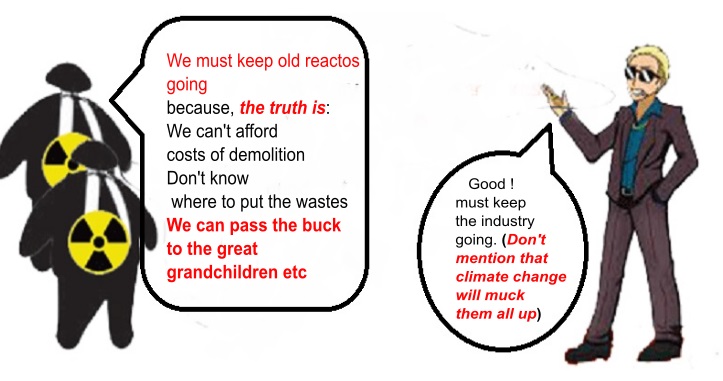
The ageing nuclear reactors. How to keep them going for decades, (best to forget coming climate extremes)
plant-specific climate simulations do not exist for lower river levels, increased wildfires, or extreme weather events like tornadoes and heavy wind and rain.
Then there’s the issue of what to do with radioactive spent fuel.
Europe’s atomic reactors are getting old. Can they bridge the gap to an emissions-free future?
Reuters, By America Hernandez, Forrest Crellin, Prasanta Kumar Dutta, Anurag Rao and Aditi Bhandari, Aug. 22, 2023
Shaken by the loss of Russian natural gas since the invasion of Ukraine, European countries are questioning whether they can extend the lives of their ageing nuclear reactors to maintain the supply of affordable, carbon-free electricity — but national regulators, companies and governments disagree on how long the atomic plants can be safely kept running………………………………………………
Taken together, the UK and EU have 109 nuclear reactors running, most of which were built in the 1970s and 1980s and were commissioned to last about 30 years.
That means 95 of those reactors — nearly 90% of the fleet — have passed or are nearing the end of their original lifespan, igniting debates over how long they can safely continue to be granted operating extensions.
Extension talk: Bridging the gap or a new lease of life?
Regulations differ across borders, but life extension discussions are usually a once-a-decade affair involving physical inspections, cost/benefit estimates for replacing major worn-out parts, legislative amendments, and approval from the national nuclear safety authority.
In some countries — especially for those that planned to exit atomic power entirely after the 2011 Fukushima nuclear disaster in Japan — discussion is focused on the short term: eking out a few years to get through any shortages before new wind, solar and gas installations can be built to take over.
Anti-nuclear Germany had planned to switch off its last three plants by the end of 2022, only to grant the sites an emergency extension to April 2023 to make it through winter without Russian gas — which previously made up 40% of EU gas supply……………………………………….
So far, Finland, Sweden, Bulgaria, the Czech Republic, Slovenia, the Netherlands and Hungary have all taken steps to allow reactors to run for at least 60 years, subject to regular safety checks.
France, with the largest fleet, is carrying out a major 40-year inspection and refurbishment programme for its 32 oldest reactors.
ASN, the national safety authority, has said France’s pressurised water reactor (PWR) design in principle can be safely operated for 50 years — meaning the ageing plants can run through 2030 — but the regulator will not take a stance on extending to 60 years until the end of 2026……………………………………..
Some companies are pushing the limits further.
In February, Finland’s Fortum obtained permission to operate two reactors until 2050, when they will reach 70 years of age.
In Sweden, where licences are unlimited in time subject to regular safety checks, Vattenfall is considering 80 years of operation for its five reactors……………… More than scientific one-upmanship is at play.
…………………. The cost of pulling the plug
Politicians are also under pressure to keep energy prices low, especially as movements characterising climate action as costly and elitist gain ground.
That means ensuring steady, abundant supply — any swift, unexpected loss of a major source means market spikes and painful household bills.
Energy prices in Europe jumped exponentially in 2022 after many French reactors went offline. The impact was compounded by Russia’s invasion of Ukraine.
…………………………………..The biggest challenge is maintaining the reactor vessel, where uranium atoms are split to release neutrons inside the core. Those flying neutrons also hit the vessel’s steel walls, altering the lattice structure of the metal, making it hard and brittle.
Vattenfall and EDF try to slow down that embrittlement process by layering in special rods of hafnium metal or all……………………………….
Reactor vessels are generally seen as non-replaceable — though it has never been tried.
The same goes for the airtight containment building, which houses the reactor and all associated radiation-emitting parts, to keep it from being released into the atmosphere.
………………………… The French government, which this year nationalised EDF, has estimated it needs to hire and train at least 100,000 workers by 2033 if it hopes to run its fleet long term and build at least six new reactors.
That includes automation engineers, boilermakers, draughtsmen, electricians, maintenance technicians, blacksmiths, pipe fitters and welders.
Europe’s new pro-nuclear alliance would require some 450,000 skilled workers if it hopes to build an additional 50 GW of new nuclear by 2050, according to industry lobby Nucleareurope.
2050 and beyond: Hotter, drier, more radioactive trash
Industry cheerleaders point to Dubai’s new Barakah nuclear plant as proof reactors can be successfully designed to withstand desert heat and warmer water temperatures.
But few plants have room to be retrofitted with new safety systems, such as a dyke wall to protect against rising water levels, regulators warn.
“It’s a real headache to find [physical] space on a site that’s currently operating — we have reached certain limits in the feasible modifications of existing reactors,” said Karine Herviou, deputy director-general of France’s Institute for Radioprotection and Nuclear Safety, at the industry event on lifetime extensions.
The French fleet’s temperature margin to withstand heatwaves is constantly questioned, she added, while plant-specific climate simulations do not exist for lower river levels, increased wildfires, or extreme weather events like tornadoes and heavy wind and rain.
As a result, Herviou said in France: “There’s a general agreement that what we’ll do at the 50-year, 60-year mark will essentially be replacements for modernisation but very certainly not adding in any new safety systems … and checking for conformity and respect of already-applicable requirements, without further hiking the safety requirements.”
That rings alarm bells for third-party watchdogs like Mycle Schneider, who compiles the annual World Nuclear Industry Status Report and said ageing reactors need tighter scrutiny.
“You have a car, 30-to-40 years old, and your generator breaks down. You open the hood, the mechanic takes out the generator and then says, ‘Ooh, everything underneath is rotten’ — a 40-year-old nuclear plant is not all that different, you basically find on the go all kinds of things you didn’t expect to find,” Schneider said.
EDF wants the government to relax biodiversity rules which forbid plants from dumping used cooling water into nearby rivers on days they are deemed already too warm, limiting power production — which risks becoming more frequent.
Then there’s the issue of what to do with radioactive spent fuel.
Used uranium pellets, which are solid, are stored in special refrigerated swimming pools designed to cool the radioactive heat down for five-to-10 years. French company Orano then separates out the material into non-recyclable leftovers that are vitrified into glass (4% of the material), plutonium (1%) to create a new nuclear fuel called Mox, on which some 40% of France’s reactors can run; and reprocessed uranium (95%) which for now can only be re-enriched and “recycled” at one plant in Russia.
Non-recyclable waste can be safely stored in dry casks, but its ultimate destination is deep underground, where it will fully degrade over hundreds of thousands of years.
Sweden, Finland and France have plans to build such long-term underground sites……………………………………………………………………………… https://www.reuters.com/graphics/EUROPE-ENERGY/NUCLEARPOWER/gdvzwweqkpw/
Threat from the skies: India steps up the fight against a major space danger.

By B R Srikanth, a veteran Bengaluru-based journalist reporting on space and defense, 21 Aug 23, https://www.rt.com/india/581397-india-space-debris-cleaning-mission/
New Delhi’s ambitious space plans include tackling the problem of floating debris, countless pieces of which orbit the Earth
A spectacular display of celestial fireworks? The momentous arrival of aliens? Or was it a work-in-progress sci-fi flick?
These questions weighed heavily on many minds as Melbourne’s night sky lit up for almost a minute on the night of August 7. The flame raced across the sky before breaking into blazing fragments. A sonic boom shook the ground for a couple of seconds, setting off a panic among residents. A day later, the Australian Space Agency confirmed it was space junk, likely “remnants” of a giant Russian rocket which had hoisted a new navigational satellite into orbit.
A few weeks earlier, a six-foot high cylindrical object, perhaps the fuel tank of an Indian rocket, had washed ashore at Green Head Beach, 250 km north of Perth, Australia. The artificial lighting, the loud explosion, and the large fuel tank found there reignited one question: How to vacuum-clean the graveyard in the deep, dark heavens to safeguard assets worth billions of dollars?
Such assets include satellites circling the Earth at 300 km to 36,000 km, in support of telecommunications, broadcasting, meteorology, civil aviation, telemedicine, distance education, and even espionage (by military satellites launched without fanfare).
Space junk
Outer space contains hundreds of dead satellites, millions of fragments of old satellites and rockets, and even paint flakes; each is hurtling through space at an incredible speed of 10 km a second, with a lethal punch of a 550-pound object. NASA estimates there are around 23,000 pieces of debris larger than a softball, half a million pieces the size of a marble or up to a centimeter, 100 million pieces one millimeter and larger.
Example of space junk include a glove lost by Edward Higgins White during America’s first spacewalk, Michael Collins’ camera lost near Gemini 10, a thermal blanket lost during STS-88, the first space shuttle mission, garbage bags jettisoned by cosmonauts during Mir’s 15-year life, a wrench, and a toothbrush.
Indian-American astronaut Sunita Williams lost her camera during her spacewalk from the space shuttle in 2007, and astronaut Heidemarie Stefanyshyn-Piper lost a briefcase-sized tool bag during her spacewalk the following year.
And if you think the Hollywood film ‘Gravity’, where a spacecraft is hit by a cloud of space debris (killing George Clooney’s character, and nearly marooning Sandra Bullock) was fiction, then consider that in 1996, a French satellite was hit and damaged by a French rocket that had exploded a decade earlier. Or that on February 10, 2009, a defunct Russian spacecraft collided with and destroyed a USA Iridium commercial spacecraft. The collision over northern Siberia added 2,300 pieces of large trackable debris and a bigger quantity of smaller trash to the existing space junk.
China did not help matters when in 2007 it used a missile to destroy an old weather satellite, creating 3,500 pieces of large debris. In 2016, a tiny piece of debris punched a hole in the solar panel of the European Space Agency (ESA) observation satellite, Copernicus Sentinel 1A. Even the Hubble Telescope’s solar array shows hundreds of tiny holes caused by dust-sized debris.
The risk of trash colliding with satellites could spiral higher in the future, K R Sridhara Murthy, Honorary Director and former vice president of Paris-based International Institute of Space Law (IISL), and a former senior scientist of the Indian Space Research Organisation (ISRO), told RT.
This is because a large number of private companies – SpaceX, OneWeb, Amazon Kuiper, Guo Wang (China), Samsung (Korea), and Astrome Tech (India) plan to add a whopping 75,000 satellites within a decade to provide global communication networks (superfast internet services), and Automatic Identification Systems (AIS) to track ships (including those of pirates) among other benefits.
Though smaller than conventional satellites, they will crowd the low earth orbit (LEO), about 400 km from the ground, and multiply the number already in this sphere. “More companies are joining the race to position their satellites in orbit because the economics of satellite launch are changing drastically owing to reduction in the cost of putting a satellite into orbit and the deployment of reusable rockets,” Murthy added.
Need for self-discipline
Nations have not been unmindful of the hazards of space junk. The USA and the former USSR tracked objects measuring four inches or more from the Cold War era using a string of radars. NASA and the US Defense Department’s Space Surveillance Network (SSN) have cataloged more than 27,000 pieces of debris, and track each piece’s trajectory.
Not surprisingly, nations with ambitions in space, including India, are setting up facilities to track the burgeoning amount of trash.
The importance of tracking can be gauged when even the voyage of a rocket into space is delayed by a couple of minutes to prevent debris from causing a disastrous impact on missions, Dr. Mylswami Annadurai, the “Moon man of India” and former director of ISRO’s Prof. U R Rao Satellite Centre in Bengaluru, told RT. He said that ISRO delayed the launch of its rockets three times to avoid a piece of space junk: a one-minute delay in the blast-offs in 2011 and 2016 and a three-minute hold in 2014
All space agencies realize the need for self-discipline in outer space and try not to disturb the operations of other satellites when decommissioning an old and defunct one. “For example, we (ISRO) brought down Megha-Tropiques (a satellite designed jointly and launched by ISRO and CNES of France in 2011 to study tropical atmosphere in the context of climate change) last year with the help of fuel available onboard without causing damage to any other satellite,” Rao said.
Last month, Indian space scientists reduced the altitude of the last stage of the Polar Satellite Launch Vehicle (PSLV) rocket as part of its initiative to avoid creating more space junk. “Left alone at a 536 km circular orbit, the PSLV4 stage would orbit the Earth for over 25 years. As the number of satellites in LEO (low earth orbit) is growing and the space around this orbit is of particular interest, the orbit of the spent PSLV4 was reduced to 300 km,” said the ISRO’s spokesperson.
“Everybody wants to clear outer Space of debris, but how to do it is a billion-dollar question,” K Sivan, former Chairman of ISRO, explained to RT. “We are part of the Inter-Agency Space Debris Coordination Committee (IADC). This international governmental forum coordinates global efforts to reduce debris by sharing research and identifying debris mitigation options.”
When Sivan was at the helm, ISRO established a radar at the Deep Space Network Station on the outskirts of Bengaluru as part of a project, called ‘Nethra’, to track junk in outer space and to share the data with other space agencies. Earlier, ISRO established the Multi-Object Tracking Radar at Satish Dhawan Space Centre, Sriharikota, the country’s spaceport just off the eastern coast in Odisha, to track the trajectory of 10 pieces of space junk and share the data with IADC.
According to Sivan’s predecessor, Gopalan Madhavan Nair, options include preventing new debris, designing satellites to withstand the impact of minor pieces, and improving procedures such as using orbits with less trash.
“Earlier, we used to allow the last stage of our PSLV rocket, along with some fuel, to drift away after launching the satellite, but now we make sure that the fuel (propellant) is exhausted to prevent an explosion of the last stage, or it is used to push the last stage closer to the Earth. Eventually, the last stage will drift further down and burn on re-entering the Earth’s atmosphere,” he said, alluding to the recent manoeuver.
Clearing efforts
In 2018, the United Nations Institute for Disarmament Research (UNDIR) proposed three A-SAT (anti-satellite) test guidelines for preventing junk in outer space. No consensus, however, has been reached among space-faring nations on the policies.
To mitigate the hazards of vast amounts of junk in outer space, the Japanese Space Agency, JAXA, has launched a project to develop a sprawling net akin to the one used by fishermen, to trap and drag down the trash. Many private companies are working on similar methods to cart away the garbage through operations that could fetch them millions of dollars.
ESA has teamed up with a consortium led by Swedish start-up, ClearSpace, to remove all ESA-owned, defunct satellites in the LEO. Their mission, ClearSpace1, will be launched in 2025 to capture a 100-kg upper-stage left orbit after the second flight of ESA’s Vega launcher in 2013. During follow-up missions, ESA will attempt multi-object captures.
Other space agencies and private enterprises could follow suit, each with unique techniques to reduce the trash in outer space by 2050. Space scientists, however, feel new satellite observation methods, too, ought to be developed to forecast the trajectory of orbiting satellites and debris to avoid collisions.
Nuclear Fusion: Energy Breakthrough or Ballyhoo?

Forbes, Ariel Cohen, 18 Aug 23,
After scientists worldwide dispelled the false promises surrounding the purported superconductor LK-99, another scientific breakthrough in nuclear fusion naturally drew scrutiny. Nuclear fusion has been “10 years away” for decades – why should this be any different? This narrative and accompanying headlines mean fusion advances are sometimes lost in technobabble. The latest developments in nuclear fusion may not herald an age of limitless emission-free energy just yet. Still, they represent a concrete step forward for the greenest energy source known to humanity.
In December 2022, a breakthrough for nuclear fusion occurred when more energy was released than used in creating the reaction, finally passing the “break-even point.” This recent innovation was duplicated when the Lawrence Livermore National Laboratory in California recently repeated its success. The response released a higher energy yield than ever before. However, these breakthroughs are limited: they were not energy positive for the entire system, only for the lasers used in the reaction. The power generated was less than what a refrigerator uses to run in one day and had to be created at the National Ignition Facility in an area the size of a football stadium. Nuclear fusion remains more than 10 years away. It is hard for mere humans to replicate a fusion reaction found only in stars.
A fusion reaction does not contradict the known fundamentals of physics. The problems scientists encounter are one of actualization, not conception………………….
Cost efficiency is the most serious challenge…………………………………………….
Supply and logistical issues also hamper nuclear fusion, with almost all the most critical components involved in fusion being in dangerously short supply. ……………………………….
The environmental costs of nuclear fusion should also not be underestimated. ……………………………….
Loose in the environment, tritium is dangerous for approximately 120 years. The Energy Information Administration (EIA) notes that the United States does not currently operate a permanent disposal facility for high-level nuclear waste, significantly complicating nuclear projects. This situation reflects the US Department of Energy’s myopic policy for decades.
………………………… Ironically, the hypothetical possibilities of nuclear fusion also present a problem. Nuclear fusion can theoretically emit so much energy so fast that scientists are still determining how small reactions can be scaled down. Without significant energy grid investment, it is possible that nuclear fusion would remain tragically out of reach because it could push too much energy too fast onto a grid that couldn’t distribute excess supply……….. https://www.forbes.com/sites/arielcohen/2023/08/16/nuclear-fusion-energy-breakthrough-or-ballyhoo/?sh=4a3691442ad4
The nuclear icebreakers enabling drilling in Russia’s Arctic
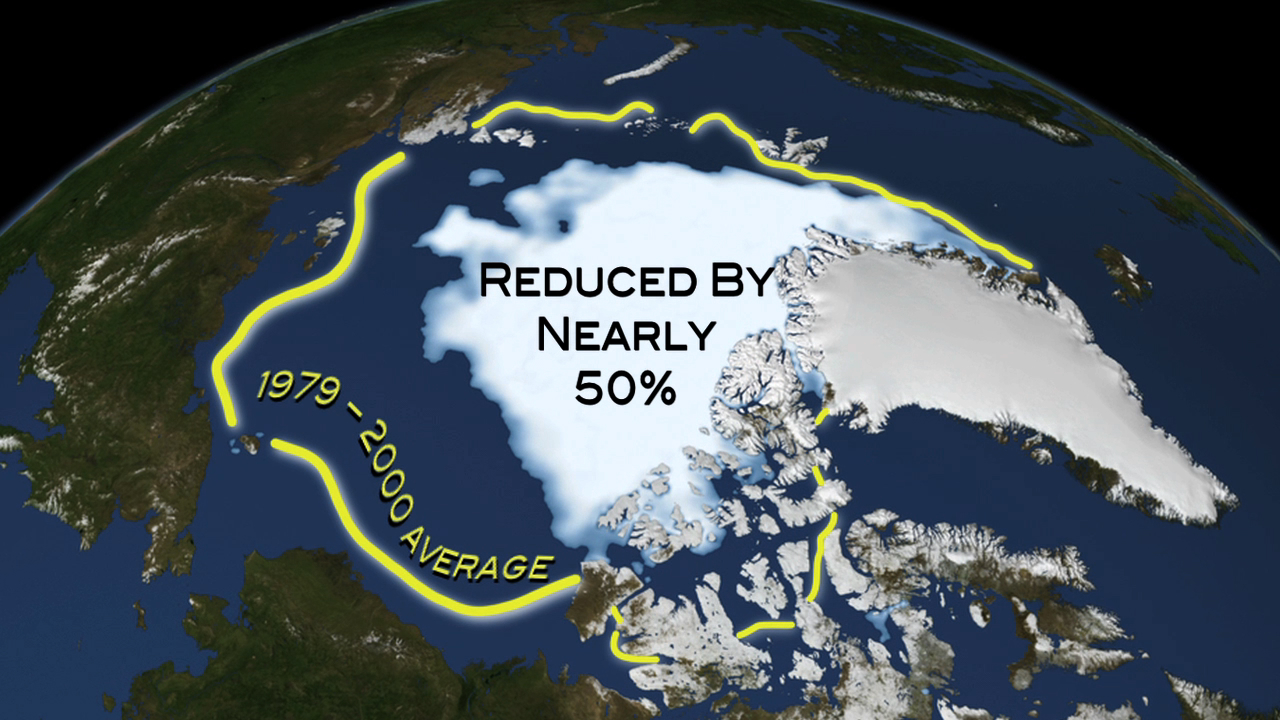
Russia, the US, and China want to develop the Arctic. Here’s how Russia’s multifunctional nuclear vessel would expand shipping routes to Europe and Asia.
ussia is home to the only nuclear icebreaker fleet in the world, built to meet maritime transportation requirements through modern nuclear technology. The country’s aim of establishing an Arctic shipping route would open up its north coast to new projects, at a cost beyond money.
“The Russian shipbuilding industry has been growing for the past few years,” says Alexey Rakhmanov, president of Russia’s United Shipbuilding Corporation.
“This has especially happened in specific market segments, such as research vessels and nuclear-powered icebreakers, and niches such as the ice-resistant, self-propelled research platform North Pole.”
According to the Russian Government’s Northern Sea Route (NSR) Development Plan, the country aims to transport at least 150 million tonnes of crude oil, liquefied natural gas, coal, and other cargoes via its northern sea route per year, starting in 2030.
The Centre for Strategic and International Studies claims that Russian President Vladimir Putin personally identifies with Russia’s Arctic ambitions, seeking to use the Arctic narrative of man conquering nature as a distinguishing feature of contemporary Russian nationalism.
According to London-based think-tank The Polar Connection, increased mining and energy extraction, particularly on the Yamal Peninsula, relates to the NSR expansion.
The Arctic route, which offers a far quicker journey between northern Europe and East Asia than the conventional Suez Canal route, has also been proposed by Russia as an alternative global shipping route. However, this route’s distinctive challenges and risks have held back its otherwise rapid development.
Nuclear icebreaker fleets in the Arctic
In January 2022, multinational engineering and constructions company China Communications and Construction and Russian Titanium Resources agreed to co-operate on a mining project to develop a vertically-integrated mining and metallurgical complex for the processing of titanium ores and quartz sands from the Pizhemsky deposit in the Komi Republic, north-west Russia.
This project to create a national mining cluster would involve the construction of the Sosnogorsk-Indiga railway and the deep sea port of Indiga, in the Arctic region of Russia. This development will need reliable waterways, which only an icebreaker can provide.
Russia had plans, under the name Project 10510, to build a fleet of Lider-class nuclear-powered icebreakers and ships as part of its aim to improve Arctic shipping – though this strategy has since been downsized to a single vessel, called Rossiya, due to begin operations in 2027.
Authorities docked the nuclear-powered vessel Sevmorput in the Arctic region last year; a 34,600 deadweight tonnage (dwt) vessel carrying up to 1,324 TEU (twenty-foot equivalent unit). The ship will serve on the NSR, while Russia has built a new nuclear-powered icebreaker, Ural, (7,154 dwt) alongside it.
Shipbuilder Rosatomflot is a subsidiary of Russian state nuclear company Rosatom and JSC Baltiysjiy Zavod, part of the United Shipbuilding Corporation. Recently, the company signed a contract for the construction of a unique, multifunctional nuclear service vessel that would operate from 2029. The vessel is designed to perform a full range of work on recharging nuclear plants of existing Russian nuclear icebreakers.
“A multifunctional nuclear-technical support vessel will ensure the proper functioning of a modern icebreaking group. Financing of its construction is assumed according to the scheme: 50% from the budget of the Russian Federation, 50% from the investment program of the State Corporation Rosatom,” Russian Deputy Minister of Industry and Trade Victor Yevtukhov said in a press release.
Building an “Arctic economy” in remote parts of Russia
The Russian Government is trying to build a new Arctic economy. According to the government statement, the NSR is a “key element” in developing transport connectivity in Russia’s “most hard-to-access” territories. The leading Arctic companies, such as Vostok Oil, Novatek, and Gazprom Neft, intend to increase the volume of shipping in Arctic waters to over 190 million tonnes over the next few years. ………………………………
Arctic to look like “ice cubes melting in a glass of water”
…………………………. the main purpose of the icebreakers is simply to break ice. Broken ice melts more easily, becoming water that absorbs more sunlight. This causes an increase in local temperatures, thus leading to more ice melting.
The Arctic is warming much faster than the rest of the world as the high sunlight reflectivity, or albedo, of Arctic ice is lost. Compared to ice, seawater absorbs more sunlight, meaning that water then warms up and evaporates more readily, itself becoming a greenhouse gas.
Small ships can have big effects in the Arctic. Non-profit US think tank the Center for the Advancement of the Steady State Economy reported that an icebreaker ship passing through the ice for around 620 miles, which leaves an ice-free wake of 33 feet, would open an area of water of 3.9 square miles over the entire cruise.
Even though the Arctic Sea covers around 2,500 miles, all icebreaking harms the environment. Continuous use of icebreaker ships in the Arctic would lead to looking more like “ice cubes melting in a glass of water,” the report says.
Russian development through thawing sea ice
………………………………………………….. The Financial Times reported that according to data from NASA, the Arctic Circle’s ice sheet has shrunk by 13% over the past ten years due to the region’s unusually high temperatures, allowing for greater shipping access.
…………………………………….. As a result of global warming, seasonal sea ice in the Arctic is melting, and opportunities for human activity are expanding. These changes not only allow for growth in tourism, fishing, and military activities, but also enable oil and gas exploration, mining, and development in new regions.
Increased activity in the Arctic will impact marine life, which had previously been largely undisturbed. While Arctic ecosystems remain relatively poorly understood, Arctic industrialisation has already increased geopolitical tensions, which will undoubtedly worsen as the ice melts.
Small Modular reactors- a US view
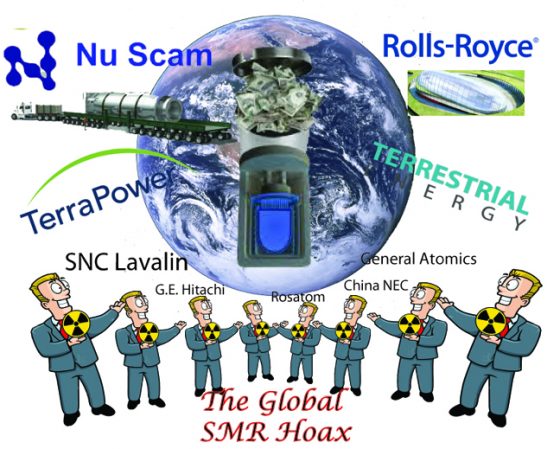
we now have ‘an echo chamber, with each outlet clambering over the next to crow about the great benefits of nuclear power in misleading language that suggests this technology is already entirely proven out’.
It all fits into what see she see as an emerging pro-SMR mind set, with there being a lot of speculative investment venture cash still around- and a lot of press support. She says that though ‘very few of the proposed SMRs have been demonstrated and none are commercially available, let alone licensed by a nuclear regulator’, the media has been promoting them as the way ahead.
August 12, 2023 https://renewextraweekly.blogspot.com/2023/08/small-modular-reactors-us-view.html

Allison Macfarlane, who was Chair of the US Nuclear Regulatory Commission (NRC) from 2012-2014, has been looking at Small Modular Reactors in the USA and elsewhere. She thinks they are likely to be uneconomic, much like the their larger brethren, which, as she describes, have recently been doing very poorly in the USA.
Indeed, just like the EPR story in the EU, it makes for a sorry saga: ‘The two units under construction in South Carolina were abandoned in 2017, after an investment of US$9 billion. The two AP-1000 units in Georgia were to start in 2016/2017 for a price of US$14 billion. One unit started in April, 2023, the second unit promises to start later in 2023. The total cost is now over US$30 billion.’
Big reactors do look increasingly hard to fund and build on time and budget, while it is argued that smaller ones could be mass produced in factories at lower unit costs and finished units installed on site more rapidly. However, that would mean foregoing conventional economies of (large) scale, and, overall, Macfarlane claims that SMRs may end up being worse that large plants in operational and economic terms.
For example, she says ‘one of the reasons SMRs will cost more has to do with fuel costs’ with some designs requiring ‘high-assay low enriched uranium fuel (HALEU), in other words, fuel enriched in the isotope uranium-235 between 10-19.99%, just below the level of what is termed “highly enriched uranium,” suitable for nuclear bombs.’ She notes that ‘currently, there are no enrichment companies outside of Russia that can produce HALEU, and thus the chicken-and-egg problem: an enrichment company wants assurance from reactor vendors to invest in developing HALEU production. But since commercial-scale SMRs are likely decades away, if they are at all viable, there is risk to doing so.’

She also notes that the use of HALEU, so as to offset the smaller size of the reactor core, will ‘result in increased security and safeguards requirements that will add to the price tag’. As she has explored in a PNAS paper with others, smaller cores mean more neutron escapes and so a need for more shielding, which will become activated, adding to the waste burden to be dealt. Indeed she says, overall, some SMRs may produce ‘significantly more high-level waste by volume that current light water reactors.’ That view did not go down well with SMR promoters, who sometimes portray SMRs as being cleaner than standard reactors.
Some advanced SMRs may use molten salt fluids as a reactant and also coolant, and the waste chemistry then is different, although there will still be wastes to deal with. But for the moment, the focus is on simpler technology – just scaled down versions of the standard Pressurised Water Reactor (PWR). Macfarlane notes that one of these, NuScale, is the only SMR design to received ‘design certification’ for its 50MW unit from the NRC

However, the company has now decided to submit a new application to the NRC to build a larger version, presumably in the expectation that this would be more economic. It’s also proposed to have multiple units on one site, sharing some common services. That might offset some of the extra costs of small systems, but not much. Macfarlane says ‘cost estimates for the reactor have risen from US$55/megawatt electric (MWe) in 2016 to $89/MWe in 2023, according to the Institute for Energy Economics and Financial Analysis.’
Arguably, to be economic, they need to be bigger. That seems to have been the logic behind another mini-PWR, the Rolls Royce SMR being developed in the UK by Rolls Royce. Although at 470MW, that one is hardly ‘small’.
By contrast, Oklo, another US company, is going in the opposite direction. It has been developing Auora, an advanced micro-nuclear power plant. It’s a tiny (1.5 MW) liquid sodium cooled fast neutron reactor. However, it was outright rejected by the NRC. Macfarlane says that ‘the NRC rarely outright rejects an application, instead working with licensees until they either get the application right or decide to walk away. In this case, Oklo refused to fill “information gaps” related to “safety systems and components.’ But Oklo persevered. And she notes it has gone for public finance via a merger with AltC Acquisition Corporation.
It all fits into what see she see as an emerging pro-SMR mind set, with there being a lot of speculative investment venture cash still around- and a lot of press support. She says that though ‘very few of the proposed SMRs have been demonstrated and none are commercially available, let alone licensed by a nuclear regulator’, the media has been promoting them as the way ahead.
Even usually sane US outlets like the Atlantic Policy journal seem to have joined in. She says we now have ‘an echo chamber, with each outlet clambering over the next to crow about the great benefits of nuclear power in misleading language that suggests this technology is already entirely proven out’.
So she concludes, a bit pessimistically, that, in the USA, ‘in the nuclear celebratory mood of the moment, there is little patience or political will for sober voices to discuss the reality that new nuclear power is actually many decades away from having any measurable impact on climate change – if at all’.
The situation in Europe is a bit different. Although nuclear is also being supported in some countries, like the UK and France, anti-nuclear views are also apparent. For example a recent academic paper in Joule claims that ‘relying on nuclear new-builds to achieve the EU climate targets is virtually impossible.’ And overall it concludes ‘in solving the climate crisis, new nuclear is a costly and dangerous distraction.’ Whereas SMRs will be any better is unclear. There are quite few speculative SMR ventures around the word, as a UK review noted, but a recent study of 19 proposed SMR designs found that they were likely to be generally more expensive than conventional nuclear, and even more so than renewables. So, why bother?
As Macfarlane says, the battle lines are drawn on this issue around the world, with much of it being a PR battle – there is no real hardware yet. While the likes of Forbes magazine are pushing SMRs as the ‘go-to energy source’, in a hard hitting article in Fortune, Stephanie Cookes says ‘the billions currently being spent on nuclear are crowding out viable, less costly solutions for decarbonizing the power sector.’
Place your bets…but, for some, the outcome already looks clear. As David Schlissel said in US trade journal Utility Drive, ‘an old adage is that anything that sounds too good to be true probably is. Given the history of the nuclear power industry, everyone – utilities, ratepayers, legislators, federal officials and the general public – should be very skeptical about the industry’s current claim the new SMRs will cost less and be built faster than previous designs.’
Nuclear fusion – a step forward, but is it in a sensible direction?
It was, most scientists accepted, a step towards nuclear fusion. Where
they differed was in what sort of step it was. Late last year the Lawrence
Livermore National Laboratory (LLNL) in the United States announced it had
achieved “ignition”. One hundred and ninety-two lasers had focused on a
single pellet of fuel. Inside that pellet hydrogen had become helium and
released energy using the same reaction that occurs in the sun. Crucially,
they got more energy out than they put in. In an announcement this week
they have repeated the feat and got even more energy. But what does it
mean? When the first success was revealed, one scientist called it a
“historic step”, another a “momentous step”. It was, variously, a
“significant step” and a “critical” one but also, another noted,
merely a “tentative step”. Now we have a second step towards fusion. Is
it momentous or tentative? And is it, equally importantly, a step in the
most sensible direction?
Times 7th Aug 2023
https://www.thetimes.co.uk/article/nuclear-fusion-power-energy-future-us-breakthrough-hdqhqhqdb
1 This Month
To see nuclear-related stories in greater depth and intensity – go to https://nuclearinformation.wordpress.com/

29 Jan. Thursday 7-8 p.m. Webinar – World’s Largest Nuclear Station in Port Hope, ON?


31st January – Challenging the War Machine – a DECLASSIFIED UK SUMMIT

Website of the Week
Now until to February 10, 2026 Radioactive waste storage in France: the debate is finally open! How to participate?
-
Archives
- January 2026 (259)
- December 2025 (358)
- November 2025 (359)
- October 2025 (376)
- September 2025 (258)
- August 2025 (319)
- July 2025 (230)
- June 2025 (348)
- May 2025 (261)
- April 2025 (305)
- March 2025 (319)
- February 2025 (234)
-
Categories
- 1
- 1 NUCLEAR ISSUES
- business and costs
- climate change
- culture and arts
- ENERGY
- environment
- health
- history
- indigenous issues
- Legal
- marketing of nuclear
- media
- opposition to nuclear
- PERSONAL STORIES
- politics
- politics international
- Religion and ethics
- safety
- secrets,lies and civil liberties
- spinbuster
- technology
- Uranium
- wastes
- weapons and war
- Women
- 2 WORLD
- ACTION
- AFRICA
- Atrocities
- AUSTRALIA
- Christina's notes
- Christina's themes
- culture and arts
- Events
- Fuk 2022
- Fuk 2023
- Fukushima 2017
- Fukushima 2018
- fukushima 2019
- Fukushima 2020
- Fukushima 2021
- general
- global warming
- Humour (God we need it)
- Nuclear
- RARE EARTHS
- Reference
- resources – print
- Resources -audiovicual
- Weekly Newsletter
- World
- World Nuclear
- YouTube
-
RSS
Entries RSS
Comments RSS
 nuclear-news