Rolls-Royce scales back plans to build nuclear factories in UK

Curtailing comes after repeated delays to an ongoing government design competition
Rolls-Royce has scaled back plans to build two new factories for its small
modular reactor (SMR) programme in the UK, following delays to a government
design competition. The FTSE 100 company had originally proposed one
factory to make heavy pressure vessels for its SMRs and another to make the
building blocks of the reactors.
It had drawn up a final shortlist of
locations for the pressure vessels factory, including the International
Advanced Manufacturing Park on the outskirts of Sunderland, Teesworks in
Redcar and the Gateway industrial park in Deeside, Wales.
But on Friday Rolls confirmed it no longer intends to proceed with that plan because
there is no longer time to build the factory and make the first pressure
vessels for the early 2030s, when it hopes to complete its first SMRs.
It is still proceeding with work to build the second factory, however. The
company had been waiting for the outcome of an ongoing SMR design
competition in the UK – first announced by the Government in 2015 –
before it made a decision on the pressure vessel plant.
But that competition has been repeatedly delayed, with the arms-length body Great
British Nuclear only formally created last summer and winners not due to be
announced until this June at the earliest. Instead the engineering giant
will now buy its heavy pressure vessels from a third party supplier. The
large, metal components sit at the heart of nuclear reactors and must be
able to withstand extremely high temperatures and pressures. They are only
made by a select group of companies, partly due to the need for specialist
welding techniques.
Rolls is still pressing ahead with plans to build its
second factory, which will build the modular units that make up its SMRs.
It is understood that sites shortlisted for the pressure vessel factory
will also be contenders for the second plant but no decisions have been
made.
Telegraph 27th April 2024
https://www.telegraph.co.uk/business/2024/04/27/rolls-royce-plans-build-smr-water-vessel-factory-uk
The former rail chief now minding the (construction) gap at Sizewell.
The former rail chief now minding the (construction) gap at Sizewell. Rob
Holden, chairman of the Suffolk nuclear plant, says the increasing time
between the start of construction at Hinkley Point and spades in the ground
at Sizewell is a worry.
The delays and swelling cost of building Hinkley
Point C, Britain’s first new nuclear power plant in more than two
decades, may not necessarily be a bad omen for its sister station.
According to Rob Holden, the non-executive chairman of Sizewell C, “good
projects start well and get better, bad projects start badly and get worse.
While Sizewell is a replication, technically, of Hinkley, it is a very
different project.”
Thus far Hinkley Point is running up to £28 billion
over budget and is six years past its initial deadline. That has spurred
speculation that Sizewell could be beset by the same troubles. Holden, who
has led the Sizewell C board since the end of 2022, disagrees. The power
plant, which is due to be built on the Suffolk coast, has an “as-built
design”, which should mean far fewer changes than its predecessor to the
west and less time and money lost. Its developers know the quantities of
kit needed and have already been making efforts to procure it.
Nevertheless, for Holden, a widening gap between the start of construction
at Hinkley Point and spades in the ground at Sizewell is a worry. The
project is owned 50-50 by EDF and the government, but they are hoping to
bring in private investment. A final investment decision is slated for
before the end of the year. “What I do know now is that we can’t afford
to allow the time gap to be more than what it currently is between the two
projects, otherwise we will lose the replication benefits.”
Times 26th April 2024
New Nuclear Energy: Assessing the National Security Risks
https://blogs.gwu.edu/elliott-iistp/research-2/ 26 Apr 24
IISTP Research Professor Sharon Squassoni publishes a comprehensive report assessing the risks of nuclear energy and nuclear weapons.
Read the complete report: “New Nuclear Energy: Assessing the National Security Risks“.
GWU REPORT: NATIONAL SECURITY RISKS GROW WITH NEW NUCLEAR ENERGY
Drone strikes against Ukraine’s nuclear reactors highlight risks
WASHINGTON, DC – April 23, 2024 – Proliferation of nuclear weapons, nuclear terrorism, sabotage, coercion and military operations – these risks associated with nuclear energy can all be expected to grow as countries seek to implement their new nuclear energy objectives, according to a new report published today by George Washington University’s (GWU) Sharon Squassoni. The aim of 22 countries to triple nuclear energy capacity by 2050, announced on the margins of COP-28, was adopted with little thought to the national security implications. The promotion of small modular reactors (SMRs)– specifically tailored to developing countries – will heighten, not diminish risks.
The report by GW professor Sharon Squassoni, “New Nuclear Energy: Assessing the National Security Risks,” comes as drone strikes against Ukrainian nuclear power plants highlight nuclear reactor vulnerabilities. Other national security risks will accompany significant nuclear growth as renewed interest in nuclear energy to reduce greenhouse gas emissions sparks programs across the globe. Squassoni, a professor at GWU’s Elliott School of International Affairs, now researches risk reduction from nuclear energy and nuclear weapons after serving in the State Department, Arms Control and Disarmament Agency and the Congressional Research Service.
Proliferation and nuclear terrorism are the top two national security risks, but sabotage, coercion and military operations pose other risks. An attempt to reduce dependence on foreign suppliers – a national security risk itself — using nuclear energy could worsen the risk of proliferation by motivating fuel cycle independence. SMRs are still in development, with few restrictions on designs. Reactors fueled with highly enriched uranium or plutonium will increase risks of proliferation and terrorism because those materials are weapons-usable. Reactors designed to include lifetime cores will build up plutonium over time. Fast reactor designs that require reprocessing, especially continuous recycling of fuel, could ultimately confer latent nuclear weapons capabilities to many more states. In sum, the kinds of reactors now under consideration do nothing to reduce known risks, and some pose heightened risks. There appears to be no attempt to forge agreement among suppliers or governments to restrict reactor choices that pose greater proliferation risks.
If the mass production of small modular reactors lowers barriers to entry into nuclear energy, there will be many more states deploying nuclear power reactors, including those with significant governance challenges. Russian and Chinese programs to promote nuclear energy target many of those states. Cooperation among key states essential to minimize the safety, security and proliferation risks of nuclear energy is at an all-time low. The call to triple nuclear energy coincides with the disintegration of cooperation, the unraveling of norms and the loss of credibility of international institutions that are crucial to the safe and secure operation of nuclear power.
Problems delay OL3 reactor restart by 6 days
Olkiluoto 3 was taken offline at the beginning of last month for annual maintenance.
The outage of Olkiluoto 3, Finland’s newest nuclear reactor which is
currently offline for maintenance, is being extended by six days due to
technical problems, operator Teollisuuden Voima (TVO) announced on Sunday.
The facility was shut down for its first round of annual maintenance on 2
March, according to the firm, which added that around 1,100 professionals
were involved in the effort. The firm’s other two reactors, Olkiluoto 1 and
2, were generating electricity at normal levels of approximately 1,780MW,
the company said. Maintenance on OL3 is now scheduled to be completed on 4
May.
The reactor was put into service just over a year ago, following
construction delays of 14 years. The scheduled break was originally due to
end on 8 April.
YLE News 21st April 2024
Russia, US clash at UN over nuclear weapons in space

By Michelle Nichols, April 25, 2024
UNITED NATIONS, April 24 (Reuters) – Russia on Wednesday vetoed a U.S.-drafted United Nations Security Council resolution that called on countries to prevent an arms race in outer space, a move that prompted the United States to question if Moscow was hiding something.
The vote came after Washington accused Moscow of developing a anti-satellite nuclear weapon to put in space, an allegation that Russia has denied. Russian President Vladimir Putin has said that Moscow was against putting nuclear weapons in space.
“Today’s veto begs the question: Why? Why if you are following the rules would you not support a resolution that reaffirms them? What could you possibly be hiding?” U.S. Ambassador to the U.N. Linda Thomas-Greenfield told the council after the vote. “It’s baffling and it’s a shame.”
Russia’s U.N. Ambassador Vassily Nebenzia accused Washington of trying to tarnish Moscow and said Russia would shortly begin negotiations with council members on its own draft resolution aimed at keeping space peaceful.
“We want a ban on the placement of weapons of any kind in outer space, not just (weapons of mass destruction). But you don’t want that … Let me ask you that very same question: Why?” Nebenzia asked Thomas-Greenfield in the council.
The draft resolution was put to a vote by the U.S. and Japan after nearly six weeks of negotiations. It received 13 votes in favor, while China abstained and Russia cast a veto.
The U.N. text would have affirmed an obligation to comply with the Outer Space Treaty and called on states “to contribute actively to the objective of the peaceful use of outer space and of the prevention of an arms race in outer space.”
The 1967 Outer Space Treaty bars signatories – including Russia and the United States – from placing “in orbit around the Earth any objects carrying nuclear weapons or any other kinds of weapons of mass destruction.
Before the council voted on the U.S. draft text, Russia and China had proposed it be amended to include a call on all states “to prevent for all time the placement of weapons in outer space and the threat or use of force in outer space, from space against Earth and from Earth against objects in outer space.”
The council voted on the proposed amendment, but it failed to pass. It received seven votes in favor, seven against and one abstention……………………………………. https://www.miragenews.com/indian-nuclear-sites-impact-south-tibetan-1222069/
Where are France’s nuclear reactors and what is planned for more?
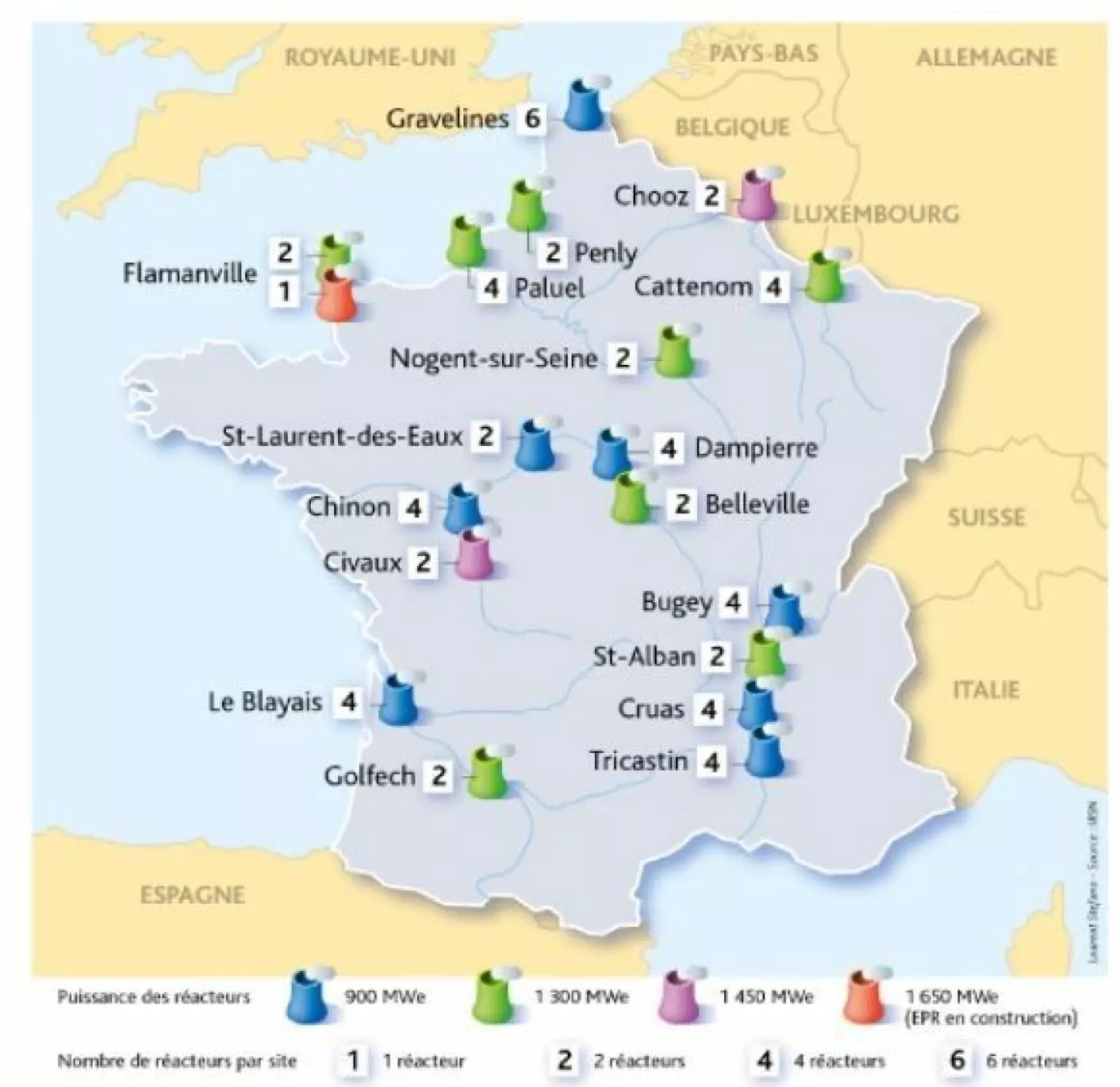
the six new sites will by no means triple French production, particularly since the older plants will increasingly be closed for repair and maintenance.
President Macron wants to triple atomic energy production by 2050
Richard Henshell, Saturday 20 April 2024
France is the third biggest producer of nuclear energy in the world and hopes to triple production by 2050. We look at where the country’s nuclear sites are and at President Macron’s plans for more.
Nuclear power represents up to 70% of the electricity produced in France at 282 Terawatt-hours (TWh), behind only China (395TWh) and the US (772TWh) and far ahead of the UK (42TWh).
However, many of its plants are approaching the end of their life-cycle. The majority of France’s 56 reactors date from the 1980s, and only two have been built since the year 2000.
In order to meet the requirements of the 2015 Paris Climate Accords, President Macron announced his plans to reinvest in France’s ageing nuclear plants during last year’s COP28 climate meeting in Dubai.
“Nuclear energy is back,” said Mr Macron (in English), adding that it was time to recognise the “essential role that nuclear energy can play in efforts to reach zero carbon dioxide emissions on a global level”.
“We will triple our capacity to produce nuclear energy between 2020 and 2050,” he said.
France’s 56 reactors are shared between 19 sites. Another reactor is scheduled to power up at Flamanville this summer, bringing the total to 57 reactors.
There are also plans to construct six new reactors at three existing plants:
- Two at Penly (Seine-Maritime) for 2035
- Two at Gravelines (Nord) for 2038
- Two at Le Bugey (Ain) for 2042
Construction is scheduled to start in summer 2024 on first of these new reactors in Penly, which like the others, will use the powerful new EPR-2 design. The estimated total cost for the six reactors is around €67.4 billion.
However, the six new sites will by no means triple French production, particularly since the older plants will increasingly be closed for repair and maintenance.
Indeed, in December 2021, the discovery of cracks in the emergency cooling systems of France’s four newest reactors led to them being shut down for over a year
Regardless, Mr Macron announced in February 2022 that France’s older plants could conceivably operate far into the future – beyond their 60th year or until they are no longer capable of producing electricity, or no longer safe.
Potential for small and micro modular reactors to electrify developing regions
Nature Energy (2024)
Abstract
While small-scale nuclear power is typically thought of for niche markets, recent work has suggested that it could help address the massive gaps in energy access in developing countries. However, nuclear energy has safety, governance and economic considerations that affect its deployment. Here we present a global analysis of regions suitable for nuclear reactor deployment based on physical siting criteria, security, governance and economic competitiveness. We use high-resolution population and satellite night-time light data to identify areas in need of electricity. We show that, technically, reactors in the 1–50 MWe range could serve 70.9% of this population. However, economics alone would make microreactors uncompetitive compared with renewables and energy storage for 87% of this population. Grid extensions and small modular nuclear reactors (with more competitive economics) could electrify these populations, but governance issues could limit deployment for all but 20% of this population. Together, governance and economics eliminate 95% of the potential market for microreactors.…………………………………………………………………more https://www.nature.com/articles/s41560-024-01512-y
Stuxnet – how a simple USB stick sabotaged Iran’s nuclear plan in a ‘world-first’ showdown

‘There is an acceptance you cannot guarantee your cyber security – someone motivated enough can probably get into your system.
Tensions between Iran and Israel are near a boiling point after the firing of hundreds of rockets into Israel and its latest military response.
But the conflict has brewed for years, including sabotage of Iran’s nuclear programme with the help of one spy and a single USB stick.
That same device contained the infamous Stuxnet worm.
It infiltrated the Iranian nuclear programme in 2010, marking the first time a country attacked the critical infrastructure of another state.
A cyber expert has shared how Stuxnet damaged an Iranian nuclear plant and if the UK is safe from similar malicious attacks.
Dr Gareth Mott, research fellow at the RUSI Royal United Services Institute think-tank in London, said that before 2010 similar attacks might have happened, but in the shadows.
However, with Stuxnet, researchers found ‘the code of the malware was way more advanced.’
He told Metro.co.uk: ‘They had years to develop it. It was no small-scale criminal developing it.’
Who was behind Stuxnet?
Signs point to Israel and the US to be responsible for the sophisticated worm.
He said: ‘Israel views Iran as a nemesis. In their view, Iran was developing uranium for nuclear weapons. Iran said it was for civilian systems.’
What Iran was doing was ‘not clandestine’.
The International Atomic Energy Agency (IAEA) monitors its programme and it is alerted ‘when the pod is opened.’
However, it is ‘hypothetically possible to abuse it,’ he said.
As an ally of Israel, the US got involved in the plan to target Iran’s nuclear facilities.
The development of Stuxnet began in 2005 years before it was smuggled into Natanz nuclear plant by a spy.
How Stuxnext caused a shutdown
Iranian nuclear sites, just like facilities in the UK, are carefully protected against attacks.
It means they are not connected to the Internet to avoid intrusions.
In the uranium enrichment facility, the radioactive chemical element spins around quickly in centrifuges to enrich it.
Dr Mott said: ‘The system is not connected to the Internet, it is air gapped. It is disconnected from the Internet. It is one of the best systems.’
But it has one weakness – USB ports.
He explains: ‘But you can put a USB drive in. You have to have a port to do any updates. That means an attack, if you can get malware on a USB drive and into the critical system, maybe you can disrupt it.’
When the top-secret tool was ready in 2009, Israelis and Americans wanted to use it.
But it did not work as intended so experts designing the worm went back to base and ‘worked what was wrong, in laboratory conditions.’
The US was hesitant and told their partners to wait, but the ‘Israelis went ahead and used it anyways,’ the expert said.
Uranium has to be spun around in a ‘very controlled manner,’ but the malware made the system ‘too quickly and slow down and too quickly again,’ he explained.
‘The system started to wobble and began to collapse.’
It also ‘tricked’ the control panel which would normally spot if the centrifuges were spinning at a risky speed and fix it, making it look like ‘things were fine, but it wasn’t’, Dr Mott said.
As a result of the worm, the Iranian uranium enrichment programme was ‘broken,’ he said.
It is thought to have been set back by several years, tech publication Dark Reading estimated.
Stuxnet highlights how something as innocent as a USB port compromise national security.
In the UK, a senior IT worker at the Sellafield nuclear plant was fired after she had downloaded sensitive data onto a USB stick and dropped it in a car park.
Stuxnet’s existence was revealed after it was found on thousands of infected computers across the world despite, on paper, the Iranian system had no internet connection.
‘Somehow it got released. Maybe one of the scientists took it home to research it.’
Cyber researchers saw it was ‘very advanced’ after ‘years in the making and a lot of money.’
Stuxnet was significant because at the time no country in the world had declared it had a cyber weapon.
‘In 2013 UK did it, and we now have an offensive [cyber] arsenal,’ the expert said.
‘We have always conducted espionage, but we are now doing it with cyber tools.’
Following Stuxnet, Iran grew its cyber offensive capabilities, making it a ‘regionally significant power but internationally it is not,’ he said.
However, in the cyber and Internet space ‘they punch above their weight,’ with hackers and researchers embedded in the cyber command of Iran’s Revolutionary Guards.
Israel has its own cyber force, Unit 8200, which is the country’s version of UK’s GCHQ and the American NSA.
Cyber attacks from Iran to Israel have ‘stepped up since October 7’ when Hamas launched its deadly attack in Israel, followed by destruction of Gaza in Palestine by the Israeli army, with more than 30,000 people killed and 70,000 injured in the unlawfully blockaded strip of land, according to the UN.
Last weekend, Israeli authorities said they have seen ‘no rise in cyber incidents, but researchers have observed cyber attacks have doubled or tripled,’ Dr Mott said.
He suspects they are ‘low-level attacks which Israel will respond to to ‘disrupt Iran.’
Continue readingNuke authorities approve loading fuel at Niigata nuclear plant
THE ASAHI SHIMBUN, April 15, 2024 https://www.asahi.com/ajw/articles/15229991
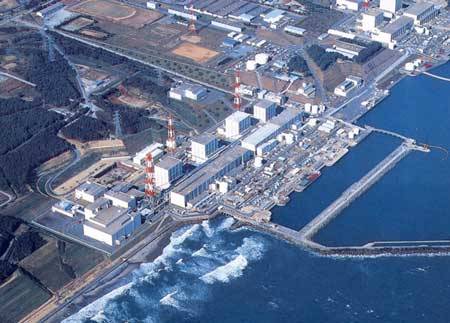
KASHIWAZAKI, Niigata Prefecture–The Nuclear Regulation Authority gave the go-ahead on April 15 to loading nuclear fuel into a reactor at the long-idled Kashiwazaki-Kariwa nuclear power plant here.
The approval is an important step toward restarting the plant, which has remained offline for more than a decade.
Plant operator Tokyo Electric Power Co. will start loading 872 fuel assemblies into the plant’s No. 7 reactor at around 4 p.m. The loading process is expected to take a couple of weeks to complete.
The reactor will then undergo a series of safety inspections before regulatory approval for a restart is granted.
In 2017, the reactor passed new safety regulatory standards mandated following the 2011 nuclear disaster at TEPCO’s Fukushima No. 1 nuclear power plant.
However, regulators suspended the restart process in 2021 due to deficiencies in the plant’s anti-terrorism measures. The NRA eventually approved the plant’s upgraded security measures in December last year.
Despite progress toward restarting the reactor, the governor of Niigata Prefecture has not yet granted his consent. Local communities remain divided, with ongoing debate and concerns regarding the plant.
MPs flag UK’s HM Revenue & Custom’s £1.4bn active contracts with Fujitsu

accounting WEB, by Tom Herbert, 10 Feb 24
A committee of MPs has published new data showing that HMRC holds eight active contracts with Fujitsu with a combined value of £1.4bn, all of which were awarded after a High Court verdict that ruled the developer’s software was responsible for misreported losses during the Post Office scandal.
Data from the Treasury Committee shows public organisations have held more than £3.4bn worth of contracts with Fujitsu since 2019 – the year a High Court ruling determined that there were defects in the developer’s Horizon software. Just over £2bn worth of contracts were agreed before the judge’s ruling and continued into the period following 2019, while around £1.4 bn was awarded after 2019.
Fujitsu’s Horizon software is at the heart of one of the biggest miscarriages of justice in British legal history, where 900 Post Office subpostmasters were prosecuted based on faulty evidence provided by the system, and backed up by court testimonies from Fujitsu experts.
Despite the court ruling, and evidence that the company and its staff were complicit in covering up the scandal, Fujitsu continued to be listed as a preferred government supplier until 2022 when it was removed (but continued to win contracts through the regular procurement process). Following the public outcry generated by the ITV drama Mr Bates vs the Post Office, Fujitsu wrote to the government in January 2024 to confirm it would no longer tender for business.
HMRC’s active contracts
At the time of writing, HMRC holds eight active contracts with Fujitsu with a combined value of £1.39bn – the largest in terms of both value and number. Financial services watchdog the FCA maintains six contracts worth more than £9m. ………………………………………………….
Government tech programmes ‘hobbled’
While the figures may generate plenty of noise from politicians and frustration from taxpayers, they are unlikely to result in meaningful change in the near future.
There are few ‘strategic technology suppliers’ able to take on the complexity and scale of many of the projects undertaken by government departments – as underlined by the award of a £485m contract to Fujitsu for the Northern Irish Education Authority in December 2023, which received just one tender from the Japanese software house.
Critics have also pointed to a lack of technical and commercial skills in government to deal with the challenges – leaving them poorly positioned when it comes to digital transformation or re-procurement.
In a report last year, Public Accounts Committee Chair Meg Hillier said the government’s technology programmes are “hobbled by staff shortages, and a lack of support, accountability and focus from the top.
“The government talks of its ambitions for digital transformation and efficiency, while actively cutting the very roles which could help achieve them,” she added.
New Fujitsu security research center in Israel to further develop digital identity tools
Biometric, Nov 30, 2022, Ayang Macdonald
Japanese tech giant Fujitsu has announced plans to set up a research center for data and security in Israel as part of efforts to strengthen its Research and Development (R&D) strategy as well as increase its presence in the country.
The center, which will go operational from April 2023 according to the announcement, highlights Fujitsu’s objectives of meeting the data security and trust requirements of companies and businesses at a time when many people are performing more transactions online.
Fujitsu says the center, to be based in Tel Aviv, will bring together about 10 research experts from Israel, Japan and Europe and their work will be focused on improving security technology for communications networks as part of its global strategy for data and security – a key area in its global R&D strategy.
Research at the center will focus on two main areas, namely developing technology that can ensure and enhance trust for network security, and technologies which can be used for a wide range of real-life situations like autonomous driving, self-checkout, as well as public safety, including anti-attack technologies for object detection AI…………
The company is also planning to develop its IDYX (or “IDentitY eXchange”) technology, which is intended to enable secure distribution of digital identity and attribute information between companies and individuals………………………………. https://www.biometricupdate.com/202211/new-fujitsu-security-research-center-in-israel-to-further-develop-digital-identity-tools?fbclid=IwZXh0bgNhZW0CMTAAAR0JsxUA-U2OxTaWJA0wn9bVwz6ZrES6Ud3yJbBiyJ7-0pgqbW6TaOodx50_aem_AUNuP6qXKQDr6xEGOrL9tLaha_3Jq5bni6IsXT-5B63IYytKZyPOG_gwYYdcMStOmz7Fcy3mf3NxTz4PKcttQPiC
Government could still replace Fujitsu in key nuclear contract
Fujitsu’s first government contract of the year could be just a stay of execution as department says that all replacement options are still being considered.
Karl Flinders, Chief reporter and senior editor EME, 12 Apr 24 https://www.computerweekly.com/news/366580657/Government-could-still-replace-Fujitsu-in-key-nuclear-contract
Fujitsu’s controversial contract with the National Nuclear Laboratory (NNL) was renewed because there were no other suppliers that could meet the regulatory duties required, but the service could be taken in-house next year.
Following the announcement of Fujitsu’s first government contract of the year and a subsequent public backlash, the government has been quick to stress that all options to replace the supplier’s £155,000 software support contract with the NNL, including moving the service in-house, are being considered.
Reacting to criticism for awarding the contract to Fujitsu, which is under intense scrutiny over its role in the Post Office scandal, the Department for Energy Security & Net Zero outlined the reason for Fujitsu’s new deal. “NNL requires bespoke software to ensure its work remains compliant with operationally critical regulations. There are currently no other suitable suppliers and without re-awarding this contract, the NNL would be unable to fulfil its regulatory duties,” said a spokesperson.
But the department added that, “The NNL will consider all options once the contract comes to an end in March 2025, including exploring in-house solutions.
Fujitsu’s huge UK government business is under pressure following public anger at the IT giant’s role as supplier of the Horizon system at the heart of the Post Office scandal. The company has already seen a reduction in public sector contracts this year.
By April 2023, Fujitsu had signed a £25m deal with Bristol City Council, a £16m contract with the Post Office, a deal worth £13m with Northern Ireland Water, an £8m deal with the Ministry of Defence, two deals with the Department for Education totalling £3m, and a contract with Leeds City Council worth up to £100,000. This year the NNL is its sole government contract announced so far.
In another sign of possible reputational damage, earlier this month the Department for Environment, Food and Rural Affairs ended Fujitsu’s role in providing a flood warning system for the UK, two months after signing an extension of up to 12 months.
Read more about Fujitsu’s ‘hollow’ bidding pause
- Leaked comms reveal Fujitsu eyeing huge UK government bounty.
- Fujitsu staff instructed how to bid for government contracts during self-imposed ban.
- Fujitsu should stop bending rules, stop bidding and pay up, says MP.
Fujitsu’s head of Europe, Paul Patterson, promised to pause bidding for government work until after the completion of the statutory public inquiry into the Post Office scandal, following the broadcast of the ITV drama, Mr Bates vs the Post Office, at the beginning of the year.
During questioning by MPs at a business and trade select committee hearing in January, Patterson acknowledged Fujitsu’s part in the scandal, telling MPs and victims: “We were involved from the start; we did have bugs and errors in the system, and we did help the Post Office in their prosecutions of subpostmasters. For that, we are truly sorry.”
But the bidding pause, described as “hollow” by MP Kevan Jones, does not include deals with existing customers in the public sector, of which there are many. Last month, Computer Weekly revealed leaked internal communications that showed Fujitsu is still targeting about £1.3bn worth of UK government contracts over the next 12 months. Further leaked documents revealed that Fujitsu created a spreadsheet instructing staff how to get around its self-imposed ban.
Internal communications seen by Computer Weekly also revealed that Fujitsu is spending heavily on managing the current scandal fallout. It has sought external support in a project known as Holly, where it has engaged PR, ethical business experts and lawyers, at a cost of £27m so far.
The Post Office scandal was first exposed by Computer Weekly in 2009, revealing the stories of seven subpostmasters and the problems they suffered due to the accounting software (see timeline of Computer Weekly articles about the scandal below).
Not enough war on the ground, the US is taking it to space

The military industrial complex is suiting up for a new arms race, far beyond the stratosphere
STAVROULA PABST, APR 05, 2024, https://responsiblestatecraft.org/u-s-space-race/
Elon Musk’s space company SpaceX recently secured a classified contract to build an extensive network of “spy satellites” for an undisclosed U.S. intelligence agency, with one source telling Reuters that “no one can hide” under the prospective network’s reach.
While the deal suggests the space company, which currently operates over half the active satellites orbiting Earth, has warmed to U.S. national security agencies, it’s not the first Washington investment in conflict-forward space machinery. Rather, the U.S. is funding or otherwise supporting a range of defense contractors and startups working to create a new generation of space-bound weapons, surveillance systems, and adjacent technologies.
In other words, America is hell-bent on a new arms race — in space.
Space arms, then and now
Attempts to regulate weapons’ presence and use in space span decades. Responding to an intense, Cold War-era arms race between the U.S. and Soviet Union, the 1967 Outer Space Treaty established that space, while free for all countries to explore and use, was limited to peaceful endeavors. Almost 60 years later, the Outer Space Treaty’s vague language regarding military limitations in space, as space policy experts Michelle L.D. Hanlon and Greg Autry highlight, “leave more than enough room for interpretation to result in conflict.”
Stonewalling subsequent international efforts to limit the militarization of space (though the U.S. is participating in a new U.N. working group on the subject), Washington’s interest in space exploration and adjacent weapons technologies also goes back decades. Many may recall President Ronald Reagan’s 1983 Strategic Defense Initiative (SDI), which was established to develop land-, air-, and space-based missile defense systems to deter missile or nuclear weapons attacks against the U.S. Cynically referred to by critics as the “Star Wars” program, many SDI initiatives were ultimately canned due to prohibitive costs and technological limitations.
And while the Pentagon established Space Command in 1985, the Space Force, an entirely new branch of the military “focused solely on pursuing superiority in the space domain,” was launched in 2019, signaling renewed emphasis on space militarization as U.S. policy.
Weapons contractors cash in

Long-term American interest in space war tech now manifests in ambitious projects, where defense companies and startups are lining up for military contracts to create a new generation of space weaponry and adjacent tech, including space vehicles, hypersonic rockets, and extensive surveillance and communications projects.
For starters, Space Force’s Space Development Agency recently granted defense contractors L3Harris and Lockheed Martin and space company Sierra Space contracts worth $2.5 billion to build satellites for the U.S. military’s Proliferated Warfighter Space Architecture (PWSA), a constellation of hundreds of satellites, built out on tranches, that provide various warfighting capabilities, including the collection and transmission of critical wartime communications, into low-Earth orbit.
The PWSA will serve as the backbone of the Pentagon’s Joint All-Domain Command and Control project, an effort to bolster warfighting capacities and decision-making processes by facilitating “information advantage at the speed of relevance.”
Other efforts are just as sci-fi-esque. Zoning in on hypersonic weapons systems and parts, for example, RTX (formerly Raytheon) and Northrop Grumman have collaborated to secure a DARPA contract for a Hypersonic Air-breathing Weapons Concept, where scramjet-powered missiles can travel at hypersonic speeds (Mach 5 or faster) for offensive purposes.
And Aerospace startup True Anomaly, which was founded by military officers and has received funding from the U.S. Space Force to the tune of over $17 million, is developing space weapons and adjacent conflict-forward tools. An example is True Anomaly’s Jackal Autonomous Orbital Vehicle, an imaging satellite able to take on, according to True Anomaly CEO Even Rogers, “rendezvous and proximity operations missions” with “uncooperative” targets.
As True Anomaly finds fiscal success, accruing over $100 million in a December 2023 series B fundraising round from venture capitalists including Eclipse Ventures and ACME Capital, other aerospace start-ups are flooding the market with the assistance of the U.S. government, both in funding and other critical partnerships.
Take how Firehawk Aerospace — which wants to “create the rocket system of the future” to “enab[le] the next generation of aerospace and defense systems” — partnered with NASA in 2021 to test rocket engines at NASA’s Stennis Space Center in Mississippi. It recently secured Army Applications Laboratory and U.S. Air Force Small Business Innovation Research Awards to advance developments in its rocket motors and engines.
And data and satellite-focused American space tech company Capella Space, a contractor for federal agencies including the Air and Space Forces, specializes in reconnaissance and powerful surveillance tools, including geospatial intelligence and Synthetic Aperture Radar monitoring that help national security officials identify myriad security risks. In early 2023, Capella Space even formed a subsidiary, Capella Federal, to provide federal clients with additional access to Synthetic Aperture Radar imagery services.
We need diplomacy, not space superiority
The funding of expensive, futuristic space surveillance and weapons projects indicates the U.S.’s eagerness to maintain superiority, where military personnel posit such advancements are critical within the context of both a “space race” and an increasingly tumultuous geopolitical climate, if not the possibility of war in space outright.
As Space Force General Chance Saltzman declared at the recent Mitchell Institute Spacepower Security Forum: “if we do not have space, we lose.” Testifying before the Senate Armed Services Committee in late February, U.S. Space Force General Stephen N. Whiting explained that the U.S. Space Command must bolster its military capacities through increased personnel training and investments in relevant technologies so that the U.S. is “ready if deterrence fails.”
While upping its own military capacities, however, Washington is simultaneously pushing against other countries’ anti-satellite weapons testing, a capability the U.S. already has.
In any case, such pointing fingers, when coupled with ongoing space deterrence and weapons proliferation efforts, does little to advance genuine diplomacy, where states could instead discuss, on equal terms, how space should be used and shared amongst nations.
Ultimately, weapons and aerospace companies’ efforts have launched a new generation of weaponry and adjacent tech — buoyed by consistent support from a “deterrence”-focused U.S. As a result, the military industrial complex has further expanded into the domain of space, where defense companies have new opportunities to score lucrative weapons contracts and theoretically even push for more conflict.
U.S. Space Command adopts multipronged approach to prepare for ‘a conflict that has never happened’
April 9, 2024, Sandra Erwin. https://spacenews.com/u-s-space-command-adopts-multipronged-approach-to-prepare-for-a-conflict-that-has-never-happened/
COLORADO SPRINGS – U.S. Space Command seeks to expand international collaboration by inviting Germany, France and New Zealand to join Operation Olympic Defender. Olympic Defender, a U.S.-led initiative to jointly strengthen defenses and deter hostility, already includes England, Australia and Canada.
“We share intelligence, we plan together and work to ensure space is safe for all,” Gen. Stephen Whiting, commander of U.S. Space Command, said April 9 at the 39th Space Symposium here. “We’re working to even improve our integration through improved command and control and planning. I’ve been proud to work alongside Germany, France and New Zealand for many years, and I look forward to their consideration of our invitation to join Operation Olympic Defender.”
Preparing for military operations with U.S. allies and partners is one of U.S. Space Command’s top priorities.
Other priorities for the Colorado-based organization are making its constellations more resilient, defending them against a growing array of threats, protecting the joint force from space-enabled attack, and conducting tests and training “that convinces us that these capabilities will work in a conflict which has never happened,” Whiting said.
Strategic Competition
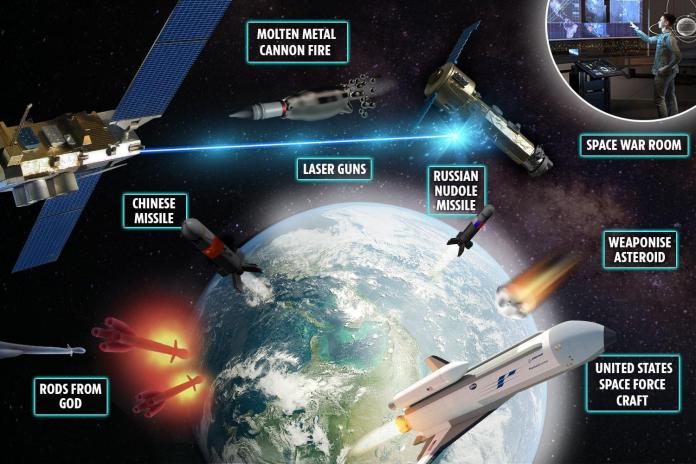
As the combatant command responsible for military operations in outer space, U.S. Space Command is closely tracking military moves by China and Russia.
China is rapidly expanding space-based intelligence, reconnaissance and surveillance capabilities, and building a “range of counterspace weapons from reversible jamming all the way up to kinetic hit-to-kill direct-ascent and co-orbital” anti-satellite weapons, Whiting said.
Russia, meanwhile, “continues to invest in counterspace weapons,” Whiting said. “Russia appears more and more to be relying on asymmetric capabilities like space, cyber and nuclear.”
2027 Deadline
U.S. Space Command is focused on maximizing combat readiness by 2027.
“All of us at U.S. Space Command are laser-focused on improving all of our existing forces and capabilities, so that we can stitch them together seamlessly when called upon,” Whiting said.
U.S. Space Command also intends to draw on commercial space technology.
“Our commercial industry will deliver innovative state-of-the-art capabilities,” Whiting said. “We have to modernize our legacy systems, ensure they all work together seamlessly and deliver new capabilities by 2027 to counter the threats that we now see.”
Beyond 2027
At the same time, U.S. Space Command is eager to adopt technology that is likely to pay off in the longer term.
“It’s time to bring dynamic space operations and on-orbit logistics and infrastructure to the space domain,” Whiting said. “Sustained space maneuver will change how we operate, opening up new tactics, techniques, procedures and operating concepts, and allowing operations until the mission is complete, not until the fuel we launched with runs out.”
With an eye toward future conflict, U.S. Space Command also is expanding its reliance on modeling and simulation.
Whiting announced that Space Command’s Capability Assessment and Validation Environment, a modeling and simulation laboratory known as CAVE, has achieved minimum viable capability.
CAVE “enables us to perform analysis on warfighting, on plans, on campaigning,” Whiting said. Space Command will rely on CAVE to help plan “operations for a war that’s never happened and a war we don’t want to happen. We’ll also use it to figure out our combatant command requirements and gain insights into multi-domain joint-warfighting concepts.”
1 This Month

29 Jan. Thursday 7-8 p.m. Webinar – World’s Largest Nuclear Station in Port Hope, ON?


31st January – Challenging the War Machine – a DECLASSIFIED UK SUMMIT



Website of the Week
Now until to February 10, 2026 Radioactive waste storage in France: the debate is finally open! How to participate?
-
Archives
- January 2026 (246)
- December 2025 (358)
- November 2025 (359)
- October 2025 (376)
- September 2025 (258)
- August 2025 (319)
- July 2025 (230)
- June 2025 (348)
- May 2025 (261)
- April 2025 (305)
- March 2025 (319)
- February 2025 (234)
-
Categories
- 1
- 1 NUCLEAR ISSUES
- business and costs
- climate change
- culture and arts
- ENERGY
- environment
- health
- history
- indigenous issues
- Legal
- marketing of nuclear
- media
- opposition to nuclear
- PERSONAL STORIES
- politics
- politics international
- Religion and ethics
- safety
- secrets,lies and civil liberties
- spinbuster
- technology
- Uranium
- wastes
- weapons and war
- Women
- 2 WORLD
- ACTION
- AFRICA
- Atrocities
- AUSTRALIA
- Christina's notes
- Christina's themes
- culture and arts
- Events
- Fuk 2022
- Fuk 2023
- Fukushima 2017
- Fukushima 2018
- fukushima 2019
- Fukushima 2020
- Fukushima 2021
- general
- global warming
- Humour (God we need it)
- Nuclear
- RARE EARTHS
- Reference
- resources – print
- Resources -audiovicual
- Weekly Newsletter
- World
- World Nuclear
- YouTube
-
RSS
Entries RSS
Comments RSS
 nuclear-news