About the Flame computer virus
 Flame FAQ: All you need to know about the virus http://www.washingtonpost.com/blogs/blogpost/post/flame-faq-all-you-need-to-know-about-the-virus/2012/06/20/gJQAAlrTqV_blog.html By Benjamin Gottlieb
What is the Flame computer virus?
Flame is a sophisticated type of malware — short for malicious software — capable of infecting myriad computer networks for the purpose of gathering sensitive data. Once a network is infected by Flame, the virus can relay back massive amounts of information through a computer’s facilities. How does it work? Continue reading
Cyberweapons usher in the new arms race
Atomic scientists compare cyberwar to development of nuclear bomb Cyberbombs are the new atom bombs. Fox News, 15 June 12, The Bulletin of the Atomic Scientists warned Friday that the race to build and deploy cyberweapons — secret programs only recently discovered by security researchers, the extent of which is not yet fully known — closely resembles the race to build the first nuclear weapons.
“The parallels with the invention and first use of atomic bombs on Hiroshima and Nagasaki are eerie,” wrote Kennette Benedict  , the Bulletin’s executive director. The Bulletin of the Atomic Scientists was established in 1945 by scientists, engineers, and other experts who had created the atomic bomb as part of the Manhattan Project.
Its scientists also keep track of the doomsday clock, which warns of nuclear annihilation. Continue reading
Drones to monitor Japan’s ionising radiation.
Japan to develop drones to monitor radiation http://www.brisbanetimes.com.au/technology/sci-tech/japan-to-develop-drones-to-monitor-radiation-20120613-208zs.html#ixzz1xnWor9LB June 13, 2012 Japan’s atomic energy authority and the country’s space agency has announced a joint project to develop a drone to measure radioactivity in the environment after last year’s nuclear disaster. Japan has been forced to invent or improve systems for measuring radioactive contamination Continue reading
UK’s Thorpe nuclear reprocessing plant not economically viable
Extending Thorp’s life would require investment “well in excess of £1bn”, the NDA said, including the construction of £600m of storage tanks for the highly-radioactive “liquor” that is produced by reprocessing.
 “It would be very expensive to carry on much longer,” said Bill Hamilton, head of stakeholder relations at the NDA. “If there was a market out there, there would be a reason to invest, but there is no major appetite.”
Cumbria’s reprocessing plant to close Financial Times -8 June 12 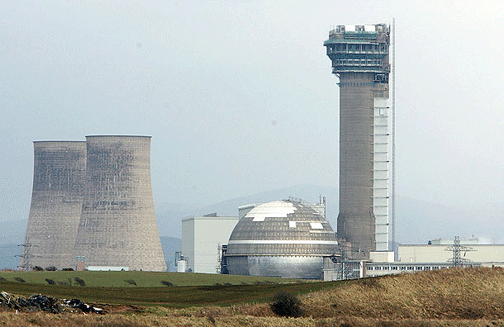
 By Rebecca Bream One of the more problematic facilities in the UK nuclear industry, the Thorp reprocessing plant at Sellafield in Cumbria, is set to close, reflecting a worldwide drop in demand for its services.
The Nuclear Decommissioning Authority, which is responsible for cleaning up the UK’s nuclear reactor sites and dealing with radioactive waste, said on Thursday that Thorp would close in 2018 when its existing reprocessing contracts end. Continue reading
UK’s nuclear reprocessing plant to close
Sellafield’s Thorp plant to close, The Independent, ALAN JONES , EMILY BEAMENT 07 JUNE 2012 A nuclear reprocessing site which has been in operation for 20 years is to close in 2018 after current contracts are completed, it was confirmed today.
The Thermal Oxide Reprocessing Plant (Thorp) at Sellafield in Cumbria,
… was commissioned in the early 1990s…. The NDA said in a statement that the closure decision was confirmed after it completed a strategic review of the options for the management of oxide fuels.
It added: “Oxide fuels include the remaining overseas-derived spent fuels that are being stored at Sellafield pending reprocessing in Thorp and also the spent fuels coming from the UK’s fleet of AGR (advanced gas-cooled reactors) power stations owned and operated by
EDF Energy….. Other decommissioning and reprocessing facilities and waste treatment plants on the Sellafield site remain in operation.
USA designed Stuxnet, but now itself vulnerable to cyber attack

 More cyber attacks for the US in Stuxnet fallout, IT News, By Juha Saarinen on Jun 3, 2012 Anti-virus industry spectacularly failed. Political analysts have forecast potential consequences for the United States after confirmation emerged of its involvement in the creation of the Stuxnet malware that attacked Iranian uranium enrichment facilities.
The New York Times piece released last week revealed direct involvement by US President Barack Obama in ordering the creation and spread of the malware to the Iranian facilities, which largely succeeded before the virus was discovered outside of the country.
But the United States, seen as one of the most vulnerable countries to “cyber-attacks” due to its heavy reliance on computers, could become highly prone to similar attacks in future as retaliation to its actions. Continue reading
Japan – 37 tons of deadly plutonium, and planning to produce more
 Other countries, including the United States, have scaled back the separation of plutonium because it is a proliferation concern and is more expensive than other alternatives, including long-term storage of spent fuel.
Fuel reprocessing remains unreliable and it is questionable whether it is a viable way of reducing Japan’s massive amounts of spent fuel rods
Japan’s plutonium stockpile — most of which is stored in France and Britain — has swelled despite Tokyo’s promise to international regulators not to produce a plutonium surplus.

 Japan to make more plutonium despite big stockpile, Fox News June 01, 2012 Associated Press TOKYO – Last year’s tsunami disaster in Japan clouded the nation’s nuclear future, idled its reactors and rendered its huge stockpile of plutonium useless for now. So, the industry’s plan to produce even more has raised a red flag.
Nuclear industry officials say they hope to start producing a half-ton of plutonium within months, in addition to the more than 35 tons Japan already has stored around the world. That’s even though all the reactors that might use it are either inoperable or offline while the country rethinks its nuclear policy after the tsunami-generated Fukushima crisis. Continue reading
USA devised Stuxnet computer worm to attack Iran’s nukes, says new book
 Obama ‘gave full backing to Stuxnet attack on Iran’ http://www.newscientist.com/blogs/onepercent/2012/06/obama-gave-full-backing-to-stu.html 1 June 2012 When George W Bush handed over the presidential reins to Barack Obama in 2008, he asked that the incoming man continue running what he regarded as two of his administration’s most promising security programs: the remotely-piloted drone war against Al Qaeda in Afghanistan – and the development of a cyberweapon nicknamed ‘the bug’, aimed at destroying Iran’s nascent nuclear capability.
Obama agreed – but we have now come to know that bug by another name: Stuxnet.
This revelation is at the heart of an apparently impeccably-sourced book due to be  published in the US on 5 June. In Confront and Conceal: Obama’s Secret Wars and Surprising Use of American Power, author David Sanger alleges that Stuxnet, which eventually wrecked hundreds of uranium centrifuges in Iran in 2010, was created by cyberweapons experts at the US National Security Agency in collaboration with ‘Unit 8200’, a cyber operation of Israeli intelligence. Continue reading
Iowa wise to stop dead a plan for Small Modular Nuclear reactors
“The still substantial economic, technical and regulatory uncertainties surrounding Small Modular Reactors make their future role as a competitive, safe, clean electricity source only speculative, and given the track record of nuclear power there are reasons for pessimism.”
Experts: Nuclear Power Industry Woes Spreading Across Nation From Florida To Iowa Market Watch WASHINGTON, May 23, 2012 /PRNewswire via COMTEX/ -“…….Steven Falck, senior policy advocate, Environmental Law and Policy Center, Iowa, said: “Common sense prevailed in Iowa to stop the advance financing of a small modular reactor. Continue reading
New devices to detect ionising radiation
Firms say new gear visually detects radiation hot spots, Japan Times, 18 May 12, A number of companies have started marketing equipment and devices that enable inspectors to visually detect radiation hot spots.
The devices are expected to be a great help to municipalities and construction companies engaged in decontamination work in areas affected by the nuclear crisis at Tokyo Electric Power Co.’s Fukushima No. 1 power plant.
Hitachi Consumer Electronics Co. has developed a camera that can detect gamma rays emitted by radioactive substances 10 or more meters away. The box-shaped device, which weighs 16.8 kg and measures 34 cm in all dimensions, is highly portable, the company says.
It detects three kinds of radioactive material — cesium-134, cesium-137 and iodine-131…..
http://www.japantimes.co.jp/text/nn20120518b1.html
Offline nuclear reactors still dangerous, need constant cooling
 News Navigator: What danger is still posed by offline nuclear reactors? Answers by Taku Nishikawa, Science & Environment News Department The Mainichi, 8 May 12, As of May 5, all nuclear reactors in Japan were offline. The Mainichi answers common questions readers may have about the safety and dangers of offline nuclear plants.
Question: With the reactors offline, has the danger of nuclear accidents disappeared?
Answer: The danger is likely less than while the reactors are running, but it still exists. Nuclear plants make power by turning turbines with the heat from the chained fission of Uranium-235 in nuclear fuel.
This chained fission is stopped in an offline reactor, but fuel rods continue to release “decay heat” as various unstable nuclei created during the reactors’ operation until now naturally break down. This decay heat has to continually be removed.
Q: What will happen if it is not removed? Continue reading
Small Modular Nuclear Reactors (SMR’s) – last forlorn hope of the nuclear industry
There just isn’t any proof that small reactors are going to be any more economic than larger ones…. it’s all about hype and hope
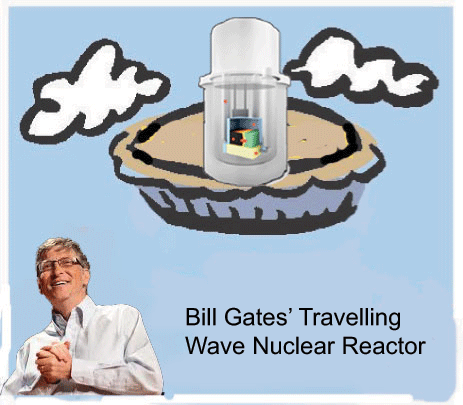 Small nuclear reactors generate hype, questions about cost STL Today 29 April 12, “…..Ameren Missouri and Westinghouse Electric Co. announced plans to pursue a $452 million federal subsidy to advance development of small modular reactors that could be built alongside the utility’s much larger Callaway nuclear plant near Fulton, Mo.
While some utilities are still pursuing full-scale plants, there is a parallel push for smaller reactors that could be easier for utilities to finance and minimize sticker shock for regulators and consumers.
But despite a lower total cost, there’s no evidence yet that tiny fission factories would be able to produce electricity at a competitive cost in an era of abundant, cheap natural gas. Continue reading
Fukishima’s radioactive wastes and the failure of nuclear reprocessing
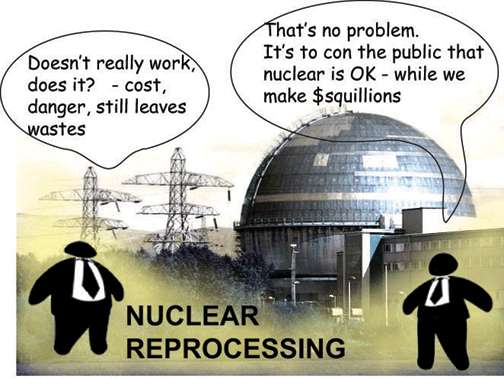 The main reason why there is so much spent fuel at the Da-Ichi site is that the plan to send it off for nuclear recycling has collapsed.
This scheme is based on long discredited assumptions of …. a new generation of “fast” reactors
nearly all of the spent fuel at the Da-Ichi containing some of the largest concentrations of radioactivity on the planet will remain indefinitely in vulnerable pools.
The Fukushima Nuclear Disaster Is Far From Over HUFFINGTON POST, Robert Alvarez, Senior Scholar, Institute for Policy Studies, 22 April 12,“……Last week, Tokyo Electric Power Company (TEPCO) revealed plans to remove 2,274 spent fuel assemblies from the damaged reactors that will probably take at least a decade to accomplish. The first priority will be removal of the contents in Pool No. 4. This pool is structurally damaged and contains about 10 times more cesium-137 than released at Chernobyl. Continue reading
Smart grids – we’d be dumb not to use them
Clever energy: why smart grids matter. The Green Piece. 17 April 2012. Smart grids-they’ve been in the news a lot lately and their importance is ever growing. The UK, like countries around the world, is seeking to increase the share that renewable sources play in its energy mix, while also striving for cleaner forms of transport such as electric
vehicles.
As a result, smart grids are set to play an important role in how we manage these changes to our energy generation and use. With increasing reliance on intermittent sources of power such as wind and solar, and increased demand on electricity supplies through the use of battery-powered cars, it is going to become ever more important to properly manage our energy use.
According to a new report from IDC Energy smart grid spending will increase 17.4 per cent globally between 2010-2015; with overall spending set to reach close to $46.4billion in 2015. What is a smart grid? Continue reading
Rapid increase in brachytherapy for breast cancer, but is this wise?
 “The most plausible explanation for our data is that women treated with brachytherapy were at increased risk of having a recurrence of cancer in their breast”
A large federally funded study is trying to clarify the risks and benefits of brachytherapy for breast cancer. But the results won’t be out for years.
 includes audio. Wider Use Of Breast Cancer Radiation Technique Raises Concern http://www.npr.org/blogs health/2012/04/09/150088892/wider-use-of-breast-cancer-radiation-technique-raises-concern?ps=sh_stcathdl “…..there’s an intense debate under way about whether the approach is being used too widely before there’s clear evidence it’s as effective as the traditional approach. Continue reading
1 This Month



19 November – Webinar – The Reality of Reprocessing
Time: 11:00 AM Pacific Time (US & Canada) / 2:00 PM Eastern / 7:00 PM UK / 8:00 PM CET
Register for the Zoom Event Here



Shut down the radiation-damaged Heysham nuclear reactors now
To see nuclear-related stories in greater depth and intensity – go to https://nuclearinformation.wordpress.com

Say No to NASA’s Reckless Nuclear Reactor on the Moon
Say No to NASA’s Reckless Nuclear Reactor on the Moon
-
Archives
- November 2026 (44)
- October 2026 (302)
- September 2026 (339)
- August 2026 (330)
- July 2026 (355)
- June 2026 (287)
- May 2026 (306)
- April 2026 (356)
- March 2026 (251)
- February 2026 (267)
- January 2026 (308)
- December 2025 (358)
-
Categories
- 1
- 1 NUCLEAR ISSUES
- business and costs
- climate change
- culture and arts
- ENERGY
- environment
- health
- history
- indigenous issues
- Legal
- marketing of nuclear
- media
- opposition to nuclear
- PERSONAL STORIES
- politics
- politics international
- Religion and ethics
- safety
- secrets,lies and civil liberties
- spinbuster
- technology
- Uranium
- wastes
- weapons and war
- Women
- 2 WORLD
- ACTION
- AFRICA
- Atrocities
- AUSTRALIA
- Christina's notes
- Christina's themes
- culture and arts
- Events
- Fuk 2022
- Fuk 2023
- Fukushima 2017
- Fukushima 2018
- fukushima 2019
- Fukushima 2020
- Fukushima 2021
- general
- global warming
- Humour (God we need it)
- Nuclear
- RARE EARTHS
- Reference
- resources – print
- Resources -audiovicual
- Weekly Newsletter
- World
- World Nuclear
- YouTube
-
RSS
Entries RSS
Comments RSS

