Does SMR Stand for Spending Money Recklessly?
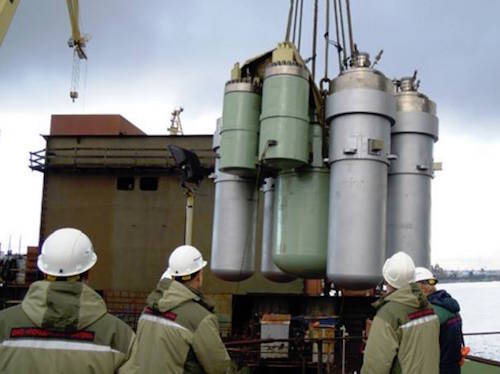
March 23, 2026, Susan O’Donnell, M.V. Ramana, https://www.theenergymix.com/does-smr-stand-for-spending-money-recklessly/
What did Canadians get for the $4.5 billion in public funding spent on small modular nuclear reactor (SMR) activities? Our new report assessing SMR development in Canada found the results underwhelming, to say the least.
Published in 2018, A Call to Action: A Canadian Roadmap for Small Modular Reactors recommended that the federal government fund SMRs and undertake other support measures. The report’s first “expected result” was that “one or more SMR demonstration [projects would be] constructed and in operation by 2026.” Our report in this milestone year covers not only this expected result, but also what the federal government has provided in funding for SMRs in Canada.
For many years, the “Micro Modular Reactor” (MMR) proposed for the Chalk River nuclear site in Ontario was to be this first demonstration. Back in 2019, the project proponents applied to the Canadian Nuclear Safety Commission (CNSC) to prepare the site for construction.
Fast forward to 2024: instead of the reactor built and being prepared to go into service, CNSC announced it had “paused all work” on the MMR project. Later that year, the company leading the project, Ultra Safe Nuclear Corporation, filed for bankruptcy protection in the United States, leaving unpaid debts of more than $16 million. That total included $641,307 to the CNSC and lesser amounts to dozens of Canadian small businesses.
In 2018, the New Brunswick government lured two start-up SMR companies into the province from the U.S. and the United Kingdom—ARC and Moltex—giving each $5 million and help to apply for funding from federal taxpayers. The SMR strategy called for two “advanced” reactor designs, which were not cooled with water, to be built at NB Power’s Point Lepreau nuclear site. Both designs have serious problems that have been documented extensively (for example, in the Bulletin of the Atomic Scientists) .
Over the next five years, the federal government handed over more than $97 million to develop the two SMR designs in New Brunswick, and the provincial government added more than $31 million to the project. Yet in late 2025, New Brunswick’s Energy Minister said the government would no longer wait for the ARC and Moltex designs because the province could not take on the risk of first-of-a-kind reactors. The millions of dollars in subsidies are essentially a write-off, funding highly paid positions at these companies at the public expense.
Of the 10 SMR designs in Canada since 2018, only one is in development. Most of the public subsidy money for SMRs—$4.025 billion—has been spent developing this reactor design, the BWRX-300, to be built at the Darlington nuclear site on Lake Ontario. As of early 2026, workers are digging a deep shaft for the reactor vessel. Sometime this summer, we can expect to see concrete being poured into the ground.
Four billion dollars is a lot of money, but nowhere near enough to pay for the four BWRX-300 reactors planned for the site. Even the first BWRX-300 reactor is expected to cost more—$6.1 billion—and the whole project will run at least $20.9 billion. It final bill could come in far higher, since the vast majority of nuclear power projects have historically overrun initial cost estimates.
The high costs for the SMR compare poorly with other options for electricity generation. For example, estimates by Australia’s Commonwealth Scientific and Industrial Research Organisation (CSIRO) show that each unit of electrical energy from SMRs would be far more expensive that a corresponding unit from solar and wind power plants, even when the cost of storage technologies and other means of accounting for renewable energy’s variability are included.
CSIRO has been undertaking an annual cost estimate in collaboration with the Australian Energy Market Operator and its reports involve extensive consultation with various stakeholders. The research agency’s analysis is informing an active debate under way in Australia to determine if the country should embark on nuclear energy. There is no corresponding effort at rigorously computing the costs of different kinds of generating energy from different technologies by any official research agencies in Canada.
Overall, the report’s analysis found little interest in SMRs among banks and other sources of private capital. When measured in terms of their ability to generate power, SMRs are more expensive than big reactors. Given the high costs, the report suggests that exporting significant quantities of SMRs from Canada is only a slim possibility.
Susan O’Donnell and M.V. Ramana are authors of the report on SMRs in Canada. O’Donnell is Adjunct Research Professor and lead investigator of the CEDAR project at St. Thomas University in Fredericton. Ramana is Professor; Simons Chair in Disarmament, Global and Human Security; and Director pro tem of the School of Public Policy and Global Affairs at the University of British Columbia in Vancouver.
Inside the Dirty, Dystopian World of AI Data Centers
The race to power AI is already remaking the physical world
The Atlanic By Matteo Wong, Photographs by Landon Speers, April 2026
s we drove through southwest Memphis, KeShaun Pearson told me to keep my window down—our destination was best tasted, not viewed. Along the way, we passed an abandoned coal plant to our right, then an active power plant to our left, equipped with enormous natural-gas turbines. Pearson, who directs the nonprofit Memphis Community Against Pollution, was bringing me to his hometown’s latest industrial megaproject.
Already, the air smelled of soot, gasoline, and asphalt. Then I felt a tickle sliding up my nostrils and down into my throat, like I was getting a cold.
This is Colossus: a data center that Musk’s artificial-intelligence company, xAI, is using as a training ground for Grok, one of the world’s most advanced generative-AI models. Training these models takes a staggering amount of energy; if run at full strength for a year, Colossus would use as much electricity as 200,000 American homes. When fully operational, Musk has written on X, this facility and two other xAI data centers nearby will require nearly two gigawatts of power. Annually, those facilities could consume roughly twice as much electricity as the city of Seattle.
To get Colossus up and running fast, xAI built its own power plant, setting up as many as 35 natural-gas turbines—railcar-size engines that can be major sources of smog—according to imagery obtained by the Southern Environmental Law Center. Pearson coughed as we drove by the facility. The scratch in my throat worsened, and I rolled up my window. As we approached, I heard the rumble of cranes and trucks, and then from behind a patch of trees emerged a forest of electrical towers. Finally, I saw it—a white-walled hangar, bigger than a dozen football fields, where Elon Musk intends to build a god.
To get Colossus up and running fast, xAI built its own power plant, setting up as many as 35 natural-gas turbines—railcar-size engines that can be major sources of smog—according to imagery obtained by the Southern Environmental Law Center. Pearson coughed as we drove by the facility. The scratch in my throat worsened, and I rolled up my window.
xAI’s rivals are all building similarly large data centers to develop their most powerful generative-AI models; a metropolis’s worth of electricity will surge through facilities that occupy a few city blocks. These companies have primarily made their chatbots “smarter” not by writing niftier code but by making them bigger: ramming more data through more powerful computer chips that use more electricity. OpenAI has announced plans for facilities requiring more than 30 gigawatts of power in total—more than the largest recorded demand for all of New England. Since ChatGPT’s launch, in November 2022, the capital expenditures of Amazon, Microsoft, Meta, and Google have exceeded $600 billion, and much of that spending has gone toward data centers—more, even after adjusting for inflation, than the government spent to build the entire interstate-highway system. “These are the largest single points of consumption of electricity in history,” Jesse Jenkins, a climate modeler at Princeton, told me……………………………………………………………………….(Subscribers only) https://www.theatlantic.com/magazine/2026/04/ai-data-centers-energy-demands/686064/
Next-gen nuclear has a chicken-and-egg problem
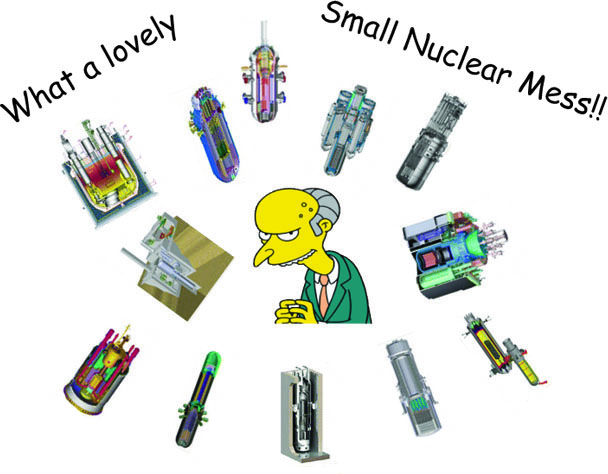
A new report suggests that advanced reactor companies face a difficult path to success — and that the U.S. would be better off narrowing in on fewer designs.
By Alexander C. Kaufman, 20 March 2026, https://www.canarymedia.com/articles/nuclear/scaling-construction-supply-chain-challenges
Nuclear energy developers have historically operated by a simple principle: Go big.
Reactors cost a lot of money to build, so the logic has been that it’s easier to recoup that investment if the project produces more electricity. Of late, a new generation of companies has made waves by bucking that conventional wisdom and instead aiming to build smaller reactors that can be made cheaper through bulk orders and mass production.
But with few advanced reactors built to date, that argument remains theoretical — and a new report shared exclusively with Canary Media suggests the path to proving it out is harder than many in the industry acknowledge.
It’s a chicken-and-egg situation. Next-gen nuclear startups must establish supplies of rare and legally sensitive types of fuel while also competing for a small pool of skilled workers and a limited output of valves, pumps, heat exchangers, and other equipment. Manufacturers are hesitant to ramp up production without a clear signal that advanced reactors will pan out. Investors, in turn, are leery of reactors meant for mass production that rely on unprepared supply chains.
That’s the core takeaway from the new analysis by the Nuclear Scaling Initiative, a campaign by the nonprofits Clean Air Task Force, the EFI Foundation, and the Nuclear Threat Initiative. The Nuclear Scaling Initiative launched in 2024 and aims to promote fleet-scale construction of reactors in a bid to start bringing at least 50 gigawatts of atomic power capacity online worldwide every year at some point in the 2030s.
The study, conducted by the nuclear consultancy Solestiss, highlights two paths it says are promising for the industry: either sticking to proven designs or simplifying supply chains to tap into the traditional nuclear business’ existing materials and know-how.
It comes as the Trump administration pumps billions of dollars into advanced reactors while also courting developers of more conventional large-scale reactors — and amid a high-stakes debate over which approach is best.
Earlier this month, the Bill Gates-backed TerraPower won the Nuclear Regulatory Commission’s approval to begin construction on the country’s first commercial plant with sodium-cooled fast reactors in Wyoming. In December, the decommissioner-turned-developer Holtec International won a $400 million Department of Energy grant to build its first 300-megawatt small modular reactors in Michigan, using a pressurized-water-cooled design. The DOE awarded another $400 million grant to help American-Japanese joint venture GE Vernova Hitachi Nuclear Energy build its first 300-megawatt SMR in Tennessee, based on a traditional boiling water design.
The Trump administration, meanwhile, is trying to get developers to commit to building more AP1000s — the flagship large-scale reactor from Westinghouse Electric Co. The only two nuclear reactors designed and constructed in the U.S. this century used the Westinghouse design. (A third came online in 2016 but first started construction in 1973.)
The variety of designs racing to become the nation’s fourth new reactor in decades calls into question the feasibility of rapidly scaling up production of any one model.
“We can do any one of these first projects all at once. But can we sustain a build-out of TerraPower, GE, Westinghouse, and Holtec? All the ones that are just moving forward right now? The answer to that is not yet,” said Dillon Allen, president of the advisory services division at Solestiss, who started his career working on nuclear propulsion in the U.S. Navy before moving into the utility business. “Once you’re building four to eight AP1000s and a handful of SMRs of other sizes, you start to run into smaller component bottlenecks.”
Those bottlenecks would worsen if microreactor companies succeed in their objective of securing dozens and dozens of orders for their designs.
“While small reactors have been tried before, mass-manufactured small reactors have not,” Aalo Atomics CEO Matt Loszak, whose 10-megawatt reactors also use liquid sodium as a coolant, wrote in a post on X this week. “Small is more expensive than large, if you only make one reactor. But if you make 1000s per year, small could be cheaper than large. This is what Aalo is setting out to prove.”
One major obstacle to this plan is transportation. To build something and send it without prior testing is no problem, since a reactor that hasn’t been fired up and irradiated “is just a big hunk of metal,” Allen said. But once it’s irradiated, it’s subject to different considerations.
National laboratory researchers have started to discuss a framework for a U.S.-wide transportation network with established logistics and safety standards, the report notes, but no such rules have yet materialized.
The biggest barrier for next-gen nuclear, however, is likely to be the fuel supply. Some small reactor companies have been proactive here. Aalo, for example, has opted for the most commonly used reactor fuel on the planet, low-enriched uranium, so it can tap into the existing global supply chain.
But most advanced nuclear startups are banking on what’s known as fourth-generation reactors. These designs rely on coolants other than water and mostly aim to use one of two types of fuel: high-assay low-enriched uranium, commonly known as HALEU (pronounced HAY–loo), or tristructural isotropic fuel, for which HALEU is typically an input. Tristructural isotropic fuel is also known as TRISO.
HALEU, which firms like TerraPower and microreactor developer Oklo plan to use, is only really produced at a commercial scale by Russian and Chinese state-owned companies. Efforts to bring new centrifuges online in America are slow-going. Meanwhile, the TRISO fuel that startups such as Valar Atomics or Radiant need requires not only securing HALEU but also separating that enriched uranium into ceramic-coated pellets the size of poppy seeds. Manufacturers admit that TRISO may never cost less than low-enriched uranium.
The complications don’t stop there. Because HALEU is up to four times more enriched than traditional reactor fuel, it comes with stricter regulations. On the Nuclear Regulatory Commission’s security-clearance scale of category one, which allows for handling normal reactor fuel, to three, which includes military-grade enrichment levels, facilities with HALEU need to be rated at a category two. No such facilities exist in the U.S. today, though the commission just issued its debut permit for one last month.
As for traditional fuel, the existing supply of low-enriched uranium falls short of what would be required to meet the U.S. goal of quadrupling the nation’s nuclear capacity to 400 gigawatts by 2050.
“The supply chain is pretty well suited to support a fleet of 100 operating reactors,” Allen said, referring to the 94 commercial reactors in service in the U.S. “But then you can have 150, then 180, and pretty soon 200 after that. If you double that demand on the LEU supply, it’s not just the enrichment” that’s a limiting factor.
It’s also, he said, the production of raw uranium and the facilities to carry out conversion, where purified uranium ore is turned into a gas, and deconversion, where it’s solidified once again.
Expanding these upstream operations may be challenging, but it isn’t impossible. In fact, Allen said he came away from writing the report with the impression that supply chains are more capable of scaling up than he previously thought. But his team’s work demonstrates the steep obstacles faced by the entire industry — not only advanced reactor firms — as it attempts to bolt into action following decades of anemic construction in America.
The biggest impression the research left on Allen, he said, is that the AP1000 has a good shot at becoming the next reactor built in the U.S. Its costs are more predictable — and thus easier to finance — thanks to the lessons learned during construction of the two units that came online at Southern Co.’s Alvin W. Vogtle Electric Generating Plant in central Georgia in 2023 and 2024.
“I’m more bullish on the AP1000 than I was when I started this effort,” he said. “I’m broadly bullish on the supply chain.”
The DOE is considering alternatives to the AP1000 to satisfy President Donald Trump’s order to facilitate construction on at least 10 large-scale reactors by the end of the decade. In response to the news that the administration held talks with its rivals, Westinghouse said the AP1000 is“the only construction-ready, gigawatt-scale, advanced modular reactor that is fully licensed and operating in the U.S.”
The U.S. ultimately should focus on designs it can scale up rather than spreading its efforts in many different directions, said Stephen Comello, the executive director of the Nuclear Scaling Initiative. At that point, nuclear power will become cheap enough to be “boring.”
“Once you start accumulating that knowledge from repetition, nuclear construction becomes boring — just like natural gas combined-cycle plants, just like all other complex megaprojects and energy infrastructure that’s out there,” he said.
There’s little doubt that the AP1000 has a well-established supply chain and data showing it runs well, he said.
The question is, “Can you do it in a repeatable, cost-effective way? That’s where the risk lies with the AP1000,” Comello said. “It runs, the technology is great. But we have to prove to investors that we can overcome the execution risk. But here’s the thing: All reactors share execution risk to some extent. Others have a technology risk because they are still not proven at scale.”
The Depletion of Judgement Capital
21 March 2026 Roger Chao, Australian Independent Media
We have been asking the wrong question about artificial intelligence. For several years now, the dominant public debate has revolved around a familiar set of concerns. Will AI take jobs? Will it spread misinformation? Will it amplify bias? Will it concentrate power? Will it make certain professions obsolete? These are serious questions, but they are not the deepest question.
The central danger of AI is that, if deployed carelessly and at scale, it may erode the human and institutional capacities on which sound judgment depends. Once those capacities weaken, authority loses legitimacy and self-government becomes harder to trust.
The issue is what people and institutions may cease to be able to do if they increasingly rely on AI to perform the slow work of interpretation and deliberation through which mature judgment is built. AI is an extractive technology. And what it threatens to extract is judgment capital.
Judgment capital is the accumulated human and institutional capacity to perceive reality clearly and interpret ambiguity without flinching. It is what allows people to weigh competing considerations and justify decisions in public. It also includes the willingness to bear responsibility for those decisions, and to train successors who can renew those capacities across generations. It is among the most important forms of wealth any society, profession, or civilisation possesses. Yet unlike financial capital, it rarely appears on a balance sheet. It is invisible until it begins to fail…………………………………………………………………………………………………………………………………………………………………………
The question is whether AI will be deployed in ways that augment and deepen human judgment, or in ways that quietly mine it. That distinction may determine more than the future of individual organisations. It may shape the future of institutions and professions. It may also shape democratic life, perhaps civilisation itself. We usually recognise civilisation by what can be seen from the outside – its laws, its institutions, the visible machinery of common life. But beneath all of these lies a more fundamental inheritance – the capacity of human beings to judge.
Civilisation is held together by disciplined human judgment when the ground is unclear and interests collide. In law, legitimacy rests on people who can tell evidence from assertion and principle from preference. Markets depend on decision-makers who can read signals sceptically and know where responsibility lies. Democratic life depends on the same thing. So do universities and the professions – people able to face reality and weigh competing goods, then answer for what they decide……………………………………………………………………………………………………………………………………………………………………………………………………………………………………………………………………………… https://theaimn.net/the-depletion-of-judgment-capital/
UK bets big on homegrown fusion and quantum — can it lead the world?
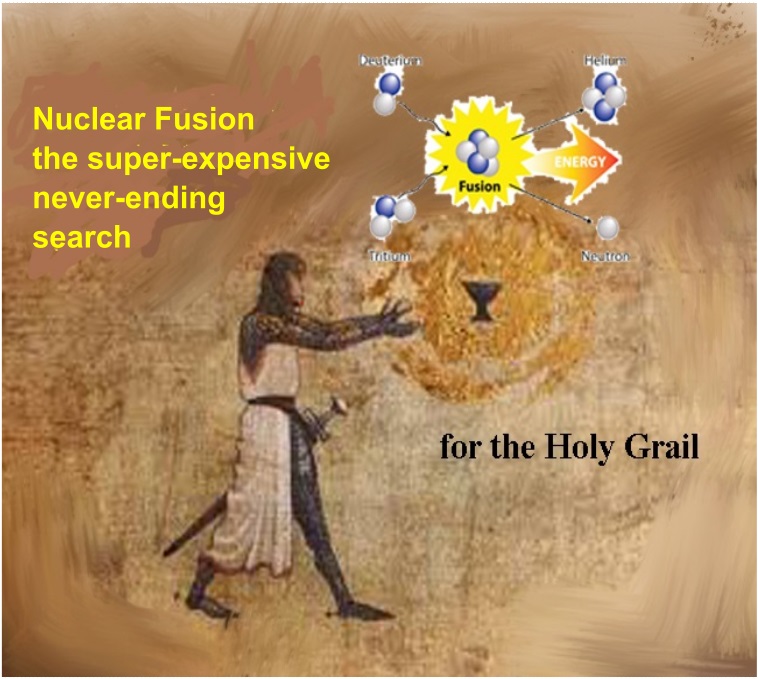
19 March 2026, Nature, by David Adam
UK government announces multibillion-pound science investments — but what impact will this have on the global race in these fields?
Britain is making an ambitious technological bet. It is investing £2 billion (US$2.66 billion) in quantum-computing development and £2.5 billion in nuclear-fusion energy in a bid to secure technological and energy independence and nurture homegrown scientific talent.
The changes — announced on 16 March as part of an ongoing national science and technology strategy — have been broadly welcomed by the research community. And officials say that the money and increased strategic focus will help to push the United Kingdom to the forefront of both fields globally.
However, some point out that long-term commitments and more money will be needed if Britain is to push past its competitors. Others lament that the funding is not so much a mark of heightened ambition as necessary merely to maintain aspects of the nation’s current scientific capabilities given the disruptive effects Brexit had on its science funding and access to joint European projects.
For example, the United Kingdom withdrew from ITER, a long-running international effort to build an experimental fusion reactor in France.
“You have to go back to Brexit to understand what’s going on now,” says Tony Roulstone, a nuclear-power researcher at the University of Cambridge, UK.
Boost to quantum computing
Officials say that the quantum investment will lay the foundations for the United Kingdom to become the first country to roll out the large-scale use of quantum computers and be the fastest to adopt artificial intelligence in the G7 group of nations.
The £2-billion quantum package aims to support research, infrastructure, skills and commercialization, including funding for hardware and software development, expanded facilities and support for start-ups and industry partnerships.
The government has also pledged to buy and use successful systems as they emerge — echoing the procurement mechanisms used by the United States to promote the development of satellite navigation systems and stealth aircraft.
But Britain faces stiff competition globally. Large-scale quantum computing — systems that offer consistent, practical advantages across multiple sectors — is not yet possible.
Word’s first fusion?
The £2.5-billion fusion investment is similarly ambitious — although how it will compete on a global stage is also unclear. The funds include plans to build a prototype fusion-energy plant called Spherical Tokamak for Energy Production (STEP) on the site of a former coal-fired power station in the centre of the United Kingdom. They also include £45 million for building the nation’s first AI supercomputer dedicated to accelerating fusion-energy research.
Researchers say that STEP is a ‘moonshot’ project, a high-risk initiative that might not prove successful but could still spark scientific breakthroughs. Its aim of producing significantly more power output than the total input — a key requirement for fusion energy — is extremely ambitious.
“It will build a lot of capacity in material science, in magnet engineering, all sorts of things,” says Richard Jones, an experimental physicist who retired last year from the University of Manchester, UK……………………………………………….. https://www.nature.com/articles/d41586-026-00877-2
Is a Mass Revolt Against Technocracy Starting to Happen?

The Technocratic Takeover: Alive and Well
Let’s be clear about what’s happening here: robots and AI are taking over our culture, our politics, our way of life, and our relationships to each other as social beings.
They’re becoming the advance guard for a new and unprecedented technocratic form of governance—the apotheosis of Western scientific materialism. Further, these new forms of governance are being carried out by unelected Big Tech overlords operating behind the scenes and in the backrooms of a mediated society well out of public view
Will there be a popular uprising against AI and the vast AI-based robotic machinery that’s taking over both the means of production and the means of information?
Tom Valovic, Feb 14, 2026, Common Dreams, https://www.commondreams.org/opinion/revolt-against-big-tech
Ted Gioia has a popular Substack called “The Honest Broker.” Although, as an author, his books tend to focus on music and popular culture, he writes eloquently about a wide range of topics and offers insightful commentary about the global forced march toward technocratic lifestyle and governance that we’re now immersed in. In one posting, “25 Propositions about the New Romanticism,” Gioia posits that there is a new movement afoot mimicking (or, better, reflecting) the Romantic Period of the 18th century. This movement coincided with the first industrial revolution and, as a counterweight to that trend, saw a great shift toward impulses to re-enchant the world via poetry, art, and music, and reconnecting to nature. Gioia writes:
More than two years ago, I predicted the rise of a New Romanticism—a movement to counter the intense rationalization and expanding technological control of society. Rationalist and algorithmic models were dominating every sphere of life at that midpoint in the Industrial Revolution—and people started resisting the forces of progress. Companies grew more powerful, promising productivity and prosperity. But Blake called them “dark Satanic mills” and Luddites started burning down factories—a drastic and futile step, almost the equivalent of throwing away your smartphone.
Even as science and technology produced amazing results, dysfunctional behaviors sprang up everywhere. The pathbreaking literary works from the late 1700s reveal the dark side of the pervasive techno-optimism—Goethe’s novel about Werther’s suicide, the Marquis de Sade’s nasty stories, and all those gloomy Gothic novels. What happened to the Enlightenment?
As the new century dawned, the creative class (as we would call it today) increasingly attacked rationalist currents that had somehow morphed into violent, intrusive forces in their lives—an 180° shift in the culture. For Blake and others, the name Newton became a term of abuse. Artists, especially poets and musicians, took the lead in this revolt. They celebrated human feeling and emotional attachments—embracing them as more trustworthy, more flexible, more desirable than technology, profits, and cold calculation.
He goes on to posit that we’re poised for a return to that modality and points out that the notion of a New Romanticism has spread “like a wildfire,” citing influencers such as Ross Barkan, Santiago Ramos, and Kate Alexandra. Gioia sees what he describes as cultural trends at the leading edge of this transformation citing popular TV series such as Pluribus and Yellowstone. But is this really happening or has Gioia just stumbled on a pocket of cultural resistance and pushback against technocracy that’s primarily a pocket of unified self-expression rather than something representing deep and substantive cultural and societal change?
The Technocratic Takeover: Alive and Well
Let’s be clear about what’s happening here: robots and AI are taking over our culture, our politics, our way of life, and our relationships to each other as social beings. They’re becoming the advance guard for a new and unprecedented technocratic form of governance—the apotheosis of Western scientific materialism. Further, these new forms of governance are being carried out by unelected Big Tech overlords operating behind the scenes and in the backrooms of a mediated society well out of public view.
The tech takeover is such a massive appropriation of our social, political, and cultural life—and indeed our own biological substrate—that stoic acceptance might not be the way to go this time around.
I certainly hope that Gioia is right about a major cultural rejection of technocracy. There are indeed hopeful signs. The fundamental human values that make societies work and cohere have gotten steadily shunted aside by the technocracy takeover of culture and education—essentially becoming a new value system. This behind-the-scenes power shift has been amplified and compounded by an over-emphasis in education on STEM, corporate modalities, neo-Darwinian utilitarianism, and the continuing erosion of the humanities that began decades ago. So yes, without a doubt, we need to get “back to the garden” and return to a wider and deeper set of the kind of core values that ultimately hold societies together. Without positive shared values, societies become rudderless and fall into a kind of benighted chaos. All we need to do is look around.
All of that said, in his Substack post, Gioia missed an important component of this transition—if indeed it is coming to pass (and we can only hope). Throwing off technocracy and emerging from our involuntary digital cages also means reconnecting with the natural world, a fundamental human relationship that’s now increasingly mediated by digital devices. The need for this reconnection, this existential about-face, was a key aspect of the romanticism of the 18th century. In literature, for example, the Romantic poets were rather obsessed with it as poet Robert Bly points out in his stellar book News of the Universe (I highly recommend it.) In allowing our daily life to be shifted into an increasingly claustrophobic and self-reinforcing digital cage, we have abandoned not only our connection to the natural world but also to each other. Connecting to nature also lets us tap into the mystery of the universe, which despite human folly remains nonetheless fully intact even if absurdly rationalized by scientific reductionism. Carl Sagan and Albert Einstein were both scientists who could appreciate this. We need more like them.
The Robot Wars: No Longer Sci-Fi
In the 80s and 90s, science fiction movies and literature commonly offered themes of “robot wars” where humans were pitted against the dominance of an ugly dystopian society. Will this be our future courtesy of Elon Musk and his cohorts? Or, alternatively, will there be a mass uprising against AI and the vast AI-based robotic machinery that’s taking over both the means of production and the means of information? We humans are known for our adaptability and stoicism in difficult situations such as world wars and major disasters. That stoicism and sense of “accepting what can’t be changed” seems to be part of our psychological and perhaps even biological makeup. But the tech takeover is such a massive appropriation of our social, political, and cultural life—and indeed our own biological substrate—that stoic acceptance might not be the way to go this time around.
In the next few years, it most certainly will have finally dawned on the mass of humanity, especially in advanced Western nations, that something is badly amiss. Many will realize at a visceral level that their everyday lives are trapped in a claustrophobia-inducing closed-circuit technocratic system and control grid that robs them of autonomy and freedom while purporting to do the opposite.
I totally agree that a new romanticism is a very necessary sea change at this strange time in human history but am perhaps a bit less optimistic that it will happen—at least over the next few years. The forces of technocracy seem too powerful at the moment to be countered because so many of the necessities of everyday life depend on our attachment to this digital realm. This includes paying bills, financial maintenance, government-related necessities such as getting a license renewed, and so much more. Further, technological dependency keeps getting ratcheted up by the self-appointed masters of the universe represented by Big Tech’s unchallenged and ever-growing power. That said, I sincerely hope I’m wrong about this and Gioia is right. Time will tell.
Small modular reactors – smaller regulation?

After several failed attempts at a “nuclear renaissance” since the mid 1970s, the current hype about nuclear power plants with low capacity, also referred to as “small modular reactors”, is yet another attempt to save an aging industry in decline
Böll EU Brief 01/2026
By Alexander Wimmers, Christian von Hirschhausen & Björn Steigerwald
This Böll EU Brief critically assesses the prospects of small modular reactors (SMRs) in Europe. It finds that most SMR designs remain in early development, lack regulatory approval in the EU, and are unlikely to deliver electricity at scale before 2050. Technical, economic and political challenges – including high costs, unresolved waste management, proliferation risks and heterogeneous designs – undermine claims of rapid deployment and cost reductions. The authors conclude that prioritising renewables, storage and electrification is a more credible pathway for timely decarbonisation.
Key findings:
- The term small modular reactors (SMR) is not standardised, and SMR concepts are not small. Instead, the capacities of many designs are comparable with nuclear reactors built in the 20th century.
- Technically, most SMR concepts do not differ from existing light water reactors. Current assessments show that their reduced capacity does not automatically reduce the risk of accidents. Instead, their heterogenous nature requires specialised infrastructure for fuel production and waste management that does not exist today. SMR concepts designed to operate on high-assay uranium could even increase nuclear proliferation risks.
- There is a hype around SMRs – this is problematic because of the many open questions and risks. The heterogenity of SMR concepts hinders mass production and consequently, envisioned cost reductions. Most SMR concepts remain in early design stages and are yet to receive regulatory approval or begin corresponding processes in the EU. Once these steps have concluded, additional site licensing, construction and comissioning steps would still be required. Electricity production from SMRs is unlikely to materialise at scale in the near term and remains decades away. If it occurs, it will come at very high costs.
The hopes associated with the development of SMRs became evident when in June 2025, the European Commission presented its 8th Nuclear Illustrative Programme (PINC). It called for investments exceeding EUR 240 billion until 2050 to achieve the Member States’ nuclear expansion plans.
According to the PINC, so-called SMR concepts ‘could serve as complement to renewable energy’ by ‘[helping to] achieve an integrated, secure, stable, high-efficient and resilient energy system’ via flexibility provision, co-located electricity and heat generation, and hydrogen production.1
Furthermore, claims of new SMR capacity ranging from 17 to 53 gigawatt (GWe) were made, in addition to ambitious claims of high-capacity reactor new build and lifetime extensions of existing plants.
This would potentially double the EU’s current capacity of 86.6 GWe to 125 GWe or even 197 GWe by 2050 (Figure 1) – despite aging fleets, limited active construction and decade-long lead times for new nuclear projects.
The ongoing enthusiasm regarding the expansion of data centres for cloud computing and AI is further fueling this hype around SMRs that they could ‘provide a source of baseload low-emissions electricity’.2
These optimistic claims stand in contrast with actual industry potential and various risks associated with nuclear power plants. At the time of writing in February 2026, no SMR concept had been granted a construction licence in the EU. The only SMR concept with ongoing construction activities outside of Russia and China, the GE-Hitachi BWRX-300 reactor in Canada, is yet to begin pouring concrete for the reactor housing, and all other concepts remain in early development stages, thus owing proof of the PINC’s claims and placing their potential useage many years into the future.3 Taken together, this raises critical questions about the realistic role of SMRs in the EU’s strategy. We therefore provide a brief overview of the current state of SMR concept development and highlight some of the remaining challenges.
What are SMRs?.
Originally, the term SMR was used in the industry to designate small- and medium-sized reactors. This covered the “natural” development from research reactors and demonstrators with low power (< 100 MWe) to larger units of several hundred megawatts (MWe) to exploit economies of scale.
The term SMR was re-coined by then-US Secretary of Energy Steven Chu in 2010 in an attempt to relaunch a previously failed “renaissance” in the early 2000s. Therefore, today, the term SMR usally incorporates reactors with less than 300 MWe of electrical capacity, although some concepts exceed this arbitrary limit by quite a margin, for example, the Rolls-Royce SMR with 470 MWe.4
The collective term SMR can incorporate a vast array of different reactor technologies, such as light-water reactors, high-temperature-gas-cooled reactors, reactors operating on fast neutron spectra, molten salt reactors, and more. Each of these technologies implies the use of technology-specific supply chains and fuel-cycle arrangements, as well as distinct approaches to decommissioning and waste management. Further, most concepts remain in early development stages.4-6
How close to market introduction are SMRs?
Most concepts are in early development or licensing stages. For example, the NuScale VOYGR was granted a standard design approval by the US Nuclear Regulatory Commission (NRC) in May 2025 and is undergoing a licensing process in Romania. While a final investment decision (FID) was reportedly made in February 2026, there is currently no ongoing construction project. The Rolls-Royce SMR has reached the third and final step of the UK’s Office for Nuclear Regulation Generic Design Assessment (GDA). But it is still waiting for site licence approval to begin construction. Several other designs are in various stages of the GDA process. The Argentinian CAREM reactor, under construction since 2014, was abandoned in 2024, and a new design is being sought, albeit with an uncertain timeframe. The French NUWARD concept is undergoing a redesign process aimed at increasing its electrical output to around 400 MWe, requiring licensing process restarts. Outside Russia and China, whose individual SMR prototypes are operating, with, from what is known, meager performance indicators,7 the Canadian project at Darlington, Ontario, represents the most advanced case, although only one of four originally planned GEH BWRX-300 units received a construction licence in May 2025.
Figure 2 [0n original]shows some of the SMR concepts currently under development and their respective furthest regulatory process steps. Ongoing activities in respective countries are indicated by the coloured lines, such as the Joint Early Review (JER) for the NUWARD reactor. However, the JER is a non-binding communication platform between several European regulators and indicates no actual licensing activities. To conclude, most SMR concepts are yet to gain regulatory approval in the EU or even begin actual licensing processes. They are thus far away from a broad market introduction.
Major challenges for SMRs in Europe
Technical challenges
Broadly speaking, the proposed SMR concepts do not represent technological breakthroughs, but the smaller size is intended to provide increased safety performance. While some concepts bank on innovative passive safety systems, like the NuScale VOYGR, the LWR technology itself does not fundamentally differ from today’s fleets, bringing similar or potentially additional safety-related risks. Regarding other reactor technologies, like high-temperature reactors or fast neutron reactors, experience with now closed prototypes is dominated by emergency shutdowns, as well as safety- and cost-related project cancellations.5
Recent expert assessments conclude that it is not possible to state that SMR concepts generally achieve a higher safety level than high-capacity reactors. These assessments indicate that, contrary to some developer claims, emergency planning zones are likely to remain necessary for SMR concepts. Furthermore, radioactive release potentials have not been fully assessed, and the implications of modulary installed reactors at a single site remain uncertain.5
A central promise of SMR concepts is the potential to benefit from industrial learning effects through serial production and standardisation. However, this presupposes the repeated deployment of a limited number of standardised designs. The current SMR landscape is instead characterised by heterogeneous reactor concepts based on different technologies and design philosophies.
The International Atomic Energy Agency (IAEA)’s Advanced Reactor Information System lists more than 70 SMR designs, of which, according to the IAEA itself, many neither fulfil modularity requirements nor are expected to reach commercial readiness.
Implementing various nuclear technologies would require suitable and customised supply chains due to heterogeneous fuel requirements, for example, different enrichment levels for specialised fuel. Different reactor concepts would also generate different types of waste that require specialised infrastructure.5,8
There are also open questions regarding the suitability of SMRs for decarbonised industrial heat provision. Most industrial processes require temperature levels that can be easily provided by industrial scale heat pumps, or direct electrification. But only high-temperature reactor concepts could theoretically provide the heat of up to 1000°C required for steel and glass manufacturing for which low-carbon alternatives exist today–and most SMR concepts are light-water based.
Economic challenges
Economically, SMRs are unlikely to become competitive with existing gigawatt-sized reactors. The economic case of SMRs centers on scalability and modularisation. In contrast to consumer technologies, like smartphones or computer chips, nuclear reactors are capital-intensive assets whose costs are dominated by construction, regulatory compliance and financing rather than component manufacturing.
Calculations indicate that hundreds to thousands of reactors of the same design, vendor and capacity would need to be manufactured to achieve cost levels comparable to those of current high-capacity light-water reactors;9 SMRs will thus be more costly than large reactors per unit of electricity.7 The substantial cost reduction assumptions are often included in energy modelling scenarios that result in substantial nuclear capacity expansion expectations.
In practice, current deployment trajectories provide little evidence that such manufacturing volumes are achievable. The BWRX-300 project in Canada is estimated to cost at least CAD 7.7 bn (EUR 4.76 bn or 15,870 EUR/kW) for a single reactor as of May 2025. There is substantial doubt on whether localised manufacturing facilities (and thus reduced costs) will materialise.7 Historically, the nuclear industry has tended to increase rather than reduce costs.10 Figure 3 shows current levelised costs of electricity (LCOE) for existing technologies, and the mean projected LCOE for light-water SMR concepts. These figures do not include additional costs for infrastructure expansion caused by grid integration of SMRs or flexibility measures for fluctuating renewables, or costs for nuclear waste storage.
Furthermore, the economic case for heat supply from SMRs remains weak.11 Recent studies indicate that SMRs would, at sufficiently low costs, still induce higher overall system costs than lower-cost alternatives capable of delivering the same service today, such as large-scale heat pumps or direct electrification.12
Finally, integrated energy system modelling suggests that SMR concepts will have to deliver on their cost promises to become relevant in a future European energy system.11 This is consistent with earlier research demonstrating the poor economic performance of nuclear new build in competitive electricity markets and studies highlighting the lack of economic necessity for baseload generation in mostly renewable power systems.10
Political challenges
The heterogeneity of SMR concepts will complicate their implementation in Europe, given the necessity of tailored regulation for different technologies and use cases, for example, emergency planning zones. Such requirements complicate siting decisions and regulatory coordination across Member States and could also hinder data centre or industrial co-siting as well as district heating.
Further challenges lie in the necessity of specialised waste management infrastructure. Given the lack of adequate waste repositories for Europe’s existing spent fuel from currently operating reactors, this issue must be resolved before implementing SMR fleets with heterogeneous waste streams.13 This raises questions of legitimacy, public acceptance and institutional credibility. Uncertainty regarding future disposal concepts, responsibilities, and long-term commitments constitutes a governance risk, particulary where repository strategies were developed for existing (light-water) fleets.
Additionally, specialised fuel requirements, such as designs relying on high-assay low-enriched uranium (HALEU) fuel, could increase proliferation risks and raise concerns about fuel supply security and international oversight.14
Many EU policymakers currently perceive SMRs as an additional promising option that could contribute to the EU’s emission reduction targets. However, even under very optimistic assumptions for the speed of market introduction of SMRs, they will likely not contribute to these political objectives before the 2050 climate neutrality benchmark. Thus, betting on near-term SMR deployment for decarbonisation binds limited political and administrative resources at EU and Member State level that could be better applied to existing cost-competitive technologies, namely, renewables and storage, to supply clean and affordable energy instead of waiting for a technology whose feasibility remains highly uncertain.4
Conclusions and policy recommendations
After several failed attempts at a “nuclear renaissance” since the mid 1970s, the current hype about nuclear power plants with low capacity, also referred to as “small modular reactors”, is yet another attempt to save an aging industry in decline.
Based on current evidence and development status, SMRs are unlikely to provide a meaningful contribution to European energy system decarbonisation within a relevant timeframe. Instead, continued attention towards their potential benefits will decellerate the necessary transformation of the energy system even further. New designs do not fundamentally mitigate the inherent challenges associated with nuclear power, namely waste management, proliferation risks and high cost.
Furthermore, the heterogeneous nature of proposed SMR concepts creates regulatory, industrial and governmental complexities that increase the uncertainty regarding future cost reductions and large-scale deployment, while requiring the implementation of customised infrastructure for fuel supply, waste management and so on. Consequently, current capacity projections based on SMR deployment are highly unlikely. The EU should not wait until first SMR concept prototypes are built and – perhaps eventually – brought to scale..
EU policymakers should instead prioritise policy frameworks that accelerate the deployment of mature, cost-effective low-carbon technologies. This includes facilitating efficient grid utilisation, strengthening system flexibility and demand-side management, supporting decentralised renewable generation, and advancing electricifation of energy demand. Given binding climate targets and rising electricity demand, decarbonisation efforts must deliver measurable results within the current decade. In this context, relying on technologies that remain at early stages of development and require substantial scaling before delivering system-level impacts at very high costs entails signficant strategic risk and should be avoided.
Endnotes…………………………………………………………………………..
“Selling a dream”: the French nuclear start-up that ran aground

Naarea’s unravelling provides cautionary tale for dozens of small reactor
developers racing to bring designs to fruition.
In December 2023 the founder of French nuclear start-up Naarea gathered employees and investors
in Paris for a black-tie dinner and dance at which it revealed a large
model of the mini reactor it hoped would revolutionise the world of energy.
The gala capped an ebullient year for the group after it scored €10mn in
public subsidies and encapsulated the verve of its chief executive Jean-Luc
Alexandre, according to people who know him and a person who attended the
party.
Then came a cash squeeze and a brutal unravelling. The six-year-old
company, which had pledged to start rolling out reactors by the start of
the next decade, is now a step away from a court-managed liquidation.
The downfall of Naarea — “Nuclear Abundant Affordable Resourceful Energy
for All” — comes as more than 100 nuclear ventures around the world
race to bring their designs for small reactors to fruition. Yet the
technical challenges of some projects, and the huge funding many will need
to withstand years without revenues, are becoming increasingly apparent.
Earlier experiments with microreactors were largely abandoned in the 1970s
as the atomic energy industry sought economies of scale by moving towards
much bigger plants, including in France, home to Europe’s biggest fleet of
57 nuclear power stations.
FT 26th Feb 2026, https://www.ft.com/content/a782639d-1ac1-4252-a7ef-e8052925bbce
SpaceX and Blue Origin abruptly shift priorities amid US Golden Dome push

Thursday, Feb 19, 2026, https://www.defensenews.com/space/2026/02/19/spacex-and-blue-origin-abruptly-shift-priorities-amid-us-golden-dome-push/?utm_source=sailthru&utm_medium=email&utm_campaign=dfn-space
Just a year ago, SpaceX majority owner Elon Musk dismissed going to the moon as a “distraction.” Now, SpaceX and Jeff Bezos’ Blue Origin are racing toward it, and the Pentagon may be the reason why.
Within weeks of each other, the two largest U.S. commercial space companies abruptly shifted their priorities toward lunar development. The moves came as the Department of Defense accelerates plans for a next-generation missile shield known as the Golden Dome, raising questions about whether America’s return to the moon is as much about defense as it is exploration.
In early February, SpaceX announced it would redirect plans for a future city on Mars to establishing one on the moon. The reversal was striking, as Musk previously insisted Mars was the only meaningful destination.
Just days prior to this announcement, Blue Origin quietly paused its New Shepard tourism program for at least two years to increase focus on lunar development, framing the move as part of the nation’s goal of returning to the moon.
However, the timing may suggest a more strategic approach.
In December 2025, the White House issued an executive order calling for a missile shield prototype by 2028, critical for the Golden Dome initiative.
This order also set a timeline for an American lunar return by 2028, with elements of a permanent moon presence targeted for 2030.
Defense officials, such as Space Force Vice Chief of Operations Gen. Shawn Bratton, have emphasized that commercial partnerships will be essential to achieving these goals.
SpaceX is reportedly in line for a $2 billion Pentagon contract to build a 600-satellite constellation supporting Golden Dome tracking and targeting, though the award has not been formally confirmed.
The project would rely on low Earth orbit satellites capable of rapid, near-real-time missile detection. Such systems improve coverage, but remain vulnerable to anti-satellite attacks from adversaries.
The company’s shift to the moon could change that equation. Lunar-based infrastructure would sit far beyond the reach of most anti-satellite capabilities, offering more resilient communications and sensing layers.
In this scenario, the moon could become a strategic “high ground,” which could offer the Pentagon a more durable and far-reaching view for missile detection and surveillance.
Just 15 days before Blue Origin announced its shift toward the moon, the Missile Defense Agency added the company to its $151 billion SHIELD contract, a Pentagon program allowing firms to compete for Golden Dome-related work.
While no specific awards are guaranteed, the timing is noteworthy. Blue Origin is now putting lunar logistics front and center, pausing the New Shepard program to focus resources on that effort.
The company’s Blue Ring vehicle is designed for orbital maneuvering and refueling, capabilities that could one day support sensor deployment and flexible positioning beyond Earth’s orbit, where they are less vulnerable to attack and can provide broader global coverage.
Meanwhile, its Blue Moon MK1 and MK2 landers can deliver multi-ton payloads to the lunar surface, which could be enough to deploy communications systems, sensors or other infrastructure to remote locations, potentially supporting Golden Dome-like operations.
Taken together, these developments could suggest a broader transformation in the strategic landscape of space, one that increasingly intersects with homeland defense and global security.
Algorithms and AI have turned Gaza into a laboratory of death.

The Lavender case thus exposes the consolidation of a digital necropolitics. Algorithms decide who lives and who dies; corporations provide the infrastructure; intelligence services operate in the shadows; and technocratic language seeks to normalise the unacceptable. Gaza bleeds so that this model may be tested, refined, and then exported.
by Sayid Marcos Tenorio, The Middle East Monitor , 18 Feb 26
The revelations by +972 Magazine and Local Call have exposed the darkest core of the contemporary war in Gaza, in which genocide is carried out not only by bombs and missiles, but by data, algorithms and global digital platforms.
The Israeli artificial intelligence system known as Lavender has confirmed what the Palestinian resistance, Lebanon, and Iran have denounced for years: Technology as an organic part of the Zionist war machine, functioning as an instrument of surveillance, target selection, and mass extermination.
The liberal rhetoric of “digital privacy” collapses in the face of the facts. Applications such as WhatsApp insist on the promise of end-to-end encryption, but conceal what is essential, in which metadata are worth more than messages.
“Location, contact networks, patterns of communication, and group affiliations make it possible to map the social life of an entire people. In Gaza, these data have been incorporated into military systems that turn human relationships into algorithmic criteria for death.“
Lavender assessed virtually the entire population of the Gaza Strip, comprising more than 2.3 million people, assigning automated “risk scores”. Merely being in a WhatsApp group, maintaining frequent contact with someone already marked, or displaying digital patterns considered “suspicious” was enough to be placed on execution lists.
Human supervision was deliberately minimal, reduced to seconds, with conscious acceptance of high error rates. Entire families were killed in their homes, treated as “acceptable collateral damage” in an algorithmic equation that normalises massacre.
This is not a technical deviation. It is a policy of extermination. International Humanitarian Law explicitly prohibits indiscriminate attacks and requires distinction between civilians and combatants.
Systems that automate lethal decisions, pre-accepting the death of innocents, constitute crimes against humanity and reinforce the characterisation of genocide as a technologically organised and rationalised process.
The machinery that sustains this model is global. Twenty-first century espionage no longer depends on intercepting messages, but on controlling digital ecosystems.
Private platforms function as permanent sensors of planetary social life, feeding databases accessible to intelligence services such as the Mossad and the CIA, through formal cooperation, legal pressure or the exploitation of vulnerabilities. This represents a structural convergence between big tech companies, the military-industrial complex and the imperial security apparatus.
“Palestine is the laboratory. In an official statement released during the war, Hamas stated on its Telegram channel that “the occupier has turned every modern tool into a weapon against the Palestinian people, using technology to justify the killing of civilians and to conceal genocide behind technical terms”
free translation). The denunciation is clear: Israel is not waging a war against combatants, but against Palestinian existence itself, now mediated by algorithms.
Lebanese Hezbollah has warned that this model forms part of a regional hybrid war, combining digital surveillance, technological sabotage, and selective attacks.
After the attack that occurred in Lebanon in 2024, involving the coordinated explosion of pagers used by its members, Hezbollah declared through institutional channels that “the enemy has turned civilian devices into tools of assassination, proving that its war knows no ethical or human limits” (free translation). The episode revealed a new level in the weaponisation of everyday technology.
This pattern is not isolated. International investigations have already demonstrated the recurring use of military spyware against journalists, activists, and political leaders in various countries, often through smartphones widely available on the global market.
The message is unequivocal: every connected device is a potential instrument of surveillance, control, or death when inserted into the logic of imperial power……………..
The Lavender case thus exposes the consolidation of a digital necropolitics. Algorithms decide who lives and who dies; corporations provide the infrastructure; intelligence services operate in the shadows; and technocratic language seeks to normalise the unacceptable. Gaza bleeds so that this model may be tested, refined, and then exported.
Denouncing this machinery is a historic task. It is not merely a matter of solidarity with the Palestinian people, although that solidarity is urgent and non-negotiable.
It is about resisting a world in which data are worth more than lives, in which technology serves colonialism, and in which genocide is presented as an “algorithmic decision”. Today it is Gaza. Tomorrow, any people who dare to resist. https://www.middleeastmonitor.com/20260217-algorithms-and-ai-have-turned-gaza-into-a-laboratory-of-death/
Deep Fission Wins Fresh Investor Backing for Nuclear Reactor Burial

COMMENT – Like , it woudn’t flood or anything, would it?
Deep Fission wants to bury a small modular reactor a mile underground and scored $80 million in financing to help it get there.
February 17, 2026, Brian Boyle, https://www.thedailyupside.com/industries/energy/deep-fission-wants-to-bury-nuclear-reactors-deep-in-the-earth/
Instead of pumping oil out, the nuclear startup wants to bury a small modular reactor a mile underground. Last week, the company scored $80 million in new financing to help turn the long-discussed concept in the nuclear energy world into reality. And, yes, it’s yet another play at powering those energy-starved data centers.
Notes From the Underground
There are two key reasons to bury SMRs deep beneath the earth’s surface. The first is that, obviously, nuclear fission carries the risk of releasing radiation into the surrounding area, which makes a mile’s worth of earth, dirt and rocks the perfect natural containment system. The second reason is related to the first: It’s a lot cheaper to dig a (very deep) hole and drop an SMR down it than it is to build a whole nuclear facility around a surface-dwelling SMR.
That means Deep Fission’s SMRs might not just be safe, but also more rapidly deployed than their above-ground competitors. And it’s why big names have lined up to back the company in two massive financing rounds just months apart:
- Last week’s $80 million funding round featured participation from major backers, including Montrose Capital and EE Holdings, and is built around “a new strategic relationship” with Blue Owl Capital’s Real Assets platform, the company said in a statement.
- The cash infusion comes after the company secured a $30 million funding round in a go-public reverse merger (read: SPAC move) with Surfside Acquisition Inc., with plans to eventually list public shares on the OTCQB Venture Market, the lesser-known exchange for, fittingly, riskier investments. The merger occurred shortly after Deep Fission won a spot in the Department of Energy’s Nuclear Reactor Pilot Program to expedite the commercialization of nuclear energy in the US.
The Hole Truth: Most importantly, the fresh $80 million will be used to continue operations at the company’s pilot site in Parsons, Kansas, where it officially broke ground in December — and then, presumably, kept digging and digging and digging.
Small modular nuclear reactors for developing countries: Expectations and evidence Open Access
Friederike Friess , Maha Siddiqui , M V Ramana, PNAS Nexus, Volume 5, Issue 2, February 2026,
https://academic.oup.com/pnasnexus/article/5/2/pgag006/8419276
Abstract
Many developing countries have shown interest in acquiring nuclear power plants, particularly small modular reactors (SMRs). By analyzing presentations made by national representatives at International Atomic Energy Agency conferences, we identified 3 key expectations of SMRs expressed by many officials: that they generate electricity at low cost, that the design be demonstrated through operating experience elsewhere, and that there be potential for local manufacturing associated with the nuclear power project.
However, based on the available evidence regarding SMR designs, we demonstrated that these expectations are unlikely to be fulfilled.
SMRs do not benefit from economies of scale, unlike large nuclear power plants. Because electricity from large nuclear plants is expensive, SMRs will produce more costly power.
Second, it is unrealistic to expect that SMRs will qualify as proven technology in the near future because of the very limited number of SMRs currently in operation or under construction. The performance of currently operating SMRs has also been underwhelming.
Finally, the idea of local manufacturing conflicts with the proposed economic model of mass production. At the same time, the skilled local workforce needed to operate these reactors is not readily available in many newcomer countries.
Space-based missiles, killer robots key to U.S. effort to gain orbital dominance.
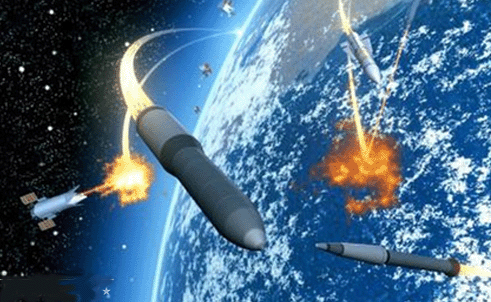
By Bill Gertz – The Washington Times – Wednesday, February 11, 2026
The U.S. Space Force is accelerating the deployment of counterspace weapons under a new Trump administration policy aimed at reasserting and ensuring American dominance over China and Russia in any potential orbital conflict.
The force is deploying three electronic satellite jammers and racing to match the more advanced space forces of China and Russia, which include arsenals of anti-satellite weapons.
Space Force Gen. B. Chance Saltzman, chief of space operations, said Defense Secretary Pete Hegseth recently set the goal for the U.S. military to dominate in space.
“And the Space Force was created to do just that,” Gen. Saltzman told The Washington Times. “The service has and will continue to invest in a full range of counterspace capabilities to deter conflict in space and to win decisively if called upon.
“Continuing to train and equip combat-credible Guardians is essential to maintaining our warfighting readiness,” he said.
Mr. Hegseth said in a speech to workers at the space company Blue Origin last week that the $25 billion being spent on the Golden Dome national missile and drone defense system would produce “cutting-edge, space-based capabilities which we are going to need.”……………….
“That is how we will establish total orbital supremacy,” he said.
Golden Dome systems are expected to support Space Force counterspace arms.
A Space Force spokeswoman declined to provide details on Gen. Saltzman’s plans for counterspace weapons, but at this point, the newest branch of the American military — the force was founded in 2019 under the first Trump administration — has only limited capabilities with counterspace systems. The force will be challenged to match enemy systems…………………….
Funding for counterspace weapons in the recently passed $890.6 billion defense authorization bill is relatively meager and does not appear to support a space dominance policy.
Procurement for counterspace weapons in the current fiscal year is $2 million, and the research, development, testing and evaluation budget for counterspace systems spending is $31.2 million, according to a funding chart in the defense authorization act.
Developing space weapons is a priority for the Pentagon because U.S. space systems, including high-altitude Global Positioning System satellites — used for GPS targeting and navigation in military operations, missile warning satellites and key imagery and communications systems — were not designed for conflict in space…………..
A Pentagon official said a presidential directive requires U.S. space superiority and therefore “American leadership in space is nonnegotiable.”…………………………..
“The Department of War has and will continue to invest in a full range of capabilities — kinetic, non-kinetic, reversible and irreversible — to restore deterrence and, if necessary, prevail in conflict.”………………………………………………
Charles Galbreath, a retired Space Force colonel, said Mr. Hegseth’s comments on space power dominance are “probably some of the most aggressive language I’ve heard ever, openly, about conflict in the space domain.”………………………………………………………..
The orbital playbook
Space Force plans for waging warfare in space are outlined in a March 2025 report, “United States Space Force Space Warfighting: A Framework for Planners.”
The report defined three main types of counterspace operations as control of space using both offensive and defensive action.
“Counterspace operations are conducted across the orbital, link and terrestrial segments of the space architecture,” the report said, creating effects aimed at “space superiority.”……………………
The combat will include “orbital warfare” using fires, movement and maneuver to control space.
Also used will be electromagnetic warfare to defeat enemy space and counterspace threats.
Cyberwarfare will be a major part of space combat, with strikes and other actions aimed at gaining control of space.
Offensive space combat will include orbital strike operations, pursuit and escort of satellites, standoff attacks, interdicting space communications links, and maneuvering killer satellites that can grab and crush enemy systems.
Orbital attacks will use “pursuit operations” with an attacking system maneuvering to an enemy spacecraft before firing weapons. Alternatively, the Space Force will use standoff operations — space-based or ground long-range missiles that attack without a nearby orbital rendezvous.
Space link interdiction will use electromagnetic or cybernetwork attacks……………………………………………
For electronic attacks, high-powered lasers and microwave weapons are being built, and some reports indicate that electromagnetic pulse arms could be used to damage satellite electronics without causing debris.
Emil Michael, undersecretary of defense for research and engineering, stated in a X post that the Pentagon has directed energy weapons………………………………………………………………………………..
U.S. policymakers must take urgent action to ensure the United States wins the new space race and retains the strategic high ground that has long underpinned our military and economic leadership, the panel said. https://www.washingtontimes.com/news/2026/feb/11/us-racing-build-space-weapons-counter-anti-satellite-power-china/?utm_source=Boomtrain&utm_medium=subscriber&utm_campaign=threat_status&utm_term=threat_status&utm_content=threat_status&bt_ee=wjQ2GCMecOIl6%2Ftk98uhjTa%2F2aWCScEubIvYIkRk66Y0v%2FpyHece2aahuYzGEgHT&bt_ts=1770914789113
US campaign puts case for disposal, not reprocessing, of used nuclear fuel
This article, from the the nuclear lobby’s propaganda voice – World Nuclear News – goes on later to push for nuclear reprocessing, anyway.
Reprocessing or not -it’s really becoming clear that new nuclear, and patched-up old nuclear reactors are not clean, safe, or economically viable.
WNN, 12 February 2026
The Nuclear Scaling Initiative’s Scale What Works campaign says that direct disposal of used nuclear fuel in the US is the “safest, most secure and least expensive pathway for the country” as nuclear energy capacity is expanded.
clear, straightforward direct disposal policies’ (Image: Posiva)
The initiative – which is a collaboration of the Clean Air Task Force, the EFI Foundation and the Nuclear Threat Initiative – aims to “build a new nuclear energy ecosystem that can quickly and economically scale to 50+ gigawatts of safe and secure nuclear energy globally per year by the 2030s”.
The Nuclear Scaling Initiative (NSI) Executive Director Steve Comello said: “Making smart fuel management choices today, that acknowledge that reprocessing technologies today are not economically viable and pose security and waste management risks, can drive grid reliability, innovation, and economic and national security for the United States and beyond.”
NSI, whose global advisory board is chaired by former US Secretary of State John Kerry, says that all forms of energy production produces waste, and says that in nuclear’s case, directly storing and “eventually disposing of intact spent fuel” underground “is a safe, straightforward process that uses existing expertise and infrastructure”.
Countries should learn from the reprocessing experience in the UK, Japan and France, NSI says, adding that its view is that reprocessing used fuel is “costly, complex and time-intensive, increasing energy prices for consumers and diverting resources from readily deployable technologies”.
Former Deputy Secretary of Defense and Under Secretary of Energy John Deutch said: “Reprocessing is not a reasonable option: it threatens security, is not cost-effective and will slow our ability to scale nuclear energy.”
Reprocessing of used fuel from commercial reactors has been prohibited in the USA since 1977, with all used fuel being treated as high-level waste………………………………………………………. https://www.world-nuclear-news.org/articles/us-campaign-puts-case-for-disposal-not-reprocessing-of-used-fuel
U.S. Tech Park in Israel May Have a Nuclear Power Plant
While President Trump has busted through a lot of international norms, and removed the U.S. from multilateral agreements like climate change, busting the bounds of the Nonproliferation Treaty would set a dangerous precedent that could be followed by similar actions by Russia and China
The fact that Israel has signed an MOU with the U.S. that could potentially involve it acquiring U.S. manufactured SMRs is a signal that if India can do it, so can Israel. Saudi Arabia will not be far behind in asking for the same deal should the Israeli industrial park agreement move forward beyond the MOU stage.
February 7, 2026 by djysrv, https://neutronbytes.com/2026/02/07/u-s-tech-park-in-israel-may-have-a-nuclear-power-plant/
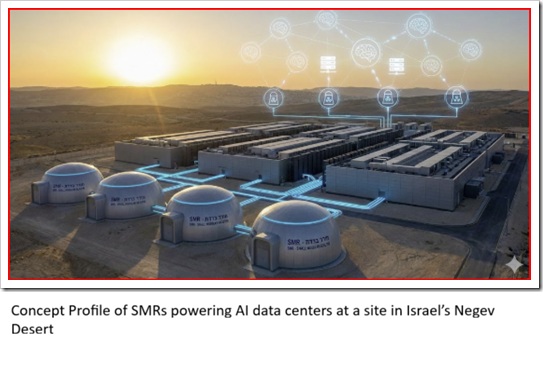
Israel signed an agreement with the U.S. on 01/16/26 to build an industrial park to produce advanced computer chips at a location in the Negev desert that would use a small modular nuclear reactor (SMR) to power the factory and nearby data centers also planned for this location.
Where things stand now, according to Israel news media, Israel and the US have inked an agreement to jointly build and operate a large technological park in Israel. The deal is part of a strategic cooperation agreement on AI signed in Jerusalem last month. (Israel government statement)
One of the surprising details to emerge from the discussions on the agreement relates to the energy infrastructure. The huge power demands of data centers and AI computer systems require a large, reliable 7/24/365 energy solution. As a result, the possibility appears to be kicking around of constructing one or more nuclear power plants, most likely SMRs, at the site.
The MOU, signed by the head of the National AI Directorate, Brig. Gen. (Res.) Erez Eskel, and the U.S. Under Secretary of State for Economic Affairs Jacob Helberg, reveals an ambitious plan to allocate 4,000 acres to the U.S. The park, which will be constructed in the Negev Desert or less likely in the Gaza Strip border area, and which will be called “Fort Foundry One”
Helberg travelled to Israel after signing similar agreements in Doha and Abu Dhabi. He said that Israel was an “anchor partner” in the effort, thanks to its technological ecosystem and its ability to produce “asymmetric results” in relation to its geographical size.
US Under Secretary of State for Economic Affairs, Jacob Helberg said, “With the launch of Pax Silica, the United States and Israel are uniting our innovation ecosystems to ensure the future is shaped by strong and sovereign allies leading in critical technologies like AI and robotics.”
Helberg comes to his role as a former lobbyist for Silicon Valley information technology firms and as a former executive for Google. One of his key interest areas has been addressing the national security risks posed to the U.S. by China. He wrote a book on the subject, The Wires of War: Technology and the Global Struggle for Power, (2021) calling for a stronger U.S. strategy against China’s technological ambition. According to the publisher’s book jacket, Helberg led Google’s global internal product policy efforts to combat disinformation and foreign interference in U.S. domestic affairs.
U.S. Thinks a Contractual Fig Leaf Can Cover the Absence off a 123 Agreement
Israel to date has no experience with civilian nuclear power plants used for electricity generation. The country has reportedly produced an unspecified number of nuclear weapons used as a deterrence factor when dealing with hostile neighbors like Iran. Also, Israel has not signed the Nuclear Nonproliferation Treaty due to policy of strategic ambiguity and its obvious reluctance to reveal the extent of its nuclear arsenal.
The official MOU for the Negev AI data center remains somewhat vague referring to a “high-intensity energy infrastructure” but it clearly is pointing to small modular reactors (50-300 MW). Due to the location in the extremely dry Negev desert, an advanced design, such as an HTGR, which does not require cooling water to operate, is likely to be chosen should the project reach a stage where a reactor design would be selected for this site.
The joint initiative is part of a broad international framework launched by the Trump administration called “Pax Silica“, a coalition of about twelve countries in technology, the aim of which is to secure supply chains of semiconductors and AI. Taiwan did not sign the agreement.
Israel joined the initiative in December 2025, and was the first country to sign a bilateral agreement with the U.S. in this framework. Among the other countries in the coalition are Qatar, the UAE, Australia, Greece, Japan, South Korea, Singapore, and United Kingdom.
The Heavy Lift Associated with Civilian Nuclear Power in Israel
Israel has abundant natural gas supplies to support private wire gas power generation for data centers. It doesn’t need small modular reactors to power them.
The geopolitical heavy lift that would be required for a civilian nuclear power plant in Israel would probably set off a similar request from Saudi Arabia for the same kind of deal.
The Saudi government has been stalled for years in its quest for US nuclear reactors due to its insistence on the right to uranium enrichment as part of a 123 Agreement with the U.S. The Saudi government sees enrichment as a deterrence signal to Iran over its nuclear program. If the U.S. gives a green light to Israel, through some kind of three bank policy pool shot, to build U.S. supplied civlian SMRs, without a 123 Agreement, the Saudis would likely ask for a similar deal.
While President Trump has busted through a lot of international norms, and removed the U.S. from multilateral agreements like climate change, busting the bounds of the Nonproliferation Treaty would set a dangerous precedent that could be followed by similar actions by Russia and China.
This would move the planet into dangerous territory. For this reason, consideration of a U.S. managed nuclear power plant in Israel may be too hot a potato for even Trump to toss over the transom. Bipartisan opposition in the Senate would be almost certain for a civilian nuclear reactor deal with Israel without a 123 agreement.
Israel does not have an agreement with the U.S. under Section 123 of the Atomic Energy act as such a move would require it to declare its nuclear infrastructure. The Israeli government has relied on strategic ambiguity about how many nuclear devices it has as a deterrence measure. The Israeli government is not going to give that up military advantage away to get small modular reactors to power data centers in a white collar industrial park.
Finally, the news release by the Israeli Prime Minister’s office about the U.S. deal may be one of a series of trial balloons the Israeli government has floated over the years about civilian nuclear power so it should be viewed with some skepticism for that point alone.
The U.S. plan apparently is to cover these issues with a contractual fig leaf that depends on a unique model in which the reactor operates under U.S. safety regulation and supervision, despite being located on Israeli territory. It’s a pretty thin leaf.
Watch What We Do Not What We Say
It is not lost on the Saudi and Israel governments that India enjoys a special relationship regarding recent developments that open the door to India for acquisition of civilian U.S. nuclear reactor technologies, without having a 123 Agreement, while these two nations are locked out these opportunities.
Where things get complicated is that the Saudi government has undoubtedly been watching how U.S. nuclear reactor firms are faring with India for some time. Recently, India opened the door to U.S. nuclear reactors by terminating its supplier liability law that acted very effectively as a trade barrier for U.S. firms.
Almost at the same time, the U.S. Department of Energy granted Holtec permission to export its 300 MW SMR to India. The authorization names three Indian companies – Larsen & Tubro (Mumbai), Tata Consulting Engineers (Mumbai) and the Company’s own subsidiary, Holtec Asia (Pune) – as eligible entities with whom Holtec can share necessary technical information to execute its SMR-300 program. Holtec also plans to build a factory in India to manufacture the small reactors. Westinghouse is expected to seek to enter the Indian nuclear market.
What the Saudi government sees is that U.S. policy towards India shows a remarkably different approach to a country which has declared it has a nuclear arsenal, has tested its nuclear weapons, and is not a party to the Nonproliferation Treaty. Further, India does not have a 123 agreement with the U.S. and has no immediate plans to seek one. Israel has likely come to the same point of view.
The fact that Israel has signed an MOU with the U.S. that could potentially involve it acquiring U.S. manufactured SMRs is a signal that if India can do it, so can Israel. Saudi Arabia will not be far behind in asking for the same deal should the Israeli industrial park agreement move forward beyond the MOU stage.
Saudi Plans for AI Data Centers Points to Nuclear Reactor to Power Them
The Saudi government’s ambitious plans and programs to transform the oil rich company into a regional powerhouse for artificial intelligence will require significant investments in electricity generation to power the AI data centers needed to carry out this effort.
According to a report in the New York Times, Saudi Arabia is investing $40 billion to become a dominant player for the use of AI in the Middle East. Data centers to support this program will require enormous amounts of electrical power to support the advanced semiconductors that process AI software, to power the data centers themselves, and to keep them cool in one of the hottest regions on the planet.
It follows that the Saudi government will coordinate its plans for a nuclear new build with its massive investments in AI. It is likely that sooner or later Saudi Arabia’s need to break ground on the first two reactors in anticipation of the need for power for its AI program and related data centers.
It may decide that building commercial nuclear power plants to power its AI program is more important than the geopolitical consideration of having access to nuclear technologies with or without a U.S. 123 Agreement. Given the U.S. course of actions with India, Saudi Arabia may ask for the same kind of deal thus bypassing the entire enrichment policy issue it has with the U.S.
The Saud government has a tender outstanding, which has been on hold for some time, to build two 1,400 MW PWR type reactors. It has also explored options for SMRs for data centers and to power desalination plants to provide potable water for general and industrial uses. A award for the two reactors could be the first order of business the Saudi government will seek to pursue in asking for the same deal the U.S. gave India.
1 This Month

of the week – Shut Down Drone Warfare!


Tell the Ukrainian Government to Drop Prosecution of Peace Activist Yurii Sheliazhenko

Petition to revoke the licensing of the Near Surface Nuclear Disposal Facility (NSDF) at Chalk River. https://www.ourcommons.ca/petitions/en/Petition/Details?Petition=e-7247
To see nuclear-related stories in greater depth and intensity – go to https://nuclearinformation.wordpress.com
-
Archives
- March 2026 (244)
- February 2026 (268)
- January 2026 (308)
- December 2025 (358)
- November 2025 (359)
- October 2025 (376)
- September 2025 (257)
- August 2025 (319)
- July 2025 (230)
- June 2025 (348)
- May 2025 (261)
- April 2025 (305)
-
Categories
- 1
- 1 NUCLEAR ISSUES
- business and costs
- climate change
- culture and arts
- ENERGY
- environment
- health
- history
- indigenous issues
- Legal
- marketing of nuclear
- media
- opposition to nuclear
- PERSONAL STORIES
- politics
- politics international
- Religion and ethics
- safety
- secrets,lies and civil liberties
- spinbuster
- technology
- Uranium
- wastes
- weapons and war
- Women
- 2 WORLD
- ACTION
- AFRICA
- Atrocities
- AUSTRALIA
- Christina's notes
- Christina's themes
- culture and arts
- Events
- Fuk 2022
- Fuk 2023
- Fukushima 2017
- Fukushima 2018
- fukushima 2019
- Fukushima 2020
- Fukushima 2021
- general
- global warming
- Humour (God we need it)
- Nuclear
- RARE EARTHS
- Reference
- resources – print
- Resources -audiovicual
- Weekly Newsletter
- World
- World Nuclear
- YouTube
-
RSS
Entries RSS
Comments RSS
 nuclear-news