Abe pushing idea that Fukushima nuclear disaster is ‘under control’, http://www.asahi.com/ajw/articles/AJ201906110001.htmlTHE ASAHI SHIMBUN, 10 June 19 Without special protection against radiation, Prime Minister Shinzo Abe stood on elevated ground about 100 meters from the three melted-down reactors at the Fukushima No. 1 nuclear power plant.
“I was finally able to see the view just wearing a normal suit without having to wear protective clothing and a mask (for radiation),” he said on April 14 after hearing explanations from Tokyo Electric Power Co. officials. “The decommissioning work has been making progress in earnest.”
An act of bravado, perhaps. But it was more likely one of the ways Abe and his government want to show that the Fukushima disaster is, as he famously said, “under control.”
Progress has been made, albeit slowly, for the monumental task of decommissioning TEPCO’s crippled nuclear plant.
But radiation levels in certain areas of the plant are still lethal with extended exposure. The problem of storing water contaminated in the reactors continues.
And only recently was TEPCO able to make contact with melted nuclear fuel in the reactors through a robot. The means to extract the fuel has yet to be decided.
However, the government keeps touting progress in the reconstruction effort, using evacuee statistics, which critics say are misleading, to underscore its message.
Abe’s previous visit to the nuclear plant was in September 2013.
“When I conducted an inspection five years ago, I was completely covered in protective gear,” he said at a meeting with decommissioning workers in April. “This time I was able to inspect wearing a normal suit.”
Officials in Abe’s circle acknowledged that they wanted to “appeal the progress of reconstruction” by letting the media cover the prime minister’s “unprotected” visit to the site.
His visit in a business suit was possible largely because the ground was covered in mortar and other materials that prevent the spread of radioactive substances, not because decommissioning work has lowered radiation levels as a whole.
The radiation level at the elevated inspection ground still exceeds 100 microsieverts per hour, making it dangerous for people who remain there for extended periods.
Abe’s inspection ended in six minutes.
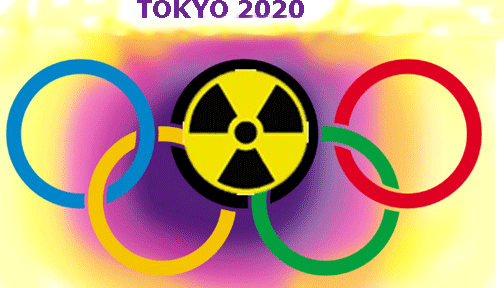
The prime minister raised eyebrows, particularly in Fukushima Prefecture, in 2013 when he gave a speech to promote Tokyo’s bid to host the 2020 Summer Olympics.
Concerning the Fukushima nuclear plant, he told International Olympic Committee members, “Let me assure you, the situation is under control.”
An hour before he inspected the plant in April, Abe attended the opening ceremony of the new government building of Okuma, one of the two towns that host the nuclear plant.
The ceremony followed the lifting of an evacuation order for part of the town on April 10.
“We were able to take a step forward in reconstruction,” Abe said.
The central government uses the number of evacuees to show the degree of progress in reconstruction work.
In April 2018, Abe said in the Diet that the lifting of evacuation orders has reduced the number of evacuees to one-third of the peak.
According to the Reconstruction Agency, the number of people who evacuated in and outside of Fukushima Prefecture, including those who were under no orders to leave, peaked at about 160,000. But the initial evacuation orders for 11 municipalities in Fukushima Prefecture have been gradually lifted, and the agency now puts the total number at about 40,000.
About 71,000 people were officially registered as residents of areas that were ordered to evacuate. Now, only about 11,000 people live in those zones.
This means that about 60,000 people have not returned to the homes where they were living before the nuclear accident unfolded in March 2011.
The gap of 20,000 can be attributed to how the agency classifies or declassifies evacuees.
NOT COUNTED AS EVACUEES
The Reconstruction Agency sent a notice in August 2014 to all prefectures that have counted the number of evacuees.
It defined “evacuees” as people who moved to different places because of the nuclear disaster and have the “will” to return to their original homes.
The notice also said that if it is difficult to perceive their “will,” they can be regarded as people who have ended their evacuation if they bought new homes or made arrangements for new accommodations.
Based on the notice, people in Fukushima Prefecture who have bought new homes during their evacuation or settled down in public restoration housing or disaster public housing are regarded as living “stable” lives and are not counted as evacuees.
“It is not a problem because we continue supporting them even if they are removed from the evacuee statistics,” a prefectural government official said.
An official of the Reconstruction Agency said, “The judgment is made by each prefecture, so we are not in a position to say much.”
However, the prefecture has not confirmed all evacuees’ will to return to their homes. In addition, those who are removed from the list of evacuees are not informed of their new status.
Many people bought homes in new locations during their prolonged evacuations although they still hope to return to their hometowns in the disaster area.
Yumiko Yamazaki, 52, has a house in Okuma in a “difficult-to-return” zone.
But because she moved to public restoration housing outside of the town, she is not considered an evacuee by the agency and the prefecture.
“I had to leave my town although I didn’t want to,” Yamazaki said. “It is so obvious that the government wants to make the surface appearance look good by reducing the number of evacuees.”
“I can’t allow them to try to pretend the evacuation never happened,” Yamazaki said.
Critics say the central government’s emphasis of positive aspects and the downplaying of inconvenient truths in the evacuee statistics have much in common with its response to the suspected nepotism scandals involving school operator Moritomo Gakuen and the Kake Educational Institution.
Capitalism, Fukushima, Creative Reconstruction & The History Of Olympics by Labor Video Project Monday May 27th, 2019
Professor George Wright discusses the history of the Olympics and how privatization and control by the corporations of the world have led to in allowing the Olympics going to Japan and the contaminated Fukushima. The three broken nuclear reactors still have melted nuclear rods which must be cooled with water. He discusses the systemic corruption of the Olympic Committee and how it is now ignored the safety of the athletes and the public.
Capitalism, Fukushima, Creative Reconstruction & The History Of Olympics with Professor George Wright
The Japanese Prime Minister Abe with the support of the Internatonal Olympics Committee is planning to have the 2020 Olympics in Japan with the baseball games and para-olympics taking place in Fukushima.Professor George Wright looks at the history of Olympics and how the commericalization for profit of the Olympics has led to the Olympics Committee approving the having part of the 2020 Olympics in the still contaminated Fukushima. He talks about “created reconstrucation” and how Olympics are driven by political and corporate agendas.
Although Prime Minister Abe has told the Olympic Committee that Fukushima has been “decontaminated” the melted nuclear rods have still not been removed from the broken reactors and there is over one million tons of radioactive water in tanks surrounding the nuclear reactors.
Additionally there are tens of thousand of bags full of radioactive material in bags spread throughout the Fukushima region.
This forum was presented by No Nukes Action on Sunday May 26th, 2019. ……..
Thomas Bach, the head of the Olympics knows about the contamination in Fukushima and the lies by Japan PM Abe about the “decontamination” of Fukushima but continues to move forward with the games in Fukshima. The television companies and other sponsors control the agenda of the Olympic committee.
by Labor Video Project Monday May 27th, 2019 6:30 PM
The Japanese. government is spending tens of millions of dollars to refurbish the Azuma stadium for the Olympic games in Fukushima to whitewash the dangers of the contaminated region. The Olympic Committee is helping to propagandize the people of the world that Fukushima is “safe”. https://www.indybay.org/comment.php?top_id=18823644
Together Against Sizewell C chairman, Pete Wilkinson, claims that EDF CEO Jean-Bernard Lévy makes some schoolboy errors in his fatuous defence of nuclear power in his IEA February 25th speech, this having been recently reported by World Nuclear News, 20 May 2019. Pete Wilkinson says “M. Lévy is careful to use the word ‘direct’ when claiming that nuclear power produces electricity without emissions; by this, he presumably means that the only part of the nuclear fuel cycle that can even come close to being ‘low carbon’ is that which ‘burns’ uranium in the reactor. Of course, he knows, as do we all, that across the entire fuel cycle, nuclear requires an acceptance of a carbon footprint from uranium mining, milling, enrichment, fuel production, transport, nuclear plant construction, storage and the still-unknown CO2 burdens created by final spent fuel and waste management conundrums. To claim otherwise is disingenuous, especially from someone in such a position of responsibility.
It is true that the fight against climate change is challenging, but to conclude that nuclear power is essential to winning that fight is wrong and designed to defend a technology which is antiquated, costly, polluting and presents us with a wealth of unresolved health issues related to childhood leukaemia. Sixty studies, including the seminal German government-sponsored KiKK Report indicate elevated rates of leukaemia and other cancers as a result of exposure to ionising radiation.
The Oxford Research Group produced a report some years ago which clearly demonstrated that, given the global nature of the problem of climate change, it would require the building of at least 3000 nuclear plants to have a noticeable impact on the problem – that’s one new plant a week for 60 years. Impossible, yes, but wholly undesirable as well since the nuclear waste legacy that scale of programme would create is unthinkable: we can’t even deal with the 500,000 cubic metres of legacy waste in the UK after 60 years of merrily creating it without a thought about how to manage it safely. Even after ten years of the Nuclear Decommissioning Authority, the UK is still no closer to a universally safe and secure means of dealing with the legacy waste, let alone the hotter and more radioactive waste which M. Levy’s reactors will leave us over the next few decades in return for huge amounts of UK tax payers’ cash should the plant at Hinkley ever be finished and should Sizewell become more than an EdF aspiration.
A further reason why nuclear power cannot hope to have more than a minor role to play in the fight against the climate emergency, is the fact that the plants take so long to build. The ‘nuclear renaissance’ in the UK was mooted on the back of energy security and low carbon. The lights in the UK were, at the time of Blair’s announcement in 2005, predicted to go out in 2017. It is now 2019, the lights didn’t go out and no new nuclear is contributing electricity to the national grid in the UK and is unlikely to be doing so for at least another six or seven years – probably longer, given the historic over-runs of time and budget which accompany nuclear plant. Nuclear is an option for the future, not an imperative: that much has been shown time and again with analyses from highly reputable and responsible green and academic groups. Nuclear just can’t contribute fast enough and even if and when it does, its contribution will be only marginal at best, negative at worst.
By definition, renewables are potentially endless. They rely on the Sun, the wind, the tides and ambient energy. Moreover, the source of the energy arrives free-of-charge, without mining for rare, unstable and potentially lethal metals or digging for fossil fuels to burn, releasing their carbon back into the atmosphere. Combined with efficiency measures, decentralised electricity generation, smart grids and conservation measures which have already seen electricity demand fall in the UK by some 16% in the last decade, we can meet all our climate change, cost and demand targets without nuclear. This has been demonstrated time and time again: nuclear is an option, not an imperative, and it is an option we should refuse.
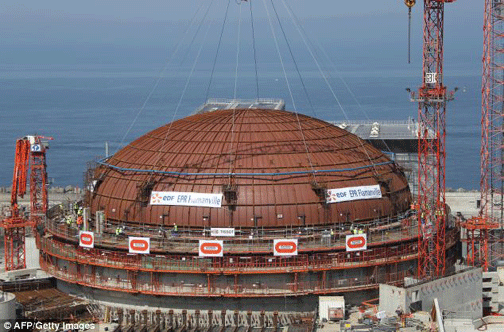
Quite apart from the fact that EdF’s flagship EPR Flamanville plant is facing a further two year delay as a result of ASN’s likely demands that reactor core welds are repaired, it is appropriate to remind M. Lévy that EdF is hugely in debt, that its board of Directors are not united in their view of the company’s new build programme and that the victim communities around the proposed sites for new build are fearful of the wholesale disruption to their lives, the environment and the tranquility they currently enjoy in these largely remote and isolated sites”.
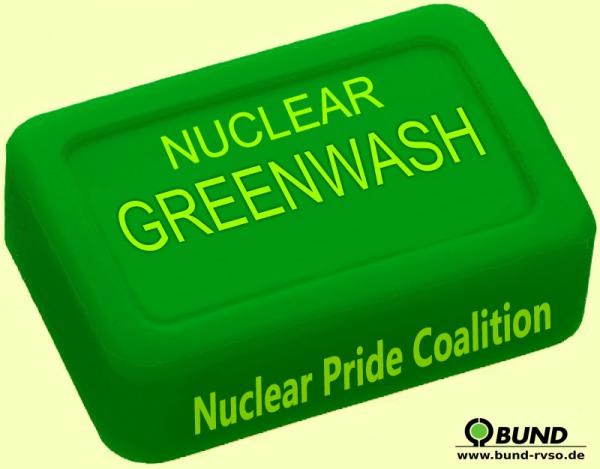
Energy for Humanity: Nuclear Power – Propaganda and Greenwash, Energy for Humanity, Nuclear Pride, new NPPs & Propaganda https://www.mitwelt.org/energy-for-humanity-greenwash-propaganda.html
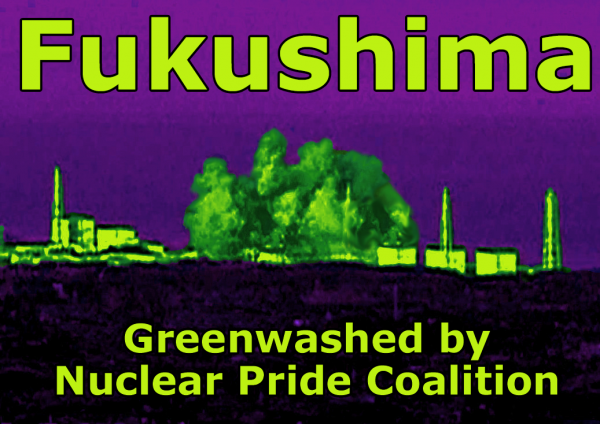
A few years after the devastating nuclear accidents of Fukushima and Tschernobyl, which both resulted in extremely high numbers of casualties, the international nuclear lobby decided to shun the limelight for a little while. But apparently it takes more than just two global disasters to bring them down for good. The global nuclear society, the old and powerful networks between enterprises, lobbyists and nuclear parties are still very much in tact. Even though renewable energies are on the rise in the western world, and many outdated nuclear power plants are going offline, dictatorships and economically weak countries continue to establish new nuclear power plants. That is one of the reasons why new NPP’s are promoted so massively in 2018. The nuclear power plant operators make a big effort to try and win over the wary public after Fukushima and Tschernobyl. Consequently cunning campaigns are run and used to cover up facts, to spread half-truths and to boast.
Energy for Humanity und Nuclear Pride Coalition and their new enforcement strategies
The only thing that has changed over the years are the propaganda and enforcement strategies that are being utilized. In former times, conflicts revolving around nuclear energy, protection of the environment and climate were argued out between environmentalists and opposing enterprises. Unfortunately the environmentalist movement today still thinks and acts upon outdated ways of thinking and conflict patterns. Nowadays those conflicts are being ‘outsourced’. It is alarming how all over Germany organisations of the nuclear and coal corporate groups, foundations and faked citizen initiatives like ‘Nuclear pride’ and “Mothers for Nuclear” are supporting the usage of nuclear power plants and coal power stations while fighting environmentally friendly renewable energies.
The usage of nuclear energy in old swiss NPP’s is a danger to human life and environment. Uranium mining, uranium enrichment and the production of fuel elements have devastating effects on the environment, cause illnesses and even lead to death. Furthermore Nuclear Power Plants emit cancerous nuclear radiation while in standart operation. Disasters like a nuclear accident or terror attack are possible at any time and therefore the life and health of hundreds of thousands of people is under constant threat. Huge areas of landmass would be inhabitable for several human generations. Powerful Swiss nuclear groups have a big undemocratic influence on politics and their attempts at greenwashing and propaganda are very effective. Groups like “Falken am Kühlturm des AKW Leibstadt” and “Energy for Humanity” are being used to distract from the danger a NPP poses. Fact is that the nuclear waste we produce and bury today will continue to emit dangerous levels of radiation for millions of years and could potentially threaten the lives of future generations.
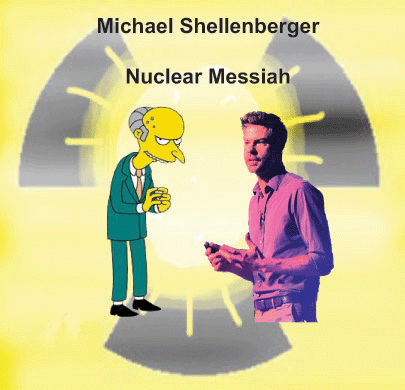
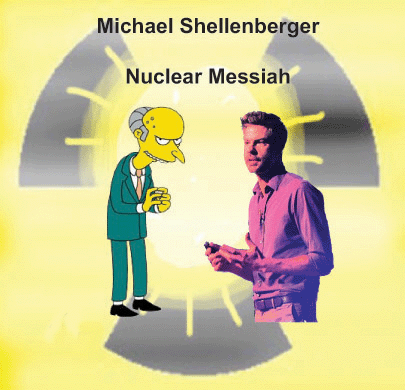
The nuclear lobbyist Michael Shellenberger is being portrayed as ‘environmental activist’ by the public and media. But Michael Shellenberger is ‘a radioactive wolf in green clothing: Dissecting the latest pro-nuclear spin’ as Independentaustralia goes on to describe the impact of the nuclear travelling salesman. Furthermore Friends of the Earth Australia critically analyzes the well financed global lobbying activities.
On 21st October 2018 an article was published by the Süddeutsche Zeitung, reporting on a rather curious scene that took place in Munich. In a ‘Nuclear Pride’ event, organizations like ‘Ecologists for Nuclear’ and the ‘Humanist party’ alongside other participants tried to raise awareness for their goal: The return to nuclear energy, whilst simultaneously calling themselves climate protectors.
A few years after the devastating nuclear accidents of Fukushima and Tschernobyl, which both resulted in extremely high numbers of casualties, the international nuclear lobby decided to shun the limelight for a little while. But apparently it takes more than just two global disasters to bring them down for good. The global nuclear society, the old and powerful networks between enterprises, lobbyists and nuclear parties are still very much in tact. Even though renewable energies are on the rise in the western world, and many outdated nuclear power plants are going offline, dictatorships and economically weak countries continue to establish new nuclear power plants. That is one of the reasons why new NPP’s are promoted so massively in 2018. The nuclear power plant operators make a big effort to try and win over the wary public after Fukushima and Tschernobyl. Consequently cunning campaigns are run and used to cover up facts, to spread half-truths and to boast.
The only thing that has changed over the years are the propaganda and enforcement strategies that are being utilized. In former times, conflicts revolving around nuclear energy, protection of the environment and climate were argued out between environmentalists and opposing enterprises. Unfortunately the environmentalist movement today still thinks and acts upon outdated ways of thinking and conflict patterns. Nowadays those conflicts are being ‘outsourced’. It is alarming how all over Germany organisations of the nuclear and coal corporate groups, foundations and faked citizen initiatives like ‘Nuclear pride’ are supporting the usage of nuclear power plants and coal power stations while fighting environmentally friendly renewable energies.The German newspaper die Zeit states the following about the ‘German sister’ of Nuclear Pride: ‘Disguised as independent citizen initiative, the organisation ‘Bürger für Technik BfT (Citizens for Technology)’ has been praising nuclear energy for a long time. In reality the BfT is a group of energy industrial lobbyists. In addition nuclear scientists and engineers of the KTG (nuclear technology corporation) are pleading for the peaceful usage of nuclear energy. Furthermore The KTG are receiving financial support from the Deutschen Atomforum (The German nuclear forum), which officially represents the interests of the nuclear power plant operators.’
A recently produced NPP-Commercial titled: ‘Thorium-Atomkraft ohne Risiko? (Thorium- Risk-free nuclear energy?)’ acts as the perfect example for the clever enforcement strategies of the industry. The commercial makes it seem as if it were the citizens who want the establishment of new nuclear power plants, not the corporate groups.
Dr. Sebastian Schwark of the PR- agency Hill & Knowlton said the following: ‘The key question is not how to avoid but how to manage protest.’
President Trump’s electoral campaign was largely financed by wealthy American lobbyists who also bear a tremendous interest in keeping NPPs in further operation. Additionally they strive for the erection of new nuclear power plants and coal power stations and further fuel the denial of climate change by fighting against renewable energies.
What Nuclear Pride would like to keep a secret:
Not only is the usage of nuclear energy life threatening but also the most expensive form of climate protection. In fact electricity from alternative energy sources that are combated vigorously by both the nuclear and coal lobby has become more cost efficient in recent times than the electricity produced by dangerous nuclear power plants. Environmental researchers have calculated that investments in energy conservation could prevent double the amount of carbon dioxide from being produced than comparable investments in the new construction of NPPs.
The nuclear lobbyist Michael Shellenberger is being portrayed as ‘environmental activist’ by the public and media. But Michael Shellenberger is ‘a radioactive wolf in green clothing: Dissecting the latest pro-nuclear spin’ as Independentaustralia goes on to describe the impact of the nuclear travelling salesman. Furthermore Friends of the Earth Australia critically analyzes the well financed global lobbying activities. We would appreciate a similarly critical analysis by the German media. In addition both the nuclear and genetic engineering corporations pursue an almost identical PR-concept with Patrick Moore.
Eco-optimism, Eco-realism and the Nuclear Pride Coalition
The industry guided eco-optimism and eco-realism campaign is an American campaign, run to divide the environmental movement. Now it’s being carried over to Germany and the whole of Europe. It lies in the eco-optimists interest to attack positive terms like protection of the environment, sustainability and ecology. Furthermore they try to discredit sustainability and put environmental movements and religious sects in political relation. Simultaneously Nuclear Power Plants, Coal Power Stations and genetic engineering are being praised. The Nuclear Pride Coalition counts as one of the most aggressive industry guided ecooptimistic groups.
The Nuclear Pride Festival was just the visible tip of the propaganda-eisberg.
In the past it often was the worlds best and simultaneously worst PR-organisations that have been pulling the strings behind PR-campaigns like the Nuclear Pride festival. Burson Marsteller., for instance, is one of them. One of the conflicting messages spread by the worlds most influential PR-agencies reads as follows: “The manmade climate change doesn’t exist but we still urgently need more nuclear power plants to fend off the impending climate disasters.” Furthermore it was those same old PR-agencies that have been lying through their teeth to benefit the Swiss Nuclear Forum. Moreover similar campaigns have been supported by paid trolls that were hired to anonymously write hundreds of “letters to the editor” and to litter online forums with promotional messages. Even the manipulation of Wikipedia articles is part of the PR-agencies everyday business. You’ve only got a chance to fight against this manipulative force if you don’t stay silent and utilize all of your knowledge and intelligence to compose your own letters to the editor and your own online posts to eradicate purposely planted misinformation.
The polar bear mascot called Melty which was supposed to draw attention to the melting of the polar ice caps during the lobbyist-protest in Munich is an especially clever PR-stunt. It’s not the citizen initiatives that are hiding behind the façade of those Nuclear Pride protests and associations but PR-agencies and corporate groups.
U.S., Canada Energy Leaders Announce New Book on Nuclear Innovation in Clean Energy USA Dept of Energy MAY 28, 2019, VANCOUVER, CANADA– Today, leaders from the United States and Canada are unveiling a new book, Breakthroughs: Nuclear Innovation in A Clean Energy System, at the Tenth Clean Energy Ministerial (CEM10), a forum including ministers from 25 nations, occurring this year in Vancouver, Canada from May 27-29. MAY 28, 20
“The combination of vision and innovation is having a profound impact on our energy landscape, and nowhere is that more true than nuclear energy,” said U.S. Under Secretary of Energy Mark W. Menezes. “Nuclear energy is one of our most reliable and cleanest sources of energy, and we are determined to revive and revitalize the nuclear energy industry with advanced and smart designs. This book highlights some of the incredible transformative opportunities nuclear innovation can bring to society and the clean energy future of our planet.”
Canada’s Minister of Natural Resources Amarjeet Sohi said, “The Clean Energy Ministerial is part of building the world’s clean energy future. Canada is proud to host the 10th Clean Energy Ministerial in Vancouver at this historic moment in time. We are pleased to be working with the United States, Japan, and other countries under the nuclear innovation initiative. We also welcome the release of Breakthroughs – a collection a real stories about nuclear innovations and how they can contribute to our climate change goals.” ………
At Vancouver’s Clean Energy Summit, Nuclear Is Making a Play Note to ministers from 25 nations: Prepare to be dangerously greenwashed. By Tanya Glafenhein and M.V. RamanaTanya Glafenhein is an undergraduate political science major at UBC focused on ecological sustainability, and environmental and social justice.
M.V. Ramana is the Simons Chair in Disarmament, Global and Human Security at the School of Public Policy and Global Affairs at UBC, and the author of The Power of Promise: Examining Nuclear Energy in India, Penguin Books, New Delhi (2012).
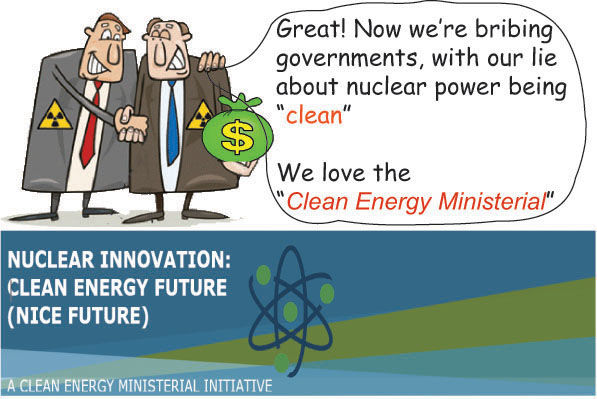
This week Vancouver is host to a summit of ministers from over 25 countries gathered “to accelerate progress toward a clean energy future.
Created in 2010, the Clean Energy Ministerial describes itself as a “high-level global forum to promote policies that advance clean energy technology” and “to encourage the transition towards a global clean energy economy.”
As we face massive environmental challenges, a transition is clearly needed. The problem is that one significant focus of the CEM is to find ways of preserving the existing energy infrastructure while greenwashing it.
Case in point: the cleverly termed NICE Future, which stands for Nuclear Innovation: Clean Energy Future, that was set up in 2018 by the CEM initiative. Its stated aim is “to initiate a dialogue on the role that clean and reliable nuclear energy can play in bolstering economic growth, energy security and access, and environmental stewardship.”
But nuclear energy is not clean except in some narrow definition, and our experience over the decades with this technology has shown that it cannot “bolster” any of the other goals.
Dirty truths about ‘clean energy’
Before going further, it would help to beVanctter understand the term clean energy. For years now, there is an open and growing preference for renewable energy among the public around the world.
This was a problem for the large private and public sector organizations that owned other forms of electricity generation technologies, particularly coal, nuclear, or natural gas. One of the strategies that these large organizations, and supportive politicians and government officials, have been undertaking is to sweep these, or slight variants thereof, under the term clean energy.
The key word is clean, and its use has been promoted by multiple fossil fuel and other industry groups. In the mid-2000s, dozens of coal and utility companies formed something called the American Coalition for Clean Coal Electricity. It then spent tens of millions of dollars on advertisement campaigns about “clean coal” being a solution to global warming.
The Clean Energy Ministerial buys into a similar narrative by promoting what it calls the “Carbon Capture, Utilisation, and Storage Initiative.”
This branding strategy continues to pay off. Utilities and friendly politicians have promoted existing but uneconomical power plants as clean energy options and sought subsidies, for example in the state of New Jersey in the United States.
Last week, Republicans in Ohio proposed legislation known as the “clean energy” subsidy bill. What does this legislation do? Bail out old and uneconomical coal and nuclear power plants in the state, and endmandates that utilities use more renewable and efficient energy.
Of course, neither coal nor nuclear power plants are clean by any reasonable definition. Unless you focus entirely on carbon dioxide and ignore all the other potential pollutants.
Radioactive waste
In the case of nuclear energy, the most difficult environmental legacy is the radioactive waste produced by all nuclear reactors. Radioactive waste is inextricably linked to nuclear energy production, because each nucleus of uranium or plutonium gives rise to radioactive fission products as they break apart. Other radioactive “transuranic elements” are produced when uranium-238 in the fuel absorbs a neutron, again an inevitable occurrence in nuclear reactors.
The problem is that it takes hundreds of thousands of years before the radioactive materials decay to levels that could be considered relatively safe. For those long periods of time, this waste will have to be kept away from human contact — an unprecedented challenge for which there is still no demonstrated solution.
But nuclear plants are not the only source of radioactive wastes. At the very start of the nuclear fuel chain, the mines that produce uranium ore and the mills that process the ore into uranium that is used to fuel nuclear power plants generate radioactive materials that are harmful to the environment and human health.
Around the world, uranium mining and processing has been primarily carried out on Indigenous lands and Indigenous peoples have been significantly affected. Impacted communities include the Navajos in the United States, the Dene people in the Northwest Territories, and the Santhal, Munda, and Ho people in India. Proposed sites for the deep geological repository in Canada are almost all on traditional First Nations land, in a practice that has been termed nuclear colonialism.
Accidents
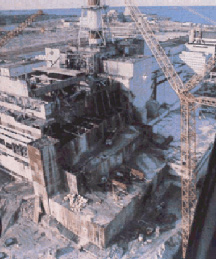
Nuclear energy is unique among all electricity generating technologies in its propensity for catastrophic accidents such as Chernobyl and Fukushima that create radioactive contamination on a potentially global scale. In those locations near the site of the accident where contamination levels are high, the hazards to health will last for decades if not centuries.
The “exclusion zone” with radiation levels deemed too high for human habitation encompassed 4,300 square kilometres in the case of Chernobyl; at least 116,000 people were evacuated from the area.
The contaminated area is smaller in the case of Fukushima because most of the atmospherically released radionuclides were deposited into the Pacific Ocean due to the prevalent wind direction during the first few days of the accidents.
Many proponents of nuclear energy argue, despite this history of disastrous accidents, that reactors can be operated safely. Critics respond: “The key question is not whether it can be safe, but whether it will be safe.”
The simple answer is no. Not when this has to be done across countries, across many facilities, according to multiple priorities including cost cutting and profit making, and using multiple technologies, each with its own vulnerabilities.
Weapons
Though the nuclear industry is loath to admit it, there is a very close relationship between nuclear power and weapons. In the words of the late Ted Taylor, a former weapons designer turned nuclear abolition advocate, “the connections between nuclear technology for constructive use and for destructive use are so closely tied together that the benefits of the one are not accessible without greatly increasing the hazards of the other.” Nuclear war would be the ultimate environmental catastrophe.
This connection is particularly important to emphasize given that many of the members of the Clean Energy Ministerial are either nuclear weapon states or members of military alliances with nuclear weapon states. Members include the U.S., China, France, Russia, India, United Kingdom, Canada, and Japan to name a few.
But isn’t nuclear the cheap way to fight climate change?
Despite all these problems with nuclear energy, some might argue that this technology remains the only way to reduce carbon dioxide emissions.
The problem with this argument is that nuclear energy is fading in importance globally. Nuclear power’s share of global electricity generation was 17.5 per cent in 1996. Since then, this fraction has steadily declined, reaching 10.3 per cent in 2017. For a variety of reasons, the downward trend is expected to continue.
What is behind this trend? The primary reason is that nuclear plants are no longer financially viable. Because they are hugely expensive, it has been known for a while that building new nuclear plants makes little economic sense. What has changed in the last decade is that it is not just constructing new reactors, but just operating one, even one that is old and has its capital costs paid off, that has ceased to make economic sense in many cases.
This is because alternatives to nuclear energy, in particular renewable sources of electricity like wind and solar energy, have become drastically cheaper. In contrast, just about every nuclear plant that was constructed in the last decade has proven more expensive than initially projected.
The Wall Street consulting company, Lazard, publishes annual cost figures for different energy technologies. In 2018, the Lazard estimate for the construction cost of a new nuclear plant in the United States was over $9,000 per kilowatt and each megawatt-hour of electricity produced would have cost around $150.
In comparison, a new wind energy plant cost $1,350 per kilowatt to construct; it cost $1,110 per kilowatt for solar energy. The generation costs for wind and solar energy are around $40 per megawatt-hour. The comparison has only been becoming more favourable to renewable technologies over the years.
These economic trends suggest that to expect nuclear energy to play an important role in climate change mitigation is wishful or delusional at best. The Clean Energy Ministerial should drop its support for technologies like nuclear power and coal. Or it can change its name to Unclean Energy Ministerial. https://thetyee.ca/Opinion/2019/05/27/Nuclear-Making-Play-Clean-Energy-Summit/
A travel article on a wildlife trip to the Chernobyl disaster zone failed to highlight the continuing radiation threat to people, animals and plants, write David Lowry and Ian Fairlie
Tom Allan’s report of his holiday inside the Chernobyl exclusion zone (Nuclear reaction, Travel, 25 May) was both misleading and dangerous in its assertions. He gives the impression that the radiation dangers are minimal: “less radiation risk than on a single transatlantic flight”, according to his ornithologist Belarusian guide, Valery Yurko.
The problem around Chernobyl is not average radiation exposure but the millions of highly radioactive hotspots of radioactive particles spewed from inside the destroyed Chernobyl reactor core. The entire exclusion zone area has suffered from serious forest fires in the 33 years since the catastrophe, re-suspending these hot particles into the atmosphere and spreading them around.
Mr Allan also inaccurately asserts “so far, the effect of radiation on the animal populations has not been visible”. I suggest he consult the extensive academic research of Professor Tim Mousseau of the department of biological sciences at the University of South Carolina, and his international colleagues, where he will find extensively set out the crippling effect of the radioactive contamination on both flora and fauna. Dr David Lowry Senior international research fellow, Institute for Resource and Security Studies, Cambridge, Massachusetts, USA
• Tom Allan is poorly informed about the risks of radiation. The external radiation he received may be low, but what about the radioactivity he inhaled? Internal radiation is far more serious than external radiation, as his lungs are likely still being irradiated from the radioisotopes he breathed in during his short visit. Dr Ian Fairlie Consultant on radiation in the environment, London
Ads Flood Airwaves As Debate Continues Over Nuclear Bailout Bill wksu 89.7
BySARAH TAYLOR20 May 19, Ohioans are being bombarded with an ad campaign focused on an energy bill—House Bill 6—that’s being debated in the state legislature.
Who’s behind the campaign and just what will HB6 do? Learn more in this conversation with Dayton Daily News reporter Laura Bischoff.
Bischoff said House Bill 6 is a controversial energy bill that would cost consumers about $300 million a year in surcharges. “The money would go into a new fund that probably half, or a little more than that, would likely go to save two aging nuclear power plants that are slated to close: Davis Besse and Perry,” Bishcoff said.
Both plants are owned by FirstEnergy Solutions, which used to be part of Akron-based FirstEnergy. FirstEnergy Solutions is in bankruptcy proceedings and has said it will have to shut down the nuclear plants because of its financial situation. …..
Bischoff has dug into who’s bankrolling the ad campaign to convince the general public that legilsation to help keep the nuclear plants open is a good idea.
“There is this group called Generation Now,” Bischoff said. “It is a dark money group. They are bankrolling most of ads, a little over $2 million worth of ads have been placed so far.” Bischoff notes there are groups funding ads against the bill as well. “Americans for Prosperity, Ohioans against nuclear bailouts and some consumer group have spent about $300,000. It’s all over the airwaves. People are hearing it, seeing it, wondering what’s going on with it.”
…….. Bischoff also tabulated that FirstEnergy and its PAC (political action committee), since 2014, have contributed $1.35 million to Ohio political candidates and FirstEnergy has donated another $1.5 million to political parties.
Bischoff explained that House Bill 6 would remove renewable energy efficiency standards and programs that have been part of state law for the past 10 years………
Bischoff estimated 120 different witnesses have testified about this proposed legislation, including a gentleman from Vermont, whom she later tracked down.
“I wonder why would some guy from Vermont travel all the way to Ohio to give testimony,” Bischoff said. The man shared the story of a nuclear plant closing in the small town where he lives and talked about the devastation the closing caused. Bischoff found out it is the second time he has testified for a nuclear bailout bill in Ohio. Pressing the man further, she discovered that his travel expenses were covered by the Nuclear Energy Institute, of which FirstEnergy is a dues-paying member.
Park Record, | May 13, 2019 Martin Jedlicka Park City I would like to respond to Allison Cook’s editorial in a recent Park Record by agreeing with her premise that man-made global warming is an existential threat to human survival on this planet
I disagree with her thesis that nuclear power is the best solution. I know folks who are afraid of industrial nuclear power merely from watching “The Simpsons” on Fox. Sadly, that’s not as silly as it should be. The physics and engineering supporting nuclear power are sound. Unfortunately, the human administration and operation of it is not. We are as a people prone to error, greed and arrogance, with the first often resulting from the latter two. Behind every Homer is a Mr. Burns; ask any engineer if he or she has a story about corners cut by some bottom line-obsessed executive. U.S. nuclear plant workforces have been trimmed by 26,000 jobs in the past decade. A constant call for deregulation at the behest of lobbyists reveals a corporate culture that prioritizes monetary profit over environmental safety, just like the fossil fuel industry.
Ms. Cook asserts that there have been “zero radiation illnesses/casualties” at Fukushima. The tragic facts are that one worker has died from radiation-induced illness. Time will determine the ultimate price paid by the volunteer “Suicide Squads” who exceeded lifetime legal limits and face hundredfold cancer risk. Three studies estimate 130 deaths. The evacuation of the area surrounding the Daiichi and Daini plants resulted in an estimated 1,368 deaths (people, not eagles or tortoises). As of 2015, 166 children in the area have been diagnosed with thyroid cancer, exceeding normal rates by a factor of 30.
The 1979 partial meltdown of reactor No. 2 at Three Mile Island in Pennsylvania sparked widespread anti-nuclear power protests. The cumulative human error that led to radioactive release into the atmosphere inspired the engineering maxim “Normal Accident Theory.” Charles Perrow posited that “normal accidents” result from the “unanticipated interaction of multiple failures in a complex system.”
Seven year later the Chernobyl Plant in Pripyat, Ukraine, caused at least 42 deaths from acute radiation sickness. In a 2005 report, the environmental NGO Greenpeace (which actually supports the use of nuclear power as an alternative to fossil fuel burning) estimates “270,000 cases of cancer attributable to Chernobyl fallout,” with an estimated death toll of 93,000. How one contracts thyroid cancer is debatable but the fact is that by the year 2000, the number of Ukrainians receiving state benefits for radiation related problems was over 3.5 million.
“Radiation” is a catch-all term for myriad forms of energy — my mug of tea is radiating infrared photons into my hand. The nuclear power industry likes to point out the natural radiation occurring around us, from sunshine to bananas and cellphone transmission. Most forms of radiation are harmless as all radiation should be considered in terms of dosage. We need doses of solar radiation to produce vitamin D. Not so with ionizing waves called gamma rays that radiate from isotopes used and produced by nuclear power plants. With short wavelengths and high energy, gamma rays disrupt cells and chromosomes throughout the human body and require dense materials to block them. Like all electromagnetic radiation, they are invisible. It is reasonable for people to fear invisible things that can make you horribly sick and die…… https://www.parkrecord.com/opinion/guest-editorial-nuclear-power-is-subject-to-human-error-and-that-makes-it-a-poor-solution-to-climate-change/
Physics department to develop nuclear science program for graduate students, The GW Hatchet, By Jared GansMay 13, 2019 4:24 AM
Faculty in the physics department will receive funding from the Department of Energy to develop new nuclear science and engineering programming for international students.
Faculty said they are working to form a Nuclear Education Hub that will teach aspects of operating nuclear reactors to graduate students in a partnership with Virginia Tech. The efforts, which faculty aim to complete this fall, will focus on recruiting Ukrainian graduate students by offering them the opportunity to learn about nuclear physics unconstrained by outdated Russian safety standards for nuclear power plants, the standards most Ukrainian plants were built on.
Andrei Afanasev, the director of the project and an associate professor of theoretical physics, said faculty are primarily designing the program for Ukrainian students because Ukraine relies on nuclear power plants to generate electricity and because American nuclear companies have shown increasing interest in Ukraine’s nuclear operations……..
Beyond Nuclear 12th May 2019 Irene is with a group called CADNO, founded in 1987 and active until the plants closed. The CADNO acronym in Welsh means Society for the Prevention
of Everlasting Nuclear Destruction. It is also the Welsh word for fox.
Now the group is slowly gearing back up, because the Trawsfynydd site is being
talked about as a possible location for a new, small modular reactor (SMR).
CADNO is the fox we actually need to guard this henhouse. The old
Trawsfynydd reactors are decommissioning now, but very slowly. On
Wikipedia, the page proclaims that the decommissioning is expected to take
“almost 100 years.”
The SMR phantom is manifesting itself many places
beyond Trawsfynydd. Being described as “small” and “modular” tends
to mask the reality that it is expensive, of little use for climate change,
and likely still far in the future.
Local politicians, including in Gwynedd, the county in which the Trawsfynydd reactors sit, view the project as an easy jobs handout for a region struggling to employ people. It’s
false hope, of course, because the likelihood of SMRs coming to fruition is
slim and would provide only a handful of jobs.
The area is ripe for more wind power but the UK government remains eager to subsidize new nuclear instead, the only way new nuclear power plants will ever get built.
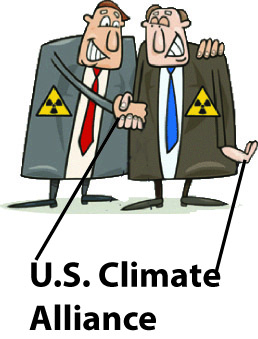
Pennsylvania joins US Climate Alliance, WNN, 1 May 19, Pennsylvania Governor Tom Wolf has joined the US Climate Alliance, a bipartisan coalition of governors committed to reducing greenhouse gas emissions. Exelon, which owns the Limerick, Peach Bottom and Three Mile Island nuclear power plants in the state, welcomed the move…..
Japan’s nuclear horror relived as people return to Fukushima’s ghost towns,
It is eight years since a devastating tsunami caused three reactors to meltdown at the Fukushima Daiichi nuclear power station on the north-east coast of Japan Mirror UK, Emily RetterSenior Feature Writer, Mirror UK, 29 Apr19
Wide streets still lie empty, scavenging boar and monkeys the only signs of life.
Only wild animals, and the 6ft weeds, which have rampaged through deserted homes and businesses, suffocating once-chatty barbers shops and bustling grocery stores; strangling playgrounds and their rusting rides which lie empty and eerily still.
Laundry hangs where it was pegged out to dry, clock faces are frozen in time, traffic lights flash through their colours to empty roads, meals laid out on tables in family homes, remain uneaten.
Once unextraordinary, mundane symbols of everyday lives have taken on the appearance of a horror film set in these areas closest to the Fukushima Daiichi nuclear power station on the coast of north-east Japan, eight years after the devastating tsunami which caused a meltdown at three of the plant’s reactors, forcing tens of thousands to flee.
The earthquake on March 11, 2011, claimed 19,000 lives, and triggered the world’s largest nuclear disaster since Chernobyl.
Radiation leaking in fatal quantities forced 160,000 people to evacuate immediately, and most to this day have not returned to their toxic towns and villages…….
The official mandatory evacuation order was lifted, and while reports reveal just 367 residents of Okuma’s original population of 10,341 have so far made the decision to return, and most of the town remains off-limits, the Japanese government is keen this be seen as a positive start to re-building this devastated area…….
The Japanese Prime Minister, Shinzo Abe, visited to mark the milestone.
The government is particularly keen to show progress before the 2020 Olympic Games in Tokyo.
Six Olympic softball games and a baseball game will be staged in Fukushima, the capital of this prefecture, which is free of radiation.
The torch relay will even begin at J Village, which was once the base for the crisis response team. Hearteningly, it is now back to its original function, a football training centre.
But the truth is, it is mainly older residents who have decided to return to their homes.
Seimei Sasaki, 93, explained his family have roots here stretching back 500 years.
His neighbourhood in Odaka district now only contains 23 of its original 230.
“I can’t imagine what this village’s future looks like,” he admitted.
Young families are few and far between – these areas are still a terrifying prospect for parents.
But the re-built schools are slowly filling a handful of classroom seats.
Namie Sosei primary and middle school, less then three miles from the plant, has seven pupils.
One teacher said: “The most frustrating thing for them is that they can’t play team sports.”
A sad irony as the Olympics approach.
And with so many residents still fearful, so the deadly clean-up operation continues.
Work to make the rest of Okuma safe is predicted to take until 2022. The area which was its centre is still a no-go zone.
In the years following the disaster, 70,000 workers removed topsoil, tree branches, grass and other contaminated material from areas near homes, schools and public buildings.
Bags of nuclear waste generated after the meltdown of one of Fukushima’s nuclear power plants in 2011 are now stored in the nearby town of Naraha. MUST CREDIT: photo for The Washington Post by Shiho Fukada.
A staggering £21billion has been spent in order to make homes safe.
Millions of cubic metres of radioactive soil has been packed into bags.
By 2021 it is predicted 14million cubic metres will have been generated.
The mass scale operation uses thousands of workers. Drivers are making 1,600 return trips a day.
But residents understandably want it moved out of Fukushima for good.
As yet, no permanent location has agreed to take it, but the government has pledged it will be gone by 2045.
Fukushima, Chernobyl, And Three Mile Island Prove Why Nuclear Power Will Never Be Inherently Safe https://www.fairewinds.org/demystify/nuclear-power-will-never-be-inherently-safe, March 22, 2019 By Grayson Webb, Maggie Gundersen, Blog Editor Recently, after Forbes Magazine published an opinion piece entitled, It Sounds Crazy, But Fukushima, Chernobyl, And Three Mile Island Show Why Nuclear Is Inherently Safe, a number of Forbes’ readers called and continue to write Fairewinds Energy Education to ask us if this opinion piece is true. Quite frankly, the article is an infomercial for the nuclear industry: it twists data in order to paint a rosy picture of nuclear energy.
Before we delve into the article itself, note that the author of the article, Michael Shellenberger, has a degree in cultural anthropology, not nuclear science or nuclear engineering, environmental science, or any other educational background related to the energy production methods and their impact on the environment, human lives, or the global economy. He is not a scientist or a doctor (don’t be fooled by his twitter handle @shellenbergerMD).
Mr. Shellenberger is the president of a pro-nuclear lobbyist group called Environmental Progress that advocates for extending the life of the old and soon-to-be-retired nukes for an additional 40-years, even though each atomic power reactor was only designed for a 40-year lifespan. On its website, in addition to its pro-nuke work, Environmental Progress claims that they are independent and not funded by the nuclear industry because their only funders are Rachel and Roland Pritzker, of the Pritzker Innovation Fund (PIF). For those that are unaware, the large and extremely wealthy Pritzker family includes 11 billionaires. All together the various family members have a net worth of more than $30 billion!
The Pritzker Innovation Fund backs various pro-nuclear ventures and supporting nuclear energy is part of its mission. In fact, Rachel, the president of the fund, gave a pro-nuclear TED talk in 2015 using many of the recycled arguments the nuclear industry and the Forbes article relied upon. While Environmental Progress (EP) likes to claim it is independent of any financial manipulation, receiving money from a pro-nuclear foundation paints a quite different picture. While Environmental Progress is listed as a nonprofit, it just became a 501c3 nonprofit during the fall of 2017. Since it incorporated as a nonprofit so recently, there are no public financial 990s available to delineate what other corporations may underwrite EP’s astroturfing pro-nuke posture with large sums of nuclear industry money, and of course many individual nuclear employees may be donating with the encouragement of their employer incorporation and then could write it off as a tax-deductible donation.
Now that we’ve addressed the lapses in Mr. Shellenberger’s nuclear power engineering and environmental science education, let’s look at the false facts raised in his pretend science article.
First, this puff piece for Forbes Magazine tries to discredit the assessment of noted pediatrician and children’s advocate Dr. Helen Caldicott, who projected close to 1 million people died due to the Chernobyl meltdown. Mr. Shellenberger uses nuclear industry numbers to attempt to claim that the impact of Chernobyl on the environment and to all species involved was minimal, a typical follow the playbook created by industry lobbyists. However, independent scientific research published by the New York Academy of Science in a book entitled Chernobyl: Consequences of a Catastrophe for People and the Environment proves that Dr. Caldicott’s estimate is far more accurate than the fake data that Forbes Magazine allowed Shellenberger to promote. In Chernobyl: Consequences of a Catastrophe for People and the Environment the New York Academy of Science confirms and discusses the real scientific data as it was prepared and studied by Dr. Alexey Yablokov, Dr. Vassily Nesterenko, and Dr. Alexey Nesterenko.
A separate scientist, Dr. Yury Bandazhevsky, was jailed after publishing his scientific report on radiation induced heart disease in children. The disease, aptly named Chernobyl Heart, brought to light the cover-up by the Government of Belarus and has taught doctors around the world about the impact of Cesium, which is absorbed into muscles and damages children’s hearts and other muscles. Cesium also crosses the placental barrier and damages babies in utero. Dr. Yury Bandazhevsky was imprisoned for four-years in Belarus until the public outcry from the European Union sparked his release. He currently lives in the Ukraine where he continues his work.
An entirely different scientific study conducted by noted United Kingdom scientist Dr. Ian Fairlie, who completed his PhD at Princeton University, shows that 5-million people still reside in highly radioactive areas and that there has been an increase of 700% in cases of thyroid cancer and a 200%-500% increase in Leukemia cases. All one needs to do to see the lingering effects of Chernobyl and the damage that radiation has caused in Chernobyl is to look at the haunting photo gallery entitled Chernobyl Legacy: Radiation Poisoning taken by photographer Paul Fusco a little more than a decade after Chernobyl. Mr. Fusco also narrates a video of his photographs from his trip to help to provide context. There is also a short documentary by the name of Chernobyl Heart which chronicles the effects of the Chernobyl nuclear disaster on the health of children in the area of the plant. The film won the Best Documentary Short Subject award at the 2004 Academy Awards. You can watch the heart wrenching film above. Unfortunately, instead of speaking truth to power, Forbes Magazine has allowed self-promoting industry data to be used in this infomercial while actually discarding real scientific independent peer-reviewed research.
Another discordant note that appears in the Forbes accepted opinion piece discredits real medical science in its attack on the World Health Organization’s (WHO) estimate of premature deaths caused by Chernobyl. In his published opinion in Forbes, Shellenberger claims that because the WHO uses the “linear no threshold” (LNT) model, its estimates are exaggerated. In a rush to meet the desired growth of major nuclear corporations, there has been a recent push by a fringe group of pro-industry scientists to change the Environmental Protection Agency (EPA) rules away from LNT, thereby increasing the amount of toxic chemicals and radiation that industries in the United States would be able to place in products and dump into the environment. Unfortunately, this ill-informed science is popular with the current U.S. Administration. However, according to a recent story in the LA Times,
This view — that pollution and radiation can be beneficial — has many experts worried. The fact that such a position may become EPA policy, they say, portends a future in which corporate desires outweigh public and environmental health.
“Industry has been pushing for this for a long time,” said David Michaels, former assistant secretary of labor for the Occupational Safety and Health Administration who’s a professor of environmental and occupational health at George Washington University. “Not just the chemical industry, but the radiation and tobacco industries too.”
If the EPA ultimately adopts Calabrese’s proposed new regulations, researchers say it could change decades of standards and guidelines on clean air, water and toxic waste. It could also fundamentally alter the way the government assesses new chemicals and pesticides entering the marketplace.
“This is industry’s holy grail,” said Michaels.
Later in the Forbes Magazine nuclear industry sponsored opinion piece by Shellenberger asserts another falsity when it asks:
Why were they destroying Fukushima’s precious topsoil in order to reduce radiation levels that were already at levels far lower than posed a danger? Why was the government spending billions trying to do the same thing with water near the plant itself? Was nobody in Japan familiar with mainstream radiation health science?
The next fallacy Forbes Magazine continues to market in this fake news pro-nuke industry promotion is calling the meltdown at Three Mile Island (TMI) a dream,
What about Three Mile Island? After the accident in 1979, Time Magazine ran a cover story that superimposed a glowing headline, “Nuclear Nightmare,” over an image of the plant. Nightmare? More like a dream.
The 40th observance of the March 28, 1979 meltdown at TMI begins tomorrow, Saturday March 23rd at the Pennsylvania State House and culminates in a presentation at Penn State on March 27th. The first of the commercial nuclear power meltdowns was anything but a dream for the real people living nearby. Many residents were exposed to high levels of radiation because the plant owners outright lied to the Nuclear Regulatory Commission, President Carter, and Pennsylvania’s own governor, so that all those government officials failed to issue a timely evacuation because they did not know that a meltdown was even in progress!
While the United States Nuclear Regulatory Commission data claims that no one died from radiation emanating from TMI, independent research shows this is simply not true. Studies by epidemiologist Dr. Steve Wing show that cancer rates in the surrounding area significantly skyrocketed following the meltdown at TMI. You can listen to Dr. Wing talk about his studies and the implications from a video taken at the Pennsylvania State Capitol on March 26, 2009. Fairewinds Energy Education also has a video of the 38th commemoration presentation Arnie Gundersen gave in Harrisburg, Pennsylvania on its website [fairewinds.org]. In this video, Mr. Gundersen discusses the significant errors in data claimed as accurate by the Nuclear Regulatory Commission (NRC). Yet Shellenberger relies upon the scientifically refuted data promoted by the NRC for his Forbes Magazine nuke power promotion piece.
The U.S. government was the first agency in the world to call for people within a 40-mile radius surrounding Fukushima Daiichi to be evacuated, which again the Forbes’ Shellenberger pro-nuke industry fiction claims was unnecessary. This unscientific hit piece by Shellenberger in Forbes Magazine goes even further to blame the evacuation itself for the resulting misfortune of the refugees – instead of accurately reporting that the nuclear power industry, the government of Japan, and atomic power with its daunting risks are to blame for the hardships faced by refugees and the communities surrounding the Fukushima site.
“While some amount of temporary evacuation might have been justified, there was simply never any reason for such a large, and long-term, evacuation. About 2,000 people died from the evacuation, while others who were displaced suffered from loneliness, depression, suicide, bullying at school, and anxiety.” The victims of Fukushima Daiichi and the hardships that they have endured during the past 8-years, as well of the physical and emotional traumas they have suffered, are facts the refugees will live with for the remainder of their lives. The fact that the triple-meltdown at Fukushima Daiichi was foreseen and preventable and proves that the blame should be firmly placed on TEPCO and the nuclear power industry for allowing TEPCO to get away without constructing the government mandated seawall. More than 1,000 years of documented history about tsunamis were ignored when an entire mountain side was cut down so the Fukushima atomic power reactors could be built near the shoreline giving them easier access to cooling water. Now tens of thousands of refugees are facing decimated cities and farms, and the destruction of their families and communities as they struggle daily to protect themselves, their children, and even their grandchildren from extensive radiation exposure. As Fairewinds peer-reviewed research shows, as well as a separate study, highly radioactive hot particles that are severely dangerous, are present in many parts of Japan and continue to be inhaled. As discussed in our recent blogpost Atomic Balm Part 2, even after areas have been cleaned of radioactive material, it is only a matter of time before radioactive particles born on the wind or washed down from radioactively contaminated areas migrate back.
The first problem is with the government of Japan’s clearance criteria that only areas in and around homes have been allegedly decontaminated. I measured radiation along highways and then 50-feet into the surrounding woods, only to find that the woods remained highly contaminated, so that when it rains or snows, or the wind blows the dust or pollen from the woods, that radiation migrates back to people’s supposedly clean and radiation-free homes. I went to the top of 4-story high rooftops in Minamisoma that had been completely cleaned and repainted following the meltdowns. These rooftops were recontaminated by dust on the wind, blowing in radiation from the surrounding mountains. Peoples’ homes and communities that were claimed to be clean are indeed being recontaminated every day.
Why on earth would someone willingly want to live with their families in an area known to have high levels of radiation that damage DNA and cause cancers and other long-term illnesses?
The nuclear power that originated with President Eisenhower’s Atoms for Peace Program is not what many people envisioned when the concept was first created in the early 1950s. Atomic or nuclear power, whichever moniker you want to give it, is extremely expensive, takes a long time to build, releases small amounts of radiation into the environment daily during normal operation, produces highly toxic waste with no proven technology for storing it for more than 100-years, and must be stored for 250,000-years until it becomes safe as normal soil.
For the last 70-years using nuclear power to produce electricity has unveiled all of its flaws and proven that it is not an energy source for the future of humankind because it simply is not up to the task.
The argument that nuclear energy “has always been inherently safe” is absolutely wrong. There have been five meltdowns during the last 40-years resulting in a ratio of one meltdown every eight years. Look at TMI, Chernobyl, or Fukushima; people have died, each disaster has been worse than the one before it, and at Chernobyl and Fukushima, once pristine farmland and entire cities will never be habitable again.












 nuclear-news