María Corina Machado has become the first person since Barack Obama to win the Nobel Peace Prize for doing absolutely nothing. Actually, that “nothing” might be unfair because Machado has repeatedly called for the US and Israel to invade her country. She has steadfastly supported Israel’s genocide so you know she’s a good egg.
Yesterday, I built all your hopes up by suggesting Trump might win the Nobel Peace Prize, but at least you can console yourself with the fact the CIA did. In a heart warming moment, Machado dedicated her big win to Trump.
It is undeniable that Machado is a woman of peace who truly loves her people. Back in 2018, when we were pretending Juan Guaido was the rightful leader of Venezuela, she made the following request:
I am sending a letter today to Mauricio Macri, President of Argentina, and to Netanyahu, Prime Minister of Israel, to ask them to apply their force and influence to advance in the dismantling of the criminal Venezuelan regime, intimately linked to drug trafficking and terrorism.
Obviously, this sort of thing doesn’t count as treason when people in the global south do it. Machado justified her letter by saying Venezuela’s ties to Iran posed a direct threat to Israel. She even promised to move the Venezuelan embassy to Jerusalem. I’m unclear if Venezuela has its own Israeli lobby or if Machado was simply calling for one.
Her drug trafficking remark was important because it paved the way for Trump to bomb Venezuelan fishermen. Machado thanked Trump for his “firm and decisive action” to dismantle Maduro’s “criminal and terrorist structure.” As you can imagine, the families of those fishermen were incredibly moved.
Machado regularly heaps praise on Trump, and in a 2019 interview, she suggested he should consider invading her country:
“All options must be on the table, including military intervention, because the regime will not leave power voluntarily.”
Only the finest Nobel laureates would call for the US to invade their own country. Sure, invasion would turn into a quagmire worse than Iraq and Afghanistan, and millions of Venezuelans would die, but on the plus side, Machado would be installed as puppet leader and Trump would liberate the world’s largest oil reserves.
Excitingly, Machado is a massive Thatcherite who wants to sell her country’s assets faster than you can say “Javier Milei”. Every smart person knows the Argentine model would be way better for Venezuela. The Venezuelan economy is so bad, the US has to wage economic war to ensure it fails, whereas the Argentine economy is so strong, it needs a $20 billion US bailout to stay afloat.
Machado’s party is generously funded by USAID and the National Endowment for Democracy (a group that kindly installs new leaders when electorates make the wrong choice). Just know that it doesn’t count as foreign interference when our side does it.
If you still doubt Machado’s patriotism, you should know she is a big advocate for the sanctions that are starving Venezuelans. If Venezuelans don’t want to starve, they should simply overthrow their government. If they don’t, they are no more deserving of food than the Palestinians who failed to overthrow Hamas. Anyone who truly believes in democracy believes in collective punishment x
When I saw the headline Maria Corina Machado wins the Peace Prize, I almost laughed at the absurdity. But I didn’t, because there’s nothing funny about rewarding someone whose politics have brought so much suffering. Anyone who knows what she stands for knows there’s nothing remotely peaceful about her politics.
If this is what counts as “peace” in 2025, then the prize itself has lost every ounce of credibility. I’m Venezuelan-American, and I know exactly what Machado represents.
She’s the smiling face of Washington’s regime-change machine, the polished spokesperson for sanctions, privatization, and foreign intervention dressed up as democracy.
Machado’s politics are steeped in violence. She has called for foreign intervention, even appealing directly to Benjamin Netanyahu, the architect of Gaza’s annihilation, to help “liberate” Venezuela with bombs under the banner of “freedom,” She has demanded sanctions, that silent form of warfare whose effects – as studies in The Lancet and other journals have shown – have killed more people than war, cutting off medicine, food, and energy to entire populations.
Machado has spent her entire political life promoting division, eroding Venezuela’s sovereignty and denying its people the right to live with dignity.
This is who Maria Corina Machado really is:
She helped lead the 2002 coup that briefly overthrew a democratically elected president, and signed the Carmona Decree that erased the Constitution and dissolved every public institution overnight.
She worked hand in hand with Washington to justify regime change, using her platform to demand foreign military intervention to “liberate” Venezuela through force.
She cheered on Donald Trump’s threats of invasion and his naval deployments in the Caribbean, a show of force that risks igniting regional war under the pretext of “combating narcotrafficking.” While Trump sent warships and froze assets, Machado stood ready to serve as his local proxy, promising to deliver Venezuela’s sovereignty on a silver platter.
She pushed for the U.S. sanctions that strangled the economy, knowing exactly who would pay the price: the poor, the sick, the working class.
She helped construct the so-called “interim government” a Washington backed puppet show run by a self-appointed “president” who looted Venezuela’s resources abroad while children at home went hungry.
She vows to reopen Venezuela’s embassy in Jerusalem, aligning herself openly with the same apartheid state that bombs hospitals and calls it self-defense.
Now she wants to hand over the country’s oil, water, and infrastructure to private corporations. This is the same recipe that made Latin America the laboratory of neoliberal misery in the 1990s.
Machado was also one of the political architects of La Salida, the 2014 opposition campaign that called for escalated protests, including guarimba tactics. Those weren’t “peaceful protests” as the foreign press claimed; they were organized barricades meant to paralyze the country and force the government’s fall. Streets were blocked with burning trash and barbed wire, buses carrying workers were torched, and people suspected of being Chavista were beaten or killed. Even ambulances and doctors were attacked. Some Cuban medical brigades were nearly burned alive. Public buildings, food trucks, and schools were destroyed. Entire neighborhoods were held hostage by fear while opposition leaders like Machado cheered from the sidelines and called it “resistance.”
She praises Trump’s “decisive action” against what she calls a “criminal enterprise,” aligning herself with the same man who cages migrant children and tears families apart under ICE’s watch, while Venezuelan mothers search for their children disappeared by U.S. migration policies.
Machado isn’t a symbol of peace or progress. She is part of a global alliance between fascism, Zionism, and neoliberalism, an axis that justifies domination in the language of democracy and peace. In Venezuela, that alliance has meant coups, sanctions, and privatization. In Gaza, it means genocide and the erasure of a people. The ideology is the same: a belief that some lives are disposable, that sovereignty is negotiable, and that violence can be sold as order.
If Henry Kissinger could win a Peace Prize, why not María Corina Machado? Maybe next year they’ll give one to the Gaza Humanitarian Foundation for “compassion under occupation.”
Every time this award is handed to an architect of violence disguised as diplomacy, it spits in the face of those who actually fight for peace: the Palestinian medics digging bodies from rubble, the journalists risking their lives in Gaza to document the truth and the humanitarian workers of the Flotilla sailing to break the siege and deliver aid to starving children in Gaza, with nothing but courage and conviction.
But real peace is not negotiated in boardrooms or awarded on stages. Real peace is built by women organizing food networks during blockades, by Indigenous communities defending rivers from extraction, by workers who refuse to be starved into obedience, by Venezuelan mothers mobilizing to demand the return of children seized under U.S. ICE and migration policies and by nations that choose sovereignty over servitude. That’s the peace Venezuela, Cuba, Palestine, and every nation of the Global South deserves.
AUKUS is a hugely expensive Defence project facing considerable and, many argue, insurmountable hurdles. But does Defence have a Plan B? Rex Patrick reveals a crack in Defence PR’s high tensile pressure hull steel.
There has to be an AUKUS Plan B, surely. So MWM FOI’ed the Australian Submarine Agency (ASA) to find out.
Hit ‘em with your Talking Points.
In response, the ASA partially released one document showing ‘talking points’ that had been given to the Project lead, Vice Admiral Jonathon Mead, in case he was asked about the US’s AUKUS review.
At first glance, MWM thought that the ASA’s back-up plan to defend the Nation was to
“roll out some talking points to fire at an approaching enemy.“
roll out some talking points to fire at an approaching enemy.
But a closer look revealed more.
A Crack in the Submarine Pressure Hull
The talking points weren’t the only documents.
Despite the public bravado, the FOI decision shows that there is some discussion going on behind the scenes.
There were three more documents that met the terms of MWM’s request. The decision letter reveals that the Government has been discussing with our AUKUS partners, and internally, on what to do if it all goes to hell in a nuclear handbasket.
Self-confidence Bluster Exposed
The ASA has claimed the documents are sensitive (something we’ll push back on with an appeal), and so we can’t see the exact details of what’s being said.
But we know there are conversations taking place.
“That’s a good thing.“
1×1515
1:36 / 2:23
Listen to this story
2 min
AUKUS is a hugely expensive Defence project facing considerable and, many argue, insurmountable hurdles. But does Defence have a Plan B? Rex Patrick reveals a crack in Defence PR’s high tensile pressure hull steel.
There has to be an AUKUS Plan B, surely. So MWM FOI’ed the Australian Submarine Agency (ASA) to find out.
FOI Asking about a Plan B
Hit ‘em with your Talking Points.
In response, the ASA partially released one document showing ‘talking points’ that had been given to the Project lead, Vice Admiral Jonathon Mead, in case he was asked about the US’s AUKUS review.
US AUKUS Review talking Points (Source: Defence)
At first glance, MWM thought that the ASA’s back-up plan to defend the Nation was to
roll out some talking points to fire at an approaching enemy.
But a closer look revealed more.
A Crack in the Submarine Pressure Hull
The talking points weren’t the only documents.
Despite the public bravado, the FOI decision shows that there is some discussion going on behind the scenes.
More Documents about Plan B (Source: Defence)
There were three more documents that met the terms of MWM’s request. The decision letter reveals that the Government has been discussing with our AUKUS partners, and internally, on what to do if it all goes to hell in a nuclear handbasket.
Plan B Talk Going On (Source: Defence)
Self-confidence Bluster Exposed
The ASA has claimed the documents are sensitive (something we’ll push back on with an appeal), and so we can’t see the exact details of what’s being said.
But we know there are conversations taking place.
That’s a good thing.
Greens Senator David Shoebridge, commenting on the FOI decision, said, “Labor has managed to combine two of their worst behaviours in one go here, using exemptions in FOI to refuse to release documents while secretly doubling down on a plan B for AUKUS. I don’t think treating the Australian public like mushrooms is a viable long-term political strategy for Albanese”.
It’s Senate Estimates this coming week. The Coalition is a unity cheer squad with Labor when it comes to AUKUS, so we won’t see them probing hard on a Plan B. Hopefully, Shoebridge will squeeze some more out of Defence, at least until MWM’s FOI appeal is finalised.
For now, at least, we now know the ASA’s public AUKUS bluster is a deception. They’re not so confident after all.
Rex Patrick
Rex Patrick is a former Senator for South Australia and, earlier, a submariner in the armed forces. Best known as an anti-corruption and transparency crusader, Rex is also known as the “Transparency Warrior.”
The University of Stirling is hosting the UK debut of Remembered: 80 years since the bombing of Hiroshima and Nagasaki, marking eight decades since the atomic bombings of Japan at the end of the Second World War.
The exhibition, curated by the Nagasaki National Peace Memorial Hall for the Atomic Bomb Victims, offers a deeply moving account of the destruction caused by the bombings and their long-term human and environmental consequences.
It’s cute how the Zionists think they’ll be able to manipulate and propagandize the world into liking Israel again.
Yeah, saturate all online platforms with weird-faced influencers telling us Israel is awesome. That’ll make us forget those years of genocidal atrocities.
Go on, take control of CBS and make Bari Weiss the boss. That’ll make us forget all those videos of mutilated Palestinian children.
Right, use Zionist oligarchs and influence operations to manipulate governments and institutions into crushing free speech which opposes a genocidal apartheid state. That’ll get everyone supporting the genocidal apartheid state.
Propaganda is an effective tool of mass-scale psychological manipulation, but it isn’t magic. It isn’t going to miraculously erase what people know in their bones to be true.
In order to successfully propagandize people you need to first get them to trust you, and then you need to feed them narratives which appeal to the cognitive biases they already hold. Nobody trusts Israel apologia anymore, and people’s biases are now stacked squarely against the Zionist entity. They’ve got nothing to work with and nowhere to start from.
If a coworker you hate came up to you and started stealing stuff off your desk while telling you he’s your friend and that he would never steal from you, you’re not going to believe him no matter how many words he says to you. No matter how skillful a manipulator he is, no matter how eloquent his words are, nothing he says will trump your first hand observations of your material reality.
That’s what it’s like at this point. They’re trying to throw a bunch of language at us in order to convince us that we haven’t seen what we’ve seen, haven’t experienced what we’ve experienced, and don’t know what we know. And they assume it will work because the language they’re throwing at us is being circulated in high volumes and costs a lot of money.
It won’t work, though. Even if propaganda could convince us that we haven’t seen what we’ve seen and don’t know what we know, propaganda only works if you don’t know it’s happening to you. These past two years have made even relatively apolitical members of the public acutely aware that there is an aggressive campaign to manipulate their perception of the state of Israel, and that anyone pushing them to support that state is untrustworthy. Nobody’s going to buy into the propaganda if they don’t trust the source.
Now that everyone’s aware that Israel is paying influencers $7,000 per post to churn out propaganda on its behalf, whenever you see a video online of some young social media-savvy personality promoting pro-Israel narratives you see their replies flooded with memes and jokes about their $7k jackpot. From now on whenever some sunglasses-wearing zillennial shows up going “Israel is surrounded on all sides by Islamofascists and you think JEWS are the problem? Uhh, no babe. Walk with me,” everyone’s going to go “Found one of those $7k posts.”
It just doesn’t work. Psychological manipulation only goes so far. There’s only so much that clever language can do to decouple someone’s mind from their direct experience of material reality.
This is where Israel went wrong in alienating the liberal Zionists. They needed people at the table who understood how normal human beings think, who could help the Israel project walk the delicate line between apartheid abuses papered over with propaganda and full-scale atrocities which would alienate the world. Instead they decided to go all in with the Smotriches and Ben-Gvirs, trusting that the propaganda machine which had served them so well all those decades would continue to carry them through any international upset they might cause.
It hasn’t turned out that way. The world’s eyes are open to what Israel is, and they are never going to close again. You can’t take off the Mickey Mouse mask, show the kids the snarling Freddy Krueger face underneath it, and then put the mask on and hope they start calling you Mickey again. Nobody’s going to forget what you showed them.
Despite the efforts of industry and its supporters to convince us otherwise, coal, gas and oil are outdated, inefficient, polluting energy sources, especially compared to alternatives. Some people, including politicians, are touting nuclear power as a good alternative. Is it?
Proponents argue it’s “clean,” because it doesn’t generate greenhouse gas emissions. But considering its entire life cycle, it’s far from clean, and it’s rife with problems — from uranium mining and transport to building and eventually decommissioning nuclear power plants to geopolitical issues around fuel supply and site security to radioactive waste disposal and weapons production. Of course, renewable energy also comes with impacts, which is why reducing energy and materials use is critical.
Besides environmental and other issues, building nuclear power plants — even largely untested small modular reactors, or SMRs — is expensive and time-consuming.
As Andrew Nikiforuk writes in the Tyee, “Due to its cost and complexity, it will not provide cheap or low-emission electricity in timeframe or scale that matters as climate change continues to broil an indifferent civilization.” He notes, however, “That is not to say that nuclear technology won’t play a minor role in our highly problematic energy future.”
Nikiforuk points to a recent study of 401 nuclear electricity projects built between 1936 and 2014 in 57 countries. It found the average time to build them was 70 months, and average cost overruns were close to US$1 billion (on top of massive projected expenditures). Because nuclear only supplies about nine per cent of global energy, and many reactors are nearing the end of their average life spans, it’s unlikely to play a major role in bringing emissions down as quickly as needed.
The 2025 “World Nuclear Report” says that, “In 2024, total investment in non-hydro renewable electricity capacity reached a record US$728 billion, 21 times the reported global investment in nuclear energy. Solar and wind power capacities grew by 32 percent and 11 percent, respectively, resulting in 565 GW of combined new capacity, over 100 times the 5.4 GW of net nuclear capacity addition. Global wind and solar facilities generated 70 percent more electricity than nuclear plants.”
Consider that much of the push for SMRs is coming from people like Alberta Premier Danielle Smith, to fuel increased oilsands production, and tech billionaires, to provide the enormous amounts of power required for data centres and artificial intelligence.
Canada is already set to pay more than $1 billion for SMRs and other nuclear projects. But the “World Nuclear Report” notes that the few SMR projects now in play are “in serious financial trouble.”
Nikiforuk writes that “to achieve an economy of scale would require the production of thousands of SMRs, which is not happening anywhere any time soon.” He also notes that “SMRs are not small (they occupy the area of a city block), cheap or, for that matter, any safer than large reactors.” Studies show they can actually produce more waste overall than conventional reactors.
Energy Mix reports that costs for renewable energy and battery storage are dropping rapidly while nuclear plant prices continue to increase.
The “World Nuclear Report” states that renewable energy technologies “are evolving towards a highly flexible, fully electrified energy system with a decentralized control logic, outcompeting traditional centralized fossil and nuclear systems.”
That’s a clue as to why so many hyper-capitalist forces are pushing nuclear over renewable energy: Centralized power systems are easier to control, monopolize and profit from than systems based on energy sources freely available everywhere. And it’s easier to shift costs of fossil fuel and nuclear power plants to the public in the form of subsidies, taxes and higher electricity bills.
Given the urgent need to quickly address global heating, it would be far better to put money into renewable energy andinfrastructure, including a modern east-west renewable-powered electricity grid in Canada.
While energy from wind, solar and geothermal, along with storage, also comes with environmental consequences and requires mining and materials, it’s still far cleaner, more efficient and quicker and easier to deploy than fossil fuel or nuclear power. To reduce impacts, we must, as Nikiforuk writes, “systematically reduce our energy and material consumption at an unprecedented pace.”
Like fossil fuels, nuclear is an outmoded, overpriced way to produce power.
Once again, working people have been betrayed with false promises about jobs in an industry that is actually making climate change worse, writes LINDA PENTZ GUNTER
AT THIS point there is no need for any of us who are inclined toward commentary to further point out the utter dereliction of the Keir Starmer government. It is doing a perfectly fine job on its own.
One clear indication of the malaise running rampant through the ranks of Starmer’s seemingly ever-diminishing inner circle, is the craven subservience to war criminals. The British government managed to kowtow to two in the space of one week — first the Israeli President Isaac Herzog, followed by US President Donald Trump.
Upon arrival, Herzog might have heard the distant echo of a door slamming behind the departing deputy prime minister, Angela Rayner. He might also have caught sight of disgraced British ambassador to the US, Peter Mandelson, who was summarily sent back to Britain the day after Herzog’s arrival in London.
Now the turmoil has turned to Starmer’s inside — and right-hand — man, Morgan McSweeney, another “we told you so” category of rogue who has been accused of potentially buying Starmer’s party leadership victory.
Amid the general gloating and glee on the right, inevitable and hypocritical albeit self-inflicted by the Starmer team, came this observation by Daily Mail columnist Dan Hodges. “Keir Starmer hoped the stench of sleaze and scandal enveloping his administration would begin to dissipate following the successful state visit of Donald Trump.”
If Starmer truly believed that embracing Trump, the one person whose stench of sleaze and scandal is even more malodorous than his own, was likely to restore confidence in the current Labour government, we are in even bigger trouble than we thought.
And we are. Because far from “successful,” one outcome of Trump’s visit was yet another great betrayal of British working people. This time it came in the form of the “golden age of nuclear” contract struck between the US and British governments. The title alone betrays its false veneer and utter subservience to Trump and his cabal.
On May 23, Trump had proudly announced in an executive order that he was “restoring gold standard science,” although it will come as no surprise that it in fact dismantles anything that smacks of actual science.
Trump is also promoting his “Golden Dome” missile defence system and on the day he unveiled his commitment to “gold standard science” he also “unleashed” (a favourite word) four executive orders trumpeting a nuclear renaissance.
How sad then, that neither Starmer nor energy secretary Ed Miliband can come up with their own language to describe the new nuclear contract. They must, perforce, sing from Trump’s golden hymnbook.
Their plagiarised “golden age” announcement was replete with Trump-style hyper-masculine hyperbole. They boasted of “homegrown energy” and “major new deals that will turbocharge the build-out of new nuclear power stations.”
The deal would drive forward “the government’s energy superpower mission to take back control of Britain’s energy for good.” Working people will be the big winners.
Unfortunately, the track record of nuclear power to date, and the extreme uncertainty surrounding whether any of the companies vying to build new reactors will actually deliver, means that the opposite is true.
Timelines for reactor construction, even for the known, familiar models such as the two being built at Hinkley Point C, for example, are far longer than before. Recently completed new reactors in the US, Finland and France have uniformly run well over budget, sometimes as much as three times over or more.
There will be no jobs in new nuclear power projects for working people anytime soon. When and if jobs do materialise, those suited to working people will likely be temporary, in construction. Many jobs will require highly specialised skills for which working people will not have been trained.
Instead of wasting time and money on new, unproven reactor designs, including so-called small modular reactors, we could achieve greater carbon emissions far faster for the same investment in renewable energy. Therefore, choosing the slow, expensive nuclear path instead of renewables results in more use of fossil fuels in the meantime.
Furthermore, the “golden age” contract lists a whole rogues’ gallery of companies who have already proven to be unreliable at best and certainly devoid of any interest in serving the needs of working people. Indeed, as with all major corporations their sole motive is profit.
Among them are companies such as Holtec, mired in corruption, and TerraPower, owned by billionaire, Bill Gates, who went cap in hand to score a $2 billion subsidy from the US Department of Energy for his $4bn Natrium reactor. British taxpayers can expect to be similarly fleeced.
None of the reactors promoted by the US companies on the list have actually received a licence. They are simply paper reactors.
The notion that somehow this deal will deliver “energy independence” and “homegrown energy” is, to be generous, disingenuous. What’s missing from the conversation is the uranium necessary to make the fuel for these reactors. Unless the Starmer government is plotting to reopen the fight with residents of Orkney, who already beat back efforts in the mid-1970s to mine uranium there, there is nothing “homegrown” about nuclear energy.
Where will that uranium come from? The main uranium exporting countries are Canada, Australia and Kazakhstan. Niger is also high on the list. In almost all cases around the world, uranium is mined on the land of Indigenous peoples who take the full burden of the contamination this causes to their air, water and land, but languish in poverty while the mining companies profit.
When the mines close, the companies leave, abandoning surrounding populations to suffer the often serious and even fatal health consequences resulting for endless exposure to the radioactive waste left behind.
The high-assay low enriched uranium (HALEU) fuel needed for some of the new reactor designs — including the one promoted by Gates — is almost exclusively produced by Russia. Trump has bragged about opening HALEU production facilities in the US, but nothing has happened. Whilst he has deployed an embargo on Russian oil and gas, uranium imports remain exempt.
Perhaps the most alarming aspect of the “golden” nuclear deal is the declared intention to shortcut the regulatory process. Nuclear power plants are inherently dangerous. The new designs have not demonstrated that they have overcome these challenges. Indeed, most if not all of them are new versions of old designs whose predecessors have a record of fires, explosions and meltdowns.
But the British-US contract states it “will make it quicker for companies to build new nuclear power stations in both countries, for example by speeding up the time it takes for a nuclear project to get a licence from roughly three or four years to roughly two.”
Shortcutting safety oversight in any sector is never a good idea. It is particularly reckless when dealing with nuclear power. And it is even more so if Britain is to take the Trump administration on its word that a particular reactor has been deemed safe by the US and therefore requires no safety scrutiny by British regulatory authorities.
That’s because Trump has set about to dismantle the US Nuclear Regulatory Commission, ordering the agency to “rubber-stamp” new licence applications and prioritise production over safety. He is picking off anyone within the agency that disagrees and replacing them with “yes-men,” one of whom is the compliant lapdog chair of the NRC, David Wright, a Republican appointee.
Starmer calls the US nuclear partnership a “landmark.” He says it’s about “powering our homes, it’s about powering our economy, our communities, and our ambition.” It’s that last word that contains the only morsel of truth.
Linda Pentz Gunter is a writer based in Takoma Park, Maryland, where she works as the international specialist at Beyond Nuclear. She is currently covering events in London.
Israel apologists are probably going to make a much, much bigger deal about the second October 7 anniversary than they did about the first anniversary, because they kind of have to. The world is turning against Israel in unprecedented ways in 2025, and yelling about October 7 is all they’ve got left.
They’ve already got a scripted October 7 series coming out on Paramount+, and another, separate scripted October 7 series coming out on HBO Max for the anniversary. There are probably numerous news media segments and articles scheduled. Maybe some new “revelations” about alleged October 7 atrocities which have been just waiting in the wings this whole time for some reason.
The hasbarists are going to be so obnoxious. They’ll be babbling about Hamas beheading babies and then cooking the beheaded babies in the oven and then having sex with the beheaded babies and then eating the beheaded babies and then playing soccer with the baby heads while singing about how much they love Adolf Hitler.
They’ll need to do this, because what else do they have? All the attention has long ago moved from October 7 to the genocide in Gaza, because Israel is the victimizer in literally every news story that’s come out about Palestine since that one day. Every relevant humanitarian institution on earth is saying that Israel is committing genocide and starving civilians, and we’ve been watching the evidence of this on our screens for two years.
In 2023 you had westerners saying “How could Hamas do such a thing??”, but in 2025 everyone’s looking back and going “Ehh, I kinda get it.” There are only so many horrific atrocities you can witness before you stop seeing Israel as the poor widdle Bambi-eyed victim. There are only so many times you can hear Israeli officials stating their plans to ethnically cleanse the Gaza Strip of all Palestinians, only so many Israeli soldiers you can see mockingly dressed in the undergarments of the dead and displaced Palestinian women they’ve been genociding, only so many hospital bombings you can read about, only so many accounts of IDF troops massacring starving civilians at aid sites you can listen to, before you start thinking to yourself that Israel probably had it coming.
So they’ve got to try and reignite that initial shock and horror Israel’s western allies experienced on October 7, using whatever tools of emotional manipulation they can. Try to take us all by the hand and lead us back to that naive time when the mainstream narrative was that Israel had just been attacked by a bunch of hateful savages who wanted to murder Jews simply because they are Jewish.
It won’t work, though. We’ve seen too much. What has been seen cannot be unseen. No matter how much they moan about October 7, no matter how much control they shore up over TikTok and other social media platforms to silence criticism of Israel, no matter how loudly they concern troll about a pretend epidemic of antisemitism, what has been seen will never be unseen.
We see what Israel is. We see what Israel is doing. We see what the western governments who support Israel are. There is nothing anyone can say or do that will cause us to unsee what we have seen and un-know what we now know.
Tyee contributing editor Andrew Nikiforuk is an award-winning journalist whose books and articles focus on epidemics, the energy industry, nature and more.
Premier Danielle Smith proposes that nuclear power could be “Alberta’s next energy frontier.” To that end, she recently created a “nuclear engagement survey panel” to figure out how to propel economic growth in her province.
According to Smith, nuclear generators will not only help power scores of artificial-intelligence data centres in rural Alberta but also help to double oil production from the oilsands.
The promise of nuclear power “means affordable power, reliable supply and low emissions that strengthen our grid while fuelling growth,” said the premier. “It means new jobs and opportunities for Alberta workers and communities.”
The province is specifically betting on small modular reactors, or SMRs, because they, as a United Conservative Party release put it, “have the potential to supply heat and power to the oilsands, simultaneously reducing emissions and supporting Alberta’s energy future.”
Smith’s government has already given the oilsands giant Cenovus Energy $7 million to study the matter.
Smith isn’t the only premier with nuclear ambitions. New Brunswick, Saskatchewan and Ontario all think the future lies in splitting atoms. Prime Minister Mark Carney has thrown the weight of the federal government behind Ontario’s Darlington New Nuclear Project. So far the feds have invested nearly $1 billion to advance this experimental small modular reactor.
The industry has new powerful promoters. Tech billionaires are now thirsting for more electricity to feed their data centres and machine intelligence. Everyone from Jeff Bezos to Bill Gates is investing in nuclear reactors.
Unfortunately, these claims that nuclear power can provide cheap energy security or reverse the persistent failure of national and global policies to reduce CO2 emissions are an illusion.
Even the 2024 World Nuclear Status Industry Report offers a reality check. It reports that apart from new reactors built in China (almost all over budget), “the promise of nuclear” has “never materialized.” It adds that there is no global nuclear renaissance and likely won’t be one. Furthermore, the report pours cold water on the ability of SMRs, a nascent technology, to play any significant role in reducing carbon emissions.
That is not to say that nuclear technology won’t play a minor role in our highly problematic energy future. But what nuclear power can’t do is as luminous as a radium dial. Due to its cost and complexity, it will not provide cheap or low-emission electricity in timeframe or scale that matters as climate change continues to broil an indifferent civilization.
“Given the time required to implement small modular reactors,” notes energy analyst David Hughes, “Smith will likely be long gone before SMRs are ever implemented in Alberta to provide power for her dreams of doubling oil production.”
Vaclav Smil, one of the world’s foremost energy ecologists, no doubt concurs. Whenever anyone asks him about the future of SMRs he says, “Give me a call or send me an email once you see such wonders built on schedule, on budget, and in aggregate capacities large enough to make a real difference.” He is not expecting any calls for at least a decade or two.
The first heyday of hype
The nuclear fixations of Smith and Carney are a telling symptom of our Titanic-like predicament. Every energy solution trotted out to solve a growing matrix of issues such as climate change or, in Alberta’s case, doubling oil production just becomes a source of more problems. Or an opportunity for corporate raiders to deplete the public purse.
Smith and other politicians might consider the brief history of nuclear energy and its rousing propaganda.
Nuclear power, after overpromising and underdelivering during its heyday of the second half of the 20th century, remains what Smil calls a “successful failure.”
Its high priests (now they are nuclear bros) promised “electrical energy too cheap to meter” and “nuplexes” that would power satellites, TV stations and desalinization plants. Atomic energy also promised to replace oil.
But complexity and brutal economics buried the techno-hype in piles of radioactive waste. Almost every large reactor ever built has been plagued by delays, technical difficulties, corruption and enormous cost overruns. A recent study that looked at 180 nuclear projects found that only five met their original cost and time goals. These economic realities explain why you don’t find a lot of nuclear reactors in Canada.
By the 1980s, such realities brought the so-called nuclear revolution to a crawl. Since then, more reactors have been retired than brought online. Global production of nuclear power probably peaked sometime around 2006. Today nuclear power accounts for about two per cent of delivered global energy consumption and that’s not likely to change much through 2050.
U.S. energy analyst Art Berman calculates that it would take the construction of 33 new plants per year for the next 27 years to move nuclear from two to four per cent of total energy supply. Smil has done his own math. To provide 10 per cent of its electrical supply, the U.S. would have to build and regulate some 1300 SMRs capable of putting out 100 megawatts per unit, he says.
And who has got the money, scientists and resources to do that in a period of growing political turmoil and economic corruption?
The new pitch
None of these realities have stopped industry lobbyists from designing a new sales pitch. If large, expensive and accident-prone reactors can’t do the trick, then surely small modular reactors are the agreeable solution. There is a need, they told Canadian politicians, “for smaller, simpler and cheaper nuclear energy in a world that will need to aggressively pursue low-carbon and clean energy technologies.”
The suggestion was that these handy reactors could be churned out by the hundreds from robot-filled factories, like electric cars. And then easily planted at communities’ doorsteps.
But the evidence shows that SMRs are not small (they occupy the area of a city block), cheap or, for that matter, any safer than large reactors.
As for those larger ones, consider the Plant Vogtle Generator in the state of Georgia. Billed as part of the nuclear renaissance, Georgia Power started new construction at this nuclear site in 2009. Where there were two aging reactors the idea was to add two new ones. The initial budget was $14 billion and the reactors were scheduled to go on stream in 2017. Instead, the project will have taken 17 years to finish at a cost of $36 billion, “making it the most expensive power plant ever built on Earth.” Georgians will soon be paying the highest electrical bills in the United States.
The cost overruns had nothing to do with regulation (a constant complaint of nuclear lobbyists) and everything to do with mismanagement and corruption. As one study noted, “inadequate Nuclear Regulatory Commission regulation and streamlining procedures meant to encourage investment in new nuclear projects contributed to excessive costs.” In nearby South Carolina a similar two-reactor project resulted in federal and state criminal investigations due to officials lying about cost of construction. Four executives even went to jail. That state wisely abandoned its nuclear white elephant.
So here’s a good question recently posed by M.V. Ramana, a professor at the School of Public Policy at the University of British Columbia and author of Nuclear Is Not the Solution. “If nuclear power is so expensive and it takes so long to build a reactor, why do corporations get involved in this enterprise at all?”
The answer isn’t complicated. If the public can be convinced “to bear a large fraction of the high costs of building nuclear plants and operating them, either in the form of higher power bills or in the form of taxes… then many companies find nuclear power attractive.” In other words, if the public pays — and that’s what Smith and Carney are proposing — then a corporation can benefit.
A steep path for SMRs
Members of the public, therefore, should be aware of the risks they are being asked to take on by funding the “advanced” technology of SMRs which remains largely untested. And they should know that to achieve an economy of scale would require the production of thousands of SMRs, which is not happening anywhere any time soon.
According to JP Morgan’s annual energy 2025 report, there are only three operating SMRs in the world: two in Russia and one in China and another under construction in Argentina. None came in on budget. “The cost overruns on the China SMR was 300 per cent, on Russian SMRs 400 per cent and on the Argentina SMR (so far) 700 per cent.” All promised to be up and running in three to four years and all took 12 years or more to complete. Argentina’s SMR project began in 2014 and it’s still not finished. That may happen in 2027.
Given these construction time frames, SMR certainly won’t put a dent in climate change in the near future or even decades from now. Certainly not in Russia, which uses its SMRs to mine arctic resources and produce more oil.
And then there is the inconvenient issue of nuclear waste. You’d think something called a small reactor would pump out small volumes of waste. That’s not what researchers discovered in 2022. They concluded, “SMRs will produce more voluminous and chemically/physically reactive waste than Light Water Reactors.” Managing and disposing this waste will be problematic. In fact, they calculated, “water-, molten salt–, and sodium-cooled SMR designs will increase the volume of nuclear waste in need of management and disposal by factors of two to 30.”
There is another problem with Canada’s enthusiasm for SMRs. And that has to do with regulation. UBC’s Ramana raises two pertinent worries.
The first concerns “evidence of conflicts of interest and institutional bias within Canadian Nuclear Safety Commission.” That’s the regulatory body that is supposed to evaluate these complex technologies.
The second is the exclusion of small modular reactors from the Impact Assessment process. That’s right, SMRs don’t have to go through a process that would test any proponent’s claims about risks or harm to the environment. “Given the well-known hazards associated with nuclear power, these legislative gaps are particularly egregious as they expose citizens and communities to significant risks without an accompanying rigorous and participatory assessment process,” notes Ramana.
So Canadian politicians in Alberta and Ottawa are now promoting a largely untested nuclear technology as a solution to growing fossil fuel demand, rising electrical bills and the existential threat that CO2 emissions pose. In the process, they are conning citizens unless they share the facts about the true costs in dollars and to the environment. Those who don’t are promoters for an industry that exists on corporate welfare: your tax dollars.
Citizens should also know that despite being encouraged to place our hopes in a fast-approaching new era of renewable energy, fossil fuel consumption and carbon emissions grew again in 2024. Building a renewables-based system that is 100 per cent firm and reliable won’t be cheap. One key reason is that relying on solar and wind power through long periods of cloudy or wind drought weather requires massive overbuilding and an extensive storage system.
In fact, there is no one technological solution that will enable humanity to continue with what Smil describes as our “stupid, insane and irresponsible” spending of energy. Smil uses those words because the global economy is now using renewable energy not to retire fossil fuels but to add to energy consumption, thereby amplifying the crisis.
An honest and imperfect response to the climate crisis would require a political, behavioural, economic and moral transition that would systematically reduce our energy and material consumption at an unprecedented pace. But that’s not an action any modern politician seems to be able to contemplate, let alone discuss.
Hence the nuclear delusions promoted in Alberta, Ottawa and pretty much everywhere timid leaders opt to sooth citizens with energy fairy tales.
the land on which renewable techs sit is not all lost to other uses and offshore wind farms use no land. And the nuclear fuel cycle (from uranium mining through to eventual waste disposal) also involves land use.
In a new report, the Britain Remade lobby group pushes nuclear strongly, as part of its ecomodernist growth-based future. It models different nuclear build costs and renewable price scenarios to assess long-term impacts on household energy bills. But although it accepts that ‘renewables may have seen large price-falls over the last 15 years’ it says that ‘at high penetrations costs linked to managing intermittency are high: Britain has added 40 GW since 2010 and 120 GW is forecast by 2030, yet balancing, curtailment, backup, and overbuild still add cost and leave gaps that require firm power’.
It is also not very happy about the local environmental impact of renewables, given their high land use compared with nuclear plants. Well yes, but the land on which renewable techs sit is not all lost to other uses and offshore wind farms use no land. And the nuclear fuel cycle (from uranium mining through to eventual waste disposal) also involves land use.
The new report does admit that Britain is the most expensive place to build nuclear capacity. It notes that ‘Hinkley Point C (HPC) is estimated to cost £46 billion, or £14,100 per kW: when finished, it will be the most expensive nuclear power station ever built. British-built plants cost far more per kW than peers: our per-kW costs are about six times South Korea’s, and France and Finland deliver the same EPR design for less per kW (27% and 53% respectively). Britain has gone backwards on cost: Sizewell B in 1995 cost £6,200 per kW, less than half Sizewell C’s budgeted cost.’………………….
To improve things in the UK (not an easy task you might think, using the same vendors) it wants better regulation and reduced planning barriers. Well we will see how that goes with EDF’s new Sizewell C EPR. But better planning systems and regs might also help renewables ! Overall Britain Remade seems a bit desperate in its promotion of nuclear: ‘If renewable costs rise, nuclear can play an even larger role: government forecasts assume falling solar costs (-27% by 2040) and modest wind cost drops (-6%), but recent data show solar prices flat and wind costs rising. If renewables costs climb 30% above baseline, the most cost-efficient plan would be eight new plants at French prices (saving £7.6 bn) or fifteen at Korean prices (saving £21 bn) over 25 years, with benefits lasting decades’.
Lots of assumptions about costs there, and also about demand and markets, with there being some big uncertainties. …………………………
……………………………………………………………Not everyone in the UK will relish American dominance, even in a collaborative context, if that is what we face in this sector, and maybe in others, like AI. However, for good or ill, the Labour government, like most governments, is wedded to technology-led growth. So, with China now politically bared and the EU somewhat out of bounds, US help is evidently seen as vital. Like the US, the UK is now pushing nuclear hard: 75% of the Department of Energy Security and Net Zero’s £6.7bn spending in 2024-25 was allocated to nuclear.
It is true that renewable are also being pushed in the UK (not now under Trump in the US), but mainly via private sector investment e.g. £1.5bn for last year’s CfDs. Which way might it go in future given the US influence? The new US-UK ‘technology prosperity’ deal pushes nuclear and also AI hard, but ignores renewables. You will find exactly the opposite approach in Electrotech, the new Ember global energy report, with renewables dominating, a view also shared by the latest World Nuclear Industry Status report, which depicts nuclear as mostly declining and as something of a dead end option – see my next post. https://renewextraweekly.blogspot.com/2025/09/britain-remade-but-mostly-with-nuclear.html
The culmination of Donald Trump’s state visit to the UK was a press conference at which both American and British leaders waved pieces of paper, containing an agreement that US firms would invest billions of dollars in Britain.
The symbolism was appropriate, since a central element of the proposed investment bonanza was the construction of large numbers of nuclear reactors, of a kind which can appropriately be described as “paper reactors”.
The term was coined by US Admiral Hyman Rickover, who directed the original development of nuclear powered submarines.
Hyman described their characteristics as follows:
1. It is simple. 2. It is small.
3. It is cheap
4. It is light.
5. It can be built very quickly.
6. It is very flexible in purpose (“omnibus reactor”)
7. Very little development is required. It will use mostly “off-the-shelf” components.
8. The reactor is in the study phase. It is not being built now.
But these characteristics were needed by Starmer and Trump, whose goal was precisely to have a piece of paper to wave at their meeting.
The actual experience of nuclear power in the US and UK has been an extreme illustration of the difficulties Rickover described with “practical” reactors. These are plants distinguished by the following characteristics:
1. It is being built now.
2. It is behind schedule
3. It requires an immense amount of development on apparently trivial items. Corrosion, in particular, is a problem.
4. It is very expensive.
5. It takes a long time to build because of the engineering development problems.
6. It is large.
7. It is heavy.
8. It is complicated.
The most recent examples of nuclear plants in the US and UK are the Vogtle plant in the US (completed in 2024, seven years behind schedule and way over budget) and the Hinkley C in the UK (still under construction, years after consumers were promised that that they would be using its power to roast their Christmas turkeys in 2017). Before that, the VC Summer project in North Carolina was abandoned, writing off billions of dollars in wasted investment.
The disastrous cost overruns and delays of the Hinkley C project have meant that practical reactor designs have lost their appeal. Future plans for large-scale nuclear in the UK are confined to the proposed Sizewell B project, two 1600 MW reactors that will require massive subsidies if anyone can be found to invest in them at all. In the US, despite bipartisan support for nuclear, no serious proposals for large-scale nuclear plants are currently active. Even suggestions to resume work on the half-finished VC Summer plant have gone nowhere.
Hope has therefore turned to Small Modular Reactors. Despite a proliferation of announcements and proposals, this term is poorly understood.
The first point to observe is that SMRs don’t actually exist. Strictly speaking, the description applies to designs like that of NuScale, a company that proposes to build small reactors with an output less than 100 MW (the modules) in a factory, and ship them to a site where they can be installed in whatever number desired. The hope is that the savings from factory construction and flexibility will offset the loss of size economies inherent in a smaller boiler (all power reactors, like thermal power stations, are essentially heat sources to boil water). Nuscale’s plans to build six such reactors in the US state of Utah were abandoned due to cost overruns, but the company is still pursuing deals in Europe.
Most of the designs being sold as SMRs are not like this at all. Rather, they are cut-down versions of existing reactor designs, typically reduced from 1000MW to 300 MW. They are modular only in the sense that all modern reactors (including traditional large reactors) seek to produce components off-site. It is these components, rather than the reactors, that are modular. For clarity, I’ll call these smallish semi-modular reactors (SSMRs). Because of the loss of size economies, SMRs are inevitably more expensive per MW of power than the large designs on which they are based.
Over the last couple of years, the UK Department of Energy has run a competition to select a design for funding. The short-list consisted of four SSMR designs, three from US firms, and one from Rolls-Royce offering a 470MW output. A couple of months before Trump’s visit, Rolls-Royce was announced as the winner. This leaves the US bidders out in the cold.
So, where will the big US investments in SMRs for the UK come from? There have been a “raft” of announcements promising that US firms will build SMRs on a variety of sites without any requirement for subsidy. The most ambitious is from Amazon-owned X-energy, which is suggesting up to a dozen “pebble bed” reactors. The “pebbles” are mixtures of graphite (which moderates the nuclear reaction) and TRISO particles (uranium-235 coated in silicon carbon), and the reactor is cooled by a gas such as nitrogen.
Pebble-bed reactor designs have a long and discouraging history dating back to the 1940s. The first demonstration reactor was built in Germany in the 1960s and ran for 21 years, but German engineering skills weren’t enough to produce a commercially viable design. South Africa started a project in 1994 and persevered until 2010, when the idea was abandoned..Some of the employees went on to join the fledgling X-energy, founded in 2009. As of 2025, the company is seeking regulatory approval for a couple of demonstrator projects in the US.
Meanwhile, China completed a 10MW prototype in 2003 and a 250MW demonstration reactor, called HTR-PM in 2021. Although HTR-PM100 is connected to the grid, it has been an operational failure with availability rates below 25%. A 600MW version has been announced, but construction has apparently not started.
When this development process started in the early 20th century, China’s solar power industry was non-existent. China now has more than 1000 Gigawatts of solar power installed. New installations are running at about 300 GW a year, with an equal volume being produced for export. In this context, the HTR-PM is a mere curiosity.
This contrast deepens the irony of the pieces of paper waved by Trump and Starmer. Like the supposed special relationship between the US and UK, the paper reactors that have supposedly been agreed on are a relic of the past. In the unlikely event that they are built, they will remain a sideshow in an electricity system dominated by wind, solar and battery storage.
Accelerating climate change demands a stop to wasting precious little time along with human and financial resources being diverted from real solutions on nuclear power that’s going nowhere.
The conservative Cato Institute’s Fall 2025 status report on “The Next Nuclear Renaissance?” provides a comprehensive status report and global overview, nuclear nation by nation.
The report is best summed up in its concise conclusion:
The mystery is why the nuclear industry retains any credibility. Throughout its history, nuclear proponents have made rosy claims about the safety and economics of the next generation of nuclear projects, but they have all gone unfulfilled. In the early years of nuclear development, claims that processes such as learning by doing, technology change, standardization, economies of scale, and economies of number would result in improved performance had an intuitive credibility. However, after repeated failures to produce the forecasted results, why are renewed claims of this type being taken seriously now? Is it simple ignorance of the past, or are there other factors that make policymakers cling to a belief in nuclear?
Why are people unwilling to consider the reason that nuclear projects fail so often is the technology itself? Instead, they fall back on old, tired excuses such as unsympathetic regulators, delays caused by local protestors, and simply not getting the right ‘recipe’ for building nuclear power plants.
In March 2025, UK Prime Minister Keir Starmer claimed: For too long, blockers have had the upper hand in legal challenges—using our court processes to frustrate growth. We’re putting an end to this challenge culture by taking on the NIMBYs and a broken system that has slowed down our progress as a nation.
Starmer has created a taskforce to streamline safety regulation, but he has offered no evidence that the delays and cost escalation suffered at Hinkley Point C are in any way attributable to opposition or obstructive regulation—and he cannot because there is none.
The problem is not so much that money will be wasted on large numbers of uneconomic facilities. Rather, it is the opportunity costs of the time and human resources that are consumed by nuclear power and not available to other, quicker, more cost-effective and less financially risky options. We appear now to be facing serious risks from climate change, and there will not be a second chance if we fail to tackle it because too many resources are being consumed by an option—new nuclear—that will not work.”
SMR’s are being hailed as the perfect solution for large industrial power consumers.
SMRs are currently being marketed like they’re the iPhone of nuclear energy: smarter, smaller, cheaper, scalable.
Despite the hype, there are currently no SMR’s operating on a commercial scale.
You can feel the buzz: nuclear is back. Or so we’re told.
From Brussels to Washington, a new wave of enthusiasm for so-called Small Modular Reactors (SMRs) is sweeping through policy circles, think tanks, and energy startups. These compact, supposedly plug-and-play nuclear units are being hailed as the perfect solution to power data centers, feed artificial intelligence’s growing hunger, and backstop our energy transition with clean, stable electricity.
There’s just one problem. Actually, there are many. None of them small.
The hype cycle is in full spin
SMRs are currently being marketed like they’re the iPhone of nuclear energy: smarter, smaller, cheaper, scalable. A miracle solution for everything from remote grids to decarbonizing heavy industry and AI’s server farms. Countries like the U.S., Canada, and the UK have announced ambitious deployment plans. Major developers, including NuScale, Rolls-Royce SMR, GE Hitachi, and TerraPower, have painted glossy timelines with glowing promises.
Except the fine print tells a different story.
There are currently no operational commercial SMRs anywhere in the world. Not one. NuScale, the U.S. frontrunner, recently cancelled its flagship Utah project after costs ballooned to over $9,000 per kilowatt and no investors could be found. Even their CEO admitted no deployment would happen before 2030. Meanwhile, Rolls-Royce’s much-hyped SMR factory hasn’t produced a single bolt of steel yet.
So, we’re betting on a technology that doesn’t yet exist at commercial scale, won’t arrive in meaningful numbers before the 2030s, and would require thousands of units to significantly contribute to global energy demand. That’s not a strategy. That’s science fiction.
Big nuclear hasn’t exactly inspired confidence either
Even the large-scale projects that SMRs claim to “improve upon” are struggling. Take the UK’s Hinkley Point C, once heralded as the future of nuclear energy in Europe. It’s now twice as expensive as originally planned (over £46 billion), at least five years late, and facing ongoing construction delays. The French-backed EPR reactor design it’s based on has already been plagued with similar issues in Flamanville (France) and Olkiluoto (Finland), where completion took over a decade longer than promised and costs ballooned dramatically.
Let’s be honest: if any other energy technology was this unreliable on delivery, we’d laugh it out of the room.
Price floors for nuclear, and price ceilings for reason
In France and Finland, authorities have now agreed to guaranteed minimum prices for new nuclear power, effectively writing blank checks to ensure profitability for operators. In Finland, the recent deal sets the floor above €90/MWh for 20 years. Meanwhile, solar and wind regularly clear wholesale power auctions across Europe at €30–50/MWh, with even lower marginal costs.
Why, exactly, are we locking in decades of higher prices for a supposedly “market-based” energy future? It’s hard to see how this helps consumers, industries, or climate targets. Especially when these same nuclear plants will also require major grid upgrades, just like renewables, because any large-scale generator needs robust transmission capacity. So no efficiency win there either.
The SMR promise: too small, too late
Back to SMRs. Let’s suppose the best-case scenario plays out. A couple of designs clear regulatory approval by 2027–2028, construction starts in the early 2030s, and the first commercial units are online before 2035. Even then, the world would need to build and connect thousands of these small reactors within 10–15 years to displace a meaningful share of fossil generation. That’s a logistics nightmare, and we haven’t even discussed public acceptance, licensing bottlenecks, uranium supply, or waste management.
For perspective: in the time it takes to build a single SMR, solar, wind, and battery storage could be deployed 10 to 20 times over, for less money, with shorter lead times, and with no radioactive legacy.
And unlike nuclear, these technologies are modular today. They’re scalable now. They’ve proven themselves everywhere from the Australian outback to German rooftops and Californian substations.
The elephant in the reactor room: waste and risk
Nuclear fans love to stress how “safe” modern designs are. And yes, statistically speaking, nuclear energy is relatively safe per kilowatt-hour. But it’s also the only energy source with a non-zero risk of catastrophic failure and waste that stays toxic for thousands of years.
Why, exactly, would we take that risk when we have multiple clean energy options with zero risk of explosion and waste streams that are either recyclable or inert?
You don’t need to be a nuclear physicist to ask this: how is betting on high-cost, slow-deploying, risk-bearing, politically toxic infrastructure a better idea than wind, solar, and storage?
A footnote in the transition, not the headline
Let’s be clear: nuclear power will likely continue to play a role in some countries’ energy mixes. France and Sweden have legacy fleets. New projects may go ahead in China or South Korea, where costs are contained and planning is centralized. But for the majority of the world, especially countries trying to decarbonize fast, new nuclear is not the answer.
SMRs, despite their branding, will not save the day. They will be at best a niche, possibly a small contributor in specific applications like remote mines, military bases, or industrial clusters where no other solution works. That’s fine. But let’s stop pretending they’re some kind of energy silver bullet.
Final thoughts
We are in the decisive decade for climate action. Every euro, dollar, and yuan we invest must yield maximum emissions reduction per unit of time and cost. By that standard, SMRs fall flat. Nuclear power, small or large, is simply too expensive, too slow, too risky, and too narrow in its use case to lead the energy transition.
So let’s cool the reactor hype. Let’s focus instead on the technologies that are already winning: wind, solar, batteries, heat pumps, grid flexibility, green hydrogen. These are not dreams. They’re deploying by the gigawatt, today. SMRs are fascinating, yes. But when it comes to decarbonization, we need workhorses, not unicorns.
Dan Tehan told Sky News he planned to visit Idaho to investigate developments relating to small modular reactors (SMRs). But the only significant recent SMR ‘development’ in Idaho was the 2023 cancellation of NuScale’s flagship project after cost estimates rose to a prohibitive A$31 billion per GW.
The NuScale fiasco led the Coalition to abandon its SMR-only policy and to fall in love with large, conventional reactors despite previously giving them a “definite no”.
SMR wannabes and startups continue to collapse on a regular basis. WNISR-2025 reports that two of the largest European nuclear startups Newcleo (cash shortage) and Naarea (insolvent) are in serious financial trouble.
Ultra Safe Nuclear Corporation filed for bankruptcy protection in the US last year – just a year after a company representative falsely told an Australian Senate inquiry that it was constructing reactors in North America. The Nuward project was suspended in France last year following previous decisions to abandon four other SMR projects in France.
The latest edition of the World Nuclear Industry Status Report paints a glum picture for the nuclear power industry — the number of countries building reactors has plummeted from 16 to 11 over the past two years — and gives the lie to claims by the Coalition that Australia risks being ‘left behind’ and ‘stranded’ if we don’t jump on board.
That appears to be news to new Coalition energy spokesman Dan Tehan, who has taken over the portfolio from Ted O’Brien, the chief architect of the nuclear power policy that cost the Coalition around 11 seats in the May 2025 election.
Speaking to Sky News from the US, where he says he is on a nuclear “fact-finding” mission, Tehan said Sky News that “every major industrialised country, apart from Australia, is either seriously considering nuclear or is adopting nuclear technology at pace”.
Continuing with the theme, Tehan said: “Australia is going to be completely and utterly left behind, because we have a nuclear ban at the moment in place, and if we’re not careful, the rest of the world is going to move and we are going to be left stranded.”
The simple fact is, however, that there isn’t a single power reactor under construction in the 35 countries on the American continent; and the number of countries building reactors has plummeted from 16 to 11 over the past two years.
World Nuclear Industry Status Report
Tehan could — but won’t — read the latest edition of the World Nuclear Industry Status Report (WNISR-2025), released on Monday. For three decades, these annual reports have tracked the stagnation and decline of the nuclear industry.
There are two related factoids that nuclear enthusiasts can latch onto among the 589 pages of bad news in WNISR-2025: record global nuclear power generation of 2,677 terawatt-hours in 2024 and record capacity of 369.4 gigawatts (GW) as of December 2024. But they are pyrrhic wins. Both records are less than one percent higher than the previous records and they mask the industry’s underlying malaise.
Nuclear power generation has been stagnant for 20 years. Then, a relatively young reactor fleet was generating a similar amount of electricity. Now, it’s an ageing fleet. WNISR-2025 notes that the average age of the 408 operating power reactors has been increasing since 1984 and stands at 32.4 years as of mid-2025.
For the 28 reactors permanently shut down from 2020-24, the average age at closure was 43.2 years. With the ageing of the global reactor fleet and the closure of more and more ageing reactors, the industry will have to work harder and harder just to maintain the long pattern of stagnation let alone achieve any growth. Incremental growth is within the bounds of possibility; rapid growth is not.
Further, the global figures mask a striking distinction between China and the rest of the word. WNISR-2025 notes that in the 20 years from 2005 to 2024, there were 104 reactor startups and 101 closures worldwide. Of these, there were 51 startups and no closures in China. In the rest of the world, there was a net decline of 48 reactors and a capacity decline of 27 GW. So much for Tehan’s idiotic claim that Australia risks being “left behind” and “stranded”.
Even in China, nuclear power is little more than an afterthought. Nuclear’s share of total electricity generation in China fell for the third year in a row in 2024, to 4.5 percent. Nuclear capacity grew by 3.5 GW, while solar capacity grew by 278 GW. Solar and wind together generated about four times more electricity than nuclear reactors.
Since 2010, the output of solar increased by a factor of over 800, wind by a factor of 20, and nuclear by a factor of six. Renewables, including hydro, increased from 18.7 percent of China’s electricity generation in 2010 to 33.7 percent in 2024 (7.5 times higher than nuclear’s share), while coal peaked in 2007 at 81 percent and declined to 57.8 percent in 2024.
Global data
In 2024, there were seven reactor startups worldwide — three in China and one each in France, India, the UAE and the US. There were four permanent reactor closures in 2024 — two in Canada and one each in Russia and Taiwan. The 2025 figures are even more underwhelming: one reactor startup so far and two permanent closures.
As of mid-2025, 408 reactors were operating worldwide, the same number as a year earlier and 30 below the 2002 peak of 438.
Nuclear’s share of total electricity generation fell marginally in 2024. Its share of 9.0 percent is barely half its historic peak of 17.5 percent in 1996.
The number of countries building power reactors has fallen sharply from 16 in mid-2023 to 13 in mid-2024 and just 11 in mid-2025. Only four countries — China, India, Russia, and South Korea — have construction ongoing at more than one site.
As of mid-2025, 63 reactors were under construction, four more than a year earlier but six fewer than in 2013. Of those 63 projects, more than half (32) are in China.
As of mid-2025, 31 countries were operating nuclear power plants worldwide, one fewer than a year earlier as Taiwan closed its last reactor in May 2025. Taiwan is the fifth country to abandon its nuclear power program following Italy (1990), Kazakhstan (1999), Lithuania (2009) and Germany (2023).
Nuclear newcomers
Only three potential newcomer countries are building their first nuclear power plants — Bangladesh, Egypt and Turkiye. All of those projects are being built by Russia’s Rosatom with significant financial assistance from the Russian state.
(According to the World Nuclear Association, only one additional country — Poland — is likely to join the nuclear power club over the next 15 years.)
The number of countries operating power reactors reached 32 in the mid-1990s. Since then it has fallen to 31. That pattern is likely to continue in the coming decades: a trickle of newcomers more-or-less matched by a trickle of exits.
Russia is by far the dominant supplier on the international market, with 20 reactors under construction in seven countries (and another seven under construction in Russia). Apart from Russia, only France’s EDF (two reactors in the UK) and China’s CNNC (one reactor in Pakistan) are building reactors abroad.
WNISR-2025 notes that it remains uncertain to what extent Russia’s projects abroad have been or will be impacted by sanctions imposed on Russia following its invasion of Ukraine. Sanctions — including those on the banking system — have clearly delayed some projects.
Construction of nine reactors began in 2024: six in China, one in Russia, one Chinese-led project in Pakistan, and one Russian-led project in Egypt.
Chinese and Russian government-controlled companies implemented 44 of 45 reactor construction starts globally from January 2020 through mid-2025, either domestically or abroad. The one exception is a domestic construction start in South Korea.
Small modular reactors
Dan Tehan told Sky News he planned to visit Idaho to investigate developments relating to small modular reactors (SMRs). But the only significant recent SMR ‘development’ in Idaho was the 2023 cancellation of NuScale’s flagship project after cost estimates rose to a prohibitive A$31 billion per GW.
The NuScale fiasco led the Coalition to abandon its SMR-only policy and to fall in love with large, conventional reactors despite previously giving them a “definite no”.
Or perhaps Tehan was at Oklo’s SMR ‘groundbreaking ceremony’ in Idaho on Monday. Oklo doesn’t have sufficient funding to build an SMR plant, or the necessary licences, but evidently the company found a shovel for a ‘pre-construction’ ceremony and photo-op.
Worldwide, there are only two operating SMRs plants: one each in Russia and China. Neither of the plants meet a strict definition of SMRs (modular factory construction of reactor components). Both were long delayed and hopelessly over-budget, and both have badly underperformed since they began operating with load factors well under 50 percent.
WNISR-2025 notes that there are no SMRs under construction in the West. Pre-construction activity has begun at Darlington in Canada. But as CSIRO found in its latest GenCost report, even if there are no cost overruns in Canada, the levelised cost of electricity will far exceed the cost of firmed renewables in Australia.
Argentina began planning an SMR in the 1980s and construction began in 2014, but it was never completed and the project was abandoned last year.
SMR wannabes and startups continue to collapse on a regular basis. WNISR-2025 reports that two of the largest European nuclear startups Newcleo (cash shortage) and Naarea (insolvent) are in serious financial trouble.
Ultra Safe Nuclear Corporation filed for bankruptcy protection in the US last year – just a year after a company representative falsely told an Australian Senate inquiry that it was constructing reactors in North America. The Nuward project was suspended in France last year following previous decisions to abandon four other SMR projects in France.
Nuclear vs. renewables
For two decades, global investments in renewable power generation have exceeded those in nuclear energy and are now 21 times higher.
Total investment in non-hydro renewables in 2024 was estimated at US$728 billion, up eight percent compared to the previous year.
In 2024, solar and wind capacity grew by 452 GW and 113 GW, respectively, with the combined total of 565 GW over 100 times greater than the 5.4 GW of net nuclear capacity additions.
In 2021, the combined output of solar and wind plants surpassed nuclear power generation for the first time. In 2024, wind and solar facilities generated over 70 percent more electricity than nuclear plants.
In April 2025, global solar electricity generation exceeded monthly nuclear power generation for the first time and kept doing so in May and June 2025. In 2024, wind power generation grew by 8 percent, getting close to nuclear generation.
Renewables (including hydro) account for over 30 percent of global electricity generation and the International Energy Agency expects renewables to reach 46 percent in 2030. Nuclear’s share is certain to continue to decline from its current 9 percent.
WNISR-2025 concludes: “2024 has seen an unprecedented boost in solar and battery capacity expansion driven by continuous significant cost decline. As energy markets are rapidly evolving, there are no signs of vigorous nuclear construction and the slow decline of nuclear power’s role in electricity generation continues.”
The crowd broke into laughter as the audience was invited to attend a planned “fun day” to learn more about nuclear.
“This event really highlighted the deep level of community concern and opposition to AUKUS … The officials did all they could to avoid answering the hard questions,” -WA Greens MLC Sophie McNeill
The agency in charge of arming the nation with nuclear submarines has sought to earn the trust of residents in Perth’s south by holding a community information session.
The event drew protesters opposed to the AUKUS pact and a local defence hub being used to maintain nuclear submarines.
The Australian Submarine Agency assured event attendees about nuclear’s safety and Australia’s sovereignty, but many people seemed unconvinced.
Rigour, precision and safety, safety, safety — these are the values of the “nuclear mindset” the agency in charge of arming the nation with nuclear submarines has urged Australians to adopt.
The Australian Submarine Agency (ASA) has taken its self-described first steps towards earning the trust of the public.
A line-up of uniformed naval officers and delegates travelled to Western Australia to front the City of Fremantle’s community on Thursday night.
The meeting was touted as an “information session”, but a protest outside the town hall just before it started gave an early indication of how the night would go.
Nuclear fun day
The agency’s AUKUS advocate, Paul Myler, leaned on the US and UK’s seven decades of nuclear experience to assure the crowd of its safety credentials.
“We don’t get to automatically rely on that reputation. We have to earn that part, that legacy, and build our trust with our communities — and that’s what we’re starting here,” he said.
But the delegates made it clear they were not there to pitch AUKUS.
“That decision has been made by a succession of Australian governments,” the crowd was told in a preamble before the floor was opened to questions.
The crowd broke into laughter as the audience was invited to attend a planned “fun day” to learn more about nuclear.
WA Greens MLC Sophie McNeill, who attended the session, said it was alarming how removed the government was from the communities on the doorsteps of AUKUS.
“This event really highlighted the deep level of community concern and opposition to AUKUS … The officials did all they could to avoid answering the hard questions,” she said.
“It felt like an episode of Utopia.”
S for safety and sovereignty
Safety and sovereignty were the hot topics being thrown at the ASA.
One local questioned the record of Australia’s AUKUS partners on nuclear, citing the UK’s weapons testing in the 1950s which has left nuclear contamination at the Monte Bello Islands off WA’s coast and at Maralinga and Emu Field in South Australia.
“Nuclear weapons and nuclear testing are a completely separate issue … Australia’s position on that is very, very clear,” the crowd was told in response.
“We are not, and will not be, a nuclear weapon state.”
The agency also returned with its own S-word, stewardship, which it said described the “responsible planning, operation, application and management of nuclear material”.
Part of that stewardship includes planning for how nuclear waste will be managed.
In short, low-level nuclear waste will be temporarily stored at the HMAS Stirling naval base on Garden Island.
“The technical solutions can keep that waste safe for many years, decades I believe as a contingency, [but] we do expect the waste to be able to be moved much sooner,” a spokesperson said.
There are no plans as of yet for where high-level nuclear waste and spent nuclear fuel will be stored long term or disposed of. However,ASA said it would not be required until at least 2050.
The public also queried who would have command of Australia’s nuclear-powered submarines once they were built.
“I get asked a lot of hard questions. That one has a simple answer,” ASA director-general Vice Admiral Jonathan Mead said.
“Australian sovereignty, Australian officers, the Australian government — no other answer.”
Murmurs in the crowd indicated they were not convinced.
Protected or pawns
The room filled with claps and cheers when one local questioned the true intentions of AUKUS and labelled it an “appalling waste” of taxpayer dollars.
“We are being used as pawns to line up in a war against China, and it’s just not acceptable,” the resident said.
Mr Myler insisted it was about defence, and said developing Australia’s “strike capability” was key to protecting the nation.
“I can’t convince you, but I can only give you my own insight,” the AUKUS advocate said.
“Australian defence staff and Australian diplomatic staff and Australian government staff fight every day. Our sovereignty is absolutely at the core of everything we do.”
“They [Rio Tinto] paid no penalty, and then we found out that the maximum penalty for dropping [the capsule] in WA is only a thousand dollars,” they said.
Mr Myler offered a contrary view, describing the response to the missing capsule as impressive.
“It proved that West Australians had their act together, knew how to do this, knew how to respond, and the whole ecosystem coordinated and got that solved,” he said.
Mr Myler went on to say the “nuclear mindset” put the agency at a level “well above where private sector industry is”.
Australian Nuclear Science and Technology Organisation (ANSTO) social licence adviser Cassandra Casey noted Australia’s nuclear experience with research and nuclear medicines at a facility in Engadine, in New South Wales.
“The community, which is also my community, has grown up around ANSTO, and today the nearest homes in Engadine are just 820 metres … from that facility,” she said.
The information session began with an introduction about ASA earning the nation’s trust. The reaction of attendees indicated few minds were changed, something Mr Myler acknowledged.
“We all understand the risks around some nuclear programs. We have to do a lot more to build confidence in our nuclear program,” he said.





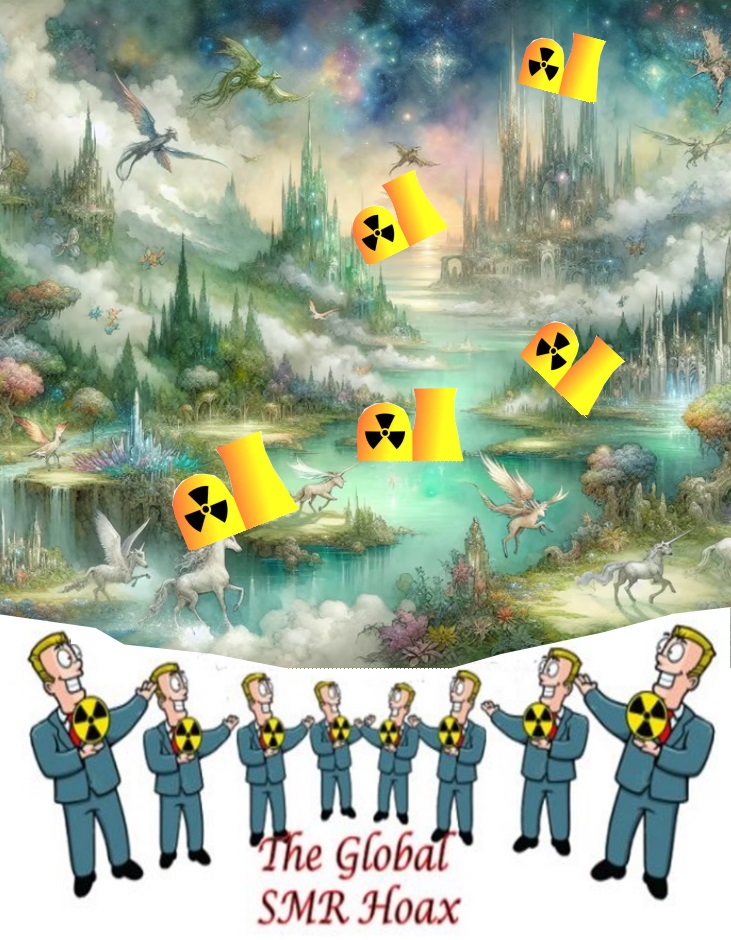


 nuclear-news